Breast Cancer Outcomes in Younger Women:
A Systematic Review of the Literature on Locoregional Management
By
Amal Lina Khoury, MD
A Master’s Paper submitted to the faculty of the University of North Carolina at Chapel Hill
in partial fulfillment of the requirements for the degree of Master of Public Health in
the Public Health Leadership Program
Chapel Hill
2013
13 November 2013 Date
ABSTRACT
Background: Despite significant advances in the treatment and management of breast cancer,
young women diagnosed before the age of 40 have worse outcomes as compared to older
women with similar cancers. Many posit that this occurrence is related to a propensity to
develop more biologically aggressive tumors, while others attribute these differences to the
influences of estrogen on this young cohort. Nevertheless, many of the therapeutic measures
offered to young women are based on evidence derived from studies of older, post-menopausal
women.
Objective: To determine whether locoregional management of early-stage invasive breast
cancer is associated with long-term survival outcomes in young women during the era of
modern multimodal therapies.
Methods: A systematic review of retrospective cohort studies published within the last 10 years.
Results: Although younger women who undergo breast-conserving therapy (BCT) have higher
rates of local recurrence (LR), this review indicates that either there is a slight survival
advantage after BCT compared to mastectomy (M), or that there is no survival difference based
on these interventions.
Conclusion: Presently, there is insufficient evidence to determine whether younger women
should continue to undergo more aggressive local treatment approaches, emphasizing the need
for prospective controlled trials to generate more reliable information on the magnitude of
LIST OF TABLES AND FIGURES
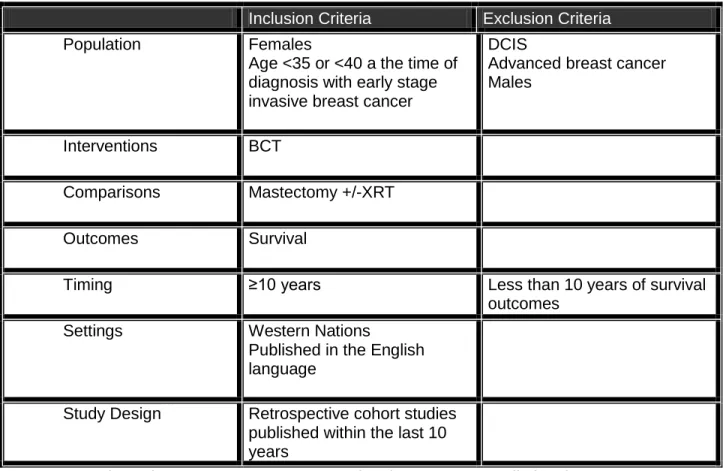
Table 1. Systematic Review Question: Inclusion and Exclusion Criteria
Table 2. AHRQ Grades of Evidence
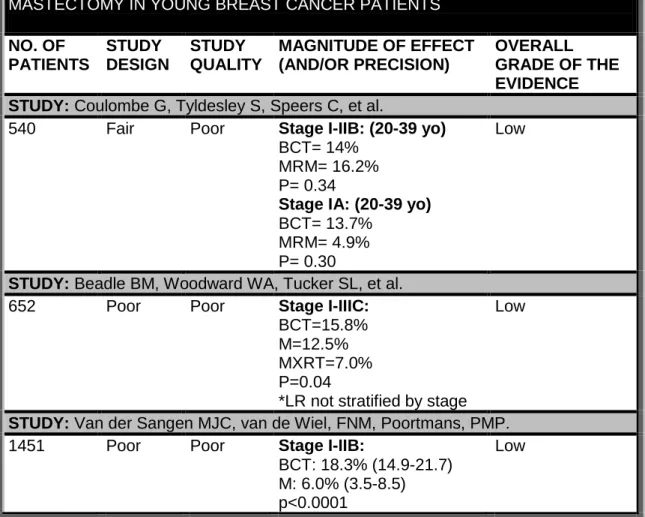
Table 3. Effect of Local Management on Local Recurrence (LR)
Table 4. Effect of Local Management on Local Regional Recurrence (LRR)
Table 5. Effect of Local Management on Distant Metastasis (DM)
Table 6. Effect of Local Management on Cause-Specific Survival (CSS)
Table 7. Effect of Local Management on Overall Survival (OS)
INTRODUCTION
Management of breast cancer in young women is fraught with a complexity of issues distinct
from those encountered in older patients. Young patients experience an abrupt disruption of
their menstrual cycle and fertility as a result of chemotherapy. Temporary or premature
menopause compounded with hormonal therapy (when indicated) lead to symptoms of fatigue,
hot flashes, and increase the risk of uterine cancer, deep vein thrombosis, and depression
among others. Some women are not afforded a chance for fertility preservation due to the
aggressive nature of the disease in this young cohort or due to the steep costs of this
intervention. Body image issues are amplified over the course of treatment as young patients
invariably experience multiple side effects of treatment, including hair loss, deforming surgeries,
nail changes, steroid-induced weight gain, skin changes and fibrosis related to radiation therapy
(XRT), and lymphedema. Patient preferences regarding local management and subsequent
reconstruction options allow select patients to have some control during the arduous treatment
journey. This option is contingent upon evidence that long-term outcomes associated with
breast-conserving therapy (BCT) are not different than those who undergo mastectomy (M).
Scientists, surgeons, and physicians have made great strides in local and systemic treatment of
breast cancer over the past three decades. Surgeons have moved beyond the Halstedian era
of aggressive surgical interventions as it became apparent that extirpation of the tumor with
extensive resection of surrounding tissue, did not improve survival in all patients. The
movement towards BCT began in Germany and was slowly adopted by some U.S. surgeons
over the following decades. The divergent philosophies of surgeons practicing traditional
Halstedian radical mastectomies and those performing breast-conserving therapy catalyzed the
call for evidence, ultimately leading to prospective randomized trials comparing BCT to M (1).
2 Cancer Institute (1973-1980), the National Surgical Adjuvant Breast and Bowel Project (NSABP)
B-06 Trial, the European Organization for Research and Treatment of Cancer (EORTC) 10801
Trial, The Danish Breast Cancer Cooperative Group Trial, the National Cancer Institute Trial,
and the Institut Gustave-Roussy Breast Cancer Group Trial, No survival differences were
detected in any of the studies; however, only a small percentage of the study subjects were
young women. There are no prospective randomized trials that examined the relationship
between local treatment approach and long-term survival among young breast cancer patients
(2-7).
Chemotherapeutic regimens, including the types of drugs, doses, and frequency of
administration continue to be challenged and improved. Chemotherapy for breast cancer has
evolved to include cyclophosphamide (C) to the traditional regimen of methotrexate (M), and
5-Flouro Uracil (F), leading to improvement in survival outcomes (8). In the late 1990’s,
anthracycline-based (A) regimens were shown to further improve survival over CMF, namely in
women with hormone receptor negative or triple negative breast cancers (9). More recently,
treatment includes the addition of taxanes (T), which are used in both primary and recurrent
breast cancer. Polychemotherapy confers considerable benefits in premenopausal patients.
Regimens of TAC or TC have mostly replaced the use of CMF (10). In addition, radiation
therapy (XRT) approaches, indications, and techniques, have evolved to more precisely
irradiate the involved region while decreasing the amount of unwanted radiation to the
underlying lungs and heart.
Assays for estrogen and progesterone receptor (ER and PR) positive tumors have been
developed during the duration of the studies, and refined since their conclusion.
Recommendations for the use of hormonal therapy in young premenopausal women with
3 techniques allow us to detect over-expression of human epidermal growth factor receptor
(HER2/neu) on breast cancer cells (commonly found in young patients), which then identifies
women who are eligible for drugs that successfully target affected cells and have improved
prognosis in this subgroup (11). Mapping of sentinel lymph nodes safely predicts involvement
of remaining lymph nodes and decreases unnecessary surgery in women with early-stage
breast cancer (12-14). Thorough evaluation of sentinel lymph nodes became more feasible,
since there were fewer nodes to examine with this technique. Improvements in pathologic
staging techniques with the addition of immunohistochemistry (IHC) and reverse transcriptase
polymerase chain reaction (RT-PCR ); both have allowed for discovery of small foci or
micrometastasis (15-16). The International Breast Cancer Study Group delineated the
association between the presence of micrometastasis and unfavorable long-term outcomes.
Prognostic importance of occult axillary lymph node micrometastasis from breast cancers (17).
In 2003, the American Joint Commission on Cancer (AJCC) revised the criteria for breast
cancer staging to include this indicator (18). These techniques could effectively upstage many
women that may have been considered early-stage, prior to the employment of these advanced
procedures (19).
METHODS
Search Algorithm
I began this study by searching for prospective controlled trials on the local management of
breast cancer in women diagnosed before the age of 35. Notably, the landmark prospective
studies on the influence of local management approach on breast cancer outcomes recruited
women diagnosed at all ages. Although the landmark trials have abundant long-term follow-up
data, systemic therapies, surgical techniques, and radiation approaches have advanced in the
4 cancer treatment on long-term survival outcomes of young women in the setting of modern
evidence-based practice.
I queried the PUBMED database to identify pertinent articles published between January 2003
(to reflect significant changes in chemotherapy regimens and the development of Herceptin in
the late 1990s and early 2000s) and January 2013. This would produce a literature database
reflecting the most current multimodal treatments. I searched the following Medical Subject
Headings (breast neoplasms/surgery or breast neoplasms/therapy) and (mastectomy or segmental mastectomy) and (follow up studies or cohort studies) and young adult. I finalized the search terms on April 17, 2013 and finalized the search itself on June 20, 2013. I also
supplemented these sources by hand searching bibliographies.
As there were no prospective studies designed to focus specifically on outcomes for young
women in the current era of multimodal therapies, I reviewed retrospective analyses published
in the last 10 years that examined the effect of local management of early-stage breast cancer
on survival in young women who were diagnosed before the age of 35. This search did not
yield any literature, so I expanded the search to include women diagnosed before the age of 40.
The search was limited to studies conducted in Western nations that are likely to employ similar
treatment modalities. I excluded studies that included male breast cancer patients and
manuscripts that were not written in English. I rejected studies that evaluated the effects of
local management in young women diagnosed with advanced breast cancers (T3 or T4 tumors),
as they would be unlikely candidates for breast-conserving therapy (BCT). Furthermore, I
eliminated studies that focused on the influence of local management on survival after
5 Data Abstraction and Synthesis
I abstracted the data from each article into a separate appraisal table and rated them for quality
of the study and strength of evidence. These data included the study question, study design,
the study cohorts evaluated (based on stage, age, and type of local intervention),
inclusion/exclusion criteria, comparability of comparison groups, primary and secondary
outcomes assessed, author definition of outcomes, length of time allowed for outcome to occur,
method of outcome measurement, potential confounders, statistical analysis, and study findings.
I assigned quality ratings based on the appropriateness of study cohort and comparison groups,
potential for selection and measurement bias (both intervention and outcome), possible
confounders and how they were addressed, appropriateness of data analysis, power of the
study, clinical relevance, internal and external validity, and overall relevance in relation to the
initial study question. I graded the evidence using the composite results of the quality ratings
and based on established definitions from the Agency for Healthcare Research and Quality
(AHRQ). (Table 2). I, then, synthesized the overall outcomes and evidence grades for each of
the studies in individual evidence tables according to each of the outcome measures.
RESULTS
The initial search yielded 121 manuscripts, I excluded 113 manuscripts based on both title and
abstract. I reviewed the manuscripts of the remaining eight and excluded four for the following
reasons: study evaluated the predictors of outcomes among patients undergoing one type of
local treatment approach; analysis did not have at least 10 years of follow-up time to outcome
occurrence; study did not evaluate survival outcomes; and study evaluated differences in
utilization of one type of local management versus the other, but did not assess association of
local approach with outcomes. After conducting hand searches, I included one additional
6 I compared the influences of local management approaches on survival outcomes for young
breast cancer patients in five retrospective cohort studies. The Critical appraisal tables of the
literature and quality ratings are available in APPENDIX A. I graded and grouped the studies
according to primary and secondary outcomes. The primary outcomes examined in these
studies included overall survival (OS) and cause-specific survival (CSS); secondary outcomes
were local recurrence (LR), locoregional recurrence (LRR), and recurrence presenting as distant
metastasis (DM). The final grades of the evidence along with the magnitude and direction of
effects are presented in Table 3, and in individual outcomes tables in APPENDIX A, Tables 2-7.
Local Recurrence
The effect of local treatment approach on local recurrence (LR) was evaluated in three of the
studies (Table 3). Local recurrence was defined as recurrence in the ipsilateral breast,
overlying skin, or chest wall. Both Coulombe G, Tyldesley S, Speers C, et al.. and Beadle BM,
Woodward WA, Tucker SL, et al. measured time to event from initial diagnosis. However, Van
der Sangen MJC, van de Wiel FNM, Poortmans PMP, and colleagues measured time to event
from completion of treatment, which would vary significantly depending on whether the patient
underwent surgery or began neoadjuvant chemotherapy initially. Beadle BM, Woodward WA,
Tucker SL, et al. also included an additional comparison group of women who underwent
post-mastectomy radiation (MXRT). Both Coulombe G, Tyldesley S, Speers C, et al. and Van der
Sangen MJC, van de Wiel FNM, Poortmans PMP, et al. reported 10-year actuarial rates in
stage I-IIB breast cancers. Van der Sangen MJC, van de Wiel FNM, Poortmans PMP, and
associates reported lower LR rates in the mastectomy (M) group than among those who
received breast-conserving therapy (BCT) (6% vs. 18.3% respectively, p<0.0001); the risk in
the M group actually plateaued at 6% at six years. Conversely, Coulombe G, Tyldesley S,
Speers C, et al. did not find clinically or statistically significant differences between the BCT and
7 revealed less LR among those who underwent M than those who had BCT, 4.9% versus 13.7%
respectively, but this was not statistically significant (p=0.30).
Beadle BM, Woodward WA, Tucker SL, and associates included patients with stage I-IIIC breast
cancer in their analysis. Patients diagnosed at later stages (stage IIIA or greater) are
considered locally advanced, and therefore are not considered part of the traditional cohort
included in earlier landmark trials. Furthermore, they did not stratify results for LR by stage; the
10-year actuarial LR rates for stage I-IIIC were 15.8%, 12.5%, and 7.0% for BCT, M, and MXRT
respectively, p=0.04. A multivariate analysis to examine the relationship between local
management and local recurrence adjusting for known or potential confounders was not
performed.
Locoregional Recurrence
Coulombe G, Tyldesley S, Speers C, et al. and Beadle BM, Woodward WA, Tucker SL, et al.
compared local regional recurrence (LRR) rates based on local management (Table 4); they,
defined LRR as time from diagnosis to first ipsilateral local or regional nodal recurrence.
Subjects’ data were censored at the earliest of the following dates: distant relapse occurring
>30 days before local recurrence or local regional recurrence; subsequent contralateral breast
cancer occurring before LR or LRR; and date of death or last follow-up. When LR or LRR
occurred within 30 days of distant relapse, the relapses were considered concurrent and were
recorded as occurring on the date of the earlier events. They found no difference in 10-year
LRR rates for patients with stage I-IIB breast cancer after breast-conserving therapy (BCT)
versus mastectomy (M) (17.4% and 19.1% respectively, p=0.41). This conclusion was further
supported by a subgroup analysis of “ideal” BCT candidates (stage IA), who had LRR rates of
16% in BCT group versus 12.7% in M group, p=0.94. Beadle and colleagues defined LRR as
ipsilateral local or regional nodal recurrence (including axillary, supraclavicular, infraclavicular,
8 in time to distant metastasis in time. They reported a significant difference in 10-year LRR rates
among the collective (stage I-IIIC) group 19.8% for BCT, 24.1% for M, and 15.0% for MXRT,
p=0.05. After stratifying by stage, LRR rates were no different in the stage I group; 18.0% in
BCT versus 19.8% in M, p=0.56 (there were few stage I patients who underwent MXRT, so they
were not included). However, there was a significant difference among those with stage II
disease 17.7%, 22.8% and 5.7% (p=0.02) in BCT, M, and MXRT respectively. They also
conducted a multivariate analysis identifying BCT and M as predictors of LRR among patients
with stage II disease, hazard ratio (HR)= 3.40 (95% CI: 0.99-11.7), p=0.052 and HR=4.45 (95%
CI: 1.36-14.6), p=0.014 respectively.
Distant Metastases
Distant Metastases (DM) were defined as time from diagnosis to first relapse beyond ipsilateral
breast and regional lymph nodes. Coulombe G, Tyldesley S, Speers C, et al. censored subjects
at the time of a subsequent contralateral new primary breast cancer occurring before a distant
relapse, date of death, or last follow-up. They found no difference in 10-year DM rates among
2,398 patients with stage I-IIB breast cancer; 26.9% in the BCT group versus 27.5% in the M
group, p=0.77 (Table 5). However, in the subgroup analysis including only “ideal” BCT patients,
rates of DM in those who underwent BCT were 14.3% versus 24.6% in patients who underwent
M, p=0.17. Although this result was not statistically significant, it may be clinically relevant.
Beadle BM, Woodward WA, Tucker SL, and colleagues reported significant differences in DM
rates among the entire cohort (n=652) based on local treatment (Table 5). The BCT group had
the lowest rates of DM, 25.5% compared with 42.5% and 49.1% in the M and MXRT groups
respectively, p<0.0001. Once again, when they stratified by stage, they did not find a difference
among women with stage I breast cancer (27.4% in BCT versus 27.7% in M), p=0.15. However,
they detected a difference among those with stage II breast cancer, 19.5% versus 33.9% versus
9 Van der Sangen MJC, van de Wiel FNM, Poortmans PMP, and colleagues also evaluated
women with stage I-IIB breast cancer. Using the life-table approach, they measured the interval
between the date of primary treatment until diagnosis of DM, rather than the date of initial
cancer diagnosis until DM. They found no difference among those treated with BCT compared
with M, 29.0% versus 33.0% respectively, p=0.083. Interestingly, they noted that the risk of DM
was lower in the BCT group, hazard ratio (HR)=0.75 (95% CI: 0.61-0.93) p=0.009. However,
after seven years, risk of DM was lower in the M group and increased in the BCT group, HR=
1.96 (1.02-3.76) p=0.044.
Cause-Specific Survival
Coulombe G, Tyldesley S, Speers C, et al. and Mahmood U, Morris C, Neuner G, et al.
searched for differences in cause-specific survival according to the type of local management
received. Cause-specific survival (CSS) was defined as time between initial diagnosis and
death when breast cancer was the primary or underlying cause of death. They found no
difference in CSS according to local treatment among the entire cohort, which included stages
I-IIB (BCT= 79.8%, M= 74.9%; p= 0.09); and the subgroup of “ideal” BCT patients with stage IA
cancer only (BCT= 90.8%, M= 86.0%; p= 0.41) (Table 6).
Mahmood’s group conducted the largest retrospective analysis to date using the Surveillance
Epidemiology and End Results (SEER) cancer registry maintained by the National Cancer
Institute to determine whether there was a survival difference in patients aged 20-39 who
underwent BCT compared to those who had M with or without radiation for stage I-IIB breast
cancer. They performed both multivariate and matched pair analyses. Multivariate analysis
revealed no difference in CSS between BCT and M, hazard ratio (HR)=0.93 (0.83-1.05), p=0.26
(Table 6). Matched-pair analysis confirmed that local management was not associated with
10 Overall Survival
Overall survival (OS) was defined as death from any cause. The time interval was measured
from the date of diagnosis to the date of death or last visit. Beadle BM, Woodward WA, Tucker
SL, and colleagues found significant differences in overall survival in a pooled analysis of
patients with stage I-IIIC breast cancer (Table 7). Patients who underwent breast-conserving
therapy (BCT) had 80.0% 10-year OS rates compared with 60.4% in the mastectomy (M) group,
and 57.5% in the mastectomy with radiation (MXRT) group, p=0.0003. Stratified analysis
revealed a clinically relevant difference in OS among those with stage I disease, with OS rates
of 92.4% in BCT group compared to 72.0% in M group, though this was not statistically
significant, p=0.19. Among patients with stage II disease, the MXRT group had the highest
10-year OS rates (85.4%), followed by the BCT group (81.0%), and the M group (63.4%), p=0.03.
On multivariate analysis of those with stage II cancer, undergoing mastectomy alone associated
with a poorer OS (hazard ratio= 1.72 ; 95% CI: 1.11-2.67).
Bantema-Joppe EJ, De Munck L, Visser O, and associates conducted a retrospective analysis
using two Dutch cancer registries containing data from 1,453 patients with stage I-IIA breast
cancer. They found that women who received BCT had 5% greater 10-year OS rates when
compared to those who received mastectomy; p=0.007 (Table 7). Survival analysis controlling
for age at diagnosis, time period of diagnosis, pathological T stage, adjuvant chemo, adjuvant
hormone therapy, and nodal status concluded that M was associated with poorer OS; HR=1.37
(1.09-1.72).
A similar study conducted by Van der Sangen and colleagues evaluating patients diagnosed
with stage I-stage IIB breast cancer did not reveal a clinically or statistically significant difference
in OS; 71.2% (62.4-71.6) of those who had M were alive at 10-years compared with 74.9%
(71.7-78.1) of patients who opted for BCT, p=0.215. It is important to note that in this particular
11 A retrospective study conducted by Mahmood U, Morris C, Neuner G, et al. evaluated outcomes
for 14,764 young patients with stage I-IIB breast cancer. They performed a multivariate analysis
adjusting for year of diagnosis, age at diagnosis, race, histology, tumor grade, area of
involvement within the breast, tumor size, number of positive LN, number of evaluated nodes,
estrogen receptor (ER), and progesterone receptor (PR) status. They found no difference
between the two treatment groups with the HR for BCT being 0.93 (0.83-1.04), p=0.16. Results
of a matched pair analysis was consistent with the results of their multivariate analysis; 83.6%
OS at 10 years in the M group and 83.5% in the BCT group, p=0.99.
SYNTHESIS: A summation of the findings
Stage I Breast Cancer
With all the shortcomings of a retrospective data analysis, it appears that local management is
not associated with statistically significant differences in local recurrence (LR) among young
women diagnosed with stage I breast cancer; though the absolute difference between the rates
may be clinically relevant, with an 8.8% greater LR rate after BCT. Furthermore, this conclusion
is based on data from only one study by Coulombe’s group, which reported actuarial rates.
Local regional recurrence (LRR) rates are not clinically or statistically different among young
women with stage I disease in any of the included studies. Despite the lack of statistically
significant differences in rates of distant metastasis (DM), in the two studies that evaluated
stage I breast cancers, the mastectomy group had 10.3% higher rates of DM at 10 years in the
study by Coulombe and colleagues. The same study failed to reveal any statistically or clinically
relevant difference in cause-specific survival (CSS). Breast-conserving therapy was superior to
mastectomy in terms of overall survival (OS), the 10 year rates of OS were 20.4% higher among
women who opted for BCT versus those treated with M. Although these findings did not reach
12 actually improve survival even among women with very early-stage breast cancer. In summary,
actuarial rates of LR, LRR, DM, CSS and OS were not statistically different based on local
management approaches of stage I disease. Interestingly, these results indicate that both rates
of DM and OS may actually be better in women undergoing BCT, despite higher rates of local
recurrence among young women undergoing BCT. These data imply that young women with
stage I breast cancer can safely opt for either local management approach, and some infer that
BCT may actually improve long-term overall survival.
Stage II Breast Cancer
Primary and secondary outcomes for the subgroup of women with stage II breast cancer were
described in only the Beadle, Woodward and Tucker study. They did not investigate local
recurrence (LR) rates among women with stage II breast cancer, but found that actuarial rates
of LRR were 5% higher among women who opted for M over BCT (p-0.02) at 10 years.
Notably, this reported statistical significance is based on three comparison groups and may
represent the difference between mastectomy with adjuvant radiation therapy (MXRT) versus M
or MXRT versus BCT. However, upon further analysis, multivariate regression confirmed the
elevated risk of LRR among women with stage II cancer undergoing M, with a greater hazard
ratio of LRR after M HR=4.45 (95% CI: 1.36-14.6) versus BCT HR= 3.40 (95% CI: 0.99-11.7).
Furthermore, actuarial rates of distant metastasis were 14.4% higher in patients treated with M,
representing a clinically important and statistically significant difference between the
interventions. Cause-specific survival (CSS) was not reported in this study, though overall
survival (OS) rates were significantly different among the three groups. Superior rates of OS
were reported in women who underwent MXRT, followed by those who received BCT; women
who received M alone had the lowest 10-year OS rates Absolute differences in actuarial rates
were greatest between M and MXRT groups (22.0% higher in MXRT) and M and BCT (17.6%
13 Deriving from this single study, it appears that breast conserving therapy provides superior
outcomes in terms of LRR, DM, and OS rates among young women with stage II breast cancer.
EARLY-STAGE BREAST CANCER (STAGE I-II)
Investigations that described the influence of local therapy on outcomes of interest in all women
with early-stage breast cancer (stage I-II) were generally consistent, though there were some
conflicting findings. The evidence compiled in this review indicates that young women with
early-stage breast cancer are either as likely or more likely to have local recurrence (LR) after
BCT when compared to patients treated with M. (Van der Sangen MJC, van de Wiel FNM,
Poortmans PMP et. al. and Coulombe G, Tyldesley S, Speers C, et al.) Coulombe’s group
found that LRR rates did not differ based on local management approaches in women
diagnosed with stage I-II breast cancer. (Coulombe G, Tyldesley S, Speers C, et al.) Similarly,
two studies that included distant metastasis (DM) as an outcome of interest failed to find any
statistically significant or clinically relevant differences in actuarial rates of DM in those
undergoing M versus BCT. (Van der Sangen MJC, van de Wiel FNM, Poortmans PMP et. al.
and Coulombe G, Tyldesley S, Speers C, et al.) Van der Sangen and colleagues elucidated an
interesting phenomenon wherein the hazard ratio for distant metastasis (DM) was
time-dependent. Breast-conserving therapy had an apparent protective effect against DM until year
seven, after which BCT was associated with higher hazard ratio for DM. This time dependent
interaction warrants further investigation, and was not seen in other similar studies.
Cause-specific survival was measured by Mahmood’s group and Coulombe et al.; both groups
concluded that local management does not influence CSS in stage I-II disease. One of three
studies that investigated overall survival in stage I-IIA disease showed a statistically significant
difference based on local treatment approach. However, the absolute difference in actuarial
14 Visser O, et al.) The two other studies that examined 10-year overall survival rates included
women with stage I-IIB breast cancer. Neither of these studies found any clinically nor
statistically significant differences in OS rates. (Mahmood U, Morris C, Neuner G, et al. and Van
der Sangen MJC, van de Wiel, FNM, Poortmans, PMP, et al.) In short, women with early-stage
breast cancer did not have significant differences in LRR, CSS, and OS. Utilizing the available
evidence, young women with early-stage breast cancer should be afforded the option of
choosing the local approach of their preference since there is no difference among long-term
survival outcomes. However, they should be counseled about the potential for increased risk of
local recurrence after BCT.
STRENGTH OF THE AVAILABLE EVIDENCE
Coulombe G, Tyldesley S, Speers C, et al. conducted a retrospective study that included
premenopausal breast cancer patients. They stratified these women by age at diagnosis; 20-39
years and 40-49 years of age. Comparison groups included women who had BCT (all of whom
had adjuvant radiation) versus those who chose M with or without radiation (XRT). They did
not control for XRT as a separate variable since it was strongly correlated with breast
conserving therapy; however, this may skew the actual benefit of M. Furthermore, bivariable
analysis revealed that women who underwent M had worse baseline prognostic factors than did
those undergoing BCT, including more nodal involvement, central or multifocal tumors, and
larger tumors. Although the multivariable analysis controlled for baseline prognostic factors, it
was based on the entire cohort of women (age 20-49). Essentially, we are provided with
actuarial rates of outcomes in women aged 20-39 who underwent M versus BCT. Because the
multivariate analysis included women greater than 39 years of age, its results could not be
15 provide us with a clear understanding of the weight that mastectomy or breast-conserving
therapy have on the outcomes of interest.
Beadle BM, Woodward WA, Tucker SL, et al. retrospectively evaluated a cohort of young
women from M.D. Anderson Cancer Center diagnosed between 1976 and 2006. Innovations in
local and systemic treatment approaches occurred during this broad span of time. Inclusion of
data that was collected more than 20 years ago may not reflect the absolute contribution of
either local therapy within the setting of the current treatment patterns. They reported outcomes
for the entire cohort by time period, but they did not report the outcomes of the treatment arms
by time period. Moreover the authors reported significant findings, but did not clarify which pairs
of the three treatment arms were significantly different. Another important limitation of this study
is that women with stage IIIA-C cancers were included. Stage IIIA-C cancer is locally advanced
disease by definition, and thus these women are not traditional candidates for BCT. Patients
requiring radiation therapy after M are more likely to have advanced cancers and a poorer
baseline prognosis than are those who are satisfactorily treated with either BCT or M. The high
failure rate among those in the mastectomy group might be explained by the inclusion of young
women with stage III breast cancer who may have benefitted from post-mastectomy radiation,
namely those with large tumors (>5 cm) or those with four or more positive lymph nodes. Lastly,
they did not actually answer the question they posed at the beginning of the study; instead, they
reported actuarial rates and multivariate analyses only looking for predictors of outcomes (LRR
and OS) stratified by stage.
Van der Sangen MJC, van de Wiel FNM, Poortmans PMP, and colleagues used the life-table
approach in their retrospective study. All outcomes were measured from the time of treatment
completion to the time of the “event”. The time to completion of therapy is variable as it is
16 this review measured outcomes as time from diagnosis to the occurrence of the event.
Moreover, follow-up time for patients that underwent BCT was one year longer than for those
who underwent M, though the authors did not explain the rationale for the discrepancy in
follow-up time. The authors discovered a change in the trends of distant metastasis rates after BCT
and M. Initially, BCT was superior to mastectomy, though the trends cross at year 7
post-treatment. Despite this clear violation of the proportional hazards rule, they conducted a
multivariate regression analysis including both time periods. This approach is statistically
unfavorable as it diminishes the true magnitude and direction of the findings. It would have
been more appropriate to create two regression models to represent the individual time intervals
and report the respective hazard ratios instead.
Mahmood U, Morris C, Neuner G, and colleagues conducted a secondary analysis using the
National Cancer Institute’s Surveillance Epidemiology and End Results (SEER) database. The
authors conducted both multivariate regression followed by a sensitivity analysis matching
cases and controls. Multiple limitations of this study are attributed to the paucity of specific data
in the SEER database. For example, the database provides information on whether patients
received radiation therapy; however, the targets and doses are not provided. Also, the SEER
database does not collect information on which patients received chemotherapy nor the drug
regimens prescribed. The authors carried out the analysis under the assumption that
approximately the same proportion of patients in both treatment arms received chemotherapy.
Although the SEER data provides estrogen and progesterone receptor status, prescriptions for
hormonal therapy and patient compliance is not reported. HER2/neu status is not captured in
the SEER database. Patients with unfavorable prognostic factors such as HER2/neu positivity
or triple negative status are more likely to undergo more aggressive treatment (mastectomy)
17 many of the study limitations are due to the shortcomings of the database and not the study
design itself, they are unable to answer the study question with certainty.
DISCUSSION
. The results of this review are uniform among the sub-group of patients with stage I breast
cancer and among the cohort of all patients with early-stage breast cancer. Due to the quality of
the single study that evaluated stage II alone, we may assume that BCT and M are not different
at the least, and that the requirement for XRT in BCT is potentially associated with improved
survival patients at best. These findings may seem counterintuitive in light of the pooled
analysis, which demonstrated inferior outcomes in the MXRT group; however, it is important to
consider that the pooled analysis included women with locally advanced breast cancer (stage
III). Women with locally advanced breast cancer are more likely to receive adjuvant radiation
therapy after mastectomy than women with early-stage breast cancer due to larger tumor sizes
and/or involved lymph nodes. Moreover, the baseline prognosis for advanced breast cancer is
inferior to those with early-stage cancers. The relationships between advanced breast cancer,
increased likelihood of requiring post-mastectomy radiation, and unfavorable baseline prognosis
are likely to cause confounding.
As evidenced in this review, BCT is associated with equal or greater risk of local recurrence at
10 years when compared with their counterparts who opt for mastectomy. (Van der Sangen
MJC, van de Wiel FNM, Poortmans PMP, et al.). Numerous studies have suggested that
younger women have higher rates of LR after BCT than do older women (e.g. 20). Other
studies comparing young women under 35 to women 35 or older who undergo BCT find that the
rates of LRR are higher among those in the younger age group (21-22). Excessive LR rates
following BCT may be explained by differences in tumor biology and pathologic findings that are
18 illustrates this point well, as they find higher LRR rates after M in young women (under 40) than
in their older counterparts (23). Taken collectively, these studies suggest that age, or the typical
“behavior” of young breast cancers may contribute to local failure after BCT and M.
Interestingly, it seems that development of LR does not translate into inferior survival outcomes.
This may be explained by the salvage option of M at the time LR is discovered. The absence of
a link between LR and long-term survival outcomes was confirmed in NSABP-06. However, the
Early Breast Cancer Trialists' Collaborative Group (EBCTCG) conducted a retrospective
analysis of evidence derived from prospective randomized trials with long-term follow-up. They
found that when surgery or radiation could attain at least 10% absolute reduction of local
disease recurrence, significant reductions in cause-specific mortality followed (24-25).
The divergent conclusions derived from the EBCTCG article and this study may partially be
explained by the greater length of follow-up time.
The studies in this review suggest that DM and OS rates are similar in young women treated
with BCT. M. Van der Saangen’s group found an interaction between time and long-term DM
rates. The presence of a time interaction has important implications and should be explored
further in future studies. It is also possible that long-term outcomes are not captured until after
the 10-years of follow up provided in these studies.
LIMITATIONS
I encountered many obstacles in attempting to identify the association between local
management and long-term outcomes for young women with early-stage breast cancer. This
The foundation of this review was created built upon results from retrospective cohort studies
19 study cohorts, definition of exposures and outcomes, covariates included in analysis, and
statistical analysis strategies are not uniform across investigations. Inconsistencies in the
numerous layers of breast cancer diagnostics and treatments exist within and among the
reviewed studies dilute the magnitude and certainty of our results.
Selection of Comparison Groups. The authors define “ideal BCT candidate” differently, emphasizing the importance of appropriate comparison group selection. Some investigators
defined these candidates as patients with stage I disease, stage I and II disease, and one of the
studies even included patients with stage III disease. Landmark randomized trials of BCT vs. M
did not include stage III breast cancer, which is considered locally advanced. Women with
advanced breast cancers are not typical candidates for BCT unless they have a good response
to neoadjuvant chemotherapy.
Management of the axilla. Axillary nodal status is one of the most important predictors of prognosis in breast cancer. Innovations in axillary management and staging complicated
secondary analyses that included patients treated before, during, and/or after the adoption of
sentinel lymph node biopsies. Aggressive axillary dissections were carried out in all patients
prior to this practice; sentinel lymph node biopsy has largely saved women without clinical
evidence of axillary disease from a highly morbid procedure. Conversely, some sampled
sentinel nodes with small foci of micrometastasis and small macrometastasis could have been
missed by traditional staining methods prior to the use of advanced immunohistochemistry
techniques.. Women with undetected micrometastasis or small macrometastsis received no
further surgical intervention, even though the guidelines would have recommended that these
20 Surgical margins and radiation therapy. The extent of surgical resection varied in both BCT and M within and among studies. Some examined simple mastectomy, which includes the breast
mound and nipple areolar complex, versus modified radical mastectomy, which also includes full
axillary dissection. The extent of margins in breast-conserving therapy likely varied within
studies since they were derived from registry data. Breast-conserving therapy includes
lumpectomy, quandrantectomy, and in some cases multiple lumpectomies within the same
breast. Quandrantectomy,is a resection of the breast quadrant that includes both tumor and
healthy tissue, often employed in patients with multifocal disease. On the other hand,
lumpectomy, involves taking a minimal amount of healthy tissue around the tumor in order to
obtain clean margins; recommended margins also differ between institutions (usually
1mm-2mm). Targets for radiation include tumor bed and axillary nodal levels; dosing and boost
treatments varied over the time of the studies, as did the protocols.
Neoadjuvant chemotherapy. A majority of the studies did not include women that were treated with neoadjuvant chemotherapy (chemotherapy before surgery), which is can effectively
downstage patients and influence local treatment approach. This sequence is often employed
in order to make a tumor more amenable to treatment with BCT. Chemotherapy (either
neoadjuvant and adjuvant) is also known to reduce local and locoregional recurrence rates in
women who have BCT significantly, even in node negative patients (26). Moreover, patients
with close or positive margins who are treated with conservative surgery and radiation have an
increased risk of breast recurrence that is delayed by adjuvant systemic therapy (27). Failure to
adjust for chemotherapy and other systemic treatments may confound results, attributing
21 Hormone receptor status and targeted therapy. Assays for hormone receptor overexpression on cancer cells has led to targeted therapies in breast cancer. Hormone receptor status was
taken into account in a few of the studies. Some of the authors included hormone receptor
status in the analysis even though this information was available for recently diagnosed study
subjects. Most of the studies did not control for use of adjuvant hormonal therapy or types of
hormonal therapy. Younger breast cancer patients are more likely to have triple negative
disease; triple negative cancer status was not included in any analysis despite its known
unfavorable prognosis.
Data analysis. The largest limitation I encountered was in interpreting actuarial rates, since they fail to account for potential confounders, the influence of local management on the baseline
natural history of breast cancer, and in light of current adjuvant therapies. Although actuarial
rates help us identify trends, they do not allow us to explore possible confounders that may be
the driving forces behind these observations. The aforementioned discrepancies could
potentially decrease the magnitude of any appreciated variances between the two groups, thus
decreasing the internal validity. Nonetheless, they may illustrate a more accurate picture of true
effectiveness and applicability of the interventions over a diverse spectrum of clinical practice.
CONCLUSION
Investigational studies intended to improve clinical and patient decision-making should
demonstrate the absolute benefit provided by the intervention of interest, while also providing
probabilities, relative risks, and hazard ratios. The absolute benefit of BCT compared with
mastectomy in young women with breast cancer should be discussed in terms of their baseline
risk based on clinical factors and tumor characteristics; this discussion needs to be
accompanied by discussion of any additional benefits from adjuvant chemo and hormonal
22 The development of predictive models that include both clinical and pathologic characteristics
and therapeutic interventions tools to predict benefits of adjuvant therapy are available online
(28-29). Although a prospective randomized control trial in survival outcomes after BCT versus
mastectomy in young breast cancer patients would certainly help us answer this question, it is
not feasible. An acceptable alternative prospective observational study to study this unique
population of breast cancer patients would either confirm or challenge the conclusion that local
management in early-stage breast cancer is not different, even in young patients. The
advantage of a prospective observational study lies in its ability to pre-emptively define
important patient demographic information, tumor characteristics, and adjuvant therapies that
are known to influence long-term survival. Ultimately, the value of observational and outcomes
studies lie heavily in their ability to give us theories and a foundation for further bench and
23 Acknowledgements:
Bruce Cairns, Anthony Meyer for making this all possible.
Timothy Zagar and Clara Lee for their guidance and patience.
24 REFERENCES
1. Veronesi, U., & Zurrida, S.. Breast cancer surgery: a century after Halsted. Journal of cancer research and clinical oncology 1996;122(2):74-77.
2. Arriagada R, Le MG, Rochard F, et al. Conservative treatment versus mastectomy in early breast cancer: patterns of failure with 15 years of follow-up data. Institut Gustave-Roussy Breast
Cancer Group. J Clin Oncol 1996;14:1558-1564.
3. Veronesi U, Cascinelli N, Mariani L, et al. Twenty-year follow-up of a randomized study
comparing breast-conserving surgery with radical mastectomy for early breast cancer. N Engl J
Med 2002;347:1227-1232.
4. Fisher B, Anderson S, Bryant J, et al. Twenty-year follow-up of a randomized trial comparing
total mastectomy, lumpectomy, and lumpectomy plus irradiation for the treatment of invasive
breast cancer. N Engl J Med 2002;347:1233-1241.
5. Poggi MM, Danforth DN, Sciuto LC, et al. Eighteen-year results in the treatment of early
breast carcinoma with mastectomy versus breast conservation therapy: the National Cancer
Institute Randomized Trial. Cancer 2003;98:697-702.
6. van Dongen JA, Voogd AC, Fentiman IS, et al. Long-term results of a randomized trial
comparing breast-conserving therapy with mastectomy: European Organization for Research
and Treatment of Cancer 10801 trial. J Natl Cancer Inst 2000;92:1143-1150.
7. Blichert-Toft M, Rose C, Andersen JA, et al. Danish randomized trial comparing breast
conservation therapy with mastectomy: six years of life-table analysis. Danish Breast Cancer
Cooperative Group. J Natl Cancer Inst Monogr 1992;(11):19-25.
8. Fisher B, Dignam J, Mamounas EP, et al. Sequential methotrexate and fluorouracil for the
treatment of node-negative breast cancer patients with estrogen receptor-negative tumors:
eight-year results from National Surgical Adjuvant Breast and Bowel Project (NSABP) B-13 and
25 conventional cyclophosphamide, methotrexate, and fluorouracil [see comments]. J Clin Oncol
1996;14:1982-1992.
9. Polychemotherapy for early breast cancer: an overview of the randomized trials. Early Breast
Cancer Trialists' Collaborative Group. Lancet 1998;352(9132):930-942.
10. Jones SE, Moon TE, Bonadonna G, et al. Comparison of different trials of adjuvant
chemotherapy in stage II breast cancer using a natural history database. Am J Clin Oncol
1987;10:387-395.
11. Slamon DJ, Leyland-Jones B, Shaks S, et al. Use of chemotherapy plus a monoclonal
antibody against Her 2 for metastatic breast cancer that overexpresses Her 2. N Engl J Med
2001;344(11):783-792.
12. Giuliano AE, Kirgan DM, Guenther JM, Morton DL. Lymphatic mapping and sentinel
lymphadenectomy for breast cancer. Ann Surg 1994;220:391-401.
13. Krag DN, Anderson SJ, Julian TB, et al.; National Surgical Adjuvant Breast and Bowel
Project. Technical outcomes of sentinel-lymph-node resection and conventional
axillary-lymph-node dissection in patients with clinically axillary-lymph-node-negative breast cancer: results from the NSABP
B-32 randomised phase III trial. Lancet Oncol 2007;8(10):881-888.
14. Veronesi U, Paganelli G, Viale G, et al. A randomized comparison of sentinel-node biopsy
with routine axillary dissection in breast cancer. N Engl J Med 2003;349:546-553.
15. Turner RR, Ollila DW, Krasne DL, Giuliano AE. Histopathologic validation of the sentinel
lymph node hypothesis for breast carcinoma. Ann Surg 1997;226:271-276.
16. Noguchi S, Aihara T, Motomura K, Inaji H, Imaoka S, Koyama H. Detection of breast cancer
micrometastases in axillary lymph nodes by means of reverse transcriptase-polymerase chain
reaction: comparison between MUC1 and mRNA and keratin 19 mRNA amplification. Am J
Pathol 1996;148:649-656.
17. International (Ludwig) Breast Cancer Study Group [see comments]. Lancet
26 18. Singletary E, Allred C, Ashley P, Bassett LW, Berry D, Bland KI, Borgen PI, Clark G, Edge
SB, Hayes DF, Hughes LL, Hutter RVP, Morrow M, Page DL, Recht A. Revision of the
American Joint Committee on Cancer Staging System for Breast Cancer. J Clin Oncol
2002;20:3628-3636.
19. Giuliano AE, Dale PS, Turner RR, et al. Improved axillary staging of breast cancer with
sentinel lymphadenectomy. Ann Surg 1995;222:394-9.
20. Kurtz J, Jacquemier J, Amalric R, et al. Why are local recurrences after breast-conserving
therapy more frequent in younger patients? J Clin Oncol 1990;8:591-598.
21. S.H. Kim, A. Simkovich-Heerdt, K.N. Tran et al. Women 35 years of age or younger have higher locoregional relapse rates after undergoing breast conservation therapy. J Am Coll Surg, 187 (1998), pp. 1–8.
22. A. Recht, J.L. Connolly, S.J. Schnitt et al. The effect of young age on tumor recurrence in the treated breast after conservative surgery and radiotherapy. Int J Radiat Oncol Biol Phys, 14 (1988), pp. 3–10.
23. P. Karlsson, B.F. Cole, K.N. Price et al. The role of the number of uninvolved lymph nodes in predicting locoregional recurrence in breast cancer. J Clin Oncol, 25 (2007), pp. 2019–2026. 24. Clarke M, Collins R, Darby S, et al.; Early Breast Cancer Trialists' Collaborative Group
(EBCTCG) Effects of radiotherapy and of differences in the extent of surgery for early breast
cancer on local recurrence and 15-year survival: an overview of the randomised trials. Lancet
2005;366(9503):2087-2106.
25. Brooks JP, Danforth DN, Albert P. Early ipsilateral breast tumor recurrences after breast
conservation affect survival: an analysis of the NCI randomized trial. Int.J. Radiat. Oncol. Biol.
Phys. 2005.
26. Elkhuizen,P.H.; van Slooten,H.J.; Clahsen,P.C.; Hermans,J.; van de Velde,C.J.; van den
Broek,L.C.; van de Vijver,M.J. High local recurrence risk after breast-conserving therapy in
27 perioperative chemotherapy: A European Organization for Research and Treatment of Cancer
Breast Cancer Cooperative Group Study. J.Clin.Oncol., 2000, 18, 5, 1075-1083.
27. Freedman G., Fowble B., Hanlon A,, Nicholaou N., Fein D., Hoffman J., Sigurdson E.,
Boraas M., Goldstein, L. Patients with early stage invasive cancer with close or positive
margins treated with conservative surgery and radiation have an increased risk of breast
recurrence that is delayed by adjuvant systemic therapy. Int J Radiat Oncol Biol Phys 1999 July
15; 44(5): 1005-1015.
28. Ravdin PM, Siminoff LA, Davis GJ, et al. Computer program to assist in making decisions
about adjuvant therapy for women with early breast cancer. J Clin Oncol 2001;19(4):980-991.
29. Olivotto IA, Bajdik CD, Ravdin PM, et al. Population-based validation of the prognostic
model ADJUVANT! for early breast cancer. J Clin Oncol 2005;23(12):2716-2725.
28 TABLES AND FIGURES
Table 1. Systematic Review Inclusion and Exclusion Criteria
Inclusion Criteria Exclusion Criteria
Population Females
Age <35 or <40 a the time of diagnosis with early stage invasive breast cancer
DCIS
Advanced breast cancer Males
Interventions BCT
Comparisons Mastectomy +/-XRT
Outcomes Survival
Timing ≥10 years Less than 10 years of survival
outcomes
Settings Western Nations
Published in the English language
Study Design Retrospective cohort studies published within the last 10 years
29 Table 2. AHRQ Grades of Evidence
GRADE DEFINITION
High
High confidence that the evidence reflects the true effect. Further research is very unlikely to change our confidence in the estimate of effect.
Moderate
Moderate confidence that the evidence reflects the true effect. Further research may change our confidence in the estimate of the effect and may change the estimate.
Low
Low confidence that the evidence reflects the true effect. Further research is likely to change our confidence in the estimate of the effect and is likely to change the estimate.
Insufficient
Evidence either is unavailable or does not permit estimation of an effect.
30 EVIDENCE TABLES
Table 3. Effect of Local Management on Local Recurrence (LR)
EVIDENCE PROFILE: COMPARATIVE 10 YEAR LR AFTER BCT VS. MASTECTOMY IN YOUNG BREAST CANCER PATIENTS
NO. OF PATIENTS
STUDY DESIGN
STUDY QUALITY
MAGNITUDE OF EFFECT (AND/OR PRECISION)
OVERALL GRADE OF THE EVIDENCE STUDY: Coulombe G, Tyldesley S, Speers C, et al.
540 Fair Poor Stage I-IIB: (20-39 yo)
BCT= 14% MRM= 16.2% P= 0.34
Stage IA: (20-39 yo) BCT= 13.7%
MRM= 4.9% P= 0.30
Low
STUDY: Beadle BM, Woodward WA, Tucker SL, et al.
652 Poor Poor Stage I-IIIC:
BCT=15.8% M=12.5% MXRT=7.0% P=0.04
*LR not stratified by stage
Low
STUDY: Van der Sangen MJC, van de Wiel, FNM, Poortmans, PMP.
1451 Poor Poor Stage I-IIB:
BCT: 18.3% (14.9-21.7) M: 6.0% (3.5-8.5) p<0.0001
31 Table 4. Effect of Local Management on Local Regional Recurrence (LRR)
EVIDENCE PROFILE: COMPARATIVE10 YEAR LRR AFTER BCT VS. MASTECTOMY IN YOUNG BREAST CANCER PATIENTS
NO. OF PATIENTS
STUDY DESIGN
STUDY QUALITY
MAGNITUDE OF EFFECT (AND/OR PRECISION)
OVERALL GRADE OF THE EVIDENCE STUDY: Coulombe G, Tyldesley S, Speers C, et al.
540 Fair Poor Stage I-IIB: (20-39 yo)
BCT= 17.4% MRM= 19.1% p= 0.41
Stage IA: (20-39 yo) BCT= 16.0%
MRM= 12.7% p= 0.94
Low
STUDY: Beadle BM, Woodward WA, Tucker SL, et al.
652 Poor Poor Stage I-3C:
BCT= 19.8% M= 24.1% MXRT=15.0% p=0.05
Stage I: BCT= 18.0% M= 19.8%
MXRT= Not included p= 0.56
Stage II: BCT= 17.7% M= 22.8% MXRT= 5.7% p= 0.02
Multivariate for Stage II: M HR= 4.45 (1.36-14.6); p=0.014
BCT: HR= 3.40 (0.99-11.7); p= 0.052
32 Table 5. Effect of Local Management on Distant Metastasis (DM)
EVIDENCE PROFILE: COMPARATIVE 10 YEAR DM AFTER BCT VS. MASTECTOMY IN YOUNG BREAST CANCER PATIENTS
NO. OF PATIENTS STUDY DESIGN STUDY QUALITY
MAGNITUDE OF EFFECT (AND/OR PRECISION)
OVERALL GRADE OF THE EVIDENCE STUDY: Coulombe G, Tyldesley S, Speers C, et al.
540 Fair Poor Stage I-IIB: (20-39 yo) BCT= 26.9%
MRM= 27.5% p=0.77
Stage IA: (20-39 yo) BCT= 14.3%
M= 24.6% p= 0.17
Low
STUDY: Beadle BM, Woodward WA, Tucker SL, et al.
652 Poor Poor Stage I-IIIC:
BCT= 25.5% M=42.5% MXRT= 49.1% p<0.0001 Stage I: BCT= 27.4% M= 27.7%
MXRT= Not included p= 0.15 Stage II: BCT= 19.5% M= 33.9% MXRT= 39.4% p= 0.006 Low
STUDY: Van der Sangen MJC, van de Wiel, FNM, Poortmans, PMP.
1451 Poor Poor Stage I-IIB:
M: 33.0% BCT: 29.0% p= 0.0831
Treatment- year 7:
BCT: HR= 0.75 (0.61-0.93) p=0.009
Year 7 onwards:
BCT: HR=1.96 (1.02-3.76) p=0.044
Multivariate
BCT: HR=0.97 (0.78-1.20) p= 0.771
33 Table 6. Effect of Local Management on Cause-Specific Survival (CSS)
EVIDENCE PROFILE: COMPARATIVE 10 YEAR CSS AFTER BCT VS. MASTECTOMY IN YOUNG BREAST CANCER PATIENTS
NO. OF PATIENTS
STUDY DESIGN
STUDY QUALITY
MAGNITUDE OF EFFECT (AND/OR PRECISION)
OVERALL GRADE OF THE EVIDENCE STUDY: Coulombe G, Tyldesley S, Speers C, et al.
540 Fair Poor Stage I-IIB: (20-39 yo)
BCT= 79.8% MRM= 74.9% P= 0.09
Stage IA: (20-39 yo) BCT= 90.8%
M= 86.0% P= 0.41
Low
STUDY: Mahmood U, Morris C, Neuner G, et al. 14,764 Fair/Poor Poor Stage I-IIB:
M: HR=1.00
BCT: HR= 0.93 (0.83-1.05) p=0.26
Matched pair analysis: M= 85.5%
BCT= 85.5% p=0.88
34 Table 7. Effect of Local Management on Overall Survival (OS)
EVIDENCE PROFILE: COMPARATIVE 10 YEAR OS AFTER BCT VS. MASTECTOMY IN YOUNG BREAST CANCER PATIENTS
NO. OF PATIENTS
STUDY DESIGN
STUDY QUALITY
MAGNITUDE OF EFFECT (AND/OR PRECISION)
OVERALL GRADE OF THE EVIDENCE STUDY: Beadle BM, Woodward WA, Tucker SL, et al.
652 Poor Poor Stage I-IIIC:
BCT= 80.0% M=60.4% MXRT= 57.5% P=0.0003 Stage I: BCT= 92.4% M= 72.0%
MXRT= Not included P= 0.19
Stage II: BCT=81% M= 63.4% MXRT= 85.4% p= 0.03
M: HR= 1.72 (1.11-2.67) p=0.015
Low
STUDY: Bantema-Joppe EJ, De Munck L, Visser O, et al.
1453 Poor Poor Stage I-IIA:
M: 78% BCT: 83% p=0.007
M: HR= 1.37 (1.09-1.72)
Low
STUDY: Van der Sangen MJC, van de Wiel, FNM, Poortmans, PMP.
1451 Poor Poor Stage I-IIB:
M: 71.20% (62.4-71.6) BCT: 74.9% (71.7-78.1) p=0.215
Low
35 14,764 Fair Fair/Poor Stage I-IIB:
Matched pair analysis M= 83.6%
BCT= 83.5% p=0.99
Multivariate analysis M=1.00
BCT= 0.93 (0.83-1.04) p=0.16
36 Figure 1. Search Results
Hand search
After exclusion
on abstract
Exclusion on title
PUBMED search
manuscripts 121identified
8 manuscripts remained
4 manuscripts remained
37 APPENDIX A. APPRAISAL TABLES
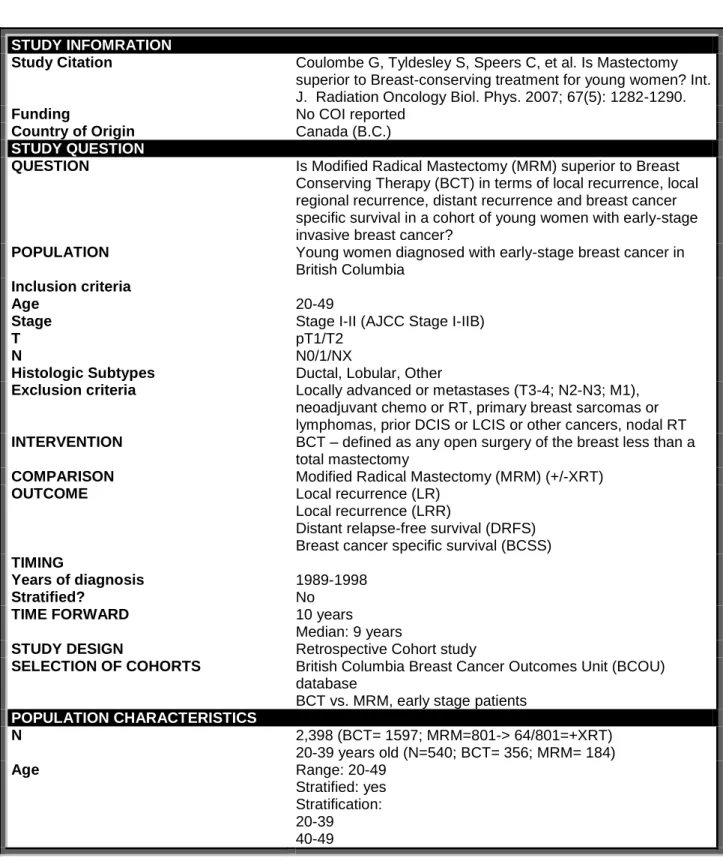
Table 1. Coulombe, et al.
STUDY INFOMRATION
Study Citation Coulombe G, Tyldesley S, Speers C, et al. Is Mastectomy superior to Breast-conserving treatment for young women? Int. J. Radiation Oncology Biol. Phys. 2007; 67(5): 1282-1290.
Funding No COI reported
Country of Origin Canada (B.C.)
STUDY QUESTION
QUESTION Is Modified Radical Mastectomy (MRM) superior to Breast Conserving Therapy (BCT) in terms of local recurrence, local regional recurrence, distant recurrence and breast cancer specific survival in a cohort of young women with early-stage invasive breast cancer?
POPULATION Young women diagnosed with early-stage breast cancer in British Columbia Inclusion criteria Age Stage T N Histologic Subtypes 20-49
Stage I-II (AJCC Stage I-IIB) pT1/T2
N0/1/NX
Ductal, Lobular, Other
Exclusion criteria Locally advanced or metastases (T3-4; N2-N3; M1), neoadjuvant chemo or RT, primary breast sarcomas or lymphomas, prior DCIS or LCIS or other cancers, nodal RT
INTERVENTION BCT – defined as any open surgery of the breast less than a
total mastectomy
COMPARISON Modified Radical Mastectomy (MRM) (+/-XRT)
OUTCOME Local recurrence (LR)
Local recurrence (LRR)
Distant relapse-free survival (DRFS) Breast cancer specific survival (BCSS)
TIMING
Years of diagnosis Stratified?
1989-1998 No
TIME FORWARD 10 years
Median: 9 years
STUDY DESIGN Retrospective Cohort study
SELECTION OF COHORTS British Columbia Breast Cancer Outcomes Unit (BCOU) database
BCT vs. MRM, early stage patients
POPULATION CHARACTERISTICS
N 2,398 (BCT= 1597; MRM=801-> 64/801=+XRT)
20-39 years old (N=540; BCT= 356; MRM= 184)
38
Race Not reported/controlled for
SES Not reported/controlled for
HR status assessed ER ONLY
Hormone therapy Yes
Chemotherapy Yes, adjuvant only
POTENTIAL FOR SELECTION BIAS? (+, ++, +++)
(Based on appropriate selection of cases or cohorts and controls, descriptive demographics, eligibility criteria (and how chosen), and initial comparability of groups)
++
Logistic regression was carried out only on patients without missing data for the included variables and with a minimum of 10 years follow-up.
OUTCOME MEASUREMENT
Definition of outcome LR: time from diagnosis to recurrence in ipsilateral breast, overlying skin, or chest wall.
LRR: time from diagnosis to first ipsilateral local or regional nodal recurrence.
Censored at the earliest of the following dates: distant relapse occurring >30 days before LR or LRR, subsequent
contralateral breast cancer occurring before LR/LRR, date of death or last follow-up. When LR/LRR occurred within 30 days of distant relapse, the relapses were considered concurrent and were recorded as occurring on the date of the earlier events.
DRFS: time from diagnosis to first relapse beyond ipsi breast
and regional lymph nodes.
Censored at the time of a subsequent contralateral new primary breast cancer occurring before a distant relapse, date of death, or last follow-up.
BCSS: time between initial diagnosis and death when breast cancer was the primary or underlying cause of death.
Method of Outcome Assessment How often?
Equal, valid, reliable?
Outcome data reported in database
Unclear since voluntary data.
Length of follow-up time +++
POTENTIAL FOR MEASUREMENT BIAS? (+, ++, +++)
+/++;
Measurement of exposure:
No set definition of ”extensive DCIS”.
BCOU includes centrally reviewed and non-centrally reviewed path reports.
One of variables is absence or presence of “noticeable DCIS”? Again unclear how this is measured/defined.
XRT does differed between groups and within groups
CONFOUNDING
Quality of intervention Not likely to be different
Confounders and how each was
addressed
1. DID NOT CONTROL FOR XRT in
mastectomy group since strongly related to
surgery, kept all mastectomy +XRT in
analysis-> controlled for margin status since
patients requiring post-M XRT are likely to
have positive chest wall margins.
39
“noticeable DCIS”, central or mutifocal
lesions.
POTENTIAL FOR CONFOUNDING?(+, ++, +++)
++
STATISTICAL ANALYSIS
Statistical Analysis Conducted a subgroup analysis on “ideal BCT candidates”=
tumor size ≤ 2cm, pN0, clear surgical margins, no extensive DCIS= AJCC Ia
Survival analysis for using forward binary logistic regression (b/c violated proportional hazards). Type of surgery was last to include in regression mode-> includes women 40-49. Those with minimum of 10 year follow-up and no missing values.
Powered to show difference? Not stated a-priori
Variables controlled for in regression model
Age, size of tumor, tumor location, number of positive nodes, ER status, grade, LV status, margin status, primary histology, presence or absence of noticeable DCIS, and +/- of initial adjuvant chemo or hormone therapy.
RESULTS LRFS
Results In young study cohort (20-39)
BCT= 86% MRM= 83.8% P= 0.34
In ideal candidates (20-39)
BCT= 86.3% MRM= 95.1% P= 0.30
Magnitude 3.8% in study cohort; 8.8% in ideal
Direction Study (I-IIB): slightly favors BCT; ideal(IA) favors MRM
Statistically significant? No
Clinically relevant? Yes, in ideal subgroup
LRRFS
Results In young study cohort (20-39)
BCT= 82.6% MRM= 80.9% P= 0.41
In ideal candidates (20-39)
BCT= 84.0% MRM= 87.3% P= 0.94
Magnitude I-IIB: 1.7%; 1a: 3.3%
Direction I-IIB group favors BCT; IA group favors MRM
Statistically significant? No
Clinically relevant? No
DRFS
Results In young study cohort (20-39)
40 In ideal candidates (20-39)
BCT= 85.7% M= 75.4% P= 0.17
Magnitude I-IIB: <1%; IA: 9.3%
Direction Favors BCT in ideal candidates (1a)
Statistically significant? No
Clinically relevant? Yes
BCSS
Results In young study cohort (20-39)
BCT= 79.8% MRM= 74.9% P= 0.09
In ideal candidates (20-39)
BCT= 90.8% M= 86.0% P= 0.41
Magnitude Stage I-IIB: 4.9%; Stage IA: 4.8%
Direction Favors BCT in both groups
Statistically significant? Almost in I-IIB group
Clinically relevant? Yes
CONCLUSIONS/COMMENTS Overall conclusions/interpretation (include consistency with other studies; biologic plausibility; conflicts of interest; selective endpoint reporting; costs; potential harms; patient decision making preferences)
Logistic regression was carried out only on patients without missing data for the included variables and with a minimum of 10 years follow-up.
QUALITY RATING OF STUDY: GOOD, FAIR, POOR Selection of cohorts ++
Adjustment for Confounding +
Measurement +
Statistical analysis +
Internal validity ++
External validity/Generalizability +
STUDY QUALITY SCORE Poor
STRENGTH/GRADE OF EVIDENCE: HIGH, MODERATE, LOW
Study Design ++
Study Quality +
Consistency +
Directness +
Precision Unknown