Yumeng Liu. A Natural Language Processing Approach to Analyzing Consultation Visits for Treatment Decision Making for Localized Prostate Cancer. A Master’s Paper for the M.S. in I.S degree. April, 2018. 36 pages. Advisor: Fei Yu
This quantitative study investigates the information seeking and giving behaviors of doctors, prostate cancer patients and their family members during consultation visits. The dataset was a transcript of audio-recordings of real-time treatment consultations collected from 171 consultation visits in a clinical trial. For text analysis purposes, a question mark in a transcript sentence was used to signal the information seeking behavior while a period was used to signal information giving behavior. Two counting methods were adopted to investigate the effect of a decision aid intervention that was created to facilitate the prostate cancer patient consultation. Data process, cleaning and analysis were performed by Python, which shows the decision aid intervention promoted the patient’s information seeking and giving behavior during the consultations. Topic analysis of specific target population showed different communication styles from Caucasian and African America population. What’s more, the results contribute to the decision aid for patients and training on communications in the clinical visits.
Headings:
Natural Language Processing
Topic Analysis
A NATURAL LANGUAGE PROCESSING APPROACH TO ANALYZING CONSULTATION VISITS FOR TREATMENT DECISION MAKING FOR
LOCALIZED PROSTATE CANCER
by Yumeng Liu
A Master’s paper submitted to the faculty of the School of Information and Library Science of the University of North Carolina at Chapel Hill
in partial fulfillment of the requirements for the degree of Master of Science in
InformationScience.
Chapel Hill, North Carolina
April 2018
Approved by
_______________________________________
Table of Contents
Table of Contents ... 1
Introduction ... 2
Literature Review... 4
2.1 The decision making challenges that prostate cancer patients have been facing . 4 2.2 Information seeking and giving behavior in clinical setting ... 7
2.3 Natural Language Processing Approach on clinical text ... 9
Methods... 11
3.1 Data Source ... 11
3.2 Data Analysis ... 12
Results ... 17
4.1 Information seeking behavior... 17
4.1.1 Information seeking behavior by Method 1 ... 17
4.1.2 Information seeking behavior by Method 2 ... 18
4.2 Information giving behavior... 19
4.2.1 Information giving behavior by Method 1 ... 19
4.2.2 Information giving behavior by Method 2 ... 20
4.3 The comparison between Caucasian and African America group ... 21
4.3.1 The comparison between Caucasian and African America group by Method 1 21 4.3.2 The comparison between Caucasian and African America population by Method 2 ... 22
4.4 Topic Analysis... 24
4.4.1 Topic analysis of information seeking behavior dominated by patients in TD group (Method 1) ... 25
4.4.2 Topic analysis of information giving behavior from Caucasian vs African American patients (Method 2) ... 26
4.5 Limitations ... 30
Discussion & Conclusion ... 28
Introduction
Prostate cancer has become the most frequently diagnosed non-skin men cancer in U.S.
As the latest statistics show that there are 181,000 new cases of prostate cancer diagnosed
in 2016 (Song et al., 2017). Every treatment option of prostate cancer will unlikely avoid
complications and side effects. Generally, the decision on whether and how to treat
prostate cancer is considered preference sensitive and largely depends on the
communication between the health care provider (HCP) and patients. Having a better
understanding of patient concerns and information needs can contribute to the
decision-making and patient quality of life (Song et al., 2017).
During patient-centered clinical consultations, patients share their values and concerns
about the potential benefits and harms of different treatment options; HCPs explain the
medical condition and treatments and help patients make informed treatment decisions.
Patient-HCP communication varies from one-way communication (i.e., information flow
from HCPs to patients only) to two-way communication (i.e., both HCPs and patients
share the communication content, responsibility, and their preferences and values) (Song
et al., 2015).
The purpose of this study is to investigate the communication patterns (i.e., information
seeking and information giving behavior) between prostate cancer patients, their family
members and HCPs during consultation visits.
(1) Does the decision aid promote information seeking and giving behavior of roles
(HCPs, patients and its family members) in consultation visits?
(2) Are there communication style differences from specific target population in the
consultation visits?
This study will help improve the communication between HCPs, prostate cancer patients,
their family members for informed treatment plan decision making by providing insight
Literature Review
The literature review covers three major areas: the decision making challenges that
prostate cancer patients have been facing, previous studies on information seeking and
giving behavior in clinical settings, and natural language processing methods related to
text script mining and analysis.
2.1
The decision making challenges that prostate cancer patients have
been facing
Prostate cancer is the most frequently diagnosed cancer type for men. In the United
States, with 181,000 new cases diagnosed in 2016; approximately 90% of prostate cancer
patients have localized or regional disease (Song et al., 2017). Although there are many
treatment options for patients to choose, currently there is no consensus regarding the
efficacy of routine screening, nor has one treatment modality been demonstrated as the
best choice. Patients and their family members (i.e., mostly are their spouse) are asked to
choose from several options: radical prostatectomy, radiation therapy, or the “watch and
wait” approach (O’Rourke, 1999).
Since there is no strong quality evidence and little professional consensus on one specific
treatment over another, it is impossible to create clinical guidelines regarding treatment.
A previous study (Patel, Mirsasdraee, & Emberton, 2003) revealed that the process of
choosing treatment options was based on input from a large number of factors; there was
little evidence regarding which type of input exerts the greatest influence on patients.
The input with most bias may have greatest influence on patients’ decision making. In
different types of input in the treatment decision making process. Based on Patel et al.'s
study (2003), factors that influence treatment decisions made by men with prostate cancer
include patient factors; family, friends, acquaintances and others, general practitioner;
hospital doctors and nurse specialists.
However, Aning, Wassersug, & Goldenberg's study (2012) found that patients repeatedly
saw their health care providers as their most important source of information, and they
relied on their HCPs to inform them of management options. The HCPs still appear to
have the most direct influence on patient decision making. Nevertheless, how long this
status will take is uncertain. Since once being aware of their diagnosis, most patients
prefer to take an active or collaborative role with their physician in decision-making. If
the patients can be well guided through training books or other interventions (decision
aids), they can be more active in the decision making process.
For example, Patel et al. (2003) found men with newly diagnosed prostate cancer who
were assisted in obtaining information on the diagnosis were significantly more active in
medical decision making and reported lower levels of anxiety. However, the degree of
involvement varied from patient to patient. The observation from Cassileth et al.'s study
(1989) showed that prostate cancer patients were satisfied with their treatment choices
over time and suggested that patients can indeed play an active role in making intelligent
decisions about their own care and treatment options and that they remain comfortable
and satisfied with their choices.
Besides patients and HCPs, family members also influence medical decision making. The
research conducted by O’Rourke (1999) found that decisions regarding treatment were
styles of patients and their spouses. However, family members are not always consistent
in the decision making. In addition, besides HCPs’ professional advice, they also used
informal networks from other family members and lay literature as preferred information
sources in the United States.
What’s more, the culture issues also should be considered into treatment decision
making, such as patient’s personal education background, age, race. To identify these
factors can help increase the attendance in the consultation visits.
Besides the communication itself, researchers found that a good decision aid which can
meet the information need of prostate cancer patients and their family members. Based on
patients’ preference study, Aning et al.(2012) found that the information needs of prostate
cancer patients were not well met and decision-making aids were a positive treatment
adjunct both to convey information and to allow patients to explore their own beliefs and
values during the decision-making process. The results suggested that decision-making
aids better prepared patients for involvement in treatment decisions. Lin, Aaronson,
Knight, Carroll, & Dudley (2009) also found that the use of decision aids can help
patients gain more relevant knowledge and more actively involved in decision-making,
and decrease levels of anxiety and distress. In general, Lin et al. (2009) thought that
consistent use of decision aids may help fill the information void and allow for more
efficient and more effective discussions between health care providers and patients; the
decision aids improved both subjective and objective knowledge at the same time. In
addition, it is important that decision aids also provide guidance and assistance to patients
In conclusion, unfortunately, there is no one best treatment option for prostate cancer
patients. The patients have to decide the treatment option for themselves. In the
consultation visits for treatment options the communications between patient, doctors,
and family members play a very important role in treatment decision making.
2.2
Information seeking and giving behavior in clinical setting
The reviewed literatures discussed the information needs of patients and their family
members, health-related information seeking behavior, and specifically, the HCPs’
information giving behavior.
2.2.1 information needs of patients and family members
Prostate cancer patients and their family members have enormous and a variety of
information needs; however, in many occasions, their information needs are not met
although they’re satisfied with the information already acquired. Echlin & Rees (2002)
first described the distinct information needs and information-seeking behaviors that men
with prostate cancer have throughout their cancer journeys. Then, they stated that
although there is considerable variation in the amount and type of information that men
required, the majority of men with prostate cancer were satisfied with the information
they receive. However, Echlin & Rees (2002) showed that thirty percent of men and 25%
of family members/friends stated that they did not receive timely and appropriate medical
information during the investigation of their prostate cancer. Lin et al. (2009) also found
that although men with prostate cancer have enormous needs for information, these needs
are often unmet. Nevertheless, Wallston & Maides (1976) believed that the more
information a person has about a threatening condition, the more likelihood this person
2.2.2 Information seeking behavior
According to Wallston & Maides (1976), the definition of information seeking behavior
is a chain of behaviors which ultimately might lead to positive or negative consequences
in the process of consultation visits. Although relevant information is generally available
from a wide variety of sources, individuals differ greatly in the extent to which they seek
and subsequently make use of such input.
Cancer patients always have an intention to talk about their own condition and the extent
of information seeking depends on multiple factors. Borgers et al.'s study (1993) found a
large number of cancer patients indicated an intention to discuss one or more aspects of
their illness and treatment with the HCPs. The factors that might influence patients to
seek information from the specialist at the outpatient clinic is uncertainty, fear and
dissatisfaction with information received. In general, the information-seeking behavior of
cancer outpatients appears to be influenced by several factors, including patients’ needs,
values and beliefs; unexpected situations; patients’ skills; and specialists’ and
companions’ behavior.
2.2.3 Information giving behavior
For the information giving behavior, the literature focused more on health care providers’
information giving behavior. A meta-analysis(Hack et al., 2012) summarized that there
are five categories in physician-patients’ communication: information giving, question
asking, partnership building, rapport building and emotional support. Both Hack et al.
(2012) and Borgers et al. (1993) believed that physician scored too high on information
2.3
Natural Language Processing Approach on clinical text
Natural language processing (NLP) and information extraction (IE) are commonly
applied within health related text in terms of processing large quantities of unstructured
text and returning structured information (Jackson et al., 2017).A large number of tools
and frameworks exist for general purposes of information extraction from clinical
dictionaries, such as cTAKES,NOBLEand MedLee.
cTakes is an open-source natural language processing system for information extraction
from electronic health record clinical free-text. It can process clinical notes, identify types
of clinical named entities such as drugs, diseases/disorders, signs/symptoms, anatomical
sites and procedures. In Hong et al.'s (2016) and Weng's (2017) studies, cTakes was used
to extract key features from datasets. Similar to cTakes, MedLEE has been used to
extract, structure, and encode clinical information in textual patient reports so that the
data can be used by subsequent automated processes.
NOBLE is a text mining tool and API that automatically codes free text with concepts
from controlled terminology. Its algorithm is similar to IndexFinder (Zou, Chu, Morioka,
Leazer, & Kangarloo, 2003) or ConceptMapper (Tanenblatt, Coden, & Sominsky, 2009),
but unlike these systems, NOBLE Coder uses NoSQL for data storage which enables it to
code with huge terminologies while keeping its in-memory footprint small. Tseytlin,
Mitchell, & Legowski (2016) used NOBLE Coder to implement a general algorithm for
matching terms to concepts from an arbitrary vocabulary set. Compared to Ctakes,
Among professional text mining tools, Python and NLTK package are the most popular
ones. Ruano (2018) used both R and Python to perform text mining, machine learning,
deep learning analyses, and data visualization.
In addition, for specific bibliometric text mining, VOSviewer (Yu & Hayes, 2018) is
Methods
3.1
Data Source
My Master Paper advisors provided me with the transcripts of the consultation visits
involving health care providers, prostate cancer patients, and their family members,
which I used as the original dataset for this study. One of my master paper advisors (i.e.,
Dr. Lixin Song) used this dataset in her previous studies on the decision aid for prostate
cancer patients (Song et al., 2015, 2017) . This study reused the same dataset to address
the information seeking and giving issues between patients, doctors, and family members.
The original dataset was audio-recorded and de-identified. To gain access to and handle
the original dataset, I was added to the IRB application for this study (IRB#14-0750) and
obtained a certification of the Collaborative Institutional Training Initiative (CITI)
program at the University of North Carolina at Chapel Hill.
In the original dataset (Song et al., 2017), all the participants were from a randomized
clinical trial (RCT) which was for testing the effects of a decision aid intervention in the
southeast of USA. In the RCT, patients were randomly divided into 3 groups: a control
group with usual care (control), intervention directed to the patient (TD), and intervention
directed to the patient and family support person (TS).
The intervention tool adopted in the previous studies (Song et al., 2015, 2017) included a
DVD that introduced communication strategies about how to engage in effective
communication using information giving, seeking, verifying and clarifying skills, a
prostate cancer, and 4 telephone calls from a trained nurse interventionist who was
responsible for answering patients’ all kinds of questions. The patients and family
members in the TS group received 4 telephone calls from the same nurse respectively.
About the participant recruiting, patients were eligible if they (1) were newly diagnosed
with localized prostate cancer; (2) were identified at least 10 days before the treatment
consultation appointment; (3) had no major cognitive impairment; (4) had no prior cancer
history; (5) could read and speak English; and (6) had a family member who was
identified as providing primary support to the patient (PSP) and was willing to participate
in the study. All intervention and control groups contained both African-American and
Caucasian men with prostate cancer.
After recruiting participants and transcribing their audio-recorded consultation visits into
texts, in the final dataset, there are 171 consultation visits (N = 60 in TD; N = 57 in TS;
and N = 54 in control group) in total. Furthermore, I divided the control group into two
additional subgroups by race (N = 38 in Caucasian and N = 16 in African America).
3.2
Data Analysis
The first step is to clean the dataset. I transformed the original dataset format from .doc
format to .txt to facilitate data processing in Python. Then, I used Python to categorize
every role (i.e., patient, family member, HCP) in each consultation visit. The processed
conversation script clearly differentiated the roles into “Doctor: …”, “Patient: …”,
“Family Member: …”.
The next step is to do the specific data analysis. The information seeking behavior was
examined by analyzing the questions from doctors, patients and family members in the
different roles (i.e., patients, family members, and HCPs). The statistical counts of both
the questions representing information seeking and the statement representing
information giving instances help were generated to investigate the information seeking
and giving behaviors of different roles (i.e., patients, doctors and family members).
For text analysis purposes, the question marks in the original text were used to signal the
information seeking behavior and the periods were used to signal information giving
behavior. In addition, two methods were adopted to investigate the patterns of
information seeking and giving behaviors.
Method 1 was adopted to reveal which role’s information seeking or giving behavior
dominated a consultation visit. If a role (i.e., patient, doctor, or family member) has more
questions or statements than the others, this role was regarded as the dominant role
during a consultation visit. Since family members’ participation was relatively low in the
consultation visits, the results of Method 1 automatically excluded the role of family
members. In the final statistics, the data is shown as the percentage of patients who
dominated the consultation in information seeking/giving and the percentage of doctors
who dominated the consultation in formation seeking/giving. Take TD group as an
example, in the information seeking domination statistical chart, the percentage of
patients who dominated the consultation in information seeking = the number of
consultation visits in which patients dominated the information seeking / the total number
of consultation visits in TD group; The percentage of doctors who dominated the
consultation in information seeking = the number of consultation visits in which doctors
dominated the information seeking / the total number of consultation visits in TD group.
dominated the consultation in information giving = the number of consultation visits in
which patients dominated the information giving / the total number of consultation visits
in TD group; The percentage of doctors who dominated the consultation in information
giving = the number of consultation visits in which doctors dominated the information
giving / the total number of consultation visits in TD group.
Method 2 was adopted to show the distribution of information seeking and giving
behaviors among different roles in each group by counting the total number of question
marks and periods in each group (i.e., TD, TS, and Control group) from each role’s
transcript. In the final statistics, the data is shown as the percentage of information
seeking/giving behavior by patients/family members/doctors. Take TD group as an
example, in the information seeking behavior chart, the percentage of patients’
information seeking behavior = the number of questions asked by patients / total number
of questions in TD group; The percentage of family member’s information seeking
behavior = the number of questions asked by family members / total number of questions
in TD group; The percentage of doctors’ information seeking behavior = The number of
question asked by doctors / total number of questions in TD group (Note: Total number
of questions in TD group = The number of questions asked by patients + The number of
questions asked by family members + The number of question asked by doctors).
In the information giving behavior chart, the percentage of patients’ information giving
behavior = the number of statements said by patients / total number of questions in TD
group; The percentage of family member’s information giving behavior = the number of
statements said by family members / total number of questions in TD group; The
doctors / total number of questions in TD group. These two methods aimed at seeing if
there is significantly difference in information seeking/giving behavior across the three
groups.
Comparing Method 1 and 2, Method 1 is a micro-level analysis focusing on the
information seeking/giving behavior demonstrated at each consultation visit while
Method 2 is a macro-level analysis focusing on the overall information seeking/giving
behavior in all consultation visits for each study group. Method 1 aimed at revealing the
common behavior pattern case by case and extracting the domination role by binary
counting. It can give a more direct way to see the effect of intervention on patients but
not for family members because family members’ participation was relatively low.
Method 2 tried to explore the overall behavior pattern in each group by full counting. It
didn’t consider the different conversational conditions and patients’ personal
demographics may play a role in affecting the information seeking and giving.
A Python script was developed to extract the number of questions and statements from
each consultation transcript and analyze information seeking and giving patterns.
Statistical charts were generated in excel based on the counts generated by data
processing in Python.
Moreover, this study conducted a topic analysis for patients’ information seeking and
information giving behavior by using VOSviewer (http://www.vosviewer.com/).
VOSviewer is a software for constructing and visualizing bibliometric networks. It also
offers text mining functionality that can be used to construct and visualize co-occurrence
language processing techniques are available in VOSviewer for creating term
co-occurrence networks based on English-language textual data. Relevant and non-relevant
terms can be distinguished algorithmically. I chose to use this software to calculate the
frequency and co-occurrence of the terms in the transcript and produce visualization
analytics. The visualization showed the most frequently occurred terms and clustered
these terms by co-occurrences. The purpose of topic analysis is to see the common
Results
4.1
Information seeking behavior
4.1.1 Information seeking behavior by Method 1
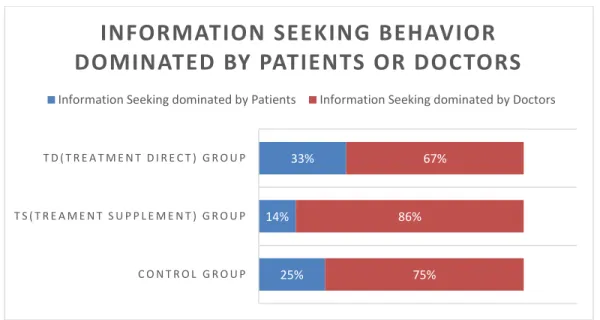
Regarding information seeking behavior investigated by Method 1, the result (Figure 1)
shows that in TD group, there are 33% consultation visits in which the patients
dominated the information seeking; there are 14% consultation visits in which the
patients dominated the information seeking behavior in TS group; there are 25%
consultation visits in which the patients dominated the information seeking behavior in
the control group. Compared to both TS and control group, there are higher percentage of
patients who engaged in information seeking in the TD group.
From the doctors’ information seeking, there are 86% consultation visit in which the
doctors dominated the information seeking in TS group, which is higher than 67% in TD
Figure 1 Information seeking behavior domination by patients or doctors
4.1.2 Information seeking behavior by Method 2
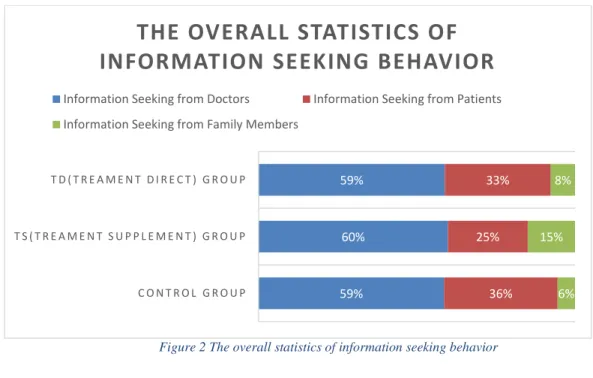
Regarding the distribution of information seeking behavior investigated by Method 2, the
result (Figure 2) shows that the percentages of patients’ and doctors’ information seeking
are almost the same across three groups, which means the total number of asked
questions in each group is about the same. However, there are higher percentage of
family members who engaged in information seeking in TD group (8%) and TS group
(15%) than in the control group.
25% 14%
33%
75% 86%
67%
C O N T R O L G R O U P T S ( T R E A M E N T S U P P L E M E N T ) G R O U P T D ( T R E A T M E N T D I R E C T ) G R O U P
INFORMATION SEEKING BEHAVIOR
DOMINATED BY PATIENTS OR DOCTORS
Figure 2 The overall statistics of information seeking behavior
4.2
Information giving behavior
4.2.1 Information giving behavior by Method 1
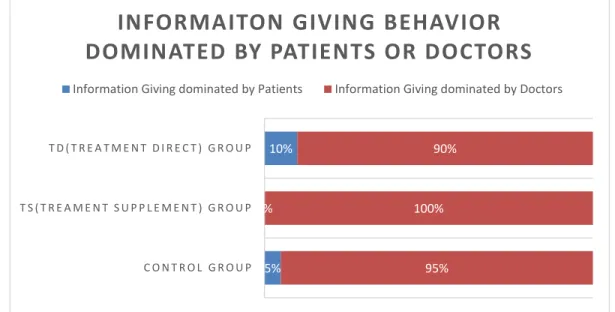
Regarding information giving behavior examined by Method 1, there were higher
percentage (i.e., 10%) of patients who engaged in information giving behavior in the TD
group than 5% in the control group (Figure 3). Due the binary counting in Method 1, no
patients dominated information giving behavior during a consultation visit in TS group.
From the doctors’ information giving, doctors completely dominated the consultation
visits in TS group. In the TD and control group, there are respectively 90% and 95% of
consultation visits in which doctors dominated information giving.
59% 60% 59%
36% 25%
33%
6% 15%
8%
C O N T R O L G R O U P T S ( T R E A M E N T S U P P L E M E N T ) G R O U P T D ( T R E A M E N T D I R E C T ) G R O U P
THE OVERALL STATISTICS OF
INFORMATION SEEKING BEHAVIOR
Figure 3 Information giving behavior domination by patients or doctors
4.2.2 Information giving behavior by Method 2
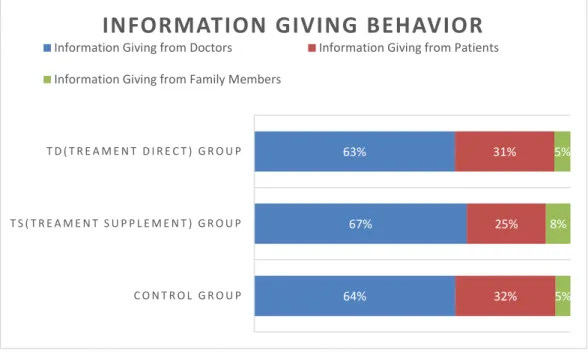
Regarding the information giving behavior examined by Method 2, the percentages of
overall information giving by both patients and HCPs across three groups were about the
same in terms of the total number of statement sentences. However, family members
demonstrated slightly higher information providing percentage (8%) in TS group
compared to TD (5%) and the control group (5%).
5% 0%
10%
95% 100%
90%
C O N T R O L G R O U P T S ( T R E A M E N T S U P P L E M E N T ) G R O U P T D ( T R E A T M E N T D I R E C T ) G R O U P
INFORMAITON GIVING BEHAVIOR
DOMINATED BY PATIENTS OR DOCTORS
Figure 4 The overall statistics of information giving behavior
4.3
The comparison between Caucasian and African America group
The control group was selected compare the information seeking/providing behavior
difference in different races (Caucasian and African America) because the control group
just followed the protocol of routine medical practice.
4.3.1 The comparison between Caucasian and African America group by
Method 1
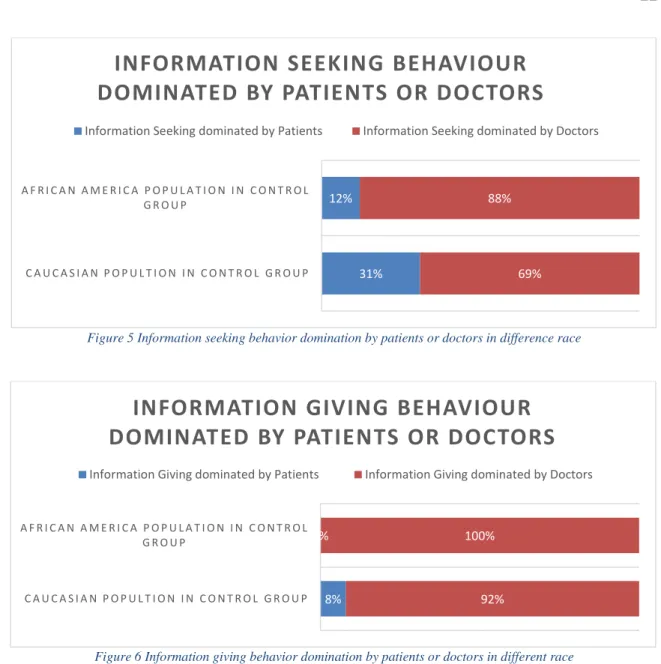
Using method 1, there are higher percentage of patients who engaged in information
seeking (31%) and information giving (8%) behavior in the Caucasian group than in the
African America group (Figure 5 & 6). In addition, African American patients did not
dominate the information giving in any of the consultation visit.
64% 67% 63%
32% 25% 31%
5% 8%
5%
C O N T R O L G R O U P T S ( T R E A M E N T S U P P L E M E N T ) G R O U P T D ( T R E A M E N T D I R E C T ) G R O U P
INFORMATION GIVING BEHAVIOR
Information Giving from Doctors Information Giving from Patients
Figure 5 Information seeking behavior domination by patients or doctors in difference race
Figure 6 Information giving behavior domination by patients or doctors in different race
4.3.2 The comparison between Caucasian and African America population
by Method 2
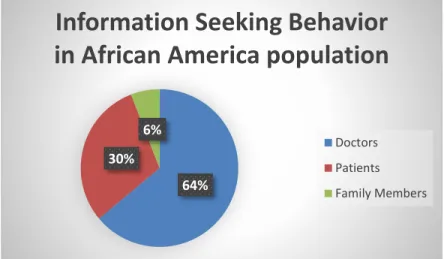
Using method 2, the results show that, compared to the African America patients (30%),
there are higher percentage (38%) of Caucasian patients engaging in information seeking
(Figure 7 & 8). Regarding information giving behavior, higher percentage (33%) of
Caucasian patients engaged in information giving than the African America patients
(28%) (Figure 9 & 10).
31% 12%
69% 88%
C A U C A S I A N P O P U L T I O N I N C O N T R O L G R O U P A F R I C A N A M E R I C A P O P U L A T I O N I N C O N T R O L
G R O U P
INFORMATION SEEKING BEHAVIOUR
DOMINATED BY PATIENTS OR DOCTORS
Information Seeking dominated by Patients Information Seeking dominated by Doctors
8% 0%
92% 100%
C A U C A S I A N P O P U L T I O N I N C O N T R O L G R O U P A F R I C A N A M E R I C A P O P U L A T I O N I N C O N T R O L
G R O U P
INFORMATION GIVING BEHAVIOUR
DOMINATED BY PATIENTS OR DOCTORS
Therefore, for both information seeking and giving, Caucasian patients demonstrated
higher percentage of engagement than the African America patents.
Figure 7 Information seeking behavior proportion in Caucasian population
Figure 8 Information seeking behavior proportion in African America population
57% 38%
5%
Information Seeking Behavior
in Caucasian population
Doctors
Patients
Family Members
64% 30%
6%
Information Seeking Behavior
in African America population
Doctors
Patients
Figure 9 Information giving behavior in Caucasian population
Figure 10 Information giving behavior in African America population
4.4
Topic Analysis
Since the results show that generally more patients in TD group engaged in information
seeking during each consultation visit than TS and control group (Figure 1), The
questions asked by patients in TD group were selected for further topic analysis. In
addition, the information giving by African American patients and Caucasian patients
during consultations were analyzed and compared as well.
63% 33%
4%
Information Giving Behavior in
Caucasian population
Doctors
Patients
Family Members
66% 28%
6%
Information Giving Behavior in
African America population
Doctors
Patients
4.4.1 Topic analysis of information seeking behavior dominated by patients
in TD group (Method 1)
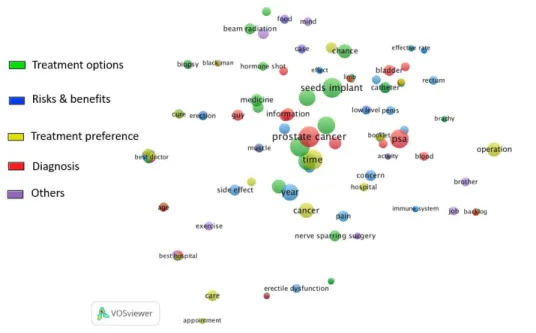
Overall, the topics of patients’ information seeking in TD group spread to five main
areas: treatment options, risks & benefits, treatment preference, diagnosis and others. In
each area, there are terms that occurred in high frequencies. For example, in the area of
treatment options, patients were most concern with seeds implant treatment, beam
radiation treatment and medicine treatment. In the area of risks & benefits, the patients
concerned over the side effect of the specific treatment options and possible pain. The
results show that the patients who dominated the conversation in a consultation visit are
more likely to ask specific treatment options and its side effects (Figure 11).
4.4.2 Topic analysis of information giving behavior from Caucasian vs
African American patients (Method 2)
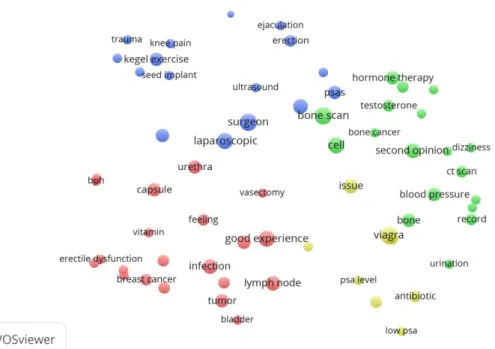
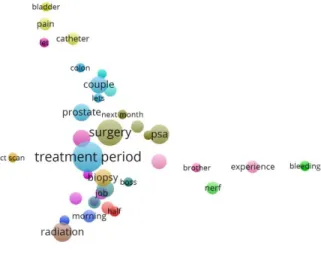
The topics that Caucasian patients in control group included drug use, health quality, and
treatment options (Figure 12) while what African America patients appeared to mostly
concern on treatment period, radiation and surgery (Figure 13).
Discussion & Conclusion
This study investigated the information seeking and giving behavior of patients, HCPs
and their family members in three groups by two methods. The results from Method 1
investigation clearly show that the decision aid intervention did play a very important
role in encouraging the information seeking behavior of patients during the consultation
visits, which is consistent with a previous study (Song et al., 2017). One justification
provided by the previous researcher may also applied to this study (Song et al., 2017, p.
6),
“it is likely that prior to their consultation visits, patients and their family members, when both were involved in the intervention, received more
information from the multi-component intervention about prostate cancer that was pertinent to the patient’s condition. They may also have discussed the related issues with the intervention nurse and between themselves, especially the
psychosocial issues related to prostate cancer. These information and discussions ahead of the consultation visit, in turn, may have resulted in a reduction in their subsequent requests for additional information from physicians than what had been provided during consultation.”
However, the results produced from adopting Method 2 show that the patients’
information seeking and giving behavior did not have significantly difference across
three groups. One possible explanation is that overall, patients’ personality,
characteristics, education levels, and communication styles, etc. are the key factors on
their information seeking and giving behavior, which is independent from decision aid
intervention.
Moreover, this study also found a relatively higher percentage of patients and family
members in the control group demonstrated the information seeking and giving behavior
trial, patients in the control group received information about how to stay healthy during
treatment for prostate cancer, which may have increased patients’ and family members’
concerns about the treatment procedures and thus may have led them to ask more related
questions for physicians to clarify. Maybe because of lacking sufficient information about
prostate cancer and its treatments have brought these patients and their family members
to ask more for the cancer itself” (Song, 2017, p. 7). The findings from this study support
that the adoption of the communication training and professional aid contribute to the
patients’ participation in the process of treatment.
This study revealed the commonly concerned topics discussed by patients in the TD
group include treatment options, risk & benefits, treatment preference, diagnoses and
others. This disclosure can help health professionals improve the design of decision aid
intervention in terms of creating targeted education contents for the prostate cancer
patients. For example, the booklet or DVD can highlight seeds implant and beam
radiation which appeared to be frequently discussed treatment options during consultation
visits. In addition, the identified key topics in risks & benefits of treatment options can
prompt HCPs to prepare their information giving during a consultation visit.
Furthermore, this study found the Caucasian population are more active in information
seeking and information giving than the African America population. Particularly, the
topic analysis showed Caucasian patients tended to use more professional terms about
drug use effects and treatment option in their information giving (i.e., testosterone) and
they were more knowledgeable about the available treatment options and process for
prostate cancer. On the contrary, the African America patients used more laymen terms in
America patients care more about the treatment cost, the possible effect on their job, and
the experience after treatment. Based on the results, this study would suggest the decision
aid and communication style shall be customized to target different race population and
education levels.
In conclusion, this quantitative study disclosed the latent information seeking and giving
patterns of both patients and HCPs through a natural language processing approach. The
findings not only confirm some of the results from previous studies (Song, et al., 2015,
2017), but also revealed new aspects in patient-HCP communication. The results will
help healthcare professionals improve the decision aid intervention, facilitate the
patient-HCP communication, and deliver more effective and personalized consultation services.
Limitations
This study has several limitations. First, since the original dataset was audio recorded and
transcribed to a text format (i.e., word document), some content was missing during the
transition process. In addition, there is a risk that the data cleaning process may cut the
dialogs out of the context and cause errors in data analysis.
Second, the sample size of consultation visits is small (only 171 consultation visits). the
results and conclusion from this study may not be generalizable.
Third, this dataset is created between 2004 and 2008. The communication style may
change significantly over the ten-year period. The findings may not be applicable to the
current medical communication practice.
Last but not least, these two research methods have their limitations as well. Method 1
automatically excluded the family member participation for analysis because the
took family member participation into consideration but can hardly accommodate the
factors of individual demographical difference. Some patients may like asking and
talking more naturally and some tend to ask or talk less no matter they receive decision
aid intervention or not. The high number of questions from patients asking more is
possibly neutralized with the low number of questions from patients asking less in a
group, which lead to insignificant differences.Future studies are expected to explore new
natural language processing methods in analyzing information seeking and giving
Bibliography
Aning, J., Wassersug, R. J., & Goldenberg, S. L. (2012). Patient preference and the impact of decision-making aids on prostate cancer treatment choices and post-intervention regret. Current Oncology, 19(S3), 37–44.
https://doi.org/10.3747/co.19.1287
Borgers, R., Mullen, P. D., Meertens, R., Rijken, M., Eussen, G., Plagge, I., … Blijham, G. H. (1993). The information-seeking behavior of cancer outpatients: a description of the situation. Patient Education and Counseling, 22(1), 35–46.
https://doi.org/10.1016/0738-3991(93)90087-D
Cassileth, B. R., Soloway, M. S., Vogelzang, N. J., Schellhammer, P. S., Seidmon, E. J., Hait, H. I., & Kennealey, G. T. (1989). Patients' choice of treatment in stage D prostate cancer. Urology, 33(5 Suppl), 57–62. Retrieved from
http://www.ncbi.nlm.nih.gov/entrez/query.fcgi?cmd=Retrieve&db=PubMed&a mp;dopt=Citation&list_uids=2523612
Echlin, K. N., & Rees, C. E. (2002). Information needs and information-seeking
behaviors of men with prostate cancer and their partners: a review of the literature.
Cancer Nursing, 25(1), 35–41. https://doi.org/10.1097/00002820-200202000-00008
Hack, T. F., Ruether, J. D., Pickles, T., Bultz, B. D., Chateau, D., & Degner, L. F. (2012). Behind closed doors II: Systematic analysis of prostate cancer patients’ primary treatment consultations with radiation oncologists and predictors of satisfaction with communication. Psycho-Oncology, 21(8), 809–817.
https://doi.org/10.1002/pon.1984
Hong, N., Li, D., Yu, Y., Xiu, Q., Liu, H., & Jiang, G. (2016). A computational framework for converting textual clinical diagnostic criteria into the quality data model. Journal of Biomedical Informatics, 63, 11–21.
https://doi.org/10.1016/j.jbi.2016.07.016
Jackson, R. G., Patel, R., Jayatilleke, N., Kolliakou, A., Ball, M., Gorrell, G., … Stewart, R. (2017). Natural language processing to extract symptoms of severe mental illness from clinical text: The Clinical Record Interactive Search Comprehensive Data Extraction (CRIS-CODE) project. BMJ Open, 7(1), 1–10.
https://doi.org/10.1136/bmjopen-2016-012012
https://doi.org/10.3322/caac.20039.Available
O’Rourke, M. E. (1999). Narrowing the options: The process of deciding on prostate cancer treatment. Cancer Investigation, 17(5), 349–359.
https://doi.org/10.3109/07357909909032877
PATEL, H. R. H., MIRSADRAEE, S., & EMBERTON, M. (2003). The Patient’s Dilemma: Prostate Cancer Treatment Choices. The Journal of Urology, 169(3), 828–833. https://doi.org/http://dx.doi.org/10.1097/01.ju.0000052056.27609.8a
Ruano, J. (2018). Evaluating characteristics of PROSPERO records as predictors of eventual publication of non-Cochrane systematic reviews: A meta-epidemiological study protocol. Systematic Reviews, 7(1), 43.
Song, L., Toles, M. P., Bai, J., Nielsen, M. E., Bailey, D. E., Sleath, B., & Mark, B. (2015). Patient Participation in Communication about Treatment Decision-Making for Localized Prostate Cancer during Consultation Visits, (November), 1419–1429. https://doi.org/10.4236/health.2015.711156
Song, L., Tyler, C., Clayton, M. F., Rodgiriguez-Rassi, E., Hill, L., Bai, J., … Bailey, D. E. (2017). Patient and family communication during consultation visits: The effects of a decision aid for treatment decision-making for localized prostate cancer. Patient
Education and Counseling, 100(2), 267–275.
https://doi.org/10.1016/j.pec.2016.09.012
Tanenblatt, M., Coden, A., & Sominsky, I. (2009). The ConceptMapper Approach to Named Entity Recognition, 546–551.
Tseytlin, E., Mitchell, K., & Legowski, E. (2016). NOBLE - Flexible concept recognition for large-scale biomedical natural language processing. BMC Bioinformatics, 17(1), 32.
Visualizing scientific landscapes. (n.d.). Retrieved April 09, 2018, from http://www.vosviewer.com/
Wallston, A., & Maides, S. (1976). Health-Related Information Seeking as a Function of Health-Related Locus of Control and Health Value It is a widely held tenet that the more information a person has about a particular Me-threatening condition , the greater the likelihood the person , wil. Journal of Research in Personality, 10(2), 215–222. Retrieved from isi:A1976BR18100009
Weng, W.-H. (2017). Medical subdomain classification of clinical notes using a machine learning-based natural language processing approach. BMC Medical Informatics and
Decision Making, 17(1), 155.
the Research Impact of the Cancer Cell Biology (CCB) Program at the University of North Carolina at Chapel Hill. Journal of eScience Librarianship, 7(71).
https://doi.org/10.7191/jeslib.2018.1123