Prostate biopsy upgrading and its implications on treatment modality and outcomes in men treated with radical prostatectomy or permanent seed implantation at UT
M.D. Anderson Cancer Center, 2000-2001
By
Christine M. Fisher, MD
A Master’s Paper submitted to the faculty of the University of North Carolina at Chapel Hill
in partial fulfillment of the requirements for the degree of Master of Public Health in
the Public Health Leadership Program.
Chapel Hill
2010
_________________________ [signature]
_________________________
Advisor: [printed name]
_________________________ Date
_________________________ [signature]
_________________________
Second Reader: [printed name]
ABSTRACT
Introduction: Radical prostatectomy and permanent seed implantation are among the
standard of care treatment options for men with low or intermediate risk prostate cancer.
Pathologic upgrading of Gleason score from biopsy to radical prostatectomy specimen
has been previously described, but the meaning for men undergoing permanent seed
implantation is unclear. The purpose of this study is to compare the biochemical
recurrence-free survival and prostate cancer specific survival outcomes of a cohort of
patients whose disease was upgraded between outside institution biopsy to UT MD
Anderson Cancer Center biopsy, or between biopsy to radical prostatectomy Gleason
score, to those patients who were not upgraded.
Methods: A retrospective cohort was assembled using data from 387 men with clinical
T1-T2b, prostate-specific antigen (PSA) level < 20 ng/mL, and Gleason score (GS) 6-7
disease on biopsy treated with either radical prostatectomy (n=294) or permanent seed
implantation (n=93) at the UT MD Anderson Cancer Center during 2000-2001. No
patient in the radical prostatectomy or permanent seed implantation group received
adjuvant external beam radiation therapy. We compared the 5-year biochemical
recurrence-free survival between the upgraded and non-upgraded patients using the
outside biopsy Gleason score, UT MD Anderson Cancer Center centrally reviewed
Gleason score, and radical prostatectomy Gleason score using Kaplan-Meier estimates.
The prostate cancer specific survival was compared between men who had full pathologic
Results: The median follow-up time was 7.2 years for the radical prostatectomy group and 7.6 years for the permanent seed implantation group. There was no statistically
significant difference in mean PSA level between men treated with radical prostatectomy
(6.2 ng/mL) and permanent seed implantation (6.6 ng/mL), and the most common clinical
stage was T1c for both groups. For patients presenting with outside pathologic review,
upgrading from Gleason 6 to Gleason 7 occurred in 43 men treated with radical
prostatectomy (14.6%) and 16 men treated with permanent seed implantation (17.2%).
For men treated with radical prostatectomy, 132 men had subsequent upgrading from MD
Anderson biopsy Gleason score to radical prostatectomy Gleason score (44.9%). In the
radical prostatectomy group, the biochemical recurrence-free survival at 5 years was
93.2% in men with concordance between the outside Gleason score and MD Anderson
central review Gleason score, and 95.3% for men with an upgrading from Gleason 6 to 7
(p=0.60). In the permanent seed implantation monotherapy group, the 5 year
biochemical recurrence-free survival rate was 91.6% in men with concordant Gleason
score, and 100% in men with upgrading from Gleason 6 to Gleason 7 (P=0.40).
Conclusions: In this retrospective cohort analysis with central pathology review at a
tertiary cancer center, we found no differences in biochemical recurrence-free survival
rates or prostate cancer specific survival for men who are upgraded versus not upgraded.
We are currently evaluating these findings in a prospective cohort of permanent seed
implantation monotherapy in men with intermediate risk localized disease.
INTRODUCTION
Burden of Suffering
Prostate cancer is the most common cancer diagnosis among men in the United
States, comprising one quarter of all cancer cases in males. In 2009, an estimated
192,280 men were diagnosed with prostate cancer. Prostate cancer is the second leading
cause of cancer death in men, following lung and bronchus cancer. An estimated 27,360
men died of prostate cancer in 2009.1
Prostate Cancer Screening and Diagnosis
Prostate cancer screening remains a contentious issue in the United States. The
American Cancer Society’s 2010 recommendations are for men to talk to their doctor
about the pros and cons of testing starting at age 50. For men who are African American
or who have a first-degree relative diagnosed with prostate cancer before age 65, the
American Cancer Society recommends initiating a conversation about prostate cancer at
age 45.2 The United States Preventive Services Task Force (USPSTF) recommendations
state are that there is insufficient evidence to assess the balance of benefits and harms for
prostate cancer screening in men under 75 years of age (Grade I statement). For men
over 75 years of age, the USPSTF recommends against prostate cancer screening (Grade
D Statement).3
Prostate cancer screening is accomplished through the use of a blood test to detect
PSA, with the accepted cutoff at 4.0 ng/mL. A digital rectal examination is performed to
palpate any prostate abnormalities and assign a clinical stage to any prostate cancer
PSA test and the digital rectal examination, but the current trend in prostate cancer
screening is to emphasize shared decision making before any screening is performed.4
In the PSA era, prostate cancer in most men is diagnosed as clinical T1c, meaning
that there is no palpable disease on digital rectal examination. From 1999 to 2006, 80%
of all newly diagnosed prostate cancer cases were classified as localized disease, meaning
that disease was limited to the prostate with no lymphatic or distant involvement. The
relative survival, looking at the population with localized disease compared to the general
population without prostate cancer, was 100% over the seven years from 1999 to 2006.5
Prostate Cancer Risk Stratification
Men presenting with prostate cancer are classified into different risk groups to
help determine an appropriate treatment strategy. The National Comprehensive Cancer
Network (NCCN) publishes a widely-used set of guidelines for oncologists in the United
States that lays out the steps to determine the management strategy for individual
patients. Initially, the NCCN recommended that men who are asymptomatic with a life
expectancy of less than five years undergo no further workup or treatment unless
symptoms develop. The exception to this is men with high risk disease features, who can
have a life expectancy of less than five years and are still recommended to pursue workup
and treatment.6
For the rest of the men with a life expectancy of greater than five years, the
NCCN recommends that the PSA, clinical stage, and Gleason score be evaluated to
assign each patient to a risk group. The NCCN recognizes six risk categories: very low
risk, low risk, intermediate risk, high risk, very high risk, and metastatic disease.6 Very
Gleason score of six or less, PSA < 10 ng/mL, and fewer than three biopsy cores positive
with less than 50% cancer in each core.7 This new category of very low risk was created
in the NCCN guidelines for 2010 to reflect their low risk of progression.
Low risk disease is defined as clinical stage T1c (non-palpable) to T2a (nodule
palpated on less than 50% of one lobe of the prostate), Gleason score of no more than 6,
and PSA < 10 ng/mL. Intermediate risk disease, as defined by the NCCN, is clinical
stage T2b (involving one lobe of the prostate) to T2c (involving both lobes of the
prostate) or Gleason score of seven or PSA 10 -20 ng/mL. High risk disease is clinical
T3 (extraprostatic extension) or a Gleason score of 8-10 or a PSA > 20 ng/mL. Having
any one of these features is sufficient to classify disease as high risk prostate cancer.6
Prostate Cancer Treatment Options: Very Low Risk and Low Risk Prostate Cancer
Men who meet the Epstein criteria for very low risk prostate cancer as defined
above are encouraged to go on active surveillance. Active surveillance allows delay, or
potentially avoidance, of treatment while monitoring the disease to ensure that no
progression is occurring. It entails a PSA test as often as every 6 months and a DRE as
often as every 12 months in the NCCN guidelines. The NCCN cites data from a
European randomized trial of prostate screening to emphasize the problem of
over-treatment related to the increased diagnosis of early-stage prostate cancer from PSA
testing.8 Active surveillance is the preferred mode of therapy for this patient subgroup as
of 2010.6
Men who fall in the low risk group (clinical T1-T2a, PSA < 10 ng/mL, and
Gleason score of 6 or less) have several treatment options. For men whose life
surveillance. For those whose life expectancy is longer than 10 years, they can chose
from active surveillance, external beam radiation therapy with 3D conformal radiation
therapy or intensity-modulated radiation therapy (IMRT), brachytherapy with permanent
seed implantation or with a combination high dose rate (HDR) approach, or radical
prostatectomy with or without lymph node dissection.6 This cutoff of a 10-year life
expectancy arose from data looking at men with low-risk disease after 20 years of
follow-up. By 20 years after diagnosis, less than 10% of patients had had a cancer-specific
death. No standard metric exists for quantifying life expectancy.
The standard of care for external beam radiation therapy is a dose of at least 78
Gy as established by a randomized controlled trial of 70 Gy versus 78 Gy at UT MD
Anderson Cancer Center.9, 10 Image-guided radiation therapy is the standard of care for
doses of 78 Gy or more to ensure that toxicity to the bladder and rectum is minimized
based on appropriately targeted therapy. Patients with low risk prostate cancer should not
receive adjuvant hormone therapy or treatment of the pelvic lymph nodes in conjunction
with their external beam radiation therapy.
Prostate Cancer Treatment Options: Intermediate Risk Prostate Cancer
Men with intermediate risk prostate cancer face a different set of choices for their
treatment. Treatment options listed by the NCCN for intermediate risk patients are again
split by life expectancy: for patients with a life expectancy of less than 10 years, options
include active surveillance, radical prostatectomy with a lymph node dissection if risk of
lymph node metastases is >2%, or radiation therapy with 3D conformal radiation therapy
or IMRT with or without androgen deprivation therapy and with or without
For patients with a life expectancy of more than 10 years, options include radical
prostatectomy with a lymph node dissection if risk of lymph node metastases is >2%, or
radiation therapy with 3D conformal radiation therapy or IMRT with or without androgen
deprivation therapy and with or without brachytherapy. Surgical guidelines for
intermediate risk disease are clear and similar to the treatment guidelines for low risk
prostate cancer patients. However, the radiation therapy guidelines for intermediate risk
prostate cancer are less precise in that the addition or exclusion of brachytherapy and/or
androgen deprivation therapy are options for those undergoing external beam radiation
therapy.6
A randomized controlled trial demonstrated a benefit from the addition of six
months of androgen deprivation therapy to external beam radiation to 70 Gy.11
Unfortunately, 70 Gy was shown to be an inadequate dose in a separate randomized
trial,9, 10 so it is still uncertain whether the addition of androgen deprivation therapy will
add any benefit to patients treated optimally with radiation therapy to at least 78 Gy with
external beam radiation. That is, the trial in which androgen deprivation therapy was
added to external beam radiation to 70 Gy showed that androgen deprivation therapy can
make up for inadequate radiation, but the benefit is unclear and unproven in men treated
with the standard of care radiation dose of 78 Gy.
Treating intermediate risk prostate cancer with one modality confers one set of
potential side effects. When brachytherapy is added to external beam radiation, the risk
of side effects goes up, since each treatment brings its own set of risks and side effects.
The risk of local side effects from overdosing critical structures, such as the small bowel,
While combining two radiation modalities can increase the risk of a local side
effects, the use of androgen deprivation therapy for 6 months as an adjuvant therapy
poses its own risks. Men who were enrolled in three separate clinical trials were
combined into a meta-analysis to examine the impact of androgen deprivation therapy on
cardiovascular health. Men who had 6 months of androgen deprivation therapy had an
increased risk of dying from myocardial infarction compared with men who were treated
with radiation therapy alone (p=0.017).12 Further study revealed that men with moderate
to severe co-morbidities were more likely to experience death from a cardiovascular
event on androgen deprivation therapy than those with minimal or no co-morbidities.13
For men presenting with clinically localized prostate cancer, radical
prostatectomy and permanent seed implantation have been previously reported to show
equivalent biochemical recurrence-free survival outcomes with long-term follow-up.14 In
particular, men with low-risk prostate cancer have been shown to do as well with
permanent seed implantation as they do with radical prostatectomy or external beam
radiation therapy.15, 16 Reports of biochemical recurrence-free survival are more mixed
among men with intermediate-risk prostate cancer treated by permanent seed
implantation. D’Amico and colleagues reported an inferior survival with permanent seed
implantation in intermediate-risk men.17 Other reports find that men with intermediate
risk disease have equivalent outcomes when treated with permanent seed implantation or
with other modalities.18, 19
No randomized data directly comparing radical prostatectomy to permanent seed
implantation in terms of overall survival or biochemical recurrence-free survival are
compare these two modalities in treating low and intermediate risk disease, but accrued
slowly and has not produced mature data.20 A survey of practice patterns among
physicians treating intermediate risk prostate cancer with permanent seed implantation
revealed that most are treating with implants alone in the absence of perineural
invasion.21
The side effect profiles and quality of life differ between patients treated with
permanent seed implantation or radical prostatectomy.22 One potential advantage of
surgery is the consequent ability to analyze the prostate specimen to determine pathologic
features that may influence the use of adjuvant therapy. Bostwick and colleagues noted
that the accuracy of biopsy Gleason grade compared to radical prostatectomy pathologic
evaluation is decreased in low grade cancer or tumors with small volumes, which
constitute a significant percentage of cases in the PSA era.23 The rate of pathologic
upgrading has been reported by single institutions, with the percentage varying up to
70%.24
Since patients treated with permanent seed implantation undergo the same biopsy
procedure and staging as those who undergo radical prostatectomy, it follows that they
may have a similar degree of pathologic upgrading were their prostates to be removed.
Men treated with permanent seed implantation do not have their prostate removed, but
perhaps the data obtained from radical prostatectomy specimens can be used as a
surrogate. By looking at the outcomes of men based on both their biopsy grade and the
radical prostatectomy grade, the impact of upgrading on outcome can be assessed.
Some have tried to predict which men will have disease that is upgraded at radical
biopsy cores (men undergoing extended core biopsies much less likely to be upgraded).
Also, treatment at low volume centers, long intervals between biopsy and radical
prostatectomy, and increasing PSA levels are associated with increased probability of
upgrading. Even with the best nomograms, there is a significant risk of occult higher
grade disease in patients treated with radiation therapy.26 A higher percentage of positive
biopsy cores has also been shown to be associated with upgrading.27 In a cohort study,
D’Amico and colleagues found predictors of upgrading include low prostate volume (<75
cm3) and PSA >20.28
The purpose of this study was to examine the outcomes of men treated with
permanent seed implantation versus radical prostatectomy at MD Anderson Cancer
Center during 2000-2001. We also looked at the rate of pathological upgrading between
outside biopsy and MD Anderson biopsy, and the final upgrading on radical
prostatectomy specimen. Finally, we investigated the potential impact of upgrading on
disease outcome. We wanted to answer the question of whether the extra information
obtained from a radical prostatectomy specimen would put the radical prostatectomy
patients at an advantage over the permanent seed implantation patients in terms of
clinical outcome.
METHODS:
Patient Selection
From January 1, 2000 to December 31, 2001, 387 consecutive men with Gleason
6 - 7, PSA <20, and clinical stage T1 – T2b underwent radical prostatectomy or
Center. Of this group, 294 men received radical prostatectomy and 93 men received
permanent seed implantation. The choice of treatment was chosen made jointly by the
patient and their clinicians. A protocol to retrospectively review these patient records
was approved by the appropriate UT M.D. Anderson Cancer Center Institutional Review
Board.
Staging
All of the men in the study underwent a history and physical, including clinical
staging by a digital rectal examination. All patients underwent prostate biopsy at M.D.
Anderson. Patients diagnosed at outside facilities provided available pathology slides
from outside biopsies for comparison. Prior to any therapy, UT MD Anderson Cancer
Center required pathologic confirmation of prostate cancer by a transrectal ultrasound
guided prostate in all patients. Some men had more than one transrectal ultrasound
guided prostate biopsy, either at an outside hospital or to guide treatment
recommendations. Exclusion criteria for the study were PSA >20, biopsy Gleason score
8 – 10, and clinical stage T2c or above.
Treatment
Iodine-125 permanent seed implantation was performed under general anesthesia
using ultrasound guidance for prostate localization and treatment planning. The
prescribed dose to the planning treatment volume (PTV) for the BT patients was 145 Gy,
and no patient in the permanent seed implantation group received external beam radiation
therapy. Post-implant CT based dosimetry was performed at Day 0 and Day 30, with the
Surgical therapy consisted of a radical retropubic prostatectomy with bilateral
pelvic lymph node dissection.
Follow-up
The median follow-up was 7.6 years for permanent seed implantation and 7.2
years for radical prostatectomy. Follow-up consisted of history and physical including
DRE, as well as serum PSA measurement. Data was recorded on cause of death,
biochemical recurrence, salvage treatment, and outcome.
Statistical Methods
We employed the product limit estimator of Kaplan and Meier to estimate the
median and 5 year recurrence free survival. Considering radical prostatectomy and
permanent seed implantation separately, the 5 year BRFS was estimated using
Kaplan-Meier curves. We used the log rank test to test for the presence of a significant difference
between the Kaplan Meier curves. We used SAS 9.1 for Windows (2003, SAS Institute,
Cary NC) for all statistical analyses.
Systematic Review of the Literature
I performed a systematic review of the literature using multiple sources to ensure
that the most up to date information was included in this manuscript. I did the majority
of the literature review, with significant help and guidance from Lara Handler, a research
librarian at the University of North Carolina, Chapel Hill Health Science Library.
The initial search terms on PUBMED were broad to determine the amount of
literature available. A search of the terms, “prostate cancer”, revealed 84, 909 sources on
PUBMED. A search of the terms, “prostatic neoplasm”, revealed 70, 993 sources on
cancer collected a broader representation of papers, this was used as an anchor MESH
term for future searches.
I employed the MESH terms feature on PUBMED to narrow the literature to the
low-risk and intermediate-risk prostate cancer patient population. Unfortunately, no such
MESH terms existed. Further, prostate cancer was not broken down into local versus
systemic disease or subgroups that allow for simple narrowing. This was confirmed in a
search session with Lara Handler, the research librarian.
To isolate the population of men with prostate cancer treated with radical
prostatectomy, I combined MESH terms prostate cancer AND prostatectomy, resulting in
a reduction to 12, 830 papers. This was further limited by adding the term AND
upgrading, leading to just 67 papers. By expanding the search to prostate cancer AND
upgrading, 80 papers were found using the MESH terms approach.
I conducted a separate search on PUBMED for systematic reviews on prostate
cancer. This yielded a valuable publication by Wilt et al in 2008 that utilized the
Cochrane Library, Cochrane Review Group in Prostate Diseases and Urologic
Malignancies, and Medline to pull out relevant papers on the effectiveness and harms of
treating localized prostate cancer. This publication yielded 18 randomized controlled
trials and 473 observational studies that were analyzed and included in the systematic
review. The bibliography from this labor-intense publication was utilized in order to
further gather papers for review in this project.
Given the limitation that MESH terms are not up to date with the current
literature, and may take months to implement for a new publication, I reviewed the recent
Oncology, Biology, and Physics for any recent publications of relevance to this topic.
Table of contents were reviewed for 2009-2010 in order to pick up articles that may not
yet have MESH terms available on PUBMED.
My thesis advisor, Dr. Steven Frank at UT MD Anderson Cancer Center, gave
further literature recommendations and guidance. He suggested a number of papers that
proved of value to include in the literature review. Importantly, he also assisted in
excluding papers that were not highly relevant to this topic.
RESULTS:
Descriptive Statistics
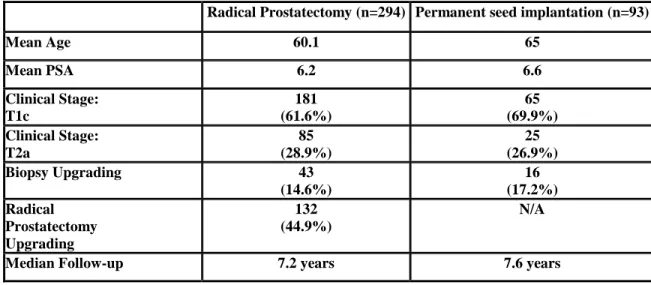
Table 1 indicates the mean PSA was 6.2 for radical prostatectomy patients and 6.6
for permanent seed implantation patients. The median clinical stage was T1c for both
groups. 61.6% of radical prostatectomy patients and 69.9% of permanent seed
implantation patients were clinical stage T1c (non-palpable disease). 28.9% of radical
prostatectomy patients and 26.9% of permanent seed implantation patients were clinical
stage T2a (palpable disease in less than 50% of one lobe of the prostate). 7.8% of radical
prostatectomy patients and 3.2% of permanent seed implantation patients were clinical
stage T2b (palpable disease in greater than 50% of one lobe of the prostate).
Regarding Gleason score, 64.6% of radical prostatectomy patients and 88.2% of
permanent seed implantation patients were Gleason 6 on UT MD Anderson Cancer
Center biopsy interpretation. 35.4% of radical prostatectomy patients and 11.8% of
permanent seed implantation patients were Gleason 7 on UT MD Anderson Cancer
between radical prostatectomy patients (60.1 years) and permanent seed implantation
patients (65.5 years) (p<0.0001).
The median follow-up was 7.2 years for radical prostatectomy and 7.6 years for
permanent seed implantation. Patients treated with permanent seed implantation were
89.9% white, 3.2% African American, 3.2% Hispanic, and 4.3% Asian. Patients treated
with radical prostatectomy were 81.6% white, 9.5% African American, 6.1% Hispanic,
1.7% Asian, and 1% other race or ethnicity.
Pathology Changes from outside institution to UT MD Anderson Cancer Center For patients presenting with outside biopsy pathologic review, a UT MD
Anderson Cancer Center pathologist read the slides obtained and prepared at an outside
institution. Most of the patients did not have a change from their outside institution
Gleason score to the UT MD Anderson pathologist Gleason scoring of the same slide,
with 77.4% of permanent seed implant patients and 83.3% of radical prostatectomy
having no change. Upgrading from the outside institution to UT MD Anderson Cancer
Center occurred in 43 men treated with radical prostatectomy (14.6%) and 16 men treated
with permanent seed implantation (17.2%). Downgrading of the slides occurred in 5.4%
of permanent seed implant patients and 2.0% of radical prostatectomy patients. The
proportion of men undergoing a pathology change was not different between permanent
seed implantation patients and radical prostatectomy patients (p=0.16).
Pathology Changes from UT MD Anderson Cancer Center biopsy to radical prostatectomy
All men had UT MD Anderson Cancer Center biopsies, with biopsy slides
surgery, their radical prostatectomy slides were also assigned a Gleason score by a UT
MD Anderson Cancer Center pathologist. The pathologist had all relevant biopsy
information when evaluating the radical prostatectomy evaluation, with no blinding
performed. Following radical prostatectomy, 132 men had subsequent upgrading from
UT MD Anderson Cancer Center biopsy Gleason score to radical prostatectomy Gleason
score (44.9%). 155 men (52.7%) had no change between their UT MD Anderson Cancer
Center biopsy Gleason score and radical prostatectomy Gleason score. 7 men (2.4%)
were downgraded from their UT MD Anderson Cancer Center biopsy Gleason score to
their radical prostatectomy Gleason score.
Pathology Changes from outside institution biopsy to UT MD Anderson Cancer Center radical prostatectomy
For men with outside institution biopsy, their outside biopsy Gleason score was
compared to their radical prostatectomy Gleason score. These were read by different
pathologists, and reflect both the difference between institutions and the difference
between a biopsy and a radical prostatectomy Gleason score. The UT MD Anderson
Cancer Center radical prostatectomy Gleason score was higher than the outside biopsy in
159 men (54.1%). The Gleason score was the same in 127 men (43.2%). 8 men (2.7%)
had a downgrading of their Gleason score from outside institution biopsy to UT MD
Anderson Cancer Center radical prostatectomy Gleason score.
Biochemical Recurrence-Free Survival
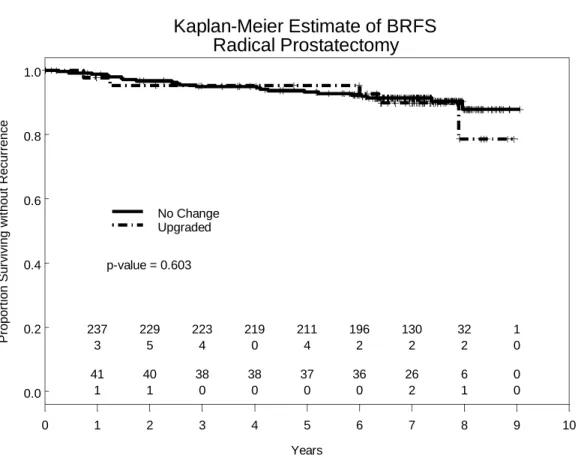
The Kaplan-Meier estimates of BRFS are illustrated in Figures 1 and 2. In the
radical prostatectomy group, the BRFS at 5 years was 93.2% in men with concordance
upgrading from Gleason 6 to 7. The log rank test between the curves is not statistically
significant (p=0.603). In the permanent seed implantation monotherapy group, the 5-yr
BRFS was 91.6% in men with concordant Gleason score, and 100% in men with
upgrading from Gleason 6 to Gleason 7. The log rank test between the curves is not
statistically significant (P=0.564).
Prostate Cancer Specific Survival
We also used prostate cancer specific survival as a clinical outcomes measure for
men treated with permanent seed implantation or radical prostatectomy. There was one
prostate cancer related death in the permanent seed implantation cohort and two prostate
cancer related deaths in the radical prostatectomy cohort. Using permanent seed
implantation as the baseline with a hazard ratio of 1.00, radical prostatectomy patients
had a hazard ratio of death from prostate cancer of 1.01 which was not statistically
significant [95% CI 0.08-13.33]. No difference was seen between men who underwent
radical prostatectomy and had a full pathological examination of the prostate for
upgrading versus men treated with permanent seed implantation who did not have a
pathological examination of the prostate.
DISCUSSION:
This retrospective cohort study of men with low and intermediate risk prostate
cancer treated at UT MD Anderson Cancer Center from 2000-2001 shows that there is a
predominance of upgrading, rather than downgrading, from biopsy to radical
prostatectomy. We found that nearly half of the men had an upgrade, even when read by
test showed no differences in the biochemical recurrence-free survival between those
who were upgraded versus those who were not upgraded. We found no difference in
prostate cancer specific survival between the upgraded and non-upgraded men.
Our results are in concordance with numerous studies that cite a significant rate of
pathological upgrading between biopsy Gleason score and radical prostatectomy Gleason
score.29 Earlier studies show an even higher rate of upgrading (>70%).30 Karakiewicz
found that upgrading in Gleason score from biopsy to radical prostatectomy is greater in
centers with lower volume than tertiary centers.31 Performing a repeat biopsy within
three months has been shown to yield a statistically significant rate of upgrading on
rebiopsy.32
This paper emphasizes the previously reported phenomenon of pathological
upgrading that occurs among patients with a biopsy and radical prostatectomy at
MDACC. In this case, the slides were read by the same dedicated prostate pathologist,
eliminating inter-physician variability. This still does not address intra-physician
variability, which would require blinding of the biopsy information and patient
information from the pathologist. This is not practical or ethical in the scope of clinical
practice, but could be incorporated into a future study design.
Using the same pathology processing lab and pathologist, 44.9% of men were
upgraded from MDACC biopsy to MDACC radical prostatectomy. This information is
not available for men treated primarily with permanent seed implantation or external
beam therapy, but a significant rate of occult higher GS is likely present. There is no
reason why men treated primarily with radiation therapy should have a lower rate of
This implies that a number of men who have low risk disease on biopsy actually
have occult intermediate risk disease. Most of the men who had a pathologic upgrade
went from low risk to intermediate risk disease, with a minority moving to high risk
disease on radical prostatectomy. Importantly, we found that men with pathologic
upgrading did no worse than their counterparts who were not upgraded.
Additionally, a number of men who had an outside biopsy GS available
underwent an upgrading of those same slides when interpreted by an MDACC
pathologist. This suggests the importance of a dedicated prostate pathologist with high
volume to guide clinicians to the most appropriate treatment. More than half of the men
were upgraded from outside biopsy GS to radical prostatectomy GS, indicating that some
undergrading may be present. This is consistent with literature from other institutions.
On the other hand, perhaps academic pathologists have a bias towards upgrading
compared to community pathologists, since there appears to be no clinical difference
between the upgraded and non –upgraded men in our cohort.
Men treated with permanent seed implantation, including those who are initially
classified in the intermediate risk category, did not have worse outcomes than their
counterparts treated with radical prostatectomy. The men who were upgraded by biopsy
or radical prostatectomy did no worse than the cohort that was not upgraded, suggesting
that the extra information obtained in radical prostatectomy may not be crucial for
radiation therapy patients. While the data continues to mature, this suggests that selected
men with intermediate risk prostate cancer may be appropriate candidates for
monotherapy, including with permanent seed implantation.
Several potential types of bias are faced when considering the results of this
study, including selection bias, migration bias, measurement bias, and confounding.33
Selection bias occurs at the level of the study population. In this case, the study
population consisted of men who presented to UT MD Anderson Cancer Center for
treatment of their prostate cancer. UT MD Anderson Cancer Center is a major referral
center for the Houston area. Some of the men from Houston and the surrounding area
may represent a cross-section of the local population, though there are other centers in
Houston that treat prostate cancer. This population in the study would likely have
reasonable external validity for men with prostate cancer around Houston.
However, many of the patients seen and treated at UT MD Anderson Cancer
Center are self-selected patients from other parts of the country. They may have a higher
socioeconomic status if they have the resources to take time off of work, fly to Houston,
and live in a hotel for their consultation and treatment. Seeking a second opinion at a
respected cancer center may be associated with a higher education level. It is difficult to
tell what effect this migration to UT MD Anderson Cancer Center may have on our study
population. From a source population level, this may limit the external validity of our
study, to some extent.
Not all men have equal access to screening for prostate cancer in the United
States. Men who present with localized disease in the PSA era of prostate cancer would
be more likely to have a regular health care and a primary care provider. They would
also be selected for those men that have health insurance, and those that undergo
expensive local therapy for prostate cancer would be even more likely to have health
among men who receive prostate cancer screening and treatment. Again, these represent
potential bias that may be inherent in our source population for this study.
The type of treatment each man received was based on personal preference and
physician preference. It was not randomized in this study. Therefore, imbalances
between the two groups may be expected. This allows the possibility of introducing a
systematic bias, such as men with worse disease choosing to have surgery, or men with
urinary dysfunction prior to intervention choosing permanent seed implantation. Given
the non-randomized design, it is impossible to completely control for what may be a
systematic difference between the two arms.
The method of sampling men for this study was not likely to introduce bias. Our
list of men treated with each modality was provided by the department of pathology at
UT MD Anderson Cancer Center based on pre-designed inclusion criteria. Since the
pathology department has a complete list of the prostate biopsies and radical
prostatectomy specimens reviewed in 2000-2001, no selection bias should have occurred
at this step in the source population identification. Men signed consent for potential
participation in chart reviews when initially treated at UT MD Anderson Cancer Center
and were not contacted for this study. Thus, we should have a complete representation of
men with localized prostate cancer treated during this time period at UT MD Anderson
Cancer Center.
As with any retrospective study, measurement bias can be a major source for the
introduction of bias in generation and interpretation of results. We attempted to control
biochemical-recurrence free survival and prostate cancer specific survival. These were measured at
the same time point for each group and the same measure over time was maintained.
One point of introduction for measurement bias is what is chosen as a definition
of failure for permanent seed implantation and radical prostatectomy. Due to inherent
differences between the PSA responses following radical prostatectomy or permanent
seed implantation, the NCCN recommends using differing definitions.34 What definition
is most appropriate has been a moving target in the literature of both specialties over the
years. Papers continue to be published using different definitions of failure which can
affect the timing and quantity of failures reported in both surgery and permanent seed
implantation patients.
For permanent seed implantation, we debated using the American Society of
Therapeutic Radiation Oncology (ASTRO) definition of failure versus the Phoenix
definition of failure. The ASTRO definition stems from a 1997 consensus statement that
defines biochemical failure as three consecutive rises of the PSA.35 One disadvantage of
the ASTRO definition is that biochemical failures are backdated, causing an early
underestimation of recurrences and a late flattening of the curves. The ASTRO definition
was developed based on external beam radiation patient data alone, and this may ignore
the well-described phenomenon of the PSA bounce in patients treated with permanent
seed implantation.
The Phoenix definition was developed in response to the concerns about the
ASTRO definition by a consensus panel of radiation oncologists in 2006. The Phoenix
definition of biochemical recurrence is the PSA nadir, or lowest point, plus 2 ng/mL.36
definition, since it introduces less bias than the ASTRO definition. Additionally, this
definition of PSA nadir plus 2 ng/mL has been shown to predict for overall survival in
patients with prostate cancer.37 The Phoenix definition has been applied to the permanent
seed implantation patient population and was found to be the best surrogate for
biochemical failure.38
For the patients treated with radical prostatectomy, the definition must be
different since the prostate has been surgically removed. Following radical
prostatectomy, there should be no source of PSA except prostate cancer cells. Freedland
and colleagues examined cut points of 0.1 ng/mL to 0.5 ng/mL to determine the point
associated with the highest risk of PSA progression within one year. They found that
using a cutoff of up to 0.1 ng/mL in the postoperative setting was associated with a 36%
of progression in one year and 67% risk of progression in three years. Increasing the cut
point to 0.2 ng/mL led to a one and three year risk of progression of 86% and 100%,
respectively. This was determined by the authors to be the most appropriate cut point
since all of the patients they followed progressed within three years 39
The question of what PSA cut point should be used was also addressed by Amling
and colleagues, who found that a PSA cutoff of 0.4 ng/mL was better correlated with
PSA progression in their cohort.40 Given these differing findings, a multivariate
regression analysis was done by Stephenson and colleagues on ten different definitions of
PSA failure after radical prostatectomy, including 0.2 ng/mL and 0.4 ng/mL. They chose
distant metastatic disease as the outcome of interest and looked at which PSA value best
predicted distant metastatic disease. They found that a definition of biochemical
predicting distant metastatic disease and suggested the use of 0.4 ng/mL as the most
appropriate cutoff for PSA values. We chose to use 0.4 ng/mL as the value for defining
biochemical failure in radical prostatectomy patients following surgery.
Once the definition of failure was set for each group, the clinical outcome
measures were chosen for our cohort. Many measures are available, including
biochemical recurrence-free survival, overall survival, prostate cancer specific survival,
distant metastases-free survival, and time to recurrence. Biochemical recurrence-free
survival is the outcome that offers the earliest glimpse at differences that may exist
between different groups of prostate cancer patients.
While studies have correlated biochemical recurrence-free survival to distant
metastases and overall survival, I thought adding another measure looking at clinical
outcomes, rather than just biochemical outcomes, would provide more information.
While overall survival is ultimately the outcome of greatest interest, it would be hard to
see any differences in overall survival for this cohort with seven years of follow-up.
Prostate cancer specific survival was chosen as the measure that would be a
representation of the clinical outcome of these prostate cancer patients.
When applying clinical outcome measures to a group of patients, the issue of
power must be considered. In this cohort, we had less than 400 men with a favorable
category of prostate cancer, an indolent cancer in many cases. Our power to detect a
difference between the upgraded and non-upgraded men is limited by all of these factors.
A larger patient number would allow us to increase our confidence level in the findings.
Longer follow-up in prostate cancer studies is always helpful, since some men may not
Future Directions
While this hypothesis-generating study has raised the interesting question of
whether additional pathology information in the form of pathological upgrading affects
outcome, further studies are needed to clarify the issue of what treatments are appropriate
for what patients. Ideally, a randomized controlled trial would be designed comparing all
of the treatment modalities directly to one another. Randomizing patients to possibly get
a surgery or a radiation treatment is not easy, since some patients may have already made
up their mind that they do not want surgery or radiation in any case. However, many
men would likely be amenable were it to be presented in the right light by their physician.
In these favorable risk men, much data exists to suggest that they will do very well in
terms of biochemical recurrence-free survival and prostate cancer specific survival, with
any of the selected modalities.
The failure of large randomized cooperative group studies to accrue may partially
lie with the physicians. In this case, if a patient sees a urologist and is randomized to
radiation, the urologist will not participate in the care of this patient anymore. The
inverse is also true for a radiation oncologist whose patient is randomized to surgery.
This makes the engagement of specialists in a trial that may deprive them of patients
somewhat harder to accomplish. That said, a large academic center like UT MD
Anderson Cancer Center where the patients are seen in a multidisciplinary clinic should
be able to accomplish such a randomization.
Outcomes for a clinical trial include many of those discussed for this study, such
as overall survival, prostate cancer specific survival, time to recurrence, biochemical
likely be overall survival, though the time to reach a potential difference in this group
would likely be at least ten years. All patients would have to be cleared for surgery, since
they might be randomized to surgery. Unfortunately, this would exclude some of the
patients who tend to get external beam radiation therapy, which is often used in patients
who may not be able to tolerate anesthesia or a surgical procedure.
Secondary outcomes in a randomized trial of intermediate risk patients could
include biochemical recurrence-free survival and measures of quality of life to quantify
side effects of each procedure. Salvage therapy-free survival could also be examined to
determine if one treatment in associated with the need for additional therapies. The idea
that this would compound side effects and potentially diminish quality of life could be
looked at using these outcome measures.
Ultimately, the detection of biomarkers that are prognostic of future disease
behavior would prove the most helpful. As suggested by this and other studies, the
incorporation of clinical factors in a nomogram does not necessarily correlate to the an
individual patient’s outcome. Prognostic factors could help us decide who to enroll on
active surveillance protocols, avoiding side effects like urinary incontinence and erectile
dysfunction for some time, or potentially forever if treatment is never used.
For patients whose prognostic markers indicate the disease is more aggressive,
predictive biomarkers could be used to guide treatment. Perhaps a protein will be found
that is associated with relative radioresistance, and these patients can be guided towards
surgery. As we gain more information about cardiac markers that may be prognostic for
cardiovascular disease, the balance of risk versus benefit of using androgen deprivation
Ideally, we can obtain tissue through a prostate biopsy that will lead us to predict
whether treatment may be needed at all, and what treatments may prove most beneficial,
or detrimental to an individual patient. Until that time, continued studies that attempt to
maximize the utility of our current pathological information will be necessary to offer the
Table 1. Descriptive statistics for the cohort
Radical Prostatectomy (n=294) Permanent seed implantation (n=93)
Mean Age 60.1 65
Mean PSA 6.2 6.6
Clinical Stage: T1c
181 (61.6%)
65 (69.9%) Clinical Stage:
T2a
85 (28.9%)
25 (26.9%)
Biopsy Upgrading 43
(14.6%)
16 (17.2%) Radical
Prostatectomy Upgrading
132 (44.9%)
N/A
Figure 1. Kaplan-Meier Estimate of Biochemical Recurrence Free Survival for men treated with permanent seed implantation.
Kaplan-Meier Estimate of BRFS Brachytherapy Years P ro p o rt io n S u rv iv in g wi th o u t Re c u rr e n c e
0 1 2 3 4 5 6 7 8 9 10
0.0 0.2 0.4 0.6 0.8 1.0
Figure 2. Kaplan-Meier Estimate of Biochemical Recurrence Free Survival for men treated with radical prostatectomy.
Kaplan-Meier Estimate of BRFS Radical Prostatectomy Years P ro p o rt io n S u rv iv in g wi th o u t Re c u rr e n c e
0 1 2 3 4 5 6 7 8 9 10
0.0 0.2 0.4 0.6 0.8 1.0
Bibliography
1. Jemal A, Siegel R, Ward E, Hao Y, Xu J, Thun MJ. Cancer statistics, 2009. CA Cancer J Clin. Jul-Aug 2009;59(4):225-249.
2. ACS. American Cancer Society Guidelines for the Early Detection of Cancer.
http://www.cancer.org/docroot/ped/content/ped_2_3x_acs_cancer_detection_guidelines_36.asp.
2010;Accessed March 12, 2010.
3. USPSTF. Screening for Prostate Cancer: U.S. Preventive Services Task Force Recommendation Statement. AHRQ Publication No. 08-05121-EF-2. 2008;Accessed March 12, 2010.
4. NCI. Prostate Specific Antigen (PSA) Test. http://www.cancer.gov/cancertopics/factsheet/Detection/PSA
[Accessed March 12, 2010.
5. Altekruse SF KC, Krapcho M, Neyman N, Aminou R, Waldron W, Ruhl J, Howlader N, Tatalovich Z, Cho H, Mariotto A, Eisner MP, Lewis DR, Cronin K, Chen HS, Feuer EJ, Stinchcomb DG, Edwards BK (eds). SEER Cancer Statistics Review, 1975-2007, National Cancer Institute.
http://seer.cancer.gov/csr/1975_2007/. 2009;Accessed March 12, 2010.
6. NCCN. National Comprehensive Cancer Network Clinical Practice Guidelines in Oncology: Prostate Cancer. http://www.nccn.org/professionals/physician_gls/PDF/prostate.pdf [Accessed March 12, 2010.
7. Epstein JI, Walsh PC, Carmichael M, Brendler CB. Pathologic and clinical findings to predict tumor extent of nonpalpable (stage T1c) prostate cancer. Jama. Feb 2 1994;271(5):368-374.
8. Draisma G, Boer R, Otto SJ, et al. Lead times and overdetection due to prostate-specific antigen screening: estimates from the European Randomized Study of Screening for Prostate Cancer. J Natl Cancer Inst. Jun 18 2003;95(12):868-878.
9. Pollack A, Zagars GK, Smith LG, et al. Preliminary results of a randomized radiotherapy dose-escalation study comparing 70 Gy with 78 Gy for prostate cancer. J Clin Oncol. Dec 1 2000;18(23):3904-3911.
10. Kuban DA, Tucker SL, Dong L, et al. Long-term results of the M. D. Anderson randomized dose-escalation trial for prostate cancer. Int J Radiat Oncol Biol Phys. Jan 1 2008;70(1):67-74.
11. D'Amico AV, Manola J, Loffredo M, Renshaw AA, DellaCroce A, Kantoff PW. 6-month androgen suppression plus radiation therapy vs radiation therapy alone for patients with clinically localized prostate cancer: a randomized controlled trial. Jama. Aug 18 2004;292(7):821-827.
12. D'Amico AV, Denham JW, Crook J, et al. Influence of androgen suppression therapy for prostate cancer on the frequency and timing of fatal myocardial infarctions. J Clin Oncol. Jun 10 2007;25(17):2420-2425.
13. D'Amico AV, Chen MH, Renshaw AA, Loffredo M, Kantoff PW. Causes of death in men undergoing androgen suppression therapy for newly diagnosed localized or recurrent prostate cancer. Cancer. Dec 15 2008;113(12):3290-3297.
14. Potters L, Morgenstern, C, Calugaru, E, Fearn, P, Jassal, A, Presser, J, and Mullen, E. . 12-year outcomes following permanent prostate brachytherapy in patients with clinically localized prostate cancer. Journal of Urology. 2005(173):1562.
15. Giberti C, Chiono L, Gallo F, Schenone M, Gastaldi E. Radical retropubic prostatectomy versus
brachytherapy for low-risk prostatic cancer: a prospective study. World J Urol. Oct 2009;27(5):607-612.
16. Merrick GS, Butler WM, Lief JH, Dorsey AT. Is brachytherapy comparable with radical prostatectomy and external-beam radiation for clinically localized prostate cancer? Tech Urol. Mar 2001;7(1):12-19.
17. D'Amico AV, Whittington R, Malkowicz SB, et al. Biochemical outcome after radical prostatectomy, external beam radiation therapy, or interstitial radiation therapy for clinically localized prostate cancer. Jama. Sep 16 1998;280(11):969-974.
18. Morris WJ, Keyes M, Palma D, et al. Population-based study of biochemical and survival outcomes after permanent 125I brachytherapy for low- and intermediate-risk prostate cancer. Urology. Apr
2009;73(4):860-865; discussion 865-867.
19. Kupelian PA, Potters L, Khuntia D, et al. Radical prostatectomy, external beam radiotherapy <72 Gy, external beam radiotherapy > or =72 Gy, permanent seed implantation, or combined seeds/external beam radiotherapy for stage T1-T2 prostate cancer. Int J Radiat Oncol Biol Phys. Jan 1 2004;58(1):25-33.
21. Frank SJ, Grimm PD, Sylvester JE, et al. Interstitial implant alone or in combination with external beam radiation therapy for intermediate-risk prostate cancer: a survey of practice patterns in the United States. Brachytherapy. Jan-Mar 2007;6(1):2-8.
22. Frank SJ, Pisters LL, Davis J, Lee AK, Bassett R, Kuban DA. An assessment of quality of life following radical prostatectomy, high dose external beam radiation therapy and brachytherapy iodine implantation as monotherapies for localized prostate cancer. J Urol. Jun 2007;177(6):2151-2156; discussion 2156.
23. Bostwick DG. Gleason grading of prostatic needle biopsies. Correlation with grade in 316 matched prostatectomies. Am J Surg Pathol. Aug 1994;18(8):796-803.
24. Noguchi M, Stamey TA, McNeal JE, Yemoto CM. Relationship between systematic biopsies and histological features of 222 radical prostatectomy specimens: lack of prediction of tumor significance for men with nonpalpable prostate cancer. J Urol. Jul 2001;166(1):104-109; discussion 109-110.
25. Boorjian SA, Karnes RJ, Crispen PL, et al. The impact of discordance between biopsy and pathological Gleason scores on survival after radical prostatectomy. J Urol. Jan 2009;181(1):95-104; discussion 104.
26. King CR, McNeal JE, Gill H, Presti JC, Jr. Extended prostate biopsy scheme improves reliability of Gleason grading: implications for radiotherapy patients. Int J Radiat Oncol Biol Phys. Jun 1 2004;59(2):386-391.
27. Lee AK, Schultz D, Renshaw AA, Richie JP, D'Amico AV. Optimizing patient selection for prostate monotherapy. Int J Radiat Oncol Biol Phys. Mar 1 2001;49(3):673-677.
28. D'Amico AV, Renshaw AA, Arsenault L, Schultz D, Richie JP. Clinical predictors of upgrading to Gleason grade 4 or 5 disease at radical prostatectomy: potential implications for patient selection for radiation and androgen suppression therapy. Int J Radiat Oncol Biol Phys. Nov 1 1999;45(4):841-846.
29. Kulkarni GS, Lockwood G, Evans A, et al. Clinical predictors of Gleason score upgrading: implications for patients considering watchful waiting, active surveillance, or brachytherapy. Cancer. Jun 15
2007;109(12):2432-2438.
30. Cam K, Yucel S, Turkeri L, Akdas A. Accuracy of transrectal ultrasound guided prostate biopsy: histopathological correlation to matched prostatectomy specimens. Int J Urol. May 2002;9(5):257-260.
31. Karakiewicz PI, Chun FK, Gallina A, et al. Biopsies performed at tertiary care centers are superior to referral biopsies in predicting pathologic Gleason sum. J Endourol. Mar 2008;22(3):533-538.
32. Berglund RK, Masterson TA, Vora KC, Eggener SE, Eastham JA, Guillonneau BD. Pathological upgrading and up staging with immediate repeat biopsy in patients eligible for active surveillance. J Urol. Nov 2008;180(5):1964-1967; discussion 1967-1968.
33. Fletcher R, and SW Fletcher. Clinical Epidemiology. Fourth ed. Baltimore: Lippincott, Williams, and Wilkins; 2005.
34. Nielsen ME, Partin AW. The impact of definitions of failure on the interpretation of biochemical recurrence following treatment of clinically localized prostate cancer. Rev Urol. Spring 2007;9(2):57-62.
35. Cox J GD, Kaplan R,Parsons J,Schellhammer P. Consensus statement: guidelines for PSA following radiation therapy. American Society for Therapeutic Radiology and Oncology Consensus Panel. Int J Radiat Oncol Biol Phys. Mar 15 1997;37(5):1035-1041.
36. Roach M, 3rd, Hanks G, Thames H, Jr., et al. Defining biochemical failure following radiotherapy with or without hormonal therapy in men with clinically localized prostate cancer: recommendations of the RTOG-ASTRO Phoenix Consensus Conference. Int J Radiat Oncol Biol Phys. Jul 15 2006;65(4):965-974.
37. Abramowitz MC, Li T, Buyyounouski MK, et al. The Phoenix definition of biochemical failure predicts for overall survival in patients with prostate cancer. Cancer. Jan 1 2008;112(1):55-60.
38. Kuban DA, Levy LB, Potters L, et al. Comparison of biochemical failure definitions for permanent prostate brachytherapy. Int J Radiat Oncol Biol Phys. Aug 1 2006;65(5):1487-1493.
39. Freedland SJ, Sutter ME, Dorey F, Aronson WJ. Defining the ideal cutpoint for determining PSA recurrence after radical prostatectomy. Prostate-specific antigen. Urology. Feb 2003;61(2):365-369.