Effectiveness and Side Effects of Oral Analgesics for Acute Pain in the Elderly
By
Courteney MacKuen
A Master’s Paper submitted to the faculty of the University of North Carolina at Chapel Hill
in partial fulfillment of the requirements for the degree of Master of Public Health in
the Public Health Leadership Program.
Chapel Hill
2011
__________________________ Advisor:
____________________________________ Date
_________________________________
Second Reader:
Table of Contents
Abstract of Master’s Paper ... 2
Original Research Paper ... 3
Abstract ... 3
Introduction ... 5
Methods ... 6
Results ... 8
Discussion ... 9
Figures ... 13
Systematic Review ... 16
Introduction to Systematic Review ... 16
Methods of Systematic Review ... 16
Results of Systematic Review ... 17
Discussion of Systematic Review ... 19
Conclusion to Systematic Review ... 212
Figures Systematic Review ... 21
REFERENCES ... 25
ACKNOWLEDGEMENTS ... 27
APPENDIX TELEPHONE SURVEY... 28
Abstract of Master’s Paper
Pain is a common presenting complaint of patients seen in the emergency department (ED), accounting for up to 78% of visits. Inadequate pain control has been recognized by the Joint Commission on the Accreditation of Healthcare Organizations (JCAHO) as a significant problem, and regulations have targeted improving the management of persistent pain as a priority for physicians. Patients 65 years and older are particularly vulnerable to persistent pain because pain has a greater impact on function in elderly adults and because elderly adults are more likely not to receive pain medication compared to non-elderly adults. The research component of this master’s paper is a study of the effectiveness and side effects of analgesics for the management of acute pain in patients 65 years and older seen in an emergency department. Eligible patients discharged from the ED following a pain-related visit were interviewed one week post-discharge to assess levels of pain and side effects from analgesics prescribed. No significant differences in persistent pain were seen between patients prescribed opioids and those prescribed non-steroidal anti-inflammatory drugs (NSAIDs), though the trend suggests that there is a higher level of persistent pain in those prescribed opioid analgesics independent of initial pain score, race, gender and level of education. Pain may be persistent in this group because one third of patients stopped taking the prescribed opioid medication despite continued pain. Of the patients who stopped taking their opioid medications, 40% stopped secondary to adverse side effects.
Original Research Paper
Effectiveness and Side Effects of Commonly Prescribed Analgesics in the Elderly Seen in the Emergency Department
Abstract
Elderly adults commonly visit the emergency department for the evaluation and treatment of
acute painful conditions. However, under treatment of pain is common in elderly adults, in part
because of provider and patient concerns about side effects of analgesics. This places elderly
adults at increased risk for persistent pain, which is associated with functional decline and
decreased quality of life. Side effects from long term use of both opioids and nonsteroidal
anti-inflammatory drugs (NSAIDs) in elderly adults have been described, but little is known about
the safety or efficacy of the short term use of these medications for the treatment of acute pain in
the elderly. We conducted a prospective study at a single emergency department (ED) providing
care for a large and diverse population of elderly adults. A sample of patients 65 years or older
with an eligible pain-related ED visit and a pain score of 4 or more who were discharged home
were contacted one week after their ED visit. Pain was assessed using a 0-10 numeric rating
scale with moderate or severe pain defined as a score of >4. Of 102 eligible patients, interviews
were conducted with 41 individuals. Of these, 20 reported taking opioids and 8 reported taking
NSAIDs. The proportion of patients with persistent moderate or severe pain at one week was
high in both groups: 68% among those taking opioids vs. 50% among those taking NSAIDs
(p=.38). Side effects were more common in patients taking opioids than in those taking NSAID
adults discharged from the ED is inadequate and that the frequency of side effects is high in
patients taking opioids. Further research is needed to determine methods to improve the
Introduction
Inadequate treatment of pain is a major public health concern. In the 1990s, the Joint
Accreditation of Healthcare Organizations (JAHCO) recognized the magnitude of this problem
and formally initiated recommendations for increased attention to pain management.1-3
The issue
of acute pain management is particularly important in the emergency department (ED), where
pain is the most common presenting chief complaint.4 The elderly are one group found to be
particularly likely to receive inadequate treatment of pain.3, 4
This disparity in the management of
acute pain in older versus younger adults indicates an unmet need for analgesia amongst elderly
ED patients. In addition, persistent pain in this population has been shown to significantly reduce
sense of well being and quality of life, and correlates with progression of a disability. 5
Treatment guidelines for acute pain in the elderly population have been slow to develop.
One potential reason is that little evidence exists to guide the optimal treatment of acute pain in
older adults.6 Previous studies have identified a number of side effects from the long-term use of
opioids and non-steroidal anti-inflammatory drugs (NSAIDs) among the elderly, including falls,
dizziness, constipation, gastrointestinal bleeding, renal insufficiency, and exacerbations of
congestive heart failure.7,8Concerns about exposing the elderly to the side effects associated with
chronic use of commonly administered pain medications complicates decisions about treating
acute pain in elderly patients.9 An additional challenge is that few studies have examined the
effectiveness and side effects of short term pain medication use in the elderly.
In order to improve understanding of the effectiveness of common pharmacologic
treatment options for acute pain in the elderly, we conducted a prospective study of a sample of
patients 65 years and older discharged from the ED after a pain-related visit. The objectives of the
prescription for opioids, compare the effectiveness of these two classes of medications, and
compare the occurrence of commonly reported side effects.
Methods
Study design and Study Population
This study is a prospective cohort study conducted at the University of North Carolina at Chapel
Hill (UNC) Hospital System, an 800 bed tertiary care center located in Chapel Hill, North
Carolina. Subjects were identified using emergency department (ED) electronic medical records.
To be eligible, the following criteria had to be met: (1) patient ≥ 65 years of age, (2) discharged
home following an ED evaluation, (3) chief complaint of acute musculoskeletal pain, fracture or
laceration, (4) a recorded pain score in the ED of > 3, (5) English speaking. Discharge
diagnoses for all potentially eligible patients were also reviewed to ensure that the pain was not
due to an alternative cause. Only patients with a chief complaint and a discharge diagnosis
consistent with burn, fracture, laceration or musculoskeletal pain were included. For example, a
patient who presented with back pain but was diagnosed with a kidney stone would not be
included. Patients with other forms of pain such as headache, chest pain, or abdominal pain were
not included. Patients needed to be able to conduct phone interviews themselves; patient proxies
were not accepted. Additionally, we excluded patients who were (1) not oriented to year or
location at the time of phone call interview, and (2) residing in a nursing home.
During a 12-week study period (March 2011- May 2011), we contacted all eligible patients
approximately 4-7 days after they were discharged from the ED following a pain-related visit.
Visits to the ED were reviewed daily to identify eligible patients. Data were abstracted from the
electronic records of the emergency department and assessed for eligibility criteria. All eligible
patients were contacted by phone. We attempted contact at least 3 times between 4 and 7 days
following discharge. For those contacted, verbal informed consent was obtained and patients
completed a brief telephone survey. Surveys were conducted by study investigators and research
assistants using a standard script. All research assistants completed training in the protection of
human research subjects and conducted a mock telephone call prior to participation in the study.
Additional questions regarding the quality of the survey were completed after each interview.
Data for each patient were either directly entered into a spreadsheet, or recorded on paper and
later double-entered into the spreadsheet in order to avoid errors in data entry.
Measures
The primary exposure of interest was comparing those who took at least one dose of an opioid
with those who took NSAIDs. An opioid prescription was considered given if it was either
recorded as given in the medical record or reported to be given by the patient at one week
follow-up. The primary outcome was the patient’s self-reported pain score on the day of the
phone call interview, assessed using a 0 to 10 numeric rating scale. We assessed the presence of
specific side effects including constipation, tiredness, nausea, vomiting, dizziness and falls. We
assessed side effect interference and pain interference with general activity as a single item from
the brief pain inventory. Demographic information including age, race and education levels was
self-reported.
T-tests for continuous variables and chi-square tests for categorical variables were used to
compare the demographic characteristics and ED pain scores for subjects who took opioids and
subjects who took NSAIDs. The proportion of patients with moderate or severe pain at one
week was compared between patients who received opioids and those who received NSAIDs.
Mean pain scores at one week were also calculated to serve as additional comparison between
opioid and NSAID users. The proportion of patients with each side effect was calculated. In
addition, the proportion of patients reporting any side effect was calculated. These proportions
were compared between opioid and NSAID users using chi squared analysis In addition mean
pain scores were calculated adjusting for pain severity in the ED, age, race, and education level.
A p-value <.05 was used to indicate significance for all statistical tests.
Results
Over the course of the 3 month study period, 2,432 individuals over the age of 65 seen in
the Emergency Department were screened. 102 subjects were identified as eligible to
participate. Forty-one of these subjects were enrolled in the study. The remaining were not
enrolled because they were unable to be reached (n=60) or unwilling to participate (n=1). Of
these 41 enrolled subjects, 20 took at least one dose of opioid analgesic and 8 took NSAIDs only.
The average age of subjects was 73 years with no significant difference between the
opioid and NSAID groups (Table 1). Similar initial pain scores (7 on 0 to 10 scale) were
observed in both groups. Both gender (60% female, 40% male) and race (75% Caucasian, 25%
African American) were similar in both of the groups. The only notable difference between
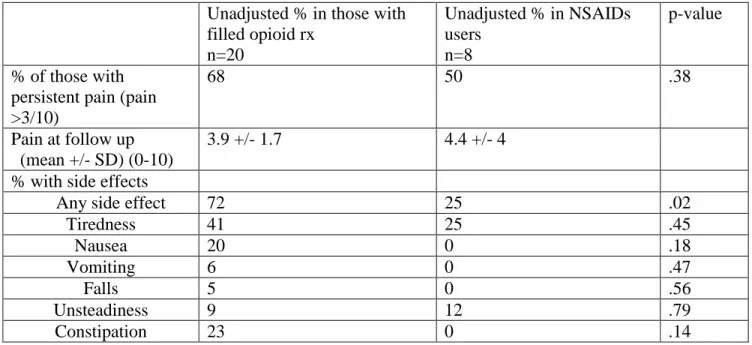
Persistent moderate or severe pain was observed in 68% of those taking opioids and 50%
in those taking NSAIDs (Table 2). After adjusting for ED pain score, race, education and
gender, percentages of patients with moderate or severe pain were 69% of opioid users and 59%
of NSAID users (Table 3). There was no significant difference in the levels of persistent pain in
either unadjusted or adjusted analyses.
Despite the high percentage of subjects with persistent pain, 12 of 20 opioid users were
completely satisfied with their care and 6 were somewhat satisfied. Among NSAID users, 6 of 8
were completely satisfied and 2 were only somewhat satisfied.
There were clinically important differences in the percentages of reported side effects
between patients taking opioids and patients taking NSAIDs (Table 2). Although individual side
effects did not show any statistical significance, 72% of those taking opioids had at least one side
effect compared to 25% of those on NSAIDs (p=.02). Of those taking opioids, 7 (40%) reported
tiredness and 4 (20%) reported nausea. In those taking NSAIDs, 2 reported tiredness (25%) and
no subjects reported nausea.
Among those prescribed opioids, 33% did not take the full prescription. Of those who
stopped taking the opioids, 40% listed side effects as a reason for discontinuing the opioids.
NSAID users were not asked to quantify their NSAID use.
Of the 20 subjects asked about their opinion on taking opioid analgesics, 3 did not like
the idea of taking opioids because of worries about side effects while 5 were reticent to take
opioids because in general they were against taking medications. 12 of these subjects were ready
to take opioids if they felt the needed them. No subjects expressed a reticence to take opioids
because of fear of addiction.
No significant differences were seen in the levels of persistent pain between those
receiving opioids and those taking NSAIDs at one week post-discharge from the ED. However,
several distinct trends were observed. Elderly ED patients given a prescription for opioids may
have increased persistent pain levels even when accounting for initial pain score. There are
several ways to interpret this finding. Either NSAIDs and opioids are equivalent in their
analgesic effects or those given opioids did not use their prescription effectively and thus had a
shorter course of analgesic use. In fact our data show that over one-third of subjects taking
opioids stopped taking their prescription. Forty percent of those stopping their prescription listed
side effects as a reason implying that treating these side effects may increase compliance for
those using opioids.
While the difference in individual side effects between opioid users and NSAID users
was not significant, opioids users had statistically significant higher presence of at least one side
effect. There is an obvious trend for increased side effects in opioid users. This is not in itself
surprising since it is known that opioids have the potential to cause significant side effects.
However, it is interesting to note that several of the most common side effects such as nausea
and constipation are very treatable.
In this description of analgesic use in the elderly population, the assessment of attitudes
towards pain medications showed a general willingness to take medications when necessary.
Less than 10 percent of subjects were worried about side effects, and not a single subject
expressed concern about addiction. This analysis of attitudes indicates than this population does
not harbor a preconceived prejudice against opioids. This differs from research on chronic
Thus, one of the keys to reducing the burden of persistent pain in this vulnerable
population is to prevent side effects that could be decreasing adherence to pain medications. In a
study in Quebec of chronic opioid users, one-third of patients eventually receive a prescription
for a laxative, but only 2% in the same study received it at the initiation of the opioid. The
authors similarly call for concurrent prescriptions to ameliorate side effects before they interfere
with adherence. 11
According to this study, side effects appear to influence the rates of persistent pain.
Therefore, future studies may examine the effect of secondary prescriptions on the completion of
opioid prescriptions. In addition, although this study focused on the patient outcomes of
analgesic use in the elderly, future studies should additionally examine the comparative safety.
While studies have compared long term safety of analgesics in the elderly, a short term safety
comparison would help determine appropriate prescribing guidelines in this population. 8
Limitations
The major limitation of this study is the small sample size. Power calculations completed before
the initiation of this study showed a sample size of 150 is needed to detect a difference of 15%
in proportion of patients with persistent pain with 80% power and an alpha of .05. With a
sample size of 40, the probability of detecting a difference is very small. A major limitation in
this study is the potential for confounding. Even with a large sample size, other factors may
play in a role in the physicians decision to give opioids or NSAIDs. By using propensity scores
in future studies, this affect of the confounding could be diminished. In addition, the
prospective cohort design of the study can only show correlative effects, not causal. In order to
establish the effect of opioids or NSAIDs on persistent pain a randomized trial design must be
were unable to contact some of these individuals because they had been hospitalized as a result
of either inadequate treatment of pain or as a complication of their analgesic treatment.
Despite these limitations, this study shows a high level of persistent pain in those over the age of 65
at one week. In addition, a trend showing a greater percentage of opioid users in persistent pain
than NSAID users indicates inadequate pain control especially among those receiving such opioids
prescriptions. The notable number of opioid users who stopped taking their prescription as a result
Table 1. Characteristic of those prescribed opioids and NSAIDs in >65 aged adults seen in the Emergency Department for acute pain and discharged home.
Medication All
(n=41)
Opioid (n=20)
NSAIDs (n=8)
Age (mean+/-SD) 73 +/- 8 72 +/-7 75 +/- 9
Race
white 75% 76% 75%
black 25% 23% 25%
Gender
male 40% 40% 37%
female 60% 60% 62%
ED Pain Score (0-10) (mean +/- SD)
7 +/- 2 7 +/- 2 7 +/- 2
Education level < high school > high school
41% 59%
50 % 50%
Table 2. Unadjusted porportion of side effects and persistent pain in opiod and NSAID users >65 years of age seen in the Emergency Department for acute pain and discharged home.
Unadjusted % in those with filled opioid rx
n=20
Unadjusted % in NSAIDs users
n=8
p-value
% of those with persistent pain (pain >3/10)
68 50 .38
Pain at follow up (mean +/- SD) (0-10)
3.9 +/- 1.7 4.4 +/- 4
% with side effects
Any side effect 72 25 .02
Tiredness 41 25 .45
Nausea 20 0 .18
Vomiting 6 0 .47
Falls 5 0 .56
Unsteadiness 9 12 .79
Table 3. Adjusted* proportions of patients with persistent pain.
Opioid users NSAID users P-value
% of those with persistent pain (pain >3/10)
69% 59% .69
Systematic Review
Effectiveness and Adverse Effects of Analgesics used for Acute Pain in Adults treated
in Outpatient Settings
Introduction
Pain is one of the most common chief complaints in the emergency department (ED) and
outpatient setting.4 It is the primary reason for up to 78% of patient visits to the ED.12 Despite
the high prevalence, many studies have shown inadequate analgesia in high proportions of those
discharged from the ED. 13 This may be a result of a paucity of guidelines regarding appropriate
analgesic choice in various populations.
Physicians are often reticent to prescribe addictive substances, such as opioids, to
vulnerable populations. In addition, recent studies show increased mortality with the use of
chronic opioids.8 However, few studies have compared the short term use of opioid analgesics
with the short term outcomes from NSAIDs (non-steroid anti-inflammatory drugs)
This systematic review summarizes the literature describing the effectiveness and side
effects of analgesic treatments for acute pain in adults seen in an outpatient setting.
Methods
Eligibility Criteria: To be included, articles had to report results of original research studies
examining use of analgesics in acute pain treatment in the outpatient setting. The population of
interest is adults who are living independently. The intervention for this population was any type
of analgesic drug. Studies only reporting analgesic use for intraoperative or post-operative pain
were excluded. The primary outcome of interest was the effectiveness of pain treatment. A
in English in the last 10 years were considered. All studies included were original research,
irrespective of study design. Comments and opinion pieces were not eligible.
Search Strategy and Study Selection: A search was completed on 3/15/2011 using MesH terms
―analgesics‖ and ―opioids drug utilization‖ with limits of adults (>18) and ―published within the
last 10 years‖. Hand searches and cross-reference searches were also completed. Initial review
of titles focused on removing all articles relating to chronic opioid use and cancer-related
analgesic use. A second title review focused on removal of all studies concerning intraoperative
or post-operative use of analgesics. During abstract review, each abstract removed was
classified according to the reason for removal (eg duration, population). All searches were
completed by one author (CM).
Data Extraction: Information from each of the studies was extracted using a standardized form.
The form included study citation, objective, follow-up period, type of opioids used, sample size,
and study results.
Assessment of Potential for Bias: Potential for bias was assessed for each study. Potential for
selection bias, measurement bias, confounding, and judgment of internal and external validity
were assessed on a scale (0-3). A composite value of good, fair and poor was allocated to each
study based on the prior assessments of bias, validity and confounding. No studies were
excluded based on quality.
Results
In total, the search yielded 808 titles. Title review removing chronic use and post-operative use
of analgesics yielded 70 articles. Abstract review generated 3 studies meeting all inclusion
criteria (Figure). All other studies were removed for one of the following reasons: wrong
publication type, wrong duration, wrong setting, wrong population or wrong outcomes.
Study Characteristics
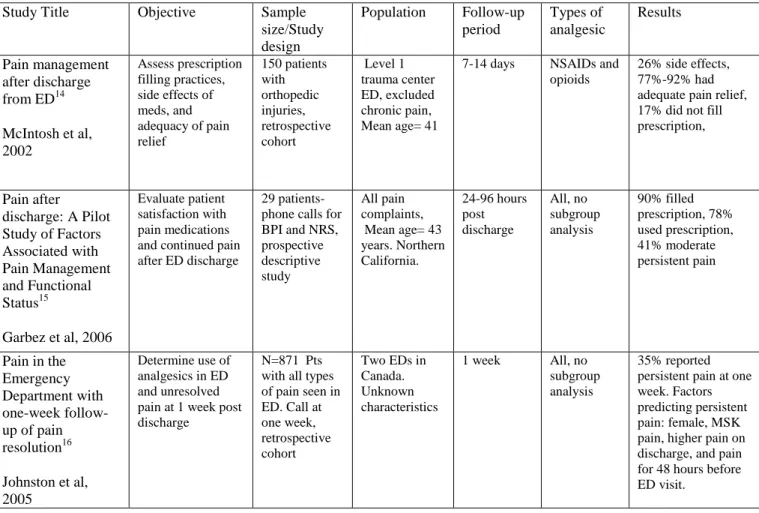
Study characteristics were abstracted for each of the three articles meeting inclusion criteria. All
three studies had similar designs using a follow-up phone call after a pain related visit by the
patients. The follow up period varied from 24 hours (Garbez et al)15 to 2 weeks (McIntosh et
al)14 In addition, all three studies were conducted as follow-up after an emergency department
visit. McIntosh et al further narrowed the reason for the visit to orthopedic injuries.15 The sample
size for the Garbez study was the smallest with a total of 29 patients, while McIntosh enrolled
150 patients and Johnston et al enrolled 871 (Table 1) 14,15,16
Qualitative Description of Studies
Potential for selection and measurement bias, as well as confounding and internal and external
validity for each of the selected studies were assessed by one author (CM). The potential for
measurement bias was intermediate to significantly high for all three of the studies. Little
information was provided about the interviewers for any of the three studies. The paucity of
information concerning any of the demographic characteristics of the populations in each of the
studies leads to a large potential for confounding. Similarly it would be difficult to assess
external validity given that the reader is not informed about the type of population. An overall
assessments of bias and validity. Both the McIntosh and Johnston studies were rated fair, while
the Garbez study was rated poor secondary to small sample size and high potential for bias
(Table 2).
Description of Findings
There were several common findings among the three papers identified in this systematic
review. All three found that roughly one third of adults being seen for acute pain have persistent
pain at 4-14 days. This finding was consistent despite the fact that each of the three studies used
different durations for follow-up. In addition, both the McIntosh and Garbez studies showed
around one fifth of patients who were prescribed prescriptions did not fill them.14, 15 The high rates of persistent pain in all three studies suggest that current analgesic practice for acute pain is
ineffective for a substantial proportion of patients.
As to answering the question of side effectives of analgesics in acute pain management,
only McIntosh et al addresses this question. In this study, 26% of subjects experienced side
effects.14 Of the side effects examined in the study, nausea and dizziness represented the most common (both 9%). Constipation (2%) and pruiritis (2%) were less common.
Discussion
This systematic review highlights the paucity of literature regarding the use of short term
analgesics in acute pain in adults in the outpatient setting. It is important to note that the
majority of papers regarding the subject of analgesics fit into two categories. Primarily, studies
about analgesics in adults consider long term treatment of chronic pain and side effects of long
treatment focus on post-surgical patients. The gap in the literature is in the treatment of acute
pain for adults with pain secondary to musculoskeletal pain or other disease processes that are
not related to surgery.
In considering the quality of these studies, the McIntosh and Johnston papers were judged
to be ―fair‖ quality while the Garbez paper was judged to be of ―poor‖ quality. All three studies
used convenience sampling and none of the studies accurately demonstrates characterization of
the population studied. The Garbez et al study was of limited quality due to the small number of
subjects, and only 16% retention rate.15 Though these papers suggest that there are several clinically relevant issues in the assessment of acute pain in adults, in general they lack a large
sample size and high quality of design.
The agreement between all three papers about the inadequacy of pain treatment is
compelling. Even after considering the limitations of the individual studies, the consensus of at
least moderately high persistent pain levels is sufficient to consider it a trend. In addition, the
side effects findings in McIntosh’s study are substantial. 14 Although the sample size is small, the difference between side effects and magnitude of side effects are enough to warrant further
investigation.
The small number of studies found in this review and the lack of scientific rigor of
studies shows a gap in the current academic knowledge surrounding the management of acute
pain. This review shows that persistent pain remains an issue in the treatment of acute pain, in
addition side effects of analgesics may have quite a high prevalence. This represents a clear
need for larger studies focusing on the effectiveness and side effects of acute pain management
Limitations
Since this gathering of articles as well as the process of narrowing the articles was only
completed by one person, there is a significant potential for missing relevant studies. In addition,
aside from Medline, no other databases were used. Also, the limitation of 10 years since
publication potentially limits selection of articles, including initial drug trials. As with many
systematic reviews, it was also limited to articles only in English.
Conclusion
While acute pain management in adults is a common and fundamental component of medical
care, little research has been completed to demonstrate the effectiveness and side effects of
commonly used analgesics. In this review, three articles addressing these issues were reviewed.
Although only two of the studies were judged to be of ―fair‖ quality, all three papers
demonstrated compelling clinical issues involved in acute treatment of pain. The three studies
agree that persistent pain is a continuing issue for many patients. Additionally, side effects
appear to effect one quarter of patients taking analgesics. Future studies should further examine
the types of side effects, and the change in pain levels from initial visit to follow-up. In addition,
Figure. Study inclusion and exclusion.
Is the publication original research (NOT editorials, letters, case-reports, case series)?
Is this study about surgical pain or cancer pain?
Is this study in adults?
Wrong publication type 3
Wrong population 10 Does it involve the treatment of ACUTE pain?
No
Wrong duration 20 No
Is follow-up <1 month?
No Does it involve the treatment of pain in the outpatient
setting?
No Wrong setting 15
No No
Is this study focused on efficacy and /or side effects? No Wrong outcome 19
Table 1. Characteristics of three included studies.
Study Title Objective Sample size/Study design
Population Follow-up period Types of analgesic Results Pain management after discharge from ED14 McIntosh et al, 2002
Assess prescription filling practices, side effects of meds, and adequacy of pain relief 150 patients with orthopedic injuries, retrospective cohort Level 1 trauma center ED, excluded chronic pain, Mean age= 41
7-14 days NSAIDs and opioids
26% side effects, 77%-92% had adequate pain relief, 17% did not fill prescription,
Pain after
discharge: A Pilot Study of Factors Associated with Pain Management and Functional Status15
Garbez et al, 2006
Evaluate patient satisfaction with pain medications and continued pain after ED discharge
29 patients- phone calls for BPI and NRS, prospective descriptive study
All pain complaints, Mean age= 43 years. Northern California. 24-96 hours post discharge All, no subgroup analysis 90% filled prescription, 78% used prescription, 41% moderate persistent pain
Pain in the Emergency Department with one-week follow-up of pain resolution16 Johnston et al, 2005
Determine use of analgesics in ED and unresolved pain at 1 week post discharge
N=871 Pts with all types of pain seen in ED. Call at one week, retrospective cohort
Two EDs in Canada. Unknown characteristics
1 week All, no subgroup analysis
35% reported persistent pain at one week. Factors predicting persistent pain: female, MSK pain, higher pain on discharge, and pain for 48 hours before ED visit.
Table 2. Measurement of bias and quality of selected studies. Scale + (little) to +++
(significant).
*Overall judgment was based on the cumulative biases in the prior columns. Study Title Selection
Bias
Measurement Bias
Confounding Internal validity External Validity Overall Judgment (good, fair, poor)* Pain Management after discharge in the ED14 McIntosh et al, 2002 ++ Convenience sampling, 96% contacted +++ Interviewer-unknown concordance, very small sample size, no p-values, ++ Characteristics of population unknown + ++ Don’t know characteristics of population, SES etc Fair Pain after discharge: A Pilot Study of Factors Associated with Pain Management and Functional Status15 Garbez et al, 2006
+++ Unknown, part of a larger study. Only 16% of larger study were contacted- unknown why. ++ Interviewer-unknown concordance, very small sample size, no p-values, ++ Characteristics of population unknown.. +
All types of pain + No characteristics of population, SES. Poor
REFERENCES
1. Pletcher MJ, Kertesz SG, Kohn MA, Gonzales R. Trends in opioid prescribing by
race/ethnicity for patients seeking care in US emergency departments JAMA. 2008;299(1):70.
2. Max MB, Donovan M, Miaskowski CA, et al. Quality improvement guidelines for the
treatment of acute pain and cancer pain. JAMA: The Journal of the American Medical
Association. 1995;274(23):1874.
3. Rupp T, Delaney KA. Inadequate analgesia in emergency medicine Ann Emerg Med.
2004;43(4):494-503.
4. Iyer RG. Pain documentation and predictors of analgesic prescribing for elderly patients
during emergency department visits J Pain Symptom Manage. 2010.
5. Hartikainen SA, Mantyselka PT, Louhivuori-Laako KA, Sulkava RO. Balancing pain and
analgesic treatment in the home-dwelling elderly. Ann Pharmacother. 2005;39(1):11.
6. Hwang U, Richardson LD, Sonuyi TO, Morrison RS. The effect of emergency department
crowding on the management of pain in older adults with hip fracture J Am Geriatr Soc.
2006;54(2):270-275.
7. Buckeridge D, Huang A, Hanley J, et al. Risk of injury associated with opioid use in older
adults. J Am Geriatr Soc. 2010;58(9):1664-1670.
8. Solomon DH, Rassen JA, Glynn RJ, Lee J, Levin R, Schneeweiss S. The comparative safety
9. Ballantyne JC, Mao J. Opioid therapy for chronic pain N Engl J Med. 2003;349(20):1943.
10. Lewis ET, Combs A, Trafton JA. Reasons for under‐use of prescribed opioid medications by
patients in pain. Pain Medicine. 2010;11(6):861-871.
11. Williams RE, Bosnic N, Sweeney CT, et al. Prevalence of opioid dispensings and concurrent
gastrointestinal medications in quebec. Pain Research & Management: The Journal of the
Canadian Pain Society. 2008;13(5):395.
12. Cordell WH, Keene KK, Giles BK, Jones JB, Jones JH, Brizendine EJ. The high prevalence
of pain in emergency medical care. Am J Emerg Med. 2002;20(3):165-169.
13. Todd KH, Ducharme J, Choiniere M, et al. Pain in the emergency department: Results of the
pain and emergency medicine initiative (PEMI) multicenter study. The Journal of Pain.
2007;8(6):460-466.
14. Mcintosh SE, Leffler S. Pain management after discharge from the ED. Am J Emerg Med.
2004;22(2):98-100.
15. Garbez RO, Chan GK, Neighbor M, Puntillo K. Pain after discharge: A pilot study of factors
associated with pain management and functional status. Journal of Emergency Nursing.
2006;32(4):288-293.
16. Johnston CC, Gagnon AJ, Pepler CJ, Bourgault P. Pain in the emergency department with
Acknowledgements
APPENDIX TELEPHONE SURVEY
T
ELEPHONES
URVEYS
CRIPTP
ROSPECTIVEO
BSERVATIONALS
TUDY OF THEE
FFECTIVENESS ANDS
IDEE
FFECTS OFP
AINM
EDICATION INE
LDERLYP
ATIENTSF
OLLOWING AP
AIN-R
ELATEDE
MERGENCYD
EPARTMENTV
ISITNote
Italics indicates what the interviewer says
PLEASE ENTER INTERVIEWER'S INITIALS __________________________
PLEASE RECORD THE PATIENT’S ID ___________________________
Part 1: Consent Begin Phone Call.
Hi, my name is _____________________, I’m calling from UNC. Is ___________ available to talk? I’m following up on your recent visit to the emergency department. I’m calling because I would like to find out how you are doing. I would like to know whether you would be willing to answer a couple of questions for a study. Your participation in this survey is completely
voluntary. All the information I receive from you by phone, including your name and any other identifying information will be strictly confidential and will be kept under lock and key. I will not identify you or use any information that would make it possible for anyone to identify you in any presentation or written reports about this study.
1. Did patient consent?
Yes No
2. If patient did not consent, what was their reason?
______________________________________________________________________________ ______________________________________________________________________________ Part 2: Pain and Pain Interference Assessment
Thank you being willing to answer a few questions. We are interested in understanding the care you received during your recent emergency department visit.
3. On a scale from zero to ten, where zero means no pain and ten equals pain as severe as it could be, how would you rate your pain today?
_______________________ (0-10)
4. In the past week, how much has pain interfered with your general activity on a scale of 0 to 10, where 0 mean the pain has not interfered at all and 10 means the pain has completely interfered?
_______________________ (0-10)
We would like to know if the medicine you were given when you left the emergency department were helpful for you.
5. Did the physician in the Emergency Department recommend or prescribe any medications to take home?
6. Have you taken any pain medication not recommended or prescribed at the time of your visit to the Emergency department, including over the counter medications?
Yes No
Medication 1 Medication 2 Medication 3
7. Do you know the names of the medications and dosing of either prescribed OR recommended?
Yes No
_______________ _______________
Yes No
______________ _
______________ _
Yes No
____________ ____________
8. After the ER visit, did you ever take the
medication?
Yes No Yes No Yes No
9. IF NO to 8: Why didn’t
you take the medication? I didn’t think I needed it
It was too expensive
I couldn’t easily get to the pharmacy
I haven’t had a chance
Other: _______________
I didn’t think I needed it
It was too expensive
I couldn’t easily get to the pharmacy
I haven’t had a chance
Other:
_______________
I didn’t think I needed it
It was too expensive
I couldn’t easily get to the pharmacy
I haven’t had a chance
Other:
_______________
10. IF YES to 8: Did you stop taking the medication for any reason?
Yes No Yes No Yes No
11. IF YES to 10: Which of these bests describes the reason why you stopped taking the medication?
I didn’t need it anymore
The side effects stopped me
I ran out
I didn’t need it anymore
The side effects stopped me
I ran out
Other:
I didn’t need it anymore
The side effects stopped me
I ran out
PART 3: Side Effects
I am now going to ask you about any side effects you may have had after the visit to the
Emergency Department. If you have had any of them, I will ask you to rate how much this side effect has disturbed your normal life. The scale is from 0-10; 0 being no effect and 10 being severely affected the way you normally lead your life.
Side effect Scale 0-10: Which medication do you feel this is from?
Medication # (from question 3)
Can you tell me more about this? 12. Tiredeness 13. Nausea 14. Vomiting 15. Dizziness 16.Unsteadiness 17. Falls 18. Constipation
19. Have you done anything to treat these side effects?
Yes No
20. IF YES to 19: What have you done?
_____________________________________________ ______________________________________________ 21. IF YES to 20: Has it helped make these problems go away?
Yes No
22. Was someone with you in the Emergency Department?
Yes No
23. How involved was this person in your visit? A lot
Somewhat Very Little Not at all
24. Was information given to you about different pain medications to go home with? A lot
Somewhat Very Little Not at all
25. Did you participate in decision regarding pain medications to go home with? A lot
Somewhat Very Little Not at all
26. How satisfied were you with the pain medication you were sent home with. Other:
____________________
A lot Somewhat Very Little Not at all
27. What is your general attitude toward taking prescription pain medications such as Vicodin or Percocet? Would you say that it is fine to take these medications or would you rather not?
It is fine to take these medications
I would rather not because of side effects
I would rather not because I don’t want to be addicted
I would rather not because I don’t like to take medication in general
Other__________________________________________________
PART 6: Miscellaneous 2
8.
For a person of your age, in general, thinking about your health before your visit to the Emergency Department, would you say your health was:
Excellent Very Good
Good
Fair
Poor
29. What is the highest grade or level of schooling that you have completed?
_________________________
AND CATEGORIZE:
Less than 8 years
8-11 years
12 years or completed high school
Post high school training
Some college
Post graduate level
30. Do you think, or has anyone ever told you, that you have chronic pain?
Yes No
31. Is there anything else that you would like to tell me about your visit to the Emergency Department?
________________________________________________________
__________________________________________________________
Before we end, I would like to ask you a couple of simple questions.
32. Can you tell me what year it is? Correct answer?
Yes No
33. Can you tell me what town you live in? Correct answer?
Yes No
Thank you for taking time to complete this survey. This survey will help identify effectiveness of both prescription and non-prescription pain medications. Feel free to call Dr. Platt-Mills at (919) 843-5931 with questions about the research study or the Institutional Review Board at 919-966-3113 or by email to [email protected].
Part 7: Done by interviewer 34. PATIENT AGE
_____________
35. PATIENT CHIEF COMPLAINT
_____________________________________________________ 36. # OF DAYS AFTER DATE OF EMERGENCY DEPARTMENT VISIT
_______________
37. DISCHARGE PAIN MEDICATIONS
_____________________________________________________ 38. INITIAL EMERGENCY DEPARTMENT PAIN SCORE
_____________ 39 PATIENT’S GENDER
M F
40. PATIENT’S RACE
41. How would you (the interviewer) rate the quality of the information obtained in this interview.
Excellent Good Fair Poor
Inadequate (interview terminated or too poor to be included)
42. If the quality of the information obtained in the interview was NOT excellent, what were the reasons?
APPENDIX 2: EMF/SAEM GRANT Emergency Medicine Foundation
Information Page
Full Name with Titles:__Courteney Lyn MacKuen, BS, MPH Candidate, MD Candidate__
Name of Institution:___University of North Carolina______
Grant Category:______EMF-SAEM Medical Student Grant: Clinical Research__________
Project Title:____ Prospective Observational Study of the Effectiveness and Side Effects of Pain Medication in Elderly Patients Following a Pain-Related Emergency Department Visit___
Amount Requesting:_____$2,400_______________
ABSTRACT AND AIMS
Inadequate treatment of pain is a major public health concern. In the 1990s, the Joint Accreditation of Healthcare Organizations (JAHCO) recognized the magnitude of this problem and formally initiated recommendations regarding pain management. 1 The issue of pain management is particularly important in the Emergency Department, where pain is the most common presenting complaint.4 Non-whites and the elderly have been found to be particularly likely to receive inadequate treatment of pain.3, 4 Elderly patients who present to the emergency department (ED) with pain are less likely to receive pain medication than younger patients.6,4 Disparities in the management of acute pain in older vs. younger adults indicates an unmet need for analgesia amongst elderly ED patients.
One potential reason for this oligoanalgesia in the elderly is that little information exists about optimal treatment of acute pain in older adults.6 Previous studies have identified a number of side effects from the long term use of opioids and NSAIDs for the elderly, including falls, dizziness, constipation, gastrointestinal bleeding, renal insufficiency, and exacerbations of congestive heart failure.7 The existing literature on side effects associated with the chronic use of commonly administered pain medications makes decisions about treating pain in elderly adults difficult.9 An additional challenge facing the practicing emergency physician is that few studies have looked at the effectiveness and side effects of short term pain medication use in the elderly.
We propose a prospective study of patients 65 and older discharged from the ED after a pain-related visit. The primary outcome for the study will be pain symptoms assessed by phone interview at one week. Secondary outcomes will include pain interference with function as well as an assessment of common side effects including constipation, falls, and health care utilization. The purpose of this study is to develop a clearer understanding of the effectiveness of different pain management options for acute pain in the elderly.
Specific Aim 1: Characterize pain medication prescriptions, dispensations, and use by elderly patients following an emergency department evaluation for acute pain.
Hypothesis 1: We will collect ED and one week outcome data on 350 patients age 65 or older discharged from the ED after evaluation for acute pain. Both quantitative data, such as pain scores, and qualitative data such as prescription filling rates will be collected.
Specific Aim 2: Assess frequency, severity and impact of side effects associated with opioids and NSAIDs at one week following an ED evaluation for acute pain.
Hypothesis 2: Short term side effects are common in elderly adults taking opioids and commonly result in a decision to discontinue treatment. Side effects from NSAIDs are less common and less severe.
Specific Aim 3: Describe pain severity at one week in elderly adults taking opioids, NSAIDs, or no pain medications following an ED evaluation for acute pain and determine whether there is a
difference in the effectiveness of pain control amongst the two commonly used classes of pain medications after controlling for factors related to pain severity, ED diagnosis, and
sociodemographic factors.
Hypothesis 3: Opioids will be more effective than NSAIDs in reducing persistent pain even after controlling for initial pain severity, ED diagnosis, and sociodemographic factors.
TABLE OF CONTENTS
Page Numbers
_____1_____ Information Page
_____2_____ Abstract & Aims
_____3_____ Table of Contents
___N/A Introduction to Revised Application
_____4_____ Research Program
_____5_____ Description of the Award Year
_____6_____ Personal Statement
_____7_____ Role of Participants
_____8_____ Biographical Sketch Format Page
____17_____ Resources Format Page
____20_____ FP4:Detailed Budget for Initial Period
____21_____ Other Support
____22_____ Statement of Conditions
____24_____ Letter of Support
Principal Investigator/Program Director (Last, first, middle: ) Platts-Mills, Timothy F./ MacKuen, Courteney Lyn
CONTINUATION PAGE
STAY WITHIN MARGINS INDICATEDRESEARCH PROGRAM
Significance
As of yet, there are no published studies which examine the effectiveness of the outpatient management of acute pain following an ED visit in elderly adults. This study is needed to develop a richer fund of knowledge about the treatment of acute pain in the elderly. Physician concerns about the misuse of medications, interactions with other medications, side effects and toxicities likely contribute to the undertreatment of pain in older adults. Quantitative information about the use, effectiveness, and side effects of short courses of pain medication for the treatment of acute pain in the elderly will allow physicians to make informed decisions about management of acute pain in this important, growing, and vulnerable population.
Innovation
This research will focus on characterizing outcomes in elderly patients with acute pain. Factors such as varying rates of prescription filling and the fear of side effects may influence the treatment of pain in the elderly. Our study will capture valuable information about the rates of and reasons for
persistent pain following an ED visit for acute pain in the elderly. In addition, while the long-term effects of opioids have been an area of focus in literature, few studies have examined the short term outcomes of the elderly using opioids or NSAIDs for acute pain treatment.
Approach
This is a prospective cross-sectional study of elderly individuals discharged following an ED evaluation for acute pain. Eligible subjects will include all patients age 65 years and older discharged to home from the UNC ED after a visit for burn, fracture, laceration, or musculoskeletal pain with a
documented pain score in the ED. Patients will be identified using the ED’s electronic medical record system (T-system EV). Chief complaints for patients 65 and older will be reviewed in order to identify patients with one of the above conditions. Discharge diagnoses for all potentially eligible patients will also be reviewed to ensure that the pain was not due to an alternative cause. Individuals meeting these criteria will be contacted 4-7 days after their ED visit. Patients will need to be able to conduct phone interviews themselves; patient proxies will not be accepted. If the patient does not agree to consent, an attempt will be made to discover a reason for non-consent in order to reduce selection bias. After informed telephone consent, all subjects will complete a 15 minute telephone survey (see appendix). This survey will include a 6 item cognitive screener, sociodemographics, pain symptoms, interference of pain with physical and social activities, and questions concerning side effects of medications
Principal Investigator/Program Director (Last, first, middle: ) Platts-Mills, Timothy F./ MacKuen, Courteney Lyn
CONTINUATION PAGE
STAY WITHIN MARGINS INDICATEDDESCRIPTION OF AWARD YEAR
Before receipt of grant Obtain IRB approval.
Convert paper survey to electronic version.
Finalize standard operating procedures for data entry, data downloads, and data storage with assistance from Abbey Whittington (data manager).
July 1st, 2011- December 1st, 2011
Collect data on patients from UNC Emergency Department. We anticipate identifying 22 patients per week meeting inclusion/exclusion criteria and 16 patients per week consenting to participate and completing the survey. Meet with data manager periodically to review data for completeness. ensure data collection is ongoing.
Attend Grantee Workshop in Dallas. Discuss progress on grant, troubleshoot any relevant difficulties. October 2011. Attend ACEP Scientific Assembly in San Francisco, including EMF photo session and recognition reception.
December 2011-February 2012
January 2012. Submit Final Progress report to EMF/SAEM. Meet with Fran Shofer, statistician, to begin data analysis. Design relevant graphs for Results section.
February 2012- June 2012
Write manuscript for publication. Submit manuscript for publication. Design poster.
After June 2012
Principal Investigator/Program Director (Last, first, middle: ) Platts-Mills, Timothy F./ MacKuen, Courteney Lyn
CONTINUATION PAGE
STAY WITHIN MARGINS INDICATEDPERSONAL STATEMENT
While I have spent countless hours in the electrophysiology lab and revising IRBs, this grant represents for me the unique opportunity to lead a research project from its conception to completion. Since college, I have worked in various capacities on numerous research studies, all of which have helped me to develop the required skill set to effectively assume a greater leadership role. At Grinnell College, I undertook a three-year long research project on post-synaptic transmission in crayfish neuromuscular junctions. My research took me to the psychiatry department at Duke University, where I spent two summers investigating the relationship between neurosteroid levels and post-traumatic stress disorder symptoms in veterans. From this experience, I learned about working on a large scale project, how to manage a large data set and, importantly, began to appreciate the connection between basic science research and clinical medicine. Another formative research experience was my job as a clinical coordinator for several pediatric neurology studies at the NIH the year prior to my starting medical school. All of these experiences have shaped my attitude and confirmed my commitment to research. My clinical training during my first three years as a medical student have expanded my appreciation of research as I have had the opportunity to care for patients whose care and quality of life was directly improved by new medical developments. As I am now pursuing a Masters in Public Health before completing my medical degree, my fund of knowledge about designing and executing research projects continues.
I am committed to this research project and would greatly benefit from a grant that would allow me to challenge myself in a new role as an investigator of a prospective research project. I have already completed an in-depth review of literature pertaining to the treatment of pain in the elderly. This review confirmed there is a significant gap in knowledge regarding the treatment of acute pain the elderly. Our study will provide important information about the effectiveness and side effects of pain medication used by older adults following an ED visit for acute pain. It is my hope that the results of this study will be the basis for additional research that will improve the care of elderly patients. I have spent the past several months working with Dr. Platts-Mills devising the appropriate approach to assessing the effectiveness and side effects of pain management following an emergency department (ED) visit in elderly adults. I am looking forward to initiating data collection as well as the subsequent analysis and manuscript preparation phases of the project.
Dr. Platts-Mills has guided me towards appropriate resources to learn how to write a survey, decide on inclusion and exclusion criteria, and write a grant. Dr. Platts-Mills has encouraged me to take my own initiative on all aspects of this project while remaining actively involved in critical decisions. This grant would enable me to dedicate several months of the next year to carrying out this project, which would involve personally interviewing patients, analyzing results, and drafting a manuscript.
Principal Investigator/Program Director (Last, first, middle: ) Platts-Mills, Timothy F./ MacKuen, Courteney Lyn
CONTINUATION PAGE
STAY WITHIN MARGINS INDICATEDROLE OF PARTICIPANTS
Courteney MacKuen, Student/PI: Ms. MacKuen has a strong research background and educational foundation in study design. She will be in charge of leading the study from its conception to its publication. She will interview all subjects, enter data, and work with the
biostatistian, Dr. Shofer, to complete data analysis. She will also be responsible for the first draft of the manuscript.
Dr. Timothy Platts-Mills, Mentor/PI: . Dr. Platts-Mills has a broad background in clinical research and mentoring. He has first authored eight peer-reviewed original research studies. Dr. Platts-Mills has been recognized for his outstanding emergency medicine teaching with the UNC Department of Emergency Medicine’s Socrates Award for the last two years in a row. He has successfully mentored four trainees (B. Ferguson, K Dhah, B. Leacock, and G. Burke) in clinical research and these relationships have led to publications and career advancement for all mentees. His role in this investigation is PI/mentor. He will oversee all decisions made in the research, and ensure accurate data collection and secure data storage.
Dr. Frances Shofer, Biostatistician is the research director for UNC’s Department of Emergency Medicine, and has extensive experience in epidemiologic and biostatistical issues related to analyses of ED-based cohort data. Dr. Shofer will provide statistical and epidemiologic support for the project.
BIOGRAPHICAL SKETCH
Provide the following information for the Senior/key personnel and other significant contributors in the order listed on Form Page 2. Follow this format for each person. DO NOT EXCEED FOUR PAGES.
NAME
Courteney Lyn MacKuen
POSITION TITLE Medical Student
eRA COMMONS USER NAME (credential, e.g., agency login)
EDUCATION/TRAINING (Begin with baccalaureate or other initial professional education, such as nursing, include postdoctoral training and residency training if applicable.)
INSTITUTION AND LOCATION DEGREE
(if applicable) MM/YY FIELD OF STUDY
Grinnell College, IA
B.S. 05/2005 Biology
Gillings School of Public Health, University of North
Carolina MPH 05/2011 Health Care and Prevention
University of North Carolina School of Medicine
M.D. 05/2012 Medicine
A. Personal Statement
I am well-suited for this grant because I am a medical student with a strong interest in academic Emergency Medicine. I have been actively involved in several research studies prior to medical school and am currently pursuing a Master’s in Public Health. Both my academic pursuits and experience in research have prepared me to excel as a student PI on this project.
B. Positions and Honors
2007-Present UNC SOM Jean McCoy Graham Scholarship,
Merit-based scholarship awarded for scholastic ability and a desire to serve the sick and improve public health. This scholarship pays for the tuition and fees of medical school.
2008-2009 Albert Schweitzer Fellowship, Albert Schweitzer Fellowship Association,
The Albert Schweitzer Fellowship is awarded to selected students state-wide who create a proposal for an intervention to help serve the health needs of the underserved. This fellowship is an interdisciplinary program designed to better prepare students for life in public service, while providing guidance in the initiation of a project targeted at
underserved populations. Along with a partner, I used the fellowship to initiate an HIV testing clinic and outreach program in Durham, NC.
2005 Graduated with Honors in the field of Biology from Grinnell College
2001-2005 Merit Scholarship from Grinnell College
2003 Noun Scholarship, Grinnell College
This competitive summer grant scholarship funds research for undergraduate students. I used this support to explore the relationship between neurosteroid and PTSD at Duke University in Durham, NC.
C. Selected Peer-reviewed Publications
BIOGRAPHICAL SKETCH
Provide the following information for the Senior/key personnel and other significant contributors in the order listed on Form Page 2. Follow this format for each person. DO NOT EXCEED FOUR PAGES.
NAME
Timothy F. Platts-Mills, MD
POSITION TITLE Assistant Professor
Department of Emergency Medicine University of North Carolina-Chapel Hill eRA COMMONS USER NAME (credential, e.g., agency login)
Timothy_Platts-Mills
EDUCATION/TRAINING (Begin with baccalaureate or other initial professional education, such as nursing, include postdoctoral training and residency training if applicable.)
INSTITUTION AND LOCATION DEGREE
(if applicable) MM/YY FIELD OF STUDY
Harvard College BA 06/96 Environmental Science
and Public Policy
University of California Los Angeles, School of Medicine
MD 06/03 Medicine
University of California San Francisco, Fresno Resident 6/06 Emergency Medicine University of California San Francisco, Fresno Chief Resident 6/07 Emergency Medicine
A. Personal Statement
The goal of Courteney MacKuen’s research project is to obtain insights into the outpatient management of acute pain in the elderly and to provide Courteney with some additional exposure in the development, management, and write up of clinical research. I am committed to ensuring that the study is conducted in a manner that maximizes Courteney’s opportunities for independent learning and which also produces valid results in a manner which is respectful to patients and protects their privacy. I have a broad background in clinical research and mentoring. I have first authored eight peer-reviewed original research studies. I have benefitted from exemplary mentorship from Dr. Greg Hendey (UCSF-Fresno), Dr. Charles Cairns (UNC) and Dr. Samuel McLean (UNC). As a senior resident, I received the national resident academic achievement award form the Council of Residency Director for my research conducted during residency. I have also twice been recognized as a senior reviewer for Annals of Emergency Medicine. I have mentored four trainees (B. Ferguson, K Dhah, B. Leacock, and G. Burke) in clinical research and these relationships have led to publications and career advancement for all mentees. I have been recognized for my outstanding emergency medicine teaching with the UNC Department of Emergency Medicine’s Socrates Award for the last two years in a row. In summary, I have a demonstrated record of commitment to excellence in emergency medicine research, successful mentorship, and outstanding teaching.
B. Positions and Honors Positions and Employment
Other Experiences and Professional Membership
2005- Member, Society of Academic Emergency Medicine, Academy of Geriatric Emergency Medicine
2005- Member, American College of Emergency Medicine, Geriatric Emergency Medicine Section
2005- Reviewer, Annals of Emergency Medicine
2009 Oral presentation on the triage of elderly patients at the National American Geriatrics Society meeting
Honors
1996 Magna Cum Laude with Honors, Harvard College
1996 Thomas T. Hoopes Prize for Outstanding Scholarly Work, Harvard College 1997 Michael C. Rockefeller Memorial Fellow, Papua New Guinea
1997 Fulbright Fellow, Papua New Guinea
2003 Intern of the Year, University of California San Francisco-Fresno
2006 Borba House Staff Research Award, University of California San Francisco, Fresno
2006 Top 50 Reviewers for Annals of Emergency Medicine
2007 Resident Academic Achievement Award - Council of Emergency Medicine Residency Directors
2009 Socrates Teaching Award – University of North Carolina, Chapel Hill 2010 Senior Reviewer, Annals of Emergency Medicine
C. Peer-reviewed Publications
Most relevant to the current application
1. Platts-Mills TF, Biese K, LaMantia , Zamora Z, Patel LN, McCall B, Egbulefu F, Busby-Whitehead J, Cairns CB, Kizer JS. Nursing home revenue source and information availability during the emergency department evaluation of nursing home residents. J Am Med Dir Assoc. 2010 (accepted).
2. Platts-Mills TF, Leacock B, Cabanas J, McLean SA. Emergency medical services use in the elderly: analysis of a statewide database. Prehosp Emerg Care. 2010;14:329-33.
3. LaMantia MA, Platts-Mills TF, Biese K, Khandelwal C, Forbach C, Cairns C, Busby-Whitehead J, Kizer JS. Predicting admission to the hospital and returns to the emergency department for elderly patients. Acad Emerg Med. Accepted. 2010;17:252-9.
4. Platts-Mills TF, Travers D, Biese K, et al. Accuracy of the Emergency Severity Index triage instrument for Identifying elderly emergency department patients receiving an immediate life-saving intervention. Acad Emerg Med. Accepted. 2010;17:238-243.
Additional Publications
1. Platts-Mills TF, Campagne D, Chinnock B, Snowden B, Glickman LT, Hendey GW. A comparison of video laryngoscopy versus direct laryngoscopy for emergency department intubations. Acad Emerg Med. 2009 Sep;16(9):866-71.
2. Platts-Mills TF, Hendey GH, Ferguson B. Teleradiology interpretations of emergency department computed tomographic scans. J Emerg Med. 2010;38(2).
4. DeKoning EP, Hakenwerth A, Platts-Mills TF, Tintinalli JE. Epidemiology of burn injuries presenting to North Carolina emergency departments in 2006-2007. Burns. 2009;35:776-82.
5. Platts-Mills TF, Stendell E. Lewin MR, Moya M, Dhah K, Stroh G, Shallit M. An experimental study of warming intravenous fluids in a cold environment. Wilderness Environ Med. 2007 Fall;18(3):177-85.
6. Platts-Mills TF, Lewin MR, Wells J, Bickler P. Improvised cricothyrotomy provides reliable airway access in an un-embalmed human cadaver model. Wilderness Environ Med. 2006;17(2):81-86.
7. Platts-Mills TF, Lewin MR, Ma S, Madsen T. The oral certification examination. Ann Emerg Med. 2006;47(3):278-82.
8. Platts-Mills TF, Burg MD, Snowden B. Obese patients with abdominal pain presenting to the emergency department do not require more time or resources for evaluation than nonobese patients. Acad Emerg Med. 2005;12(8):778-81.
D. Research Support Ongoing Research Support
KL2 RR025746-03 Runge (Institutional K1L2 PI) 07/01/10 - 5/01/13 Persistent Pain and Function Decline in Elderly Adults after Motor Vehicle Collision
The goal of this project is to develop an emergency department research network and collect pilot data assessing the influence of psychological, cognitive, crash-related, and sociodemographic factors on the development of chronic post-MVC musculoskeletal pain and associated functional decline in patients 65 years of age and older.
Role: PI
Amount: $100,000
NCTraCS $10K Pilot Grant Platts-Mills (PI) 01/01/10-12/01/10 Identifying Predictors of Persistent Pain in Older Patients Following Minor Motor Vehicle Crash Role: PI
Amount: $10,000
UNC Jr Faculty Development Award Platts-Mills (PI) 01/01/10-12/01/10
Identifying Predictors of Persistent Pain in Older Patients Following Minor Motor Vehicle Crash Role: PI