The Study of Registered Nurses' Perceptions of Occupational Risks and Hazards in the Hospital Setting
By
Suzette Z. Lettsome
A thesis submitted to the faculty of the University of North Carolina in partial fulfilhnent of the requirements for the degree of Master of Science in the Public Health Nursing Program. c
Chapel Hill 2005
ABSTRACT
Suzette Z. Lettsome
Registered Nurses' Perception of Occupational Risks and Hazards in the Hospital Setting. "Under the direction of Dr. Bonnie Rogers".
A cross-sectional study was conducted among 223 registered nurses in St. Thomas and St. Croix Virgin Islands to gather information about how nurses perceived occupational risks and hazards in their workplace environment.
Occupational hazards are categorized as biological (e,g., HIV), chemical (e.g., antiseptics), enviromechanical (e.g. , lifting), physical (e.g., noise.), and psychosocial (e.g. , inadequate staff).
Nurses cited the following major reasons they were at risk for occupational illnesses and injuries:
• Unable to always predict unexpected exposures
• The attitude that hazardous occupational exposures are an inevitable part of a nurse's practice
• Apathy, complacency, or "don't care" attitude
• Lack of convenience and/or time to take protective measures
• Nurses lack of knowledge and understanding of their workplace hazards or/do not believe that workplace hazards really exist
Factors such as shiftwork, age, and type of work were important contributors to injuries sustained. Clearly there is a need for in-service training with the staff and the induction of a trained occupational health nurse to assist with the mitigation/elimination of illnesses and IDJunes among nurses.
ACKNOWLEDGEMENTS
This paper would not have been possible without the innate characteristic of
perseverance that EL EL YON has given me. He has been my greatest supporter throughout this entire process, and I remain forever indebted to him.
TABLE OF CONTENTS
Abstract ... ii
Acknowledgements ... iii
List of Tables ... vii
Chapters: I. INTRODUCTION ... 1
II. REVIEW OF LITERATURE ... 5
A. Categories of Hazards ... 6
B. Biological/Infectious Hazards ... 6
1 ). Hepatitis B Virus ... 7
2). Human Immunodeficiency Virus (HIV) ... 7
3). Mycobacterium tuberculosis ... 9
C. Chemical Hazards ... 1 0 1 ). Antineoplastic Agents ... 1 0 2). Glutarldehyde ... 11
3). Latex ... 12
D. Enviromechanical Hazards ... 13
A). Lifting ... 14
E. Physical Hazards ... 15
1). Noise ... 15
2). Radiation ... l6
F. Psychosocial Hazards ... 17
1). Violence ...•... l8 2). Shift Work ... 20
G. Theoretical Framework ... .21
1). Risk Perception ... .21
2). Risk Factors ... 23
H. Risk Perception Models ... 23
I. Gaps in the Research ... 25
III. METHODS ... .26
A. Research Design ... 27
B. Research Questions ... 26
C. Setting ... 27
D. Nurse Population ... , ... 28
E. Instrument Design ... 29
F. Data Collection Procedures ... .31
G. Protection of Human Subjects ... .31
lV. RESEARCH RESULTS ... 32
A. Demographic Characteristics ... .32
B. Frequency Data ... : ... 33
C. Occupational Hazards ... .33
D. Data Analysis ... 51
F. Hazards Perceived by Nurses ... 63
1). Biological/Infectious ... : ... 64
2). Chemical ... 72
3). Enviromechanical ... 72
4). Physical ... 72
5). Psychosocial ... 73
G. Relationship between Adverse Health Outcomes and Exposures ... 73
H. Relationship between Hazards and Demographic Variables ... 7 4 I. Nurses' Risk Exposure as Part of the Job ... 74
V. DISCUSSION ... 76
A. Nurses Risk Perception and Hazardous Exposure ... : ... 78
B. lllness!Injury ... 80
C. ·Adverse Health Outcomes and Ha,zards ... 81
D. Nurses' Risk of Exposure as Part ofJob ... 82
E. Conclusion ... 83
1). Recommendations ... 84
2). Implications for OHN Practice ... 85
3). Limitations to Study ... 87
4). Future Considerations ... 87
VI. BffiLIOGRAPHY ... 90
VII. APPENDICES ... 96
List of Tables
Table Page
2.1 Biological!Infectious Hazards Prevention & Control Methods ... 8
2.2 Psychosocial Hazards Symptoms/Prevention & Control Measures ... 22
4.1 Demographic Characteristics for Governor Juan Luis Hospital & Roy Lester Schneider Hospital ... 34
4.2 Nurses Awareness of Occupational Hazards for Governor Juan Luis Hospital & Roy Lester Schneider Hospital... ... .40
4.3 Occupational Hazardous Exposure for all 5 Categories for Governor Juan Luis & Roy Lester Schneider Hospitals ... .42
4.4 Concerns about Adverse Health Outcomes as Result of Workplace Exposures for Governor Juan Luis & Roy Lester Schneider Hospitals ... .47
4.5 Nurses' Statements of Related Factors in Regards to Their Working Environment ... 51
4.6 Nurses Ranking of Reasons for lllness!Injury on the Job ... 56
4.7 Related Concerns for Nurses' Safety in the Work Environment ... 58
4.8 Table for Awareness of Occupational Hazards ... 65
4.9 Occupational Hazards Indicating Combined Moderate and Great Risks ... 66
4.10 Occupational Hazards Indicating Combined Moderate and Great Risks ... 68
4.11 Occupational Hazards Indicating Combined Moderate and Great Risks ... 69
4.13 Occupational Hazards Indicating Combined Moderate and Great Risks ... 71
Chapter 1:
INTRODUCTION
Prior to the 1970s higher rates of deaths occurred among workers as a result of occupational illnesses and injuries. The public outcry concerning these deaths prompted Congress to pass and President Nixon to sign the Occupational Safety and Health Act in 1970. The Act created the Occupational Safety and Health Administration (OSHA), the National Institute for Occupational Safety and Health {NIOSH), and the Occupational Safety and Health Review Commission (OSHRC).
and Human Resources, Centers for Disease Control and Prevention (CDC), and the Occupational Safety and Health Review Commission (OSHRC) is an independent federal agency that deals with employers who contest OSHA citations (OSHA,
2000).
Despite attempts by OSHA to reduce rates of occupational illnesses and injuries in the workplace, the Bureau of Labor Statistics (BLS) for the periods
1983-1993
noted a130%
increase in reports of illness and injury among healthcareworkers. In
1996
the healthcare industry reported a10%
increase of illness and injury while the private sector reported a5%
decrease in illness and injury among their workers. It was in1996
the healthcare industry surpassed construction, mining, and manufacturing industries in illnesses and injuries reported by employees. In1997, 652,800
healthcare workers reported a recordable OSHA illness or injury and the trend continues to escalate (Levy & Wegman,2000).
Reasons for this include healthcare restructuring; reduction in staffing levels; increasing violence, needlestick injuries, and musculoskeletal injuries; increasing awareness of occupational hazards leading to better reporting of illnesses and injuries; and state/federal regulations that dictate mandatory reporting of injuries that occur among healthcare workers (Levy & Wegman,2000).
Every year
430,000
new work-related illnesses and about10
million work-related injuries occur, and yet a vast majority of illnesses and injuries go unreported. It is estimated that occupational illnesses cost$145
billion and occupational injuries cost$26
billion annually (Levy & Wegman,2000).
Surveillance of healthcare workers' exposure to infectious agents such as HIV/AIDS, tuberculosis, and hepatitis are derived from four federal health databases. One of the surveillance database, the National Surveillance System for Hospital HealthCare Workers (NaSH), which tracks infections from airborne and bloodborne pathogens, obtained data from 60 hospitals and reported 6,983 cases of exposure to blood and body fluids among health care workers for the time period June 1995-October 1999. The majority of the cases occurred from the percutaneous route during routine patient care and while health care workers performed operating and other procedures on the patient. Nurses' exposure accounted for 43% of all the cases reported (NIOSH, 2000).
Although, healthcare workers have seen a sharp increase in illnesses and injuries in the workplace, nurses are the ones who are sustaining more illnesses and injuries when compared to their colleagues. Healthcare workers and specifically nurses continue to be at risk of hazards because the work involves being exposed to patients who may be infectious, contact with chemical substances such as
medication and disinfectants, lifting and moving patients requiring awkward postures and musculoskeletal system burden, and stress related to long working hours (Levy · & Wegman, 2000).
There are five categories of hazards that many healthcare workers are exposed to on a regular basis. The hazards are biological/infectious (i.e., bacteria, viruses, and fungi), chemicals (i.e., medications, solutions, and gases),
emotional strain, and interpersonal problems) (Rogers, 2003).
The Minnesota Nursing Association did a study of nurses in 86 hospitals in Minnesota and identified a 65% increase of illnesses and injuries as self-reported by nurses over a four year period. It was noted that nursing staff was decreased by 9%, thus the workload for nurses increased dramatically. Nurses had to do more work in the same allotted time frame, and this led to higher levels of stress and increased reporting of needlesticks and back injuries (Levy & Wegman, 2000).
While several studies have reported occupational illnesses and injuries among the nursing population, no such study has been done in the United States Virgin Islands (USVI). Thus, the purpose of this study was to examine registered nurses' perception of their risk of occupational hazards in the hospital setting in the USVI. Results of this study may help create awareness in nurses and management to recognize hazards and identify prevention, intervention, and control strategies.
Chapter II
REVIEW OF LITERATURE
The healthcare industry is one of the largest employers in the United States. For many years the focus of this industry has been to treat people who are sick; however, in recent years those who work in this industry are being exposed to a variety of hazards that lead to illnesses and injuries (Levy & Wegman, 2000).
According to the National Institute for Occupational Safety and Health (NIOSH), there are about 10 million healthcare workers in the United States (US) and women make up 80% of the workforce (NIOSH, 2000). Registered nurses held 2.2 million jobs in 2000 and 60% were in hospitals. Nursing has its share of hazards because of a myriad of hazardous exposures such as standing, moving, and lifting patients, and stressful working conditions. These activities make nurses vulnerable to back problems (BLS, 2003). According to the American Nurses Association (ANA), 12 of every 100 nurses who work in hospitals sustain back injuries and these injuries can be prevented (ANA, 2001 ).
Some reasons for the increasing incidence rates of illness and injury among healthcare providers are restructuring of the healthcare system and staffing
Categories of Hazards
There are five classes of occupational hazards; they are biological/infectious, chemical, enviromechanical, physical, and psychosocial hazards.
Biological/Infectious Hazards
Biological/infectious hazards result when microorganisms such as viruses, bacteria, fungi, and parasites use the human body to replicate and cause disease. This process enables the transmission of disease through contact with the infected person or from contaminated body secretions (OSHA, 2001 ).
Biological/infectious diseases are mainly transmitted to healthcare workers from percutaneous contact or open cut contamination, through needlestick injuries and airborne droplets. The incidences of needlestick injuries total 300,000 to 800,000 yearly in the US despite the enactment of the Needlestick Safety and Prevention Act of 2001 (Doebbeling, 2003). According to the World Health
Organization, unsafe needle practices such as recapping of used needles and not disposing of needles in puncture proof containers are some reasons healthcare workers become exposed to needlesticks. Statistics showed that 12 billion injections are given by healthcare workers annually in a prophylactic or curative manner.
Medical costs associated with unsafe injection practice was $535 million, and annual deaths were 1.3 million (World Health Organization (WHO), 1999).
There are several biological/infectious agents including cytomegalovirus, enteric pathogens (example Giardia), hepatitis A, hepatitis B, herpes simplex virus, human immunodeficiency/AIDS, influenza, measles/mumps, meningoccal
meningitis, pertussis, rubella (German Measles), scabies, staphylococcus aureus, streptococcus group A and B, tuberculosis, and chickenpox (Rogers, 2003). However, the most common of these agents are hepatitis B, human
immunodeficiency syndrome (HIV), and tuberculosis (OSHA, 2001 ). Table 2.1 lists the three common biological agents including route of exposure, symptoms, and prevention and control methods.
Hepatitis 8 Virus
Hepatitis B infection occurs from exposure to hepatitis B virus. The healthcare worker is exposed to hepatitis B through a needlestick or cut, a splash to eye or
mouth from a patient who is infected with hepatitis B (Couturier, A., 2000). People infected with hepatitis B do not always exhibit symptoms; however, some symptoms are fatigue, malaise, nausea, anorexia, vomiting, light color stools, dark urine, fever, and abdominal pain. Prevention and control methods include hepatitis B
vaccination, education, appropriate sterilization and disinfection procedures of medical equipment (i.e, ultrasound and suction machines), use of personal protective equipment, and surveillance of staff in high risk areas such as hemodialysis (Levy & Wegman, 2000).
Human Immunodeficiency Virus (HIV)
Table2.1
Biological/Infectious Hazards Prevention and Control Methods
Biological/ Occupational Symptoms Prevention &
Infectious Hazards Route of Control Methods for
Exposure Biological/
Infectious Hazards
Hepatitis B Virus Percutaneous Symptoms: Vaccination
exposure fatigue, malaise,
nausea, Prophylaxis treated
Blood and body anorexia, for suspected
fluids vomiting, light exposures
color stools, dark
Mucous urine, fever, and Education
membrane abdominal pain
exposure Appropriate
sterilization and disinfection procedures
Use of personal protective devices
Surveillance of staff in high risk areas such as hemodialysis
HIVVirus Percutaneous Symptoms: Education
exposure fever, sore
throat, rash, Use of personal
Blood and body headache, protective devices
fluids diarrhea,
nausea, vomiting HIV serological
Mucous testing
membrane
exposure Prophylaxis
treatment for suspected exposure
Mycobacterium tuberculosis Droplets (air) Symptoms: Education
chest pain, Early detection
weight loss, Isolation
coughing up Treatment
blood, and loss of appetite
and bodily fluids are infections, use of needless systems, sharps disposal containers, education, HIV serological testing and prophylaxis treatment for suspected exposure ( Levy & Wegman, 2000).
Cases of HIV/AIDS in healthcare workers are monitored through the
HIV/AIDS Reporting System (HARS), and are maintained by the CDC in Atlanta. In the HARS database for the period of June 1995 to October 1999, 43% of the 6,983 reported cases of HIV/AIDS occurred in nurses (NIOSH, 2000). In 2001 statistics in the United States showed some 57 healthcare workers have been diagnosed as having HIV and 26 of them have developed AIDS. Nurses accounted for 42% (24) of the incidents among the health care workers infected with HIV (CDC, 2002).
Mycobacterium tuberculosis
Chemical Hazards
Chemicals are agents that cause irritability of body tissues and depending on the concentration of the chemical, toxic effects may result in illness/injury.
Chemicals come in different forms such as dust, fumes, aerosols, vapors, and gases (Rogers, 2003). There are a wide variety of chemicals being used in the hospital. Disinfectants such as glutaraldehyde are used by nurses and housekeeping staff to sterilize hospital equipment and eliminate germ transmission between patients. Also, healthcare workers are required to use examination and surgical gloves while rendering patient care. This practice has resulted in increase incidences of latex allergy among healthcare workers. Examples of chemicals used in the hospital setting are anesthetic agents, antimicrobial/antibiotic drugs, antineoplastic agents, antiseptic/disinfectant agents, ethylene oxide, formaldehyde, mercury, rubber products, soaps, and solvents (Rogers, 2003). Common chemical exposures for nurses are antineoplastic agents, glutralaldehyde, and latex (Rogers, 2003).
Antineoplastic Agents
Antineoplastic agents are generally used to treat patients who have cancer. These drugs are very toxic and destroy both good cells and cancerous cells.
Healthcare workers such as pharmacists and nurses come in frequent contact with these drugs. The routes of exposure to these drugs by healthcare workers are inhalation and dermal absorption (Cytostatics: Toxicology, 2004). Inhalation exposure usually results when the drug is being prepared or administered, and
dermal exposure may occur with contact of urine from the patient being treated with the drug or when the chemotherapeutic agent is spilled during preparation or
administration. Symptoms such as light headed ness, dizziness, nausea,
headaches, mucous membrane reaction, skin flush cough, allergic reactions, and hair loss may occur (Cytostatics: Toxicology, 2004). Prevention and control methods to protect healthcare workers include education, safe handling practices such as the use of proper glove material for excretions, ventilation hoods for preparing antineoplastic agents, and hand washing (Levy & Wegman, 2000).
One study was done with 405 nurses and pharmacy personnel to investigate the relationship between infertility and chemotherapeutic drug handing. The results showed that women had higher odds of self-reported infertility when handling
chemotherapeutic drugs (Valanis et al, 1999). Also, there have been several other studies reported that women healthcare workers have experienced reproductive adverse effects such as spontaneous abortion, miscarriage, and changes in
menstrual cycle, such as prolong bleeding or absent menstruation, when exposed to chemotherapeutic drugs (NIOSH, 2002, Jakab, M.G., Major, J., & Tampa, A., 2001).
Glutaraldehyde
It is well documented that glutraldehyde is used in hospitals to sterilize medical equipment such as endoscopes and other equipments that cannot be autoclave (Di Stefano, Siriruttanapruk, McCoach, & Burge, 1999). Routes of
irritation. Prevention and control methods for healthcare workers are education, use of extraction fans to decrease inhalation of the chemical, respiratory protection, and health surveillance to decrease risk for occupational asthma. The workers who continue to exhibit symptoms despite prevention and control methods will be
removed from environment (DiStefano, Siriruttanapruk, McCoach, & Burge, 1999). Di Stefano et al., noted that some 24 healthcare workers were having
symptoms suggestive of occupational asthma following exposure to glutraldehyde. The subjects were 21 nurses of which 16 of were from the endoscopy unit and 5 were theater nurses, 2 radiographic darkroom technicians, and one pathology laboratory technician. The results concluded that 8 were confirmed as having occupational asthma, 13 showed a work-related effect, and 3 had no physiological confirmation of asthma. The mean years from first exposure to glutraldehyde and onset of asthma like symptoms were 6. 7 years (1999).
Latex
Latex allergy occurs when there is continued exposure to certain proteins in natural rubber such as examination gloves, catheters, medication vials, tourniquets, bandaids, and adhesive tapes. A study done by Keh, C., Soon, Y., & Wong, L.S (2000), with 205 operating rooms (theatres) in England, Scotland, and Wales to determine availability of a latex allergy protocol and essential latex-free products in theatres between clients and theatre personnel. Findings indicated that 2/3 of the theatres did not have a latex allergy protocol. Less than 1/3 had latex-free products
for use. Of the 505 patients who had latex allergy and underwent surgery, four died, 18 incidences of anaphylaxes and 483 minor complaints such as skin rash. Theatre personnel reported 239 cases of allergic reactions and one severe anaphylactic reaction. The routes of exposure are inhalation and dermal absorption. Symptoms from exposure to rubber include skin irritation and itching and respiratory difficulties (Levy & Wegman, 2000). Prevention and control methods that have been put into place are avoiding contact with latex gloves and product, avoiding inhaling dust from latex gloves, wearing medical alert bracelet, telling colleagues that you have latex allergy, attending training and education provided by the employer, becoming knowledgeable of the signs and symptoms of latex allergy, cleaning work areas contaminated with latex, using appropriate barrier protection, and using non-latex gloves where appropriate to perform duties (NIOSH, 1997).
Enviromechanical Hazards
Enviromechanical hazards are factors in the workplace that can cause or lead to accidents, injuries, strains, or discomfort (Rogers, 2003). The nurses' structural environment of the hospital setting may pose a potential hazard. For instance, the structure of the nurses' station may be so small that many items might be
which nurses have to move patients (Retsas & Pinikahana 2000).
Enviromechanical hazards in the hospital include contaminated air (example; cigarette smoke, aerosolized particles), inadequate ventilation, inadequate security, inadequate lighting, inadequate proximity of workplace parking, lifting/pushing/pulling of patients, poorly designed and/or inadequate work area/equipment, sharp objects (example; contaminated instruments or needles), slippery/cluttered floors,
splashes/spills/flying particles, and violence/physical assault (Rogers, 2003). One common enviromechanical hazard is lifting (OSHA, 2001 ).
Lifting
The second highest incidences of work related injuries among health care workers are musculoskeletal injuries. Exposures result from the demands to lift, pull, slide, turn, and transfer patients, move equipment, and stand for long hours (Levy & Wegman, 2000). Lifting is the process of moving an object from one area to
another. Health effects from lifting are strains and sprains, lower back pain, disc injury, and disability (Stetler, Burns, Buscemi-Sander, Morsi, & Grunwald, 2003). Prevention and control methods include training and education for staff, developing and enforcing no-lift policy, having a lift team or some other structural (mechanical lift) device available, and creating/maintaining daily flexibility and exercise program for members of lift team (Stetler, Burns, Buscemi-Sander, Morsi, & Grunwald, 2003).
Nurses have the highest non-fatal enviromechanical injuries with back strain occurring in 38% of nurses. Also, 67% of recent disabling injuries resulting from
sprain and strains have their origin in overexertion from lifting patients (Stetler et al., 2003).
A cross-sectional study of 113 nursing staff members in a veterans hospital in the US was conducted. Sixty two percent of the nurses reported a 7 day prevalence of moderate to severe musculoskeletal discomfort. Significant association between wrist and knee pain were noted with lifting tasks (Menzel, N. et al, 2004).
Physical Hazards
Physical hazards are agents in the workplace that can cause tissue trauma from energy transfer (Rogers, 2003). There are many types of physical hazards in the hospital setting such as electricity/fire, extreme heat or cold, laser, noise, and radiation (Rogers & Smith 1988 & 1991). Some common physical hazards are noise and radiation (OSHA, 2001).
Noise
One physical hazard associated with the hospital setting is noise. Noise is when the level of sound becomes so excessive that it interferes with hearing. Noise is measured in decibels. Hearing loss attributed to noise affects one-third of 30 million Americans (Cooper University Hospital, 2004). Symptoms are tinnitus, trouble hearing high-pitched noises, feeling the need to shout to be heard, ear pain, and temporary hearing loss. Hearing loss can be immediate or gradual based on the intensity or duration of the sound. Prevention and control methods are
conservation program (Cooper University Hospital, 2004). Noise may come from a variety of sources such as fire alarms, construction, or equipment used to monitor the patienfs progress (Rogers, 1997). The US Environmental Protection Agency recommends that sound levels for hospitals are 45dB during the day and 35dB at night (Turner, 1997). Critical care units in hospitals have sound levels of 70 decibels, which is close to that of heavy traffic or a busy restaurant (Topf, M., 2000). A study done at St. Mary's Hospital to evaluate the level of noise within the hospital found that the portable x-ray machine was 98 decibels, the hallway intercom 70 decibels, and the nursing shift change at ?am was 113 decibels (ABC News, 2004).
Hearing protection is not worn by healthcare workers because there is variation in noise on different units and at varied times within the hospital setting (Rogers, 1997). Excessive noise poses a constant irritant to nurses, keeping them tense, which may lead to the inability to concentrate and make valued judgment. Health problems such as heart disease and high blood pressure may develop over time in nurses who are constantly exposed to noise.
Radiation
Radiation is the process by which high potency energy becomes deposited within cells and causes damage. Symptoms are erythema of skin, nausea, and vomiting (Levy & Wegman, 2000). Prevention and control methods include education, radiation protection program, radiation shielding and distance from
source, systematic monitoring system, and adherence to radiation regulations (Levy
& Wegman, 2000).
Nurses are exposed to radiation through x-rays and other diagnostic tests from patients who are being treated medically with radioactive agents or those who undergo diagnostic testing involving the use of radiation (Levy & Wegman, 2000).
Psychosocial Hazards
Psychosocial hazards are situations or factors encountered or associated with the job that can potentially lead to stress, emotional strain, or interpersonal problems (Rogers, 2003). In order to find out what were some situations registered nurses have been exposed to in the hospital, the ANA conducted an on-line study in 2001. A total of 4,826 nurses across the US completed the survey. The top three health and safety concerns were chronic effects of stress and overwork (70.5%), a disabling back injury (59.4%), and getting HIV or hepatitis from a needle stick
(45.3%). Although, the data revealed that 40% of the nurses were injured on the job in one year, 80% did not feel safe while at work. Lastly, some 38.1% of the nurses did not feel that employers were doing enough to inform them of dangerous working conditions. Since safety and health concerns topped the list of workplace hazards, it raises many more questions/issues that must be dealt with in order for nursing to not only be productive but safe in rendering patient care (ANA, 2001 ).
with critically ill/dependent/abusive/demanding patients, high level of responsibility, inadequate staffing, lack of managerial/co-worker (example nurses, physicians, technicians) support, long hours/double shifts, physical demands/workload, sexual harassment, and shift work (Rogers 2003). Two common psychosocial hazards are violence and shift work (OSHA, 2001).
The average age of the registered nurse is 42 to 44 years old (Fletcher, 2001 ). The continual work demand of the registered nurse and the work
environment continue to make the nurse more vulnerable to work related injuries and illness. As the role of the nurse continues to expand and diseases become more complicated, nurses are finding themselves performing more tasks in the same allotted time (Fletcher, 2001 ).
According to NIOSH, nurses sustain a high prevalence of stress-related disorders. Some of the stressors for hospital nurses are expanded work roles, dealing with issues of death and dying, shift work, conflict with other health care professions, and work bureaucracy. Some outcomes of these stressors are
increased job turnover, absenteeism, and injuries (Simmons, Nelson, & Neal, 2001 ). Violence
Violence is any physical assault or threat of assault directed to people at work. In 2001, 639 homicides occurred at the workplace in the US, making homicide the third leading cause of occupational fatality overall, and the second leading cause for women (Gerberich, S.G., Church, T.R., McGovern, P.M., Hansen, H.E., Nacreiner,
N.M., Geisser, M.S., Ryan, A.D, Mangin, S.J., & Watt, G.D., 2004). Psychological manifestations of injury maybe demonstrated as fear, anxiety, disability, and mental deterioration. Physical manifestations associated with violence include cuts,
bruises, and broken/fractured body parts (McKenna,
B., Poole, S., Smith, N., Coverdale, J., & Gale, Chris, 2003). Prevention and control methods are education, assessing threats and potentially violent people, managing an escalating crisis, fair treatment to employees, access to a grievance and appeal process, crisis response plan, and a zero tolerance policy (Williams & Robertson, 1997).
According to Duncan, S., Hyndman, K., Estabrooks, C., Hesketh, K., Humphrey, C., Wong, J., Acorn, S., & Giovannetti, P (2001), a survey conducted with the Alberta & British Columbia Hospitals indicated that patients were the main source of physical assault, threat of assault, emotional abuse, verbal sexual
harassment, and sexual assault. More than 25% of emotional abuse originated from physicians and other nurses. Overall, only 30% of abuse was reported by nurses.
type of violence in a five shift period. The majority of violence the nurses experienced was caused by patients. However, 56.7% of emotional abuse and 53.6% of verbal sexual harassment were initiated by hospital coworkers. Nurses have been noted to not report violent episodes of violence and were even less likely to report violence when the initiator was a coworker (Dey, 2003). Studies show that nurses are common targets of violence; however 70% of such incidents are not reported (Thomson, 2004).
Shift Work
Shift work has been known to cause fatigue, stress, sleep disturbances, gastrointestinal, cardiovascular, and psychoneurotic diseases (Logie, 2004 ). Thus these effects from shift work in the hospital setting may lead to drug errors and accidents among healthcare staff (Logie, 2004 ).
Shift work is a variation in work pattern that may occur morning, evening, or night in a given 24 hour day period. Health effects are fatigue, stress, irritability, sleep disturbances, difficulty in family and social contact, errors, accidents, and psychosomatic troubles, gastrointestinal, cardiovascular, and psychoneurotic
diseases. Prevention strategies include education of staff, designing shift schedule, and counseling (Rogers, 2003).
People who work night and other shifts are unable to maintain a normal sleep pattern or interact with family members and friends regularly. This variation of sleep and interaction may result in decrease in work performance, family conflict, increase
rates of divorce, and loss of social support (Rogers, 2003).
The BLS data estimated that a total of 15.5 million Americans work night shifts. A recent Nurses' Health Study (Brigham & Women's Hospital, 2003) done by . researchers at Brigham and Women's Hospital noted that women who worked
rotating nightshifts at least three times per month for 15 years or greater had a 35% greater risk of developing intestinal cancers. Also, the region of cancer in the same women working for 15 years or greater showed that 41
%
had a greater risk of developing right colon cancer, 22% for left colon cancer and 51% rectal cancer compared to women who never work night shifts. The results suggested that melatonin the hormone that regulates sleep played a key role in this study's finding (Brigham & Women's Hospital, 2003). Table 2.2 depicts psychosocial hazards symptoms/prevention and control measures.Theoretical Framework
Risk Perception
Table 2.2
Psychosocial Hazards Symptoms/Prevention & Control Measures
Psychosocial Symptoms/or Prevention &
Hazards health effects Control Methods for
Psychosocial Hazards
Violence Psychological Education
manifestations:
fear, anxiety, Assessing threats
disability, and and potentially
mental violent people
deterioration
Managing an Physiological escalating crisis manifestations:
cuts, bruises, and Crisis response
broken/fractured plan
body parts
Zero tolerance policy
Shift work Symptoms: Education of staff
fatigue, stress,
irritability, sleep Designing shift
disturbances, schedule
difficulty in family
and social Counseling
contact, errors, accidents, and psychosomatic troubles
.
Relative risk is the likelihood of acquiring illness or disease as the result of exposure and absolute risk is the likelihood of the exposed to die from a disease or illness based on probability or frequency of deaths from disease (Agius, 2001 ).
Risk Factors
There are many factors that influence risk. Risk factors can be inherited or acquired and causally related to a health effect. An example of an inherited risk factor is a person who has had repeated respiratory infections in childhood maybe considered as having a high risk to develop asthma after being exposed to dust, animals, or various chemicals later in life. An example of acquired risk is a smoker who may be at high risk for developing asbestososis or occupational asthma
depending on the exposure to agents in the workplace (Agius, 2001 ). Risk Perception Models
There are two models that attempt to bring understanding to the explanation to risk, the Psychometric Model and Cultural Theory.
An individual's perception of risk is subjective and can be influenced by many factors such as institutional, social, psychological, and cultural (Meacham, 2002). The model is based on explanatory scales and subjects rate hazards and then scales are tabulated to determine what risks carry more numerical weight than others (Sjober, 2000).
The Cultural Theory describes how people tend to perceive the same things differently. Some professions may perceive a situation to be risky, but the lay
person may not perceive the situation to be risky. Policies and laws are constructed based on persons' perception of risk (Agius, 2001 ). For instance, when law makers construct policies they do so based on situations they see as risky. However, law makers' perceptions of risky situations may differ from the general public. Some factors such as personal experience, culture, and beliefs may guide a person's perception. Also, a person's perception may become distorted and he/she may think risk is high when it is low, or think risk is low when it is high (Agius, 2001 ).
The nurse's perception of workplace safety may also be based on the culture within the organization. Organizations committed to safe practices report lower rates of workplace injuries than organizations that are non-supportive, because there are well developed and effective safe programs that let workers know that safety is of the highest importance (Gershon, Karkashian, Grosch, Murphy, Cejudo, Flanagan, Bernacki, Kasting, & Martin, 2000).
Risk perception also differs according to gender (Gustafson, 1998). Studies
have indicated that men and women may look at the same risk but their level of concern may differ. According to a study by Palmer (2003) stated that white males perceive risks of health and technology hazards lower than white females and people of color.
Gaps in the Research
There are many gaps or flaws in the research, First, for years the healthcare industry's major focus of illness and injury was that of the patients. Only in the past 20 years has research been conducted on health care workers who are themselves becoming ill and injured at the workplace (Levy & Wagman, 2000). Secondly, when the term nurse is mentioned, all types of nursing personnel may be lumped into one category. For instance it is sometimes difficult to know if nurses mean registered nurses (RNs), license practical nurses (LPNs), or nurse's aids (NAs) (NIOSH, 2000). Then, the subject of hazard exposure and risk perception continues to be treated cautiously because there may be several other factors (for example genetics) that mayresult in illness or injury (Agius, 2001 ). Also, healthcare exposure and risk to hazards differ depending on the healthcare setting such as hospitals, nursing
homes, and community health nursing (Levy & Wegman, 2000). Lastly, research on RNs perceptions of illness and injury in the hospital setting had not been conducted in the USVI prior to the study. Thus, the purpose of this study is to examine
Research Design
CHAPTER Ill METHODS
The purpose of the study was to examine registered nurses' perception of their risk of occupational hazards in the hospital setting in the United States Virgin Islands. The study design was cross-sectional. The independent variables were demographic variables (i.e.gender, education), and work variables of employee status [full-time/part-time], present position, workplace setting, and primary area of practice), and the dependent variable was the nurse's perception of risk for
occupational exposure of biological/infectious, chemical, enviromechanical, physical, and psychosocial hazards.
Research Questions
The following research questions were tested.
1 ). What are the actual or potential risks and hazards nurses perceive they are exposed to in the hospital environment?
2). Is there a relationship between perceived hazards and demographic variables?
4 ). Do nurses consider their risk of exposure to be a part of their jobs? Setting
The United States Virgin Islands (USVI) is made up of three islands: St. Croix, St. Thomas, and St. John. According to the USVI Population Census 2000, the total population for all three islands is 108,612. The population for each island is as follows: St. Croix has a population of 53,234, St. Thomas has a population of
51,181, and St. John has a population of 4,197 people. The literacy rate of the USVI is 90%, the official language is English, and the main industry of the USVI is tourism (US Virgin Islands, 2003).
There are only two hospitals in the USVI, the Governor Juan Luis Hospital located in St. Croix and the Roy Lester Schneider Hospital in St. Thomas. The hospitals are owned by the local government and serve people of all socioeconomic status. St. Croix and St. Thomas are about 15 minutes by air and about 2 hours by boat from one another. People who become ill or injured on St. John are taken to the Roy Lester Schneider Hospital on St. Thomas since St. John is about 10 -15 minutes by boat. The Governor Juan Luis Hospital, whose bed capacity is 188, and the Roy Lester Schneider Hospital whose bed capacity is 169 not only serve
residents in the USVI, but ill people from other Caribbean islands. The top three diseases seen at the Governor Juan Luis Hospital are cancer,
and diabetes/hypertension. Both hospitals have an emergency room, medical and surgical ward, operating room, labor and delivery suite, postpartum, pediatrics, and psychiatric wards, and various auxiliary services.
Nurse Population
There were a total of 578 registered nurses (RNs) that were registered with the Virgin Islands Board of Nurse Licensure in July 2002. RNs working at the
hospitals only accounted for 38.58% of those registered with the Board. Nurses are employed by two different entities, the permanent staff works for the local
government, and the temporary staff is employed by a private agency. The
temporary staff consists of contract nurses from North America, England, and Africa, and the permanent staff consists of nurses who are residents of the United States Virgin Islands and other Caribbean countries such as Jamaica, St. Kitts, and San Juan.
There are 70 RNs at the Governor Juan F. Luis Hospital (St. Croix) of which about 32 are contract RNs. There are 153 RNs at the Roy Lester Schneider Hospital (St. Thomas) and of these 76 are contract RNs. Contract nurses are from the US and stay on staff for 3 to 6 months.
The only criterion for selection into the study was that nurses were RNs with the Virgin Islands Board of Nurse Licensure. The population was comprised of 70 RNs from the Governor Juan Luis Hospital in St. Croix (USVI), and 153 RNs from the Roy Lester Schneider Hospital in St. Thomas, United States Virgin Islands
(USVI). All 223 nurses were eligible to participate in the study. However, a total of 250 surveys were made available to accommodate any staff that may have been hired during the survey distribution.
Instrument Design
The instrument was developed by Dr. Bonnie Rogers and Virginia Davis-Smith in 1988, revised in 1991 by Dr. Rogers and modified in 2003 for this
population. The survey entitled Assessment of Health Risk in the Workplace has four parts and a total of 48 questions.
Part I, Demographic Information, contains questions that are check- off in nature pertaining to demographic and employment information, such as age, gender, years of experience in nursing, workplace setting, present position, and primary area of practice.
Part II, Occupational Hazards, addresses the five categories of actual and potential occupational hazards: biological/infectious, chemical, enviromechanical, physical, and psychosocial hazards, each category specifying common hazard
dependency, back strain or injury/muscle strain, and stress/anxiety/fear using the same five point Likert Scale.
For the first section of Part Ill, Related Factors, nurses were asked several statements indicating their agreement or disagreement to those statements based on a five point Likert Scale. For example, "I am very knowledgeable about
workplace hazards" and "I accept the potential hazards associated with my nursing position as a trade off for the rewards of my work as a nurse". The last section of Part Ill dealt with a list of 10 possible reasons why nurses were non- compliant with protective measures such as "lack of convenience and/or time to take protective measures" or "lack of support from the employer or management to provide or encourage use of protective measures/equipment". Nurses were asked to rank the reasons from numbers 1 through 10 with one being of great influence and 10 of least influence, and each number used only once.
Part IV, Related Concerns, consist of questions related to the degree of risk and safety the nurses' felt in their work environment. Again, a five point Likert Scale was used to indicate the nurses' opinions to statements like "I am concerned about my potential exposure to occupational hazards as a nurse" and "I am concerned about exposing my immediate family or close friends to hazardous substances such as infectious or biological organisms that could lead to illness or disease" ranging from very little to a great degree of intensity about each statement. The questions in the survey were check off and took approximately 15 minutes to answer.
Data Collection Procedures
Permission for the study was granted by the Human Resource Office (St. Croix), and the Acting Vice President for Patient Care Services (St. Thomas). The Nursing Administration Office at the Governor Juan Luis Hospital and Roy Lester Schneider Hospital distributed leaflets to the RNs on each unit within the hospital. Each leaflet, included the questionnaire (Appendix A), fact sheet about the reason for conducting the study (Appendix B), and invitation to participate letter/consent (Appendix C). The distribution of the study packet coincided with the day the nurses collected their payroll check from the designated area within the hospital setting. Completion and the return of the survey constituted informed consent from the RNs.
RNs were asked to place the completed surveys in the designated box located within the Nursing Administration Office. The box was sealed on both sides with a slit on top. In order to increase the response rate, a second distribution of study packets was conducted two weeks after the initial distribution, and those nurses who had completed the survey prior were instructed not to complete the survey again. The researcher collected the completed surveys two weeks after each study packets distribution. Data collection was completed August to October 2003.
Protection of Human Subjects
The study was granted approval by the Institutional Review Board (IRB) (Appendix D) of the University of North Carolina at Chapel Hill and stated in the Fact Sheet.
Chapter IV
RESEARCH RESULTS
Following are the results of the survey that registered nurses (RNs) at the Governor Juan Luis Hospital (GJL Hospital) and the Roy Lester Schneider Hospital (RLS Hospital) completed for the study.
Demographic Characteristics
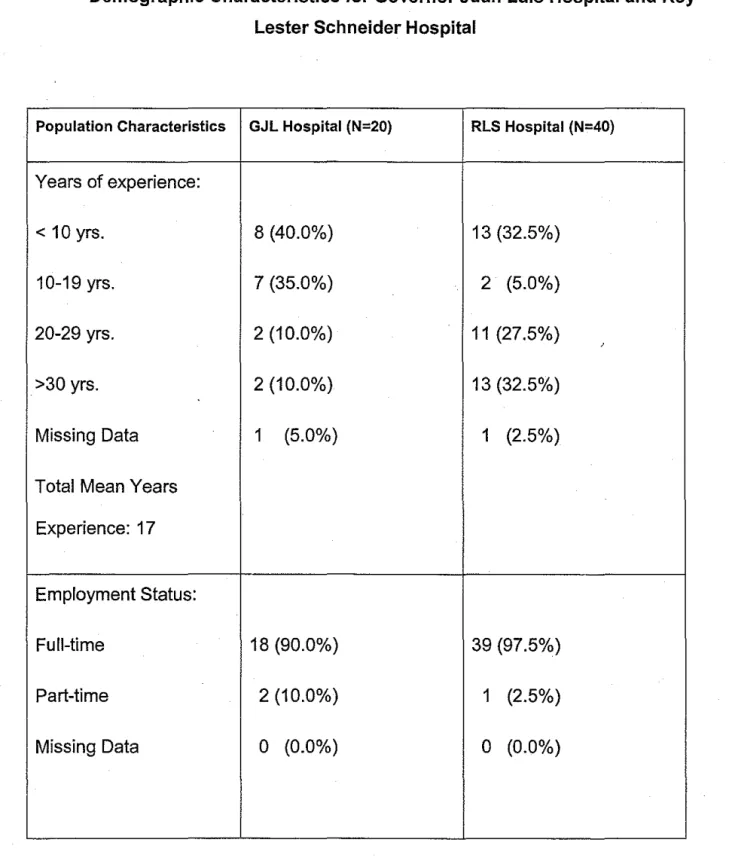
The target population for the survey was 223 registered nurses. Sixty (60) surveys were completed and returned. Of the total population, 28% of the nurses completed the survey from GJL Hospital and 26.14% completed the survey from the RLS Hospital. Nurses' ages ranged from 21 to 62 years. The mean age for the nurses was 39 years. Three surveys did not have gender listed, and the remaining 57 were completed by female nurses. Data presented here are rounded. The
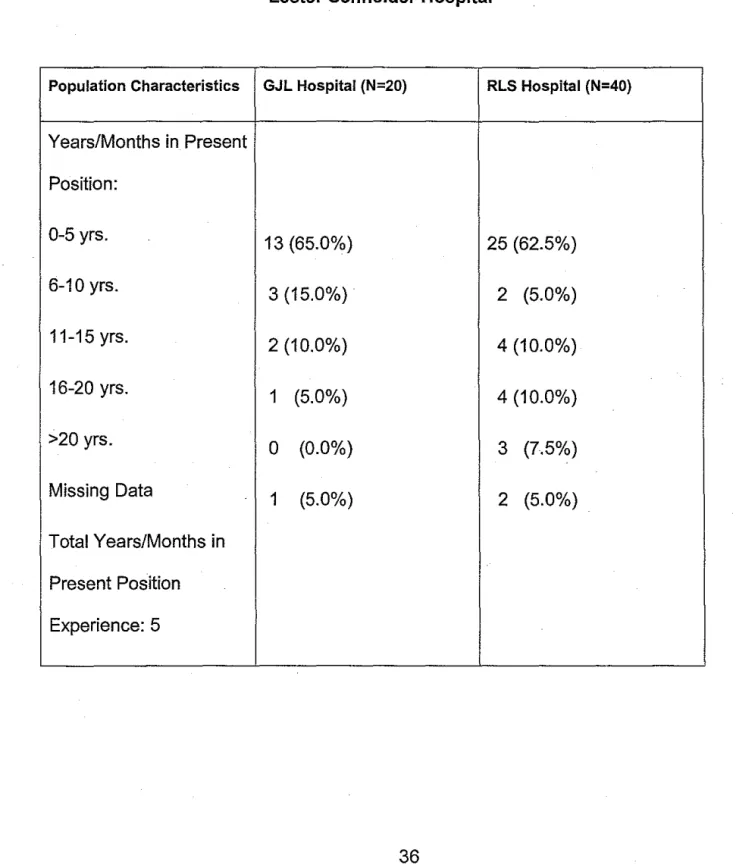
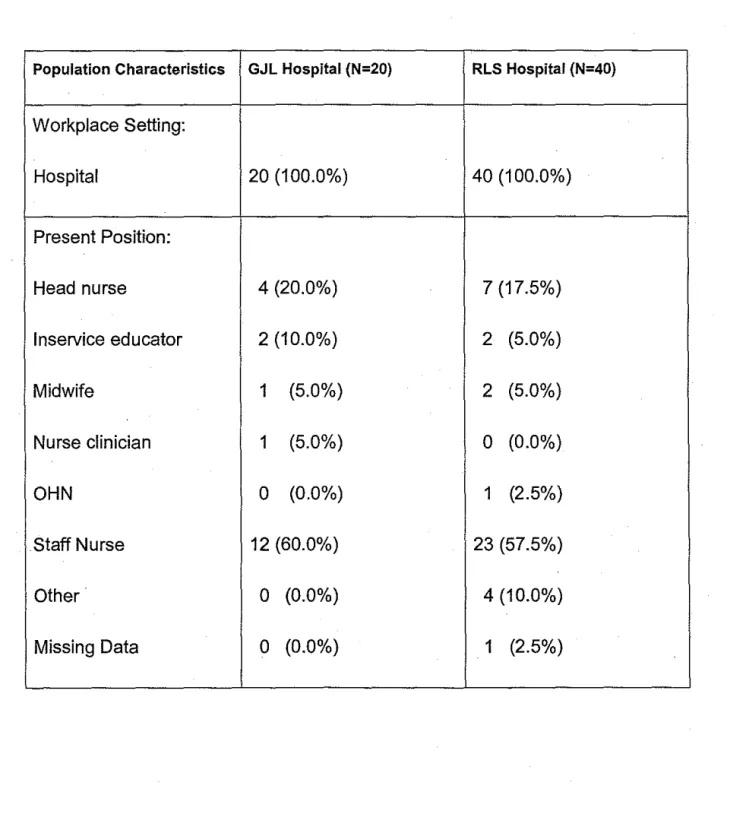
educational level of the nurses consisted of 17% (n=1 0) Associate Degree, 5% (n=3) Diploma, 60% (n=36) Baccalaureate, 15% (n=9) Masters Degree and the remaining 3% (n=2) were missing data. The mean number of years of nursing practice was 17 (n=30). For Nurses' employment status, 93% (n=56) worked full time, 5% (n=3) worked part time, and 2% (n=1) was missing data. The mean number of
nurse/SupeNisor (or Assistant), 7% (n=4) lnseNice educator, 5% (n=3) Midwife/Nurse Practitioner, 2% (n=1)Nurse clinician/Clinical nurse specialist, 58% (n=35) Staff nurse, 7% (n=4) in the "other" category which consisted of one
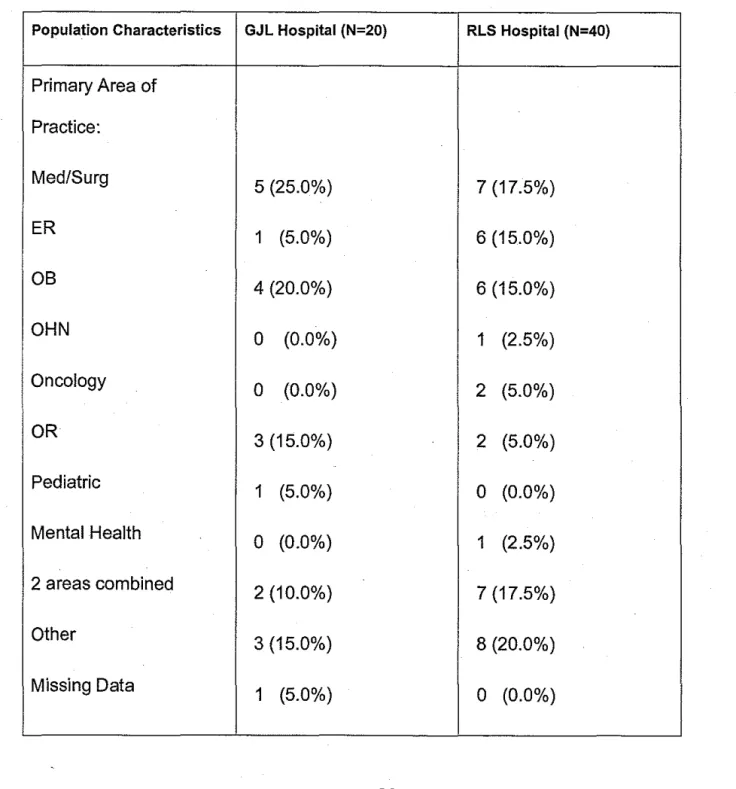
Discharge planner, two Review coordinators, and one Recruiter/informatics, and 2% (n=1) of data missing. Primary area of practice 20% (n=20) Adult/Medical/Surgical, 12% (n=7) Emergency/Air Transport/Critical Care, 17% (n=10) Ob/Gyn/Nursery, 2% (n=1) Occupational Health, 3% (n=2) Oncology, 8% (n=5) Operating
Room/Recovery Room, 2% (n=1) Pediatrics, 2% (n=1) Psychiatry/Mental Health, 17% (n=10) in the "other'' category, which consisted of one Office, two Neonatal I CU. two Education, one SupeNisor Nursing Units, two Preadmission, one SupeNisor of House, and one Utilization Review, 3% (n=2) were missing data, 13% (n=8) listed two areas as their primary area of practice, which were one Adult/Medical/Surgical & 08/GYN/Nursery, one Emergency/Air Transport/Critical Care & Pediatrics, one Adult/Medical/Surgical & Dialysis, one Adult/Medical/Surgical & Psychiatry/Mental Health, three Ob/Gyn/Nursery & Pediatrics, and one Emergency/Air
Transport/Critical Care & Oncology. Demographic characteristics of the sample for each hospital are depicted in Table 4.1
Frequency Data
Occupational Hazards
Table 4.1
Demographic Characteristics for Governor Juan Luis Hospital and Roy Lester Schneider Hospital
Population Characteristics GJL Hospital (N=20) RLS Hospital (N=40)
Age: Range 21-57 yrs. Range 23-62 yrs.
Mean Age 36 yrs. 40 yrs.
Total Mean Age: 39
Gender:
Female 19 (95.0%) 38 (95.0%)
Male 0 (0.0%) 0 (0.0%)
Missing Data 1 (5.0%) 2 (5.0%)
Degree: Associate 4 (20.0%) 6 (15.0%)
Diploma 0 (0.0%) 3 (7.5%)
Baccalaureate 13 (65.0%) 23 (57.5%)
Masters 2 (10.0%) 7 (17.5%)
Missing Data 1 (5.0%) 1 (2.5%)
Table 4.1 con't
Demographic Characteristics for Governor Juan Luis Hospital and Roy Lester Schneider Hospital
Population Characteristics GJL Hospital (N=20) RLS Hospital (N=40)
Years of experience:
<10yrs. 8 (40.0%) 13 (32.5%)
10-19 yrs. 7 (35.0%) 2 (5.0%)
20-29 yrs. 2 (10.0%) 11 (27.5%)
'
>30 yrs. 2 (10.0%) 13 (32.5%)
Missing Data 1 (5.0%) 1 (2.5%)
Total Mean Years Experience: 17
Employment Status:
Full-time 18 (90.0%) 39 (97.5%)
Part-time 2 (10.0%) 1 (2.5%)
Table 4.1 con't
Demographic Characteristics for Governor Juan Luis Hospital and Roy Lester Schneider Hospital
Population Characteristics GJL Hospital (N=20) RLS Hospital (N=40)
Years/Months in Present Position:
0-5 yrs. 13 (65.0%)
25 (62.5%) 6-10 yrs.
3 (15.0%) 2 (5.0%)
11-15yrs. 2 (10.0%)
4 (10.0%) 16-20 yrs.
1 (5.0%) 4 (10.0%)
>20 yrs.
0 (0.0%) 3 (7.5%)
Missing Data
1 (5.0%) 2 (5.0%)
Total Years/Months in Present Position Experience: 5
Table 4.1 con't
Demographic Characteristics for Governor Juan Luis Hospital and Roy
Lester Schneider Hospital
Population Characteristics GJL Hospital (N=20) RLS Hospital (N=40)
Workplace Setting:
Hospital 20 (100.0%) 40 (100.0%)
Present Position:
Head nurse 4 (20.0%) 7 (17.5%)
lnservice educator 2 (10.0%) 2 (5.0%)
Midwife 1 (5.0%) 2 (5.0%)
Nurse clinician 1 (5.0%) 0 (0.0%)
OHN 0 (0.0%) 1 (2.5%)
Staff Nurse 12 (60.0%) 23 (57.5%)
Other 0 (0.0%) 4 (10.0%)
Table 4.1 con't
Demographic Characteristics for Governor Juan Luis Hospital and Roy Lester Schneider Hospital
Population Characteristics GJL Hospital (N=20) RLS Hospital (N=40)
Primary Area of Practice:
Med/Surg
5 (25.0%) 7 (17.5%)
ER
1 (5.0%)6 (15.0%) OB
4 (20.0%) 6(15.0%)
OHN
0 (0.0%) 1 (2.5%)
Oncology
0 (0.0%) 2 (5.0%)
OR
3(15.0%) 2 (5.0%)
Pediatric
1 (5.0%) 0 (0.0%)
Mental Health
0 (0.0%) 1 (2.5%)
2 areas combined
2 (10.0%) 7 (17.5%)
Other
3 (15.0%) 8 (20.0%)
Missing Data
1 (5.0%) 0 (0.0%)
occupational hazards that could endanger their health in their present nursing position, 15% (n=9) were unaware, 2% (n=1) did not know, and 2% (n=1) was missing data. Table 4.2 indicates nurses' awareness of occupational hazards.
Nurses indicated the degree they felt at risk for illness/injury when exposed to the five categories of hazards, biological/infectious, chemical, enviromechanical,
physical, and psychosocial. The top hazardous agents within each category of hazards are as follows.
There were sixteen hazardous agents within the biological/infectious category; however, the top four were 55.55% (n=30) influenza/common cold/URI, 50.91% (n=28) hepatitis 8, 46.29 (n=25) human immunodeficiency virus, and 36.54% (n=19) hepatitis A/hepatitis non-A non-B.
Next, the chemical category top four of 10 hazardous agents listed were 51.86 (n=28) soaps/detergent/bleaches, 41.51% (n=22) antiseptic/disinfectant agents, 41.51% (n=22) rubber products/adhesives, and 34.62% (n=18)
antimicrobials/antibiotic drugs.
In the enviromechanical category there were six out of nine hazardous agents nurses felt at greater risk to were 57.41% (n=31) lifting/pushing/pulling of patients, 48.22% (n=27) inadequate ventilation of the work environment, 48.22% (n=27) sharp objects/i.e. contaminated instruments or needles, 45.29% (n=24) inadequate
Table 4.2
Nurses Awareness of Occupational Hazards for Governor Juan Luis
Hospital and Roy Lester Schneider Hospital
Population Characteristics GJL Hospital (N=20) RLS Hospital (N=40)
Knowledge of
Occupational Hazards:
Yes 17 (85.0%) 32 (80.0%)
No 3 (15.0%)
6(15.0%) Do Not Know
0 (0.0%) 1 (2.5%)
Missing Data
0 (0.0%) 1 (2.5%)
contaminated air (e.g. cigarette smoke, aerosolized particles).
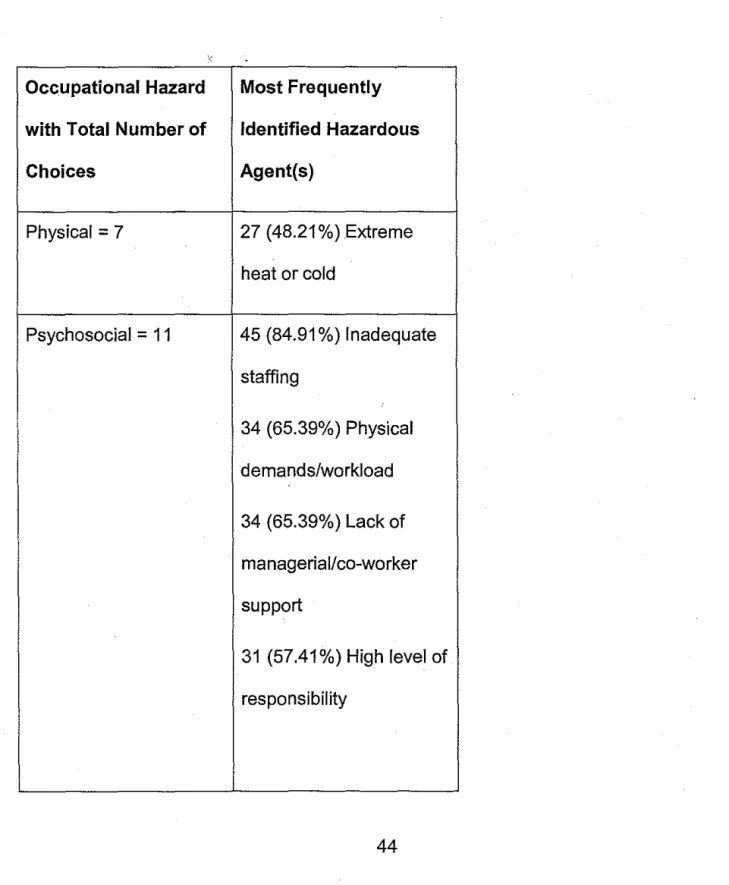
Next, the only hazardous agent out of seven from the physical category nurses felt they were at high risk for was 48.21% (n=27) extreme heat or cold.
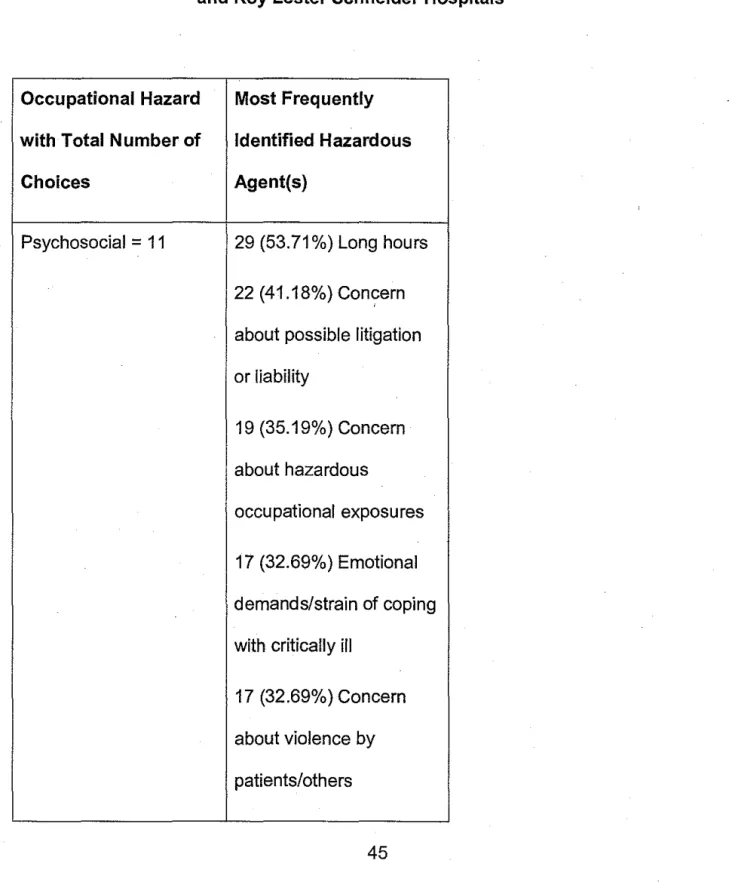
Lastly, nine of the eleven hazardous agents under the psychosocial category nurses felt at greater risk to were 84.91% (n=45) inadequate staffing, 65.39% (n=34) physical demands/workload, 65.39% (n=34) lack of managerial/co-worker (e.g. nurses, physicians, technicians) support, 57.41% (n=31) high level of responsibility, 53.71% (n=29) long hours/double shifts, 41.18 (n=22) concern about possible litigation or liability, 35.19% (n=19) concern about hazardous occupational exposures, 32.69% (n=17) emotional demands/strain of coping with critically ill/dependent/abusive/demanding patients, and 32.69% (n=17) concern about
violence towards you by patients/others. In Table 4.3 the five categories of hazards and the total amount of hazardous agents within each category is .listed. Also, the most frequently identified hazardous agents within each category of hazard are also listed.
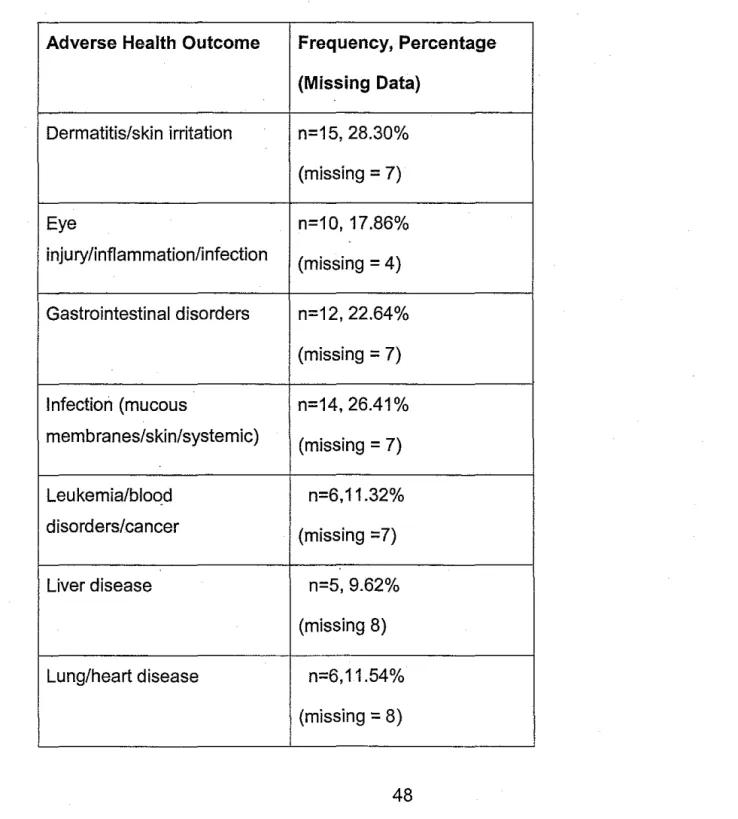
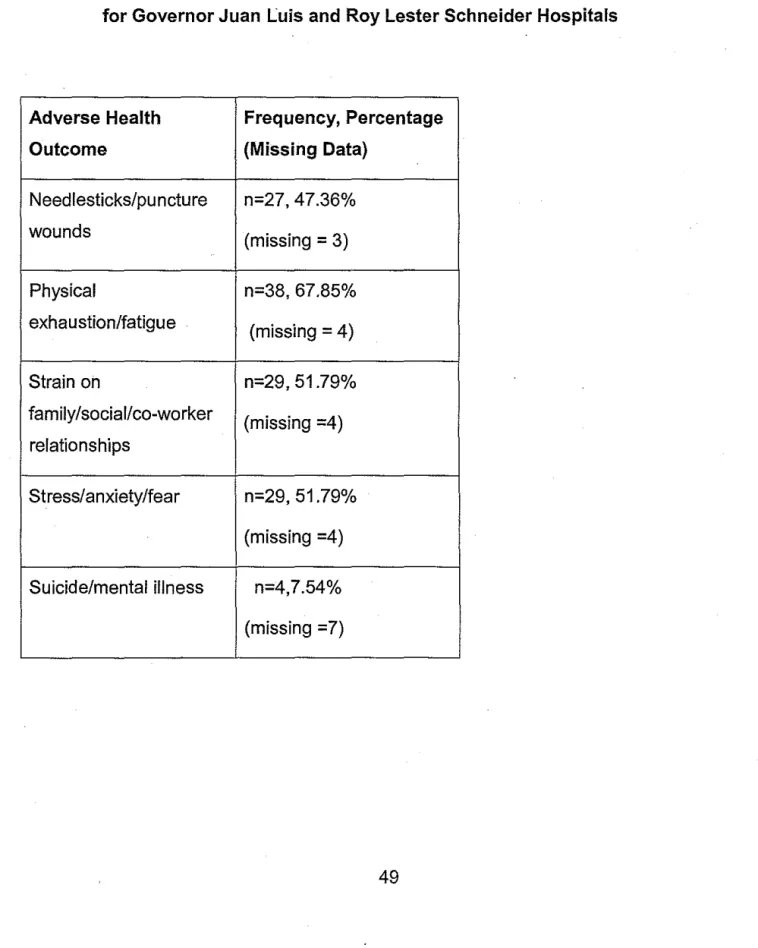
Then, nurses were asked to indicate the degree they felt at risk for acquiring or experiencing adverse health outcomes as a result of workplace exposures. There were nineteen different health outcomes, but the five that held the greatest
importance to the nurses were, 67.85% (n=38) physical exhaustion/fatigue, 51.79% (n=29) strain on family/social/co-worker relationships, 51.79% (n=29)
Table 4.3
Occupational Hazardous Exposure for all 5 Categories for Governor Juan Luis
and Roy Lester Schneider Hospitals
Occupational Hazard Most Frequently
with Total Number of Identified Hazardous
Choices Agent(s)
Biological/Infectious= 16 30 (55.55%) Influenza
28 (50.91%) Hepatitis B
25 (46.29%) HIV/AIDS
19 (36.54% ) Hepatitis A
Chemical= 10 28 (51.86%) Soaps
22 (41.51 %) Antiseptic
22 (41.51%) Rubber
18 (34.62%)
Antimicrobials
Table 4.3 con't
Occupational Hazardous Exposure for all 5 Categories for Governor Juan Luis
and Roy Lester Schneider Hospitals
Occupational Hazard Most Frequently
with Total Number of Identified Hazardous
Choices Agent(s)
Enviromechanical
=
9 31 (57.41%) Lifting27 (48.22%) Inadequate
ventilation
27 (48.22%) Sharp object
24 (45.29%) Inadequate
security
20 (37.04) Poorly
designed/inadequate
work area/equipment
19 (35.85%)
Table 4.3 con't
Occupational Hazardous Exposure for all 5 Categories for Governor Juan Luis
and Roy Lester Schneider Hospitals
Occupational Hazard Most Frequently
with Total Number of Identified Hazardous
Choices Agent(s)
Physical= 7 27 (48.21%)Extreme
heat or cold
Psychosocial = 11 45 (84.91 %) Inadequate
staffing
34 (65.39%) Physical
demands/workload
34 (65.39%) Lack of
managerial/co-worker
support
31 (57.41%) High level of
responsibility
Table 4.3 con't
Occupational Hazardous Exposure for all 5 Categories for Governor Juan Luis and Roy Lester Schneider Hospitals
Occupational Hazard Most Frequently with Total Number of Identified Hazardous
Choices Agent(s)
Psychosocial
=
11 29 (53.71 %) Long hours 22 (41.18%) Con?ern about possible litigation or liability19 (35.19%) Concern about hazardous
occupational exposures 17 (32.69%) Emotional demands/strain of coping with critically ill
back stain or injury/muscle strain. Concerns about adverse health outcomes identified by the population are depicted in Table 4.4.
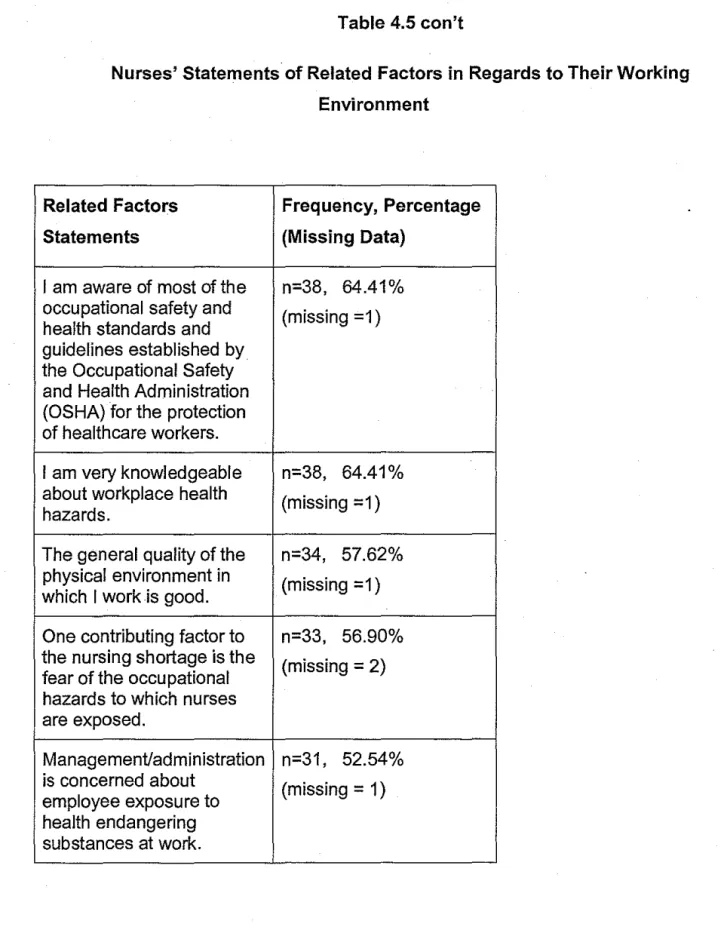
The first section of Part Ill, which dealt with related factors, nurses indicated the degree they agreed or disagreed with 22 statements. The top 50% of
statements that had the greatest frequencies were: 100% (n=59) "It is important to use the universal precautions for any patient care as set forth by the Centers for Disease Control.", 96.55% (n=56) 'The development of occupational health and safety standards by OSHA is an important measure towards the promotion of the health and safety of nurses.", 93.22% (n=55) "It is a responsibility of the
employer/manager/administrator to provide and ensure a safe work environment for me as an.employee.", 83.05% (n=49) "Any disease or injury I might acquire on the job could have grave consequences such as long lasting disability, organ
dysfunction or chronic illness problems.", 79.31% (n=46) "It would be appropriate (for a nurse) to ask for a transfer or reassignment to another area to avoid working in a hazardous situation.", 64.41% (n=38) "I am aware of most of the occupational safety and health standards and guidelines established bythe Occupational Safety and Health Administration (OSHA) for the protection of health care workers." , 64.41% (n=38) "I am very knowledgeable about workplace health hazards.", 57.62% (n=34) "The general quality of the physical environment in which I work is good.", 56.90% · (n=33) "One contributing factor to the nursing shortage is the fear of the occupational
Table 4.4
Concerns about Adverse Health Outcomes as Result of Workplace Exposures for Governor Juan Luis and Roy Lester Schneider Hospitals
Adverse Health Outcome Frequency, Percentage (Missing Data)
Alcohol/drug dependency n=2, 3.85% (missing = 8)
.
Back strain or injury/muscle n=26, 46.43% strain
(missing= 4) Birth defects/spontaneous n=4, 7.55% abortion/reproductive
(missing = 7) disorders
Cataracts n=5, 9.44%
(missing = 7) Chromosomal aberrations n=2, 3.77%
(missing = 7) Contusions/bruises/fractures n=11, 24.53%
(missing=?) Cuts/lacerations/burns n=12, 21.43%
Table 4.4 con't
Concerns about Adverse Health Outcomes as Result of Workplace Exposures for Governor Juan Luis and Roy Lester Schneider Hospitals
Adverse Health Outcome Frequency, Percentage (Missing Data)
Dermatitis/skin irritation n=15, 28.30% (missing = 7)
Eye n=10, 17.86%
injury/inflammation/infection
(missing= 4) Gastrointestinal disorders n=12, 22.64%
(missing = 7) Infection (mucous n=14, 26.41% membranes/skin/systemic)
(missing = 7)
Leukemia/blood n=6,11.32%
disorders/cancer (missing =7)
Liver disease n=5, 9.62%
(missing 8) Lung/heart disease n=6,11.54%
(missing
=
8)Table 4.4 con't
Concerns about Adverse Health Outcomes as Result of Workplace Exposures for Governor Juan Luis and Roy Lester Schneider Hospitals
Adverse Health Frequency, Percentage
Outcome (Missing Data)
Needlesticks/pu ncture n=27, 47.36%
wounds (missing = 3)
Physical n=38, 67.85%
exhaustion/fatigue
(missing= 4)
Strain on n=29, 51.79%
family/social/co-worker
(missing =4) relationships
hazards to which nurses are exposed.", 52.54% (n=31 ).
The second portion of Part Ill asked nurses to rank the ten possible reasons why they are ill/injured on the job. The results were tabulated by taking the average score across individuals for each reason and are shown in Table 4.5. Thus the highest score received a rank of #1, the second #2 etc. The three top reasons nurses indicated for being ill/injured on the job were #1 "Belief that nurses are not susceptible to disease and/or injury related to their occupation, #2 "Nurses lack of knowledge and understanding of their workplace hazards or/do not believe that workplace hazards really exist", and #3 "Concern that the patient may be offended or will be made uncomfortable by the protective measures taken." Table 4.5 & 4.6 depicts related factors.
The remainder of the survey Part IV, Related Concerns, was comprised of 14 questions. Questions with the frequencies greater than 50% are as follow: 96.55% (n=56) "Nurses should be concerned about the risk of health endangering hazards in their working environments.", 81.03% (n=47) "The substances to which I am
exposed and/or the environment in which I work as a nurse could adversely affect my health.", 77.59% (n=45) "I am sure I can maintain my health and safety at work.", 75.86% (n=44) "I am concerned about my potential exposure to occupational
hazards as a nurse.", 73.90% (n=33) "I am concerned about exposing my immediate family or close friends to hazardous substances such as infectious or biological organisms that could lead to illness or disease.",
Table 4.5
Nurses' Statements of Related Factors in Regards to Their Working Environment
Related Factors Statements Frequency, Percentage (Missing Data)
It is important to use the universal n=59, 100.00% precautions for any patient care as set
(missing = 1) forth by the Centers for Disease i
Control.
The development of occupational health n=56, 96.55% and safety standards by OSHA is an
(missing =2) important measure towards the
promotion of the health and safety of nurses.
It is a responsibility of the n=55, 93.22% employer/manager/administrator to
(missing = 1) provide and ensure a safe work
environment for me as an employee.
Any disease or injury I might acquire on n=49, 83.05% the job could have grave consequences
(missing = 1) such as long lasting disability, organ
dysfunction or chronic illness problems.
It would be appropriate (for a nurse) to n=46, 79.31% ask for a transfer or reassignment to
(missing = 2) another area to avoid working in a
Table 4.5 con't
Nurses' Statements of Related Factors in Regards to Their Working Environment
Related Factors Frequency, Percentage
Statements (Missing Data)
I am aware of most of the n=38, 64.41% occupational safety and
(missing =1) health standards and
guidelines established by the Occupational Safety and Health Administration (OSHA) for the protection of healthcare workers.
I am very knowledgeable n=38, 64.41% about workplace health
(missing =1) hazards.
The general quality of the n=34, 57.62% physical environment in
(missing =1) which I work is good.
One contributing factor to n=33, 56.90% the nursing shortage is the
(missing = 2) fear of the occupational
hazards to which nurses are exposed.
Management/administration n=31, 52.54% is concerned about
(missing = 1) employee exposure to
health endangering substances at work.
Table 4.5 con't
Nurses' Statements of Related Factors in Regards to Their Working Environment
Related Factors Frequency, Percentage
Statements (Missing Data)
I have been given n=28, 48.27% adequate information from (missing = 2) my employer about the
potential health
endangering situations in the workplace in order to protect myself.
Management/administration n=20, 33.89% at my place of employment
(missing =1) shares the same
perceptions as I do about my risk-of health
endangering exposures.
I am adequately protected n=19, 32.75% from exposures to health (missing =2) endangering substances
and conditions in my work setting.
Any potential hazards n=18, 31.03% associated with my nursing
(missing = 2) job are just part of my
responsibilities as a nurse .
Table 4.5 con't
Nurses' Statements of Related Factors in Regards to Their Working Environment
Related Factors Frequency, Percentage Statements (Missing Data)
It is easier to try to cope n=15, 25.42% with the risk of health
(missing =1) endangering exposures
than to try to make a change in the work situation.
Health care providers n=14, 23.72% should be able to choose
(missing =1) to care/not care for
persons seropositive for human immunodeficiency virus.
I am resigned to work in n=12, 20.69% some health endangering
(missing = 2) situations and do not seek
to change my working environment.
I am unable to control the n=10, 17.54% health endangering (missing =3) conditions of my work as a
nurse.
Table 4.5 con't
Nurses' Statements of Related Factors in Regards to Their Working Environment
Related Factors Frequency, Percentage Statements (Missing Data)
I accept the potential n=10, 17.24% hazards associated with
(missing = 2) my nursing position as a
trade off for the rewards of my work as a nurse.
Nurses know how to n=9, 15.51% protect themselves from
(missing =2) infectious diseases,
such as AIDS and hepatitis
8:
therefore governmentenforcement is unnecessary.
The universal n=6, 10.35% precautions that are to
(missing =2) be applied when
handling the body fluids of any patient are more trouble to follow than they are worth.
It is more important to n=5, 8.62% use blood and body fluid
(missing =2) precautions for persons
Table 4.6
Nurses Ranking of Reasons for Illness/Injury on the Job
Reason for Mean Rank
illness/injury
Belief nurse not
7.15
#1
susceptible to disease/injury
Nurses lack of
6.11
#2
knowledge
Concern patient
5.82
#3
offended
Apathy
5.79
#4
Lack of support from
5.71
#5
employer/management
Occupational exposure
5.68
#6
inevitable
Lack of support from
5.27
#7
and lack of compliance of co-workers
Difficulty breaking
4.71
#8unsafe habits/practices
Lack of
3.59
#9
convenience/time for protective measures
Unable to predict
3.75
#10
unexpected exposures