S
TATUS AND
P
ERSPECTIVE
ON THE
B
IG
W
IND
/C
ABLE
P
ROJECT
Prepared for:
The Department of Business, Economic Development, and Tourism and the Department of Accounting and General Services
State of Hawaii
Prepared by:
Navigant Consulting, Inc. April 19, 2011
i
F
ORWARD
The purpose of this white paper is to (i) summarize Navigant Consulting, Inc.’s (“Navigant”) conclusions on the Big Wind Project (the “Project” or “Big Wind Project”)1 to date; (ii) provide Navigant’s perspective on the major issues stakeholders face in completing the cable portion of the Project, and (iii) outline actions and activities needed to achieve a successful Project. Navigant has been retained by Hawai‘i's Department of Accounting and General Services (“DAGS”) and Department of Business, Economic Development and Tourism (“DBEDT”) to provide technical, financial, and strategic advice on the Project and to manage and coordinate the procurement process for the cable portion of the Project.
This document contains professional judgment and sets forth several policy recommendations for consideration by decision makers based on Navigant’s review of the work of several
organizations, discussions it has had with stakeholders on the Project over the past 5 months, and its experience with several other undersea cable projects.2
This white paper is not intended to be a definitive document on the Project, contains opinion, and should be used in conjunction with other key stakeholders’ opinions, perspectives, and reports including the National Renewable Energy Laboratory (“NREL”) January 25, 2011 “Summary of Big Wind/Cable Project Status and Perspective” along with NREL’s February 2011 Oahu Wind Integration and Transmission Study reports.
1 The Big Wind Project has four major components:
1. 200 MW wind project on Lāna‘i; 2. 200 MW wind project on Moloka‘i;
3. 400 MW undersea cable system connecting the wind farms to O’ahu; and
4. Generation and transmission upgrades on O’ahu.
ii
T
ABLE OF
C
ONTENTS
Executive Summary ... iv
I. Background and Overview of Project ...1
A. Background of the Project ...1
1. History...1
2. State Seeks “Subject Matter Expert” to Advance Cable Project ...2
3. The State Contracts with Navigant as Subject Matter Expert ...2
4. Navigant’s Early Analysis ...2
B. Elements of the Big Wind Project ...4
C. Cable Project Construction ...4
D. Project Structures ...5
II. State Ownership/Payment for the Cable Project ...7
A. State Ownership ...7
B. Who Pays for the Cable: Taxpayers or Ratepayers? ...7
III. Determining Project Structure ...9
A. Principles to Guide Selection of Desired Structure ...9
B. Major Items Impacting Selection of Structure ...10
1. Accounting Treatment Issue ...10
2. Impact of HECO Credit Downgrade ...10
C. The State Option ...11
D. Recommended Basic Structure – CCC Option ...11
E. Legislation to Effectuate Structure ...13
IV. Navigant’s Recommended Configuration of the Cable Project – Navigant Route ....16
V. Federal Guaranties and Federal Grant Funds ...21
VI. Risk Mitigation Strategies for the Cable Project ...23
A. Procurement ...23
B. Permitting ...23
C. Community Benefits for Lāna‘i and Moloka‘i ...24
D. Community Support ...24
E. Site Control (Moloka‘i)...24
F. Financing...25
G. Development ...25
iii
I. Project on Project Risk (Coordinated Delivery and Completion) ...26
J. Technology ...28
K. Delay ...28
L. Litigation ...28
M. Cost Overruns ...28
N. Regulatory/Legislative (Used or Useful) ...29
O. Operations ...29
VII. Cost Effectiveness and Rate Implications of the Big Wind Project ...31
A. Cost Effectiveness of the Big Wind Project Compared to HECO Burning Oil ...31
B. Cost Effectiveness of the Big Wind Project Compared to HECO Burning Biofuels32 C. Ratepayer Impacts ...33
D. Risk Allocations ...37
VIII. Implementation of the Recommended Structure ...39
IX. Conclusions & Recommendations ...40
A. Conclusions ...40
B. Recommendations ...41 Appendix 1. Meetings with Cable Developers ... 1-1 Appendix 2. Technical Description of Big Wind Project ... 2-3 Appendix 3. Schedule of Major Milestones ... 3-1 Appendix 4. Project Structures ... 4-1 Appendix 5. Proposed Legislation ... 5-1 Appendix 6. Estimated Capital Cost for Cable Project ... 6-1 Appendix 7. Financial Structures and Revenue Requirements ... 7-1 Appendix 8. Preliminary Document to Term Sheet – Castle & Cooke ... 8-1 Appendix 9. Sample DOE Loan Guarantee Application Form ... 9-1 Appendix 10. Computation of Break-Even Prices ... 10-1 Appendix 11. Ratepayer Impacts – Base Case – Levelized ... 11-1 Appendix 12. Ratepayer Impacts – Sensitivities ... 12-1 Appendix 13. Project Sensitivities ... 13-1 Appendix 14. Risk / Responsibility Matrix ... 14-1 Appendix 15. Summary of Navigant’s Relevant Experience ... 15-1 Appendix 16. Bibliography ... 16-1
iv
E
XECUTIVE
S
UMMARY
Navigant has reached the following conclusions based on its review of the work of others, its work completed to date, and its experience:
With Respect to the Entire Big Wind Project
Based on technical analyses, capital cost estimates, proposed wind energy prices and projected avoided oil costs, the Project is technically and economically feasible.
Over its projected life, the Project is cost effective compared to burning low sulfur fuel oil in Hawaiian Electric Company, Inc.’s (“HECO’s”) power plants based on current oil fuel forecasts.
The Project breaks even at a $108/barrel price of oil as described herein.
In its first year of commercial operation, if oil prices and customer usage remains as they were in March, 2011 and if HECO would burn low sulfur oil to meet customer demands, the Project would result in an increase in residential ratepayers rates of $3.58/month.
The Project would be a substantial hedge against volatile oil prices, to withstand the impact on oil prices caused by recent unrest in the Middle East.
It is more cost effective for HECO to meet its customer demands and its Renewable Portfolio Standard (“RPS”) requirement established by Hawai’i law, with the Project rather than by burning biofuels immediately and throughout the twenty year study period.
Based on a review performed by the National Renewable Energy Laboratory (“NREL”) the Project offers a near term cost-effective way to provide a significant quantity of electricity to help meet Hawai‘i’s RPS statutory requirements.
Federal assistance in the form of loan guaranties and other possible assistance may be available for each component of the Project. Such assistance, which is not included in the economic analyses in this white paper, would further improve the Project’s
economics.
The greatest Project risk appears to be “project-on-project risk” that some components of the Project will be completed before others or that one or more component will not be completed at all. As described in this white paper, this risk can be substantially mitigated through coordinated project development, strict penalty provisions for non-performance, insurance products, and encouragement of or requirement for a consortium arrangement among the developers.
v
The Project can be a showcase with international implications given its integration of 400 MW of intermittent generation into a utility system with a peak load of only about 1200 MW.
With Respect to the Cable Portion of the Big Wind Project (“Cable Project”) Project Business Structure
The Cable Project should be developed by a private developer (not the State of Hawai’i (“State”) or HECO) selected through a competitive procurement process as neither the State nor HECO are well positioned to accept project development risk.
The preferred business structure for the Cable Project is that it be developed, owned, and maintained by a cable developer, referred to herein as the “Certified Cable Company” or “CCC”.
Under the preferred business structure, HECO would have the option to purchase the Cable Project 10 years following its commercial operation at a price set forth in the resulting contractual arrangements. If HECO exercised such an option, it would seek rate recovery of its purchase price through a Hawai‘i Public Utility Commission (“PUC”) order.
Navigant has worked closely with key stakeholders, including HECO, DBEDT, and DAGS, to develop legislation that would authorize the PUC (i) to approve the creation of a transmission utility and (ii) to approve rate recovery by the transmission utility for approved and prudent costs for the cable. The bill provides that the CCC would become a transmission utility entitled to rate recovery from HECO’s (O‘ahu) electric ratepayers for its prudent investment in the Cable Project pursuant to a PUC order. This will provide the legal authority and rate recovery framework for the above business structure. The enactment of such authorizing legislation is a necessary pre-condition for further material progress on the Project.
In addition to transmitting wind energy to O‘ahu, the Cable Project includes “headroom” (meaning available transmission capacity when “Big Wind” generators are not fully using the transmission capacity of the cable) that could accommodate additional renewable energy produced on Lāna‘i, Moloka‘i, and/or Maui as well as room for fiber optics that could vastly improve communications among the islands. Although this headroom is expected to provide economic benefits for the Project, such benefits have not been included in the analyses in this white paper.
Cable Project Definition
Navigant has worked closely with key stakeholders, including HECO, DBEDT, DAGS, NREL, and the University of Hawai‘i’s School of Ocean and Earth Science and
vi
(“Navigant Route”) for the Cable Project and general locations for the required converter stations. This route will require in-depth environmental review, and will be studied as one possible alternative of the ongoing Hawai‘i Interisland Renewable Energy Program programmatic environmental impact statement.
The Navigant Route configuration requires only two rather than three converter station sites thereby saving about $100 million in project costs and eliminating the need to build costly infrastructure on Lāna‘i to support construction of a converter station there.
Navigant has worked closely with key stakeholders, including HECO, DBEDT, DAGS, and NREL, to identify converter station sites and specific cable landing sites on Moloka‘i and O‘ahu for the cable and routes from the shore to converter station sites.
The following critical issues remain to permit the pre-development process to continue:
Will there be a Wind Farm on Moloka‘i?
A decision must be made with respect to whether there will be a wind farm on Moloka‘i. Site control appears to be the primary stumbling block and we are aware of many efforts to push this issue to resolution. The now past PUC deadline of March 18, 2011 for executing a term sheet for the wind farms requires an urgent decision on this issue. Without it, uncertainty (and perhaps litigation) about that basic building block of the project will certainly cause delay. The failure to reach a decision further delays the definition of the Project itself. Without that definition, the ability to identify all the relevant private sector players, through the issuance of a competitive request for proposals (“RFP”) to select the cable developer is impossible.
Will there be a Public Policy Foundation for the Cable Project?
Traditional financial support is not available to compensate a cable developer for its successful development of the Cable Project due to HECO’s credit situation and accounting treatment of transmission capacity contracts. Therefore, legislation must be enacted to provide the cable developer with assurance of a predictable and secure revenue stream for the Cable Project. The bill introduced in the 2011 session of the Hawai‘i legislature, including amendments to deal with the Consumer Advocate’s concerns over rate design, has strong stakeholder support to be the vehicle for that assurance. Combined with a Moloka‘i wind farm decision, and the other progress made on physical and technical project definition, enactment of this legislation will permit a competitive RFP process to be initiated and completed thereby defining the final critical project participants. Nothing in the proposed legislation is intended nor should it have the effect of pre-empting the normal permitting and Environmental Impact Study process. Once
established as law, it will provide a framework to select the developer of the Cable Project and give the Project an opportunity to move from a predevelopment stage to full development with substantial sums put at risk by the private sector companies involved and, in turn removing that financial obligation from the State. Mere passage of this proposed legislation will not vest any
vii
rights in any person or entity. No one will be entitled to the benefit of the legislation without passing through the crucible of the entire normal Hawai’i permitting and environmental review process, the RFP, and the PUC approval process that satisfies the parties representing Hawai’i and the ratepayers, that the project is worthy of moving forward and is in compliance with all aspects of Hawai’i law. That said, this proposed legislation that provides a mechanism for assurance of payment for the Cable Project is a necessary starting point in the overall process leading to Project completion.
What Should Hawai‘i’s Role be in the Project?
We understand Hawai’i's interest is to facilitate development of projects to achieve Hawai’i's clean energy and energy independence mandates embodied in existing state law. Based on economic studies conducted by others, the Project offers Hawai’i an opportunity to achieve a large portion of this mandate at a lower cost than other options available and serve as a model project for other states to follow. For example, NREL compared the capital costs of the Big Wind Project to various categories of utility scale solar projects (concentrated solar, tracking photovoltaic and fixed photovoltaic) and determined that the projected prices would be at least 45 percent higher than the wind price. However as with most large, complex projects, there are risks that must be identified and managed to protect Hawai’i’s ratepayers. As such, we advise active State participation in the design, conduct and selection portions of the Project’s
development process to assure that critical State interests are protected, including, but not limited to demanding provisions in any selection that protect ratepayer interests against project-on-project risk.3 Once that task is complete the State’s role should be more limited to its regulatory and permitting function. Project leadership and risk can then pass to the three (or four) private parties: HECO (O‘ahu Upgrades), wind farm(s) developers, and cable developer, who will then be required to coordinate their development, permitting, and financing processes utilizing a joint development model that will be proposed as part of the RFP process and approved during the selection process with State participation. State development funding should be focused on the implementation of these project goals. Post selection, the State will be reimbursed for its subsequently incurred costs by the cable developers through normal permitting protocols. Although much has been accomplished to date to preliminarily define the business structure, the Cable Project configuration (including potential cable routing and converter station siting, subject to environmental review), and financial structure, much still remains to be accomplished before an RFP to select a cable developer can be issued, proposals can be evaluated, a cable developer selected, and the relevant contracts/tariffs negotiated and signed or filed.
3 Project-on-project risk refers to the risk that all elements of the Project will not be completed and operational at the
same time. Since the Project potentially contains four elements (i.e., two wind farms, an undersea cable, and O’ahu electric transmission upgrades) each with potentially different developers/owners, this risk is higher than in most other projects.
1
I.
B
ACKGROUND AND
O
VERVIEW OF
P
ROJECT
A.
Background of the Project
1.
History
In September 2007, under authority from the PUC, HECO held an RFP for renewable energy projects for O‘ahu. From that RFP process, two non-conforming bids4 were submitted, each for a greenfield 400 MW wind farm, one to be developed by First Wind Hawai’i, LLC (“First Wind”) on Moloka‘i, and one to be developed by Castle & Cooke Resorts, LLC (“C&C”) on Lāna‘i. Both proposals included an undersea cable for delivery of the wind energy to O‘ahu. In addition, HECO would make certain upgrades to its generation and transmission system on O‘ahu in order to accept 400 MW of intermittent wind power. Together, the two wind projects, undersea cable, and O‘ahu upgrades came to be known as the “Big Wind Project.”
On October 20, 2008, an Energy Agreement was signed by the Governor, DBEDT, the Consumer Advocate, and HECO and witnessed by the United States Department of Energy (“DOE”) and others. In the agreement, the State accepted primary responsibility and agreed to serve as lead, while coordinating with developers, contractors, and/or HECO as the
circumstances merit, on all matters related to the siting and permitting of the undersea cable system. These responsibilities included, but were not limited to, conducting or having
contractors and advisors conduct the appropriate engineering and design of the undersea cable systems, acquisition of all necessary off-shore and on-shore land rights, permits and approvals (including the Environmental Impact Statement), and construction, operation and maintenance of the undersea cable systems. In the Energy Agreement, the undersea cable system was to be considered State owned infrastructure unless alternatives were discovered as part of the Implementation Studies and agreed to by relevant affected parties. The State also has retained the option to bring in a third-party independent transmission company to fund and build the Cable Project.
In December of 2008, HECO, Castle & Cooke and First Wind met to create a consensus
structure for the Big Wind Project which provided that First Wind and C&C would each have the opportunity to develop a 200 MW wind farm on Moloka‘i and Lāna‘i, respectively. However, if
4
A PUC order approving the First Wind and Castle & Cooke non-conforming proposals was issued on November 18, 2010.
2
one or the other was unable to complete the transaction, the opportunity for the successful developer to install all 400 MW would then need to be considered along with other options5. Since January, 2009, additional work to evaluate the feasibility of the Big Wind Project has been completed under the auspices of a committee of experts called the Technical Review Committee (“TRC”), SOEST, DOE, NREL, HECO and others. This work was supported by the DOE, the State, and other funders, and was intended to answer at least two critical questions regarding the feasibility of the project.
1. Could 400 MW of intermittent energy be reliably absorbed into the O‘ahu electric grid and if so, would the cost of required upgrades to accommodate such an injection of power be reasonable? The answer to this question, found in the TRC’s final report and in other studies and reports commissioned by HECO, was a resounding “yes.” 2. Was there a technically and financially feasible cable route over which to transmit the
power? The answer to this question was also “yes.”
2.
State Seeks “Subject Matter Expert” to Advance Cable Project
Having determined that the Project was technically feasible, DBEDT and DAGS issued a RFP seeking proposals to serve as the State’s “Subject Matter Expert” who would be responsible for (i) coordinating and finalizing development of design parameters for the Cable Project, (ii) developing and issuing an RFP to select contractor(s) to develop the Cable Project and the relevant contract(s), (iii) assisting the State in selecting a cable developer, and (iv) providing overview project management for all matters that involve planning, design, construction, installation, and/or operational support for the Cable Project.
3.
The State Contracts with Navigant as Subject Matter Expert
Navigant was one of several entities that submitted proposals and interviewed to serve as Subject Matter Expert. Navigant submitted its proposal in June 2010, was interviewed on July 14, and was selected on July 26. Notice to proceed under the contract was given on September 3, 2010 after substantial negotiations. The contract covered (i) coordinating and finalizing development of design parameters for the Cable Project. If additional funds are made available, Navigant may perform contract items ii, iii and iv referenced above.
4.
Navigant’s Early Analysis
The Navigant team’s background in the development of a number of large scale wind projects as well as high voltage direct current (“HVDC”) submarine cable projects from inception through commercial operations gave it the ability to understand the critical issues at play in the Cable Project. Consequently, the Navigant team quickly began to focus on the following apparent
3
issues arising in the original bids from First Wind and C&C, and the potential State ownership of the cable:
a. While proposing comprehensive packages of wind farm and cable systems in their initial proposals to HECO, neither wind farm developer had any experience in the development of undersea cables. The studies upon which the cable portion for these “comprehensive” proposals was based were, at best early stage, desk top evaluations and surveys. Upon further study, certain cable routes were apparently problematic. Navigant’s experience has taught it that the Cable Project is extraordinarily complex and requires experience, skill, patience and sufficient resources to deal with the unknown. Traditionally, financing of undersea cables has involved a small universe of specialized equity investors and lenders, and a different suite of risks and revenue streams than found in a wind farm selling energy.
b. The anticipated role of the State as cable developer and owner was constrained by the $600 million or more of capital cost of the Cable Project, and the State’s
understandable reluctance to shoulder the risks and costs of ownership. In addition, the State’s laws on public procurements added complexity, risks and uncertainty to the Project.
c. The apparent unwillingness or inability of HECO, the incumbent utility, to develop and finance such a large infrastructure project was in contrast to the Navigant team’s experience where utilities typically are both able and very interested in developing large infrastructure projects and adding them to their rate base. The Navigant team attributed this reluctance to the large size of the Cable Project’s capital requirements relative to HECO’s current rate base and the slow and uncertain rate treatment HECO has received from the PUC.
d. Finally, the problem of “project-on-project” risk – that is, the risk that the wind farms, Cable Project, and HECO system upgrades would not be completed more or less simultaneously – would need to be addressed and mitigated.
As Navigant began its due diligence review of all the studies, agreements, and reports that were produced during the several years of work on the Big Wind Project, it became apparent that in order to meet its mandate of defining and pursuing a “project” and not a “concept,” Navigant would need to define the fundamental elements of the Cable Project which include overall project structure, project configuration, and financing structure all supported by the public policy changes needed to effectuate the Cable Project. Once these elements were preliminarily
determined, subject to final determination in the environmental review process, there would be a strong basis for a competitive RFP process.
The Navigant team participated in meetings in Hawai’i in October, November, and January. The team met with stakeholders in and out of government, including officials in DBEDT, DAGS, the Departments of the Attorney General, Budget and Finance (“B&F”), and Transportation
4
(regarding harbor facilities), the PUC, the Consumer Advocate, Senate and House Energy Chairs in the Legislature, SOEST, senior attorneys at Kobayashi Sugita and Goda (DBEDT’s outside counsel on the Project), HECO (including senior management, finance, operations and planning), C&C, First Wind, DOE, NREL, and AECOM, the consultant handling the Programmatic
Environmental Impact Statement for the Big Wind Project. Navigant also met with various people of influence in Hawai’i’s energy community. The team also made site evaluation visits to Marine Corps Base Hawai’i (a potential cable landing site), and the islands of Lāna‘i and
Moloka‘i.
Outside of Hawai’i, the Navigant team has met or has spoken with several experienced cable developers, HVDC equipment manufacturers, bankers, insurers, and other professionals with an interest in the Project. A listing of the parties along with notes from several meetings is included in Appendix 1.
The Navigant team has tried to be good listeners with the objective of obtaining input relevant to proposing a Cable Project that is consistent with Hawai’i’s values, appetite for risk, and other factors.
Most importantly, the objective is to propose a project that (i) can be properly permitted through Hawai’i’s environmental review process; (ii) can be successfully developed within the realities of place, of the many stakeholders, and of the market place; and (iii) provides real economic value to Hawai’i and its ratepayers.
B.
Elements of the Big Wind Project
For the purposes of this study, the Big Wind Project includes:
The “Wind Projects” consisting of either two 200 MW wind farms (one on Lāna‘i and one on Moloka‘i) or one 400 MW wind farm on Lāna‘i or Moloka‘i if one of the projects is not pursued,
The Cable Project consisting of high voltage submarine cables interconnecting the wind farms with the HECO transmission system on O‘ahu, and
Transmission and generation upgrades to accommodate the integration of the wind energy into the HECO O‘ahu electrical grid (“O‘ahu Upgrades”).
A technical description of the Big Wind Project is set forth in Appendix 2.
C.
Cable Project Construction
Navigant anticipates that the construction period for the Cable Project will take between 30-36 months. At some point during the period of PUC proceedings under the new legislation for a
5
Certificate of Public Convenience and Necessity (“CPCN”) and the filing of the Project Tariff, the cable developer will execute an agreement with an engineering, procurement and
construction (“EPC”) contractor that will be responsible for the design and construction of the Cable Project. The EPC contract will include a detailed construction schedule with specific milestones, such as (i) the notice to proceed for purchasing materials and booking manufacturing capability and (ii) the factory acceptance testing of the cables. The cable developer will be required to make progress payments to the EPC contractor based on the timely completion of the specific milestones. Failure to complete a milestone on schedule would result in a delayed payment. The Cable Project will be the pacing element, with the wind farms and the O‘ahu upgrades constructed well within the Cable Project construction window.
The EPC contractor shall be responsible for overall control of all construction activities associated with the Cable Project. Those activities include performing and completing all engineering, procurement and construction associated with the Cable Project. They also include furnishing all equipment, materials, supplies, labor, general management and management support, physical and human resources, coordination, project management and any other services necessary to achieve commercial operation of the Cable Project. A proposed schedule showing the major milestones and other key details leading to the commercial operation of the Cable Project in 2016 is set forth in Appendix 3.
It should be noted that the schedule in Appendix 3 does not include provision for delays caused by litigation. Legal challenges to the permit and EIS aspects of one or more of the projects could delay commercial operation of the Big Wind Project for two to three years. It is very clear that neither the cable developer, the wind farm developers or HECO would be willing to begin mobilization or order any equipment until they are satisfied that each component of the Big Wind project is fully permitted and those permits are consistent with the responses to the RFP and are non-appealable.
D.
Project Structures
Navigant has identified and considered four project structures summarized below and more fully in Appendix 4 which define the development, ownership, financing, and payment for the Cable Project. From these basic project structures, there are numerous variations that can be used to address specific issues with the basic structure. As discussed above, all of these basic structures provide for a developer to permit, finance, construct, and commission the Cable Project. The differences are in the roles of other parties, including HECO and the State, and the structure of the financial relationship between them. The four proposed project structures are:
1. Cable development through a long term Firm Transmission Capacity Purchase
Agreement (“FTCPA”) between the cable developer and HECO with HECO paying a monthly payment for the project’s availability. This arrangement is similar to Power Purchase Agreements (“PPA”) that HECO uses to purchase power from generation
6
projects built by others (e.g., the proposed PPA with First Wind and C&C) that are approved by the PUC except that because of the nature of the Cable Project, the FTCPA would require fixed payments rather than volumetric charges (“Contract Option”);
2. Cable development through a purchase Build Own Transfer Agreement (“BOT”) between the cable developer and HECO in which the cable developer develops the Cable Project and HECO purchases it upon its commissioning at a defined price in the BOT. HECO would then put the prudently incurred costs of the Cable Project into its rate base and HECO’s ratepayers would pay for the project similar to the way they pay for the rest of HECO’s infrastructure (“BOT Option”);
3. Cable development through an FTCPA similar to the Contract Option discussed above, except the State is the cable developer’s counterparty rather than HECO. In this option, the State’s required monthly fixed payment for the project’s availability would be
obtained through a surcharge on HECO’s O‘ahu electric customers bills (“State Option”);
and
4. Cable development through establishment by the cable developer of a special purpose regulated transmission utility (the Certified Cable Company that would rate base the asset that it constructs with an option for HECO to acquire the project after ten years of
operation. HECO’s ratepayers would pay for the project similar to the way they pay for the rest of HECO’s infrastructure, but such payments would be made to the CCC for the first 10 years and then to HECO thereafter (“CCC Option”).
Each of these options had been utilized around the country in developing cable projects connecting distant power resources to load. Each is discussed further below.
7
II.
S
TATE
O
WNERSHIP
/P
AYMENT FOR THE
C
ABLE
P
ROJECT
A.
State Ownership
As discussed above, it had initially been the intent of the State to own the Cable Project although other ownership formats were noted in the Energy Agreement. Such an arrangement would entail the State entering into an EPC contract with a cable manufacturer/installer. The State, through DAGS, would treat this project as a public works project subject to normal State
procurement regulations and policies. The State, through its taxpayers, would pay the full capital cost of the Cable Project and be responsible for its operation and repair. DAGS presumably would be the project manager overseeing the activities of the EPC contractor and the State would be responsible for securing the financing for the cable on the State’s credit.
While this approach would put the State in full control of the development and construction of the Cable Project, there are numerous reasons as to why such an arrangement is not in the State’s interest. Notwithstanding that the State, through DAGS, has managed innumerable construction projects, the DAGS staff has never managed the construction of a utility project, particularly one as large and complex as the Cable Project. It should be noted that there are only a handful of developers that have the expertise to manage such a project. Moreover, as the Cable Project could potentially cost in the range of $650-750 million, financing such a project would strain the State’s borrowing authority. In addition, it is clear that the State is not in a position to assume the development, construction and operating risk that would be associated with such a project. Based on the foregoing as well as the availability of other ownership options described below, we understand that the State has determined it is not interested in owning and developing the cable directly.6
B.
Who Pays for the Cable: Taxpayers or Ratepayers?
A basic question that has been raised is whether or not this project should be financed by all the taxpayers of Hawai’i, the electric ratepayers of O‘ahu, or some combination thereof. Solutions
6 Another State ownership approach involves potential legislation creating a State Energy Authority that would own the
transmission project. The Authority would not be supported in any fashion by State general obligation bonds, but would be authorized to issue revenue bonds secured by a revenue stream associated with a HECO cable surcharge approved by the PUC. While the Authority would likely have the ability to issue tax exempt bonds to finance the Project, the debt service coverage requirement would likely be quite high as this would be the Authority’s only project and it would not have any other revenue sources. In addition, the Authority would need to hire an experienced staff which would add substantial costs to the Project.
8
that include State issuance of bonds, State ownership, State loan guaranties, or the State acting as a contracting party, all involve, to one degree or another, responsibility by all the taxpayers of Hawai’i and have a general fund impact on the State.
After extensive conversations with DBEDT, B&F and DAGS officials, including political appointees in the prior and current administrations, as well as senior career State officials, the clear guidance we were given was to utilize the private sector to the greatest extent possible to take the development and financing risk for the Cable Project. We wholeheartedly agree with this approach. All of the potential project structures considered follow that guidance and provide that HECO’s O‘ahu ratepayers will pay for the Cable Project. No further consideration has been given to State guaranties or State issued full faith and credit backed bonds.
9
III.
D
ETERMINING
P
ROJECT
S
TRUCTURE
A.
Principles to Guide Selection of Desired Structure
As indicated above, there are four basic structures that Navigant recommends be considered for the development, ownership, financing, and payment for the Cable Project. Aspects that apply to all options is that the Cable Project would be developed by a cable developer selected through a competitive procurement process and that HECO ratepayers, who will realize the benefits of the Project, will ultimately pay for it after it achieves commercial operation. Accordingly, HECO will be responsible for collecting such payments from the ratepayers under all options either directly on its own behalf or as agent for the State or the CCC.
As decisions are made about the Big Wind Project in general and the basic structure of the Cable Project in particular, there are important principles that need to be considered and evaluated:
Balancing lowest costs with risk tolerance for the State, HECO and HECO’s ratepayers;
Reasonable assurance of cost recovery by cable developer;
Reasonable assurance that the selected structure will not result in unreasonable delays or additional costs for cable and wind developers;
Reasonable assurance that the selected structure will not result in unreasonable delays or additional costs for ratepayers;
Ability to finance the Cable Project given the structure;
Acceptance by the State;
Acceptance by PUC;
Acceptance by HECO;
Acceptance by other major stakeholders;
Determine degree of advantage of partial State ownership or control;
Open and transparent process; and
10
B.
Major Items Impacting Selection of Structure
1.
Accounting Treatment Issue
The Contract Option has been discussed at length with HECO. HECO’s primary concern with this option involves onerous financial accounting requirements during the period that HECO would pay the cable developer for cable development and transmission service (typically, 20 years or longer). Specifically, as HECO would purchase the full cable capacity from the outset and would pay a firm price not associated with cable usage, the contract would likely be treated as a capitalized lease and therefore the full stream of capacity payments would be treated as debt on HECO’s balance sheet. Since there would not be any owned asset or rate based treatment for recovery to offset that liability for many years, this would have a significant adverse financial impact on HECO and would severely limit HECO’s ability to issue new debt. For these reasons, HECO has determined that the Contract Option is not acceptable.
2.
Impact of HECO Credit Downgrade
Since a HVDC cable can be a utility asset, the most obvious owner is HECO. If HECO were to own the Cable Project, it would become part of HECO’s rate base that would be depreciated over an average service life approved by the PUC and on which HECO would earn a PUC authorized return.
As HECO acknowledges that it does not have any experience in developing and constructing such projects, a BOT arrangement could be considered. Under the BOT approach, a cable developer would be responsible for permitting, developing, financing and constructing the project. The cable developer assumes all development and construction risk. Upon the commercial operation date of the project, title would transfer to HECO which would pay the cable developer an agreed upon amount set forth in the BOT Agreement. HECO could operate the cable or could contract with the cable developer to operate it.
Incorporating the cable project in HECO’s rate base upon commercial operation pursuant to the BOT arrangement would be expected to have the lowest impact on retail rates because the cost recovery would be amortized over the longest period and the PUC regulated return would likely be much lower than that required by a cable developer.
In spite of its obvious merits, this approach is currently not feasible. On November 16, 2010,
Standard & Poor's announced that it was downgrading HECO's credit rating to BBB-, which is one step better than "junk bond" quality. Because a private cable developer's creditworthiness is generally one or two steps below the utility to which it sells power, the credit downgrade
materially limits the structural options available for the Cable Project. This situation is
exacerbated by the large capital cost of the Project. HECO’s current rate base ranges from $600-700 million. Attempting to add a $$600-700 million asset to the HECO rate base would present
11
significant financing difficulties. HECO would need to raise substantial new equity and debt. Thus, today HECO could not make a binding commitment to fund that purchase price and therefore it could not reasonably enter into a BOT agreement that any cable developer
counterparty could rely upon in securing its own construction financing. As such, pursuing the BOT approach at this time does not have merit.
Similarly, HECO’s downgrade also makes the Contract Option unfinancable.
Navigant believes that a credit impaired utility is a significant obstacle to the State in a number of ways, including the State’s ability to meet the 40% RPS standard established by law. A financially weak HECO will not be able to enter into the broad range of PPAs that will be necessary to guaranty a diverse renewable portfolio.
C.
The State Option
Given that both the Contract Option and BOT Option are not viable given the HECO downgrade and accounting treatment issue discussed above, the options remaining for consideration are the State Option and CCC Option.
The State Option is potentially workable as the credit rating of the State would replace that of HECO and the associated Cable Project risk would be assumed by taxpayers. Under this
approach, the State and the cable developer would be the parties to the FTCPA. The State would essentially provide the transmission service under which the wind energy would be delivered to HECO and make the monthly capacity payments to the cable developer. HECO’s role would be limited to being the collection agent for the State. Legislative authorization would be needed to enable PUC approval for a cable surcharge to be included in HECO retail rates for cable cost recovery.
While this approach would avoid the capitalized lease issue, it would place some long term risks on the State as counterparty. As previously discussed, this arrangement entails a long term financial obligation which the State does not appear to be willing to assume. Further, the relatively high payment obligations under the FTCPA could limit the State’s ability to finance other large and important capital infrastructure projects. Finally, this approach would put the State in a business with which it is not familiar and in which it does not have expertise.
D.
Recommended Basic Structure – CCC Option
For the reasons set forth in detail below, the most viable approach to develop the Cable Project-- and to provide HECO with a path back to economic health -- is the “Certified Cable Company” or “CCC” Option.
12
Pursuant to this option, the cable developer (with or without HECO and/or the State as small minority limited partners in a joint venture arrangement7) would obtain cost recovery derived directly from a PUC rate order. This arrangement would ideally include ownership of the cable transferring to HECO at a later date (e.g., 10 years after commercial operation of the Cable Project) when its credit situation would presumably have improved. The CCC Option has been reviewed with the State, HECO, several other stakeholders and several potential project
developers, and appears to have support from all of them.
Under the CCC Option, the cable developer entity (including its investors) would be the sole owners of the Cable Project. Rather than an FTCPA arrangement as in the Contract Option or State Option, the cost for the Cable Project would be secured by a PUC rate order with terms and conditions of service set forth in a transmission tariff filed by the cable developer and approved by the PUC. Such tariff would provide the same protections for HECO’s ratepayers as those generally incorporated in an FTCPA, including protection against cost overruns, guaranties on cable availability, liquidated damages for non compliance, insurance requirements, and the ability to terminate payments under the tariff for extended non-compliance or extended force majeure circumstances. New legislation would be required for the cable developer to be recognized as a transmission public utility.
This option avoids the capitalized lease issue and HECO credit downgrading issues discussed above. It also allows for HECO to participate in the Cable Project in various ways, most significantly, by way of an option to purchase the cable after its tenth year of commercial operation.
After lengthy discussions, it is clear that HECO understands its financial limitations and agrees that the CCC Option represents the best approach to moving forward with the Cable Project, and it is lending its support to the legislation now pending in the Hawai’i State Legislature.
It should be noted that the CCC Option is modeled in part on the Trans Bay cable in California. Trans Bay is a 55 mile 400 MW Voltage Source Converter HVDC cable project interconnecting San Francisco with the City of Pittsburgh, California. Like the CCC, Trans Bay recovers its costs through a regulatory approved tariff rather than an FTCPA. In recognition of the
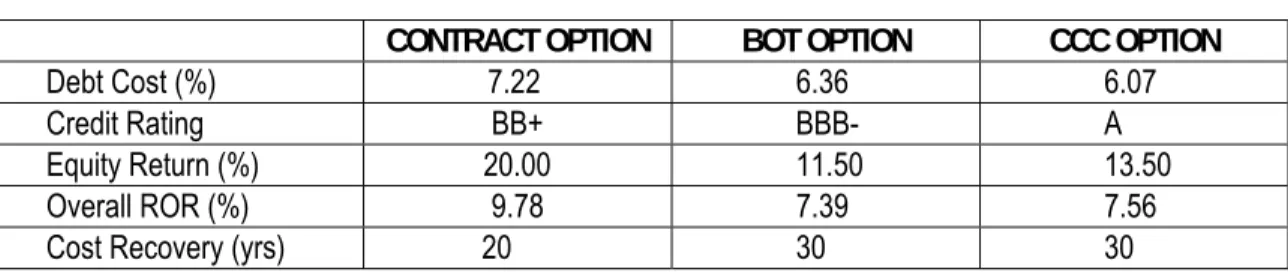
significant risks assumed by Trans Bay, the regulator (“Federal Energy Regulatory Commission” or “FERC”) allowed an equity return of 13.5 percent, which is higher than FERC typically allows for regulated utilities. For the Cable Project to be successfully financed, it will be necessary for the PUC to afford the CCC similar treatment.
7 HECO had initially expressed an interest in participating in the Joint Venture as a limited partner with a very small percentage,
or perhaps such investment would be in exchange for an option to acquire the cable at a future date at a price certain. More recently, HECO indicated that it has reconsidered participating in a Joint Venture.
13
E.
Legislation to Effectuate Structure
The legislation to effectuate the structure discussed above requires a new part be added to Chapter 269 of Hawai’i Revised Statutes that creates a new kind of public utility to be known as a Certified Cable Company as described above. A CCC will be created pursuant to a PUC approved RFP with the limited function to plan, permit, license, finance, construct and operate a high voltage cable transmission system (AC and DC) between and among islands for the purpose of the interconnection of two or more electric utility systems or helping such system to meet applicable RPS standards (HRS § 269-92). The bills pending during the 2011 session of the Legislature are H.B. No. 1176 and S.B. No. 367, and are attached as Appendix 5 in their current forms.
Assuming the new law is enacted, HECO will petition the PUC for a competitive bidding order for new transmission under a competitive bidding framework. If the PUC grants the order, HECO and DBEDT will draft the RFP and submit it to the PUC for review. The next step is for the PUC to approve the form and content of the RFP with any noted changes, and then order HECO to conduct the RFP. We anticipate that DBEDT will be part of the selection committee for the RFP that will select the eventual CCC.
The proposed CCC would be certified as such upon the submission of and approval by the PUC of a request for a CPCN for the proposed high voltage electric transmission cable system. The PUC would consider and approve rate making principles for the cable as a part of the CPCN process.
Further the CCC would file a tariff setting forth the specific terms of service and the conditions for operation of the Cable Project, all of which would be consistent with the requirements of the RFP, including the technical specifications, the interconnection requirements of HECO, and joint operating instructions setting forth in detail the operational protocols for the cable system.
Finally, with respect to cost recovery by the CCC, all prudently incurred expenses would be recovered through a PUC approved surcharge. This surcharge would take into account the complexity and risks of the Cable Project. HECO, which would receive power over the Cable Project for delivery to its customers, would enter into an agency relationship with the CCC to collect the PUC approved rate from its customers and to transmit such funds to the CCC. Once the Cable Project is fully commissioned and available for commercial operation, it would be deemed by the PUC “used or useful” for public utility purposes, subject to PUC approval. A new section of the Hawai’i statutes will also provide for rate making principles, including a temporary surcharge followed by inclusion in a future case should the assets of the CCC be acquired at some future time by a traditional electric utility.
14
Because current law specifically excludes transmission of renewable energy from the definition of “public utility”, the PUC does not presently have explicit authority to require and supervise a competitive RFP process for a transmission asset. The new section of Chapter 269 proposed in the legislation would establish that authority.
The process anticipated under the proposed revisions to Chapter 269 may be visualized as follows:
16
IV.
N
AVIGANT
’
S
R
ECOMMENDED
C
ONFIGURATION OF
THE
C
ABLE
P
ROJECT
–
N
AVIGANT
R
OUTE
In addition to the cable, the Cable Project includes converter stations where alternating current (AC) from the wind farms is converted to direct current for transmission through the cable, and back to AC once the cable reaches O‘ahu. Converter stations are large, fragile and expensive (about $100 million each).
The cable route and converter station configuration (“Navigant Route”) discussed below appear to be the least expensive and technically feasible, and will likely result in a permittable and insurable project. We believe the cable can be routed to avoid problematic sub-sea areas and will benefit from a lower price by reducing the number of anticipated converter station sites from three (as originally conceptualized) to two. We have identified suitable areas for converter stations on Moloka‘i and O‘ahu that appear to have sufficient existing transportation infrastructure and that avoid major additional infrastructure expense. Of course the above preliminary views are subject to the extensive environmental review process involving the Project.
Prior to Navigant’s being retained, the apparent preferred cable landing site in O‘ahu had been Honolulu Harbor with interconnection to the HECO transmission system at the nearby Iwilei substation. However, upon the discovery by SOEST of a large debris field just south of the entrance to Honolulu Harbor, this potential landing site became more challenging. One possible solution entailed laying the cable near the south shore of O‘ahu to avoid the ordinance.
However, because of concerns about rock slides and the cable bending radius necessary for the turn into the harbor, this approach was not pursued. Navigant reviewed this issue in its meetings with cable developers. Most of the developers indicated resolving this issue would not be economically feasible and would be uninsurable. One developer suggested directional drilling under the debris field, but acknowledged that securing required insurance would be a serious problem. In addition to the debris, anchor strikes represent a threat to the Cable Project. The Army Corps of Engineers generally prohibits buried cables along the length of a marked channel, while occasionally permitting a 90 degree crossing of a channel. SOEST showed numerous instances of anchoring along the channel leading into Honolulu Harbor. While the cable would be buried, it would still be at high risk of an anchor strike. This violates a primary underwriting standard for cable insurance. Finally, there are plans to construct a cooling water outfall pipe in Honolulu Harbor that could impact the Cable Project.
17
For the reasons described above, Navigant recommends against a cable landing site in Honolulu Harbor. After substantial investigation and discussions with HECO and SOEST, Navigant has concluded that the preferred cable landing site in O‘ahu should be at Marine Corps Base Hawaii in Kāne‘ohe. The cable would interconnect with HECO’s Ko‘olau Substation about three miles from the landing site. While a final converter station site has not been identified, Navigant recommends that a quarry and an existing industrial site along H3 be further investigated.
The map below shows the Navigant Route8 for the submarine cable that would have both DC and AC components. The DC component connects Moloka‘i with O‘ahu (about 70 miles) and entails a technology that accommodates the use of solid insulation cables. The maximum single
contingency that the HECO system can tolerate without its grid becoming unstable and
potentially experiencing major outages is 200 MW. Accordingly, the cables would be arranged in a manner that recognizes this limitation – essentially, two separate, but co-located, 200 MW systems rather than a single 400 MW system.
It should be noted that the cable project will need to employ Voltage Source Converter (“VSC”) technology. There are two very distinct types of HVDC technology in the world today,
Conventional HVDC and VSC HVDC. VSC technology is generally less expensive than Conventional HVDC. In addition, VSC is smaller and quieter. Conventional HVDC consumes much reactive power which would require the installation of large compensation banks, while VSC HVDC can be a source or sink of reactive power. As such, a VSC cable project can provide reliability benefits to a system even when it is not transmitting energy. Purely from a technical perspective, the Cable Project must use VSC technology because of the radial nature of the wind farms, i.e., the wind farms are directly connected to the Cable Project and are not proposed to be connected to the distribution systems on Lāna‘i and Moloka‘i.
VSC HVDC is a proven technology and there are numerous VSC HVDC projects in operation throughout the world.
With respect to the electrical configuration of the converter stations, two configurations appear workable to meet technical and contingency requirements as shown in Appendix D. Proposers in the RFP will be required to select one of these options and to justify that choice in terms of cost, reliability and compliance with technical specifications. While both configurations would support HECO’s maximum single contingency, Navigant considers the first configuration to be preferable as discussed in Appendix 2. Also, in recognition of that contingency, each converter station would essentially house two separate 200 MW converter apparatus on both Moloka‘i and O‘ahu within the same footprint, rather than a single 400 MW converter apparatus. The wind farm on Moloka‘i would interconnect with one of the converter apparatus on that island; the Lāna‘i wind farm would connect to the other Molokai sited converter apparatus.
18
The AC component would entail a nine mile submarine cable between Moloka‘i and Lāna‘i. Using an AC cable between Lāna‘i and Moloka‘i eliminates the need for a converter station on Lāna‘i. The point of interconnection for the Lana’i Wind Project with the Cable Project would be the Transition Station to be installed on Lāna‘i by the cable developer. The Transition Station will include pipe type cable terminations to potheads, ground switches, surge arrestors, bus work, removable disconnecting links, alarms, fencing and other
equipment. The developer of the Lāna‘i Wind Project would be responsible for installing the 138 KV cable or overhead line interconnecting its substation with the Transition Station. A picture of a typical
19
When Navigant was first engaged, it was assumed there would be a separate converter station on Lāna‘i. Our analysis is that such a converter station would require extensive infrastructure build out on Lāna‘i that would unnecessarily and unreasonably add to overall project cost. This is because of the severe lack of adequate infrastructure (e.g., roads and piers) on Lāna‘i. Installing the heavy and sensitive converter station equipment (particularly the four single phase
transformers that weigh about 100 tons each) would present substantial and unnecessary economic and technical challenges. Pictures of a VSC HVDC converter station are shown below. In addition the allocation of incremental infrastructure costs on Lāna‘i, if a converter station were to be located there, would unnecessarily increase Project cost and involve the parties in a complex cost allocation negotiation. With the configuration proposed by Navigant, all expenses on Lāna‘i would be allocated to the wind farm except for the small Transition Station described above. The AC cable allows the converter station designated for the Lāna‘i wind farm to be installed on Moloka‘i where the road and harbor infrastructure is much more robust and accommodating.
20
The estimated capital cost of the Cable Project associated with Navigant’s recommended configuration is $655,120,000. A breakdown of that estimate is shown in Appendix 6. The potential financial structures for each option and the related Cable Project annual revenue requirements are set forth in Appendix 7.9
As noted, one significant issue that is holding up implementation is that First Wind has been unable to secure site control for its wind farm proposal from Moloka‘i Ranch, the land owner. First Wind was unable to meet the March 18, 2011 deadline set by the PUC for the submission of PPA term sheets, but has requested an extension from the PUC. First Wind’s request is currently pending. In contrast, C&C has already submitted a preliminary document to HECO which could serve as the foundation of a term sheet. It provides indicative pricing information which is useful in projecting overall Project cost impacts on ratepayers. A copy of this preliminary document is set forth in Appendix 8.
If the Moloka‘i site control issue is not resolved very soon, then the decision must be made
whether to proceed with a 400 MW wind farm with C&C on Lāna‘i or to take some other action.
9 It should be noted that Navigant’s recommended configuration for the Cable Project is not identical to any of those reviewed by
the TRC. It most closely compares to Scenario 1 of Stage 2 in the OWITS Phase 2 Report. Two 200 MW HVDC cables (40 miles) between Ilio Point and Ko’olau and a 40 mile 230 KV AC single circuit between Lana’i and Ilio Point were considered. Navigant believes that its proposed configuration would be less expensive and easier to install. By using a much shorter AC route (nine miles vs. 40 miles) with less resistance, Navigant’s recommendation would use a 138 KV line rather than the higher cost 230 KV cable. In addition, Navigant’s recommended location for the converter site on Moloka’i would minimize the amount of directional drilling required and is readily accessible by road from Kaunakakai Harbor.
21
V.
F
EDERAL
G
UARANTIES AND
F
EDERAL
G
RANT
F
UNDS
It is quite clear to the Navigant team that there is an opportunity to seek and secure federal loan guaranties through the DOE 1703 program. The U.S. Department of Energy has provided a great deal of technical and analytical support for pre-development Cable Project efforts. The
advantages of a federal loan guaranty would be to reduce the interest costs and thereby have the potential to reduce ratepayer impacts. The loan guaranties come with an initial and annual guaranty fee that must be paid to the federal government by the recipient of the debt. Any unguaranteed portion of any Project debt as well as all equity required will be at the project developer’s risk.
It appears that the window will open soon for Part I applications for the 1703 program and that all the components of the Big Wind project could separately or together qualify for federal loan guaranties, except for such Project components as might be owned by the State. This is yet another of the reasons why the private developer model is preferred and Navigant is not recommending that the State own any Cable Project components.
The DOE 1703 program authorizes loan guarantees for projects that “avoid, reduce, or sequester air pollutants or anthropogenic emissions of greenhouse gases and employ new or significantly improved technologies as compared to commercial technologies in service in the United States at the time the guarantee is issued.” It is the view of Navigant and others involved in the project (including DOE staff) that the Big Wind Project would qualify for a DOE Loan Guarantee under Section 1703. The DOE periodically announces solicitations in which it accepts applications for loan guarantees. In connection with such solicitations, the DOE establishes open window
periods, during which Parts I and II applications are due by specified dates. Part I applications require payment of 25 percent of the non-refundable application fee and a letter of commitment from the applicant. Part II requires payment of the balance of the non-refundable application fee along with the applicant’s technical information, business and financial plans and proposed organizational structure and staffing. Navigant believes that an approvable Part I application for the cable Project can be prepared and submitted within the anticipated submission deadlines based generally on existing information. A Loan Guarantee Application Form is shown in Appendix 9.
There do not appear to be any DOE capital cost grant programs that are available for the Project although DOE does continue to provide support for project evaluation and pre-development. Any funds from the Defense Department or other federal agencies that may be made available
22
would certainly have additional beneficial impact on overall ratepayer costs, but the availability and pursuit of such funds are beyond Navigant’s scope of work.
23
VI.
R
ISK
M
ITIGATION
S
TRATEGIES FOR THE
C
ABLE
P
ROJECT
The following discussion describes particular risk mitigation strategies for the cable development as it proceeds through financing, construction and operations phases.
A.
Procurement
Procurement of the Cable Project would be pursued through a RFP process, regardless of the structural option selected. However, the structural option ultimately selected will significantly impact the content of the RFP. As such, Navigant believes the RFP cannot be issued until the basic structure has been selected. It is noteworthy that for all the options, the RFP issued would require that the cable developer be responsible for all risks (permitting, litigation, development, construction (including cost overruns) at least through Project commissioning (i.e., the
commercial operation date). Only in the case of the State Option would the procurement be a State responsibility pursued under the Hawai‘i procurement code.
The RFP itself would contain risk allocation requirements to protect the ratepayers and HECO to the extent possible under each of the structural options. Under the CCC Option, the proposed tariff would provide HECO’s ratepayers the protections set forth in the RFP response and would be similar protections as those contained in an FTCPA. Additional protection to ratepayers may be provided by the PUC through the tariff approval process.
B.
Permitting
In each of the four structural options, obtaining permits required for constructing and operating the Cable Project, and meeting such permit requirements would be the responsibility of the cable developer as would the practical obligation to defend such permits (along with the permitting agency) in the face of legal challenges. That is, HECO’s ratepayers, the State and HECO would not be exposed if the cable developer fails to obtain required permits.
It should be noted that the State has substantial permitting authority under HRS Chapter 201N. Pursuant to this statute, DBEDT is the energy resources coordinator and would be responsible for identifying all State and county permits necessary for the Project and compiling a permitting plan. The cable developer would be required to apply for the permits identified in the permitting plan. Under the law, if a permitting agency fails to act on a cable developer’s application within 18 months, the energy resources coordinator may deem the permit approved.
24
C.
Community Benefits for L
ā
na‘i and Moloka‘i
Community benefits packages are an important aspect of the Big Wind Project. The RFP will require the cable developer to provide a complete description of its proposed community benefits package to be delivered to the residents of Lāna‘i and Moloka‘i, including plans for using local labor and materials. Among other things, the package should include a plan for integrating each island’s community needs. The package should also include local economic development opportunities.
A very significant component for the community benefits packages for Lanai and Molokai could be an electric rate equalization (with O‘ahu) arrangement. Ratepayers on Lana’i and Moloka‘i currently pay in the order of 40¢/kWh, which is well in excess of the rates paid by HECO customers. By blending the costs to serve on Lāna‘i and Moloka‘i with those for O‘ahu,
Lāna‘i/Moloka‘i ratepayers would realize major savings each month while the impact on O‘ahu electricity users would be negligible.
D.
Community Support
The RFP will require the cable developer to provide a full description of the cable developer’s plan to secure community support for the Cable Project; and, once selected, the cable developer will work with the wind farm developers, HECO, and DBEDT in developing and implementing strategies for coordinated efforts. The RFP will require the cable developer to provide a detailed description of its planned approach to manage the potential impact of the Cable Project on impacted communities and interested parties. The plan should include community outreach activities as well as plans for educating affected communities about the Cable Project and securing community input.
E.
Site Control (Moloka‘i)
As previously discussed, Navigant recommends the Cable Project interconnect wind farms on Lāna‘i and Moloka‘i with the O‘ahu transmission system using two 200 MW HVDC cables between Moloka‘i and O‘ahu and an AC cable between Lāna‘i and Moloka‘i, although the final configuration will be determined in the environmental review process. If First Wind is not successful at securing site control for its proposed wind farm on Moloka‘i, the C&C project on Lāna‘i may have the opportunity to increase to 400 MW. In such an event, the capacity of the AC cable connecting the Lāna‘i wind farm to the converter station on Moloka‘i would need to be increased. It is anticipated that the 200 MW wind farm on Lāna‘i would require one 138 kV cable to interconnect with the converter station on Moloka‘i. If the wind farm on Lāna‘i is increased to 400 MW, a second 138 kV cable would need to be added or the AC cable would need to be upgraded to 230 kV to accommodate the increased power flow. These modifications would result in increased costs to the Project. Since the disposition of the First Wind site control