Research Article
a
November
2018
Computer Science and Software Engineering
ISSN: 2277-128X (Volume-8, Issue-11)
The Development of Expert System for Corrosion
Protection of Concrete Structures(Coated Systems) Using
Mass Transfer Heuristics
1
Ohiri Thaddeus., 2Dr. Ituma Chinagolum, 3Mmeah Shedrack 1, 2
Department of Computer Science, Ebonyi State University, Abakaliki – Nigeria
3
Department of Computer Science, Ken Saro Wiwa Polytechnic, Bori – Nigeria
Email- [email protected], [email protected], [email protected]
Abstract: Corrosion of concrete structures in buildings brings about various problems such as reduced services life of the structure, consequently degenerating to occasional collapse of high rise buildings. Resulting to loss of money, material, life etc. It is important to adopt methods to eliminate, lesson the effect or prevent corrosion of concrete structures. Expert system for corrosion protection of concrete structures is a user-friendly computer interface using suitable software . The expert system consist of four features: a knowledge base, inference engine, a working memory and a predictive modeling power. It helps the user to find remedies for Corrosion-related issues of the concrete structure in building. The user can input the defects seen and the expert system will return the possible cause and remedies for the problem found -as the output -from the knowledge base of the Expert System.
The problem of lack of predictive modeling power among the existing systems that hitherto existed due to the difficulty in creating and interfacing with computational simulation models will be a thing of the past with this Expert System.
Keywords: Expert System, knowledge base, corrosion, concrete structure, predictive modeling power, computational simulation models, Heuristics.
I. INTRODUCTION
Estimates of the annual cost of corrosion in the United States vary between 8 billion dollars and 126 billion dollars”--- [1]. In any case, corrosion represents a tremendous economic loss and this Expert System (being a protective- coating advisor) can be used to reduce it. Furthermore, According to the Wall Street Journal (September 11, 1981), cost to oil and gas producers is nearly 2 billion dollars. Costs are increasing because of deeper Wells and more hostile environments (Due to global climatic changes as a result of ozone layer depletion).
As a matter of facts, protective- coating advisor, will have the capacity to develop the formulations of coatings suitable for a specified service life and also predicts the service life (hence beginning of corrosion on substrates) of different species of coatings and their substrates before manufacture and application/usage. When these parameters are known, corrosion is prevented, costs are reduced.
Corrosion of bridges is a major problem as they age and require replacement, which costs billions. The collapse (because of stress corrosion) of the Silver Bridge into Ohio River cost 40 lives and millions of dollars. Corrosion of bridge decks cost about 800 million dollars. Proper design, development, implementation and use of protective- coating advisor can reduce corrosion costs substantially in Nigeria and anywhere in the world.
The petroleum industry spends a million dollars per day to protect underground pipelines from corrosion attacks. This can be saved with the introduction of protective- coating advisor.
It is so important to study the causes of corrosion and introduce methods to avoid it or reduce its effect. The effective use of protective systems and corrosion-resistant materials can reduce or sometimes entirely eliminate corrosion problems. There are different sources of attack on concrete structures which will result in corrosion in a typical environment. For the success of the corrosion prevention efforts, the proper monitoring of corrosion rate and deterioration of building structures should be done. Regular scheduled inspections should be done giving good attention to most corrosion vulnerable areas of the building. The inspections include visual inspections, measurement of Wet film thickness (WFT), Dry film thickness (DFT), Gloss, and Pigment Volume Concentration (PVC) of specified protective coating system.
ISSN(E): 2277-128X, ISSN(P): 2277-6451, pp. 5-11
chemical processes of weathering [2]. The corrosion of concrete is as if identical to the corrosion( weathering ) of rock and metal ( rusting ). It result in a loss of bond between newly formed particles of the concrete and between the stone materials- aggregates ( sands, crushed stones, gravel) in concrete [2]. Since any of the weathering (corrosion) cases leads to the destruction of concrete, none of them is tolerated. Expert system for corrosion protection of concrete structures ,is a user-friendly interface for implementing corrosion protection of concrete structures using a computer software. During solving a corrosion –related problem, an expert who has knowledge in that specific field may not be available. This creates the needs for an Expert system.
An Expert system is a computer program using expert knowledge to attain high levels of performance in a narrow problem area [4]. Analogically, Expert systems manipulate knowledge while conventional programs manipulate data. This system will perform the following functions for the user:
Ascertain the service life of protective coating systems specified for concrete structure before their production and usage.
Predict the service life of concrete structure/ coating system before development/ production and installation/ application respectively for effective maintenance and corrosion mitigation.
Evaluate the beginning of corrosion on concrete structures.
Forecast/match colour for ideal protective coating system for concrete structure’s increased durability.
Forecast ideal weather conditions (Temperature, relative humidity, atmospheric pressure) for proper application
of the specified protective coating system for concrete structures.
Queries the user for symptoms/ specifications and then uses them to select appropriate diagnostic strategies for coating defects and failure remedies / coating formulations respectively for corrosion prevention and mitigation.
II. THE EXPERT –SYSTEM
A typical Expert system consist of three major component: an inference engine, a knowledge base and a working memory. The key element to expert system performance is the embodied domain expert’s knowledge and not any kind of formalisms or inference methods[5]. Knowledge in a specific domain consist of declarative description, relationships and procedures. Declarative descriptions refer to a collection of facts, constraints, dependencies and laws about the domain. Procedural descriptions include a series of steps or actions to be performed, to achieve a specific goal. Expert system contains knowledge about their own structure and operations: thus they may also reason about their function e.g, Provide information on how and why they perform in a certain way [5]. Expert systems instead of fo llowing a deterministic sequence of actions, use a few general procedures to find the solution of a problem. Expert system use specific information about the domain which can guide through the state space and reduce the search time. This information is called heuristic information and these search methods are called heuristic [5]. Expert systems cannot solve simpler versions of the problem they are designed to solve; the lack common sense knowledge. Many of the problems addressed by Expert systems may be formulated as search problems through a state space to find a suitable solution.
2.1 Knowledge Base
Declarative descriptions of expert level information, necessary for problem solving, are stored in the knowledge base. At the data level declarative factual knowledge is represented by tools like first order predicate logic, frames, semantic nets etc. [5]. At the knowledge base level, inferential knowledge is represented by tools and production systems. The control knowledge defines the inference mechanisms which is responsible for interpretation of the other pieces of knowledge [5].
For the implementation of an Expert – system for corrosion protection of concrete structures, the knowledge base includes the knowledge about the various types of corrosion which occurs in a concrete structure. It also includes expert knowledge about the various coatings which are used for corrosion protection. The knowledge base includes the various life prediction capabilities for enhanced safety, condition assessment, reduced maintenance cost and increased durability. The current Expert System specifically studies about the corrosion of concrete structures in a building.
2.1.1 Types of Corrosion
Concrete structures are always exposed to corrosive environment. The different corrosions include Leaching corrosion, Acid corrosion, Carbondioxide corrosion, Sulphate corrosion, Magnesia and Sulphate Magnesia corrosion Gypsum corrosion.
2.1.1 Leaching Corrosion
ISSN(E): 2277-128X, ISSN(P): 2277-6451, pp. 5-11
3cao.Si02+aqueous 2cao.Si02.aqueous +Ca(oH)2 and of other hydrated compounds [2]. The rate of corrosion depends on (a) The density of concrete (b) flow Velocity (c) water Pressure, etc. Soft water dissolves Ca(oH)2resulting in that the concrete losses strength [2]. It is known that when concrete sets and hardens under optimum conditions, at the end of 90 days up to 15% of free lime, expressed as Ca(oH)2 by mass is separated from the concrete [2]. In the presence of soft water near nondense concrete conditions are created for the physical decay of concrete, irrespective of the kind of Portland cement and it’s compressive strength, because the lime forming in the course of cement hydrolysis will be removed from the concrete by leaching due to it’s good solubility in water [2]. This is the manner in which conditions for further decay of other hydrated newly formed minerals are created. The removal of 30%of lime due to its dissolution in water (leaching) reduces the strength of concrete by more than 50%[2]. Concrete undergoing this kind of weathering losses its other engineering properties, such as water impermeability, resistance to frost, salt resistance, abrasion resistance, deformability [2]. The density of concrete is of great importance to the rate of lime removal by dissolution ( leaching). Concrete characterized by a high water tightness reliably serve in soft water because of considerable retardation of lime diffusion into the surrounding medium (water basin, water saturated soil etc).
2.1.2 Acid Corrosion:
Acid Corrosion is provoked by any acid. The possible destruction of concrete in an aqueous medium is determined by the magnitude of the PH value [2]. The final decay products of the concrete are silicic acid gel, calcium and aluminum salts of the acid attacking the concrete or when a weak acid is involved – the gel of aluminum hydroxide. Mcao.Si02. aqueous + nH20 Si02.aqueous+ mca(oH)2.
Silicic acid gel.
Qcao.Al203.aqueous+pH202Al(oH)3+qca(oH)2 Aluminum hydroxide gel.
The corrosiveness of free acids is often but little responsible for the corrosion of concrete. However, these acids contribute to a dissolution of the carbonate film on the surface of concrete and prevent the possible formation of a new carbonate film. The action of these acids creates favorableconditions for the removal of lime by the process of leaching [2]
2.1.3 Carbon-dioxide corrosion
Carbon-dioxide corrosion resembles in many aspect to the acid and magnesia kinds of corrosion, because the action they produce may be reduced by the action of H+ ions on the concrete [2]. When water contains magnesia salts, mgcl2 and mgso4 ,the hydrogen ions are formed due to the hydrolysis of these salts. The free C02 contained in natural water may not corrode concrete , corrode it partly or act as a fully corrosive agent. Let us consider what causes the various corrosive actions of free C02. The action of H20 and C02 on carbonate rocks result in the formations of bicarbonates.
CaCo3+C02+H20Ca(HC03)2
MgCo3+ C02+ H20 Mg(HC03)2
This process, turning insoluble carbonates into the soluble bicarbonates,only develops in a definite time and its reversibility can be expressed as follows:
CaC03 (insoluble) + C02+H20 Ca(HC03)2
CaC03( solid) [3]
Only a fraction of Co2 dissolved in the layers of water adjoining the solid carbonate, reacts with the latter (having reached a definite concentration of Ca(HC03)2. The rates of forward and backward reactions become equal, that is, an ordinary chemical equilibrium sets in. The non –reacting fraction of free C02 is called as equilibrium carbon-dioxide [2]
2.1.4 Sulphate Corrosion
The destruction of concrete due to sulphate corrosion is associated with the formation of a stable complex compound (hydrogen cement, from hydrated tricalcium aluminate and gypsum under certain conditions.
3CaSO4+3CaO.A203.6H20+25H20 3CaO.Al203.3CaSO4.31H20.
ISSN(E): 2277-128X, ISSN(P): 2277-6451, pp. 5-11 2.1.5 Gypsum Corrosion:
Gypsum Corrosion manifests itself in the formation of gypsum crystals. It may be provoked by an aqueous medium containing a large amount of Na2S04 or K2S04 and cause destruction of concrete. Sulphatean d gypsum Corrosions may attack concrete structures simultaneously.
2.2 Protective Coatings
Protective coatings act as barriers to prevent the corrosive medium reaching the concrete structure to be protected. There are specific protective coatings for different areas/ spaces in a concrete structure based on their properties. The quality and proper application of the coatings will be the main factors which will decide if the coating systems will complete the target useful time. Protective coating should have the specified Dry Film Thickness(DFT)[3]. Mathematically : Dry Film Thickness
= Wet Film Thickness (WFT) x % solids by volume in decimal form [3]. The binder and piqment comprising the protective film are called the coating solids [3]. Conventional protective coating must be precisely formulated to be chemically stable in a can during their shelf lives; be readily applied to properly prepared surfaces; and provide the required period of substrate protect ion [3]. Most organic coating contain three basic chemical components : the solvent, the binder and the piqment [3]. As a matter of fact, detailed knowledge about the coating systems are very important in the development of the Expert System for corrosion protection.
2.3 Coating System Recycling (Waste Management)
In a bid to recover spoilt protective coating systems – due to expiration of their pot life - from further deterioration and decay, recycling of the entire coating system is adopted. If the preservatives used at the point of production of the coating system to increase it’s shelf lives fails, deterioration and decay sets in, in the coating system. This is characterized by loss of the specified colour; loss of the system’s rheological properties; offensive odour; which degenerates to total loss of the specified value of the system. This is a microbiologically influenced condition. To embark on this process(recycling), the cost of recycling must be less than the cost of procuring a fresh coating system. A recycled system regains its original properties. As a coating advisor, this Expert System will tell the user how to carry out recycling processes.
2.4 Corrosion Susceptible Areas
The corrosion susceptible areas in concrete structures are surfaces exposed to very high relative humidity, rainfall, marine environments, oil and gas flaring areas.
2.5 Coating Defects
There are different types of coating defects. The common types of coating defects are cissing, progressive chalking, flaking, Alligatoring, fine surface cracking, Blistering, Blooming, Bleeding [2]. Others are over thickness, under thickness, overspray, human error, fungi and green algae growth.
2.6 Predictive Modeling Capacity/Power
The forecasting feature embedded in the architecture of every Expert System will be fully harnessed in this paper. It is feasible to ascertain the service life of protective coatings and substrates before their production/fabrication and usage; and not after their production and usage. It is also possible to predict and establish accurate timing schedules for beginning of corrosion on concrete structures and corrosion-related failures and disasters. This correlates with the saying that “forewarned is forearmed”. This predictive modeling power is necessary because preventive measures are more desirable. This giant stride will be realized using the mass transfer principle on passivation systems.
This is powered by the following facts: The system can act as an information processing theory or model of problem solving in the given domain, providing the desired answers for a given problem situation and showing how they would change for new situations [4]. The Expert System can explain in detail how the new situation led to the change. This lets the user evaluate the potential effects of new facts or data and understand their relationship to the solution [4]. Similarly the user can evaluate the effect of new strategies or procedures on the solution by adding new rules or modifying existing ones [4].
2.7 Mass Transfer Principle (Heuristics)
ISSN(E): 2277-128X, ISSN(P): 2277-6451, pp. 5-11
To make plasma, energies of the neutrals or of the few charged particles that are always present, are made high enough to cause a large scale collisional ionisationbreakdown of the material [2]. The temperature required may be quite low; room temperature for solid metals to perhaps only a few thousand degrees, as for same of the vapors of heavy metals, to millions of degrees for ceramics and good dielectrics [2].Energies in plasma work are generally expressed in electrone volts, ev (1ev = 11605k) [2].
Fig. 1: Plasma Production in Protective Coating Systems
2.8 Importance of Environmental Service Conditions in System Selection.
A coating system is selected based on the prevailing service environment, the intended service life of the structure, the level of surface preparation possible, the desired service life of the coating, access to the work and economic considerations [2].
In an ideal world, users would conduct performance tests of candidate systems on steel panels or test areas on the structure to be protected. This, however, is both expensive and time consuming [2]. Also, often, at the end of the test period, the products that performed well may no longer be available because new environmental restrictions have required formulation changes [2]. This paragraph created a legal ground for the adoption of this blueprint – Expert System for corrosion protection of concrete structure –; since it (Expert System) is not expensive, affordable, real-timed, permanent, portable, easy to document and consistent (predictable), though difficult to develop.
Furthermore, at one time, coating suppliers did extensive testing for system performance, but such investigations are seldom conducted unless there is a rapid payback. Coating manufacturers are more likely to follow the performances of their systems by a user and refer potential users to the current user to observe the performance [2].
2.9 Inference Engine
The inference engine solves a problem by interpreting the domain knowledge stored in the knowledge base. The inference engine also records the facts about the current problem in a special purpose workspace, called working memory. Inference engines generally utilize “backward chaining”. Backward chaining is a goal driven decision making process[5]. Inference engines in rule based systems can use different strategies to derive the goal (i.e. new fact), depending on the types of applications they are aimed at . The most common strategies are forward chaining and backward chaining. Forward chaining is essentially data driven. That is, the system starts with the initial set of elements in the working memory and keeps on firing rules until there are no rules which can be applied or the goal has been reached. Here, the system is moving forward from the state of the goal state. Backward chaining is a goal driven strategy. It involves decomposing a problem into sub-problems and solving each one of them. That is the goal is reduced further, and so on, until they are solvable directly[6].
Fig 2. Architecture of an Ideal Expert-System[7]
PLASMA GAS
LIQUID SOLID MATTER
ENERGY ENERGY ENERGY
Knowledge base
User Unterface
Working Memory
Inference Engine
Domain Expert Knowledge Engineer
ISSN(E): 2277-128X, ISSN(P): 2277-6451, pp. 5-11 2.10 Working Memory
Designing a good knowledge representation is the key to solving difficult problems. Most problem solving knowledge can be represented in the form of quanta called structures. Usually these structures are propositions, rules and frames. Any rule in an Expert System is a pattern invoked program. Such a program is not called by other programs in the ordinary way but is instead activated whenever certain conditions hold in the data. A rule will have a situation recognition part and an action part. A frame is a structure that ties together knowledge about a variable[6]. The fundamental use of a programming system is not to create sequences of instructions for accomplishing tasks but to express and manipulate descriptions of a computational process and the objects on which they are carried out. Since knowledge imparted to the system is largely empirical and because knowledge in the domains is developing rapidly, systems need to make changes easily and in an incremental or modular fashion[5]. Logic programming allows the manipulation of evaluated facts even in the absence of rules[6]. The knowledge base uses a database to store information. A database stores a collection of structured data shareable between different parts of the Expert-System. They are data independent i.e. databases are immune to changes in the storage structure and access strategy of data[7].The database should be a collection of data which has no unnecessarily duplicated or unused data(Howe,1983).
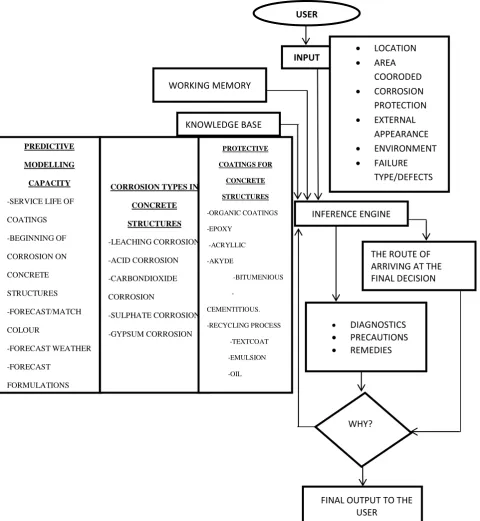
Fig 3. Expert-System for Corrosion Protection of Concrete Structures
USER
INPUT LOCATION AREA
COORODED
CORROSION PROTECTION
EXTERNAL APPEARANCE
ENVIRONMENT
FAILURE TYPE/DEFECTS WORKING MEMORY
PREDICTIVE
MODELLING
CAPACITY
-SERVICE LIFE OF
COATINGS
-BEGINNING OF
CORROSION ON
CONCRETE
STRUCTURES
-FORECAST/MATCH
COLOUR
-FORECAST WEATHER
-FORECAST
FORMULATIONS
CORROSION TYPES IN
CONCRETE
STRUCTURES
-LEACHING CORROSION
-ACID CORROSION
-CARBONDIOXIDE
CORROSION
-SULPHATE CORROSION
-GYPSUM CORROSION
KNOWLEDGE BASE
INFERENCE ENGINE
THE ROUTE OF ARRIVING AT THE FINAL DECISION
DIAGNOSTICS
PRECAUTIONS
REMEDIES
FINAL OUTPUT TO THE USER
WHY?
PROTECTIVE
COATINGS FOR
CONCRETE
STRUCTURES
-ORGANIC COATINGS
-EPOXY
-ACRYLLIC
-AKYDE
-BITUMENIOUS
-CEMENTITIOUS.
-RECYCLING PROCESS
-TEXTCOAT
-EMULSION
ISSN(E): 2277-128X, ISSN(P): 2277-6451, pp. 5-11
The inference engine make use of the working memory and the knowledge base of the expert system. The inference engine uses the „object-attribute-value‟(OAV) triples which are stored in the working memory to fire the IF-THEN rules. The inference engine uses the IF-IF-THEN rules to make a decision from the data available in the knowledge base. The IF-THEN rule works as shown below: Let there be conditions 1,2,3,4,5 and 6 and conclusions U,V, W, X,Y and Z. Let the rule be: IF condition 1 AND condition 2 AND condition 5 among the conditio ns 1,2,3,4,5,6 are true; then the conclusion/ decision should be conclusionY.
IF CONDITION 1
AND CONDITION 2 AND CONDITION 5 THEN CONCLUSION Y
Thus all the knowledge about corrosion in the knowledge base will be structured in the form of rules from which suitable conclusions/decisions can be derived by the inference engine. Most expert systems include a facility by which the user can ask the expert system to explain why it recommends that particular decision[6]. Thus the Expert-System will display the conditions which came true that resulted in the final conclusion/decision. Thus the user can know the reason of the decision made.
III. CONCLUSION
Corrosion always causes various damages to the concrete structure. In this context, it is vital to find and implement methods which will help to eliminate corrosion or to minimize its effects. There are situations when there is a non-availability of a Corrosion Expert to solve a related problem. Expert-System for Corrosion Protection of Concrete Structures is an easy to use computer interface for the user to find the solution for corrosion related issues of concrete structures. It consists of a knowledge base, interference engine and a working memory. The knowledge base includes the expert knowledge on types of corrosion, protective coatings, and predictive modeling capacity for coatings. The implementation of ExpertSystem for Corrosion Protection of Concrete Structures will help to reduce the problems due to corrosion in concrete structures.
REFERENCES
[1] Mars G.Fontana, “corrosion engineering”, TATA Macgraw-hill Edition, third Edition, 2007.
[2] B.K Shama,” Industrial Chemistry, including Chemical Engineering”, Eighteenth Edition, 2014.
[3] Dr. Richard W. Drisko,” Selecting coatings for Industrial and Marine Structures”, 2008.
[4] Donald A. waterman, “A guide to Expert Systems”, 1986
[5] T. Spyros(Editor), “Expert-Systems in Engineering Applications,” Springer-Verlag,1993.
[6] V.N. Constantin, “Expert-Systems and Fuzzy Systems,” 1985.
![Fig 2. Architecture of an Ideal Expert-System[7]](https://thumb-us.123doks.com/thumbv2/123dok_us/7803592.2084627/5.595.149.457.536.774/fig-architecture-of-an-ideal-expert-system.webp)