SEMICONDUCTING MATERIALS TOWARDS
PHOTOCATALYTIC AIR TREATMENT. MATERIALS, TESTS
AND PRACTICAL APPLICATION
Szymon Wojtyła
[a,b]and Tomasz Baran
[a,c]*Keywords: photocatalysis, semiconductor, air pollutants.
Despite the development of advanced technology (or because of its development) environmental pollution, including particularly dangerous air pollutions, are really serious today. Photocatalytic air treatment has the potential for degradation of both, organic and inorganic contaminants including particularly dangerous nitrogen oxides and volatile organic compounds from indoor as well as outdoor air. Photocatalytic methods have a great advantage - do not lead to adsorption of pollutants but lead to degradation and mineralization of organic and inorganic compounds. The attractiveness of photocatalysis results also from features such as ability of using cheap and abundant sunlight as an energy source or mild conditions of process. This article briefly summaries the broad range of studies: from modeling and photoreactor design, through laboratory experiment to large scale application within recent 5 years. Our goal was not only to summarize a recent works but to demonstrate that the photocatalytic air cleaning is not a technology of a distant future, but is already technology available today.
* Corresponding Author
[a] SajTom Light Future Ltd., Cytrynowa 3, 43-354 Czaniec, Poland, [email protected]
[b] Faculty of Chemistry, Jagiellonian University, Ingardena 3, 30-060 Kraków, [email protected]
[c] Department of Chemistry, University of Milano, Via Golgi 19 - 20133 Milano, Italy
Introduction
Heterogeneous photocatalysis is a versatile and environmentally benign treatment technology based on solar energy (light) utilization. Degradation of biological, organic and inorganic pollutants in water and air, conversion of carbon dioxide to useful compounds or water splitting with hydrogen formation can be cited as examples of photocatalytic processes.1 Absorption of light of energy
equal or greater than energy of band gap results in charge separation – electrons are promoted to conduction band leaving holes in valence band (Fig. 1). Photogenerated charges might recombine (undesirable effect) or migrate toward surface of material. At the surface charges can react with adsorbed species – electron donor D or electron acceptor A resulting in reduction or oxidation of these species and leading to a final products Ared and Dox.
In case of photocatalytic degradation of pollutants, oxygen adsorbed at the surface plays a role of electron acceptor. One electron reduction of molecular oxygen leads to superoxide anion radical, or upon former oxidation to singlet oxygen.2–4 Subsequent reaction leads to the formation of
other reactive oxygen species like H2O2 and •OH. In the
meantime, water (or surface –OH group) can be oxidized by photogenerated hole form the valence band with formation of •OH radical. The presence of the several kinds of reactive oxygen species makes the photocatalysis a great method of pollutants degradation. Reaction of reactive oxygen species with organic and inorganic compounds leads to complete
Figure 1. General mechanism of photocatalytic degradation of pollutants.
mineralization and the possible products are: CO2, H2O, Cl–,
NO3–, SO42– and other small and safe molecules or ions. The
degradation of the pollutants follows the pseudo first-order kinetics, that indicates that the reaction is controlled by the surface chemical reaction and the reaction rate is controlled by concentration of pollutants.5,6 The reaction yield depends
also on other factors such as oxygen or water amount. Increasing humidity enhances the formation of •OH radicals which overcomes the negative competitive adsorption of H2O molecules.7 Slightly different conclusion was reported
by Cazoir et at.8 In view of the results, authors suggest that
mechanism of reaction strongly depends on the humidity of environment. Light (wavelength and intensity) is a crucial factor for reaction efficiency, and it will be discussed below.
Eur. Chem. Bull., 2015, 4(5), 260-267 DOI: 10.17628/ECB.2015.4.260
compounds (VOCs) are widespread components of air pollutions. Photocatalytic oxidation is considered as a very promising method of VOCs removal from indoor air. Literature mentions long list of tested model pollutants that can be photocatalytically removed from air: aliphatic and aromatic hydrocarbons (particularly dangerous polycyclic aromatic hydrocarbons), halogenated compounds, alcohols, ethers, aldehydes, sulpfur- and nitrogen-containing compounds, esters, pesticides, herbicides and others.9–15
Among the above air pollutants are mono-nitrogen oxides NO and NO2, a group of highly reactive gases. NOx comes
primarily from vehicles exhausts and cannot be completely eliminated by catalytic converters. NOx has severe
environmental and health effects. Nitrogen dioxide is unhealthy to breathe, especially by children, asthmatics and people with chronic obstructive pulmonary disease. NOx
may react with VOCs in the presence of sunlight to form ozone that damage lung tissue and reduction in lungs function. NOx together with sulfur oxide are also a
precursors for acid rain, and NOx contributes to global
warming.
The review is divided into three main sections that are related to materials engineering, types of photoreactors and commercial application of photocatalytic materials towards air cleaning. We would like to discuss photocatalytic degradation of air pollutants from modeling, photoreactor design, and materials study through laboratory experiment to large scale application.
Material engineering
The first issue concerning the successful photocatalytic air cleaner is related to materials. An ideal photocatalyst should have following features: i) appropriative potentials of conduction and valence band edges that allow the reactive oxygen species formation from O2 and H2O, ii)
appropriative band gap energy, iii) long lifetime of the separated electrons and holes, iv) activity upon irradiation with light of possibly low energies, preferably with visible light, v) high stability and photo stability, vi) possible low environmental impact, vii) low cost, viii) favorable morphological properties such as high specific surface area. Band structures of several common semiconductors are shown in Fig. 2.
Properties of photocatalysts greatly depend on synthesis process. Majority of photocatalyst was prepared by one of the following general methods: sol-gel method,6,16
hydrothermal technique,6,7 ultrasonic-assisted method,17
electrochemical method,18 ultrasonic spray pyrolysis,19
microwave assisted synthesis.20 Many properties of
semiconductor can influence a photocatalytic reaction. Therefore, photocatalysts are modified and developed in order to increase the yield of light conversion, change the direction or selectivity of reaction, enhance the resistance to photo corrosion and poisoning, etc. The main methods of improving photocatalysts are listed below and discussed in detailed in the next subsections:
- lowering of the particles size (preparation of nanocrystalline photocatalysts),
- sensitization towards visible light (surface modification, doping, composites of semiconductors),
- modification of the photocatalyst with co-catalyst (e.g. deposition of metal nanoparticles or transition metal complexes),
- use of the supports (e.g. zeolites, carbon nanotubes, aerogels, aluminum oxide, silica, glass beads, fibers or pellets, organo-clays, paper),
- structural and morphological modifications (increase of specific surface area, presence of surface hydroxyl groups).1,21
Figure 2. Band gap energies and potentials of band edges of selected semiconductors at pH = 7.
Titanium dioxide based materials are commonly used for photo-catalytic degradation of both, organic and inorganic pollutants. Success of TiO2 results from several advantages
of these wide-bandgap semiconductors such as stability in the dark and under irradiation, insolubility in water, lack of toxicity and safety for the environment. The lifetime of photogenerated charges are relatively long - this facilitates the interfacial charges transfer. Wide band gap is disadvantage of titanium dioxide that limits the use of solar light – energy of band gap is 3.2 eV for anatase, 3.0 eV rutile and 3,23 eV for brookite (see Fig. 2).1,22
Many papers concerned with the use of TiO2 as a
photo-catalyst have been published within last years. It should be noticed that number of scientific reports on titanium dioxide is incomparably greater than that for other materials; thus several following paragraphs will be dedicated to the use of pure and modified TiO2. Majority of reports describes the
possibility of use titanium dioxide excited by UV light and discuss various aspect of reaction e.g. properties of material, photoreactor type, the influence of model pollutants (in particular the probe of degradation especially danger compound like NOx), the influence of oxygen and water
concentration.10,11,23 Commercial titanium dioxide (e.g.
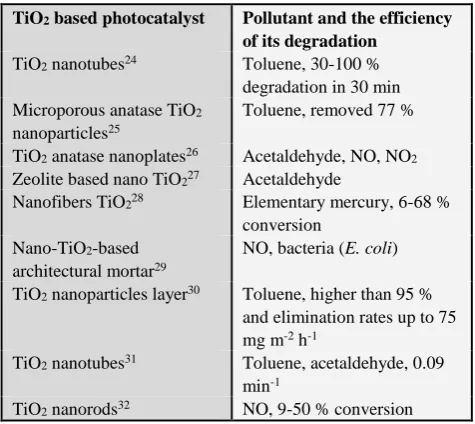
Table 1. Summarizon of nanocatalytic TiO2 based photocatalyst
TiO2 based photocatalyst Pollutant and the efficiency
of its degradation
TiO2 nanotubes24 Toluene, 30-100 % degradation in 30 min Microporous anatase TiO2
nanoparticles25
Toluene, removed 77 %
TiO2 anatase nanoplates26 Acetaldehyde, NO, NO2 Zeolite based nano TiO227 Acetaldehyde
Nanofibers TiO228 Elementary mercury, 6-68 % conversion
Nano-TiO2-based architectural mortar29
NO, bacteria (E. coli)
TiO2 nanoparticles layer30 Toluene, higher than 95 % and elimination rates up to 75 mg m-2 h-1
TiO2 nanotubes31 Toluene, acetaldehyde, 0.09 min-1
TiO2 nanorods32 NO, 9-50 % conversion
TiO2 nanotubes were tested as a photocatalyst for NO and
NO2 degradation under UV-A irradiation ( in range 315–
400 nm).33 Results suggested that reaction rate of NO
degradation was much faster than that of NO2.
Transformation of NO2 to nitrate seems to be the
rate-limiting step. However during 4h experiment up to 80 % of initial amount of NOx was removed. Titanium dioxide
exhibit also the activity towards degradation of SO2.14
Photocatalytic oxidation removes up to around 40 % of the initial amount of SO2 (14ppm).
Photo-catalyst’s properties can be influenced by metal(0) particles deposition on its surface. The deposited metal can be regarded as an electron sink or a co-catalyst. The ability of charge trapping is related to the work function of the metals, which are usually higher than those of many common semiconductors. Moreover, metal as a co-catalyst offers the reaction sites and catalyzes the reactions and promotes the charge separation (increase in the lifetime of electron-hole pairs).34 Pt on TiO
2 with various amounts of
platinum was prepared by photocatalytic deposition and tested in photocatalytic degradation of indoor air contaminations.35 Einaga et al. discussed the presence of
platinum at TiO2 on the reaction selectivity.36 Coverage of
TiO2 surface with Pt has a noticeable effect on toluene
oxidation activity at room temperature and the bigger amount of intermediate compounds was observed in comparison to neat TiO2, however at higher temperature Pt
on TiO2 showed enhanced activity. It has been proved that
also other metals like silver may enhance the photocatalytic activity, as has been reported for Ag on TiO2 and Ag on
ZnAl2O4 (vide infra).37 Ag on TiO2 thin films exhibited the
rewarding performance for benzene, toluene, ethylbenzene and xylene degradation under visible light.16 The maximum
degradation efficiency is for xylene (89 %), followed by ethylbenzene (86 %), toluene (83 %) and benzene (79 %). Similar, TiO2 (P25) modified with Ag, Au, Pt and Pd
clusters exhibits high efficiency in toluene removal.38
Photosensitization of semiconductors by surface modification can be achieved by using organic or inorganic chromophores. Three various mechanisms are commonly known: i) direct photosensitization (optical charge transfer), ii) photosensitization involving an electron injection from
the excited photosensitizer to the conduction band of semiconductor, iii) photosensitization involving a hole injection from the excited photosensitizer to the valence band of semiconductor.39 A series of materials based on
titanium dioxide modified with platinum or chromium compounds (Cr2O72− on TiO2, [PtCl6]2− on TiO2, [CrO3F]−
on TiO2, CrF3 on TiO2) were studied in photocatalytic
oxidation of volatile air pollutants.40 All materials were
more active than neat commercially available TiO2 under
visible light.
Doping is one of the common methods of semiconductors modification leading to band gap energy diminution. Some metals or nonmetals can provide additional energy levels within the band gap of the semiconductor. Electron excitation from the valence band to the acceptor level or from the donor level to conduction band, requires a lower photon energy compared with the direct semiconductor excitation.34 C/TiO
2 can be given as an example.41
Degradation of NOx under visible light irradiation vary from 7 % to 18 %. Ag/TiO2 has been tested as a catalyst of
transformation of phenol and oxalic acid.42 Shie et al.
studied photodegradation kinetics of toluene using nitrogen doped titanium dioxide modified by radio frequency plasma.43 Reaction efficiencies of toluene degradation for
modified material were higher than those of commercial TiO2 (P25). Visible light activity of titanium dioxide was
achieved by doping with iron or cobalt ions.5,44 Fe-doped
TiO2 can remove indoor contaminations such as
formaldehyde, benzene, ammonia under solar light. The removal percentage of above compound after 9 h of irradiation achieved 55 % (HCOH), 53.1 % (NH3), and
37.5 % (C6H6), when they existed in the air individually
however in case of the mixture of all gases the removal percentage decreased to 33.3 %, 28.3 %, and 28 %, respectively.5 Efficiency of benzene degradation varied from
2.1 % to 51.5 % in the presence of Co-doped TiO2.45 Other
example based on lanthanum doped TiO2 (titania
nanotubes).6 The properties of this material were determined
by the photocatalytic degradation of gaseous ethylbenzene.
Composites of two semiconductors are other group of photocatalysts. Formation of composites has various goals. The most important aim is to obtain photosensitization effect and better charge separation. A photosensitization through formation of composites of two semiconductors involves excitation of the narrow bandgap semiconductor, followed by electron transfer from its conduction band to the valence band of the wide bandgap semiconductor. Moreover, ingredient of composite can also play a role of support. Open-cell self-bonded SiC foams were used as a support for TiO2 in the gas phase photocatalytic degradation of
methylethylketone.46 Titania–graphite composite is the other
example, that has been tested for degradation of acetaldehyde upon visible light irradiation.12 Andryushina
and Stroyuk studied the influence of graphene oxide on photocatalytic activity of titanium dioxide in gas-phase alcohols and hydrocarbons oxidation.9 These authors found,
that the presence of graphene oxide accelerated the photocatalytic oxidation of ethanol and benzene because of interaction of graphene oxide with the TiO2 surface via
anchoring functional groups and high efficiency of accepting of the photogenerated electrons. Similarly, Nikkanen et al. observed enhanced photocatalytic properties of TiO2 coated steel by the application of silicon oxide
intermediate layer.47 Bi
Eur. Chem. Bull., 2015, 4(5), 260-267 DOI: 10.17628/ECB.2015.4.260
obtaining the photosensitization effect by formation of composite and the mechanism is presented in Fig. 3.48
Studied material showed higher photocatalytic activity for the degradation of isopropanol in gas phase than Bi2O3 and
TiO2. Two hours of irradiation resulted in degradation of
75 % of isopropanol. Authors suggested that TiO2 acts as a
principal photocatalyst while Bi2O3 plays a role of light
harvester. Similar mechanism was observed also in other cases. LaVO4/TiO2 heterojunction nanotubes were prepared
by sol–gel method in order to obtain visible light active material and the photocatalytic activity was demonstrated by catalytic degradation of gaseous toluene.13 Composites
presented high photodegradation efficiency. The conversion of toluene (c0=120 ppm) over 1 % LaVO4/TiO2 reached
75 % after 6h of irradiation (in case of P25 it was about 10 %). The enhanced performance of heterojunction nanotubes was attributed to the matching band potentials, the interconnected heterojunction of LaVO4 versus titanium
dioxide as well as small particles size and big surface area.
Figure 3. Mechanism for the photocatalytic activity of Bi2O3/TiO2 heterojunction photocatalyst.48
Over the last few years ZnO, in particular nanocrystalline ZnO, has become the object of scientific interest. However, majority of the reports about photocatalytic application of ZnO have been focused on the photodegradation of pollutants in water. The comparison of photo-activities of ZnO and TiO2 seems to glorify the titanium oxide: the rate
constant of TiO2 for HCHO degradation was 0.05 min-1
which was two orders of magnitude larger than that of zinc oxide.49 However, high photocatalytic activity towards
degradation of formaldehyde in gas phase has been demonstrated for nano-ZnO on bone char.50 Published
results show, that maximum decomposition efficiency of formaldehyde was 73 % using continuous flow reactor (inlet formaldehyde concentration 2.5 mg/m3). ZnO also exhibited
good efficiency of degradation of NOx.51 Photocatalytic
activity for the decomposition of NOx under visible light as
well as UV irradiation was superior to that of commercial TiO2 powders. ZnO/carbon quantum dots composite is an
interesting example of photosensitization toward visible light.52 Such material was used as superior photocatalyst for
the degradation of benzene and methanol, and the results showed that composites exhibit higher activity (degradation efficiency over 80 %, 24 h) compared to pure TiO2 or ZnO.
Synergistic effect for the activity and photocatalytic property has been demonstrated also for other composites e.g. g-C3N4/ZnO.53
Zinc and cadmium sulfide based materials are the next big group of active photomaterials. Metal sulfides, in particular ZnS, are very promising, buoyant photocatalysts for CO2
conversion, water splitting as well as for organic compounds degradation.54 Some metal sulfides (CdS, CdSe, PbS, and
PbSe) as well as other chalcogenides also offer a significant advantage because of their tunable response to visible light. CdS is the most commonly studied and its photocatalytic activity for degradation of vapors of ethanol and isopropanol is noticeable.55,56 The morphology of cadmium sulfide can
be easily controlled during preparation, and various particle shapes may be obtained e.g. nanowires, nanoribbons, hollow particles. Nonetheless, the activity of CdS as a photocatalyst for total degradation of organic compounds is not promising. Partial oxidation of ethanol and isopropanol to acetaldehyde and acetone was observed.56 Total mineralization should be
the goal of photocatalytic degradation, otherwise some more dangerous coproducts can be formed.
WO3 is an attractive photocatalyst because small band gap
energy as well as their stability and photostability. Materials based on WO3 have been tested as a photocatalysts which
are able to remove very toxic pollutants such as H2S; authors
have reported complete degradation.57 The WO 3/Cu2O
composite, synthesized by hydrothermal method, was studied as a photocatalyst for air treatment.58 Taking phenol
as degradation target, the effects of the amount and kind of catalyst and other factors e.g. light source, air flow rate and initial concentration was investigated. The degradation rate of phenol was above 98 % in case of optimal conditions and irradiation time 180 min. In turn, Ag on WO3 showed
activity for acetone degradation three and six times higher than that of pure mesoporous WO3 and nitrogen-doped TiO2,
respectively (under visible-light irradiation).59 Enhanced
photocatalytic properties are attributed to the largely improved electron–hole separation in the Ag on WO3
heterojunction.
Photocatalyst based on iron oxides and oxide-hydroxide has attracted some attention in recent years because its activity under visible light is, probably, due to the possible formation of singlet oxygen.4-Fe
2O3 is the most stable iron
oxide, an example of n-type semiconductor with band gap energy of 1.9–2.2 eV. -Fe2O3 prepared from hollow
-FeOOH urchin-like spheres was tested as a catalyst of photodegradation of organic pollutants under visible light irradiation.60 Decomposition of the model organic
contaminants is associated with ROS formation, which has been proved.60
Besides all commonly used materials, literature gives more unique examples of photocatalysts. Cobalt oxide is one of them.61 Authors suggested the potential use of
hierarchical structures of cobalt oxide as an alternative to titanium dioxide for photodegradation of organic contaminants. 3 hours of irradiation resulted in 80 % degradation of acetaldehyde. Moreover, the big advantage of Co3O4 is its activity under visible light. Chromium oxide is
the next oxide material suggested as a photocatalyst for degradation of volatile organic compounds.62 Authors
reported a turnover number 17 in case of the most active catalyst 0.5 mol% Cr–SiO2, however, the use of chromium
ratio of benzene at the initial stage was 2.2 %; after reaction (22 h) it decreased to 1.4 %.63 Porous graphitic carbon
nitride was synthesized and coupled with the MoS2
nanosheets to form MoS2/C3N4 hetero-structures in which
MoS2 served as electron trapper to extend the lifetime of
separated electron−hole pairs.64 Bi
2WO6 is an active
photomaterial in visible light. Photocatalytic properties of Bi2WO6 modified with polyaniline (PANI) has been
investigated using gaseous acetaldehyde as a model air contaminant.65 CH
3CHO was degraded by the Bi2WO6 and
PANI/Bi2WO6 with production of water and CO2 under
visible light irradiation. Going to another example, it has been reported, that 1 % Ag on ZnAl2O4 nano-particles were
more active than neat materials as well as commercial P25 in photo-catalytic oxidation of gaseous toluene.37 Authors
suggested, that hydroxyl groups on the surface of nanomaterial are able to react with the product of oxidation, which is retained on the surface leading to the progressive deactivation of the catalyst in the gas–solid system. The BiOI/BiOCl composites showed enhanced visible light activity for removal of NO because of the large specific surface areas and pore volume, hierarchical nanostructure and modified band potentials, exceeding that of commercially available TiO2, BiOI, and Bi2WO6.66
The photocatalytic inactivation of microorganisms in air is an important aspect of photocatalytic air cleaning. Photocatalysis has ability to kill broad range of microorganisms including Gram- positive and Gram- negative bacteria, endospores, fungi, algae, protozoa and viruses, as well as prions.67 Photocatalysis can also destroy
endospores and microbial toxins. Tests in real conditions, as well as feasibility of elimination of bacteria in laboratory scale, have been studied.68 Elimination ratio vary form few
percent up to 80 % depending on the conditions and applied materials. Inactivation of Escherichia coli, P. aeruginosa, Anabaena, Legionella pneumophila are the most commonly tested processes involving neat and modified TiO2, CuO or
WO3.69–72 The typical mechanism of inactivation of
microorganism is shown in Fig. 4. However, not all microorganisms can be photo-inactivated. The published results showed that species like Staphylococcus pasteuri, Staphylococcus saprophyticus, Stenotrophomonas maltophilia, Macrococcus equipercicus, Naxibacter haematophilus, and Bacillus endophyticus were resistant to photocatalytic treatment.68
Figure 4. Mechanism of photocatalytic inactivation of bacteria.
Photoreactor design
The photo-catalytic performance for air cleaning strongly depends on the design of an efficient photocatalytic reactor. The main performance parameters of a photocatalytic reactor are the factor of mass transfer rate and the factor of light delivery, thus typical photo-reactor is constructed of two important parts: support for photocatalytic filter and a light source. The features of an ideal photoreactor are:
i) high specific surface area for a large reaction area;
ii) energy-saving appropriate light source with appropriative wavelength,
iii) high mass transfer,
iv) high residential time.
Several types of reactors have been developed e.g. a flow-through photo-reactor,11 bed packed photoreactor,10
honeycomb monolith reactor,73 continuous flow reactor.50
Schematic diagrams of various photoreactors for air purification are shown in Fig. 5.74–77 Detailed descriptions of
all types of photoreactors are given elsewhere and there is no point to repeat these.78–80 An interesting example is the
use of 3D printed gas-phase photocatalysis reactor because the 3D printer availability will allow the design and produce photo-reactor in very easy way.81
Figure 5. Schematic diagrams of various photoreactors for air purification.74–77
The most common light sources for photocatalysis are the black-light-type UV lamp that emits light in the UVA band (max 355 nm), high pressure mercury vapors lamp (184,
253, 365, 404, 435, 546, 578 nm) and xenon lamp (visible light). Lately, light emitting diodes (LEDs) that can emit ultraviolet light (360 and 400 nm) or visible light are being considered as a better light source because of their many advantages. The LED save significant amount of energy in comparison to the UV lamps or HBO and XBO. LEDs are durable, robust, efficient, and can be easily installed in any configuration.82 Many examples of the use of LED driven
photosystem for air cleaning can be given.40,82 Much work
Eur. Chem. Bull., 2015, 4(5), 260-267 DOI: 10.17628/ECB.2015.4.260
The effect of light intensity (35, 225 and 435 µW cm-2) on
photocatalytic degradation using TiO2 was studied and the
obtained results prove that the removal efficiency increased with increasing of light intensity. It vary from 0.035 to 0.130 mg L-1 min-1 for the lowest and highest light intensity
respectively.83
Commercial applications of photocatalysts
Within last 10 years photocatalysis has become more and more attractive for the industry with regard to the development of technologies for water and air purification. The market of photocatalytic products is increasing and photocatalysis is considered as a future technology. According to a market research report, the global market value for photocatalysts was estimated at the level of 847.5 million dollars in 2009 and was expected to reach 1.7 billion dollars in 2014. Products for the construction sector and consumer products account for the largest share of the market. The use of titanium dioxide as coating in buildings has received highest interests due to its excellent ability to purify the environment by capturing the pollutants both in the indoor and outdoor air. TiO2 can be incorporated into
coatings and paints, plastics and fabrics, concrete and plaster, glass, including pavement blocks, wood-based panels, plaster (gypsum) boards, ceiling tiles, ceramic tiles and wall papers.84
Photocatalytically active paints can be used in outdoor applications on so called self-cleaning facades and for degradation of nitrogen oxides in street as well as in indoor application due to antimicrobial, antifungal properties of the paint or because of its ability to decompose organic and inorganic pollutants. For internal applications it is specially dedicated by producer for places, which require the elimination of noxious and toxic air substances in hospitals, schools, public buildings, shops, magazines of food, convention centers, food-processing plants, factories, poultry and livestock sheds. Many buildings in developed countries are constructed with photo catalytic materials or paints. Ecogreen Plus™, KNOxOUT or Sto AG can be given as examples of photocatalytic paint brands. Auvinen and Wirtanen noticed, that the organic components of paints may be decomposed by photocatalytic reaction.85,86
Self-degrading effect leads to an increase in the concentration of organic compounds, like aldehydes and ketones, that are quite stable indoor as air pollutants and decrease the quality of the air. It should be highlighted, that to prohibit this kind of back-effect, all components of paints should be stable enough to endure highly active radicals.
An interesting application of photo-catalysis is covering the glass (windows) with photocatalyst. Such windows have two attractive features: self-cleaning (mainly from outside) and photocatalytic degradation of air pollutants (mainly the inner side). Photo-catalytic surfaces show super-hydrophilic effect, allowing dirt to be washed off - self-cleaning windows and self-cleaning glass covers for highway tunnel lamps (e.g. San Gobain Bioclean™, Pilkington Active™ and Sunclean™).67
The use of photo-catalysis for air cleaning has caught the interest of industry. Photocatalytic reactors can be integrated with conditioning and ventilation systems. Several
companies (e.g. AirOasis, Indoor Purification Systems Inc., Daiken Chemical Co. Ltd., Life Air IAQ Ltd., Laiyang ZiXiLai Environmental Protection Technology Co. Ltd.) produce the photocatalytic air purifiers equipped with TiO2
coated filters and UV lamps.
Slimen and coauthors studied very interesting practical aspect of photocatalysis – degradation of cigarette smoke.87
The TiO2-impregnated titanium mesh filter revealed high
activity for the removal of nicotine, ammonium, 3-ethenylpyridine, and tar, which constitute some of the compounds of cigarette smoke. The prototype air purifier was composed of six photocatalyst units, some additional filters and a fan. Experiments carried out in the 1 m3 box
and operated in an air flow of >10 m3 min-1 showed a
significant decrease in the acetaldehyde concentration (∼80 %). Other very interesting application of photocatalysis is the use of nano-photo-filters in air quality control system of airliner cabin.88 Long-term usable
air-cleaner based on the synergy of photo-catalysis and plasma treatments has been also tested for degradation of cigarette smoke.89 In one case of the treatment of smoke from tobacco
worth 12,000 cigarettes, the air-cleaner maintained high-level air-purification activity (close to 100 % of the total suspended particulate and 88 % of total volatile organic compound) at single-pass conditions.
Conclusion
Some people consider photocatalysis as a science fiction. Looking at this article, it is difficult to agree with such people. This review highlights several current aspects for the preparation and improvement of photocatalysts such as surface modification, doping, formation of composites, quantum-size effects and surface coverage with metal nanoparticles. There is no one simple recipe to prepare efficient material. Various applications (bacteria inactivation, degradation of organic or inorganic pollutants) require different properties of photocatalyst. Scientists are looking for the correct direction. Often they go astray but science, as a whole, is going forward. Photo-catalysis appears (perhaps still timidly) to be working in our houses, offices, schools, hospitals and cars.
References
1Carp, O., Huisman, C. L., Reller, A., Prog. Solid State Chem.,
2004, 32(1–2), 33.
2Nosaka, Y., Daimon, T., Nosaka, A. Y., Murakami, Y., Phys. Chem. Chem. Phys.,2004, 6(11), 2917.
3Wojtyła, S., Pilarczyk, K., Regiel-Futyra, A., Macyk, W., XXVth IUPAC Symp. Photochem., Bordeaux, France, 2014. 4Wojtyła, S., Baran, T., Regiel-Futyra, A., Buchalska, M., Macyk,
W., Polish Conf. Students PhD Students, Lublin, Poland, 2014.
5Wang, S., Yu, H., Cheng, X., J. Chem.,2014, e829892.
6Cheng, Z.-W., Feng, L., Chen, J.-M., Yu, J.-M., Jiang, Y.-F. J., Hazard. Mater.,2013, 254-255, 354.
8Cazoir, D., Vildozo, D., Sleiman, M., Ferronato, C., Fine, L., Chovelon, J.-M., Int. J. Environ. Anal. Chem., 2012, 92(8), 923.
9Andryushina, N. S., Stroyuk, O. L., Appl. Catal. B Environ.,2014, 148–149, 543.
10Monteiro, R. A. R., Miranda, S. M., Rodrigues-Silva, C., Faria, J. L., Silva, A. M. T., Boaventura, R. A. R., Vilar, V. J. P., Appl. Catal. B Environ.,2015, 165, 306.
11Moulis, F., Krýsa, J., Res. Chem. Intermed.,2015, 1.
12Wang, J., Ou, E., Li, J., Yang, X., Wang, W., Yan, Z., Li, C., Mater. Sci. Semicond. Process.,2015, 31, 397.
13Zou, X., Li, X., Zhao, Q., Liu, S., J. Colloid Interface Sci.,2012, 383(1), 13.
14Krishnan, P., Zhang, M.-H., Cheng, Y., Riang, D. T., Yu, L. E., Constr. Build. Mater.,2013, 43, 197.
15Prakash, A. M., Swamy, A. V. V. S., Krishna, R. H., Eur. Chem. Bull.,2012, 2(1), 28.
16Peerakiatkhajorn, P., Chawengkijwanich, C., Onreabroy, W., Chiarakorn, S., Mater. Sci. Forum,2012, 712, 133.
17Neppolian, B., Wang, Q., Jung, H., Choi, H., Ultrason. Sonochem.,2008, 15(4), 649.
18Sulka, G. D., Kapusta-Kołodziej, J., Brzózka, A., Jaskuła, M., Electrochimica Acta,2010, 55(14), 4359.
19Huang, J., Ho, W., Lee, F. S. C., Sci. Adv. Mater.,2012, 4 (8), 863.
20Jia, X., He, W., Zhang, X., Zhao, H., Li, Z., Feng, Y., Nanotechnology,2007, 18(7), 075602.
21Colmenares, J. C., Luque, R., Chem. Soc. Rev.,2014, 43(3), 765. 22Di Paola, A., Cufalo, G., Addamo, M., Bellardita, M.,
Campostrini, R., Ischia, M., Ceccato, R., Palmisano, L., Colloids Surf. Physicochem. Eng. Asp.,2008, 317(1–3), 366. 23Gandolfo, A., Bartolomei, V., Gomez Alvarez, E., Tlili, S.,
Gligorovski, S., Kleffmann, J., Wortham, H., Appl. Catal. B Environ.,2015, 166–167, 84.
24Nischk, M., Mazierski, P., Gazda, M., Zaleska, A., Appl. Catal. B Environ.,2014, 144, 674.
25Lyu, J., Zhu, L., Burda, C., ChemCatChem,2013, 5(10), 3114. 26Sofianou, M.-V., Psycharis, V., Boukos, N., Vaimakis, T., Yu, J.,
Dillert, R., Bahnemann, D., Trapalis, C., Appl. Catal. B Environ.,2013, 142–143, 761.
27Izadyar, S., Fatemi, S., Ind. Eng. Chem. Res., 2013, 52(32), 10961.
28Yuan, Y., Zhao, Y., Li, H., Li, Y., Gao, X., Zheng, C., Zhang, J., J. Hazard. Mater.,2012, 227-228, 427.
29Guo, M.-Z., Ling, T.-C., Poon, C.-S., Cem. Concr. Compos.,
2013, 36, 101.
30Maury-Ramirez, A., Demeestere, K., De Belie, N., J. Hazard. Mater.,2012, 211–212, 218.
31Pichat, P., Mol. Basel Switz.,2014, 19(9), 15075.
32Zhang, D., Wen, M., Zhang, S., Liu, P., Zhu, W., Li, G., Li, H., Appl. Catal. B Environ.,2014, 147, 610.
33Nguyen, N. H., Bai, H., J. Environ. Sci.,2014, 26(5), 1180. 34Linsebigler, A. L., Lu, G., Yates, J. T., Chem. Rev.,1995, 95(3),
735.
35Hong, G. B., Ma, C. M., J. Nanomater.,2012, 2012, e405361. 36Einaga, H., Mochiduki, K., Teraoka, Y., Catalysts,2013, 3(1),
219.
37Zhu, Z., Zhao, Q., Li, X., Li, Y., Sun, C., Zhang, G., Cao, Y., Chem. Eng. J.,2012, 203, 43.
38Klein, M., Grabowska, E., Zaleska, A., Physicochem. Probl. Miner. Process.,2015, 51(1), 49.
39Buchalska, M., Kuncewicz, J., Świętek, E., Łabuz, P., Baran, T., Stochel, G., Macyk, W., Coord. Chem. Rev.,2013, 257(3–4), 767.
40Baran, T., Macyk, W., J. Photochem. Photobiol. Chem., 2012, 241, 8.
41Lorencik, S., Yu, Q. L., Brouwers, H. J. H., Appl. Catal. B Environ.,2015, 168–169, 77.
42Chen, Y., Xie, Y., Yang, J., Cao, H., Zhang, Y., J. Environ. Sci.,
2014, 26(3), 662.
43Shie, J.-L., Lee, C.-H., Chiou, C.-S., Chen, Y.-H., Chang, C.-Y., Environ. Technol.,2014, 35(5-8), 653.
44Zhou, G., Wang, W., Zheng, B., Li, Y., Eur. Chem. Bull.2013, 2(12), 1045.
45Huang, H., Ye, X., Huang, H., Hu, P., Zhang, L., Leung, D. Y. C., Int. J. Photoenergy,2013, 2013, e890240.
46Masson, R., Keller, V., Keller, N., Appl. Catal. B Environ.,2015, 170–171, 301.
47Nikkanen, J.-P., Huttunen-Saarivirta, E., Salminen, T., Hyvärinen, L., Honkanen, M., Isotahdon, E., Heinonen, S., Levänen, E., Appl. Catal. B Environ.,2015, 174–175, 533.
48Chakraborty, A. K., Hossain, M. E., Rhaman, M. M., Sobahan, K., J. Environ. Sci.,2014, 26 (2), 458.
49Liao, Y., Xie, C., Liu, Y., Chen, H., Li, H., Wu, J., Ceram. Int.,
2012, 38(6), 4437.
50Rezaee, A., Rangkooy, H., Khavanin, A., Jafari, A., J. Environ. Chem. Lett.,2014, 12(2), 353.
51Wei, Y., Huang, Y., Wu, J., Wang, M., Guo, C., Qiang, D., Yin, S., Sato, T., J. Hazard. Mater.,2013, 248-249, 202.
52Yu, H., Zhang, H., Huang, H., Liu, Y., Li, H., Ming, H., Kang, Z., New J. Chem.,2012, 36(4), 1031.
53Li, X., Li, M., Yang, J., Li, X., Hu, T., Wang, J., Sui, Y., Wu, X., Kong, L., J. Phys. Chem. Solids,2014, 75(3), 441.
54Dibenedetto, A., Stufano, P., Macyk, W., Baran, T., Fragale, C., Costa, M., Aresta, M., ChemSusChem,2012, 5(2), 373. 55Rempel, A. A., Kozlova, E. A., Gorbunova, T. I., Cherepanova, S.
V., Gerasimov, E. Y., Kozhevnikova, N. S., Valeeva, A. A., Korovin, E. Y., Kaichev, V. V., Shchipunov, Y. A., Catal. Commun.,2015, 68, 61.
56Nasalevich, M. A., Kozlova, E. A., Lyubina, T. P., Vorontsov, A. V., J. Catal.,2012, 287, 138.
57Alonso-Tellez, A., Robert, D., Keller, V., Keller, N., Environ. Sci. Pollut. Res.,2013, 21 (5), 3503.
58Niu, F., Fu, F., Gao, X., Zhang, X., Spec. Petrochem., 2014, 31(2), 6.
59Sun, S., Wang, W., Zeng, S., Shang, M., Zhang, L., J. Hazard. Mater.,2010, 178 (1–3), 427.
60Hojamberdiev, M., Zhu, G., Eminov, A., Okada, K. J., Clust. Sci.,
2012, 24(1), 97.
61Cheng, J. P., Shereef, A., Gray, K. A., Wu, J., J. Nanoparticle Res.,2015, 17(3), 1.
62Peiris Weerasinghe, M. N., Klabunde, K. J., J. Photochem. Photobiol. Chem.,2013, 254, 62.
63Tang, Z.-R., Zhang, Y., Xu, Y.-J., RSC Adv.,2011, 1(9), 1772. 64Li, Q., Zhang, N., Yang, Y., Wang, G., Ng, D. H. L., Langmuir,
2014, 30(29), 8965.
65Wang, W., Xu, J., Zhang, L., Sun, S., Catal. Today,2014, 224, 147.
66Dong, F., Sun, Y., Fu, M., Wu, Z., Lee, S. C., J. Hazard. Mater.,
Eur. Chem. Bull., 2015, 4(5), 260-267 DOI: 10.17628/ECB.2015.4.260 67Foster, H. A., Ditta, I. B., Varghese, S., Steele, A., Appl.
Microbiol. Biotechnol.,2011, 90(6), 1847.
68Sánchez, B., Sánchez-Muñoz, M., Muñoz-Vicente, M., Cobas, G., Portela, R., Suárez, S., González, A. E., Rodríguez, N., Amils, R., Chemosphere,2012, 87(6), 625.
69Ishiguro, H., Yao, Y., Nakano, R., Hara, M., Sunada, K., Hashimoto, K., Kajioka, J., Fujishima, A., Kubota, Y., Appl. Catal. B Environ.,2013, 129, 56.
70Castillo-Ledezma, J. H., López-Malo, A., Pelaez, M., Dionysiou, D. D., Bandala, E. R., J. Surf. Interfaces Mater.,2014, 2(4), 334.
71Hou, Y., Li, X., Zhao, Q., Chen, G., Raston, C. L., Environ. Sci. Technol.,2012, 46(7), 4042.
72Priester, J. H., Mielke, R., Werlin, R., Orias, E., Holden, P., Gelb, J., Microsc. Microanal.,2012, 18(Supplement S2), 556. 73Yu, K.-P., Lee, G. W.-M., Hung, A.-J., J. Environ. Sci. Health
Part A Tox. Hazard. Subst. Environ. Eng., 2014, 49(10), 1110.
74Obee, T. N., Environ. Sci. Technol.,1996, 30(12), 3578. 75Hossain, M. M., Raupp, G. B., Hay, S. O., Obee, T. N., AIChE J.,
1999, 45(6), 1309.
76Choi, W., Ko, J. Y., Park, H., Chung, J. S., Appl. Catal. B Environ.,2001, 31(3), 209.
77Vohra, A., Goswami, D. Y., Deshpande, D. A., Block, S. S., Appl. Catal. B Environ.,2006, 64(1–2), 57.
78Andre, J. C., Viriot, M. L., Saïd, A., J. Photochem. Photobiol. Chem.,1988, 42(2–3), 383.
79Jafarikojour, M., Sohrabi, M., Royaee, S. J., Hassanvand, A., CLEAN – Soil Air Water,2015, 43(5), 662.
80Leung, M. K. H., Yiu, C. W., In Proc. ISES World Congr. 2007 (Vol. I – Vol. V) , Goswami, D. Y., Zhao, Y., Eds., Springer Berlin Heidelberg, 2008 , pp 441–445.
81Stefanov, B. I., Lebrun, D., Mattsson, A., Granqvist, C. G., Österlund, L., J. Chem. Educ.,2015, 92(4), 678.
82Sharmin, R., Ray, M. B., J. Air Waste Manag. Assoc., 2012, 62(9), 1032.
83Pansamut, G., Charinpanitkul, T., Biswas, P., Suriyawong, A., Eng. J.,2013, 17(3), 25.
84Yu, C. W. F., Kim, J., Indoor Built Environ., 2012, 1420326X12470282.
85Auvinen, J., Wirtanen, L., Atmos. Environ.,2008, 42(18), 4101. 86Zhang, J., Wilson, W. E., Lioy, P. J., Environ. Sci. Technol.,1994,
28(11), 1975.
87Slimen, H., Ochiai, T., Nakata, K., Murakami, T., Houas, A., Morito, Y., Fujishima, A., Ind. Eng. Chem. Res.,2012, 51(1), 587.
88Tao, H., Meng, L., Liping, P., Jun, W., Procedia Eng., 2011, 17, 343.
89Ochiai, T., Ichihashi, E., Nishida, N., Machida, T., Uchida, Y., Hayashi, Y., Morito, Y., Fujishima, A., Molecules,2014, 19 (11), 17424.