Casey Dean Calhoun
A dissertation submitted to the faculty at the University of North Carolina at Chapel Hill in partial fulfillment of the requirements for the degree of Doctor of Philosophy in the Department
of Psychology and Neuroscience (Clinical Psychology).
Chapel Hill 2016
Casey Dean Calhoun: Depressive Symptoms and Acute HPA Axis Stress Regulation in the Context of Adolescent Girls’ Friendships
(Under the direction of Mitchell J. Prinstein)
For adolescent girls, effective management of interpersonal stress is crucial for preventing increases in depressive symptoms. Although friendships have been traditionally discussed as context for stress regulation, very few studies have examined connections between dyadic friendship processes and biological stress regulation. This study examined the role of two friendship processes, expressed vulnerability and friend support, in regulating adolescent girls’ hypothalamic-pituitary-adrenal (HPA) axis responses to an acute social stressor; connections with concurrent depressive symptoms were also considered. The sample included 241 clinically-referred adolescent girls (ages 12-17). Acute HPA functioning was assessed by collecting
cortisol samples before and after adolescents completed an interpersonally-themed social stressor task; these samples provided measures of baseline cortisol, cortisol reactivity, and cortisol
among the first to reveal interpersonal processes occurring in adolescent girls’ friendships that could serve to reduce allostatic load and risk of future depressive symptoms.
LIST OF FIGURES vi
LIST OF TABLES vii
INTRODUCTION 1
METHODS 14
Participants 14
Procedure 15
Observational Coding 17
Measures 20
Data Analytic Plan 24
RESULTS 26
DISCUSSION 30
FIGURES 39
TABLES 42
Figure 1 - Conceptual model illustrating study hypotheses 39 Figure 2 - Illustration of the path model used to examine the associations
of the observed variables, and their interaction, with cortisol regulation as
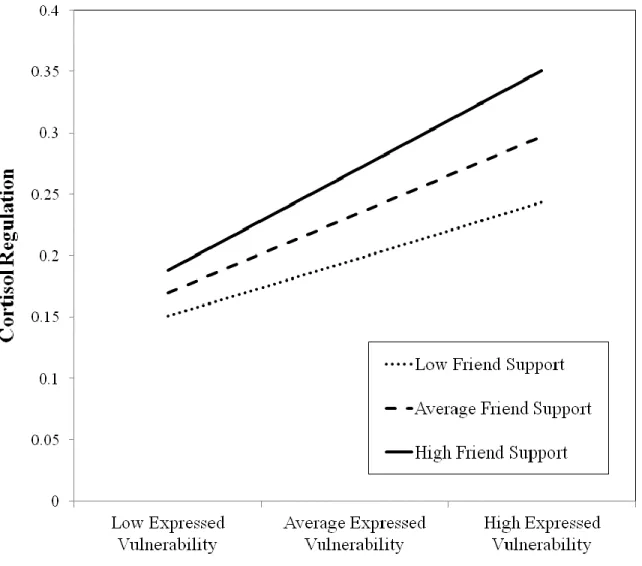
well as the associations of depressive symptoms with the observed variables 40 Figure 3 - Post-hoc plot showing the interaction of expressed vulnerability
LIST OF TABLES
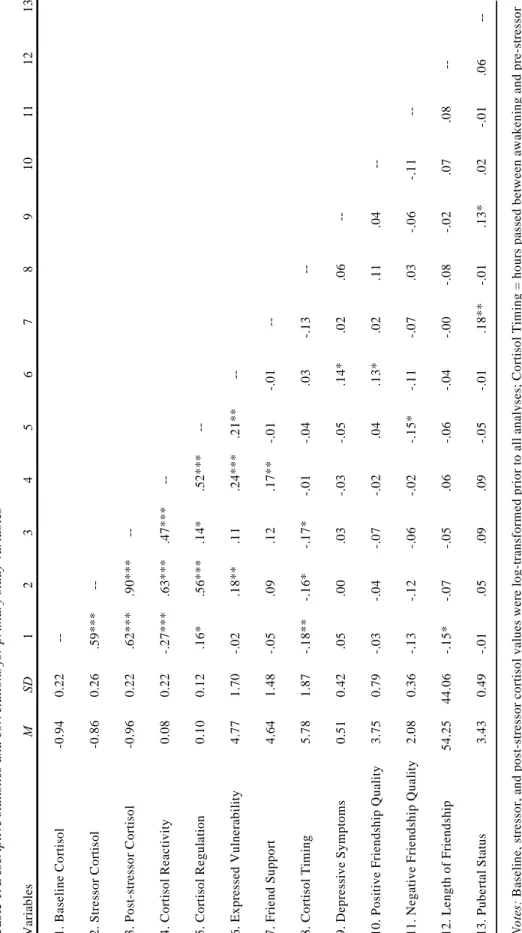
Table 1 - Descriptive statistics and correlations for primary study variables 42 Table 2 - All direct effects from path model analyses where observed
variables served as mediators of the association between cortisol reactivity
Adolescence is marked by a dramatic increase in the prevalence of depressive symptoms among girls (Bouma, Ormel, Verhulst, & Oldehinkel, 2008; Gore, Aseltine, & Colten, 1993; Hankin & Abramson, 2001; Kessler, Avenevoli, & Merikangas, 2001), and this increase has been linked to the significant rise in interpersonal stress that occurs during the same
developmental period (Ge, Lorenz, Conger, Elder, & Simons, 1994; Rudolph, 2002; Rudolph & Hammen, 1999; Wagner & Compas, 1990). These developmental trends suggest that the ability to respond adaptively to interpersonal stressors may be crucial for preventing the development of depressive symptoms in adolescent girls (Sontag, Graber, Brooks-Gunn, & Warren, 2008). Current models for developmental psychopathology highlight the role of biological vulnerability to stress, and call for examination of such vulnerabilities in the context of interpersonal
relationships (Hostinar & Gunnar, 2013). In particular, biological stress response systems have been identified as a potential source of vulnerability. Consistent with prior work showing that peer relationships have considerable influence on psychological adjustment (Bukowski & Adams, 2005; Masten, 2005; Parker, Rubin, Erath, Wojslawowicz, & Buskirk, 2006), an emerging line of research suggests that interactions with peers can influence the functioning of biological stress response systems. Adolescent girls are especially affected by peer experiences during adolescence, especially those occurring within the context of close friendships
girls.
Adolescence is a unique period of biological vulnerability to interpersonal stress. The body’s major biological stress response systems undergo substantial changes during the pubertal
transition, resulting in greater sensitivity to social stress and more pronounced biological stress responses than in childhood (Ganzel & Morris, 2011). A greater number of oxytocin receptors in the brain increases adolescents’ attention to social stimuli (Albert, Chein, & Steinberg, 2003; Somerville, 2013), and the rise in gonadal hormones that occurs during puberty increases activity in the limbic regions of the brain, which are responsible for emotional processing of social stimuli and the initiation of stress responses (Nelson, Leibenluft, McClure, & Pine, 2005). While the adolescent brain has an enhanced ability to detect social stressors and generate emotional responses, a delay in the maturation of the prefrontal regions of the brain makes adolescents, compared to adults, less capable of exerting cognitive control over their emotional reactions (Casey, Jones, & Hare, 2008; Lau, Britton, Nelson et al., 2011; Somerville, 2013; Somerville, Jones, & Casey, 2010). Thus, adolescents’ reactions to stressors are often more strongly characterized by reflexive emotional reactions than by intentional, goal-driven behavior. In the context of social interactions, this emotion-driven disposition increases risk of generating behavioral responses that do not comply with socially-defined expectations for appropriate behavior; such behavior could ultimately increase the likelihood of social rejection (i.e., additional interpersonal stress) and subsequent depression (Sontag & Graber, 2010).
The Hypothalamic-Pituitary-Adrenal (HPA) axis is a major biological stress response system that may be largely influenced by interpersonal experiences during adolescence. Following the pubertal transition, the HPA axis shows pronounced activity in response to social stress (Gunnar, Wewerka, Frenn, Long, & Griggs, 2009; Stroud et al., 2009); this is especially true for girls (Oldehinkel & Bouma, 2011). Upon detection of a social stressor, the HPA stress response initiates in the hypothalamus, where corticotrophin-releasing hormones and arginine vasopressin are released. This release of hormones triggers the pituitary gland to release adrenocorticotropic hormones, which then triggers the release of glucocorticoids in the adrenal glands (Chrousos & Gold, 1992; Cone, Low, Elmquist, & Cameron, 2003; Kaltas & Chrousos, 2007). Cortisol is a frequently sampled glucocorticoid that prepares an individual to enact a behavioral response to a stressor by increasing glucose mobility (i.e., availability of energy), increasing blood circulation (i.e., delivery of energy and oxygen), and enhancing cognition (Sapolsky, Romero, & Munck, 2000). Assessing cortisol levels before, during, and after an acute stressor allows for
examinations of HPA reactivity and regulation. Such examinations are essential for better understanding how adolescents’ real-time biological stress responses impact their psychosocial functioning, and vice versa. Additionally, given that depressed individuals have a tendency to show a negative bias in self-reports (Mathews & MacLeod, 2005), biological indices of acute stress reactivity and regulation may offer a more objective measure of stress responses when considering connections between stress responses and depression.
depletion of cognitive and biological resources (Juster, McEwen, & Lupien, 2009; McEwen & Stellar, 1993). In examinations of the HPA axis, cortisol reactivity and cortisol regulation are considered distinct indicators of allostatic load. While cortisol reactivity indicates the degree of HPA activation in the presence of a stressor (i.e. increase from baseline cortisol level), cortisol regulation generally indicates the degree to which HPA activation decreases once the activating stressor is removed. Acute HPA axis dysregulation is often established when adolescents show cortisol hypo- or hyper-reactivity in response to a stressor, or when they fail to regulate cortisol levels after a stressor (i.e., sustain high levels of cortisol for an extended period of time)
(McEwen, 2000). Though cortisol regulation following acute stress has received relatively little empirical attention, the ability to attenuate biological stress responses is an adaptive skill needed for generating intentional, goal-driven behaviors and preventing exhaustion of stress response systems (McEwen, 2000). Regulation of stress responses may be especially important for adolescents given that their enhanced ability to detect social stressors naturally means that they will experience more stress and be more likely to exhaust biological stress response systems than in childhood. Thus, adolescence may be a key developmental period where allostatic load is especially likely to interfere with stress management and thereby lead to depression.
Indeed, dysregulated HPA functioning is associated with depressive symptoms during adolescence (Guerry & Hastings, 2011; Lopez-Duran, Kovacs, & George, 2009). Youth with more depressive symptoms typically show dysregulation in diurnal (i.e., daily) patterns of HPA activity (e.g., Goodyer et al., 1996); however, experimental studies have emphasized the
prospectively (Calhoun et al., 2012; Guerry & Hastings, 2011; Lopez-Duran et al., 2009; Lupien, McEwen, Gunnar, & Heim, 2009; Miller, Chen, & Zhou, 2007). Some evidence suggests that associations between acute HPA dysregulation and internalizing symptoms are stronger for girls than for boys (Gunnar et al., 2009; Klimes-Dougan, Hastings, Granger, Usher, & Zahn-Waxler, 2001; Natsuaki et al., 2009). Even more, HPA dysregulation observed in depressed individuals is believed to have implications for the expression of genes that promote inflammation and
corresponding “sickness behaviors” that closely resemble depressive symptoms (e.g., social withdrawal, negative affect, anhedonia, etc.) (Mills, Scott, Wray, Cohen-Woods, & Baune, 2013). Given that HPA dysregulation during adolescence has the potential to influence biological and genetic “set points” for stress management and emotional functioning well into adulthood, understanding the factors that influence HPA functioning during adolescence is crucial.
Though adolescence is a period of increased peer-related stress, few studies have considered HPA functioning in the peer context. In addition to being biologically tuned to detect social stimuli, adolescents also rely more heavily on peer relationships (versus parental) for identity development and support than children (Rubin, Bukowski, & Parker, 2006). To date, most work examining connections between HPA functioning and interpersonal processes has considered peer relationships as a potential source of stress. Findings from recent work indicate that adolescents who have had negative peer experiences, such as peer victimization, show
dysregulation in diurnal patterns of HPA activity as well as dysregulated HPA reactivity to acute social stressors (Ouellet-Morin et al., 2011a, 2011b; Calhoun et al., 2014). These findings
experiences could serve as a source of stress relief. Very little research has considered positive peer experiences that may promote adaptive HPA stress responses (Hostinar & Gunnar, 2013). Identifying such experiences would present a more complete picture of how peer experiences and biological stress regulation interact to increase or decrease risk of depression.
Close friendships are traditionally believed to promote resiliency by serving as a context for managing stress and receiving support (Bagwell & Schmidt, 2013; Hartup, 1993). In support of this “stress-buffering” hypothesis (Cobb, 1976; Cohen, 2004; Cohen & Wills, 1985), studies have shown that youth with a close friend generally report experiencing less stress and are less likely to develop symptoms of depression than youth without a close friend (Bagwell, Newcomb, & Bukowski, 1998; Nangle, Erdley, Newman, Mason, & Carpenter, 2003; Newcomb & Bagwell, 1995; Pelkonen, Marttunen, & Aro, 2003). While these findings suggest that friendships may serve to buffer the negative impact of stress on psychological adjustment, only a few studies have considered the influence of friendships on the biological regulation of acute stress. Initial work has shown that children who are in the presence of a friend after a negative experience have lower cortisol levels than children who do not have a friend present (Adams, Santo, & Bukowski, 2011). A closer look at friendships in an experimental study revealed that adolescents with higher quality friendships showed greater HPA regulation when interacting with their friend after experiencing an acute stressor, compared to adolescents in low quality friendships (Calhoun et al., 2014). In the same study, adolescents had greater HPA regulation when their friends showed higher levels of responsiveness (i.e., “a basic form of support that demonstrates
play a vital role in adolescents’ ability to regulate biological stress responses, more in vivo work is needed to clarify exactly how interactions between stressed adolescents and their friends facilitate, or inhibit, stress regulation.
Using observational coding, this study is among the first to consider connections between in vivo friend support and HPA stress regulation. Because girls, compared to boys, have
demonstrated stronger ties between HPA functioning and interpersonal stress (Oldehinkel & Bouma, 2011), and are more likely to seek support from close friends (Rose & Rudolph, 2006), this study focuses specifically on how adolescent girls’ friendship dynamics affect HPA
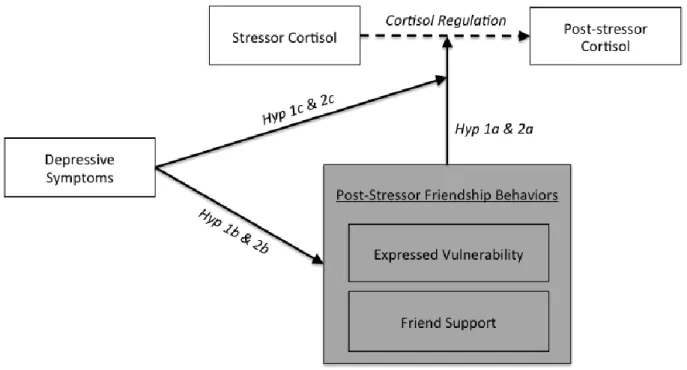
regulation. A clinically-referred sample was used to better understand how connections between HPA functioning and friendship dynamics may be unique for adolescent girls presenting with depressive symptoms and/or emotion regulation difficulties. Observational coding was used to assess the level of in vivo friend support that girls receive from a close friend after completing a social stressor task. As discussed in more detail later, the present study builds on the findings of Calhoun and colleagues (2014) by considering behaviors enacted by both the friend and the stressed adolescent to generate a more complete picture of how post-stressor friendship dynamics connect with biological stress regulation. Figure 1 provides an illustration of all hypotheses tested. In line with the findings of Calhoun and colleagues (2014), it is hypothesized that
adolescents whose friends are highly supportive will show greater HPA regulation following the social stressor task (Hypothesis 1a). The current study also considers the role of depressive symptoms in the connection between friend support and HPA regulation. Given that depressive symptoms have been associated with poor friendship quality and problematic friendship
associated with observed friend support (Hypothesis 1b). Similarly, because depressed
adolescents are more likely to have dysregulated HPA responses to acute stress (Lopez-Duran et al., 2009; Lupien et al., 2009; Miller et al., 2007; Guerry & Hastings, 2011), it is expected that depressive symptoms will moderate the association between friend support and HPA regulation such that friend support is less likely to be associated with HPA regulation for girls with elevated levels of depressive symptoms (Hypothesis 1c).
During examinations of stress regulation in the context of adolescent friendships, it is also important to consider how stressed adolescents engage with their friends. To attenuate negative emotional reactions to a stressful experience, a stressed adolescent could discuss the stressful experience, and their reactions, with a friend. Communicating personal information, or self-disclosure (Forgas, 2011), within friendships not only serves to increase intimacy and closeness between friends (Camarena, Sarigiani, & Petersen, 1990; Collins & Miller, 1994; Derlega & Berg, 1993), but it can also serve to reduce stress (Buhrmester & Prager, 1995; Thoits, 1986). When feeling stressed, disclosing personal information can help a person to “vent,” or
acknowledge and address negative emotional states that they may be experiencing. In general, disclosing after a stressor could provide an individual with the opportunity to engage in self-regulatory processes that prevent stressful experiences from converting into internalizing
Mancini, & Gangemi, 2006). Additionally, if an individual does not regulate acute biological reactions to stressors, biological stress response systems could become exhausted and respond ineffectively to future stressors (McEwen, 2000).
However, certain forms of self-disclosure may actually impair stress regulation. Self-disclosure in dyadic relationships has been studied primarily in the context of interpersonal processes such as conversational self-focus and co-rumination. Both conversational self-focus and co-rumination are common for individuals with depressive symptoms and have been
associated with poor psychosocial outcomes. Conversational self-focus, or a “tendency to direct the focus of conversations to the self and away from others” (p. 1264), has been prospectively associated with decreases in adolescents’ friendship quality and increases in internalizing symptoms, such as those characterizing depression (Schwartz-Mette & Rose, 2009). Co-rumination is a dyadic manifestation of self-disclosure that takes the form of “extensively discussing and re-visiting problems, speculating about problems, and focusing on negative feelings” (Rose, 2002, p.1830). Co-rumination has also been connected to increased risk of future internalizing symptoms (Rose et al., 2007; Stone, Hankin, Gibb, & Abela, 2011). Unlike conversational self-focus, however, co-rumination has been associated with prospective
Very few studies have examined direct connections between self-disclosure in the presence of friends and HPA regulation, especially during adolescence. However, work examining
rumination (i.e. “repetitive, unwanted, past-oriented thoughts about negative content”; Zoccola & Dickerson, 2012, p. 2) may offer some insight as to how focusing on personal problems in
conversations with friends could affect HPA regulation. In adult samples, rumination has
generally been associated with delayed HPA recovery (i.e. return to baseline levels of cortisol) in studies using social stressor tasks (for a review, see Zoccola & Dickerson, 2012). Additionally, adults with more depressive symptoms who are experimentally induced to ruminate have shown less HPA regulation following negative mood induction, compared to adults with fewer
that during co-rumination, friends behave in a way that increases, or maintains, HPA stress responses. A more thorough examination of post-stressor friendship dynamics is needed to clarify how self-disclosure and friend responses independently, or jointly, connect with HPA regulation following acute stress.
The current study considers a novel variant of self-disclosure referred to herein as “expressed vulnerability.” Expressed vulnerability is defined as communicating (either verbally or
affectively) negative, self-directed thoughts and emotions in a way that increases risk of negative social evaluations and provides a context for others to provide social support. This construct is similar to co-rumination in that it generally assesses a tendency to make negatively-oriented self-disclosures with a close friend. Expressed vulnerability is distinguished from co-rumination, however, in that it is a specific form of self-disclosure carried out by an individual (vs. a dyadic interpersonal process). Additionally, the contruct attempts to more directly assess thoughts and emotions that have the potential to connect with both depressive symptoms and biological stress regulation. The negative, self-directed nature of the thoughts and emotions characterizing
expressions of vulnerability may reflect current internalizing symptoms (such as those pertaining to anxiety and depression) or a propensity to develop such symptoms in the future. In contrast to prior work examining co-rumination, the current study breaks apart the post-stressor friend dynamic into two interpersonal behaviors: one that is carried out by the stressed adolescent (expressed vulnerability) and one that is carried out by the friend (friend support; as discussed earlier). By assessing adolescent and friend behaviors separately, it is possible to clarify whether stress regulation is impacted by how the stressed adolescent approaches the post-stressor
provides opportunity to challenge negative self-perceptions and self-directed emotions through cognitive restructuring or physiological stress management. However, findings from research examining co-rumination (Byrd-Craven et al., 2011) suggest that negatively-oriented self-disclosures in dyadic relationships could also increase HPA activation in the short-term and maintain stress responses.
In the present study, observational coding was used to assess girls’ expressed vulnerability during a post-stressor interaction with a close friend. Given initial findings suggesting that negatively-oriented self-disclosures in the context of friendships may promote increased HPA activation (Byrd-Craven et al., 2011), it was hypothesized that adolescent girls who express more vulnerability during the post-stressor interaction would show less HPA regulation (Hypothesis 2a; see Figure 1 for illustration of all hypotheses). Because depressed individuals tend to share information about personal problems in friendships more than non-depressed individuals (Rose, 2002), it was also predicted that girls reporting elevated levels of depressive symptoms would be more likely to express vulnerability in their friendships (Hypothesis 2b). In line with prior work demonstrating HPA dysregulation for depressed individuals (Lopez-Duran et al., 2009; Lupien et al., 2009; Miller et al., 2007; Guerry & Hastings, 2011), it was expected that depressive
symptoms would moderate the association between expressed vulnerability and cortisol
regulation. Specifically, it was anticipated that expressed vulnerability would be associated with less cortisol regulation for adolescent girls with elevated depressive symptoms than for those reporting less depressive symptoms (Hypothesis 2c). The interaction between expressed
Participants
Participants included 241 clinically-referred adolescent girls between 12 and 17 years old (M = 14.7, SD = 1.4). Participants were recruited from local psychiatric inpatient units and through advertisements in the community (i.e., flyers, emails, and radio/TV commercials). To be included in the study, adolescents must have experienced mental health concerns in the past two years (e.g., affective disorders, anxiety, substance use, disruptive behavior disorders). Research staff conducted an initial phone interview with adolescents’ caregivers to determine study eligibility. Adolescents were considered eligible for the study if, in the past two years, they a) had previously received a psychiatric diagnosis, b) had received treatment for mental health concerns, or c) met criteria for clinical levels of psychiatric symptoms, as determined during the interview conducted by the research staff. Exclusion criteria included active psychosis,
intellectual disability, or any pervasive developmental disorder. Adolescents were also required to have a close friend (same-gender and within 2 years of age) who could take part in the study with them. The inclusion and exclusion criteria used for this study ensured that the final sample included adolescent females who presented with a higher level of internalizing symptoms and emotion regulation difficulties, compared to a typical community sample.
adoptive parents), or living with only one parent/guardian (35.5%; included biological mothers, biological fathers, or other relatives). The educational history of caregivers varied and included “some high school, but did not graduate” (1.7%), “high school graduate or GED” (12.6%), “AA/Trade degree” (12.6%), “some undergraduate college” (17.6%), “undergraduate
degree/bachelor’s” (23%), “some graduate school” (11.7%), and “master’s degree (MA) or law degree (JD)” (14.6%).
Procedure
On the day of the study, adolescents attended the laboratory-based assessment with a caregiver and a close friend. Adolescents were instructed to refrain from taking medications on the day of the assessment. Adolescents and caregivers independently completed questionnaires, on which they provided information about adolescents’ current medication usage and pubertal development; adolescents also reported current symptoms and social functioning. Upon completing questionnaires, adolescents participated in an in vivo experimental paradigm designed to induce social stress responses. Acute HPA stress responses were assessed by collecting salivary cortisol samples at specific times prior to and following the social stress paradigm.
Trier Social Stressor Task. Adolescents completed a modified version of the Trier Social Stressor Task (TSST; Hastings, Zahn-Waxler, & Usher, 2007; Klimes-Dougan et al., 2001). For this experimental procedure, participants were asked to record a three-minute
to prepare their speech. While preparing and recording their speech, participants stood facing a camera and closed-circuit television screen displaying their own live image. After the one-minute preparation period had expired, a male research assistant entered the room and sat off to the side of the participant, but still within eyesight, to ostensibly evaluate the participants’ performance. The research assistant did not engage with the participant verbally or nonverbally other than by telling the participant “you still have time remaining, please continue with your speech” if a participant ended their speech before the three minutes had expired. The research assistant made marks on a clipboard every 20 seconds to give the appearance that they were evaluating the adolescent’s performance on the speech.
Post-stressor discussion with a friend. Approximately 15 minutes after completing the TSST, adolescents participated in a four-minute discussion segment with their close friend. During this discussion segment, adolescents were instructed to discuss the stressor task and their performance on the task with their friend. Adolescents were provided with several discussion questions to encourage discussion of self-evaluative thoughts and emotions (“How do you think you did on your speech,” “What do you think your chances are for being selected for the reality show,” “What were the best and worst parts of your speech,” “How do you feel about yourself after giving your speech?”).
collected 20 minutes after the TSST to provide a measure of peak HPA activity resulting from the TSST. A third cortisol sample was collected 40 minutes after the TSST to measure post-stressor HPA functioning; this sample represents an adolescent’s cortisol level immediately after the post-stressor discussion with their friend.
Salivary samples were frozen for storage at -25°C and then shipped on dry ice to Pennsylvania State University’s Behavioral Endocrinology Laboratory for assay (Salimetrics, PA). Samples were assayed for cortisol using a 510-k cleared high-sensitive enzyme
immunoassay designed to assess adrenal function. This test, which uses 25 µl of saliva (for singlet determinations), has a lower limit sensitivity of .007 µg/dl and a range of sensitivity from .007 to 1.2 µg/dl.
As is common in studies examining cortisol (e.g., Gunnar et al., 1989), outlier cortisol values were identified as being 3 SD above the mean for the specific timepoint (i.e, prestressor, stressor, post-stressor); outlier values were winsorized such that they were replaced with the closest value within the 3 SD range (Tukey, 1977). Then, a log-transformation was applied to prestressor (M= 0.13, SD=0.07), stressor (M=0.16, SD=0.10), and poststressor (M=0.12, SD=0.06) cortisol values prior to analyses. The log-transformed prestressor cortisol value was used as “baseline cortisol” in all analyses. A “cortisol reactivity” variable was computed by subtracting each participant’s baseline cortisol from their stressor cortisol level. Additionally, a “cortisol regulation” variable was computed by subtracting participants’ poststressor cortisol levels from their stressor cortisol level.
Observational Coding
post-stressor discussion between the adolescent and her friend. Though friendship support and expressed vulnerability are novel constructs, the coding systems designed to assess these two friendship behaviors are modeled after prior work.
The friend support coding scheme incorporated elements (e.g., responsiveness) from the Peer Dyadic Mutuality Rating System (Piehler & Dishion, 2004), but it also included novel elements to allow for a more comprehensive evaluation of friend support. To capture a wide range of friend behavior that could influence stress regulation, ratings of friend support were determined based on the frequency and intensity/salience of both supportive and non-supportive friend behaviors (i.e., the degree to which the behavior had the potential to negatively or
positively influence the adolescent’s emotional state). A seven-point scale (1-7) was used to assess friend support. On this scale, a “7” indicated high levels of support characterized by friend behaviors that seemed intended to decrease the client’s self-defeating thoughts/emotions or to increase the adolescent’s positive self-perceptions (e.g., normalizing the experience, providing reassurance or discounting the adolescent’s self-critical negative remarks, positively reframing the experience, noting positive aspects of adolescent and their performance, reaffirming their friendship). In contrast, a rating of “1” for friend support indicated that the friend behaved primarily in a non-supportive manner. Non-supportive behaviors may include: substantially re-directing the topic of the conversation when it was clearly inappropriate to do so (i.e., “hi-jacking” the conversation), responding to the adolescent’s expressed vulnerability
A rating of “4” was given when the friend behaved equivocally or provided an unclear level of support (e.g., primarily asked questions about stressor task but not about the adolescent’s internal experience of the stressor task, responded with mild reciprocal affect but did not offer supportive or non-supportive comments).
Expressed vulnerability is a novel form of self-disclosure that generally assesses a tendency to engage in negatively-oriented discussions. In addition to examining the behavior of an individual (vs. a dyad), expressed vulnerability differs from co-rumination in that it aims to more directly assess expressions of thoughts and emotions that reflect, or may indicate risk of, internalizing symptoms. As discussed earlier, expressed vulnerability was defined as
(“7”) was given to adolescents who communicated to their friend, affectively or verbally, a high level of negative, self-oriented emotion throughout the majority of the post-stressor discussion segment.
Reliability for the two coding schemes was established using ratings generated by an advanced clinical psychology doctoral student (the author of the present manuscript) and a postdoctoral fellow. Coders were blind to participants’ ratings on primary measures, and they independently coded 23% (n = 60) of all videotaped post-stressor discussion segments for reliability. Coders trained for one month to code friend support and expressed vulnerability, with regular meetings and rating comparisons. Reliability estimates were computed using percent agreement and intraclass correlations. As in other observational work using 7-point scales (Piehler & Dishion, 2007), percent agreement was computed allowing for 1-point disagreements between coders’ ratings. To account for chance agreement between raters, single measures intraclass correlations were also calculated using a mixed effects model in which the coders were considered random effects and the codes were considered fixed effects (as recommended by Shrout & Fleiss, 1979). Reliability estimates for friend support and expressed vulnerability were in the “excellent” range according to previously established guidelines (Cicchetti & Sparrow, 1981), with 93 and 97 percent agreement and intraclass correlations of .84 and .90, respectively. After establishing inter-rater reliability, one coder (the author) coded the remaining tapes while remaining masked to all other data.
Measures
may influence the degree to which adolescents express vulnerability and how much in vivo support they receive from friends. Pubertal status was included as a covariate based on
developmental differences in pre-pubertal and post-pubertal youths’ acute HPA stress responses (Stroud et al., 2009; Shirtcliff et al., 2012), depressive symptoms (Ge, Conger, & Elder, 2001; Patton et al., 1996), and friendship characteristics (Rose & Rudolph, 2006). Prior work has also indicated that corticosteroids and birth control may influence acute HPA stress responses (Bouma, Riese, Ormel, Verhulst, & Oldehinkel, 2009; Hastings, Fortier, Utendale, Simard, & Robaey, 2009). Similarly, the effects of antidepressants and anxiolytics were considered as they could influence both HPA stress responses (Fries, Hellhammer, & Hellhammer, 2006; Manthey et al., 2011; Rohrer, von Richthofen, Schulz, Beyer, & Lehnert, 1994; Scharnholz et al., 2010) and social behaviors (Dubini, Bosc, & Polin, 1997; Novick, 2011; Paton, 2002). Lastly, a variable for cortisol timing (i.e., timing of cortisol collection in relation to beginning of diurnal cycle) will be computed to estimate the affects of diurnal cortisol cycles on acute HPA stress responses (Calhoun et al., 2012; Calhoun et al., 2014).
Depressive symptoms. Adolescents reported depressive symptoms using the Mood and Feelings Questionnaire (MFQ; Costello & Angold, 1988). The MFQ was designed specifically for assessing depressive symptoms in children and adolescents aged 8 to 18 years old. It has demonstrated good reliability and validity in clinical samples of adolescents (Daviss et al., 2006), and it shows excellent convergent validity with diagnostic interviews for Major Depressive Disorder (Angold, 1989; Wood, Kroll, Moore, & Harrington, 1995). The measure consists of 33 statements describing depressive symptoms (e.g., “I felt miserable or unhappy,” “I did
computed using ratings from all 33 items, with high scores indicating more depressive
symptoms. The MFQ demonstrated excellent internal consistency in the current sample (α = .95). Friendship quality. Adolescents rated the quality of their friendship using the Network of Relationships Inventory (NRI; Furman, 1998). Ratings were based specifically on the
relationship of the adolescent with the friend that participated in the study and interacted with the adolescent during the post-stressor discussion segment. The NRI is a 36-item measure that assesses positive and negative friendship quality. Positive friendship quality is determined based on ratings in 8 domains: companionship, instrumental aid, intimacy, nurturance, affection, admiration, reliable alliance, and emotional support. Negative friendship quality is determined based on ratings in 4 domains: conflict, antagonism, criticism, and dominance. Each domain is assessed with three items, and participants use a five-point Likert scale to rate each item. The NRI has demonstrated good psychometric properties in prior work (e.g., Furman, 1998). In the current sample, the positive and negative friendship quality scales had good internal consistency (α = .96 and α = .73, respectively). In addition to rating the quality of their friendship,
adolescents also indicated the length of their friendship (months/years).
Pubertal status. Pubertal status was assessed based on reports provided by adolescents and their caregivers on the Pubertal Development Scale (PDS; Peterson, Crockett, & Richards, 1988). Using a 4-point scale (1 = no development, 4 = development seems complete), participants rated four items assessing physical changes that characterize the pubertal transition for
adolescent girls: body hair growth, skin changes (i.e., acne), growth spurt, breast development. A fifth item used a dichotomous scale (1 = no, 4 = yes) to assess menarche. The PDS has
& Gargiulo, 1987). Mean scores were computed for adolescent and caregiver ratings of the five items (α = .72 and α = .70, respectively. Adolescent and caregiver mean scores were strongly correlated with one another (r = .71). As in prior work (Rudolph, 2008), these mean scores were averaged to compute a combined measure of pubertal status.
Medication usage. Adolescents and caregivers reported all medications that the
adolescent currently, or recently, used. Information was collected using an open-response format as well as with questions specifically asking about birth control and asthma medications (which are commonly classified as corticosteroids). Three dichotomous medication variables were created, two for medications that could affect HPA functioning (i.e., birth control,
corticosteroids) and one for medications that could affect both HPA functioning and social behavior (i.e, antidepressants and anxiolytics). For the medication usage variables, a “1” indicated that the adolescent used the medications of interest, and a “0” indicated that they did not use these medications.
Cortisol timing. Diurnal cortisol cycles begin upon awakening and fluctuate throughout the day (Fries, Dettenborn & Kirschbaum, 2009). When collecting cortisol samples after acute stress, the level of free-cycling cortisol in a sample represents the combination of basal cortisol, attributable to an individual’s natural diurnal levels for that time of day, and any changes in cortisol caused by the acute stressor. For the current study, baseline cortisol was collected for most adolescents (88.5%) between the hours of 12:00 a.m. and 5:00 p.m. Adolescents reported the time that they awoke on the day of the study, and a cortisol timing variable was computed by subtracting the time an adolescent awoke from the time that the first cortisol sample was
cortisol, and such estimates have been consistently associated with acute cortisol stress responses (e.g., Calhoun et al., 2012, 2014).
Data Analytic Plan
Descriptive statistics were computed for all study variables, as were correlations and t values (for medication variables). Primary hypotheses were tested with path model analyses in Mplus, using full information maximum likelihood estimations for missing data. Path model analyses were selected for the testing of hypotheses to accommodate the temporal sequence of events occurring in the study and to allow for the testing of indirect effects. Because the
Power analyses were conducted using an online sample size calculator for multiple regressions (Soper, 2014). To calculate the minimum sample size needed to detect effects, desired statistical power level was set to .80 and probability level was set to .05. A moderate effect size of .15 (Cohen, 1988) was also expected; this anticipated effect size is a reasonable and fairly conservative estimate given main effects and interaction effects observed in prior work using similar analyses for assessing stress-induced changes in cortisol (e.g., Calhoun, 2014). The model was described as consisting of 13 predictors (all primary variables of interest and
Means, standard deviations, and intercorrelations among all primary variables are presented in Table 1. Expressed vulnerability was positively correlated with cortisol reactivity, cortisol regulation, depressive symptoms, and positive friendship quality. Friend support was positively associated with cortisol reactivity and pubertal development. Depressive symptoms were positively correlated with pubertal development. Cortisol regulation and negative
friendship quality were negatively correlated.
Independent samples t-test analyses were used to examine medication group differences on study variables. Adolescents taking antidepressants or anxiolytics (N = 101) had lower baseline cortisol (t = -3.13, p < .01), were older (t = -3.29, p < .001), and reported higher levels of depressive symptoms (t = -3.89, p < .001) than adolescents who did not report usage of these medications. Compared to others, adolescents taking birth control (N = 37) had less cortisol reactivity (t = 3.74, p < .001) and cortisol regulation (t = 3.72, p < .001); they also expressed less vulnerability with their friend (t = 2.24, p < .05), were older (t = -2.99, p < .01), and reported higher levels of depressive symptoms (t = -3.39, p < .001). No group differences were revealed for corticosteroid usage (N = 21) on any study variables.
mediating variables were allowed to co-vary in the model, and cortisol regulation was regressed onto each. Direct effects were also estimated by regressing cortisol regulation and the mediating variables onto cortisol reactivity, baseline cortisol, depressive symptoms, and each of the
covariates (cortisol timing, pubertal level, positive friendship quality, negative friendship quality, length of friendship, antidepressant/anxiolytic medication usage, birth control usage,
corticosteroid usage). Both direct and indirect effects (one for each mediator) were estimated for cortisol reactivity predicting cortisol regulation. The full path model was estimated using a bootstrap procedure with 5000 draws, and fit indices confirmed a saturated model, χ2 (0) = 774.54, χ2/df = 15.49, CFI = 1.00, RMSEA = 0.00, AIC = 1871.25. The primary paths of interest are presented in Figure 2 (for all direct path estimates, see Table A1 in the Appendix). The path model analysis revealed a significant direct effect for the interaction of expressed vulnerability and friend support predicting cortisol regulation. To probe the association between the
interaction term and cortisol regulation, centered terms for the predictors (baseline cortisol, cortisol reactivity, depressive symptoms), mediators, and covariates were entered into the path model to generate regression equations (Aiken & West, 1991). Then, high, average, and low values of friend support and expressed vulnerability were entered into the regression equations to generate a plot of the effect. As shown in Figure 3, adolescents high in both expressed
vulnerability and friend support experienced the greatest cortisol regulation. Adolescents low in expressed vulnerability showed the least amount of cortisol regulation, regardless of friend support received.
association between cortisol reactivity and cortisol regulation. Full mediation in such a model is highly unlikely given the nature of the HPA stress response during and following a stressor (i.e., cortisol regulation requires that an individual experience at least some degree of cortisol
reactivity). Therefore, a marginally significant indirect effect is impressive and worth noting. The pattern of results revealed in the post-hoc probe of the direct effect for the interaction predicting cortisol regulation (discussed above) helps to clarify the indirect effect. Essentially, the indirect effect indicates that adolescents who experienced high cortisol reactivity in response to the stressor task showed greater cortisol regulation, in part, because they expressed high vulnerability and received high friend support.
The associations of depressive symptoms with each of the observed variables
(Hypotheses 1b and 2b) were examined using the same path model generated to test Hypotheses 1a and 2a. It was expected that depressive symptoms would be negatively associated with friend support (Hypothesis 1b) but positively associated with expressed vulnerability (Hypothesis 2b). Paths were estimated with depression predicting expressed vulnerability and friend support; as described above, the effects of baseline cortisol, cortisol reactivity, and all covariates were accounted for by estimating paths between these variables and the observed variables. As shown in Figure 2, depressive symptoms were positively associated with expressed vulnerability, but they were not significantly associated with friend support. It is worth noting that these
associations occur while also accounting for the significant, positive associations of cortisol reactivity with expressed vulnerability and friend support.
support and expressed vulnerability would be associated with less cortisol regulation for adolescent girls reporting a higher level of depressive symptoms. The path model described earlier was modified to include interaction terms for depression with each of the observed variables. The three-way interaction between depressive symptoms, expressed vulnerability, and friend support was also entered into the model. As prescribed by Preacher et al. (Model 3; 2007, pp. 193-197), depressive symptoms were set to covary with the other predictors in the model (i.e., baseline cortisol, cortisol reactivity, and covariates) as well as the interaction terms. Unlike in the previous path model, the mediators (expressed vulnerability, friend support, and the interaction of expressed vulnerability with friend support) were not regressed onto depressive symptoms; instead, depressive symptoms and the interaction terms were set to covary with the error term for each of the mediators. Direct paths were estimated for all predictors, covariates, and interactions predicting cortisol regulation. As in the prior model, the mediating variables were allowed to covary. The moderated mediation path model did not reveal any significant moderating effects of depression.
The moderating effects of positive friendship quality, negative friendship quality, length of friendship, and pubertal status were also independently examined using moderated mediation path models. These models were structured in a similar fashion to the model used for testing the potential moderating effects of depressive symptoms. None of the potential moderators
This study considered specific dyadic friendship processes that may affect adolescent girls’ acute biological stress regulation. This study also examined how friendship processes, and their effects on biological stress regulation, may differ depending on girls’ level of depressive symptoms. Given that adolescents are more likely to discuss stressors with friends than parents, findings from this study offer a rare glimpse into how adolescents may manage stress in their daily lives. Specifically, findings from this study offer clarification regarding the role of adolescents’ close friendships in stress management, suggesting that friendships hold the potential to either facilitate or prevent acute biological stress regulation, depending on how a stressed adolescent and their friend interact following a stressor. As such, friendships could positively or negatively impact allostatic load and have considerable influence on adolescent girls’ ability to adaptively respond to interpersonal stressors. Prior work suggests that
adolescents who cannot generate adaptive responses to interpersonal stressors may fail to prevent future stressors, experience increased negative affect, and consequently be at increased risk of future depressive symptoms (Sontag & Graber, 2010). Given that girls are likely to seek support from close friends (Rose & Rudolph, 2006), findings from this study offer key insight as to why some may be at increased risk of depression during adolescence (Bouma et al., 2008; Gore et al, 1993; Hankin & Abramson, 2001; Kessler et al., 2001).
behavior of the stressed adolescent. To capture the behaviors of a stressed adolescent that may connect most closely with stress management, a novel form of self-disclosure (i.e., expressed vulnerability) was introduced. In this study, friend support provided in the presence of expressed vulnerability appeared to attenuate the biological toll of negative, self-directed thoughts and emotions caused by a stressor. Importantly, friend support provided in the absence of expressed vulnerability did not have the same effect. These findings seem to imply that expressed
vulnerability and friend support serve in a complementary fashion to facilitate biological stress regulation. Expressing vulnerability may serve to “set the stage” for effective friend support by signifying that an adolescent is in need of support. Even more, sharing the specific thoughts and emotions driving one’s vulnerable state may help to inform the type of support that a friend could offer. In other words, an adolescent’s friend is more likely to provide effective forms of social support if they know where to direct their support (i.e., what thoughts are causing negative emotions) and how much support is needed (i.e., how emotionally distraught the stressed
adolescent is feeling).
study is the first to examine the behavior of a stressed adolescent as a distinct interpersonal process that could influence biological stress regulation in the friendship context. Expressing vulnerability, as defined in this study, requires that adolescents share thoughts and emotions that increase risk of negative social evaluation. Thus, an adolescent who expresses vulnerability to a friend may remain in a state of potential social threat, wherein they could be teased or devalued by their friend. As a result, expressing vulnerability may sustain adolescents’ HPA responses to stressors and attenuate regulation. It is also possible that the process of expressing vulnerability could cause an individual to re-experience the emotions of a stressful situation. While accessing memories of a stressor, an adolescent may re-activate the same neurophysiological systems that responded during the creation of the memory (Greenberg et al., 2005). If this occurs during expressions of vulnerability, then an adolescent reliving the emotional state caused by a stressor will likely experience re-activation of the HPA axis (or in the case of this study, sustained activation of the HPA axis).
This study also considered whether adolescent girls reporting more depressive symptoms showed differences in post-stressor friendship behaviors compared to less depressed girls. Consistent with findings from research examining other forms of interpersonal processes characterized by negative content (i.e., co-rumination; Rose et al., 2007; Stone et al., 2011), adolescents reporting more depressive symptoms expressed greater vulnerability with their friends during the post-stressor conversation. Prior work has suggested that individuals with high levels of depressive symptoms tend to engage in more passive forms of emotional regulation instead of carrying out more active strategies for regulating emotion (e.g., problem-solving; Waller et al., 2014). This tendency, unfortunately, may only serve to increase depressive symptoms over time (Stone & Gibb, 2015). In contrast to other forms of self-disclosure, however, expressing vulnerability may be a more adaptive interpersonal process that has the potential to prevent increases in allostatic load, and in turn depressive symptoms, when
accompanied by friend behaviors that target the sources of the vulnerability. Further, expressing vulnerability may only be pathological if it incorporates maladaptive features, such as those revealed in prior work (e.g., extensive discussion of problems, dwelling on negative affect, preoccupation with self, negative feedback seeking, excessive reassurance seeking; Joiner, Metalsky, Katz, & Beach, 1999; Rose, 2002; Schwartz-Mette & Rose, 2009; Swann, Wenzlaff, Krull, & Pelham, 1992).
The current study did not reveal any moderating effects of depressive symptoms on the associations between interpersonal processes and biological stress regulation. Thus, the pairing of high expressed vulnerability with high friend support may be equally beneficial for
a different pattern of results could be revealed. No studies have examined connections between maladaptive forms of self-disclosure and acute HPA functioning, but findings from a study examining co-rumination suggest that participating in dyadic conversations centered on
discussing problems and negative affect can increase HPA activation for adults (Byrd-Craven et al., 2011). Additional work exploring post-stressor friendship interactions is needed to clarify how the various forms of self-disclosure positively and negatively impact biological stress regulation.
This study is among the first to consider the role of adolescent girls’ close friendships in their acute HPA stress regulation. By using a clinically-referred sample, findings are
strengthened in that they reflect associations that may be most relevant for girls at risk of future psychopathology. Another strength of this study is the use of an experimental paradigm to examine post-stressor friendship processes. Incorporation of such a paradigm allowed for more objective evaluations of interpersonal and biological processes. The novel observational coding system developed to examine interpersonal processes showed strong reliability and acceptable validity (as demonstrated by expected associations with primary variables of interest). Even more, the use of codes that independently considered adolescent and friend behaviors allowed for an in-depth look at friendship dynamics that could not be obtained with dyadic codes (i.e., codes that collectively consider the behaviors of both conversational partners, such as co-rumination). The codes used in this study ultimately revealed the nuances of adolescent friendship
by the inclusion of multiple covariates in analyses, all of which were chosen based on previously demonstrated connections with HPA functioning.
While this study’s use of a standardized stressor (i.e., TSST) allows for more direct comparisons of biological and interpersonal processes across adolescents, it may also limit the generalizability of findings. The TSST is a contrived scenario that may provoke different biological and interpersonal responses than social stressors adolescent girls more commonly encounter. In particular, the TSST may or may not represent the type of stressor that commonly causes adolescents to feel stressed or seek support from a close friend. Additionally, during and after completion of TSST, adolescents do not receive direct feedback about their performance. In real-life scenarios, it is more likely that an adolescent would receive some form of verbal or nonverbal feedback following a similar performance. Situations where feedback is believed to reflect a decrease in social status (e.g., rejection, teasing) could lead to even greater stress reactions and support-seeking behavior. The TSST could also impact the behavior of friends in ways that differ from other stressors. Friends could perceive an adolescent’s performance on the TSST as having little impact on the adolescent’s actual social status. Consequently, friends may feel less compelled to provide support than if the social stressor actually occurred in the context of the adolescent’s peer group. Lastly, while the use of the TSST in this study may help to clarify how adolescents manage social stress with friends, findings may not extend to interpersonal processes occurring between the adolescent and their family members.
using a sample that was entirely female, however, findings cannot be extended to adolescent boys. Relevant research suggests that girls are more likely than boys to expect that problem-oriented self-disclosures within friendships will lead to feelings of being cared for or understood by a friend; conversely, boys are more likely to expect that talking about problems will be a “waste of time” (Rose et al., 2012). If boys do not view self-disclosures as a valuable interpersonal process, then they may also be less likely to express vulnerability within friendships. Additional work is needed to determine whether boys show different levels of expressed vulnerability and receive different levels of friend support than girls. Future work could also clarify whether the combination of expressed vulnerability and friend support in adolescent boys’ friendships serves to facilitate acute biological stress regulation.
While the current study contributes novel and critical information to the broader
literature, its cross-sectional nature limits the interpretation of findings. In particular, longitudinal work will be essential for clarifying whether this study’s findings have implications for changes in depressive symptoms over time. Expressing vulnerability and receiving friend support may work together to reduce allostatic load, but whether this connection subsequently decreases risk of depressive symptoms is unclear. If the interpersonal processes do, in fact, foster resiliency, they could inform theoretical models for adaptive stress management within dyadic adolescent friendships. Longitudinal work could also extend the current study’s findings by considering the development of friendships over time. During adolescence, friendships that serve to facilitate stress management may be prioritized over others, perceived as more meaningful, and endure for a lengthier periods of time. The course of friendships may look different for depressed
problematic interpersonal processes, such as co-rumination (Schwartz-Mette & Rose, 2012). If depressed adolescents show a tendency to remain in friendships that do not facilitate adaptive stress management, this could help to explain why they are prone to increases in allostatic load and worsening depressive symptoms.
To further clarify how stress management within close friendships affects risk of
depressive symptoms, follow-up research should examine additional biological mechanisms that may be influenced by adaptive interpersonal processes, such as the combination of expressed vulnerability and friend support. Recent research suggests that the HPA axis may play a crucial role in regulating the body’s immune system, particularly as it pertains to inflammation. Under conditions of low stress, glucocorticoids (such as cortisol) released by the HPA axis suppress the expression of genes that promote inflammation; however, under conditions of high stress, the surge in glucocorticoids may cause immune cells to become less sensitive to the
anti-inflammatory effects of glucocorticoids (Slavich & Irwin, 2014). Thus, chronic stress can completely alter the connection between the HPA axis and inflammation such that the release of glucocorticoids eventually promotes inflammation, instead of down-regulating it.
also possible that the interpersonal processes promote down-regulation of inflammatory responses.
Adam, E.K., Sutton, J.M., Doane, L.D., & Mineka, S. (2008). Incorporating hypothalamic-pituitary-adrenal axis measures into preventive interventions for adolescent depression: Are we there yet? Development and Psychopathology, 20, 975-1001. doi:
10.1017/S0954579408000461
Adams, R.E., Santo, J.B., & Bukowski, W.M. (2011). The presence of a best friend buffers the effects of negative experiences. Developmental Psychology, 47, 1786-1791. doi: 10.1037/a0025401
Aiken, L.S., & West, S.G. (1991). Multiple regression: Testing and interpreting interactions. Thousand Oaks: Sage.
Albert, D., Chein, J., & Steinberg, L. (2013). The teenage brain: Peer influences on adolescent decision-making. Current Directions in Psychological Science, 22, 114-120. doi: 10.1177/0963721412471347
Angold, A. (1989). Structured assessments of psychopathology in children and adolescents. In C. Thompson (Ed.), The instruments of psychiatric research (pp. 271-394). Chichester, UK: Wiley.
Bagwell, C.L., Newcomb, A.F., & Bukowski, W.M. (1998). Preadolescent friendship and peer rejection as predictors of adult adjustment. Child Development, 69, 140-153. doi: 10.2307/1132076
Bagwell, C.L., & Schmidt, M.E. (2013). Friendships in childhood & adolescence. New York, NY: Guilford Press.
Bouma, E.M., Ormel, J., Verhulst, F.C., & Oldehinkel, A.J. (2008). Stressful life events and depressive problems in early adolescent boys and girls: The influence of parental depression, temperament and family environment. Journal of Affective Disorders, 105, 185-193. doi: 10.1016/j.jad.2007.05.007
Bouma, E.M., Riese, H., Ormel, J., Verhulst, F.C., & Oldehinkel, A.J. (2009). Adolescents’ cortisol responses to awakening and social stress; Effects of gender, menstrual phase and oral contraceptives. The TRAILS study. Psychoneuroendocrinology, 34, 884-893. doi: 10.1016/j.psyneuen.2009.01.003
Brooks-Gunn, J., Warren, M.P., Rosso, J., & Gargiulo, J. (1987). Validity of self-report measures of girls' pubertal status. Child Development, 58, 829-841. doi: 10.2307/1130220
Buhrmester, D., & Prager, K. (1995). Patterns and functions of self-disclosure during childhood and adolescence. In K.J. Rotenberg (Ed.), Disclosure processes in children and
Bukowski, W.M., & Adams, R. (2005). Peer relationships and psychopathology: Markers, moderators, mediators, mechanisms, and meanings. Journal of Clinical Child and Adolescent Psychology, 34, 3-10. doi: 10.1207/s15374424jccp3401_1
Byrd-Craven, J., Granger, D.A., & Auer, B.J. (2011). Stress reactivity to co-rumination in young women’s friendships: Cortisol, alpha-amylase, and negative affect focus. Journal of Social and Personal Relationships, 28, 469-487. doi: 10.1177/0265407510382319 Calhoun, C.D., Franklin, J.C., Adelman, C.B., Guerry, J.D., Hastings, P.D., Nock, M.K., &
Prinstein, M.J. (2012). Biological and cognitive responses to an in vivo interpersonal stressor: Longitudinal associations with adolescent depression. International Journal Of Cognitive Therapy, 5, 283-299. doi: 10.1521/ijct.2012.5.3.283
Calhoun, C.D., Helms, S.W., Heilbron, N., Rudolph, K.D., Hastings, P.D., & Prinstein, M.J. (2014). Relational victimization, friendship, and adolescents’ hypothalamic-pituitary-adrenal axis responses to an in vivo social stressor. Development and Psychopathology, 26, 605-618. doi: 10.1017/S0954579414000261
Camarena, P.M., Sarigiani, P.A., & Petersen, A.C. (1990). Gender-specific pathways to intimacy in early adolescence. Journal of Youth and Adolescence, 19, 19-32. doi:
10.1007/BF0153944
Casey, B.J., Jones, R.M., & Hare, T.A. (2008). The adolescent brain. Annals of the New York Academy of Sciences, 1124, 111-126. doi: 0.1196/annals.1440.010
Chrousos, G.P., & Gold, P.W. (1992). The concepts of stress and stress system disorders: Overview of physical and behavioral homeostasis. Journal of the American Medical Association, 267, 1244-1252. doi: 10.1001/jama.1992.03480090092034
Cicchetti, D., Ackerman, B.P., & Izard, C.E. (1995). Emotions and emotion regulation in developmental psychopathology. Development and Psychopathology, 7, 1-10. doi: 10.1017/S0954579400006301
Cicchetti, D.V., & Sparrow, S.A. (1981). Developing criteria for establishing interrater reliability of specific items: Applications to assessment of adaptive behavior. American Journal of Mental Deficiency, 86, 127-137.
Cobb, S. (1976). Social support as a moderator of life stress. Psychosomatic Medicine, 38, 300-314.
Cohen, J. (1988). Statistical power analysis for the behavioral sciences (2nd ed.). Hillsdale, NJ: Lawrence Earlbaum Associates.
Cohen, S. (2004). Social relationships and health. American Psychologist, 5, 676-684. doi: 10.1037/0003-066X.59.8.676
Cole, P. M., Michel, M. K., & Teti, L. (1994). The development of emotion regulation and dysregulation: A clinical perspective. Monographs of the Society for Research in Child Development, 59, 73-100. doi: 10.2307/1166139
Collins, N.L., & Miller, L.C. (1994). Self-disclosure and liking: A meta-analytic review. Psychological Bulletin, 116, 457–475. doi: 10.1037/0033-2909.116.3.457
Connor-Smith, J.K., & Compas, B.E. (2004). Coping as a moderator of relations between reactivity to interpersonal stress, health status, and internalizing problems. Cognitive Therapy and Research, 28, 347-368. doi: 10.1023/B:COTR.0000031806.25021.d5 Compas, B.E., Connor-Smith, J.K., Saltzman, H., Thomsen, A., & Wadsworth, M.E. (2001).
Coping with stress during childhood and adolescence: Problems, progress, and potential in theory and research. Psychological Bulletin, 127, 87-127. doi:
10.1037/0033-2909.127.1.87
Cone, R.D., Low, M.J., Elmquist, J.K., & Cameron, J.L. (2003). Neuroendocrinology. In H. Kronenberg, S. Melmed, & K. Polonsky (Eds.), Williams Textbook of Endocrinology (pp. 81-176). Philadelphia, PA: Saunders.
Costello, E.J., & Angold, A. (1988). Scales to assess child and adolescent depression: Checklists, screens, and nets. Journal of the American Academy of Child and Adolescent Psychiatry, 27, 726-737. doi: 10.1097/00004583-198811000-00011
Cyranowski, J.M., Frank, E., Young, E., & Shear, K. (2000). Adolescent onset of the gender difference in lifetime rates of major depression. Archives of General Psychiatry, 57, 21-27. doi: 10.1001/archpsyc.57.1.21
Daviss, W.B., Birmaher, B., Melhem, N.A., Axelson, D.A., Michaels, S.M., & Brent, D.A. (2006). Criterion validity of the Mood and Feelings Questionnaire for depressive episodes in clinic and non‐clinic subjects. Journal of Child Psychology and Psychiatry, 47, 927-934. doi: 10.1111/j.1469-7610.2006.01646.x
Derlega, V., & Berg, J. H. (1993). Self-disclosure. Newbury Park, CA: Sage.
Dubini, A., Bosc, M., & Polin, V. (1997). Do noradrenaline and serotonin differentially affect social motivation and behaviour? European Neuropsychopharmacology, 7, S49-S55. doi: 10.1016/S0924-977X(97)00419-7
Eisenberger, N.I., Inagaki, T.K., Rameson, L.T., Mashal, N.M., & Irwin, M.R. (2009). An fMRI study of cytokine-induced depressed mood and social pain: The role of sex differences. Neuroimage, 47, 881-890. doi: 10.1016/j.neuroimage.2009.04.040
Fries, E., Dettenborn, L., & Kirschbaum, C. (2009). The cortisol awakening response (CAR): Facts and future directions. International Journal of Psychophysiology, 72, 67-73. doi: 10.1016/j.ijpsycho.2008.03.014
Fries, E., Hellhammer, D.H., & Hellhammer, J. (2006). Attenuation of the hypothalamic-pituitary-adrenal axis responsivity to the Trier Social Stress Test by the benzodiazepine alprazolam. Psychoneuroendocrinology, 31, 1278-1288. doi:
10.1016/j.psyneuen.2006.09.009
Furman, W. (1998). The measurement of friendship perceptions: Conceptual and methodological issues. In W. Bukowski, A. Newcomb, & W. Hartup (Eds.), The company they keep: Friendship in childhood and adolescence (pp. 41-65). New York: Cambridge. Ganzel, B.L., & Morris, P.A. (2011). Allostasis and the developing human brain: Explicit
consideration of implicit models. Development and Psychopathology, 23, 955-974. doi: 10.1017/S0954579411000447
Ge, X., Conger, R.D., & Elder, G.R. (2001). Pubertal transition, stressful life events, and the emergence of gender differences in adolescent depressive symptoms. Developmental Psychology, 37, 404-417. doi: 10.1037/0012-1649.37.3.404
Ge, X., Lorenz, F.O., Conger, R.D., Elder, G.H., Simons, R.L. (1994). Trajectories of stressful life events and depressive symptoms during adolescence. Developmental Psychology, 30, 467-483. doi: 10.1037/0012-1649.30.4.467
Giletta, M., Calhoun, C.D., Hastings, P.D., Rudolph, K.D., Nock, M.K., & Prinstein, M.J. (in press). Multi-level risk factors for suicidal ideation among at-risk adolescent females: The role of hypothalamic-pituitary-adrenal axis responses to stress. Journal of Abnormal Child Psychology. doi: 10.1007/s10802-014-9897-2
Giletta, M., Scholte, R.H.J., Prinstein, M.J., Engels, R.C., Rabaglietti, E., & Burk, W.J. (2012). Friendship context matters: Examining the domain specificity of alcohol and depression socialization among adolescents. Journal of Abnormal Child Psychology, 40, 1027-1043. doi: 10.1007/s10802-012-9625-8
Goodyer, I.M., Herbert, J.J., Altham, P.E., Pearson, J.J., Secher, S.M., & Shiers, H.M. (1996). Adrenal secretion during major depression in 8- to 16-year-olds, I. Altered diurnal rhythms in salivary cortisol and dehydroepiandrosterone (DHEA) at presentation. Psychological Medicine, 26, 245-256. doi: 10.1017/S0033291700034644
Gore, S.U., Aseltine, R.H., & Colten, M.E. (1993). Gender, social-relational involvement, and depression. Journal of Research on Adolescence, 3, 101-125. doi:
10.1207/s15327795jra0302_1
Greenberg, D.L., Rice, H.J., Cooper, J.J., Cabeza, R., Rubin, D.C., & LaBar, K.S. (2005). Co-activation of the amygdala, hippocampus and inferior frontal gyrus during