MEASURING ONLINE SEARCH EXPERTISE
Earl Bailey
A dissertation submitted to the faculty at the University of North Carolina at Chapel Hill in partial fulfillment of the requirements for the degree of Doctor of Philosophy in Information and
Library Science in the School of Information and Library Science.
Chapel Hill 2017
Approved By:
Diane Kelly
Barbara M. Wildemuth
Robert G. Capra
Catherine Smith
ã 2017 Earl Bailey
ABSTRACT
Earl Bailey: Measuring Online Search Expertise (Under the direction of Diane Kelly)
Search expertise has long been studied and used extensively in information seeking
behavior research, both as a fundamental concept and as a method of comparing groups of users.
Unfortunately, while search expertise has been studied for some time, the conceptualization of it
has lagged behind its use in categorizing users. This has led to users who were defined as experts
in one study who could be considered novices in another study. Not only does this make it
difficult to know how search expertise impacts the issues being studied, it also makes it difficult
to compare results between studies. It is clear that search expertise is more important now than
ever as the information and misinformation available online grows exponentially. It must first be
conceptually designed and modeled, and then it must be operationalized so that it can be reliably
measured.
This research first examined prior research related to online search expertise and created
a working definition and model. One-on-one interviews were then conducted with nine known
search experts, who were asked to describe online search expertise. These same experts were
then gathered into three separate focus groups where they examined and grouped the items
gathered from their individual interviews. The items and groupings from the focus groups were
then used to update the model and also to create an initial instrument to measure online search
cognitive interviews. The instrument was modified based upon the results of those interviews
and then given to four targeted groups of participants and the results from 466 of those
participants were examined using statistical methods.
The results support the use of aggregate scores for past experience, self-rated search
ability, and search skill ability as continuous measures of online search expertise. While the
personality items used in the research suffered from the same inconclusive results as prior
TABLE OF CONTENTS
LIST OF TABLES ... ix
LIST OF FIGURES ... xvi
CHAPTER 1: Introduction ... 1
1.1 Dissertation Overview ... 8
1.2 Developing a Model for Online Search Expertise ... 10
1.3 Developing a Measure of Online Search Expertise ... 10
CHAPTER 2: Literature Review ... 13
2.1 Foundations of Expertise ... 13
2.2 Expertise Within Domains ... 22
2.3 Expertise in Information Seeking ... 31
2.4 Information Literacy ... 54
2.5 Summary and Discussion of Literature Review ... 57
CHAPTER 3: Conceptual Framework and Methodological Approach ... 59
3.1 Defining Online Search Expertise ... 59
3.2 Modeling Online Search Expertise ... 61
3.3 Methodological Approach ... 69
3.4 Overview of Methodology ... 79
3.6 Chapter Summary ... 86
4.1 Phase 1: Interviews with Search Experts ... 87
4.2 Phase 2: Focus Groups with Search Experts ... 98
4.3 Summary and Discussion ... 115
CHAPTER 5: Creating and Testing the Initial Instrument ... 122
5.1 Initial Item Pool ... 122
5.2 Construction of the Instrument ... 132
5.3 Assessment of Content Validity through Cognitive Interviewing ... 155
5.4 Results and Discussion ... 161
5.5 Changes to Instrument ... 169
5.6 Discussion ... 183
CHAPTER 6: Evaluating the Instrument ... 185
6.1 Introduction ... 185
6.2 Method ... 185
6.3 Results ... 190
6.4 Summary ... 265
CHAPTER 7: Discussion and Conclusions ... 267
7.1 Defining Online Search Expertise ... 268
7.2 Evolution of Proposed Model ... 270
7.3 Evaluation of Instrument Items ... 276
7.4 Scoring the Instrument ... 282
7.5 Limitations ... 283
7.6 Future Research ... 287
7.7 Contribution and Conclusion ... 292
APPENDIX B: INDIVIDUAL ITEMS FROM EXPERTS ... 301
APPENDIX C: FOCUS GROUP GUIDE ... 305
APPENDIX D: FOCUS GROUP RESULTS ... 307
APPENDIX E: COGNITIVE INTERVIEW GUIDE ... 315
APPENDIX F: COGNITIVE INTERVIEW RECRUITMENT ... 316
APPENDIX G: COGNITIVE INTERVIEWS FOLLOW-UP MESSAGES ... 317
APPENDIX H: UPDATED INSTRUMENT USED FOR TESTING ... 321
APPENDIX I: RECRUITMENT FOR ONLINE TESTING ... 341
APPENDIX J: FAILURE MESSAGE ... 343
APPENDIX K: FACTOR ANALYSIS TABLES ... 344
APPENDIX L: DATA FROM COGNITIVE INTERVIEWS ... 359
APPENDIX M: ONLINE SEARCH EXPERTISE INSTRUMENT ... 381
LIST OF TABLES
Table 1: Research Phases ... 9
Table 2: Early Search Expertise Definitions ... 35
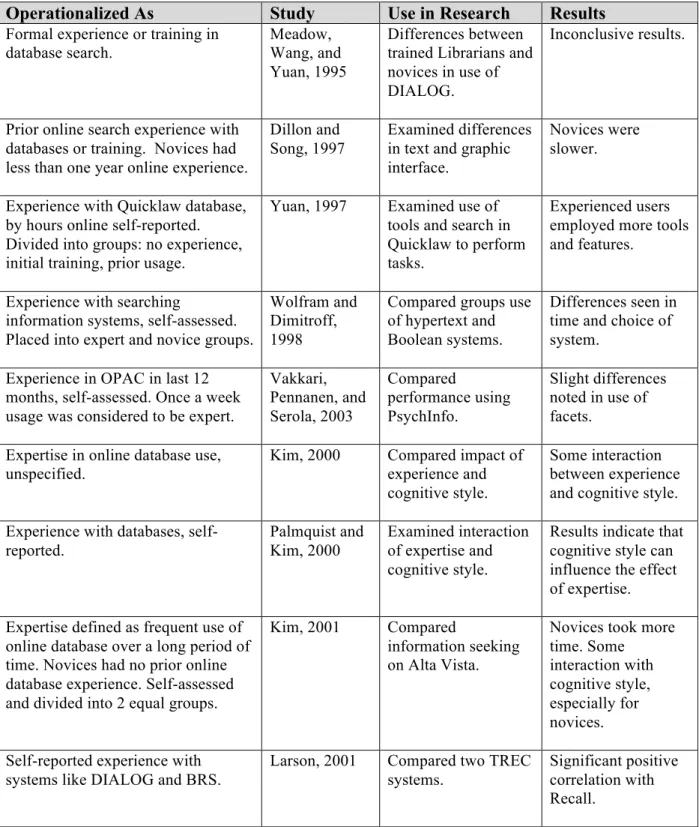
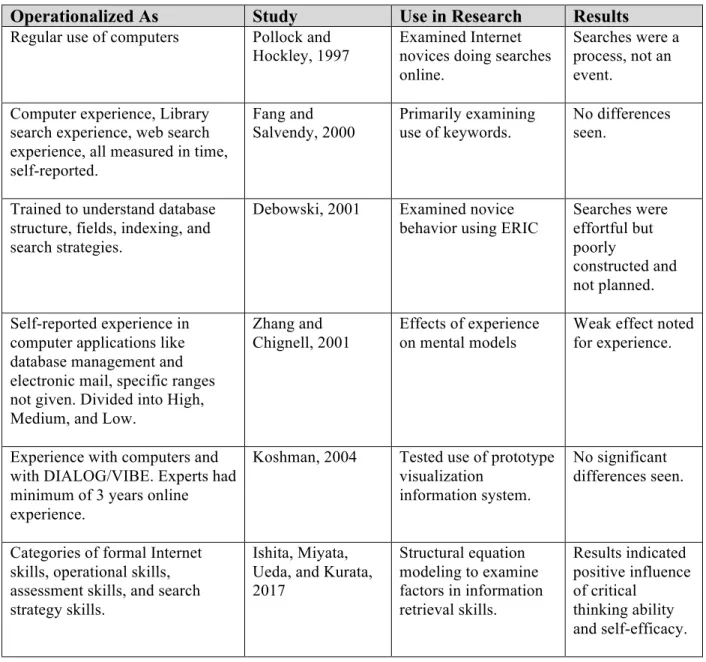
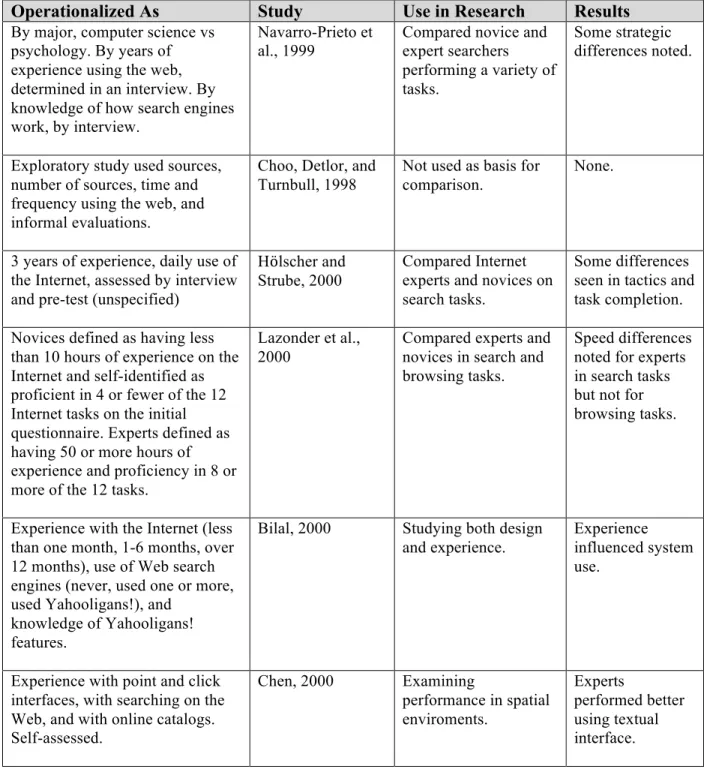
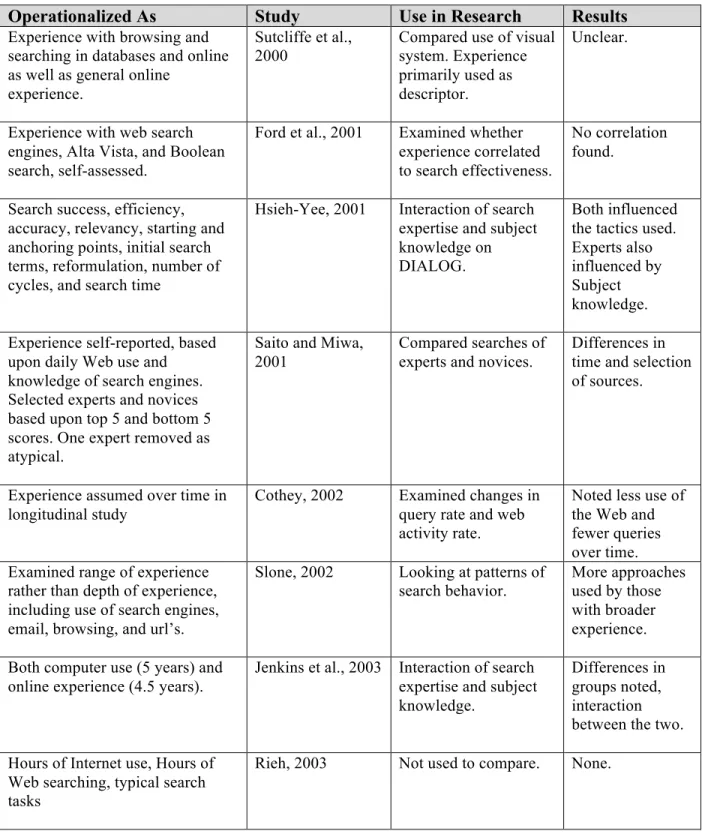
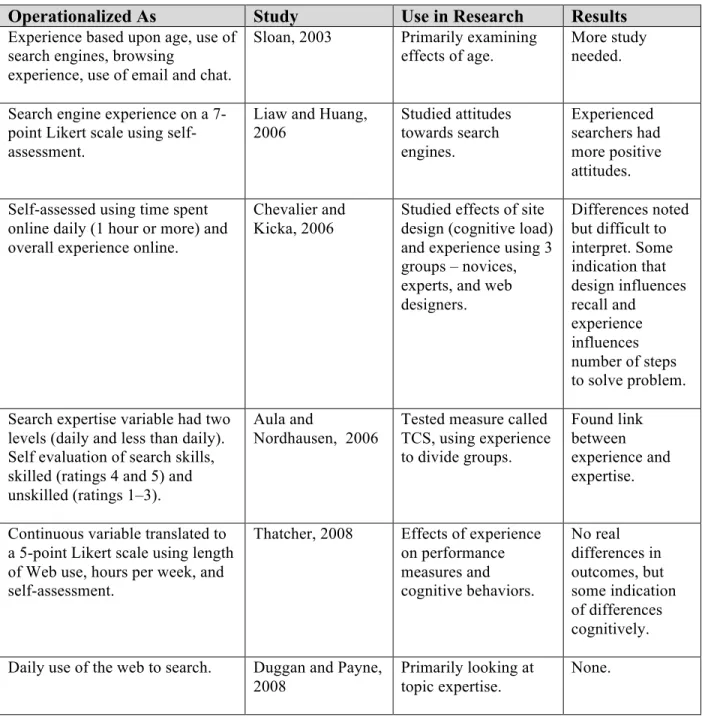
Table 3: Early Search Expertise Operationalizations ... 37
Table 4: Search Expertise operationalized as Database Experience ... 49
Table 5: Search Expertise operationalized as Computer Literacy ... 50
Table 6: Search Expertise operationalized as the Use of Experience ... 51
Table 7: Search Expertise operationalized as Media Competence ... 52
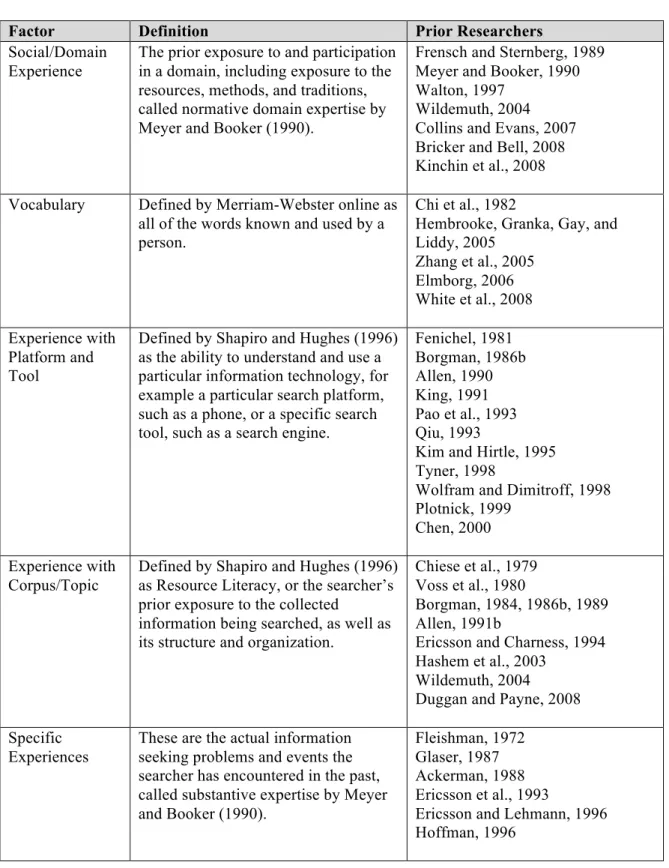
Table 8: Factors of Experience, with Definitions and Prior Research ... 63
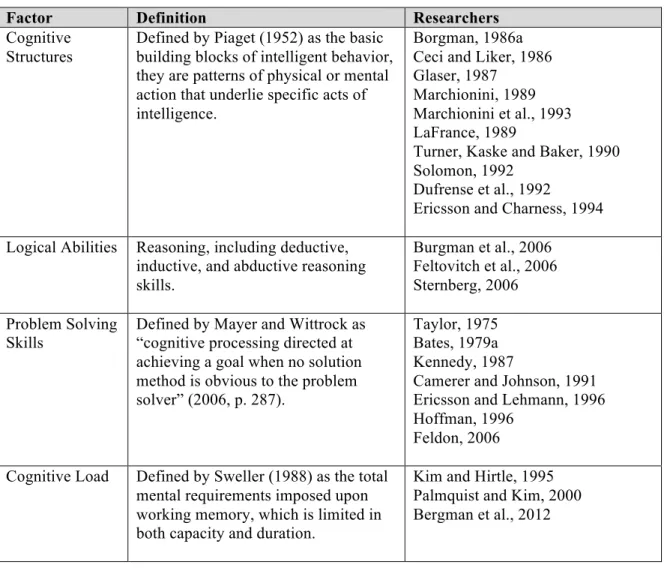
Table 9: Factors of Cognitive State, with Definitions and Prior Research ... 64
Table 10: Factors of Affective State, with Definitions and Prior Research ... 65
Table 11: Common Topics in Expert Searcher Interviews ... 95
Table 12: Items Supporting Results Manipulation ... 112
Table 13: Comparing Model to Focus Groups ... 113
Table 14: Changes to Search Expertise Model ... 119
Table 15: List of Items from Experts for measuring Online Search Expertise ... 123
Table 16: Items related to Context ... 128
Table 17: Difficult to Measure Items ... 129
Table 18: Items Based Upon Specific Technologies ... 129
Table 19: Items With Poor Levels of Difficulty ... 130
Table 20: Items Included in Instrument ... 131
Table 21: Mapping of Expert Items to International Personality Item Pool Subscales ... 145
Table 23: Participants in Cognitive Interviews ... 158
Table 24: Changes to Instrument after Cognitive Interviews ... 170
Table 25: Participants for Online Evaluation ... 186
Table 26: Phase 4 Participants ... 191
Table 27: Phase 4 Discarded Surveys by Type ... 191
Table 28: Overall Time by Group (minutes:seconds) ... 197
Table 29: Time Spent on Each Page, All Participants [Mean (Standard Deviation)] ... 198
Table 30: Age of Participants ... 200
Table 31: Gender by Source ... 200
Table 32: Education by Source ... 201
Table 33: Income by Source ... 202
Table 34: Experience with Internet Search Tools by Group ... 203
Table 35: Frequency of Search by Device ... 203
Table 36: Training by Source (N = 466) ... 205
Table 37: Degree from a Library or Information Science program? (N = 113) ... 205
Table 38: Performed Searches Online for Friends or Relatives (N = 466) ... 205
Table 39: Is performing online searches for others a specific part of your job description? (check all that apply) ... 206
Table 40: Summed Results - Is performing online searches for others a specific part of your job description? ... 207
Table 41: Frequency of performing searches for others as part of current occupation? ... 208
Table 43: Have you specifically trained others in how to search for information
online, either in a class or training session? ... 209
Table 44: Is training others in how to search a specific part of your occupation? ... 209
Table 45: How frequently do you train others in how to search for information online? ... 209
Table 46: Comparison of Participant Groups ... 210
Table 47: How frequently do you search online for News/Current Events? ... 211
Table 48: How frequently do you search online for Information about a Hobby? ... 212
Table 49: How frequently do you search online for Legal information? ... 212
Table 50: How frequently do you search online for Health Information? ... 212
Table 51: How frequently do you search online for Ancestry/Genealogical information? ... 213
Table 52: How frequently do you search online for Financial Information? ... 213
Table 53: How frequently do you search online for Government information? ... 213
Table 54: How frequently do you search online for Historical information? ... 214
Table 55: How frequently do you search online for Leisure/Entertainment? ... 214
Table 56: Search frequency for ASIS&T Participants ... 215
Table 57: Search frequency for RUSA Participants ... 215
Table 58: Search frequency for TURK Participants ... 215
Table 59: Search frequency for UNC Participants ... 215
Table 60: Have you ever searched online to fulfill college course requirements? ... 216
Table 61: Frequency of searching online using Search Engine like Google, Yahoo, or Bing? .. 217
Table 62: How frequently do you search online using Web of Science? ... 217
Table 63: How frequently do you search online using PubMed? ... 217
Table 64: How frequently do you search online using LexisNexis? ... 218
Table 66: How frequently do you search online using Dialog? ... 218
Table 67: How frequently do ASIS&T participants search using? ... 219
Table 68: How frequently do RUSA participants search using? ... 219
Table 69: How frequently do TURK participants search using? ... 219
Table 70: How frequently do UNC participants search using? ... 220
Table 71: Values for use in Search Experience Score ... 222
Table 72: Search Experience Score by Participant Group ... 223
Table 73: When searching, how familiar are you with Truncation? ... 224
Table 74: When searching, how familiar are you with Quotes? ... 225
Table 75: When searching, how familiar are you with Boolean logic (AND OR NOT)? ... 225
Table 76: When searching, how familiar are you with Limit by publish date? ... 226
Table 77: When searching, how familiar are you with Limit by location? ... 226
Table 78: When searching, how familiar are you with Limit by type of information? ... 227
Table 79: When searching, how familiar are you with Limit by price? ... 227
Table 80: When searching, how familiar are you with Exclude specific sites? ... 228
Table 81: If you needed to perform an online search, how confident are you that you could find articles similar in quality to those obtained by a professional searcher? ... 229
Table 82: If you needed to perform an online search, how confident are you that you could create a query that would return every useful document? ... 230
Table 83: If you needed to perform an online search, how confident are you that you could create a query that would return only a few very useful documents? ... 230
Table 84: Means and Standard Deviations for Self-Rated Search Ability ... 231
Table 85: Factor Analysis of Self-Rated Search Ability ... 232
Table 86: Factor Matrix Table – Self-Rated Search Ability, 2 Factors ... 234
Table 88: Skill Item Cronbach’s Alpha Scores If Item Deleted ... 235
Table 89: Self-Rated Search Ability by Group ... 236
Table 90: Scoring for Skill Item 1 ... 239
Table 91: Scoring for Skill Item 2 ... 240
Table 92: Scoring for Skill Item 3 ... 241
Table 93: Scoring for Skill Item 4 ... 241
Table 94: Scoring for Skill Item 5 ... 242
Table 95: Frequency of Number of ‘Limit By’ Answers for Skill Item 5 ... 243
Table 96: Frequency of Number of ‘Limit By’ Answers for Skill Item 5, by Group ... 243
Table 97: Search Skill Score by Group ... 245
Table 98: Comparison of Skill Item 1 and Self-Rated Search Ability: Boolean Logic ... 245
Table 99: Comparison of Skill Item 4 and Self-Rated Search Ability: Boolean Logic ... 246
Table 100: Comparison of Skill Item 1 and Self-Rated Search Ability: Quotes ... 246
Table 101: Comparison of Skill Item 3 and Self-Rated Search Ability: Quotes ... 247
Table 102: Comparison of Skill Item 2 and Self-Rated Search Ability: Truncation ... 247
Table 103: Reliability of Personality Subscales ... 248
Table 104: Personality Subscale Means ... 249
Table 105: Personality Subscale Means by Cohort ... 250
Table 106: Partial Results – Factor Analysis of Personality Items ... 251
Table 107: Partial Results: Factor Analysis of Personality Items, Eigenvalue 1.4 ... 252
Table 108: Rotated Factors: Efficiency Subscale Items ... 254
Table 109: Rotated Factors: Creativity/Originality Subscale Items ... 254
Table 111: Rotated Factors: Diligence Subscale Items ... 255
Table 112: Rotated Factors: Resourcefulness Subscale Items ... 257
Table 113: Rotated Factors: Low Self-Efficacy Subscale Items ... 257
Table 114: Rotated Factors: Industry/Perseverance/Persistence Subscale Items ... 258
Table 115: Rotated Factors: Organization Subscale Items ... 258
Table 116: Rotated Factors: Quickness Subscale Items ... 259
Table 117: Rotated Factors: Competence Subscale Items ... 259
Table 118: Subscale Item Factor Analysis Results ... 260
Table 119: Partial Results – Factor Analysis of Personality and ... 261
Table 120: Partial Results – Factor Analysis of Personality and Self-Rated Search Ability Items, Eigenvalue = 1.3 ... 263
Table 121: Partial Rotated Factor Matrix for Personality and Self-Rated Search Ability ... 263
Table 122: Summated Scores Means and Standard Deviations ... 266
Table 123: Summated Scores Pairwise Comparisons of Cohorts ... 266
Table 124: Summary of Correlations of Summated Scores ... 280
Table 125: Factor Analysis of Personality Items ... 344
Table 126: Factor Analysis of Personality Items, Eigenvalue 1.4 ... 346
Table 127: Factor Analysis of Personality & Self-Rated Search Ability Items, Eigenvalue=1 ... 348
Table 128: Factor Analysis of Personality and Self-Efficacy Items, Eigenvalue=1.3 ... 351
Table 129: Rotated Factor Matrix for Personality and Self-Reported Ability ... 354
Table 130: Cognitive Interviews Demographic Items ... 359
Table 131: Cognitive Interviews Prior History Items ... 361
Table 133: Cognitive Interviews Self-Rated Search Ability Items ... 367
Table 134: Cognitive Interviews Using Search Skills Items ... 369
Table 135: Cognitive Interviews Personality Items Page 1 ... 371
Table 136: Cognitive Interviews Personality Items Page 2 ... 372
Table 137: Cognitive Interviews Personality Items Page 3 ... 373
Table 138: Cognitive Interviews Personality Items Page 4 ... 374
Table 139: Cognitive Interviews Personality Items Page 5 ... 375
Table 140: Cognitive Interviews Personality Items Page 6 ... 376
Table 141: Cognitive Interviews Personality Items Page 7 ... 377
Table 142: Cognitive Interviews Personality Items Page 8 ... 378
LIST OF FIGURES
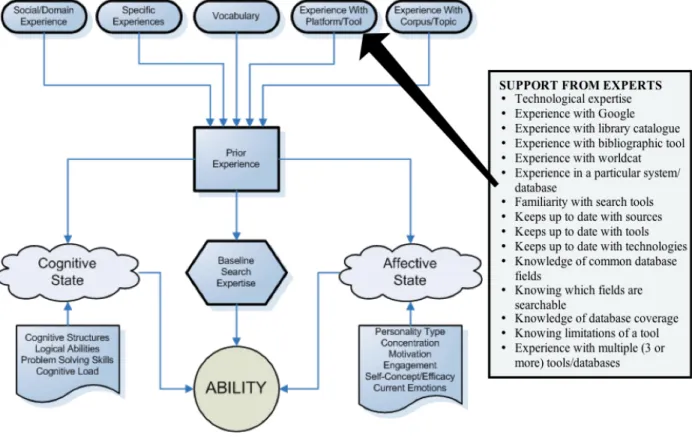
Figure 1: Online Search Expertise Model ... 68
Figure 2: Flowchart of Research Steps ... 80
Figure 3: Phase 1 Section 1 Questions ... 90
Figure 4: Phase 1 Section 2 Questions ... 91
Figure 5: Phase 1 Section 3 Questions ... 92
Figure 6: Phase 1 Section 4 Questions ... 93
Figure 7: Items from Experts Supporting Social/Domain Experience ... 103
Figure 8: Items from Experts Supporting Specific Education and Work Experiences ... 104
Figure 9: Items from Experts Supporting Other Specific Experiences ... 105
Figure 10: Items from Experts Supporting Vocabulary ... 106
Figure 11: Items from Experts Supporting Experience with Platform/Tool: Technologies ... 107
Figure 12: Items from Experts Supporting Experience with Platform/Tool ... 108
Figure 13: Items from Experts Supporting Experience with Corpus/Topic ... 109
Figure 14: Items from Experts Supporting Cognitive State ... 110
Figure 15: Items from Experts Supporting Affective State ... 111
Figure 16: Revised Model for Online Search Expertise ... 120
Figure 17: Demographic Questions on Initial Instrument ... 133
Figure 18: History Questions on Initial Instrument ... 135
Figure 19: Specific Search History on Initial Instrument ... 138
Figure 20: Self-Rated Search Ability on Initial Instrument ... 141
Figure 21: Skill Questions on Initial Instrument ... 143
Figure 23: Cognitive Interview Test Questions ... 160
Figure 24: Boxplots of Overall Time by Group ... 197
Figure 25: Age by Group ... 200
Figure 26: Search Experience Score ... 223
Figure 27: Scree Plot – Self-Rated Search Ability ... 233
Figure 28: Self-Rated Search Ability Score Distribution ... 236
Figure 29: Scoring Curve for Items with One Correct Answer ... 238
Figure 30: Scoring Curve for Items with Two Correct Answers ... 238
Figure 31: Scoring Curve for Items with Three Correct Answers ... 239
Figure 32: Scoring Curve for Items with Six Correct Answers ... 239
Figure 33: Frequency of Number of ‘Limit By’ Answers for Skill Item 5 ... 243
Figure 34: Search Skill Score Distribution ... 244
Figure 35: Scree Plot – Personality Items ... 252
Figure 36: Scree Plot – Personality and Self-Rated Search Ability ... 262
Figure 37: Updated Model for Online Search Expertise ... 276
CHAPTER 1: Introduction
The ability to locate and evaluate information is critically important in today’s online
environment (American Library Association, 2015). We are surrounded by information,
immersed in it constantly, and interact with it in ways we do not completely understand (Ward,
2006). Finding the information we need is valuable in both negotiating and understanding our
world (American Library Association, 2015). The rise of the Internet has increased the
availability of information and given us new methods of interaction, so much so that
“(i)nformation and communication technology have become central to the interaction of society”
(Kidd & Keengwe, 2010, p. 127). In this age of ubiquitous information, the ability to discover
useful information is paramount, but the growing volume of available information makes that
task more and more difficult (Liaw & Huang, 2006). The online environment is “embedded in
the larger information activities of life and customizable to individual preferences and abilities”
(Marchionini & Komlodi, 1998, p. 115). Clearly, the ability to find salient information is more
important now than ever before.
The sheer volume of available information is not the only issue facing us today. The
available information is also constantly changing (Hsieh-Yee, 2001), and much of what is being
created is increasingly unfiltered (American Library Association, 2000). Locating information
that is valid and reliable has therefore become a much more difficult task. Individuals now have
the responsibility of determining if information is true or false (Kidd & Keengwe, 2010), and so
necessary skills to locate needed information have a distinct advantage over those who do not
possess those skills.
The constant change of technologies in online environments further complicates the
examination of these online search skills. Much of the early study of online search expertise was
done using library card catalogs and databases, the primary means of locating information at that
time (Moore, Erdelez, & He, 2007). The extent to which these results and measurement practices
generalize to today’s searchers and today’s search environments is questionable. Indeed, Nielsen
(2011) cautions that the ubiquity of the Internet and the constant use of Google have changed
how we perceive and interact with information. Therefore, any method of conceptualizing and
measuring online search expertise must acknowledge the reality of technological change or
quickly become obsolete (Hargittai & Hsieh, 2012). Yet it must also still include other aspects of
the searcher related to the task of type of information that are less dependent upon specific
technologies.
Despite these difficulties, the clear importance of online search expertise indicates a
pressing need for both understanding it and also using that understanding to assist others in
growing their own abilities. Additionally, creating a way to measure online search expertise can
potentially provide an important way to describe and understand users of online systems.
Without such a measure, it would be difficult not only to classify users based upon their ability to
find useful information, but also difficult to judge the effectiveness of system changes upon users
possessing a range of abilities. Having a consistent way to evaluate and describe one’s ability to
locate information online is vital and will become even more so as information assets online
It is therefore not surprising that a person’s ability to locate information has been studied
extensively in information seeking behavior research (Moore et al., 2007), both as a fundamental
concept and as a method of comparing groups of users. However, while its use as a measure to
differentiate users has been extensive, that use has not been consistent across research or
researchers (Aula & Nordhausen, 2006; Moore et al., 2007). This is due in part to an insufficient
conceptual definition of search expertise or search ability, which is needed to create a conceptual
foundation (Vakkari, 1997) upon which to base measurement. This deficiency is not surprising
considering that interest in search expertise arose out of changes to library services, specifically
the creation of online public access catalogs (OPACs). In early research, the focus was on
methods by which inexperienced library patrons might use those new computerized catalogues,
which were often difficult to learn and master. Catalogue users were generally described in this
research as either high or low ability, and those categories were primarily used to evaluate
systems and changes to systems. Perhaps this binary classification would have been sufficient
had technology stayed static, but as noted above, it has not done so. The environment also
influenced the study of search expertise as it related to domain expertise, a distinction made in
part to separate the abilities of trained searchers from those of subject matter experts. The early
operationalisms of search expertise were thus often restricted to a very specific subset of skills.
Despite the issues, online search expertise must now move beyond those early
operationalizations to encompass a range of abilities and become more consistently defined and
used.
One approach to understanding online search expertise is to study and understand the
basis for expertise itself in psychology and education. Expert knowledge, or expertise, has been
which distinguish experts from novices and less experienced people” (“Expert,” 2017). An
expert is said to be “a person with extensive knowledge or ability based on research, experience,
or occupation and in a particular area of study” (“Expert,” 2017), so much so that the practice of
that expertise is often seen as simple or effortless by those who do not possess it. Expertise has
been conceptualized by describing the abilities and traits of experts (Sternberg, 2006), as well as
by examining each of those individual abilities, such as how experts might organize information
differently than novices (Glaser, 1987; LaFrance, 1989; Solomon, 1992; Hoffman, 1996). Some
have argued that expertise is based primarily upon natural talent (Sternberg, 2006), while others
believe that acquisition of skills plays a key role (Ericsson & Charness, 1994). Others have
argued that experience teaches experts how to organize and represent information differently
than novices, leading to an increased ability to see patterns in information (Glaser, 1987). This
relativistic perspective views expertise as an attainable skill that can be cultivated to mature
novices into experts (Chi, 2011). Indeed, many of these researchers argue that experts and
non-experts are not fundamentally different in mental capabilities (Chi, 2006), but that experience is
critical in order to turn novices into experts.
Researchers in information science have also used experience as a key factor in the
development of search expertise and the maturation of novices into experts. In this case,
experience was not meant to represent a particular field of study but rather experience in the
specific activities involved with searching online, often described as experience as professional
searchers (Hsieh-Yee, 1993; Marchionini, Dwiggins, Katz, & Lin, 1993). In some cases, this
experience was specified further, such as experience using databases online (Fenichel, 1981;
Allen, 1990; King, 1991; Pao, Grefsheim, Barclay, Woolliscroft, & Shipman, 1993) or
and easy to use, but were not used consistently across research, which led to uncertainty when
comparing results, especially since the searchers designated as experts in one study could be
designated as novices in another. Indeed, some researchers have specifically noted the need for
consistent use of variables in information retrieval research as a fundamental need (Meadow,
Marchionini, & Cherry, 1994). Others have noted that the improvements from experience to
search expertise were often unpredictable, especially when that experience involved casual or
leisure-based activities (Ericsson & Lehmann, 1996). Additionally, researchers often found very
limited differences between the groups they identified as low and high ability based upon
experience (Meadow, Wang, & Yuan, 1995; Wolfram & Dimitroff, 1998; Vakkari, Pennanen, &
Serola, 2003). These results led some to note that they considered measuring search expertise
using experience to be inadequate (Fenichel, 1981). Despite the relative ease of obtaining data
about search experience, it is clear that researchers must discover and agree upon when and how
it contributes to search expertise for it to be useful.
Unfortunately, it is not clear how to identify those specific aspects of search experience
that predictably increase online search expertise. The specific aspects that matter must share
some fundamental difference between them – a difference that sets them apart from other
experiences. This idea of specific skills that matter is often referred to as deliberate practice, the
accumulation of specific experiences often constrained by time or amount of effort needed
(Ericsson & Simon, 1993) and directly impacting expertise. This idea is particularly important
for online search expertise because the everyday use of it by many online searchers does not
seem to qualify as deliberate practice, and since many use search solely to find simple
information about a topic (Rose & Levinson, 2004) or treat it as if they were simply consulting
searchers by themselves have any chance of acquiring online search expertise through their
searching experiences, with the assumption that online search expertise incorporates more than
these simple searches.
If not, then the “uncertain quality and expanding quantity of information pose large
challenges for society” (The American Library Association, 2000). The proliferation of low
quality information online makes it even more difficult to understand the effect of experience
upon online search expertise, for locating inaccurate or low quality information easily would not
seem to increase the ability to locate higher quality information. This in turn complicates any
attempt to understand, instill, or increase the levels of online search expertise within the
citizenry, but this effort is also quite obviously important, for the “sheer abundance of
information will not in itself create a more informed citizenry without a complementary cluster
of abilities necessary to use information effectively” (The American Library Association, 2000).
And yet experience, while complex, is also obviously not the whole of expertise, and other
aspects must also be considered.
Other aspects of searchers have indeed been examined, but have often produced
inconsistent results. Often, the focus has been on particular qualities of a searcher’s mind or
personality (Bellardo, 1985; Dervin & Nilan, 1986) or some mixture of innate abilities with past
experience (Borgman, 1989). This focus has also been narrowed further into examination of the
effect of problem solving ability in the searcher (Bates, 1979a; de Groot, 1946; Marchionini,
1997) or from a type of media competence (Hölscher & Strube, 2000). Creativity and mental
flexibility have also been singled out as important components of online search expertise
(American Library Association, 2015). Yet even where researchers agreed on what to measure,
Nordhausen, 2006; Moore et al., 2007), thus preventing the studies from being effectively
combined into a meaningful body of knowledge. Creating a consistent measure based upon the
shared understanding of the components of online search expertise is critical.
In order to create and nurture online search expertise, there must be a way to actually
consistently measure it. Measuring the search expertise of the typical Web user presents unique
challenges, for the Web population is both vast and diverse, including casual users as well as
professional users (Aula & Nordhausen, 2006). Perhaps no typical Web user even exists, for the
target is not stationary, and the online population constantly grows and changes (Hsieh-Yee,
2001). Without a consistent way of measuring online search expertise, it is impossible to
measure progress and thereby determine the success or failure of any training that might have
occurred. Past attempts to train Web users in online search expertise have in fact not consistently
led to predictably better results (Camerer & Johnson, 1991; Dawes, 1994), suggesting that the
problem of measuring online search expertise is far from solved.
The work described above has certainly contributed greatly to what is known about
online search expertise, but it is limited in a number of ways. Perhaps the biggest limitation has
been the lack of a rigorous conceptualization of the construct of search expertise (Vakkari,
1997), thus preventing individual studies from combining together into an overall body of
research. Often search expertise was simply used to classify participants into high and low ability
categories without any real conceptualization at all. Another limitation has been the lack of
available instruments to measure online search expertise (Hargittai & Hsieh, 2012) or the fact
that the measures that do exist include only items where searchers rate their own skills rather
than actual tests of those skills (Hargittai, 2005). Certainly, the rapidly changing online
Additionally, as noted above, much of the evidence from prior research is also inconsistent or
even contradictory.
So, while search expertise has long been studied and used extensively in information
seeking behavior research, it has not been consistently conceptualized or operationalized by
researchers. This research intends to begin the process of creating a useful measure for online
search expertise. In order to do that, all potential aspects of online search expertise will be
considered, from system experience to environment to personality to learned skills. Creating a
valid and reliable instrument to measure online search expertise will allow future studies to build
upon one another as well as help in the design of information literacy programs.
1.1 Dissertation Overview
This chapter has discussed the nature of online search expertise and how its study and use
have been limited by both the online environment and heterogeneous nature of online searchers.
It additionally discussed prior study in expertise as the basis for understanding online search
expertise. The goals of this research are to build a conceptual and operational foundation for
measuring online search expertise that can be used and tested in multiple research environments.
This will be accomplished by first defining online search expertise conceptually, then by creating
an instrument to measure it. The specific questions addressed in this dissertation are:
• Q1: What is a current, usable, and applicable definition of online search expertise in
the Internet age?
• Q2: Using this definition of online search expertise, how should it be quantified,
The actual ways in which real searchers interact with information online and in their daily lives
will inform the answers to both of these questions, as will the opinions of those who work with
information professionally.
The nature of online search expertise as the interaction between the user’s abilities and
experience and the technology being used implies the need for examining both quantitative data
for breadth and qualitative data for depth. This research therefore used a mixed methods
(Tashakkori & Teddlie, 2003) design for data collection, using qualitative data to ground, create,
and test the initial instrument and quantitative data to examine the data from the use of that
instrument (Creswell, 2003). Search expertise as a construct has proven to be difficult to
understand fully, and the combination of these methods provides more insight into its
complexities. Both qualitative and quantitative protocols have inherent limitations (Creswell,
2003), and those limitations can be partially neutralized by the use of other methods.
Structurally, this research was conducted in four phases, as shown in Table 1. Brief
discussions of the actual process follow, but each phase will later be discussed in detail, as well
as discussing its contribution to the process of constructing the end measure for online search
expertise.
Table 1: Research Phases
Phase Tasks Data/Methods
1 Building Initial Model Getting Starter Items (n~100)
Literature Review Interviews with Experts 2 Narrow the Set of Starter Items
Create Initial Instrument
Starter List (n~100) Expert Evaluations 3 Test Initial Instrument
Verify Items
Cognitive Interviews
4 Verify Modified Instrument Validity Testing of Instrument
1.2 Developing a Model for Online Search Expertise
The purpose of the first phase was to create a usable model for online search expertise
based upon both its usage in prior research and additionally on how it was defined by actual
search experts. The results of the literature review from the domains of Psychology, Education,
Information Literacy, and Information Science are discussed in Chapter 2 and 3, as well as the
model that was developed. Chapter 4 discusses the results from the interviews with search
experts, who were interviewed individually and asked for their thoughts regarding online search
expertise (Phase 2). The results from the interviews were compared to the conceptual model to
verify that it included all pertinent aspects.
As discussed above, online search expertise touches upon a wide field of prior study of
expertise and includes a number of factors. While it is important to avoid preconceptions that
might limit understanding, there are a few areas that were expected to be informative. These
areas included general online experience, experience with specific types of search tasks,
experience with the use of advanced search features, personality traits, patterns of information
behavior, problem solving skills, task familiarity, vocabulary, and the use of technologies. These
factors arose from the examination of prior research in expertise within psychology, education,
and information science, and so those areas are further inspected here in order to create a
conceptual model of online search expertise. This model is then used to structure and inform
further examination as well as the creation of a preliminary measure.
1.3 Developing a Measure of Online Search Expertise
The method of creating a preliminary measure of online search expertise followed the
validity. This process specifies typical steps designed to first obtain a clear and concise concept
of the construct(s) the scale is designed to measure, followed by item generation, content validity
testing, pilot tests, field tests, and finally factor analysis (Lynn, 2013). The second phase of this
research took the lists of items related to online search expertise that were generated from the
search experts and asked the same search experts in groups of three to four to discuss the
concepts listed. This phase was used to further examine the construct of online search expertise
through the experts’ sorting and discussion of the items as well as using the groupings to
examine the model created in the first phase. The results are detailed in Chapter 4 of this
dissertation.
In the third phase, detailed in Chapter 5, the items were examined for inclusion in the
initial instrument and that instrument was created. It was then tested in a series of cognitive
interviews conducted with participants representing specific aspects of the population, including
trained searchers, casual Internet users, students and academics, and frequent Internet users. The
feedback from those cognitive interviews was used to examine individual items regarding their
meaning to actual searchers as well as their usefulness. The initial instrument was then revised
based upon the feedback from those participants.
The fourth phase, detailed in Chapter 6, took the updated instrument and tested it with
four specific groups of participants online in order to establish its validity and reliability.
Statistical testing was done upon all items to examine their usefulness as well as their
discriminatory power. The results of this analysis were compared to the proposed search
expertise model in order to evaluate and update the model.
The end result of this research is an instrument that can be used and further examined in a
allow future research studies to be compared and therefore build upon each other, but also
CHAPTER 2: Literature Review
This chapter examines past research in expertise within multiple fields of study and using
multiple frameworks. The opening section examines the foundations of expertise as it has been
studied and conceptualized, providing an overview of what will be discussed in later sections.
Expertise is then examined using different psychological constructs and specific domains that
were researched during its development. Search expertise is then examined as a specific case of
expertise, using research from library and information science. Search expertise is also examined
as a part of information literacy, a broad topic in Education. This review of past research is then
used as the basis for both a definition and a model of online search expertise.
2.1 Foundations of Expertise
The study of expertise has taken place within the communities of psychology, education,
and the sciences ever since knowledge itself was first organized and studied. Much of this study
focused on the nature of expert abilities and whether those abilities could be imparted to
non-experts. Some researchers have argued that natural talent was the basis for expertise (Sternberg,
2006), while others believed that acquisition of skills played a key role (Ericsson & Charness,
1994), arguing that expertise is domain-specific and does not extend beyond a particular domain.
Some, like Meyer and Booker (1990), viewed expertise as both substantive, based upon training,
experience, and knowledge, and also normative, based upon an ability to communicate within a
certain field. Research has informed and transformed the conceptualization of expertise over
changes in focus and the advent of new theoretical frameworks, especially in psychology, often
changed how expertise was conceptualized as well as how it was studied.
Studying expertise proved to be challenging to researchers, and most of that study fits
into one of four major categories (Chi, 2011): (1) study of the cognitive processes of experts,
usually through notes or diaries; (2) study of the environmental conditions around known experts
or prodigies; (3) study of cognitive differences of the expert mind; and (4) study of the tasks that
experts excel at performing. For many of these studies, researchers relied upon existing ideas in
cognitive science and education, as well as practical insights from defined tasks like those in
chess. The exact nature of expert abilities has also been extensively studied, particularly the
organization and representation of expert knowledge (Glaser, 1987; LaFrance, 1989; Solomon,
1992; Hoffman, 1996). Some specific traits of experts have also been examined including
lessened time spent solving problems, greater accuracy in solving problems, use of strategies to
solve problems, and creation of schemas to represent problems (Sternberg, 2006). Ericsson and
Simon (1979) also showed that expertise influenced motor skills, with experts having the ability
to combine or condense serial actions in order to overcome both physical and mental limitations.
Expertise has been examined both from an absolute viewpoint, detailing the specific
knowledge that would define an expert, and a relative viewpoint, examining the differences
between experts and novices (Chi, 2006). In the absolute viewpoint, people can be categorized
based upon specific criteria as: novices with little or no exposure to the domain; initiates with
only introductory instruction; apprentices who are immersed in the domain and undergoing a
program of instruction; journeymen who are competent but still require orders; experts who show
skill and knowledge, often in subdomains; and masters who are qualified not only to practice but
non-experts are not fundamentally different and simply lists ways in which experts might be
identified, such as in seeing features, generating better solutions, and better analysis of problems.
Both of these approaches assume the importance of training rather than innate ability, but this
aspect of expertise was not agreed upon for quite some time.
2.1.1 Nature vs. Nurture
The existence of expertise has been conceptualized and explained using two very
different frameworks, the first using information processing or training and the second referring
to abilities or innate talent. Innate talent theories argue that expertise is the result of a good fit
between the innate abilities of a person and the activity they are engaged in performing
(Sternberg, 2006). While this theory does include the domain or area as an important factor, the
specific capabilities of the person are seen as very important, perhaps paramount. It should be
noted that the conceptualization of expertise based upon innate talent has evolved significantly
over time, specifically including the match to domain to explain specific domain abilities.
Early ideas about the influence of genetics upon a person’s capabilities were heavily
influenced by Galton’s “Heredity” (1869), a comprehensive look at the recognized people of
note in many different fields. Galton looked at the relatives of these noted individuals and saw
indications that their offspring could also be expected to be notable. He specified that both
capacity and disposition were important and that a person possessing both would be certain to
succeed. Bramwell (1948) later examined this work and found some factual errors but continued
to support the idea that eminence could be at least partially predicted by heredity. Ceci and Liker
(1986) later examined the handicapping ability of gamblers to find the source of their talent and
found that, while measures of IQ did not reliably predict performance, measures of cognitive
at its root the assumption that performance levels are constrained by some trait or constant of the
person, they also acknowledge that practice is often what determines to what extent that ideal is
reached. In rebuttal, Ericsson and Lehmann argued that the "belief that most anatomical and
physiological characteristics are unmodifiable and thus reflect innate talent is not valid for expert
performance acquired through at least a decade of intense practice" (1996, p. 279). Still others
examined the effect of innate ability as time and practice increased and found that, while ability
plays a strong role in initial stages of learning, the influence lessens as experience and practice
grow (Ackerman, 1988; Fleishman, 1972).
Information processing theories maintain that experience is the key that builds knowledge
and skills, leading to expertise (Ericsson & Charness, 1994). This expertise is based upon the
particular domain or area of training, leading to the use of domain expertise as a descriptive term,
postulating that expertise can be seen as a form of skill acquisition. Within these research
communities, domain expertise has been defined as “the ability, acquired by practice, to perform
qualitatively well in a particular task domain” (Frensch & Sternberg, 1989, p. 160). Glaser
(1987) theorized that expertise developed over time and experience, that experts organized and
represented information differently than novices, and that experts develop an ability to see
patterns in information. Hoffman (1996) agreed, arguing that expert knowledge differed from
novice knowledge in both extent and in organization. Hart (1986) equated expertise with
effectiveness, efficiency, and awareness of limitations. For Solomon, domain experts use
well-rehearsed strategies to enhance recall and process knowledge, giving them an “enhanced ability
to recall the appropriate scripts or schema of their field of expertise” (1992, p. 163). Experts also
store more information than novices and organize that information into “more structurally and
Ericsson and Lehmann (1996) examined relationships between expertise, ability, and
training, conducting a series of experiments and looking for correlations between them. They
found that expertise often could not be expected to extend into other domains, but did not find
clear evidence for either training or innate ability as the root of expertise. In one such experiment
involving musicians, they asked teachers to divide students based upon their likelihood of career
path, testing the assumption that the most gifted students would be placed within the group
destined for great success. Instead, they found that the difference in the groups was simply in
how many hours they trained each week, with the students who trained more seen by their
teachers as more likely to succeed.
In another experiment, Ericsson and Lehmann (1996) found that college students given
50 to 200 hours of practice at memorizing numbers, names, or pictures would perform
significantly better at recall after the training. Similarly, others found that topic knowledge can
affect both comprehension and recall of narratives (Chiese, Spilich, & Voss, 1979) as well as
writing about a topic (Voss, Vesonder, & Spilich, 1980). But other researchers note that
experience over time and casual or leisure-based experiences often stall after achieving a basic
level of competence, with further improvements unpredictable and somewhat arbitrary (Ericsson
& Lehmann, 1996). It is rather the accumulation of specific, deliberate practice that is often the
hallmark of superior performance in many fields, constrained by amount of effort, availability of
resources, and motivation. Ericsson, Krampe, and Tesche-Romer (1993) believed that experts in
domains with especially difficult advancement seek out experiences or activities especially
designed for certain skills or personalized to their needs. They examined violinists and pianists
schedules over time. While much of the data was specific to individuals, they found patterns of
sustained deliberate practice as the hallmark of the most talented musicians.
Even though in many domains training or extended experience improves the performance
of experts, some studies have shown that there are domains where this is not the case, where
experts perform no better than those with less training. Dawes (1994) examined the state of the
profession of clinical psychology, primarily to see how licensing and division of that profession
into medical and non-medical practitioners was affecting care to patients. Dawes based the
definition of expertise upon the type of degree or certification held by the practitioner, reasoning
that those with more advanced or rigorous degrees had more training and therefore would have
better results. The finding that there were few differences in clinical outcomes based solely on
experience was considered surprising considering the extant belief in degree or certification as a
benchmark for expertise. Similarly, Camerer and Johnson (1991) asserted that while experts
might have more training or exposure to domain knowledge, they often use configurable rules
with only a subset of the variables involved to make decisions, which can then lead to poor
outcomes. This idea is particularly interesting when examining expertise in domains such as
searching, where expertise has often been associated with formal training in search or where
status as a search intermediary was considered to make one an expert (Fenichel, 1981;
Hsieh-Yee, 1993; Turner, Kaske, & Baker, 1990; Marchionini, Dwiggins, Katz, & Lin, 1993). This
again raises the question of whether training does in fact lead to better, observable outcomes and
could complicate studies that separate users based upon those outcomes.
More recently, Simonton (2000) specifically examined classical composers to determine
whether domain experience or innate talent was the key to creative development. After
not reliably follow the predicted developmental trends and that success in this creative field did
not seem to be predicated upon either experience or perceived talent. Cross (2004) agreed,
examining expertise in design and concluding that it seemed significantly different than expertise
in other fields. Clearly, the extent of the influence of talent and experience has not yet been fully
determined. Additionally, with many of those learning a profession or domain improving only up
to a certain level, or with unpredictable improvement based upon experience (Ericsson &
Lehmann, 1996), other individual variables, like talent or cognition, must be considered.
2.1.2 The Cognitive Viewpoint
Much of the modern study of expertise came from the emergence of cognitive science,
which in turn came from interest in building artificial intelligence systems and expert knowledge
systems. Hoffman (1996) noted that the challenge for cognitive science was not only to agree
upon a definition for expertise, but to operationalize its development, knowledge structures, and
reasoning processes so that experts could be identified. He also noted several aspects of
expertise, stating that the “development of expertise involves a progression from a superficial
and literal understanding of problems (a qualitative mark of the cognition of novices) to an
articulated, conceptual, and principled understanding (a qualitative mark of the cognition of
experts)” (Hoffman, 1996, p. 83). He maintained that expertise had distinct levels and that
progression through those levels was generally predictable. Levels would be skipped only rarely
and only a lack of practice would result in a regression to a prior level. Hoffman categorized
novice problem representations as concrete or superficial, compared to the expert use of
knowledge or deep understanding to create abstract representations. He also noted that practice
could cause a skill to take on the quality of an automatic reaction rather than a conscious one.
different in some way, perhaps because of their specific experiences, but also that expertise
contained the ability to solve problems within a domain, using the tools of that domain.
Other studies of expert behaviors noted that experts generally excel at organizing
information, recalling information, and applying that knowledge to tasks within a specific
domain (Feltovitch, Prietula, & Ericsson, 2006). The critical aspect of experts' working memory
is not the amount of information stored, per se, but rather how the information is stored and
indexed in long term memory. Hatano and Inagaki (1986) called expertise adaptive, arising from
both rote learning and experimentation and consisting of two dimensions, efficiency and
innovation. Burgman, Fidler, McBride, Walshe, and Wintle, (2006) believed that decisions and
judgments were based upon our memories of what we know. If experts have an advantage in
recalling information based upon specific organizations of information, it follows that their
decisions would correspondingly be better than those of novices, even novices with similar prior
exposure to knowledge. While IQ or other basic measures of capacity do not serve to
differentiate the top artists or scientists (Taylor, 1975; Ericsson & Lehmann, 1996), experts with
extended experience in a field are likely to have acquired complex patterns of thought that they
can use to manipulate information and solve problems.
But it is difficult to know what subjects might be thinking at any given time, or what
mental models they might be using to structure knowledge (Ericsson & Charness, 1994). To
complicate matters, Ericsson and Simon (1993) found that having subjects simply verbalizing or
stating aloud what actions they were taking did not introduce any cognitive changes, but that
asking them to explain their cognitive processes did result in changes to those processes.
Additionally, Feldon (2006) later found that free recall of strategies introduced errors and
often loses their awareness of what they know and what knowledge is needed for the expertise
they demonstrate (Hoffman, 1996), implying that the processes that need to be examined in
experts are the very processes that are altered by examination.
Other cognitive processes might impact novices and experts differently, complicating
comparisons between them, especially processes involved with effort and difficulty. Tverdeski
and Kahneman (1974) examined cognitive processes and the use of heuristics and biases in
experts and novices, and they concluded that both groups can be affected by bias, albeit that the
actual heuristic in play could be different for the two groups. Chi (2006) agreed and noted a
number of cognitive reasons why experts might fail to perform in comparison with non-experts,
including over-confidence, bias, and inflexibility of thought. Similarly, the decision processes in
satisficing (Simon, 1979) could potentially affect both groups, although again likely in different
ways. Individual actions might be affected by a “Principle of Least Effort” (Zipf, 1949) causing a
user to take actions based upon how much effort they must expend. Information Foraging Theory
(Pirolli & Card, 1995) similarly posits that users evaluate their perceived cost of acquiring
information with their perception of its value to determine whether to engage in the activity to
gain the information. Wilson (2006) also asserts that users will adopt very simple search
strategies in seeking information, perhaps causing both experts and novices to behave in more
unpredictable fashion. Smith (2014) studied search behaviors of searchers who were formally
trained in the use of Dialog, specifically examining DISE (domain independent search expertise)
and found similarities in how people monitored the search space as well as progressed through
the search task. She proposed that gaining this procedural knowledge allowed trained searchers
Potentially, these and other cognitive processes might apply differently as expertise
increases. Research indicates that increased experience in a domain can influence users to
prematurely end information gathering more often than less experienced users (Eva &
Cunnington, 2006). Additionally, as knowledge structures grow, solution strategies are
subconsciously proceduralized and overall flexibility can lessen (Frensch & Sternberg, 1989).
For this reason, less-experienced scientists are also widely believed to have a better chance of
radical discoveries than do more experienced scientists (Kuhn, 1970). Clearly the cognitive
aspect to expertise is complicated, and many researchers therefore focused on bounded,
well-defined domains to help keep other variables in check.
2.2 Expertise Within Domains
The study of expertise has included not only observation of its effects but also how it
might be understood and taught in specific domains. This focus on learning specific domains
assumed that expertise was attainable by every novice and that expertise could be quantified by
comparisons between experts and novices. Expertise was therefore viewed as an attainable skill
that could be, and should be, understood to facilitate the maturation of novices into experts (Chi,
2011). Educators also applied these ideas of expertise to their own profession, separating it into
domain knowledge and pedagogy, the practice of teaching, also acknowledging that these two
aspects are innately tied together within the community of practice (Kinchin, Cabot, & Hay,
2008). Essentially, in this theoretical construct, expertise is something that is practiced rather
than something that is described; it is prescriptive rather than descriptive, with aspects including
skills acquisition, decision making, and problem solving (Kennedy, 1987).
As noted earlier, Chi (2006) detailed the stages of expertise as Novice, Initiate,
Finding a way to shorten this training to reduce costs and solve problems faster has therefore
been a central focus of expertise research in both education and in the creation of expert systems.
Within education, expertise is often developmental, meaning that third graders are assumed to be
novices when compared to sixth graders. This focus on development explains the focus within
education on effective training of novices into experts.
But researchers quickly learned that the real problem they faced was not in circumventing
some bottleneck in acquisition of knowledge, but rather a problem of cognition, with research
suggesting that the most promising methods simulated tasks that were already familiar to the
learner or instilled familiarity with difficult cases (Hoffman, 1996). Complications also arose
when research showed differences in comprehension and memory (Chiese, Spilich, & Voss,
1979) and writing ability related to a domain (Voss, Vesonder, & Spilich, 1980). Researchers
were forced to face the fundamental question of how to teach the cognitive processes involved in
advanced representation of problems in that domain.
Chi, Glaser, and Rees (1982) performed a series of studies to investigate the differences
in how novices and experts might organize and represent physics problems. They found that
novices did not have trouble identifying relevant keywords, but that those keywords did not help
them understand the underlying principles. While experts used the keywords to make inferences
about the problem and the overall principles involved, novices focused on the primary clues of
keywords and diagrams. They concluded that it is not clear how to teach this method of
association or deeper understanding, and that individual differences make it difficult to study the
phenomena.
Others, like Logan (1990), applied already existing instruments specifically to the
used to measure learning preferences, Logan looked for evidence that particular environments
based upon these learning styles might give an advantage to particular users doing searching
tasks. His results showed some differences in methods based upon their learning style
classification, but was forced to conclude that experience would lead to adaptability and
difficulty in prediction. This conclusion illustrates the difficulty in determining the success or
failure of particular methods based upon individual characteristics of users.
Similar difficulties arose in attempting to quantify expertise. Lajoie (2003) used CTA
(Cognitive Task Analysis) to propose a structure for researching and fostering expert
development. He called for the creation of individualized trajectories with milestones that
showed dynamic assessment, but did not specify details beyond urging to use a structured,
documented methodology. Shanteau, Weiss, Thomas, Pounds, & Hall (2003) created a ratio
based upon discrimination and consistency to measure domain expertise, but acknowledged that
there were issues with its use. They did apply it to several prior studies with promising results
when using it to differentiate expertise and evaluating results sets.
Alexander (2003) proposed a combined model of expertise called the MDL (Model of
Domain Learning), based upon real-world experiences in schools. The MDL focuses on three
aspects of expertise: knowledge, strategic processing, and interest. The authors differentiate it
from prior efforts by stating that it focuses on academic domains, includes motivational and
affective components, includes social factors, and focuses on the journey rather than the end
states. Interestingly, the model also includes both domain expertise and topic expertise. Its
validation in multiple academic domains and its integrated model make it a potentially valuable
Still, other researchers made progress in their conceptualizations of expertise within
particular domains and with the goal of expedited training. Meyer and Booker (1990) separated
what they called substantive expertise, consisting of training, experience, and knowledge of a
particular field, from normative expertise, which is the social aspect of being able to
communicate within the field using its conventions and jargon. They argued that both skills were
critical to be an expert in a domain, but needed different types of training. Walton (1997) also
asserted that the expert’s relationship to other experts in that domain was important, as well as
their prior opinions. Collins and Evans stated that “expertise is, therefore, a social process – a
matter of socialization into the practices of an expert group” (2007, p. 3). Hoffman (1996)
agreed, stating that knowledge resided within social groups rather than as an isolated concept.
More recently, Hashem, Chi, and Friedman (2003) studied how expert physicians diagnosed
patients in multiple specialties, including their own. They found that within their own specialty
they listed more cues in their diagnoses than when writing a diagnosis outside their specialty.
Interestingly, they also saw what they interpreted as a bias in these specialists, who pulled cases
towards their specialty. They speculated that training could be accelerated by teaching the
physicians the specific cues used by specialists in other areas, assuming that they already knew
the cues themselves from their training. Perhaps focusing on training novices in the “way things
are done” is the shortest path to expertise. But educators often do not agree on identification,
quantification, and transfer of expertise within teaching itself, much less other domains (Lampert
& Clark, 1990).
2.2.1 Expertise in Chess
Early researchers in expertise looked for well-defined and bounded domains to study that
results was in the study and play of chess. While each game followed the same rules and used the
same pieces, the play of the game was different each time and required use of more than memory
to succeed. In fact, much of what we know of expertise is a direct result of the study of chess and
chess masters. De Groot (1946), a chess master himself, is widely considered to have been a
pioneer in studying and quantifying aspects to mastery in chess. He demonstrated that asking
participants to choose the next move when presented with random chess configurations was an
excellent way to allow for predicting levels of expertise. He further found that asking expert and
world-class players to think aloud while considering their next move discovered interesting
differences in their ability to recognize promising potential moves. Further, even after only a
brief exposure to unfamiliar board setups, the best players were also able to reproduce almost
exactly the position of every piece, compared to much less recall from the players with lower
levels of skill. Interestingly, he also noted no real difference in speed of thought processes or
function of their general memory, confirming the results of earlier research. However, he did
determine that experienced chess masters had a greater ability to recall entire boards of chess
positions. This demonstrated ability was the impetus for several theories of the cognitive
processes involved in domain expertise, as noted earlier.
Chase and Simon (1973) duplicated de Groot’s experiments but added the aspect of
random, illegal chess positions to further demonstrate that experts did not have innate
photographic memory or an edge in recall in those situations. Recall of these positions was poor
from all participants regardless of skill. They originally theorized that superior performance by
experts on legal configurations was due to the experts’ exposure to or knowledge of patterns of
pieces, allowing them to use fewer resources to remember them. They theorized that experts
get around their short-term memory limitations of about seven chunks (Miller, 1956). This
finding has been very influential in studies of expertise within several domains, with an elegant
solution explaining the way in which the experts outperformed those with less skill.
Gobet (1998) examined four major theories of expertise, all related to chess, with the goal
of determining which best fit the observed data. He detailed Chunking Theory as well as SEEK
Theory, Long-Term Working Memory Theory, and Template Theory, concluding that each
theoretical framework had explanatory gaps but that Template Theory provided the best
explanation for the data. Template Theory extends Chunking Theory with the idea that repeated
exposure to specific types of situations causes the expert to develop sophisticated templates that
serve to inform subsequent encounters. Later, Gobet (2009) examined intuition and concluded
that the intuition of experts could also be explained using the Template Theory framework,
linking the templates not only to cognitive processes but to affective ones as well. While the
study of chess and chess masters has been informative in conceptualizing expertise, it provided
few answers on the way in which expertise might be taught or in how experiences might be
designed to increase expertise.
2.2.2 Domain Expertise and Information Retrieval
Domain expertise has played an important role in the study of information retrieval, due
to a need to distinguish the “knowledge of a subject area (i.e., domain) that is the focus or topic
of the search,” (Wildemuth, 2004, p. 246) and the “knowledge of searching techniques” (p. 247)
when discussing the abilities of searchers to find the content they sought. Like Kennedy (1987),
Solomon (1992) saw both domain and search expertise as arising from a process by which
individuals change over time, each with their own particular strengths and limitations. Using this