A CASE STUDY IN PARTICPATION OF STUDENTS WITH DISABILTIES IN AN INCLUSION REFORM-BASED MATHEMATICS CLASSROOM
Matthew Joseph Miller
A dissertation submitted to the faculty at the University of North Carolina at Chapel Hill in partial fulfillment of the requirements for the degree of Doctor of Philosophy in the School of
Education (Early Childhood, Special Education, and Literacy)
Chapel Hill 2016
Approved by: Linda Mason Catherine Scott Jill Hamm
©2016
ABSTRACT
Matthew Joseph Miller: A Case Study in Participation of Students with Disabilities in an Inclusion Reform-Based Mathematics Classroom
(Under the direction of Linda Mason)
In recent years, The National Council for the Teachers of Mathematics (NCTM) and Common Core State Standards of Mathematics (CCSS-M, 2011) have placed greater emphasis on students developing a deeper understanding of conceptual mathematics. However, research regarding educational supports for students with disabilities in inclusive classrooms that
highlight conceptual mathematics learning is limited. The use of Cognitively Guided Instruction (CGI), in which students explain and defend their strategies and solutions of novel word
problems to others in a group setting, is one approach to foster this skill. This descriptive case study, consisting of qualitative and quantitative data, investigated the interactions of 3rd grade students receiving general education services (n=8), students referred for special education (n=5), and students receiving special education services (n=4) in the inclusive group setting over a six-week period. Data analyzed included video analysis of student participation and visual inspection of mathematical journal entries and teacher behaviors intended to support the learning of all students. Findings suggested that within in this context, students receiving special
This work is dedicated to my family, both blood related and other. I could not have done this without your unwavering support.
ACKNOWLEDGEMENTS
TABLE OF CONTENTS
CHAPTER 1: INTRODUCTION ... 1
Students with High-incidence Disabilities ... 3
Students with High-incidence Disabilities Mathematical Performance ... 4
Statement of the Problem and Research Questions ... 5
Organization of the Dissertation ... 7
CHAPTER 2: REVIEW OF LITERATURE ... 8
Relevance of Topic ... 9
Instructional Strategies Used for Students with High-Incidence Disabilities in Mathematical Classrooms: A Historical Perspective ... 10
Mathematics Teachers for Students with High-Incidence Disabilities ... 11
Instructional Techniques for Students with High-incidence Disabilities ... 12
Mathematics Interventions for Students with High-incidence Disabilities ... 13
Fraction Instruction ... 14
Problem Solving ... 15
Mathematical Discourse ... 16
CGI ... 18
Focus on Student Thinking ... 18
Instructional Methods ... 21
Teacher Beliefs ... 22
Teaching Response to Student Thinking ... 23
Extension of CGI ... 24
Philosophy of CGI ... 25
Student Participation within the CGI framework ... 26
Projected Participation and Outcomes for Students with High-Incidence Disabilities in CGI Classrooms Rooms ... 27
Embedded Differentiation of Instruction ... 29
Social Supports for Students with High-incidence Disabilities ... 32
Points of Contact ... 33
CHAPTER 3: METHOD ... 36
Conceptual Framework ... 37
Case Study Rationale ... 39
Study Design ... 40
Current Case Study ... 42
Context ... 42
Group Sharing ... 43
Participants ... 43
Teachers ... 43
Students ... 44
Archival Records ... 44
Data Collection ... 44
Duration ... 46
Data Collection and Analysis ... 46
Student Participation ... 47
Participation Characteristics ... 48
Teacher Supports ... 49
Validity and Reliability ... 53
CHAPTER 4: FINDINGS ... 54
Participant Demographics ... 55
Student Participation Data ... 57
Participation Characteristic Data ... 61
Reliability ... 63
Group Sharing Vignettes ... 63
Vignette 1 ... 64
Vignette 2 ... 68
Vignette 3 ... 72
Vignette 4 ... 76
Vignette 5 ... 79
Vignette 6 ... 82
Teacher Support Data ... 86
Mrs. Hoover Interview ... 87
Mrs. Bronte Interview ... 89
Teacher Behavior Codes ... 90
Teacher Behavior ... 91
Summary ... 95
CHAPTER 5: DISCUSSION ... 97
Student Participation ... 97
Students with Disabilities Participation Characteristics ... 98
Teacher Behavior ... 100
Connection to Literature ... 103
Limitations ... 108
Future Research Considerations ... 110
Conclusion ... 111
Researcher Confessional ... 113
APPENDIX A: RUBRIC 1: PARTICIPATION ... 115
APPENDIX B: RUBRIC FOR SCORING STUDENT EXPLANATIONS OF STRATEGIES... 116
LIST OF TABLES
Table 1. Student Demographics ... 56
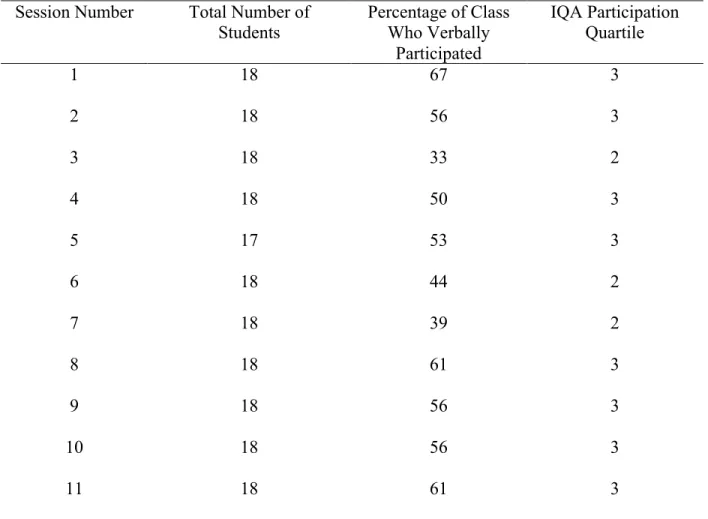
Table 2. Instructional Quality Assessment Data (IQA) ... 57
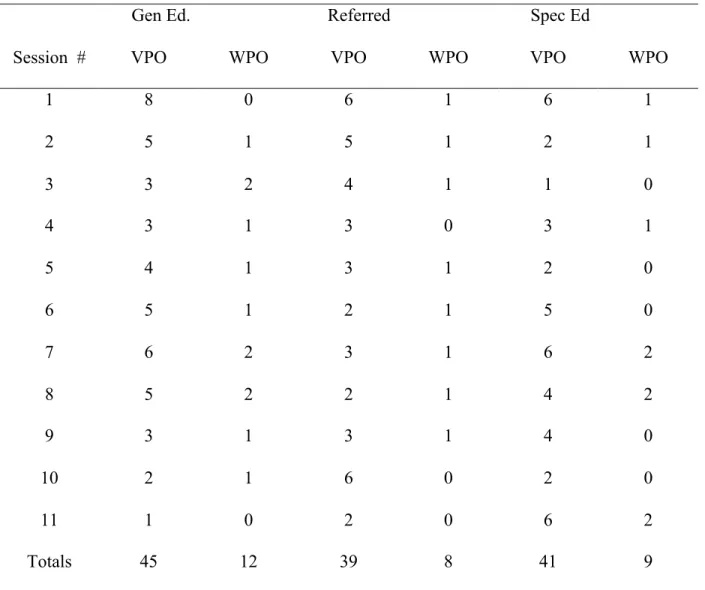
Table 3. Verbal and Written Student Participation ... 58
Table 4. Verbal Participation Duration During Group Share Time ... 60
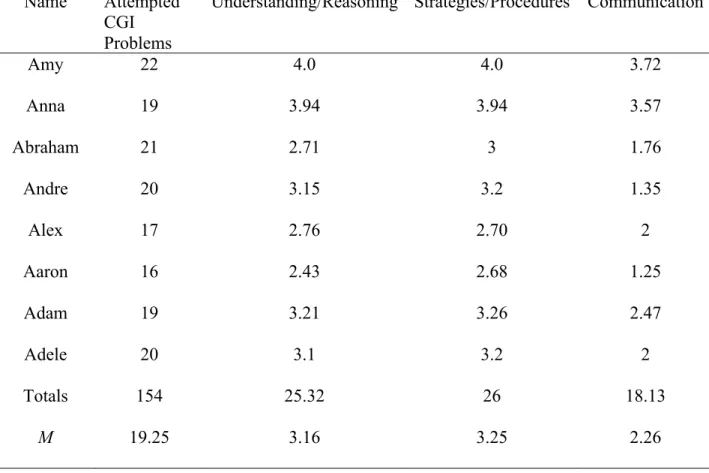
Table 5. General Education Group ... 61
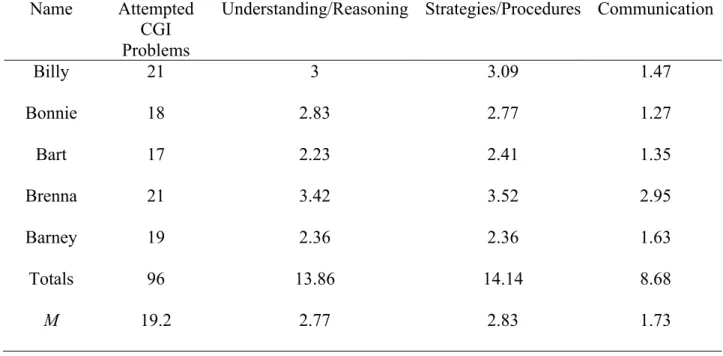
Table 6. Students Referred for Special Education ... 62
Table 7. Students with an IEP or 504 Plan ... 62
LIST OF FIGURES
Figure 1. Carpenter et al’s (p.31, 1999) framework for illustrating children’s solution
strategies ... 21
Figure 2. Convergence of evidence model ... 41
Figure 3. Triangulation of data analysis ... 45
Figure 4. Amy’s sample work a ... 65
Figure 5. Amy’s sample work b ... 66
Figure 6. Amy’s sample work c ... 66
Figure 7. Cary’s sample work a ... 67
Figure 8. Bart’s sample work a ... 69
Figure 9. Bart’s sample work b ... 69
Figure 10. Bart’s sample work c ... 70
Figure 11. Amy’s work sample d ... 73
Figure 12. Amy’s work sample e ... 73
Figure 13. Barney’s sample work ... 75
Figure 14. Carol’s sample work ... 76
Figure 15. Abraham’s sample work ... 76
Figure 16. Andre’s sample work a ... 77
Figure 17. Andre’s work sample b ... 78
Figure 18. Aaron’s sample work ... 79
Figure 19. Amy’s sample work f ... 80
Figure 20. Billy’s sample work ... 80
Figure 21. Adam’s sample work ... 81
Figure 22. Mrs. Hoover’s solution example ... 81
Figure 24. Cary’s work sample ... 84
Figure 25. Mrs. Hoover’s work sample b ... 84
Figure 26. Bonnie’s work sample a ... 85
CHAPTER 1: INTRODUCTION
The mathematics reform movement, which began over 20 years ago, led by the National Council of Teachers of Mathematics (NCTM), envisioned a future where all students have the opportunity to learn important mathematics, with deep conceptual understanding (NCTM, 1989, 2000). Current national initiatives, such as the Common Core State Standards for Mathematics (CCSS-M), reflect a similar goal as well (Council of Chief State School Officers & National Governor’s Association (CCSSO), 2010). Mathematics instruction that supports designing learning environments where all students have the opportunity to engage in significant mathematics requires a shift in instruction from focusing solely on developing procedural fluency to student-centered instruction that promotes a deeper understanding of mathematical concepts that provides more flexibility for learners.
In addition to emphasizing deeper mathematical conceptual understanding in which students move from concrete to abstract thoughts, many states are requiring students to demonstrate higher levels of mathematics coursework in order to earn a high school diploma. The Center for Public Education (2013) reports currently 32 states, plus the District of
gain a better understanding of how low-achieving students with and without disabilities perform in classrooms that emphasize the teaching and learning of conceptual understanding of
mathematics.
Within the same timeframe of the mathematics reform movement, students with high- incidence disabilities have been increasingly receiving instruction in general education classrooms (Obiakor, Utley, Banks, & Algozzine, 2014). The current literature related to students with disabilities and special education postulates that possibly the most significant barrier to success for these students in the inclusion setting is quality instruction that produces reasonable progress (McIntosh, Vaughn, Schumm, Hager, & Lee, 1994; Zigmond et al., 1994). With this in mind, educators have begun to focus on evidence-based practices that are effective for all students of varying abilities levels; as well as, cultural and linguistic differences in the general education setting.
Research has shown that typically developing students who participate in classrooms that emphasize the ideals of the mathematics reform movement make fewer mistakes in calculation, retain algorithms longer, and perform better on problem solving exercises (Fennema &
that implement Cognitively Guided Instruction (CGI). Researchers developed CGI to assist
practicing teachers in constructing understandings of the development of children’s mathematical
thinking in specific mathematics domains. These domains include addition/subtraction,
multiplication/division, fractions, and ratios (Carpenter, Fennema, & Franke, 1996).
Furthermore, CGI emphasizes student discourse, collaboration, and deeper conceptual
mathematical thinking. While researchers have established benefits to student learning in CGI classrooms, the majority of these studies have focused on typically developing students. With the exception of work by Behrend in 1992 and Moscardini in 2010, little research has focused on students with high-incidence disabilities within CGI classrooms.
Students with High-incidence Disabilities
The National Center for Education Statistics (NCES) reported that 6.4 million students received special education services during the 2014-2015 academic year. Nearly 70% of these students fall under the category of high-incidence disability. These disabilities include specific learning disabilities (LD), speech or language impairments (SLI), emotional disturbance (ED), mild/moderate intellectual disabilities (ID), and other health impaired (OHI). Examples of manifestations of theses disabilities include impaired articulation, language impairment, poor reading fluency and comprehension skills, dyslexia, dyscalculia, inability to build and maintain interpersonal relationships, mental health issues, poor organizational skills, difficulties in written and oral expression, and complications with acquiring social skills (Smith, Polloway, Patton, Dowdy, & Doughty, 2015). Due to the subjective nature of many of these characteristics,
They add that students with high-incidence disabilities are often able to meet the same student standards as non-disabled students while possibly having a combination of academic, behavioral, and social difficulties.
Past research that relates to mathematics instruction and achievement of students with high-incidence disabilities often uses the category of math learning disability (MLD). Generally, researchers use the discrepancy of scores between a standardized mathematics achievement test and an intelligence test (IQ) as the criteria for qualification for MLD (Geary, 2003). Typically, students that score lower than the 20th or 25th percentile and fall within the average to below-average range on an intelligence test meet the criteria. Within this scale, scholars estimate that between 4% and 8% of students possess some form of memory or cognitive disability that affects the process of learning mathematics (Badian, 1983; Geary, 2003; Gross-Tsur, Manor, & Shalev, 1996). Students that possess the aforementioned discrepancy between measured intelligence and achievement may qualify for special education services under the category of specific learning disability (SLD) and not MLD.
Students with High-incidence Disabilities Mathematical Performance
Over the past 40 years, researchers have investigated the similarities and differences between typically developing students, students with reading disabilities, students with MLD, and those with comorbidity of both mathematics and reading difficulties. It is beyond the scope of this dissertation to inspect the relationship between reading disability and MLD, in regards to learning mathematics. Instead, the focus in study is on students that struggle in learning
mathematics and how that relates to the recent trends in reform classrooms.
range of skills (e.g., computation skills, pattern recognition, problem solving, spatial reasoning, symbol recognition, creation of models and organizers), a wide range of variation in performance of tasks exists in students that struggle in developing mathematical skills. However, a growing amount of literature suggests that students with MLD struggle specifically with number concepts and number systems (Gilmore, McCarthy, & Spelke, 2010; Lyons & Beilock, 2011; Neider & Dehaene, 2009). In addition, many students in this population may also have challenges in counting, in understanding abstract concepts of temperature, time, and directions, in retrieving computation facts, estimation, and in solving word problems (Bryant, Bryant, & Hammill, 2000; Cawley, Parmar, Lucas-Fusco, Kilian, & Foley, 2007; Geary, 2003; Watson & Gable, 2012). Traditionally, educators have seen the manifestation of these difficulties originating from inside the child, either stemming from neurological or cognitive deficits. More recent attention focuses on the possibility of limited exposure, inadequate instruction or an inappropriate setting as a factor for poor understanding and achievement (Baroody, Bajwa, & Eiland, 2009; Fennell, 2011).
Statement of the Problem and Research Questions
without disabilities in reform-based classrooms is paramount and would contribute greatly to the knowledge base in area where there is little research.
Many educators and pre-service teachers who attend CGI professional development trainings are exposed to strategies designed to facilitate group discussions where students show and explain solutions to novel mathematical problems. For educators who teach in the inclusive setting, this can be challenging due to the wide range of academic and behavioral skills of students. However, due to the versatile nature of CGI, participation from all students during group sharing is possible (Christenson & Wager, 2012).
Within in the framework of CGI, few studies have investigated the participation of students with and without disabilities in inclusive classrooms that implement CGI philosophies (viz. Behrend, 1992; Moscardini, 2010). Therefore it is logical to investigate the characteristics of student engagement and teacher support within this setting. Student participation, for the purpose of this study, includes both the daily independent completion of novel mathematical problems in student journals and verbal participation during whole class discussions.
The purposes of this case study were to (1) bridge the gap in research literature between the fields of mathematics education and special education, (2) examine the extent to which students with disabilities participated in the group setting in solving novel mathematical
problems, and (3) investigate the methods in which the classroom teacher supported the learning of all students. The researcher addressed the following questions:
1. To what extent dothird grade students with high-incidence disabilities participate in inclusion reform-based mathematics classrooms?
3. How does the teacher support student learning for all students while implementing CGI philosophies in an inclusive classroom?
Organization of the Dissertation
CHAPTER 2: REVIEW OF LITERATURE
The purpose of this study was to investigate how students with high-incidence disabilities participate in inclusion CGI elementary mathematics classrooms and to identify the extent to which instructional practices support these learners. As indicated in Chapter 1, the standards and goals for learning and understanding mathematical concepts is becoming increasing more
complex for elementary aged students. National and state standards have placed more emphasis on problem solving, on metacognition, and on analyzing others’ thinking in mathematics
classrooms over the past 30 years. At the same time, classrooms in public schools have become more inclusive towards serving students with a variety of disabilities within the regular
educational setting. Currently, little research investigating classrooms where the combination and interaction of these two educational trends exist.
After identifying the relevance of the topic, this literature review begins with framing of mathematics instruction philosophies from a historical context. Following this brief summary, the review continues with an examination and analysis of interventions and outcomes designed to support mathematical learning for students with high-incidence disabilities. Although much of the existing research concerning this population relates to explicit instruction of procedural skills, relatively recent trends in national education policy, standards, and pedagogical
research that involves reform based mathematics approaches and students with disabilities, as well as conjectures on the participation and performance of students diagnosed with a high-incidence disability in the inclusion setting.
Relevance of Topic
Long-term outcomes for low-achieving students who have a disability that interfere with learning mathematics are problematic. Research suggests that students who struggle with
mathematics achievement throughout school are more likely to be unemployed or receive lower wages (Rivera-Baitz, 1992), even if they possess relatively higher reading skills (Parsons & Bynner, 1997). These outcomes are especially troublesome for students who struggle in the United States, where current trends in employment show growth in technology and sales based careers in which the frequent use of mathematical skills is common, and a decrease in repetitive skills based positions.
The intent of many overarching long-term goals of public education is to support
independence, self-efficacy in higher education and the workplace, and adaptability to changing environmental factors. Problem solving in mathematics is a factor in all these areas. Students in special education and general education, for example, need proficient skills in budgeting
personal finances, organizing time, describing and following spatial directions, and adaptability in solving unforeseen dilemmas in the place and home. Therefore, it is appropriate for educators to emphasize the generalizing of problem solving skills through classrooms instruction and activities.
and overall success of the mathematical reform movement. As noted previously, researchers in mathematics education field are still in the process of gaining ground in comparison to early reading interventions. Therefore, at this time, there is sparse information on the best methods to foster mathematical proficiency for students with high incidence disabilities in the inclusion setting (Baroody, 2011). However, quality instruction, engaging lessons, connections to previous experiences regarding mathematics, and drawing on intuitive knowledge increases the chances of success for these students from an academic and classroom management perspective.
Instructional Strategies Used for Students with High-Incidence Disabilities in Mathematical Classrooms: A Historical Perspective
Mathematics Teachers for Students with High-Incidence Disabilities
Often, a content area teacher, special educator, paraprofessional, or combinations of the three provide instruction to students with high-incidence disabilities in a variety of settings. Examples of this include a general education classroom, inclusion-based classroom, resource room, or self-contained setting. Due to the wide range of variability of severity in both academic and behavioral needs for students and resources available within a particular school, predicting the location of instruction for a “typical student” with a high incident disability, or comorbidity of disabilities, is difficult. However, under the Individuals with Disabilities Education Act (IDEA, 2004), students who qualify for special education services have the opportunity to
participate with non-disabled peers to the greatest extent that is appropriate in the least restrictive environment (LRE). Therefore, students with fewer and less severe academic or behavioral difficulties typically receive instruction alongside non-disabled peers.
Traditionally, many pre-service general education teacher programs emphasize content knowledge and pedagogy. Conversely, special education pre-service teachers receive training in modifying curricula to best support student learning in a variety of settings. Examples of this include extending time on assignments, preferential seating, and increase in opportunities to respond, reduction of tasks, as well as smaller class sizes. Therefore, students with high-incidence disabilities may receive instruction in a classroom in which the teacher has few experiences in altering lessons to meet student needs, or has limited proficiency in the subject matter. A recent study by Rosas and Campbell (2010) illustrates this dilemma. They found that a high percentage of graduate students seeking licensure in special education had limited
general education and special education teachers concerning content knowledge and curriculum modification techniques.
Instructional Techniques for Students with High-incidence Disabilities
Educators that teach mathematics to students with high-incidence disabilities have traditionally used direct instruction, drill, and rote methods to address specific skill deficits (Fennell, 2011). Carnine and colleagues (1994) argue that explicit instruction for low-achieving students reduce ambiguity and confusion of concepts for students, and they advocate teaching one strategy to solve a specific type of problem. According to Baroody (2001), there are multiples explanations for why many current practitioners emphasize a procedural approach in teaching mathematics in special education. He argues that educators have lower expectations for students that struggle with learning basic skills, and therefore believes students are less capable of learning higher order thinking skills. He also indicates that research and development have given an inadequate amount of attention to effective instructional strategies in promoting higher order thinking skills for students who struggle in mathematics (cf. Giordano, 1993; Mallory, 1994). Finally, current teacher training programs lack rigorous components intended to support and promote deeper mathematical thinking from all students.
Unsurprisingly, research in the area of mathematics instruction for students with disabilities reflects the explicit and direct instruction of procedures for data collection purposes.
Although the debate on teaching practices remains, some agreement exists on the goals of mathematics instruction. In 2001, the National Research Council defined mathematical
proficiency as five intertwined strands composed of the following: conceptual understanding, procedural fluency (e.g., speed and accuracy with computational skills), strategic reasoning, adaptive reasoning (e.g., problem solving), and productive disposition (e.g., confidence to use mathematics effectively in everyday life). Standards documents from the NCTM (1989, 2000) produced during the reform movement and the more recent CCSS-M (CCSSO, 2010), also suggest that mathematics instruction should focus on developing both procedural fluency and conceptual understanding, as well as problem solving. In accordance with the NRC and NCTM, the U.S. Department of Education (2008) states that classroom instruction should foster
conceptual understanding, procedural fluency, strategic and adaptive thinking, and a productive disposition to achieve mathematical proficiency. However, no global, national, or local
consensus exists on the how to reach this goal.
Mathematics Interventions for Students with High-incidence Disabilities
combination of students with disabilities and skills associated with mathematics would be a daunting task. Therefore, the scope of this literature review will focus on previous research in the areas of fraction instruction, problem solving, and mathematical discourse for students with high-incidence disabilities.
Fraction Instruction
The National Mathematics Advisory Panel (NMAP: 2008) identified specific areas of concern in mathematics education in the United States. With this charge, the NMAP highlighted the domain of fraction instruction due to a foundational nature in other areas of mathematics and connections to the workplace. In a recent literature review of fraction instruction for struggling learners, Misquitta (2007) described and analyzed 11 studies that involved students with disabilities and fraction instruction. This meta-analysis revealed multiple themes. First, three types of intervention repeatedly showed improvements for low-achieving students’ performance in learning fractions: graduated sequence (Butler, Miller, Crehan, Babbitt, & Pierce, 2003; Jordan, Miller, & Mercer, 1994), direct instruction (Bottge & Hasselbring, 1993; Flores & Kaylor, 2007; Gersten & Kelly, 1992; Kelly, Gersten, & Carnine, 1990), and strategy instruction (Joseph & Hunter, 2001; Test & Ellis, 2005). Secondly, implicit approaches designed to improve problem solving, with real-life problems involving fractions, showed no gains in computational skills, but did show improvement in problem-solving (Bottge, 1999; Bottge, Heinrichs, Mehta, & Hung, 2002). Finally, Misquitta (2011) asserts that both procedural and conceptual knowledge are necessary for learners to be successful in facing fractional problems in a variety of settings.
2002). Thus, students with high incidence disabilities may benefit more from a balance of both direct instruction addressing procedural tasks and implicit activities with connections to real life situations to promote generalization. Educators are able to provide this balance of instruction in general education classrooms, resource rooms, or the self-contained setting depending on behavioral factors and resources available.
Problem Solving
Mathematical problem solving requires students to draw on skills to solve novel questions (Fuchs, Fuchs, Finelli, Courey, & Hamlett, 2004). Students with high-incidence disabilities often struggle particularly in this domain due to possible challenges in attention, working memory, background knowledge, vocabulary, language processing ability, lack of strategy knowledge, and self-regulation (Baker, Simmons, & Kame’enui, 1995; Geary, 2003; Jitendra & Star, 2011). Addressing the needs of learners in mathematical problem solving activities is a daunting task due to the number of variables associated with type of skill. According to Cooper and Sweller (1987) three of these variables that contribute to problem solving success are mastering rules to arrive at solutions accurately, developing categories for sorting problems with similar attributes, and awareness that novel problems have similarities to previously attempted problems. With this in mind, researchers, using the schema construction theory, have designed interventions to increase the probability that learners will recognize connections to familiar and new problems.
novel, in an effort to increase exposure to new ways of solving problems thereby increasing self-efficacy and problem solving techniques in students (Fuchs et al., 2004). Results from this study showed it had positive impact on problem solving tasks compared to control groups. Meanwhile, the intent of SBI is to encourage middle school students with a learning disability to grasp underlying mathematical concepts and structures in ratio and proportion problems (Jitendra & Star, 2011). At this time, no data is available supporting the use of SBI at the middle school level.
Mathematical Discourse
Peer-to-peer and peer-to-teacher mathematical discussions are an integral part of the current trend in reform-based classrooms (Kazemi & Stipek, 2001; Nathan & Knuth, 2003). Emphasis on discourse has changed the role of mathematics educators from conveyors of
knowledge that assess accuracy in student performance to builders of learning environments that challenge and support student understanding in mathematics through the sharing of ideas (Stein, Engle, Smith, & Hughes, 2008). The promotion of mathematical discourse within reform-based classrooms supports the learning of procedural and conceptual understanding by having students construct and evaluate their own understanding as well as others (Forman, McCormick, & Donato, 1998). In other words, having students share their strategies and reasoning with others is another method intended to increase students’ mathematical schemas, self-regulation in accuracy efficiency, and generalization of skills with novel problems.
Mathematical discourse is possible between two individuals or a large group of people. It may involve sharing one’s own reasoning, procedural thinking, final products, sequential
techniques on high achieving, typically achieving, low achieving, and students with disabilities (Fuchs, Fuchs, Hamlett, Phillips, Karns, & Dutka, 1997; Fuchs, Fuchs, & Karns, 2001). In these studies, teacher rank ordered students in each class according to teachers’ judgments on
mathematical competences, did a median split, and paired the top students from each half. Teachers paired the remaining students in each group using the same pattern. Higher achieving students acted as the tutor for the first half of each lesson, and students traded roles at the halfway point. Thereby, both students served as the student and teacher during each lesson. At the end of the each 2-weeks cycle, students change partners in an effort to expose students to a variety of partners and procedures. Results from these studies showed improvements in all groups, compared to control groups, but particularly those with disabilities and high-achieving students. This gives merit to the conjecture that students with high variability of performance levels are able to benefit from explaining their own thinking and listening to peers discuss mathematical solutions.
For class-wide discussions, Stein and colleagues (2008) provide a framework for novice and experienced teachers in facilitating mathematics based discussions intended to address student needs and support student development. The five practices intended to support
orchestrating productive mathematical discourse are as follows: (a) anticipating likely answers from cognitively demanding tasks, (b) monitoring students’ responses while they explore tasks, (c) selecting specific students or groups of students to present responses, (d) purposeful
CGI
CGI is a professional development program that blends four areas of research instruction intended to support students’ mathematical thinking (Carpenter, Fennema, Franke, Levi, & Empson, 1999). The components of CGI are (a) the development of students’ mathematical thinking, (b) instructional techniques and methods that influence development, (c) the beliefs and knowledge of teachers that influence instruction and (d) the way in which student’s mathematical thinking influence the beliefs and instructional practices of teachers. Initial research for this program began with the investigation of techniques that children use to solve
addition/subtraction and multiplication/division world problem using whole numbers without explicit instruction. Research has extended into investigating children’s means of problem solving concerning fractions, algorithms, and algebraic reasoning.
Focus on Student Thinking
strategies and reasoning through discussions. This may involve an individual or group of students explaining their thinking to the teacher, a peer, a small group of peers, or the entire class.
Part of implementing CGI involves numerous and continued opportunities for students to engage in problem solving, as well as other individualized student supports determined by the classroom teacher. In other words, students do no engage in problem solving in one class period or just a few, children must be actively engaged in problem solving on a regular basis; it should be part of the classroom culture. Multiple studies have demonstrated that children are able to solve problems with accuracy in this manner (e.g., Carpenter, 1985; Carpenter, Fennema, & Franke, 1996).
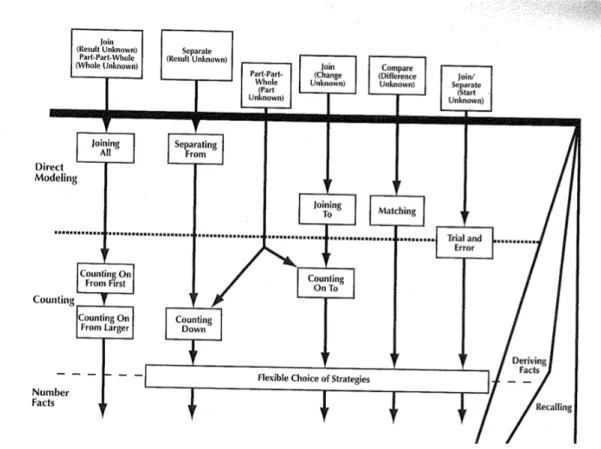
Results from these studies have led to the formation of a learning progression that describes how student thinking becomes more sophisticated over time. Student progression typically moves from Direct Modeling (i.e., the use of a manipulative or other representations, such as drawings) to Counting to reasoning about Number Relationships and/or Number Facts, which increases the amount of flexibility in possible solutions. For example, consider the
number relationships and/or facts might reason about relationships among the quantities and reason using a Doubles Plus 1 strategy, “6 plus 6 is 12, and 1 more is 13. So, she needs 6 plus 1, which is 7.” Within this framework, students practice the same type of problems so that reliance on manipulative use decreases, efficiency increases, and knowledge of concepts become more concrete.
Figure 1. Carpenter et al.’s (p.31, 1999) framework for illustrating children’s solution strategies
Instructional Methods
Often teachers who utilize CGI in their classrooms create word problems for children to solve using a classification system as a guide to work on specific types of problems. Teachers develop mathematical problems that combine intuitive student knowledge, real world
observable student thinking processes (Fennema, Carpenter, Franke, & Carey, 1992). Furthermore, this work has also shown that varying number quantities will also increase or decrease the complexity of problem solving. For example, consider the following word problem: Mario has 8 books. Keisha has 13 books. How many more books does Keisha have than Mario? CGI teachers often provide alternative numbers to their students as they engage in problem solving. In addition to the numbers in the word problem above, teachers allow children to alternatively select (3,7) to decrease complexity or (17, 24) to increase complexity. Thus,
allowing the teacher to differentiate instruction to meet the needs of all learners, as they work on the same type of word problem.
Teacher Beliefs
In a study that compared the attitudes, beliefs, and instructional practices of 20 first-grade teachers using CGI to a control group; results indicated that teachers participating in CGI
listened to students more, knew more about children’s thinking, and placed a greater emphasis on problem solving and multiple-solution strategies (Carpenter, Fennema, Peterson, Chiang, & Loef, 1989). Fennema and colleagues (1996) extended the knowledge in this field with a three-year longitudinal study of 21 teachers to investigate changes in instructional practices and teacher beliefs of those using the CGI professional development program. Researchers identified and described multiple levels of progression. Level 1 teachers hold the belief that explicit
believe that children can solve problems without receiving an explicit strategy and provide no strategy to students. Common characteristics in Level 3 classrooms are peer-to peer and peer-to-teacher discussions about mathematics, students solving the same problem through a variety of self-discovered methods, and comparison and contrast of strategies demonstrated by students. In Level 4, teachers have more stable and less fragmented view of student thinking. They use this information to guide the creation of instruction to bolster deeper mathematical thinking.
Teaching Response to Student Thinking
In order for teachers to make instructional decisions based on observed student performance, researchers constructed conceptual maps to assist classroom teachers to track student development in specific mathematical domains (Carpenter, Fennema, & Franke, 1996). These conceptual maps have multiple purposes. Initially, conceptual mapping allows teachers to reframe student thinking and track learning trajectories in specific content areas. This knowledge has the capability to create a more complete and robust understanding of the development with in specific domains of individual students. Secondly, it affords teachers the opportunity to modify instructional practices to meet the needs of needs of students quickly and efficiently. Examples of this include providing more scaffolding and time for students who struggle with particular skills, altering activities and number sets to challenge students who grasp concepts more rapidly and creating word-problems with connections to student interests. Finally, the emphasis on student discourse in CGI classrooms provides students with multiple means to provide
Research Findings on Students’ Mathematical Thinking in CGI Classrooms
Results from empirical studies support the claim that classrooms that implement the CGI approach increase deeper mathematical thinking. Carpenter and colleagues (1989) found
kindergarteners scored significantly higher on achievements tests than control groups in regards to problem solving. Moreover, although scores related to computation skills remained similar between the two groups, the CGI group did not emphasize those skills during instruction. Replications of this study to urban and traditionally under-achieving groups reported similar increases of accuracy in regards to written problem-solving, oral expression of solutions, and oral expression of number facts (Franke & Carey, 1997; Peterson, Fennema, & Carpenter, 1997; Villasenor & Kepner, 1993). Outcomes from these studies support the promotion of the CGI program in schools and classrooms that wish to increase problem-solving skills in students.
Extension of CGI
Initially, researchers developed CGI in an effort help support young students develop a deeper conceptual understanding of mathematics by drawing their intuitive mathematical
knowledge as a foundation for solving word problems (Carpenter, 1985; Carpenter, et. al, 1989). Early literature on this topic focused on the methods and thinking of students entering
elementary school in the areas of counting, adding, subtracting, multiplying, and dividing. Since that time, research regarding CGI and children’s thinking has grown to include the areas of fractions and decimals instruction (Empson & Levi, 2011) and algebraic reasoning (Carpenter & Levi, 2000; Jacobs, Franke, Carpenter, Levi, & Battey, 2007).
complex problems to gradually developing and assimilating more efficient and sophisticated methods of problem solving through an emphasis in student discourse and connections between student thinking and key mathematical ideas. Moreover, research in CGI classrooms have
reported that students develop trajectories of learning that vary from student to student according to many different factors. From these trajectories, teachers are able to modify pacing, members of groups, and specific questions with the purpose of increasing or decreasing the amounts of necessary scaffolding.
Philosophy of CGI
The central pillar for CGI is the belief that students’ thinking guides the instruction of the teacher. Teachers using this program need to take an active and respectful role in observing and responding to intuitive knowledge that students bring to school, the methods and processes students employ to arrive at solutions and student interests in order to form meaningful
connections between of mathematics and real life experiences, which is the basis for meaningful understanding. In the foreword of Empson and Levi’s Extending Children’s Mathematics (2011), Carpenter describes two fundamental principles of learning with understanding as “rich in
connections and its generative” (p. xii). The applicability of these principles overarches subject matter ranging from counting single digit numbers to algebra, an immense range of student abilities, and variety of cultural backgrounds.
group of activities to support the development of mathematical skills and thinking. However, CGI incorporates other characteristics such as teacher development, interactions between teachers and students, discourse between students, and assimilation of others thinking in a broader framework.
As typical classrooms become more heterogeneous in regards to cultural, linguistics, and ability, the role of educators is becoming more complex (Sowder, 2007). Therefore, one of the goals of the CGI framework is to provide supports for teachers to reduce the amount of
complexity in supporting students’ mathematical thinking. In this framework, teachers are required to reflect on student thinking in order to plan and respond. Students are encouraged to reflect on thinking of others in order to defend and streamline their own processes. This
emphasis on metacognition supports self-regulation in student strategies and assimilation of new concepts.
Student Participation within the CGI framework
Previous research regarding student participation during group sharing solutions of CGI problems has centered on the complexity of student responses (Carpenter, Fennema, Franke, Levi, & Empson, 1999) teacher behaviors to illicit student responses (Buschman, 2001), teacher decision making in displaying student responses (Franke, Webb, Chan, Ing, Freund, & Battey, 2009), and the creation of novel mathematical problems designed to challenge and engage students (Borko, 2004). However, no literature was found to date on the characteristics of whole group discussion in classrooms with a wide range of academic and behavioral abilities.
a teacher (i.e. “yes”, “no”, “four”, “more”, etc.) to extended explanations of complex solutions using symbols and mathematical terms.
The most common observable student behaviors that demonstrate participation within the group-sharing portion of CGI lessons are verbal and written expressions. Student verbal
expression, within the group-sharing context, can take the form of students explaining their thinking to other individuals or the entire group, asking and answering questions, and defending mathematical conclusions. At times, one or two students working on the same problem and demonstrating their strategies with the other members of the class generally present written expression participation, within the group context.
Projected Participation and Outcomes for Students with High-Incidence Disabilities in Inclusive Classrooms Rooms
Klingner and Vaughn (1999) conducted research on both disabled and non-disabled students’ perception of instruction in inclusion classroom. A synthesis of 20 articles, which includes 4,659 students (760 with a high-incidence disability) ranging in age from kindergarten to 12th grade demonstrated that students with disabilities desired the same activities, instructional materials, grading criteria, and assignments as non-disabled classmates. Students without
disability agreed on these feelings, believing that it promotes equality in the classroom.
With the recent push to include students with high-incidence disabilities in the general education classroom, many schools have implemented a collaborative model. This model entails combing the expertise of a general education and special education teacher in a joint effort to provide services to students through mutually defined classroom dilemmas (Langone, 1998). Recommendations for achieving student success in a collaborative model requires, mutual goals, voluntary participation, coequality among participants, and shared responsibilities in planning, decision making, resources, and student outcomes (Friend & Cook, 1996). Theoretically, this model provides a framework to support the learning and service delivery of all students in the inclusion setting.
Research on the participation of students with high-incidence disabilities in classrooms that use CGI, however, is limited. In a mixed method descriptive study, Behrend (1994)
investigated the problem solving characteristics of six elementary-aged students identified as LD in a resource room that used the CGI framework. Findings indicated that students with LD were able to solve mathematical word problems using similar strategies as non-disabled peers, with the addition of extended time and instructional scaffolding. Furthermore, nearly all students were willing to share their mathematical thinking strategies to other students and the entire group, as well listen to the strategies of others. Finally, data showed that students were able to complete multi-step tasks, such as multiplication and division, while still displaying difficulties with computation skills in addition and subtraction. This finding is particularly notable because it suggests that higher order thinking skills in mathematic maybe not dependent on a prerequisite skill set.
students with disabilities that manifest behavioral or academic challenges for teachers, research investigating the performance of students in the inclusion setting is crucial. Moreover, for
students who struggle with appropriate social skill acquisition, characteristics of CGI classrooms have the potential to have a positive influence the behavioral development of students, through increases in opportunities to practice social skills. Suggestions to extend research in this area include increasing the sample size of participants, observing classroom behavior and
mathematical thinking in heterogeneous classrooms, the inclusion of students with other types of disabilities in the classroom, and conducting research in CGI inclusion classrooms in middle and secondary schools.
A recent study investigated the participation and performance of 24 students with mild/ moderate cognitive disabilities on CGI type word problems in Scotland (Moscardini, 2010). Findings from this study demonstrated that children with disabilities were able to invent, transfer, and retain strategies in arithmetic. However, the author noted that some students demonstrated difficulties with recalling the problems in their entirety. The classroom teacher remediated this difficulty by restating the problem in smaller sections. Additionally, teachers reported an increase in the perception of student engagement; meanwhile, nearly all students responded that they enjoyed the reform-based type of learning environment more in contrast to the traditional classroom setting.
Embedded Differentiation of Instruction
and customizing pedagogy, activities, assessment methods, and student product criteria.
Traditionally, special education teachers have utilized this method of instruction, particularly in self-contained classrooms where students display significant variability in academic and
behavioral performance, as a means of best supporting the benchmarks and goals of individual learners in a group setting.
Subban (2006), discusses the theoretical and conceptual basis for differentiated
instruction at length. He argues that the foundation for this philosophical approach of teaching is the blending of Vygotsky’s (1980) general theory of cognitive development, which includes the central premise of the zone of proximal development, and Gardner’s (1999) theory of multiple intelligences. Briefly stated, Vygotsky’s zone of proximal development (ZPD) is the distance between current developmental level in independent problem solving trials and the potential development of problem solving through a more able-bodied peer or adult guidance.
Furthermore, Gardner theorizes that learners possess specific inclinations in problem solving methods. These inclinations, or types of intelligences, are visual, kinesthetic, musical,
interpersonal, intrapersonal, linguistic, and mathematical (Gardner, 1999). Thus, differentiated instruction is the practical application and extension of cognitive development through social interactions, when educators take into account students’ learning propensities.
instruction is not a teaching strategy or curriculum, but instead a philosophy that drives the way educators think about teaching and learning (Tomlinson, 2000). Although special education teachers, who serve students with a wide range of abilities across multiple settings, have
implemented many of these practices for years, this philosophy is now gradually seeping into the general education pedagogy.
Teachers who incorporate differentiated instructional philosophies into the classroom are able to accommodate the wide variability of learner characteristics in a multiple ways.
Pedagogical differentiation takes place when educators alter the amount content covered, pacing of lessons, and delivery of instruction, activities, and student grouping. Furthermore,
differentiation may also occur in assessment of student work (Tomlinson, 2003). The flexible nature of differentiated instructional techniques and variability among students’ characteristics in classrooms makes comparisons between classrooms that use traditional approaches problematic. However, there is a dearth of group design empirical research on the effects of differentiation of instruction due to its relative newness and comparisons of groups, as opposed to individuals, with significant variability to each other. Therefore, it appears that teasing out the effectiveness of differentiated instruction in terms of student achievement in a group setting is sparse at this time.
Although the amount of research investigating the degree to which differentiated instruction affects the learning all students is limited at this time, reports of positive impacts exist. Hodge (1997) reported higher scores on standardized mathematics tests for students who participated in classrooms where teachers used differentiated instruction with fidelity.
Surprisingly, in this same study, scores for reading fluency showed no gains from this
improvements on standardized tests for low-achieving students following the use of
differentiated instruction. An additional component of this study revealed that teachers perceived that their students were more motivated and enthusiastic in regards to subject matter and
activities after using differentiated instruction techniques. Finally, the addition of enrichment activities to differentiated instruction techniques increased both reading fluency and
comprehension when compared to whole class basal approach (Reis, McCoach, Little, Muller, & Kaniskan, 2011). These findings support the notion that altering lessons in regards to individual student characteristics in the inclusion setting have an impact on both student learning and teacher perception.
Social Supports for Students with High-incidence Disabilities
Students diagnosed with a high-incidence disability, particularly those with EBD, may exhibit behaviors that are problematic in building and maintaining appropriate interpersonal relationships with peers and teachers. Examples of these challenging behaviors include physical and/or verbal aggression, inappropriate language, defiance, theft, and vandalism. Yell and colleagues (2004) report that inclusion classrooms serve students with EBD at a less frequent rate compared to all other groups of students with disabilities. Although including students from this population in the general education classroom needs to be determined on an individual student basis, based on severity and frequency of undesired behaviors, classrooms that use the CGI approach have the potential to incorporate behavioral supports, as well.
meeting expectations. Although CGI does not address classroom management directly,
embedded flexibility in instructional procedures allows teachers to provide academic, as well as behavioral supports when needed.
Points of Contact
Students that participate in CGI classrooms are able to demonstrate and share their thinking and strategies at numerous points in time in a variety of ways. All students, regardless of ability, may show their work through oral and written expression, with a variety of
representations, such as the use of manipulatives, tables and figures, drawings/pictures, and the manipulation of symbols and syntax. Furthermore, students can share their strategies and reasoning with another student, a group of students, the teacher, or the entire class. For students who have difficulty speaking in front of others, they can practice using mathematical language with others before sharing with larger groups to lessen anxiety. The connections between differentiated instruction and CGI are plentiful. Historically, special education teachers in self-contained and inclusion classrooms have used these strategies to meet the needs of students with a wide range of academic and behavioral abilities. Due to the flexible nature of CGI classrooms, teachers that facilitate these classrooms have the opportunity to observe, assess, support, and respond to student needs accordingly.
Manifestations of academic and behavioral disabilities are diverse in inclusion
classrooms in regards to severity, frequency, and impact on learning. Students diagnosed with a high-incidence disability may have difficulties with working memory, reading comprehension, reading fluency, organization, written expression, listening comprehension, an inability to maintain appropriate relationships with peers and adults, and inappropriate responses to normal situations. Since mathematical reform classrooms stress conceptual understanding through student discovery and discourse, teachers have the opportunity to differentiate classrooms to meet the diverse behavioral and academic needs of students.
A plethora of research exists on programs and interventions for students who struggle with mathematics. Oftentimes, the aim is to address specific domain deficiency in order to support sequential learning of procedures and concepts. Moreover, the use of explicit teacher directed instruction is a common trait among these programs. However, as the reform
mathematics movement becomes more widely accepted, a need exists to examine the participation and performance of students’ with high-incidence disabilities in the area of mathematics.
This study addressed the gaps in the literature that exist concerning teacher involvement in CGI classrooms that promote solving mathematical word problems by students with high-incidence disabilities in classrooms that serve both students with and without high-high-incidence disabilities. Furthermore, this study sought to detail the degree and dimensions to which students with high-incidence disabilities participate in CGI inclusive classrooms, as well as the nature of this participation, and instructional strategies that support participation. Finally, this study sought to help bolster communication between the fields of mathematics education and special
CHAPTER 3: METHOD
The author reviewed the relevant literature focusing on two major aspects of this study in Chapter 2: interventions and outcomes designed to support mathematical learning for students with high-incidence disabilities, and philosophies and approaches of Cognitively Guided Instruction (CGI). Over the past 30 years, researchers have created an extensive body of
literature investigating CGI philosophies and pedagogical approaches in relation to mathematical thinking for a variety of different student populations (Carpenter, Fennema, Franke, Levi,
Jacobs, Empson, 1996; Waxman & Pedron, 1995; Xin, Jitendra, & Deatline-Buchman, 2005). However, few studies have examined the extent to which students with disabilities participate within inclusion classrooms that employ CGI strategies. Moreover, during the same span of time, general education classrooms have seen an increase in the number of students who receive special education services through educational philosophies that promotes inclusive practices (Fuchs & Fuchs, 1994). Therefore, the purpose of this study is twofold. First, it aims to add to the growing body of literature regarding the participation of students with disabilities (i.e., learning disabled, emotional/behavioral disorders, speech and language impairments, and mild intellectual disabilities) in classrooms that use CGI. In addition, to illuminate the teaching practices of a teacher in an inclusive setting, where explicit instruction for solving mathematical problems is not solely provided, in order to better inform current and future classroom teachers.
the case study design, participant information, the context, as well data collection and analysis methodology.
Conceptual Framework
Reform documents (National Council of Teachers of Mathematics [NCTM], 1989, 2000) and the recent Common Core State Standards for Mathematics (CCSS-M, 2010) call for teachers to support students in developing both procedural and conceptual knowledge. In order to connect procedures to concepts in a meaningful way, these documents describe the processes that
encourage this development. Thus, these documents provide a lens to view effective instruction. In the Principles and Standards for School Mathematics (2000), the NCTM highlighted key processes to engage students in meaningful, high-quality mathematics. The Process
Standards include problem solving, reasoning and proof, communication, connections, and representation. In 2003, the National Research Council (NCR) described the framework for student to understanding in mathematics. Five strands of mathematical proficiency were identified as (p. 5): (1) conceptual understanding—comprehension of mathematical concepts, operations, and relation, (2) procedural fluency—skill in carrying out procedures: flexibly, accurately, efficiently, and appropriately, (3) strategic competence—ability to formulate, represent, and solve mathematical problems, (4) adaptive reasoning—capacity for logical thought, reflection, explanation, and justification; and, (5) productive disposition—habitual inclination to see mathematics as sensible, useful, and worthwhile, coupled with a belief in diligence and one’s own efficacy.
Grounded in the NCTM’s Process Standards (2000) and the NRC’s (2003) definition of mathematical proficiency, writers of the CCSS-M recently described the Standards for
solving them; (2) reason abstractly and quantitatively; (3) construct viable arguments and critique the reasoning of others; (4) model with mathematics; (5) use appropriate tools
strategically; (6) attend to precision; (7) look for and make use of structure; and, (8) look for and express regularity in repeated reasoning. By using CGI, teachers attempt to address these standards with mathematical lessons.
Multiple entry points exist for student interaction within the mathematical and social context of the whole-group sharing portion of CGI style lessons. The entry points for student lesson engagement in CGI lessons, include verbally sharing methods, models, constructing and defending arguments, as well as questioning the conclusions, accuracy and efficiency of classmates while problem solving novel dilemmas in group setting (Duncan & Hmelo-Silver, 2009). Often times the teacher, within this setting, becomes a facilitator of conversation and the debate moderator as opposed to a procedural instructor (Borko, 2004). For educators in
inclusion classrooms, facilitating meaningful whole group conversations for all students is challenging due to wide range of academic and behavioral student abilities. Therefore, differentiation of complexities within tasks that address the same mathematical concept is appropriate for all learners.
Due to the complexities of academic, physical, and behavioral disabilities and within the context of current mathematical standards, addressing the diversity of student needs in inclusion classrooms is challenging. Tomlinson and McTighe (2006) recommend differentiated or
describe the verbal and written participation of each student, within setting of an elementary inclusion classroom that endorses reform mathematical practices.
Case Study Rationale
Past research, investigating the phenomenon of student performance and behavior in classrooms that employ a reform-based mathematic approach that include both disabled and non-disabled peers is scant. Therefore, the initial proposal of this project planned to investigate multiple classrooms that incorporate CGI in inclusion classrooms. However, due to low recruitment numbers of students with disabilities in possible participating classrooms, the researcher opted to look more closely at the classroom with highest rate of student recruitment (95%). Therefore, the researcher shifted the focus and methodology of the initial study from a mixed methods approach across multiple classrooms to a case study design of a particular classroom to gain a deeper understanding of the phenomena.
Due to the unique variables and dearth of previous research concerning this phenomenon, Towne and Shavelson (2002) recommend the use of a detailed case study in order to provide rich descriptions of the procedures, behaviors, and context of student participation and achievement. Stake (1995) argues, “Seldom is an entirely new understanding reached but refinement of understanding is” (p. 7) when referring to conclusions based on case study research. Therefore, generalizations concerning teacher and student behavior within this context are problematic. However, the purpose of this case study is to document, with empirical evidence, an approach to supporting the learning of students with and without disabilities within inclusion classroom that aligns with current reform mathematical practices.
of the descriptive case study. In contrast to other case study constructs (e.g., experimental, survey, and historical) the descriptive case study aims to answer the “how” and “why” of a specific phenomenon within a setting where distinct boundaries are difficult to observe (Yin, 2014). Nebulous boundaries for this case study exist in multiple domains. These include time allotment for mathematical discussion (i.e., the lack of predetermined time exists for group-sharing time), addressing the needs of students labeled and/or disabled, (i.e., inclusion classroom population) and the challenges of teaching students whose specific learning and behavioral disabilities in elementary aged yet to be determined (i.e., students who have been referred for special education assessment, but do not currently qualify for special education services).
According to Yin (2014), one the rationales for using a descriptive case study is to focus on contemporary events in which the researcher has minimal control over the study participants. Therefore, the researcher in this case study made diligent efforts to observe and record classroom behaviors (i.e., video recording of lessons), student demographic information (i.e., IEP and school record information), and classroom contextual information (i.e., semi-structured teacher interviews) without interfering with the typical school day course of events.
Study Design
classroom sessions and student worked in sequential order. Furthermore, the researcher conducted teacher interviews after all classroom data had been collected.
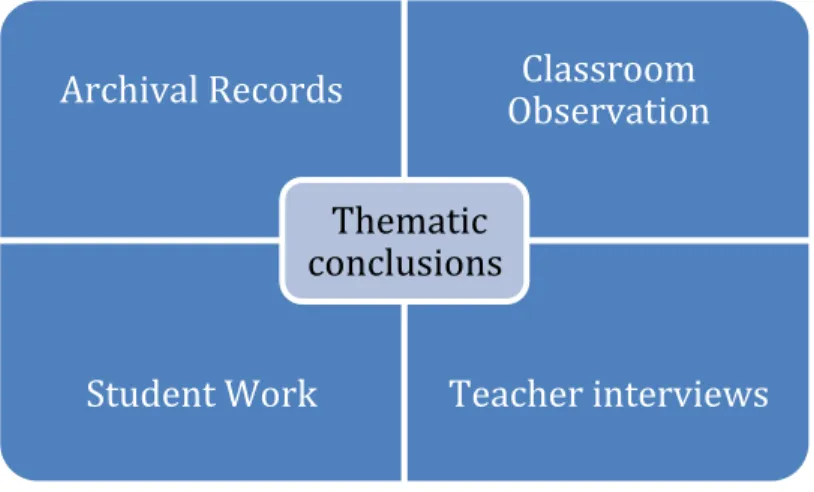
Figure 2. Convergence of evidence model
A single-case, or holistic, design was used for this study (Figure 2). This model, to be described more fully in the Current Case Study section, represents the chain of evidence gathered for this study as well as the convergence analysis of both quantitative and qualitative data to support thematic conclusions. The researcher’s use of both quantitative and qualitative data is to highlight the width and depth of students with disabilities’ participation within the CGI inclusion setting.
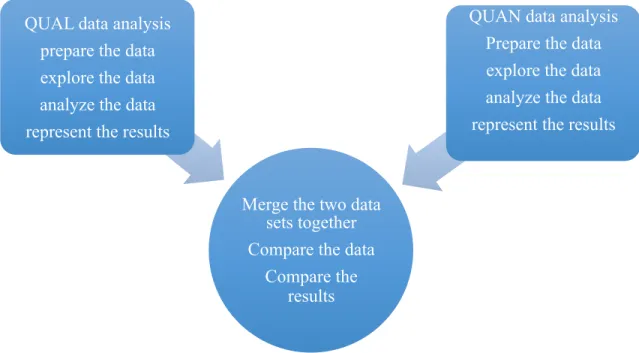
The quantitative data for this study consisted of timing the duration and frequency of student verbal participation within the group-sharing context. Furthermore, the researcher measured student written work using a Likert-type scale ranging in answers from 0-4 in regards to written responses in communication, reasoning and strategies for novel word problems. Qualitative data for this study consisted of semi-structured interviews of the classroom teacher and the academic support staff, observations of teacher behaviors, and analysis of classroom interactions between all students and the classroom teacher.
Archival Records Observation Classroom
Student Work Teacher interviews Thematic
Current Case Study
Context
This investigation was an extension of a larger a year long qualitative study investigating the use professional development (PD) with pre-service and in-service teachers in regards to implementing CGI word problems for 3rd through 5th grade classrooms. Participants of this year long PD consisted of eleven cooperating elementary school teachers and six prospective
elementary school teachers from five different elementary schools. In this study, the researchers led 12 PD sessions after school or on in-service workdays for the school district.
Details of the professional development involved the implementation of CGI word problems, teacher rationale for selecting student work as examples, and analysis of student understanding demonstrated in discussion (Mojica & Wright, 2012). Furthermore, it examined, through qualitative analysis the interaction between cooperating teachers, student teachers, and elementary aged students involving fraction instructional practices from Empson & Levi’s (2011).
Additionally, researchers utilized philosophies from the Five Practices (Smith & Stein, 2011) in an effort to connect mathematical teaching theory and practice in promoting meaningful classroom discussion. Smith and Stein (2011) depict these practices as skillful improvisation in facilitating rich mathematical discourse: anticipating students’ responses, monitoring how students respond to questions, selecting student work to share with the entire class, sequencing student examples in regards to sophistication or popularity, and connecting student responses to other class members.
development. Therefore, school personnel are familiar and comfortable with researchers leading on-going CGI professional development and collecting data in the mathematics classrooms.
Group Sharing
The researcher collected all data for verbal student participation and teacher behavior during group-sharing time of CGI lessons. During this portion, of the CGI lesson, all students gather around the classroom smart board in a semicircle to discuss teacher selected novel mathematical problems from the students’ journals. During this study, group-sharing time always took place during the late morning. Furthermore, there was no predetermined set amount of time for teacher led discussion, however the classroom teacher extended or shortened group-sharing time depending multiple factors (e.g., school-wide activities, other planned classroom activities, abbreviated school schedules).
Participants
The extent to which general education and students diagnosed with a disability participated in an inclusion classroom that promotes reform based mathematical philosophies was investigated. Furthermore, this study investigated the participation of all students with and without disabilities in elementary mathematics classrooms. Therefore, the researcher observed students in the classroom assigned by the elementary school faculty and administration at the beginning of the school year. Thus, neither the researcher nor the participating teacher reassigned students either into or out of the classroom during the duration of this study.
Teachers
The classroom teacher selected to participate in this study had previously been a
teaching license and had a minimum of two years teaching experience. Secondly, the classroom teacher taught in a classroom that had both general education and students with a disability. Thirdly, the participating teacher took part in CGI professional development with researchers and implemented reform-based mathematics teaching practices, like CGI. In addition, the researcher interviewed (AIG) support teacher to gain a better of understanding of enrichment supports for students who participate in the inclusion classroom.
Students
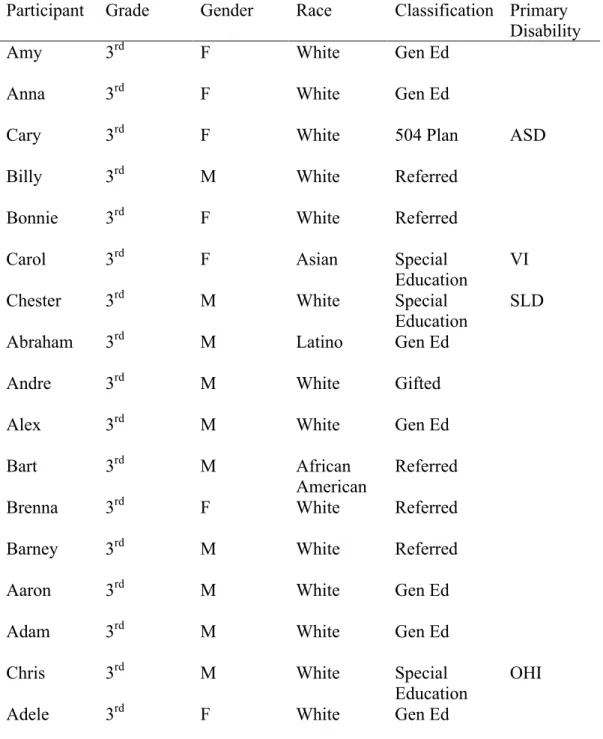
The researcher recruited 3rd grade students for this study through the classroom teacher. The researcher invited l9 students currently enrolled in the classroom to be a part of this study. However, one student chose not to participate and another student received her mathematics instruction in another room as required in her IEP. Thus, the total number of students
participating was 17. The researcher gained parental or guardian consent as well as student assent for all student participants. The researcher used pseudonyms to protect the identity of all participants.
Archival Records
The researcher gathered student information regarding disability classification through the classroom teachers’ search of current IEP’s and 504 plans. Current data from the archival records included primary and secondary classification status as well as present levels of
performance. To maintain confidentiality for all other student information contained within the IEPs and 504 plans, the researcher opted to collect through the classroom teacher.
Data Collection