A MIXED METHODS STUDY OF NORTH CAROLINA PRINCIPALS’ PERCEPTIONS OF THE ROLES OF SCHOOL SOCIAL WORKERS
Deirdre Natasha Scott
A dissertation submitted to the faculty at the University of North Carolina at Chapel Hill in partial fulfillment of the requirements for the degree of Doctor of Education in the Educational
Leadership doctoral program in the School of Education.
Chapel Hill 2017
© 2017
ABSTRACT
Deirdre Natasha Scott: A Mixed Methods Study of North Carolina Principals’ Perceptions of the Roles of School Social Workers
(Under the Direction of Fenwick English)
To girls and boys that dare to dream the unthinkable. It is also a reminder to mothers, fathers, and educators of the importance of nurturing our children’s dreams.
Written by: Natasha Scott, March 13, 1986
ACKNOWLEDGEMENTS
The completion of this dissertation was a journey filled with new adventures and
challenges along the way. Time was the most obvious challenge, in that there is never enough of it to complete a never-ending to-do list. With no experience to rely on, it was necessary to set aside time to learn new skills. I needed time to learn software packages (i.e., NVivo, Qualtrics, and SPSS), and time to read reference guides, textbooks, and peer-reviewed journal articles about statistics, analyzing qualitative data, and research designs.
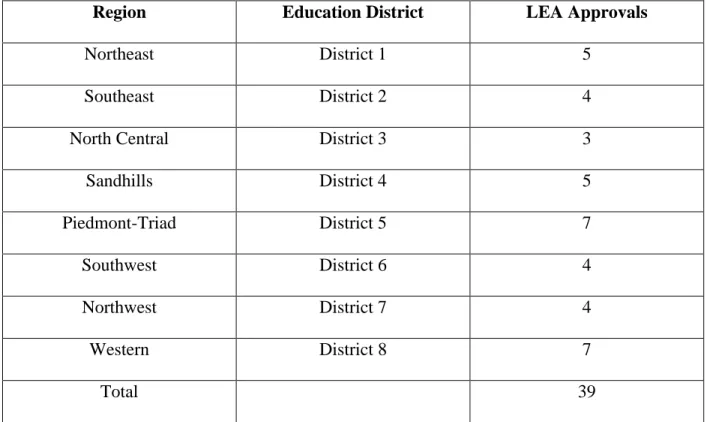
Thankfully, there were numerous people that supported me along this journey. First, this study would not be possible without the assistance of the 39 school district administrators that granted approval of this study. From this grand gesture, 281 public school principals completed my survey. Time is a precious commodity and your personal sacrifice is not taken lightly. I am especially appreciative of my dissertation committee for your guidance, feedback, and wisdom. To my chair, Dr. Fenwick W. English, my journey began and ended with you! You taught six of the courses that I completed to meet the coursework requirements of the doctoral program. From your wealth of knowledge about school districts and the dissertation process, ability to assuage fears, and firm but humorous prodding I was able to make it to the finish line. To committee member, Dr. Kathleen Brown, thank you for always having the ‘magic’ to solve problems along the way, offering an encouraging word, being an advocate, and providing meaningful suggestions to enrich my work. You are greatly appreciated. To committee
me on my toes. One must learn the statistical concepts and understand the math associated with the process. Last but not least, I would like to express my appreciation to committee member, Dr. Annie M. Chavis. Upon meeting you nearly 15 years ago you encouraged me to pursue doctoral studies. Life has come full circle and I am honored that you were willing to make this journey with me. I know I would not have finished this journey without each of you.
There was also a host of individuals that provided technical expertise and support to this study. Social work scholars, Dr. Paula Allen-Meares, Dr. Jim Raines, Dr. Brenda Lindsey, Dr. Summer Gainey Woodside, Dr. Danielle Swick, and social work practitioners, Pamela Story, Pauline Brown, Towanda Wiggins, and Danielle Woodall reviewed my instrument and offered feedback. Dr. Theresa Edwards of UNC’s Odum Institute provided assistance with the survey design, Qualtrics survey research software, survey research methodology, and the IRB
application process. Dr. Chris Wiesen, also of UNC’s Odum Institute, provided expertise with the statistical analysis. As I neared the finish line and was becoming weary of the process, Dr. Regina Cousar, a former engineer and current professor of statistics, lent her expertise with the data analysis. You joined my journey without ever even meeting me. You treated me like I was your own student. I’m eternally grateful.
Although too many to name, I would also like to thank the numerous school and district office administrators in Cumberland County Schools (CCS) that assisted with this study. A special acknowledgment goes to retired CCS principals Dr. Ron Godbolt and Mrs. Donna Mims, and CCS Associate Superintendent, Dr. Mary Black.
TABLE OF CONTENTS
LIST OF TABLES ... xiv
LIST OF FIGURES ... xvi
CHAPTER 1: INTRODUCTION ... 1
Context of the Problem ... 1
Statement of the Problem ... 2
Purpose of the Study ... 6
Research Questions and Methodology... 7
Research Questions ... 9
Hypotheses ... 9
Research Design... 10
Theoretical Framework ... 12
Assumptions ... 14
Limitations ... 14
Definition of Terms... 15
Summary ... 18
CHAPTER 2: LITERATURE REVIEW ... 19
Introduction ... 19
The Ethic of Care ... 19
The Ethic of Care as it Relates to School Social Work Practice ... 24
Interstitial Practice or Specialty Practice: Another Look at the
Development of School Social Work Practice in Schools ... 32
Defining the Role of School Social Workers ... 35
Barriers and Facilitators to School Social Work Practice ... 45
School Social Work Practice in North Carolina ... 50
The View from the Principals’ Office ... 53
School Social Workers’ Contributions to Educational Outcomes ... 61
Summary ... 66
CHAPTER 3: METHODS ... 68
Introduction ... 68
Study Design ... 69
Participants ... 72
The Sample ... 72
Selected Participants ... 73
Risk Considerations ... 74
Instrument ... 76
Principals’ Perceptions of the Roles of School Social Workers Questionnaire ... 76
Validity and Reliability ... 77
Data Collection Procedure ... 86
Variables ... 89
Measurement of Variables ... 90
Analytical Techniques ... 90
Introduction ... 95
Organization of the Chapter ... 96
Survey Reliability ... 96
Survey Response Rate... 97
Demographic Data ... 99
Schools ... 99
North Carolina Principals ... 100
North Carolina School Social Workers... 103
The Context of Principals’ Experiences with School Social Workers ... 104
Results for Research Questions ... 106
Research Question 1 ... 106
Results for Research Question 1 ... 106
Research Question 2 ... 121
Results for Research Question 2 ... 121
Research Question 3 ... 122
Results for Question 3 ... 122
Research Question 4 ... 124
Results for Research Question 4 ... 124
Research Question 5 ... 125
Results for Question 5 ... 125
Research Question 6 ... 127
Results for Research Question 6 ... 127
Results for Research Question 7 ... 128
Qualitative Findings ... 129
Prior Experiences with School Social Workers ... 130
Primary Roles of School Social Workers ... 132
The Value of School Social Work Practice ... 134
Caring as a Role of School Social Work Practice... 138
Summative Statement ... 142
CHAPTER 5: DISCUSSION OF RESULTS ... 145
Introduction ... 145
Summary of Study ... 145
Research Design... 146
Limitations of Study ... 147
Discussion of Results and Implications ... 148
Research Question 1 ... 151
Research Questions 2 Through 7 ... 158
Research Question 2 ... 160
Research Question 3 ... 160
Research Question 4 ... 161
Research Question 5 ... 161
Research Question 6 ... 162
Research Question 7 ... 163
Overall Meaning ... 163
Principal Knowledge of the Roles of School Social Workers ... 167
Interdisciplinary Collaboration ... 169
For Further Study ... 172
Closing Statement ... 175
APPENDIX 1: NORTH CAROLINA SCHOOL SOCIAL WORKER JOB DESCRIPTION ... 176
APPENDIX 2: NASW STANDARDS FOR SCHOOL SOCIAL WORK SERVICES ... 180
APPENDIX 3: LETTER OF PRIOR NOTICE AND FOLLOW-UP LETTERS ... 184
APPENDIX 4: PRINCIPALS’ PERCEPTIONS OF THE ROLES OF SCHOOL SOCIAL WORKERS QUESTIONNAIRE ... 190
APPENDIX 5: CONTENT VALIDITY EXPERT CERTIFICATION ... 203
APPENDIX 6: EXPERT CERTIFICATION RESULTS ... 205
APPENDIX 7: QUALITATIVE ANALYSIS CODEBOOK ... 228
LIST OF TABLES
Table 1.0: Allocation of School Social Workers in North Carolina Based on FTE ... 31
Table 2.0: LEA Approval by NCBSE Education Districts ... 74
Table 3.0: Timeline for Participant Notification... 87
Table 4.0: School Participation by NCSBE Education Districts ... 99
Table 5.0: Principal Participation by Years of Experience ... 101
Table 6.0: Principal Participation by Race/Ethnicity ... 101
Table 7.0: Principal Participation by Locale Code ... 102
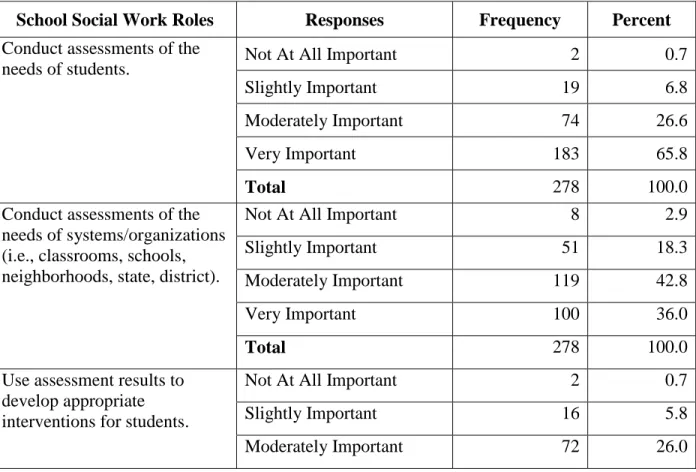
Table 8.0: Frequency Distribution of the Importance of School Social Work Roles to Educational Outcomes ... 107
Table 9.0: Mann-Whitney U Tests by Principals’ Prior Experience with School Social Workers ... 112
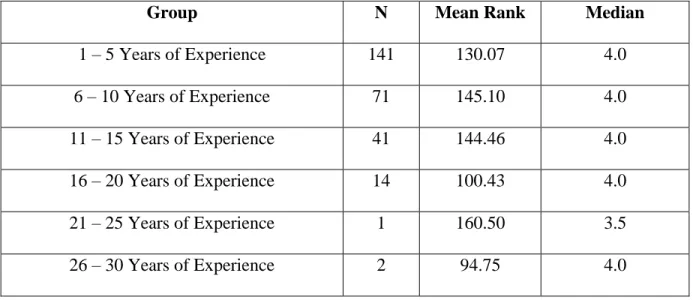
Table 10.0: Mean Ranks for Maintaining Accurate Case Records to Document Services and Outcomes by Years of Experience ... 113
Table 11.0: Mann-Whitney U Tests by Gender ... 115
Table 12.0: Mean Ranks and Medians for Various Roles by Race/Ethnicity ... 118
Table 13.0: Median Perception Scores by Grade Span... 119
Table 14.0: Frequency Distribution of the Importance of the School Social Worker’s Role in the Development of a Caring School Environment by Prior Experience and Perception ... 122
Table 15.0: Frequency Distribution of the Importance of the School Social Worker’s Role in the Development of a Caring School Environment by Years of Experience and Perception ... 123
Table 16.0: Frequency Distribution of the Importance of the School Social Worker’s Role in the Development of a Caring School Environment by Gender and Perception ... 125
Table 18.0: Frequency Distribution of the Importance of the School Social Worker’s Role in the Development of a Caring School
Environment by Grade Span and Perception ... 128 Table 19.0: Frequency Distribution of the Importance of the School Social
Worker’s Role in the Development of a Caring School
LIST OF FIGURES
CHAPTER 1: INTRODUCTION
Context of the Problem
The school is not a social services agency; however, the school must respond when social problems present barriers to teaching and learning. Every day, students enter the schoolhouse not ready to learn due to the detrimental effects of social problems such as poverty. Rothstein’s Class and Schools (2004) and Lareau’s Unequal Childhoods (2011) argue that the social context
(socioeconomic status, parenting styles, adequate and stable housing, health care, language use, etc.) of children's lives significantly impact educational outcomes. Research documents a relationship between one’s level of education and socio-economic status (Palley, 2008).
Poverty increases the risk that children will experience health issues, developmental delays, and school failure (Allen-Meares, 2010c). For example, children living in impoverished neighborhoods are more likely to be exposed to toxic substances such as lead, to be separated from their parents, and to witness family violence (Allen-Meares, 2010c; Rothstein, 2004). They are also more likely to live in substandard housing, to experience multiple residential moves, and to lack proper medical care (Allen-Meares, 2010c; Rothstein, 2004). Poverty itself does not create school failure; however, it facilitates low academic achievement due to barriers such as poor school attendance (Allen-Meares, 2010c).
Educational policies such as No Child Left Behind (NCLB) attempt to level the playing field by requiring academic success for all students (Lagana-Riordan & Aguilar, 2009).
Aguilar, 2009). It merely implies that even children from difficult circumstances such as poverty must demonstrate performance on education standards (Lagana-Riordan & Aguilar, 2009). In 2012, 25% of school-aged students in the United States lived in poverty (Kena et al., 2014). In the same year, 25% of children in North Carolina lived in low-income homes as well (National Center for Children in Poverty, n.d.). Principals have a tremendous responsibility, considering that poverty impacts one in four students. Classroom instruction, increased accountability, and standards-based testing are not enough to ensure equity and excellence for all students. In a commentary on poverty, elementary school principal, Ericka Guynes of Earl Boyles Elementary School in Portland, Oregon eloquently described the principal’s role: “Poverty is like a bone-chilling cold draft that seeps into an old home. We have to be innovative and holistic leaders to insulate our most precious valuable gift: our children” (Guynes, Jackson, Mercer, & Cox, 2014). Statement of the Problem
Schools have a greater purpose than meeting state curriculum standards (Noddings, 1984; Noddings, 2005a; Shapiro & Stefkovich, 2001). Educators must learn to apply the same caring that occurs in their private lives to the school setting (Beck & Cassidy, 2009). Policymakers recognize the need for public schools to support vulnerable students (Kober & Usher, 2012). A low-quality education and school failure have lifelong implications (Palley, 2008). For this reason, educational policy attempts to ensure equal educational opportunities for all students (Richard & Villarreal Sosa, 2014; Palley, 2008). Federal mandates require schools to provide additional educational services to economically disadvantaged, migrant, neglected, delinquent, limited English proficient, homeless, and disabled children (Kober & Usher, 2012; Palley, 2008).
(Atkins-Burnett, 2010; P.L. 107-110). For instance, IDEA affords related services to students with disabilities (Atkins-Burnett, 2010). Related services supplement the educational process by addressing the individual needs of students through developmental, rehabilitative, and supportive services (Atkins-Burnett, 2010). Examples include transportation, physical therapy, speech therapy, counseling, psychological services, and social work services (Atkins-Burnett, 2010). Social work services include writing social histories, providing individual and group counseling, linking students and families to community resources, and serving as a liaison between the home and the school (Richard & Villarreal Sosa, 2014).
The NCLB Act (2001) designates pupil services personnel to provide supportive services to students:
The term “pupil services personnel” means school counselors, school social workers, school psychologists, and other qualified professional personnel involved in providing assessment, diagnosis, counseling, educational, therapeutic, and other necessary services (including related services as that term is defined in section 602 of the Individuals with Disabilities Education Act) as part of a comprehensive program to meet student needs (P.L. 107-110).
The composition and name of pupil services personnel vary by the individual school and by district (Nealis, 2013; Walsh et al., 2014). The North Carolina Department of Public
Instruction (NCDPI) collectively refers to school social workers, school counselors, and school psychologists as student support services and student services (NCDPI, n.d.-b). Following the nomenclature established by the NCDPI, this study references this group of professionals as student services professionals and student services as the services provided by these
Student services professionals support the social and emotional needs of students from the lens of their unique training (NCDPI, 1987). They also foster the development of a positive school climate (NCDPI, 1987). These professionals have a shared agenda to identify and remove barriers to learning (Radin & Welsh, 1984). Similarly, Gilligan and Noddings’ conception of the ethic of care (EoC) emphasizes relationships and responding to the needs of others (Gilligan, 1982; Noddings, 2005a, 2005b, 2012a, 2012b; 2013). If caring positively impacts the educational process, then principals can leverage the roles of student services professionals to strengthen care in schools. However, limited exposure to student services professionals may impact principals’ perceptions and utilization of these professionals (Louis & Gordon, 2006; Shoffner &
Williamson, 2000; Tower, 2000; Williams & Wehrman, 2010). Student services professionals have unique and overlapping roles that work together to contribute to the academic success of students. More research about the context of comprehensive student services programs and best practices for interdisciplinary collaboration is needed. Nonetheless, the roles of school social workers are the focus of the study.
2008). Therefore, it is likely that many principals do not have experience working with school social workers. Again, principals’ limited exposure to school social workers perpetuates role misperception and the underutilization of these professionals (Tower, 2000).
The origins of school social work practice have also impacted principals’ exposure to school social workers and have limited principals’ influence in the development of the role. Educators did not strategically plan the implementation and development of school social work practice (Louis & Gordon, 2006). Instead, school social work practice developed outside of the school system through social forces such as women’s groups, settlement houses, and psychology clinics during the 1906-1907 school year (Allen-Meares, 2010b; Louis & Gordon, 2006; Shear, 1965; Watson, 1985). For example, settlement houses and psychology clinics in Boston,
Hartford, and New York hired school social workers to provide liaison services between the home, school, and community as a strategy to improve the academic outcomes for at-risk students (Allen-Meares, 2010b).
The economic and political context of the country has contributed to the development of school social work practice (Shear, 1965). For instance, the emergence of compulsory
attendance laws and the Education for All Handicapped Children Act of 1975 (EACHA) forced American schools to address the needs of diverse learners (Allen-Meares, 2010b). As a result, school principals and teachers were required to respond to issues outside their scope of expertise to provide an equal educational opportunity to all students (Richard & Villarreal Sosa, 2014; Watson, 1985). Educators cannot meet the needs of students alone (Allen-Meares, 1994). Legislation such as the Elementary and Secondary Education Act of 1965 (ESEA) provided funding for additional services in order to meet the needs of at-risk students (Richard &
for providing additional services to improve student outcomes (Allen-Meares, 1994; Richard & Villarreal Sosa, 2014).
Principals and superintendents are change masters in the school setting (Louis & Gordon, 2006). Their understanding and vision of the roles of school social workers are critical to
positioning these professionals to make contributions to student outcomes. For this to occur, principals must understand the role of the school social worker. Besides, principals must know how to strategically align school social work tasks to support the mission of the school and meet the needs of all students. Including principals’ perceptions in the role development of school social workers is one way to maximize the utilization of these professionals in schools to meet student needs.
Purpose of the Study
The purpose of this study is to examine principals’ perceptions toward the roles of school social workers. It also seeks to determine if a relationship exists between principals’ perceptions of the roles of school social workers and other variables such as prior experience working with school social workers, years of experience, gender, race, grade span, and locale type. A review of the literature and the data gathered in this study may enable a preliminary foundation of
improved clarity of school social work practice located within an EoC framework.
perceptions towards the roles of support personnel such as school social workers may offer insight to educators in educational leadership programs regarding relevant content for school administration courses and internship experiences. For example, interdisciplinary collaboration at the pre-service level would likely contribute to future administrators’ appreciation of the roles and contributions of professions other than classroom teachers.
Social work educators and school social workers may benefit from the findings of this study as well. The literature indicates that school social work practice needs further role development to reflect the current trends in social work and education practice. A deeper understanding of principals' perceptions may provide an added dimension to social work research that appears to be lacking. Furthermore, an examination of school social work practice from the perspective of principals may assist school social workers in prioritizing and aligning their activities with the most pressing needs of the school. This study assumes that knowledge, exposure, and perceptions are interrelated. As such, school social workers may use these findings to shape and improve principals' perceptions towards the roles of school social workers and move towards an enhanced EoC in their schools. The next section outlines the research questions and the methodology for this study.
Research Questions and Methodology
resources that are available to the school. To do so, principals must understand the roles and contributions of the various specialists assigned to schools. More information about principals’ perceptions of the roles of school social workers is needed.
School social workers and school principals spend a considerable amount of time working with parents, teachers, and the community (Shoffner & Williamson, 2006). Although each profession has a common goal to address the concerns of students effectively, they tend to use different mechanisms (Shoffner & Williamson, 2006). The primary reason is that these professionals are trained separately (Shoffner & Williamson, 2006). The philosophical
differences between these groups can lead to conflict, confusion, and wasted energy (Williams & Wehrman, 2010). On the other hand, school principals who appreciate the functions of school social workers are likely to utilize collaborative leadership practices to promote successful school improvement efforts (Reese, 2010). Collaborative leadership practices refer to the skills, knowledge and the disposition to work collaboratively with other professionals who support the academic mission (Reese, 2010). The principals’ knowledge of the roles of school social workers is critical towards ensuring that the work of these professionals is aligned to the academic mission of the school (Dahir et al., 2010).
Research Questions
RQ1. How do principals define the importance of the roles of school social workers to the educational success of students?
RQ2. Do principals’ perceptions towards the school social workers’ role in the development of a caring school environment differ depending on whether the principal has prior experience working with school social workers?
RQ3. Do principals’ perceptions towards the school social workers’ role in the
development of a caring school environment differ depending on the principals’ years of experience?
RQ4. Do principals’ perceptions towards school social workers’ role in the development of a caring environment differ depending on the principals’ gender?
RQ5. Do principals’ perceptions towards school social workers’ role in the development of a caring environment differ depending on the principals’ race?
RQ6. Do principal’s perceptions towards the school social workers’ role in the
development of a caring school environment differ depending on the grade span of the school?
RQ7. Do principals’ perceptions towards the school social workers’ role in the
development of a caring school environment differ depending on the locale type of the school?
Hypotheses
The hypothetical propositions for this study are:
HA2. There is a difference in principals’ perceptions towards the school social workers’
contributions to the development of a caring school environment as the most important role when the principals’ prior experience working with school social workers is considered.
HA3. There is a difference in principals’ perceptions towards the school social workers’
contributions to the development of a caring school environment as the most important role when the principals’ years of experience are considered.
HN4. There is no difference in principals’ perceptions towards the school social workers’
contributions to the development of a caring school environment as the most important role when the principals’ gender is considered.
HA5. There is a difference in principals’ perceptions towards the school social workers’
contributions to the development of a caring school environment as the most important role when the principals’ race is considered.
HA6. There is a difference in principals’ perceptions towards the school social workers’
contributions to the development of a caring school environment as the most important role when the grade span of the school is considered.
HA7. There is a difference in principals’ perceptions towards the school social workers’
contributions to the development of a caring school environment as the most important role when the locale type of the school is considered.
Research Design
Closed-ended questions gauged principals’ knowledge of the tasks completed by school social workers; while, open-ended questions asked principals to share information about their experiences and perceptions of school social workers in their own words (Tower, 2000). Through content
analysis, Tower found that the qualitative findings supported the quantitative findings (2000). A significant finding of the study is that a relationship exists between principals’ knowledge and their exposure to school social workers (Tower, 2000). The study also found that educators with exposure to school social workers had a significantly more positive perception towards the roles of these professionals (Tower, 2000).
The current study also utilized a basic mixed methodology research design. The mixed methodology allowed the researcher to draw from the strengths of quantitative and qualitative research methods (Creswell, 2015). For example, quantitative data was used to determine the current attitudes of North Carolina principals assigned to public schools. It may also allow the researcher to generalize the findings (Creswell, 2015). Qualitative data provided the researcher with details about the context that formed principals’ attitudes about the roles of school social workers (Creswell, 2015).
The survey allowed the researcher to collect quantitative and qualitative data
concurrently. However separate quantitative and qualitative analysis were performed on the data (Creswell, 2015). Quantitative analysis was conducted to determine if principals' perceptions towards the roles of school social workers differed when variables that may influence those perceptions were considered. Qualitative methods were used to explore principals' experiences with school social workers that have shaped their views about the role. Finally, the data were merged and compared to explain the similarities or differences in the quantitative and qualitative findings (Creswell, 2015). Where appropriate, this comparative information was used to draw conclusions, and a descriptive summary was written to describe how principals define the role of school social workers. The EoC was the theoretical framework for analyzing the data.
Theoretical Framework
Of the studies examined by the researcher, role theory (Richard & Villarreal Sosa, 2014), attitude theory (Tower, 2000), or no theory were used to analyze the data. The researcher
selected the EoC as the construct for this study because social work practice and the EoC have similar goals. Both emphasize the importance of relationships and responding to the needs of others. Conceptualizing the role of school social workers through the lens of the EoC allows principals to rethink the relevance of care to student success and the role that school social workers play in caring for students in the school setting (Lloyd, 2006).
positive school climates that allow students to thrive (Beck & Cassidy, 2009; Cassidy & Bates, 2005).
Leadership based on the EoC also includes designing and maintaining structures that facilitate caring (Beck and Cassidy, 2009; Cassidy & Bates, 2005; Courtney & Noblit, 1994; Noddings, 2012a). For example, organizational structures and staff should be situated to
establish care as a priority in schools (Noddings, 1984; Shapiro & Stefkovich, 2001). As helping professionals, school social workers are in a unique position to support principals in the
development of caring school environments by addressing the health, social, and emotional needs of students that interfere with teaching and learning (Adelman & Taylor, 2006; Kober & Usher, 2012; Louis & Gordon, 2006). Providing a safety net at school may be an effective school improvement strategy for students that fail to receive the maximum benefit of a basic education due to the impact of social problems such as poverty. That being the case, principals may partner with school social workers to address some of the nonacademic needs of students that interfere with teaching and learning.
At the bottom, however, we know that, even if achievement scores are not thereby
improved, a caring society should still be sure that everyone has decent housing, adequate childcare, medical insurance, and a living wage. We don’t provide these things so that achievement scores will go up. We provide them because people need them, and caring people respond to the need. (Noddings, 2005a, p. 154)
Assumptions
Principals that experience ongoing contact with school social workers have at least a minimal working knowledge to prioritize the tasks of school social workers to support student needs.
Role ambiguity of school social workers negatively influences principals’ perceptions of the roles of school social workers.
Principals may not fully understand the skills and competencies of school social workers. Generally speaking, effective school social work practice positively impacts student
outcomes.
Knowledge, exposure, and perceptions are positively correlated.
Implementing organizational structures that support caring positively impacts student outcomes.
Limitations
This study was limited to public school principals in North Carolina. The findings may not be generalizable to some of the working contexts of schools in other states. However, a clear and explicit description of the study sample increases the validity of any claimed generalizations (Robinson, 2014).
School social workers are often hired to provide services to multiple schools within the LEA (Allen-Meares, 1994). In fact, social workers may be perceived as part-time employees (Staudt, 1991). As a result, principals may not consider the roles of school social workers as a significant part of the school improvement process because of the part-time status (Staudt, 1991).
Some principals have limited professional experience working with school social workers.
All districts do not provide school social work services (C. Minard, personal
communication, March 30, 2015). The relatively small number of school social workers available in North Carolina public schools limits principals’ exposure to these
professionals.
Individual school districts use a variety of job titles to refer to school social workers (C. Minard, personal communication, March 30, 2015). As such, it is difficult to track the status of school social workers in North Carolina (C. Minard, personal communication, March 30, 2015). Variant job titles may be an indicator of the diverse roles and
educational training of school social workers. Definition of Terms
Next, terms used throughout this dissertation are explained. The terms are defined to promote clarity and to ensure that the reader understands the terms within the context of this study.
Aesthetic Care
Authentic Care
Authentic care refers to the caring that exists in reciprocal relationships such as teachers and students (Courtney & Noblit, 1994; Noddings, 1984).
Care
Care is an ambiguous term that can be defined as a set of activities (Beck, 1992; Tronto, 1987). Gilligan described care as a responsibility and commitment to recognize and respond to the needs of self and others (Beck, 1992; Marshall et al., 1996; Tronto, 1987).
One Caring
“One caring” refers to the person in the caring relationship that listens, observes, and recognizes the expressed needs of the one cared-for (Beck & Cassidy, 2009; Noddings, 2012a; Noddings, 2012b).
One Cared-For
The “one cared-for” refers to the person receiving the care (Beck & Cassidy, 2009; Noddings, 2012a; Noddings, 2012b). Within the caring relationship, the cared-for must respond in a way that acknowledges that the caring was received and recognized (Beck & Cassidy, 2009; Noddings, 2012a; Noddings, 2012b). The existence of a caring relation is dependent upon this response from the cared-for (Beck & Cassidy, 2009; Noddings, 2012a; Noddings, 2012b). Ethic of Care
Locale Type
Locale type refers to the physical location of schools and districts (NCES, n.d.). It is a classification system created and utilized by the federal government (NCDPI, 2010). A few examples of locale types are “large city” and “rural” (NCES, n.d.).
Principals
Principals are the executive heads of schools as defined by North Carolina General Statute 115C-5.
School Social Worker
School social workers are trained mental health professionals that provide services related to the academic, social, emotional, and behavioral achievement of students. These professionals are liaisons between the home, the school, and the community. Local educational agencies (LEA) hire school social workers to work in schools within that district. In the state of North Carolina, school social workers possess a minimum of a bachelor's degree in social work and are licensed by the NCDPI. Also, they must follow the School Social Work Professional Standards established by the NCDPI and the National Association of Social Workers’ (NASW) Code of Ethics (NCDPI, n.d.-b).
Student Services Professionals
The term student services professionals refers to school social workers, school
Student Services
Student services refers to the services provided by student services professionals (NCDPI, n.d.-b). The functions of student services professionals can be classified into three categories: (1) direct services and instruction; (2) coordination, development, leadership related to programs, services, resources, and systems; and (3) enhancement of connections with
community resources (Adelman & Taylor, 2006, p.6). Summary
CHAPTER 2: LITERATURE REVIEW
Introduction
The focus of this study is principals’ perceptions of the roles of school social workers.
The literature review will outline the current knowledge on the topic and identify gaps in the research. It will first outline the EoC as a theoretical framework. The literature on the EoC will explain the historical development and key ideas of the theory. The literature will also explore the connection between caring and school social work practice. Next, it will review the role development of school social work practice in American schools, identify common tasks
completed by school social workers, describe the context of school social work practice in North Carolina, and explore principals’ perceptions of the role.
The Ethic of Care
Many school administration programs prepare principals to use military and business tactics to resolve school problems (Shapiro & Stefkovich, 2001). However, many aspects of schoolwork are based on relationships and addressing unmet needs (Courtney & Noblit, 1994). Not surprising, military and business tactics alone are neither sensitive nor interested in the importance of addressing unmet needs to the human experience (Shapiro & Stefkovich, 2001). From this perspective, creating policies, rules, and procedures is often seen as possible
resolutions to dilemmas (Shapiro & Stefkovich, 2001). Marshall et al. (1996) suggested that an alternative to traditional leadership models such as rational/scientific management,
management is needed to empower educators to nurture children and to teach them to be caring. The EoC is such a model.
Carol Gilligan introduced care ethics in the 1980s in response to Lawrence Kohlberg’s theory of moral development (Shapiro & Stefkovich, 2001; Tronto, 1987).
Cognitive-development theory informed Kohlberg’s theory, which stipulated that moral Cognitive-development occurs through a series of stages (Noddings, 1984; Tronto, 1987). Moral reasoning develops in tandem with the cognitive ability to understand the nature of moral relations (Noddings, 2013; Tronto, 1987). Kohlberg’s findings highlighted differences in the moral development of men and women (Noddings, 2013; Tronto, 1987). He asserted that girls achieved lower stages of moral development than boys (Noddings, 1984; Tronto, 1987). Gilligan examined Kohlberg’s work for gender bias and offered care ethics as an alternative explanation of the moral development of women (Noddings, 2013; Tronto, 1987). Her findings established the EoC as a feminist theory (Tronto, 1987). Care ethics describes morality as relationships and responsibility, an activity of care, and the lived experiences of real people (Tronto, 1987).
acknowledge the caring relation, the one caring must try something else (Noddings, 1984, Noddings, 2012b). On the other hand, when caring is accepted it provides the one caring with information about the needs and interests of the cared-for. The response opens the door for more caring to occur in the future (Noddings, 2012b).
Beck offered a conceptual framework for understanding the EoC as it relates to
educational leadership (Beck, 1992). She supports her argument by citing the work of scholars such as Noddings, Gilligan, Buber, Mitchell, Fromm, and others (Beck, 1992). According to Beck, caring happens within the context of relationships, and relationships build a sense of community (1992). Caring can be understood based on the goals it hopes to achieve and the three activities of caring (1992). The goals of caring are promoting human development and
responding to the needs of others (Beck, 1992). The activities of caring are receiving the
perspective of others, responding to the needs of others, and remaining in the relationship as long as care is needed (Beck, 1992). Beck (1992) demonstrates the place for the EoC in educational leadership by comparing the EoC to the economic and the legal/judicial model.
An economic model that emphasizes academic dominance and prosperity as fundamental purposes of education frames many educational policies (Beck, 1992). This model values
personal and global competitiveness as a means to increase academic achievement (Beck, 1992). Beck (1992) argues that the economic model is not an appropriate perspective for school
wellness (Beck, 1992). From the perspective of the EoC, school administrators frame their actions around creating a nurturing and supportive environment for teachers and students (Beck, 1992). In short, the EoC in educational leadership places value on people as opposed to the competitiveness that is emphasized in the economic model (Beck, 1992).
Beck (1992) further explains the role of the EoC in educational leadership by comparing the EoC to the legal/judicial model. Unlike the EoC, a legal/judicial model places little emphasis on the human aspects of education and seeks to solve complex social problems through
educational policies and programs (Beck, 1992). To the contrary, an EoC in educational
leadership seeks resolutions that consider the needs of individual students and the community as a whole (Beck, 1992). Democratic values such as equality, justice, fairness, and equity are a means of promoting personal and community wellness as opposed to an end (Beck, 1992). Whereas the legal/judicial model may foster the implementation of quick fixes, the EoC seeks to maximize the capacity of individuals within their community (Beck, 1992).
According to Beck (1992), the EoC can also influence the way school administrators organize schools. From an EoC framework, administrators use facilitative strategies (Beck, 1992). In other words, administrators use their power to build the capacity of students and staff rather than control them (Beck, 1992). The EoC encourages administrators to implement organizational structures that promote professional autonomy, collaboration between professionals, and communication that includes all stakeholders (Beck, 1992). Caring relationships are the basis for creating a school built on these structures (Beck, 1992).
All caring relations do not involve interpersonal relationships (Courtney & Noblit, 1994; Noddings, 1984). Principals are called to care about the employees, students, and the school as an institution (Courtney & Noblit, 1994). While principals develop authentic caring relationships with some staff and students, they also provide care in indirect ways through their leadership (Courtney & Noblit, 1994). Abstract and objective forms of caring such as aesthetic caring must be considered to fully understand the place of caring in educational leadership, (Danin, 1994; Noddings, 2013). Aesthetic caring is caring about ideas and things (Danin, 1994; Noddings, 2013). Through aesthetic caring, principals seek to create a culture that expects and empowers teachers to care about students (Courtney & Noblit, 1994). Also, principals implement structures that facilitate caring (Beck and Cassidy, 2009; Cassidy & Bates, 2005; Courtney & Noblit, 1994; Noddings, 2012a). For instance, principals may increase caring in schools through the effective use of school social services. Increasing student services in schools foster the creation of an environment that provides student support services to all students rather than a crisis-oriented approach in which only the neediest students are served (Walsh et al., 2014).
principals are often faced with increasingly complex moral dilemmas (Dempster & Berry, 2003; Shapiro & Stefkovich, 2001). In an Australian study, 55% of the principals reported that a considerable amount of their time is spent dealing with social problems (Dempster & Berry, 2003). Time focused on social problems could be directed towards instructional leadership (Dempster & Berry, 2003). In an era of tight fiscal times and accountability, principals must maximize the use of all existing resources and the contributions of every staff member (Dahir, Burnham, Stone, & Cobb, 2010). Increasing principals’ understanding of the roles of school social workers through the EoC may allow principals to place some of the demands of managing social problems in the hands of competent school social workers. Furthermore, caring is a fundamental value of social work practice; that places these professionals in an ideal position to partner with principals to enhance caring in the school setting.
The Ethic of Care as it Relates to School Social Work Practice
Since Carol Gilligan and Nel Noddings introduced the EoC, there appears to be a slow but steady campaign to incorporate care as a valid school improvement effort. Some scholars argue for the implementation of care in principal leadership (Bass, 2012; Beck, 1992; Beck & Cassidy, 2009; Courtney & Noblit, 1994; Danin, 1994; Kropiewnicki & Shapiro, 2001; Marshall, Patterson, Rogers, & Steele, 1996), while others focus on teachers’ use of care through
is an ideal framework for defining the roles of school social workers since caring for others is a primary function of social work practice (Rhodes, 1985).
Social work has a professional identity as a helping profession (Morales & Sheafor, 1992). Helping professions emerged in the United States to address human needs not adequately addressed by natural supports such as the family (Morales & Sheafor, 1992). Physical needs, emotional needs, intellectual needs, spiritual needs, and social needs are categories of needs (Morales & Sheafor, 1992). Specifically, social work’s roots stem from the emergence of charitable organizations in the late 1800s with the purpose of addressing social problems (Morales & Sheafor, 1992; Morris, 1978). For example, in 1886 and 1889, settlement houses were developed in New York and Chicago respectively to meet the needs of immigrants
(Morales & Sheafor, 1992). As a result, social work became known for its commitment to help vulnerable and underserved populations to improve their quality of life (Morales & Sheafor, 1992). Caring continues to be a primary function of social work practice (Ellis, Ellett, & DeWeaver, 2007; Morales & Shaefor, 1992; Morris, 1978; Rhodes, 1985).
Social work grew from the need to create a “caring society” to deal with social problems that arose from industrialization (Rhodes, 1985). However, there are other similarities between social work practice and the EoC. For one, the history of social work practice and the EoC started with women. For example, Gilligan (1982) developed the EoC to explain the moral development of women. Likewise, social work developed in the United States and England from the efforts of women to provide charity to the community (Rhodes, 1985). Second, social
relationships is a key moral principle of the EoC (Beck & Cassidy, 2009; Noddings, 1984; Noddings, 2005a). Moreover, like the EoC, social work promotes personal development (Beck, 1992).
There is also a connection between the EoC’s activities of caring and the actions of social workers (Ellis et al., 2007). If we think of the one caring as the social worker, it is easy to see the connection. According to the EoC, the one caring perceives a need that must be addressed on behalf of the one cared-for (Ellis et al., 2007, 2007; Noddings, 1984). Social workers conduct assessments to determine the needs of clients. Next, the one caring commits to caring for the one cared-for (Ellis et al., 2007; Noddings, 1984). The social worker selects an intervention to
address the needs of the client. The EoC also asserts that the act of caring is not complete until the one cared-for acknowledges receipt of the care (Noddings, 1994; Noddings 2012b). If the one cared-for does not accept the caring, the one caring considers alternatives (Noddings, 1994; Noddings 2012b). However, when the one-cared for accepts the caring, it provides additional information about the needs and interests of the one cared-for for future use (Noddings, 1994; Noddings 2012b). Likewise, school social workers use outcome data to determine the
effectiveness of interventions and logical next steps based on the client’s response to the
intervention. Again, the similarities between the EoC and social work practice make the EoC an appropriate framework for defining the roles of school social workers. The next section reviews the development of social work practice in schools.
The Development of Social Work Practice in Schools
(Allen-Meares, 2010b; Louis & Gordon, 2006; Shear, 1965; Watson, 1985). The role of school social workers seems to reflect the social and economic forces of the time (Richard & Villarreal Sosa, 2014).
Social trends and movements at the turn of the 20th century engendered the development
of school social work practice in schools (Allen-Meares, 2010b). For example, by 1918 all 48 states had enacted compulsory attendance laws that required all students to attend school (Allen-Meares, 2010b). During this period in United States history, children were allowed to work outside of the home for a wage, and the child labor movement was growing (Allen-Meares, 2010b; Phillippo & Blosser, 2013). As such, schools were unfamiliar places for some children (Phillippo & Blosser, 2013). Keeping students enrolled and engaged was a real concern for educators (Phillippo & Blosser, 2013).
Compulsory attendance laws changed the way schools looked and operated. Urban development, immigration, and industrialization created an incredibly diverse population of students (Allen-Meares, 2010b; Phillippo & Blosser, 2013). Educators assisted children with the transition to formal schooling (Phillippo & Blosser, 2013). A primary education consisted of social skills training, literacy, and academic instruction (Phillippo & Blosser, 2013). The diversity of students created a necessity for services that principals and teachers could not fill. School social work emerged as a strategy to provide an equal educational opportunity to all students (Allen-Meares, 1994; Allen-Meares, 2010b; Phillippo & Blosser, 2013).
Private agencies in Boston, New York, and Hartford employed visiting teachers to support the needs of at-risk students (Allen-Meares, 2010b). For example, the Women’s Education Association in Boston hired visiting teachers to serve as the liaison between the home and the school (Allen-Meares, 2010b). In New York City, Hartley House and Greenwich House
employed two settlement workers to increase the collaboration and communication between the home, the school, and the community (Allen-Meares, 2010b). A psychological clinic in Hartford also created a visiting teacher program to implement treatment plans and to gather information about students (Allen-Meares, 2010b).
The implementation of school visiting programs continued to grow in American schools. In 1913, Rochester, New York became the first school district to initiate a school social work program (Allen-Meares, 2010b). The Commonwealth Fund of New York launched a three-year demonstration grant for the Prevention of Juvenile Delinquency in 1923 that funded 30 visiting teacher positions across the United States (Allen-Meares, 2010b; Phillippo & Blosser, 2013). The grant increased the presence of visiting teachers and support from local boards of education to fund these positions (Allen-Meares, 2010b; Phillippo & Blosser, 2013). The Commonwealth Foundation discontinued the project in 1930 (Allen-Meares, 2010b). However, twenty-one of the demonstration sites financed the position even after the grant ended (Allen-Meares, 2010b). Other cities implemented visiting teacher programs during this same time (Allen-Meares, 2010b). There were about 244 school social workers in 31 states (Allen-Meares, 2010b).
began to change the focus of their work in response to the Mental Hygiene Movement (Allen-Meares, 2010b; Phillippo & Blosser, 2013). The focus moved away from the profession’s early roots with social reform, towards treating and preventing the mental health needs of individual students (Allen-Meares, 2010b; Phillippo & Blosser, 2013).
Funding for visiting teacher programs decreased in the 1930s as a result of the Great Depression (Allen-Meares, 2010b; Phillippo & Blosser, 2013). However, the school social work profession continued to grow (Allen-Meares, 2010b; Phillippo & Blosser, 2013). From 1931 to 1969, national, state, and regional associations advocated for the profession, published scholarly works, and the number of university programs to train school social workers increased (Allen-Meares, 2010b; Phillippo & Blosser, 2013). Also, federal legislation sanctioned the need for school social workers in American schools and led to an increase in their numbers
(Allen-Meares, 2010b; Phillippo & Blosser, 2013). During this period, the focus of the profession began to change (Peckover, Vasquez, Van Housen, Saunders, & Allen, 2013). The role of school social workers began to shift away from enforcing compulsory attendance laws and serving as a
community liaison (Peckover et al., 2013). School social workers began to utilize social
casework to address the behavioral and social-emotional needs of individual students (Peckover et al., 2013). From 1940 – 1960, social casework continued to be the focus of school social workers (Peckover et al., 2013).
address the individual needs of children with disabilities (Allen-Meares, 2010b; Peckover et al., 2013; Phillippo & Blosser, 2013; Tower, 2000). It was the first time that legislation
acknowledged school social workers as contributors to the education process (Atkins-Burnett, 2010; Phillippo & Blosser, 2013). By the 1980s amendments to the Education for All
Handicapped Children Act of 1986, and legislation such as the ESEA and IDEA identified school social workers as “qualified personnel” (Allen-Meares, 2010b; Phillippo & Blosser, 2013). Federal legislation of the 1970s and 1980s led to a considerable increase in the number of school social workers (Peckover et al., 2013, Phillippo & Blosser, 2013).
The initial role of visiting teachers was to address concerns with student attendance and behavior, to explain school policies to parents, and to link parents to community resources (Phillippo & Blosser, 2013). Today, school social workers are commonly known for their role as the liaison between the home, the school, and the community (Allen-Meares, 2010b). While this is true, school social workers provide an array of services such as individual and group
counseling, consultation, collaboration, education, linking families to services, mediation, advocacy, and crisis intervention (Allen-Meares, 2010b). In fact, school social workers work interchangeably between micro, macro, and mezzo practice through flexibility and specialized skills (Webb, 2011). Also, they assist teachers, principals, and parents by ensuring that students are ready to learn.
Regardless of its origins, the fact that school social workers have provided services to schools for over 100 years points to the value associated with the roles of these professionals. The profession has weathered tight budgets, and the focus of the roles has evolved. Even still, all public schools do not employ school social workers. According to the National Center for
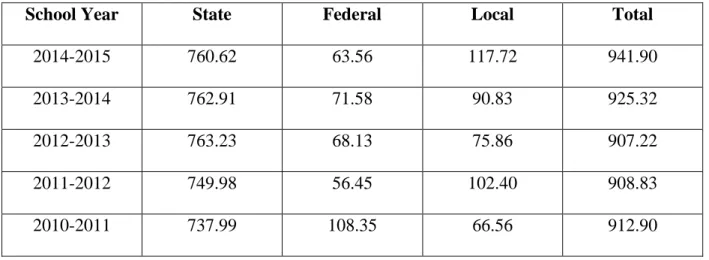
positions in public schools across the United States during the 2011-2012 school year (NCES, 2011-12). During the 2014-2015 school year, federal, state, and local funds were used to allocate 941.9 FTE school social work positions in North Carolina public schools (NCDPI, 2015a). By comparison, there are 115 local educational agencies (LEA) in North Carolina comprised of 2,434 public schools (NCDPI, 2015a). Table 1.0 describes the number of school social work positions allocated to North Carolina schools (NCDPI, 2015a, 2014, 2013, 2012, 2011). Over the last five years, social work services have grown by only 30 FTE positions in North Carolina.
Table 1.0: Allocation of School Social Workers in North Carolina Based on FTE
School Year State Federal Local Total
2014-2015 760.62 63.56 117.72 941.90
2013-2014 762.91 71.58 90.83 925.32
2012-2013 763.23 68.13 75.86 907.22
2011-2012 749.98 56.45 102.40 908.83
2010-2011 737.99 108.35 66.56 912.90
Interstitial Practice or Specialty Practice: Another Look at the Development of School Social Work Practice in Schools
Through a trace of the history of school social work and content analysis of school social work journal articles, Phillippo and Blosser (2013) offer an alternate perspective on the
development of school social work practice. Phillippo and Blosser (2013) initiated their trace based on two claims. One, school social work practice is both a specialty practice area of social work and an area of interstitial practice (Phillippo & Blosser, 2013). Second, it is critical for social work scholars, practitioners, and advocates to understand the interstitial nature of school social practice (Phillippo & Blosser, 2013).
Interstitial emergence theory asserts that when different fields intersect such as the case of social work and education, a new profession emerges (Phillippo & Blosser, 2013). The authors analyzed school social work practice based on Morrill’s three stages of interstitial emergence (Phillippo & Blosser, 2013). Those stages are innovation, mobilization, and
structuration (Phillippo & Blosser, 2013). Each stage will be defined and illustrated using a few examples from the history of school social work.
Innovation occurs when professional fields innovate or adapt existing practices to solve problems outside their field of expertise (Phillippo & Blosser, 2013). For example, in the early 20th century, compulsory attendance laws, urbanization, immigration, and industrialization
The second stage, mobilization, involves garnering organized support for innovative practices (Phillippo & Blosser, 2013). Mobilization attempts to provide credibility and sanction for innovation (Phillippo & Blosser, 2013). In the case of school social work, organized events such as professional conferences, the publication of journal articles, and the coalition of
professional organizations are examples of mobilization (Phillippo & Blosser, 2013). For example, the Commonwealth Fund’s Program for the Prevention of Juvenile Delinquency in 1923 helped to mobilize school social work practice (Phillippo & Blosser, 2013). The project increased the number of school social workers across the United States and generated continued support for the position even after the three-year demonstration project ended (Phillippo & Blosser, 2013). Furthermore, evaluations of the program created research data and publicized findings regarding the tasks of school social workers (Phillippo & Blosser, 2013). The mental hygiene movement of the 1930s and 1940s also mobilized support for school social work practice through its campaign to address the mental health needs of all students (Phillippo & Blosser, 2013). As a result of the mental hygiene movement, state funds were appropriated to support the provision of school social work services (Phillippo & Blosser, 2013).
roles and qualifications of school social workers, national and regional conferences, and
publications (Phillippo & Blosser, 2013). The NASSW later merged with the larger social work organization, the NASW (Phillippo & Blosser, 2013). A common body of knowledge continued to develop through the development of university-based programs to train school social workers (Phillippo & Blosser, 2013). By 1950 there were 11 programs (Phillippo & Blosser, 2013). Later, the NASSW asked what is currently known as the Council on Social Work Education to accredit school social work training programs (Phillippo & Blosser, 2013). School social work’s formal relationship with national associations and the social work accrediting body expanded the infrastructure of the profession (Phillippo & Blosser, 2013).
Interstitial emergence theory holds that the field of education has influenced school social work practice. For example, the EACHA was the first piece of federal legislation to reference school social work practice (Phillippo & Blosser, 2013). Consequently, advocates for school social work framed the profession as an important component of the special education process (Phillippo & Blosser, 2013). As a result, EACHA funding increased the number of school social work positions (Phillippo & Blosser, 2013). By the 1980s, IDEA and ESEA provided more structure to the profession. Both pieces of federal legislation reference school social workers as qualified personnel (Phillippo & Blosser, 2013). In short, IDEA and ESEA gave legal sanction to the profession.
develop and adapt their practices to meet the unique demands of the school setting (Phillippo & Blosser, 2013). In other words, the field of social work and the field of education influence school social work practice (Phillippo & Blosser, 2013). If this is true, a deeper understanding of principals’ perceptions of the roles of school social workers is a critical component of the role development of school social workers. Principals are in a unique position to support mobilization and structuration efforts of school social work practice. Again, principals exert a major influence on the nature and provision of student support services in the school setting.
Defining the Role of School Social Workers
The focus of school social work practice has changed since the profession began. The focus has ranged from social change for immigrants and the poor, to enforcement of attendance laws for all children, to social casework to provide mental health services for at-risk students, and group work for target groups of students (Allen-Meares, 2010b). The profession continues to need to define the role of school social workers and to develop a service delivery model (Richard & Villarreal Sosa, 2014). National and statewide empirical studies contribute to the narrative on role development in school social work practice.
Service to the Child and His Parents, Clinical Treatment of Children with Emotional Problems, Educational Counseling with the Child and His Parents, Liaison between the Family and Community Agencies, Interpreting the Child to the Teacher, Interpreting School Social Work Service, and Case Load Management (Costin, 1969).
Overall, the findings indicated that school social workers defined the role in terms of the social work literature of the 1940s and 1950s (Costin, 1969). School social workers perceived tasks associated social casework as the most important task and those associated with leadership and policy-making as the least important (Costin, 1969). These findings were consistent even when the study controlled for geographic region and school size (Costin, 1969). The focus of the profession was the individual needs of students (Costin, 1969). Whereas, current trends
identified in social work and education literature such as the academic concerns of failing
students, external factors in the home, school, and community that create barriers to teaching and learning, and best practices for assisting students (Costin, 1969).
Costin’s study also highlighted the diverse perspectives of other school staff and the community towards the roles of school social workers (Costin, 1969; Peckover et al., 2013). Administrators and other stakeholders indicated that the most important role of school social workers was to be the liaison between the home, school, and the community (Costin, 1969; Peckover et al., 2013). If school social workers and school administrators are to work
collaboratively to increase student achievement, they must have similar beliefs about the roles of school social workers.
changed since Costin’s study in 1968 (Allen-Meares, 1977). In response to several changes in school social work, the study also examined the professions’ readiness to differentiate the tasks of social workers based on the social worker’s level of education (Meares, 1977). Allen-Meares modified Costin’s questionnaire to reflect the current roles of school social workers based on the literature (Allen-Meares, 1977). The new instrument consisted of 84 items and was administered nationwide to 411 respondents. The data from 269 surveys were analyzed (Allen-Meares, 1977).
Seven categories emerged to describe the tasks of school social workers. The categories are as follows: Leadership and Policy-Making, Educational Counseling with the Child and His Parents, Facilitating the Utilization of Community Resources, Preliminary Tasks to the Provision of School Social Work Services, Clarifying the Child’s Problem to Others, Facilitating School-Community-Pupil Relations, and Assessing the Child’s Problem (Allen-Meares, 1977). School social workers perceived tasks associated with clarifying the child’s problem to others as the most important task and leadership and policy-making as the least important task (Allen-Meares, 1977).
Costin (1969), Allen-Meares (1977) also concluded that the roles of school social workers do not take into account the current problems facing schools. Although Costin and Allen-Meares
defined the role differently, the service delivery primarily emphasized the needs of individual students as opposed to identifying target groups of students with similar problems such as truancy (Allen-Meares, 1977). Even still, the findings noted that more social workers were conducting group work, which was a shift away from social casework (Allen-Meares, 1977; Peckover et al., 2013).
In 1994, Allen-Meares analyzed the tasks of school social workers yet again. Rather than generating a list of social work tasks, this national study examined the context of school social work practice. The study described the environments, working conditions, and the populations served by school social workers (Allen-Meares, 1994). The survey instrument examined 104 school social work tasks and clustered those tasks into five categories: relationship with and services to teachers and school staff, relationships and services to children and families, services to other school personnel, administrative and professional tasks, and community services (Allen-Meares, 1994). For each task, respondents indicated the importance of the task for beginning school social workers, the frequency in which the task is performed, and whether the task was mandated, preferred, or both (Allen-Meares, 1994). The overall response rate for the
questionnaire was 49.5% (Allen-Meares, 1994).
(Allen-Meares, 1994). Again, liaison activities were ranked as significantly more important than leadership and policy-making activities. The study also demonstrated that respondents from small districts rated the importance of leadership and policy-making activities higher than larger school districts (Allen-Meares, 1994). Larger school districts prioritized educational counseling with children and facilitating and advocating families’ use of community resources significantly lower than respondents from smaller school districts (Allen-Meares, 1994). Overall, the study indicated that school social workers continued to emphasize social casework as a model of practice (Allen-Meares, 1994; Peckover et al., 2013).
Early studies around the roles of school social workers seem to focus primarily on
national trends in school social work practice. These studies offer lists and categories of the tasks completed by school social workers and describe the revolving focus of the profession from liaison activities to social casework. The early studies may be helpful to principals by providing a comprehensive list of the roles and responsibilities of school social workers. However, more recent studies on the roles of school social workers draw knowledge from statewide trends and attempt to extend the literature by describing the context of school social work practice, creating conceptual models for practice, and linking practice to major initiatives in education such as response to intervention (RTI). Although these studies primarily focus on the perspectives of school social workers, these studies provide several implications for principals. The empirical studies that follow reflect this change in the literature.
literature. Kelly et al. (2010) attempted to understand if school social work practice reflected current trends such as ecological theory, RTI, and positive behavior support (PBS).
Survey research methodology was used to describe the practice modalities used by school social workers, student characteristics and utilization of services, respondent characteristics, and the current work settings of school social workers (Kelly et al., 2010). More specifically, the study asked respondents to report the amount of time spent implementing prevention, clinical, and administrative activities (Kelly et al., 2010). Prevention and clinical activities were written based on the three tiers of intervention outlined in RTI and PBS (Kelly et al., 2010). Examples of prevention activities are increasing parent involvement, community engagement, in-service training to teachers, and serving on school-based committees (Kelly et al., 2010). Clinical activities focus on the individual needs of students through activities such as individual and group counseling, classroom groups, family-based approaches, and more (Kelly et al., 2010).
et al., 2010). The majority of the students served by the respondents did not receive individual counseling or other clinical services outside of the school setting (Kelly et al., 2010). Although some school social workers are finding ways to develop programs, to engage in prevention work, and other activities aligned with RTI and PBS, clinical casework appeared to be the primary practice modality of school social workers (Kelly et al., 2010; Peckover et al., 2013).
Richard and Villarreal Sosa (2014) conducted an exploratory and descriptive statewide study of the roles of school social workers in Louisiana. All of the school social workers in Louisiana were invited to participate in the study (Richard & Villarreal Sosa, 2014). Three hundred and seventy-eight school social workers employed by various types of schools (public, charter, school-based health clinics, Recovery School District direct-run public schools, and agencies that contract with schools) completed the web-based survey (Richard & Villearreal Sosa, 2014). The researchers developed the instrument from national and state standards for school social work, the district job description, and existing surveys (Richard & Villarreal Sosa, 2014). The instrument consisted of 45 closed-ended questions on a Likert-type scale and one open-ended question (Richard & Villarreal Sosa, 2014).