PREPAREDNESS AND DISASTER RESPONSE TRAINING FOR VETERINARY STUDENTS: AMODEL FOR ACADEMIC CHANGE THROUGH PARTNERSHIP,COLLABORATION, AND INNOVATION
Dianne Dunning
A dissertation submitted to the faculty of the University of North Carolina at Chapel Hill in partial fulfillment of the requirements for the degree of Doctor of Public Health (DrPH) in
the Gillings School of Global Public Health.
Chapel Hill 2011
ii
iii
ABSTRACT
DIANNE DUNNING: Preparedness and Disaster Response Training for Veterinary Students: A Model for Academic Change Through Partnership, Collaboration and Innovation
(Under the direction of Thomas Ricketts)
Background
The nation's veterinary colleges lack curricula necessary to meet veterinary demands
for animal public health and emergency preparedness. A One Health (OH) perspective,
which is a collaborative effort of multiple disciplines to promote the optimal health of
people, animals, and the environment, could provide the basis for such a training program.
To this end, this dissertation explores whether novel thinking and skills, strongly related to
OH, can be successfully transferred to students through a single course: the
competency-based Veterinary Credentialed Responder (VCR) program at North Carolina State University
College of Veterinary Medicine (NCSU CVM). The purpose of the VCR program was to
provide cross-disciplinary training necessary for veterinary students to plan for, and
respond to, disasters holistically by achieving entry-level federal credentials in emergency
response.
Methods
Using the qualitative software package NVIVO-9, thematic content analysis was used
iv
course using theory-driven themes based upon the tenets of change theory. The VCR
program was also evaluated using a comparative thematic analysis of the VCR program and
four case histories of change, a pre- and post-knowledge test for three program modules,
and student self-evaluations of their skills, confidence levels and perspectives in the defined
set of core competencies.
Results
Since 2007, 313 individuals have completed the VCR program. The majority of the
respondents agreed that the VCR program made them feel knowledgeable, comfortable
and competent in performing duties of OH emergency preparedness and disaster response.
Based upon the themes identified in the coding analysis, the VCR program is primarily an
example of both teleological (planned) and cultural organizational change which shaped
both the development and implementation strategy for the program.
Conclusions
The VCR program has altered the paradigm in disaster preparedness and veterinary
public health education by successfully training veterinarians in disaster preparedness. It is
offered as a model that can be used by colleges and schools desiring to incorporate OH
v
To my husband (Steve), my children (George Henry and Sydney)
vi
ACKNOWLEDGEMENTS
First and foremost, I am indebted to my advisor, Dr. Tom Ricketts, whose
generosity of self, comprehensive worldview, and gracious contrarian nature has forever
helped me appreciate the finer details of epistemology and gesaltism. I would also like to
thank my dissertation committee: Dr. Greene, Dr. Havala Hobbs, Dr. Waters and Dr.
Slenning for their enthusiastic support, expertise and time. For her guidance and editorial
assistance, a special thanks to Dr. Jean Cadigan. Thank you to my entire cohort, but
especially Joanne, Rachael, Wendy and Jeanne, for their friendship, fun and encouragement
throughout the Executive DrPH program in Health Leadership. And finally, I would be
remiss without mentioning the extraordinary students at NC State University College of
Veterinary Medicine – whom it is my privilege to teach as well as be taught. Thank you for
your honesty, time, patience and the many chances to become a better educator.
vii
TABLE OF CONTENTS
ABSTRACT ... iii
Background ... iii
Methods ... iii
Results ... iv
Conclusions ... iv
ACKNOWLEDGEMENTS ... vi
TABLE OF CONTENTS ...vii
LIST OF TABLES ... xi
LIST OF FIGURES ... xiii
LIST OF IMAGES ... xiv
LIST OF ABBREVIATIONS ... xv
CHAPTER 1: INTRODUCTION ... 1
The Doctoral Experience: The Search for a Dissertation Topic and Research Question ... 1
The Problem ... 5
Veterinary Medicine’s Current Role in Public Health ... 7
A Proposed Paradigm Change in Veterinary Medicine: The Research Problem and Question ... 9
CHAPTER 2: FUNDAMENTAL PRINCIPLES OF PARADIGM SHIFTS: A LITERATURE REVIEW OF CHANGE THEORY ... 12
viii
Search Protocol and Literature Eligibility Criteria ... 13
The Terminology of Change ... 17
Paradigm Change Defined and Examined ... 19
Case Histories of Paradigm Change within the Health Professions... 21
Case History 1: Carnegie Foundation Bulletin No. 4: The Flexner Report and its impact on medical training in the US ... 22
Case History 2: The Evolution of Nursing Theory: From Nightingale to Metaparadigm ... 28
Case History 3: Paradigm shift failed: A continued struggle to build national capacity and competency in primary care medicine ... 31
Case History 4: The Clinical Prevention and Population Health Curriculum Framework: A New Public Health Curriculum Proposal for Health Professionals ... 35
Understanding and Facilitating Change ... 39
What is Organizational Change? ... 40
Key Concepts of Change... 43
Applied Theories and Models of Organizational Change ... 51
Models of Change in Higher Education: Examination through the Typology of the Six Models ... 63
Applying the Concepts and Models of Change Theory to the VCR Program ... 63
CHAPTER 3: THE VETERINARY CREDENTIALED RESPONDER PROGRAM ... 66
Introduction ... 66
Search Protocol ... 68
Literature Eligibility Criteria ... 68
Terminology Definitions ... 70
Literature Review Methods ... 72
ix
Disaster Training Programs in Professional Colleges and Schools of Human
Health ... 73
Disaster Training Programs in Professional Colleges and Schools of Veterinary Medicine... 77
Core Competencies in Public Health ... 81
Discussion ... 83
HISTORY OF DISASTER TRAINING IN NORTH CAROLINA AND THE VCR PROGRAM DEVELOPMENT ... 85
The Partnership ... 85
The Program Implementation Plan ... 86
The Strategy for Cooperation ... 89
The VCR Program Description ... 90
A Brief Review of Instructional Theory and Bloom’s Taxonomy ... 93
VCR PROGRAM DESCRIPTION: COURSE COMPONENTS AND CONTENTS ... 97
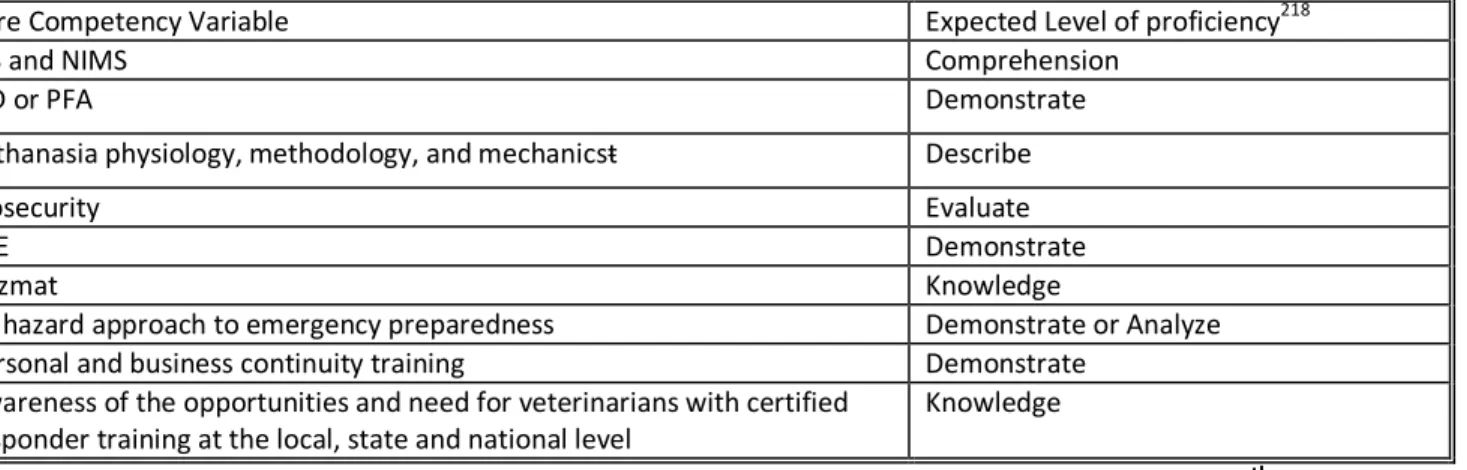
ICS and NIMS ... 97
Psychological First Aid ... 98
Euthanasia Physiology, Methodology and Mechanics ... 106
Biosecurity and Personal Protective Equipment (PPE) ... 107
Hazmat ... 111
All Hazard Approach to Emergency Preparedness ... 112
Personal and Business Continuity Planning ... 112
CHAPTER 4: MATERIALS AND METHODS ... 114
Study Design ... 114
Dissertation Hypothesis Testing ... 116
x
CHAPTER 5: RESULTS ... 136 Executive Summary/Key Findings Outline ... 136 Introduction ... 139 I. What Works: What are the key features of the VCR program that
orient students to OH? ... 139 Ia. What are the typological characteristics of change associated with the VCR
program? ... 139 Ib. What are the key characteristics of successful (and unsuccessful) change
efforts historically? ... 144 II. How well does it work: What is the efficacy of the VCR program in
orienting and enabling students towards OH-PH practices? ... 157 IIa. Did the VCR curriculum provide the students with the information and skill
sets necessary to achieve the expected level of competency and knowledge for
the eight identified core competencies? ... 157 IIb. Did the students value the training program and was the curriculum relevant
to the students and their professional goals? ... 165 IIc. Did the VCR program achieve its goals of improving capacity in Veterinary
Public Health? ... 175 IId. Did the VCR program alter the paradigm in disaster preparedness and
public health training within NCSU CVM and in Veterinary Medicine? ... 180 III. How can it be measured: What are the reported impacts of the VCR
program on disaster preparedness? ... 183 IIIa. Does the implementation and dissemination of the VCR program support
the long term application of the OH concept of public health, in addition to developing new awareness, interest and leadership in the Veterinary Public
Health profession? ... 184 CHAPTER 6: DISCUSSION ... 186
Research Question I: What Works: What are the key features of the VCR
program that orient students to OH? ... 187 Step 1: Establish an impelling mental metaphor which articulates a clear need
for the skills, knowledge and training (Organizational need and established one
xi
Step 2: Gather a leadership team of strong collaborative partners to design, promote and execute the training program (Leader guided process and tradition
of leadership in disaster response) ... 188 Step 3: Define and agree upon new core competencies in veterinary medicine ... 189 Steps 4 & 5: Discuss the new core competencies and training program with the
college and its administrative leadership and faculty (Communication of a clear and relevant vision (e.g. My personal leadership story) and implement the VCR
program ... 190 Step 6: Conduct a formative programmatic evaluation ... 192 Step 7: Decide how the new OH approach may be used for the entire profession
and prepare an implementation plan (Strategic Planning) ... 192 Step 8: Articulate the connection between this new OH approach and develop
the means to ensure the success of the VCR program as a national model for OH disaster training and preparedness for veterinary medicine (Deep transformation
and paradigm shifts) ... 193 Research Question II: How well does it work: What is the efficacy of the
VCR Program in orienting and enabling students towards OH-PH
practices? ... 195 Key Effective Areas of the VCR Program ... 197 Key Areas Needing Improvement in the VCR Program ... 198 Research Question III: How can it be measured: What are the reported
impacts of the VCR program on disaster preparedness? ... 203 CHAPTER 7: PLAN FOR CHANGE ... 204
Recommendation I: All veterinarians should be trained in disaster
preparedness and response ... 204 Recommendation II: All veterinary colleges and schools incorporate
disaster training and emergency preparedness into their DVM professional
programs ... 206 Recommendation III: Change theory and programmatic evaluation can be
used to understand and facilitate the development, planning and
xii
Introduction, Dissemination and Adopting of the VCR Program ... 209
Facilitated Integration, Adaptation, and Application of the VCR Program ... 210
Conclusions ... 215
APPENDICES ... 217
xi
LIST OF TABLES
1. Summary of Flexner’s Educational Philosophy……….……….………26
2. Three disciplines of study within the nursing metaparadigm……….30
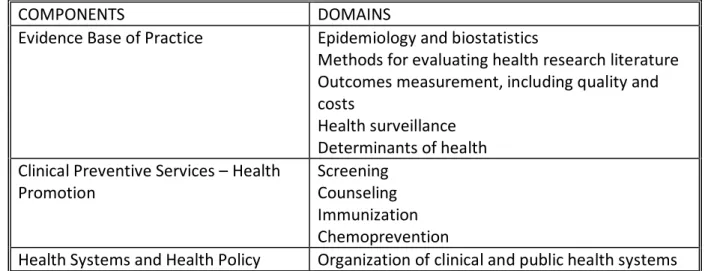
3. The Organizational Content of the Framework based upon Components and Domains……….………..…………..………37-38 4. Phases of Diffusion of Innovation……….………..………..41
5. Combined Scale of Organizational Change for Industry/Profession………..……48
6. Impact of Planned and Unplanned Change Characterized………..……….50
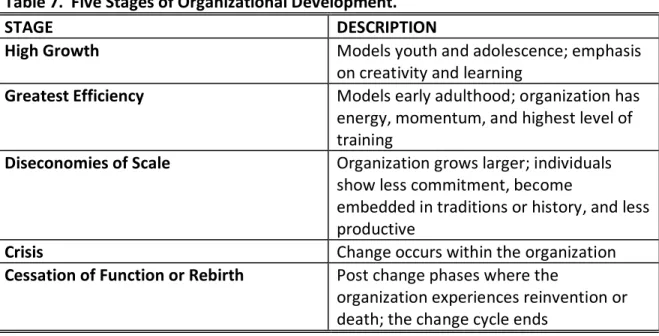
7. Five Stages of Organizational Development………..……….…………58
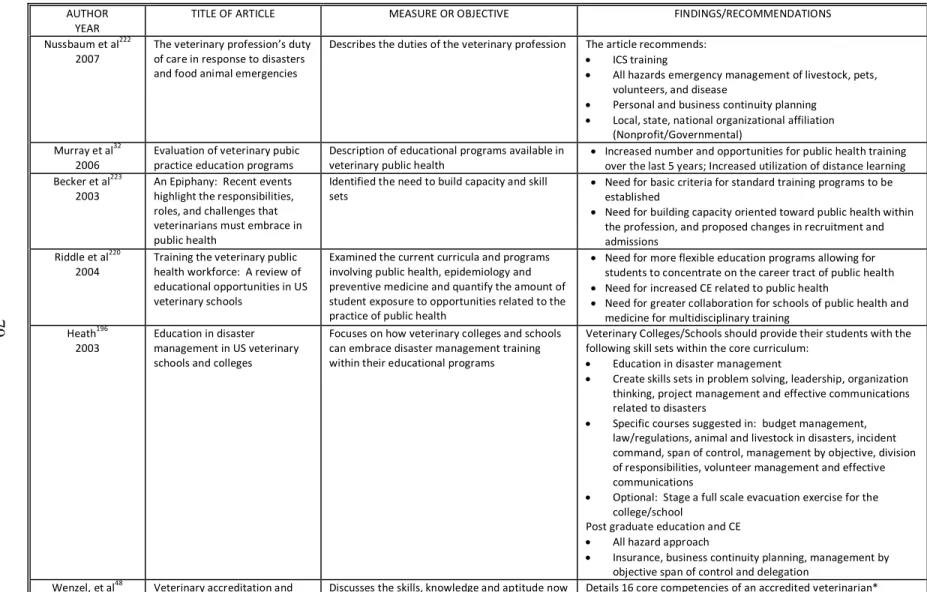
8. Summary of the five articles addressing disaster management training for human medicine in Schools and Colleges of Medicine, Dentistry, Nursing and Public Health………...….…..……75-76 9. Summary of the nine articles addressing disaster management training/education in Colleges and Schools of Veterinary Medicine…………...79-80 10.Organizational and leadership needs, perceived benefits and risks of collaboration, and change management strategies employed in the VCR program for NCSU CVM, UNC-CH GSGPH, and NCDA C&S……….……….87-88 11.Proposed required eight core competencies in disaster preparedness and emergency management for veterinary medicine based upon Bloom’s taxonomy……...91
12. Components of the VCR program at NCSU CVM………..………..……92
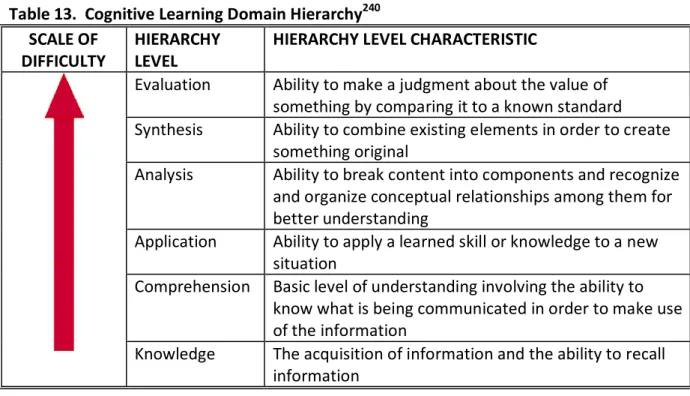
13. Cognitive Learning Domain Hierarchy………..……….….…………95
14.Affective Learning Domain Hierarchy………..………..……….95-96 15.Psychomotor Learning Domain Hierarchy………..……….……...96
xii
17.Research Questions, Data Collection Methods and Analysis……….………...119-122
18.Logic Model for the VCR program………..……….………126
19.Characteristic typologies and themes identified that supported organization change within the four case histories……….145
20.Characteristic typologies and themes identified that impeded organization change within the four case histories……….………154
21.Pre- and Post-test Scores for the PFA Module………..……….158
22.Pre- and Post-test Scores for Hazmat Module………..……….………...159
23.Pre- and Post-test Scores for Biosecurity and PPE Module………..……….…159
24.Summary of Central Tendency of the Self-evaluation of Skills, Confidence and Perspective for the Eight Required Competencies within the VCR program (Likert Survey Results for 2009-10)……….…161-162 25.Likert Survey Summary Results for the Self-evaluation of Skills, Confidence and Perspective for the Eight Required Competencies within the VCR program (2009-2010)……….162-164 26.Student Distribution and Percentage in the Nine Focus Areas (2008-2011 data)……….………...181-182 27.University and Agencies Expressing Interest in the VCR Training Program as a Model of Disaster Preparedness……….………..185
28.Summary of the Key Themes Identified for Eight
xiii
LIST OF FIGURES
1. Distribution of articles included in the full literature review
on paradigm shifts and change……….16
2. Distribution of articles included in the full literature review on
disaster preparedness..…………..………..………….70
3. PFA Case Study Activity……….………..……….101-105
4. Interactional relationship between the dissertation hypothesis
testing steps and program evaluation…………...……….………117
5. PFA Pre/Post Knowledge Test………....……….129-130
6. Hazardous Material Pre/Post Knowledge Test……….……….………..………..131
7. Biosecurity and PPE Pre/Post Knowledge Test………..……...…132-133
8. Self-evaluation of Skills, Confidence and Perspectives within
xiv
LIST OF IMAGES
1. Students in the Poultry Facility discussing Biosecurity and PPE……….….…..………109
2. Donning and Doffing PPE...…..……….………….…...….…110
3. Ultraviolet detectable powder was used to detect breaks
in Biosecurity……….……….111
4. CAMET training orientation……….201
xv
LIST OF ABBREVIATIONS
American Veterinary Medical Association (AVMA)
Animal and Plant Health Inspection Service (APHIS)
Association of Schools of Public Health (ASPH)
The Council of Linkages between Academia and Public Health Practice (The Council)
Council on Education (COE)
Critical Incident Debriefing (CID)
Federal Emergency Management Agency (FEMA)
Hazardous Material (Hazmat)
Incident Command System (ICS)
National Incident Management System (NIMS)
National Response Framework (NRF)
North Carolina Department of Agriculture and Consumer Services (NCDA&CS)
North Carolina State University College of Veterinary Medicine (NCSU CVM)
United State Department of Agriculture (USDA)
University of North Carolina Chapel Hill (UNC-CH)
Gillings School of Global Public Health (GSGPH)
Personal Protective Equipment (PPE)
Pets Evacuation and Transportation Standards (PETS) Act
Psychological First Aid (PFA)
State Animal Response Team (SART)
There is nothing more difficult to plan, more doubtful of success, more dangerous to manage than the creation of a new order of things….”
Niccolò Machiavelli, The Prince (1513)
CHAPTER 1:
INTRODUCTION
The Doctoral Experience: The Search for a Dissertation Topic and Research
Question
In the course of my studies with the Executive Doctoral Program in Health
Leadership (DrPH) at the University of North Carolina Gillings School of Global Public Health
(UNC-CH GSGPH), I have developed a clear understanding of the benefits of a more
comprehensive approach to disaster training and preparedness training within the
professional veterinary curriculum. In particular, university veterinary programs need to
provide relevant training to prepare students and faculty for successful participation in the
sensible resolution of pressing global problems in public health.1 A global One Health (OH)
perspective which is a collaborative effort of multiple disciplines to promote the optimal
health of people, animals and the environment, could provide the basis for such a training
program. The principle of optimal health is employed here in a restricted sense and does
not hold that what is best for public health will be the best for animal or environmental
health as often the three domains are in conflict.2 Ideally, a novel OH training program
would, however, take into account the needs of and impact on all three domains in its
Currently, medical curricula (and to a certain degree, veterinary curricula) mainly
focus on individual-oriented and deterministic risk factors in the search for solutions to
global health problems. This narrow view of health and risk filters into public health
curricula, and is manifested by methods that promulgate human health as a condition that
can be isolated from, and is more important than, environmental health and animal
health.3,4 Unfortunately, the premise of this assumption is fundamentally flawed by its
unifocal emphasis which disregards much of the greater ecosystem within which we exist.
For a paradigm shift in public health to occur, we must first recognize that we live in a larger
world than that of our own creation and thereby acknowledge that there are many
influences on our health and wellbeing outside our current measurement and control.
Adjusting our view of public health to include animals and ecosystems could radically shift
our understanding of priorities and thereby change the current public health model so that
we truly “see nature in a different way” and experience a shift in our paradigm of public
health to population health.5
Our world is at a moment of crisis.6-13 Both medicine (human and veterinary) and
public health are in need of a change in focus or a shift in perspective to fully address the
scope and depth of modern public health problems.10 Despite the progress in science, new
epidemiological methods, and specialized medicine, the world is still facing a complex set of
problems that undermine the health of all living things that cannot be solved through a
reductionist application of sophisticated technology.10 The exploitation of human, domestic
animal, and wildlife populations, coupled with globalization manifested by industrial
development, increased trade and travel, mismanagement of natural resources and
3
application of modern technology, has greatly increased the threat of disease transmission
across groups.11 It is estimated that greater than seventy-five percent of the emerging
infectious diseases are zoonotic; the majority of which have their origin in wildlife.7,14
However, the capability to identify outbreaks of disease relies on the identification of
human cases despite the fact that people serve as a primary reservoir for only 3% of the
known zoonotic pathogens.7
Our ability to meet the collective health challenges that we face today will require a
collaborative effort that transcends the current predominant disciplines.10 For instance,
within both our veterinary and human health professions, there is an urgent need to build
capacity in emergency management and disaster preparedness. There is an increased need
for qualified health professionals who choose population-based careers such as public
health and safety as well as volunteers to help respond to future emergencies or disasters.
Post-professional training is often too late to optimally capture the interest and energy of a
sufficient number of individuals necessary to fully address the gaps in our current public
service, emergency management, and especially our volunteer workforces.15-17 As a result,
veterinary, medical, and public health professional students require additional foundational
and experiential components during their formative training to fully prepare them to
address the complex issues in disaster preparedness and management. A new paradigm in
public health and disaster preparedness requires the integration of a broad set of skills,
knowledge, and competencies that span disciplines and necessitates close partnership
4
The primary aim of the DrPH curriculum at the UNC CH GSGPH is to increase health
leadership capacity globally and produce first-rate future health leaders. The curriculum
focuses on diverse perspectives and experiences across the broad spectrum of public
health. Due to my study and work in the DrPH program, I have come to realize that I could
contribute substantially to efforts to improve the health of people, animals and the
environment by creating a disaster preparedness training program within our professional
veterinary curriculum that could also be used as a national model to achieve a more
inclusive OH paradigm. Veterinary colleges possess a tremendous resource: academically
curious, well-rounded and mature students. Creation of a training program that was
embedded as a part of the core curriculum with key strategic collaborative partnerships
within government and academia will enable all veterinary students (not just a portion) to
graduate with the skill sets and knowledge to contribute to disaster preparedness and
emergency management thereby improving capacity and promoting OH within our
profession. However, curricular/professional change of this magnitude is difficult to
achieve. In order to implement a change of this order, it is useful to review the literature
for examples of paradigm shifts within professions as well as the scholarly research on
organizational change in order to identify the essential components of successful and
unsuccessful change efforts. Through the analysis of this new OH paradigm and curricular
change in veterinary medicine, I hope to gain practical insight into how to accomplish full
implementation and evaluation of a paradigm shift that will be applicable to any
5
effectiveness of new and novel curricula in disaster preparedness and emergency response
that incorporates an OH perspective within veterinary medicine.
The Problem
We live in a time characterized by bewildering social and scientific complexity.18-20
Climate change, bio/agroterrorism, natural disasters, and the ever-growing emergence of
drug and multidrug resistant pathogens populate the list of concerns facing the United
States and the world.9,21,22 Solutions to most of today’s problems will not be found through
the models offered by a single discipline or methodology. Today’s complexities, particularly
in public health, dictate multi- and cross-disciplinary collaboration and holistic analysis of
issues on a systemic basis.
Regrettably, the majority of current public health policies and programs have been
based on individual-oriented, deterministic, risk factor methodologies. These trends
subjugate the scope and domain of public health to focus on the health of individual people
over the ecosystems within which they co-exist.3,23 Adding to this problem is that major
program funding and emphasis is often too narrowly focused, ignoring the larger ecosystem
in favor of a single species. As a result, the unacceptable state of human, animal and
ecosystem health in numerous countries around the world forces us to question the historic
and current approaches in public health and the policies associated therein.23-25
Advances and increased specialization in epidemiology, sociology and medicine have
led to an increasingly narrow concept of public health focused solely on trying to
6
anthropocentric trend is a particular problem, as the collective health of the people,
animals and the ecosystem can be assured only through the cooperation and collaboration
of many individuals in diverse institutional settings, each of which has an important
contribution to make to this important and challenging endeavor.26 Furthermore, forging
and sustaining diverse partnerships that emphasize the contributions of multiple
determinants of health will lead to an integrated and collaborative health system, one that
tends to the entire ecological community and improves collective health of the entire
community.27
Developing new partnerships within academia and public health agencies at the
federal, state and local level will foster and nurture this new integrated cross-disciplinary
approach to collective community health. Currently, people who work as professionals in
the public health system receive their education and training in a wide range of disciplines
and diverse settings, including schools of medicine, nursing, dentistry, social work, allied
health professions, pharmacy, law, public administration, veterinary medicine, engineering,
environmental sciences, biology, microbiology and journalism.26 A broader view across
disciplines of the full scope of public health practice, a new populations or OH practice is
necessary when developing curricular and training programs that ensure optimal
communication, information transfer and collaboration.27
Although there are numerous federal, state and local agencies that make important
contributions through education, training, research and service, these functions are central
7
house training programs and educational curricula that embrace a wider cross-disciplinary
mandate, one that fully addresses the needs of all: human, animal and the environment.8
Veterinary Medicine’s Current Role in Public Health
Among health care professions, veterinary medicine is uniquely positioned to
contribute to human, environmental and animal wellbeing.28 These broad contributions are
possible because veterinarians are trained in the enhancement of the health, utility, and
productivity of domestic and wild animals. Veterinarians are also enjoined to help humans
and society as dictated in the veterinarians’ oath.29 As such, it is a veterinarian’s
professional responsibility to protect people from risks associated with animals and animal
products, contribute to the generation of new biological and medical knowledge, protect
the quality of the environment, and assist in the preservation of genetic resources.30
Veterinary medicine's service to society has been well demonstrated in a long and
distinguished history contributing to the welfare of humans and animals. This has
historically been accomplished through veterinarians’ work with livestock, working animals,
and food safety/security. However, people's attitudes about animals, their care, and
welfare are changing, and veterinary practice is changing as well. Expectations of the
standards of care are approaching, and in some cases exceeding, those within human
medicine. Food animal/livestock production has undergone sweeping changes which have
profoundly changed production practices and the kinds of veterinary services required by
8
income from production farming, agricultural production has shifted from the typical small
one-family farm of the past to larger farms and integrated animal industries.31
At the same time, in the last 25 years there has been a decrease in veterinary
student interest in food supply practice and training; training that also typically includes
disaster preparedness and public service (public practice).32 Furthermore, many recent
studies have shown dramatic shortfalls of veterinarians in key public health practice areas
including food systems veterinary medicine as well as several agencies in the federal
government that protect the nation’s food supply and guard against bioterrorism and
foreign animal diseases.33-36 The existing national pool of 2,800 new veterinarian graduates
per year does not meet the demands of a growing population and the changing public
health needs of society.37
For the past twenty years, the predominant focus of veterinary training is individual
companion animal care.32 Fewer than 5% of new veterinary graduates are choosing to enter
public practice.32,38,39 It is estimated that 20% of new graduates, or approximately 500 of
the roughly 2,800 newly graduated veterinarians per year, would need to choose a career in
population health and public practice to replace and fill all of the current positions in
population health and public service in the United States.32,38,39 Given that enrollment in US
veterinary colleges has been more or less staticfor the past 20 years, it is not surprising that
veterinary medicine is not recruiting or educating a sufficient number of students for
careers in these vital areas to serve the needs of society as a whole.38 We, therefore, also
9
can respond to issues regarding agricultural vulnerability to catastrophic disease, either
caused naturally, accidentally, or intentionally.17,38,40-49
A Proposed Paradigm Change in Veterinary Medicine: The Research
Problem and Question
The purpose of this dissertation is to explore a new paradigm in public health training
through a veterinary medicine lens and OH perspective.7,9,50 The Veterinary Credentialed
Responder (VCR) program at North Carolina State University (NCSU) is part of a novel broad
College of Veterinary Medicine (CVM) initiative in Public Health, in partnership with the
North Carolina Department of Agriculture and Consumer Services (NCDA&CS), University of
North Carolina-Chapel Hill (UNC-CH) Gillings School of Global Public Health (GSGPH), and
the North Carolina State Animal Response Team (NC SART). It is the first of its kind in the
United States. The VCR program is intended to train all NCSU professional veterinary
students to provide leadership and skills in the event of a disaster, agricultural or otherwise.
Through the evaluation of this program, I will answer the research problem that guides this
study, which is, “In what way(s) and to what extent does the VCR program orient professional veterinary students towards a more global, comprehensive, inclusive (OH) perspective of Public Health?” In order to fully answer the research problem, the following research questions were developed:
• Research Question 1: What are the key features of the VCR program that orient
10
o A review of the literature regarding paradigm change, which included
several key historical examples of paradigm shifts within health professions
including the standardization of medical training in 1910 as a response to a
Carnegie Foundation Study by Abraham Flexner (commonly referred to as
the Flexner Report), the evolution of nursing education from experiential
practice to theory driven research, and the most recent trends in medicine
towards primary care education. Furthermore, to supplement my
understanding of paradigm shifts and second order change, I also surveyed
and summarized the literature on change theory at the organizational (with
special emphasis placed upon change within the academic environment) and
leadership levels.
o A review of the literature on disaster training within other health
professions (medicine, nursing and dentistry) which also resulted in a theoretical framework which guided the logic model of program design.
o A detailed description of the VCR program.
o An formal evaluation of both the formative and summative feedback on
the VCR program which resulted in alterations of the program to improve its “internalization” of the course objectives by the participants and adoption of
the course OH’s perspectives regarding the veterinarian’s role and
11
• Research Question 2: What is the efficacy of the VCR program in orienting and
enabling students towards OH-PH practices? The answer to Research Question 2
will come from three sources:
o Student evaluations and feedback.
o Focused interviews with the key faculty and instructors involved with the
development and delivery of the course.
o Review/comparative analysis of the literature related to implementing
change.
• Research Question 3: What are the reported impacts of the VCR program on
disaster preparedness? Because the choices our graduates make will occur over
several years, and so cannot be evaluated now, the answer to Research Question 3
will only be addressed from a short term standpoint. Data collected will be student
CHAPTER 2:
FUNDAMENTAL PRINCIPLES OF PARADIGM SHIFTS: A
LITERATURE REVIEW OF CHANGE THEORY
Introduction
This dissertation investigates how an innovative program, such as the Veterinary
Credentialed Responder (VCR) curriculum, introduces students towards a new paradigm of
thought - beyond the clinical or research based practice of traditional veterinary medicine.
I posit that if the VCR program is a truly effective model of One Health disaster and
emergency management training, then students attending the program will consider it their
professional responsibility to provide service and capacity across species boundaries. Since
there is no single discipline that incorporates the knowledge upon which this inquiry is
based, this literature review is broad and examines the phenomenon of change from a
variety of perspectives and sources.
After a discussion detailing the search protocol and literature eligibility criteria, the
first section will define “paradigm change” and review three historical case examples of
change within the medical and nursing professions. The next section will review the
dominant models, theories and key concepts of change at organizational and leadership
levels. In the third section, special attention will be placed on change within an academic
environment as that is the focus and context of this particular paradigm change. These
13
context leading to the final chapter, which will provide the theoretical framework for the VCR
construct needed to create change both at the organization (college/university) and
professional (organizational) level within veterinary medicine.
Search Protocol and Literature Eligibility Criteria
An extensive literature review was performed in order to address the research problem
and investigate curricular training models that effectively achieve and sustain paradigm shifts
and programmatic/professional/behavioral change within an academic setting. As such, this
particular literature review explores the research related to teaching new paradigms to health
professions. In addition, salient papers, articles and books were gathered to understand the
context of change, leadership and management of change, and change theory (from an
organizational and leadership standpoint) including theories of evolutional, planned, lifecycle,
dialectical, social, and cultural change.
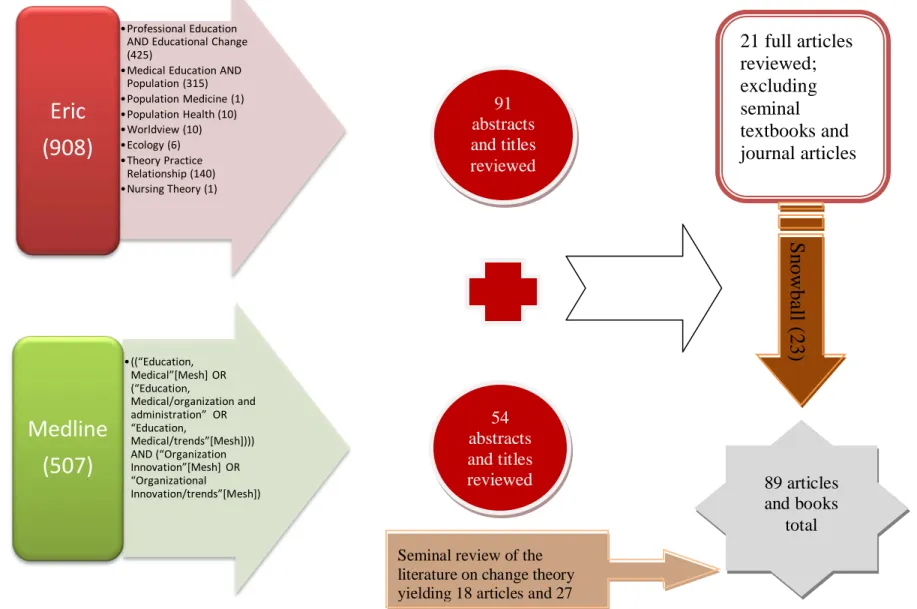
For this literature review, both ERIC and Medline were searched for references from
1967 to the present. Initially, ERIC was searched using the term “Medical Education” which was
then exploded to include the broader term “Professional Education” and narrower terms
(“Veterinary Medical,” “Graduate Medical Education,” “Nursing Education,” “Pharmaceutical
Education”) and related terms (“Premedical Students,” “Problem Based Learning,” “Allied
Health Occupations Education,” “Clinical Experience,” “Clinical Teaching (Health Professionals),”
“Dental Schools,” “Health Occupations,” “Health Personnel,” “Medical Schools,” “Medical
Students,” “Medicine,” AND “Educational Change.” Limiting the search to the English language
14
had to comprehensively describe or evaluate change at the organizational level. Exclusion
criteria included articles that focused on change at the local/group or individual level/degree.
After a survey of the titles and abstracts, 69 articles remained. Additional terms that were
searched in conjunction with “Medical Education” (with results limited to the English language)
included: “Population” (315 titles and abstracts surveyed/10 remained), “Population Medicine”
(1/1), “Population Health” (10/2), “World View” (10/1), “Ecology” (6/2), “Theory Practice
Relationship” (140/5), “and Nursing Theory” (1/1). Again, surveying the titles and abstracts of
these terms yielded 22 articles total. Furthermore, the exploded terms of “Medical Education”
and “Innovation” were also searched, limited to the English language, and yielded 110 articles,
but upon cursory review the focus of these articles was not profound paradigm change.
Medline was also searched to augment this comprehensive review using the following MeSH
keywords: ((“Education, Medical”[Mesh] OR (“Education, Medical/organization and
administration” OR “Education, Medical/trends”[Mesh]))) AND (“Organization
Innovation”[Mesh] OR “Organizational Innovation/trends”[Mesh]). Again, limiting this search
to the English language yielded 507 results. Upon review of the title and abstract content, with
similar exclusion and inclusion criteria, 54 articles remained.
In total 145 articles were fully surveyed and sorted based upon relevant content. Upon
completion, 21 articles remained for full review, including the Carnegie Study by Abraham
Flexner (commonly referred to as the Flexner Report). Furthermore, these reference lists were
“snowballed” (a recognized literature methodology to using key references to identify
additional articles or resources to supplement the literature review51) to yield an additional 23
15
completed which focused on theories of diffusion of innovation, academic change, planned
change, mandated change, and change leadership. The definition of a seminal work is an article
or book from which other works grow.52,53 These articles and books were identified in review
articles as seminal works within the field of change theory. This search yielded 27 books and 18
Figure 1. Distribution of articles included in the full literature review on paradigm shifts and change.
•Professional Education AND Educational Change (425)
•Medical Education AND Population (315)
•Population Medicine (1)
•Population Health (10)
•Worldview (10)
•Ecology (6)
•Theory Practice Relationship (140)
•Nursing Theory (1)
Eric
(908)
•((“Education, Medical”[Mesh] OR (“Education, Medical/organization and administration” OR “Education, Medical/trends”[Mesh]))) AND (“Organization Innovation”[Mesh] OR “Organizational Innovation/trends”[Mesh])Medline
(507)
91 abstracts and titles reviewed 54 abstracts and titles reviewed21 full articles reviewed; excluding seminal textbooks and journal articles 89 articles and books total Seminal review of the
literature on change theory yielding 18 articles and 27
17
The Terminology of Change
To facilitate the understanding and comprehension of the fundamental principles
within this section, the following terms are briefly defined and reviewed below.
Change theory is the study of methods used to incorporate new information into a knowledge base when the new information may conflict with existing information.54
Examples of change theories include the following six major typologies of change
which will be discussed later in this chapter: evolutionary, teleological, life cycle,
dialectical, social cognition, and culture.55
Metaparadigm represents the worldview of a discipline (the most global perspective that subsumes more specific views and approaches to the central concepts with
which it is concerned). For instance, there is considerable agreement that Nursing’s
metaparadigm consists of the central concepts of person, environment, health and
nursing.56-60
Paradigms are a set of rules and regulations that establish or delineate boundaries and direct perceptions, thoughts and behaviors.5,61 The definition of public health is
“the health of the public (people)”. The paradigm of public health operates under
this rubric (and others) where the art and science of preventing disease, prolonging
life, and promoting physical and mental health, sanitation, personal hygiene, control
of infection, and organization of health services is focused on mainly on human
18
A paradigm shift is the fundamental shift in opinion or attitude that results in a change in approach, belief, or practice.5,61 This concept will be discussed in greater
detail in the next section.
A theory is a creative and rigorous structuring of ideas that project a tentative, purposeful and systematic view of phenomenon.57,63 'Multiple causation' is a key
principle of modern epidemiology and commonly referred to as 'web of causation”
theory.64 First articulated in the 1960s, web of causation theory remains a widely
accepted model, reflecting our current biological and social understanding of
population patterns of health and disease.65
A tenet is defined as any opinion, guiding principle, doctrine, dogma, etc., especially
one held as true by members of a profession, group, or movement.66 One of the
fundamental tenets of clinical medicine is primum non nocere: “First do no harm.”
A construct is defined as an image, idea, or theory, especially a complex one, formed
from a number of simpler elements. Sometimes this term is used interchangeably
with concept, however, a construct is most often defined as more abstract than a concept.59,67-69 For example, if “quality of life” is a concept, a theoretical model of
“quality of life” would be a construct such as Health Related Quality of Life, which
can be defined as the value assigned to the duration of life as modified by the social
opportunities, perceptions, functional states, and impairments that are influenced
by disease, injuries, treatments or policies.70
19
interconnected.63 This is a formalized version of a construct and is therefore often
used interchangeably.
Single loop learning is defined as a problem solving process that entails changing actions or strategies for achieving a desired result without changing the underlying
theory or assumptions about those actions. 5,61 Whereas, double loop learning is defined by a problem solving process characterized by changing fundamental values
and assumptions of the theory as well as the strategy and actions. 5,61 An example of
single loop learning is the detection of an error (such as a miscalculation of a drug
dose) and a correction of an error (recalculation and distribution of a drug) by a
pharmacist. Double loop learning occurs when, in addition to the detection and
correction of an error, the pharmacist involved recognizes that there is a problem
with medication errors and institutes a quality improvement program to provide a
structure for identifying problems and recognizing opportunities for improvements
in drug dispensing and pharmacy practice.
Paradigm Change Defined and Examined
Paradigms are defined as a set of rules and regulations that establish or delineate
boundaries and direct perceptions, thoughts and behaviors.5,61 As such, paradigms are
based in accepted theories of normal practice and tradition, and are usually shared by or
agreed upon by a majority of members within a community.5,61 Often, they are helpful as
they allow us to develop expectations of what will or will not occur based upon our past
20
assumptions that results in a change in approach, belief, or practice and is most commonly
associated with cultural change theory typology, described in detail later in this chapter.5,61
The term paradigm shift was first described and popularized in 1962 by
Thomas Kuhn in his book, The Structure of a Scientific Revolution, in which he explored and
discussed the concept of change or scientific revolution within the natural or physical
sciences, such as physics, chemistry, biology, geology or astronomy.5 Dr. Kuhn was an
American physicist who wrote extensively on the history, sociology and philosophy of
science. According to Dr. Kuhn, a paradigm change (or shift) transpires when data or
information falls outside the expected “bell curve” of common perceptions, challenging our
fundamental understanding of a situation.5 Therefore, it should come as no surprise that a
prerequisite to any paradigm change is a general awareness of anomalies.5 Once an
individual (or organization) is aware of the abnormalities within the scientific construct,
there is an alteration of the existing worldview that results in a new understanding of the
surrounding informational landscape.5 True paradigm shifts require more than different
driving directions and detours – they require new topographical maps. The decision to
accept a new paradigm must be made simultaneously with the decision to reject a
previously held belief.5 Kuhn maintained that these shifts are a part the usual
developmental pattern of a mature science and therefore, are an indication of scientific
progress. 5 Historical examples of classic paradigm shifts within medicine are numerous and
include the shift in understanding of disease as a curse (ancient healers were generally
religious leaders or clerics) to disease being viewed as miasmic (caused by sewer gases,
21
Great Sanitary Awaking and the rise of the modern organized public health movement).71,72
Finally, as Koch’s postulates failed to explain the nonrandom distribution of disease (e.g.
chronic disease) within any given group, a new paradigm of epidemiology has emerged,
which accounts for the interrelationship of multiple factors that contribute to the
occurrence of a disease (the web of causation).73 .
The concept of paradigm shifts has also been embraced by the social sciences, which
also unfortunately has lead to the term being overused (and, in some cases, abused) and
misapplied.74 Kuhn himself believed that the paradigm shift concept was only applicable to
the natural or physical sciences due to the hermeneutic and subjective nature of the social
sciences.5 Nonetheless, the paradigm shift concept, when appropriately applied, is a very
useful guiding concept when considering implementation of programmatic innovation and
organizational change. Although philosophers (and students) argue the significance of this
philosophical contribution, its impact has been long lasting.
Case Histories of Paradigm Change within the Health Professions
There are many historical examples of paradigm change described in science.
However, the present inquiry limits the exploration and description to the changes in
professional paradigms related to the health professions. Four paradigm shifts will be
discussed below, each of which highlights the conditions and parameters necessary to
22
Case History 1: Carnegie Foundation Bulletin No. 4: The Flexner Report and its impact on medical training in the US
Currently, in 2011, there are 133 colleges of medicine and 26 accredited colleges of
osteopathic medicine in the United States that offer MD or DO degrees for physicians.75,76
With standardized admissions and entry criteria, course content, and teaching
methodology, modern medical education and training in the United States is both rigorous
and demanding. However, this difficult, uniform educational paradigm was not always the
norm. In the nineteenth century, there were over four hundred medical schools in the
United States and most medical education was administered through one of three basic
routes: 1) apprenticeship, where students received hands-on instruction from a local
practitioner; 2) a proprietary schools system, in which groups of students attended a course
of lectures from physicians who owned the medical college; or 3) a university based system,
in which students received some combination of didactic and clinical training at university
affiliated lecture halls and hospitals.77 Medical training bore little “unity of purpose or
standards” and there was an “an enormous over-production of uneducated and ill-trained
medical practitioners.”78 Medical training consisted of a variety of topics, including
scientific, osteopathic, homeopathic, chiropractic, eclectic, physiomedical, botanical and
Thomsonian practice (for example, practitioners of Thomsonian medicine believed that
“heat is life, and cold is death” and therefore utilized vomiting, sweating, and purging to
cure their patients).79 The heterogeneity of educational experience and paucity of licensing
examinations led to medical professionals who varied tremendously in their medical
23 A Call for Change within the Medical Profession
Due to the lack of standards in practice and variability of training, the medical
profession felt compelled to self-organize and founded the American Medical Association
(AMA) in 1847, which strove to elevate the standard of medical education in the United
States by advancing the science of medicine, improving the standards for medical
education, developing a program of medical ethics, and improving the health of the public
for the purpose of self-regulation of the profession.80 With the founding of the AMA,
medical reform was slowly underway, although many physicians thought the association’s
goals to be “impractical, if not utopian.”80 Throughout the second half of the 19th century,
the AMA lobbied for the standardization of American medical education with little
success.77 Unfortunately, political traditions of “republicanism” and a distaste of
authoritative rule dissuaded and delayed any national regulation of the medical
profession.80 Additionally, the majority of patients and the general public were
unconvinced and lacked knowledge of the superiority of any specific medical training,
system, or discipline.80
However, there were several shifts by the end of the century that served to
galvanize the medical profession and the general public at large. A series of scientific
breakthroughs altered the values of the general public and the medical profession.
Antiseptic surgery, vaccination, and public sanitation had all proven therapeutic efficacy and
gained public acceptance.72,77 Moreover, the “heroic medicine” of the Victorian Age, which
included blistering, bleeding, purging and sweating, was falling out of favor due to mounting
24
consensus among physicians and educators that any form of medical education must now
be based in the scientific method, with students spending significant time in the clinical and
laboratory settings of a hospital.77
During this timeframe, the AMA led the effort to eliminate schools that failed to
adhere to a more rigorous brand of systematized, science based medical education. In
1904, the AMA created the Council on Medical Education (CME) to further promote the
restructuring of US medical schools.72 Two of its first major reform initiatives were to
standardize the preliminary education requirements for entry into medical school and
national implementation of an “ideal” medical education, consisting of two years of training
in laboratory sciences, followed by two years of clinical rotations in a teaching hospital.72,77
To promote the AMA’s reformist agenda and accelerate the elimination of inadequate
medical schools, the CME proposed to survey all US medical schools on five areas: 1)
admissions requirements, 2) size of faculty and the quality of their credentials, 3) size of
endowment and tuition, 4) quality of laboratory facilities, and 5) availability of a teaching
hospital whose physicians and surgeons would serve as clinical faculty.77,78,81 In 1908, the
CME commissioned the Carnegie Foundation for the Advancement of Teaching and Dr.
Abraham Flexner to lead the initiative.77-79,81-84
Abraham Flexner and the Foundation for the Advancement of Teaching
Abraham Flexner (1866-1959) was a classics scholar and former schoolmaster, who
believed that education should prepare an individual for the responsibilities of citizenship,
25
be known as progressive education, which was based upon the theories and concepts of the
philosopher and educational reformer, John Dewey. 85 Like Dewey, Flexner strongly
believed in a balance between knowledge delivery and students' actual experiences and
process of active learning.85 In addition, based upon his experience and training in
education, Flexner maintained that research and teaching were inseparable and that the
clinician and scientist were one in the same, bridging the gap between basic and clinical
science in an effort to build a more science-based medical discipline.86 He also postulated
that didactic lectures had limited usefulness in teaching the laboratory sciences, and that it
was essential to supplement learning with textbooks, experiments, and laboratory and
clinical work.86 In essence, Flexner strongly believed that one learned medicine by doing.85
In 1908, the number of medical colleges had decreased, but they still differed greatly
in their curricula, methods of assessment, and requirements for admission and
graduation.77-79,81-84 Over the course of 18 months, Flexner reportedly visited 155 of the
operating US graduate and 12 postgraduate medical schools.77,78,83,87 Flexner’s report
uncovered and exposed serious inconsistencies at many of the institutions between claims
of progressive, scientific principles of the mission of medical education and a lack of the
human, financial and facility resources necessary to support such ambitious endeavors.77,78
However, there were several schools that received praise for excellent performance,
educational standards and modern facilities.77,78,84,85 These included Harvard, Western
Reserve, Michigan, Wake Forest University School of Medicine, McGill, University of
Toronto, and Johns Hopkins, which Flexner latter describe has his 'model for medical
26
necessity of science within medical practice, the comprehensive and thorough nature of his
survey, and the universal appeal of his message to the American public..83 Although
medical reform had been underway for fifty years previous, Flexner’s report catalyzed
change by defining the problems facing medical education at the turn of the century and
laying a clear and tangible path for reform. Table 1 details a summary of Flexner’s
Educational Philosophy from the Carnegie Foundation Bulletin No. 4.78,86
Table 1. Summary of Flexner’s Educational Philosophy, Modeled after John’s Hopkins School of Medicine’s Program.78,81,84-86
PHILOSOPHICAL MANDATE SUMMARY DETAILS
Learn by doing Consider the utility of what is being taught, do not make the educational process too long, consider professional medical students as adult learners, but provide them with reasonable curricular pathways, depending upon their career choices, and finally, teach medicine as a scientific discipline at both the preclinical and clinical levels.
Linking medical training to academia All medical colleges must have a direct link and relationship with a parent university.
Mandating a university based hospital experience within medical training
Each medical school must have a university hospital in which the staff constitutes the teaching faculty.
Criticisms of the Flexner Report
Although the Flexner report continues to be hailed as one of the most
significant documents which led to the reform of medical education, it is not without its
flaws. The frank candor and caustic nature of its reporting on the conditions of many of the
medical schools, led to an immediate and profound reaction across the country.87 Many
leaders in the academic medicine found the Flexner Report to be intemperate and unfair
27
a cursory understanding of medicine), 2) biased and unduly influenced by the Carnegie Foundation, the Rockefeller General Education Board, and AMA which supported allopathic
over other sects/disciplines of medicine and did not favor proprietary, for-profit institutions
of training, 3) cursory in its review of the schools and that it overlooked many of the efforts of improvement particularly in the rural, poor institutions, 4) hasty (Flexner finished his tour of schools within less than a year, reportedly spending less than one hour at some
institutions and none at others, and 5) unfair, as it recommended closure of all three women’s colleges and five of the seven black colleges due to a perceived lack of demand,
thereby limiting enrollment to the Caucasian male. 87
Despite these charges, Flexner’s report was very influential.77-79,82-85,87 Rallying
around Flexner’s medical education philosophy, the combined efforts of the state licensing
board, philanthropic foundations, and the Federation of State Medical Boards, which
voluntarily agreed to base their accreditation policies on the AMA’s CME academic
standards, resulted in the eradication of proprietary medical colleges and the
standardization of the laboratory- and hospital-based research medical university model
that Flexner advocated in his report.77,78,85
One hundred years ago, Abraham Flexner’s critique of medical education evoked a
profound paradigm change within medical education and society as a whole, laying the
groundwork for what is now known as the modern medical curriculum.83 Flexner’s model of
change has relevant lessons to learn for those seeking innovative change within education
28
Case History 2: The Evolution of Nursing Theory: From Nightingale to Metaparadigm
By definition, nursing is the provision of services essential to prevent illness or to
promote, maintain, and restore health and well-being.56,57,59,60,88-93 Nursing research and
theory is a systemic inquiry designed to develop knowledge about core issues of the nursing
profession and articulate a normative standard for its practice.57,59,60,90-92,94 The current
spectrum of nursing theory covers a diversity of topics, models, and constructs related to
the fundamental practice of nursing, education, administration and
informatics.22,56,57,59,67,88,89,92,95-101 Originally, however, nursing theory’s essential aim was to
define nursing as a profession distinct from other health disciplines and to differentiate
expert nursing from a dependent, subservient, task-oriented vocation.56,59,92
Florence Nightingale
Although the origins of nursing pre-date the mid-19th century, the history of
professional nursing traditionally begins with Florence Nightingale.60,92,93 Nightingale’s
philosophical perspective and teachings, as detailed in her 1912 landmark book, Notes on
Nursing: What It is and What It is Not, set the foundation of nursing training, education,
and theory that has been practiced for the last century and a half.88,92,102 In 1860, modern
practices of health were only just being discovered.60,72,93,103 The ideas, values and beliefs
expressed in the thin book of 136 pages were revolutionary to the wellbeing and care of the
19th century patient, when being hospitalized was akin to a death sentence and nurses were
29
Throughout her long career, Nightingale fought for the recognition of nursing as a
profession and academic discipline with a distinct body of knowledge.92 Despite her efforts,
it was more than 100 years before nursing shed its vocational heritage and began serious
discussion about the need to develop, articulate, and test nursing theory.92 In the 1950s,
the first nursing research journal was established which led to a growing body of
peer-reviewed evidenced-based literature.57,61,90,92,96,101,104,105 A review of this body of literature
in the mid-1970s revealed, however, that it consisted mainly in course selection and
curricular content and that the nursing profession still lacked the conceptual connections
and theoretical frameworks necessary to truly define its mission.56,57,92 Tandem to the
critical literature review, there was a concurrent movement to establish and accredit
independent graduate level programs of study through the League for Nursing across the
United States for both master and doctoral nursing students.92 The transition from vocation
to profession was made at this juncture by the leaders within the emerging discipline asking
a simple but obvious question, “Will nursing be based in other disciplines of health or be
based in the inherent tenets of nursing care?”91,92
Jacqueline Fawcett and the Metaparadigm of Nursing
In answer to this question, Dr. Jacqueline Fawcett proposed a metaparadigm of
nursing.56,59,60 According to Fawcett, a metaparadigm represents the worldview of a
discipline or the most global perspective that subsumes more specific views and approaches
to the central concepts with which it is concerned.56,58-60 Fawcett’s proposal introduced an
organizing structure for the existing frameworks within the nursing literature and spelled
30
metaparadigm’s foundation was firmly rooted in Nightingale’s original observations and
philosophies on nursing, which demarcated the discipline into four areas of focus: the
patient, the environment, the health (or illness) entailed, and the nurse.56,93 These four
areas have been recurring themes within the literature and works of nursing scholars since
Nightingale.22,56-61,67,88-102,104-108 Fawcett went on to define three disciplines (areas of study)
within the defined nursing metaparadigm (Table 2).
Table 2. Three disciplines of study within the nursing metaparadigm.56 AREAS OF STUDY TOPIC
The principles and laws that govern the life process, wellbeing, and optimum functions of humans sick or well
The patterning of human behavior in interaction with the environment in normal life events and critical life situations
The process by which positive changes in health status are affected
The development and maturation of the nursing profession through training,
education and the promotion of nursing theory brings Kuhn’s ideas of paradigm shift to
life.5,56,57,59,88,92 Nightingale and other nursing leaders across the country systematically
attempted to bring structure and cohesion to the discipline of nursing practice.
22,56-61,67,88-102,104-108 Nursing theory emerged as a product of a decade of scholarship by individuals
within the fledgling nursing profession who sought higher education and realized the
limitations of the previous paradigm of nursing as a vocation shackled to other disciplines
such as medicine. Through their collective efforts to establish a scientific basis for nursing
management, curricula, practice, and research, a convergence of ideas resulted in the
emergence of what is referred to today as nursing theory, which serves as the organizing
31
Case History 3: Paradigm shift failed: A continued struggle to build national capacity and competency in primary care medicine
Primary care is currently defined as the provision of integrated, accessible health
care services by clinicians who are accountable for addressing a large majority of personal
health care needs, developing sustained partnerships with patients, and who practice in the
context of family and community.109-116 Until World War II, healthcare in the United States
was essentially provided by the family or general practitioner with specialty medicine being
accessible by referral only.109 The shift away from this primary care model began during
this time period, with the arrival of specialty training practice and the advent of pediatric
and internal medicine specialty boards (established in 1933 and 1936, respectively).109
Prior to World War II
In the 1920s, notwithstanding the reforms in medical education following the 1910
publication of the “Flexner Report” and the concurrent advances in medical science at the
end of the 19th century, many medical and health professionals remained dissatisfied with
progress in improving general health and wellbeing in the US.78,109,117-120 Therefore, in May
1927, leaders of medicine, public health, and social sciences met at the annual meeting of
the American Medical Association (AMA) and established the Committee on the Costs of
Medical Care (CCMC) which would comprehensively study the economics of health care
over the subsequent five-year period.109,117-120 The CCMC’s studies were broad in scope,
evaluating issues related to medical care needs, resources, and expenditure; professional
and institutional investments, costs and incomes; standards of good care; existing