INFORMATION PROCESSES OF HEALTH COMMUNICATION AND FRUIT AND VEGETABLE CONSUMPTION: A MULTI-SAMPLE STRUCTURAL EQUATION
MODELING APPROACH BY INTERVENTION AND COLON CANCER STATUS GROUPS
By
Linda Kyongsuk Ko
A dissertation submitted to the faculty of the University of North Carolina at Chapel Hill in partial fulfillment of the requirements for the degree of Doctor of Philosophy in the Department of Health Behavior and Health Education of the School of Public Health
Chapel Hill 2008
Approved by:
Chair: Brenda DeVellis, Ph.D. Reader: Jo Anne Earp, Ph.D. Reader: Megan Lewis, Ph.D.
ABSTRACT
LINDA K. KO: Information Processes of Health Communication and Fruit and Vegetable Consumption: A Multi-Sample Structural Equation Modeling Approach by Intervention and
Colon Cancer Status Groups
(Under the direction of Brenda DeVellis (Chair), Jo Anne Earp, Megan Lewis, Marci Campbell, & Abigail Panter)
A diet low in fruits and vegetables has been associated with increased risk for colorectal cancer. Health communications with Tailored Print Communication (TPC) and Telephone Motivational Interviewing (TMI) have been shown to be effective in promoting fruits and vegetable consumption (FVC). This study explored the mechanisms underlying TPC and TMI effectiveness among colon cancer survivors and colon cancer-free individuals, guided by the Information Processing Theory.
The data come from the North Carolina Strategies to Improve Diet, Exercise, and Screening study (NC STRIDES). NC STRIDES tested the efficacy of TPC and TMI to promote FVC among a population-based sample of 735 participants (36% colon cancer survivors and 64% colon cancer-free individuals) who were randomized to control, TPC, TMI, or combined (TPC+TMI) groups. Information processes were perception of message relevance, trust, and recall. Multi-sample structural equation models were constructed.
iv
higher trust was related to FVC (p <.05). In the colon cancer-free group, the relationship between health communication and FVC was mediated by information processes among those who received the TMI intervention only and TPC+TMI. The model had a good fit with χ2(28, N =469) =68.11, CFI =.98, TLI =.97, RMSEA =.055, and SRMR =.036. TMI had an indirect effect on FVC through message relevance. TPC+TMI influenced FVC through two paths. In the first path, message relevance was associated with trust (p <.001) and greater trust was related to recall (p <.05). More recall influenced FVC (p <.05). In the second path, message relevance was associated with recall (p <.001), and more recall with FVC (p <.05).
vi
ACKNOWLEDGEMENTS
This dissertation would not have been possible without the love and support of the following individuals, who have surrounded me with love and supported me in my journey to accomplishing one of the most difficult, yet amazing undertakings of my life.
To my dissertation chair and advisor, Dr. Brenda DeVellis, thank you for your support, expertise, patience, encouragement, and career guidance throughout this process. Your wisdom and candor during the last five years have been invaluable. You truly made this training process a wonderful experience.
I give my heartfelt thanks to my dissertation committee members, for their comments and crucial input throughout this dissertation process. Dr. Marci Campbell, thank you for sharing your expertise, patience, encouragement, and time with me. You are truly a great researcher and have taught me what it means to have passion for my research. Dr. Jo Anne Earp, thank you for your expertise, enthusiasm, insight, and most of all helping me expand my own horizons. You are one of the greatest mentors I have ever had. Dr. Megan Lewis, thank you for your expertise, patience and your openness to guide me as I navigate the difficult path of becoming an independent researcher. Dr. Abigail Panter, thank you for introducing me to the world of structural equation models and demystifying this powerful technique to be used in my dissertation.
I would like to thank Dr. Michael O’Malley for the enthusiasm and positive
financial support for my research. To my academic advisor, Dr. Allan Steckler, I will always be grateful for your support, candor and warmth. I would have been completely lost without your guidance in the first few years in the program.
I would also like to thank my dearest friends who have enriched my life, Sarah, Poo, Lesha, Zoe, Anh, Kim, Judy, William, and Hester. Thank you for sharing, lamenting, and celebrating life with me. I could not have done all that I have without your encouragement, friendship, laughter, get-togethers, and memorable coffee breaks.
To my dear friend, Kathryn, thank you for your friendship. Thank you for all you have done-every note, card, email, and phone call, helped me in reaching the next step. I am blessed to have been surrounded by the encouragement, laughter, and wisdom of you and your family.
To my parents, thank you for being my first and best teachers. You have always reminded me that anything is possible with the courage to dream, a clear vision, hard work, and faith in God. Thank you for instilling me a sense of optimism and the audacity to embrace every challenge and opportunity. Your spirit and dedication to your children has allowed me to come so far. To my mother-in-law, Hwaja Lee, thank you for your
encouragement and support. I feel blessed to have another person who cared about me just as much as my mother.
viii
words. To my nieces and nephews, Minji, Hanjoon, Hanbee, Michelle, Minjung, David, Andrew, Daniel, Dylan, Moses, Rachael, and Faith, thank you for your unconditional love.
And finally I would like to thank the people who helped me maintain my perspective on the important things in life - my family. To my husband, Jongil Choi, thank you for believing in me and reminding me that I could accomplish anything with love, faith, and courage. Your love was a place where I could retreat to when I needed rest along this journey. To my precious little girl, Karen Choi, thank you for growing up so beautifully and bringing joy into my life. Your smile and your love kept me going in reaching the next step. I feel blessed to have you both in my life.
TABLE OF CONTENTS
LIST OF TABLES... xii
LIST OF FIGURES... xiii
LIST OF ABREVIATIONS... xiv
I. INTRODUCTION... 1
1.1 Overview...1
1.2 Dissertation Study Purpose and Aims...3
II. LITERATURE REVIEW...5
2.1 Colorectal Cancer...5
2.2 Fruit and Vegetable Consumption in the U.S. ...7
2.3 Colorectal Cancer Survivors and Fruit and Vegetable Consumption...9
2.4 Health Communication Intervention and Fruit and Vegetable Consumption ...11
2.5 Tailored Print Communication and Fruit and Vegetable Consumption ...12
2.6 Telephone Motivational Interviewing and Fruit and Vegetable Consumption ...14
2.7 Characteristics of Colon Cancer Survivors and Health Communication ...16
2.8 Summary ...17
III. INFORMATION PROCESSING THEORY...19
x
3.2 Information Processes as an Input/Output Model...19
3.3 Intervention can Enhance Information Processes ...23
3.4 Multi-component Intervention and Information Processes...25
3.5 Information Processes and Characteristics’ of Colon Cancer Survivors ...26
3.6 Information Processes as Mediators of Health Communication and Fruit and Vegetable Consumption ...27
3.7 Matching Variables of NC STRIDES and Information Processes ...29
3.8 Conceptual Framework of the Study ...30
3.9 Research Questions, Aims, and Hypotheses...30
3.9.1 Research Question 1...30
3.9.2 Research Question 2...30
3.9.3 Research Question 3...31
3.10 Summary ...31
IV. METHODOLOGY...33
4.1 Overview...33
4.2 Study Design...33
4.3 Sample...34
4.4 Recruitment...35
4.5 Intervention ...36
4.6 Data Collection ...37
4.7 Measures ...38
4.7.1 Dependent Variables...38
4.7.2 Mediator Variables ...38
4.7.4 Other Variables ...40
4.8 Statistical Analysis...41
4.8.1 Structural Equation Model as an Analytic Method...41
4.8.2 Multi-sample Structural Equation Model...42
4.8.3 Model Fit Indexes ...43
4.8.4 Modification Index...44
4.8.5 Model Identification...45
4.8.6 Analysis for Aim 1...45
4.8.7 Analysis for Aim 2...46
4.8.8 Analysis for Aim 3...48
V. RESULTS...50
5.1 Overview...50
5.2 Description of the Study Sample ...50
5.3 Relationship between Health Communication and Information Processes ...51
5.4 Main Findings ...52
5.4.1 Findings for Aim 1...52
5.4.2 Findings for Aim 2...55
5.4.3 Findings for Aim 3...58
5.5 Summary ...61
VI. DISCUSSION...62
6.1 Overview...62
xii
6.2.1 Information Processes of Health communication
and FVC among Colon Cancer Survivors...63
6.2.2 Information Processes of Health communication and FVC among the Colon Cancer-Free Group ...65
6.2.3 Information Processes of Colon Cancer Survivors and Colon Cancer-Free Group ...69
6.3 Strengths and Limitations ...71
6.4 Implications for Future Intervention Studies and Public Health...73
6.5 Conclusion and Recommendations...75
APPENDICES...96
LIST OF TABLES
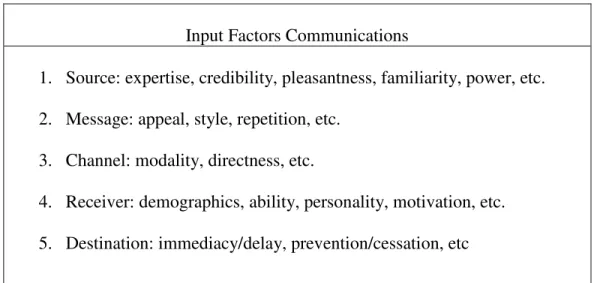
Table 1. Five Input Factors of Communication of Information Processing Theory ...76 Table 2. Twelve Successive Output Factors or Outcomes of Communication
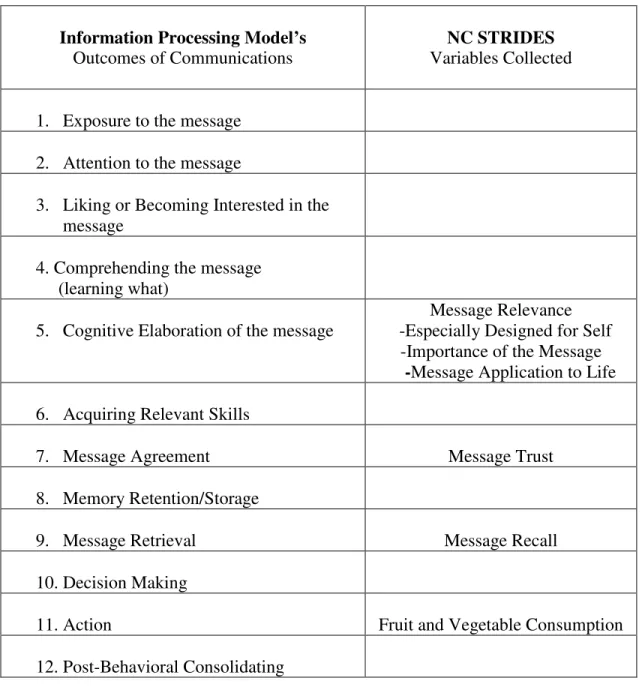
of Information Processing Theory and Matching Variables
from NC STRIDES ...77 Table 3. Demographic Characteristics of All Participants by
Colon Cancer Survivorship ...83 Table 4. Demographic Characteristics of Colon Cancer Survivors by
Intervention Type ...84 Table 5. Demographic Characteristics of the Colon Cancer-Free Group
by Intervention Type...85 Table 6. Bivariate Analysis of the Relationship between Intervention
and Information Processes among Colon Cancer Survivors by
Intervention Type...86 Table 7. Bivariate Analysis of the Relationship between Intervention
and Information Processes among the Colon Cancer-Free Group
by Intervention Type...87 Table 8. Summary of Confirmatory Factor Analysis Measurement
Models for Colon Cancer Survivors ...88 Table 9. Summary of Confirmatory Factor Analysis Measurement
Models for the Colon Cancer Free Group...90 Table 10. Fit Results of the Structural Invariance among Intervention
xiv
TABLE OF FIGURES Figure 1. Conceptual Model of the Relationship between
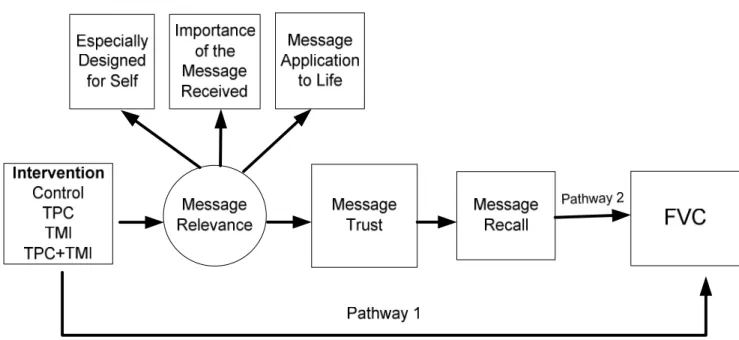
Health Communication, Information Processes, and
Fruit and Vegetable Consumption in NC STRIDES’ Participants... 78 Figure 2. Hypothesized Model for AIM 1 of the Relationship between
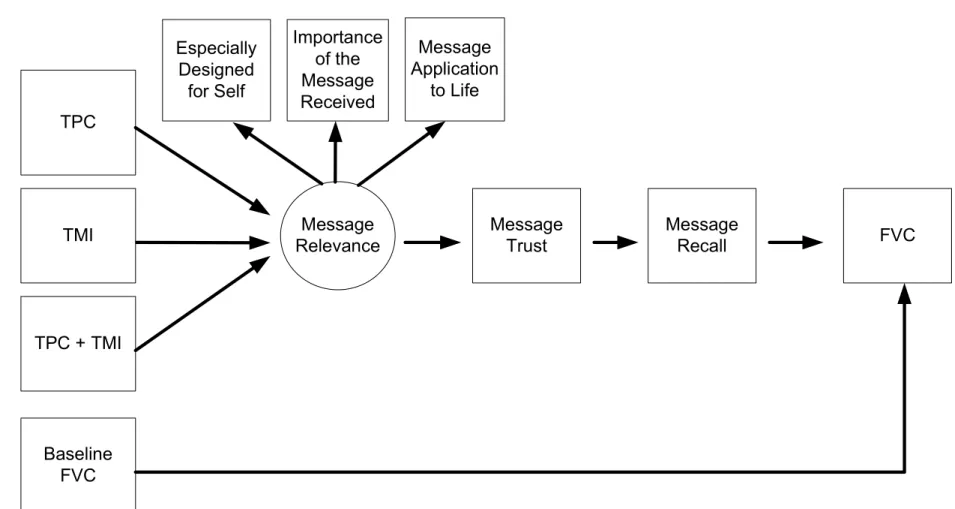
Health Communication, Information Processes, and Fruit and
Vegetable Consumption in NC STRIDES’ Participants ... 79 Figure 3. Hypothesized Model for AIM 2 of the Relationship between
Information Processes and Fruit and Vegetable Consumption
By Intervention Groups ... 80 Figure 4. Hypothesized Model for AIM 3 of the Relationship between
Health Communication, and Fruit and Vegetable Consumption
among NC STRIDES’ Participants by Colon Cancer Groups ... 81 Figure 5. Randomization of NC STRIDES Study Participants ... 82 Figure 6. Path Diagram of Model Testing Information Processes
as Mediators of the Relationship between Health Communication
and Fruit and Vegetable Consumption among Colon Cancer Survivors ... 89 Figure 7. Path Diagram of Model Testing Information Processes
as Mediators of the Relationship between Health Communication
and Fruit and Vegetable Consumption among the Colon Cancer-Free Group ... 91 Figure 8. Path Diagram of Multi-Sample Structural Equation Model
by Intervention Groups among Colon Cancer-Free Group ... 93 Figure 9. Path Diagram of Multi-Sample Structural Equation Model by
Colon Cancer Groups among Participants in the Combined
LIST OF ABREVIATIONS CRC Colorectal Cancer
FVC Fruit and Vegetable Consumption SEM Structural Equation Model
CHAPTER 1 INTRODUCTION
1.1 Overview
Unhealthy lifestyle behaviors, such as a poor diet, can lead to increased morbidity and mortality among American adults (Berlin & Colditz, 1990; Ness & Powless, 1997; Srinath & Katan, 2004). For example, a diet low in fruits and vegetables is associated with increased risk for chronic diseases such as cancer (American Cancer Society (ACS), 2008; Slattery, 2000). In 1991, the National Cancer Institute and the Produce for Better Health Foundation jointly launched the 5-A-Day Program to increase public awareness of the importance of eating at least 5 servings of fruits and vegetables each day. Despite these efforts, more than half of all American adults do not meet national guidelines for daily fruit and vegetable consumption (FVC) (Casagrande, Wang, Anderson, & Gary, 2007).
(Kreuter & Skinner, 2000; Kreuter, Stretcher, & Glassman, 1999; Skinner, Strecher, & Hosper, 1994). The characteristics used in tailoring are typically grounded in social-psychological theories that are known to predict behavior change (Kreuter et al., 1999; Kreuter & Skinner, 2000; Skinner et al., 1994). Tailoring seems to work by inducing more attention and enhancing personal relevance of the materials (Campbell & Quintiliani, 2006).
Telephone Motivational Interviewing (TMI), an alternative medium for tailored health communication, has also been used to promote healthy eating (Resnicow et al., 2004; Resnicow & Shaikh, 2007). Such strategies apply a counseling technique known as
motivational interviewing to increase an individual’s motivation for behavior change (Miller & Rollnick, 1991; Rollnick, 1996). Motivational interviewing sessions are successful in influencing behavior change when the counselor begins by establishing rapport and trust (Bundy, 2004; Emmons & Rollnick, 2001). Rapport and trust are built when individuals perceive that the counseling sessions are relevant to their personal values and goals (Berg-Smith et al., 1999; Resnicow & Shaikh, 2007).
Health communication experts have focused extensively on testing and developing
new and effective communication strategies for behavior change. Less attention, however,
has been given to understand how health communications work to exert their effects (Rimer
& Glassman, 1999; Skinner et al., 1999). Experts have discussed the need to examine
theory-based mediators of health communication to understand how and why interventions
work and whether each type of intervention works differently for various populations (Rimer
& Glassman, 1999; Skinner et al., 1999).
Theories of information processing paradigms may hold the key to understanding
3
developed by William McGuire (1968, 1969, 1985, 1999, 2001), which describes steps in
persuasion starting with message attention, message processing, attitude change, and finally
behavior modification. The information processing theory states that factors such as channel
of delivery and the information receiver’s characteristics can influence how individuals
process health communications (McGuire, 1968, 1969, 1985, 1999, 2001).
Health communication researchers suggest that information processes can be
considered mediators of the relationship between health communication and behavior (Bull,
Holt, Kreuter, Clark, Scharff, 2001; Kreuter et al., 2004). Unfortunately, no study has investigated this hypothesized relationship, leaving a gap about whether information
processes mediate the relationship between health communication interventions and behavior
change. This knowledge can help us identify which information processes are important to
individuals and expand our understanding of developing more effective health
communications intervention to increase FVC.
1.2 Dissertation Study Purpose and Aims
The purpose of the study was to explore whether information processes are mediators
of the relationship between a theory-based intervention and FVC. Specifically, the aims of
the study are to:
1. Identify the information processes that mediate the relationship between health
communication and FVC.
2. Assess whether similar or different information processes mediate the relationship
between perception of message relevance and FVC across different intervention
3. Assess whether similar or different information processes mediate the relationship
between health communication and FVC across different colon cancer groups.
The data used came from the North Carolina Strategies to Improve Diet, Exercise,
CHAPTER 2 LITERATURE REVIEW 2.1 Colorectal Cancer
Colorectal cancer is the third most common cancer in the United States and the second leading cause of cancer death (ACS, 2008). An estimated 108,070 new colon cancer and 40,740 rectal cancer cases will occur in 2008. Furthermore, 49,960 colorectal cancer deaths are estimated for 2008 (ACS, 2008). The lifetime risk for colorectal cancer (CRC) is approximately 5.4% for the average adult, and this risk is similar for men and women (ACS, 2008; Ries et al., 2007). CRC risk, however, differs among race/ethnicities. African
American adults have higher rates of CRC and lower survival rates from the disease (ACS, 2008; Ries et al., 2007).
The risk of colorectal cancer also increases with age and more than 90% of cases are diagnosed in individuals aged 50 and older (ACS, 2008; Ries et al., 2007). Studies also have shown that certain inherited genetic mutations, a personal or family history of colorectal cancer and/or polyps, or a personal history of chronic inflammatory bowel disease can increase risk of CRC (ACS, 2008; Burt & Neklason, 2005). Although one of the most effective means of controlling CRC is screening and early detection, dietary factors have been linked to decrease CRC rates as well (ACS, 2008; Adams & Standridge, 2006; Bingham et al., 2003; Key, Schatzkin, Willet, Allen, Spencer, & Travis, 2004; Slattery, 2000;
A diet high in fruits and vegetables has been shown to decrease risk for colorectal cancer (Adams & Standridge, 2006; Bingham et al., 2003; Slattery, 2000; Steinmetz & Potter, 1996). Specifically, diets high in fruits, vegetables, and fiber while low in fat are associated with as much as a 50% decreased risk of CRC (Bingham et al., 2003). Findings from a prospective cohort study of over 7000 individuals reported that high intakes of fruits and vegetables can lower the risk of developing colorectal adenomas, which are precursors of most colorectal cancer occurrences (Giovannucci, Colditz, Stampfer, & Willet, 1996;
Giovanucci, Stampfer, Colditz, Rimm, & Willett, 1992; Hill, Morson, & Bussey, 1978; Kim & Lance, 1997; Millen et al., 2007).
Vegetable consumption, in particular, has shown a protective effect against colorectal cancer in virtually all studies (Millen et al., 2007; Steinmetz & Potter, 1996). A systematic review of 206 epidemiologic studies investigating the relationship between vegetable consumption and risk of cancer revealed an inverse relationship between vegetable
consumption and risk for CRC (Steinmetz & Potter, 1996). In a more recent study of over 10,000 men and women, researchers found that consuming 5 or more servings of deep-yellow, dark-green vegetables, and onions per day lowered the risk of colorectal adenomas with OR < 1.0 (Millen et al., 2007).
The findings on fruit consumption are less consistent than those for vegetable
7
Currently, national guidelines recommend that adults eat at least five servings of fruits and vegetables a day (United States Department of Agriculture, 2005). The significant relationship between FVC and the risk for CRC across a vast literature underscores the importance of working with individuals in making changes in FVC.
2.2 Fruit and Vegetable Consumption in the U.S.
Recognizing the benefits of eating FVC on health, health agencies worked collaboratively to increase FVC in the U.S. population. In 1991, the National Cancer
Institute and the Produce for Better Health Foundation jointly launched the 5-A-Day Program for Better Health to increase public awareness about the importance of eating at least five fruits and vegetables each day. These efforts took the form of mass advertising campaigns as well as school and workplace-based interventions (Casagrande et al., 2007; Heimendinger, Van Duyn, Chapelsky, Foerster, Stables, 1996).
Unfortunately, implementation of the national FVC campaign did not influence Americans to consume more fruits and vegetables, and only a small proportion met the general dietary recommendations of health agencies (Casagrande et al., 2007). Findings from the National Health and Nutrition Examination Survey (NHANES) reported that the proportion of participants meeting fruit and vegetable guidelines was 10.9% in 1988–1994 and remained consistent at 10.8% in 1999–2002 (Casagrande et al., 2007). Given the effort devoted to the national campaign, the recent plateau in FVC is troublesome. Therefore, more innovative public health approaches are needed to promote healthy eating in the U.S.
Rosenberger, Pee, & Kahle, 1990; Patterson, Harlan, Block, & Kahle, 1995; Subar, Heimendinger, Patterson, Krebs-Smith, Pivonka, & Kessler, 1995; Swanson et al., 1993; USDA 2005; Watters, Satia, & Galanko, 2007). For example, findings from the NHANES data showed African Americans were less likely to meet the FVC guidelines of five servings a day compared to their white counterparts (7% vs 11%) (Casagrande et al., 2007). Other studies reported that African Americans lagged behind whites in vegetable consumption, but not in fruit consumption (Subar et al., 1995; Watters et al., 2007). It is, however, important to note that African Americans consumed fruits mostly through fruit juice, which contains less fiber than whole fruit (Subar et al., 1995; USDA, 2005). On average, both African-American men and women consume 3.3 and 3.5 servings of fruits and vegetables per day, respectively, far less than the recommended guidelines of 5 servings per day (Subar et al., 1995; Watters et al., 2007).
FVC has also been shown to be positively associated with income, education, and age (Casagrande et al., 2007; Dibsdall, Lambert, Bobbin, & Frewer, 2003; Li, Serdula, Bland, Mokdad, Bowman, & Nelson, 2000; Miller, Sales, Kopjar, Fihn, & Bryson, 2005; Serdula, Gillespie, Kettel-Khan, Farris, Seymour, & Denny, 2004). Individuals with higher income were more likely to meet the 5-a day guideline compared to those with lower incomes. Those with a high school education or greater were also more likely to meet the FVC guidelines compared to their less educated counterparts (Dibsdall et al., 2003; Miller et al., 2005; Serdula et al., 2004). Lastly, individuals over age 40 were more likely to meet the guidelines than younger individuals (Li et al., 2000; Miller et al., 2005; Serdula, 2004).
9
2007). Findings from the 2005 Behavioral Risk Factor Surveillance System (BRFSS) revealed that the prevalence of eating vegetables three or more times per day was 32.2% among women and 22.1% among men. Meanwhile, the prevalence of eating fruits two or more times per day was 28.7% among women and 36.4% among men (CDC, 2007). Although these numbers show that some groups consume more fruits and vegetables than others, the majority of the population is not meeting the 5-a day guidelines for FVC.
Without proper education or access to pertinent nutrition information, many
Americans are missing important messages regarding the health benefits of eating more fruits and vegetables. These findings highlight the importance of behavioral interventions for the general populations as well as targeting demographic groups that are less likely to meet the national dietary guidelines such as African Americans, younger individuals, and those from low socioeconomic groups.
2.3 Colorectal Cancer Survivors and Fruit and Vegetable Consumption
On the whole, cancer survivors report having a strong interest in making positive lifestyle changes such as eating more fruits and vegetables (Blanchard et al., 2003; Demark-Wahnefried, Peterson, McBride, Lipkus, & Clipp, 2000). There are over one million CRC survivors in the United States, and the most recent report reveals that they make up one of the largest subgroups (11%) of cancer survivors (Ries et al., 2004; Surveillance Epidemiology and End Results (SEER), 2003). The increased number of colon cancer survivors is
respectively. The 5-year survival is particularly high (i.e., 90%) when colorectal cancers are detected early at the localized stage (ACS, 2008).
Cancer survivors tend to make positive dietary changes after a cancer diagnosis. In a recent survey, Patterson and colleagues (2002) found that two thirds of breast, colorectal, and prostate cancer patients reported making changes in their diet, dietary supplement use, and physical activity. Having survived cancer once, CRC survivors remain at increased risk for recurrence, metastases, second cancers, as well as other chronic diseases (Tichansky et al., 2002; Evans, Moller, Robinson,Lewis, Bell,& Hogdson, 2002; Meyerhardt et al., 2007). Lifestyle changes such as eating more fruits and vegetables may help prevent recurrences, reducing the risk of secondary cancers and other future diseases (Tichansky et al., 2002; Evans et al., 2002; Meyerhardt et al., 2007). A study that examined the relationship between dietary patterns and colon cancer recurrence found that colon cancer survivors with a diet high in red meat, fat, and processed grains were about 3 times more at risk of colon cancer recurrence compared to those whose diets included fruits and vegetables (Meyerhardt et al., 2007).
11
The numbers of CRC survivors are predicted to increase as CRC diagnosis gains better survival rates, and the U.S. aging population continues to rise. By and large, adopting a lifestyle with high FVC can help individuals reduce their risk for CRC, lower the risk for future disease in CRC survivors, and increase the chance of better CRC prognoses in individuals newly diagnosed with CRC.
2.4 Health Communication Intervention and Fruit and Vegetable Consumption Health communication interventions have been shown to influence healthy eating behaviors when health messages are strategically designed and delivered to target audiences through selected channels (Campbell et al., 2004; Emmons et al., 2005; Janer et al., 2002; Noar et al., 2007). Health communication encompasses communication strategies that influence individual and community decisions to enhance health (Cassell et al., 1998; NCI, 1989; Piotrow, Kincaid, Rimon, & Rinehard, 1997).
motivational interviewing. These strategies have enhanced the relevance of the message to its audiences, influencing individuals to care about the issue or the content and accept the message as personally important (Brug et al., 1996; Campbell et al., 1996; Campbell et al., 2004; Maibach & Holtgrave, 1995; Pierce et al., 1997; Resnicow et al., 2004).
2.5 Tailored Print Communication and Fruit and Vegetable Consumption
Health communication strategies such as tailored print communications (TPC) seem to be particularly effective in promoting FVC (Brug et al., 1996; Campbell et al., 1996; Campbell et al., 2004; Pierce et al., 1997). For example, a church-based intervention study examining effects of computer-tailored newsletters combined with targeted videos was effective in increasing FVC (Campbell et al., 2004).
TPC are personalized communications in which the content and/or style of the printed materials are created based on an assessment of an individual’s characteristics (Kreuter & Skinner, 2000; Kreuter et al., 1999; Skinner et al., 1994). Tailoring is similar to tailor-made clothing; custom fit in size and style to a particular person (Kreuter & Skinner, 2000; Skinner et al., 1994). Specifically, TPC are distinguished from other communications in that (1) the collection of messages or strategies is intended for a particular person rather than a group of people, and (2) the messages or strategies are based on individual-level factors that are related to the health and behavioral outcome of interest (Kreuter & Skinner, 2000; Kreuter & Wray, 2003).
13
his or her own perceived barriers and benefits of changing versus maintaining usual behavior, while also providing feedback on the behavior of interest. Another characteristic of tailored messages would be matching the message to the recipient’s demographics such as gender and race/ethnicity (Campbell & Quintilliani, 2006; Kreuter, Stretcher, & Glassman, 1999). It is important to note that tailoring is different from targeting. Targeting usually involves developing a single intervention approach for a defined population subgroup that takes into account characteristics shared by the subgroup’s members (Kreuter & Skinner, 2000; Kreuter & Wray, 2003). Although most research shows that tailored print communications are more effective than targeted messages, little has been done to understand the specific mechanisms that drive tailored health communication effectiveness (Noar et al., 2007; Rimer & Glassman, 1999; Skinner, Campbell, Rimer, Curry, & Prochaska, 1999).
A handful of studies show that tailored communications seem to induce more
attention and influence attitude change about health behaviors. Specifically, researchers who
conducted process evaluations reported that people who receive tailored information were
more likely to read the material, perceive greater personal relevance and recall more
information compared to those who received non-tailored information (Brug et al., 2003;
Campbell & Quintiliani, 2006; Petty, Priester, & Wegener, 1994).
Research suggests that greater personal relevance leads to cognitive elaboration of the
message content (Campbell & Quintilliani, 2006). Cognitive elaboration is a process where
an individual who receives a message attempts to relate the new information to his or her
existing knowledge, attitudes, and feelings (Greenwald, 1968). An individual is then able to
retrieve elaborated information more easily from his or her own memory than information
addition, tailored messages were also found to be more attractive to individuals because they
were often created using colors, graphics, and pictures of celebrities (Campbell &
Quintilliani, 2006).
2.6 Telephone Motivational Interviewing and Fruit and Vegetable Consumption
Telephone counseling offers an alternative medium for tailored health communication and has been used widely to promote behavior change (Pierce et al., 1997; Resnicow et al., 2004; Stevens et al., 1995). One such counseling technique called motivational interviewing was successfully applied to increase motivation and readiness to change behavior by using interactive negotiation techniques to overcome an individual’s ambivalence about behavior change (Miller & Rollnick, 1991; Rollnick, 1996).
Motivational interviewing is a directive, client-centered counseling style for eliciting behavior change by helping clients explore and resolve ambivalence (Miller & Rollnick, 1991; Rollnick 1996). The examination and resolution of ambivalence is its central purpose, and the counselor’s role is to be directive in pursuing this goal. Ambivalence takes the form of a conflict between two courses of action (e.g., indulgence versus restraint), each of which has perceived benefits and costs (Miller & Rollnick ,1991). An intervention study aimed at FVC with peer counselors using the motivational interviewing approach showed that participants significantly increased their daily intake of fruits and vegetables by about 1 serving a day after 6 months compared to those who did not receive the intervention (Resnicow et al., 2004).
15
1991; Rollnick, 1996). Intrinsic value is the enjoyment the individual gets from performing the activity or the subjective interest the individual has in the subject (Eccles & Wigfield, 2002). Rollnick (1995) describes several components of successful counselor-client interaction that are effective in mobilizing an individual’s values and goals. First, the individual is motivated to change, and motivation is not imposed by the counselor. Second, the individual articulates and resolves his or her ambivalence. Third, a counselor facilitates expression of both sides of the ambivalence, and guides an individual toward an acceptable resolution that triggers change. Fourth, a counselor’s role is to be directive in helping the client examine and resolve ambivalence by eliciting, clarifying, and resolving ambivalence in a client-centered and respectful counseling atmosphere (Miller, Benefield & Tonigan, 1993, Miller and Rollnick, 1991). Lastly, the counselor-client relationship is a partnership, and the counselor’s role is to respect the client's autonomy and freedom of choice over his or her own behavior. Thus, for an intervention that is channeled through motivational interviewing, the role of a counselor becomes an important element of an intervention’s success (Emmons & Rollnick, 2001; Miller & Rollnick, 1991; Rollnick, 1995).
Literature reports that motivational interviewing counseling sessions are most
interviewing reported that those who perceived the intervention materials to be more interesting and more personally relevant were more successful at reducing drinking compared to their counterparts (Murphy et al., 2001).
2.7 Characteristics of Colon Cancer Survivors and Health Communication
Receiving a diagnosis of cancer can be a major shock (Kreps, 2003). Research shows that rates of anxiety, fear, and depression are as much as 7% higher for colon cancer
survivors compared to the same age group in the general population (Bottomley, 1998; Stark & House, 2000). From the time of diagnosis, cancer survivors face a number of critical decisions for which they have little training or preparation, such as deciding on a treatment type (Mills & Sullivan, 1999; O’Hair et al., 2003). Even when treatment has been successful, they face the uncertainty of cancer recurrence and developing secondary cancers (Mills & Sullivan, 1999; O’Hair et al., 2003). In addition, colon cancer survivors’ affective and cognitive conditions are further compromised when they face the reality of navigating the complex and often frustrating health care system (O’Hair et al., 2003).
Colon cancer survivors may experience challenges processing health information (O’Hair et al., 2003). The physical and emotional demands of a colon cancer diagnosis can impair one’s cognitive abilities to process health communications (O’Hair et al., 2003). Information processing, however, can be improved when cancer communications are designed and delivered to match the characteristics of cancer survivors’ skills, needs, and predispositions (Kreps, 2003; O’Hair et al., 2003). Studies report that health
17
A more recent study reports similar findings. Colon cancer survivors reported that they preferred messages that were personally relevant and tailored to their needs from trusted and credible sources (Mayer et al., 2007). The unique challenges that colon cancer survivors experience call for future studies to investigate the types of communications that are most effective for them.
2.8 Summary
Colorectal cancer is one of the leading causes of mortality and morbidity in the U.S. (ACS, 2008). A diet high in FVC has been shown to decrease the risk for CRC (Adams & Standridge, 2006; Bingham et al., 2003; Slattery, 2000; Steinmetz & Potter, 1996). Despite
national efforts to increase five servings of fruits and vegetable daily, only about 10% of the U.S. population currently meets the recommended guidelines for daily FVC (Casagrande et al., 2007). Research shows that some groups, such as younger individuals, those of lower education and income, and African Americans are less likely to meet the recommended guideline of eating 5 servings of fruits and vegetables a day (Casagrande et al., 2007; Disdall et al., 2003; Gary et al., 2004; Li et al., 2000; Miller et al., 2005; Patterson et al., 1990; Patterson et al., 1995; Serdula et al., 2004; Subar et al., 1995; Swanson et al., 1993; USDA 2005; Watters et al., 2007).
Health communication interventions with TPC and motivational interviewing calls can successfully increase daily FVC (Campbell et al., 2004; Emmons et al., 2005; Janer et al., 2002; Noar et al., 2007; Resnicow et al., 2004). TPC seems to enhance message attention and recall compared to non-tailored messages (Brug et al., 1996; Brug, Oenema, &
Campbell, 2003; Campbell, et al., 1996; Campbell & Quintialini, 2006; Kreuter & Skinner, 2000; Petty et al., 1994; Skinner, et al., 1994). In interventions using the motivational interviewing, rapport and trust are important components of behavior change (Bundy, 2004; Emmons & Rollnick, 2001).
Certain characteristics of colon cancer survivors’ may influence how they process health information (Bottomley, 1998; Simon et al., 2008; Stark & House, 2000). Colon cancer survivors experience physical and psychological outcomes as a result of their cancer diagnosis that could impair their processing of health information (O’Hair et al., 2003). Even so, health communications that enhance message relevance has been found to be effective in influencing behavior change (Kilpatrick et al., 1998; Krep, 2003; Rowland et al., 2001).
Currently, little is known about how health communication works for colon cancer survivors and the general population. Less is known about whether health communications delivered via tailored print versus counseling calls work through similar or different
CHAPTER 3
INFORMATION PROCESSING THEORY 3.1 Overview
Theories of information processing may provide valuable insights on intervention effectiveness, particularly on how interventions work. One such theory, the information processing paradigm developed by William McGuire (1985), describes steps in persuasion starting with message attention and moving to message processing (e.g., comprehending the message), then “yielding” to the arguments (e.g., convinced by the arguments), and finally, behavior modification (e.g., adopting a new behavior). McGuire (1968) first developed the information processing theory to understand the psychology of an individual’s decision, specifically, to explain how people process mass media campaigns and make choices about products. More recently, this theory has been applied to understand behavior change ranging from mammogram screening (Kreuter et al., 2004) to eating more fruits and vegetables (Bull, et al., 2001).
3.2 Information Processes as an Input/Output Model
that is who says it, what is said, via which media, to whom, and aimed at changing what, as presented in Table 1 (page 76).
Each of the input factors consists of subcategories that examine more specific communication characteristics. For example, the input factor, “source,” examines whether the source of the message has credibility (perceived expertise and trustworthiness),
attractiveness (perceived pleasantness and familiarity), and power (ability to reward and punish the listener) (McGuire 1999, 2001). Next, McGuire (1999, 2001) explains how the “message” can influence an individual’s decision when it is structured to increase the salience of information already within the audience’s own belief system. In addition, he states that messages are more effective when they appeal to the individual’s obvious needs (e.g., feelings of well-being) and motives (e.g., beauty) at multiple times (e.g. repetition).
21
message attention and comprehension in multiple ways. First, an individual’s level of anxiety may directly influence his/her attention to and comprehension of the message. Second, an individual’s level of anxiety may increase or decrease depending on the situation of the individual. Third, some individuals who have better coping mechanisms for anxiety may not be as affected compared to those with poor coping mechanisms. The last input factor, “destination” explains how a successful communication can have more persuasive impact when target variables are based on theories and causal paths (direct and indirect) that have been conceptualized by researchers a priori.
McGuire (1985) states that these five input factors can influence 12 successive “outputs” or outcomes of communication that range from perceptive (e.g. attention) and cognitive (e.g. retrieval) effects to behavioral outcomes, as shown in Table 2 (page 77). In the first step, “exposure to the message,” McGuire (1985) explains that for communication to have an impact, an individual needs to be exposed to the message. Exposure alone does not guarantee the second step, “attending to the message,” which is described as a process of connecting with the message. An individual who attends to the message should be able to recognize subsequent information. In the third step, an individual may “like the message and become interested” in it (McGuire, 1985). When individuals become interested, they may move to the fourth step, “comprehending the message.” This step is described as absorbing and grasping the full meaning and implications of the message. In the fifth step, “cognitive elaboration,” McGuire (1985) explains that an individual generates and retrieves related cognitive content already possessed and develops supportive arguments or counterarguments against the new message. The sixth step “acquiring relevant skills” describes that a
changing a behavior (McGuire, 1985; Wright, 1980). For example, a public health campaign against smoking can teach about smoking cessation as well as provide skills to quit smoking (Meyer, Nash, McAlister, Maccoby, & Farquhar, 1980; Sackett & Haynes, 1976). In the seventh step “agreeing with the supportive information,” an individual’s agreement with the message can result in attitude change. For a communication to have a long-term impact, the eighth step, “retention step,” is needed. This is a step where individuals store their attitude change in memory. From there individuals move to the ninth step, “retrieving relevant materials from the message.” In this step individuals search and retrieve convincing arguments that are stored in their memory (Anderson, 1981). In the tenth step, “decision making,” individuals use the retrieved message to make a decision. The eleventh step is when individuals adopt certain behaviors or “act” in accordance with the decision made. According to McGuire (1985) long-term adherence is enhanced by the twelfth step, “postbehavioral consolidation.” This step, which involves individuals complying with an action, can occur in two levels, intrapersonal and interpersonal. Intrapersonal consolidation occurs when the new behavior becomes part of an individual’s belief system (McGuire, 1960, 1985; Wright, 1980), and interpersonal consolidation occurs when individuals share the new behavior with others, and are supportive of those who also adopt the new behavior (McGuire 1985).
23
more fruits and vegetables, if the recipients were exposed to the communication, attended to it, understood it, and learned from it, before they were able to retrieve it.
3.3. Health Communication can Enhance Information Processes
Colon Cancer interventions such as North Carolina Strategies to Improve Diet, Exercise, and Screening study (NC STRIDES) can help us investigate how input factors, channel and receivers’ characteristics, can influence similar or different output factors. NC STRIDES was a population-based randomized intervention trial that aimed to improve health behaviors associated with lowering risk of CRC such as increasing FVC among colon cancer survivors and colon cancer-free individuals. There were two intervention arms to the study: the TPC (tailored print communication) arm and the TMI (telephone motivational
interviewing) arm. Individual were assigned to one of the four groups: control group (non-tailored messages), TPC group, TMI group, and TPC+TMI group (received both
interventions). Individuals who were assigned to TPC received tailored print newsletters, while those in TMI received counseling calls. In addition, the intervention was delivered to two different populations: colon cancer survivors and colon cancer-free individuals.
findings from previous studies, these two interventions may have influenced different information processes. Newsprints may have enhanced comprehension and recall, while the telephone calls may have enhanced credibility and trust.
In addition, print media may enhance liking as opposed to a person-to-person interaction, particularly for individuals who value privacy and personal space. McGuire (1985) describes how close proximity from the source of the message can evoke feelings of personal-space invasion minimizing message attractiveness (Fisher & Byrne, 1975).
Interpersonal communication through counseling calls, however, may facilitate message retention compared to print materials. McGuire (1969, 1999) describes that interpersonal communication usually involves two-way channels, with the receiver able to communicate back to the source, whereas mass media generally only allows one-way communication. In addition, during an interpersonal interaction, an individual becomes an active participant providing supporting arguments and counterarguments to the messages. This modality allows a counselor to provide feedback to the individual’s specific arguments, reinforcing messages that were not fully understood (Jecker, Maccoby, & Breitrose, 1965; McGuire 1969, 1999; Rosenthal, 1967). On the other hand, with print media communication such interaction is not available, and thus limits researchers’ response to counterarguments from the individuals (McGuire 1985, 1999; Rosenthal, 1967).
Attention to the message may be enhanced by interpersonal communication compared to information delivered through print media (McGuire, 1969, 1985). For example,
25
experiencing boredom or fatigue during an interaction, interpersonal communication
demands courtesy and these efforts by the individual can enhance attention (McGuire, 1985, 2001).
3.4. Multi-component Intervention and Information Processes
Studies show that receiving messages through multiple channels can enhance information processes. Researchers report that individuals’ attention and interest in a
message can decline when several messages are delivered through the same channel, but this effect can be reversed when researchers present the same message through different media (Cacciopo & Petty, 1979; Grass & Wallace, 1969). Receiving messages through multiple channels can increase message salience and recall as well as promote positive thoughts (Cacciopo & Petty, 1979; Strong 1974). Among NC STRIDES’ participants receiving both the TPC and TMI messages may have influenced the individual to find the message more important and enhance recall.
One major disadvantage of receiving a message through multiple channels is
information overload. Information overload occurs when the information provided exceeds an individual’s ability to process it both cognitively and emotionally (McGuire 1985). Researchers suggest that individuals in this situation tend to absorb from one type of
3.5 Information Processes and Characteristics of Colon Cancer Survivors
Receiver’s characteristics is another important input factor relevant to how colon cancer survivors and the general population process a health communication intervention (McGuire, 1968, 1969, 1985, 1999, 2001). McGuire (1985, 2001) explains that people’s individual differences in personality, abilities, and motivations affect their acceptance of the health communication. One individual characteristic particularly relevant to NC STRIDES’ participants is colon cancer status, as the study included both colon cancer survivors and those without a history of colon cancer. The two groups may differ as research shows that colon cancer survivors experience more psychological outcomes such as anxiety, fear, and depression compared to colon cancer-free individuals (Bottomley, 1998; Simon et al., 2008; Stark & House, 2000).
McGuire (1999, 2001) states that an individual’s characteristics, such as having anxiety, can influence information processing. The person’s state can affect his or her level of participation in the communication process, and active participation enhances information processing. For example, individuals with high anxiety are less likely to be active
participants compared to those with low anxiety (McGuire, 1969). Due to their passive participation, message processing may be restricted and influence message comprehension (McGuire, 1999). For example, if colon cancer survivors experience greater anxiety than colon cancer-free individuals, the current state of colon cancer survivors’ may limit their comprehension of the intervention message.
27
(McGuire, 2001). For example, individuals who experience chronic anxiety may develop coping mechanisms that protect them from experiencing these feelings (McGuire, 2001). If colon cancer survivors developed coping mechanisms for anxiety, these may have reversed the effect of anxiety in message comprehension.
An individual may acquire multiple characteristics that can interact with each other, thereby, influencing message processing. McGuire describes (2001) that a chronic
characteristic such as anxiety can interact with a new acute characteristic such as fear and this can affect information processing. Researchers find that colon cancer survivors experience multiple psychological outcomes such as anxiety, fear, and depression
(Bottomley, 1998; Simon et al., 2008; Stark & House, 2000). If NC STRIDES participants who were colon cancer survivors were experiencing anxiety and fear at the same time, then these two states may have interacted influencing message processing.
3.6 Information Processes as Mediators of Health Communication and FVC
example, a researcher may combine the attention and liking steps together. Fourth, a researcher can decide to stop anywhere in the sequence depending on the purpose of their research (McGuire 1985, 2001).
Health communication researchers suggest that information processes can be
considered mediators of health communication and FVC. An intervention study with tailored health education materials focused on healthy eating reported that health communication has a greater persuasive impact for eating more fruits and vegetables when the materials are perceived as attractive and seen as trustworthy (Bull et al., 2001). Results from a process evaluations also show that people who receive tailored information are more likely to read
the material, perceive greater personal relevance, and recall more information compared to
those who receive non-tailored information (Brug et al., 2003; Campbell & Quintiliani, 2006;
Petty et al., 1994).
Furthermore, similar and different information processes can mediate types of health communication and FVC. Kreuter and colleagues (2004) tested the relationship between two types of tailored health communications on information processes. One health
29
only assessed the relationship between variables and did not test for a mediation effect. They, however, encouraged other researchers to test for mediation effects between health communication and behavior. Additionally, they urged others to explore whether different types of health communication can influence similar or different information processes (Kreuter et al., 2004). Despite the literature’s suggestion about the role of information
processes as mediators of health communication and behavior change, currently, no study has examined the relationship between these variables.
3.7 Matching Variables of NC STRIDES and Information Processes
3.8 Conceptual Framework of the Study
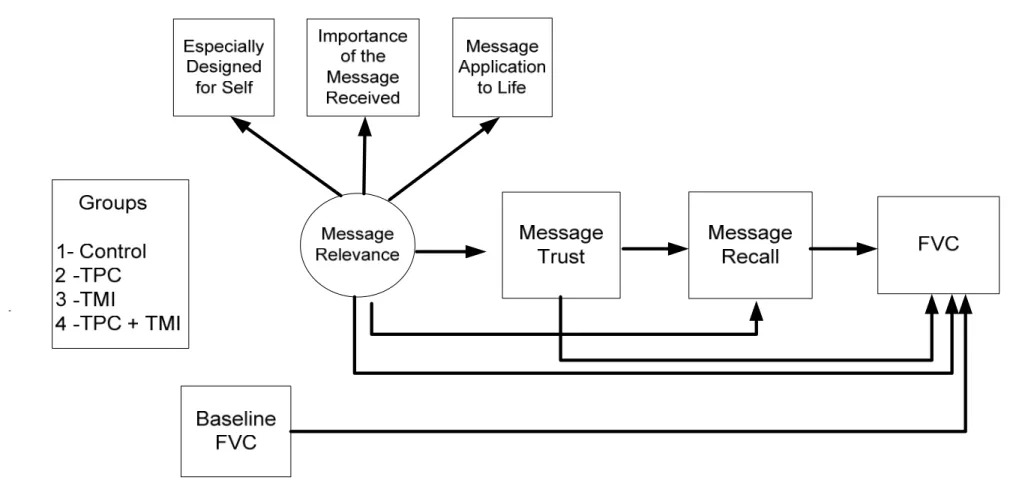
In this conceptual model, the relationship between the intervention and behavior change can occur through two pathways as presented in Figure 1 (page 78). First, the intervention may directly influence behavior change, increasing FVC. Second, the intervention may indirectly influence FVC mediated through message relevance, message trust, and message recall. The latent variable, perception of message relevance, is
hypothesized to have three indicator variables which include an individual’s belief that the message was designed for the self, perception of the importance of the message to self, and perception of how the message applies to self.
3.9 Research Questions, Aims, and Hypotheses 3.9.1 Research Question 1
How do individuals who receive a health communication process the information resulting in increased FVC (Figure 2, page 79)?
AIM 1: To identify the information processes that mediate the relationship between health communication and FVC.
H. 1.1: The information processes of message relevance, message trust, and message recall will significantly mediate the effects of health communication on FVC, compared to the controls.
3.9.2 Research Question 2
31
AIM 2: To assess whether similar or different information processes mediate the relationship between perception of message relevance and FVC across different intervention groups. H. 2.1: Individuals who receive the TPC, TMI, or TPC+TMI interventions are significantly more likely to process through similar processes compared to those in the control group.
3.9.3 Research Question 3
Do individuals’ history of colon cancer influence similar or different information processes resulting in FVC (Figure 4, page 81)?
AIM 3: To assess whether similar or different information processes mediate the
relationship between health communication and FVC across different colon cancer groups H. 3.1: Individuals in the colon cancer-free group will be more likely to process the
intervention messages through different processes compared to the colon cancer survivors group.
3.10 Summary
The data from NC STRIDES was used to investigate whether information processes mediate the relationship between health communication intervention and FVC. NC
CHAPTER 4 METHODOLOGY
4.1 Overview
This chapter describes the study methodology used to investigate the relationship between health communication, information processes, and FVC among NC STRIDES’ participants. It includes information about NC STRIDES such as study design, sample, recruitment, intervention, and measures. Analytic approaches including a review of multi-sample structural equation models follow.
4.2 Study Design
The NC STRIDES used a classic 2 x 2 randomized factorial design with two levels of intervention (tailored print communication and telephone motivational interviewing)
4.3 Sample
Study participants from NC STRIDES were recruited from the North Carolina Colon Cancer Study (NCCCS), a population-based, case-control study of colon cancer in North Carolina conducted from 1996-2000. The NCCCS study participants were from 33 counties in the central and eastern part of North Carolina, an area including rural, suburban, and urban counties whose residents represent a diverse socioeconomic backgrounds and a racial
composition consisting primarily of African Americans and whites. Detailed recruitment procedures have been described previously (Satia, Campbell, Galanko, James, Carr, & Sandler, 2004). Eligible cases were individuals with adenocarcinomas of the colon, ages 40-80, of African American or white, non-Hispanic ethnicity, who were being treated in one of 38 non-federal hospitals. Cases with a first diagnosis of histologically confirmed invasive adenocarcinoma of the colon between July 1, 1996, and June 30, 2000 were identified using the rapid ascertainment system of the North Carolina Central Cancer Registry.
35 4.4 Recruitment
NCCCS participants were invited to participate in the NC STRIDES study between January 2001 and June 2002. All NCCCS cases and controls were mailed a letter and
brochure explaining the NC STRIDES study. NCCCS research staff then contacted potential participants via telephone to solicit their consent to participate in NC STRIDES. NC
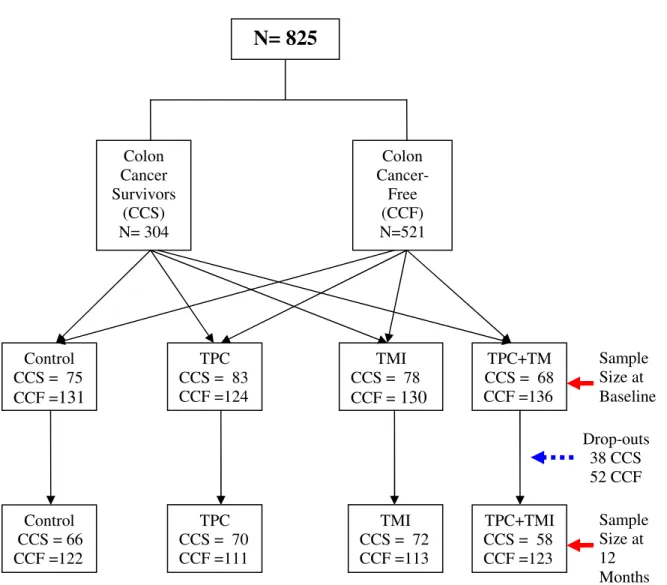
STRIDES excluded NCCCS participants who were not able to make changes in FVC due to a health condition (e.g., advanced stage of colon cancer). Of the 1,850 NCCCS participants, NC STRIDES was able to recruit 922 participants (49.8%). Of those, 825 individuals
(89.5%) completed the baseline survey (304 colon cancer survivors and 521 colon cancer-free individuals) and 735 (89.1%) completed the follow-up survey (266 colon cancer
survivors and 469 cancer-free individuals). Non-responses on the follow-up survey were due to 18 deaths, 21 people who withdrew from the study for health reasons, 19 refusals, and 32 lost contacts. Survey response rates were equivalent among cases and controls, with an overall response rate of 90%.
4.5 Intervention
Participants were randomized into one of four intervention types. One group (TPC only) received a series of four individually tailored, printed newsletters. Another group (TMI only) received a series of four telephone motivational interviews. The third group
(Combined group) received four individually tailored, printed newsletters and four motivational interviews. The fourth group served as the control group and received four “generic” mailings during the intervention and four individually tailored print newsletters after the final survey. Information provided to the control group focused on other cancer related topics, breast cancer for female participants and prostate for males.
The TPC intervention included four personalized computer-tailored newsletters, mailed to participants’ homes bi-monthly for the first six months after baseline data collection (months 2, 4, and 6); the fourth mailing occurred 9 months post-baseline. Newsletters 1-3 were tailored using the baseline survey data and the fourth newsletter incorporated additional data from a 6-month update telephone call to give feedback on participant’s progress.
The TMI intervention consisted of four brief (20-minute) motivational interviewing calls delivered over a nine-month period. Each call followed a counseling protocol based on MI principles of communication, brief counseling, and negotiation (Miller & Rollnick, 1991), as shown in Appendix A (page 96 & 97). Motivational interviewing principles include a client-centered, collaborative decision-making approach, giving non-judgmental feedback, rolling with resistance, and encouraging the participant to make the argument for change. Interviewers relied on open-ended questions and reflections to draw out
37
techniques and the protocol were conducted prior to starting the interviews. The calls were additionally “tailored” by incorporating information derived from participant baseline and update surveys regarding priorities baseline behavior change, and cancer status.
Participants in the CONTROL group received four mailings of generic (non-tailored) health information that was not related to the primary study outcomes. The purpose of these mailings was to provide an “attention control” for the TPC materials. The information consisted of brochures obtained from sources such as the Cancer Information Service and other agencies, on topics that participants in other studies have found useful, such as prostate cancer for males and breast cancer for females.
4.6 Data Collection
4.7 Measures
All measures were assessed through self-report. Demographic variables were assessed during NCCCS or at baseline in NC STRIDES.
4.7.1 Dependent Variables
Fruit and vegetable consumption. Average daily FVC was measured using a 36-item modified version of the Block food frequency questionnaire (FFQ) validated by Resnicow and colleagues (2000) in their work with a diverse Southern population. Resnicow’s tool was slightly modified to ask how often food was consumed in the last month as opposed to the last week; and omitted food items that were not fruits and vegetables. For analysis purposes, the item “French fries, fried potatoes, or home fries” was eliminated from
calculations, thus the FVC total was based on 35 items. Fruit and vegetable item frequencies were converted to servings/day and then summed to provide total daily consumption values for fruit, vegetables, and total fruits and vegetables. The distribution of FVC was skewed to the right; therefore we employed a log transformation (ln + 1) in order to improve normality. In addition to the FFQ, participants were asked to estimate their intake of fruit and vegetables per day using a brief 2-item screener (“How many servings of [(vegetables and/or vegetable juices) (fruit or fruit juices)] do you usually have during a single day?”). The screener served as a second estimate of FVC that might be less subject to over-reporting, which can occur with long FFQ instruments (Krebs-Smith, Cook, Subar, Cleveland, & Friday, 1995).
4.7.2 Mediator Variables
39
personally was the information in the newsletter,” (2) “How much did you feel that the newsletters were designed especially for you,” and (3) “How much did the information in the newsletters apply to your life.” The response categories ranged from 1 (not at all) to 5 (completely). For participants receiving TMI, the three questions were asked about phone calls instead of newsletters. For those receiving the combined intervention (TPC+TMI), the same questions were asked about both newsletters and phone calls. The mean of the
questions on newsletters and phone calls was calculated for those receiving the combined intervention. Cronbach’s alpha showed good reliability for the three questions on newsletters (α = .73) and phone calls (α = .76) and high reliability for the mean of the two (α = .94).
Message Trust was collected with one question: “How much did you trust that the information in the newsletter was accurate?” Response categories ranged from 1 (not at all) to 5 (completely). For participants receiving TMI, the question asked about phone calls instead of newsletters. For those receiving the combined intervention (TPC+TMI), the question asked about both newsletters and phone calls. The mean of the questions on newsletters and phone calls was calculated for those receiving the combined intervention.
Self-efficacy for eating five or more daily servings of fruits and vegetables a day for most days of the week was measured using one item: “If you decided to, how sure are you that you have the ability to succeed in eating five or more servings of fruits and vegetables every day for the next six months?” This was measured with a five-point Likert-type response from 1 (very unsure) to 5 (very sure).
4.7.3 Independent Variables
Intervention. As discussed above, participants were randomized to four intervention types: control, tailored print communication (TPC), telephone motivational interviewing (TMI), and combined (TPC+TMI).
4.7.4 Other Variables
41 4.8 Statistical Analysis
Data formatting, management, and descriptive statistics were conducted using SAS version 9.2. Descriptive statistics were generated using chi-square analyses for categorical variables and t-test and Analysis of Variance (ANOVA) for continuous variables. Alpha level of .05 was used for all analyses. The structural equation modeling was estimated using MPLUS version 5. Sobel test was conducted to assess whether the indirect effect was statistically significant (Sobel, 1982). A multi-sample structural model was specified to test hypothesized relations among the variables between intervention groups and colon cancer groups.
4.8.1 Structural Equation Model as an Analytic Method
Structural Equation Modeling (SEM) is a technique used for specifying and
estimating models of linear relationships among variables (MacCallum & Austin, 2000). A model may include both measured and latent variables (McCallum & Austin, 2000). Latent variables are hypothetical constructs that cannot be measured directly, and is usually
represented by multiple measured variables that serve as indicators of the latent variable. A structural equation model is used to hypothesize patterns of directional and non-directional linear relationships among a set of measured and latent variables. Directional relationships imply some sort of directional influence of one variable on another. Non-directional
relationships are correlated, but imply no directed influence. The purpose of the model is to account for variation and co-variation of the measured variables (Kline, 2005).
model describes the relationship among latent variables and between latent variables and measured variables. It could also be viewed as a regression model (Bollen 1989).
All the models in this dissertation study are recursive, meaning that model
disturbances are uncorrelated and that the relationship between variables is unidirectional (Kline 2005). The directions of arrows in the structural equation model represent the study’s hypothesized relationship between the variables.
4.8.2 Multi-sample Structural Equation Model
Multi-sample structural equation model (SEM), which began from the work of Jöreskog and Sorbom (1979), describes analyses that explain whether or not a structural model is invariant (e.g., equivalent) across particular groups (Byrne, 1998). In multi-sample SEM models, several groups are analyzed at the same time, providing the ability to
simultaneously test a theoretical model for its applicability to different groups and to identify the differences in the parameters between the groups (Duncan, Duncan, Strycker, Li, & Alpert, 1999; Byrne, 2001).
According to Jöreskog and Sorbom (1979), intervention groups may be viewed as data from two different populations in an intervention setting. The control group population represents the normative set of individuals that would have been observed also in the
treatment group had they not been chosen for treatment (Muthen and Curran, 1997). The effect of treatment is assessed by comparing the set of pathways in the treatment population with those in the control population (Muthen & Curran, 1997).
43
Fit indexes assess how close the data fit the measurement and structural models. Currently, several fit indexes are available. Since each fit index captures different
information about model fit, researchers are encouraged to report multiple fit indexes (Hu & Bentler, 1999). This study used five fit indexes including Chi-squared statistic test, Tucker-Lewis Index (TLI), Comparative Fit Index (CFI), the Root Mean Square Error
Approximation (RMSEA) and the Standard Root Mean Residual (SRMR).
Chi-squared statistic test: The chi-squared statistic test assesses the probability associated with the postulates that the sample covariance matrix for the model under study is valid. A non-significant chi-squared test indicates that there is no difference between the model implied covariance matrix and the data covariance matrix, that is, the hypothesized model fits closely to the data (Bollen, 1989; Byrne, 1998). This test statistic, however, is sensitive to sample size. If the sample size is large, the chi-squared could be significant (model does not closely fit the data) although there may be only a slight difference between the data covariance matrix and model-implied covariance matrix (Kline, 2005).
Comparative Fit Index (CFI): The CFI assesses the improvement in fit of the
hypothesized model compared with the baseline model. A baseline model typically assumes that population covariance among the observed variables is zero, that is, the observed
variables are assumed to be uncorrelated (Kline, 2005). The CFI ranges between 0 and 1, 1 being the best fit. A CFI value of greater than .95 is considered a very good fit of data to the model (Hu & Bentler, 1999).