EFFECTS OF MEDICARE PART D ON MEDICAID-MEDICARE DUAL ELIGIBLES WITH HIV
Nadya Maria Belenky
A dissertation submitted to the faculty of the University of North Carolina at Chapel Hill in partial fulfillment of the requirements for the degree of Doctor of Philosophy in the Department of
Epidemiology.
Chapel Hill 2016
© 2016
ABSTRACT
Nadya Maria Belenky: Effects of Medicare Part D on Medicaid-Medicare Dual Eligibles with HIV (Under the direction of Brian Pence)
The goal of this dissertation was to estimate the effects of Medicare Part D implementation on a range of outcomes in Medicaid-Medicare dual eligibles with HIV. Dual eligibles receive primary coverage from Medicare, while Medicaid provides wrap-around support, both financially and by covering services not included in Medicare coverage. When Medicare Part D was implemented in 2006, Medicaid-Medicare dual eligibles with HIV lost their prescription drug coverage through Medicaid and were auto-enrolled into a Medicare Part D prescription drug plan. Despite benefits to most Medicare enrollees, there were indications that, for dual eligibles, Medicare Part D was associated with mandated cost-sharing and other barriers to medication access. Using 2003-2008 data from the Women’s Interagency HIV Study, we created a propensity score matched cohort and used a difference-in-differences approach to compare dual eligibles’ outcomes pre- and post-Medicare Part D to those enrolled in Medicaid alone.
ACKNOWLEDGEMENTS
I would like to acknowledge the people who made this dissertation possible. First, I would like to extend my thanks to my tireless, dream team of a dissertation committee. My committee chair and academic advisor, Brian Pence, equal parts (1) neutral facilitator of ideas and (2) buzzing noise that kept me moving when I got mired in existential questions. Stacie Dusetzina, inspiring role model in all dimensions of academic life. Andrew Edmonds, who supported me by making sure that my methods were sound and my understanding of the data was thorough. Jonathan Oberlander, whose vast knowledge of Medicare and Medicare anchored the interpretation of the dissertation results. Finally, Steve Cole, for his sense of humor (a key attribute of any dissertation committee member) and incisive feedback. Steve shaped my time at UNC from start to finish, and even though it may not have always seemed like it, I was always learning from him.
I owe gratitude to the participants of the Women’s Interagency HIV Study (WIHS), who commit their time and energy to this study. UNC-WIHS’ principal investigator, Adaora Adimora, has been a great resource to me for her clinical expertise and her mentorship. Since I got involved with the WIHS, Catalina Ramirez has been around every corner, doing a myriad of things that have made it possible for me to successfully clear logistic hurdles with only minor scrapes.
I was lucky enough to find a second academic home in the Cecil G. Sheps Center for Health Services Research, which fostered my passion for health services research. My mentors at Sheps, Tim Carey, Kathleen Thomas, Morris Weinberger, Betsy Sleath, and Mark Holmes. Within the Epidemiology department, I was ushered along the PhD path by Nancy Colvin, Carmen Woody, Chandra Caldwell, Valerie Hudock, and Jennifer Moore.
I am very grateful for the support that made this dissertation possible. My dissertation
Carolina at Chapel Hill. The pre-doctoral fellowship gave me the freedom to focus on my dissertation research and opened up the world of health services research to me.
Finally, I have to thank my family. I am indebted to my family for their support and
TABLE OF CONTENTS
LIST OF TABLES ... x
LIST OF FIGURES ... xi
LIST OF ABBREVIATIONS ... xii
CHAPTER 1. INTRODUCTION ... 1
Overview and Specific Aims ... 1
Structure of Dissertation ... 3
CHAPTER 2: BACKGROUND ... 4
HIV/AIDS ... 4
Pathways to Prescription Drug Access for People with HIV ... 5
AIDS Drug Assistance Programs ... 5
Medicaid-Medicare Dual Eligibility ... 6
Medicare Part D ... 8
Medicare Modernization Act ... 8
Part D Prescription Drug Plans ... 9
Formulary Guidelines ... 9
Low-Income Subsidy (LIS) Program ... 9
Voluntary Enrollment for Non–Dual Eligibles ... 10
Auto-Assignment for Dual Eligibles ... 10
Random Reassignment for Dual Eligibles ... 10
Plan Selection ... 11
Co-Functioning with ADAP ... 11
Medication Part D and OOP Costs ... 12
Medicare Part D and Medication Use ... 12
Medicare Part D and Dual Eligibles ... 13
Medicare Part D and HIV ... 13
Literature Gap ... 14
Conceptual Model ... 15
Contribution of this Study ... 17
Policy Implications ... 17
CHAPTER 3: METHODS ... 19
Quasi-Experimental Study Design... 19
Data Source and Study Population ... 21
Inclusion and Exclusion Criteria ... 21
Measures ... 22
Data Collection ... 22
Exposure Definition and Assessment ... 22
Outcome Overview... 23
Statistical Power ... 23
Statistical Analyses ... 24
Sensitivity Analyses ... 27
CHAPTER 4: EFFECTS OF MEDICARE PART D ON MEDICATION ACCESS, ADHERENCE, AND VIRAL SUPPRESSION (AIM 1) ... 30
Introduction ... 30
Methods ... 32
Data Source ... 32
Design and Study Sample ... 32
Measures ... 33
Health Insurance Status ... 33
Outcomes of Interest ... 33
Statistical Analysis ... 34
Propensity Score Matching ... 34
Results ... 35
Discussion ... 36
Cost-Sharing and Out-of-Pocket Prescription Drug Spending ... 37
Limitations ... 38
Conclusions ... 39
CHAPTER 5: EFFECTS OF MEDICARE PART D ON MENTAL HEALTH TREATMENT AND OUTCOMES (AIM 2) ... 43
Introduction ... 43
Methods ... 45
Data Source ... 45
Design and Study Sample ... 46
Measures ... 46
Health Insurance Status ... 46
Outcomes of Interest ... 46
Statistical Analysis ... 47
Results ... 48
Discussion ... 50
Limitations ... 51
Conclusions ... 51
CHAPTER 6: DISCUSSION ... 56
Differences Between Dual Eligibles and Medicaid-Only Participants ... 57
Limitations ... 58
Implications for Policy and Research ... 58
Implications for ADAP ... 58
Implications for Medicare Part D ... 59
Implications for the ACA ... 60
Research Implications ... 60
Conclusion ... 61
LIST OF TABLES
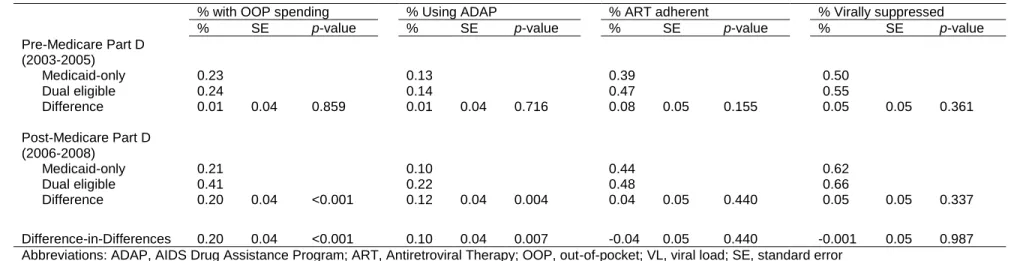
Table 1. Outcome Definitions and Effect Estimates, by Aim ... 23 Table 2 Difference-in-Differences Design ... 26 Table 3. Baseline Characteristics of Medicaid-Medicare Dual Eligibles and Medicaid-Only
Participants, Aim 1, Women’s Interagency HIV Study (2005) ... 40 Table 4. Difference-in-Differences Estimates—Average Proportion Change in Pre- and
Post-Medicare Part D Time Period, by Insurance Type, Women’s Interagency
HIV Study 2003–2008, Aim 1 ... 41 Table 5. Baseline Characteristics of Medicaid-Medicare Dual Eligibles and Medicaid-
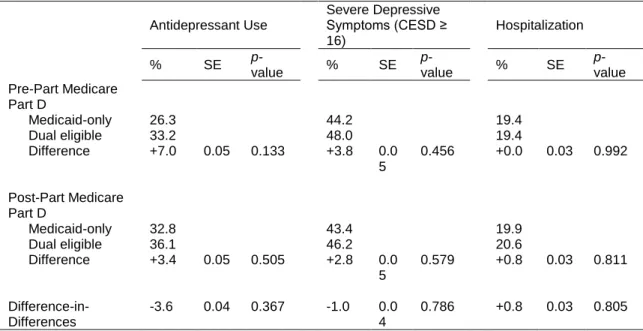
Only Participants, Women’s Interagency HIV Study (2005), Aim 2 ... 53 Table 6 Difference-in-Differences Estimates – Average Proportion Change in Pre- and
Post-Medicare Part D Time Period, by Insurance Type, Women’s Interagency HIV
LIST OF FIGURES
Figure 1. Conceptual model ... 15 Figure 2 Characteristics of Medicare Part D and dual eligibility ... 16 Figure 3. Directed acyclic graph of exogeneity of Medicare Part D implementation (Z)
and the effect on medication use (T) and outcome (Y). ... 20 Figure 4. Dual eligibles and comparison group insurance coverage over time. ... 22 Figure 5. Change in proportion of outcome of interest, by insurance type and
time period in the Women’s Interagency HIV Study (WIHS), 2002–2008, Aim 1. ... 42 Figure 6. Change in proportion of outcome of interest, by insurance type, time
LIST OF ABBREVIATIONS ACA Affordable Care Act
ADAP AIDS Drug Assistance Programs ART Antiretroviral Therapy
CMS Centers for Medicare and Medicaid Services DiD Difference-in-Differences
HIV Human Immunodeficiency Virus LIS Low-income Subsidy
MMA Medicare Modernization Act OOP Out-of-Pocket
PDP Prescription Drug Plan RNA Ribonucleic Acid VL Viral Load
CHAPTER 1. INTRODUCTION Overview and Specific Aims
Medicare Part D was designed to improve medication access by reducing financial barriers for Medicare enrollees, many of whom did not have prescription drug coverage. A subset of Medicare enrollees receive a combination of Medicare and Medicaid benefits, and are referred to as “dual eligible.” The goal of this dissertation is to estimate the effects of Medicare Part D implementation on various outcomes in dual eligibles infected with the human immunodeficiency virus (HIV). The
implementation of Medicare Part D, Medicare’s prescription drug benefit, may have affected how dual eligibles with HIV access antiretroviral therapy (ART) and other prescription drugs and, consequently, their medication use and health outcomes. Little is known about the effects of Medicare Part D on people with HIV, where the existing studies indicated disruptive effects of Medicare Part D in people with HIV. The rationale for the particularly disruptive effect in this population is based on the
demographic and clinical characteristics of dual eligibles with HIV, their prior coverage through Medicaid, and unique rules for how Medicare Part D was applied to dual eligibles.
Medicare and Medicaid are crucial to accessing HIV care and treatment because these programs provide insurance coverage to 56% of adults with HIV in the United States.1 Although the two programs have different eligibility criteria and distinct application processes, 10% of people with HIV simultaneously meet the eligibility requirements for both Medicaid and Medicare and are enrolled in both programs.2 These individuals receive a combination of Medicaid and Medicare benefits and are referred to as “dual eligible.” For dual eligibles, Medicare provides primary coverage, with secondary coverage through Medicaid when Medicare benefits are exhausted.3 Crucially, Medicaid can also serve as the primary coverage source for services not covered by Medicare.4,5
its most vulnerable population, the Centers for Medicare and Medicaid Services (CMS) auto-enrolled dual eligibles into Medicare Part D prescription drug plans, replacing their drug coverage through Medicaid.6 Despite special protections for the medically and financially disadvantaged, the transition to Medicare Part D exposed dual eligibles to changes in payment systems, plan instability, and variation in drug plan formularies and was associated with coverage gaps and treatment interruption in vulnerable populations.7 One early survey reported that 20% of dual eligibles had difficulties filling prescriptions after the transition.8 Cross-sectional research on a small number of people living with HIV who were covered by Medicare Part D showed an association between the transition and ART interruption.9 These initial findings are supported by reports from HIV providers that the majority of their patients had difficulties accessing their prescriptions drugs under Medicare Part D.10
Treatment interruption may be particularly problematic for dual eligibles with HIV because of complex medication regimens needed to manage both HIV and common co-morbidities such as depressive symptoms. Dual eligibles with HIV depend on consistent ART access to maintain viral load (VL) suppression and protect against HIV-related morbidity and mortality.11 Depression, a common psychiatric comorbidity, has been associated with shortened survival time in individuals with HIV,12 and untreated depression has been associated with decreased ART adherence and
unsuppressed VL.13 Despite Medicare Part D's direct and ongoing impact on medication access,14 the effects of Medicare Part D implementation are not well understood in dual eligibles with HIV.
This study estimated the effects of the transition to Medicare Part D in dual eligible women with HIV. Data from the Women's Interagency HIV Study (WIHS) were used to estimate changes in out-of-pocket costs, medication access, ART and antidepressant medication use as well as related health outcomes and hospitalization associated with the transition to Medicare Part D.
Aim 1: Estimate the effect of the Medicare Part D transition on out-of-pocket prescription drug spending, AIDS Drug Assistance Programs (ADAP) use, ART adherence, and HIV VL
suppression in dual eligibles with HIV.
Rationale: The implementation of Medicare Part D in 2006 exposed dual eligibles to changing plan requirements, formulary variation, and loss of Medicaid prescription drug benefit protections. If coverage changes result in increased OOP costs and present barriers to optimal medication use, OOP spending for prescription drugs and ART nonadherence are expected to be greater after Medicare Part D implementation. Following changes in OOP spending, ADAP use is expected to increase to relieve the increased financial burden, and HIV VL suppression is expected to decrease, due to greater ART nonadherence.
Aim 2: Estimate the effect of Medicare Part D on antidepressant use, depressive symptoms, and hospitalization.
Hypothesis: Medicare Part D implementation would be associated with decreased antidepressant use, higher depressive symptom scores, and increased hospitalization.
Rationale: Medicare Part D implementation is expected to result in decreased antidepressant use after 2006. That shift is expected to lead to increased depressive symptoms and hospitalization, mediated through reduced antidepressant medication use.
Structure of Dissertation
CHAPTER 2: BACKGROUND
This chapter begins with a review of HIV and HIV treatment and outlines common pathways through which people with HIV access prescription drugs as well as how prescription drug coverage affects people with HIV. It includes a section on the provisions and application of Medicare Part D and a literature review of relevant Medicare Part D studies. The chapter also reviews the characteristics of Medicaid prescription drug benefits prior to Medicare Part D implementation and the federal safety-net programs for prescription drug provision, the AIDS Drug Assistance Programs (ADAP). Finally, this chapter discusses this study’s contribution to the literature and policy implications and ends with an overview of the following dissertation chapters.
HIV/AIDS
HIV damages the body’s immune system, impeding an individual’s ability to ward off infection. When the immune system is weakened, individuals become vulnerable to opportunistic infections, which cause HIV-related morbidity and mortality. Although HIV is incurable, treatment advances in ART have led to significant reductions in HIV-related illness and mortality.15 In addition to clinical benefits, consistent ART use has led to significant reductions in HIV transmission.15 Advances in the effectiveness of ART have resulted in a shift toward treating HIV as a chronic condition that can be managed with consistent and adequate access to treatment. These findings highlight the importance of consistent ART use (and access) for individuals living with HIV as well as for the HIV-uninfected population. These findings are also the foundation for the test-and-treat model, which posits that early identification of HIV infection followed by immediate initiation and consistent use of ART could lead to dramatic reductions in the incidence of HIV.16 Despite effective treatment, access remains a
significant barrier for people living with HIV, and within the United States it is estimated that >80% of people with HIV have detectable VLs.17,18
comorbidity in people with HIV.19 Untreated depressive symptoms have been associated with
reduced ART adherence,12,13,20 unsuppressed HIV VL,21,22 and shortened survival time.23 By contrast, people with HIV who are treated for depression showed similar ART adherence and viral control as people with HIV who did not have depression,24 underscoring the importance of consistent access to antidepressants in this population.
Pathways to Prescription Drug Access for People with HIV
For many people with HIV, health insurance provides coverage for prescription drugs that would be prohibitively expensive otherwise.25 The majority of people with HIV in the United States rely on public insurance programs for medication access, with 56% receiving coverage through Medicaid or Medicare.1 Medicaid is a state-administered program designed for certain categorically eligible low-income U.S. citizens. To qualify, individuals must meet financial eligibility criteria and be “categorically eligible” (e.g., have a documented disability).5
Separately, individuals become eligible for Medicare, a federally-administered program once they reach age 65 or, if under age 65, by having a permanent disability that qualifies them for Social Security Disability Insurance.3 People with HIV can be categorically eligible for Medicaid by having dependent children or receiving Supplemental Security Income because of documented disability. Among people with HIV who are enrolled in Medicaid or Medicare, 10% meet the eligibility requirements for both Medicaid and Medicare and receive joint coverage (these individuals are referred to as "dual eligibles").2
AIDS Drug Assistance Programs
cardiovascular disease, opportunistic infections, or psychiatric conditions. ADAP enrollment has been shown to affect ART use as well as the use of medications to treat common co-morbidities.27
Effects of insurance and coverage characteristics
Even though health insurance facilitates access to health services by reducing financial barriers, leading to better health outcomes compared to those without coverage,28,29 it does not guarantee access. Coverage may be attached to prohibitive cost-sharing requirements, utilization management tools, or other characteristics that create barriers to health services.
Cost-sharing is the amount individuals pay for items or services covered by their health insurance (e.g., hospital stay, physician visit, or prescription drugs). A systematic review of cost-sharing literature indicated that for every 10% increase in cost-cost-sharing there was a 2–6% decrease in prescription drug use.30 In another systematic review on the relationship between other formulary restrictions and medication adherence, 68% of studies found that formulary restrictions were negatively associated with adherence.31 The majority of reviewed studies (60%) focused on cost-sharing compared to a small number of studies that focused on clinical outcomes (4%), highlighting the lack of research on the effects of formulary restrictions on health outcomes.32,33
Medicaid-Medicare Dual Eligibility
Dual eligibles are unique among the publicly insured because they receive patchwork coverage through Medicaid and Medicare. Medicare provides primary coverage for dual eligibles, followed by secondary, wrap-around Medicaid coverage when Medicare benefits are exhausted.4 In practice, Medicare covers the majority of services for dual eligibles and Medicaid absorbs residual Medicare costs (e.g., insurance premiums). Crucially, Medicaid can also provide coverage for services that are not available through Medicare but still vital to people with HIV, such as long-term care and, before 2006, prescription drug coverage.5
vulnerable population, the CMS auto-enrolled dual eligibles into Medicare Part D prescription drug plans, replacing their drug coverage through Medicaid with randomly selected Part D drug plans known as “benchmark plans.”6
Even though Medicare Part D premiums were fully subsidized and cost-sharing was minimal for dual eligibles, the transition exposed them to changes in payment systems, formulary variation, and plan instability.34 After initial random assignment to new prescription drug plans at Medicare Part D implementation, dual eligibles continue to be exposed to automatic, random re-assignment if their previous prescription drug plan does not continue to meet benchmark plan requirements.35 Re-assignment can result in coverage disruption if the new prescription drug plan has substantially different coverage or requirements.
Dual eligibles are uniquely vulnerable to coverage disruptions because of their low income and are particularly susceptible to negative consequences of those disruptions because of their high prevalence of co-morbidities36 and fragmented care.37 As a combined consequence of their health and financial needs, dual eligibles make up a disproportionate share of both Medicaid and Medicare spending, and expenditures on dual eligibles are increasing. In 2003, there were four times more Medicare-only enrollees than dual eligible enrollees (30 million vs. 7 million), yet both groups had similar spending levels; $148 billion for Medicare-only enrollees and $138 for dual eligible enrollees.38 In 2005, before Medicare Part D implementation, when Medicaid provided prescription drug coverage for dual eligibles, dual eligibles accounted for 46% of Medicaid spending ($132 billion), even though they represent only 18% of Medicaid enrollees.
Dual eligibility and prior coverage
By definition, dual eligibles experienced a different transition to Medicare Part D compared to enrollees covered only by Medicare.Before Medicare Part D, 20–30% of Medicare enrollees did not have prescription drug coverage.39–41 Dual eligibles receive coverage from Medicaid and Medicare, and, as a consequence, had prior coverage through Medicaid before Medicare Part D implementation. Prior coverage through Medicaid is significant because:
Even though Medicaid requires co-payments which can vary by state, all levels of Medicaid
Medicaid includes special protections that allow enrollees to obtain prescription drugs
without co-pay if they are unable to afford the co-payment.
The majority of studies on Medicare Part D focus on populations without prior coverage, the
sub-population that stood to benefit most from improved medication access. Medicare Part D
Medicare Part D was designed to increase medication use and decrease out-of-pocket costs for prescription drugs. These benefits were largely realized, and Part D was associated with improved access to medication, demonstrated by increased medication use and lower cost for Medicare enrollees over the age of 65.42–44 Before Medicare Part D, Medicare did not include a pharmacy benefit. While many Medicare enrollees obtained supplemental coverage, 20-30% of Medicare enrollees did not have any prescription drug coverage before Medicare Part D was implemented.39–41 Among the elderly (aged >65 years) without coverage, 50% spent $1,200 or more on prescription drugs in 2003.45 As the median income of individuals over the age of 65 was $16,000 and prescription drug spending presented a substantial cost burden (~8% of annual income).46 Of those who did not have prior coverage, 60–70% enrolled in a Medicare Part D plan 47
and, consequently, those without prior prescription drug coverage—i.e., those with the most unmet prescription needs—made up the majority of Medicare Part D enrollees. As a result, voluntary enrollment by Medicare enrollees without prior coverage may be a source of selection bias for studies of Medicare Part D implementation, where those that needed prescription drug coverage were more likely to enroll.
Medicare Modernization Act
Part D Prescription Drug Plans
Medicare Part D drug plans vary widely in how they structure their benefits, even within low-income subsidy plans. There are several dimensions on which a benefit can vary, including
deductibles, premiums, co-pays, and utilization management tools. The most common utilization management tools include prior authorization, step therapy, and quantity limits, all of which are used to control drug use and costs. Since implementation, Part D plans have been shown to vary
significantly in the types of utilization management tools and the frequency with which they are applied.49 For a consumer to choose between prescription drug plans, they are required to weigh cost and benefit structures of prescription drug plans in combination with their anticipated health needs. Formulary Guidelines
CMS designated six protected drug classes and required Part D formularies to cover “all or substantially all medications” within those drug classes. Drug classes were antidepressants,
antipsychotics, anticonvulsants, anticancer drugs, immunosuppressants, and ART. However, despite the mandated inclusion of protected drug classes in all formularies, Part D plans were not required to cover all formulations of medications and were allowed to make use of utilization management within the six protected drug classes.51
Low-Income Subsidy (LIS) Program
OOP costs often present a barrier to medication access, so the MMA created the Low-Income Subsidy (LIS) program to mitigate the effects of Medicare Part D’s mandated cost-sharing. The LIS, which is intended for low-income enrollees, reduces OOP costs associated with Part D by lowering or eliminating premiums, deductibles, copayments, coinsurance, and costs incurred during the coverage gap.52 All LIS plans that meet criteria set by Medicare and are referred to as
“benchmark plans.”
cost-sharing through Medicare Part D is restricted to co-payments for prescription drugs because of their LIS auto-enrollment.
Voluntary Enrollment for Non–Dual Eligibles
Enrollment in Medicare Part D is voluntary for Medicare-only beneficiaries. For Medicare-only beneficiaries, the initial Medicare Part D enrollment period, which took place between November 15, 2005, and May 15, 2006, was an opportunity to enroll in Part D plans where coverage would begin on January 1, 2006.53 Even though each subsequent annual open enrollment period provided Medicare-only enrollees the opportunity to switch plans, Medicare-only 13% elected to switch plans voluntarily between 2006 and 2010, despite potential cost savings.54
Auto-Assignment for Dual Eligibles
There were several key differences between Medicare Part D enrollment for dual eligibles and Medicare-only enrollees. First, dual eligibles were auto-enrolled in Medicare Part D plans to minimize any disruptive effects of the transition. In other words, enrollment was involuntary. Dual eligibles were given a chance to select a prescription drug plan, much like Medicare-only enrollees, and if they did not select a plan, they were enrolled into a randomly selected benchmark plan. Second, all dual eligibles are enrolled in LIS prescription drug plans automatically, because they are already considered means-tested by Medicaid enrollment. Third, dual eligibles are able to switch plans at any point during the calendar year (i.e., there is no open enrollment period for this group).
Random Reassignment for Dual Eligibles
When Part D plans lose benchmark status, CMS reassigns dual eligibles enrolled in the former benchmark plan to a new plan at the beginning of the calendar year. Dual eligibles who are reassigned receive a letter in October containing the name and contact information for their new plan. Since implementation, reassignment rates have been rising, because the number of available
formularies) between the benchmark and non-benchmark formularies was 4%. By 2010, the gap in average formulary size had increased to 7% between plans, which differentially affect dual eligibles. Plan Selection
Medicare Part D drug plan selection is based on the idea that individuals pick prescription drug plan with characteristics that will maximize their benefits while minimizing OOP costs. In theory, a larger number of Part D plans should allow individuals to tailor their plan selection more closely to their health needs, thereby maximizing benefits while minimizing OOP costs. However, Part D enrollees have indicated difficulties choosing plans that minimize their OOP costs. In 2006, only 12% of Part D beneficiaries chose the least expensive plan. Further, the same study went on to show that Part D beneficiaries could have reduced their prescription drug spending by 31% if they had selected a plan that was more closely aligned with their medication use.55 In addition to difficulties selecting plans at implementation, enrollees’ ability to select optimal plans given their health needs has not improved since implementation. In 2009, only 5% of beneficiaries chose the least expensive plan and overspent a median $331 on prescription drugs.56
Despite sub-optimal plan selection over several years following Medicare Part D
implementation, few enrollees switch plans. Among LIS beneficiaries, which all dual eligibles are, only 11% switch in a given year, even though this population is not restricted to the annual enrollment window that voluntary Medicare enrollees adhere to and may switch plans every month.40 It is likely that few switch because of the complex plan characteristics and difficulties understanding the enrollment process.57
Co-Functioning with ADAP
In addition to providing prescription drugs, ADAP can also be used to pay for premiums, co-payments, and deductibles for individuals participating in ADAP. In recent years, ADAP has also been used to purchase health insurance and the proportion of ADAP enrollees served through insurance coordination is increasing, growing 14% from 2011 to 2012.58 Following Medicare Part D
In the specific case of dual eligibles with HIV, ADAP’s role is restricted to Part D copays because, by virtue of receiving LIS, dual eligibles do not pay Medicare Part D premiums and are not subject to the coverage gap.
Medication Part D and OOP Costs
The primary goal of Medicare Part D was to improve access to medication by lowering OOP costs. Previous research has shown a range of effect of Part D on OOP costs, where decreases in OOP costs range from 13% to 18%, or a reduction of $143 to $148 annually.42,44,60–62 These studies, however, do not take prior coverage into account. A 2010 study estimated the effects of OOP spending stratified by prior drug coverage (no coverage, Medicare HMO, Medigap, or sponsored coverage) and found lower odds of OOP spending in all groups except for the employer-sponsored coverage.63 Dual eligibles transition from robust prior coverage through Medicaid to Medicare Part D, making them more analogous to having employer-sponsored coverage. In the single study in people with HIV on OOP spending following Medicare Part D implementation, 50% of Medicare Part D enrollees reported greater expenditures for prescription drugs under Medicare Part D.64
Medicare Part D and Medication Use
Medicare Part D and Dual Eligibles
A systematic review of Medicare Part D implementation and its effects on medication use indicated that Medicare Part D was associated with increased medication use and decreased OOP costs in the general Medicare population, however its effects on dual eligibles and other vulnerable populations were mixed.61 This effect is underscored by survey findings from shortly after Medicare Part D implementation reporting that 20% of dual eligibles had experienced difficulties filing
prescriptions after the transition to the new insurance program.8 Medicare Part D and HIV
Prior to Medicare Part D implementation, policy analysts predicted that the transition would lead to ART interruptions both in the short-term due to the disruptive effect of the initial transition and in the long-term due to increased consumer cost-sharing.34 However, only two studies have examined the effects of Medicare Part D in people with HIV, and none examined clinical outcomes. A cross-sectional study on people with HIV who received coverage through Medicare Part D showed an association between Medicare Part D implementation and self-reported ART interruption, where the odds of ART interruption were six times higher among those covered by Medicare Part D. This study also reported that increased cost was the primary barrier associated with ART interruption.9 However, the sample size in this study was small; out of 125 homeless and marginally housed individuals, results are based on 10 patients who reported Medicare Part D coverage. Self-reported difficulties accessing medication in people with HIV were echoed in a second study, where reports by HIV providers indicated that the majority of their patients experienced difficulties accessing their prescription drugs under Medicare Part D.10
Medicare Part D and Psychotropic Medication Use
Psychotropic drugs may be particularly affected by Medicare Part D for several reasons. First, although CMS protections apply to psychotropic drugs, requiring all plans to cover “most or all” drugs within that drug class, a study by Huskamp et al. indicated that even though prescription drugs within protected drug classes are generally covered, many product formulations of those prescription drugs are often not covered by the low-income plans that dual eligibles are enrolled into.51 Second,
potential access barriers specific to psychotropic drugs.67 In addition to studies documenting formulary restrictions for psychotropic medication, a study of dual eligible psychiatric patients revealed that 27.6% had to switch medications due to formulary restrictions in the first year following the transition from Medicaid to Medicare Part D.68 In a study restricted to dual eligible beneficiaries with mental illness, 44% of patients experienced problems accessing medication. As a result of drugs not being covered or approved, 19% switched to different medications and 22% indicated that they had difficulty accessing medication because of copayments.69
Literature Gap
Despite research suggesting that Medicare Part D affects dual eligibles differently than Medicare-only enrollees, there is limited evidence on the effects of Medicare Part D on dual eligibles with HIV. In the two studies on Medicare Part D and people with HIV, even though the majority of individuals studied were likely to have been dual eligible, the studies focused on people with HIV who are enrolled in Medicare, which included both dual eligibles and Medicare-only enrollees. Further, there are no studies that examine the effect of Medicare Part D on clinical outcomes in either Medicare-only enrollees with HIV or in dual eligibles with HIV.
This study is the first to estimate the effects of Medicare Part D on OOP costs, use of ADAP, and depression- and HIV-related outcomes in dual eligibles with HIV. We used six years of data from a long-term prospective cohort study—the Women’s Interagency HIV Study (WIHS), which is
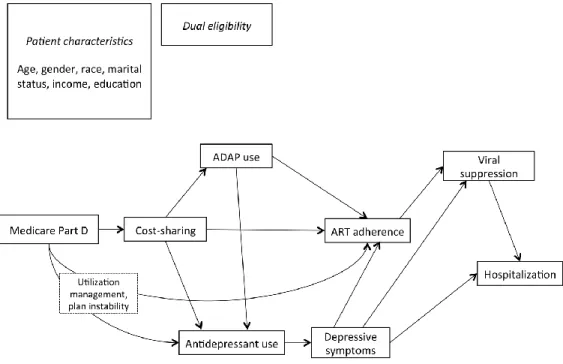
Figure 1. Conceptual model.
Conceptual Model
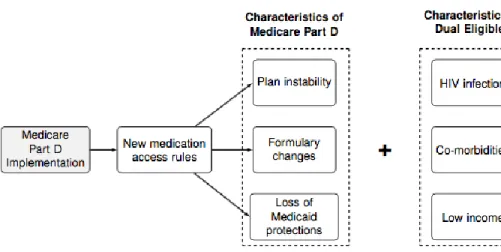
The conceptual model (Figure 1) of this study hinges on two components: 1) the direct, immediate, and continuous effect of Medicare Part D on medication use and 2) dual eligibles’ vulnerability to medication disruptions or changes (Figure 2). Dual eligibles lost their Medicaid
prescription drug coverage benefits as a result of Medicare Part D implementation and were enrolled, often at random, into Medicare Part D prescription drug plans. The transition from Medicaid’s
prescription drug benefit to Medicare Part D exposed dual eligibles to variability in formularies, cost-sharing, and utilization management tools.
co-morbid conditions and reduced ability to pay for prescription drugs, have the potential to exacerbate the effects of Medicare Part D.
Figure 2. Characteristics of Medicare Part D and dual eligibility.
The goal of Medicare Part D was to improve access to medication for Medicare enrollees by reducing costs. Medicare Part D had beneficial effects for Medicare enrollees, improving medication use and reducing OOP costs. However, prior research indicates that vulnerable subgroups of Medicare enrollees, including dual eligibles, experienced fewer of Medicare Part D’s benefits and, in some studies, dual eligibles reported difficulties accessing medications due to increased costs and restrictive formularies or access rules. Although cost-sharing is low under Medicare Part D, even small increases in cost-sharing have been shown to shift medication use, and the extremely low income of the WIHS population of HIV-infected dual eligibles may make them more vulnerable to even small increases in OOP costs.
In addition to its potential effects on medication use, increased cost-sharing may result in a greater proportion of dual eligibles using ADAP to reduce OOP costs. People with HIV use ADAP to access ART but can also use the program to access medication for common comorbidities. Even though all ADAP cover ART, ADAPs are not required to cover psychiatric medication such as antidepressants. However, states with WIHS sites of this study (CA, DC, IL, NY) all included
ADAP use may have mitigated effects of Medicare Part D on both ART adherence and
antidepressant use in this population. The relationship between ART and viral suppression is well-established, as is the relationship between antidepressant use and depressive symptoms. And finally, both depressive symptoms and unsuppressed HIV VLs have been associated with hospitalization.
Contribution of this Study
This study is the first to quantify the effects of Medicare Part D implementation on dual eligibles with HIV, an understudied and costly population whose medical and financial vulnerabilities and potential for shifting HIV transmission have made them a national priority through the Affordable Care Act (ACA). Examining dual eligibles with HIV has significance because their low income, co-morbidities,36 and fragmented care37 make this population uniquely vulnerable to medication disruptions. Consequently, even though dual eligibles with HIV represent a small proportion of total enrollment in Medicare Part D, they remain a subgroup with strong policy implications.70
Prescription drug plan instability and variation are potentially significant drivers of Medicare Part D’s effects. Dual eligibles face Medicare Part D plan instability because available plans change annually35 and can result in random re-assignment if the originally assigned plan is no longer available. The interest in strategies to mitigate coverage volatility is driven by CMS and underscored by the ACA.71 Research on the effects of Medicare Part D implementation over time can provide evidence that shapes those strategies.
Possible ART disruption associated with Medicare Part D has the potential to affect the HIV-negative population, in addition to its direct effects on medication access for dual eligibles with HIV. Estimating the effects of Medicare Part D implementation on outcomes in people with HIV has significance for reducing HIV transmission on a population level. Consistent treatment for both HIV and depressive symptoms have strong implications for reducing HIV transmission at the population level and are the cornerstone of the test-and-treat model.18
Policy Implications
For the majority of people with HIV, Medicaid and Medicare coverage are essential for consistent medication access. Changes in benefits, such as the transition from Medicaid’s
out-of-pocket costs, and, consequently, medication adherence, health outcomes, and service use. Optimal ART use has been associated with less virologic failure, fewer hospitalizations, and life expectancies that are comparable to those of HIV-negative individuals. In addition to individual-level impact, early and consistent ART reduces HIV transmission to uninfected partners through sexual behavior or drug use, resulting in lower HIV incidence.
In addition to medication use and health outcomes, this study also examines the effect of Medicare Part D on OOP prescription drug spending and ADAP use. In 2012, the national ADAP budget grew to $2.03 billion annually,58 up 8% from the previous year. Because Medicare Part D and ADAP are both designed to improve access to prescription drugs, understanding whether and how Medicare Part D affects ADAP use can contribute to strategies for maximizing the cost-effectiveness of both programs.
Finally, consistent medication access for dual eligibles requires the successful coordination of both coverage sources, Medicare and Medicaid. The ACA prioritizes improved care coordination for dual eligibles in general74 and for dual eligibles with HIV in particular. The ACA emphasizes care coordination for dual eligibles through ACA provisions and has created the Federal Coordinated Health Care Office, which is dedicated to translating research on dual eligibles into evidence-based policy.75 This study provides estimates of how dual eligibles responded to the initial transition to Medicare Part D in 2006, which represents a similar transition to the one that people with HIV undergo when they enroll in Medicare Part D currently. This study also provides estimates of
CHAPTER 3: METHODS
This study examined the effects of Medicare Part D implementation on OOP prescription drug spending, health outcomes, medication use, and hospitalization among dual eligibles with HIV. The proposed study used data from semiannual WIHS visits between 2003 and 2008. All outcomes of interest were examined by comparing the time periods before and after the transition to Medicare Part D. Dual eligibles' automatic and immediate exposure to Medicare Part D after auto-enrollment on January 1, 2006, was a natural experiment and made this a quasi-experimental study. A difference-in-differences approach (DiD) was used to estimate the average effect of Medicare Part D in dual eligibles with HIV while accounting for temporal trends using a matched control group of Medicaid-only enrollees.
To estimate a valid average effect, the DiD approach must satisfy the common trend assumption, meaning that the comparison group must follow a parallel pre-treatment trend as dual eligibles, the analytic group of interest. Our analyses expanded on conventional DiD analysis by matching dual eligibles with a Medicaid-only comparison group using a propensity score matching approach. Under the assumption that the matching captures all relevant differences between the two groups, this matched control group represented the counterfactual outcomes of dual eligibles, i.e., dual eligibles had they not transitioned to Medicare Part D.
Quasi-Experimental Study Design
A quasi-experimental study is defined as a study where treatment randomization is
impossible or unfeasible, yet retains similarities with a randomized experiment.76 This study mimics a randomized experiment in that temporal order is clearly established and, within dual eligibles,
covariates. In quasi-experimental studies, alternative causal explanations must be ruled out by minimizing 1) confounding and 2) threats to validity.
Figure 3. Directed acyclic graph of exogeneity of Medicare Part D implementation (Z) and the effect on medication use (T) and outcome (Y).
Figure 3 illustrates a common limitation of studies on insurance coverage. The estimation of the causal effect of prescription drug coverage (T) on an outcome (Y) requires adequate
measurement and control of confounding by individual characteristics (U). Because those
confounding factors are often unobserved, adequate statistical control can be difficult and analyses can result in biased estimates (Figure 3a). By contrast, the use of an exogenous policy
implementation (Z), such as Medicare Part D implementation, that determines prescription drug coverage (T) but is unaffected by individual characteristics (U) and has no direct effect on the outcomes of interest (Y) limits alternative causal explanations for an observed effect (Figure 3b).76
Individual characteristics of dual eligibles are unlikely to influence prescription drug coverage because dual eligibles are auto-enrolled in Medicare Part D. Auto-enrollment strengthens the
being caused by an unrelated event. The DiD approach attempts to adjust for temporal trends by inclusion of a control group, detailed in the section on propensity score matching.
Data Source and Study Population
The primary goal of the proposed study is to estimate the effects of Medicare Part D implementation on Medicaid-Medicare dual eligibles in the WIHS. The WIHS is an ongoing
observational study that recruited HIV-positive and HIV-negative women from six original sites in the United States: Washington, DC; the Bronx, NY; Chicago, IL; Los Angeles, CA; and San Francisco, CA. Since enrollment began in 1994, WIHS data have been used to study HIV disease progression. Study visits are conducted every six months and collect data from scripted interviews (self-reported) as well as clinical examination, laboratory measurements, and surveillance (e.g., cancer registries, National Death Registry). At each WIHS visit, the WIHS collects information on medical history, ART and other prescription medications, drug use, sexual behavior, health care use, and depressive symptoms.
The WIHS has enrolled participants in four waves: 1994-1995, 2001-2002, 2011-2012, and 2013-2014. A comparison of the first two enrollment waves showed that participants did not differ by ethnicity, income, or education. Changes in recruitment strategy resulted in differences by age and HIV disease stage between participants enrolled in the 1994-1995 and the 2001-2002 enrollment waves, where participants recruited in 2001-2002 had less advanced HIV disease and were younger than the women recruited in 1994-1995. Only participants enrolled in the first two waves (1994-1995, 2001-2002) were used in the proposed study because only those participants could have been transitioned to Medicare Part D in 2006. This study included available measures from all semi-annual WIHS visits between 2003 and 2008.
Inclusion and Exclusion Criteria
Measures Data Collection
All WIHS participants complete a structured, in-person interview every six months, either in English or in Spanish. At each study visit, interview data collected include sociodemographic characteristics, medical and health history, obstetric and gynecologic history, sexual and drug use behaviors, use of healthcare services, and psychological factors. All study visits also include a physical and gynecologic examination, medical record abstraction, and collection of laboratory specimens. For HIV-infected women, laboratory specimen collection includes quantification of HIV VL levels and CD4 cell count.
Exposure Definition and Assessment
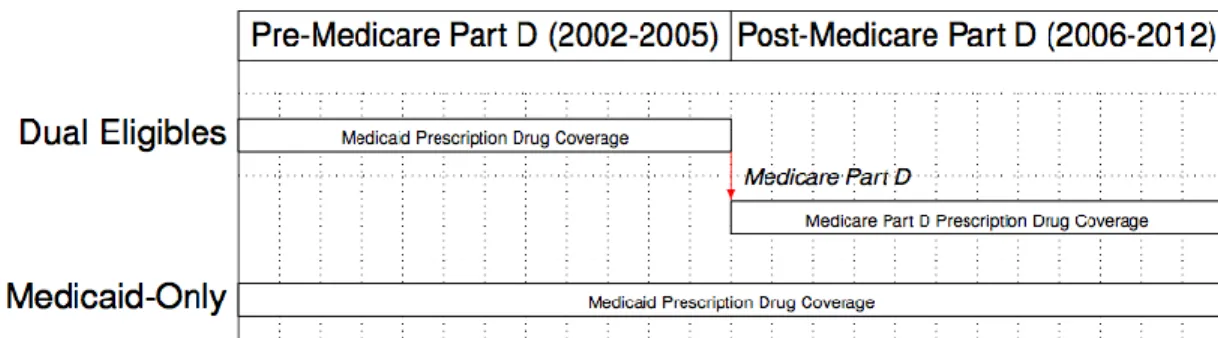
This study’s exposure of interest was the transition from Medicaid’s prescription drug coverage to Medicare Part D. Time period was used to assign dual eligibles’ exposure to the
Medicare Part D transition. A binary variable was created to indicate the pre– and post–Medicare Part D time periods (2003–2005 and 2006–2008, respectively). For dual eligibles, 2003–2005 represents prescription drug coverage under Medicaid and 2006–2008 represents prescription drug coverage under Medicare Part D. Dual eligibles are considered unexposed in the pre–Medicare Part D time period and exposed during the post–Medicare Part D time period. The Medicaid-only comparison group was considered unexposed for both time periods because these women only received
prescription drug coverage through Medicaid during both time periods (Error! Reference source not ound.).
Outcome Overview
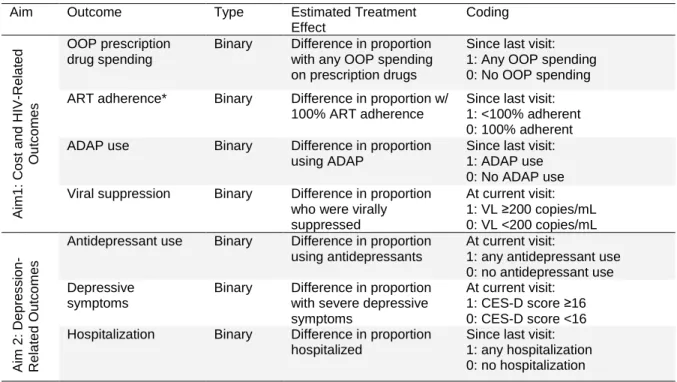
For these analyses, we estimated the effects of Medicare Part D implementation on two broad outcome categories: 1) HIV-related and 2) depression-related (Table 1). Within HIV-related outcomes (Aim 1), we estimated changes in OOP prescription drug spending, ADAP use, ART adherence, and viral suppression. In Aim 2, we estimated depression-related outcomes, including antidepressant use, depressive symptoms, and hospitalization. Details on outcome coding and effects estimated are included in Table 1.
Table 1. Outcome Definitions and Effect Estimates, by Aim
Aim Outcome Type Estimated Treatment
Effect Coding Ai m 1 : C o s t a n d HIV -Re la te d O u tc o m e s OOP prescription drug spending
Binary Difference in proportion
with any OOP spending on prescription drugs
Since last visit: 1: Any OOP spending 0: No OOP spending
ART adherence* Binary Difference in proportion w/
100% ART adherence
Since last visit: 1: <100% adherent 0: 100% adherent
ADAP use Binary Difference in proportion
using ADAP
Since last visit: 1: ADAP use 0: No ADAP use
Viral suppression Binary Difference in proportion
who were virally suppressed
At current visit: 1: VL ≥200 copies/mL 0: VL <200 copies/mL
Ai m 2 : De p re s s io n -Rel a te d Out c o m e s
Antidepressant use Binary Difference in proportion
using antidepressants
At current visit:
1: any antidepressant use 0: no antidepressant use Depressive
symptoms
Binary Difference in proportion
with severe depressive symptoms
At current visit: 1: CES-D score ≥16 0: CES-D score <16
Hospitalization Binary Difference in proportion
hospitalized
Since last visit: 1: any hospitalization 0: no hospitalization
* restricted to the subset of participants who were on ART
Statistical Power
Power analyses were conducted to determine the minimum detectable difference in
proportion for the primary outcomes of both aims, given the available sample size of dual eligibles in the WIHS and an 80% power threshold. To demonstrate adequate power for the pre-post comparison of the primary outcome for Aim 1, ART adherence, the calculation assume a pooled standard
deviation of 25–29%.77
mean adherence. Similarly, we estimated that Aim 2 was powered at 80% to detect a 10% change in the proportion of dual eligibles who had an undetectable VL. For both aims, power was calculated specifying a two-sided Type I error probability (α) of 0.05 and included a design effect to the
reweighted number of dual eligibles to account for clustering. The design effect was calculated using the number of dual eligibles in the analytic sample.
Statistical Analyses
Visualizing non-parametric trends (Lowess plots)
Before propensity score matching, we plotted outcome variables for visits from 2003 to 2008 using a segmented locally weighted smoothed spline (Lowess)78 to visualize trends for dual eligibles and Medicaid-only participants. The plots were segmented at Medicare Part D implementation on January 1, 2006, to visualize any discontinuities associated with the transition. Non-parametric methods have the advantage that they do not require assumptions about the relationship between variables.
Propensity score matching
Observational studies often examine relationships between exposure and outcome that are both associated with or confounded by participant characteristics. Propensity scores are a tool to balance groups on measured covariates and improve the validity of the control group as a
counterfactual for the analytic group of interest. In this study, we estimated the effect of Medicare Part D in the dual eligibles rather than the average effect in the full study sample. Consequently, we matched the two groups to set the distribution of covariates in the Medicaid-only participants equal to the distribution in the dual eligibles. This matching approach sets the Medicaid-only enrollees to represent the dual eligibles by aligning the pre–Medicare Part D characteristics of the Medicaid-only group with those of the dual eligibles.
was small, we were unable to include all possible covariates and were limited to a set of 10 to 15. We created separate sets of propensity scores for the two aims because we were trying to balance the two groups on slightly different characteristics.
After calculating a propensity score for each observation, we conducted balance diagnostics to evaluate whether the propensity score model had been adequately specified. We confirmed that the range of propensity scores between dual eligibles and Medicaid-only enrollees had sufficient overlap (“common support”). Propensity scores must overlap sufficiently between groups because no causal contrast can be made for individuals who do not have a counterfactual within the other group. Common support was assessed by examining the distribution of propensity scores by group for both aims.
We also examined the standardized differences in covariates before and after matching. Standardized differences represent a comparison of the covariate means in units of the pooled standard deviation. Standardized differences provide a way to compare the matched and unmatched means of baseline covariates between dual eligibles and Medicaid-only participants. In addition to standardized differences, we also compared the distributions of baseline covariates within strata of propensity scores. If propensity score models are specified correctly, baseline covariates should be evenly distributed within strata of propensity scores.
After confirming adequate balance, we used the propensity scores to match dual eligibles to Medicaid-only participants, using a 1:1 matching without replacement. In matching without
replacement, after a Medicaid-only participant was matched to a dual eligible, that Medicaid-only participant was no longer available to be matched to another dual eligible. Each dual eligible whose propensity score was within the range of common support was matched with a Medicaid-only participant, such that the matched pair had similar propensity score values. Pairs were matched to minimize the within-pair difference in propensity scores. After creating the matched sample, the effects of Medicare Part D on outcomes could be estimated by comparing the two groups.
Difference-in-Differences
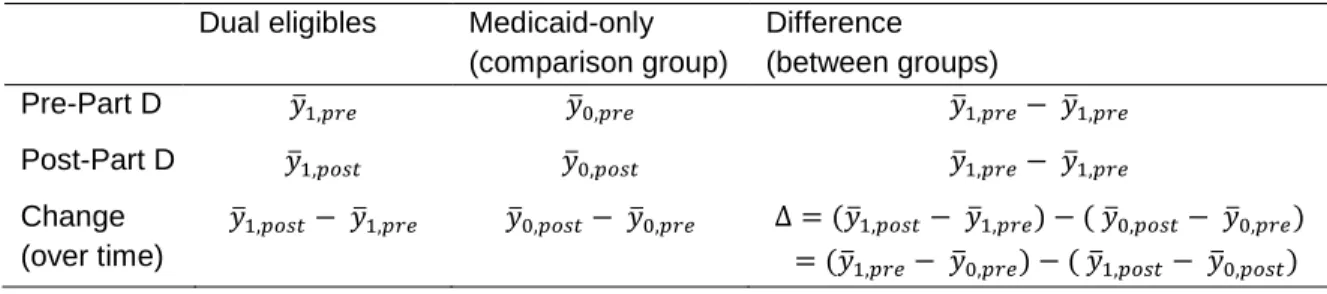
Intuitively, the change over time in the dual eligibles (𝑦̅1,𝑝𝑜𝑠𝑡− 𝑦̅1,𝑝𝑟𝑒) can be thought of as a
combination of the change in 𝑦̅ due to Medicare Part D implementation, the exposure of interest, and also any secular time trends, which we would like to remove. The change over time in the Medicaid-only comparison group represents those secular trends and by removing that group’s change over time, we are able to isolate the effects of Medicare Part D on outcomes in dual eligibles.
Table 2 Difference-in-Differences Design
Dual eligibles Medicaid-only (comparison group)
Difference (between groups)
Pre-Part D 𝑦̅1,𝑝𝑟𝑒 𝑦̅0,𝑝𝑟𝑒 𝑦̅1,𝑝𝑟𝑒− 𝑦̅1,𝑝𝑟𝑒
Post-Part D 𝑦̅1,𝑝𝑜𝑠𝑡 𝑦̅0,𝑝𝑜𝑠𝑡 𝑦̅1,𝑝𝑟𝑒− 𝑦̅1,𝑝𝑟𝑒 Change
(over time)
𝑦̅1,𝑝𝑜𝑠𝑡− 𝑦̅1,𝑝𝑟𝑒 𝑦̅0,𝑝𝑜𝑠𝑡− 𝑦̅0,𝑝𝑟𝑒 Δ = (𝑦̅1,𝑝𝑜𝑠𝑡− 𝑦̅1,𝑝𝑟𝑒) − ( 𝑦̅0,𝑝𝑜𝑠𝑡− 𝑦̅0,𝑝𝑟𝑒) = (𝑦̅1,𝑝𝑟𝑒− 𝑦̅0,𝑝𝑟𝑒) − ( 𝑦̅1,𝑝𝑜𝑠𝑡− 𝑦̅0,𝑝𝑜𝑠𝑡)
A key assumption of the DiD approach is that the Medicaid-only group is a valid counterfactual representation of the trends over time that the dual eligible group would have experienced had they not been exposed to Medicare Part D. This assumption is made more reasonable through two study design choices in this study: selection of the comparison group and propensity score matching. Selection of the comparison group can be advantageous to the study’s validity if the comparison group captures unobserved trends that cannot be adjusted for using a propensity score based on measured covariates. We selected the Medicaid-only participants as the comparison group, as opposed to the privately insured or the uninsured, because dual eligibles and Medicaid-only participants have the same prescription drug coverage through Medicaid in the pre– Medicare Part D time period. By holding baseline prescription drug coverage constant, this
within the common range of propensity scores between the two groups (common support). By restricting the DiD analysis to individuals who were within the overlapping range of propensity scores, we strengthen the exchangeability assumption. Finally, it is worth noting that the characteristics of the DiD design mean that the outcome levels may differ between groups in the pre–Medicare Part D time period but that the validity of the approach depends on outcome trends in the pre–Medicare Part D time period being similar.79 In our study, we conducted a propensity score matched DiD model using the matched cohort of a 1:1 nearest neighbor matched cohort of dual eligibles and Medicaid-only participants (matched DiD model). The results for the propensity score matched DiD model are presented in Chapters 4 and 5, by aim.
In this study, the effect of Medicare Part D was estimated on a range of outcomes using a DiD approach in a matched sample. For binary outcomes, the effect we estimated was the difference between proportion of participants experiencing the outcome in the dual eligible group and proportion of participants experiencing the outcome in the Medicaid-only group. For continuous outcomes, the effect we estimated was the difference in mean outcome of dual eligibles and the mean outcome of Medicaid-only participants. We fit a linear regression model to our longitudinal data, where each observation represented a person-visit. Linear regressions were used to model each outcome as a function of group, time period, and an interaction term for time period (pre- vs. post-Medicare Part D) and insurance group (dual eligible vs. Medicaid-only).
Sensitivity Analyses
Insurance coverage switching ("churning")
therefore be expected to retain their Medicare coverage throughout the study period. Churning is a more common problem for Medicaid enrollees. A study on the loss of Medicaid coverage indicated that within adults, 20%, 43%, and 55% disenrolled from Medicaid within 6, 12, and 23 months after initial Medicaid enrollment, respectively. Six months following disenrollment, 17% of adults had re-enrolled in Medicaid. However, Medicaid eligibility depends on both financial criteria and categorical eligibility (i.e., disability, welfare, pregnancy) and individuals who are eligible for Medicaid based on disability criteria are more stable in their Medicaid coverage, where 30% of Medicaid enrollees lost coverage within 12 months.82 Based on previous studies, we estimated that approximately 85% of dual eligibles maintained continuous Medicaid coverage over the course of a year of Medicaid enrollment, and approximately 70% of Medicaid-only enrollees maintained their Medicaid coverage. To assess the sensitivity our analyses to insurance coverage loss, we explore the proportion of time that the dual eligible group and the Medicaid-only group spent as their reported insurance type in 2005 to demonstrate their having spent the majority of their time-on-study as either dual eligible or Medicaid-only in both pre– and post–Medicare Part D time periods.
ART adherence threshold
Initially, we examined adherence using a threshold of 100% ART vs. <100% ART adherence. Alternate categorization of ART adherence were based on previous research, which indicated that ≥95% adherence was necessary to achieve viral loads at <400 copies/mL 80% of the time.83
By definition, analyses of ART adherence were also restricted to the subset of the analytic sample that was on ART.
Comparison group validity
For the Medicaid-only beneficiaries to be a valid comparison group for dual eligibles, the two groups must have sufficiently overlapping outcome distributions prior to Medicare Part D
implementation. The balance diagnostics for the propensity score strengthen the validity assumption. Based on a priori knowledge about differing health and demographic profiles, we assumed—
for all outcomes. However, in the case of ADAP use, there was mixed evidence that people with HIV who were enrolled in Medicaid-only were able to access ADAP—its intended purpose is to provide medications to those with inadequate coverage. To test the sensitivity of our ADAP result to the comparison group, we ran additional DiD analyses using other insurance types as comparison groups (privately-insured, uninsured).
Long-term vs. short-term effects
CHAPTER 4: EFFECTS OF MEDICARE PART D ON MEDICATION ACCESS, ADHERENCE, AND VIRAL SUPPRESSION (AIM 1)
The objective of Aim 1 was to estimate the effect of Medicare Part D on self-reported OOP prescription drug spending, ADAP use, ART adherence, and HIV VL suppression among dual eligibles with HIV. We hypothesized that we would observe an increase in OOP prescription drug spending and in ADAP use. We further hypothesized that the increase in OOP prescription drug spending would lead to increased ART nonadherence and that this treatment disruption would reduce viral suppression.
Introduction
More than half of U.S. adults with HIV (56%) receive health insurance coverage through Medicare or Medicaid.84 Medicare is a federally administered program that provides health insurance to Americans age 65 and over as well as persons with permanent disabilities under age 65 who receive Social Security Disability Insurance.4 Medicaid programs are state-run and have traditionally provided health insurance to certain categories of low-income persons.85 Ten percent of adults with HIV meet eligibility criteria for both Medicare, primarily through disability criteria rather than age, and Medicaid, through a combination of income and disability criteria, and are enrolled in both programs (“dual eligibles”).86
For dual eligibles, Medicare provides primary coverage while Medicaid absorbs remaining costs and covers services not available through Medicare.85 In addition to Medicaid and Medicare, AIDS Drug Assistance Programs (ADAP) serve as a safety-net program, providing HIV-related prescription drugs to low-income individuals who have limited prescription drug coverage.59 Dual eligibles with HIV rely on these programs for consistent access to ART, which is crucial to maintaining HIV viral load (VL) suppression.87
and dual eligibles received prescription drug coverage through Medicaid. Since then, coverage for prescription drugs has shifted from Medicaid to Medicare and dual eligibles were required to enroll (or be auto-enrolled) in Medicare Part D for prescription drug coverage at implementation.88
Medicare Part D is administered by private prescription drug plans that mandate cost-sharing and vary in the lists of covered drugs (formularies) and rules for accessing those drugs (utilization management).34,89 Prior to implementation, policy analysts anticipated that the initial transition would disrupt ART use for people with HIV in the short-term due to changes in which drugs are covered and in the long-term due to increased consumer cost-sharing as their prior coverage through Medicaid was replaced by Medicare Part D.34 Among people with HIV, disruptions in ART can lead to
decreased ART adherence and VL suppression, which promote HIV-related morbidity and mortality.11 For example, a survey conducted shortly after Medicare Part D implementation reported that 20% of dual eligibles experienced difficulties filling prescriptions after the transition to Medicare Part D.8 Difficulties filling prescriptions included paying more out-of-pocket for prescription drugs than under Medicaid, needing drugs not covered on their plan’s formulary, and delayed auto-enrollment
into Medicare Part D drug plans.8
Only two cross-sectional studies have examined the effects of Medicare Part D on people with HIV, shortly after implementation. One study found that the odds of ART interruption were six times higher among those covered by Medicare Part D compared to those with other or no
wrap-around coverage for people who have certain types of prescription drug coverage but who still face financial barriers to accessing their medications, such as individuals under Medicare Part D.27
This study is the first to estimate the effects of Medicare Part D on out-of-pocket prescription drug spending, ADAP use, ART adherence, and viral suppression in dual eligibles with HIV. We used six years of data from the Women’s Interagency HIV Study (WIHS), designed to comprehensively
investigate the effects of HIV infection and treatment in women. The WIHS data include laboratory measures of HIV VL and are independent of insurance or pharmacy use, a distinct advantage over clinic or pharmacy claims data.
Methods Data Source
The WIHS is the largest multisite prospective cohort study of HIV-infected and uninfected women in the United States.92,93 During the time frame for this analysis (2003–2008), the six original WIHS study sites were located in the Bronx, NY; Brooklyn, NY; Washington, DC; San Francisco, CA; Los Angeles, CA; and Chicago, IL. Since enrollment began in 1994, the WIHS has collected data on 3,679 HIV-infected participants. Biannual study visits include a physical examination, clinical
laboratory measurements, and behavioral questionnaires. Design and Study Sample
We estimated changes in out-of-pocket prescription drug spending, ADAP use, ART
adherence, and viral suppression of dual eligibles after Medicare Part D implementation compared to a matched sample of Medicaid-only enrollees. We excluded women who missed three consecutive visits between 2003 and 2008. We restricted the analysis to participants who 1) were HIV-infected by January 1, 2003, 2) had at least one study visit in both 2005 and 2006, and 3) reported Medicaid-Medicare dual eligibility or Medicaid-only enrollment at Medicaid-Medicare Part D implementation on January 1, 2006. Among 1,634 HIV-infected participants, 1,449 (87%) women had least one visit in 2005 and one visit in 2006. Of those, 801 women met the insurance coverage inclusion criteria for this study, of whom 125 were dual eligibles and 676 had Medicaid only. This study did not include HIV-uninfected WIHS participants or participants who received primary coverage through sources other than
and were assumed to have gained Medicare coverage through disability criteria, rather than age. Measures
Health Insurance Status
The exposure of interest was the transition to Medicare Part D. Participants reporting dual eligibility in 2005 were considered dual eligible at Medicare Part D implementation on January 1, 2006. The control group included participants reporting Medicaid coverage and no other private or public insurance in 2005 who were considered Medicaid-only at Medicare Part D implementation. We selected Medicaid-only participants because the two groups had identical prescription drug coverage through Medicaid in the pre–Medicare Part D time period.
Outcomes of Interest
Several outcomes were considered: 1) self-reported out-of-pocket spending on prescription drugs, 2) self-reported ADAP use, 3) self-reported ART adherence, and 4) HIV viral suppression.
Out-of-pocket spending on prescription drugs was categorized as “none”, “<$25”, “$25–$200”, “$201–$500”, and “>$500.” Participants reported out-of-pocket prescription drug spending since the
last study visit (the past six months). Spending was collapsed to create a binary indicator for any out-of-pocket prescription drug spending versus none because only 23% of dual eligibles indicated any out-of-pocket spending in 2005. In addition, the distribution was skewed and over half of participants indicated out-of-pocket costs in the <$25 range in 2005. We also examined ADAP use, motivated by reported coordination between Medicare Part D and ADAP.91 Participants reported whether they used ADAP at each study visit. In these analyses, ADAP use was coded as a binary indicator for any use vs. none since the last study visit.
ART adherence was coded as a binary variable, indicating either <100% or 100% adherence since last visit. In a sensitivity analysis, we also examined an alternative definition of adherence, 95% or greater vs. <95%. VL measurements were taken every six months using the NucliSens assay (Organon Teknika Corp.), which had a lower limit of detection of 80 copies/mL during the time period of this analysis. We defined viral suppression as HIV VL ≤200 copies/mL.94
Statistical Analysis
We explored the relationship between Medicare Part D and outcome variables using a segmented locally weighted smoothed spline (Lowess)78 to visualize trends for dual eligibles and Medicaid-only participants non-parametrically. We allowed for inflection points at Medicare Part D implementation on January 1, 2006, to visualize discontinuities associated with the transition. A Lowess plot fits a polynomial at each time point using weighted least squares, thus “smoothing” the
outcome levels between data points. Propensity Score Matching
We created a propensity score–matched cohort in which we matched dual eligibles with
Medicaid-only participants. Under the assumption that the propensity score model was specified correctly, propensity scores should balance covariates between the two groups in the pre–Medicare
Part D period, strengthening the assumption that the matched Medicaid-only group represents an appropriate counterfactual for dual eligibles had that group not transitioned to Medicare Part D.
We used logistic regression to create propensity scores, with dual eligibility as the dependent variable and potential confounders as independent variables. We used a 1:1 nearest neighbor matching approach, without replacement, and dual eligibles were matched with the Medicaid-only participants with the propensity score that was nearest to their own. The covariate balance between dual eligibles and the matched control group was evaluated by comparing standard differences of means and t-test statistics between the two groups. We included baseline (pre–Medicare Part D)
values for the following variables in the logistic regression models to create propensity scores: age at visit, race/ethnicity, education, employment, ADAP use, out-of-pocket prescription drug spending, and HIV VL. Continuous variables (age, VL) were included in the logistic regression as splines and
categorical variables were dichotomized. We used the psmatch2 program in Stata (StataCorp, College Station, TX) to perform the 1:1 match.95
We estimated the effects of Medicare Part D implementation on dual eligibles with HIV using a difference-in-difference (DiD) approach in a propensity score matched cohort. The DiD approach compares the average changes from pre– to post–Medicare Part D in dual eligibles, the group that