The Associated Reassurance Endorsement in Separated Web Search
T.Y.Ramakrushna,Associate Professor in CSE,
Indo American Institutions Technical Campus, Anakapalle [email protected]
ABSTRACT
Personalized web search (PWS) is a general classification of inquiry methods going for giving distinctive indexed lists to various clients or compose query items diversely for every client, based upon their advantage, inclinations and data needs. As the cost, client data must be gathered and broke down to make sense of the client goal behind the issued inquiry. Nonetheless, clients are uncomfortable with uncovering private data amid inquiry which has turned into a noteworthy obstruction for the wide multiplication of PWS. Web crawlers ought to give security system such that client will be guaranteed of its protection and its data ought to be kept safe. Numerous personalization systems are offering access to accomplish personalization of client's web look. Internet searchers can give more precise and particular information if clients trust web index and give more data. Be that as it may, clients ought to be guaranteed that their private data ought to be kept safe. In this paper we will talk about on various procedures on customized web look and securing customized data.
Keywords- Personalized web search, Personalization
Techniques, Privacy, Information Retrieval
I. Introduction
These days Internet is broadly utilized by clients to fulfill different data needs. Be that as it may, vague inquiry/subject submitted to web index doesn't fulfill client data needs, on the grounds that distinctive clients may have diverse data needs on various endless supply of same question/theme to web crawler. So finding diverse client look objectives gets to be convoluted. The assessment and portrayal of client inquiry objectives can be extremely valuable in enhancing web crawler significance and client learning [1]. Customized Web pursuit is a method with a specific end goal to give better list items. It is a promising approach to enhance look quality by redoing list items for individuals with various data objectives. In any case, clients may encounter disappointment when web crawlers return immaterial results that don't meet their genuine expectations. Such immateriality is to a great extent because of the huge assortment of clients' connections and
foundations, and in addition the equivocalness of writings. Aside from the customized results, there is need of security in the customized web seek. Clients are not quick to reveal their data amid web seek. This has ended up significant issue in profiling the client in customized web seek. There ought to be a system which considers profiles as indicated by data gave by client. Quite the web index thinks about client, more exact list items will be gotten via look supplier. However, clients can't trust on web crawler that data gave by client is not abused. Web crawlers can give more precise and particular information if clients trust internet searcher and give more data. Henceforth, web search tools ought to give security instrument such that client will be guaranteed of its protection and its data ought to be kept safe. In customized web look, client data is gathered and dissected with a specific end goal to discover aim behind issued question terminated by client. Commonly inquiry is performed by giving inquiries to recovery framework in type of set of words. On the off chance that distinctive clients enter same inquiry, the framework will create same results without considering the client. Be that as it may, list items ought to be delivered by taking the client in the mathematical statement, so that distinctive clients can get diverse indexed lists for same question. By monitoring client's close to home data and interests.
II. RELATED WORK
the request exactness on a couple of request, yet they in like manner hurt various inquiries. Consequent to these approachs are far from perfect, maker will continue with his work to upgrade them in future [10]. It furthermore finds for profile-based methods, both whole deal and transient associations are key in improving look execution. The appropriate mix of them can be more strong than solely using them two. From the maker [11], they focused how to manhandle unquestionable customer showing to shrewdly alter Data recuperation and upgrade seek accuracy. Not in the slightest degree like most past work, it focuses on the use of brief chase setting and comprehended info Data and what's more on edge updating of filed records to maximally advantage a customer. Maker presented a decision theoretic structure for improving smart Data recuperation in light of energetic customer model overhauling, in which the system responds to every movement of the customer by picking a structure action to update an utility limit. Maker propose [12] specific methods to catch and mishandle two sorts of undeniable Data: (1) recognizing related right away going before inquiry and using the request and the contrasting recorded records with pick fitting terms to develop the present inquiry, and (2) abusing the saw report blueprints to immediately re-rank any files that have not yet been seen by the customer. Using these frameworks, maker develops a client side web look administrators (UCAIR) on top of a pervasive web record (Google) with no additional effort from the customer. From the [13] maker have explored how to manhandle certain Data, including question history and explore history within the same interest session, to improve Data recuperation execution. Using the KL contrast recuperation model as the reason, maker proposed and focused on four true lingo models for setting sensitive Data recuperation, i.e., FixInt, BayesInt, Online Up and Batch Up. It uses TREC AP Data to make a test set for evaluating certain feedback models. The present work can be connected in a couple ways: First, it has quite recently researched some amazingly essential lingo models for joining comprehended info Data. It is captivating to develop more perplexing models to better try question history and explore history. Case in point, this may treat a clicked rundown contrastingly depending upon whether the present inquiry is a hypothesis or refinement of the past request. Second, the proposed models can be completed in any down to earth systems. It without further ado develops a client side modified look administrators, which will join a rate of the proposed counts. Maker will moreover do a customer study to survey feasibility of these models
they can't affirmation security confirmation in all cases, and occasionally obtain dreary Data incident by performing a ton of hypothesis. In this paper, maker proposes the considered redid puzzle, and adds to another hypothesis structure that considers changed insurance necessities. This framework successfully avoid insurance interference even in circumstances.
III. Data Mining
Data mining (the examination venture of the "Learning Discovery in Databases" procedure, or KDD), an interdisciplinary subfield of software engineering, is the computational procedure of finding examples in expansive Data sets including techniques at the crossing point of computerized reasoning, machine learning, insights, and database frameworks. The general objective of the Data mining procedure is to concentrate data from an Data set and change it into a reasonable structure for further utilize. Beside the crude examination step, it includes database and Data administration angles, Data pre-handling, model and derivation contemplations, interestingness measurements, multifaceted nature contemplations, post-preparing of found structures, representation, and internet upgrading. By and large, Data mining (once in a while called Data or learning disclosure) is the procedure of dissecting Data from alternate points of view and abridging it into valuable data - data that can be utilized to expand income, cuts costs, or both. Data digging programming apparatuses for breaking down Data. It permits clients to investigate Data sort it, and condense the connections distinguished. Data mining is the procedure of discovering connections or examples among many fields in huge social databases.
What can Data mining do?
Data mining is fundamentally utilized today by organizations with a solid purchaser center - retail, money related, correspondence, and promoting associations. It empowers these organizations to decide connections among "inside" variables, for example, value, item situating, or staff aptitudes, and "outer" elements, for example, financial pointers, rivalry, and client demographics. What's more, it empowers them to decide the effect on deals, consumer loyalty, and corporate benefits. At long last, it empowers them to "penetrate down" into rundown data to view subtle element value-based Data. With Data mining, a retailer could utilize purpose of-offer records of client buys to send focused on advancements taking into account an individual's buy history. By mining demographic Data from remark or guarantee cards, the retailer
could create items and advancements to engage particular client portions. For instance, Blockbuster Entertainment mines its video rental history database to prescribe rentals to individual clients. American Express can propose items to its cardholders taking into account examination of their month to month consumptions.
How Data mining work?
Data mining gives the connection amongst exchange and scientific frameworks, Data mining programming examinations connections and examples in put away exchange Data in view of open-finished client inquiries. A few sorts of explanatory programming are accessible: measurable, machine learning, and neural systems. By and large, any of four sorts of connections are looked for:
• Classes: Stored Data is utilized to find Data in foreordained gatherings. For instance, an eatery network could mine client buy Data to decide when clients visit and what they regularly arrange. This data could be utilized to expand activity by having every day specials.
• Clusters: Data things are gathered by connections or purchaser inclinations. For instance, Data can be mined to recognize market portions or buyer affinities.
• Associations: Data can be mined to distinguish affiliations. The lager diaper illustration is a case of cooperative mining.
• Sequential examples: Data is mined to suspect conduct examples and patterns. For instance, an open air hardware retailer could anticipate the probability of a rucksack being obtained in view of a shopper's buy of resting sacks and climbing shoes.
Data mining comprises of five noteworthy components:
• Extract, change, and load exchange Data onto the Data stockroom framework.
• Store and deal with the Data in a multidimensional database framework.
• Provide Data access to business experts and data innovation experts.
• Analyze the Data by application programming. • Present the Data in a helpful organization, for example, a diagram or table.
IV. Privacy Preserved Personalized Web Search
writings. Customized web look (PWS) is a general classification of pursuit strategies going for giving better indexed lists, which are custom-made for individual client needs. As the cost, client data must be gathered and investigated to make sense of the client goal behind the issued inquiry. The answers for PWS can for the most part be ordered into two sorts, to be specific snap log-based techniques and profile-based ones. The snap log profile-based strategies are clear— they just force predisposition to clicked pages in the client's question history. Despite the fact that this methodology has been exhibited to perform reliably and impressively well [1], it can just work on rehashed inquiries from the same client, which is a solid impediment limiting its pertinence. Interestingly, profile-based strategies enhance the hunt involvement with convoluted client interest models produced from client profiling methods. Profilebased techniques can be conceivably successful for a wide range of inquiries, yet are accounted for to be temperamental under a few circumstances [1]. There are upsides and downsides for both sorts of PWS strategies, the profile-based PWS has exhibited more viability in enhancing the nature of web hunt as of late, with expanding use of individual and conduct data to profile its clients, which is generally assembled verifiably from inquiry history scanning history navigate Data bookmarks client records et cetera. Tragically, such verifiably gathered individual Data can without much of a stretch uncover an extent of client's private life. Security issues ascending from the absence of assurance for such Data, for example the AOL inquiry logs outrage raise alarm among individual clients, as well as hose the Data distributer's eagerness in offering customized administration. Truth be told, protection concerns have turned into the real boundary for wide expansion of PWS administrations. The UPS (User adaptable Privacy-safeguarding Search) structure expect that the inquiries don't contain any touchy data, and goes for securing the protection in individual client profiles while holding their value for PWS. UPS comprises of a nontrusty web index server and various customers. Every customer getting to the hunt administration believes nobody yet himself/herself. The key part for security assurance is an online profiler actualized as a pursuit intermediary running on the customer machine itself. The intermediary keeps up both the complete client profile, in a progressive system of hubs with semantics, and the client indicated protection necessities spoke to as an arrangement of delicate hubs. The structure works in two stages, specifically the disconnected from the net and online
stage, for every client. Amid the disconnected from the net stage, a various leveled client profile is developed and modified with the client indicated security necessities. The online stage handles inquiries as takes after:
1. At the point when a client issues a question qi on the customer, the intermediary creates a client profile in runtime in the light of inquiry terms. The yield of this stride is a summed up client profile Gi fulfilling the security prerequisites. The speculation procedure is guided by considering two clashing measurements, in particular the personalization utility and the security hazard, both characterized for client profiles. 2. Along these lines, the question and the summed up client profile are sent together to the PWS server for customized look.
3. The list items are customized with the profile and conveyed back to the question intermediary.
4. At long last, the intermediary either shows the crude results to the client, or reranks them with the complete client profile. UPS is recognized from routine PWS in that it 1) gives runtime profiling, which as a result improves the personalization utility while regarding client's protection prerequisites; 2) takes into consideration customization of security needs; and 3) does not require iterative client connection. Our principle commitments are outlined as taking after:
• We propose a protection saving customized web seek structure UPS, which can sum up profiles for every inquiry as indicated by client determined security prerequisites.
• Relying on the meaning of two clashing measurements, in particular personalization utility and protection hazard, for progressive client profile, we figure the issue of security saving customized look as Risk Profile Generalization, with its NP-hardness demonstrated. We create two straightforward however successful speculation calculations, GreedyDP and GreedyIL, to bolster runtime profiling. While the previous tries to amplify the separating power (DP), the last endeavors to minimize the data misfortune (IL). By abusing various heuristics, GreedyIL beats GreedyDP altogether.
• We give a modest component to the customer to choose whether to customize a question in UPS. This choice can be made before each runtime profiling to improve the steadiness of the query items while stay away from the superfluous introduction of the profile. • Our broad investigations exhibit the proficiency and viability of our UPS structure.
In this area, we show the methodology did for every client amid two distinctive execution stages, to be specific the disconnected from the net and online stages. For the most part, the disconnected from the net stage develops the first client profile and afterward performs protection necessity customization as per client determined subject affectability. The resulting online stage finds the Optimal- Risk Generalization arrangement in the hunt space controlled by the altered client profile. The online speculation system is guided by the worldwide danger and utility measurements. The calculation of these measurements depends on two halfway Data structures, in particular a cost layer and an inclination layer characterized on the client profile. The cost layer characterizes for every hub tH a cost esteem cost(t) 0, which demonstrates the aggregate affectability at danger brought about by the divulgence of t. These cost qualities can be processed disconnected from the net from the client indicated affectability estimations of the delicate hubs. The inclination layer is figured online when a question q is issued. It contains for every hub tH a worth showing the client's inquiry related inclination on theme t. These inclination qualities are registered depending on a method called inquiry point mapping. In particular, every client needs to embrace the accompanying systems in our answer:
1. Disconnected from the net profile development, 2. Disconnected from the net protection prerequisite customization,
3. Online question subject mapping, and 4. Online speculation.
Disconnected from the net 1. Profile Construction. The initial step of the logged off preparing is to construct the first client profile in a theme pecking order H that uncovers client interests. We expect that the client's inclinations are spoken to in an arrangement of plain content reports, signified by D. To develop the profile,
We make the accompanying strides:
1. Recognize the separate theme in R for each archive dD. In this way,the inclination record set D is changed into a theme set T.
2. Build the profile H as a subject way trie with T, i.e., H = trie(T).
3. Introduce the client bolster sup H (t) for every subject tT with its report support from D, then process sup Ht ofdifferent hubs of H with (4). There is one open inquiry in the above procedure— how to distinguish the separate theme for every report dD. We exhibit our answer for this issue in our execution.
Disconnected from the net 2. Security Requirement Customization. This method first demands the client to determine a delicate hub set SH, and the particular affectability esteem sen(s) > 0 for every point s S. Next, the cost layer of the profile is created by registering the cost estimation of every hub tH as takes after:
1. For every touchy hub, cost(t) = sen(t); 2. For each nonsensitive leaf hub, cost(t) = 0;
3. For each nonsensitive inside hub, cost(t) is recursively given by (1) in a base up way:
VI. Proposed System
Web search engines (e.g. Google, Yahoo, Microsoft Live Search, etc.) are widely used to find certain data among a huge amount of information in a minimal amount of time. However, these useful tools also pose a privacy threat to the users: web search engines profile their users by storing and analyzing past searches submitted by them. In the proposed system, we can implement the clustering algorithms for improving the better search quality results. It is retrieved by using the String Similarity Match Algorithm (SSM Algorithm) algorithm. To address this privacy threat, current solutions propose new mechanisms that introduce a low cost in terms of computation and communication. In this paper we present a novel protocol specially designed to protect the users’ privacy in front of web search profiling. In this we propose and try to resist adversaries with broader background knowledge, such as richer relationship among topics. Richer relationship means we generalize the user profile results by using the background knowledge which is going to store in history. Through this we can hide the user search results. In the Existing System, Greedy IL and Greedy DP algorithm, it takes large computational and communication time.
Fig 1: Proposed System Architecture VII. RESULTS AND DISCUSSION
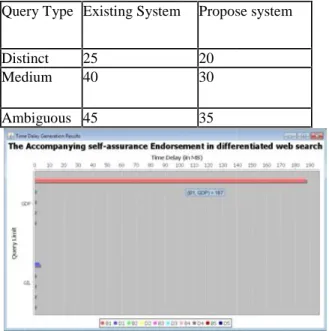
Graph1. The Average iteration between existing system and propose system.
In this graph shows the comparison between existing system and propose system. Here the existing system takes more iteration than the propose system.
Graph2. The security between existing system and propose system
In this graph our propose work is more secure than the existing graph. Because we are provide the encryption algorithm for security from the attackers.
Fig 2.1: Graph for discriminating power
A privacy-preserving personalised net search framework user customizable privacy-preserving search, which maygeneralize profiles for every question in step with user-specified privacy needs. GreedyDP and greedyIL squaremeasure used for generalize profiles. Discriminating power is
employed in greedyDP and knowledge loss is employedin greedyIL. When the discriminating power will increase info loss can decreases. GreedyDP have high discriminatingpower than greedyIL. GreedyIL have less risk compare to greedyDP. The average time for greedyIL is a smalleramount than greedyDP. So greedyIL is healthier than greedyDP.
Fig 2.2: Graph for Information loss
In the above figure 3.1 shows the graph examination the discriminating power for greedyDP and greedyIL. The x-axis denoted range of iteration and y axis denoted the discriminating power. GreedyIL have high discriminating powerwhereas scrutiny with greedyDP. In the figure 3.2 shows the graph scrutiny the danger occurring between greedyDPand greedyILthe x axis denoted range of iteration and y axis denoted risk. The greedyDP have high risk thangreedyIL. So greedyIL is healthier than greedyDP.
VII. Conclusion
Privacy protection in publishing transaction data is an important problem. A key feature of transaction data is the extreme sparsity, which renders any single technique ineffective in anonymizing such data. Among recent works, some incur high information loss, some result in data hard to interpret, and some suffer from performance drawbacks. This paper proposes to integrate generalization and compression to reduce information loss. However, the integration is nontrivial. We propose novel techniques to address the efficiency and scalability challenges. Our proposed system gives better quality results and gives more efficiency. Privacy is too good when compared with the Existing system. In the Existing System, only generalization technique is used. Our String matching algorithm gives more accuracy when compared with the Greedy IL algorithm. Generalization and suppression technique achieves better privacy when compared with the existing system.
Future Enhancements
In Future Work, we can implement the hierarchical divisive approach for retrieving the search results. It Query Type Existing System Propose system
Distinct 25 20
Medium 40 30
Ambiguous 45 35
Graph1. The Average iteration between existing system and propose system.
In this graph shows the comparison between existing system and propose system. Here the existing system takes more iteration than the propose system.
Graph2. The security between existing system and propose system
In this graph our propose work is more secure than the existing graph. Because we are provide the encryption algorithm for security from the attackers.
Fig 2.1: Graph for discriminating power
A privacy-preserving personalised net search framework user customizable privacy-preserving search, which maygeneralize profiles for every question in step with user-specified privacy needs. GreedyDP and greedyIL squaremeasure used for generalize profiles. Discriminating power is
employed in greedyDP and knowledge loss is employedin greedyIL. When the discriminating power will increase info loss can decreases. GreedyDP have high discriminatingpower than greedyIL. GreedyIL have less risk compare to greedyDP. The average time for greedyIL is a smalleramount than greedyDP. So greedyIL is healthier than greedyDP.
Fig 2.2: Graph for Information loss
In the above figure 3.1 shows the graph examination the discriminating power for greedyDP and greedyIL. The x-axis denoted range of iteration and y axis denoted the discriminating power. GreedyIL have high discriminating powerwhereas scrutiny with greedyDP. In the figure 3.2 shows the graph scrutiny the danger occurring between greedyDPand greedyILthe x axis denoted range of iteration and y axis denoted risk. The greedyDP have high risk thangreedyIL. So greedyIL is healthier than greedyDP.
VII. Conclusion
Privacy protection in publishing transaction data is an important problem. A key feature of transaction data is the extreme sparsity, which renders any single technique ineffective in anonymizing such data. Among recent works, some incur high information loss, some result in data hard to interpret, and some suffer from performance drawbacks. This paper proposes to integrate generalization and compression to reduce information loss. However, the integration is nontrivial. We propose novel techniques to address the efficiency and scalability challenges. Our proposed system gives better quality results and gives more efficiency. Privacy is too good when compared with the Existing system. In the Existing System, only generalization technique is used. Our String matching algorithm gives more accuracy when compared with the Greedy IL algorithm. Generalization and suppression technique achieves better privacy when compared with the existing system.
Future Enhancements
In Future Work, we can implement the hierarchical divisive approach for retrieving the search results. It Query Type Existing System Propose system
Distinct 25 20
Medium 40 30
Ambiguous 45 35
Graph1. The Average iteration between existing system and propose system.
In this graph shows the comparison between existing system and propose system. Here the existing system takes more iteration than the propose system.
Graph2. The security between existing system and propose system
In this graph our propose work is more secure than the existing graph. Because we are provide the encryption algorithm for security from the attackers.
Fig 2.1: Graph for discriminating power
A privacy-preserving personalised net search framework user customizable privacy-preserving search, which maygeneralize profiles for every question in step with user-specified privacy needs. GreedyDP and greedyIL squaremeasure used for generalize profiles. Discriminating power is
employed in greedyDP and knowledge loss is employedin greedyIL. When the discriminating power will increase info loss can decreases. GreedyDP have high discriminatingpower than greedyIL. GreedyIL have less risk compare to greedyDP. The average time for greedyIL is a smalleramount than greedyDP. So greedyIL is healthier than greedyDP.
Fig 2.2: Graph for Information loss
In the above figure 3.1 shows the graph examination the discriminating power for greedyDP and greedyIL. The x-axis denoted range of iteration and y axis denoted the discriminating power. GreedyIL have high discriminating powerwhereas scrutiny with greedyDP. In the figure 3.2 shows the graph scrutiny the danger occurring between greedyDPand greedyILthe x axis denoted range of iteration and y axis denoted risk. The greedyDP have high risk thangreedyIL. So greedyIL is healthier than greedyDP.
VII. Conclusion
Privacy protection in publishing transaction data is an important problem. A key feature of transaction data is the extreme sparsity, which renders any single technique ineffective in anonymizing such data. Among recent works, some incur high information loss, some result in data hard to interpret, and some suffer from performance drawbacks. This paper proposes to integrate generalization and compression to reduce information loss. However, the integration is nontrivial. We propose novel techniques to address the efficiency and scalability challenges. Our proposed system gives better quality results and gives more efficiency. Privacy is too good when compared with the Existing system. In the Existing System, only generalization technique is used. Our String matching algorithm gives more accuracy when compared with the Greedy IL algorithm. Generalization and suppression technique achieves better privacy when compared with the existing system.
Future Enhancements
In Future Work, we can implement the hierarchical divisive approach for retrieving the search results. It Query Type Existing System Propose system
Distinct 25 20
Medium 40 30
will gives better performance when compared with our proposed System.
REFERENCES
[1] Z. Dou, R. Song, and J.-R. Wen, “A Large- Scale Evaluation and Analysis of Personalized Search Strategies,” Proc. Int’l Conf. World Wide Web (WWW), pp. 581- 590, 2007.
[2] Y. Zhu, L. Xiong, and C. Verdery, “Anonymizing User Profiles for Personalized Web Search,” Proc. 19th Int’l Conf. World Wide Web (WWW), pp. 1225-1226, 2010.
[3] J. Castellı´-Roca, A. Viejo, and J. Herrera-Joancomartı´, “Preserving User’s Privacy in Web Search Engines,” Computer Comm.,vol.32, no. 13/14, pp. 1541-1551, 2009.
[4] A. Viejo and J. Castell_a-Roca, “Using Social Networks to Distort Users’ Profiles Generated by Web Search Engines,” Computer Networks, vol. 54, no. 9, pp. 1343-1357, 2010.
[5] K. Ramanathan, J. Giraudi, and A. Gupta, “Creating Hierarchical User Profiles Using Wikipedia,” HP Labs, 2008. [6] J. Teevan, S.T. Dumais, and D.J. Liebling, “To Personalize or Notto Personalize: Modeling Queries with Variation in User Intent,”Proc.31st Ann. Int’l ACM SIGIR Conf. Research and Development in Information Retrieval (SIGIR), pp. 163- 170, 2008.
[7] G. Chen, H. Bai, L. Shou, K. Chen, and Y. Gao, “Ups: Efficient Privacy Protection in Personalized Web Search,” Proc. 34th Int’l ACM SIGIR Conf. Research and Development in Information, pp. 615-624, 2011.
[8] Y. Xu, K. Wang, G. Yang, and A.W.-C. Fu, “Online Anonymity for Personalized Web Services,” Proc. 18th ACM Conf. Information and Knowledge Management (CIKM), pp. 1497-1500, 2009.
[9] D. Xing, G.-R. Xue, Q. Yang, and Y. Yu, “Deep Classifier: Automatically Categorizing Search Results into Large- Scale Hierarchies,” Proc. Int’l Conf. Web Search and Data Mining (WSDM), pp. 139-148, 2008.