https://belitungraya.org/BRP/index.php/bnj/index
ORIGINAL RESEARCH
PERCEPTION OF NURSES IN DECISION-MAKING PROCESS
IN PALLIATIVE CARE FOR PATIENTS WITH CANCER
IN PUBLIC HEALTH CENTERS
Atsarina Fauzan*, Sri Setiyarini, Christantie Effendy, Martina Sinta Kristanti
Faculty of Medicine, Public Health, and Nursing, Universitas Gadjah Mada, Yogyakarta, Indonesia
*Corresponding author: Atsarina Fauzan
Bachelor nursing student of Faculty of Medicine, Public Health, and Nursing, Universitas Gadjah Mada. Jl. Farmako, Sendowo, Sekip Utara, Kec. Depok, Kabupaten Sleman, Daerah Istimewa Yogyakarta 55281, Indonesia Email: [email protected] Mobile: +6285729960853
Article Info:
Received: 20 May 2019 Revised: 19 June 2019 Accepted: 30 June 2019
DOI:
https://doi.org/10.33546/bnj.815
Abstract
Background: Nurses have a key role in promoting patients’ involvement in decision-making process of palliative care to improve their dignity and satisfaction. However, there is a dearth of studies exploring this involvement, especially in public health centers in Indonesia.
Objective: This study aimed to explore the perception of nurses in decision-making process and to understand what type of decision-making made by health care providers in palliative care.
Methods: This was a descriptive explorative study with qualitative approach. Participants were selected using purposive and snowball sampling. Data were collected using Focus Group Discussion (FGD) and in-depth interview. Content analysis method by inductive approach was used for data analysis. Consolidated criteria for reporting qualitative research (COREQ) was also used.
Results: Eight themes emerged in this study, namely: (1) Collecting information about patients’ current physiological condition, (2) Creating alternative strategies according to the patients’ current physiological condition, (3) Establishing implementation type to be performed, (4) Providing information to the patients, (5) Discussing decision-making between patients and family, (6) Choosing/rejecting an action by patients, (7) Performing selected actions, and (8) Evaluating action. Three points that are different from the existing theory were: (i) there was a discussion between patients and family, (ii) the absence of the process of collecting information after a patient rejects to act, and (iii) there were three types of decision-making: paternalistic, shared, and informed decision-making.
Conclusion: This study serves as an input for nurses to pay more attention in decision-making process in palliative care in patients with cancer, and to encourage patients to give contribution in decision-making as part of shared decision-making.
KEYWORDS
decision-making; palliative care; public health center; cancer
© 2019 The Author(s)
This is an Open Access article distributed under the terms of the Creative Commons Attribution 4.0 International License which permits unrestricted non-commercial use, distribution, and reproduction in any medium, provided the original work is properly cited.
ISSN: 2477-4073
INTRODUCTION
Palliative care is an approach aimed at improving the quality of life on patients and families in dealing with problems related to threatening diseases, which include prevention and relief from suffering through identification, assessment, and treatment of pain and other physical, psychosocial, and spiritual problems (World Health Organization, 2017). In recent years, palliative care has been increasingly recognized not only for cancer patients
but also for those with advanced diseases (Sigurdardottir et al., 2014).
(DIY) amounted to 4.1 per 1000 population. There are four districts and one municipality in Yogyakarta (Research and Health Development Board, 2013), which the prevalence of cancer in Sleman District amounted to 6.1 per 1000 population that needs further attention.
Patients with cancer in need of palliative care are strongly encouraged to be involved in decision-making to improve their dignity and satisfaction (Bélanger et al., 2014). The individual right in decision-making is an integral part in treatment of cancer patients. Otherwise, making a decision with consideration from the family only or without patients’ consent is a violation of the patient's right (Chusairi, 2004). Therefore, nurses become the key role in promoting an effective communication to increase patient’s involvement in decision-making (European Oncology Nursing Society, 2006). As there is a dearth of knowledge exploring this issue especially in Indonesia, thus this study aimed to explore the perception of nurses in decision-making process and to understand what type of decision-making provided by health care professionals in palliative care in public health centers.
METHODS
Study Design
This was a descriptive explorative study with qualitative approach, which was conducted in Sleman District, Yogyakarta Indonesia between January and February 2015.
Participants
The target population of this study was nurses at public health centers in Sleman District, Yogyakarta. There were 25 public health centers with a total of 382 nurses. Samples were selected using purposive and snowball sampling, which consisted of 26 nurses. Inclusion criteria of the sample were: 1) nurses who did palliative care to patients with cancer, 2) nurses who had experiences in caring patients with cancer at least for two years, and 3) willing to participate in this study. Participants were selected purposively, striving for a mixture of gender, age, educational level, length of work, and specialty. At this stage, the head of administration of public health centers introduced the study to potential participants, which followed by the first author to check their eligibility. The process of selecting participants were: 1) The authors gathered information about public health centers from Department of Health in Sleman District, which had the highest patients with cancer, such as Public Health Center of Depok 1, Gamping 2, Seyegan, Godean 2, and Godean 1. However, those five public health centers were not all given palliative care due to referral condition and therefore they were excluded, 2) The authors selected the other public health centers that provide palliative care for patients with cancer, with a total of eight public health centers.
Data Collection
Focus group discussion (FGD) and in-depth interview were used for data collection. Participants of FGD were invited via letters and short message services to come to the Faculty of Medicine,
Public Health, and Nursing, Universitas Gadjah Mada in January 2015 in 11 participants, and participants of in-depth interviews were met at their workplace by an appointment between January and February 2015 in 15 participants. FGD and in-depth interviews were conducted by the first author (AF) who had no contact or no relationship with the participants prior to the interviews. FGD was done in 75 minutes, while in-depth interviews lasted between 20 and 60 minutes each. All interviews were audio-recorded to ensure that all communication was gathered. An interview guideline was made by the first author (AF), then developed and reviewed by nursing lecturer and a PhD student trained as a qualitative researcher (MSK). The interview guideline consisted of eleven questions regarding the decision-making process and the types of decision-decision-making. Field notes were also made during and after the interviews. Data collection was completed after 15 interviews, which no new codes were found.
Data Analysis
Data were analyzed using a content analysis method with an inductive approach (Elo & Kyngäs, 2008). The audio-recorded interviews were transcribed verbatim in the Indonesian language by the first author (AF). The transcripts were then read line-by-line by the first author (AF) to check their accuracy. In addition, audit trail by an independent rater (NR) was performed by reading all transcripts. After reading line-by-line for coding development, meaningful sentences were marked for subsequent coding. All collected coding was grouped into several categories to form a theme. All codes were discussed with two authors (AF and MSK) and also an independent rater (NR). Session for categorization development was also held with two authors. Next, themes were developed from the categories. Finally, decision-making theory from Mccullough et al. (2010) and Hancock and Easen (2006) was used to interpret the data. Consolidated criteria for reporting a qualitative research (COREQ) was used to report the results of the study (Tong et al., 2007).
Ethical Consideration
This study has been approved by the Medical and Health Research Ethics Committee (MHREC), the Faculty of Medicine, Public Health, and Nursing, Universitas Gadjah Mada, Indonesia (KE/FK/432/EC 2 May 2014), and the study permission was obtained from all public health centers. Prior to data collection, the participants received comprehensive information about the study procedures and protocols. They were also informed that they could withdraw at any time during or after the interview without any consequences. Once they agreed to be a part of the study, they signed an informed consent form.
RESULTS
Characteristics of Participants
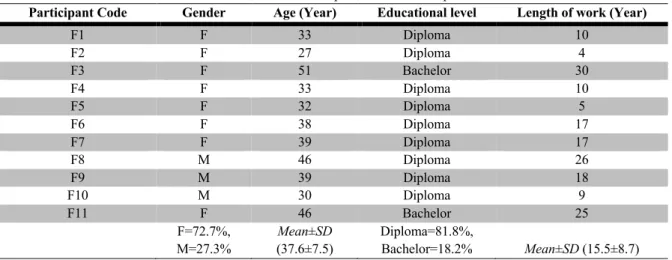
Table 1 Characteristics of Participant for Focus Group Discussion
Participant Code Gender Age (Year) Educational level Length of work (Year)
F1 F 33 Diploma 10
F2 F 27 Diploma 4
F3 F 51 Bachelor 30
F4 F 33 Diploma 10
F5 F 32 Diploma 5
F6 F 38 Diploma 17
F7 F 39 Diploma 17
F8 M 46 Diploma 26
F9 M 39 Diploma 18
F10 M 30 Diploma 9
F11 F 46 Bachelor 25
F=72.7%, M=27.3%
Mean±SD
(37.6±7.5)
Diploma=81.8%,
Bachelor=18.2% Mean±SD (15.5±8.7)
Table 2 Characteristics of Participants for In-Depth Interviews
Participant Code Gender Age (Year) Educational level Length of work (Year)
I1 F 29 Diploma 4
I2 F 29 Bachelor 4
I3 M 43 Assistant nurse 20
I4 F 33 Diploma 10
I5 F 45 Diploma 26
I6 F 25 Diploma 4
I7 F 52 Diploma 30
I8 F 45 Diploma 23
I9 F 39 Diploma 16
I10 F 46 Bachelor 25
I11 F 38 Diploma 17
I12 M 47 Diploma 24
I13 M 46 Diploma 26
I14 F 32 Diploma 10
I15 F 27 Diploma 3
F=80%, M=20%
Mean±SD
(38.4±8.6)
Diploma=80%, Bachelor=13.3% Assistant nurse= 6.7%
Mean±SD (16.1±9.6)
As shown in the Table 2, the majority of participants in in-depth interviews were females (80%) than males (20%). The average of age of all participants was 38.4%. There were three types of educational background of participants, including diploma, bachelor, and assistant nurses. The average of working experience was 16.1 years.
Analytical Findings
The themes emerged from analysis, namely: (1) collecting information about patient's current physiological condition, (2) creating alternative strategies according to the patient's current physiological condition, (3) establishing the types of implementation that should be performed, (4) providing information to patients, (5) discussing decision-making between patients and family; (6) choosing/rejecting action by patients, (7) performing selected actions, and (8) evaluating actions (see
Figure 1). Those themes are illustrated below with exemplars from the informants’ stories using pseudonyms for the informants.
Theme 1: Collecting information about patient's current physiological condition
Majority of participants agreed that they collected information about patients’ conditions during assessment of patients who come to public health centers with their families. Participants expressed this in the following statements:
…Usually when patients had some problems with their physical conditions, they came to the physician for a consultation... (F3) …Families came to public health center with patients and gave some information about patient’s condition. As a nurse, we did assessment and checked vital signs of the patient... (I1)
Theme 2: Creating alternative strategies according to the patient's current physiological condition
Participants were most likely to agree that they had alternative strategies to deal with patients’ condition based on the needs. This is explained in the following statements:
Theme 3: Establishing the types of implementation that should be performed
Majority of participants agreed that health care providers, after having some alternatives, chose the best treatment or option before explaining to the patients. This is explained in the following statements:
…Patients did a routine therapy that advised by a physician... (11) …The physician also gave an advice to patients for hospitalization... (I2)
…If there was a bad condition from the patients, the physician referred them to the hospital... (I3)
…If there was a bleeding condition, the physician gave a pharmacology therapy to stop the bleeding... (I6)
Theme 4: Providing information to patients
The majority of participants agreed that before decision-making the nurses had a role to provide information to the patients. This can be seen from the following statements:
…We provided the information to the patients. They had to know about their disease, what treatment would have to do, and the effect if they rejected the treatment... (F2)
…Of course we gave the information about the disease, and the patients had to be hospitalized... (F6)
…We gave the information as much as possible… everything about treatment... (I3)
…We invited the patients and their family to give insight what they had to do with the disease... (I5)
Theme 5: Discussing decision-making between patients and family
Participants agreed that patients needed to discuss with their family before choosing the treatment. This is explained in the following statements:
…Usually, patients were not brave enough to decide, so they asked the family to decide for their treatment… (F3)
…Patients could not decide about their treatment, therefore they need family involvement to discuss... (I5)
Theme 6: Choosing/rejecting action by patients
Majority of participants agreed that patients could chose/reject the treatment provided by health care provider. This can be seen from the following statements:
…When the patients got an advice from a physician in the public health center, they obeyed to come to do treatment... (I3)
…However, the patients did a decision-making because they understood about their disease and treatment... (I4)
Theme 7: Performing selected actions
Participants agreed that nurses did wound care management for the patients in palliative care. This is explained in the following statements:
…As a nurse, we did wound care to the patients, and the physician gave pharmacological therapy... (I6)
…We did wound care every day for palliative care... (I8)
…In this public health center, we did wound care for the patients... (I9)
…Patients came to the nursing unit, then we saw their wound and we did wound care if there was no bleeding... (I13)
Theme 8: Evaluating actions
Majority of participants agreed that health care providers evaluated the treatment in patients. If the conditions were getting worst, they referred to the hospital. This is explained in the following statements:
…We also had communication with the hospital about the treatment using referral system to evaluate the treatment…. (I3)
…If patients were getting worst after the routine treatment in the public health center, the patients had to refer to the hospital for better treatment… (I14)
In this study, we also compared our research results with the Theory of Mccullough et al. (2010) and Hancock and Easen (2006). As a result, we found three differences from the theory (see Figure 1), including:
1) Patients and their families discuss and take a decision
After interviews with 15 participants, nurses obtained additional stages in the process of decision-making process, namely the stage of the discussion process between patients and families in making decisions on the action to be done. According to Theory of Mccullough et al. (2010) and Hancock and Easen (2006), there was only patient who did decision-making process for palliative care without their family contribution in decision-making process.
2) There is no process of collecting information after patients reject to act
Based on FGD and interviews, nurses did not reveal any repetitions in gathering information that offer other measures to patients in accordance with the existing theory. According to theory of Mccullough et al. (2010) and Hancock and Easen (2006), the health care providers back to first step again (the process of collecting information after a patient rejects to act), but in our study the nurse did not do it.
3) Type of decision-making
According to Theory of Mccullough et al. (2010) and Hancock and Easen (2006) health care provider did shared decision-making process, but in our study we found that there were three types of decision-making : 1) paternalistic decision making, which family is a major influence in decision-making of patients, 2) shared decision making, which doctors, nurses, and patients discuss to each other regarding the best option for the treatment, 3) and informed decision-making based on fact.
Figure 1 Scheme of Research Results
Remarks:
: According to Theory of Mccullough et al. (2010) and Hancock and Easen (2006)
: The additional step from this study
DISCUSSIONS
The study aimed to determine the perception of nurses in a decision-making process in palliative care and to explore the types of decision-making in palliative care. The results showed that there are similarity with the general process in health care
decision-making in the study of Witt et al. (2012). The existing decision-making process in health care requires the input from the patients. In many cases, the decision-making process consists of several stages: pre-decisional deliberation, decision determination, and consolidation (Figure 2).
Figure 2 Decision-Making Process in Health Services (Witt et al., 2012)
The health treatment process is a form of diagnosis, test result, or risk assessment. These results will be followed by the presentation of several options for further actions interpreted by the patients. In this condition, the patients can decide or delegate decision-making. After the decision is made, then consolidation is performed (Witt et al., 2012). This is in accordance with the results of this study, which there was an exposure to the palliative
care options, which would then be selected through the decision-making process.
in line with our study, which the patients were happy to check-up in the public health centers, but they were still looking for other alternative therapies because they assumed that to be healthy is not necessarily from the treatment in the public health center.
According to literature, there are three types of decision-makings: paternalistic, informed making, and shared decision-making, which were also identified in our study. However, the World Health Organization (WHO) prefers shared decision-making to be emphasized, which all health professionals, such as doctors, nurses, and pharmacists, with trained communication skills play a role in encouraging patients to be actively involved in decision-making, or put the patients at the center of decisions of their own treatment and care. The active involvement of patients is expected to increase the knowledge, and thus reduce anxiety and fear (Coulter et al., 2008). Based on the results of this study, the nurses as part of health personnel were less likely to implement shared decision-making.
Additionally, technical guidelines for palliative cancer services published by the Ministry of Health of Indonesia (2013) provides an explanation that decision-making needs to take into account the culture of the patients. However, the results of this study might not be in line with that guideline, which six participants make decisions with paternalistic type. A factor that might influence decision-making process was the resignation of patients to the action that affect the communication between patients and health personnel. Claramita et al. (2010) stated that the patients were less likely to contribute in decision making and lack in verbal communication. So, to avoid paternalistic, the patients need to be supported to communicate verbally with health personnel.
The strength of this study is in the richness of contextual data, especially for the Indonesian context. However, further research is needed to confirm our findings and to identify other possible factors related to patient’s rejection in medical intervention.
CONCLUSION
This study explored the perceptions of nurses in decision-making process in palliative care for patients with cancer. Eight themes emerged from this study included collecting information, creating alternative strategies, establishing the types of implementation, providing information, discussing decision-making between patients and family, choosing/rejecting action by patients, performing selected actions, and evaluating actions. Three points that are different from the existing theory were 1) there was a discussion between patients and family, 2) the absence of the process of collecting information after a patient rejects to act, and 3) there were three types of decision-making: paternalistic, shared, and informed decision-making. It is suggested that nurses as a part of health care providers could give more attention during decision-making in palliative care in patients with cancer, especially to encourage patients to give a contribution in decision-making as a part of shared decision-decision-making.
Declaration of Conflicting Interest
The authors declared no conflict of interest.
Funding
This study was personally funded by Mrs. Martina Sinta Kristanti.
Acknowledgments
We thanked all participants for their willingness to be a part of this study.
Authors Contributions
Each author made substantial contributions to conception or design of the work. AF and MSK contributed in selecting and identifying the participants, conducting the interviews, data analysis, and drafting the manuscript. SS and CE analyzed the data and checked the manuscript.
ORCID
Atsarina Fauzanhttps://orcid.org/0000-0001-6982-7741 Christantie Effendy https://orcid.org/0000-0002-8823-229X Martina Sinta Kristanti https://orcid.org/0000-0001-6609-6285
References
Bélanger, E., Rodríguez, C., Groleau, D., Légaré, F., Macdonald, M. E., & Marchand, R. (2014). Initiating decision-making conversations in palliative care: an ethnographic discourse analysis. BMC Palliative Care, 13(1), 63. https://doi.org/10.1186/1472-684x-13-63
Chusairi, A. (2004). Health seeking behavior para pasien poli perawatan paliatif: Studi eksploratif terhadap lima pasien Poli Perawatan Paliatif RSUD dr. Soetomo Surabaya [Health seeking behavior of patients in policlynic of palliative care: An explorative study in five patients in Policlynic of Palliative Care of RSUD dr. Soetomo Surabaya. Retrieved from http://www.journal. unair.ac.id/ filerPDF/01 Achmad, Health Seeking Behavior.pdf Claramita, M., Prabandari, Y. S., & Van der Vleuten, C. (2010).
Developing and validating a guideline on doctor-patient communication for Southeast Asian context. South-East Asian Journal of Medical Education, 4, 23-30.
Coulter, A., Parsons, S., Askham, J., & Organization, W. H. (2008). Where are the patients in decision-making about their own care? Copenhagen: WHO Regional Office for Europe.
Elo, S., & Kyngäs, H. (2008). The qualitative content analysis process. Journal of Advanced Nursing, 62(1), 107-115. https://doi.org/10.1111/j.1365-2648.2007.04569.x European Oncology Nursing Society. (2006). EONS curriculum
cancer in older people. Retrieved from https://www.kok-krebsgesellschaft.de/wp-content/uploads/2015/07/eons_ curriculum_ealderly.pdf
Hancock, H. C., & Easen, P. R. (2006). The decision-making processes of nurses when extubating patients following cardiac surgery: an ethnographic study. International Journal of Nursing Studies, 43(6), 693-705. https://doi.org/ 10.1016/j.ijnurstu.2005.09.003
Ministry of Health of Indonesia. (2013). Pedoman teknis pelayanan paliatif kanker [Technical guidelines for cancer palliative care]. Retrieved from http://p2ptm.kemkes.go.id /uploads/2016/10/Pedoman-Teknis-Pelayanan-Paliatif-Kanker.pdf
Pratiwi, G. D. (2008). Faktor-faktor yang mempengaruhi keluarga dalam pengambilan keputusan memanfaatkan layanan pengobatan di Kabupaten Sleman Yogyakarta [Factors that influence family decision-making in the use of treatment services in Sleman Regency, Yogyakarta].
Yogyakarta: Universitas Gadjah Mada.
Research and Health Development Board. (2013). Riset kesehatan dasar [Basic health research]. Jakarta: Research and Health Development Board, Ministry of Health of Indonesia.
Sigurdardottir, K. R., Oldervoll, L., Hjermstad, M. J., Kaasa, S., Knudsen, A. K., Løhre, E. T., . . . Haugen, D. F. (2014). How are palliative care cancer populations characterized in
randomized controlled trials? A literature review. Journal of Pain and Symptom Management, 47(5), 906-914. e917. https://doi.org/10.1016/j.jpainsymman.2013.06.005 Tong, A., Sainsbury, P., & Craig, J. (2007). Consolidated criteria
for reporting qualitative research (COREQ): a 32-item checklist for interviews and focus groups. International Journal for Quality in Health Care, 19(6), 349-357. https://doi.org/10.1093/intqhc/mzm042
Witt, J., Elwyn, G., Wood, F., & Brain, K. (2012). Decision making and coping in healthcare: The Coping in Deliberation (CODE) framework. Patient Education and Counseling, 88(2), 256-261. https://doi.org/10.1016/j.pec. 2012.03.002
World Health Organization. (2017). Cancer control: Knowledge into action: WHO guide for effective programmes: Module 5: Palliative care. Geneva: World Health Organization.