20
CLUSTER BASED LOAD BALANCING AND INTRUSION DETECTION
SYSTEM FOR MANET USING PANEL PROTOCOL
A.Saroja R.Roopa– M.E.(CSE), PG Scholar Assistant Professor, Department Of CSE Department of CSE, Professional Group Of Institution, Professional Group Of Institution,
Palladam. Palladam.
E-mail – [email protected]. E-mail – [email protected].
Abstract-
Advances in mobile ad-hoc network (MANET) technology have enabled small andlow-cost sensors with the capability of sensing various types of physical and environmental conditions, data
processing, delay sensitive applications and wireless communication. In the MANET, the sensor nodes have
a limited transmission range and their processing and storage capabilities as well as their energy resources
are limited. A triple umpiring system has already been proved for its better performance in MANETs. The
clustering technique is effective in prolonging the lifetime of the MANET. In this paper, we introduce
PANEL, a position-based aggregator node election protocol for wireless sensor networks. The novelty of
PANEL with respect to other aggregator node election protocols is that it supports asynchronous sensor
network applications where the sensor readings are fetched by the base stations after some delay. In
particular, the motivation for the design of PANEL was to support reliable and persistent data storage
applications. PANEL ensures load balancing, and it supports intra-and inter-cluster routing allowing
sensor to aggregator, aggregator to aggregator, base station to aggregator, and aggregator to base station
communications. PANEL creates more cohesive clusters than LEACH, and, on the other hand, that
PANEL is more energy efficient than LEACH.
Keywords-Sensor Networks, Network Protocols, Aggregator Node Election, Fault Tolerance, Security.
Introduction
Mobile Ad-hoc Networks consist of a multitude of tiny sensor nodes capable for
wireless communications and a few powerful base
stations. The sensor nodes usually perform some
monitoring task (e.g., measure various
environmental parameters). The base stations
collect sensor readings a nd forward them for
further processing to a service center.
Based on how the sensor readings reach the base
stations, we can distinguish synchronous
And asynchronous sensor networks. In the
synchronous case, the sensor readings are sent to
the base stations in real-time using multi-hop
wireless communications, where the sensor nodes
cooperatively forward data pack-
ets on behalf of other sensor nodes towards the
21
readingsare fetched by the base stations after somedelay (e.g., once every day or week). In this case,
the base stations are often mobile, and they
physically approach the sensors in order to fetch
their data through a
single wireless hop. Examples of synchronous
sensor network applications include for est fire
alarm systems and building automation systems
where real-time operation is indispensable.
Examples of asynchronous applications include
habitat monitoring systems and agricultural
applications such as vineyard monitoring where
real-time operation is not an issue. As sensor nodes
are often severely resource constrained, various
techniques have been proposed to ensure the
efficient operation of sensor networks. One of
these techniques is called aggregation or
in-network processing. The idea is that instead of
forwarding (in case of synchronous applications) or
storing (in case of asynchronous applications) raw
sensor readings, data can be first processed,
combined, and compressed by some distinguished
sensor nodes, called aggregators.
While aggregation increases the overall efficiency
of the sensor network, the aggregator nodes
themselves use more resources than the regular
sensor nodes. For this reason, it is desirable to
change the aggregators from time to time, and
thereby, to better balance the load on the sensor
nodes. For this purpose, aggregator node election
protocols can be used in the sensor network that
allow dynamic re-assignment of the aggregator
role.
In this paper, which is an enhanced version of our
previously published conference paper [5],
we introduce PANEL, a position-based aggregator
node election protocol for wireless sensor
networks. As its name indicates, PANEL uses the
geographical position information of the nodes to
determine which of them should be the
aggregators. Like other aggregator node election
protocols, PANEL also ensures load balancing in
the sense that each node is elected aggregator
nearly equally frequently. The salient feature of
PANEL that makes it novel and different from
other aggregator node election protocols is that
besides synchronous applications, PANEL also
supports asynchronous applications. In particular,
the motivation for the design of PANEL was to
support Tiny PEDS (Tiny Persistent En-crypted
Data Storage) [13], and other similar asynchronous
sensor network applications. In TinyPEDS,
aggregator nodes collect and aggregate sensor
readings from the clusters that they are responsible
for, and then persistently store the aggregated
values (in an encrypted form). In addition, in order
to increase reliability, the aggregators replicate
their stored data at the aggregators of some
selected backup clusters. These backup aggregators
(i.e., the aggregators in the backup clusters) must
be chosen in such a way that they are farther away
from the primary aggregator than a certain distance
called the
disaster radius. The rationale is that if there is a
disaster in which the primary aggregator is
destroyed, its data is still available at and can be
retrieved from the backup aggregators. Being a
position-based protocol, PANEL supports
TinyPEDSand applications alike by providing
assurances regarding the distance between the
22
paper is the following: In Section 2, we report onthe related work. In Section 3, we introduce the
general assumptions that we based the design of
PANEL upon. In Section 4, we describe the
operation of PANEL. In Section 5, we present our
simulation-based comparison of the performance
of PANEL with that of LEACH [42], an aggregator
node election protocol well-known from the
literature. In Section 6, we discuss some possible
extensions of PANEL. And finally, in Section 7,
we conclude the paper.
2. Related Work
One of the most well-known approach for
aggregator node election is the LEACH protocol
[6]. In LEACH, the clustering is based on random
numbers: each node picks a random number and
according to its value the node becomes a
cluster-head (and in the same
time aggregator) or remains cluster member. The
cluster members join the cluster of the cluster-head
with the highest energy advertisement. The
advantage of LEACH is that it °atly balances the
energy consumption of the network, but it uses
one-hop communication between the cluster
members and the elected cluster head, as well as
between the cluster heads and the base station,
which can waste energy.
Other clustering protocols in the literature
can be classified on the basis of how they elect the
aggregator nodes. For example, in [13], the
communication cost and the remaining energy of
the sensor nodes is considered, while in [3], a
generalized weight is used for this purpose. Graph
theoretical approaches can be found in [2] and in
[8]. In [1], the authors propose heuristics to form
clusters of nodes that are within d hops away
from each other, while in [4], new clusters are
created as the size of the overlapping areas of
existing clusters becomes small. The SANE
protocol [11] combines three random aggregator
node election schemes while considering
adversarial attacks.
The papers listed above are all related to
the aggregator node election problem assuming
clustering. However, none of the above methods
are able to guarantee a minimum distance between
certain aggregators. However, in our motivating
application area (i.e., reliable and persistent
distributed data storage), backup aggregators must
be chosen in such a way that they reside
farther away from the primary aggregator than a
certain disaster range. PANEL can guarantee a
minimum distance between aggregators, because in
PANEL, the aggregator nodes reside within fixed
size clusters. For instance, the minimum distance
between two aggrega-
tors belonging to non-neighboring clusters is dx,
where x is the number of clusters between the two
aggregators, and d is the cluster size.
One of these papers is [43], which
discusses the main issues of clustering in sensor
networks and concludes that clustering is a useful
tool for topology-management and for in-network
data aggregation. In [32], the authors detail the
different data aggregation techniques and highlight
the trade-offs between energy efficiency, data
accuracy, and latency. In [29], one can read about a
comparison of homogeneous (i.e., all the nodes
have same hardware capability) and heterogeneous
23
sensor networks from clustering point of view,while in [28], the authors investigate the schemes
of single-hop and multi-hop communication and
their impact on clustering.
The papers that propose solutions for clustering
can be classified based on their pri
mary aim (however, most of these papers have
multiple aims). The largest group according to this
classification consists of papers that aim at lifetime
maximization of the sensor network. This group of
papers can be further divided based on the method
that they use for the clustering: it can be either
probabilistic or deterministic. In case of
probabilistic solutions, the cluster heads are elected
based on some randomness, while in case of
deterministic solutions, some iterative or
centralized strategies are deployed. The most
known probabilistic cluster formation algorithm is
the LEACH protocol [17, 18]. In LEACH, the
clustering goes as follows: in every round each
sensor node picks a random number , and if this
random number is smaller than a threshold, the
node becomes a cluster head. Next, it advertises
itself with constant energy via radio
communication and waits for cluster members. The
cluster members are the non-cluster head nodes,
and each of them joins that cluster head’s cluster
whose advertisement was received with the highest
energy (in general, this is the nearest cluster head’s
cluster). The properties of LEACH are that it
flatly balances the energy consumption of the
network, however, it uses only one-hop
communication, the remaining energy of the nodes
is not a parameter by the election (but it should be
because of the increased energy needs of a cluster
head node), and the protocol requires every node to
be able to reach the base station in one hop, which
is not generally true in sensor networks. Other
related probabilistic cluster formation solutions can
be found in [25, 24, 3, 40, 34, 23]. In [25, 24], one
can read about a data gathering scheme, called
PEGASIS, that forms a chain of nodes and elects a
leader node for energy efficient collection of the
sensors’ measurements. In [3], the authors propose
a technique to build
k -hop clusters, i.e., where the cluster members are
at most k-hops away from the cluster head. In [40],
a LEACH-like idea is exploited considering the
residual energy of the nodes as well. In [34, 23],
the problem of unequal energy dissipation is
considered in case of equally sized clusters.
Therefore, in these latter papers, the authors
propose to form unequal size clusters: smaller ones
close to the base s
tation and larger ones further from it, as the cluster
heads of closer lying clusters have more load due
to the message forwarding task for further lying
clusters. The most important probabilistic solution
for our purposes is LEACH [42], which can also be
considered as the generalization of [17] and [40].
In LEACH, the cluster formation algorithm is more
sophisticated; it elects the cluster heads based on
their remaining energy and on a secondary
parameter that can control the cluster density, the
load balancing, and the amount of intra-cluster
communication. The LEACH protocol seems to be
a good trade-off between termination speed and
cluster head distribution by allowing some
communication between neighboring nodes. The
simulation results of LEACH show that it out
performs LEACH in terms of network lifetime and
24
of papers that aim at network lifetimemaximization using a deterministic aggregator
node election method is quite extensive as well. In
[14, 15, 41], one can find solutions for the
mentioned problem assuming that the sensor
network is heterogeneous, i.e., there are less energy
constrained gateway nodes among the usual
constrained sensor nodes that can help in cluster
formation and in the routing of
sensor messages. The authors of [9, 19] approach
the clustering problem from data gathering point of
view, and propose a centralized solution for near
optimal scheduling of the message sending. In [12]
, the problem of lifetime maximization is handled
by balancing the load of cluster heads and by
minimizing the total distance between
sensor nodes and cluster heads. [16] tackles the
same problem using fuzzy logic with the
variables of energy, node concentration and node
centrality with respect to the entire cluster. There
are some papers that do not primarily aim at
network lifetime prolongation, but at quick cluster
formation. In [31], the authors consider
event-driven sensor networks with high degree of
spatial-temporal
correlation. The main focus of the paper is on
cross-layered design of localized algorithms for
performing quick data aggregation and quick
hierarchy formation allowing prompt response to
queries. In [10], one can read about a fast
clustering algorithm suitable for large scale sensor
networks by its property of locality, scalability, and
self-healing in case of node failures and newly
deployed nodes. The following group of papers
collects those works that aim at enhanced network
management. For example, the objective of [21] is
to show that one can efficiently compute an
asymptotically optimal clustering, even when
collision resistant packet forwarding is not ensured.
The authors of [4] propose a hierarchical clustering
approach, where the cluster heads are clustered
again at the higher layer of the hierarchy. Here, the
clustering problem is defined in a graph theoretic
framework, and a distributed solution is presented
that results in size-bounded clusters. The ACE
algorithm [7] aims at forming minimally
overlapping clusters with the help of cluster
migration. The algorithm ends in constant time
regardless of the size of the network and uses only
local communications between nodes. Security is
rarely considered in the cluster formation or
aggregator node election problem. An exception is
[33], where the authors deal with the issue of
non-manipulable aggregator node election. When an
attacker node is able to manipulate the aggregator
election process, it is able to influence the
operation of the network, for example, by electing
itself as aggregator and maliciously filtering the
sensors’ measurements. Three independent
countermeasures are proposed against such an
attacker in [33], all of them based on distributed
random number generation. Another exception is
[26], where the author proposed a technique for
resilient cluster formation, which consists of a
neighbor validation module based on wormhole
detection, a priority-based selection of the cluster
head nodes, and a centralized detection module that
aims at detecting the nodes that have an
abnormally large number of neighbors (as these are
most likely compromised). The papers listed above
are all related to the aggregator node election
25
the above methods are able to guarantee aminimum distance between certain aggregators.
However, in our motivating application area (i.e.,
reliable and persistent distributed data storage),
backup aggregators must be chosen in such a way
that they reside farther away from the primary
aggregator than a certain disaster range. In [1], the
authors detail an approach for aggregator node
election that is able to guarantee this minimum
distance, however, the proposed solution is
centralized, and thus, its applicability is limited. On
the contrary, PANEL can guarantee a minimum
distance between aggregators in a distributed
manner, because in PANEL, the aggregator nodes
reside within fixed size clusters and a re elected
locally without the need of a central controller. For
instance, the minimum distance between two
aggregators belonging to non-neighboring clusters
is dx, where x is the number of clusters between
the two aggregators, and d is the physical size of
the cluster.
3. Proposed model – PANEL
Our Assumption
We assume that the sensor network consists of homogeneous sensors and non Homogeneous sensors (in terms of resources). The sensor nodes are deployed in a bounded area, and this area is partitioned into geographical clusters. We aim at electing a single aggregator per cluster. The density of the network is large enough so that the nodes within each cluster are connected when they use maximum power for transmission. In other words, there exists a route between any pair of sensors of a given cluster that contains only sensors from that cluster. This assumption on the connectivity within a cluster is crucial to the
correct operation of PANEL_GEAR, and it can be satisfied by appropriately choosing the cluster size (given the deployment density of the network and the maximum power range of the nodes).
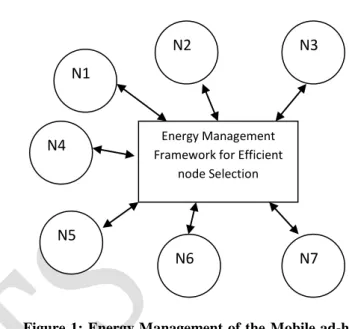
Figure 1: Energy Management of the Mobile ad-hoc
network
We further assume the communication time between the sink and sensor nodes is negligible, as compared with the sink node’s travelling time. Similarly, the delay due to multihop communications including transmission, propagation, and queuing delays is negligible with respect to the travelling time of the mobile sink in a given round. Each RP node has sufficient storage to buffer all sensed data. The mobile sink is aware of the location of each RP. All nodes are connected, and there are no isolated sensor nodes. Sensor nodes have a fixed data transmission range.
Definition 1 (Delay of data). The delay of data is defined as the time spent by the mobile sink moving from one sink site to the next sink site.
Definition 2 (Network lifetime (T)). The network lifetime (T) is defined as the elapsed time since the
N1
N2
N4
N3
N7 N5
N6
Energy Management Framework for Efficient
26
launch of this network till the instant that the first node dies.
Network Model and Assumption
The MANET has been modelled using a distributed routing protocol utilizing the diverse traffic handling by nodes through aware of their positions. Each node is supposed to be aware of its current node state and forwarding node state in order to route the data to the destination. Mobile ad-hoc networkdoes a packetization to transmit the data to a destination node through intermediate nodes.
Algorithm: PANEL Scheduling algorithm
Input: α = {T=∑ tk }
Output: α|
= {T|}
Divide Graph into connected sub graphs.
Apply the SSDR approach to each sub graphs and obtains the optimal sink path as well as corresponding routes.
Calculate the Source timings stayed in node and Travelling time from Source node to next node until destination node.
Choose the Longest network lifetime as best Data travelling Path
Calculate linear trajectory, Boundary trajectory and arbitrary trajectory values to prove the Optimal Sinks for Data Travelling. Begin
For k=1: k<m: k++ do
Where k = network life time
M is the mobility of the mobile Sink .
The pseudo-code of the aggregator election
procedure of PANEL
Clustering of the mobile Sink for Path Prediction
27
transmit announcement messages with maximum power, and the receiving nodes can measure the power level with which they receive those messages.
Figu
re 2: Illustration of the geographical clustering
in PANEL
The aggregator node election procedure
needs communications within the cluster. PANEL
takes advantage of these communications and uses
them to establish routing tables for intra-cluster
routing. In particular, at the end of the aggregator
node election procedure, the nodes also learn the
next hop towards the aggregator elected for the
current epoch.
PANEL also includes a position-based routing
protocol that is used in inter-cluster
communications. As the nodes are aware of their
geographical position, this seems to be a natural
choice that does not result in additional overhead.
The position-based routing protocol is used for
routing messages from a distant basestation or
from a distant aggregator towards the reference
point of a given cluster. Once the message enters
the cluster, it is routed further towards the
aggregator using the intra-cluster routing protocol
based on the routing tables established during the
aggregator node election procedure. Any
position-based routing
protocol can be integrated with PANEL; currently,
we are experimenting with the Greedy Perimeter
Stateless Routing (GPSR) protocol [7].
Finally, we want to point out that in
PANEL, the reference points of the clusters are
re-computed and the aggregator election procedure is
re-executed in each epoch. This ensures load
balancing in the sense that each node of the cluster
can become aggregator with nearly equal
probability. In addition, the nodes can accumulate
information that they receive in the different
epochs and use that for routing and intrusion
detection purposes.
28
back. Thus, in all cases, messages need to be routed towards a geographical position, and hence, position-based routing seems to fit best for inter-cluster routing in PANEL_GEAR. Apart from being a position-based routing protocol, we do not restrict the choice for inter-cluster routing in PANEL_GEAR.
4. Experimental Results
Implementation and Sensor Node Details:
The PANEL protocol was implemented and tested using construction of network model. The performance has been explained through the two important properties like node life time of networks.
Figure: 3: Network Lifetime vs. No. of mobile Nodes
against the Path Discovery
In Figure 3, Experimental results show the used no.of nodes and the throughput of the mobile sink in data covering. The performance of the algorithms is measured by the average convergence speed with respect to the number of sensors while retaining the long lifetime state and by the number of fitness evaluations. We presented a mathematical formulation that jointly considers different issues such as sink scheduling, data routing, bounded delay, and so on. The formulation is general and can be extended. However, this formulation
is a MINLP and is time consuming to solve directly. As a result, the performance of the algorithm can be represented by the involving a mobile sink and the impact of network parameters (e.g., the number of sensors, the delay bound) on the network lifetime. The linear trajectory significantly outperforms the other two and would save a relatively long computational time.
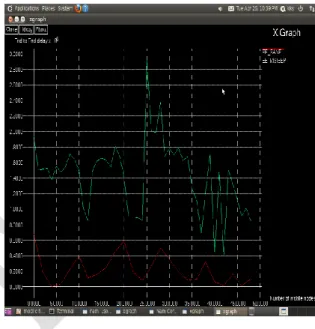
Figure 4: End to End Delay of the Mobile Sensor
nodes vs. Number of the node
29
source node generated a 20 bytes packet each second and transmitted it to the primary sink and possibly also to the secondary sink. This depends on the packet type, decided upon each transmission. 40 percent of the packets were regular, 20 percent were delay-sensitive, 20 percent were reliability-sensitive, and 20 percent were critical.
Conclusion
We described PANEL, a position-based aggregator
node election protocol for wireless sensor
networks. The novelty of PANEL with respect to
other aggregator node election protocols is that it
supports asynchronous sensor network applications
where the sensor readings are fetched by the base
stations after some delay. In particular, the
motivation for the design of PANEL was to
support reliable and persistent data storage
applications, such as TinyPEDS. PANEL uses the
position information of the nodes to determine
which of them should become aggregator. PANEL
ensures load balancing, meaning that each node has
nearly the same chance to become aggregator, and
it supports intra- and inter-cluster routing allowing
sensor to aggregator, aggregator to aggregator,
base station to aggregator, and aggregator to base
station communications. Besides describing the
operation of PANEL, we also evaluated its
efficiency by means of simulations. In particular,
we compared the cluster formation capabilities and
the energy consumption of PANEL to that of
LEACH, an aggregator node election protocol
well-known from the literature. Our results show
that PANEL behaves better than LEACH in both
comparisons.
Reference
[1] I.F. Akyildiz, W. Su, Y. Sankarasubramaniam, and E. Cayirci, “A Survey on Sensor Networks,” IEEE Comm. Magazine, vol. 40, no. 8, pp. 102-114, Aug. 2002.
[2] W. Song, R. Huang, M. Xu, B.A. Shirazi, and R. Lahusen, “Design and Deployment of Sensor Network for Real-Time High-Fidelity Volcano Monitoring,” IEEE Trans. Parallel and Distributed Systems, vol. 21, no. 11, pp. 1658-1674, Nov. 2010.
[3] C. Liu, K. Wu, and J. Pei, “An Energy-Efficient Data Collection Framework for Mobile Ad-hoc Networksby Exploiting Spatiotemporal Correlation,” IEEE Trans. Parallel and Distributed Systems, vol. 18, no. 7, pp. 1010-1023, 2007.
[4] M. Perillo, Z. Cheng, and W. Heinzleman, “An Analysis of Strategies for Mitigating the Sensor Network Hot Spot Problem,” Proc. Second Int’l Conf. Mobile and Ubiquitous Systems (Mobiquitous ’05), July 2005.
[5] W. Wang, V. Srinivasan, and K. Chua, “Using Mobile Relays to Prolong the Lifetime of Wireless Sensor Networks,” Proc. ACM MobiCom, Aug. 2005 [6] L. Ruiz-Garcia, L. Lunadei, P. Barreiro, and I. Robla, “A review of wireless sensor technologies and applications in agriculture and food industry:
State of the art and current trends,” Sensors, vol. 9, no. 6, pp. 4728–4750, Jun. 2009.
[7] H. Chan and A. Perrig. ACE: An emergent
algorithm for highly uniform cluster formation. In
Proceedings of the First European Workshop on
Sensor Networks, January 2004.
[8] Chipcon Corporation. CC1000 Datasheet.
http://www.chipcon.com/files/CC1000 Data
Sheet22.pdf.
[9] K. Dasgupta, K. Kalpakis, and P. Namjoshi. An
efficient clustering–base d heuristic for data
30
Proceedings of the IEEE WirelessCommunications and Networking Conference
(WCNC), 2003.
[10] M. Demirbas, A. Arora, and V. Mittal. FLOC:
A fast local clustering service for wireless sensor
networks. In Proceedings of Workshop on
Dependability Issues in Wireless Ad Hoc Networks
and Sensor Networks (DIWANS)2004.
[11] S. Ganeriwal, S. Capkun, C.-C. Han, and M.
B. Srivastava. Secure time synchronization service
for sensor networks. In Proceedings of the 4th
ACM workshop on Wireless security (WiSe),