Primary care: Today and tomorrow
Improving general practice
Foreword 1
Executive summary 2
Part 1. Introduction 4
Part 2. The provider challenges facing general practice 8
Part 3. The solutions – adopting new ways of working 16
Part 4. Working differently 25
Notes 28 Acronyms 32 Contacts 33
Contents
Welcome to the Deloitte UK Centre for Health Solutions report on general practice in primary care. This report presents the Centre’s views on:
• the current and future role of general practice
• the main challenges faced by the general practice workforce • a range of evidence based solutions.
Some of the solutions are already being used by a number of innovative general practitioners, and others are ideas and insights into how the future workforce might adapt more effectively to the changing needs and expectations of their patients. We believe that our report captures accurately the current situation and future challenges, shows that these issues are not insurmountable and that there are a range of practical options for tackling them. Our central proposition is the need for general practice to work differently, especially given the signifi cant fi nancial and National Health Service reform challenges facing primary care service.
This report is the fi rst publication from the Centre for Health Solutions and represents our thoughts, experience and analysis of current data and research literature, combined with views of those on the frontline – policymakers, professional representative groups, practitioners and patient groups. We have sought to balance the facts with our insights and would like to thank all those who contributed their time to the research.
At this complex and challenging time, we hope that this report provides a useful perspective for you and your colleagues. We thank you for your interest and would welcome your feedback.
Karen Taylor
Director, Centre for Health Solutions
Foreword
This increase in life expectancy has been accompanied by an increase in the number of people living with chronic ill health and has led to a signifi cant increase in the demand for primary care.
The biggest single challenge for general practices, therefore, is the need to shift from treating episodic illness to working in partnership with patients and other providers to improve health, and treat people in the community more cost-effectively. Increased demand also requires practices to improve information and communication around diagnosis and treatment options, and develop shared decision-making and self-management strategies to tackle chronic conditions.
As pressure on primary care is rising, the general practice workforce is ageing. Twenty-two per cent of GPs are aged over 55, compared to 17 per cent in 2000 and increasing numbers of GPs are salaried or work part time. There has also been a growing reliance on practice nurses, many of whom are approaching retirement, as well as increasing numbers of nurse practitioners and healthcare assistants. It is imperative that new ways of working are identifi ed and adopted, particularly as previous solutions, such as increasing supply or paying staff more for existing ways of working, are unlikely to be sustainable given the unprecedented effi ciency challenges facing the NHS over the next four years.
The Health and Social Care Act 2012 introduces comprehensive changes to the way the NHS will operate, with GPs expected to take a lead role in independent Clinical Commissioning Groups, and have a much greater infl uence over the design and delivery of local healthcare services. This includes responsibility for around 60 per cent of the £110 billion NHS budget. The central tenet of the reforms ‘no decision about me without me’ is aimed at increasing choice and service integration, providing care closer to home and placing a stronger emphasis on patient involvement. However this is likely to increase still further the expectations of, and demands on, the general practice workforce.
Primary care, and in particular care delivered by general practice, has been a cornerstone of the United Kingdom’s healthcare system since the inception of the National Health Service (NHS) in 1948. Indeed, good quality primary care is considered an essential feature of all cost-effective healthcare systems. Patient satisfaction with primary care delivered through general practice has traditionally been high, albeit with local variations in both patient experience and quality of care.
The general practice delivery model has evolved slowly with most general practitioners (GPs) working in single or dual practices until the 1990s. The promotion of a ‘primary care led NHS’ during the 1990s and the implementation of new contract models from 2003 onwards, have resulted in the majority of GPs now working in larger group practices and health centres. Nevertheless, the delivery model still relies largely on face-to-face consultations between the patient and GP or, for a limited but growing number of interventions, between the patient and practice nurse. The focus of this report is on the general practice as a provider of primary care services, and while it is based on the English NHS, many of the solutions could apply equally to general practice in the rest of the United Kingdom.
In the United Kingdom, as in many developed countries, life expectancy is rising accompanied by increasingly complex health challenges and unprecedented levels of demand for healthcare services. These challenges are exacerbated by policy initiatives for more care to be provided closer to home. Of the many external infl uences on general practice, the ageing population is expected to have the greatest impact. People are living longer with average life expectancy now 78.2 years for males and 82.3 years for females. While there are likely to be more people in almost every age group, the greatest rise will be in older age groups.
GP services will be commissioned by the NHS Commissioning Board, and GPs as providers will be expected to comply with new Commissioning Outcomes Framework standards. The tension between the need to comply with these standards, and adopt the new commissioning role, is likely to require clarity in terms of which services and interventions can continue to be provided by the NHS. Achieving fi nancial savings while delivering the reforms is going to require a transformation in the skills and working practices of GPs and practice staff. It will also require the practice team to work in partnership with patients and a range of public, private and voluntary providers and provide robust, reliable evidence of the quality of care provided. In this report we acknowledge general practice and its registered patient list system as a strong foundation upon which different models of care can be built. We propose a range of solutions involving new business models and incentives, and accelerated use of technologies, which shift the focus of primary care from providers to consumers. While some of the proposed solutions are already being trialled by a number of GPs, and the challenge is to increase the scale of adoption, others have yet to be adopted in any meaningful way. What they all have in common is the need for primary care staff to work differently.
We propose a range of solutions involving new
business models and incentives, and accelerated
use of technologies, which shift the focus of
primary care from providers to consumers.
All UK residents are entitled by law to access primary care services, which are free at the point of need.1 This principle has survived since the establishment of the NHS in 1948 and was restated in the 2012 NHS Constitution for England.2 For most people, the GP or practice nurse is the fi rst point of contact with the NHS, and over 90 per cent of all patient contacts with the health service occur in primary care. Following the formation of the NHS, GPs took responsibility for the healthcare needs of the local population, including controlling access to specialist care.3
Within one month, 90 per cent of the population had registered with a GP, a percentage that has remained fairly constant. GPs also chose to remain outside the NHS as independent contractors rather than salaried NHS employees.
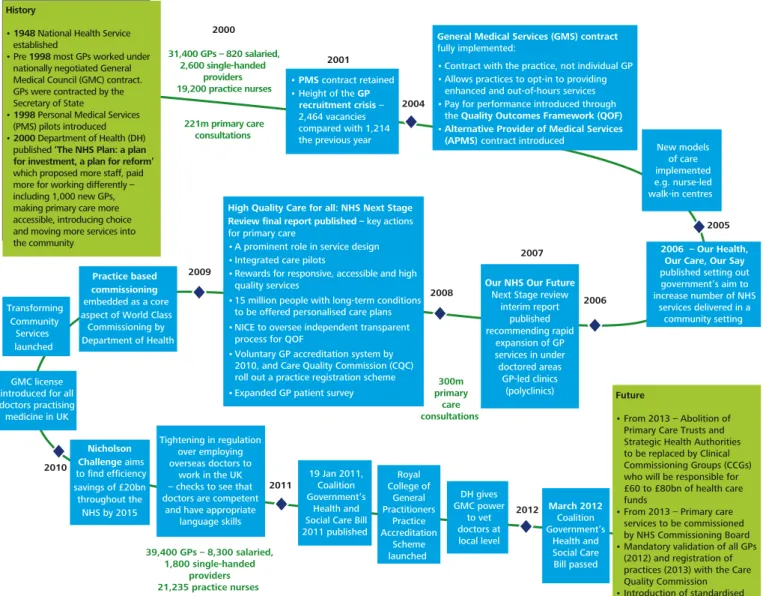
Figure 1 charts the history of primary care development particularly since 2000, when the last Government launched the NHS Plan and announced the need for more staff, paid more for working differently and that the development of primary care services was central to the modernisation of the NHS.4
Part 1. Introduction
Figure 1. Evolution of primary care provision
2011 2006 2012 • PMS contract retained • Height of the GP recruitment crisis – 2,464 vacancies compared with 1,214 the previous year History
• 1948 National Health Service established
• Pre 1998 most GPs worked under nationally negotiated General Medical Council (GMC) contract. GPs were contracted by the Secretary of State
• 1998 Personal Medical Services (PMS) pilots introduced • 2000 Department of Health (DH) published ‘The NHS Plan: a plan for investment, a plan for reform’
which proposed more staff, paid more for working differently – including 1,000 new GPs, making primary care more accessible, introducing choice and moving more services into the community
General Medical Services (GMS) contract fully implemented:
• Contract with the practice, not individual GP • Allows practices to opt-in to providing
enhanced and out-of-hours services • Pay for performance introduced through
the Quality Outcomes Framework (QOF) •Alternative Provider of Medical Services
(APMS) contract introduced
2006 – Our Health, Our Care, Our Say published setting out government’s aim to increase number of NHS services delivered in a community setting Future • From 2013 – Abolition of Primary Care Trusts and Strategic Health Authorities to be replaced by Clinical Commissioning Groups (CCGs) who will be responsible for £60 to £80bn of health care funds
• From 2013 – Primary care services to be commissioned by NHS Commissioning Board • Mandatory validation of all GPs (2012) and registration of practices (2013) with the Care Quality Commission 2001 2005 Transforming Community Services launched 2004 New models of care implemented e.g. nurse-led walk-in centres Tightening in regulation over employing overseas doctors to work in the UK – checks to see that doctors are competent
and have appropriate language skills DH gives GMC power to vet doctors at local level Royal College of General Practitioners Practice Accreditation Scheme launched 2010 GMC license introduced for all doctors practising medicine in UK
Practice based commissioning embedded as a core aspect of World Class
Commissioning by Department of Health 2008 2007 39,400 GPs – 8,300 salaried, 1,800 single-handed providers 300m primary care consultations 2000 31,400 GPs – 820 salaried, 2,600 single-handed providers 19,200 practice nurses 221m primary care consultations 19 Jan 2011, Coalition Government’s Health and Social Care Bill 2011 published Nicholson Challenge aims to find efficiency savings of £20bn throughout the NHS by 2015
Our NHS Our Future Next Stage review
interim report published recommending rapid expansion of GP services in under doctored areas GP-led clinics (polyclinics)
High Quality Care for all: NHS Next Stage Review final report published – key actions for primary care
• A prominent role in service design • Integrated care pilots
• Rewards for responsive, accessible and high quality services
• 15 million people with long-term conditions to be offered personalised care plans • NICE to oversee independent transparent
process for QOF
• Voluntary GP accreditation system by 2010, and Care Quality Commission (CQC) roll out a practice registration scheme • Expanded GP patient survey
March 2012 Coalition Government’s Health and Social Care Bill passed 2009
Before 1998, the majority of GPs were employed under the 1990 General Medical Services (GMS) contract, a nationally negotiated agreement between the Secretary of State and individual GPs, which had been largely unchanged since 1966. GPs claimed funding for each item of service and a set fee per registered patient. Funding therefore followed the individual GP, not patient needs and provided little incentive to develop the role of other general practice staff.9
In 1998, the Department of Health (the Department) piloted a new locally negotiated Primary Medical Services (PMS) contract which enabled GP practices to negotiate greater fl exibility through local contracts with their PCT based on meeting set quality standards and the particular needs of their local population. The aim was to improve GP services in under-doctored areas and increase the numbers and types of healthcare staff working in PMS practices.
Traditionally, primary care services have been provided by GPs working as single handed practitioners and, more recently, as part of a general practice. GPs have generally provided the fi rst point of contact or gateway to the NHS, treating and advising their registered list of patients and, where necessary, referring patients for further investigation and specialist care.5 Government expenditure on primary care in England increased from £5.8 billion in 2003-04 to £8.3 billion in 2010-11 (an average growth rate of 5.3 per cent per annum).6 More than 80 per cent of expenditure was on the primary care workforce.7
An analysis of the NHS summarised accounts (Figure 2) shows that since 2003-04 Primary Care Trust (PCT) spend on commissioning general practice services has increased at a slower pace than on acute hospital care (65.8 per cent and 76.4 per cent respectively). The majority of the increase on primary care occurred between 2003-04 and 2005-06 (47.4 per cent) while between 2006-07 and 2010-11 it was 10.2 per cent and over the last two years, only 1.3 per cent. Spending on acute services has been more varied, with a 24.3 per cent increase between 2003-04 and 2005-06, but an increase of 41.9 per cent between 2006-07 and 2010-11, with expenditure increasing 5.1 per cent over the last two years.8
£ million
Figure 2. Primary and Secondary healthcare costs commissioned by PCTs
Source: NHS Annual Summarised Accounts, 2001/02 – 2010/11
Note: 1. Primary care total is for GP services commissioned by PCTs only; this includes GMS, PMS, APMS, PCTMS costs and non-GMS services from GPs. It excludes prescribing costs, pharmaceutical, dental and ophthalmic services and ‘other’ costs. 2. Secondary care total is for maternity, general and acute and accident and emergency services costs commissioned by PCTs only. It excludes learning difficulties, mental illness, community health services and ‘other’ costs.
2009/10 2008/09 2007/08 2006/07 2005/06 2004/05 2003/04 2010/11 0 5,000 10,000 15,000 20,000 25,000 30,000 35,000 40,000 45,000 50,000
From 2012, GP capabilities will come under further scrutiny, with a requirement to comply with a mandatory revalidation process operated by the General Medical Council (GMC). Since autumn 2009, all doctors have been required by law to hold a licence from the GMC that describes a doctor’s areas of licensed activity. Starting in late 2012, all licensed doctors will be subject to revalidation every fi ve years and will need to demonstrate that they are practising in accordance with the generic standards of practice set by the GMC in Good Medical Practice. Assessments will be based on information drawn from doctors in their actual practice, feedback from patients and participation in continuing professional development.15 In addition, from April 2013 all practices will be required to register with the Care Quality Commission (CQC), the independent regulator of health and social care services in England, responsible for ensuring provision of care meets government quality and safety standards.16
The Health and Social Care Act 2012 introduces comprehensive changes to the way the NHS will operate, with an independent NHS Commissioning Board and independent statutory Clinical
Commissioning Groups (CCGs). GPs will be expected to take a lead role in CCGs and have a much greater infl uence over the design and delivery of local healthcare services. This includes responsibility for around 60 per cent of the £110 billion NHS budget. GP services will be commissioned by the NHS Commissioning Board, with a plan to introduce a standardised GP contract by 2015.17
From the patient point of view, the central tenet of the healthcare reforms is “no decision about me without me”. This is manifested in proposals to increase choice and service integration, provide care closer to home and place a stronger emphasis on patient involvement. These are likely to increase expectations and demands on the general practice workforce.18
While the Department acknowledged that the PMS contract had delivered some benefi ts it did not consider that it should be applied nationally, as local negotiations meant they lacked consistency and would be inappropriate for tackling national issues.10 The Department did however agree that the PMS could be retained.
The Department and British Medical Association (BMA) agreed the terms of the new GMS contract in 2003, and the contract was implemented in full in April 2004. Practices were required to provide a core set of essential services but were able to opt-in to providing enhanced services and out-of-hours urgent care services. The Department passed responsibility for commissioning enhanced and out-of-hours services to PCTs.
The agreement also introduced a provision that payments for a proportion of services would be linked to achievement of quality standards under a Quality and Outcomes Framework, known as the QOF, and that the contract would be with the practice not the individual. A stronger governance framework was introduced, alongside scope for increased competition.11 There was no nationally agreed pay scale; instead GP pay was taken as salary or, in the case of GP partners in the practice (around 70 per cent of GPs in 2004), as a share of practice profi ts after expenses.12
In 2004, a new Alternative Provider Medical Services (APMS) contract was also introduced to enable Primary Care Trusts to commission primary care from commercial or voluntary providers, or from foundation trusts. It was aimed at opening the market to alternative models of care so as to improve access and choice, particularly in more deprived areas, for example through GP-led health centres, walk-in clinics and polyclinics.13 By 2010, use of APMS contracts was still quite limited with most NHS run, and private organisations responsible for around three per cent of general practices.14
From 2012, GP capabilities will come under further scrutiny,
with a requirement to comply with a mandatory revalidation
This report examines the capacity and capability of general practice now and in the future, with a focus on GPs and general practice nurses as providers of primary care. Part 2 examines the provider challenges facing the general practice workforce, including:
• increased demand for primary care due to people living longer, and with more years spent in ill-health • the changing nature and capacity of the general
practice workforce
• the signifi cant fi nancial and reform challenges facing the NHS.
Part 3 presents a range of potential solutions, aimed at helping general practice to respond effi ciently and effectively to the challenges. The solutions comprise: • new models of care
• accelerated use of new technologies • effective use of fi nancial and other incentives. Part 4 details the regulatory and fi nancial barriers that also need to be addressed to implement and embed solutions more comprehensively across the NHS, and the actions that need to be taken by stakeholders with an interest in the continuing provision of high quality, safe and cost-effective healthcare services.
This report examines the capacity and
capability of general practice now and in
the future, with a focus on GPs and general
practice nurses as providers of primary care.
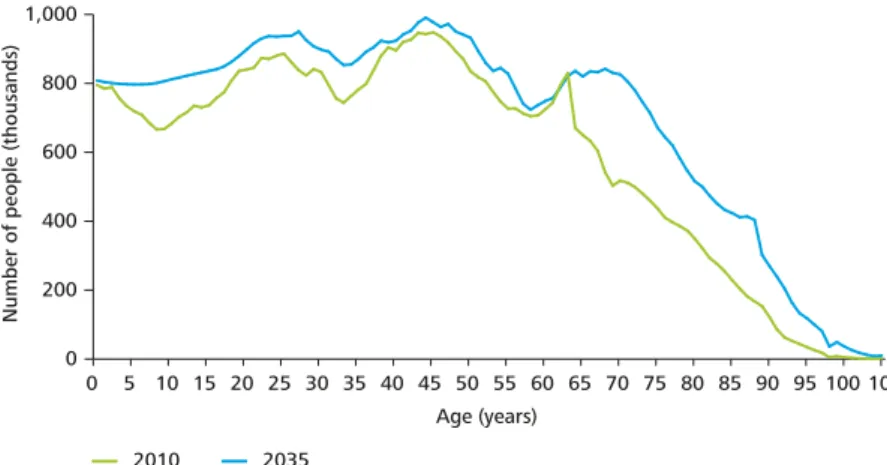
Of the many external infl uences on general practice, the ageing population is expected to have the greatest impact.20 People are living longer, with the Offi ce for National Statistics (ONS) predicting that by 2035 more than 23 per cent of the UK population will be over 65, compared with 16.5 per cent in 2010.21 If the pattern of consultations remains unchanged, by 2035 there could be a total of 433 million GP consultations, of which 180 million would be for people aged 65 and over, nearly double the current number.22 The ONS also predicts that by 2035 there will be 3.5 million people aged 85 and older.23 Indeed, the ONS expects more people in almost every age group, but the greatest rise is in older age groups (Figure 3).
For many people, extra years of life may be undermined by long-term illnesses that are not curable and need active management. Such care is complex, particularly as the majority of such patients have more than one condition. In 2005, 65 per cent of the over-65 population had two or more long-term conditions, with some having as many as fi ve or six.24 The Department estimates that up to 75 per cent of people above the age of 75 are suffering from chronic disease, with the incidence of chronic disease in people aged 65 or over expected to double by 2030. Chronic disease is the leading cause of death and disability in the United Kingdom.25
The fact that more people with chronic diseases are living longer has led to a signifi cant increase in the average number of consultations per patient per year, from 3.9 in 1995 to 4.2 in 2000 and 5.5 in 2008, with a striking increase in average annual consultations among the over 75s, from 7.9 in 2000 to 12.3 in 2008 (see Figure 4).
General practice provides a wide and increasing range of core face to face services, including health promotion and prevention, diagnosis and management of short-term illnesses, management and support of long-term conditions, prescription of medication and treatments, and provision of referral services. GP services are, however, becoming increasingly challenged as a result of rising demand and constraints on the availability of staff. The requirement to contain expenditure while implementing the NHS reform agenda imposes additional pressures on providers. This part of the report examines the main challenges faced by general practice.
Increasing demand for general practice services Over the last decade, there has been an expansion in the range of services provided and in the role of GPs in managing long-term conditions. As a result, between 1995 and 2008, the number of patient consultations rose by 75 per cent, from 171 million to more than 300 million. GP consultations increased by 11 per cent and nurse consultations rose by nearly 150 per cent.19
Part 2. The provider challenges facing
general practice
100 95 90 85 80 75 70 65 60 55 50 45 40 35 30 25 20 15 10 5 0 105+Figure 3. Projected age distribution of the UK population, 2010-35
0 200 400 600 800 1,000 Age (years)
Number of people (thousands)
Source: Office for National Statistics, National Population Projections, 2010
2010 2035
GP services are, however, becoming increasingly challenged
as a result of rising demand and constraints on the availability
of staff.
The introduction of new contracts for primary care increased the fl exibility of provision
Since 2004, there have been substantial shifts in patterns of care. The new General Medical Services (GMS) contract encouraged GPs to work in larger practices or federated models, alongside an expanded role for nurses and other healthcare practitioners, including the development of the nurse practitioner role.29
Contractual arrangements for general practice have also become more diverse. The proportion of practices operating under the new national GMS contract fell from 60 per cent in 2005 (the year after the new GMS contract was introduced) to 54.5 per cent (4,519 practices) in 2010, a small number of which were held by limited companies. The contract has led to an increase in the number of nurses working in general practice with healthcare assistants also playing a bigger role in delivering care.30
The retained Personal Medical Services (PMS) contract included some of the new features of GMS, including access to QOF payments and the option not to provide for out-of-hours care. In 2005, 37 per cent of GPs were on PMS contracts. By 2010 there were 3,393 GPs (41 per cent) working under PMS contracts, a few of which were held privately. On average, GMS GPs were paid less than PMS GPs31 and GMS GPs worked longer hours.32
The changing nature and capacity of the workforce
Alongside a rise in demands and expectations, new challenges for general practice have emerged in relation to staff capacity and capability. The NHS Plan 2000 emphasised that the development of primary care services was key to the modernisation of the NHS. The plan set out its ambition to make primary care more accessible, offer patients more choice and move more services from secondary to primary provision. It acknowledged that this would require more staff, who would be better paid and who would work differently.26
The plan was published against a background of GP unrest, with a broad consensus that the GP workload was unsustainable. During this period morale was endemically low, and this was borne out by a recruitment crisis, as new doctors opted to avoid the long hours and infl exibility associated with general practice.27 Long hours and low pay relative to hospital consultants were seen as key reasons for poor recruitment and retention of GPs.28
Number of consultations
Figure 4. Change in average number of primary care consultations per person, 2000 and 2008
0 3 6 9 12 15 > 90 85-89 80-84 75-79 70-74 65-69 60-64 55-59 50-54 45-49 40-44 35-39 30-34 25-29 20-24 15-19 10-14 5-9 < 5 2000
Source: NHS Information Centre, Q Research Consultation Rates, 2009 2008
The introduction of the Alternative Provider Medical Services (APMS) contracts as intended did increase the scope for fl exibility by giving PCTs the opportunity to contract with commercial, voluntary or foundation trust providers, using locally determined and managed contracts to meet local needs.33 Initially, limited use was made of this option. The 2008 NHS Next Stage Review, however, included a focus on improving access and increasing capacity in areas of greatest need.34 Consequently, from 2009 to 2010 the number of practices working under the APMS contract (in which services are provided seven days a week, from 8am to 8pm) rose from 173 to 262. Of these, 120 (45.8 per cent) were administered by companies whose liability was limited by shares or guarantee.35 While these new models have helped increase access to primary care they have generally failed to stem the rise in Accident and Emergency (A&E) attendances and GP referrals which was part of the rationale for improving access to general practice (Figure 5).36
10.6m 11.2m 11.6m Figure 5. A&E attendances and GP hospital referrals
First attendance Follow up attendance GP hospital referral Source: Department of Health, Hospital Episode Statistics
2000-01 0 5,000,000 10,000,000 15,000,000 20,000,000 25,000,000
First walk-in centres opened
71 walk-in centres
92 walk-in centres
The pay and headcount of general practice staff has increased
Following the introduction of the new GP contract in 2004 the pay of GP partners increased substantially. At the same time, hours of work decreased, linked in part to the fact that few GPs were providing out-of-hours care, and because practice nurses were taking more responsibility for routine consultations.37 Since 2006, average GP pay has stabilised, with a slight decline in partner pay, and small annual increments for salaried GPs and practice nurses (Figure 6a and 6b). 2008/09 2007/08 2006/07 2005/06 2004/05 2003/04 2002/03 58% 56% 2009/10 Figure 6a. Average income before tax for GP partners and salaried GPs
£ GP partner Salaried GP 0 20,000 40,000 60,000 80,000 100,000 120,000 0% 10% 20% 30% 40% 50% 60% 70% 44% 41% 48% 51% 52% 53%
Salaried GP pay as a percentage of partner pay Source: NHS Information Centre, GP earnings and expenses
2007 2008 2009 2010 2011
Figure 6b. Average income before tax for nurses in the United Kingdom
Qualified nurse Unqualified nurse 0 5,000 10,000 15,000 20,000 25,000 30,000 35,000
Source: NHS Information Centre, Average earnings July-September £
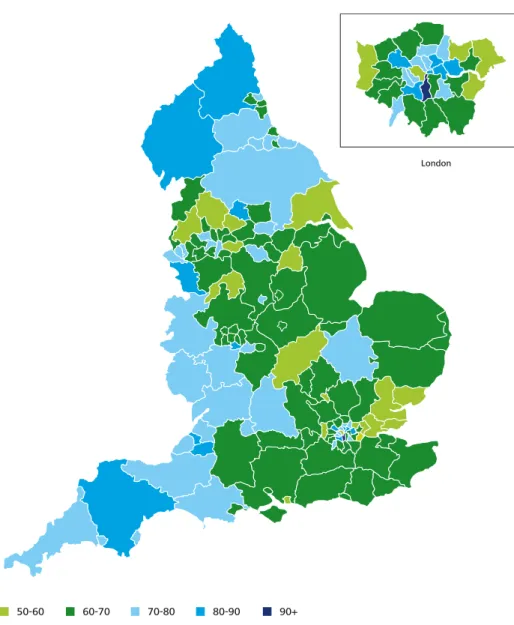
The number of GPs in England increased from 31,400 in 2000 to 39,400 in 2010 and by 2010 there were 67.8 practitioners per 100,000 of population, compared with 58.1 in 2000. The national picture, however, hides wide regional variations, with access to GPs still inequitably distributed between areas of high and low deprivation. For example, in 2008 the average number of GPs weighted for age and need in the most deprived quintile was 56.4 per 100,000 population, and in the most affl uent was 62.9 per 100,000.38 The range was from fewer than 53 GPs to more than 90 GPs per 100,000 (see Figure 7).39
London
50-60 60-70 70-80 80-90 90+
Figure 7. GPs per 100,000 population, by Primary Care Trust
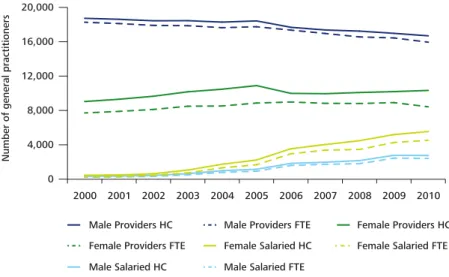
GPs in most areas are now much more likely to work in larger practices, with the number of single handed GP providers in 2010 down to 1,809 (21.7 per cent), from 2,662 (29.7 per cent) in 2000.40 Partnership opportunities are also becoming increasingly scarce. Indeed the number of salaried GPs employed in practices has increased ten-fold, from only 802 in 2000 to more than 8,700 in 2010. This can be seen across both male and female salaried GPs, who between 2000 and 2010 experienced an estimated average annual rise in headcount of 23.4 per cent and 28.2 per cent respectively (see Figure 8).41 A number of factors contribute to the increase in salaried GPs, including a desire among younger GPs for increased fl exibility (three-quarters of salaried GPs work part time) and because the terms of the new GMS contract act as a disincentive to increasing partner numbers. Overall, around a third of care is now delivered by lower paid salaried and locum GPs or by practice nurses, who are paid even less, despite being responsible for increasing numbers of consultations.42
The headcount number of practice nurses peaked in 2006 at 23,797 and then started to decline, reaching 21,235 in 2010 (see Figure 9).43 This trend largely was a result of the signifi cant growth in nursing numbers from the late 1990s to 2005. During this period the government increased investment in nurse education places, implemented policies to improve retention and returners, and intensifi ed international recruitment. In 2005, however, the Nursing and Midwifery Council (NMC) instigated much tougher registration requirements for overseas nurses, and from 2006 the main entry clinical grades in the NHS were removed from the Home Offi ce shortage occupation list. The NMC also raised English language requirements and in 2008 moved to a point-based work permit system. The NHS fi nancial defi cit in 2005-06 also led to redundancies and recruitment freezes, and an overall reduction in nurse numbers.44
Figure 8. Changes in numbers of general practitioners by HC/FTE 2000-2010
Male Providers HC
Number of general practitioners
Note: HC is an abbreviation of headcount, FTE is an abbreviation of Full-Time Equivalent Source: NHS Information Centre, General Practice Bulletin, 2000-2010
0 4,000 8,000 12,000 16,000 20,000 2010 2009 2008 2007 2006 2005 2004 2003 2002 2001 2000
Male Providers FTE Female Providers HC Female Providers FTE Female Salaried HC Female Salaried FTE Male Salaried HC Male Salaried FTE
Figure 9. Number of practice nurses compared to total qualified nurses, 2000-10
Practice nurses
Source: NHS Information Centre, General Practice Bulletin, 2000-2010
Number of practice nurses
Number of nurses 2000 2001 2002 2003 2004 2005 2006 2007 2008 2009 2010 0 5,000 10,000 15,000 20,000 25,000 30,000 0 100,000 200,000 300,000 400,000 500,000
Total qualified nurses (including GP practice nurses)
A number of factors contribute to the increase in salaried GPs, including a
desire among younger GPs for increased fl exibility (three-quarters of salaried
GPs work part time) and because the terms of the new GMS contract act as a
disincentive to increasing partner numbers.
Supply forecasts, modelled by the Centre for Workforce Intelligence, have shown that even if the government’s recruitment target of 3,300 new entry level GP positions is met, the GP workforce will only continue to grow if GPs rejoin at historical levels (680 per annum). However, there is little evidence to suggest this will be the case.51
The practice nurse workforce is also ageing. Indeed, a review in 2009 found that a disproportionate number of primary care nurses expected to retire within 5-10 years.52 Almost one in fi ve practice nurses are aged 55 or over, and the challenge of replacing those who retire is likely to become an increasingly prominent issue over the next few years.53
Alongside a decline since 2006 in the numbers of practice nurses, since 2009 there has been a reduction in the number of pre-registration training places. Together with the cuts in international recruitment and an increase in nurse migration, the United Kingdom now faces a net outfl ow of nurses.54 The general reduction in supply is likely to limit the number of nurses who might consider a career as a practice nurse. This in turn could limit the scope for GPs to delegate work to practice nurses.
The challenges involved in maintaining the supply of qualifi ed staff are increasing
Arguably the greatest supply challenge facing primary care is that the average age profi le of GPs is increasing. The proportion of GPs aged 55 and over rose from 17.5 per cent in 2000 to 22.2 per cent in 2010. Correspondingly, in 2010 GP leavers rose to a ten-year high of 7.8 per cent.45 A BMA survey conducted in 2011 identifi ed a rising number of male full-time GPs expressing their intention to retire over the next two years, and as many as 10,000 GPs expressing an intention to retire over the next fi ve years.46
At the same time, new entrants and returners to work as a percentage of the GP workforce have fallen, and an increasing proportion of joiners are female, leading to higher levels of demand for fl exible and part time work.47 Given it takes around ten years to train a doctor, any immediate recruitment shortfalls can only be met by qualifi ed doctors from abroad. However, changes to employment regulations and agreements to limit recruitment from countries facing similar challenges means overseas hiring is unlikely to be a panacea.48 All of this compounds the strains on the GP workforce.
The reduction in overseas recruitment places an even greater emphasis on the need for the UK to train its own workforce. However, fewer medical students are now electing to enter primary care. In 2011, some 3,160 doctors began GP speciality training; the majority direct from the Foundation Programme. That was a seven per cent reduction from 2010.49 Some 6,028 doctors applied to start GP speciality training in 2011, a fi ve per cent reduction from 2010. Indeed in 2010 the average competition ratio for applicants to general practice was 1.69 and only psychiatry had a lower ratio (1.41), with acute care and anaesthesia having ratios of 10 and 12 respectively.50
The proposals in the Health and Social Care Act have already been rehearsed in Part 1, however one of the stated aims, the intention to introduce a standardised GP contract by 2015 has signifi cant implications for GPs as providers.59 Given that PMS and APMS contracts are negotiated locally, this will no longer be feasible and the signifi cant number of practices that operate under these contracts will need to adjust to working under a national contract. For the immediate future, however, the Department has said that despite its plans to move to a single GP contract, in the early stages there will still be GMS and PMS contracts.60 This change is likely to lead to a new set of challenges, although the full extent of the impact is not yet clear.
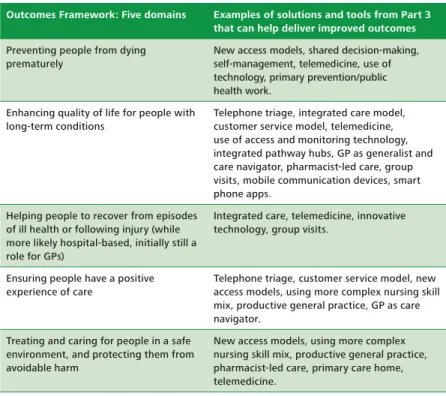
From 2013, the government expects GPs as providers to comply with a new Commissioning Outcomes Framework, comprising a set of standards of care and associated indicators.61
Tension between the need to comply with provider standards and adopt the new commissioning role, is likely to highlight the need for clarity in terms of which services and interventions can continue to be provided by the NHS. Achieving fi nancial savings while delivering reforms is going to require a transformation in the skills and working practices of GPs and practice staff. It will also require primary care to improve signifi cantly the information it holds, as well as its communication with patients. Part 3 of the report details some suggested solutions to help general practice work differently. The focus is on general practice as a provider and we propose to review the wider implications of the commissioning changes in a separate report to be published in autumn 2012.
The signifi cant fi nancial and reform challenges facing the NHS
Demand and supply side diffi culties need to be considered against a backdrop of unprecedented fi nancial and reform challenges facing the NHS. Between the years 1999-2000 and 2010-11, spending on the NHS increased on average by 6.6 per cent a year.55 However, the coming fi ve years herald a period of austerity, with NHS budgets expected to increase by no more than 0.4 per cent per year.56 Given that demand for NHS services will likely increase, the Department expects the NHS to bridge the gap through effi ciency savings and productivity improvements of some £20 billion a year by 2015 (the Nicholson Challenge).57 General practice has a central role in helping the NHS achieve the savings, through referral management and, where clinically appropriate, helping keep patients out of hospital.58
Achieving fi nancial savings while delivering
reforms is going to require a transformation
in the skills and working practices of GPs and
practice staff.
It requires effective communication and clinical skills to interpret choices. This is likely to mean GPs becoming less of a gatekeeper and more of a care navigator.64 There is also scope for GPs to work even more effectively with nurses in primary care, including nurse practitioners, practice nurses, district nurses and community nurses. Over recent years there have been great strides in developing the scope of nurses’ capabilities and skills and the care they provide so as to extend nursing practice to increase patient access to services and enhance care.65
Research by the Queen’s Nursing Institute illustrates how GPs could make more effective use of wider nursing skills, including more integrated working with community nurses, particularly in providing home care.66 Indeed, GPs have a long history of interaction with community based nurses, which has oscillated between them being based in the practice and part of the integrated primary healthcare team, to a ‘neighbourhood’ model in which nurses are aligned to a locality not the practice. One option is for practices to employ or develop formal partnerships with health visitors and district nurses. While the different funding streams for general practice and community nursing may present a barrier, the new commissioning regime, with its aim of developing a more co-ordinated and integrated approach to care within the local health economy could be a solution.
Adoption of GP-led triage systems to improve effectiveness of consultations
One long-standing aspect of general practice that needs to be challenged is dependence on face to face consultations. By building innovative tools and strategies into the way primary care practices operate, GPs and practice nurses would be able to see more of patients who need to be seen, cover more clinical territory and make a greater impact over a shorter time.67 One initiative that has been positively received by patients is a GP telephone triage system.68 Patients call the practice, the GP calls the patient back and together they agree an approach to the problem. In some cases this may be to attend for an immediate consultation or to attend at a mutually convenient time.69
In addition to the increased scale and scope of activity described in Part 2 there has been an increased emphasis on standards and training alongside more scrutiny of the quality of performance in general practice. However, the general practice delivery model remains largely focussed on face to face contact between the GP or practice nurse and the patient. A key message of this report is that if general practice is to respond effectively to current and future challenges, it will need to adopt new ways of working. To succeed, any changes need to be evidence based, with robust, reliable information underpinning implementation. GPs will need to work more effectively, with patients and a range of public, private and voluntary providers. This part of the report identifi es a number of potential solutions to these challenges. The list is not exhaustive but is focussed on examples where there is evidence as to their effectiveness.
The GP as a generalist working with others to deliver more care in the community
The new contract arrangements introduced since 2004 have, among other things, incentivised increasing amounts of specialist care within practices, blurring the boundaries between generalists (the traditional GP) and specialists. However there is limited evidence that increasing GP specialisation has reduced costs or hospital admissions. The conclusion of a King’s Fund inquiry into general practice, and the view of the Royal College of General Practitioners (RCGP), is that the majority of GPs should remain generalists, providing continuity of care and helping people identify options. GPs should, however, extend their generalist role to act as care navigators, working alongside specialists, such as GPs with a special interest, and hospital specialists, to provide more care in the community.63
The generalist GP should play a central role in coordinating the care of people with more complex needs, and advising on the pathway that patients might take. Developing a care coordination capability is particularly important for people living with chronic conditions or disabilities, and for those at the end of life. The coordinating role can help minimise disruption to care when crossing between primary, secondary and social care, and avoid expensive duplication of investigations.
Part 3. The solutions – adopting new
ways of working
• In 2008, the government launched the Equitable Access Programme, and approved a £250 million access fund to develop at least 100 new GP practices in the 25 per cent of PCTs with the poorest provision, and set up a GP-led health centre (polyclinic) in every PCT.77 These GP-led health centres were expected to open from 8am to 8pm, seven days a week and combine ‘open access’ with a registered patient element.78 Research by the King’s Fund concluded that the model offered opportunities (organisational factors and the management of long-term conditions) and risks (reduced access, lack of continuity, potentially higher costs than equivalent hospital services and limited impact on demand for hospital services). The research showed that when aggregating GPs into larger health centres the location of the centre was crucial.79 Larger centres cost more per patient to run than ordinary GP practices, but were effective in addressing access issues in some deprived communities.80
After a slow start, a growing number of people have started to use the new GP and nurse-led centres. In a 2011 Deloitte Survey of Health Care Consumers
in the UK, which surveyed a largely highly educated
population of consumers over a third of whom had private health insurance, some 22 per cent of respondents said they used a walk-in clinic or similar for non-emergency care; a 13 per cent increase on 2010. The trend was for greater use among younger age groups (38 per cent in the 18-24 range).81
Our review of the evidence suggests that if relocation and grouping of GPs into larger practices is to be successful in improving quality of care and tackling access issues, it needs to be accompanied by the redesign of care pathways, supported by changes in working practices and skill-mix, and use of new technologies. This needs to be underpinned by greater transparency in costs along the care pathway, including refi nements in funding to more accurately refl ect case-mix variability.
Developing integrated care models
The idea of better integrated services has been an ambition of successive governments, but to date there are only a small number of successful examples, mostly involving the Care Trust model.82 Integration can be between health and social care, to provide a common service (horizontal integration), or across primary, community and secondary care providers within a care pathway (vertical integration).
By 2009, some 12 per cent of practices used a GP telephone triage system. Reviews show that in 50-80 per cent of cases no appointment was needed and overall practices operating this approach had higher patient satisfaction levels on access and quality of care, and a notable decrease in “did not attends”.70 An independent review by the Health Service Journal of NHS Comparator datasets found that patients in practices with a GP triage system were 27 per cent less likely to attend A&E.71
The development of new primary care access models
Historically there have been numerous initiatives to improve access to general practice but few have changed how primary care is organised.72 The NHS Plan identifi ed the need for investment in infrastructure,73 and indeed since 2000 there have been a number of primary care infrastructure initiatives aimed at improving access for which there is quantitative and qualitative evidence of their impact:
• The £2 billion NHS LIFT (Local Improvement Finance Trust) scheme, established in 2000 as a public-private partnership initiative, had by 2011 provided some 244 purpose-built facilities aimed at delivering integrated primary, community and social care.74 However a 2008 report by the King’s Fund found that simply bringing staff together in one place did not necessarily change the way in which they worked and actually made joint working more diffi cult. It also found that the degree to which GP services integrated with other services varied widely. There were limited evaluations of the economics of the new facilities, and at the time none could demonstrate savings or improvements in cost-effectiveness. While there was evidence of some patient benefi ts, most PCTs felt that the schemes had driven up cost, while in rural areas access was more diffi cult.75 The model was more likely to deliver benefi ts when facilities were developed in central locations with good transport links.76
Decision support tools can often make shared
decision-making more effective, with proponents citing improved patient satisfaction and increased medication adherence, leading to improved results. A literature review demonstrates that when people are given clear and accessible information about the likely risks and benefi ts of different choices of treatment, they are more likely than their doctors to defer or decline treatment. Conversely patients who aren’t adequately informed may undergo treatment they may have preferred to avoid, and from which there may be no additional benefi t.89
A key role for general practice in providing care to an ageing population with multiple chronic conditions is supporting management. Reviews of self-management programmes suggest that they lead to better disease control, better patient outcomes and reduced utilization of healthcare services, particularly A&E and emergency admissions. All of these outcomes can potentially reduce costs while improving quality of care. Respondents report that it helps them live better lives and puts them in control of their condition. While not all approaches demonstrate quantifi able benefi ts, a common feature of successful
self-management programmes is a self-self-management action plan.90
Developing a more customer service type model Today’s service users expect a high level of service from their healthcare providers, and under the NHS reforms it will be much easier to switch providers if providers fail to offer the required services. There is only anecdotal evidence of patients’ views on switching GP practices, although patient surveys highlight the desire for greater choice of GP.91 Patient power is growing, but is still a relatively untapped driver of change, likened by some to the power of the emancipation movement.92
Like most other industries, primary care will need to change its focus toward the end user, and away from the traditional model of ‘knowing what’s best and not listening to the patient enough’.93 The primary care model will unquestionably need to be refi ned to retain its viability in a consumer-driven healthcare market that offers more care options and new ways of communicating, for example real time access to test Although integrated care promises to deliver cost
benefi ts, despite a large body of research, the evidence base for ‘what works’ remains mixed.83
In 2008, the NHS Next Stage Review emphasised the importance of integration and set out a vision to provide seamless care, developed around patients and delivered by integrated teams across services. The review also promised to hand power to patients to integrate their own care through care plans and personal budgets. In response, in 2009 the Department launched an Integrated Care Pilot programme involving 16 different models of integrated care.
The NHS Future Forum summary report in 2011 stated: “we need to move beyond arguing for integration to making it happen”.84 The report called for the commissioning of integrated care for patients with long-term conditions, complex needs or at the end of life. It built on ideas submitted to the Forum by the King’s Fund and the Nuffi eld Trust.85 The Department subsequently asked the two organisations to contribute to the development of a national strategy on integrated care, and their report promoting increased integration was published in January 2012.86
In March 2012, the report on the two-year research study into the 16 pilot sites concluded that well-managed integrated care reduced hospital admissions for elderly patients by at least 20 per cent. Overall, 54 per cent of staff thought patient care had improved and 72 per cent reported that they had better communication with other organisations. In pilots where case managers coordinated the care, outpatient visits and planned admissions both fell by around 21 per cent, with a reduction in hospital costs of 9 per cent. The study found, however, that patient satisfaction fell, with 28 per cent fewer patients feeling their GP had involved them in decisions about their care, and 9 per cent fewer saying they saw their preferred GP at the surgery.87 This fi nding on patient satisfaction shows the diffi culties in changing patient expectations about the personal relationship with the GP and the importance of effective and ongoing communication with patients about what to expect from new models of care.
Figure 10. Models and approaches to assist general practices to work differently Using more complex nursing skill mix94 Pharmacist-led care95 Group visits – or clinics for groups of people with the same condition96 Productive general practice97 Integrating pathway hubs – to commission whole patient pathways98 Multidisciplinary assessment and treatment services involving redesign of a care pathway – a case example99
Primary Care Home – a community based, integrated, accountable home for population care100 Primary care-led specialist clinics or Rapid Access and Treatment Centres101 Home based, self-management of drug administration, involving collaborative working across primary and secondary care – a case example102
Nurse Practitioners (NPs) working in conjunction with GPs to deliver care can alleviate some of the burden of demand in both clinics and traditional practice settings. Training for NPs is aligned with basic primary care services, allowing NPs to diagnose and treat many common conditions that require medical attention. In the healthcare systems of many developed nations, primary care is delivered by NPs who act as substitutes for, or complement, physicians. Research demonstrates that NPs provide high-quality patient care with high patient satisfaction.
Pharmacists are potentially an untapped resource and could fi ll certain roles to reduce GP visits and manage care, particularly medication use and adherence. An effective community-based pharmaceutical care service can reduce demands on primary care and demonstrate improvements in healthcare spending. Pharmacists that have developed a pharmaceutical care service (for example, Lloyds Pharmacy and Boots) undertake health-checks, blood pressure checks, weight and anti-smoking support. They track disease management and determine when a GP visit is necessary.
Practitioner-led group educational sessions enable practice staff to provide care and counselling to a greater number of patients. Patients benefi t from hearing other’s advice and questions, and the sessions can be particularly effective for routine follow-up and management of chronic disease. This approach can also benefi t smoking cessation, weight management and sensible drinking initiatives, with a growing body of evidence that group visits result in better outcomes than one-on-one consultations.
A productivity programme based on lean principles that allows practices to spend more time with patients. A survey of 71 GPs and practice managers by the Institute of Innovation and Improvement identifi ed that administrative and managerial processes created additional work and wasted time. Practices wanted to spend more time with complex patients, increase safety, improve team working, manage their increasing workload and take on opportunities offered by reforms. They also wanted to make the workplace more effi cient, manage demand and capacity and streamline patient consulting. The Institute launched the Productive General Practice in October 2011, drawing on experience in implementing the productive ward.
Despite healthcare being extremely complex, the traditional approach has been to commission, contract and micro-manage providers and the supply chain, leading to fragmentation of delivery system and a lack of coordinated care. One option is to commission using an integrated pathway hub delivered by a prime contractor. That may be a single accountable provider with responsibility for the cost and quality of a programme such as respiratory health, or a care group such as the frail elderly. The Pennine Musculoskeletal Partnership is an Integrated GP-led Clinical Assessment and Treatment Service (ICATS) launched in March 2006, providing on-site access to rheumatologists, orthopaedic and physiotherapist consultants, GPs with special interests, nurse specialists, clinical specialist physiotherapists and podiatrists and an occupational therapist. Close cooperation of GP commissioners and the partnership has resulted in effective local practice-based commissioning, with clinicians designing and delivering the service, and a coherent patient journey with shorter waiting times.
Based on the US concept of Medical Home or Accountable Care Organisation and utilising the list-based approach in which general practice is able to combine one-on-one personal care with population care. The Primary Care Home can extend the vision and scope of the existing ‘GP home’ to become an integrated population-based provider organisation that can undertake some commissioning responsibility on the ‘make or buy’ principle. It provides ‘a home’ for GPs, their teams and other primary care independent contractors and staff (pharmacists, dentists, optometrists) and community health service and social care professionals. Also potentially a home for hospital staff, who might in future be required to work more effectively in the community – in particular those who have a responsibility for long-term care, rehabilitation and re-ablement.
These are typically nurse-led clinics, staffed by experienced specialist nurses, trained in condition assessment and disease management, and supported by a GP with special interest or a hospital registrar with access to a consultant. Access to the clinic is usually within two weeks of referral; clinics are usually run twice a week or more often, with appointments lasting 45 minutes to one hour. Patients have rapid access to diagnostics such as a musculoskeletal ultrasound machine and a trained radiologist or rheumatologist to assist in interpretation of results. The clinic also provides information, educates patients and addresses patient anxieties, for example about home life and work life. Key to success is effective dialogue with GPs, based on clear and simple guidelines, to encourage them to refer immediately those people who for example show symptoms of infl ammatory arthritis, rather than carry out their own investigations.
Historically, rheumatoid arthritis patients requiring injectable methotrexate have had to attend their acute hospital weekly for intra-muscular injections. Patients also attended a further appointment every month or so for monitoring. Following a change in licensing, a number of PCTs working in collaboration with their local hospital, have developed a service for patients to self-administer methotrexate at home. One service, operating since 2008 and run by an external contractor, trains patients to administer their own drugs and delivers drugs directly to patients’ homes. Patients now only attend the clinic for a monthly monitoring appointment, and attend the hospital only when their dosage needs to be adjusted. The service has now been extended to cover patients living in other areas. Patient feedback has been very positive and in January 2009, 74 patients were accessing the service, of which 51 were local and 23 were from other areas. The service has reported PCT cost savings in 2008-09 of £148,500, and savings in 2009-10 of £169,000.
The Department has secured the collaboration of industry, government and other stakeholders over the next fi ve years to help make widespread adoption of telehealth and telecare a reality.108
Technology can improve equity in access to information on healthcare
People use the internet for everything from online shopping and banking to booking airline tickets, but fewer people use it to self-diagnose an illness, look up hospital quality ratings or book an appointment. Within general practice, touch-in arrival screens are widely employed to help avoid long queues, but there is little more technology-supported interaction between patient and provider.
Still, patients with mobile phone and internet-driven lifestyles increasingly expect to use information technology in their interactions with general practice. While there are inter-generational differences in the extent to which people use technology, some pilots have shown that older people can be fast adaptors. Examples of potential technology applications include 24-hour online systems that enable patients to book and cancel appointments, order repeat prescriptions or view their records.109
A number of technology tools can also be used to improve communication and reduce GP visits: • Mobile devices have great potential to promote
self-management. There are some 88 mobile subscriptions per 100 individuals in the UK.110 Mobile phone capabilities could be particularly effective if they are integrated with bio-monitoring and personal health data to send targeted communications to pre-empt emergency situations and reduce the need for surgery visits. Sixty-three per cent of UK consumers said they would be very or somewhat likely to download treatment or medical condition information to a mobile device.
Telemedicine has the potential to support GPs to care for more patients in their own homes and help patients self manage
Telemedicine includes both telecare (using equipment to support people in their own homes) and telehealth (using equipment to monitor vital signs and send data to clinicians). While the technology is important, it also needs to be integrated into a properly designed patient care plan. Use in primary care has largely been restricted to patients with heart failure and diabetes. However, it is starting to be used more widely, spurred by the Whole System Demonstrator project104 and a Department commitment to accelerate the use of telehealth and telecare.105 While there have been a number of pieces of research that call into question the cost and cost-effectiveness of telehealth, the project’s initial fi ndings indicate that the use of the technology has led to:
• a 20 per cent fall in emergency admission • 15 per cent fewer visits to A&E
• 14 per cent fewer elective admissions • 14 per cent fewer bed days
• an 8 per cent reduction in tariff costs
• a 45 per cent difference in mortality rate between those using telehealth and those in the control group.106
The spread of telehealth technology is one of the key high impact innovations highlighted in the Government’s Innovation, Health and Wealth Strategy.107 From April 2013 compliance with high impact innovations will become a requirement for the Commissioning for Quality and Innovation payment framework, which estimates that adoption by the frontline could save the NHS up to £1.2 billion over fi ve years.
Based on the lessons learned from the project, the Department launched the ‘3 million lives’ campaign in January 2012 to drive the use of telehealth on a large scale. It identifi ed that at least three million people with long-term conditions and/or social care needs could
An expansion in the ways that patients and the public access information is changing expectations regarding the value of services.113 That has signifi cant implications for primary care, as it abolishes the asymmetry in access to information which has been a feature of the medical model of care. Service users are less likely to consult their GP as passive recipients, and are more likely to have sought information themselves and be armed with a greater granularity of information than the GP might immediately have access to. This will have implications for the relationship between patient and provider and lead to the GP being more of an interpreter/navigator of information, options and scenarios.114
Innovative use of medical technology can support primary care to work differently
Reductions in the size, complexity and price of various types of medical equipment means that care can now be provided in people’s homes which previously could only be accessed in a secondary care setting. Yet in a number of areas the healthcare system is still resistant to the adoption of new technology; for example practitioners may be reluctant to offer patients home monitoring equipment because of concern they won’t be able to use it.115
The Department’s Innovation Health and Wellbeing Strategy has emphasised that the adoption and diffusion of innovation must become a core business for the NHS. It refers to the Atlas of Variation, demonstrating unacceptably wide variation in the numbers of people receiving best practice care; with, for example, a 48 per cent variance in the number of people receiving best practice care for diabetes. It also highlights a number of examples where diffusion of innovation generated measurable benefi ts: • Manchester Royal Infi rmary redesigned dialysis
provision to enable patients to choose home haemodialysis. Over 15 per cent of their patients now perform haemodialysis independently at home compared to the current UK average rate of 1-2 per cent. Projected annual savings at Manchester are approximately £1 million. Home dialysis has changed patients’ lives, enabling them to spend more time with their families.
• A growing number of smartphone apps can track clinical information like heart rate and blood pressure. Integrating such information is key to creating a useful personal health record. Medically orientated apps have a variety of uses, including medication compliance, mobile and home monitoring, home care, managing conditions, and wellness and fi tness. In 2012, in response to a challenge to fi nd the best new ideas and existing smart phone apps that could help people and doctors manage care, the Department received nearly 500 entries, as well as 12,600 votes and comments in the competition to identify apps with huge potential to benefi t patients and the NHS. Some of the most popular ideas included helping patients to manage long-term conditions, deal with post-traumatic stress and monitor blood pressure. One app could also help patients identify their local NHS services on a map. Patients Know Best, an app that has proved to be particularly successful in a number of hospitals as well as with GPs and community nurses, allows each patient to get all their records from all their clinicians and controls who gets access to them. The app means that patients can have online consultations with any member of their clinical team and develop a personalised care plan.111
Traditionally, access to information on healthcare has been controlled by NHS providers. Increased access to information about primary care providers, hospitals and alternative services is giving consumers the ability to compare and contrast data relevant to their healthcare experience. With new interactive websites and health apps being created almost daily, many more people are using social media to rate their experience in a way that is accessible to families and friends. This interface is more meaningful to patients and easier to navigate than offi cial data on websites, and people’s views regarding what is important often differs from the clinician or management view.112
The introduction of contracts that allowed GPs to decide which services to provide and which to opt out of, other than those deemed as essential, eroded the monopoly that previously existed within primary care. If a local GP was not prepared to provide enhanced services then the PCT was free to commission the services from another provider. This has helped achieve one of the aims of the contract which was to incentivise those GPs that wanted to provide new services and for PCTs to be able to commission services based on local need.118
While there is likely to be less scope for offering fi nancial incentives in the future, due to tighter funding and a desire to control public-sector pay deals, the decision to give CCGs responsibility for the commissioning budget may change the incentives available. The expectation is that making practices accountable for the fi nancial consequences of their clinical decisions may also create a greater incentive to drive improvement and challenge poor practice.119 As noted in Part 1, the main pay-for-performance incentive has been the QOF. While the scheme is voluntary, some 99.8 per cent of practices take part.120 The QOF was designed by a group of academic and health experts, and most initial indicators were based on clinical evidence that an input or intervention leads to improved health outcomes. The disease areas were chosen on the basis of high prevalence or signifi cance in terms of their impact. The fi nal form of the framework was subject to negotiation (and remains a subject of annual renegotiation) between the BMA and NHS Employers drawing on expert analysis.
Under the QOF, practices are awarded points for delivering services based on best available evidence of effectiveness. The more points a practice receives, the higher the payment.121 There are a maximum of 1,000 points available across four domains. • An NHS team in Cambridge developed the
‘Cytosponge’, a simple pill that expands into a sponge designed to collect samples from the oesophagus to test for throat cancer. The procedure can be used by GPs at a cost of £25, replacing the need for a £600 endoscopy, and offers early identifi cation and therefore better outcomes with a potential increase of 80 per cent in fi ve-year survival rates for the 6,000 throat cancer cases each year.116
Overcoming GP reluctance in adopting innovation is central to the ambition of delivering more care closer to home. If the adoption of new technology is well planned and executed, it has the potential to transform the lives of staff and patients.
Financial incentives: New pay for performance arrangements
Currently most of the incentives used in primary care are fi nancial, and are negotiated and agreed as part of GP contract negotiations. That includes QOF and enhanced services (Figure 11).
Figure 11. Enhanced Services that GPs can choose whether to provide117
Directed Enhanced Services: PCTs are obliged to achieve coverage of these services for their patients, though no individual practice is obliged to participate. Standards and prices are set nationally. They include Government priorities such as the development of patient access and extended hours access but also basic and universally needed services such as child immunisation. GP practices can choose whether or not to provide such services and the list of directed services is revised annually.
National Enhanced Services: PCTs can choose to commission these services, according to local needs, but in line with nationally set standards and prices. They include commonly needed services such as minor injury treatment.
Local Enhanced Services: PCTs have the freedom to design, negotiate and commission any other services they believe are needed in their area. Examples could include services for drug and alcohol abuse, the homeless or people with learning diffi culties. In some cases the National Enhanced Service standards are used with adjustments to meet local needs, but otherwise standards and prices are negotiated locally. However, in the fi rst few years of the contract local commissioners did not use Local Enhanced Services as widely as originally expected, initially because of the high cost of the core contracts but also because they consider that they give them relatively little leverage.