ABSTRACT
LILLIAN B. BROWN: HIV Partner Notification in Malawi: Comparing Methods and Predicting Partner Testing
(Under the Direction of William C. Miller)
HIV transmission in sub‐Saharan Africa is predominately heterosexual. Sexual partners of persons with newly diagnosed HIV infection require HIV counseling, testing and, if necessary, evaluation for therapy. However, many African countries do not have a standardized protocol for partner notification and the effectiveness of partner
notification has not been evaluated in developing countries.
We conducted a randomized trial of HIV partner notification to determine the rates of counseling, testing and new HIV diagnoses among partners. Individuals with newly diagnosed HIV infection presenting to STI clinics in Lilongwe, Malawi were randomized to one of three methods of partner notification: passive referral, contract referral, or provider referral. The passive referral group was responsible for notifying their partners themselves. The contract referral group was given seven days to notify their partners, after which a health care provider contacted partners who had not reported for counseling and testing. In the provider group, a health care provider notified partners immediately. Partners to index patients enrolled in the passive and contract referral arms were used to identify characteristics of partners unlikely to report for counseling and testing.
testing. The proportion of partners returning was 24% (95% CI 15 – 34%) in the passive referral arm, 51% (95% CI 41 – 62%) in the contract referral arm, and 51% (95% CI 40 – 62%) in the provider referral arm (p<0.001). Among returning partners (n=107), 67 (64%) were HIV‐infected with 54 (81%) newly diagnosed. Partner’s failing to report for testing was associated with male partner sex, relationship duration less than 6 months or between 6 and 24 months, and index education greater than primary.
ACKNOWLEDGEMENTS
I would like to thank Bill Miller for his mentorship and support. I would like to thank Irving Hoffman for his assistance and insight into the implementation of this work. I would also like to thank the rest of my dissertation committee, Mike Cohen, Audrey Pettifor, Jay Kaufman, and Rosalie Dominik for their assistance and feedback. Finally, I am extremely grateful to the entire staff at Kamuzu Central Hospital STI Unit for all of their work and their dedication to improving partner notification.
This research was supported by the University of North Carolina at Chapel Hill Center for AIDS Research (CFAR), an NIH funded program #P30 AI50410, NIH grant
Study Population……….14 Study Procedures………15 Enrollment and randomization………..…15 Partner visits……….…17 Follow‐up visits for clinical care………...18 Specific Aim 1………..….19
Hypothesis………..19
Outcome………19
Statistical Analysis………..…19
Specific Aim 2………...23
Hypothesis………23
Outcome……….23
Statistical Analysis……….……….23
Specific Aim 3………..………...24
Hypothesis………..……….24
Outcome……….24
j. Partner Social Harms Form………114
k. Refusers………..116
LIST OF TABLES
Table
Table 4.1 Index Patient Demographics by Study Arm………...45
Table 4.2 Named Partner Characteristics……….46
Table 4.3 Proportion of Locatable Partners Visiting the Clinic for Counseling
and Testing by Study Arm….……….47
Table 4.4 Partner HIV Test Results and CD4 Counts (cells/mm3)………48
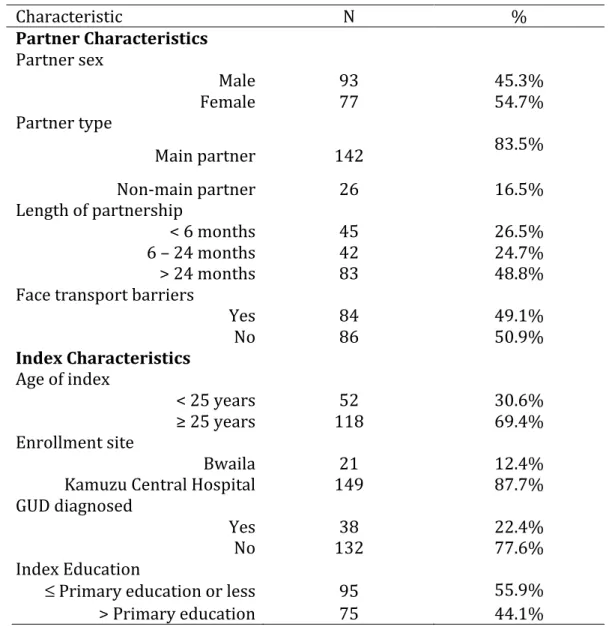
Table 5.1 Index and Partner Characteristics (n=170)………..…65
Table 5.2 Unadjusted and Adjusted Odds Ratios and Risk Scores for Index and
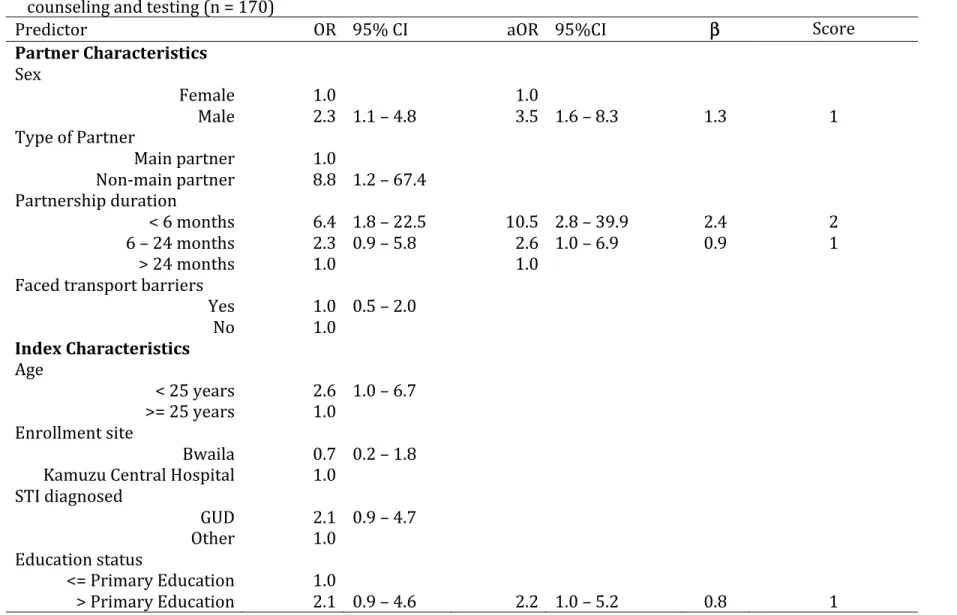
Partner Characteristics Predicting Partner HIV Counseling and Testing (n=170)…..…..66
Table 5.3 Sensitivity and Specificity of Risk Score to Predict Partners Unlikely to Report for Counseling and Testing, Proportion of Partners Traced and Tested
LIST OF FIGURES
Figure
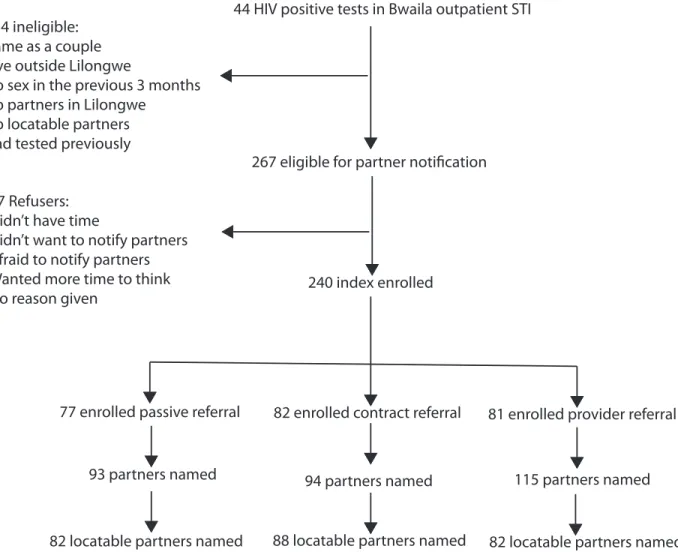
Figure 4.1 Study Population……….………49
Figure 4.2 Proportion of Locatable Partners Visiting Clinic for HIV Testing and
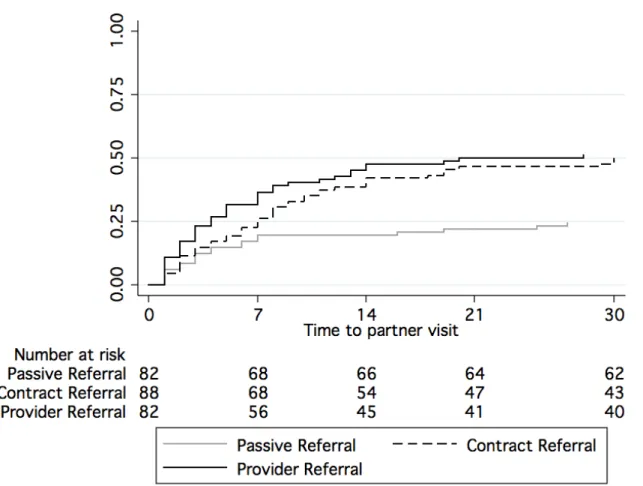
Counseling by Method of Partner Notification……….………50
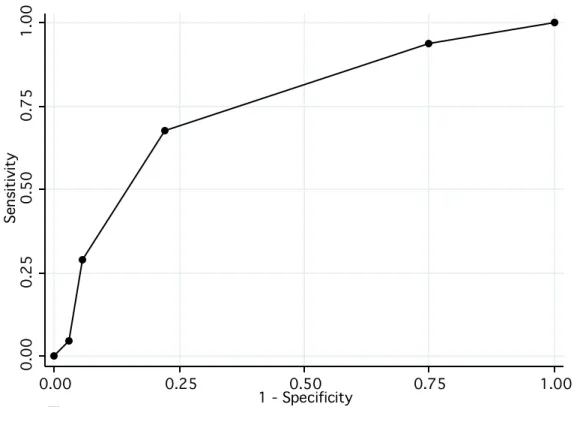
Figure 5.1 Receiver Operating Characteristics Curve for Different Risk
Score Cut‐Offs………69
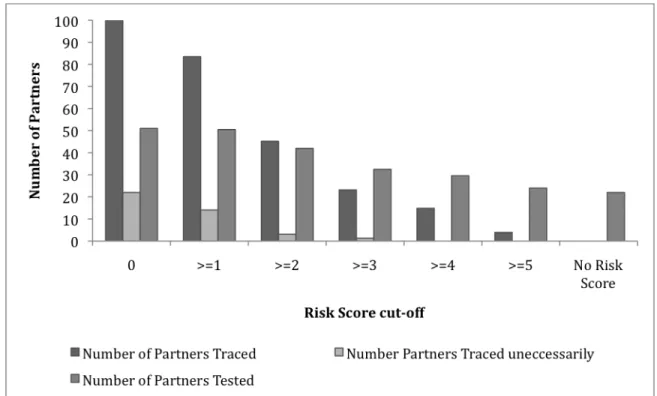
Figure 5.2 Number of Partners Traced, Number of Partners Traced Unnecessarily, and Number of Partners Tested for Different Risk Score Cut‐Offs in a Population
of 100 Partners……….…………70
LIST OF ABBREVIATIONS
AIDS Acquired Immune Deficiency Syndrome GUD Genital Ulcer Disease
HIV Human Immunodeficiency Virus HTC HIV Testing and Counseling KCH Kamuzu Central Hospital
KSU Kamuzu Central Hospital STI Unit RNA Ribonucleic Acid
CHAPTER 1 SPECIFIC AIMS
The prevalence of HIV infection in sub‐Saharan Africa is the highest in the world, yet most infected persons do not know their HIV status1, 2. Late diagnosis of HIV infection worsens treatment outcomes, and HIV counseling and testing provides an entry point to ART care, psychosocial support, and basis for behavior change. Increasing counseling and testing rates among high‐risk populations represents an opportunity to increase early diagnosis and treatment. Partners of individuals testing positive while seeking treatment for sexually transmitted infections (STIs) are a particularly important population to target for increased counseling and testing as HIV discordance within couples is common in Africa1, 3, and infectiousness is high in HIV‐infected individuals with a concurrent STI. Providing counseling and testing to partners of individuals recently diagnosed with HIV infection is an important way to target prevention strategies and provide early care to a very high risk population.
antenatal and post‐partum clinics often increases prevention behaviors. In these settings, successful partner notification leads to greater use of antiretroviral drugs to avoid perinatal HIV transmission, greater adherence to advice to avoid breastfeeding, and higher levels of condom use 4. Despite the potential benefits, very little is known about the process of partner notification by men and non‐pregnant women or the best strategy for increasing counseling and testing rates.
The proposed research will compare the three main methods of partner notification in an STI clinic population: passive referral, contract referral, and provider referral. Passive referral requires index patients to notify partners concerning their possible exposure to HIV by themselves. Under contract referral, the index patient is given a period of time to contact and notify sexual partners him/herself; if partners are not notified and tested within this time period, health care providers will complete the process. Under provider referral a health care provider contacts the partners directly. A predictive model will be used to develop a risk score algorithm to identify partners likely to require provider‐assisted referral. My overarching hypotheses are that active partner notification (contract referral or provider referral) will result in higher rates of
partner HIV counseling and testing than passive referral; active partner notification
(contract referral or provider referral) will identify more undiagnosed HIV infections
among partners; and predictors of partner testing can be used to develop a risk score
algorithm predicting partners unlikely to seek counseling and testing following
notification. This research will be the first to provide important evidence on the most
population. Information gained through this research will consequently facilitate formation and adoption of appropriate explicit partner notification guidelines.
SPECIFIC AIM 1: To examine the relative effectiveness of three methods of partner notification: patient referral, contract referral, and provider referral, to achieve partner HIV‐testing.
SPECIFIC AIM 2: To determine the proportion of newly diagnosed HIV cases, including acute HIV, for each method of partner notification.
SPECIFIC AIM 3: To identify index, partner, and community factors predicting partner testing and counseling and develop a risk score algorithm to target provider assisted referral.
Overview: Patients with newly diagnosed HIV infection in the Kamuzu Central Hospital (KCH) STI clinic in Lilongwe, Malawi will be randomized to passive referral, contract referral, or provider referral methods of partner notification. Endpoints of interest will be the proportion of partners receiving counseling and testing, partner HIV status, and predictors of partner counseling and testing.
CHAPTER TWO BACKGROUND
HIV in Malawi
HIV prevalence in Malawi is among the highest in the world. AIDS is now the leading cause of death among 15‐49 year olds in Malawi. In a population of 11.5 million, an estimated 1 million adults and children are living with HIV/AIDS. Each year another 81,000 become infected 5. HIV prevalence is highest in urban areas, estimated at 17.1% in a population‐based survey (Figure 1) 2. Despite this high prevalence, only a small proportion of the population reports being tested. In Lilongwe district, only 17% of women and 16.5% of men report receiving an HIV test and approximately 80% of HIV infected individuals have never been tested and do not know their status 2.
HIV and Sexually Transmitted Infections
Persons attending sexually transmitted infections (STI) clinics and their sexual partners are at high risk for HIV infection. STI Clinics in urban areas of sub‐Saharan Africa
services the general public residing within or passing through Lilongwe district and serves approximately 1100 STI patients per month. Currently individuals seeking treatment at the clinic are tested for HIV under an “opt‐out” policy in which they are tested for HIV unless they specifically decline (in contrast to an “opt‐in” policy in which a person must explicitly request to be tested). During the first year of opt‐out testing, 6602 patients with no previous HIV test were seen. Of these, 4111 (62%) were tested for HIV, and 1127 (27%) new HIV infections were identified. Approximately 5 new infections are identified in the clinic each day. Each of these newly diagnosed individuals has sexual partners who require evaluation for therapy, if they are also infected, or prevention interventions, if they are uninfected.
HIV Testing and Importance of Early Diagnosis
HIV‐infected individuals seeking care at an STI clinic are at high risk for onward transmission. STIs can facilitate HIV transmission by invoking more infectious HIV variants7 and increasing HIV concentrations in genital lesions and semen8, 9. The risk of HIV transmission is directly related to viral burden, and increases markedly with
increasing concentrations10. Partners of these individuals are exposed to high levels of virus and it is therefore imperative to reach them for evaluation for treatment (if they are also infected) or prevention measures (if they are uninfected).
of antiretroviral therapy 11‐13. Late presentation is associated with depleted CD4 counts, and CD4 count at the initiation of therapy predicts survival 14, 15. Late presenters have significant short‐term mortality16‐18 and early diagnosis of HIV infection is increasingly understood as the critical gateway to providing individuals with ART and effective prevention and care. The majority of HIV transmission occurs from persons unaware they are infected 19; therefore, it is an important public health responsibility to increase the percent of HIV‐infected individuals who know their status.
Treatment is currently a reality for HIV infected individuals in Malawi. Malawi began a national scale‐up of antiretroviral treatment (ART) in 2004, and has since started over 100,000 people on treatment 5, 20. Effective partner notification will increase HIV testing rates, providing an opportunity earlier diagnosis and referral for treatment.
HIV Partner Notification
The purpose of HIV partner notification is to increase HIV diagnosis and referral. Partner notification involves informing sexual partners of HIV‐positive persons that they have been exposed and encouraging them to seek counseling, testing and other prevention and treatment services. Two important goals of HIV partner notification are to provide earlier diagnosis and referral to appropriate services for those who are infected, and to provide testing and prevention counseling to HIV negative individuals and promote risk reduction 21, 22.
The three main methods of partner notification are passive referral, contract referral, and provider referral23. Passive referral is currently the standard of care, in which the patient is encouraged to counsel partners concerning their possible exposure to HIV by themselves. Under contract referral health care providers of the index patient obtain names and locations of the partners, but allow the source patient a period of time to contact and notify sexual partners him/herself. If partners are not notified and tested within this time period, the health care providers will contact and counsel the partners, advising them they have been exposed to HIV while maintaining the anonymity of the index case. Under provider referral, HIV positive people give the names and locations of their sexual partners to a health care provider, who then contacts the partners
directly, advising them they have been exposed to HIV while maintaining the anonymity of the index case. In contrast to passive referral where the index patient must notify the partner themselves, the anonymity of the index case is maintained during contact with the partners during contract referral and provider referral. Both contract referral and provider referral demand more resources than passive referral and requires the cooperation of the index case.
Passive notification is currently the standard of care in Malawi. In the KCH STI clinic, newly diagnosed patients are provided notification cards to give to their partners. The notification card instructs the partner to return to the clinic, and allows partners to bypass the regular reception and waiting room to receive priority counseling and
including HIV). The current National Malawi HIV/AIDS Testing and Counseling Policy on disclosure indicates that counselors should ‘advise and assist’ HIV positive
individuals to notify partners (passive notification), but also identified a need to ‘develop appropriate and explicit guidelines outlining how, when and to whom beneficial disclosure by a health care worker may be made.’
Evidence on Partner Notification in Developed Countries
Public Health partner notification programs were incorporated into U.S. and British syphilis control efforts in the 1930s and 1940s, and were later expanded to include gonorrhea, chlamydial infection, and HIV. In the United States, partner notification has been required of state and local health departments as a condition for receiving federal HIV prevention funds since the 1980s. Currently, local and state health departments that receive funding from the CDC are required to include partner counseling and referral services (PCRS) in their HIV prevention programs24. In American and
European settings, approximately 20% of partners tested through partner notification services are new HIV diagnoses. An evaluation of the success of PCRS in North Carolina revealed that 20.5% of tested partners of HIV index patients had HIV infections that were previously undiagnosed25 and 22% of partners referred through partner
Passive referral in developed countries results in few partners seeking counseling and testing. In a small study in the U.S. comparing patient referral with contract referral, partner notification and uptake of HIV testing increased with contract referral 29. In the contract referral arm, 50% of partners were successfully notified and of those, 46% accepted HIV testing in the contract referral arm. In contrast, only 7% of partners were notified in the passive referral arm. In an evaluation of a public health partner
notification only 20% of locatable partners received counseling through patient referral30. Similar results with passive notification were observed in the UK. Among 501 newly infected HIV‐positive patients, only 27 partners received HIV counseling and testing31. Active partner notification services has increased receipt of HIV counseling and testing among sexual partners of patients with new HIV diagnoses, and those who successfully notify their partners are more likely to disclose their HIV status to future sex partners. In addition, relationship dissolution is lower and condom use is higher when partner notification messages successfully reach the partner32.
Partner Notification and HIV Disclosure in Developing Countries
The effectiveness of HIV partner notification in developing countries is unknown since, to date, partner notification strategies have not been evaluated in developing
evaluated 35, supporting the feasibility of partner notification in Africa. Additionally, descriptive studies demonstrate benefits to partner disclosure in African settings.
Partner disclosure in the antenatal setting led to increased condom use 4, 36‐38 and greater use of antiretroviral drugs to avoid perinatal transmission 4. Partner disclosure in the post‐partum setting also appeared to influence decisions regarding breastfeeding 37 and subsequent pregnancies 38, although others observed no effect of disclosure on subsequent reproductive behavior 39. Partnership dissolution is low after disclosure in the antenatal or postnatal setting 36, 40.
Disclosure to a main partner by women attending HIV Care facilities report safer sexual behaviors, including increased condom use and abstinence41. Non‐disclosure among men and women accessing HIV services in South Africa was associated with increased multiple partnerships and lower condom use compared to those who had disclosed. In a community sample of South African men and women disclosure to partners was associated with lower risk behavior, including increased condom use and decreased number of sexual partners42.
These studies demonstrate the potential benefits for partner notification, such as risk behavior change when both partners know their status and making informed
reports of disclosure, and none address the efficacy of different methods of partner notification in Sub‐Saharan Africa.
Predicting HIV testing
Clinical prediction models are a method to identify individuals at high risk for a medical problem who might benefit from treatment or intensified prevention efforts. Studies have identified characteristics, behaviors, and contexts associated with HIV testing behavior, HIV status and HIV outcomes.
HIV testing is associated with age43, sex, and education status. In addition, transport difficulties limit the number of people seeking voluntary counseling and testing at established health care settings and stand‐alone VCT sites 44. Among urban Malawians, women are more likely to have tested than men and men and women 20‐29 with a secondary education or higher are the most likely to test for HIV2. In Malawi rates of HIV infection increase with education, wealth, and high‐risk sexual partners (non‐ marital, non‐cohabitating)2.
risk for HIV acquisition can be identified using a risk score and is used in practice to intensify interventions and follow‐up among men at high risk for HIV infection46. Risk assessment tools have also attempted to identify individuals at high risk for HIV
infection among STD clinic attendees in order to target HIV testing 47, however a highly sensitive tool did not successfully reduce the amount of tests in that high‐risk
population. Models have also been developed to successfully predict STI infection48 and target with intensive interventions. Predictive models have also been developed to predict HIV acquisition among injection drug users 49 with the purpose of stratifying participants in clinical trials.
CHAPTER THREE
RESEARCH DESIGN AND METHODS
Overview
We conducted a three arm randomized clinical trial, comparing three methods of HIV partner notification: patient referral, contract referral, and provider referral. Briefly, 240 individuals with newly diagnosed HIV‐infection at the Kamuzu Central Hospital STI clinic were randomized to one of the three arms. In the clinical trial, the primary
outcome was partner HIV counseling and testing. The secondary outcome was the proportion of partners identified with HIV infection. In addition to the primary analyses of the clinical trial, we assessed predictors of partner HIV counseling and testing and developed a risk score algorithm to identify partners unlikely to present for counseling and testing on their own in order to refer them to immediate provider‐assisted referral.
Study Population
month. Rapid HIV tests are performed under an opt‐out protocol by clinical officers, nurses, and voluntary counseling and testing (VCT) counselors. At KSU individual pre‐ test counseling is performed and Determine and Unigold rapid HIV tests are run in parallel. The rapid test results are recorded as positive (both positive), discordant (one positive, one negative), or negative (both negative). At Bwaila group pre‐test
counseling is performed followed by individual testing and post‐test counseling. At Bwaila Determine and Unigold rapid HIV tests are performed following the World Health Organization’s serial testing protocol 50. Patients who received a positive HIV test result for the first time were asked about their interest and willingness to
participate in the study by the VCT counselor or clinician who gave them the test result. Patients with discordant HIV tests at KSU were advised they were at high risk for being in the window period of HIV infection, and asked if they would like to be screened for a separate ongoing study in the clinic focused on the immunology of acute HIV infection. If they were not interested in being screened for acute HIV infection, they were advised to return for repeat testing in a short period of time, and if positive, were eligible at that point. Limited information was collected about patients who were not interested in participating, including demographics and reasons for refusal, in order to make comparisons between those who do and do not consent.
Study Procedures
Enrollment and randomization
participating discussed in the patient’s native language (Chichewa). Patients who had a positive HIV test result for the first time, live in Lilongwe, were 18 years or older, had been sexually active in the last 90 days, were willing and able to provide locator information for their sexual partners, and agree to be randomized to a method of partner notification were eligible to participate. All received counseling on the importance of safe sex behavior, staged using WHO clinical staging criteria, and had blood drawn for CD4 counts using flow cytometry. Participants answered a short questionnaire about recent sexual behavior, including the number, type, and names and detailed locations of sexual partners in the past three months. All were provided
notification cards to give to their partners, which included instructions for returning to the clinic and an identification number linking the partner to the index patient. Index patients were then randomized to passive, contract, or provider referral using a
permuted block design with randomly allocated block sizes of 6, 9, and 12, stratified by sex and study site. Randomization assignment was concealed in a sealed envelope until the end of the enrollment visit (after all partner data and locator information had been collected). A randomization list was generated in advance using Stata version 10 statistical software (College Station, TX). Separate lists were generated for men and women and study site. The study arm allocation for each study number was concealed in a sealed envelope with only the study number on the outside until the end of the enrollment visit (after all partner data and locator information had been collected).
Index patients randomized to the contract referral arm were advised that if their partners do not present for counseling and testing within 7 days, community outreach workers would contact and counsel the partners to visit the clinic for counseling and testing, advising them they had been exposed to HIV while maintaining the anonymity of the index case.
Index patients randomized to the provider referral arm were advised that a community outreach worker would then contact the partner(s) directly after 24 hours, advising them they have been exposed to HIV while maintaining index case anonymity, and would encourage them to visit the clinic for counseling and testing.
All community contact with study participants was performed by community outreach workers from the KCH STI clinic. These community outreach workers are trained HTC counselors or nurses who are trained in HTC procedures.
Partner visits
Regardless of study arm and method of notification, all partners of the index patients received referral cards to bring to the clinic so that they could be identified as a partner. All patients visiting the STI clinic during the study period were asked about their
notification card. Index patient returning for their 2 week follow‐up visit were asked if they know whether or not their partner sought HIV counseling and testing, and if they knew where the partner went for it. If the partner did not visit KCH for counseling and testing, area HTC centers were visited by a community tracer to confirm the visit.
Partners were tested for HIV under the opt‐out testing protocol which is standard of care in the clinic. Partner HIV‐status was determined in the clinic using Determine and Unigold rapid HIV tests conducted in parallel, and confirmed by western blot. HIV antibody‐negative or ‐indeterminate specimens were screened for the presence of HIV RNA using the ultrasensitive Roche Amplicor Monitor HIV RNA assay. After partners provided consent they completed a questionnaire about their sexual behavior and HIV testing history and had blood drawn for CD4 counts, if the rapid tests were positive, or RNA testing, if the rapid tests were negative or discordant.
Followup visits for clinical care
Additionally, if the participant had a mobile phone study staff called them as soon as they missed their follow‐up visit. Other retention methods, such as reminder cards, were not feasible for this population, as mail service to homes is uncommon.
In addition to initiating HIV care, the follow‐up visit was used to obtain limited
information about the partner notification process. Index patients were asked whether their partners were notified, how their partners were notified, and their knowledge of whether their partners had sought HIV counseling and testing,
Partners: Partners with HIV infection were offered the same clinical care opportunities as the index patients.
Data Analysis Specific Aim 1
Determine which method of partner notification, patient referral, contract referral, or provider referral, will result in the highest rate of partner referral
and partner HIVtesting uptake.
Hypothesis: Partner HIV counseling and testing will differ between study arms.
Specifically, active partner notification (contract referral or provider referral) will result
in a higher proportion of partner HIV counseling and testing than passive referral, and
Outcome: The primary outcome for Aim 1 was the proportion of named, locatable partners who return to the clinic and receive HIV counseling and testing by study arm. The secondary outcome for Aim 1 is the proportion of named partners who return to the clinic, including those who consent to HIV testing and those who decline HIV testing. There is not likely to be a substantial difference between these two outcomes, as
partners who choose to travel to the clinic are likely to agree to be tested for HIV. Subgroup analyses by type of partner will be performed. Index patients will be asked to indicate whether each partner is their main partner (e.g. spouse) or a casual partner (e.g. bargirl).
Statistical Analysis
The two outcomes, proportion of partners agreeing to testing and the proportion of partners returning for counseling and testing, will be evaluated by study arm.
Subgroup analyses will be repeated by type of partner (main partner vs. casual partner) and by sex.
dependent variable is represented as the natural log of the odds a partner will be tested for HIV:
(equation 3.1)
Study arm (referral method) is a disjoint indicator variable in this model where passive referral is the reference level, contract=1 if contract referral and 0 if provider or passive referral, and provider=1 if provider referral and 0 if contract or passive referral. With this model without other covariates, the proportions in each study arm were calculated directly from the coefficients:
(equation 3.2)
95% confidence intervals were calculated using robust standard errors, and differences between the referral methods were determined using the Wald p‐values associated with each coefficient either directly (β1 represents test of contract versus passive; β2 represents test of provider versus passive) or by specification after running the model (H0 for contract versus provider: β1 = β2,). The comparison between contract referral vs. passive referral and provider referral vs. passive referral were treated as two separate confirmatory experiments, each tested at α = 0.05. The comparison between provider and contract referral were exploratory in nature as the study was not powered to detect differences between these two active methods of partner notification.
In the subgroup analysis by type of partner separate models were fit for main partners and casual partners. Main partners were defined as spouses and live‐in partners, or boyfriend/girlfriend if the index did not name a spouse or live‐in partner. Casual partners included regular casual partners, infrequent casual partners, sex workers and boyfriend/girlfriend if the index already had a spouse. In the subgroup analysis by sex separate models were fit for men and women.
Cox Proportional Hazards Regression with robust confidence intervals 52 was used to investigate time to presentation for each partner by method of partner notification. The outcome was defined as the time to HIV counseling and testing, and was calculated as the number of days between the index patient’s first visit and the date of presentation. The Wald chi‐square test was used to compare the effect of method of partner
notification on time to presentation. The proportional hazards assumption was evaluated using the Cox test and visually by plotting the ln(‐ln(survival)) against ln(time).
Sensitivity analyses were conducted where unit of analysis was the index case (rather than the named partner of the index case) and the outcome was defined as ‘at least one partner visiting the clinic’.
Specific Aim 2
Determine the proportion of newly diagnosed HIV cases, including acute HIV, for each method of partner notification.
Hypothesis: The proportion of previously undiagnosed HIV cases identified will differ between study arms. Specifically, provider and contract referral will identify a higher
proportion of undiagnosed HIV cases than passive referral.
Outcome: The outcome was the proportion of previously undiagnosed HIV cases, including acute HIV, in each study arm, defined as the number of new HIV cases identified per index case.
Statistical Analysis
Both the proportion of named partners testing HIV positive and the rate of newly diagnosed HIV cases were reported in each study arm. The analysis proceeded as described for Aim 1 using unconditional logistic regression with a cluster robust variance estimator 51 to compare the proportions of HIV infection in each arm of the study. Sub‐group analysis by type of partner (main partner vs. casual partner) and sex were performed.
95% confidence intervals were calculated using robust standard errors, and differences between the referral methods were determined using the Wald p‐values associated with each coefficient directly (β1 represents test of contract versus passive; β2 represents test of provider versus passive).
Specific Aim 3
Identify predictors of HIV counseling and testing uptake among partners and develop a risk score algorithm to target providerassisted referral. Hypothesis: Predictors of partner testing can be used to develop a risk score algorithm predicting partners unlikely to seek counseling and testing following notification
Identifying characteristics of index patients and their sexual partners who are likely to return for counseling and testing will be useful for refining HIV partner notification and informing the implementation of HIV partner notification in this setting. A predictive model was developed using all partners with locator information provided by the enrolled index patients who were not traced by a community counselor.
Outcome The outcome for the predictive model was partner failing to report to the clinic for counseling and testing.
Statistical Analysis
Data and Variable Selection
Data provided by the index during their enrollment visit during the clinical trial was used to construct the predictive models. The reliability of a logistic predictive model is a function of the prevalence of the outcome in the study population, the total study
population 53. One‐hundred seventy locatable partners were named in the passive and contract referral arms and had the opportunity to report for testing on their own accord and 37 partners reported for testing on their own. Eight predictors could be included in the full model.
Variables hypothesized a priori to be predictors of partner reporting for counseling and testing included index characteristics and partner characteristics. Index characteristics included age of the index, enrollment site (KCH vs. Bwaila STI clinics), diagnosis of genital ulcer disease on physical examination, and index education. Partner
characteristics included partner sex, partner type (main partner vs. non‐main partner), duration of partnership, and high transport barriers.
Partner testing was hypothesized to differ by sex, as previous analysis of the KSU
database demonstrated men were more likely to opt‐out of HIV testing than women and experience suggested male partners are less likely to seek counseling and testing. Partner type was also hypothesized to be related to partner HIV counseling and testing and response to partner notification methods. Indexes may be more likely to disclose to and notify main partners, and once notified main partners may be more likely to seek counseling and testing.
partners, use information about the dose‐response relationship between length of partnership and partner testing, and ensure adequate strata sizes for multivariate modeling.
Age is a risk factor for HIV‐infection as sero‐prevalence estimates show the prevalence of HIV increases with age. Age is also associated with the acquisition of new partners, with younger patients more likely to acquire new partners and 15‐19 year olds and 20‐ 24 year olds reporting the highest rate of risky partnerships 2. Previous analyses of the KSU database suggested younger patients were more likely to opt‐out of HIV testing. Age of the index was dichotomized at age less than 25.
The diagnosis of genital ulcer disease was hypothesized to influence partner testing because the partner may also have genital sores and be motivated to seek treatment for him or herself. GUD is also a know co‐factor for HIV transmission, increasing the risk for both transmission and acquisition.
greatest difference exists between persons with a primary education or less and persons with any secondary education.
Partner area of residence was described by the index when they provided locator information about the each partner. Lilongwe is organized by discrete, numbered neighborhoods (called area). An indicator term would capture economic, geographic, and unmeasured variables contributing to the probability of partner return. However, the biggest geographical barrier to visiting the clinic for HTC is transport
logistics. Distance, transport availability (whether an area is on a main public transport network), and transport cost are highly correlated (areas farther from the hospital don't have public transport and are expensive to travel from) so a single indicator variable for transport barriers was created. Transport barriers were considered high if the partner did not live in an area served by the public transport network in Lilongwe or if the partner would need to pay for more than one mode of transport in order to reach the clinic.
Model building
We first calculated unadjusted odds ratios for partner failing to report and all partner characteristics (male sex, non‐main partner, relationship duration less than 6 months and 6‐24 months, and transport barriers) and index characteristics (age less than 25 years, enrollment site, STI other than GUD diagnosed, and greater than primary education).
All variables were entered into the full model. We constructed a simplified final model using backwards selection with a predetermined stopping rule of p = 0.10 to maintain predictive ability and reduce the likelihood of omitting important variables. Nested models were compared using likelihood ratio tests. We examined the model for collinearity and overly influential covariate patterns 54.
A risk score algorithm was developed for Model 1 to predict the risk of a partner not reporting for counseling and testing among partner’s who were not traced in the community. In order to create a simple instrument that can be applied in the field we assigned each variable in the final Model 1 a predictor score equal to its beta coefficient (natural log of the adjusted odds ratio) rounded to the nearest integer 55. We summed the risk scores to obtain a risk score for each participant. We assessed model accuracy and risk score accuracy using area under the receiving operator characteristics curves.
We calculated the proportion of partners requiring tracing by a community counselor under each risk score scenario as:
(equation 3.3)
Where Ptraced = proportion of partners traced, Se = sensitivity, Sp = specificity, and PNR= proportion failing to report
We calculated the proportion of partners traced unnecessarily as:
Where Punnecessary = proportion of partners traced unnecessarily, Se = sensitivity, Sp = specificity, PNR= proportion failing to report
In the clinical trial, the proportion of partners who tested under universal provider assisted referral was 51%56. The estimated proportion of partners tested under each risk score scenario was calculated as:
Ptested =(0.51×Ptraced)+(Sp×(1−PNR)) (equation 3.3) where Ptested = estimated proportion of partners tested, Sp = specificity, PNR= proportion failing to report, Ptraced = number of partners traced
A false positive was a partner who was identified using the risk score algorithm for provider‐assisted referral, but would have reported to the clinic on their own. A false negative is a partner who was not identified for provider‐assisted referral using the risk score algorithm and did not receive testing. The relative costs of false negatives and false positives were compared at different model cut‐points using the formula:
(equation 3.4)
where p is the prevalence of partner testing on their own (21%), Sp1 and Se1 are the specificity and sensitivity of universal provider‐assisted referral (cut‐
The cases of HIV missed for each cut‐point relative to universal provider‐assisted referral was calculated as the prevalence of HIV among tested partners (64%)56 times the number of false negatives.
We performed internal validation of the modeling strategy and model performance using 1000 bootstrap repetitions 57.
Sample size and power calculations
The sample size of 240 was based on the initial level of funding to conduct the study, which included qualitative and cost‐effectiveness endpoints in addition to the analyses outlined. The overall study was designed primarily to demonstrate a difference
between patient referral and the two active methods of partner notification (contract and provider referral). Based on the assumption of one partner per index client and 15% of the partners in the passive referral arm presenting, the overall sample size of 240 index patients with 80 index patients in each arm was calculated prior to the start of the study to have 85% power to detect (α=0.05, two‐sided test) a 25% difference between passive referral and the two active referral study arms (contract or provider). By assuming only one partner per index patient (when some patients will likely name more than one partner), these calculations provide a conservative estimate of the sample size required to yield 85% power and do not need adjustment for the effect of clustering.
Data Quality
Data was double‐entered into an Access database and validated. Missing outcome data are not an issue for the primary analyses because there is no loss to follow‐up. An intensive data collection training and the clinic’s considerable experience completing case report forms for research studies minimized the missing values for the
demographic data included in the predictive analyses.
CHAPTER FOUR
RESULTS: HIV PARTNER NOTIFICATION IS EFFECTIVE AND FEASIBLE IN SUB SAHARAN AFRICA: OPPORTUNITIES FOR IMPROVED HIV TREATMENT AND
PREVENTION
The prevalence of HIV infection in sub‐Saharan Africa is the highest in the world, yet most HIV‐1‐infected persons in this region do not know their infection status1, 2.
Persons who present late in the course of their HIV disease have significant short‐term mortality16. Early diagnosis of HIV infection is increasingly understood as a critical gateway to appropriate ART provision and effective prevention. Furthermore, most HIV transmission occurs from persons unaware that they are infected19. Early recognition of HIV infection provides enormous personal and public health benefit.
providers allow the index patient a short period of time to contact, notify and refer sexual partners, after which a health care provider advises the contact of their exposure while maintaining the anonymity of the index case. Under provider referral, a health care provider contacts the partners immediately and directly, but with anonymity.
In sub‐Saharan Africa, the effectiveness of partner notification strategies has not been evaluated33. Passive referral, the standard of care in Africa, has had minimal success58. Use of active partner notification has been limited by concerns regarding privacy protection and social harm, and apparent lack of community and political support. However, the potential benefit of partner notification is evident. In antenatal and postpartum clinics, disclosure of HIV‐status by women has improved prevention behaviors including condom use4, 37, 38, uptake of prevention of mother to child
transmission activities4, 37, and decision‐making regarding subsequent pregnancies38. Clearly, the potential public health benefit of partner notification in sub‐Saharan Africa is substantial.
We compared patient referral, contract referral, and provider referral among patients with newly diagnosed HIV in a sexually transmitted infections (STI) clinic setting in Malawi. The results suggest that partner notification is feasible, safe, acceptable and can increase the detection of patients with previously unrecognized HIV infection.
Methods
Persons with newly diagnosed HIV infection at Kamuzu Central Hospital and Bwaila Hospital outpatient STI clinics in Lilongwe, Malawi were recruited. All patients presenting to these STI clinics are tested for HIV under an opt‐out protocol that includes group pre‐test counseling, rapid tests (Determine HIV‐1/2, Abbott
Laboratories and Unigold, Trinity Biotech), and individual post‐test counseling. Patients from Lilongwe who had a positive HIV test result for the first time, were 18 years or older, had been sexually active in the last 90 days, were willing and able to provide locator information for their sexual partners, and agreed to be randomized to a method of partner notification were eligible to participate.
Study procedures
the end of the enrollment visit (after all partner data and locator information had been collected).
Index patients returned to the clinic two weeks after enrollment to receive CD4 test results and initiate HIV care. Index patients eligible for antiretroviral therapy based on CD4 count or WHO clinical stage were referred to a convenient HIV treatment clinic. Index patients were also asked whether their partners were notified, how their partners were notified, and their knowledge of their partners HIV counseling and testing behavior.
Incoming patients were identified as partners if they presented a partner referral card or their name was found on the log of named partners during cross‐checking. Partners were tested for HIV under the opt‐out testing protocol that is standard of care in the clinic. HIV antibody‐negative or ‐indeterminate specimens were tested for the presence of HIV RNA using the ultrasensitive Roche Amplicor Monitor HIV RNA assay.
Statistical Analysis
Partners were considered “locatable” if the index was able to provide locator
for the first time or their previous test result had been negative. The primary outcome was partner visit to the clinic during the 30 days following index enrollment.
Based on the assumption of one partner per index client and 15% of the partners in the passive referral arm presenting, the overall sample size of 240 index patients with 80 index patients in each arm was calculated prior to the start of the study to have 85% power to detect (α=0.05, two‐sided test) a 25% difference between passive referral and the two active referral study arms (contract or provider).
Ethical considerations
The Institutional Review Board at the University of North Carolina, Chapel Hill and the National Health Sciences Research Committee in Malawi approved the protocol.
Informed consent was obtained from all participants prior to participation.
Results
We recruited 240 newly diagnosed HIV positive men and women between 2 October 2008 and 2 September 2009. Of 401 persons attending the clinics with a diagnosis of HIV infection, 267 met eligibility criteria. Of these, 240 (89%) enrolled in the study [Figure 4.1]. Reasons for refusal to participate included not having time (26%), did not want to (17%) or afraid (3%) to notify partners, and wanting time to think about it (23%). Refusers were similar in sex (p=0.2), age (p=0.3), and marital status (p=0.8) to participants, but had more median years of education (10 years vs 8 years) (p=0.04).
Among index patients, 58.3% were female and 71.2% were married [Table 4.1]. The median CD4 count at HIV diagnosis was 317.5 cells/mm3 (range 25‐1254). Index patients named 1‐11 sexual partners in the previous 3 months, although most named a single partner (86%). Three index patients randomized to the provider referral arm named five, eight, and ten sex workers as partners for whom they could not provide basic locator information. No other index named more than three partners.
Overall, 302 partners were named including 219 (73%) main partners. The index reported planning to have sex again with 220 (73%) of the partners. The median partnership duration was 24 months (IQR: 3‐84). Condom use was low; only 15% of index patients reported condom use at last sex and 77% reported never using condoms with any partner [Table 4.2].
Among 302 named partners, locator information was available for 252 (84%).
Compared to non‐locatable partners, locatable partners were more likely to be spouses (64% vs. 0%), male (56% vs. 10%), and have a duration of the partnership >1 month (79% vs. 7%).
Overall, 107 (35%) partners visited the clinic. Partner presentation, including non‐ locatable partners, was 22% (95% CI 13 – 30%) in the passive referral arm, 48% (95% CI 38 – 58%) in the contract referral arm, and 37% (95% CI 28 – 45%) in the provider referral arm. Restricting the analysis to locatable partners, the proportion of partners visiting was 24% (95% CI 15 – 34%) in the passive referral arm, 51% (95% CI 41 – 62%) in the contract referral arm, and 51% (95% CI 40 – 62%) in the provider referral arm [Table 4.3]. Among locatable partners, those in the contract and provider referral arms were both 2.1 times as likely to visit the clinic compared to those in the passive referral arm (contract versus passive: RR 2.1; 95% CI 1.4‐3.2; p< 0.001; provider versus passive: RR 2.1; 95% CI 1.4‐3.2; p<0.001). The proportion of partners visiting the clinic was 27% higher in both the contract and provider referral arms, as compared to
versus passive: RD 27%; 95% CI 13‐41%; p<0.001). The proportion of index patients with at least one partner visiting the clinic for counseling and testing was 26% (95% CI 16 – 35%) in the passive referral arm, 55% (95% CI 44 – 66%) in the contract referral arm, and 51% (95% CI 40 – 62%) in the provider referral arm.
Time to presentation among partners was associated with method of partner notification (p<0.001) [Figure 4.2]. The hazards were not proportional over time so hazard ratios were estimated separately for partner visit in the first seven days and after seven days. Among locatable partners, the hazard ratio for evaluation in the first seven days for partners in the contract referral arm was 1.4 (95% CI 0.7‐2.6) and 2.1 (95% CI 1.1‐3.7) for partners in the provider referral arm compared to partners in the passive referral arm. After seven days, the hazard ratio for evaluation for partners in the contract referral arm was 6.6 (95% CI 2.3‐18.8) and 4.3 (95% CI 1.4‐13.0) for partners in the provider referral arm compared to partners in the passive referral arm. The median time between enrollment of the index and partner presentation among those who visited the clinic was three days in the passive referral arm (IQR 2‐7 days), seven days in the contract referral arm (IQR 3‐11 days), and four days in the provider referral arm (IQR 2‐8 days). In the contract referral arm, 30 (67%) partners who reported for counseling and testing were traced by a community counselor.
antibodies and subsequent seroconversion. Fifty‐four (81%) were new HIV diagnoses by self‐report. Twelve partners (15%; 95% CI 7‐22%) in the passive referral arm, 21 partners (24%; 95% CI 15‐33%) in the contract referral arm, and 21 partners (26%; 95% CI 16‐35%) in the provider referral arm were new HIV diagnoses. The median CD4 count among partners was 344 (range: 47 ‐ 940). Twenty‐eight percent of partners were eligible to start antiretroviral therapy based on the current Malawi treatment guidelines (CD4 < 250 cells/mm3) [Table 4.4]. Most partners reported only a single sexual partner, with 85 (82%) reporting one sexual partner in the previous 3 months.
Index patients and partners reported two social harms. In one instance, a female index reported her male partner abandoned her when she disclosed her HIV status. In the other, a female partner called the police when the community counselor visited the home. The situation was quickly resolved and the partner later sought counseling and testing at the clinic.
Discussion
The HIV pandemic in Africa has been unabated for more than 20 years, despite massive prevention efforts59. The introduction of ART in recent years has undoubtedly benefited many patients, but frequently patients receive therapy too late for maximal benefit. Currently, access to ART is increasing, and ART as a prevention tool has been