Scholarship@Western
Scholarship@Western
Electronic Thesis and Dissertation Repository
12-7-2011 12:00 AM
A Self-Regulation Model of Depression: Content of Cognitive
A Self-Regulation Model of Depression: Content of Cognitive
Representations and Prediction of Treatment Seeking
Representations and Prediction of Treatment Seeking
Catherine Leite
University of Western Ontario Supervisor
Dr. Nicholas Kuiper
The University of Western Ontario Graduate Program in Psychology
A thesis submitted in partial fulfillment of the requirements for the degree in Doctor of Philosophy
© Catherine Leite 2011
Follow this and additional works at: https://ir.lib.uwo.ca/etd
Part of the Clinical Psychology Commons
Recommended Citation Recommended Citation
Leite, Catherine, "A Self-Regulation Model of Depression: Content of Cognitive Representations and Prediction of Treatment Seeking" (2011). Electronic Thesis and Dissertation Repository. 328.
https://ir.lib.uwo.ca/etd/328
This Dissertation/Thesis is brought to you for free and open access by Scholarship@Western. It has been accepted for inclusion in Electronic Thesis and Dissertation Repository by an authorized administrator of
(Spine title: A Self-Regulation Model of Depression) (Thesis format: Monograph)
by
Catherine M. Leite
Graduate Program in Psychology
A thesis submitted in partial fulfilment of the requirements for the degree of
Doctor of Philosophy
School of Graduate and Postdoctoral Studies The University of Western Ontario
London, Ontario, Canada
ii
CERTIFICATE OF EXAMINATION
Supervisor
______________________________ Dr. Nicholas A. Kuiper
Supervisory Committee
______________________________ Dr. David Dozois
______________________________ Dr. Leora Swartzman
Examiners
______________________________ Dr. Leora Swartzman
______________________________ Dr. Tony Vernon
______________________________ Dr. Louis Charland
______________________________ Dr. James Aiken
The thesis by
Catherine M. Leite
entitled:
A Self-Regulation Model of Depression: Content of Cognitive
Representations and Prediction of Treatment Seeking
is accepted in partial fulfilment of the requirements for the degree of
Doctor of Philosophy
iii
Leventhal’s self-regulation model (SRM) was applied as a conceptual framework
from which to examine individuals’ cognitive representations of depressive symptoms.
This thesis explored the nature of these representations, as well as factors that may impact
on these representations and, in turn, influence coping strategies and professional help
seeking. In particular, Study 1 examined the effect of symptom severity and the label
used to identify the symptoms on the cognitive representations of depressive symptoms
and coping, whereas Study 2 examined the effect of symptom duration in this regard.
This thesis also considered the extent to which the various SRM domains are predictive
of beliefs regarding the helpfulness of professional treatment and likely treatment use. In
Study 1 (N = 315) and 2 (N = 297), undergraduate students from the University of
Western Ontario were asked to self-reference experiencing low, mild, or moderate
depressive symptoms. In Study 1, the symptoms were either identified with a specific
label (e.g., depression) by the experimenter or were not identified with any label at all.
Participants then completed measures assessing SRM belief domains regarding the
depressive symptoms. Study 2 assessed what label individuals, themselves, would use to
identify the presenting condition. In Study 2, individuals were also asked to imagine that
the depressive symptoms have lasted longer than initially expected, and then completed
the SRM measures a second time. Here, symptom severity and duration had significant
effects on cognitive representations of depressive symptoms. Label use, particularly in
Study 2, also had a notable effect. Furthermore, the SRM was a significant predictor of
beliefs regarding the helpfulness of professional treatment and likely treatment use, with
iv
also support in Study 2 for mediator effects regarding certain aspects of the model.
Implications relate to psycho-education and mental health literacy programs designed to
enhance individuals’ understanding of depressive symptoms and decisions to seek
treatment.
Keywords: Self-regulation model, Depression, Cognitive illness representations, Coping,
v
I would like to thank my supervisor, Dr. Nicholas Kuiper. I deeply appreciate his
continuous guidance with this research, and his mentorship and support throughout my
graduate training. I am thankful to have worked with such a dedicated supervisor. I also
thank him for the opportunity to choose an area of research inspired by my clinical
interests. In this way, he created room for my curiosity to grow. I would also like to
thank my departmental committee members, Dr. David Dozois, Dr. Leora Swartzman,
and Dr. Tony Vernon, for their insightful comments that helped to enhance this research.
I also extend my thanks to my colleague, Melissa Care, for helping to edit this thesis.
vi
CERTIFICATE OF EXAMINATION………. ii
Abstract ………... iii
Acknowledgements ………. v
Table of Contents ……… vi
List of Tables ………... vii
List of Figures ………. ix
List of Appendices ………... x
Chapter 1: General Introduction ……….. 1
Chapter 2: Study 1 ... 24
Introduction ... 24
Method ... 36
Results ... 42
Discussion ... 64
Chapter 3: Study 2 ………... 72
Introduction ... 72
Method ... 81
Results ... 86
Discussion ... 129
Chapter 4: General Discussion………. 138
References ... 172
Appendices ... 183
vii
Table Description Page
Study 1
1 Means and Standard Deviations for each Cause Factor as a Function of Label and Severity
45
2 Means and Standard Deviations for each Consequence Factor as a Function of Label and Severity
47
3 Means and Standard Deviations for each Timeline Factor as a Function of Label and Severity
49
4 Means and Standard Deviations for the Control Factor as a Function of Label and Severity
51
5 Means and Standard Deviations for the Professional Help Coping Factor and Social Support as a Function of Label and Severity
51
6 Summary of the Significant Main Effects of Symptom Severity and Label, and Interaction Effects, for each Factor in each SRM Domain
52
7 Degree of Congruence between the Label Provided by the Experimenter and the Label Provided by Participants in the Depression, Stress, and Sad Label Conditions
55
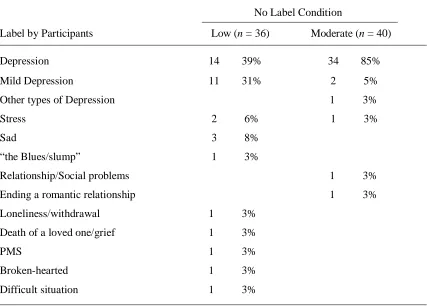
8 Frequency and Percentage of each Category of Labels Provided by Participants in the No Label Condition
56
Study 2
9 Means and Standard Deviations for each Cause Factor as a Function of Time and Severity
89
10 Means and Standard Deviations for each Consequence Factor as a Function of Time and Severity
92
11 Means and Standard Deviations for Expected Duration as a Function of Time and Severity
94
12 Means and Standard Deviations for each Coping Factor as a Function of Time and Severity
viii Domain
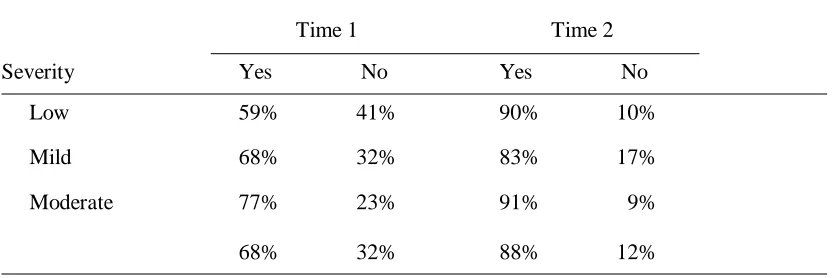
14 Label Use: Percentages of Yes/No Responses as a Function of Time and Severity
100
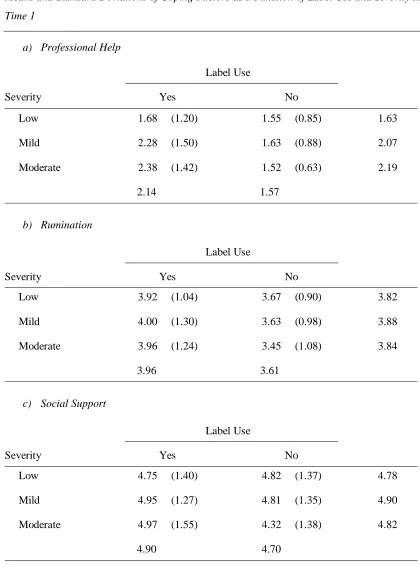
15 Means and Standard Deviations of Cause Factors as a Function of Label Use and Severity at Time 1
101
16 Means and Standard Deviations of Consequence Factors as a Function of Label Use and Severity at Time 1
103
17 Means and Standard Deviations of Expected Duration as a Function of Label Use and Severity at Time 1
104
18 Means and Standard Deviations of Coping Factors as a Function of Label Use and Severity at Time 1
105
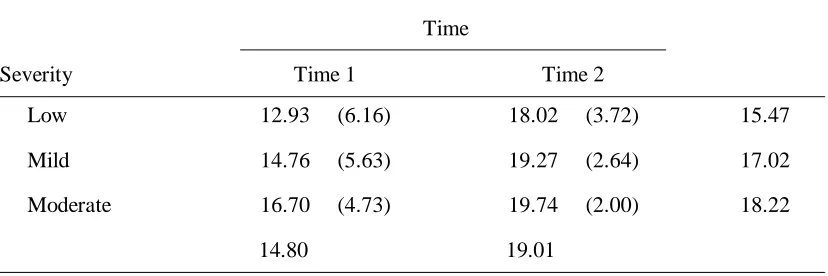
19 Means and Standard Deviations of Label Scale Scores as a Function of Time and Severity
109
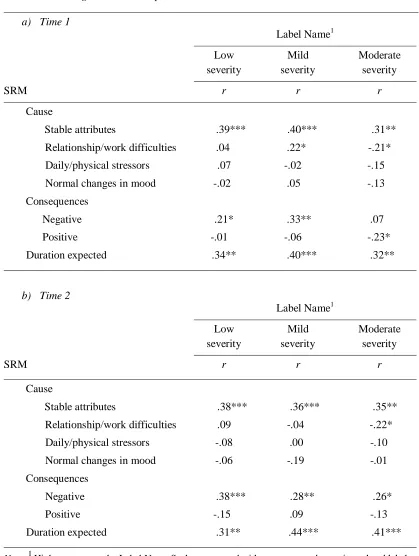
20 Correlations between Label Name and SRM Domains as well as Coping at Time 1 and 2 Among the Entire Sample
111
21 Correlations between Label Name and SRM Domains at each Severity Level at Time 1 and 2 Among the Entire Sample
112
22 Correlations between SRM Belief Domains and Individuals’ Past Frequency of Depression at Time 1 and 2
ix
Figure Description Page
1 Mediator effects of SRM belief domains on the relationship between label name and the likely use of professional help, controlling for age, gender, current depression, and history of depression.
123
2 Mediator effects of SRM belief domains on the relationship between history of depression (frequency) and the likely use of professional help, controlling for age, gender, and current depression.
x
Appendix Description Page
Study 1
A Ethics Approval 183
B Severity Vignettes 184
C SRM Measures 185
D History of Depression Measure 189
E Participants’ Current Depressive Symptomatology and History of Depression
192
F Positive Scenario 194
G Informed Consent 195
H Debriefing Form 197
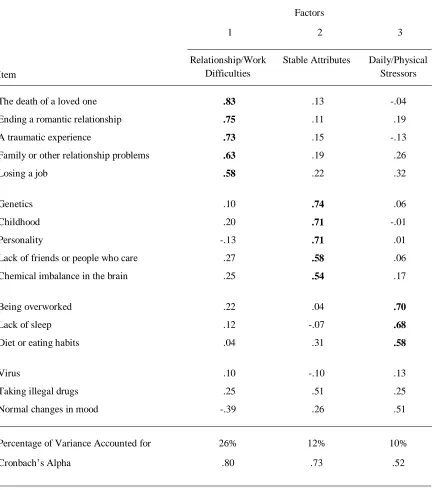
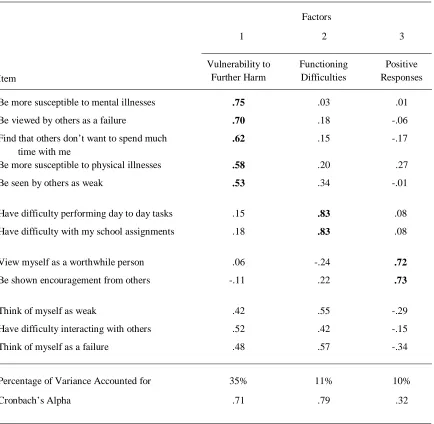
I Principal Components Analysis Summary Tables 199
J Analysis of Labels Provided by Participants 202
K Multiple Regression Analyses with SRM Belief Domains Predicting Perceived Helpfulness of Professional Treatment
203
Study 2
L Ethics Approval 206
M Severity Vignettes 207
N SRM Measures 208
O Participants’ Current Depressive Symptomatology 211
P Informed Consent 212
Q Debriefing Form 214
R Decision Rules for Developing Consistent Factors Across Time 1 and 2 from Principal Components Analyses
xi
T Development of the Label Name Scale 223
U Correlations between Label Name and SRM Domains Among Label Use Sample
228
V Multiple Regression Analyses with SRM Belief Domains Predicting Likely Use of Professional Treatment: No Label Use and Label Use Samples at Time 1
230
W Multiple Regression Analyses with SRM Belief Domains Predicting Likely Use of Professional Treatment at Time 2
232
X Multiple Regression Analyses with SRM Belief Domains Predicting Likely Use of Professional Treatment at each Severity Level at Time 1
234
Y Multiple Regression Analyses with SRM Belief Domains Predicting Likely Use of Professional Treatment at each Severity Level at Time 2
237
Chapter 1 General Introduction
Mental disorders are a serious and costly public health concern. Nearly 50% of
the population will suffer from at least one psychiatric condition in their lifetime (Kessler
et al., 2005). Depression, in particular, is one of the most prevalent disorders, and results
in significant personal, social, and economic costs (Judd et al., 2000; Kessler et al., 2005).
Despite there being effective treatments, studies have shown there to be an underreporting
of mental disorders, especially depression. Approximately one-third to one-half of
individuals with depression do not seek treatment (Aalto-Setala, Marttunen,
Tuulio-Henriksson, Poikolainen, & Lonnqvist, 2002; Christiana et al., 2000; Galbaud du Fort,
Newman, Boothroyd, & Bland, 1999; Wang et al., 2005). Of those individuals who do, a
considerable portion fail to adhere to treatment and/or terminate treatment prematurely
(Arnow et al., 2007; Mitchell, 2006; Olfson et al., 2009). This failure to receive and fully
complete treatment may increase the risk of an individual’s depression becoming more
severe and more difficult to treat in the future (Leahy, 2003).
The above considerations clearly indicate the importance of identifying those
factors that influence individuals’ decisions to seek or not seek help, and to adhere or not
adhere to treatment. In the recent literature, there has been an increased focus on the
client as an important factor in the treatment process. In this context, “client” refers to
not only someone already receiving treatment, but also an individual who is in the process
of initially identifying their current symptoms and problems, and then deciding whether
or not to seek treatment. In this regard, it has been proposed that clients’ mental
representation of their condition may be an important factor that predicts and influences
Barrowclough, & Jones, 2003). Accordingly, this thesis will focus on individuals’
perceptions and decisions regarding the interpretation, identification, and management of
depression.
Client-Related Factors in Mental Health
There has been increased awareness and recognition that the client plays a large
role in managing their psychological health. Regarding treatment outcome, Lambert
(1992) concluded that a substantial proportion of change in therapy is accounted for by
characteristics of the client. Duncan, Miller, and Sparks (2004) proposed that individuals
with psychological difficulties are aware of what they need in order to increase their
well-being and, thus, should have their “theories” of change respected and incorporated into
the treatment process. Such views speak to clients’ beliefs regarding what is necessary to
manage current difficulties.
Research in this area has examined individuals’ beliefs about causes of mental
disorders, and has found that, in general, perceived cause is associated with beliefs about
appropriate treatment. Studies have focused largely on the extent to which mental
disorders are believed to be caused by biological versus social/psychological factors, and
believed to be best treated by medication or psychotherapy (Kessing, Hansen,
Demyttenaere, & Bech, 2005; Williams & Healy, 2001). Results have shown that the
majority of individuals believe mental disorders to be caused by social/psychological
factors, rather than biological conditions, and also, accordingly, that psychotherapy is
believed to be a more effective treatment than pharmacotherapy (Kessing et al., 2005;
Lauber, Nordt, Falcato, & Rossler, 2001; Priest, Vize, Roberts, Roberts, & Tylee, 1996;
that clients’ beliefs about the cause of their current psychological difficulties relate to
their choice of how to cope and manage their difficulties.
With respect to depression, several studies have examined individuals’ beliefs
about specific causes of depression. These studies have differed in the ways they have
examined this issue. Some studies have developed various questionnaires using items
generated by researchers and therapists, based on theory and/or causes of depression
commonly reported by clients (e.g., Kuyken, Brewin, Power, & Furnham, 1992; Pistrang
& Barker, 1992; Thwaites, Dagnan, Huey, & Addis, 2004), whereas other studies have
been based on interview responses (e.g., Jadhav, Weiss, & Littlewood, 2001; Kangas,
2001). A review of the various findings suggests that, for the most part, individuals tend
to perceive depression to be caused by difficulties with relationships (including loss of
relationships, bereavement, and loneliness), trauma, and failure to achieve hopes,
ambitions, and desires.
There has also been work examining individuals’ beliefs regarding effective ways
of coping with and treating depression (Furnham, Pereira, & Rawles, 2001; Rippere,
1976, 1977). Studies have varied in the specific way they have examined this issue.
Some researchers have measured individuals’ perceived efficacy of specific therapeutic
orientations in the treatment of depression, such as cognitive or psychodynamic therapy,
based on descriptions of techniques (e.g., Furnham et al., 2001; Kuyken, et al., 1992;
Pistrang & Barker, 1992). These studies have found people to perceive cognitive, and
other “talk therapies,” to be most effective. Other researchers have examined individuals’
open-ended responses about the ways in which they would try to manage and reduce their
depression (e.g., Hetherington & Stoppard, 2002). For example, Rippere (1976, 1977,
depressed” is to see a friend, do something you enjoy, talk to someone about how you’re
feeling, and “keep busy.”
In the above studies, it is important to note that the term “depression” is presented
by the researchers, but is very rarely defined. Thus, it is difficult to know the extent to
which people believe these strategies to be helpful for depression, as it specifically refers
to a mental disorder, or depression as it may refer to sadness or normal variations in
levels of negative affect. A mental disorder refers to an impairment in normal cognitive,
emotional or behavioural functioning that is associated with considerable distress or
impaired functioning in at least one important area of life (e.g., work, relationships;
DSM-IV-TR, 2000). Recent studies in the area of mental health literacy1 have presented individuals with a vignette of a person with DSM depression criteria (although not the
label) and asked, in an open-ended format, how they think this person could be best
helped. Goldney, Fisher, Wilson, and Cheok (2002) found that, of their sample, only
about 50% of individuals suggested seeing a family doctor, and only 25% suggested
seeing a counsellor. Thus, the majority of individuals do not seem to inherently recognize
the importance of seeking formal treatment for clinically depressive symptoms.
In summary, the literature examining individuals’ beliefs regarding depression has
focused on beliefs about causes and ways of coping with depressive symptoms. Although
this work has certainly revealed some interesting findings, it lacks a more general
underlying conceptual framework that would help us to understand issues such as the
impact of these various beliefs, and the possibility of additional belief domains regarding
depression. In particular, what is called for is an integrated conceptual model that will
1
help clarify the way in which these various belief dimensions may account for differences
in the way that individuals identify, interpret, and try to manage depressive symptoms.
For example, previous studies have not examined how individuals come to recognize
depressive symptoms as “depression” rather than normal negative affect, or the way in
which individuals decide to change their strategy of coping with their depressive
symptoms from, for example, talking with a friend to seeking help from a psychologist.
In considering an appropriate underlying conceptual model, it is useful to turn to
the physical health literature. In this literature, several social cognition models have been
developed that recognize the importance of individuals’ beliefs about illnesses, explain
the way in which individuals come to understand their symptoms, and account for
individuals’ decisions to use various strategies to manage their illness (Ajzen, 1991;
Ajzen & Fishbein, 1980; Becker, 1974; Prochaska & DiClemente, 1984). Accordingly,
the application of such models to the mental health field might help to clarify the
aforementioned issues with respect to mental disorders, such as depression. In this
regard, one of the most well-validated models used in the physical health domain is
Leventhal’s self-regulation model (Leventhal, Meyer, & Nerenz, 1980; Leventhal,
Nerenz, & Steele, 1984; Leventhal, Nerenz, & Strauss, 1982). This model has been used
with a wide range of physical health difficulties, and has been found to significantly
enhance prediction of individuals’ health-related behaviors, such as treatment seeking and
adherence (Hampson, Glasgow, & Toobert, 1990; Heijmans, 1998; Moss-Morris, Petrie,
& Weinman, 1996; Petrie, Weinman, Sharpe, & Buckley, 1996; Scharloo et al., 1998).
As Leventhal’s approach will provide the main conceptual model for the present thesis, it
Leventhal’s Self-Regulation Model
Leventhal’s self-regulation model (SRM) views individuals as active problem
solvers who, when faced with problematic symptoms, engage in a process that involves
identifying the illness/problem, and using strategies to try to reduce these symptoms and
return to normal, or desired, functioning. Leventhal and others have found that
individuals have mental representations of illnesses that consist of five dimensions:
identity, which refers to both the symptoms and label associated with a given illness; the
causes of the illness; the social, physical, psychological, and financial consequences of
the illness; the timeline for how long the illness and/or its symptoms are expected to last;
and the extent to which the illness can be controlled or treated (Lau, Bernard, &
Hartman, 1989; Lau & Hartman, 1983; Leventhal et al., 1980; Meyer, Leventhal, &
Gutmann, 1985).
The SRM proposes that, when a change in physical health occurs, individuals
interpret their symptoms and create an hypothesis of what their illness may be. The
characteristics of the individual’s illness representation influence the type of strategies the
person uses to cope or control the symptoms. The hypothesis may be expressed as an
“if-then” statement. For example, if the pain in my stomach is indigestion (identity) caused
by eating a certain food (cause), then I can take a pill (treatment) and I will feel better
(consequence) in about 30 minutes (timeline; Leventhal, Brissette, & Leventhal, 2003).
After implementing the treatment strategy, the individual re-evaluates their symptoms. If
they feel better, their hypotheses regarding the illness are confirmed. However, if the
treatment was ineffective in reducing the symptoms, the individual repeats the process,
and thus reinterprets the symptoms, re-identifies the illness, and selects a new way of
Leventhal and Diefenbach (1991), people’s interpretations of their symptoms are based
on several factors. These factors include the individual’s memory of their own or others’
previous experience with the symptoms, knowledge of various illnesses, socially learned
information, and external factors such as stressful events.
In general, the self-regulation model has been well-validated in the physical health
domain. It has been used with a wide range of physical health problems, such as arthritis,
diabetes, and heart disease; and it has been found to significantly enhance prediction of
individuals’ coping strategies, adherence to treatment, and psychological and social
functioning (Cooper, Lloyd, Weinman, & Jackson, 1999; Hampson et al., 1990;
Heijmans, 1998; Moss-Morris et al., 1996; Petrie et al., 1996; Scharloo et al., 1998). For
example, Meyer et al. (1985) found that patients with hypertension were more likely to
discontinue treatment seeking and drop out of treatment if they believed the disease to be
acute.
As a further illustration, Cameron, Leventhal, and Leventhal (1993) compared the
illness representations of individuals who sought treatment at a medical clinic for new
physical symptoms with those who did not. Results showed that, compared to individuals
who did not seek treatment, those who sought treatment were more likely to have
identified their symptoms with a specific label, perceived increases in the severity of their
symptoms from their initial onset, and believed that there would be more negative
consequences as a result of their condition. Cooper et al. (1999) and Petrie et al. (1996)
examined the extent to which individuals with myocardial infarction adhered to a
prescribed cardiac rehabilitation course, and found attendance at the course to be
positively related to individuals’ belief in the controllability of their condition. Finally, in
associated with both physical and mental health, Heijmans (1998) examined the extent to
which illness cognitions predicted the coping strategies and functioning of individuals
with chronic fatigue syndrome. Findings showed that individuals who had a strong
illness identity, and believed that their symptoms had a chronic time-line, serious
consequences, and could not be controlled or treated, were more likely to use avoidant
coping strategies, and less likely to use problem-focused coping. In turn, individuals with
these illness cognitions were also more likely to have impaired social and physical
functioning and psychological well-being. Evidence thus suggests that illness cognitions,
as defined by the SRM, significantly predict individuals’ strategies for managing their
conditions and subsequent outcome.
Given the validity and utility of the SRM in the physical health domain, it may be
useful to extend the application of this model more fully to mental health issues. Within
the latter domain, the SRM may be a useful framework from which to understand, extend,
integrate, and utilize findings from previous studies examining individuals’ beliefs related
to the cause and coping dimensions of mental illness. Furthermore, the SRM may help in
understanding factors that influence individuals’ interpretation of mental and emotional
symptoms, and their decision to seek or not seek help.
Several researchers have recently begun to recognize the potential utility of
applying the SRM to the mental health domain (Lobban et al., 2003). Studies have begun
to examine the extent to which the SRM provides a valid description of the cognitive
representations of mental illness, and is a valid predictor of mental illness-related
behaviors and functioning (Brown et al., 2001; Lobban, Barrowclough, & Jones, 2004,
2005). Preliminary work in this area has been conducted with schizophrenia (Lobban et
Moss-Morris, & Horne, 1996), which was originally designed to assess the SRM’s five
belief dimensions of illness representations with respect to physical health, was modified
by Lobban et al. (2005) to assess the five belief dimensions with respect to schizophrenia.
Lobban et al. found the modified IPQ to be a reliable and valid measure of cognitive
representations of schizophrenia. Similar work has been conducted in the area of eating
disorders (Holliday, Wall, Treasure, & Weinman, 2005; Stockford, Turner, & Cooper,
2007). Such studies suggest that the five belief dimensions of physical illness
representations are also characteristic of mental illness representations. Lobban and
colleagues (2004, 2005) also found the SRM’s five belief dimensions of illness
representations to significantly predict levels of anxiety, and medication adherence
among individuals with schizophrenia.
There has also been some initial work examining the extent to which the SRM
may be applied to depression (Brown et al., 2001; Brown et al., 2007; Edwards, Tinning,
Brown, Boardman, & Weinman, 2007; Fortune, Barrowclough, & Lobban, 2004).
Fortune et al. (2004) examined the cognitive representations of depression among
individuals with a history of depression by asking these individuals to write down
everything they could remember about their depressive episodes, and found that
individuals’ cognitive representations of depression consist of the same five SRM
dimensions as individuals’ cognitive representation of physical illnesses. In another
study, Brown et al. (2001) found the SRM dimensions to significantly predict coping
strategies, treatment-seeking behavior, and treatment compliance among individuals with
depression. For example, perceived controllability of depressive symptoms was
negatively related to the use of religious coping, and perceived chronic duration of
research suggests that the SRM may provide a useful conceptual framework from which
to further understand individuals’ cognitive representations of mental illness, including
depression.
Applying the SRM to Existing Depression Research
Applying the self-regulation model (SRM) to the existing depression literature
may help to clarify the importance of beliefs about depression by highlighting the way in
which these beliefs impact on individuals’ health-related behaviors (e.g., seeking
treatment). Understanding individuals’ beliefs regarding the various aspects of
depression (e.g., symptoms, causes, consequences, treatment) may help to more clearly
understand the process by which individuals decide to seek treatment and comply with
treatment approaches. The SRM may also help to identify the processes individuals use
to interpret depressive symptoms that have not yet been extensively examined in the
depression literature. For example, the SRM may identify aspects of self-regulation (such
as hypothesis-testing) that may impact on the process of identifying one’s symptoms as
depression and selecting ways to manage these symptoms. Understanding such a process
can, in turn, lead to ways of modifying this process to increase the early identification of
depression among clients and increase the likelihood that individuals will seek and adhere
to treatment. Accordingly, the following sections will discuss the extent to which
existing relevant studies in the depression literature relate to, and have examined each of
the five SRM belief domains of cognitive illness representations (i.e., identity, cause,
timeline, consequences, and control/treatment).
Identity. There has been relatively limited research examining the SRM identity
domain of the cognitive representation of depression. Of the studies that have been
of depression. For example, Jadhav et al. (2001) examined the symptoms that depressed
patients reported in describing their depression, and found sadness, anxiety, and
maladaptive cognitions to be most spontaneously reported. Lauber and colleagues (2005)
assessed the symptoms that university students identified as the main and additional
symptoms of depression. Depressed mood, reduced energy, and a pessimistic outlook
were identified as the main symptoms of depression by, respectively, 93%, 89%, and 85%
of the participants. Disturbed sleep and considerable distress/agitation were identified as
additional symptoms of depression by 45% and 56% of the participants, respectively.
Recently, studies directly applying the SRM to depression have found that, among
depressed patients, depressed mood and anhedonia were most frequently identified as
characteristic of their depression. Fatigue and sleep disturbances were also frequently
reported, along with feelings of worthlessness, hopelessness, agitation, and difficulty with
concentration (Brown et al., 2001; Brown et al., 2007; Vollman et al., 2010).
It should be noted that much of this research has been conducted on individuals
who currently have major depression and are seeking treatment. Research in the
depression literature has not yet examined how individuals would identify and interpret
depressive symptoms prior to receiving any formal label, or diagnosis, of “major
depression.” Furthermore, those studies that used non-depressed samples often presented
individuals with the label “depression,” and then asked individuals to identify its
symptoms (e.g., Vollmann et al., 2010). Such studies reflect the symptoms that
individuals may associate with, and that are triggered by, the label “depression.”
However, these studies do not examine the label that individuals initially use to interpret
depression-related symptoms. Given that many symptoms of depression are also
to daily events, individuals may not initially identify their symptoms as “depression.”
Rather, they may initially identify the symptoms as “sadness,” “stress,” or “fatigue.”
Studies in the area of mental health literacy have not presented individuals with
the term “depression.” Instead, they examined the label that individuals use to identify
the problem of a person (in a vignette) presenting with most of the DSM depression
symptoms. These studies found that about 50% of individuals do not identify DSM
depression symptoms as “depression,” but rather identify the problem as other things such
as “stress”, “nervous breakdown,” or “work-related problems” (Goldney, Fisher, &
Wilson, 2001; Goldney et al., 2002; Jorm et al., 1997). It is currently recognized that
these other conditions may have features that overlap with those of depression (e.g.,
similar causes). However, perceived differences between these conditions and depression
may also exist. For example, the different labels may be associated with different
treatment strategies. Thus, the label that is applied to the depressive symptoms may have
differential implications for how and when individuals try to treat these symptoms, which
has not been examined in this area.
A further limitation of this mental health literacy research is that it examines the
interpretation of a constellation of the majority of depression symptoms when presented
together. However, it does not indicate how individuals interpret a smaller number of
depression symptoms, as may be initially experienced by individuals during the onset of
depression. It may be the case that an even larger percentage of individuals do not
interpret a small number of depressive symptoms as depression. Furthermore, studies in
the depression literature have not yet examined the process by which individuals come to
identify their depressive symptoms either as a problem other than depression (e.g., stress),
Cause. There has been somewhat more research in the clinical psychology area examining the SRM causal domain of the cognitive representation of depression. Studies
in this area tend to use methodologies that involve open-ended questions regarding why
individuals become depressed (e.g., Jadhav et al., 2001; Kuyken et al., 1992); and
questionnaires based on the causes purported by various theoretical orientations (e.g.,
Pistrang & Barker, 1992; Thwaites et al., 2004). Due to the different methodologies and
conceptual bases used across studies, findings regarding individuals’ perceived causes of
depression have taken various forms across studies. For example, Thwaites et al. (2004)
reported that individuals believe the causes of depression to be events related to
“achievement, intimacy, and relationships”, and Kuyken et al. (1992) found the perceived
causes of depression to be “unfulfilled desires and ambitions,” “loss,” and “trauma.” A
review of the general themes of the findings in this literature suggests that individuals
tend to believe the cause of depression to stem from achievement failures (e.g., work),
relationship difficulties (including interpersonal loss), trauma (e.g., childhood abuse) and
biological factors (e.g., heredity; Broadbent, Kydd, Sanders, & Vanderpyl, 2008; Brown
et al., 2001; Brown, 2007; Cirakoglu, Kokdemir, & Demirutku, 2003; Kangas, 2001;
Kuyken et al., 1992; Thwaites et al., 2004; Wong, Tran, Kim, Van Horn Kerne, & Calfa,
2010).
Thus, the existing literature has begun to identify what individuals believe to be
the causes of depression, and has even begun to consider the extent to which these causal
beliefs relate to individuals’ beliefs regarding the type of therapy that will be useful.
However, it is currently unclear the extent to which events that are believed to cause
depression (as it refers to a clinical disorder) are also believed to cause normal negative
affect share common causes, this would suggest the importance of examining how
individuals differentially interpret their depressive symptoms as either depression or
normal negative affect.
Timeline. Only a few known studies have examined and reported beliefs
regarding the SRM’s timeline domain with respect to depression. Of these studies,
findings showed that the majority of individuals believe depression to be intermittent
(comes and goes; 63-70%), while approximately half of individuals believe that
depression may be chronic (Brown et al., 2001; Brown et al., 2007; Godoy-Izquierdo,
Lopez-Chicheri, Lopez-Torrecillas, Velez, & Godoy, 2007; Vollmann et al., 2010; Wong
et al., 2010). However, given the limited work in this area, it may be useful to further
examine individuals’ beliefs regarding the duration of depressive symptoms, and
particularly the extent to which expected duration is influenced by the severity of
depressive symptoms.
Consequence. Studies have found that most individuals believe depression to
have negative consequences (Brown et al., 2001, 2007; Godoy-Izquierdo et al., 2007;
Vollmann et al., 2010). However, as with timeline, few studies have examined beliefs in
this domain. Furthermore, these studies examined individuals’ beliefs about very broad
consequences of depression, for example “my depression has affected the way others see
me.” It may be helpful to clarify the negative impact that individuals believe depression
may have. As one illustration, it may be useful to understand individuals’ beliefs
regarding exactly how others’ opinions of them may change as a result of their
depression.
Control/Treatment. There has been somewhat more research examining the
SRM, this domain focuses on the extent to which individuals believe that their illness is
controllable/treatable. Studies that have applied the SRM directly to depression have
found that the majority of individuals view depression as controllable (63-80%; Brown et
al., 2001; Brown et al., 2007; Godoy-Izquierdo et al., 2007). The existing depression
literature has extended this dimension of the model by also examining the extent to which
individuals believe certain treatment approaches to be effective in reducing depressive
symptoms. In the clinical psychology literature, studies tend to use questionnaires with
items based on techniques from various theoretical orientations. Findings regarding
individuals’ beliefs about the most effective forms of therapy have been inconsistent
across studies, with some reporting individuals to believe “social interventions” to be
most effective in treating depression (e.g., Kuyken et al., 1992); whereas others report
“cognitive” therapy to be perceived as most effective (e.g., Furnham et al., 2001).
Studies in the mental health literacy area have often used a more open-ended
approach to examine how individuals would go about treating depressive symptoms. In
this literature, individuals are presented with a vignette describing a person with DSM
criteria for depression (although the diagnosis is not presented), and individuals are then
asked how they “think the person could best be helped.” Only approximately 50% of
both individuals with or without a history of depression reported seeing a family
physician as a useful treatment strategy, and only about 9% suggested seeing a
psychologist (Goldney et al., 2001; Goldney et al., 2002). Wong et al. (2010) applied a
self-referent vignette methodology among Asian American students and only 36%
indicated that they would seek professional help. However, it should be noted that many
of the individuals in these studies may not have labelled the presenting problem as
Rippere (1976, 1977, 1979) examined what a random sample of individuals believed to
be “common sense” strategies for coping when they are feeling “depressed.” However, it
was unclear whether individuals interpreted this term as referring to a mental disorder, or
to normal negative affect. Thus, it is unclear what most individuals believe to be the most
effective strategies for treating depression, as it refers to a mental disorder. Furthermore,
it is unclear if these strategies differ from those that individuals believe to be useful for
managing normal negative affect.
Studies directly applying the SRM to depression have also begun to assess broader
ways that individuals may try to cope with depressive symptoms, and particularly how the
SRM belief domains relate to the use of these coping strategies (Brown et al. 2001;
Brown et al., 2007; Kelly, Sereika, Battista, & Brown, 2007). For example, Kelly et al.
(2007) found perceptions of more negative consequences to be associated with more
disengagement and less problem solving, while perceptions of high controllability were
associated with more active coping. Studies have also begun to assess how the SRM
belief domains relate to treatment seeking and treatment adherence (Aikens, Nease, &
Klinkman, 2008; Broadbent et al., 2008; Brown et al., 2001; Edwards et al., 2007). For
example, Brown et al. (2001) found that, after controlling for severity, patients who
received mental health treatment believed their depressive symptoms were more chronic
and had more negative consequences, than individuals who did not receive treatment.
Poor adherence to antidepressant medication was found to be significantly higher among
patients who believe their symptoms are mild and transient, and caused by either
Current Limitations of the SRM as Applied to Existing Depression Literature Most studies that have looked at SRM domains in relation to depression have not
clarified what was meant by the term “depression” to their participants. As a result,
individuals may have differed in their interpretation of the term. For example, some
individuals may have interpreted the term as referring to a severe clinical disorder, while
others may have interpreted the term as referring to normal variation in affect. Thus, the
results of this literature seem to be confounded by variation along the continuum of
depressive affect. As such, individuals’ beliefs about depression (e.g., causes and ways of
coping) in that literature are unclear. It may be helpful to attempt to clarify the beliefs
associated with each end point of the depressive affect continuum by variation in
symptom severity and labels identifying the condition.
Secondly, regarding the literature that has directly applied the SRM to depression,
the samples in the large majority of these studies consisted of individuals who were
currently depressed and had been diagnosed with major depression, with many of them
currently receiving treatment. While it is important to look at the illness representations
of individuals who are clear that their condition is depression, it is also important to
assess how these beliefs may differ when individuals identify the depressive symptoms as
something different. Individuals may not always clearly identify depressive symptoms as
depression, and instead may identify their symptoms with another label, such as “stress.”
Thus, it may be helpful to clarify how the identification of depressive symptoms impacts
additional SRM belief domains and coping strategies. Furthermore, it may also be
helpful to examine the extent to which these SRM domain beliefs and coping strategies
Thirdly, there has been little work examining the illness representation associated
with depressive symptoms at their onset, when the identity of the problem may be
unclear. Furthermore, no study has explicitly tested the factors that the self-regulation
model hypothesizes lead to changes in the illness representation during the early process
of understanding the depressive symptoms, such as factors that lead to changes in the
identity of the depressive symptoms, and how individuals may come to identify their
difficulties as depression. For example, no study has tested the model’s proposal that the
duration of symptoms for longer than originally expected leads individuals to change their
initial understanding of these symptoms.
Studies have found that approximately one-third to one-half of individuals with
depression do not seek treatment (Aalto-Setala et al., 2002; Christiana et al., 2000;
Galbaud du Fort et al., 1999). This high degree of underreporting may reflect difficulties
that individuals have in identifying their symptoms as depression, and their tendency to,
instead, identify their symptoms as part of a less severe difficulty that does not require
professional treatment. In this regard, studies in the area of mental health literacy have
found that approximately 50% of individuals presented with a vignette of a person with
depressive symptoms are unable to identify the person as having depression. Instead,
they may identify the symptoms as “stress,” or “work-related problems,” etc. (Goldney et
al., 2001; Goldney et al., 2002; Jorm et al., 1997). Depending on the situational cues,
individuals may also identify depressive symptoms as normal sadness or bereavement and
thus not seek professional help, or not report these symptoms as depression if they do
seek treatment. However, the longer that individuals with major depression wait to
receive treatment, the more severe their condition may become and the more difficult
Thus, it is important to understand the way in which clients interpret and identify
their depressive symptoms. The study of this issue involves the clarification of the
treatment strategies that are used in association with each type of interpretation. For
example, is an interpretation of symptoms as normal sadness associated with treatment
that involves talking to a friend, whereas interpreting the symptoms as a condition closer
to a mental disorder is associated with treatment that involves professional assistance? If
so, this would help clarify the importance of understanding how individuals come to
interpret their symptoms as depression and helping individuals to properly identify their
condition early on.
Related to the limitations of the SRM as it applies to the current depression
literature, there also exist limitations in certain theoretical aspects of the self-regulation
model in general. In particular, while the SRM helps to identify the content domains of
illness representations, it does not clarify the ways in which these domains may
inter-relate in their prediction of the strategies used by individuals to cope with a given
condition. For example, it does not describe the relative importance of each SRM domain
in its contribution to the prediction of the coping strategies used by individuals,
particularly treatment seeking. The model also does not clarify whether the overall
strength of the SRM in the prediction of coping may differ depending on particular
circumstances, such as the severity of the symptoms.
Furthermore, studies have not examined facets of the model in which there may be
moderator relationships among SRM domains within an illness representation of a given
condition, such as in the prediction of coping. It is possible that the impact of one belief
domain on a decision regarding a management strategy, such as seeking professional
between the expected duration of a condition and the coping strategy that is selected may
be dependent on the extent to which the individual believes the condition will have
negative consequences. If the condition is expected to have a long duration, individuals
may be more likely to seek professional treatment if high negative consequences are also
expected. However, even if a long duration is expected, individuals may be less likely to
seek professional services if the condition is not believed to have a negative impact.
As another example, there may be a moderator effect between beliefs regarding a
condition’s controllability and consequences. In particular, high perceived controllability
may lead to a lower likelihood of seeking professional treatment (and instead using more
self-help coping strategies); but only if individuals believe the condition has low negative
consequences. However, the expectation of high negative consequences may lead
individuals to view professional treatment as more helpful, provided they also believe the
condition is controllable. Although studies have examined how levels of individual SRM
domains relate to coping (e.g., high duration and high negative consequences have been
found to be predictive of treatment use; Edwards et al., 2007; O’Mahen, Flynn,
Chermack, & Marcus, 2009; Wong et al., 2010); studies have not examined how content
in these domains may be interdependent and interact in the process of selecting strategies
for managing a presenting condition.
It is also possible that, within other facets of the self-regulation model, a mediator
relationship may exist among some of the SRM domains. For example, the SRM
proposes that the label that individuals use to identify a given condition impacts beliefs
regarding the other domains of the representation (e.g., expected consequences, duration,
etc.) and, in turn, coping. Thus, the model alludes to a mediator effect in which the
manage the condition is mediated by the other SRM domains within the illness
representation. However, no research has yet examined and tested this possibility.
The Current Thesis
The current thesis applied the self-regulation model to depression. One goal of
this thesis was to have a further descriptive look at individuals’ beliefs about depressive
symptoms in terms of the various SRM domains. Given the relatively limited number of
studies that have examined this issue in this framework, further information would help to
validate or clarify findings thus far. For example, it may be helpful to clarify how long
individuals expect depressive symptoms to last. The second, and central, goal of the
current thesis was to examine factors that may influence the illness representations
associated with depressive symptoms. In this regard, Study 1 used a vignette-based
methodology to assess the impact of experimenter-provided labels identifying a set of
depressive symptoms, and the impact of symptom severity on other SRM domains,
including coping.
Study 2 examined a component of the model that hypothesizes the process
whereby individuals modify their illness representations. Specifically, the model predicts
that, when individuals experience symptoms, they form hypotheses regarding how long
the condition will last, based on their initial illness representation of the condition. If the
symptoms last longer than expected, especially after using strategies to manage the
condition, individuals are believed to re-hypothesize the nature of the condition, and thus
modify their illness representation. Thus, using a vignette methodology, Study 2
examined the illness representations that are initially formed at the onset of depressive
symptoms, and assessed how these representations change as a result of experiencing the
these changes in the illness representations are impacted by symptom severity in terms of
the range of symptoms experienced. In addition, Study 2 further assessed the label
component of the identity domain in terms of how it relates to other SRM domains and
coping strategies used.
A third goal of this thesis was to examine how the SRM domains in illness
representations may inter-relate in their prediction of coping, particularly seeking
professional treatment. Study 1 assessed the relative strength of the SRM domains in
predicting perceived helpfulness of professional services. Study 1 also examined the
extent to which this differed depending on the severity of the symptoms. In addition,
Study 1 assessed the potential moderator effects among the SRM domains in predicting
beliefs regarding the helpfulness of professional treatment.
Study 2 further examined these issues using a different methodology. This made
it possible to begin to examine an aspect of the self-regulation model that may involve a
mediator relationship. In particular, Study 2 examined the extent to which the
relationship between the label used to identify a given condition and the strategies used to
cope (particularly treatment seeking) are mediated by the other SRM domains within an
illness representation.
Regarding individual differences, Study 2 also briefly examined how individuals’
previous experiences of depression may relate to SRM beliefs regarding current
depressive symptoms. The model identifies individuals’ personal history with a condition
as one of the knowledge domains used to interpret current symptoms. However, few
previous studies have explicitly examined how history of depression relates to
individuals’ illness representations of current depressive symptoms. Kirk, Haaga,
among individuals with a history of major depressive disorder and those with no history
of the condition. Individuals with a depression history viewed the condition as more
likely to result in negative consequences. However, an SRM conceptual framework was
not used in the study, and thus, the study did not assess beliefs about other aspects of
depression, such as causes. The current thesis examined both the manner in which history
of depression (in terms of frequency) relates to the content of the SRM domains of
current depressive symptoms, as well as the process by which history of depression may
relate to decisions about managing a current episode. In particular, the thesis examined
the model’s implied proposition that the SRM domains of the current symptoms may
mediate the relationship between past experiences with depression and the decision to
Chapter 2 Study 1 Introduction
According to the self-regulation model (SRM), when individuals experience an
onset of symptoms, they attempt to self-diagnose by matching the experienced symptoms
to a label to form the identity of their condition. The label to which the individual
matches their symptoms is based on several factors, such as their personal history with
the symptoms, past observation of the symptoms in others, and social-cultural
information about the symptoms (Leventhal, Leventhal, & Cameron, 2001; Martin,
Rothrock, Leventhal, & Leventhal, 2003). Although the SRM acknowledges that
individuals may consider environmental factors to determine potential causes of the
symptoms to help determine the identity of their condition, the model also proposes that
the way in which individuals identify their symptoms (that is, the label used to understand
their condition) provides the individual with information regarding the other illness
domains (e.g., additional causes, consequences, duration, controllability). The illness
representation thus influences the choice of strategies for managing the symptoms
(Leventhal et al., 2001). As an example, Leventhal et al., (2001) notes that “if a large,
soft tissue mass in the shoulder is accurately labelled a malignant sarcoma rather than a
benign lipoma, the implications are vastly different for the individual’s experience of
consequences, duration, and controllability of the threat” (p. 256).
Studies in the physical health literature have demonstrated that individuals may
interpret a set of symptoms, particularly ambiguous symptoms, differently. For example,
Baumann, Cameron, Zimmerman, and Leventhal (1989) found that a set of ambiguous
physical illness by students who were not. Studies have also found the label given to a set
of symptoms to be related to treatment seeking. For example, Cameron, Leventhal, and
Leventhal (1995) found that individuals not experiencing a stressful event in their lives
labelled new symptoms as a physical illness, while individuals experiencing a difficult
event labelled their symptoms as stress and were significantly less likely to seek
treatment. Dempsey, Dracup, and Moser (1995) found that women experiencing heart
attacks who labelled their symptoms as more benign issues, such as overexertion due to
their physical activity, or as a normal part of daily life, delayed in seeking medical help
by several hours.
The mental health literacy literature has shown that individuals often interpret
depressive symptoms as something else. For example, when given a vignette describing a
person with major depression and asked whether the person in the vignette was either
suffering from a mental illness or experiencing a crisis, 60% of individuals chose “crisis”
(Lauber, Nordt, Falcato, & Rossler, 2003). Other studies have allowed individuals to
provide their own label to identify the condition presented in a vignette describing
depressive symptoms. These studies have found that approximately 50% of individuals
do not identify the person in the vignette as having depression. Instead, they may identify
the symptoms as “stress”, or “work-related problems,” etc. (Goldney et al., 2001;
Goldney et al., 2002; Jorm et al., 1997).
Few studies, however, have assessed the way in which these differences in labels
may impact individuals’ beliefs about the other SRM domains regarding their condition
(e.g., causes, consequences, duration) and their decision to seek treatment. Both Wright,
Jorm, Harris, and McGorry (2007) and Cabassa and Zayas (2007) presented individuals
the condition as something other than depression were significantly less likely to seek
professional help. Detweiler-Bedell, Detweiler-Bedell, Hazlett, and Friedman (2008)
presented individuals with a vignette of depressive symptoms and labelled the symptoms
as either depression or a heart condition. Results showed that the depression label led to
significantly higher attributions of psychological causes and lower attributions of physical
causes than the heart condition label. They further found that the depression label led
individuals to believe that remission would most likely occur as a result of perseverance
and social support. In contrast, the heart condition label led individuals to believe
remission would most likely occur as a result of professional help. Thus, preliminary
research has begun to show how the label used to identify depressive symptoms may
impact beliefs regarding other SRM domains and ways of coping with the symptoms.
Accordingly, the first major goal of Study 1 was to clarify the effect of labels on
beliefs regarding diverse SRM domains (e.g., duration, consequences). In particular,
Study 1 examined the effect of several labels that are typically used to identify depressive
symptoms. To illustrate, Goldney et al. (2001) presented individuals with a vignette
describing a person with depressive symptoms. Using an open-ended response format,
results indicated that, after depression, stress was the second most common label used to
identify the condition in the vignette. Thus, Study 1 assessed the extent to which
interpreting depressive symptoms as stress differentially influences beliefs regarding the
other SRM illness domains, including professional help seeking. Study 1 also assessed
the impact of identifying depressive symptoms as typical affective experiences, rather
than a disorder. Given that some depressive symptoms can be part of the normal
symptoms as normal affect, such as sad, impacts beliefs about other SRM domains,
including coping.
Furthermore, Study 1 also examined the effect of not using a label to identify
depressive symptoms, in contrast to using a label. According to the self-regulation
model, if individuals do not match their symptom to a specific label, their illness
representation of their symptoms may be “fuzzy.” That is, these individuals may not have
detailed or clear beliefs regarding the SRM domains pertaining to their symptoms, which
may reduce the motivation to engage in strategies to manage their symptoms, such as
seeking treatment. In this regard, Cameron and colleagues (1993) found that more
individuals who sought medical care for new symptoms used a specific label to identify
their condition than individuals who did not seek treatment, even after controlling for the
number of symptoms. Such findings suggest that the lack of a label to identify a
condition may impact on individuals’ illness representation associated with their
symptoms and, in turn, affect their decisions regarding management of their condition.
Thus, the present study examined the extent to which not using a label to identify
depressive symptoms impacts beliefs regarding other SRM domains, including coping.
It was predicted that label would have an effect on a wide range of SRM domains,
given the model’s proposal that label plays a large role in determining individuals’ illness
representations of a condition. More specifically, it was predicted that the depression
label would lead to beliefs indicative of a more severe condition than stress, sad, or no
label. For example, it was predicted that, compared to other label conditions, the
depression label would lead individuals to believe the symptoms were more likely to
result in more negative consequences in a wide range of areas, and be less controllable. It
to last for a longer period of time and be more likely to have a more permanent timeline,
whereas the stress, sad, and no label conditions were expected to be viewed as more
likely to have an acute or intermittent timeline. Furthermore, the depression label was
expected to lead individuals to view professional treatment as more helpful and one’s
own personal efforts as less helpful in managing the condition, compared to the stress,
sad, or no label conditions. Similar patterns were expected with respect to the stress label
in comparison to the sad or no label, and the sad label in comparison to no label.
Hypotheses regarding causes were based on the depression literature examining
individuals’ beliefs about the causes of depression (Kuyken et al., 1992; Pistrang &
Barker, 1992; Thwaites et al., 2004). Based on those findings, it was expected that the
depression label would lead individuals to believe the condition was more likely to be due
to relationship and work related difficulties compared to the stress or sad label, or no
label. However, it is possible that individuals also attribute conditions identified as stress
or normal negative affect to work or interpersonal difficulties.
A second major goal of Study 1 was to consider the effect of symptom severity on
illness representations. Within the health psychology literature, symptom severity has
been found to be predictive of SRM domains, such as consequences and timeline, as well
as treatment seeking (e.g., Cameron et al., 1993; Frostholm et al., 2005; Martin et al.,
2003). Similarly, within the depression literature, studies have found symptom severity
to be related to individuals’ decisions to seek professional help and adherence to
antidepressant medication (Aikens et al., 2008; Broadbent et al., 2008; Brown et al.,
2005; Edwards et al., 2007; Thompson, Hunt, & Issakidis, 2004). Preliminary work has
begun to examine how depression symptom severity relates to other SRM illness
perceived as less controllable and are expected to have a longer duration and more serious
consequences (Brown et al., 2007; Fortune et al., 2004). However, there has been
relatively little work in this area.
Furthermore, the majority of the studies examining severity have focused on at
least a moderate level of symptom severity. Research has not yet examined low
symptoms in terms of how they are identified and their impact on other SRM belief
domains, including coping strategies. For some individuals, this issue is important to
examine, as the onset of low depressive symptoms may predict an escalation to moderate
severity and, in turn, diagnosable major depression (Horwath, Johnson, Klerman, &
Weissman, 1994). As such, Study 1 also examined individuals’ illness representation
beliefs regarding low symptoms of depression (i.e., their causes, consequences, duration,
controllability), as well as beliefs regarding how to manage these low symptoms.
Given the model’s proposal that symptoms play a large role in individuals’ illness
representation of a condition, it was expected that symptom severity would have a
significant impact on a wide range of belief domains. Furthermore, it was expected that
moderate symptoms would lead to beliefs in other domains that were reflective of a more
severe condition. In particular, it was hypothesized that, compared to low symptoms,
moderate symptoms would lead individuals to believe the condition was more likely to be
due to stable causes (e.g., genetics) and significant disruptions in one’s life (e.g., a
relationship ending), would have more negative and less positive consequences in a range
of areas, and would be less controllable. It was also predicted that moderate symptoms
would lead individuals to believe the condition was more likely to be permanent and last
longer than low symptoms, whereas low symptoms were expected to be viewed as more
would lead individuals to view professional treatment as more helpful and view one’s
own personal efforts (e.g., seeking social support) as less helpful in managing the
condition, compared to low symptoms.
Study 1 also examined how the effect of symptom severity on SRM belief
domains and coping is potentially impacted by the label used to identify the symptoms.
For example, given the important role that label is believed to play in individuals’ illness
representations, it is possible that a label that has a clear illness representation in terms of
severity (depression) may be less impacted by the severity of the symptoms than a label
that may be more vague, such as stress or sad. Thus, it is possible that symptom severity
has less of an effect on beliefs regarding other SRM domains when a depression label is
used than when a stress, sad, or no label is used.
A third purpose of Study 1 was to examine the strength of the self-regulation
model overall in predicting the coping strategies that individuals use, with a particular
interest in professional help-seeking. In this regard, Study 1 also examined the relative
strength of the various SRM domains in the prediction of coping. Relatively few studies
have examined these aspects of the model, particularly with respect to treatment seeking.
In the physical health literature, several studies have examined the ways in which
the SRM domains relate to various types of coping, such as avoidance and active coping
(e.g., Hagger & Orbell, 2003; Heijmans, 1998; Kemp, Morley, & Anderson, 1999;
Moss-Morris et al., 1996; Rutter & Rutter, 2002). Studies in this area have generally found
individuals to be more likely to use avoidance-related coping, including passive styles
and disengagement, when they believed their condition to have more severe consequences
and a chronic timeline. However, these studies have generally only presented simple
each SRM domain, nor the overall variance in coping accounted for by all of the proposed
elements of the self-regulation model, by using multiple regression procedures.
Furthermore, the coping strategies examined in these studies relate more to general styles
of coping rather than the specific ways in which individuals attempt to manage their
conditions, such as through seeking professional treatment.
Studies in the physical health literature that more closely examine specific
management strategies, such as professional help, include studies assessing the
relationship between the SRM and treatment adherence (Brewer, Chapman, Brownlee, &
Leventhal, 2002; Hampson et al., 1990; Stafford, Jackson, & Berk, 2008). Research in
this area has more often used a regression approach to examine the predictive power of
the SRM overall and the SRM domains. While these studies have found the SRM to
significantly add to the prediction of treatment adherence, the amount of variance
accounted for by the model overall was relatively limited. Furthermore, these studies
have generally found beliefs regarding serious consequences to be associated with greater
treatment adherence, which is inconsistent to some extent with studies that have found
perceived serious consequences to be associated with more avoidance and
disengagement-based coping strategies as noted above (Hagger & Orbell, 2003;
Moss-Morris et al., 1996; Rutter & Rutter, 2002). The relatively low treatment adherence
variance accounted for by the SRM and the inconsistencies in findings across studies
suggests that it may be helpful to clarify the different circumstances in which the SRM
may be differentially predictive of the strategies used to cope with their conditions. For
example, the strength of the SRM in predicting coping strategies may differ depending on