6 7 8 9 10 11 12 13 14 15 16 17 18 19 20 21 22 23 24 25 26 27 28 29 30 31 32 33 34 35 36 37 38 39 40 41 42 43 44 45 46 47 48 49 50 51 52 53 54 55
Visualizing biological membrane organization and
dynamics
Marc Baaden[0000-0001-6472-0486]
Laboratoire de Biochimie Théorique, CNRS, UPR9080, Univ Paris Diderot, Sorbonne Paris Cité, PSL Research University, 13 rue Pierre et Marie Curie, 75005, Paris,
France [email protected]
Abstract. Biological membranes are fascinating. Santiago Ramón y Cajal, who received the Nobel prize in 1906 together with Camillo Golgi for their work on
the nervous system, wrote “[..]in the study of this membrane[..] I felt more pr
o-foundly than in any other subject of study the shuddering sensation of the un-fathomable mystery of life”1. The visualization and conceptualization of these biological objects have profoundly shaped many aspects of modern biology, drawing inspiration from experiments, computer simulations, as well as from the imagination of scientists and artists. The aim of this review is to provide a fresh look on current ideas of biological membrane organization and dynamics by discussing selected examples across fields.
Keywords: Molecular visualization, Lipid bilayer.
1
Introduction
The field of biological membranes. Membranes are and have always been essential
for biology, starting from their catalyzing role in the origins of life, be it by harness-ing energy as ion gradients across them or by formharness-ing compartments for chemical reactions to take place, later on shaping organelles and transportation vessels. In their role as barriers they maintain concentrations, form (electrochemical) gradients used for energy conversion, ward off access of unwanted substances, enable a fine control over in- and efflux into a given compartment, and thereby complexify the delivery of drugs. Furthermore they are essential as matrices to support other (macro)molecules, in particular membrane proteins. They are able to store energy and they are intrinsi-cally linked to signaling processes. Biological membranes have shaped important parts of biophysics, structural and molecular biology as well as molecular modeling.
1 The full quotation is “I must not conceal the fact that in the study of this membrane I for the
6 7 8 9 10 11 12 13 14 15 16 17 18 19 20 21 22 23 24 25 26 27 28 29 30 31 32 33 34 35 36 37 38 39 40 41 42 43 44 45 46 47 48 49 50 51 52 53
A compelling image of several biological membrane structures in the neuron is de-picted in Figure 1. The visualization of these objects is at the core of this review. By visualization, a term that may depend very much on the question being addressed, is meant the understanding that is gained about these objects and their properties by making them visible to our eyes and minds through abstractions, images, pictures and conceptualization. This interpretation closely follows the definition given by Ben Shneiderman: “The purpose of visualization is insight, not pictures” [1].
Early days of biological membrane investigation. A brief (and by no means com-plete) account on how membrane-related questions have accompanied the scientific progress over the last 50 years may start with the early visualization of bilayers and proteins in bilayers by freeze-fracture electron microscopy [2] as well as the observa-tion of lateral diffusion of proteins in live cells [3, 4]. X-ray diffracobserva-tion measurements of Engelman [5] and calorimetric studies by Reinert and Steim [6] were critical to the acceptance of the lipid bilayer as the fundamental structural element of the membrane. The fluid mosaic model of the structure of cell membranes introduced by Singer and Nicolson [7] provided a molecular vision that has deeply influenced many scientists. At about the same time, it had become clear that the association of protein complexes with membranes had functional consequences. Peter Mitchell's work [8] has signifi-cantly contributed to this realization, for instance by recognizing the importance of the electrochemical proton gradient for energy transformation. In these early days, Henderson and Unwin’s pioneering investigation paved the way for profound and consequential effects on the field of membrane structure through the determination of the low-resolution electron microscopy (EM) structure of bacteriorhodopsin [9]. Early computational attempts look at the order-disorder transition in model bilayers [10].
Between 1980 and 1995, the first molecular simulations of membrane systems ap-peared, investigating first mono- [11], then bi-layers [12, 13] on a 10 to 100 ps time-scale, and in particular their phase behavior and the diffusion of solutes [14]. This progress made in molecular modeling enabled a straightforward atomic-level visuali-zation of membrane systems filling an important gap with other existing techniques. During this period, in 1985, the Nobel prize in Physiology or Medicine was awarded jointly to Brown and Goldstein for their discoveries concerning the regulation of cho-lesterol metabolism [15, 16]. Another Nobel prize rewarded Deisenhofer, Huber and Michel for determining the three-dimensional structure of the photosynthetic reaction center [17]. This seminal work proved that the structure of membrane proteins could actually be determined, thereby providing detailed structural views of such objects which represents an important turning point in membrane biophysics. Pioneering structural studies use two- and three-dimensional electron and X-ray crystallography. At this time, the 2-stage model of membrane protein folding and oligomerization was introduced [18].
6 7 8 9 10 11 12 13 14 15 16 17 18 19 20 21 22 23 24 25 26 27 28 29 30 31 32 33 34 35 36 37 38 39 40 41 42 43 44 45 46 47 48 49 50 51 52 53 54
tremely expensive in terms of computational resources and specific methods as well as simplified models were developed to go further. For instance, in coarse grained models [20] the number of particles is typically reduced by about an order of magni-tude. It became obvious that the structure determination of membrane proteins is lengthy and complicated; hence many avenues were pursued to improve this situation. In this context, lipidic cubic phases have been studied extensively [21, 22].
From 2000 to 2007, the 1 to 100 ns timescale becomes accessible and more complex phenomena are investigated, such as for instance electroporation [23] and the behav-ior of double bilayers. The scope of systems accessible through computational ap-proaches has been strongly extended by the exponential development of coarse-grained simulation methods and force fields, leading to depictions of large membrane machinery and complex membrane mixtures. Membrane protein folding and insertion receive continued attention [24, 25]. High-resolution microscopy techniques and cryo-electron tomography enable to go further in understanding membrane systems at the cell level [26, 27]. More Nobel prizes concern protein structure determination by NMR, a technique later on applied to membrane proteins in a micellar environment [28, 29], and the structural elucidation of important classes of membrane proteins such as aquaporins [30] and ion channels [31, 32]. Around this time, the vision of membrane architecture based on the classical fluid mosaic model was refined to take into account the patchiness of the membrane [33], crowded by proteins, leading to segregated domains and variability in properties such as thickness and lipid composi-tion.
6 7 8 9 10 11 12 13 14 15 16 17 18 19 20 21 22 23 24 25 26 27 28 29 30 31 32 33 34 35 36 37 38 39 40 41 42 43 44 45 46 47 48 49 50 51 52 53
Scope of this review. In this review I will discuss how visualization contributes to
shaping our mental image of membranes, membrane proteins and related processes. It is by no means an exhaustive review, but rather a personal view based on my own experience as well as exchanges with colleagues active in the broad field of biological membranes. The aspects of visualization - in the broad sense that was introduced above - and conceptualization are central for the viewpoint adopted in this review. The discussion will address three complementary aspects: depictions obtained from experiments, visualizations from computational methods and illustrations representing educated guesses to fill in missing data. The goal is to capture how the visualization (again, in a rather broad sense) of biological membranes supports and in some cases drives our understanding in the molecular biology of these objects.
A first focus concerns the organization of biological membranes in terms of a molecular view of these objects, hence spatial arrangements, geometry and defor-mations will represent important aspects. The focus may be on the lipids themselves, on protein within the bilayer or on reporter molecules. Adding dynamics (and hence to some extent noise) to initially static views is essential, as lipids are extremely dy-namic objects with many different characteristic timescales, forming the second focus of the review. Dynamic views do not always make things clearer or easier to under-stand. On the other hand, many membrane properties can be described collectively, without considering the detailed dynamics of each individual lipid, and hence such an approximative averaged picture may be sufficient and convenient to gain insight into certain questions. A general difficulty is that much of the information obtained pro-vides an indirect view only, for instance by following a given species in the mem-brane environment to better understand a biological process or mechanism. Hence the required interpretation and extrapolation to all pieces of the membrane puzzle is in itself a major challenge. The review attempts to highlight important ideas and advanc-es on how visual cuadvanc-es are shaping scientists’ understanding of biomembrane lan d-scapes and molecular interactions. It reflects my personal view of what may be a criti-cal overview of the biomembrane field. The perspectives focus on current challenges and the bottlenecks to future major advances. A few thoughts on areas that may de-serve more attention from the scientific community are provided as well.
2
Experiments
2.1 Visualizing membrane structures
6 7 8 9 10 11 12 13 14 15 16 17 18 19 20 21 22 23 24 25 26 27 28 29 30 31 32 33 34 35 36 37 38 39 40 41 42 43 44 45 46 47 48 49 50 51 52 53 54
lowed by structural biology approaches on more or less intact systems through cryo-tomography and superresolution optical microscopy. At the entire cell level, the reper-toire includes depictions through fluorescence and optical microscopy. In all these approaches, the resolution or underlying number of observables is a critical parame-ter. Static images are complemented by dynamics (or disorder) by a variety of ap-proaches, for instance NMR. Let us start our journey with detailed information on bilayer structure, down to an atom level description, which can be gained in particular from crystallographic and atomic force microscopic (AFM) studies as illustrated in Figure 2.
Gaining detailed information on bilayer structure from experiment. The size scale spanned is about 4 orders of magnitude, in the nanometer range, between 0,2 and 800 nm. Crystallographic and neutron diffraction provided important details about lipid bilayers, going back to groundlaying neutron diffraction studies by Büldt et al. [43] and subsequent joint X-ray and neutron diffraction studies of fluid bilayer structure by Wiener and White [44, 45]. The archetypical visualization derived from such studies are scattering density profiles (Fig. 2A) that allow to measure the bilayer thickness in a direct way [44]. Theseearly X-ray and neutron diffraction studies of bilayers were crucial in the development and testing of MD simulations, as they pro-vide an experimental metric to compare to. Actually, such lipid bilayer profiles played a critical role in the acceptance of the bilayer hypothesis by showing the transbilayer distribution and dynamics of the lipid component groups such as phosphates and car-bonyls along the bilayer. A different visualization using an electron density map can nicely depict the bigger picture of bilayer orientation in specific phases (Fig. 2B) [46]. This picture can be further refined through AFM at submolecular resolution depicting the membrane surface as shown in Fig. 2C [47]. More complex processes can be ob-served, such as membrane remodeling by peptides (Fig. 2D, [48]) or the formation of raft-like structures (Fig. 2E, [49]). The question how these rafts are built in terms of their thermodynamic equilibrium, their induction by raft fabric-binding proteins such as bacterial toxins and other lectins, etc. is precisely at the heart of ongoing investiga-tions. Some influential work was performed by Kai Simons trying to understand the dynamic segregation of proteins and lipids into subdomains in the plasma membrane [50, 51]. Important contributions to the raft topic are reviewed elsewhere [52, 53]. AFM is a tool of choice for imaging the surface topography of membrane domains [54]. At the other end of the length scale, membrane objects in a cellular context have been known and visualized for a long time with stunning details.
6 7 8 9 10 11 12 13 14 15 16 17 18 19 20 21 22 23 24 25 26 27 28 29 30 31 32 33 34 35 36 37 38 39 40 41 42 43 44 45 46 47 48 49 50 51 52 53
apparatus and the distribution of very low density lipoprotein particles. Such staining techniques enabled early estimates of the width of lipid bilayers [56]. A particular interest has been devoted to the membrane curvature [57] and Fig. 3B to D depict chosen examples from the review by McMahon and Gallop emphasizing its key role in growth, division and movement [58]. Earlier images obtained by freeze etching provided some of the first views on such objects, albeit with artifacts due to the sam-ple preparation (Fig. 3E, [59]). Among others, visualizations of liposomes, lipid phas-es and lipid rods could be obtained by this technique, at scalphas-es down to a tenth of a micron [60]. In combination with thin section electron microscopy [61], the rapid-freeze deep-etch images provide stunning details as shown in Fig. 3F for a plasma membrane with a high density of caveolae, revealing their specific coat texture. Com-plementary depictions of objects such as mitochondria can be obtained, for instance globally highlighting their membranes (Fig. 3G, [62]) or focusing on small particles attached to the surfaces of isolated mitochondrial membranes (Fig. 3H, [63]). With techniques such as cryo-electron microscopy of vitreous sections (CEMOVIS), one can zoom in to the very details of membrane structure in cell envelopes, for instance revealing the fact that bacteria have an outer membrane (Fig. 3I, [64]). Another help-ful approach is to focus on the membrane plane using supported phospholipid bilayers and epifluorescence microscopy to depict liposomes, tubular structures and membrane defects [65].
An obvious question arises about how we can fill the space between those two ex-treme scales at the atomic level and the organelle one, as well as enrich the scope of objects and processes that can be addressed. Several solutions exist. Several classes of proteins may have intrinsic links with membranes and may hence act as reporters for the underlying membrane structures as illustrated in Figure 4.
6 7 8 9 10 11 12 13 14 15 16 17 18 19 20 21 22 23 24 25 26 27 28 29 30 31 32 33 34 35 36 37 38 39 40 41 42 43 44 45 46 47 48 49 50 51 52 53 54
A zoom on EM, X-ray and AFM approaches. As mentioned above, EM and AFM techniques have from their beginning been key approaches, sometimes in close link to crystallography, shaping our mental images of membrane objects. Through subse-quent refinement, and also by choosing specifically suitable objects, very in depth-studies and visualizations could be achieved as depicted in Figure 5.
The purple membrane is one such particularly suited object studied extensively in the literature. Early insights from electron microscopy revealed some of its features with great detail, down to about 0.7 nm [9] as shown in Figure 5A and B. Crystallo-graphic studies provided additional insight, also resolving the lipids surrounding the membrane protein and essential water molecules for proton translocation (Fig. 5C, [71]). AFM images refined the view by exposing the overall arrangement in the membrane to a high precision [72] as in Figure 5D and recording conformational changes, for example of surface-exposed loops [73], as in Figure 5E. These loops could be further refined by a combined view from several techniques [74]. To what extent X-ray crystallography provides an accurate picture of membrane lipids [75, 76] has led to discussions and a critique in the scientific literature [77]. An alternative for structural characterization of membrane proteins themselves is provided by NMR spectroscopy [29] and can be extended to lipid-protein interactions [78]. The purple membrane is not the only object suitable for in-depth characterization. Vesicle-bilayer complexes have been visualized [79, 80] among the many important features on the membrane surface. Figures 5F to I provide one other example on the stepwise visuali-zation of membrane pore formation by a bacterial cytolysin that forms either ring- or arc-shaped oligomers [81]. The time evolution of such processes can be followed.
Selected examples highlighting recent evolutions. Our insight into such membrane structures has recently significantly been heightened by the most advanced EM ap-proaches. In particular single particle cryo-EM reconstructions and tomographic stud-ies have significantly enriched the portfolio of available techniques to probe complex and large-scale membrane structures as depicted in Figure 6.
6 7 8 9 10 11 12 13 14 15 16 17 18 19 20 21 22 23 24 25 26 27 28 29 30 31 32 33 34 35 36 37 38 39 40 41 42 43 44 45 46 47 48 49 50 51 52 53
environment [86]. An interesting extension to these approaches is to combine electron microscopy with other techniques. For example, in vivo fluorescence video microsco-py has been demonstrated as a suitable technique together with EM for following the morpho-functional organization of the intracellular membrane trafficking pathways and monitoring structures such as transport carriers [87].
2.2 Adding dynamics to the picture
Membranes are intrinsically fluid and dynamic objects as already mentioned in pass-ing in the previous section. Specific experimental techniques have been developed to be able to visualize the temporal dynamics of membrane phenomena. A very wide-spread approach is to track the movement of domains or reporter molecules in mem-branes.
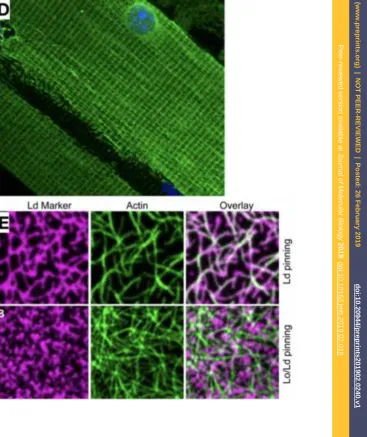
Tracking the movement in the membrane. Using single dye tracing, Schuetz et al. imaged the lateral motion of single fluorescence labeled lipid molecules in native cell membranes on a millisecond time scale, achieving a positional accuracy of ca. 50 nm (Figure 7EA, [88]). Thereby they followed lipid-specific membrane microdomains. Such a spatial resolution is necessary to distinguish different cases of lipid diffusion as induced by barriers such as rafts, which is illustrated in Figure 7B,C [89]. Such tracking experiments can also be combined with high resolution imaging, for instance enabling insight into how the actin meshwork may condition the diffusion of mem-brane proteins [90] as depicted in figures 7D and E. This combination provides a view on the compartmentalization and barriers inducing anomalous diffusion in a mem-brane environment. High-speed single-particle tracking techniques and their influence on our understanding of the plasma membrane dynamics have been reviewed in light of different underlying concepts [91] and extend the accessible timescales down to about 1 microseconds temporal resolution, by achieving 2 nm spatial precision [92]. Such techniques have enabled to observe single lipids moving about rafts [93]. How-ever, maybe more important than the precise “image” produced by such approaches, their statistical treatment and analysis provide further insight [94]. The tracking of single molecules is not the only approach to gain temporal insights. With improve-ments in the AFM technique, it has been possible to track the surface of membranes in incredible detail and with continuously improving time-resolution as depicted in Figure 8.
6 7 8 9 10 11 12 13 14 15 16 17 18 19 20 21 22 23 24 25 26 27 28 29 30 31 32 33 34 35 36 37 38 39 40 41 42 43 44 45 46 47 48 49 50 51 52 53 54
of separation of two OmpF proteins implying molecular shear and rotational move-ments, visiting a range of interaction states fully compatible with a coarse-grained simulation model. As previously discussed, our information is not always direct in terms of observing the membrane or membrane proteins themselves, but can also be guided by reporter molecules. Such is the case in the study of membrane fission relat-ed dynamin helix changes depictrelat-ed in figures 8D and E [97]. The dynamin helix acts upon a membrane tubule. Another interesting feature of AFM is to probe force-induced conformational changes as has been done by monitoring the unfolding path-ways of individual bacteriorhodopsins from the purple membrane [98]. Other sources of information on dynamics exist, often applied to model membranes from supported lipid bilayers, giant unilamellar vesicles and giant plasma membrane vesicles [99, 100]. By combining several approaches, additional insight may be gained and com-plementary pictures emerge as in the study of the formation of liquid ordered domains combining confocal microscopy with fluorescence microscopy and AFM [101]. In some cases, the dynamics of objects can be tracked in 3 dimensions [102, 103].
The dynamic information that is obtained by these various experimental approach-es, either a series of fixed images at certain time intervals, or more recently videos, depict the sequence of events, but cannot properly account for the stochastic and ran-dom aspects of processes that are typically ensemble phenomena. Therefore one must keep in mind that our (partial) observations are driven by a given kinetics and only represent certain aspects of the true biological process.
Characterizing membrane dynamics naturally leads to imaging approaches, some of which have already been touched upon.
2.3 Imaging, just imagine..
Much progress has been made in imaging and many techniques and variants there-of are available. Lyman et al. point out the general progress made in visualizing dy-namics and membrane organization through new experimental approaches [104], some of which are directly related to imaging. At the core, we find fluorescence-based approaches, able to reach submicron molecular dynamics measurements [105]. This may require specific developments, such as for instance nano-antennas capable of probing single-molecule dynamics in the plasma membrane of living cells [106, 107]. Improved spatial (super)resolution of the imaging has been achieved for electron and near-field microscopy, as well as fluorescence-based approaches [108-110], which had a clear impact on the study of membrane rafts [111, 112] and caveolae [113]. The most recent advances deliver volumetric 3D image series of subcellular processes, including endocytosis and membrane dynamics [114].
6 7 8 9 10 11 12 13 14 15 16 17 18 19 20 21 22 23 24 25 26 27 28 29 30 31 32 33 34 35 36 37 38 39 40 41 42 43 44 45 46 47 48 49 50 51 52 53
second resolution [117] or in dynamin-catalyzed membrane fission and vesicle re-lease [118].
Limiting the perturbation induced by labels and further progress. A general concern with many approaches is that tags might interfere with in vivo function. In comparison to single-particle tracking of membrane components [119], where rela-tively large gold particles or antibodies are used for tracking, smaller molecular labels can be used for imaging membrane regions, for instance to monitor plasma-membrane proteins [120]. The smaller labels reduce the impact such particles may have on alter-ing the very dynamics under study. Label-free approaches such as interferometric scattering (iSCAT) microscopy [121] and coherent brightfield (COBRI) microscopy [122] can completely elude the issue of probe perturbation [123]. Single dyes can be detected as well in fluorescence images, enabling the imaging of single molecule diffusion [124]. The combination of photoactivated localization microscopy (PALM) with live-cell particle tracking leads to spatially resolved maps of single-molecule membrane protein motions [125].
Some existing techniques that lacked imaging capabilities have been extended as is the case for Fluorescence correlation spectroscopy (FCS). By imaging total internal reflection fluorescence cross-correlation spectroscopy (ITIR-FCCS) data, diffusion phenomena in lipid membranes could be probed with good temporal (millisecond) and spatial (microns) resolution [126].
Another area of progress concerns the increasing repertoire of (membrane) probes, some of which are capable of sensing properties of their environment such as mem-brane polarity [127], orientation [128] or tension [129]. Ratiometric biosensors have been developed as well [130, 131]. Alternatively, very detailed insight into physico-chemical membrane properties may be obtained by combining techniques. For exam-ple, by coupling laser confocal scanning microscopy to microelectrochemistry, a pH profile for membrane permeation processes can be imaged [132]. Similarly, electrical measurements co-recorded with second harmonic generation (SHG) micrographs lead to images describing structural and dynamic variations within a single bilayer [133]. SHG is a powerful technique, able to probe even fine details such as water chirality and environment in a membrane environment [134].
Many of the experimental techniques described so far rely on reporter molecules, which can typically be among the lipids or among the membrane proteins. Hence the acquired data is indirect and an important aspect is what is actually "seen" by a given technique compared to what remains hidden. The probes may induce a preference for specific lipid phases, hence introducing some bias in the measurements.
2.4 From average properties to simulations
6 7 8 9 10 11 12 13 14 15 16 17 18 19 20 21 22 23 24 25 26 27 28 29 30 31 32 33 34 35 36 37 38 39 40 41 42 43 44 45 46 47 48 49 50 51 52 53 54
138]. NMR spectra thereby enable insight into bilayer properties, polar lipid headgroup features, their angle with respect to the bilayer, etc., and are sensitive to the environment, for instance the ionic force. To provide a single emblematic example of the unique role such information may play to shape our conceptual images, lipid bicelles should be mentioned, for which indirect techniques such as NMR and neutron diffraction provide measurements [139, 140], that are, however, compatible with a range of models. They develop their full scope when combined with computational approaches [141-144] that will be discussed in the next section.
3
Simulations and computational approaches
A distinctive feature of molecular simulations is that all ingredients of a simulation system are seen with high fidelity, no reporter molecules or probes are necessary to observe biological membranes in atomistic detail. Hence, molecular simulations, and in particular the molecular dynamics (MD) technique, were crucially important as the primary tool for direct membrane visualization. Their accuracy comes with the limita-tion of comparatively small spatial scales, typically within the tenths of a nanometer to 1000 nanometer range. This scale is appropriate to compare to above-mentioned diffraction experiments, which were crucial for validating the transbilayer distribution and dynamics in the bilayer in the early days of MD simulations, see for instance the studies described in Refs. [12, 145, 146]. Timescales are short as well, from picose-conds to tens of microsepicose-conds, although this is somewhat depending on the underly-ing model of representation. Both time and spatial resolutions are high, routinely on the order of tenths of nanometers and picoseconds, respectively. An intrinsic limita-tion is that one can only observe the molecular species that were built into the model to be simulated. Hence, building accurate starting models for molecular membrane simulations including all relevant compounds is essential.
3.1 Building biological membrane models
A famous quote by Richard Feynman states, “What I cannot create, I do not unde r-stand”. Many tools for putting together membrane-related molecular constructions exist and a few of them are discussed here as they represent an important cornerstone for our molecular understanding of these systems. Unless the computational power behind simulations is sufficient for a model to fully equilibrate, it is essential to build the best possible initial systems for the computations to produce reliable results [147, 148].
6 7 8 9 10 11 12 13 14 15 16 17 18 19 20 21 22 23 24 25 26 27 28 29 30 31 32 33 34 35 36 37 38 39 40 41 42 43 44 45 46 47 48 49 50 51 52 53
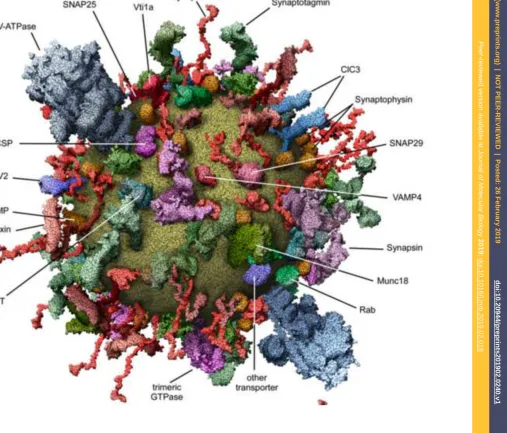
or by using coarse-grain lipid templates [157]. Another trend is to take into account the full complexity of lipid compositions [158-162]. Modern tools attempt to integrate both aspects of packing and lipid composition as illustrated in Figure 9A-C. For set-ting up membrane proteins in their environment, automated pipelines such as the MemProtMD (http://memprotmd.bioch.ox.ac.uk) resource exist [163, 164]. The cur-vature of membrane objects offers another challenge for building models, for instance in the case of vesicles. If the strain induced by such curvature is not compensated for, a model may be in a metastable tense state by construction, leading to biases that could for instance substantially facilitate vesicle fusion. A link between curvature and packing defects exists [165, 166]. Nowadays, the ambition is to build and visualize cell-scale models with astonishing accuracy [167-172], see Figure 9 D and E for ex-amples, an undertaking which can be greatly helped by efficiently exploiting GPUs [173]. An emblematic example where such advanced model building yielded extreme-ly valuable and scientificalextreme-ly sound insights is the study of a trafficking synaptic vesi-cle [34] (Figure 10). The model provides a detailed picture in terms of protein and lipid composition, vesicle size and copy number of its major constituents by integrat-ing quantitative data and structural models.
Quite naturally, such models require a rich repertoire of complementary simulation approaches to bridge the different time- and length-scales.
3.2 Simulating biological membrane dynamics at multiple scales
The vast majority of simulation and modeling approaches described hereafter inte-grate motion and provide a dynamic view of lipid bilayer-related structure and func-tion. An average image can be extracted as well, for instance in relation to aspects such as ionic conductance, osmotic permeability, electrostatic potential, pressure pro-file, etc. [174, 175]. Most simulations discussed here rely on a force field to represent the lipid bilayer [176-180]. An overwhelming number of exciting studies exist in this field, yet only a tiny fraction will be alluded to in the present review. For a more complete account, the reader is referred to comprehensive reviews such as [181-188]. The fundamental role that MD simulations played and still play in our understanding of membrane structure has to be stressed, as it cannot be discussed in detail within the scope of the present review.
6 7 8 9 10 11 12 13 14 15 16 17 18 19 20 21 22 23 24 25 26 27 28 29 30 31 32 33 34 35 36 37 38 39 40 41 42 43 44 45 46 47 48 49 50 51 52 53 54
latter often neglect post-translational modifications that play crucial biological roles as has been shown for the epidermal growth factor receptor [192]. In the spirit of the famous quote “all science is either physics or stamp collecting” by Lord Rutherford, one may point out that observing a single (or even a handful) of molecular trajectories is more akin to stamp collecting than to capturing the true molecular dynamics ("physics") of a biological system, which is often overlooked when MD results are interpreted. Much more extended sampling – in our experience typically tens of repli-cas of relevant duration (which depends on system size, but as an order of magnitude say on the order of several microseconds at least) – is needed to obtain statistically reliable and significant data.
Atomistic molecular dynamics simulations were among the first approaches to
generate insight into membrane dynamics [10, 12-14, 193-195], for instance with respect to long-range undulatory and peristaltic modes [146, 196-198]. At the same time, the case of such membrane undulations illustrates the intrinsic time- and lengthscale limits such simulations have to come up against. Figure 11 attempts to retrace a small selection of historic landmarks in the field. Figures 11A to C depict a progression in the simulations in terms of membrane complexity. Figure 11A is among the first depictions of a simulated pure lipid bilayer. Inclusion of peptides and proteins into the membrane simulations paved the way to study large biological ma-chinery, starting from model systems such as the gramicidin A channel [19, 199] shown in Figure 11B. The next step is to encompass a more complete membrane envi-ronment, for instance including the cell wall structure as depicted in Figure 11C [200]. Many membrane processes have been investigated and in addition to complexifying the membrane itself, more intricate membrane phenomena have been simulated and visualized even for pure membranes. Among these, electroporation is particularly spectacular [23, 201] (Figure 11D). More recently cavitation bubble col-lapse has been investigated for drug delivery [202, 203].Fig. 11E shows another level moving towards the simulation of large functional membrane patches: a landmark study investigates a multicomplex photosynthetic membrane as it most likely appears in the cell [204] (Figure 11E). It consolidates several experimental results in an MD simulation of a large multi-protein-membrane system.
Coarse graining of membrane systems provided a significant step forward in
6 7 8 9 10 11 12 13 14 15 16 17 18 19 20 21 22 23 24 25 26 27 28 29 30 31 32 33 34 35 36 37 38 39 40 41 42 43 44 45 46 47 48 49 50 51 52 53
been simulated, revealing that both membranes curve in a manner dependent on the size of the embedded proteins [223] (Figure 12D). Similar approaches enabled the simulation of enveloped viruses whose shells encompass complex compositions [224-226]. A current challenge to further optimize coarse-grained membrane models is to remove the explicit solvent [227-230], which calls for some treatment of hydrody-namics [231]. We have recently set up an implicit water membrane model capable of describing for instance hydrodynamics within a lipid vesicle nanoreactor by extending previous work with the MUPHY software in line with the concepts described in [232]. An example of a vesicle nano-reactor in its flowfield is illustrated in Figure 12F. This effort is part of a general trend to bridge coarse-grained scales with the mesoscopic scale. Further examples involve understanding the formation of large membrane protein clusters, which has been investigated by training a mesoscale mod-el incorporating thousands of outer membrane proteins [233] on coarse-grained mo-lecular dynamics simulations of large protein assemblies[234], as previously per-formed on GPCRs [235, 236] (Figure 12E). A typical target of such mesoscale simu-lations is to recapitulate the protein diffusion characteristics. Other groups have inves-tigated lateral diffusion in membranes [237, 238].
Such mesoscale, as well as ad hoc modeling approaches enable another step to-wards bigger biological objects. The previously described coarse-grained bead models can be further approximated through coarser beads. A series of very coarse coarse-grained models, some qualified as shape-based, others as ultra-coarse-coarse-grained [239], have been derived in several cases, for instance for transmembrane proteins [240] and as illustrated in Figure 13B for membrane sculpting BAR domains [241, 242]. Using dissipative particle dynamics (DPD), very large membrane sections and their remod-eling can be investigated, providing a step forward on topics such as the previously mentioned fusion processes [243, 244] (Figure 13A). An alternative approach, already alluded to above, is to use implicit representations, which has been described for the membrane [245].
6 7 8 9 10 11 12 13 14 15 16 17 18 19 20 21 22 23 24 25 26 27 28 29 30 31 32 33 34 35 36 37 38 39 40 41 42 43 44 45 46 47 48 49 50 51 52 53 54
complementing the most recent experimental data on membranes, as convincingly argued in [104].
3.3 Making sense: visualization and analysis
Visualization is key to understand and analyze the complex processes in molecular membrane simulations [254]. For instance, taking the preponderant molecular dynam-ics technique as an example, all information, visualization and analysis are derived from the time series of positions and velocities of the atoms (or particles for coarse-grained simulations) of the simulation system. The repertoire of visual representa-tions is mostly the typical one for atomistic systems, applied to the membrane consti-tuting molecular species, with a few additional ones that will be discussed hereafter. To highlight the lipid bilayer in a non-intrusive and simplified way, one may fit a deformable sheet through selected reference atoms or positions [255] (Figure 14A), or connect reference atoms such as the phosphorus from lipid headgroups as illustrated in Figure 14B. This representation is particularly useful with large systems, eventually containing several lipid bilayers [256]. To recapitulate the dynamics of lipid flow within the membrane, a combination of path line, vector field and streamline tech-niques can be used [257] as illustrated in Figure 14C. Many membrane simulations are carried out at coarse-grained resolution, hence an effortless way of displaying such systems facilitates the visualization task. Molecular visualization software such as UnityMol [258] start to incorporate native import filters for coarse grained topolo-gies. This visualization capacity was used to visualize carbon nanotube perturbations of a lipid bilayer [259] (Figure 14D). Zooming into the fine details of glycolipids, specific – possibly abstracted – representations for the sugar moieties [260] (Figure 14E) are yet to be generalized, which applies to e.g. glycans as well. It seems likely that volume rendering approaches, as already used for some experimental membrane data representations in 3D [114], should bear promise for visualizing simulations of biomembranes. Concerning the representation of membrane proteins and their proper-ties, the particular example of the depiction of hydrophobicity is compelling. Typical-ly it is implemented through color variations. A confusingTypical-ly large number of different color scales can be found in the scientific literature, without a clear consensus. An original method combines a black-to-white gradient with animated field lines [261] and has been applied to membrane proteins [262] (Figure 14F). Another aspect con-cerns our ability to display large membrane systems, in line with building cell-scale models as discussed above. Hence, performance and visualization efficiency are im-portant aspects to be considered. The Wang tiling concept has been extended to mem-branes for precisely this purpose [173] as shown in Figure 14G.
6 7 8 9 10 11 12 13 14 15 16 17 18 19 20 21 22 23 24 25 26 27 28 29 30 31 32 33 34 35 36 37 38 39 40 41 42 43 44 45 46 47 48 49 50 51 52 53
others are intended for command-line use, such as FATSLiM [266]. The latter is par-ticularly apt to handle curved membranes, as it relies on a local calculation of mem-brane normals illustrated in Figure 15B. MDAnalysis is another feature-rich com-mand-line analysis tool that has been applied to many large membrane systems featur-ing a LeafletFinder algorithm [267]. A particular tool was developed to focus on local rather than averaged membrane properties, including area per lipid, order parameters, curvature and bilayer thickness [255]. Lipid bilayer packing defects are shown in Figure 15C, representing intrinsically local properties that can be analyzed with a geometrical approach [166, 268]. Image-processing techniques (Figure 15D) are an-other source of specific membrane analysis tools, as applied to detection of lipid phases during phase separation [269]. Concerning membrane proteins, the analysis of helix geometry and its visual abstraction (Figure 15E) were proposed [270] as well as the characterization of their particular topologies (Figure 15F), notably in relation to water networks prefiguring solute transport, based on Laguerre tesselation [271].
4
Conceptual illustrations, animations and artistic depictions of
membrane systems
In order to conceptualize ideas about bilayer structure and fundamental principles of biological membranes, researchers have from the early days on recognized the crucial importance of visual representations thereof. Historically, illustrations as in figures 16 A and B were abundant in early papers on membranes in order to fill the gaps be-tween the "raw" experimental and simulation data and their interpretation, often pre-dating the realization of the first experimental approaches providing actual visualiza-tions. Such illustrations typically represent schematic views of lipid bilayers [7] or pseudo-three-dimensional representations of their phases [272]. These images were triggered by research results requiring conceptualization to convey the underlying new ideas to the scientific community, be it about membrane protein insertion [18, 273] (Figure 16C to E), hydrophobic mismatch [274] (Figure 16F), the fluid mosaic model [7, 275] (Figure 16G), diffusion within the bilayer [276] (Figure 16H) or many other ideas. Hence this figure is not only of historical importance, but also illustrates the way in which the scientific community crystallizes ideas and concepts in this field, which is intrinsically visual. A broad variety of membrane depictions can be found in the literature, yet many among them are based on more (or sometimes less) educated guesses. The sheer scales at which membranes operate require some mental analogies for us to fully apprehend the characteristic size and length spectrum. To aid our imagination of these dimensions, a ‘perceptive scale’ [277] has been proposed to facilitate the interpretation of cellular scales.
6 7 8 9 10 11 12 13 14 15 16 17 18 19 20 21 22 23 24 25 26 27 28 29 30 31 32 33 34 35 36 37 38 39 40 41 42 43 44 45 46 47 48 49 50 51 52 53 54
tion and cinema [281, 282], with specific extensions for biomolecules, and applica-tions to membranes [283] as depicted in Figure 18A. Some new tools were designed to tackle the challenges of illustrating biological complexity [284]. Such illustrations have been marked by the touch of their creators with a certain artistic license [285], with a range of famous contributors such as David Goodsell [286-290] (Figure 17B), Janet Iwasa [280] (Figure 17A), Graham Johnson [291], Gaël McGill and many more. Some general guidelines have been suggested for illustrating biomolecular structural data [292]. The same content may be depicted differently according to the targeted audience as shown in figures 18B and C. Illustrations may also serve to raise aware-ness and stimulate scientific discussion. Such is the case for the pneumococcal life cycle, visually reviewed through watercolor paintings (Figure 17D) with a consistent scale recapitulating currently available experimental data [293]. Hence, quite natural-ly, such depictions evolve over time, when new knowledge becomes available. A good example, discussed in more detail in [294], may be the animation “The Inner Life of the Cell” from 2006 by Harvard BioVisions and Xvivo (https://www.youtube.com/watch?v=wJyUtbn0O5Y). Since then, our awareness of the crowdedness of cellular environments has risen significantly, and is not conveyed in the initial movie. Motions as well are unlike the very agitated perpetual molecular jiggling that we are now aware of. An updated version of the animation, "Inner Life of a Cell | Protein Packing" has since been released (https://www.youtube.com/watch?v=uHeTQLNFTgU).
The efficiency of illustrations and animations for learning concepts such as struc-ture and composition of the cell membrane, chemical properties of the relevant mole-cules, membrane barrier function and transport mechanisms has been investigated [295]. The visual language used needs to be adapted, and has to remain sufficiently accurate and complex to convey for instance the dynamic nature of binding events in a membrane [296] as illustrated in Figure 17C. Tangible models can be used, for in-stance to convey the solubility properties of membrane proteins [297]. Serious games [298] may offer new opportunities for learning and some already address membrane systems, such as DocMolecules (Figure 18D, https://youtu.be/gZyneEqaWcQ), target-ing to dock a drug to the right membrane receptor or Eukaryo (Figure 18E) [299] simulating a eukaryotic cell.
5
Perspectives and conclusion
6 7 8 9 10 11 12 13 14 15 16 17 18 19 20 21 22 23 24 25 26 27 28 29 30 31 32 33 34 35 36 37 38 39 40 41 42 43 44 45 46 47 48 49 50 51 52 53
ous degrees of abstraction exist, tuned to capture essential parts of the biology of the-se molecules. As has been discusthe-sed above, our repertoire for pictorial lipid reprethe-sen- represen-tations is still rather limited. Another tendency, that is to be largely welcomed, is the convergence of the various methods, be it experimental, computational or illustrative ones, to combine and confront related information. This is fully in line with what Lyman et al. described in their "modeling manifesto" [104] for the pair of experiments and simulations.
It should, however, be noted that we are still at the level where we attempt to accu-rately describe structure and dynamics of membranes, and only to some limited extent their (mostly) equilibrium energetics. In the future, such a molecular view may need to embrace thermodynamics more fully, to characterize where and in what form ener-gy is distributed in a given configuration. In addition to the molecular dynamics, it is essential to capture the dynamics of energy flow. This requires to move beyond the equilibrium picture, as life in its essence is a non-equilibrium state. Our conceptual images need to evolve from a currently rather vague picture of enthalpy associated with biological membranes to a comprehensive mental representation of energy fluc-tuations and flow. This major challenge may become tractable by using modern tools to render the multidimensional massive data that can nowadays be acquired intuitively explorable [300]. Virtual reality approaches, visual analytics [301] and in general advanced data display and mining technologies [302] will assist this transformation [303, 304].
To conclude, our picture of biological membranes is already very rich and detailed, with meso- to nanoscale information from a variety of complementary sources, ena-bling us to relate molecular structures to the biological phenomena, as well as to char-acterize the pertaining biophysical properties. Many of the underlying techniques have seen significant progress enabling us to probe these membrane systems in depth. These improvements enable a convergence between real (experiments), virtual (simu-lations) and imaginary (illustrations) views. Yet we may still miss new comprehen-sive representations for these systems, sometimes necessary to develop new ideas. Therefore we may still be overlooking some fundamental concepts. For other biologi-cal objects of studies, such breakthroughs were made in close relation to our pictorial or mental conceptualization. Three emblematic examples include unraveling the mys-tery of the alpha helix, to which Pauling contributed decisively, depicting the second-ary structure of proteins by cartoon representations pioneered by Richardson, or un-derstanding the DNA double helix based on the works by Watson, Crick and Franklin. Entire branches of biology rely on these discoveries.
Acknowledgments
6 7 8 9 10 11 12 13 14 15 16 17 18 19 20 21 22 23 24 25 26 27 28 29 30 31 32 33 34 35 36 37 38 39 40 41 42 43 44 45 46 47 48 49 50 51 52 53 54
supported by the "Initiative d'Excellence" program from the French State (Grants "DYNAMO", ANR-11-LABX-0011-01 and ANR-11-EQPX-0008).
Conflict of Interest
The author declares that he has no conflict of interest.
References
[1] Card SK, Mackinlay JD, Shneiderman B. Readings in information visualization: using vision to think: Academic Press; 1999.
[2] Tillack TW, Marchesi VT. Demonstration of the outer surface of freeze-etched red blood cell membranes. J Cell Biol. 1970;45:649-53.
[3] Frye LD, Edidin M. The rapid intermixing of cell surface antigens after formation of mouse-human heterokaryons. J Cell Sci. 1970;7:319-35.
[4] Poo M-M, Cone RA. Lateral diffusion of rhodopsin in the photoreceptor membrane. Nature. 1974;247:438.
[5] Engelman DM. X-ray diffraction studies of phase transitions in the membrane of Mycoplasma laidlawii. J Mol Biol. 1970;47:115-7.
[6] Reinert JC, Steim JM. Calorimetric detection of a membrane-lipid phase transition in living cells. Science. 1970;168:1580-2.
[7] Singer SJ, Nicolson GL. The fluid mosaic model of the structure of cell membranes. Science. 1972;175:720-31.
[8] Mitchell P. A general theory of membrane transport from studies of bacteria. Nature. 1957;180:134.
[9] Henderson R, Unwin PN. Three-dimensional model of purple membrane obtained by electron microscopy. Nature. 1975;257:28-32.
[10] Cotterill R. Computer simulation of model lipid membrane dynamics. Biochimica et Biophysica Acta (BBA)-Biomembranes. 1976;433:264-70.
[11] Kox A, Michels J, Wiegel F. Simulation of a lipid monolayer using molecular dynamics. Nature. 1980;287:317.
[12] Heller H, Schaefer M, Schulten K. Molecular dynamics simulation of a bilayer of 200 lipids in the gel and in the liquid crystal phase. The Journal of Physical Chemistry. 1993;97:8343-60.
[13] Van der Ploeg P, Berendsen H. Molecular dynamics simulation of a bilayer membrane. The Journal of Chemical Physics. 1982;76:3271-6.
[14] Bassolino-Klimas D, Alper HE, Stouch TR. Solute diffusion in lipid bilayer membranes: an atomic level study by molecular dynamics simulation. Biochemistry. 1993;32:12624-37.
[15] Goldstein JL, Brown MS. Binding and degradation of low density lipoproteins by cultured human fibroblasts. Comparison of cells from a normal subject and from a patient with homozygous familial hypercholesterolemia. J Biol Chem. 1974;249:5153-62.
6 7 8 9 10 11 12 13 14 15 16 17 18 19 20 21 22 23 24 25 26 27 28 29 30 31 32 33 34 35 36 37 38 39 40 41 42 43 44 45 46 47 48 49 50 51 52 53
[17] Deisenhofer J, Epp O, Miki K, Huber R, Michel H. Structure of the protein subunits in the photosynthetic reaction centre of Rhodopseudomonas viridis at 3A resolution. Nature. 1985;318:618-24.
[18] Popot JL, Engelman DM. Membrane protein folding and oligomerization: the two-stage model. Biochemistry. 1990;29:4031-7.
[19] Woolf TB, Roux B. Structure, energetics, and dynamics of lipid-protein interactions: A molecular dynamics study of the gramicidin A channel in a DMPC bilayer. Proteins. 1996;24:92-114.
[20] Shelley JC, Shelley MY, Reeder RC, Bandyopadhyay S, Klein ML. A Coarse Grain Model for Phospholipid Simulations. The Journal of Physical Chemistry B. 2001;105:4464-70.
[21] de Kruijff B. Biomembranes. Lipids beyond the bilayer. Nature. 1997;386:129-30.
[22] Landau EM, Rosenbusch JP. Lipidic cubic phases: a novel concept for the crystallization of membrane proteins. Proc Natl Acad Sci U S A. 1996;93:14532-5. [23] Tieleman DP. The molecular basis of electroporation. BMC Biochem. 2004;5:10. [24] Bowie JU. Solving the membrane protein folding problem. Nature. 2005;438:581-9.
[25] White SH, Wimley WC. Membrane protein folding and stability: physical principles. Annu Rev Biophys Biomol Struct. 1999;28:319-65.
[26] Medalia O, Weber I, Frangakis AS, Nicastro D, Gerisch G, Baumeister W. Macromolecular architecture in eukaryotic cells visualized by cryoelectron tomography. Science. 2002;298:1209-13.
[27] Earnest TM, Watanabe R, Stone JE, Mahamid J, Baumeister W, Villa E, et al. Challenges of Integrating Stochastic Dynamics and Cryo-Electron Tomograms in Whole-Cell Simulations. J Phys Chem B. 2017;121:3871-81.
[28] Hiller S, Garces RG, Malia TJ, Orekhov VY, Colombini M, Wagner G. Solution structure of the integral human membrane protein VDAC-1 in detergent micelles. Science. 2008;321:1206-10.
[29] Fernandez C, Adeishvili K, Wuthrich K. Transverse relaxation-optimized NMR spectroscopy with the outer membrane protein OmpX in dihexanoyl phosphatidylcholine micelles. Proc Natl Acad Sci U S A. 2001;98:2358-63.
[30] Murata K, Mitsuoka K, Hirai T, Walz T, Agre P, Heymann JB, et al. Structural determinants of water permeation through aquaporin-1. Nature. 2000;407:599-605. [31] Jiang Y, Lee A, Chen J, Cadene M, Chait BT, MacKinnon R. The open pore conformation of potassium channels. Nature. 2002;417:523-6.
[32] Jiang Y, Lee A, Chen J, Cadene M, Chait BT, MacKinnon R. Crystal structure and mechanism of a calcium-gated potassium channel. Nature. 2002;417:515-22. [33] Engelman DM. Membranes are more mosaic than fluid. Nature. 2005;438:578-80.
[34] Takamori S, Holt M, Stenius K, Lemke EA, Gronborg M, Riedel D, et al. Molecular anatomy of a trafficking organelle. Cell. 2006;127:831-46.
6 7 8 9 10 11 12 13 14 15 16 17 18 19 20 21 22 23 24 25 26 27 28 29 30 31 32 33 34 35 36 37 38 39 40 41 42 43 44 45 46 47 48 49 50 51 52 53 54
[36] Bechinger B. Structure and functions of channel-forming peptides: Magainins, cecropins, melittin and alamethicin. J Membr Biol. 1997;156:197-211.
[37] Bechinger B. The structure, dynamics and orientation of antimicrobial peptides in membranes by multidimensional solid-state NMR spectroscopy. Biochim Biophys Acta-Biomembr. 1999;1462:157-83.
[38] Brown DA, London E. Functions of lipid rafts in biological membranes. Annu Rev Cell Dev Biol. 1998;14:111-36.
[39] Simons K, Toomre D. Lipid rafts and signal transduction. Nat Rev Mol Cell Biol. 2000;1:31-9.
[40] Wenk MR. The emerging field of lipidomics. Nat Rev Drug Discov. 2005;4:594-610.
[41] Shevchenko A, Simons K. Lipidomics: coming to grips with lipid diversity. Nat Rev Mol Cell Biol. 2010;11:593-8.
[42] Quehenberger O, Armando AM, Brown AH, Milne SB, Myers DS, Merrill AH, et al. Lipidomics reveals a remarkable diversity of lipids in human plasma. J Lipid Res. 2010;51:3299-305.
[43] Buldt G, Gally HU, Seelig A, Seelig J, Zaccai G. Neutron diffraction studies on selectively deuterated phospholipid bilayers. Nature. 1978;271:182-4.
[44] Wiener MC, White SH. Structure of a fluid dioleoylphosphatidylcholine bilayer determined by joint refinement of X-ray and neutron diffraction data. III. Complete structure. Biophys J. 1992;61:434-47.
[45] Wiener MC, White SH. Structure of a fluid dioleoylphosphatidylcholine bilayer determined by joint refinement of X-ray and neutron diffraction data. II. Distribution and packing of terminal methyl groups. Biophys J. 1992;61:428-33.
[46] Sun WJ, Tristram-Nagle S, Suter RM, Nagle JF. Structure of the ripple phase in lecithin bilayers. Proc Natl Acad Sci U S A. 1996;93:7008-12.
[47] Egger M, Ohnesorge F, Weisenhorn AL, Heyn S, Drake B, Prater C, et al. Wet lipid-protein membranes imaged at submolecular resolution by atomic force microscopy. Journal of Structural Biology. 1990;103:89-94.
[48] Shaw JE, Epand RF, Hsu JC, Mo GC, Epand RM, Yip CM. Cationic peptide-induced remodelling of model membranes: direct visualization by in situ atomic force microscopy. J Struct Biol. 2008;162:121-38.
[49] Saslowsky DE, Lawrence J, Ren X, Brown DA, Henderson RM, Edwardson JM. Placental alkaline phosphatase is efficiently targeted to rafts in supported lipid bilayers. J Biol Chem. 2002;277:26966-70.
[50] van Meer G, Stelzer EH, Wijnaendts-van-Resandt RW, Simons K. Sorting of sphingolipids in epithelial (Madin-Darby canine kidney) cells. J Cell Biol. 1987;105:1623-35.
[51] Simons K, Garoff H, Helenius A. How an animal virus gets into and out of its host cell. Sci Am. 1982;246:58-66.
[52] Simons K, Sampaio JL. Membrane organization and lipid rafts. Cold Spring Harb Perspect Biol. 2011;3:a004697.
6 7 8 9 10 11 12 13 14 15 16 17 18 19 20 21 22 23 24 25 26 27 28 29 30 31 32 33 34 35 36 37 38 39 40 41 42 43 44 45 46 47 48 49 50 51 52 53
[54] Giocondi MC, Yamamoto D, Lesniewska E, Milhiet PE, Ando T, Le Grimellec C. Surface topography of membrane domains. Biochim Biophys Acta. 2010;1798:703-18.
[55] Lipowsky R. The conformation of membranes. Nature. 1991;349:475-81. [56] Bangham AD, Horne RW. Negative Staining of Phospholipids and Their Structural Modification by Surface-Active Agents as Observed in the Electron Microscope. J Mol Biol. 1964;8:660-8.
[57] Bassereau P, Jin R, Baumgart T, Deserno M, Dimova R, Frolov VA, et al. The 2018 biomembrane curvature and remodeling roadmap. Journal of Physics D: Applied Physics. 2018;51:343001.
[58] McMahon HT, Gallop JL. Membrane curvature and mechanisms of dynamic cell membrane remodelling. Nature. 2005;438:590-6.
[59] Branton D. Fracture faces of frozen membranes. Proc Natl Acad Sci U S A. 1966;55:1048-56.
[60] Deamer DW, Leonard R, Tardieu A, Branton D. Lamellar and hexagonal lipid phases visualized by freeze-etching. Biochim Biophys Acta. 1970;219:47-60.
[61] Rothberg KG, Heuser JE, Donzell WC, Ying YS, Glenney JR, Anderson RG. Caveolin, a protein component of caveolae membrane coats. Cell. 1992;68:673-82. [62] Angermuller S, Fahimi HD. Imidazole-buffered osmium tetroxide: an excellent stain for visualization of lipids in transmission electron microscopy. Histochem J. 1982;14:823-35.
[63] Deutsch K, Krause W, Rosenthal S. An electron microscopical study of isolated mitochondrial membranes treated with osmium tetroxide, potassium permanganate, and formaldehyde. Journal of Cell Science. 1964;3:319-23.
[64] Zuber B, Chami M, Houssin C, Dubochet J, Griffiths G, Daffe M. Direct visualization of the outer membrane of mycobacteria and corynebacteria in their native state. J Bacteriol. 2008;190:5672-80.
[65] Tamm LK, McConnell HM. Supported phospholipid bilayers. Biophys J. 1985;47:105-13.
[66] Byers TJ, Branton D. Visualization of the protein associations in the erythrocyte membrane skeleton. Proc Natl Acad Sci U S A. 1985;82:6153-7.
[67] Hess ST, Gould TJ, Gudheti MV, Maas SA, Mills KD, Zimmerberg J. Dynamic clustered distribution of hemagglutinin resolved at 40 nm in living cell membranes discriminates between raft theories. Proc Natl Acad Sci U S A. 2007;104:17370-5. [68] van Zanten TS, Cambi A, Koopman M, Joosten B, Figdor CG, Garcia-Parajo MF. Hotspots of GPI-anchored proteins and integrin nanoclusters function as nucleation sites for cell adhesion. Proc Natl Acad Sci U S A. 2009;106:18557-62. [69] Straub V, Bittner RE, Leger JJ, Voit T. Direct visualization of the dystrophin network on skeletal muscle fiber membrane. J Cell Biol. 1992;119:1183-91.
[70] Honigmann A, Sadeghi S, Keller J, Hell SW, Eggeling C, Vink R. A lipid bound actin meshwork organizes liquid phase separation in model membranes. Elife. 2014;3:e01671.
6 7 8 9 10 11 12 13 14 15 16 17 18 19 20 21 22 23 24 25 26 27 28 29 30 31 32 33 34 35 36 37 38 39 40 41 42 43 44 45 46 47 48 49 50 51 52 53 54
[72] Muller DJ, Buldt G, Engel A. Force-induced conformational change of bacteriorhodopsin. J Mol Biol. 1995;249:239-43.
[73] Miles M. Scanning probe microscopy. Probing the future. Science. 1997;277:1845-7.
[74] Heymann JB, Muller DJ, Landau EM, Rosenbusch JP, Pebay-Peyroula E, Buldt G, et al. Charting the surfaces of the purple membrane. J Struct Biol. 1999;128:243-9. [75] Fyfe PK, McAuley KE, Roszak AW, Isaacs NW, Cogdell RJ, Jones MR. Probing the interface between membrane proteins and membrane lipids by X-ray crystallography. Trends Biochem Sci. 2001;26:106-12.
[76] Essen L, Siegert R, Lehmann WD, Oesterhelt D. Lipid patches in membrane protein oligomers: crystal structure of the bacteriorhodopsin-lipid complex. Proc Natl Acad Sci U S A. 1998;95:11673-8.
[77] Pebay-Peyroula E, Rosenbusch JP. High-resolution structures and dynamics of membrane protein--lipid complexes: a critique. Curr Opin Struct Biol. 2001;11:427-32.
[78] Watts A. Nuclear magnetic resonance methods to characterize lipid-protein interactions at membrane surfaces. J Bioenerg Biomembr. 1987;19:625-53.
[79] Kumar S, Hoh JH. Direct visualization of vesicle− bilayer complexes by atomic force microscopy. Langmuir. 2000;16:9936-40.
[80] Schonherr H, Johnson JM, Lenz P, Frank CW, Boxer SG. Vesicle adsorption and lipid bilayer formation on glass studied by atomic force microscopy. Langmuir. 2004;20:11600-6.
[81] Leung C, Dudkina NV, Lukoyanova N, Hodel AW, Farabella I, Pandurangan AP, et al. Stepwise visualization of membrane pore formation by suilysin, a bacterial cholesterol-dependent cytolysin. Elife. 2014;3:e04247.
[82] Kuhlbrandt W. Biochemistry. The resolution revolution. Science. 2014;343:1443-4.
[83] Milanesi L, Sheynis T, Xue WF, Orlova EV, Hellewell AL, Jelinek R, et al. Direct three-dimensional visualization of membrane disruption by amyloid fibrils. Proc Natl Acad Sci U S A. 2012;109:20455-60.
[84] Shi L, Shen Q-T, Kiel A, Wang J, Wang H-W, Melia TJ, et al. SNARE proteins: one to fuse and three to keep the nascent fusion pore open. Science. 2012;335:1355-9. [85] Brandt T, Cavellini L, Kuhlbrandt W, Cohen MM. A mitofusin-dependent docking ring complex triggers mitochondrial fusion in vitro. Elife. 2016;5.
[86] Zhang W, Chipman PR, Corver J, Johnson PR, Zhang Y, Mukhopadhyay S, et al. Visualization of membrane protein domains by cryo-electron microscopy of dengue virus. Nat Struct Biol. 2003;10:907-12.
[87] Mironov AA, Polishchuk RS, Luini A. Visualizing membrane traffic in vivo by combined video fluorescence and 3D electron microscopy. Trends Cell Biol. 2000;10:349-53.
6 7 8 9 10 11 12 13 14 15 16 17 18 19 20 21 22 23 24 25 26 27 28 29 30 31 32 33 34 35 36 37 38 39 40 41 42 43 44 45 46 47 48 49 50 51 52 53
[89] Eggeling C, Ringemann C, Medda R, Schwarzmann G, Sandhoff K, Polyakova S, et al. Direct observation of the nanoscale dynamics of membrane lipids in a living cell. Nature. 2009;457:1159-62.
[90] Sadegh S, Higgins JL, Mannion PC, Tamkun MM, Krapf D. Plasma Membrane is Compartmentalized by a Self-Similar Cortical Actin Meshwork. Phys Rev X. 2017;7.
[91] Kusumi A, Nakada C, Ritchie K, Murase K, Suzuki K, Murakoshi H, et al. Paradigm shift of the plasma membrane concept from the two-dimensional continuum fluid to the partitioned fluid: high-speed single-molecule tracking of membrane molecules. Annu Rev Biophys Biomol Struct. 2005;34:351-78.
[92] Hsieh CL, Spindler S, Ehrig J, Sandoghdar V. Tracking single particles on supported lipid membranes: multimobility diffusion and nanoscopic confinement. J Phys Chem B. 2014;118:1545-54.
[93] Wu HM, Lin YH, Yen TC, Hsieh CL. Nanoscopic substructures of raft-mimetic liquid-ordered membrane domains revealed by high-speed single-particle tracking. Sci Rep. 2016;6:20542.
[94] Schutz GJ, Schindler H, Schmidt T. Single-molecule microscopy on model membranes reveals anomalous diffusion. Biophys J. 1997;73:1073-80.
[95] Berquand A, Mingeot-Leclercq MP, Dufrene YF. Real-time imaging of drug-membrane interactions by atomic force microscopy. Biochim Biophys Acta. 2004;1664:198-205.
[96] Casuso I, Khao J, Chami M, Paul-Gilloteaux P, Husain M, Duneau JP, et al. Characterization of the motion of membrane proteins using high-speed atomic force microscopy. Nat Nanotechnol. 2012;7:525-9.
[97] Colom A, Redondo-Morata L, Chiaruttini N, Roux A, Scheuring S. Dynamic remodeling of the dynamin helix during membrane constriction. Proc Natl Acad Sci U S A. 2017;114:5449-54.
[98] Oesterhelt F, Oesterhelt D, Pfeiffer M, Engel A, Gaub HE, Muller DJ. Unfolding pathways of individual bacteriorhodopsins. Science. 2000;288:143-6.
[99] Sezgin E, Schwille P. Model membrane platforms to study protein-membrane interactions. Mol Membr Biol. 2012;29:144-54.
[100] Veatch SL, Cicuta P, Sengupta P, Honerkamp-Smith A, Holowka D, Baird B. Critical fluctuations in plasma membrane vesicles. ACS Chem Biol. 2008;3:287-93. [101] Garcia-Saez AJ, Chiantia S, Schwille P. Effect of line tension on the lateral organization of lipid membranes. J Biol Chem. 2007;282:33537-44.
[102] van der Wel C, Vahid A, Saric A, Idema T, Heinrich D, Kraft DJ. Lipid membrane-mediated attraction between curvature inducing objects. Sci Rep. 2016;6:32825.
[103] van der Wel C, Vahid A, Saric A, Idema T, Heinrich D, Kraft DJ. Erratum: Lipid membrane-mediated attraction between curvature inducing objects. Sci Rep. 2016;6:37382.
6 7 8 9 10 11 12 13 14 15 16 17 18 19 20 21 22 23 24 25 26 27 28 29 30 31 32 33 34 35 36 37 38 39 40 41 42 43 44 45 46 47 48 49 50 51 52 53 54
[105] Wawrezinieck L, Rigneault H, Marguet D, Lenne PF. Fluorescence correlation spectroscopy diffusion laws to probe the submicron cell membrane organization. Biophys J. 2005;89:4029-42.
[106] Winkler PM, Regmi R, Flauraud V, Brugger J, Rigneault H, Wenger J, et al. Optical Antenna-Based Fluorescence Correlation Spectroscopy to Probe the Nanoscale Dynamics of Biological Membranes. J Phys Chem Lett. 2018;9:110-9. [107] Regmi R, Winkler PM, Flauraud V, Borgman KJE, Manzo C, Brugger J, et al. Planar Optical Nanoantennas Resolve Cholesterol-Dependent Nanoscale Heterogeneities in the Plasma Membrane of Living Cells. Nano Lett. 2017;17:6295-302.
[108] Mateos-Gil P, Letschert S, Doose S, Sauer M. Super-Resolution Imaging of Plasma Membrane Proteins with Click Chemistry. Front Cell Dev Biol. 2016;4:98. [109] Izeddin I, Specht CG, Lelek M, Darzacq X, Triller A, Zimmer C, et al. Super-resolution dynamic imaging of dendritic spines using a low-affinity photoconvertible actin probe. PLoS One. 2011;6:e15611.
[110] Nair D, Hosy E, Petersen JD, Constals A, Giannone G, Choquet D, et al. Super-resolution imaging reveals that AMPA receptors inside synapses are dynamically organized in nanodomains regulated by PSD95. J Neurosci. 2013;33:13204-24. [111] Simons K, Gerl MJ. Revitalizing membrane rafts: new tools and insights. Nat Rev Mol Cell Biol. 2010;11:688-99.
[112] Sezgin E, Levental I, Mayor S, Eggeling C. The mystery of membrane organization: composition, regulation and roles of lipid rafts. Nat Rev Mol Cell Biol. 2017;18:361-74.
[113] Parton RG. Caveolae--from ultrastructure to molecular mechanisms. Nat Rev Mol Cell Biol. 2003;4:162-7.
[114] Liu T-l, Upadhyayula S, Milkie DE, Singh V, Wang K, Swinburne IA, et al. Observing the cell in its native state: Imaging subcellular dynamics in multicellular organisms. Science. 2018;360:eaaq1392.
[115] Oida T, Sako Y, Kusumi A. Fluorescence lifetime imaging microscopy (flimscopy). Methodology development and application to studies of endosome fusion in single cells. Biophys J. 1993;64:676-85.
[116] Margineanu A, Hotta J, Vallee RA, Van der Auweraer M, Ameloot M, Stefan A, et al. Visualization of membrane rafts using a perylene monoimide derivative and fluorescence lifetime imaging. Biophys J. 2007;93:2877-91.
[117] Phez E, Faurie C, Golzio M, Teissie J, Rols MP. New insights in the visualization of membrane permeabilization and DNA/membrane interaction of cells submitted to electric pulses. Biochim Biophys Acta. 2005;1724:248-54.
[118] Pucadyil TJ, Schmid SL. Real-time visualization of dynamin-catalyzed membrane fission and vesicle release. Cell. 2008;135:1263-75.
[119] Saxton MJ, Jacobson K. Single-particle tracking: applications to membrane dynamics. Annu Rev Biophys Biomol Struct. 1997;26:373-99.