Electronic Theses and Dissertations Theses, Dissertations, and Major Papers
2010
Evaluating the Best of Coping Program: Enhancing coping skills in
Evaluating the Best of Coping Program: Enhancing coping skills in
adolescents
adolescents
Alina Carter
University of Windsor
Follow this and additional works at: https://scholar.uwindsor.ca/etd
Recommended Citation Recommended Citation
Carter, Alina, "Evaluating the Best of Coping Program: Enhancing coping skills in adolescents" (2010). Electronic Theses and Dissertations. 479.
https://scholar.uwindsor.ca/etd/479
This online database contains the full-text of PhD dissertations and Masters’ theses of University of Windsor students from 1954 forward. These documents are made available for personal study and research purposes only, in accordance with the Canadian Copyright Act and the Creative Commons license—CC BY-NC-ND (Attribution, Non-Commercial, No Derivative Works). Under this license, works must always be attributed to the copyright holder (original author), cannot be used for any commercial purposes, and may not be altered. Any other use would require the permission of the copyright holder. Students may inquire about withdrawing their dissertation and/or thesis from this database. For additional inquiries, please contact the repository administrator via email
by
Alina Erin Carter
A Dissertation
Submitted to the Faculty of Graduate Studies through the Department of Psychology in Partial Fulfillment of the Requirements for
the Degree of Doctor of Philosophy at the University of Windsor
Windsor, Ontario, Canada 2010
AUTHOR’S DECLARATION OF ORIGINALITY
I hereby certify that I am the sole author of this thesis and that no part of this thesis has been published or submitted for publication.
I certify that, to the best of my knowledge, my thesis does not infringe upon anyone’s copyright nor violate any proprietary rights and that any ideas, techniques, quotations, or any other material from the work of other people included in my thesis, published or otherwise, are fully acknowledged in accordance with the standard referencing practices. Furthermore, to the extent that I have included copyrighted material that surpasses the bounds of fair dealing within the meaning of the Canada Copyright Act, I certify that I have obtained a written permission from the copyright owner(s) to include such material(s) in my thesis and have included copies of such copyright clearances to my appendix.
ABSTRACT
This study investigated the effectiveness of a coping skills program, called the Best of Coping (Frydenberg & Brandon, 2002a), for a sample of 74 (33 male and 41
female) at-risk adolescents between 13 and 16 years of age. Data collection included pretreatment, posttreatment, and follow-up assessments, with the intervention (TM)
group compared to a waitlist control (WL) group at pretest to posttest (TM group n = 33 and WL group n = 31 after attrition). Adolescents completed surveys on measures of stress, coping, perceived mastery, symptomatology, life satisfaction, and happiness.
Parent and teacher surveys were also collected. The findings supported the utility of the BOC program in improving adolescent coping. The TM group reported an increase in
use of adaptive coping strategies and decrease in use of maladaptive coping strategies from pre- to post-treatment compared to the WL group. The TM group males reported a decrease in the use of worry as a coping strategy compared to TM group females and WL
controls. Parents also reported an increase in the use of adolescent productive coping for the TM group compared to WL group. Both teacher and adolescent report demonstrated
a decrease in the proportion of adolescents rated in the borderline to abnormal range on symptom impact for the TM group compared to the WL group. On average, all
informants perceived the BOC program as helpful, especially adolescents and parents.
Follow-up assessment demonstrated that many adolescent-reported improvements were maintained, and several parent- and self-report outcome variables improved from
effectiveness of the program. Generally, these various characteristics did not impact outcome substantially, although some relations were found. Adolescents with greater pretreatment symptoms reported greater improvements in symptomatology from pre- to
post-treatment than adolescents with fewer symptoms. The present study contributes to prior research by implementing several methodological standards, while remaining
ACKNOWLEDGEMENTS
Thank you to my research supervisor, Dr. Rosanne Menna, for the support and guidance she has provided throughout my training. Not only did she provide her research
expertise, but she also took on all of the clinical supervision for this project. The knowledge and experience I have acquired while working with her has been invaluable.
To my committee members, Dr. Julie Hakim-Larson, Dr. Katherine Lafreniere, and Dr. Debbie Kane, as well as my external examiner, Dr. Dawn Anderson-Butcher, for their helpful comments and suggestions. Thank you to Dr. Dennis Jackson and Dr. John
Reddon, for their statistical advice and suggestions. To Barb Zakoor, who has been a consistently reliable and helpful resource throughout my several years of graduate school,
thank you for all of your help and guidance.
To Dr. Erica Frydenberg, for her permission to use and evaluate the Best of Coping program. I am grateful to have had the opportunity to learn and evaluate the
program and to personally see how it can be of assistance to adolescents.
This research was supported through a Social Sciences and Humanities Research
Counsel (SSHRC) Canada Graduate Scholarship, without which I could not have undertaken such an ambitious project.
Thank you to the Windsor-Essex Catholic District School Board for their
permission to conduct this study in their schools. I especially would like to thank the adolescents, parents, and school personnel who participated in this study, dedicating
I would also like to extend my gratitude to all of the graduate student instructors who ran the groups. I appreciate all of your clinical skills, as well as sensitivity to the balance between the research and clinical components of this project. To the research
assistants who assisted in data collection, measuring of adherence, and data entry, your time and efforts were truly appreciated.
There are several fellow graduate students that I have had the honour to know, who have been supportive in many ways throughout my training. Mary Simmering McDonald, Christine Purcell, and Lindsay Bates, I am thankful to have you in my life
and appreciate your friendship and support. To Alison Spadafora, the one individual who traversed through the child clinical program with me since 2002. At times it felt like you
were the only person who could truly appreciate my experiences, as you were right there going through it as well. I am so happy that we were able to finish our training together and support each other throughout. Thank you for all of your help and understanding.
To my family for all of their love and support. To my mom, Kathleen Heaney, your love, support, and patience throughout my life is an inspiration and something I am
so privileged to have. To my grandmother, Elizabeth Heaney, I love and miss you and wish that you were here to share in this accomplishment.
To Alfredo Simas, thank you for all of your love, support, and encouragement
throughout these years. I am grateful to be sharing my life with you and to have you by my side providing me with help, encouragement, and strength whenever I need it. Your
CONTENTS
AUTHOR’S DECLARATION OF ORIGINALITY...III ABSTRACT...IV ACKNOWLEDGEMENTS...VI LIST OF FIGURES...XIV CHAPTER
I. INTRODUCTION...1
Context of the Problem and Rationale for the Present Study...1
1.1 Stress and its Impact on Adolescents ...5
1.2 Adolescent Coping ...8
Factors and Characteristics Related to Adolescent Coping...11
Coping and Psychological Well-Being...18
1.3 Interventions...22
Level of Interventions...22
School-Based Interventions ...24
Evidence-Based Treatment/Interventions...26
1.4 Available Coping Interventions for Adolescents...29
1.5 The Best of Coping Program ...31
Evaluation of the BOC Program...33
Limitations of Past Research...45
1.6 Rationale and Purpose of the Present Study...46
Research Hypotheses...48
II. METHOD ...52
2.1 Participants...52
2.2 BOC Program Manuals...57
2.3 Measures ...58
Adolescent Measures...58
Parent Measures...67
Teacher Measures...70
Instructor Measure...71
Rating Scale of Program Adherence...71
2.4 Procedure ...72
Recruitment and Nomination ...72
Study Design ...76
2.5 Project Staff...83
Instructors...83
Research Assistants ...85
III. RESULTS...86
3.1 Preliminary Analyses...89
3.2 Hypothesis Testing...98
Hypothesis 1...98
Hypothesis 2...116
Hypothesis 3...129
Hypothesis 4...132
Hypothesis 5...156
Hypothesis 6...162
Hypothesis 7...162
IV. DISCUSSION...170
Hypothesis 1...171
Hypothesis 2...174
Hypothesis 3...176
Hypothesis 4...179
4.2 Factors Related to the Outcome of the BOC Program ...181
Hypothesis 5...181
Hypothesis 6...183
Hypothesis 7...183
4.3 Summary of Findings ...188
4.4 Study Limitations and Strengths ...189
4.5 Clinical Implications ...196
4.6 Directions for Future Research ...198
REFERENCES...202
APPENDIX A: LIST OF CHANGES TO THE BOC MANUALS ...222
APPENDIX B: ADOLESCENT MEASURES ...228
APPENDIX C: INTERNAL CONSISTENCY OF ADOLESCENT MEASURES...234
APPENDIX D: PARENT MEASURE...237
APPENDIX E: INTERNAL CONSISTENCY OF PARENT MEASURES ...241
APPENDIX F: INTERNAL CONSISTENCY OF TEACHER MEASURE...243
APPENDIX G: TEACHER CLARIFICATION QUESTIONS ...245
APPENDIX H: INSTRUCTOR POST SESSION CHECK-IN ...247
APPENDIX I: RECRUITMENT MATERIALS ...252
APPENDIX J: CONSENT FORMS ...259
APPENDIX K: REMINDER LETTERS ...274
LIST OF TABLES Table
1. Descriptions of the 10 Sessions Comprising the Best of Coping Program...32
2. Demographic Characteristics of the TM and WL Groups at Pretreatment
Assessment...55
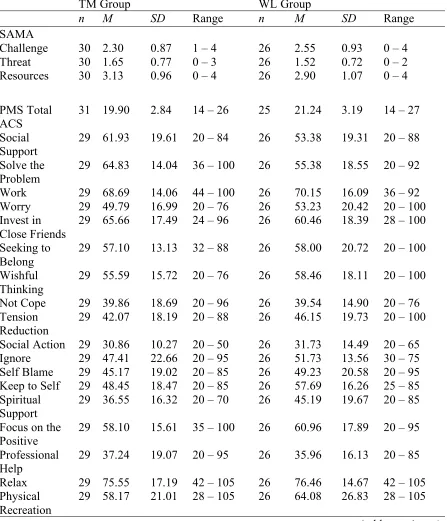
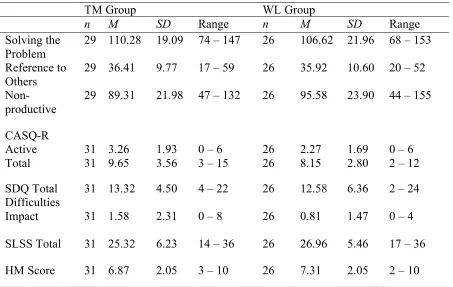
3. Recruitment Procedures by School and Wave...74 4. Experimental Design of Study ...77 5. Means, Standard Deviations, and Ranges for Adolescent Report Outcome
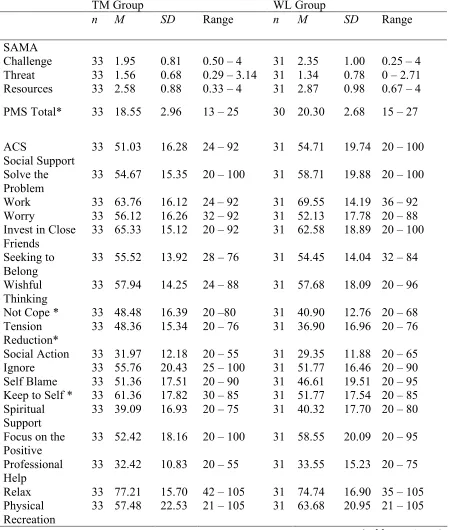
Variables by Group Assignment at Pretreatment Testing...90 6. Means, Standard Deviation, and Ranges for Adolescent Report Outcome
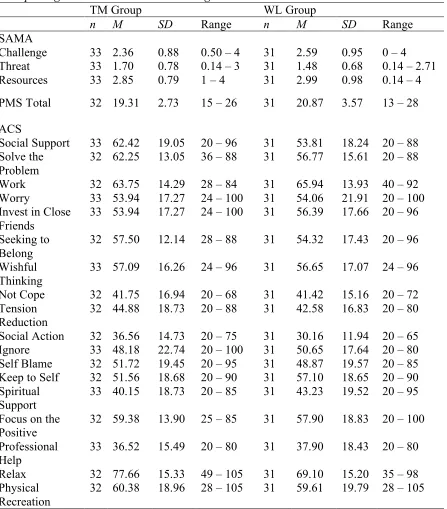
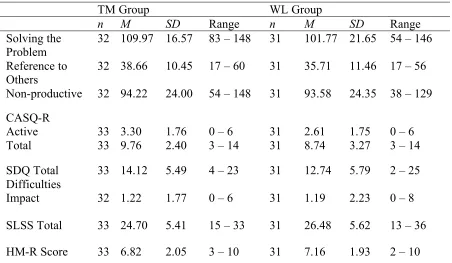
Variables by Group Assignment at Posttreatment Testing...93 7. Means, Standard Deviations, and Ranges for Adolescent Report Outcome
Variables by Group Assignment at Follow-Up Testing ...95
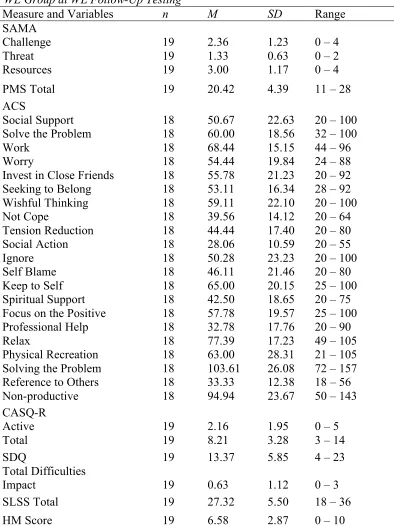
8. Means, Standard Deviations, and Ranges for Adolescent Report Dependent Variables for WL Group at WL Follow-Up Testing ...97
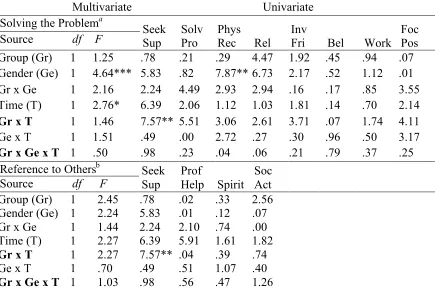
9. Pretest to Posttest Findings for Positive Stress Appraisal...100 10.Pretest to Posttest Findings for Overarching Coping Scales...101 11.Pretest to Posttest 2 X 2 Repeated Measures MANOVA Findings for ACS
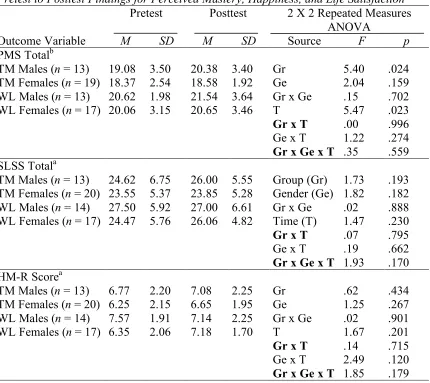
Adaptive Coping Strategies...103 12.Pretest to Posttest Findings for Perceived Mastery, Happiness, and Life
Satisfaction...106 13.Parent Data Pretest to Posttest Findings for Adolescent Coping and Happiness107 14.Teacher Data Pretest to Posttest for Adolescent Happiness...109
16. Pretest to Posttest Findings for Positive Stress Appraisal, CASQ-R Coping,
Perceived Mastery, Life Satisfaction, and Happiness at Group Level...113
17. Parent Data Pretest to Posttest for Adolescent Coping and Happiness at the Group
Level ...114
18. Teacher Data Pretest to Posttest Findings for Adolescent Happiness at the Group
Level ...115
19. Pretest to Posttest Findings for Negative Stress Appraisal, Symptomatology, and
Negative Coping Style ...117
20. Pretest to Posttest 2 X 2 Repeated Measures MANOVA Findings for ACS
Maladaptive Coping Strategies...119
21. Parent Data Pretest to Posttest Findings for Non-Productive Coping Style and
Symptomatology...121
22. Teacher Data Pretest to Posttest Findings for Symptomatology...123
23. Pretest to Posttest Findings for Negative Stress Appraisal, Symptomatology, and
Coping at the Group Level...125
24. Parent Data Pretest to Posttest Findings Between Groups for Adolescent
Non-Productive Coping Style and Symptomatology at the Group Level ...127
25. Teacher Data Pretest to Posttest Findings Between Groups for Adolescent
Symptomatology at the Group Level...128
26. Perceived Effectiveness of the BOC Program at Posttest and Follow-Up for all
Participating Adolescents...130
27. Parent and Teacher Report Perceived Effectiveness of the BOC Program at
28.Pretest to Follow-Up One-Way Repeated Measures ANOVA Results for the
Treatment Group...134
29.Pretest to Follow-Up One-Way Repeated Measures MANOVA Results for ACS Coping Strategies for the Treatment Group...136
30.Posttest to Follow-Up One-Way Repeated Measure ANOVA Results for the Treatment Group...137
31.Posttest to Follow-Up One-Way Repeated Measures MANOVA Results for ACS Coping Strategies for the Treatment Group...139
32.Parent Data Pretest to Follow-Up Results for the Treatment Group...147
33.Parent Data Posttest to Follow-Up Results for the Treatment Group ...148
34.Teacher Data Pretest to Follow-Up Results for the Treatment Group ...151
35.Teacher Data Posttest to Follow-Up Results for the Treatment Group...152
36.Pretest to Follow-Up and Posttest to Follow-Up Results for the Treatment Group at the Group Level ...153
37.Correlations Between Instructor Variables and Change in Adolescent Outcome Variables From Pretreatment to Posttreatment ...161
38.Correlations Between Adherence Level and Change in Adolescent Outcome Variables From Pretreatment to Posttreatment ...163
LIST OF FIGURES Figure
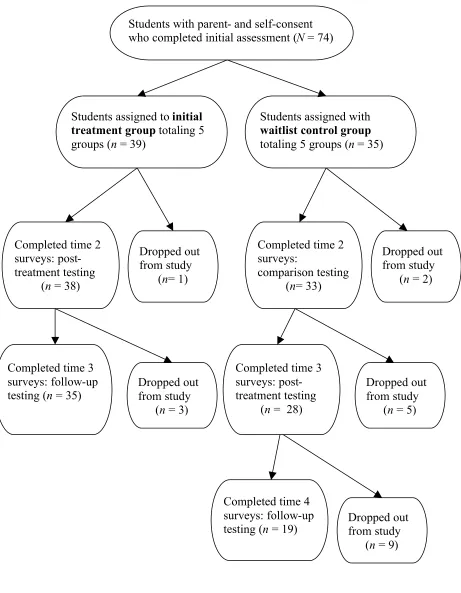
1. Sample flow chart...78
2. Adaptive coping scales that improved for the TM group at the individual level from pretest to posttest and follow-up. ...140
3. Maladaptive coping strategies and style that decreased for the TM group at the individual level from pretest to posttest and follow-up. ...142 4. Change in mean score of resources for the TM group from pretest to follow-up.
...143 5. Change in mean score of perceived mastery of the TM group from pretest to
follow-up...144 6. Change in mean score ofnot cope for the TM group from pretest to follow-up.146 7. Change in mean score of parent rated Reference to Others coping style for the TM
group adolescents from pretest to follow-up...150 8. Adaptive coping strategy and style that improved for the TM group at the group
level from pretest to posttest and follow-up...155 9. Maladaptive coping strategies and style that decreased for the TM group at the
group level from pretest to posttest and follow-up...157
10.Change in mean scores of solve the problem coping strategy and Non-productive coping for the TM group at the group level from pretest to follow-up. ...158
CHAPTER I INTRODUCTION
Context of the Problem and Rationale for the Present Study
Adolescence is a period in the life span when there are a multitude of biological, social, cognitive, and psychological changes. Most adolescents traverse through this
phase in development adaptively; however, there has been much research focused on adolescence as a time of risk because of the vast and rapid changes (Eccles et al., 1993; Roeser, Eccles, & Sameroff, 2000).
Some youth do not fare well during adolescence and develop behavioural and emotional problems. For example, depending on the sample, measures, and diagnostic
criteria utilized, researchers have found that up to approximately 36% of adolescents meet the criteria for a diagnosable psychiatric disorder (Feehan, McGee, Raja, &
Williams, 1994), although most prevalence estimates range between 10 and 20% (Wille,
Bettge, & Ravens-Seiberer, 2008). In Canada, a mental health survey estimated that 18% of individuals between 15 and 24 years indicated experiencing symptoms consistent
with a mental disorder (i.e., mood, anxiety, and substance dependence disorders)
(Statistics Canada, 2003). In a more recent review of child and adolescent epidemiology research in the US, it was noted that between 3 and 18% of children and adolescents
experience functionally impaired psychiatric disorders, translating into approximately one in every eight children (Costello, Egger, & Angold, 2005). Such statistics are
Even for those individuals who are not experiencing psychological distress, there is more to life and general well-being than a mere lack of psychopathology. As discussed in the field of positive psychology, positive attributes or experiences, such as life
satisfaction, interpersonal skills, and happiness, are important components of well-being (Frydenberg & Brandon, 2002a; Seligman & Csikszentmihalyi, 2001).
There are many factors that contribute to the development of psychopathology and general well-being of adolescents (Mash & Dozois, 2003). These factors have been divided into those that increase the likelihood of psychological problems or maladaptive
life trajectories (i.e., risk factors) and those that decrease the likelihood of maladaptation, even in the face of adversity (i.e., protective factors). One risk factor is the presence of
stressors in an adolescent’s life, particularly multiple co-occurring stressors (Compas, Howell, Phares, Williams, & Guinta, 1989). Studies have found that stress level is related to psychological adjustment and internalizing and externalizing problems in
adolescents, with higher levels of stress being associated with higher levels of problems (e.g., Compas, Connor-Smith, Saltzman, Harding Thomsen, & Wadsworth, 2001).
Another factor demonstrated to have an impact on an adolescent’s well-being is how he/she deals or copes with stressors experienced in life (Braun-Lewensohn et al., 2009; Compas, 1987; Compas et al., 2001; Dubow, Tisak, Causey, Hryshko, & Reid, 1991;
Lazarus & Folkman, 1984; Lodge & Feldman, 2007; Recklitis & Noam, 1999; Wadsworth & Santiago, 2008). For example, researchers have found that attempts to
with fewer symptoms (Recklitis & Noam). Researchers have also found that avoidant coping (e.g., distract oneself) partially mediates the relation between appearance-related victimization and self-esteem (Lodge & Feldman).
Given the relations between stress, coping, and adjustment, it is important to foster the development of adaptive coping strategies in adolescents. In order to prevent
the creation of long-standing coping difficulties or maladaptive psychological functioning, one potential solution is through intervention. In fact, researchers have suggested that early intervention efforts may be more cost-effective than interventions
targeted at the treatment of pre-existing disorders, as prognosis is poorer for children and adolescents who are more maladjusted (Landy & Menna, 2006; Weissberg, Caplan, &
Sivo, 1989). Schools are ideal settings for such a program to be conducted, since they are places where adolescents are readily accessible (Menna & Ruck, 2004).
“The Best of Coping” (BOC) program (Frydenberg & Brandon, 2002a) is a 10
module program that is designed to teach adolescents how to better cope with stress. The present study was an evaluation of its effectiveness with identified “at-risk” adolescents
in the school setting. At-risk adolescents were the focus of this study because they
exhibit difficulties that place them at risk for developing more severe problems, including psychopathology. For example, a longitudinal study demonstrated that sub-clinical
symptoms of depression in adolescence was a strong predictor of developing a major depressive episode as an adult (Pine, Cohen, Cohen, & Brook, 1999). Given the relations
their parents, themselves, or school personnel as exhibiting difficulties dealing with life stressors or emotional and/or behavioural problems, the level of the intervention effort was at the indicated or secondary prevention level (Durlak & Wells, 1998).
The main objective of the present study was to conduct an independent evaluation of the BOC program (unrelated to the program creators), by comparing the
program to a waitlist control group, in hopes of examining the cross-cultural generalizability of the program developed with Australian adolescents, to English-speaking Canadian adolescents. The present study added to the pre-existing evaluation
literature by adhering to methodological standards set for evidence-based treatments or EBTs (Kazdin, 2004), such as examining client and therapist characteristics, and
measuring the level of adherence to the program. In order to address the generalizability of the impact, a variety of measures of well-being and multiple informants were used, and program, therapist, and adolescent characteristics that may impact the effectiveness of the
intervention were explored.
The review of literature is divided into several sections. First, stress during
adolescence and its impact on psychological adjustment is presented, followed by a brief review of the literature on adolescent coping. Next, a discussion and justification for the content of an intervention program to be the teaching of coping skills is presented by
discussing the association between coping and psychological adjustment. Characteristics of interventions are then examined, such as level of intervention and school-based
programs, as well as a rationale for evidence-based treatments. Examples of
and its evaluation research are presented. Finally, the rationale and background, research questions and hypotheses for the present study are presented.
1.1 Stress and its Impact on Adolescents
There are many adolescents who are experiencing some difficulties, whether they are emotional, psychological, and/or behavioural in nature. Even though the rates of
diagnosable disorders are significant, there is a considerable proportion of youths who are at-risk or who have sub-clinical levels of emotional or behavioural problems (Mash & Dozois, 2003). As such, there is an even greater number of adolescents who could
benefit from services. As highlighted by Wyn, Cahill, Holdsworth, Rowling, and Carson (2000), it has been estimated by the World Health Organization that between 20 to 30%
of adolescents in schools could benefit from additional intervention efforts because they are demonstrating some difficulties. Researchers have also found that despite not meeting criteria for a disorder, there are a substantial number of youths who have
significant impairment with sub-clinical levels of symptoms (Angold, Costello, Farmer, Burns, & Erkanli, 1999).
There are various factors that may lead adolescents to maladaptive life
trajectories, which include experiencing and maladaptively dealing with stressful events. Interventions targeted at adolescents who are at-risk need to be relevant for the stressors
that the adolescents are experiencing, as well as informed by how stress can impact psychological adjustment. There are various stressors that can occur, such as major life
events (e.g., death of a loved one, family divorce), daily hassles (e.g., peer
stress is defined as an interaction between the person and environment evaluated by the individual as challenging or overwhelming, that is perceived as exhausting his or her resources and jeopardizing his or her well-being (Lazarus & Folkman, 1984). This
definition includes not only environmental or stressor characteristics, but also how the individual appraises the situation.
Although adolescents can experience a myriad of stressors, research has shown that the most frequent problems or stressors adolescents report relate to family, school, and peers (Boldero & Fallon, 1995; Carter, Menna, & Stanhope, 2004; Feldman,
Hodgson, Corder, & Quinn, 1986). For example, in a study with 729 Canadian
adolescents, Feldman and colleagues found that adolescents reported that school, family,
and friends were most important out of a list of eight social and emotional stressors. The researchers reported that few adolescents (<10%) indicated that sexual matters, religious matters, work, and drugs and alcohol were important concerns. A study conducted with
1,013 Australian adolescents, which examined the type of stressful problems adolescents experienced during the past six months, demonstrated that the adolescents endorsed
family and personal relationship problems, education, and health concerns (Boldero & Fallon). Another Canadian study, which included 392 adolescents, showed that the most frequently endorsed stressors were in relation to family, school, peers, and significant
others (Carter et al.).
How stressful an adolescent perceives a stressor to be has been found to differ
self-related stressors such as self-esteem issues (Seiffge-Krenke, Aunola, & Nurmi, 2009).
It has been established within the research literature that the level of stress a youth
experiences is associated with poorer outcome (e.g., Grant, Compas, Thurm, McMahon, & Gipson, 2004). In a review of the literature, approximately 88% of the 60 studies
reviewed indicated that stress contributed to child and adolescent psychopathology (Grant et al.). For example, Compas and colleagues (1989) examined the impact of major stressful events and daily hassles on psychological symptoms in a nine month
longitudinal study with 309 American adolescents between 10 and 15 years. The findings demonstrated that the parents’ stressful events and psychological symptoms, as
well as the adolescents’ life stressors were related to higher levels of youth psychological symptomatology (both internalizing and externalizing problems). The researchers found that after controlling for the initial symptom level, adolescent life stressors were still
related to greater psychological problems.
When different transitions co-occur, there is also a greater risk of maladjustment.
Simmons and colleagues (1987) examined the impact of the accumulation of various transitions in early adolescence, namely school change, pubertal change, early dating, moving to a different neighbourhood or school, and family disruptions, on the outcome
variables of self-esteem, grade-point average (GPA), and participation in extracurricular activities. The researchers found that experiencing a greater number of transitions
Researchers have also explored possible mechanisms that may explain how experiencing stressors can result in symptomatology. For example, in a longitudinal study with 1065 adolescent between 11 to 14 years of age, researchers found that
stressful life events predicted anxiety sensitivity or fear of anxiety, which appeared to mediate the relation between experiencing life stressors and anxiety symptoms
(McLaughlin & Hatzenbuehler, 2009b). With the same sample, the researchers also found that emotion dysregulation, which was comprised of measures of poor emotional awareness, dysregulated expression of anger and sadness, and rumination, provided an
indirect effect for stressful life events on symptoms of depression and anxiety (McLaughlin & Hatzenbuehler, 2009a).
As such, there are various stressors adolescents experience that can impact their well-being. The characteristics of the stressor experienced by adolescents relates to how much of an impact it will have on their psychological adjustment. Those who are
experiencing greater numbers of stressors concurrently, as well as stressors that are more pervasive and longstanding in nature, are more likely to experience the psychological
impact of stress. It is therefore important to examine how adolescents deal with the stressors they experience and help buffer them against the impact of stressful life events through interventions that teach adaptive coping strategies.
1.2 Adolescent Coping
Coping can be defined in various ways, but generally is thought of as how an
the demands of a person-environment relationship” (p. 29, Lewis & Frydenberg, 2004). Such a definition is similar to that of Lazarus and Folkman’s (1984), which defines coping as “constantly changing cognitive and behavioral efforts to manage specific
external and/or internal demands that are appraised as taxing or exceeding the resources
of the person” (p. 141; italicized in original).
There are interrelated concepts of coping that require clarification. Coping resources are components in the environment (e.g., social support) or of an individual (e.g., problem solving ability), which assist in dealing with stressors (Compas, 1987).
Coping strategies (e.g., engaging in relaxing diversions) are the particular cognitive or behavioural acts used in response to a stressful event (Compas). Coping styles (e.g.,
approach coping) are modes of dealing with stressors that an individual typically engages in as a response to similar stressors and/or over time (Compas).
There are a multitude of subtypes or categories of coping that are considered
either adaptive or maladaptive, such as problem solving, support seeking, distraction, and blame (Compas et al., 2001). Depending on the measure (which primarily are
self-report in nature), the number and breakdown of the various coping strategies and styles differ, although there are many similarities. For example, the Adolescent Coping
Orientation for Problem Experiences Inventory: A-COPE (Patterson & McCubbin, 1987)
consists of 54 items that load onto the 12 following scales: ventilating feelings, seeking diversions, developing self-reliance and optimism, developing social support, solving
The Coping Across Situations Questionnaire (CASQ; Seiffge-Krenke, 1995) asks adolescents to indicate whether or not they used 20 coping strategies in relation to eight different problem areas (e.g., family, peers, school). Through factor analysis the 20
coping strategies were collapsed into the following three coping styles: active coping, internal coping, and withdrawal (Seiffge-Krenke).
The Adolescent Coping Scale or ACS is a coping measure consisting of 79 items, which collapse into 18 commonly utilized coping strategies by adolescents, plus one open-ended item (Frydenberg & Lewis, 1993b). The 18 strategies are: seek social
support, focus on solving the problem, work hard and achieve, worry, invest in close friends, seek to belong, wishful thinking, social action, tension reduction, not cope,
ignore the problem, self-blame, keep to self, seek spiritual support, focus on the positive, seek professional help, seek relaxing diversions, and physical recreation. These are further combined into three broadband categories of Solving the Problem,
Non-productive, and Reference to Others coping style (Frydenberg & Lewis, 1993b, 2000). Although the above are merely three examples of coping measures used with
adolescents, they illustrate how these measures tend to account for both adaptive and maladaptive coping actions. They also demonstrate how coping is measured, both as styles and/or actual strategies used. These are some of the most frequently used measures
within the adolescent coping literature (Compas et al., 2001).
With an understanding and background of how adolescent coping is measured, it
Adolescence is an important period of the lifespan for the development of coping skills (Braun-Lewensohn et al., 2009). As adolescents develop
cognitively and deal with more diverse stressors, it is thought that their coping strategies change (Ebata & Moos, 1994; Griffith, Dubow, & Ippolito, 2000; Seiffge-Krenke et al.,
2009). It has been highlighted that at age 15 years, adolescents engage in more effective coping (Seiffge-Krenke, Weidermann, Fentner, Aegenheister, & Poeblau, 2001), and employ a greater variety of strategies (Williams & McGillicuddy-De Lisi, 2000) than at a
younger age. In relation to perception of stress, Seiffge-Krenke and colleagues (2009) found that adolescents reported high stress levels up until the age of 15, after which the
average stress level decreased. In relation to developmental changes in coping, these adolescents’ use of active and internal coping, as measured by the CASQ, increased from early to late adolescence; in contrast, their reported use of withdrawal coping only
increased during early adolescence (Seiffge-Krenke et al., 2009).
In a cross-sectional study with 375 American adolescents, from grades 7 (n =
148), 9 (n = 124), and 12 (n = 103), the use of avoidance and approach coping was examined (Griffith et al., 2000). The researchers found that the use of approach coping increased with grade level; however, the use of avoidance coping did not significantly
differ. This increased use in approach coping with age was found to be particularly notable in relation to family stressors, as compared to school stressors.
In a longitudinal study with 168 (45% female and 55% male) students from six secondary schools in Australia, coping strategies used by the adolescents were measured three times in grades 7, 9, and 11 (Frydenberg & Lewis, 2000). The researchers found
Factors and Characteristics Related to Adolescent Coping
that there were changes in the rates of use for various productive and non-productive strategies, as measured by the ACS, particularly between 14 and 16 years of age. Of the productive strategies, at 14 years of age the rates of engaging in social action, seeking
spiritual support, physical recreation, and seeking professional help decreased from that at age 12. Of these, only the use of seeking professional help increased at age 16. Two
other productive coping strategies—seeking social support and solving the problem— also increased between the ages of 14 and 16 years. Of the non-productive strategies, as the adolescents got older they were more likely to use self-blame, keep to self, and
tension reduction. Such age trends in coping suggest the need for intervention during the critical period occurring around 14 years of age when there seems to be an increase in
non-productive coping and a decrease in some productive coping strategies. The
developmental trends in coping strategies differed between male and female adolescents. For example, although both genders indicated similar levels of an inability to cope (i.e.,
not cope scale) at 12 and 14 years, there was a significant increase in reported inability to cope for female adolescents by age 16, whereas for males, the rate remained relatively
low (Frydenberg & Lewis).
Taken together, these studies demonstrate the importance of intervening during middle adolescence, when adolescents appear to be engaging in less adaptive coping
strategies, and have yet to fully develop their coping repertoire. This age group appears to be at-risk for poorer coping strategies and styles, as well as increased perceived stress.
In addition, as adolescence has been noted to be the developmental period when
that this developmental period is targeted as an appropriate time for a coping skills intervention to occur.
Gender differences in coping have been found, particularly that females
tend to seek help and social support more often than do males (Carter et al., 2004; Ebata & Moos, 1994; Rickwood & Braithwaite, 1994; Schonert-Reichl & Muller, 1996;
Seiffge-Krenke et al., 2009; Stanhope, Menna, & Newby-Clark, 2003). Beyond this difference in support seeking, some researchers have stated that generally male and female adolescents cope similarly (Ebata & Moos), whereas others have highlighted
gender differences in the rates of use for various coping strategies (Frydenberg & Lewis, 1993a; Griffith et al., 2000; Herman-Stahl, Stemmler, & Petersen, 1995; Recklitis &
Noam, 1999; Renk & Creasey, 2003). Depending upon the samples and coping measures used, there have been some equivocal findings regarding these gender differences. For example, in a longitudinal study with 603 American students in grades 6 to 12 conducted
by Herman-Stahl and colleagues, females were found to engage in more approach coping than did males, but no significant difference in the use of avoidance coping was found
between the two genders. Seiffge-Krenke et al. found similar results: female adolescents reported greater use of active coping compared to their male counterparts, but no
significant gender differences were found for internal or withdrawal coping. Whereas in
a study with inpatient adolescents between 12 and 16 years examining gender differences in coping strategies, female adolescents were more likely to engage in avoidance coping
and interpersonal coping strategies, while male adolescents were more likely to engage in physical activities (Recklitis & Noam).
Griffith and colleagues (2000) found with their sample that female adolescents used more approach and avoidance coping strategies than did male adolescents.
Nevertheless, they found that regardless of coping differences, both genders were evenly
contented with their ability to cope. In an American study conducted with 77 male and 92 female adolescents between the ages of 17 and 22 years, females reported using
emotion-focused coping more often than did males, but the two genders did not differ in how often they reported using problem-focused coping (Renk & Creasey, 2003).
In a study using the ACS as the coping measure with 673 Australian adolescents
in grade 7 to 11 (relatively equivalent numbers of females and males), female adolescents tended to endorse engaging in seeking social support, wishful thinking, and tension
reduction more frequently than did male adolescents (Frydenberg & Lewis, 1993a). The male adolescents reported using physical recreation more often than did their female counterparts. When examining gender differences in coping styles, female adolescents
reported non-productive strategies more often than male adolescents. In a previously mentioned longitudinal study conducted by the same researchers, female adolescents
were more likely to seek social support and less professional help, as well as engage in tension reduction, self-blame, worry, and report less ability to cope than did male adolescents (Frydenberg & Lewis, 2000).
Consistent gender differences were noted across cultures in a recent study that included 3031 adolescents between 11 to 20 years of age from seven countries in Europe
use of withdrawal. It was noted that at the coping style level, there were more
similarities among male and female adolescents than differences. Gelhaar and colleagues indicated the gender differences appeared to be more salient at the coping strategy level.
For example, in relation to strategies comprising the active coping style, female
adolescents cross-culturally reported using social support strategies (i.e., trying to talk to
the person concerned, ask for a friend’s help and try to get help from people in a similar situation) more frequently than male adolescents. In relation to withdrawal coping, female adolescents reported using more emotional outlets (e.g., letting out one’s
aggression) whereas male adolescents reported using drugs and alcohol and behaving as if everything was alright more frequently (Gelhaar et al.).
Collectively, the above sample of research studies demonstrates that there are discrepant findings regarding gender differences depending on the samples and measures used. However, some differences remain relatively consistent, such as male adolescents
engaging in more physical recreation, and female adolescents seeking support more frequently. In addition, it is important to note the amount of similarity in coping across
both sexes, particularly in relation to reported coping styles as opposed to specific strategies.
A sense of control over stressors or life circumstances also
appears to be related to coping. In particular, it has been theorized that the more
perceived control an individual has over a situation the less stressful the situation will be
appraised, which will ultimately impact the coping strategies utilized (Lazarus & Folkman, 1984). For example, researchers have found that perceived controllability (as measured by an item asking whether the stressor was something the individual could
have prevented) was related to greater use of approach coping relative to avoidance coping (Griffith et al., 2000).
A study with 300 Australian adolescents in grades 9 and 10 found control beliefs
to be associated with the type of coping strategies used (Cunningham, Werner, & Firth, 2004). In particular, mastery orientation was related to a decreased use of non-productive
strategies, but not significantly related to the use of productive coping strategies. Control beliefs are also related to psychological adjustment. For example,
external locus of control was found to be positively related to anxiety and depression with
a sample of 468 adolescents between 14 and 17 years in Australia (Gomez, 1998). The researcher also found that the relations between avoidance coping and depression and
anxiety were partially mediated by perceived locus of control. Similarly, studies examining perceived mastery with adolescents have demonstrated that greater sense of mastery is related to more positive affect, and less negative affect and depressed mood
(Ben-Zur, 2003; Gore & Aseltine, 1995).
Another study examining the impact of perceived control, as well as negative life
events, active coping, and family relations on depressive symptomatology included 471 (242 males and 229 females) grade 6 American students (Herman-Stahl & Peterson, 1999). The researchers found that control beliefs (composite variable that included the
concepts of self-efficacy, optimism, and perceived mastery) buffered the impact of negative life events on depressive symptomatology. Specifically, those who
Overall the literature suggests that greater internal locus of control or mastery orientation can positively impact both coping and adjustment level. Therefore, control beliefs are important to examine in relation to coping and to the outcome of an
intervention program targeted at these concepts.
Findings show consistencies in the coping strategies
adolescents use across various stressful situations (Frydenberg & Lewis, 1994). However, it has also been noted that the characteristics of the stressful situation can impact the way adolescents cope (Griffith et al., 2000). For example, research has shown
that adolescents utilize avoidance coping more often than approach coping for family related stressors as compared to greater use of approach than avoidance coping in relation
to school or peer stressors, even with level of upset and perceived controllability as covariates (Griffith et al.).
Problem specific variability in adolescent reported coping styles was found in the
previously described large cross-cultural study conducted in seven European countries (Gelhaar et al., 2007). Some of the problem specific coping tendencies were fairly
universal across six countries (data in these analyses excluded Norway). For example, youth across all countries tended to use more withdrawal coping and less active coping for self-related problems. In contrast, there was substantial cultural variability in coping
related to other problems, such as job-related stressors: adolescents in Germany and Czech Republic reported using active coping frequently and withdrawal coping
infrequently; in contrast, youth from Portugal, Italy and Croatia reported using
withdrawal coping more and active coping less when dealing with job-related concerns. Despite these differences, the researchers also found that across cultures and problem
type, adolescents have a preference for active and internal coping across stressors compared to withdrawal coping (Gelhaar et al.).
Ebata and Moos (1991) demonstrated that the (researcher-rated) severity of the
stressor, and the adolescents’ perception of the stressor as a challenge were related to the coping strategies endorsed. In particular, the more severe the stressor was rated, the more
likely the adolescents reported using emotional discharge and seeking out guidance and support. The more the stressor was seen as a challenge, the more likely the adolescents reported using the strategies of logical analysis, positive reappraisal, problem solving,
and seeking alternative rewards.
A study that included 120 female and 145 male adolescents between the ages of
11 to 14 years in Croatia illustrated that the perceived severity and frequency of stressful events impacted coping styles of adolescents (Kardum & Krapi!, 2001). The perceived severity and frequency of stressful life events were related to greater problem-focused,
emotion-focused, and avoidance coping (Krapi!, 1999).
Research has demonstrated that coping is related to adolescent well-being (Ben-Zur, 2009; Braun-Lewensohn et al., 2009; Compas et al., 2001; Ebata & Moos, 1991; Griffith et al., 2000; Herman-Stahl et al., 1995; Landis et al., 2007; Wadsworth &
Santiago, 2008; Wilkinson, Walford, & Espnes, 2000). Typically, well-being is defined as the lack of a psychiatric disorder or symptomatology (Sawyer et al., 2000). However,
researchers have stressed the importance of defining well-being differently, as there is more to life than a mere lack of problems (Fredrickson, 2001; Mash & Dozois, 2003; Seligman & Csikszentmihalyi, 2001; Seligman, Reivich, Jaycox, & Gillham, 1995).
Therefore, in the present study, and by other researchers (Ebata & Moos; Frydenberg & Lewis, 2002), well-being is defined as including both (a lack of) negative signs of functioning or symptomatology (e.g., internalizing and externalizing problems) and
positive signs of functioning (e.g., greater life satisfaction and happiness). Investigators examined the moderating and main effects of approach and
avoidance coping styles on well-being in a study with 393 Australian adolescents and young adults between the ages of 16 to 25 years (Wilkinson et al., 2000). They found no support for the moderating relation for either style of coping. They did find that approach
coping was related to better well-being, as measured by a composite variable consisting of life satisfaction, happiness, and positive affect. Also, avoidance coping was directly
associated with greater distress, as measured by a composite variable consisting of anxiety and negative affect.
Braun-Lewensohn and colleagues (2009) found that coping styles impacted the
well-being of 913 Israeli adolescents between 12 and 18 years who were exposed directly or indirectly to terrorism. Coping was found to be related to various measures of
well-being including post traumatic stress, total difficulties, and a brief measure of
psychological symptoms. Specifically, non-productive coping was strongly related to more psychological problems and relying on others for support (i.e., reference to others
coping) was moderately related to these symptoms, whereas productive coping was related to fewer symptoms (Braun-Lewensohn et al.).
In their longitudinal study, Herman-Stahl and colleagues (1995) found that adolescents who reported using more of an approach coping style also indicated
style reported greater depressive symptomatology. When adolescents altered their general coping style from one to another, they also indicated a change in depressive symptomatology. In particular, if they went from approach to avoidance coping, they
indicated more depressive symptoms than before, whereas if they went from avoidance to approach coping they indicated fewer symptoms.
Ebata and Moos (1991) examined the relationship between coping and psychological adjustment with an American sample of adolescents, which included identified groups of well-adjusted controls (n = 38), adolescents with rheumatic disease
(n = 45), adolescents with conduct problems (n = 58), and adolescents who were
depressed (n = 49). After controlling for age and stressor characteristics of severity and
perceived challenge, adolescents with depression and conduct problems reported using all avoidance coping strategies (i.e., cognitive avoidance, resigned acceptance, alternative rewards, and emotional discharge) more than did healthy controls and adolescents with
rheumatic disease. Approach coping did not significantly differ by group membership. After controlling for stressor characteristics, age, gender, and group membership, the
approach coping strategies of positive reappraisal, guidance/support, and problem solving, and the avoidance coping strategy of alternative rewards (i.e., seeking out other activities or sources of satisfaction) and lower levels of resigned acceptance, were related
to greater well-being, as measured by a composite variable of happiness and self-worth. Lower levels of problem solving and alternative reward coping and higher levels of
drug and alcohol use were related to more emotional discharge and less positive reappraisal.
The relations between coping styles and both positive and negative affect were
examined using data from three pre-existing samples (adolescents, university students and a general population in Israel) totaling 480 participants (Ben-Zur, 2009).
Problem-focused coping was associated with increased positive affect and decreased negative affect. In contrast, avoidant coping had the opposite associations: positively related to negative affect and negatively related to positive affect. Interestingly, problem-focused
coping was found to moderate the impact of avoidant coping on affect. Researchers found that coping impacted the relation between chronic
uncontrollable stressors and hopelessness with a sample of 796 American urban youth (Landis et al., 2007). In particular, the use of active, distraction, and support seeking coping was found to worsen the association between these stressors and hopelessness in
male adolescents. For female adolescents, the use of rumination was found to increase the association between chronic uncontrollable stress and hopelessness. It was suggested
that the chronic and uncontrollable nature of the stressors might have been responsible for taxing the youths’ coping abilities.
Through a review of the child and adolescent coping literature, Compas and
colleagues (2001) found that engagement and problem-focused coping were generally related to better psychological well-being and fewer internalizing and externalizing
suggesting that there are other risk and protective factors which play a part in a youth’s adjustment (Compas et al.). This conclusion was further supported by a previously mentioned meta-analysis of 40 studies examining the impact of active coping on four
aspects of psychosocial health of youth (Clarke, 2006). Clarke found the mean effect sizes to be modest, ranging between 0.02 for internalizing behaviours to 0.12 for
academic performance.
1.3 Interventions
As discussed within the empirical review, there is variation in the ability for
adolescents to cope effectively with stressors. It is important that interventions target coping skills, teaching youth—particularly those who are experiencing difficulty
coping—how to cope with stressors more adaptively. In fact, researchers have suggested that interventions should teach more active coping strategies to those who are
experiencing symptomatology (Seiffge-Krenke et al., 2001).
There are various levels of possible interventions, some being more preventative,
and others being more treatment-oriented for pre-existing concerns. Primary prevention, which targets individuals before the occurrence of any problems, is typically used to increase or foster protective factors and decrease risk factors for developing
symptomatology or other problems (Weissberg et al., 1989). Secondary prevention or
indicated preventative intervention, are intervention efforts for individuals who
demonstrate signs of maladjustment before any severe problems or psychological disorders occur (Durlak & Wells, 1998). In other words, those individuals who are considered or identified as at-risk for developing further mental health problems are
targeted and treated. Finally, there is tertiary prevention, or intervention, which is for those who are already experiencing a disorder, and meant to treat the disorder, decreasing its duration and negative effects (Durlak & Wells). Typically, interventions are targeted
at the tertiary level: those with diagnosable disorders, or those who are most in need, are the individuals who obtain services. However, such interventions are essentially less
cost-effective, as these individuals tend to require more expensive and intense services (Weissberg et al.). As such, there is a trend towards developing primary and secondary interventions. There have been studies examining the overall effectiveness of prevention
programs, including indicated prevention efforts, which have discovered the utility of such programs (Durlak, 1998; Durlak & Wells, 1997, 1998).
In a meta-analytic study that examined 99 published works and 22 unpublished doctoral dissertations evaluating 130 secondary prevention programs, researchers investigated the effectiveness of such programs, as well as examined the factors that
impact outcome, including type of treatment and the presenting problems of the youths (Durlak & Wells, 1998). The majority (93.4%) of these indicated prevention programs
were conducted in schools and 29% included adolescents 13 years and older. The children and youths (aged 3.5 to 18.5 years) demonstrated sub-clinical levels of
maladjustment through a population-wide screening. The programs were behavioural,
cognitive behavioural, or non-behavioural in nature, and primarily consisted of a group format (although some were done individually). Overall, Durlak and Wells found that
are comparable or better than empirically established treatments for adolescents who have pre-existing disorders, as well as interventions to prevent substance use (smoking, alcohol, and drugs) and delinquency. Such results indicate the usefulness and viability of
secondary prevention efforts. For the limited number of studies that included follow-up testing (n = 35), the effects of the intervention remained, as there were no significant
differences in the effect sizes from posttreatment to follow-up testing.
Although traditionally treatment occurs after the onset of a disorder or serious maladjustment, primary and secondary prevention programs have been found to be
effective, and yet, are underused. For example, in the United States, only 3% of health care costs are allotted to any preventative efforts (Durlak, 1998). In Canada, the statistics
are similar, with approximately 7.7% ($300 out of $3,900 per capita) of total health care expenditures being assigned to public health, which includes prevention efforts (Waddell, McEwan, Shepherd, Offord, & Hua, 2005). Such findings provide a rationale for the
present study to be directed at the secondary prevention level.
Wyn and colleagues (2000) describe an intervention design that integrates the level of intervention within the school setting that was developed by the World Health Organization. In particular, there are four different levels of a school-based intervention,
including: 1) the entire school community; 2) the curriculum, thereby including all students and teachers; 3) at-risk students, who are in need of extra assistance; and 4)
students requiring mental health interventions (Wyn et al.). Such a comprehensive approach would include primary and secondary preventative efforts at the first three
levels, and traditional interventions that treat adolescents who are experiencing serious psychological or behavioural problems.
School-based interventions have numerous benefits. The school is the primary
context in which children develop socially (Farrell, Meyer, Kung, & Sullivan, 2001). As well, school-based interventions are an efficient way to include many children and
adolescents, as schools are places in which youths are readily accessible (Weist & Paternite, 2006). In addition, there is a greater likelihood that a school will be able to continue to provide the services, as there tends to be relative employee stability (Farrell et
al.). Schools are also able to target different levels of the adolescent’s ecological system, not only at the individual level, but also at the peer and school levels (Menna & Ruck,
2004).
Despite the benefits of school-based interventions, there have been difficulties with their implementation (Weissberg et al., 1989). Historically, the school system has
not included programs targeting general life skills and social competence (such as coping skills), even though a commonly stated aspiration of schooling is the fostering of youths
to function properly within society (Menna & Ruck, 2004; Weissberg et al.; Wyn, 2007). A national study in the US that reviewed school services and programs for students with a primary disability category of emotional disturbance (ED) demonstrated how most of
these youths do not receive mental health services in the school setting (Wagner et al., 2006). Part of the issue is the limited resources and training within the school system, as
demand exceeds the available resources (Weist & Paternite). Not only are there high rates of student risk factors and maladajustment which require substantial resources that a single organization cannot fully address alone, but also the school system’s primary
purpose is to educate youths and therefore it is not necessarily organized to do so (Anderson-Butcher & Ashton).
It is therefore important for other community resources and professionals to collaborate with schools to help meet the needs of youths and their families (Anderson-Butcher & Ashton, 2004). Not only can such professionals help adolescents and families,
they can also help develop empirically-validated interventions that can be readily implemented within the school setting. School systems require that a program’s
effectiveness, as well as its purpose and procedures are clearly laid out before it is considered (Weissberg et al., 1989), suggesting the need for empirically-validated school-based interventions.
Evidence-based treatments (EBTs) or empirically-validated interventions(EVIs)
have empirical evidence or research studies—particularly those that adhere to rigorous methodological standards—which demonstrate that the treatments perform better than waitlist or placebo control or as well as already well-established treatments. Both terms
will be used interchangeably in the following discussion.
There is much debate over the utility of EBTs, particularly those that possess the
rigorous methodologies of randomized control trials or RCTs (Kazdin, 2004; Persons & Silberschatz, 1998). The primary concern is their limited generalizability or
transportability into clinical or real-life settings (Kazdin). In particular, RCTs use
random assignment to conditions, less maladaptive or severe cases that are homogenous in nature, manualized treatments that are strictly adhered to, as well as control groups (Nathan, Stuart, & Dolan, 2000). Such conditions, although intended to increase internal
validity and statistical power, do not resemble everyday practice or real-life conditions (Kazdin; Landy & Menna, 2006; Nathan et al.; Persons & Silberschatz).
Nevertheless, there is a utility to EBT research. This research assists in helping clinicians determine which treatments to use from the wide variety available (Kazdin, 2004; Persons & Silberschatz, 1998) by empirically validating or providing evidence of
their effectiveness (i.e., effects in more natural conditions, or real life settings) or efficacy (i.e., effects in more controlled research conditions). In particular, they can help
determine if a treatment performs better than placebo or waitlist control depending on the control condition used, or if it performs comparably to an already well-established
treatment option for particular presenting concerns and/or populations (Persons &
Silberschatz). A meta-analytic study including 32 direct comparison studies of youths randomly assigned to EBT versus usual care treatment conditions demonstrated that the
mean effect size was 0.30, which is between a small to medium effect size (Weisz, Jensen-Doss, & Hawley, 2006).
Within school-based interventions, some of the transportability issues are not as
much of a concern since it is conducted with the intended population (i.e., students) and within the school setting. As well, preventative efforts, either primary or secondary, are
intended for those who are not as seriously maladjusted. Nevertheless, there still are factors that impact the generalizability, such as self-selection bias (those who
not), random assignment, and different training levels of therapists or facilitators. In order to successfully implement an intervention study within the school setting, researchers also need to be flexible in order to meet the needs and constraints of the
school environment (e.g., Hoagwood & Johnson, 2003; Langberg & Smith, 2006). EBT or EVI research is important for the validation of treatment efforts, but there
are concerns regarding external validity. As a result, there are some suggested factors to consider and address within evaluation studies (Kazdin, 2004; Wampold, Lichtenberg, & Waehler, 2002). One issue is to examine various factors that might have an impact on the
effects of the treatment, such as client, therapist, treatment, and contextual variables (Kazdin). Client characteristics that have been highlighted in the common factors
research literature among disparate therapies or interventions include motivation, hope or expectancy for change, and age or developmental level (Duncan, 2002; Karver,
Handelsman, Fields, & Bickman, 2005). Gender (e.g., Bugalski & Frydenberg, 2000)
and pretreatment symptomatology (e.g., Durlak & Wells, 1998; Kazdin & Crowley, 1997) have also been examined in relation to treatment impact. Therapist factors, such as
level of training or experience (Frydenberg et al., 2004) and (client perceived) empathy/understanding also may impact treatment effects (Karver et al.). Treatment conditions, such as adherence to the treatment manual or procedures, impact the ability to
examine the effects, and the techniques utilized, such as CBT techniques (e.g., thought records or homework assignments), have been found to be related to the effectiveness.
Another important factor is how the outcome of treatment is assessed (De Los Reyes & Kazdin, 2008; Kazdin, 2004; Kendall, Flannery-Schroeder, & Ford, 1999; Wampold et al., 2002). In order to truly measure the impact of an intervention,
researchers must consider more than merely the symptoms or behaviours at which the treatment is targeted (Kendall et al., 1999; Wampold et al., 2002). It is important to
examine the individual’s overall or general functioning and well-being in order to see how the treatment may have impacted other areas of the individual’s life (Kendall et al., 1999; Wampold et al., 2002). As well, it is important to include multiple-informants to
see how the individual, as well as other significant members in their lives view the outcome effects (Kendall et al., 1999; Wampold et al., 2002). By including multiple
measures and informants, researchers are able to determine how generalizable the effect is, as well as determine whether the impact is measure or informant specific (De Los Reyes & Kazdin).
1.4 Available Coping Interventions for Adolescents
A viable option for an intervention targeted at fostering the well-being of
adolescents, especially those who are considered at-risk, would be one that focuses on coping skills. A variety of interventions have been implemented in an attempt to foster healthy coping skills in youths in various countries, such as in the United States, Ireland,
Australia, Canada, and New Zealand (Cunningham, Brandon, & Frydenberg, 2002; Dickinson, Coggan, & Bennett, 2003; Frydenberg & Brandon, 2002a; Hayes & Morgan,
programs (Durlak & Wells, 1998), as well as psycho-educational and/or
cognitive-behavioural in nature. For example, the “Helping Adolescents Cope” (Hayes & Morgan), “TRAVELLERS” (Dickinson et al.), “Bright Ideas” (Cunningham et al.), “Teaching Kids
to Cope” (Puskar et al.), and “Best of Coping” (Frydenberg & Brandon) programs teach positive ways of thinking and coping skills, such as goal setting, assertiveness, social
skills, relaxation, and problem solving skills, within the school setting.
Overall, the evaluations of these programs demonstrate some effectiveness in: a) decreasing distress (Cunningham et al., 2002; Dickinson et al., 2003; Hayes & Morgan,
2005), b) decreasing reliance on non-productive coping (Cunningham et al.; Frydenberg et al., 2004; Hayes & Morgan), c) increasing the use of some productive coping
strategies (Dickinson et al.; Frydenberg et al.), and d) increasing coping efficacy (Cunningham et al.). The present study was an examination of one of these programs, called the Best of Coping or BOC program.
There are various reasons as to why the BOC program is the targeted intervention. First, the program is developmentally appropriate as it was created for adolescents and
not merely a downward extension from a program initially created for adults. Second, an important component to the program, which has been identified as an area for
intervention, is altering how adolescents think about problems and their ability to cope
(Printz, Shermis, & Webb, 1999). In fact, a poor outlook on a problem and on one’s ability to cope is associated with poorer outcome (Printz et al.). Third, past research has
control coping (e.g., problem solving) and secondary coping (e.g., cognitive reframing) (Wadsworth, Wolff, Santiago, & Moran, 2008). The BOC program does in fact teach various coping skills that are associated with better adjustment, including more active
forms, such as problem-solving and seeking help from others, as well as more secondary control strategies, such as cognitive reframing. Fourth, another vital aspect of the
program is how it addresses why particular coping strategies—such as excessive
worrying and self-blame—are generally ineffective, and as such, correlated with poorer outcome (Frydenberg & Lewis, 2000, 2004; Wilkinson et al.). Fifth, the program is
manualized, which is highly important, as it enables a better examination of the
effectiveness of the program and what components contribute to the outcome (Durlak &
Wells, 1997, 1998). Finally, as with all studies, there are methodological limitations to the current evaluation studies of the BOC program that limit its generalizability and empirical support. The present study intends to account for some of these limitations,
which will be highlighted in the review of the evaluation research.
1.5 The Best of Coping Program
Developed by Frydenberg and Brandon (2002a), “The Best of Coping: Developing Coping Skills for Adolescents”(BOC) program, is a 10 unit cognitive behavioural approach to teaching coping skills to adolescents (See Table 1 for brief
descriptions of the 10 modules). CBT interventions are found to be more effective for adolescents due to their cognitive developmental level (i.e., formal operational stage), as
compared to younger children who are at either the preoperational or concrete operational cognitive developmental level (Durlak, Fuhrman, & Lampman, 1991). The BOC
Table 1.
Descriptions of the 10 Sessions Comprising the Best of Coping Program (Frydenberg & Brandon, 2002a)
Module or Session Brief Description of Session Module 1:
Map of Coping Provides an introduction and description of the concept of coping, examines individual coping styles, and describes different coping strategies Module 2:
Good Thinking Educates the adolescents about the relationship between thoughts and feelings and basic skills to evaluate and restructure thoughts
Module 3:
Heading Down the Wrong Track: Strategies that Don’t Help
Critically examines the use of ineffective coping strategies and provides more adaptive alternatives
Module 4:
Getting Along With Others
Educates the adolescents on components of communicating and listening
Module 5:
Asking for Help Builds an awareness of the usefulness and importance of seeking help from others and the available networks and supports
Module 6:
Problem Solving Teaches a six-step problem solving technique Module 7:
Making Decisions Educates the adolescents about how to make decisions through the careful evaluation of their options
Module 8:
Goal Setting Facilitates the understanding of how goals and achievement are related and promotes the examination of the adolescents’ own goals Module 9:
Goal Getting Builds the awareness of the process of constructing and setting down obtainable goals Module 10: