JONES, JILL SPARGUR. Examining Small-Group Reading Instruction for Students Identified as Having Difficulty with Reading: A Multi-Case Study (Under the direction of Drs. Angela M. Wiseman and Jill F. Grifenhagen).
Reading: A Multi-Case Study
by
Jill Spargur Jones
A dissertation submitted to the Graduate Faculty of North Carolina State University
in partial fulfillment of the requirements for the degree of
Doctor of Philosophy
Curriculum and Instruction
Raleigh, North Carolina 2018
APPROVED BY:
_______________________________ _______________________________ Dr. Angela Wiseman Dr. Jill Grifenhagen
Co-Chair Co-Chair
_______________________________ _______________________________ Dr. Dennis Davis Dr. Jessica DeCuir-Gunby
_______________________________ Dr. Kristin Conradi Smith
DEDICATION
BIOGRAPHY
Jill Spargur Jones grew up in Rockville, Maryland. Early in life she realized her calling as an educator. She earned her Bachelors of Arts in Psychology and her K-8 Teaching
ACKNOWLEDGMENTS
“I will provide for you and I’ll stand by your side. You’ll need a good companion now for this part of the ride” (Bruce Springsteen, The Land of Hope and Dreams, 2012).
As I entered my doctoral program, a wise soul provided enlightenment by stating this journey would be the hardest thing I would ever do. I cannot agree more as I have only arrived at this pinnacle through the support of many people. Consequently, I would like to take the
opportunity to thank them for their efforts. First, I thank my family because without them no part of this journey would have been possible. To my husband Chris, thank you for your unwavering belief in my abilities. Every day you have gone above and beyond enabling me to focus on the academic tasks I needed to complete. You have been my problem solver, technical support, voice of reason, and rock at the times I needed support and encouragement the most. Thank you to my dearest daughter Cammie. Through this accomplishment, I hope you recognize that you can attain your dreams whatever they may be. Thank you for the many pictures and encouraging words which provided motivation to complete this dissertation. The most insightful words from an eight-year old, “Don’t worry about other things - just chose one!” You have been so
understanding of the countless hours I needed to spend in my office. I pursued this dissertation with the hopes of supporting more students in achieving the level of literacy you demonstrate daily. To my mom and dad, I appreciate your support and encouragement during this process. Finally, I would thank my family members and friends who understood when my studies took precedence over spending time with them. Upon completion of this dissertation, I look forward to spending more time with you.
examination. I am so appreciative of your willingness to participate and how dedicated you are to your students. I am also grateful to the principal at Springville who was supportive of this project and recognized the positive benefits of these teachers being research participants.
I know without a doubt I would not have accomplished what I have without several of my peers in the doctoral program. First, I am so thankful for my unbelievable sole cohort mate and accountability partner, Dr. Abbey Graham. I appreciate your willingness to listen at crucial moments, provide your wealth of advice and support, and share constant reminders that “you got this”. Kirsten Aleman, I learned so much collaborating with you on our qualitative project and from your inquisitive, relevant, and insightful feedback. You are next to complete the doctoral journey! Dr. Melissa Pendleton, thank you for choosing to become my mentor. I know I would not be here without your constant willingness to provide meaningful advice. I would also like to thank Dr. Casey Medlock Paul for your collaboration, feedback, encouragement, and friendship. Laurie Brummitt, thank you for your willingness to share your qualitative expertise, becoming an accountability partner, and reminding me what matters most. Finally, I would like to thank Norm Vehabovic for your collaborative nature and partnership opportunities to expand my notion of literacy.
Most of all, I must thank an exceptional set of committee members. Without them, I certainly would have not accomplished this goal. Dr. Wiseman, I am thankful you agreed to co-chair my committee. You have provided endless amounts of meaningful advice and feedback throughout the process. By working with you, I have grown as a researcher and a literacy educator and broadened my perspective of literacy. Thank you for continuing to push me
research, collaborate on projects, and receive your thorough feedback have been invaluable. You have guided me to think more as a researcher and a scholar and to “zoom out”. I am also grateful to Dr. Conradi Smith who provided valuable research and writing opportunities. Thank you for sharing advice, asking tough questions, ensuring I could justify the “so what” in my work, and pushing me to become a better writer. Thank you to Dr. Davis who agreed to join my committee upon his arrival at NC State. You have provided relevant and exciting research opportunities in addition to teaching me new ways of questioning and thinking critically. Dr. DeCuir-Gunby, I appreciate your presence on my committee and your role as my professor. Your teaching enabled me to gain a clearer understanding of the research process. You have asked important questions of my work and helped me state ideas more explicitly. I appreciate Dr. Tran agreeing to be a participant and offering another perspective. Finally, thank you to Dr. Harrington who provided opportunities to participate in her courses where I learned valuable lessons about teaching. I am forever grateful to all of you as my committee members and your role in enabling me to
TABLE OF CONTENTS
LIST OF TABLES ...xi
LIST OF FIGURES ...xii
CHAPTER 1: INTRODUCTION ...1
Background ...1
Statement of the Problem ...2
Purpose Statement and Research Questions ...3
Significance of the Study ...4
CHAPTER 2: REVIEW OF THE LITERATURE ...5
Introduction to the Chapter ...5
Theoretical Framework ...5
How Learning Transpires ...6
Zone of Proximal Development ...7
Students Identified as Having the Most Difficulty with Reading ...9
The Role of Identification ...10
The Role of Grouping ...11
The Role of the Teacher ...13
The Role of Instruction ...14
The Role of Text Selection ...18
The Role of Scaffolding ...22
The Historical Context of Scaffolding ...22
Scaffolding and ZPD...23
The Current State of Scaffolding ...24
Scaffolding in Literacy ...26
The Relationship Between Student Characteristics and Scaffolding Practices ...26
Establishing Scaffolding Forms ...28
Scaffolding in Reading Recovery ...32
Scaffolding in classroom small-group instruction ...33
Scaffolding Cueing Systems ...34
Effectiveness of Scaffolding ...37
Chapter Summary ...39
CHAPTER 3: METHODOLOGY ...40
Introduction to the Chapter ...40
Case Study ...41
Description of the Research Site ...43
Site Selection and Access ...43
The School ...44
The Instruction ...46
The Classrooms ...47
The Teachers ...48
The Students...49
Participant Observations ...54
Field Notes ...56
Teacher Interviews ...57
Student Interviews ...58
Artifacts...59
Student Reading Data ...61
Data Analysis ...62
First Cycle Coding ...64
Second Cycle Coding ...67
Validity and Reliability ...68
Internal Validity ...68
External Validity ...70
Reliability ...70
Limitations ...71
Subjectivity Statement ...72
Chapter Summary ...73
CHAPTER 4: CONTEXT...74
Introduction to the Chapter ...74
Emily’s Instructional Approach ...75
Feelings About Students Identified as Having Difficulty ...75
Small-group Instruction ...79
Instructional Logistics ...79
Differences from Other Reading Groups ...80
Instructional Materials ...81
Julie’s Instructional Approach ...87
Small-group Instruction ...87
Instructional Logistics ...88
Differences from Other Reading Groups ...89
Instructional Materials ...90
Chapter Summary ...101
CHAPTER 5: FINDINGS ...102
Introduction to the Chapter ...102
Theme 1: The Role of Scaffolding...103
Defining Scaffolding Forms ...104
Emily’s Scaffolding Forms ...107
Emily’s Type of Scaffolding Directedness ...113
Emily’s Responsiveness to Student Needs ...114
Julie’s Scaffolding Forms ...115
Julie’s Type of Scaffolding Directedness ...125
Julie’s Responsiveness to Student Needs ...126
Cross-Case Analysis ...128
Theme 2: Instructional Focus...129
Emily’s Instructional Focus ...130
Fluency ...133
Comprehension ...133
Strategy Instruction ...135
Julie’s Instructional Focus ...137
Strategy Instruction ...138
Comprehension ...140
Phonics ...141
Cross-Case Analysis ...142
Theme 3: Engagement with Connected Text ...143
Emily’s Use of Connected Text ...143
Frequency ...144
Modeled Reading ...145
Type ...146
Julie’s Use of Connected Text ...148
Frequency ...149
Type ...150
Cross-Case Analysis ...151
Theme 4: Students’ Determination of Unknown Words Through Scaffolding ...152
Emily’s Students ...153
Julie’s Students ...156
Cross-Case Analysis ...159
Theme 5: Teachers Provided Varied Levels of Scaffolding ...159
Emily’s Students ...160
Julie’s Students ...163
Cross-Case Analysis ...170
Chapter Summary ...170
CHAPTER 6: CONCLUSION ...172
Introduction to the Chapter ...172
Summary of Methodology ...173
Summary of Findings ...174
Discussion ...176
Research Question #1: How do two first-grade teachers scaffold within their small-group reading instruction for students identified as having the most difficulty with reading? ...177
Research Question #2: How does teacher scaffolding support students’ reading during small-group reading instruction? ...182
Implications for Practice ...184
Implications for Policy ...188
Implications for Research ...189
Concluding Thoughts ...191
REFERENCES ...192
APPENDICES ...202
LIST OF TABLES
Table 2.1 Scaffolding Forms Determined in Prior Research ...29
Table 3.1 Objectives, Research Questions, and Data Forms ...41
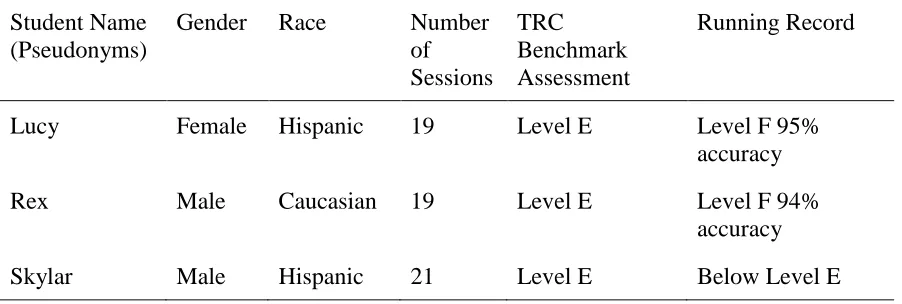
Table 3.2 Description of Student Participants in Emily’s Classroom ...50
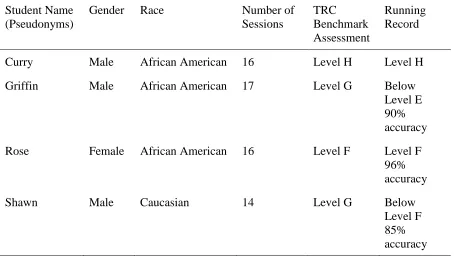
Table 3.3 Description of Student Participants in Julie’s Classroom...52
Table 3.4 Data Collection Timeline ...54
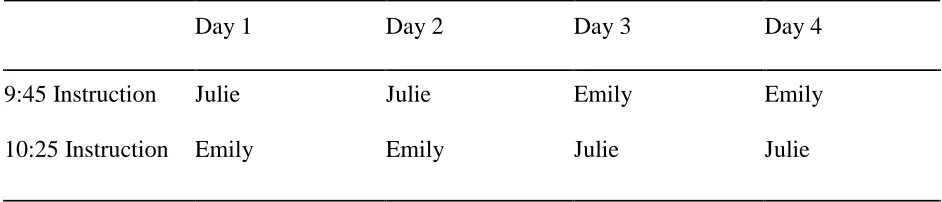
Table 3.5 Weekly Classroom Observation Rotation Schedule...55
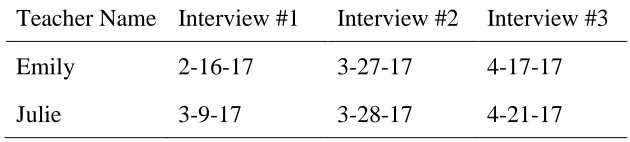
Table 3.6 Dates of Teacher Interviews ...58
Table 3.7 Dates of Student Interviews ...58
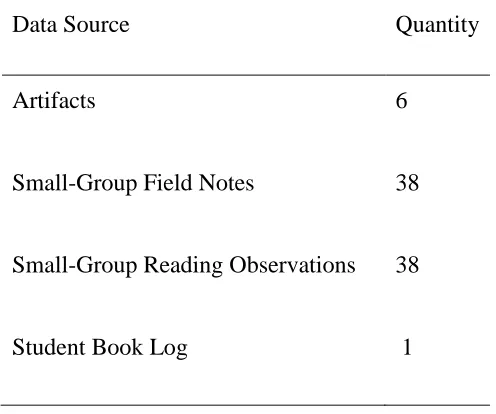
Table 3.8 Summary of Data Collection Sources ...60
Table 3.9 Example of Descriptive Coding Process ...65
Table 5.1 Teacher Scaffolding Forms ...105
Table 5.2 Scaffolding Forms in Emily’s Classroom ...107
Table 5.3 Scaffolding Forms in Julie’s Classroom ...116
Table 5.4 Focus for Emily’s Small Group Reading Instruction ...131
Table 5.5 Focus for Julie’s Small Group Reading Instruction ...137
Table 5.6 Texts Used for Instruction in Emily’s Small-Group Reading Instruction ...147
LIST OF FIGURES
Figure 3.1 Case study design ...42
Figure 3.2 Steps in data analysis coding process ...64
Figure 4.1 Poster used for decoding strategy instruction ...86
Figure 4.2 Comprehension story element activity with wh question stems ...95
Figure 4.3 Story element comprehension activity ...96
Figure 4.4 Comprehension activity in which students responded to written prompts ...97
Figure 5.1 Overall thematic findings ...103
Figure 5.2 Teacher and student-directed scaffolding forms ...106
Figure 5.3 Strategies to decode unknown words ...139
CHAPTER 1 INTRODUCTION
“We do not want to produce children who can read only in the presence of adults. We want children who can read for enjoyment and knowledge on their own...Independence must somehow
be achieved through the daily interactions between teachers and children” (Beed, Hawkins, & Roller, 1991, p. 648).
Background
For more than forty years, literacy researchers have sought to determine how to best provide reading instruction to emerging readers (e.g., Bond & Dykstra, 1967; Pressley, Allington, Wharton-McDonald, Block, & Morrow, 2001; Wharton-McDonald, Pressley, & Hampston, 1998). Many studies have examined reading instruction within first grade, the
schooling year in which students are emerging readers and often exhibit the most progress in the development of their literacy skills (Pressley et al., 2001). Although the overall question of what is the most effective reading instruction for emerging readers remains relatively unanswered, previous studies demonstrated the influential role of the teacher in reading instruction (Pressley et al., 2001; Wharton et al., 1998). The teacher’s ability to create and provide effective
instruction to support the diverse reading needs of primary students is essential.
progress in reading without the need for intervention (Foorman, Francis, Fletcher, Schatschneider, & Mehta, 1998; Foorman & Torgesen, 2001; Slavin et al., 2011).
One important role of the teacher in helping students progress in the area of reading is through the implementation of scaffolding. Scaffolding is defined as the teacher providing support to a student with the goal of achieving or mastering a task which that student cannot complete independently. Prior research on effective literacy instruction and effective teachers of literacy determined that scaffolding is an effective method for providing support (Pressley et al., 2001; Wharton et al., 1998). Furthermore, scaffolding is more prevalent in first-grade classrooms with students achieving at a higher level than in first-grade classrooms achieving at a lower level (Pressley et al., 2001). Scaffolding is an effective instructional method within other instructional contexts including one-on-one targeted reading instruction (Rodgers, 2004; van de Pol, Volman, & Beishuizen, 2010; Wong et al., 2004); small-group literature discussions in upper elementary grades (Maloch, 2002; Jadallah et al., 2011); and small-group comprehension instruction (Clark & Graves, 2005; Palinscar & Brown, 1984).
Statement of the Problem
Brownfield, 2016; Wong et al., 1994). However, these studies did not provide descriptive accounts of how classroom teachers provided support within small-group classroom instruction for students identified as having the most difficulty with reading. Rodgers (2004) explicitly stated the need to further understand how teachers scaffold within the small-group instructional framework. Furthermore, additional research is needed to understand how students respond to the scaffolding experienced within small-group reading instruction (Rodgers et al., 2016; van de Pol et al., 2010) and which scaffold types are effective in supporting students’ reading
development. Therefore, a need exists to understand the nature of how teachers scaffold within daily small-group reading instruction and how these scaffolds affect students’ reading
development. The present study addresses this need by examining teacher scaffolding
implemented with students identified as having the most difficulty with reading within small-group instruction and the effects of scaffolding on students’ reading practices.
Purpose Statement and Research Questions
The purpose of this qualitative multi-case study (Stake, 1995) is to provide an in-depth understanding of how primary classroom teachers scaffold their instruction for students identified as having the most difficulty with reading. This study examines how two first-grade teachers used scaffolding as an instructional approach during small-group reading instruction and how the teachers’ scaffolding methods supported the reading practices of seven first-grade students, identified by the teachers as those having the most difficulty with reading. The study also describes how teachers make decisions regarding the instructional focus and the materials for small-group reading instruction. The following two research questions guide this study:
2. How does teacher scaffolding support students’ reading during small-group instruction? Significance of the Study
This study addresses the need in literacy research for further examination of teacher scaffolding practices and how these scaffolds support students’ development of reading
CHAPTER 2
REVIEW OF THE LITERATURE
“Learning occurs in a context of social interactions leading to understanding” (Roehler & Cantlon, 1997, p. 8).
Introduction to the Chapter
The purpose of this chapter is to present social constructivism as the theoretical framework grounding this study and to provide a review of research factors related to literacy instruction and scaffolding as they pertain to students identified as having the most difficulty with reading. First, I discuss the major principles of social constructivism and how these principles align with my study. Second, I explain findings about factors affecting literacy instruction for students identified as having the most difficulty with reading. Finally, I present a review of the literature on scaffolding including the history of the concept of scaffolding, scaffolding within literacy, and teacher scaffolding. The chapter concludes with a summary of the overall findings from the literature review.
Theoretical Framework
Social constructivist theory posits people interact with one another, develop based on these social interactions, and utilize tools to gain meaning and assimilate beliefs and perspectives pertaining to the surrounding world (Handsfield, 2015; Tracey & Morrow, 2012). Therefore, this theoretical framework emphasizes how knowledge is created through human interaction and social factors, which in turn produces understanding (Au, 1998; Hogan & Pressley, 1997). With its focus on how historical and social factors impact individuals’ activities and influence their learning, social constructivist theory is categorized as a subset of sociocultural theory
theories exist. The sociocultural approach focuses solely on the influence of culture and the larger social system on an individual’s learning, whereas the social constructivist approach separates social influences on learning from mental representations that transpire within the individual (Tracey & Morrow, 2012; Vygotsky, 1978). In the following section, I discuss how learning transpires according to social constructivism in addition to defining and explaining the influential role of the zone of proximal development (ZPD) (Vygotsky, 1978).
How Learning Transpires
Vygotsky, who developed several overarching principles pertaining to learning, is considered a prominent influence on the development of social constructivist theory (Au, 1998; Handsfield, 2015; Tracey & Morrow, 2012; Wertsch, 2009). He believed that learning was situated in the context of the social world and social interactions (Au, 1997; Gee, 2000;
Vygotsky, 1978; Wertsch, 2009). Vygotsky (1978) argued an interrelationship existed between learning and development wherein learning fostered an individual’s development. Furthermore, he created the general genetic law of development stating that development occurs in two areas: first between people in the social arena, and then internalized within the individual (Au, 1997; Tracey & Morrow, 2012; Warschauer, 1997; Wertsch, 2009). Thus, he specified learning between individuals as interpsychological, whereas he entitled learning within an individual as intrapsychological (Au, 1997; Tracey & Morrow, 2012; Warschauer, 1997).
According to Vygotsky, the mind is organized into functional systems, which allow for the development of higher level mental abilities (Lantolf, 2000; Vygotsky, 1978). The
complex interrelationships between external devices, psychological tools, the individual, and the social world” (p. 194).
Vygotsky asserted that higher mental functioning and actions were mediated by tools and signs (Handsfield, 2015; Palinscar, 2005; Scott & Palinscar, 2013; Warschauer, 1997; Wertsch, 2009). The tools and signs are referred to as semiotics and, in addition to language, comprised various forms such as writing, numerical systems, diagrams, computers, and artisan forms (John-Steiner & Mahn, 1996; Lantolf, 2000; Vygotsky, 1978; Wertsch, 2009). Vygotsky (1978) believed language was the most influential form of semiotic mediation on learning, and
explained that language encompassed mastery of the alphabet and words in addition to the acts of listening, speaking and writing; he argued that language enabled children to interpret and react to their surrounding environments (Tracey & Morrow, 2012; Vygotsky, 1978; Wertsch, 2009). Zone of Proximal Development
During the time of Vygotsky’s work, a widely accepted range of cognitive theories centered on the belief that developmental levels hindered learning. However, Vygotsky did not believe these theories accurately described the learning process. In contrast, he argued
development occurred alongside learning as individuals encountered and solved new problems (Vygotsky, 1978). He established two different two levels of development that exist within an individual: the actual level and the potential level (Vygotsky, 1978; Wertsch, 2009). The actual level is the development of mental functions based on genetics and is retrospective in that the development has already occurred (Palinscar, 2005; Vygotsky, 1978). In contrast, the potential level is the development of mental functions achieved from the support of others and is
learning the ZPD (Vygotsky, 1978). Specifically, Vygotsky (1978) defined this term as “the distance between the actual developmental level as determined by problem solving and the level of potential development as determined through problem solving under adult guidance or in collaboration with more capable peers" (p. 33). Although an individual initially requires support from another to potentially expand his or her learning capacity, the knowledge is eventually internalized and the individual becomes more independent (Roehler & Cantlon, 1997). Consequently, the continuously expanding knowledge is co-constructed between the social interactions and the learner (Roehler & Cantlon, 1997).
According to social constructivist theory, acts of learning and teaching take place in social situations where knowledge construction results from the social context (Roehler & Cantlon, 1997). Social constructivism is best used to examine how students extend their own knowledge through interaction with others (Roehler & Cantlon, 1997) with the intent to discover how the specific actions of teachers, peers, or family members affect the learning of an
individual (Moll, 1990). The tenets of social constructivism theory framed my understanding for the present study. Consequently, this study is grounded in the belief that the social interaction between the teacher and the students during small-group reading instruction influences students’ reading practices. This study specifically focuses on teacher scaffolding practices during
instruction with students identified as having the most difficulty with reading. Therefore, the following section provides information on factors affecting students identified as having the most difficulty: how students receive identification of needed support, instructional grouping
Students Identified as Having the Most Difficulty with Reading
A debate continues within the field of reading as to what accounts for young students’ difficulty learning to read. Some scholars believe that reading difficulty derives from an individual’s cognitive deficit (Vellutino et al., 1996). However, others believe that students are labeled as having difficulty due to the social context of learning, the type of curriculum that is enacted, or even the relationship between the teacher and the students (Triplett, 2007).
Furthermore, educators may categorize students as “struggling readers” based on the students’ socioeconomic status (Triplett, 2007). Often schools value middle class literacy practices, “knowledge, and pedagogical practices” (Dudley-Marling & Murphy, 1997; Triplett, 2007) which positions some students as more successful in reading, beginning in the primary grades. Moreover, the literacy expectations within classrooms represent those of dominant cultures and do not reflect those valued in home and community environments (Delpit, 1995; Heath, 1983; Ladson-Billings, 1995).
To identify and describe the focal students of the study, I purposefully chose to use the description “students identified as having the most difficulty with reading” rather than labels or terms such as “struggling reader” or “low reader, disabled reader, or at-risk reader” (Alvermann, 2001). These alternate labels convey a negative connotation, imply the students will remain below proficiency, and arise from a deficit perspective rather than recognize students’
growth in literacy practices. As an experienced reading educator who focuses on developing students’ literacy practices, I chose to use a descriptive phrase that more positively and
accurately represents students’ capabilities. In the following sections, I describe factors affecting students identified as having the most difficulty with reading.
The Role of Identification
I also selected the aforementioned phrase “students identified as having the most difficulty in reading” because in the current educational climate heavily focused on
The Role of Grouping
Students in primary grades often receive differentiated literacy instruction in a small-group format determined by small-grouping students with similar needs together. Providing different instruction to various groups of students traces back to 1924 (Barr, 1975); however, teachers have employed different methods to group students. In the 1970s, teachers used reading readiness indicators to determine ability levels and group students based on these levels (Barr, 1975; Durkin, 1978). This form of grouping together students of similar need is known as homogeneous grouping. Furthermore, the publication of the Becoming a Nation of Readers (BNR) report (Anderson, Hiebert, Scott, & Wilkinson, 1985) continued the implementation of homogeneous grouping for reading instruction by achievement level.
Another grouping method used in previous decades involved determining groups based on students’ performance on informal reading inventories (IRI; Walpole & McKenna, 2009). Students with similar IRI levels were grouped together as these levels were believed to
correspond with basal text levels. However, research findings have led to concerns with the use of IRIs as a measurement tool to determine students’ abilities (Walpole & McKenna, 2009). In the late 1990s, the focus shifted to grouping students with similar instructional reading levels determined as a result of leveled text reading assessments using leveled text trade books and teacher observation (Jeanne, Moody, & Vaughn, 2000; Walpole & McKenna, 2009). However, some researchers debate this form of determining small-groups and instruction especially for students who are in need of support in a wider range of literacy skills (Walpole & McKenna, 2009).
Pelletier, 2012). One negative consequence of homogeneous grouping is the implementation of instruction void of higher-order thinking which further impacts students’ reading progress (Allington, 1980; Barr, 1975; Flood, Lapp, Flood, & Nagel, 1992). Students identified as having the most difficulty with reading often receive instruction focused on lower-level skills, whereas students identified as having greater ability receive instruction focused on higher-level skills. This variation in the instruction based on ability level leads to increasing differences in students’ progress and reading practices also known as The Matthew Effect (Stanovich, 1986). Students in groups considered lower ability tend to receive instruction focused on specific skills and rote memorization, and do not progress in their reading practices, thus increasing the achievement gap between students in these different groups.
In addition, students identified as having the most difficulty with reading often remain together in the same group over an extended instructional period (Barr, 1975; Ford & Opitz, 2011; Maloch et al., 2013; Walpole & McKenna, 2009). For example, Ford and Opitz (2008) discovered that 53% of 720 primary teachers characterized their reading groups as being stable and changing less than once a month. Concern exists that static grouping creates a reemergence of the detrimental effects of homogeneous grouping practices on students’ reading (Ford & Opitz, 2011; Maloch et al., 2013). If groups consist of the same participants, students do not experience opportunities to interact and learn from students of differing ability levels during literacy instruction. Furthermore, teachers often implement this similar grouping format in other content areas beyond reading (Learned, 2016; Triplett, 2007), thus maintaining the status quo of separating students based on ability (Dudley-Marling & Murphy, 1997; Triplett, 2007).
on students’ immediate needs yet providing consistent and frequent opportunities to change the group participants.
A third grouping approach for literacy instruction entails grouping students according to similar areas of need using assessments that measure constructs other than reading levels. By implementing the Cognitive Model of Reading Assessment (McKenna & Stahl, 2009), teachers analyze students’ assessment data to determine whether students’ needs pertain to phonological awareness, fluency, decoding, vocabulary, or comprehension (McKenna & Stahl, 2009; Walpole & McKenna, 2009). Students needing support in the same areas are grouped together for
instruction. Using this approach, teachers have frequent opportunities to assess students’ progress in determined areas of needs and opportunities to adjust student placement in groups, and can align instruction align with the determined area of need (Walpole & McKenna, 2009). The Role of the Teacher
recognize students’ funds of knowledge (Moll, Amanti, Neff, & Gonzalez, 1992) which denotes focusing on students’ strengths within the learning environment.
Despite these recommendations to consider students’ strengths and to hold high expectations, some teachers continue to have a different perception of students identified as having the most difficulty with reading. Triplett (2007) found teachers viewed students who were less proficient as disengaged or unmotivated regardless if the students demonstrated proficiency in other literacy instructional contexts such as disciplinary literacy activities and Book Clubs. However, motivation is a complicated construct and a lack of motivation may result from various factors (see Jang, Conradi, McKenna, & Jones, 2015). Some teachers also categorize students identified as having the most difficulty with reading as exhibiting behavioral problems (Learned, 2016). In addition, students’ lack of success or engagement in literacy activities can reinforce some teachers’ beliefs that these students struggle (Learned, 2016; Triplett, 2007). Some teachers blame students’ difficulties on the home environment rather than reflecting on the instructional decisions and supports enacted in their own classrooms (Triplett, 2007). Finally, some teachers do not feel knowledgeable about how to support the students identified as having the most difficulty with reading (Triplett, 2007).
The Role of Instruction
investigating literacy instruction in first-grade classrooms across several states. Through
observing nine first-grade teachers nominated by their administrators and confirmed as effective by the researchers, Pressley and colleagues (2001) found the most effective teachers frequently determined students’ reading needs and their ZPD to provide an appropriate amount of
scaffolding. Students of the five most effective teachers also demonstrated higher growth than students of less effective teachers as measured by standardized Terra Nova reading assessments for passage reading, language, word analysis, vocabulary, and reading composite (Pressley et al., 2001). Finally, in studies specifically examining effective instruction in high poverty schools, observations indicated that teachers in effective schools provided scaffolding in the form of coaching (Pressley, 2002; Taylor et al., 2000). In contrast, across grade levels, telling students information did not support students’ reading growth (Taylor et al., 2002).
Debate in the literacy field continues about the most effective method of literacy instruction for students identified as having the most difficulty in reading. Often literacy
instruction is differentiated with a focus on skills-based instruction rather than higher-level skills (Allington, 2013; Duffy-Hester, 1999; McIntyre, 2010) and consists of repetition and
2007), disciplinary literacy activities (Learned, 2016), and interactive read-alouds (Wiseman, 2012).
Researchers who examined effective literacy instruction for emerging readers in first grade found the most successful teachers incorporated a balanced focus on skills and meaning (Wharton-McDonald et al., 1998), integrated reading and writing instruction (Allington, 2002; Wharton-McDonald et al., 1998), and incorporated a significant amount of time for reading (Allington, 2002; Wharton-McDonald et al., 1998). Some researchers posited that students identified as having the most difficulty with reading benefit from a balanced literacy instructional approach (Pressley & Allington, 2014) which includes whole and small-group instruction in the forms of modeled reading, shared reading, guided reading, and independent reading.
achieve proficient levels in reading (Gersten et al., 2008; Greenwood et al., 2014). However, these instructional opportunities often occur outside the classroom.
In the regular primary classroom, a prevalent structure for differentiating instruction for students identified as having the most difficulty with reading is the use of small-group reading instruction. This instructional format enables differentiation based on students’ needs, especially for students who require additional support in reading (Foorman & Torgesen, 2001; Reutzel, 2011). Small-group instruction employed in various grade-level classrooms has been effective in developing phonemic awareness skills (Foorman & Torgesen, 2001), comprehension skills (Lutz, Guthrie, & Davis, 2006; Maloch, 2002; Palinscar & Brown, 1984), and interventions in reading (Foorman & Torgesen, 2001; Mathes et al., 2005). Additionally, prior research has identified small-group instruction as an effective instructional approach in first-grade classrooms (Pressley et al., 2001; Taylor et al., 2000; Taylor et al., 2002; Wharton-McDonald et al., 1998).
It is important to note that small-group reading instruction entails only one component of literacy instruction. In typical instruction in the primary classroom, students participate in other text-based instructional activities such as interactive read-alouds (Sipe, 2002), shared reading of text, independent reading, and instructional lessons on decoding and comprehending text. Furthermore, students receive reading instruction within formats beyond small-group instruction including whole-group instruction, pull-out interventions, and one-on-one conferences.
language choices are related to the behaviors observed, moment by moment, and… guide the reader to engage in problem solving that expands his or her reading power” (Maloch et al., 2013, p. 279). The guided reading format is quite prevalent in primary classrooms (Ford & Opitz, 2011; Rasinski & Hoffman, 2003) as evidenced by a national survey on guided reading on which 72% of 730 kindergarten, first, and second-grade teachers throughout the country indicated their use of guided reading at least three days a week (Ford & Opitz, 2008). Despite its prevalence in the classroom, a lack of empirical research supporting the effectiveness of guided reading exists (Denton, Fletcher, Taylor, Barth, & Vaughn, 2014; Maloch et al., 2013; Rasinski & Hoffman, 2003).
More research is needed on how teachers implement various forms of small-group instruction in primary classrooms, the effectiveness of these methods such as guided reading (Ford & Opitz, 2008; Maloch et al., 2013; Rasinski & Hoffman, 2003), and how teachers
differentiate instruction for students’ needs (Ankrum & Bean, 2008). Because students identified as having the most difficulty often receive small-group instruction to scaffold and support their reading development, an understanding of the instruction implemented and how the instruction impacts the students’ reading practices is necessary. Therefore, this study describes classroom teachers’ current implementation practices of small-group instruction for students identified as having the most difficulty in reading and describes how teachers’ scaffolding and instructional method support students’ development of reading practices.
The Role of Text Selection
(Mesmer, 2010; Morris, 2015), high-frequency word texts known as the “look-say model” (Hiebert, 2014, p.11; Mesmer, 2010), authentic literature (Hiebert, 2014; Mesmer, 2010; Morris, 2015), leveled books (Hoffman, Roser, Salas, Patterson, & Pennington, 2001; Mesmer, 2010; Morris, 2015), and decodable books (Hiebert, 2014; Mesmer, 2010). The following sections describe the text selection process and the role of leveled text.
Text selection methods. Researchers argue over the use of text leveling practices and text selection based on levels. Some researchers deem leveled texts most appropriate for small-group literacy instruction in primary grades because of the following features that support early reading development: repetition of high frequency words, decodable patterns, predictable words, and inclusion of a story plot (Morris, 2015). One study investigating the types of factors
affecting teachers’ text-selection process determined that first-grade students in two classrooms more accurately decoded words in leveled text (Mesmer, 2010). However, the researchers stated further investigation of the use of leveled texts in primary classrooms is warranted. Some argue that the shift in text complexity in primary grades based on the Common Core State Standards negatively affects decoding ability, fluency, motivation, and engagement (Hiebert & Mesmer, 2013). Finally, other researchers question whether students should read more complex texts when a considerable number of students are still unable to proficiently read grade-level text (Allington et al., 2015; Hiebert & Mesmer, 2013).
(2017) explained that a multitude of consequences occur as a result of solely using leveled text for instruction. Especially relevant is the issue that restricting students’ access to a variety of text forms leads to a greater division in reading capabilities between students identified as having the most difficulty with reading and students with less difficulty (Hoffman, 2017). In addition, students should receive opportunities to select their own texts as choice increases engagement and provides opportunities for students to read text related to their own interests (Gambrell, 2011; Guthrie et al., 2007). In contrast to selecting leveled text, some researchers posit that with teacher support, students identified as having the most difficulty in reading should engage more often with increasingly complex text (Cowen, 2003; Hoffman, 2017; Pressley et al., 2001; Snow et al., 1998). Furthermore, emerging readers need to sufficiently read and comprehend
increasingly complex text to align with the standards and recommendations of the CCSS (Shanahan, 2013).
Selecting leveled text. Discussion in the field has also raised questions about the most appropriate text accuracy level. Teachers often use the accuracy rate for word recognition, in addition to fluency and comprehension ability, to determine students’ instructional reading levels and select appropriate leveled texts for small-group reading instruction. Several authors provide evidence of teachers’ implementation of instructional leveled texts within the reading
instructional framework (Ankrum & Bean, 2008; Ford & Opitz, 2011; Fountas & Pinnell, 1996; Reutzel, 2011).
The concept of the instructional level originated from the work of Betts (1946) who differentiated between the following three levels of reading: basal, independent, and
of less than 90%. Betts (1946) asserted that small-group reading instruction should incorporate the use of instructional level text deemed as the “teaching level” (p. 448). Fountas and Pinnell (1996) drew upon Betts’ levels in their creation of guided reading small-group instruction and distinguished between the following three reading levels: the independent level consisting of at least 95% accuracy; the instructional level consisting of 90-94% accuracy; and the frustrational level consisting of less than 90% accuracy. Similar to Betts, these authors recommended that text for small-group guided reading instruction should reflect students’ instructional levels.
Other researchers extended the work on appropriate accuracy rates for beginning readers by providing different recommendations. Some researchers have posited that the accuracy rate of 95% is an appropriate instructional level (Allington, McCuiston, & Billen; 2015) and first-grade benchmark level (Hoffman et al., 2001). Another belief reflected in available research is that students identified as having the most difficulty with reading often spend a greater amount of time reading text that is too difficult for them, thus adversely affecting their reading progress (Allington, 2013). Therefore, students should have the opportunity to read a wide variety of texts with 98% accuracy (Allington, 2013).
Overall, little empirical evidence exists to indicate which accuracy level and percentage is most effective for students who experience difficulty reading. Recent research specifically addressed this void and provided new findings related to the accuracy level debate. The findings showed that students who experienced difficulty in beginning reading and read text at 90% accuracy or below experienced less progress in reading as measured on the Observation Survey of Early Literacy Achievement (Clay, 2002; Rodgers, D’Agostino, Kelly, & Mikita, n.d.)
most difficulty in reading. Because research has identified scaffolding as an important component of supporting students’ learning, especially those who need more support, I now transition to providing an understanding of the history and current state of scaffolding. Then, I provide relevant findings about the use of scaffolding within literacy instruction and more specifically for students identified as having the most difficulty in reading.
The Role of Scaffolding
Since the origination of the concept, scaffolding has been associated with the social learning theories of Vygotsky (Beed et al., 1991; Roehler & Cantlon, 1997; Stone, 1998; van de Pol et al., 2010). Researchers have reported that effective teachers implement scaffolding in literacy instruction. Given that this study specifically examines how scaffolding transpires within small-group reading instruction, the following section explores the historical context of
scaffolding and relevant research regarding the current state of scaffolding within literacy instruction in elementary classrooms.
The Historical Context of Scaffolding
and demonstration of the task (Wood et al., 1976). Although these support forms describe specific adult tutor-child interactions, the formation of different scaffolding techniques in the classroom are rooted in these six supports (Cazden, 1979).
Scaffolding and ZPD. Cazden (1979) first associated scaffolding and Vygotsky’s ZPD when applying scaffolding to the classroom context of teacher-student question and answer interactions (Puntambekar & Hubscher, 2005; Stone, 1998; van de Pol et al., 2010). Scaffolding refers to providing students with social learning experiences within their ZPD wherein learning consequently transpires from the scaffolded support provided by more knowledgeable others (Puntambekar & Hubscher, 2005; Roehler & Cantlon, 1997; Vygotsky, 1978). A common metaphor for scaffolding is the comparison to scaffold structures used during construction of buildings (Stone, 1998; van de Pol et al., 2010; Wood et al., 1976). One noted difference between the two types of scaffolds is that scaffolding within the classroom environment is intended to gradually decrease while the continued presence of construction scaffolding is imperative throughout the building process.
management, providing feedback, instructing, questioning, and cognitive structuring (Tharp & Gallimore, 1988; van de Pol et al., 2010) and is based upon the child’s performance (Stone, 1998). In contrast, Rogoff (1990) offered an alternative to scaffolding, labeled guided participation, to explain the combination of the learner’s knowledge with various events resulting in the learner’s own responsibility for learning. For this responsibility and learning to occur, intersubjectivity (Rogoff, 1990) was essential; in this condition, the learner and the individual providing support shared the same purpose for learning. These authors provide the foundation for the concept of scaffolding and in the next section, I will provide a more current understanding of scaffolding.
The Current State of Scaffolding
Currently no universally accepted definition of scaffolding exists (van de Pol et al., 2010), even though other researchers expanded upon Wood et al.’s (1976) original definition. Scaffolding has been defined as providing support to allow a child to think independently (Hogan & Pressley, 1997). Roehler and Cantlon (1997) asserted “assistance in the zone of
proximal development is called scaffolding and is a major component of teaching activity” (p. 9). They further described scaffolding as teacher-student interaction occurring before acquiring knowledge and strategies relevant to the student’s learning, a process that entails providing support within the student’s potential level. Accordingly, classroom teachers seek to determine students’ ZPDs to design appropriate instruction, thus aiding students’ transference of knowledge to independent ability (Tracey & Morrow, 2012). Similarly, Tyner (2004) explained the
wherein teachers determine students’ needs and implement appropriate levels and types of support, is instrumental to students’ learning.
Van de Pol et al. (2010) asserted scaffolding is comprised of three essential factors: contingency, fading, and transfer of responsibility. Contingency, the first factor, is defined as “responsiveness, tailored, adjusted, differentiated, titrated, or calibrated support” (van de Pol et al., 2010, p. 274). In other words, the teacher determines the level of support necessary to assist students, implements support, and adjusts subsequent scaffolding based on students’ responses. In fact, Rodgers et al. (2016) define scaffolding as contingent teaching and contingency, according to Wood (2003), consists of three components identified as temporal, instructional, and domain (Rodgers et al., 2016). Temporal contingency involves determining when to provide support; instructional contingency consists of identifying the amount and level of support; and domain contingency refers to deciding the specific type of support to provide (Rodgers et al., 2016). The second factor, fading, is described as the teachers’ incremental decrease of
scaffolding (van de Pol et al., 2010). Transfer of responsibility, the final factor, explains the shift of task completion to the learner. Most scaffolding studies have focused on instructional
contingency whereas few studies have measured domain contingency and, to date, no studies have examined temporal contingency of scaffolding (Rodgers et al., 2016).
In addition to the absence of an accepted definition of scaffolding, no established
learner manage frustration). Furthermore, the framework encompassed the means, or methods, of scaffolding that consisted of giving feedback, providing cues, instructing, explaining, modeling, and asking questions (van de Pol et al., 2010).
My research is grounded in the assumption that scaffolding entails determining the student’s literacy needs, providing support to promote further progress aligned with these needs, and determining how to implement further support based on the student’s response (Rodgers et al., 2016; van de Pol et al., 2010). A central focus of this study is to describe how teachers provide specific forms of scaffolding to first-grade students and identify their focus of instruction, which I describe in more depth in Chapter 4.
Scaffolding in Literacy
In recent research, much attention surrounds the concept of scaffolding. Although scaffolding is an important instructional tool teachers use to build students’ reading practices, few studies exist that specifically investigate the effectiveness of scaffolding. In a systematic review of scaffolding literature within the past two decades, van de Pol and colleagues (2010) stated "scaffolding is an important and frequently studied concept, but much remains unclear with regard to effectiveness and use of scaffolding in education" (p. 287). In various content areas overall, these researchers found 26 descriptive studies of scaffolding and eight quantitative studies on the effectiveness of scaffolding. Only 16 of the 34 studies examined scaffolding in literacy and of those 16, none measured the effectiveness of scaffolding. Scholars believe measuring the effectiveness of scaffolding is difficult (Van de Pol et al., 2016).
The Relationship Between Student Characteristics and Scaffolding Practices
reading instruction, students identified as having the most difficulty received different
scaffolding forms that targeted lower-level skills rather than higher-level skills and neglected to differentiate based on students’ needs (Allington, 1980; Chinn, Waggoner, Anderson,
Schommer, and Wilkinson, 1993; Mertzman, 2008).
Allington (1980) found that 20 first and second-grade teachers exhibited a higher frequency of interruption patterns during reading instruction for students characterized as low-ability readers (74%) than high-low-ability readers (31%). Furthermore, teachers interrupted low ability readers more often to incorporate graphemic cues (based on the letter) in contrast to the semantic cues (based on meaning) and syntactic cues (based on grammatical soundness) that high-ability readers received. Similarly, Mertzman (2008) established significant differences in 1,498 interruption patterns of four multi-age primary teachers based on students’ ethnicities and levels of socioeconomic status (SES). Teachers’ interruptions focused on word recognition eight times with minority students as compared to three times with non-minority students. In addition, teachers used word recognition interruptions two times more with students identified as low SES than those of higher SES. In contrast, teachers used interruptions based on meaning two times more often with non-minority students than with minority students. In other words, teachers focused on word-related skills with minority and low SES students whereas they focused on meaning with non-minority and higher SES students.
Students also experienced differences in the incorporation of meaning with the type of feedback they received. In 72 small-group reading lessons for 116 second and third-grade students, researchers found that six teachers engaged in terminal feedback 54.6% of the time by telling students the word (Chinn et al., 1993). In contrast, these teachers gave sustaining
error without offering help, offering meaning-based support, or giving word structure support. The specific feedback format depended upon students’ level of understanding and the nature of the text.
Establishing Scaffolding Forms
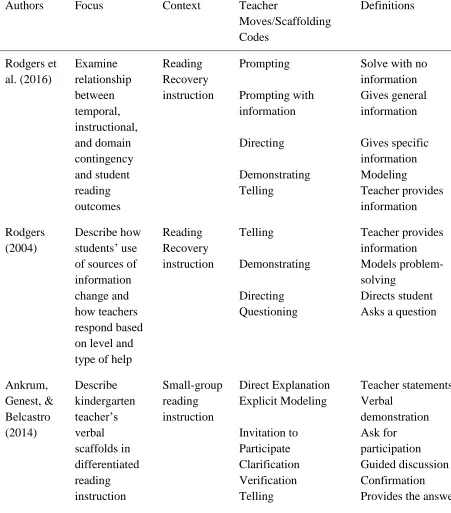
Table 2.1
Scaffolding Forms Determined in Prior Research.
Authors Focus Context Teacher
Moves/Scaffolding Codes Definitions Rodgers et al. (2016) Examine relationship between temporal, instructional, and domain contingency and student reading outcomes Reading Recovery instruction Prompting Prompting with information Directing Demonstrating Telling
Solve with no information Gives general information Gives specific information Modeling Teacher provides information Rodgers (2004) Describe how students’ use of sources of information change and how teachers respond based on level and type of help
Reading Recovery instruction Telling Demonstrating Directing Questioning Teacher provides information Models problem-solving Directs student Asks a question
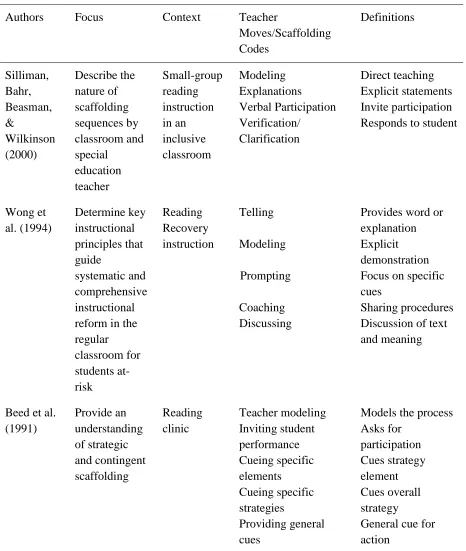
Table 2.1 (continued)
Authors Focus Context Teacher
Moves/Scaffolding Codes Definitions Silliman, Bahr, Beasman, & Wilkinson (2000) Describe the nature of scaffolding sequences by classroom and special education teacher Small-group reading instruction in an inclusive classroom Modeling Explanations Verbal Participation Verification/ Clarification Direct teaching Explicit statements Invite participation
Responds to student
Wong et al. (1994) Determine key instructional principles that guide systematic and comprehensive instructional reform in the regular classroom for students at-risk Reading Recovery instruction Telling Modeling Prompting Coaching Discussing
Provides word or explanation Explicit demonstration Focus on specific cues
Sharing procedures Discussion of text and meaning
Beed et al. (1991) Provide an understanding of strategic and contingent scaffolding Reading clinic Teacher modeling Inviting student performance Cueing specific elements Cueing specific strategies Providing general cues
Models the process Asks for participation Cues strategy element Cues overall strategy
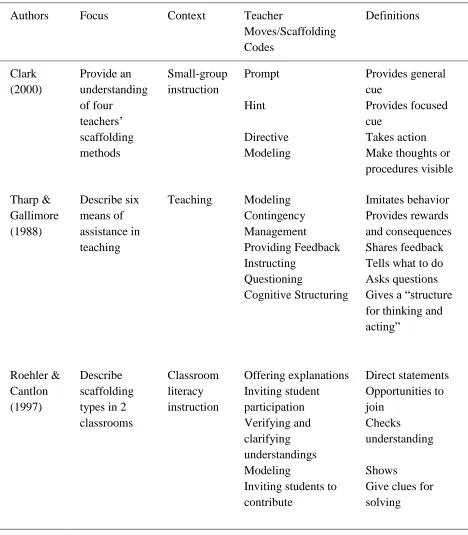
Table 2.1 (continued)
Authors Focus Context Teacher
Moves/Scaffolding Codes Definitions Clark (2000) Provide an understanding of four teachers’ scaffolding methods Small-group instruction Prompt Hint Directive Modeling Provides general cue Provides focused cue Takes action Make thoughts or procedures visible Tharp & Gallimore (1988) Describe six means of assistance in teaching
Teaching Modeling Contingency Management Providing Feedback Instructing Questioning Cognitive Structuring Imitates behavior Provides rewards and consequences Shares feedback Tells what to do Asks questions Gives a “structure for thinking and acting” Roehler & Cantlon (1997) Describe scaffolding types in 2 classrooms Classroom literacy instruction Offering explanations Inviting student participation Verifying and clarifying understandings Modeling
Inviting students to contribute Direct statements Opportunities to join Checks understanding Shows
Scaffolding in Reading Recovery. Many scaffolding studies focus on examining scaffolding types implemented within the context of Clay’s (1993) Reading Recovery (RR) instructional format, a one-on-one instructional intervention delivered in a setting separate from the mainstream classroom and focused on developing students’ abilities to use strategies to read text (Clay, 1993). The one-on-one nature of the RR learning environment allows investigation of the moves and the language of both the teacher and the student during the co-construction of student reading practices. Within this instructional model, Clay (1993) asserted that teachers should determine students’ needs and create instruction to scaffold within students’ ZPD. This model also calls for teachers to use assessment results and observation of students’ reading practices to uncover students’ needs and, in turn, determine effective scaffolding forms to implement during instruction.
A number of research studies identify and describe specific scaffolding categories
implemented during RR literacy instruction with students identified as having the most difficulty with reading (see Table 2.1). During 25 lessons for 10 students identified as needing support, Wong et al. (1994) found that five first and second-grade RR teachers scaffolded using the five forms of telling, modeling, prompting, coaching, and discussing. Furthermore, teachers’ use of the scaffolding forms depended on the level of familiarity with the instructional text.
scaffolding content, specifically whether teachers told the word or prompted for one of the following five actions: using one-to-one correspondence, using meaning, using the first letter, finding known words parts, or rereading. Findings indicated that most teacher scaffolding pertained to the actions matched to students’ needs rather than words (Rodgers, 2004). This study also investigated the four students’ growth as measured by their scores on Clay’s (2002) Observation Survey for literacy and their reading practices. Although a causal inference could not be drawn, each of these students showed growth in their literacy scores. Regarding their reading practices, students increased their one-to-one correspondence ability and the use of the initial letter in determining unknown words (Rodgers, 2004).
In more recent research, Rodgers and colleagues (2016) expanded Rodgers’ (2004) four scaffolding forms to include the following six forms: prompting, prompting with information, directing, demonstrating, and telling. Through analysis of 201 RR lessons, findings revealed teachers used demonstrating and telling as scaffolding types during initial lessons and then transitioned to directing during subsequent lessons. These findings align with the gradual release model of scaffolding in which teachers provide more support during initial interactions and decrease support as students demonstrate more independent abilities (Maloch, 2002; van de Pol et al., 2010).
directing, hinting, and modeling as scaffolding forms with the order of frequency as follows: hinting, directing, modeling and prompting.
Ankrum and colleagues (2014) analyzed the small-group literacy lessons of a
kindergarten teacher and, using forms adapted from Roehler and Cantlon (1997), determined the following six scaffolding types: direct explanation, explicit modeling, invitations for students to participate, clarification, verification, and telling. In addition to providing evidence of these scaffolding forms, they determined the teacher effectively matched scaffolding to the students’ literacy needs. However, in another study of scaffolding in small-group reading instruction, researchers found teachers did not scaffold according to students’ needs. Silliman and colleagues (2000) examined the co-teaching of a special education teacher and a classroom teacher and found the following categories of scaffolding: modeling, explaining, gaining verbal participation, and verifying or clarifying understanding. Despite the fact that four students were identified as having language and literacy difficulties, no differences in teacher scaffolding for the students existed. Furthermore, the researchers categorized 229 of the 231 scaffolding sequences as directive instruction rather than supportive instruction. Therefore, teachers imparted information rather than engaging students in the process of determining unknown words.
Scaffolding Cueing Systems
grammatical structure to determine unfamiliar words (Adams, 1998; Clay, 2002; Goodman, 1977).
Goodman introduced a new instructional reading practice known as miscue analysis (1977) and called attention to understanding which of the three cueing systems students used and did not use to determine unfamiliar words. He described the analysis of students’ miscues as “a window on the reading process” (1977, p. 5). The miscue analysis gained more popularity as part of the focus of RR instruction in analyzing running records and teaching strategies to students based on these cues (Clay, 1999; 2002). From this work, the concept of the three-cueing system emerged in which all three cueing forms—graphophonemic, semantic, and syntactic— should be considered equally to determine an unknown word (Adams, 1998; Shanahan, 2017).
Furthermore, to establish a balanced cueing system, teachers should observe students’ cue usage and support learning of unused cues to determine words (Clay, 1999; 2002; Goodman, 1977). The need to support readers in implementing a balanced cueing approach continued to receive support within published works intended for teachers (Burkins & Croft, 2010; Routman, 1994).
should focus on decoding words as good readers automatically recognize and, when needed, break words apart (Seidenberg, 2017).
The intersection of scaffolding and the three cueing systems has not received much attention in literacy research. However, Cole (2006) investigated teacher scaffolding in reading and determined the following four forms of cueing: primary, secondary, micro, and macro. Primary cues consist of graphophonemic, semantic, and syntactic cues that affect readers’ ability to decode text. However, secondary cues are those outside of the text and include consistent prompting of the same cues, discussion surrounding previous lessons, phonics rules, and various sounds of specific letters. These cues are believed to adversely affect beginning readers’ abilities to decode text or gain meaning (Cole, 2006). Micro cues focus on small units of text including sounds, letters, and words; whereas macro cues indicate larger units of text such as phrases, sentences, paragraphs, or the entire text. Cole found all seven teachers used each of the primary cue sources to increase students’ decoding ability. As students became more proficient, the teachers shifted to integrating macro cues more frequently to focus on reading connected text. This finding represents the use of the balanced approach of cueing systems; however, the investigation did not focus specifically on comparing the frequencies of the three cues.
Another less often explored component of teacher scaffolding of cueing systems is the extent of specificity. The investigation of specificity entails categorizing the scaffolds into levels of general or specific prompts. Clark (2000) categorized six teachers’ scaffolds by level of general or specific cues and found most teachers providing more specific scaffolds. In a reading clinic at an elementary school, Beed and colleagues (1991) introduced a specific strategy called SWAT to decode words that consisted of the following sequenced strategies: reading the
blending word parts together, and reading on and asking for help. The researchers found
instances of contingent teacher scaffolding in the following forms sequenced from most to least scaffolded support: modeling, seeking student participation, prompting for specific strategy elements, prompting for the SWAT strategy in general, and providing more general prompts beyond the specific strategy. Furthermore, they provided example scripts of teacher scaffolding to illustrate different levels of specificity in the scaffolding methods.
Effectiveness of Scaffolding
In contrast to the analysis of scaffolding forms and patterns, few studies explore the relationship between teacher scaffolding and student outcomes. One reason for this limited research is the difficulty of measuring the effectiveness of scaffolding (van de Pol et al., 2010). However, one study focused on how teachers’ scaffolding forms affected students’ reading practices as related to cueing systems. Within 15 RR lessons, Lee and Schmitt (2014) found positive relationships between 8 of 11 teachers’ scaffolds and students’ use of independent reading strategies. Strong, significant correlations existed with searching (r=.88; p<.004), self-monitoring (r=.85; p<.007), cross-checking (r=.87; p<.005), and visual as an information source (r=.87; p<.005). Moderately strong and significant correlations occurred for self-correcting (r=.75; p<.03), and moderately strong, non-significant correlations resulted for recognizing word parts (r=.65; p<.08), using structure (r=.59; p<.12), and meaning as an information source (r=.55; p<.15). This study demonstrated how teachers’ scaffolding led to students’ increased use of strategies during independent reading, as well as increased reading ability. Evidence from pre- and post-test results on a metacognitive interview further suggested students’ growth in
In addition to examining the effects of specific scaffolding forms on students’ reading practices, another study investigated the effectiveness of different forms of contingency
scaffolding within RR instruction. With her colleagues, Rodgers (2016) conducted an analysis of the following three types of scaffolding contingencies identified by Wood (2003) and further explained by van de Pol et al. (2010): domain, instructional, and temporal. From a sample of 38 teachers in RR training, six of the teachers were selected as highly effective literacy teachers based on the National Teacher Effectiveness Index and their students’ performance on the Observation Survey of Early Literacy Achievement. These six teachers exhibited more domain contingency than less effective RR teachers and improved their implementation of this form of scaffolding over instructional time. Furthermore, these six teachers were eight times more likely to support students in using forgotten cue sources during reading than less effective teachers. According to Rodgers and colleagues (2016), domain contingency is potentially the most essential component in increasing students’ reading proficiency. These findings highlight the importance of teacher scaffolding within the context of reading instruction.
how primary-grade teachers’ scaffolding in small-group literacy instruction supports students’ reading practices.
Chapter Summary
Aligned with the concepts of the ZPD (Vygotsky, 1978) and the co-construction of knowledge within social situations (Roehler & Cantlon, 1997; Vygotsky, 1978), social
CHAPTER 3 METHODOLOGY
“The aim is to thoroughly understand” (Stake, 1995, p. 9). Introduction to the Chapter
This study implemented qualitative multi-case study methodology to examine how classroom teachers instruct students identified as having the most difficulty with reading in small-group reading instruction. Case study methodology allows for the desired intention of interpreting the happenings in a specific context (Creswell, 2013). Within this methodology, I employed First and Second Cycle coding methods (Miles et al., 2014) to answer the following guiding research questions:
1. How do first-grade teachers scaffold within small-group reading instruction for students identified as having the most difficulty with reading?
2. How does teacher scaffolding support students’ reading during small-group instruction?
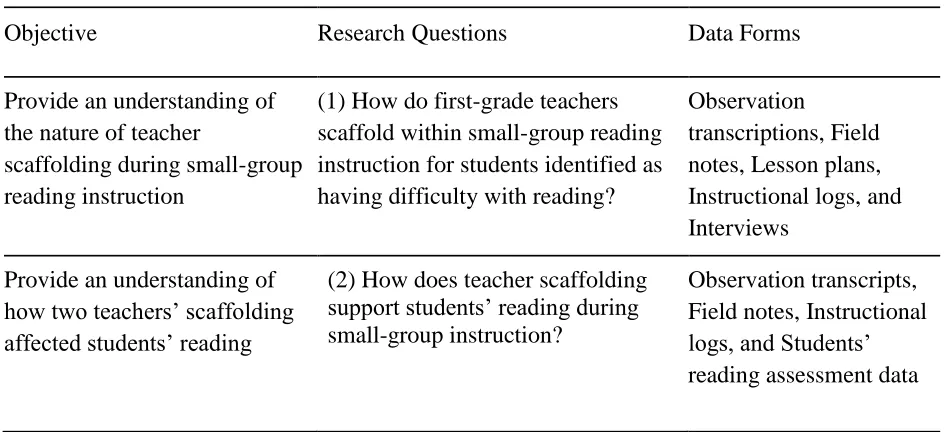
Table 3.1
Objectives, Research Questions, and Data Forms.
Objective Research Questions Data Forms
Provide an understanding of the nature of teacher
scaffolding during small-group reading instruction
(1) How do first-grade teachers scaffold within small-group reading instruction for students identified as having difficulty with reading?
Observation
transcriptions, Field notes, Lesson plans, Instructional logs, and Interviews
Provide an understanding of how two teachers’ scaffolding affected students’ reading
(2) How does teacher scaffolding support students’ reading during small-group instruction?
Observation transcripts, Field notes, Instructional logs, and Students’ reading assessment data
Case Study
case as “a specific, a complex, functioning thing” (p. 2) and asserted that case studies are essential in creating an understanding of how events take place in the daily classroom.
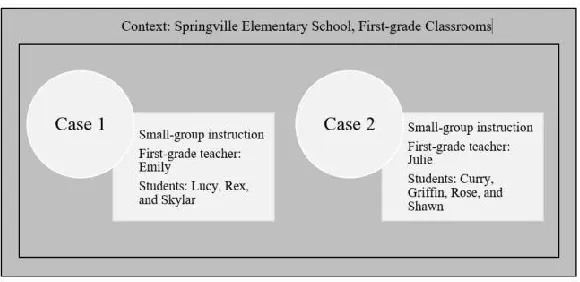
Furthermore, this study is a multi-case study design. Each case is defined as an individual first-grade teacher along with a specific group of students that have been identified as having the most difficulty in reading; therefore, these students participated in the reading group needing the most support. The multi-case study is bounded by the number of teachers (two), the grade level (first), the type of instruction observed (small-group reading), and the length of the study (2 months). (See Figure 3.1 for case study design.) This study is an instrumental case study as the case was not predetermined and the results provide knowledge extending beyond the teacher and student participants; instead, the case creates an understanding of the larger phenomenon (Stake, 1995) of small-group reading instruction for students identified as having the most difficulty with reading, teacher scaffolding, and the effect of the scaffolding on students’ reading practices. I describe and report thematic findings from each of the two individual cases in addition to overall thematic findings from a cross case analysis (Creswell, 2013).