R E S E A R C H
Open Access
Periodic solutions for Liénard type
equation with time-variable coefficient
Fabao Gao
1,2*, Shiping Lu
3and Minghui Yao
4*Correspondence:
[email protected]; [email protected]
1School of Mathematical Science,
Yangzhou University, Yangzhou, 225002, China
2Department of Engineering Science and Mechanics, Virginia Tech, Blacksburg, VA 24061, USA Full list of author information is available at the end of the article
Abstract
By means of topological theory, a class of Liénard type equations with a deviating argument of the form (
ϕ
p(x(t)))+f(x(t–τ
))x(t–τ
) +β
(t)g(x(t–τ
)) =e(t) is studied. Itis notable that the coefficient
β
(t) in front ofg(x(t–τ
)) is allowed to change sign in this paper. Moreover, a numerical simulation is carried out to verify the validity of the obtained results. In addition, the generalized form of the above equation with time-varying delays is also discussed briefly.Keywords: periodic solution;p-Laplacian; topological theory; time-varying coefficient
1 Introduction
Consider the Liénard typep-Laplacian differential equation
ϕp
x(t)+fx(t–τ)x(t–τ) +β(t)gx(t–τ)=e(t), (.)
wherep> andϕp:R→Ris given byϕp(s) =|s|p–sfors= andϕp() = , T
β(s)ds= ,
f,g,e∈C(R,R), ande(t) isT-periodic,Te(s)ds= , T,τ > are given constants. The equation can be applied to the dynamics of fluids. An example is Euler’s equation, govern-ing the flow of an ideal fluid in a conservative force field. While there are plenty of results on the existence of periodic solutions for thep-Laplacian equation (see [–] and refer-ences therein), studying delay Liénard equations with a variable coefficient in front of the nonlinear term is relatively uncommon. The main difficulty lies in findinga priori bounds
for (.) requiring the coefficient of the nonlinear term to keep a fixed sign.
In the aforementioned literature, based on the Leray-Schauder degree theory, Amster
et al.[] considered the existence of at least one periodic solution for thep-Laplacian-like system with a fixed delay. Gao and Zhang [] discussed ann-dimensionalp-Laplacian-like neutral functional differential equation, and they established some criteria to guarantee the existence of periodic solutions for the equation by using Mawhin’s continuation the-orem. Manásevich and Se¸dziwy [] were concerned with the existence and uniqueness of a limit circle for a generalized Liénard type equation, which involves the one-dimensional
problem driven by the scalarp-Laplacian with a nonsmooth potential via the degree map; they proved the existence of at least three distinct nontrivial solutions, two of which have a constant sign. In Gaines and Mawhin’s monograph [], coincidence degree theory was described and used to study alternative problems. Aizicoviciet al.[] conducted periodic problems driven by the scalarp-Laplacian with a multivalued right-hand side nonlinearity. Gaoet al.[, ] considered the existence of periodic solutions for two kinds of Rayleigh typep-Laplacian equations by using the continuation theorem. Cheung [] proposed the existence of periodic solutions of ap-Laplacian Rayleigh equation with two deviating ar-guments.
Based on topological theory and some analysis techniques, the existence of periodic so-lutions for (.) is investigated in the present paper. It is significant that the coefficientβ(t) of the nonlinear term can change sign, which cannot be achieved in most of the previous papers. Furthermore, a numerical simulation is performed to validate the feasibility of the obtained results. In addition, the fixed delays in (.) are also extended to the time-varying delays and we briefly discuss them. Moreover, the approaches used to estimatea priori boundsof periodic solutions are different from the corresponding ones in the literature.
2 Preliminaries
Let us consider the problem: findu∈CTsuch that
ϕp
u(t)=ft,u(t–τ),u(t–τ). (.)
Lemma .(see Amsteret al.[]) Let∈C
Tbe an open set.Assume that: (A) Forλ∈(, ]the problem
ϕp
u(t)=λft,u(t–τ),u(t–τ)
has no solution on∂. (A) The equation
F(a)
T
T
f(t,a, ) =
has no solution on∂∩Rn. (A) The Brouwer degree
degF,∩Rn, = .
Then the problem(.)has at least one solution in C T.
3 Main results
For the sake of convenience, we only study the periodic solutions of (.) in the case T
β(t)dt> ( T
β(t)dt< can be discussed in the same way).
(H) There are positive constantsm,m,anddsuch that
Proof Consider the homotopic equation of (.) as follows: Integrating both sides of (.) from toT and using the integral mean value theorem, there exists a constantξ∈(,T) such that
Now, we claim that
Case : If|x(ξ–τ)| ≤d, then (.) holds clearly.
which, together with assumption (H), leads to
x(ξ–τ)p–m
Combining the above two inequalities, we obtain
In view of (H), we have
ciently small constantε> such that
Cp(r+ε)
By assumption (H) and for suchε, we know there exists a constantρ>d(independent ofλ) such that Substituting (.) into (.) yields
+ (β∞Mg+e∞) BT
which implies that there exists a constantM> such that
x∞≤M. (.)
From (.) and (.), we can see that there exists a constantMsuch that
–
T
T
β(t)g(–M– )dt< .
So, condition (A) of Lemma . is also satisfied. Denote
H(x,μ) =μx+ –μ
T
T
β(t)g(x)dt,
and whenx∈∂∩R,μ∈[, ], in view ofTβ(s)ds> , we have
xH(x,μ) =μx+( –μ)x
T
T
β(t)g(x)dt> .
Thus,H(x,μ) is a homotopic transformation and
deg{F,∩R, }=deg
–
T
T
β(t)g(x)dt,∩R,
=deg{x,∩R, } = .
Therefore, condition (A) of Lemma . is also satisfied. By using Lemma ., we conclude that (.) has at least oneT-periodic solutionx(t) on¯ with|x|∞≤M. This completes
the proof of Theorem ..
4 Generalization
As a matter of fact, (.) can also be extended to the time-varying case, which admits the following form:
ϕp
x(t)+fx(t–τ)x(t–τ) +β(t)gxt–δ(t)=e(t), (.) whereδ(t+T)≡δ(t),δ(t) < , andTβ(s)ds= (the case ofTβ(s)ds> will be con-sidered in this section, and the other case,Tβ(s)ds< , can be studied in the same way). Then, according to Mawhin’s continuation theorem, the following result is obtained with a similar process to Theorem ..
Theorem . Assume that the following conditions hold: (C) There exist constantsr> ,r> ,andd≥such that
r|u|p–≤g(u)≤r|u|p– and ug(u) > , ∀|u|>d.
(C) There are constantr> andd≥such that|f(u)| ≤r|u|p–,∀|u|>d. (C) There is a constantε> such that
M:= ⎧ ⎪ ⎨ ⎪ ⎩
[(|β–|∞+ε)rT rT(β++ε)dt
]p– –p
p– < , <p≤, [(|β–|∞+ε)rT
rT(β++ε)dt
]p–< , p> ,
whereβ+=max
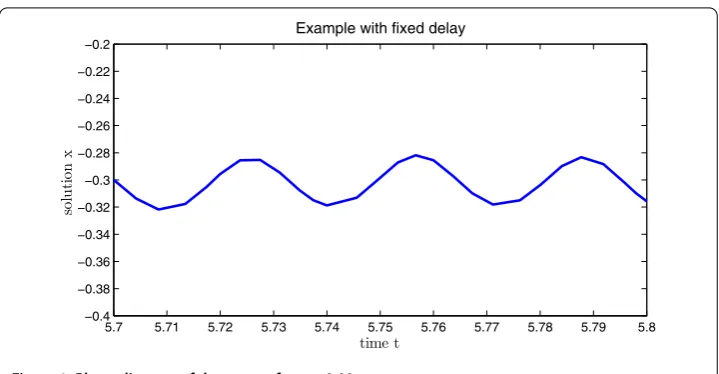
Figure 1 Phase diagram of the system forτ= 0.02.
Then(.)has at least one T -periodic solution if
CprTp–+ p–rθ|β|∞Tp< ( –M)p–,
whereθ=maxt∈[,T]
–δ(γ(t))andγ(t)denotes the inverse of function t–δ(t).
5 Example
For convenience, as an application of Theorem ., we consider the following example:
ϕ
x(t)+fx(t–τ)x(t–τ) +
sint+
gx(t–τ)=cost, (.)
wherep= ,f(t) = ,tsint ,β(t) =sint+,g(u) = ,u + ,e(t) =cost, thenF(u) = u
f(s)ds=
,(–ucosu+ usinu+ cosu– ), andβ∞=
. So we can choosem=
,,m=
,,d=
√
,r= ,,ε=
so that the conditions of Theorem . hold. Therefore, by Theorem . we find that (.) has at least oneπ -periodic solution, which can also be illustrated by numerical simulation.
By using MATLAB© .. (Ra) toolkit:dde, which can be used to solve delay differential equations with constant delays, (.) is simulated ontspan= [., .] with
history= [., –.] fort≤ (see Figure ). It can be found from Figure that the equation admits one periodic solution with periodicity ., which is around π . Therefore, the results achieved in this paper are significant.
Competing interests
The authors declare that they have no competing interests.
Authors’ contributions
All authors contributed equally to this work. All authors read and approved the final version of the manuscript.
Author details
1School of Mathematical Science, Yangzhou University, Yangzhou, 225002, China.2Department of Engineering Science
Acknowledgements
This work is supported by the National Natural Science Foundation of China (NSFC) through grant Nos. 11302187, 11271197, 11172009, 11372015 and 61473340. The authors are extremely grateful to the referees for their careful review of the manuscript and insightful comments, which helped to improve the paper greatly. The authors are also very grateful to Ms. Xiaojing Li for her original insightful ideas.
Received: 8 October 2014 Accepted: 10 April 2015
References
1. Amster, P, De Nápoli, PL, Mariani, MC: Periodic solutions forp-Laplacian-like systems with delay. Dyn. Contin. Discrete Impuls. Syst., Ser. A Math. Anal.13, 311-319 (2006)
2. Gao, FB, Zhang, W: Periodic solutions for ap-Laplacian-like NFDE system. J. Franklin Inst.348, 1020-1034 (2011) 3. Manásevich, R, Se¸dziwy, S:p-Laplacian and Liénard type equation. Rocky Mt. J. Math.27, 611-617 (1997) 4. Manásevich, R, Mawhin, J: Periodic solutions for nonlinear systems withp-Laplacian-like operators. J. Differ. Equ.45,
367-393 (1998)
5. Aizicovici, S, Papageorgiou, NS, Staicu, V: Multiple nontrivial solutions for nonlinear periodic problems with the p-Laplacian. J. Differ. Equ.243, 504-535 (2007)
6. Gaines, RE, Mawhin, J: Coincidence Degree and Nonlinear Differential Equations. Springer, Berlin (1977) 7. Aizicovici, S, Papageorgiou, NS, Staicu, V: Periodic solutions for second order differential inclusions with the scalar
p-Laplacian. J. Math. Anal. Appl.322, 913-929 (2006)
8. Gao, FB, Lu, SP, Zhang, W: Periodic solutions for a Rayleigh typep-Laplacian equation with sign-variable coefficient of nonlinear term. Appl. Math. Comput.216, 2010-2015 (2010)
9. Gao, FB, Lu, SP: Periodic solutions for a Rayleigh type equation with a variable coefficient ahead of the nonlinear term. Nonlinear Anal., Real World Appl.10, 254-258 (2009)