POLYHERBAL PREPARATION AND COMPARATIVE STUDIES ON DIET-INDUCED
HYPERLIPIDEMIA
NUZHAT QURESHI
1*, RAGHVENDRA DUBEY
1, NILESH KUMAR PATHAK
21Department of Pharmacology, College of Pharmacy, Indore, Madhya Pradesh, India, 2Department of Pharmacology, Royal Institute of Management and Advanced Studies, Ratlam, Madhya Pradesh, India. Email: [email protected]
Received: 11 July 2019, Revised and Accepted: 27 September 2019 ABSTRACT
Objective: The objective of this research article is to develop and evaluate polyherbal preparation and comparative studies on diet-induced hyperlipidemia.
Methods: After the extraction, pharmacognostical and phytochemical screening was done. The lipid-lowering activity of polyherbal formulation (T1, T2, T3, T4, and T5) may be attributed to the phytoconstituents present such as alkaloids, carbohydrates, steroids, proteins, tannins, carbohydrates, flavonoids, phenols, glycosides, and triterpenes. In acute oral toxicity study, there were no behavioral changes seen up to 4 h and no mortality was observed up to the end of 24 h even at the maximum tested dose level of 2000 mg/kg per oral. It was considered maximum safe dose. Male and female albino rats weighing 150–200 g were used for the study. Hydroalcoholic extract of all plants was prepared having a dose of 2000 mg/kg. The doses were selected according to the Organisation for Economic Cooperation and Development guideline no. 425. The procedure was divided into two phases: Phase I (observation made on day 1) and Phase II (observed the animals for the next 14 days of drug administration). Animals received a single dose of 2000 mg/kg. After the administration of Healthcare Administration, food was withheld for 3–4 h. In case animal dies, we have to again perform the test for the determination of LD50. The study was conducted by measuring various parameters, namely, daily feed intake (g), water intake (ml), body weight (g), lipid profile high-density lipoprotein (HDL), low-density lipoprotein (LDL), Cholesterol (CHL) level (mg/dl), and blood glucose level (mg/dl).
Results: Results showed a significant decrease in blood glucose level and serum lipid profile such as total cholesterol, LDL, and increasing serum HDL level, so could be useful in the treatment of hypolipidemia.
Conclusion: Polyherbal formulations (T1, T2, T3, T4, and T5)have hypoglycemic activity and significantly improve lipid profile levels in diet-induced experimental rats.
Keywords: Hyperlipidemia, Atherosclerosis, Allium sativum, Moringa oleifera, Cicer arietinum, Hibiscus rosa-sinensis, Quisqualis indica.
INTRODUCTION
Hyperlipidemia is known as a condition of an increased level of serum total cholesterol (TC), low-density lipoprotein (LDL), very LDL (VLDL), and reduced high-density lipoprotein (HDL) [1].
Cardiovascular diseases (CVDs) are a major risk factor caused by hyperlipidemia. Hyperlipidemia disease has afflicted humankind since antiquity. Hyperlipidemia, or hyperlipoproteinemia, is defined as abnormally elevated levels of one or more of triglycerides, cholesterol, cholesterol esters, and phospholipids and plasma lipoproteins including VLDL and LDL, and reduced HDL levels. These lipoproteins are deposit in the interstitial space of arteries arising from aorta, restricting the blood supply to the heart. This phenomenon is known as atherosclerosis. Due to the privilege deposition of lipoproteins, blood supply to the heart gets blocked, and thus, myocardial infarction occurs, which is usually well known as heart attack.
Among ischemic heart disease and the high mortality rate, there is a strong relation. In addition, high plasma cholesterol levels cause more than 4 million deaths in a year. Secondary hyperlipidemia often mimics familial forms of hyperlipidemia and can have similar effects. Due to secondary hyperlipidemia, risk of premature atherosclerosis increased or, when happen with severe hypertriglyceridemia, may cause pancreatitis and other consequences of the chylomicronemia syndrome [2,3].
© 2019 The Authors. Published by Innovare Academic Sciences Pvt Ltd. This is an open access article under the CC BY license (http://creativecommons. org/licenses/by/4. 0/) DOI: http://dx.doi.org/10.22159/ajpcr.2019.v12i12.34872
Research Article
From times of yore, several studies have shown that dietary modifications such as high-fiber diets, low-fat diets, and diets rich in flavonoids and phenolic acids can reduce metabolic syndrome
risk factors. Statins and synthetic antioxidants such as probucol are modern antihyperlipidemic drugs which are widely used to treat atherosclerosis. Regrettably, these drugs are not free of side effects. To provide novel treatments for hyperlipidemia, it has been focused on the natural products that have very few side effects [4-6].
Herbs have a defined kind of potency through which they can stimulate the human body to protect itself against the diseases. These medicinal herbs serve as a great source of remedies in the treatment of human and animal diseases [7].
Here, we are in progress to prepare a polyherbal formulation which consists of the extract of Allium sativum, Moringa oleifera, Cicer Table 1: Animals were grouped as follows
Group I Normal control group (normal diet [ND]) Group II Positive control group (ND+HFHSD)
Group III Standard control group (HFHSD+ND+atorvastatin calcium [2.1 mg/kg, p.o. body weight])
Group IV Test control group (HFHSD+ND+polyherbal formulation [300 mg/kg, p.o. body weight])
HFHSD: High-fat high-sugar diet
0 50 100 150 200 250 300 350 400 450
NC PC STD TEST
Level of conten
t
Feed & water content
Normal Pellet Diet (gm)
HFHS Diet (gm) Water intake (ml)
Graph 1: Effect of high-fat high-sugar diet on total feed and water content. Values are expressed as mean±standard deviation; (n=6). All values are mean±standard error of mean, n=6. *p<0.05, **p<0.01 when compared to positive control group, following repeated measures
ANOVA parametric methods, using Dunnett’s test
0 20 40 60 80 100 120 140 160 180
0th day 7thday 14th day 21thday
Body
W
eight (gm)
Day
NC
PC
STD
Test
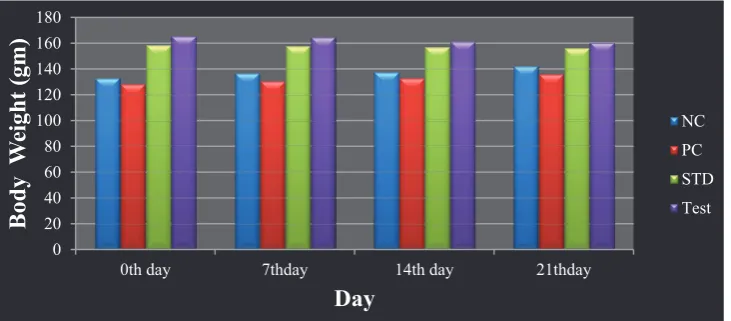
Graph 2: Effect of high-fat high-sugar diet, atorvastatin, and Cordia dichotoma on body weight. Values are expressed as mean±standard deviation; (n=6). All values are mean±standard error of mean, n=6. *p<0.05, **p<0.01 when compared to positive control group. Following
repeated measures ANOVA parametric methods, using Dunnett’s test. NC: Normal control group, PC: Positive control group or high-fat high-sugar diet group, standard: ND+high-fat high sugar (HFHS)+atorvastatin (2.1 mg/kg/day), test control: ND+HFHS+polyherbal
formulation (300 mg/kg/day)
Table 2: Morphological characteristics of plants part
S. No. Character Observation
T1 T2 T3 T4 T5
1. Color Green Green Green Deep green Green
2. Odor Rough Smooth Rough Slender Waxy
3. Taste Pungent Better to ingest Sweet Edible tangy citrusy Simple
4. Size 5–150 cm 2–5 cm 0.5–3 cm 6.0″ length 5–10 cm
arietinum, Hibiscus rosa-sinensis, and Quisqualis indica for the treatment of hyperlipidemia.
Garlic (A. sativum L., family: Alliaceae) has played significant medicinal and dietary roles throughout the ages. A. sativum (Garlic) preparations are commercially available in the form of garlic oil and garlic powder, and pills are widely used for certain therapeutic purposes, including improving lipid profile and lowering blood pressure. Extract of A. sativum is alleged to possess valuable effects for the prevention of CVDs. Garlic contains active hypocholesterolemic and hypoglycemic
components, known as diallyl disulfide and dipropyl disulfide; it was proven by several studies [8-10].
Leaves of M. oleifera Lam., Moringaceae, are claimed to possess several pharmacological activities such as cholesterol-reducing effect and are used to treat patients with heart disease and antiobesity potential that protects the body against adverse effects
of high-fat diet-induced obesity. The presence of β-sitosterol in
crude extracts of M. oleifera possesses potential hypolipidemic properties [11,12].
C. arientum reported a rich source of vitamins, minerals, and phytoestrogens. Seeds of C. arientum were used as stimulant, aphrodisiac, tonic, anthelminthic, appetizer, relieving burning sensation in stomach, and in the treatment of obesity and in patients who consume excess oily and heavy foods. Cholesterol-lowering effects of C. arientum in different types of hyperlipidemias such as induced by diet are demonstrated in several research studies [13].
H. rosa-sinensis Linn. flowers exhibited a significant reduction in serum lipid parameters such as triglycerides, TC, LDL, VLDL, and increase in HDL [14].
Cholesterol diet and passive smoking raise the lipid and cholesterol levels with reducing the HDL level which causes hypercholesterolemia and hyperlipidemia existing heart disease such as heart attack and heart stroke in the future. Q. indica Linn. raised the HDL level which is good cholesterol and produced a significant reduction in harmful lipids. Q. indica extracts contain flavonoids and phenolic compounds helpful in CVD [15,16].
METHODS Collection of plant
A. sativum, M. oleifera, C. arietinum, Q. indica, H. rosa-sinensis, and Q. indica were collected from various places from BHEL area, Govindpura, Bhopal, Madhya Pradesh, during the month of May 2018.
Authentication of plant material
The plant has been identified and authenticated by Janata PG College, A.P.S. University, Rewa, Madhya Pradesh, voucher specimen no. is Number/J/BOT/H-332 to H-336.
Preparation of extract
Extraction of A. sativum, M. oleifera, C. arietinum, Q. indica, H. rosa-sinensis, and Q. indica was done by Soxhlet extraction method (Fig. 1).
• Soxhlet extraction: Soxhlet apparatus was used for the extraction and
hydroalcoholic solvent (1:1) was selected as a solvent for extraction and calculated percentage yield of the extract.
Table 3: Consistency and color of all plant extracts
Extract Solvent uses Color Consistency
T1 Hydroalcoholic Dark green Semi-solid
T2 Hydroalcoholic Black Semi-solid
T3 Hydroalcoholic Black Semi-solid
T4 Hydroalcoholic Dark green Semi-solid
T5 Hydroalcoholic Dark green Semi-solid
T1: Allium sativum, T2: Moringa oleifera, T3: Cicer arietinum,
T4: Hibiscus rosa-sinensis, T5: Quisqualis indica
Table 4: Percentage yield of all plant extracts
S. No. Extracts Yield (g) Percentage yield (%)
1. T1 12.801 14.94
2. T2 11.502 12.50
3. T3 13.200 15.20
4. T4 15.020 16.25
5. T5 14.250 13.65
T1: Allium sativum, T2: Moringa oleifera, T3: Cicer arietinum,
T4: Hibiscus rosa-sinensis, T5: Quisqualis indica
Table 5: Physiochemical analysis of powder of all plant leaves S. No. Parameters Observation (%)
T1 T2 T3 T4 T5
1. Loss on drying 1.58 2.05 1.35 1.55 1.75
2. Total ash value 4.50 3.80 3.59 4.89 3.74
3. Acid-insoluble
ash value 0.85 1.05 0.95 1.00 1.10
4. Water-soluble
ash value 0.89 0.93 0.085 0.97 1.0
5. Foaming
index (cm) 1.00 1.25 0.62 0.5 0.45
T1: Allium sativum, T2: Moringa oleifera, T3: Cicer arietinum,
T4: Hibiscus rosa-sinensis, T5: Quisqualis indica
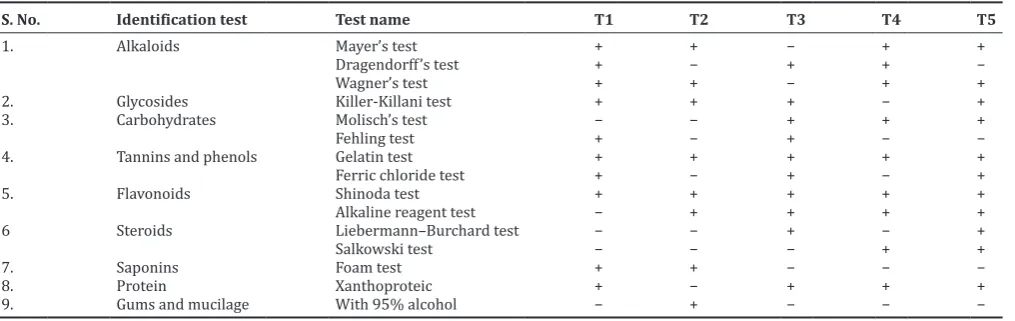
Table 6: Phytochemical screening of hydroalcoholic extract
S. No. Identification test Test name T1 T2 T3 T4 T5
1. Alkaloids Mayer’s test + + − + +
Dragendorff’s test + − + + −
Wagner’s test + + − + +
2. Glycosides Killer-Killani test + + + − +
3. Carbohydrates Molisch’s test − − + + +
6 Steroids Liebermann–Burchard test − − + − +
Salkowski test − − − + +
7. Saponins Foam test + + − − −
8. Protein Xanthoproteic + − + + +
9. Gums and mucilage With 95% alcohol − + − − −
0 10 20 30 40 50 60
0th day 7thday 14th day 21thday
HD
L
Leve
l(
mg/dl
)
Days
NC PC STD Test
Graph 3: Effect of high-fat high-sugar diet, atorvastatin, and Cordia dichotoma on HDL level. Values are expressed as mean±standard deviation; (n=6). All values are mean±standard error of mean, n=6. *p<0.05, **p<0.01 when compared to positive control group. Following
repeated measures ANOVA parametric methods, using Dunnett’s test. NC: Normal control group, PC: Positive control group or high-fat high-sugar diet group, standard: ND+high-fat high sugar (HFHS)+atorvastatin (2.1 mg/kg/day), test control: ND+HFHS+polyherbal
formulation (300 mg/kg/day)
0 10 20 30 40 50 60 70 80
0th day 7thday 14th day 21thday
LD
L
level (mg/dl)
Days
NC PC STD TEST
Graph 4: Effect of high-fat high-sugar diet, atorvastatin, and Cordia dichotoma on LDL level. Values are expressed as mean±standard deviation; (n=6). All values are mean±standard error of mean, n=6. *p<0.05, **p<0.01 when compared to positive control group. Following
repeated measures ANOVA parametric methods, using Dunnett’s test. NC: Normal control group, PC: Positive control group or high-fat high-sugar diet group, standard: ND+high-fat high sugar (HFHS)+atorvastatin (2.1 mg/kg/day), test control: ND+HFHS+polyherbal
formulation (300 mg/kg/day)
0 50 100 150 200 250
0th day 7thday 14th day 21thday
CH
L
level (mg/dl
)
Days
NC PC STD TEST
Graph 5: Effect of high-fat high-sugar diet, atorvastatin, and Cordia dichotoma on CHL level. Values are expressed as mean±standard deviation; (n=6). All values are mean±standard error of mean, n=6. *p<0.05, **p<0.01 when compared to positive control group. Following
repeated measures ANOVA parametric methods, using Dunnett’s test. NC: Normal control group, PC: Positive control group or high-fat high-sugar diet group, standard: ND+high-fat high sugar (HFHS)+atorvastatin (2.1 mg/kg/day), test control: ND+HFHS+polyherbal
Preparation of polyherbal formulation
The hydroalcoholic extract of A. sativum (50 mg), M. oleifera (50 mg), C. arietinum (50 mg), H. rosa-sinensis (50 mg),and Q. indica (50 mg) was dissolved in suspending agent (1% carboxymethylcellulose [CMC] aqueous) before orally administered to the rats. Standard drug was dissolved in suspending agent (1% CMC) before orally administered to the rats [19].
Preparation of high-fat high-sugar diet (HFHSD)
Bread (30 g)+Biscuits (30 g)+Vanaspati ghee (3 ml)+Coconut oil (1 ml) 25% fructose was added in drinking water bottle.
These diets were fed along with normal diet for a total period of 6 weeks to rats.
Experimental protocols
In the HFHSD model, the animals were divided into five groups and each group composed of six animals (Table 1).
All the treatments were carried out for 42 days. Before and after the treatment, the animals were fasted for 2 h to improve the absorption rate. Parameters studied for this test were body weights, blood glucose, and total high-density lipoprotein cholesterol levels.
RESULTS
• Morphology (Table 2)
• Consistency and color (Table 3)
• Practical and percentage yield (Table 4)
• Screening of powder (Table 5)
• Phytochemical screening: There is the presence of different
phytochemicals in hydroalcoholic extract T1, T2, T3, T4, and T5 (Table 6).
• Antihyperlipidemic activity of polyherbal formulation from
diet-induced model on experimental rats Acute toxicity studies (LD50): In both Phase I and Phase II procedures, none of the animal mortal or any signs of behavioral changes or show any toxicity on the single administration of Healthcare Administration (2000 mg/kg p.o.). Thus, 300 mg/kg dose was selected for the present study (Table 7).
• Effect on blood glucose level (mg/dl) (Table 13)
Graphical representation
• Effect on total feed and water intake • Effect on body weight
• Effect on HDL level
Table 11: LDL level (mg/dl)
Group 0th day 7th day 14th day 21th day NC 73.00±2.28 71.16±1.72 68.16±2.04 69.5±1.76* PC 49.5±3.08 56.66±2.94 66.16±2.92 75.16±3.48 STD 43.16±2.31 48.67±2.58 53.5±1.76** 54.34±2.59* Test 43.33±1.87 47.83±2.14 51.00±3.03** 53.34±2.43**
All values are mean±standard error of mean, n=6. *p<0.05, **p<0.01 when compared to positive control group. (Following repeated measures ANOVA (parametric methods, using Dunnett’s test). LDL: Low-density lipoprotein (Graph 4)
Table 7: Results of acute oral toxicity study of HACD Group
name Animal mark Dose mg/kg Body weight (g)1 day 7 days 14 days Observation Mortality (if any)
Control H Normal saline (0.91%) 153 148 146
No sign of toxicity and
all animals survived No mortality occurs
B 155 150 152
T 138 135 132
Test HT 2000 mg/kg polyherbal formulation
(once dosing at start of acute oral toxicity study) 205 208 202
BT 190 185 180
NM 175 165 168
Table 12: CHL level (mg/dl)
Group 0th day 7th day 14th day 21th day NC 140.34±3.67 146.17±3.31 150.34±3.45 153.5±2.95** PC 146.00±1.42 153.5±2.58 170.66±4.58 192.5±2.74 STD 148.00±3.46 154.33±1.86* 170.34±3.07 182.00±4.60 Test 156.00±2.36 169.66±3.15 174.67±2.43 183.5±2.50
All values are mean±standard error of mean, n=6. *p<0.05, **p<0.01 when compared to positive control group. (Following repeated measures ANOVA (parametric methods, using Dunnett’s test) (Graph 5)
Table 10: HDL level (mg/dl)
Group 0th day 7th day 14th day 21th day NC 46.67±1.64 48.17±1.17 48.66±2.25 50.00±1.90 PC 48.67±2.74 49.34±2.34 49.83±1.84 50.83±1.48 STD 46.16±2.48* 49.16±2.13 50.83±2.48** 50.5±1.51 Test 50.5±2.48 57.00±3.35 55.83±3.12 54.55±2.58
All values are mean±standard error of mean, n=6. *p<0.05, **p<0.01 when compared to positive control group. (Following repeated measures ANOVA (parametric methods, using Dunnett’s test). HDL: High-density lipoprotein (Graph 3)
Table 8: Total feed (g) and water (ml) intake Group Normal
pellet diet (g) HFHSD (g) Water intake (ml)
NC 89.38±27.53 0 296.67±66.60
PC 53.09±4.70* 135.73±18.41 307.67±86.98**
STD 57. 08±21.13* 151.16±9.99 305.00±51.57
Test 72.40±12.78 162.28±10.82 406.33±20.88
All values are mean±standard error of mean, n=6. *p<0.05, **p<0.01 when compared to positive control group. (Following repeated measures ANOVA (parametric methods, using Dunnett’s test). HFHSD: High-fat high-sugar diet (Graph 1)
Table 9: Body weight (g)
Group 0th day 7th day 14th day 21th day NC 133.17±3.25 137.5±3.20 138.00±1.78 142.66±1.36** PC 128.5±2.42 130.8±2.63 133.00±2.36 136.33±1.67 STD 158.5±2.88 158.00±3.34 157.33±3.07 156.16±2.49 Test 166.00±5.03* 164.83±4.53* 161.83±4.07* 160.83±4.35
• Effect on LDL level • Effect on CHL level • Effect on blood glucose level
DISCUSSION
The study was carried out to evaluate antihyperlipidemic activity of polyherbal formulation (T1, T2, T3, T4, and T5) in HFHSD-induced model of rats.
The coarse powder of the shed dried part of the plant was subjected to extraction using Soxhlet apparatus. The plant material was extracted with hydroalcoholic solvent system (1:1). The obtained practical yield of extract sequentially (T1, T2, T3, T4, T5) was 12.801 g, 11.502 g, 13.200gm, 15.020 g, and 14.250 g or percentage yield of extract was 14.94%, 12.50%, 15.20%, 16.25%, and 13.65%.
After the extraction, pharmacognostical and phytochemical screening was done. The lipid-lowering activity of polyherbal formulation (T1, T2, T3, T4, and T5) may be attributed to the phytoconstituents present such as alkaloids, carbohydrates, steroids, proteins, tannins, carbohydrates, flavonoids, phenols, glycosides, and triterpenes.
In acute oral toxicity study, there were no behavioral changes seen up to 4 h and no mortality was observed up to the end of 24 h even at the maximum tested dose level of 2000 mg/kg per oral. It was considered maximum safe dose.
The study was conducted by measuring various parameters, namely, daily feed intake (g), water intake (ml), body weight (g), lipid profile HDL, LDL, CHL level (mg/dl), and blood glucose level (mg/dl).
CONCLUSION
We can say that polyherbal formulations (T1, T2, T3, T4, and T5) have hypoglycemic activity and significantly improve lipid profile levels in diet-induced experimental rats. Results showed significant decrease in blood glucose level and serum lipid profile such as TC, LDL, and increasing serum HDL level, so could be useful in the treatment of hypolipidemia as mentioned in traditional medicine. However, further studies required to isolate the phytochemicals those responsible for hypolipidemic activity.
ACKNOWLEDGMENTS
The authors would like to thank Dr. Raghvendra Dubey, Principal of College of Pharmacy, Indore, Madhya Pradesh, for supporting us for the completion of this research work.
AUTHORS’ CONTRIBUTIONS
All the authors have equally contributed.
CONFLICTS OF INTEREST
The authors declare that there are no conflicts of interest.
REFERENCES
1. Fattepur S, Nilugal CK, Rajendran R, Asmani F, Yusuf E. Anti-hyperlipidemic activity of methanolic extract of Boesenbergia pandurata (finger root) in experimental induced hypercholestrolemic sprague dawley rats. Asian J Pharm Clin Res 2018;11:8.
2. Verma N. Introduction to hyperlipidemia and its treatment: A review. Int J Curr Pharm Res 2017;9:6-14.
3. Nouh F, Omar M, Younis M. Risk factors and management of hyperlipidemia (review). Asian J Cardiol Res 2019;2:1-10.
0
0th day
7thday
14th day
21thday
Blood glucose level (mg/dl
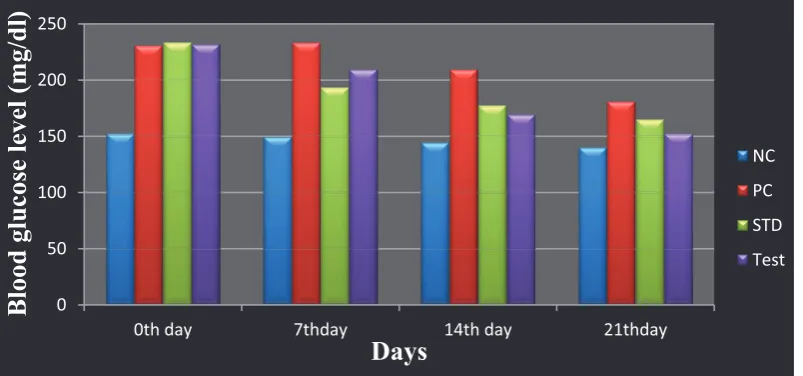
Table 13: Blood glucose level (mg/dl)
Group 0th day 7th day 14th day 21th day
NC 152.5±1.87** 149.5±1.87** 144.84±2.13** 140.67±3.01*
PC 230.83±2.31 234.00±2.60 209.34±5.16 180.84±10.18
STD 233.84±4.84 193.67±6.98* 177.83±3.43 165.16±5.11
Test 232.00±5.97 209.34±6.12 169.33±7.97 152.8±4.13
All values are mean±standard error of mean, n=6. *p<0.05, **p<0.01 when compared to positive control group. (Following repeated measures ANOVA (parametric methods, using Dunnett’s test)
Graph 6: Effect of high-fat high-sugar diet, atorvastatin, and Cordia dichotoma on blood glucose level. Values are expressed as mean±standard deviation; (n=6). All values are mean±standard error of mean, n=6. *p<0.05, **p<0.01 when compared to positive control
group. Following repeated measures ANOVA parametric methods, using Dunnett’s test. NC: Normal control group, PC: Positive control group or high-fat high-sugar diet group, standard: ND+high-fat high sugar (HFHS)+atorvastatin (2.1 mg/kg/day), test control: ND+HFHS
4. Venkateshan S, Subramaniyan V, Chinnasamy V, Chandiran S. Anti-oxidant and anti-hyperlipidemic activity of Hemidesmus indicus in rats fed with high-fat diet. Avicenna J Phytomed 2016;6:516-25.
5. Iyer A, Panchal S, Poudyal H, Brown L. Potential health benefits of Indian spices in the symptoms of the metabolic syndrome: A review. Indian J Biochem Biophys 2009;46:467-81.
6. Lankin VZ, Tikhaze AK, Kukharchuk VV, Konovalova GG, Pisarenko OI, Kaminnyi AI, et al. Antioxidants decreases the intensification of low density lipoprotein in vivo peroxidation during therapy with statins. Mol Cell Biochem 2003;249:129-40.
7. Sarvesh CN, Fernandes J. Evaluation of antihyperlipidemic activity of leaves of Achyranthes aspera Linn. Using hyperlipidemic rats. Asian J Pharm Clin Res 2017;10:211-5.
8. Mamun MA, Hasan N, Shirin F, Belal MH, Khan MA, Tasnin MN,
et al. Antihyperglycemic and antihyperlipidemic activity of ethanol extract of garlic (Allium sativum) in streptozotocin-induced diabetic mice. Int J Med Health Res 2017;3:63-6.
9. Keshetty V, Pabba S, Gudipati R, Kandukuri JM, Allenki V. Antihyperlipidemic activity of methanolic extract of garlic (Allium sativum L.) in triton X-100 induced hyperlipidemic rats. J Pharm Res 2009;2:777-80.
10. Jain RC, Vyas CR. Garlic and alloxan induced diabetic rabbits. Am J Clin Nutr 1975;28:684-5.
11. Bais S, Singh GS, Sharma R. Antiobesity and hypolipidemic activity of Moringa oleifera leaves against high fat diet-induced obesity in rats. Adv Biol 2014;2014:157895.
12. Jain PG, Patil SD, Haswani NG, Girase MV, Surana SJ. Hypolipidemic activity of Moringa oleifera Lam., moringaceae, on high fat diet induced hyperlipidemia in albino rats. Braz J Pharmacogn 2010;20:969-73. 13. Harini S, Adilaxmamma K, Mohan EM, Srilatha C, Raj MA.
Antihyperlipidemic activity of chickpea sprouts supplementation in ovariectomy induced dyslipidemia in rats. J Ayurveda Integr Med 2015;6:104-10.
14. Sikarwar MS, Patil MB. Antihyperlipidemic activity of Hibiscus rosa-sinensis Linn. ethanolic extract fractions. Int J Health Allied Sci 2015;4:73-8.
15. Jyoti S, Kumar PP, Kaur CD. Effect of Quisqualis indica extract on cholesterol diet induced hyperlipidemia in rats. Res J Pharmacol Pharmacodyn 2013;5:317-20.
16. Sahu JJ, Patel PK, Dubey B. Effects of methanolic extracts of Quisqualis indica (aerial parts) on passive smoking induced hyperlipidemia in rats. Asian J Pharm Tech 2013;3:26-9.
17. Bairagi VA, Sadu N, Senthilkumar KL, Ahir Y. Antidiabetic potential of Quisqualis indica linn in rats. Int J Pharm Phytopharmacol Res 2012;1:16671.
18. Bisht A, Madhav NV, Upadhyaya K. Screening of polyherbal formulation for its potential anti-hyperlipidemic and antioxidant activity. J Pharmacogn Phytochem 2015;3:134-9.
![Fig. 1: Soxhlet extraction of plant parts [17,18]](https://thumb-us.123doks.com/thumbv2/123dok_us/967343.1118731/1.595.307.551.495.728/fig-soxhlet-extraction-of-plant-parts.webp)