UNI
'IAC@FILE-COMPUTER
Y "
DATA AUTOMATION SYSTEM
I I.! ·1 < •
II
II i
Ji I
~ , I
I I
. I
PROGRAMMER'S REFERENCE MANUAL
UNIVAC FIIE-COMPUfER
MAG NET I C TAP E U NIT
Another Service of . . . . .
Management Services and Operations Research Department Remington Rand Univac
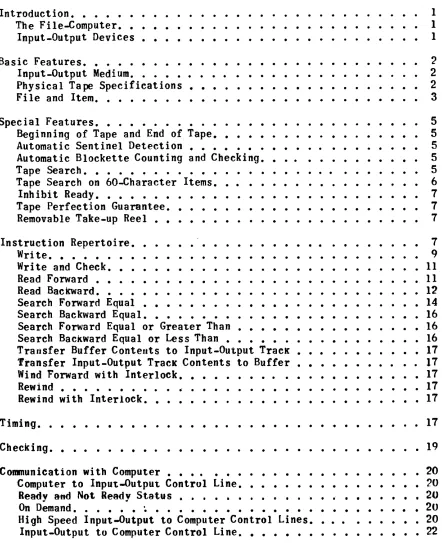
TABLE OF CO~~ENTS
Introduction.
The File-Computer. Input-Output Devices •
Basic Features.
Input-Output Medium.
Physical Tape Specifications • File and Item.
Special Features.
.
.
Beginning of Tape and End of Tape. Automatic Sentinel Detection •
Automatic Blockette Counting and Checking. Tape Search.
Tape Search on 60-Character Items. Inhibit Ready.
Tape Perfection Guarantee. Removable Take-up Reel •
Instruction Repertoire. Write.
Write and Check. Read Forward • Read Backward.
Search Forward Equal Search Backward Equal.
Search Forward Equal or Greater Than • Search Backward Equal or Less Than •
Transfer Buffer Contents to Input-Output TracK • Transfer Input-Output TracK Contents to Buffer • Wind Forward with Interlock.
Rewind •
Rewind with Interlock • • •
Timing.
Checking.
.
.
Communication with Computer.
Computer to Input-Output Contrul Line. Ready and Not Ready Sta,tus •
On Demand. ~ ••
. .
High Speed Input-Output to Computer Control Lines. Input-Output tu Computer Control Line ••
Page I I I 2 2 2 3 5 5 5 5 5 6 7 7 7 7 9 · II • 11
12 • 14 • 16 • 16 • 16 • 17 17 • 17 • 17 • 17
17
• 19
• 20
• 20
• 20
• • 2u
Programming Techniques. . . . . . . . Example of Input Routine - UFC-l . . . . Example of Input Routine - UFC-O
Tape Labels . . . .
Example of Output Routine - UFC-l. Ex~mple of Output Routine - u~C-O. Tape Search . . . .
Error Recovery . . . . . Batch Processing .
. 22 . . . 22
25 25 · . 29
~'"'
• • • oJ~ . 32
Memory Dumps . . . .
Assignment of Control Functions to High Speed Control Lines.
LIST OF ILLUSTRATIONS
Page
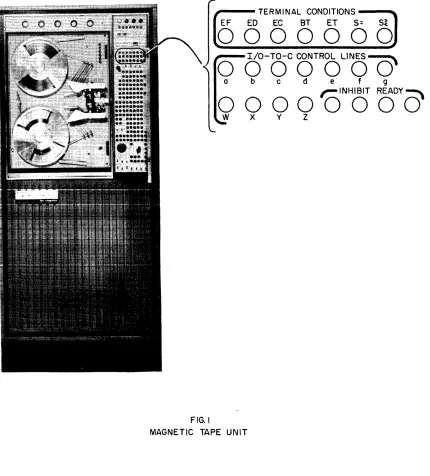
Fig. 1 Magnetic Tape Unit and Control Panel. 4
Fig. ') Data Flow in Write Operations 10
"-Fig. 3 Data Flow in Read Operations. 13
Fig. 4 Data Flow in Search Op~rations. 15
Fig. 5 Flow Chart - Model 1 Input Routine. 24
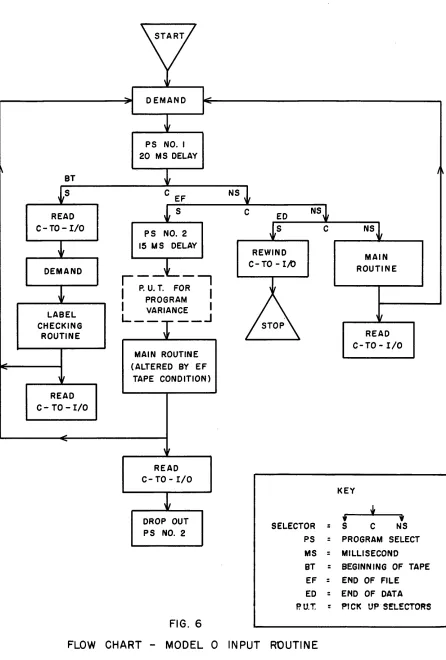
Fig. 6 Flow Chart - Model 0 Input Routine. 26
Fig. 7 Flow Chart - Label Checking Routine 28
Fig. 8 Flow Chart - Model 1 Output Routine 30
Fig. 9 Flow Chart - ~odel 0 Output Routine 33
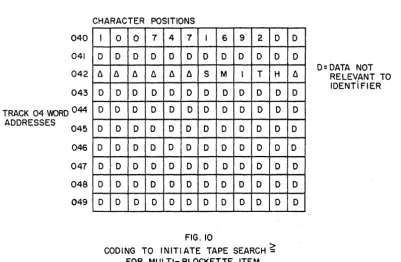
Fig. 10 Coding to Initiate Tape Search ~ for Multi-Blockette Item 34
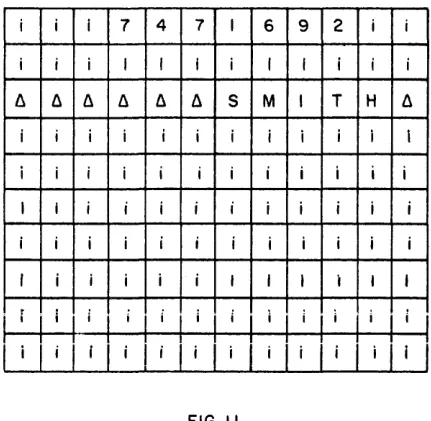
Fig. 11 Identifier in MTD Buffer. 35
Fig. 12 Identifier for Tape Search on 60-Character Items.
.
37Fig. 13 Testing High-Speed Control Lines Storage. 38
INTRODUCTION
The File-Computer
The Univac File-Computer, the medium-sized member of the Remington Rand family of electronic computers, is distinguished by its building-block versatility. A central computer may be combined with 1 to 10 large-capacity, random-access stor-age drums, at the present time, and from 1 to 10 input-output units.
Input-Output Devices
Each of the input-output devices is designed for a specific purpose; anyone or all of them may be added to the computer to accomplish desired applications.
Perhaps the most important feature of the input-output units is their ability to share operating time with the storage drums and the central computer so that alI may operate simultaneously under control of a single program. An instruction to an input-output unit or instructions to several units may be initiated without
causing delay in the computer's execution of logical 'or arithmetic operations. A program from any source is therefore available in the operating memory of the
computer at any required time, and all data processed by the program are either stored or sent to an output device.
One of the most useful of the input-output devices is the Magnetic Tape Unit. This manual describes the operation of this unit and contains programming fea-tures, instructions, and techniques, together with other pertinent information.
The Univac File-Computer Magnetic Tape Unit is a multipurpose magnetic tape de-vice which can be included in any Univac File-Computer installation. Its funda-mental purpose is to read, record, and variously position Mylar l magnetic tape.
It is the taphandling device both for the computer and for UFC peripheral e-quipment using magnetic tape. In the Univac File-Computer System, several uses
are made of this equipment: (1) it is an input-output unit for the computer;
(2) it is an integral part of the Sort-Collate System; (3) it is a data source for off-line (externally controlled) operation of the High-Speed Printer.
The Univac File-Computer Magnetic Tape Unit is an on-line (computer controlled)
device: its operations are controlled by a computer or peripheral equipment
program. However, except during intervals in which control information is ex-changed, the computer and the Magnetic Tape Unit operate independently; that is while the MTU is executing the operations comprising its instruction, the com-puter can also be executing instructions in its program.
BASIC FEATURES
Input-Output Medium
mylar magne~Ic tape is tne meDIum employed in this aeVlce. The Mylar base is
oxide coated and data are recorded by magnetizIng minute SVots on this coated surface. Each spot is given one or the otner of two polarities; accorningly, the two different and separate polarItIes have the connotatIon of a "1» or a "0". ReadIng is accomplished by sensing these recurded spots.
Data are recorded and read a line at a tIme. One standard Univac seven-bit com-puter character is stored on eaCh line. In Read and Wrile opera Lions a Magnetic
Tape Unit processes 120 consecutive lines or characters before the tape stops.
The basic format of the tape unit is a grouping of 12u characters, called a "blockette-:
Physical Tape Specifications
Width: 1/2"
Base: 1 1/2 mil Mylar
Recording Den&ity: 139 lines per inch in blockette format with 0.5 in. or 1.0
in. between blockettes.
Block Spacing (Univac I and II Mode onlyJ: 2.4 in. between hlocks (1 block
=
6blockettesJ.
810ckette Length: 1'0 characters recorded at a density of 139 lines (characters)
per inch, ma~e a olockette U.H6 in. in length.
Reading DensIty: The MagnetIc Tape Unit will read information recorded at a
den-SIty of from 5u lines per inch to 160 lines per inch.
Standard Lengths: 2400 ft. on a 10J2f1 reel.
400 ft. on a 6" reel.
300 ft. on a 6 It ree 1 • I
Number of Blockettes Per Reel:
1/2~ BLOCK~rjE SPACING
UNIVAC I & I I MOOE SPAC ING
I
LIMIT OF AUTO- 2,400'REEL MATIC COUNI' SAFE MAX.
20,000 20,300
BLOCKETIES BLOCKETTES
2,350 2,400
BLOCKS BLOCKS
The UFr. Magnetic Tape Unit, in addition to handling tape physically and reading and writing data on the tape, detects terminal conditions which are the result of certain commands. These terminal conditions are described later under "Special Features".
It is recommended that in addition to meeting the physical tape specifications as listed above, the input data be recorded in the programming format described below.
File and Item
The principle programming unit is the "file". A file is composed of a group of contiguous items. Each item is a collection of consecutive characters that form a major file entry. Items regardless of size are physically recorded in
block-ette format. Depending on the requirements of the program, an item may be one
blockette in length (120 characters), it may be several blockettes in length, or more than one item may be contained in one blockette.
As an example, in a payroll problem, certain specified information such as clock number, name, and rate of pay, about all employees would compose a file whereas this same information about one employee would compose one item in the file. Any given field of information, such as employee clock number, should be located
in the same relative position in every item in the file. The first item of every file -and of every reel of a file should be an identifying label. The label
should identify the file, list the reel sequence number in the file, and record the date when this edition of the file was created. Additional information can be included if the programmer so desires. More detail on tape labeling is in-cluded in "Programming Techniques".
The last item of every file should be a sentinel item which contains the end-of-file sentinel automatically detected by the Magnetic Tape Unit circuitry. This sentinel is at least one full word of Z's. The word "sentinel" in this manual is defined as a symbol marking the beginning or the ending of a file or unit of data.
The item following the last valid file item on a tape should be a sentinel item which contains the end-of-data sentinel automatically detected by the Magnetic Tape Unit circuitry. This sentinel is at least one full word of %'s.
When a tape is to be used in "Tape Search <>" operation, and when the i terns on this tape are multiblockette items, the most significant character position of every blockette in the item should contain a "Search Validation Character". The character position to be treated as the Search Validation Character by a given
MTU can be selected by a switch on a panel of the MTU. It may be either the most
significant digit or the least significant digit of the blockette. In this
man-ual, the Search Validation Character is considered the most significant digit
position for the sake of clarity in discussion. (See "Search Validation
~-TERMINAL CONDITIONS-...
EF ED EC BT ET S= S~
0 0 0 0 0 0 0
FIG. I
SPEC IAL FEATUHES
The receipt of any instruction by the UFC Magnetic Tape Unit will cause the MTU to perform a series of operations including examination of tape for the detect-ion of terminal conditdetect-ions important to programming. These seven terminal con-ditions are listed below.
Beginning of Tape and End of Tape
These conditions are photoeleetrically sensed as transparent areas at the begin-ning and end of the tape. When either Beginbegin-ning of Tape or End of Tape is de-tected, a signal is sent out to an appropriately labeled huh (BT, ET) on the control panel (see Fig. 1) of the tape unit. l Further movement of the tape is then prohibited for any direction other than forward for a Beginning of Tape condition and backward for the End of Tape condition.
Automatic Sentinel Detection: End of File (EF), End of Data (ED)
Information passing from the magnetic tape to the tape unit buffer is
scruti-nized for end of data (ED) and end of file (EF) sentinels. (See Fig. 3, in
"Instruction Repertoire.n
) When a sentinel condition is detected (End of File
equals one word of Z's; End of Data equals one word of %'s), a signal is sent
to the appropriate hub on the control panel of the tape unit. (See Fig. 1)
Automatic Blockette Counting and Checking
Whenever there is tape movement and a blockette passes the Read-Write Head, the blockette counter is increased or decreased by 1 depending on the direction in which the tape is moving. The count is then automatically compared against a preset limit (two choices are available by dial selection on the control panel: 20,000 blockettes for UFC mode; 2,350 blocks for Univac I and II mode), and a
signal is sent to the appropriately labeled hub (Ee, see Fig. 1) on the control
panel when the limit is reached. (This signal, too, like those previously
men-tioned may be used to notify the computer of the conditions existing -in the MTU.) The purpose of this counter is to give warning of the approaching end of the
tape, particularly during the writing operation, so that measures can be taken to prevent writing off the end of tape.
Note: The above functions of the tape unit automatically occur without any spe-cial action on the part of the programmer or operator; these functions require
no computer (or peripheral device) time. If a condition arises that may require
variation of the computer (or peripheral device) program, a signal is provided on the control panel (or to the peripheral device control circuitry) by which the necessary action can he initiated.
A unique feature of the UFC MI'U is its ability to search a tape for a specified record without engaging central computer time. The computer specifies which
record is desired and initiates the search with an instruction to the ~rru. The
1
MTU then automatically checks the records on its tape until it locates the de-sired record or detects a stopping sentinel. When a specified record is located, a "find" is said to have occurred. The record found is deposited on the I/O track and a signal is sent to an appropriately labeled hub on the control
pan-el of the tape unit. (This signal, too, may be used to notify the computer of
the conditions existing in the MTU.)
The Search Validation Character establishes the position of the blockette in the item (i.e., the first, fifth, etc.) and allows the search to be made on speci-fied character positions in a multiblockette item.
The Search Validation Character must be in the most significant position in Tape
Search <> operations. The circuitry of the UFC Magnetic Tape Unit is so designed
that the most significant character position of a blockette is handled separate-ly in tape search operations. For a find to occur, the character in this posi-tion must be identical to the corresponding character in the identifier (un-less comparison is suppressed by an ignore code in the identifier).
An example will illustrate the need for a Validation Character. (A Validation
Character is needed in Tape Search = operations (S =, see Fig. 1) as well as in
Tape Search ~ operations (S ~ , see Fig. 1), but the positioning of the
Valida-tion Character is not critical in Tape Search = operations since every character
position being compared with the identifier must be equal for a find to occur.) Assume we have a Master Payroll File with all items 10 blockettes in length. The
items are arranged in order of increasing clock numbers.
1. The item design is such that the employee clock number is in
blockette If word 2, character positions 4, 3, 2, 1, and the
FICA withheld to date is in blockette 6, word 2, cqaracter positions 4, 3, 2, 1. Note that the positions of these two fields are the same within their respective blockettes. Now
assume that a search forward = instruction is given in order
to locate the record for employee 3871.
2. Assume also that employee 1078 has had FICA withheld to date of 3871.
3. If we merely load 3871 in word 2, character positions 4, 3,
2, 1, of our identifier, we will find the record for emp~oy
ee 1078 instead of employee 3871, and in addition we will be in blockette 6 of that record instead of blockette 1.
Therefore, in order for the correct and desired information to be found, a Vali-dation Character must be in the most significant character position in each blockette of the 10 blockette item and also in the most significant character position of the searching identifier.
Tape Search on 60-Character Items
1
Tape Search can be done on items of 60 characters in length (~blockette). The
Two items, each 60 characters in length, are stored in each blockette on the tape. Accordingly, the 120 identifier positions are divided into two parts:
the words 0, Character 11 through word 4, Character S, are used for the first
Item; and Words 5, Character 11 through word 9, Character S, are used for the second Item. Word 0, Character 11 is the most significant identifier position for the first item in the hlockette; and Word 4, Character S is the least signi-ficant identifier position for the first item in the blockette. Word 5, Charac-ter 11, is the most significant identifier position for the second item in the blockette; and Word 9, Character S is the least significant identifier position for the second item in the blockette. When 60-character items are used in any Tape Search operation, (a) all items in each file involved must be 60-character
items, and (b) both halves of the Identifier Position must be identically load-ed. (See Fig. I?)
Inhibit Readv
The Inhibit Ready hubs (see Fig. 1) are receiving hubs that may be jackplug pat-ched from terminal condition hubs to prevent a ready status of the tape unit when a terminal condition is detected. Consequently, when the Magnetic Tape Unit recognizes a terminal condition, it will be inhibited from going tlready" when the execution of the previous instruction is complete, and will remain in a "not-ready" status. (See "Communication with Computer. 't) Inh ibit Ready hubs
are used mainly by maintenance engineers in testing the tape unit, but may be used by programmers as an added safety factor.
Tape Perfection Guarantee
It is possible to mark any unusable areas on a UFC tape so that the MTU will automatically avoid reading or writing on these areas. An unusable area is
marked by punching holes in a tape at the beginning of an area and at every 2~
inches thereafter until the end of the bad spot is reached. (Ordinarily, the programmer need only be convinced that bad spots are detected and corrected; the engineer or the operator will accomplish the actual detection and correction.)
The holes denoting bad spots are photoelectrically detected by the ~ITU. When a
UFC tape comes from the factory it is 2572 feet in length. If after repeated usage a tape imperfection appears in the tape, the bad spot may be marked as described above without reducing the effective length of the tape (considered
to be 2400'). The ''Tape Perfection Guarantee" method uti 1 i zed by the UFC MTU eliminates problems entailed in handling small lengths of salvaged tape.
Removable Take-Up Reel
If the first operation to be performed is "Read Forward" or "Write," the tape to
be processed must be placed on the Supply Reel (the upper reel of the tape
handler; see Fig. 1). If the first operation is to be "Read Backward," the tape to be processed must be placed on the Take-Up reel (the lower reel of the tape handler). The Take-Up reel is removable. The Wind Forward with Interlock command (see "Instruction Repertoire") is used when the progranmer wishes to
INSTRUCTION REPERTOIRE
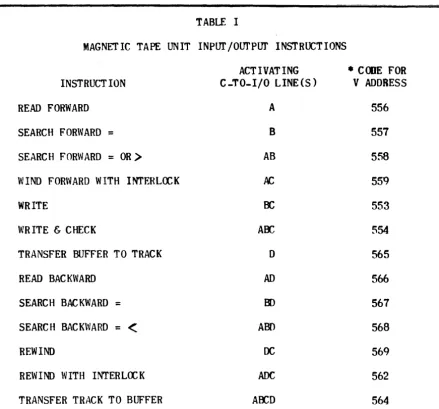
The Univac File-Computer Magnetic Tape Unit can execute the thirteen input-out-put instructions listed in Tablp I. A description of each instruction
foI-l ow s Tab 1 e I ..
TABLE I
MAGNETIC TAPE UNIT INPur /OUfPUl' INSTRUCTIONS
ACTIVATING • eOOE FOR
INSTRUCT ION e -TO-I/O LINE <S) V ADDRESS
READ FORWARD A 556
SEARCH FORWARD
=
B 557SEARCH FORWARD
=
OR> AB 558WIND FOmVARD WITH INTERLOCK PC 55"9
WRITE OC 553
WRITE & CHECK AOC 554
TRANSFER BUFFER TO TRACK D 565
READ BACKWARD AD 566
SEARCH BACKWARD
=
II) 567SEARCH BACKWARD
=
<
ABO 568REWIND OC 569
REWIND WITH INTERLOCK AOC 562
TRANSFER TRi\CK TO BUFFER AOCD 564
Write operations require that the data to be recorded has been previously loaded by the computer program on the input-output track connected to the Magnetic Tape Unit. Writing on Tape, unlike reading, can be done only in a forward direction.
(See "Read Forward" and "Read Backward" for the two-way "reading operations".)
When the Magnetic Tape Unit receives a write instruction, the following sequence of events takes place.
1. Information recorded on the input-output track of the high-speed drum
(see Fig. 2
CD)
is duplicated in the Magnetic Tape Unit Buffer.In-formation is read from the high-speed drum sequentially, beginning with the least significant digit (LSD) of word 9 and continuing to the most significant digit (MSD) of word 0, and flows into the buffer in that
order. The new data flowing into the buffer (see Fig. 2 @) replace
any old information in the buffer.
2. Flowing out of the buffer to be recorded on the tape, the information is transmitted from most significant digit to least significant digit. Thus the information is eventually recorded on the tape in the same
order as it would have been if it had been typed.
3. From the buffer, the information flows through various circuitries to
the Read-Wri te Head (see Fig. 2
®).
The blockette counter, which is setto zero by master clear or by rewinding, advances once for every write operation. After each increment, the number stored in the counter is compared with a specified limit, and when the count equals this limit, a signal is sent to the appropriately labelled hub on the control panel
of the Magnetic Tape Unit (see Fig. 2
@).
This signal can be used toactivate one of the Input-Output computer control lines and thus even-tually be used to vary the computer program (see section on "Communica-tion with the Computer").
4. The Wri te Head (see Fig. 2 @) records the data on the magnetic tape one
line (character) at a time at a density of 139 lines per inch. This is a one-blockette operation; i.e., 120 characters are transferred from the high-speed drum to the Magnetic Tape Unit buffer and 120 characters are transferred from the buffer onto the magnetic tape.
5. An erase head, which is located 2ft inches in front of the Read-Write head, operates in conjunction witn the write operation to erase old
re-cordings from a previous program. (See Fig. 2
® .)
WORD 9
1
8t
IWORD!
~
IT
WORD o1
!
TAPE DIRECTIONrTJ KEY
m rTJ z
m
Z 00 nm
-12 or
l>Z 0 cO
-0- ." zn
rTJZ -",,~
G>
~ -I
0 -0 -I
." rTJ fTI
BK = BLOCKETTE COUNT H
MSD = MOST SIGNIFICANT DIGIT T ~~WE LSD = LEAST SIGNIFICANT DIGIT I HEAD
PHOTO-ELEC TRIC BAD SPOT AND BEGINNING
OF TAPE DETECTOR
I 1'1
MTU' MAGNETIC TAPE UNI
C0
/J..,
¥:0
S M+ <l <1 "t '>'0TERMINAL
't
0 <IICONDITION HUBS .J: WORD WORD {11
a 9
HEAD
o I<CO::J-_T.:..,:A:..:,.f:l::;
~~ ~
N I M + f:l N H o J f:l H T I READ WRITE HEADM PHOTOELECTRIC BAD SPOT S AND END OF TAPE DETECTOR
=
",.,.
WOFms
1-8
,--,
HIGH SPEED DRUM
I sf CHARACTER INTO BUFFER FROM DRUM ON WRITE OPERATION
~EMSD
WORD 0'+
I - 8~
CHAR~CTER
OUT OF BUFFERLSD
-:+---
WORD 9----1
Write and Check
When the Magnetic Tape Unit receives the Write and Check instruction, a sequence of events takes place.
1. The 120 characters on the high-speed drum input-output track (see Fig. 2QD) which is connected to the Input-Output unit are transferred to the Magnetic Tape Unit Buffer.
2. Data from the buffer flows through various circuitries to the Read-Write Head and is recorded on the magnetic tape.
3. The tape then reverses direction and passes back under the Read-Write Head and the 120 characters just written are now read.
4. This information flows from the Read Head to the tape unit comparator
(the comparator shown in Fig. 4
@)
one character at a time, at the sametime that the corresponding character is coming to the comparator from the tape unit buffer.
5. If the 120 characters compare as being equal, then the tape is reposi-tioned so that the Read-Write Head is at the end of the blockette just written.
6. If the tape and buffer blockettes are not identical, a second attempt
is made to exe~ute the instruction, starting with the transfer of the
data from the input-output track to the MTU buffer. The circuitry of the unit is so designed that destructive Write is possible for one blockette.
7. If this second attempt is satisfactory, the tape unit stops and the
tape is in the correct position for writing the next blockette.
8. If the comparison is still unsatisfactory, a third attempt is made to execute the instruction.
9. If this attempt at comparison fails, an error is indicated, the MTU stops in a "not ready" condition, and the appropriate error light on the control panel comes on.
Recovery from this and other errors is discussed in the section on "Programming Techniques". Whenever tape movement is initiated, as required to execute the write and check instruction, the blockette counter is increased or decreased one blockette depending on the direction of the tape movement.
Read Forward
I. The tape unit starts the magnetic tape moving past the Read Head (see
Fi~l. 8Q)) in a forward direction. One blockette of 120 characters is
read one character at a time, and the information flows through
vari-ous circuitries into the tape unit buffer .
. ) During this time, the end of data sentinel checker (see Fig. 3@)
scru-tinizes the data to see if there are twelve percent (%) signs in any
word of the ten words in the blockette being read. If there is at
least one word of percent signs, the end of data checker sends a sig-nal to the appropriately labeled hub on the Magnetic Tape Unit control panel. This signal can be patched to an I/O-to-C control line and can eventually be used to vary the computer program.
3. The end of file senti nel checker (see Fig. 3@) scrutinizes the data to
see if there are 12 Z's in any word of the ten words in the blockette
being read. If there are 12 Z's in any word, a signal is sent to the
appropriately labeled hub on the Magnetic Tape Unit control panel. This signal can be wired to an I/O-to-C control line (either high-speed
or low-speed) and eventually used to vary the computer program.
4. During execution of each Read Forward instruction, the blockette counter is automatically increased by one. The blockette counter is then auto-matically compared with a prescribed limit, and when this limit is reached, a signal is sent to the appropriately labeled hub on the Mag-netic Tape Unit control panel. This signal may be wired to an I/O-to-C control line (either high-speed or low-speed) and used to vary the com-puter program.
Note: If more than one sentinel condition results from the processing of one
blockette, a signal will be received at each of the appropraitely labeled hubs
on the control panel; i.e., if one word of a blockette is composed of 12 ZiS,
another word of twelve
%
signs, and the blockette is the 20,OOOth one on thetape, signals will be sent to each of the sentinel hubs: End of D&ta, End of
File, and End of Blockette Count.
5. Going into the Magnetic Tape Unit buffer, the data are read from the
tape from the most significant digit to the lease significant digit
and flows through the system in that order. In leaving the buffer it
flows out lease significant digit of word nine first, and flows to the
read-write head of the high-speed drum (see Fig. 3(1)) where it is
written on the input-output track connected to the Magnetic Tape Unit.
Read Backward
When the Magnetic Tape Unit receives a Read Backward instruction, the following
T
WORD :::0 9 I'T1 l>1
0 ." I-' o-W ~~:::0(.1,1
!:;
~ 8
t
WORD~
IT
WORD 01
l
TAPE ~EcnONPHOTOELECTR Ie CD rn
BAD SPOT AND G)
BEGINNING OF 2
TAPE DETECTOR z Z rn z rn
z
G) 0 0
~ 0 ."
~ j=
ERASE HEAD "lJ
rn » rn
rn
z
0
§~ rn
z~ z
-iA 0
rn -i
-i » ~ "'0
rn rn
KEY
ED = END DATA
EF = END FILE
~Do S M I READ WRITE HEAD
I
I
I
I I
~~
'r\
oTERMINAL ~
CONDITION ~ WORD 0
HUBS +'Q
+ II N H o J II H T I
M PHOTOELECTRIC BAD SPOT
S AND END OF TAPE DETECTOR
ED EF
MSD
1-8
HIGH SPEED DRUM
1st CHARACTER IN BUFFER 1 READ
BACKWARD OPERATION
J'LSD
1st CHARACTER OUT OF BUFFER ONJ WAY TO DRUM
The tape starts moving in a backward direction past the read head, and l~O char-acters are read from the tape and transferred through various circuitries into the Magnetic Tape Unit buffer. The first character read is the least significant digit of word nine, and the characters are read consecutively from that
charac-ter to the most significant characcharac-ter of word zero. Information flows into the
Magnetic Tape Unit buffer in reverse order; at the end of the process the rela-tive position of information in the buffer is the same as if the process had been a read-forward instruction. All other features of this operation, includ-ing the automatic sentinel detection, are the' same as in the read-forward in-struction.
Search Forward Equal
Search operations require that an identifier has previously been loaded on the
input-output track connected to the Magnetic Tape Unit. (See section on
"Pro-gramming Technique" for discussion on identifier.)
During a search forward equal operation, a definite sequence of events takes pIa ce.
1. The identifier loaded on the output track connected to the
input-output unit is read and transferred into the Magnetic Tape Unit buffer.
2. The magnetic tape begins moving in a forward direction past the read head, and the characters are read one at a time as they pass the read
head (See Fig. 4
CD .)
3. The tape data are scrutinized by the end of data sentinel checker (see
Fig. 4 @) and by the end of fi Ie sentinel checker (see Fig. 4
® );
andfor each blockette read from the tape, the blockette count is increased
by 1 and this accumulation is compared against a limit previously set by
dia 1 se lection on the control pane 1 (see Fig. 4
®) .
4. Data flow through various circuitry into the Magnetic Tape Unit
com-parator (se-eFTg~-4
® ).
As each character arr1ves at the comparafor,the corresponding character arrives from the Magnetic Tape Unit buffer.
When the comparator finds 120 characters within a blockette from tape
which are equal to the 120 characters stored in the Magnetic Tape Unit
buffer, a signal is sent to the appropriately labeled hub on the
con-trol panel of the Magnetic Tape Uni t (see Fig. 4
® ).
Note: If ignore codes are part of the identifying information stored in the
Magnetic Tape Unit buffer, comparison is suppressed; in effect, any tape char-acter will compare as equal to an ignore code in the same relative position in the buffer. This ability of the ignore code to suppress comparison allows the
identifying field of the blockette to be from 1 to 120 characters in length,
and in any position or positions in the blockette.
(J) I'll
l> WORD :0
0 9
:I:::!!
1
... o~
c..:l ~~ :0 l> "'"i (5
t
2 WORD!
IT
WORD 0 I1
~
TAPE DIRECTION A T 0 s E N N I M f). N H o J A H T I M S PHOTO-ELECTRICBAD SPOT AND BEGINNING OF TAPE DETECTOR
READ WRITE HEAD
'0
PHOTO ELECT R IC BAD SPOT AND END OF TAPE DETECTOR CD I'll G> Z ~ 2 G>
I'll "'"i ---i
Z l> l>
0 "'U fTl "'U I'll
OCD
or I'll (J)
fTl CO 2 rn
z 2 0 0 l>
0 "'"iA :u
fTl "'"i 0
~ "'"i l> :I:
r "'"i "'U
rn I'll rn
KEY TERMINAL
CONDITION HUBS 1 = IGNORE CODE CH=CHARACTER
BUFF=BUFFER
~
~
<>0
/
ED EF BK COMPARATOR
SUPPRESS COMPARISON IF
BUFFER CHARACTOR IS"l"
MSD LSD
stops. The tape then starts moving in a backward direction past the read head, and 120 characters of the find are now read backward into the Magnetic Tape Unit buffer. The information in the buffer is trans-ferred out and written onto the high-speed drum I/O track connected
to the MTU. The tape is now repositioned so that the read head is at
the end of the b10ckette just found, so that the next search will start with the next blockette on the tape.
6. If an "End of Data" or "End of File" sentinel IS detected before a find occurs, the tape movement stops at the end of the blockette in which the sentinel was detected. Note that the identifier is still In the Magnetic Tape Unit buffer and on the input-output track of the high-speed drum. The read head of the tape unit is at the end of the blockette in which the sentinel was detected.
Search Backward Equal
The sequence of events in the Search Backward Equal operation is exactly the same as that in search forward equal, except that the direction of tape movement and direction of buffer reading are reversed.
Search Forward Equal or Greater Than
In the Search Forward Equal or Greater Than operation, the sequence of events is the same as in search forward equal except that the comparator is looking for an item on the tape which is greater than the identifier in the buffer as well as one equal to it. In addition, the most significant character position of the blockette is handled differently from the other positions. This position con-tains the Search Validation Character, and the character from the tape must be equal to the character from the identifier stored in the buffer for a find to
occur. If no comparison of the N~D posiiion is necessary, an ignore code is
placed in the identifier in the MSD position. The "greater than" portion of the instruction does not apply to the Search Validation Character.
Another difference between the Search Forward Equal or Greater Than operation and the Search Forward Equal operation is that the tape is not repositioned when
a findoc_curs on a Search Forward Equal or Great-er --Than operation~ Th-e read
head is at the beginning of the blockette just found so that the next Search Forward Equal or Greater Than operation will start with the blockette just found on the tape.
If a find occurs, it can be distinguished as an equal or greater-than find by the signal which is sent to the appropriately labeled hub on the control panel of the Magnetic Tape Unit.
Search Backward Equal or Less Than
com-parator checks for an item on the tape equal to or less than the value of the identifier in the buffer. Note: A tape search operation may be accomplished in the same way as above for items that are 60-characters in length when the
follow-ing conditions are met (1) the two-position toggle switch is set manually to
the 60-character position, and (2) both halves of the identifier position are
identically loaded in the blockette.
Transfer Buffer Contents To Input-Output Track
When the "Transfer Buffer Contents to Input-Output Track" instruction is sent to the input-output unit, the information in the Magnetic Tape Unit buffer is reproduced on the input-output track connected to the Magnetic Tape Unit. No tape movement is involved in this instruction.
Transfer Input-Output Track Contents To Buffer
When the Magnetic Tape Unit receives the Transfer Inp·ut-Output Track Contents To Buffer instruction, the information on the input-o'utput track connected to the Magnetic Tape Unit is reproduced in the Magnetic Tape Unit buffer. No tape movement is involved in this instruction.
Wind Forward With Interlock
When the Magnetic Tape Unit receives this instruction, tape movement begins in a forward direction and continues until the End of Tape is detected. Further tape movement is then inhibited until the interlock is manually released on the control panel of the MTU.
Rewind
When the Magnetic Tape Unit receives this instruction, tape movement begins in a backward direction and continues until the beginning-of-tape is detected. Data are parity checked and the character count is checked on each blockette. I
Rewind With Interlock
When the Magnetic Tape Unit receives this instruction, tape movement begins in a backward direction and continues until the beginning of tape is detected. Further tape movement is then inhibited until the interlock is manually re-leased on thelcontrol panel of the Magnetic Tape Unit. Data are parity checked during rewind and character count is checked on each blockette.
TIMING
The following times provide the basis of computing operational times for the Magnetic Tape Unit.
1 If a parity error is detected during rewind, the MTU will automatically
re-read the blockette in which the error occurred. If the error still exists
Tape transport Speed:
Start Time, Write:
Stop and Lockout Time:
Start Read Times:
OPERATION
READ FORWARD AFTER PREVIOUS READ FORWARD
READ FORWARD AFTER PREVIOUS READ BACKWARD
READ BACKWARD AFTER PREVIOUS READ FORWARD
READ BAC KWARD AFTER PREVIOUS READ BACKWARD
Blockette Read Time:
Blockette Write Time:
Wind and Rewind Rates:
Write and Check:
Tape Search:
End Blockette Sensing:
Total Blockette Hand-ling Time for Read:
75"/sec.
(including acceleration and blockette spacing time)
0.5" Blockette Spacing: 1" Blockette Spacing:
7 ms. 13 ms.
10 ms. (This includes deceleration time and the
lockout or reverse direction time. The minimum time between operations involving tape movement is thus 10 ms.)
(assuming previous stop lockout delay has elapsed)
O. 5 BLOC KETiE S PAC ING 1" BLOCKETTE SPACING
7 ms. 16 ms. l
3-5 ms. 3-5 ms.
3-5 ms. 3-5 ms.
7 ms. 16 ms. 1
11.5 ms. This is the time for 120 char~cters to
pass under the read head when the tape is
travel-ing at a speed of 75"!see~i and the characters are
recorded at a density of 139 to the inch.
11.5 ms.
75'· /sec.
1/2" Blockette Spacing: 1" Blockette Spacing:
85 ms. 93.5 ms.
For each Tape Search operation, Tape Search occurs at a rate of 75" of tape per second plus
approx-imately 50 ms. The 50 ms. includes all start-stop
times involved and also the recording of the find on the input-output track of the high-speed drum connected to the Magnetic Tape Unit.
0.65 ms. per blockette is time required for tape unit to 4etermine that inter-blockette spacing has been entered.
Sum of start time, plus read time, plus end blockette sensing time, plus stop time.
i Additional time is required for every 6th blockette because 2.4" inter-block
START SAME DIRECT I ON READ EBS STOP TOTAL
1/2 \I BLOCKETTE SPACING 7 II. 5 .65 10 29.2 MS.
I" BLOCKETTE SPACING 13 II. 5 .65 10 38.5 MS.I
Total Blockette Hand-ling Time for Write:
Sum of the average time to access the input-output track, plus start time, plus write time, plus end blockette sensing time, plus stop time.
OUTPUT TRAC K START SAME
AVERAGE ACCESS TIME DIRECTION WRITE E BS STOP TOTAL
1/2" BLOCKETTE SPACING 2.5 7 11.5 .65 10 31.65 MS
II! BLOCKETTE SPACIN G 2.5 13 11.5 .65 10 41 MS .. I
Relating the above reading and writing times to ?400 foot reels of tape, the following table can be applied:
BLOCKETTE SPACING 1/2 \I lit
BLOCKETTES PER REEL 20,000 2,350 BLOCKS
READ {139 CHARACTERS / I NCH DENSITY 9.5 MIN. 9.0 MIN.
WRITE{ 139 CHARACTERS 1 INCH DENSITY 10.6 MIN. 9.6 MIN.
WRITE AND CHECK 28.7 MIN. 22.4 MIN.
TAPE SEARCH (ASSUMING 100 FINDS PER REE L) 6.2MIN. 6.8 MIN.
REWIND 6.0MIN. 6.6 MIN.
CHECKING
Automatic checking of the MTU includes
1. parity check on each character processed;
2. 120 count check on each blockette processed;
3. parity and 120 count check during rewind.
(Note: See "Instruction Repertoire" for programmed write and cheek instruction.)
If an error is detected during the check operation, the processing of a current blockette is repeated. If the second attempt fails. a third and final try is automatically made. Provision is thus made for automatic recovery from most tape failures due to minor or temporary tape imperfections or possible momentary equipment failure. Error recovery is discussed in the Seetion on "Programming TeChniques."
1 Additional time is required for every 6th blockette because 2.4" inter-block spacing is included in this time.
COMMUNICATION WITH COMPUl'ER
As with all UFC periph~ral equipment, communication of control information
be-tween the computer and a Magnetic Tape Unit is exchanged through a Demand
Sta-tion which utilizes two sets of control lines, as in the Model 0, or three sets
as in the Modell. A complete discussion of the Demand Station concept is
in-cluded in the UFC Model I Programming Manual; hence only points having
paTtic-ular significance for the MTU operation will be covered here.
Computer to Input-Output Control Line (Symbolized C-to-I/O)
A total of thirteen input instructions may be sent to the MTU over C-to-I/O lines A-D. The line or combination of lines that activates any given function
is internally wired and cannot be assigned by the programmer. The functions and
their respective activating lines are listed in Table I. For the MTU to receive instruction signals it must be "on demand" and in a "ready" status. Only one
input-output instruction at a time can be given to a UFC Magnetic Tape Unit.
Ready and ~ot Ready Status
Once an MTU receives an instruction, it is in a "not ready" state and can re-ceive no other instruction until the sequence of operations initiated by the current instruction has been completed. At this time the MI'U assumes the "ready'" status.
On Demand
The Magnetic Tape Unit is placed on demand by a demand-in signal to the Demand Station of the tape unit. The tape unit remains on demand until the main com-puter program calls for another demand station. This status allows the input-output track of the demanded unit to be plugboard addressable.
High Speed Inpyt-Oytput to Compyter Contra] Lines (Symbolized (HS) I/O-to-C)
Part of the demand station circuitry of a UFC-I MTU consists of four (HS) 1/0-to-C lines over which control signals can be sent from the I/O Unit to the
com-puter. In the MTU, these lines are available as four receiving hubs (W, X, Y,
Z) on the control panel of the MTU (see Fig. 1).
The following seven terminal conditions, necessary to control the operation of
a Magnetic Tape Unit, are automatically detected by the circuitry of the UFC
MTU.
The conditions, which when detected cause a signal to be sent to theap-propriate hub on the control panel as shown in Figure 4 are:
Search Find-Equal
Search Find-Greater-Than or Less-Than (Greater-Than for Forward Search; Less-Than for Backward Search)
End of Fi Ie End of Data
By making a jackplug connection from a terminal condition hub to (HS) I/O-to-C hub, the programmer can connect any four of the above seven control conditions
to W, X, Y, or Z. Ordinarily it -would be unusual to expect more than four of
the seven conditions to develop on any one ~ITU in anyone program. However, in
programs where more than four control conditions must be used to alter the cen-tral computer program, the condition(s) least likely to occur can be plugged to I/O-to-C control lines a-I (see section ff.).
When a tape unit is demanded and (1) a particular terminal condition hub has been
plugged to an (HS) I/O-to-C hub, and (2) the same terminal condition has been
detected in the MTU, a "special out" results which notifies the computer of the condition and provides for program variation.
For programming purposes it is necessary to understand the timing of the termi-nal condition sigtermi-nals; i.e., when they are initiated and what stops them. From this information the programmer can determine when to, expect a "special out" a s a resu 1 t of a "demand in" and eon st ruc t the program accord i ngly •
"End of File" (at least one word of Z's> and "End of Data" (at least one word of %'s) are code words which must be stored on the tape together with the actual
data. Once the MTU detects one of these conditions, a signal is emitted at the
appropriate hub and continues until the MTU buffer cycles again, i.e., until
another instruction is received. In some internal programs, the execution of the
instruction being sent to the MTU may be conditionally inhibited, depending
on whether a Special Out exists. (See UFC-l Programmers' Manual.) The first time
the MTU is demanded after a Special Out occurs, the MTU instruction must not be
inhibited, as the Special Out condition will still be present. (See "Programming Techniques," Example I, Input Routine, Model I.>
Although the above conditions, i.e., End of File and End of Data, are detected
in rewind operations~ they are cleaTed as the next blockette of data passes the
read head and cycles through the buffer.
Search Find Equal and Search Find<>occur when specific conditions are met in tape search operations (see section on "Tape Search't). When one of these
con-di tions is met, a signali~emi tt~d_a~ the appropriaJe h_uh on. the M'IU control
panel and is-present until the MI'U receives another instruction.
Beginning of Tape and End of Tape are transparent areas at the physical ends of the tape and are approximately three feet in length. These areas are photo-electrically detected. The signals are present only when the clear area is un-der both photoelectric cells. These conditions should occur only after wind or rewind operations or immediately after a reel of tape is mounted on the MTU; i.e., the beginning of tape signal should be present when the first instruction
applying to a particular reel of tape is received by the
mu.
The end-of-blockette-count signal is initiated when the blockette count equals the selected limit (20,000 blockettes for UFC mode and 2,350 blocks for Univac I and II mode). The signal will continue to exist until the count equals '1,000 blockettes or ',350 blocks. If the counter does reach these figures, it will be reset to zero. However, it would be unwise to attempt to exceed the limit of the counter by more than 200 or 300 blockettes, as the end of tape might occur with any excess over and ahove 300. There is enough good tape guaranteed after the preset limits
(1) to allow completion of the recording of any item up to 127 blockettes in length, (2) to record the required sentinels, and (3) to record a "memory damp" of approximately 100 blockettes.
If th.e end-of-blockette-count hub is patched to an (lIS) I/O-to-C in wri te opera-tions, a "special out" will result from all demands after the limit is reached until the counter is reset by a rewind operation or a master clear.
Input-Output to Computer Control Line (Symbolized I/O-to-C)
These lines are used in UFC Model 0 systems to transmit the control signals dis-cussed above. However, as they are used to activate relay operated selectors, the program must allow for 15 or 20 milliseconds delay required to "pick up" these selectors (see example under "Programming Techniques"). The lines may also be used to transmit control signals in a Model 1 system if more than four
terminal conditions are being used to alter the central computer program.
PROGRAMMING TECHNIQUES
The following routines illustrate the importance of the preceding information from a programmer's point of view. In the examples that follow, special emphasis is placed on the programming method of accomplishing the exchange of control in-formation between the MTD and the computer.
Example 1
Input Routine - UFC-l
This example illustrates the method by which the main computer program may be set up to handle the MTD in input operations on the UFC-l. Special emphasis is placed on the utilization of the automatic terminal condition detectors of the
MTD. Note that no computer time is needed to test for End of Data or End of
File sentinels. -rhe tests are made off-line in the MTD and, when an End of Data or End of File condition does occur, the demand station circuitry automatically provides for program variance through a "special out".
Problem (see Program Chart and Flow Chart following)
Data recorded on the input tape are to be read into the computer (MTD is on demand station 04). An end of file sentinel indicates that the main pro-gram is to be altered. An end of data sentinel indicates that there is no more valid data on the tape and that the tape should be rewound. There is a label recorded in the first blockette of the tape, and this label is to be checked.
Assume that
1. the Beginning of Tape terminal condition hub is wired to I/O-to-C
hub WI
2. the End of File terminal condition hub is wired to I/O-to-C hub X,
PROGRAM CHART - INP(]f ROOf INE - UFC-l
STEP # U
v
W OPS130 140 556 200 DE
131 MAIN ROUTINE
200 04W ~~ 157 TI~
201 O4X ~~ 203 T I~
202 O4Y fl.ALl 225 TIA
203 041 556 204 DEt\
204 PR-OO-RAMALT-ER IN(r--Rour
IN[-224 992 992 130 UJ~
225 041 569 130 DEZ
COMMENfS
Demand MTU, TS, and Read. If there is a special out, inhibit TS
&
Read, andgo to step 200. There should be a
spe-cial out with the first Demand.
Test for Beginning of Tape condition. If it exists, go to label checking
routine at step 157. <See Routine
in example
2.>
Test for End of File condition. If it exists, go to program altering
routine at step 203.
Test for End of Data condition. If it exists, go to exit routine at
step 225.
Demand MTU, do nQ! inhibit execution
of the instruction. Read in next blockette to determine what the pro-gram is to do next.
When program is altered, re-enter
main routine at step 130.
Demand MTU, do n21 inhibit execution of
the instructions, Rewind,Stop. Because
Special
Out
will result, PAl will be setto 130 before computer stops. When reel
is changed and program is to be resumed,
the program will start at 130.
"TI
r 0
~
(") ::J:
l> ::0 -t N
I~
w:::..
3:01
0
0
rn
r
H
Z
-0
c
-t
::c
0 c
-t
z
rn
DEMAND
IN
TS,READ
MAIN ROUTINE
NO
BEG. OF TAPE? END FILE? (HS)I/O-TO-C W (HS)I/O-TO-C X
YES
READ
DEMAND IN
(HS)I/O-TO-C
TS,READ
LABEL CHECK
ROUTINE
YES
ALTER
PROGRAM
YES
ERROR
*
SEE EXAMPLE # 2NO
ERROR
REWIND
Example ?
Input Routine - UFC-O
This second example illustrates the method by which the main eomputer program
may be set up to handle the MTU in input operations on the 0Ft-0 (see Flow Chart
following).
When using an MTU with a Model 0, the control signals are sent from the MTU to
the computer over low speed I/O-to-C lines. Program varianee is obtained by
activating selectors with the signals received over these lines. A Model 0
solution to the same problem used in exanple 1 is presented in the flow chart.
Comments on Flow Chart
The first time the MTU is demanded after a reel of tape is mounted, the
begin-ning of tape signal should be present. The "demand out," however, will occur before this signal has had time to aetivate a selector on the computer plugboard. Therefore, the first demand-out (see flow chart) is run through a program
sel-ect which provides a ?O millisecond delay and thus allows the beginning of tape selector to be picked up.
The Read command is then given to the tape unit so that the first bloekette may be read onto the input-output track. The Read command also drops out the begin-ning of tape sentinel condition. The unit is then demanded and the demand-out is wired to the beginning of the label checking routine. The demand-out input hub will emit a pulse only after the input transfer from the tape unit to the computer has been completed. Note that all subsequent demand-out pulses are delayed through Program Select #1 so that there will be time after detec'ion of End of File or End of Data terminal conditions for program altering selectors or exit routine selectors to be activated. The End of File or End of Data sentinel must be recorded in the first word of the blockette to quarantee that the selectors will be picked up by the time the delayed-out of the program select emits a pulse.
Tape Labels
Computer data-handling procedures require a minimum error limit which is beyond
human capabilities. For example, if an operator mounts 5000 reels correctly,
but on 5001 he mounts an incorrect reel (perhaps last week's payroll data in-stead of this week's), then this entire section of the payroll will be incorrect, the master file will be erroneOUsly updated, and the chances of discovering the error before considerable processing has been done are small. Therefore, since one error ean be extremely costly to correct, every means within reason must be taken to prevent tape labeling errors. Magnetic tape labeling, computer updating of labels, and computer checking of labels provide a comparatively inexpensive method of guarding against these errors.
v
.... DEMAND
-~
PS NO. I 20 MS DELAY
I ~
~
/\BT
~S C EF NS!
READ ~ S C ED NS~
C-TO- I/O
PS NO.2 !S C NS~
~
15 US DELAYREWIND
MAIN
r---L---,
C- TO - 110 ROUTINEDEMAND
A
~
I
P. U. T. FORI
PROGRAMLABEL I
L_-I-_.J
VARIANCE I ICHECKING
ROUTINE READ
C-TO-I/O MAIN ROUTINE
, (ALTERED BY EF
-
, ITAPE CONDITION)
READ C- TO - I/O
..,
--W
READ C- TO - I/O
~
KEY!
f t
DROP OUT
SELECTOR : S C NS PS NO.2
PS : PROGRAM SELECT MS : MILLISECOND
BT : BEGINNING OF TAPE
EF : END OF FILE
ED : END OF DATA
P. U.T. Pl CK UP· SELECTORS
FIG. 6
Every reel should have identifying information recorded in the first item on the tape. Generally this data can be in the first word of the item in the following format:
DDDDDFFFRRR !:l
FFF is the file code named (for example MPR might stand for Master Payroll
file);
RRR is the sequence number of the reel within the file;
DDDDD is the date that this reel was created; thus the label
08l27MPR003 !:l
Would be interpreted as reel 3 of the Master Payroll File as of 8/12/57.
Example 3
The following FlowChart and Program Chart illustrate a label-checking routine
which might be used in an installation with MTU on demand stations 4 and an
Inquiry Typewriter on demand station O.
PROGRAM CHART - LABEL CHECKING ROUTINE
STEP # U V W OPS COMMENTS
110 081 27M PRO 01 Constant - Shows correct label
III 000 000 000 010
1112 FOR CED !:lIA BEL
Demand MTU, Read 1 blockette2
157 041 556 158 DE !:l
158 140 556 !:l!:l!:l DE !:l DE MTU, TS Read blockette. A
special out should not occur. 159 040 110 h.~~ CP9 Compare incoming label with Const,
160 992 992 130 JZ!:l If = jump to 130. If ~ there is
an error
161 157
Mh.
000 AT l:l162 101 553 MI1 DE l:l Type out contents of 157, which
163 110 1'l!J.11 000 AT !:l will show what OS involved. Also 164 101 553 111111 DE !:l type out stored label and incom-165 040 I1I:lI:l 000 AT !:l ing label.
1 Note entry to 157 in E~mple 1.
2 Do not inhibit execution of this instruction if a special out exists, as the beginning-of-tape condition is still present. A special out will result and
the next step executed will be the one at the W address (158).
MTU 4~I/04
..." 4~TW
r
0
:E
(')
:r: l> :u
-f L~TW
r
N l> ..."
a> CD p
I'TI
r -I
(')
:::r:
I'TI (')
"
2 G')
:u
0
c
::::!
z
I'TI
FORCED7TW
RWD MTU 4 WITH INTERLOCK
TR =
TS :
4L = L4 :
KEY
TRACK
TRACK SWITCH
TAPE LABEL ON MTU #4
LABEL STORED AS CONSTANT
TW BRK PT RWD
-= TYPEWRITER BREAKPOINT : REWIND
166 167 168 210 211 212 213 214
101 553
6M
041 562 168
992 992 157
112 6~6 000
,A, ~~I'l AAA
lUI ~~.) uuu
040 992 110
110 III 110
992 992 130
DE6
DEZ
UJ
n
AT 6. DE fi AT 6. AD 6. UJ 6.
Set breakpoint 1. Stop. Operator de-cides whether to force label (Jump to
step 210) or to rewind and mount
cor-rect reel (go to step 167)
Rewind and stop. Mount correct reel
and resume at next step (168)
Transfer FORCED LABEL to TW Output
Type Out FORCED LABEL
Put correct label in constant storage Update label
Jump to Main Program
Example 4
Output Routine - UFC-l
An example will show how the automatic blockette counter warns of the approach-ing End of Tape in a write operation and how the signal is utilized to provide the necessary program variance. In this example, note that no computer time is required until the signal is received; that is, no computer time is required either to keep count of the number of blockettes written on the tape or to test this count against the preset limit.
Problem
Data are to be recorded on output tape (MTU is on demand station 05) until
the limit of 20,000 blockettes is reached. Then an end of data sentinel
is to be recorded, and the tape is to be rewound with interlock.
A
newoutput tape is to be mounted, the correct output label recorded, and the main routine continued.
A Flow Chart and Program Chart presenting a solution to the problem are shown on the following pages.
Beginning of Tape terminal condition hub is wired to I/O-to-C hub W. End
of Blockette count hub is wired to I/O-to-C hub X.
PROGRAM CHART - OUTPUf ROUfINE
STEP # U
v
w
OPS COMMENTS130 MAIN PROGRAM
GENERATING OUTPUf DATA
174
175 150 553 300 DE Demand MTU, TS, Write. If special out
results, inhibit execution of above and go to step 300.
ROUTINE WHICH DEVELOPS DATA FOR OUTPUT
'"T'I
(INCLUDES TRANSFER r
0
DATA ~ OUtpUT TR) :i:: ('") ::z: l> ::0 -i
I DEMAND IN
~
0
0 '"T'J
W rTJ 0 r p
H CD
0 ACTIVATED?
c
-i
"'0 NO
c -i ::0 0 c :::!
2 TS,WRITE
rTJ
<
TRACK SWITCH
LABELING ROUTINE
DEMAND iN
TS,WRITE (RECORDS LABEL)
TR TS ED
END OF BLOCKETTE COUNT?
(HS) I/O-TO -x . YES
EXIT ROUTINE (END DATA CODE
~I/O TR)
DEMAND IN
TS, WRITE (RECORDS ED)
KEY = TRACK
TRACK SWITCH END OF DATA
NO
ERROR
DEMAND IN
ERROR
(1) c 176 300 301 302 303 304
.; 305
::s o c::: t:;1) c ... ...
is
306co ...J 307 308 309 310
11b.11 992 lSW
05X
130 UJ
303 TI
307 TI
05Z CC
117 053 AT
151 553 306 DE
~!:1!:1 992 1 75 UJ
151 553 308 DE
118 052 AT
151 553 310 DE
051 562 130 DEZ
Go to main routine.
Test for Beginning of tape condition. It should be present with first attempt to write on tape. If present go to
labeling routine at step 303.
Test for End of Blockette count. If it
exists; go to exit routine at step 307.
Program should not enter this step.
Clear Channel. Note that last output
blockette is on track connected to MTU.
Transfer output label from internal storage to output track.
Demand, TS, Write to record the label on the output tape. Do not inhibit execution of this instruction as Begin-ning of Tape signal is still present and special out will result .
Label is now on tape and output data on track connected to computer. There-fore, conditions are same as when we
first entered step 175.
Demand, TS, Write. Do not inhibit this instruction. Blockette count signal will siill be preseni, so special oui will result. Records last data block-ette on tape.
Transfer End of Data sentinel to out-put track.
Demand, TS, Write. Do not inhibit the instruction. Blockette-COunt signal will still be present so special out will result. Records sentinel block-ette on tape.
Demand, Rewind with interlock. Do not inhibit this instruction. Be-cause blockette signal will still be present, special out will
re-sult and program will jump to 130.
When rewind reduced blockette
counter below 20,000 the signal
will stop.
Example 5
Output Routine - UFC-O
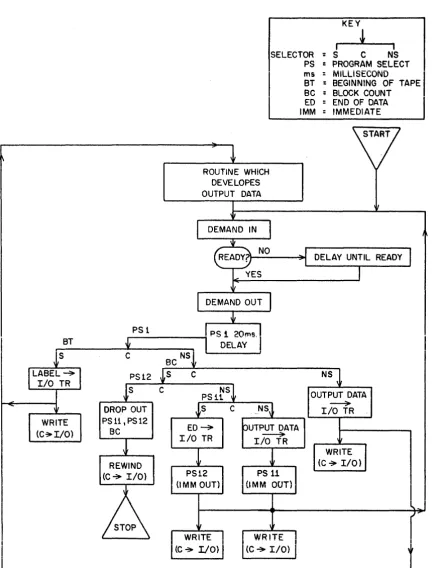
This example illustrates an output routine on the UFC Model 0. A flow chart is shown on the following page.
Comments on Flow Chart
When the MTU is next demanded after the 20,OOOth blockette has been written on the tape, the End of Blockette count signal which is wired into an I/O-to-C line will reach the computer. However, since in all probability the MTU will be "ready", the "demand out" pulse will occur at approximately the same time. In order, therefore, to provide time for the End of Blockette count signal to act-ivate a program-varying selector, the "demand out" pulse must be delayed 15 IDS
by PSI.
Although the End of Blockette count selector is now activated, there is another blockette of output data ready for recording on the tape. When this new block-ette is recorded, the program enters the exit routine (as shown in the flow chart).
Tape Search
The circuitry of the MTU is so constructed that in a Tape Search operation the corresponding character positions from the tape blockette and the identifier loaded on the MTU I/O track are compared except in positions where there is an ignore code in the identifier (see Fig. 4). Comparison is suppressed for these positions. Thus t