AUTOMATIC BEHAVIOUR IN INDIVIDUALS WITH NARCOLEPSY: A QUALITATIVE APPROACH.
By
MICHELLE MORANDIN.
Supervisor: Dorothy Bruck
Submitted in partial fulfillment of the requirements for the degree of Doctor of Psychology (Clinical Neuropsychology)
DECLARATION
I certify that this thesis contains no material which has been accepted for the award of any other higher degree or graduate diploma in any university, and that to the best of my knowledge and belief the thesis contains no copy or paraphrase of material previously published or written by another person, except where due reference is made in the text of the thesis.
ABSTRACT
ACKNOWLEDGMENTS
I am very grateful to a number of people who facilitated my progress during my doctoral studies.
Many thanks to the members of NODSS who participated in this study.
To my supervisor, Professor Dorothy Bruck, whose infinite patience, thoughtfulness, understanding and expert supervision improved this thesis. Also to Mr. Alex Tully for putting his time and effort into helping me conceptualise my ideas visually.
TABLE OF CONTENTS
Page ABSTRACT
ACKNOWLEDGMENTS TABLE OF CONTENTS LIST OF FIGURES LIST OF TABLES LIST OF APPENDICES
i iii iv viii ix x
CHAPTER 1: INTRODUCTION
1.1 1.2 1.3 1.4 1.5 1.6
Symptoms and pathophysiology of narcolepsy Psychosocial impact of narcolepsy
Cognitive performance and sleepiness
1.3.1 Cognitive performance in sleep deprived individuals
1.3.2 The effect of task characteristics and motivation to perform in sleep deprived individuals.
1.3.3 Cognitive performance in individuals with narcolepsy
1.3.4 The effect of task characteristics on performance in individuals with narcolepsy.
1.3.5 Electroencephalographic patterns during performance decrements in individuals with narcolepsy
Automatic behaviour phenomenon
1.4.1 Automatic behaviour in normal populations
1.4.2 Automatic behaviour in individuals with narcolepsy Rationale for present investigation
Aim of current study
CHAPTER 2: REVIEW OF CURRENT METHODOLOGY: QUALITATIVE RESEARCH 2.1 2.2 2.3 2.4 2.5 2.6
Qualitative vs. quantitative research Phenomenology
Case studies
2.3.1 Types of case study designs
2.3.1.1 Intrinsic vs. instrumental case studies 2.3.1.2 Descriptive vs. explanatory case studies 2.3.1.3 Single vs. multiple case studies
Limitations of qualitative methods: Phenomenology and the case study Responses to the critique
Overview of methodological approach used in the current study
25 27 28 29 29 29 30 31 32 35
CHAPTER 3: METHODOLOGICAL TECHNIQUES 3.1
3.2
3.3
Participants
Tools and procedures
3.2.1 Screening participants 3.2.2 Testing Procedures 3.2.2.1 Interview One 3.2.2.2 Journal 3.2.2.3 Interview Two
3.2.2.4 Spouse/ family member interview 3.2.2.5 Minimal medication journal
3.2.2.6 Minimal medication journal follow up 3.2.2.7 Additional information
Method of data analysis
3.3.1 Phenomenological analysis
CHAPTER 4: RESULTS, PHENOMENOLOGICAL ANALYSIS 4.1 4.2 4. 3 4.4 4.5
Behaviours associated with automatic behaviour. 4.1.1 Descriptions of automatic behaviour events. 4.1.2 Consequences of automatic behaviour events.
4.1.2.1 Sequencing errors
4.1.2.2 Item/ environment intrusion
4.1.2.3 Perseverative actions leading to nonsense 4.1.2.4 Context inappropriate behaviours
4.1.2.5 Successful actions Internal states during automatic behaviour
4.2.1 Type 1: Sleepiness with low cognitive load 4.2.2 Type 2: Sleepiness with high cognitive load 4.2.3 Type 3: High cognitive load without sleepiness Controlling automatic behaviour
4.3.1 Controlling the other symptoms of narcolepsy 4.3.2 Stop and sleep
4.3.3 Develop habits to follow 4.3.4 Keeping active
Psychosocial impact of automatic behaviour
4.4.1 The impact of automatic behaviour on the individual
4.4.2 The impact of automatic behaviour on interactions with others Overview 48 48 50 50 51 52 52 53 54 54 55 58 59 60 60 61 61 62 62 64 66
CHAPTER 5: RESULTS, CASE STUDY ANALYSIS
5.1 Case study 1 – Participant C
5.1.1 Experiences of automatic behaviour in the past 5.1.2 Current experiences of automatic behaviour 5.1.3 Internal states in automatic behaviour 5.1.4 Strategies to control automatic behaviour
5.2
5.3
5.4
5.1.5 Summary
Case study 2 – Participant B
5.2.1 The development of automatic behaviour
5.2.2 Importance of medication, time of day and diet on automatic behaviour.
5.2.3 The impact of stress on automatic behaviour
5.2.4 The impact of automatic behaviour on emotional functioning 5.2.5 Summary
Case study 3 – Participant D
5.3.1 Change in automatic behaviour
5.3.2 Description of Participant D’s automatic behaviour 5.3.3 Factors precipitating automatic behaviour.
5.3.4 Completion of automatic behaviour
5.3.5 Strategies used to prevent automatic behaviour 5.3.6 Summary
Case study considerations
73 73 74 76 77 78 79 80 80 81 82 83 86 87 88
CHAPTER 6: DISCUSSION 6.1 6.2 6.3 6.4 6.5 6.6 6.7 6.8 6.9 610
Loss of recall associated with automatic behaviour in narcolepsy Consequences of automatic behaviour in narcolepsy
Types of automatic behaviour in narcolepsy
Levels of vigilance associated with each type of automatic behaviour Descriptive model of automatic behaviour.
Explanation of automatic behaviour from a cognitive perspective. Development of a questionnaire to measure automatic behaviour. Methodological issues.
LIST OF FIGURES
Page Figure 1
Figure 2
Figure 3
Figure 4
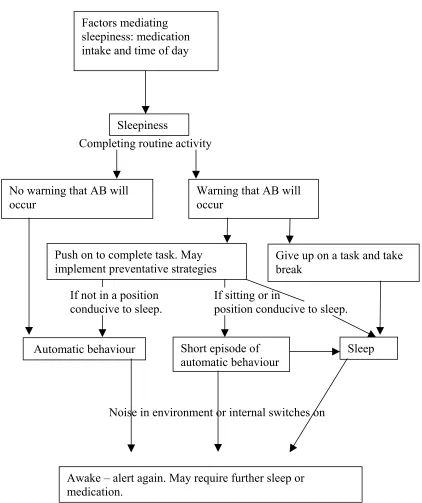
Participant D’s model of automatic behaviour
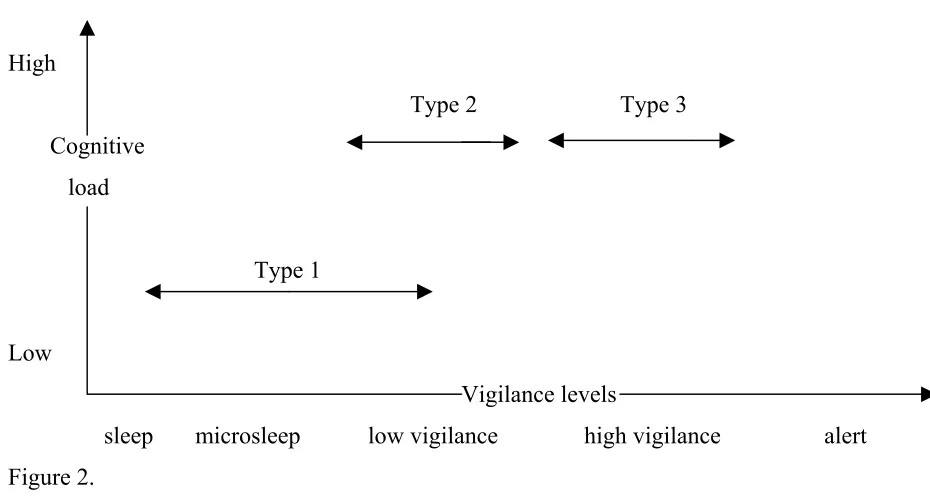
The relationship between hypothesised vigilance levels and cognitive load associated with the different types of automatic behaviour.
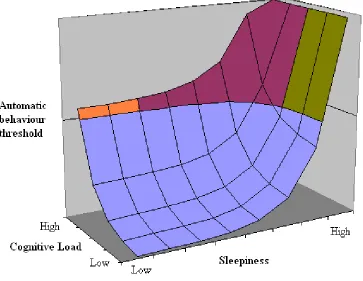
The relationship between sleepiness, cognitive load and automatic behaviour threshold for each type of automatic behaviour
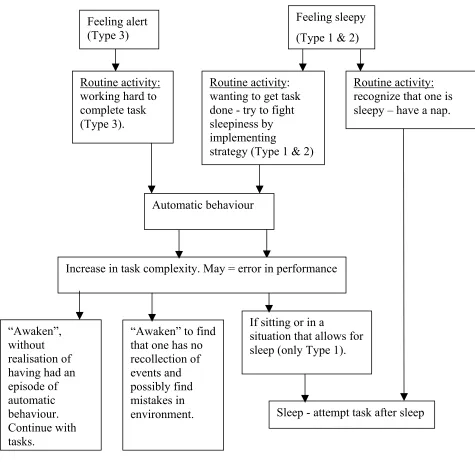
Descriptive model of automatic behaviour
85
99
101
LIST OF TABLES
Page Table 1 Participant details and areas of the study completed by each
APPENDICES Page Appendix A Appendix B Appendix C Appendix D Appendix E Appendix F Appendix G Appendix H Appendix I Appendix J Appendix K
Letter of approval to conduct study from Human Ethics Research Committee.
Introductory letter to participate and consent form. Selection questionnaire and identification sheet.
Second information letter and consent form to participants (for interviews and journal)
Possible questions for interview one with participants. Journal completed by participants
Optional audio taped journal
Possible questions for interview two with participants
Possible questions for interview with spouse/ family member Information letter regarding minimal medication journal and consent form.
Minimal medication journal
CHAPTER ONE INTRODUCTION
Most individuals will at some time in their life experience feelings of daytime sleepiness. While these feelings can usually be overcome by a good night’s sleep, relief from extreme sleepiness can not be as easily found for individuals with narcolepsy. Narcolepsy is a neurological disorder, characterized by excessive daytime sleepiness. Associated features include cataplexy, hypnogogic hallucinations and sleep paralysis (Mahowald, 2000). Despite the large amount of research devoted to the prominent symptoms of narcolepsy, there are many aspects that are still not fully understood. One of these is the symptom of automatic behavior. Automatic behavior involves performing a series of actions without conscious awareness, which usually occurs during repetitive or monotonous tasks (Zorick, Salis, Roth, & Kramer, 1979). With little research in the area, the mechanisms by which automatic behaviour occurs are not fully understood. The current review will examine the literature documenting this phenomenon as well as literature on cognitive functioning and sleepiness (which has been linked to the automatic behaviour literature), in both normal and narcolepsy groups.
1.1 Symptoms and pathophysiology of narcolepsy
awareness of sleepiness level, ending in complete sleep. A second cardinal and often defining symptom is cataplexy. Cataplexy is associated with a loss of skeletal muscle, producing brief episodes of weakness, which may cause the individual to collapse. No loss of consciousness is evident during these attacks, which are frequently prompted by excitement or emotion, the most common precipitant being laughter. Additional extraordinary features include sleep paralysis; an inability to move when falling asleep or awakening, and hypnogogic hallucinations; vivid mental imagery present at the moment of sleep onset which are mistaken for actual visual, auditory or kinesthetic events (Aldrich, 1992; 1996). Individuals with narcolepsy have also reported symptoms of disturbed nocturnal sleep, cognitive difficulties and automatic behavior.
demonstrates that the abnormal manifestation of REM periods are key to its pathophysiology.
The identification that narcolepsy has a high susceptibility to the rapid onset of REM periods at the beginning of sleep led to the proposal that inappropriate intrusions of REM sleep into the waking state are responsible for many narcoleptic symptoms (Rechtschaffen et al, 1963). For example, the muscle weakness associated with cataplexy and sleep paralysis have been suggested to be associated with the intrusion of REM sleep and the accompanying skeletal muscle atonia that occurs during normal periods of REM sleep (Hobson, 1995). In addition, most dreaming occurs during REM sleep. Therefore, when REM intrudes into waking, dream imagery occurring in this state appear as hypnogogic hallucinations (Dement, Rechtsechaffen, & Gulevich, 1966). However, disordered REM sleep is not the only pathophysiological feature of narcolepsy. In fact some symptoms may be associated with an impairment in the boundaries between NREM sleep and wake states, suggesting that there is a “broader problem of impaired sleep wake regulation” (Aldrich, 1993, p. 535). For example, disturbed nocturnal sleep, characterised by multiple awakenings during the night is frequently reported in individuals with narcolepsy, and this may represent an intrusion of waking states into REM periods and NREM sleep.
narcolepsy may involve a more generalized dysfunction of “state boundary control”. A considerable amount of research in the 1980s focused on possible neurochemical abnormalities in human and canine narcolepsy, with a hypothesis of a dynamic imbalance between dopamine and acetylcholine in the central nervous system being proposed (Smith & Cohen 1988). In 1983 narcolepsy was found to be tightly associated with human leukocyte antigen (HLA) DR2 in the Japanese population and was later also found in Caucasian populations (Billiard, Seignalet, Besset, & Cadilhac, 1986; Honda, Asaka, Tanaka, & Juji, 1983). However, further research in HLA and narcolepsy found that despite the tight association, this genetic marker was not sufficient, nor necessary to induce narcolepsy. Furthermore, the exact same alleles were found in 12 – 38 % of the general population and thus factors other than HLA must be involved in inducing narcolepsy (Mignot et al, 1991).
examined the cerebrospinal fluid of individuals with narcolepsy have found that out of nine participants, seven had hypocretin concentrations below detection limit (Nishino, Ripley, Overeem, Lammers, Mignot, 2000). It has been suggested that the reductions in hypocretin activation of monoaminergic nuclei of the brainstem and in the cholinergic brainstem and basal forebrain areas (areas considered central to the generation of REM sleep) cause the abnormal manifestations of REM sleep and subsequently the symptoms of cataplexy and excessive daytime sleepiness, respectively (Thannickal et al, 2000).
excessive daytime sleepiness. New to Australia, Modafinil is now often used as the first line of drug for new cases, given its excellent safety profile and the ease with which it is tolerated (Moldofsky, Broughton, & Hill, 2000). If these two pharmacological treatments are chosen appropriately and taken at certain times of the day, they can work together to promote wakefulness, decrease the occurrence of cataplexy and assist with night time sleep (Mitler & Hayduk, 2002).
1.2 Psychosocial impact of narcolepsy
Despite the availability of these medications, the symptoms of narcolepsy are usually not fully controlled. That is, although stimulant medications can result in an increase in subjective arousal they are not able to eliminate somnolence (Parkes, 1994). Non pharmacological approaches, such as regular naps, can assist in increasing the individual’s ability to function during the day, however even these techniques have their limitations (Billiard, 1976; Mullington & Broughton, 1993). As a result, narcolepsy can have a formidable impact on psychological and social functioning (Broughton & Broughton, 1994). Initial research by Broughton et al (1981) in 180 aged matched controls from North America, Asia and Europe demonstrated that the symptoms of narcolepsy have a significant negative impact on occupation (over 75%), driving, work and home accidents, education, recreation and personality.
in the home (such as domestic activities, supervising children). In addition to these findings, it was reported that over half the sample were depressed (Daniels et al, 2001). Similarly, Bruck (2001) reported that the symptoms of narcolepy had a clear disruption in individuals’ lives and was highly significantly correlated with psychosocial adjustment across a number of domains. Symptom severity was also associated with psychological distress, such as depression.
1.3 Cognitive performance and sleepiness
The negative impact on quality of life can be associated with a number of factors. One factor thought to be associated with these psychosocial difficulties, particularly those at work and school, are subjective reports of impairments in cognitive functioning, such as concentration, memory and attention (Hood & Bruck, 1996). Reported deficits with cognition by individuals with narcolepsy has led to much research examining cognitive functioning using neuropsychological methods in this group. Overall, it has been suggested that cognitive disturbances in narcolepsy can be understood as a consequence of sleepiness on cognition, rather than a deficit of the underlying system (Schulz & Wilde- Frenz, 1995). Similar findings have been documented in studies examining cognitive functioning in normal individuals following periods of sleep deprivation. The following section will present literature examining the relationship between sleepiness and performance, in both clinical (narcolepsy) and non clinical (sleep deprived) groups.
1.3.1 Cognitive performance in sleep deprived individuals
performance on a number of measures. In 1959, Willams, Lubin and Goodnow hypothesised that sleep deprivation resulted in a gradual impairment in performance, and attributed this decrement in performance to lapses. Lapses were defined as periods in which individuals were less responsive to stimuli. To assess this assertion, Williams et al (1959) used paced (pace of tasks outside participant’s control) and unpaced (pace determined by participant) reaction time tasks in 40 adult males who had undergone between 72 and 98 hours of sleep deprivation. The results of the study indicated that a progressive increase in participant’s reaction times was evident over the days of sleep deprivation. Additionally, the number and duration of lapses increased, producing unevenness in performance. Specifically, poorer performance on the unpaced tasks was reported to be a result of a change in speed and not accuracy, stemming from an increased frequency of lapses. On the paced tasks, poorer performance was related to an increase in errors, particularly those of omission rather than commission, again thought to be associated with lapses. It was concluded that sleep deprivation resulted in a gradual deterioration in performance, due to an increase in lapses. The presence of lapses during performance decrements indicated to the authors that sleep deprivation caused a temporal disturbance in cognition, rather than a functional or structural deficit.
In order to understand what physiological changes occur during lapses, studies have employed electroencephalographic (EEG) methodology. Studies using EEG recordings have shown that fluctuations in performance run in parallel with specific changes in neurophysiological signs of alertness. For example, Torsvall and Akerstedt (1987) reported that one-quarter of the night time train drivers in their study showed a significant increases in alpha (9 – 12 Hz) and theta (4 – 8Hz) activity, as well as slow eye movements (EOG). This activity was highly correlated with subjective sleepiness. In addition, during these changes in EEG and EOG activity, obvious lapses and errors in performance were evident, such as driving against a red light.
performance. It was suggested that sleep deprivation resulted in a decrease in attentional capacities, thereby decreasing “efficiency of their cognitive processing” (McCarthy & Waters, 1997, p. 120). Further supporting this assertion, EEG recordings were absent of any microsleeps during decreased task performance. It was suggested that fluctuations in attention and not brief intrusions of sleep into wakefulness (microsleep periods) were associated with a decrease in performance.
1.3.2 The effect of task characteristics and motivation to perform in sleep deprived individuals
and monotonous nature of the task resulted in decreasing arousal and subsequently performance deterioration. In line with this finding, other research has shown that monotonous tasks requiring sustained attention can increase ones pressure to sleep, particularly in sleep deprived individuals (Dinges & Kribbs, 1991).
The effects of sleep deprivation on motivation to perform have also been examined. In particular, research has been interested in examining how much compensatory effort sleep deprived individuals are able to apply to increase performance (Dinges and Kribbs, 1991). Horne and Pettitt (1985) examined performance on a thirty minute vigilance task (Wilkinson Auditory Vigilance Test), in a sleep deprived with incentive group (I), a sleep deprived without incentive group (NI) and a no sleep deprived, no incentive control group (C). Incentives included money and were increased systematically for each day of deprivation. Participants in group I were also fined for misses and false alarms. It was reported that incentives were able to maintain performance up to baseline levels for one day following a night of sleep deprivation. After this time, performance fell, despite the increasing reward presented. Therefore, despite best efforts, performance was adversely affected in the second night of sleep deprivation.
In addition, although participants reported that their effort increased, performance actually worsened. It was also reported that participant’s believed that they were unable to do any better on the task. It was concluded that although individuals attempted to increase effort on a task following sleep deprivation, this did not improve performance.
Overall, the literature suggests that sleep deprivation can have a negative impact on performance, indicated by fluctuations in attention abilities and an increase in lapses. In addition to the effects of sleepiness, research has demonstrated that the tasks that are most sensitive to performance decrements are those which are unstimulating, repetitive, simple and of long duration (usually given for at least 30 minutes). Individuals are able to place greater compensatory effort on tasks. However, an increase in effort does not necessarily produce improved performance (Dinges et al, 1992; Horne and Pettitt, 1985).
1.3.3 Cognitive performance in individuals with narcolepsy
Similar findings have been reported in the research into cognitive difficulties experienced by individuals with narcolepsy. Studies have shown that performance deficits in this group are related to decreased ability to maintain wakefulness and sustain attention, rather than to specific cognitive deficits (Aguirre, Broughton, & Stuss, 1985; Godbout & Montplaisir, 1986). These studies will now be examined.
poorer than for the control group. When individuals with narcolepsy were given the opportunity to nap, both speed and accuracy improved, but the percentage of lapses remained significantly higher compared to controls. This finding indicated to the authors that poorer performance in individuals with narcolepsy was not associated with a cognitive deficit, but rather an inability to sustain alertness.
but rather is secondary to decreased concentration in tasks that require effortful processing” (Ollo et al, 1987, p. 402).
To evaluate other areas of functioning, Hood and Bruck (1996) examined automatic, attentional and complex cognitive functioning in eight individuals with narcolepsy and eight matched controls. In addition to investigating various areas of functioning, Hood and Bruck examined performance under two test conditions; a high arousal condition and a low arousal condition. Creating an environment with low stimulation produced the low arousal condition and giving participants a period of 30 minutes to nap, facilitated the high arousal condition. It was reported that individuals with narcolepsy in the high arousal condition performed as well as the control group on automatic tasks. However, in the low arousal condition narcolepsy participants had decreased performance on tasks of complex cognitive functioning. Similar to other research, it was concluded that cognitive performance decrements in narcolepsy were secondary to the effects of sleepiness.
1.3.4 The effect of task characteristics on performance in individuals with narcolepsy
four tests; The Wilkinson- Auditory Vigilance Task (WAVT), the 4 – choice reaction time task, the paced auditory serial addition task (PASAT) and digit span. It was reported that performance by individuals with narcolepsy was significantly lower than that of normals in tasks of low stimulation and was characterised by “lapses of intermittent response omissions” (p. 137). However, no significant difference was observed between the narcolepsy and control groups on the PASAT or digit span, tasks thought to be short and stimulating.
1.3.5 Electroencephalographic patterns during performance decrements in narcolepsy
Similar to the sleep deprivation literature, the neurophysiological underpinnings of performance errors in narcolepsy have interested researchers. Early research reported that performance decrements in narcolepsy were associated with microsleep episodes. For example, in a group of individuals with hypersomnia (individuals not meeting the criteria for a diagnosis of narcolepsy, but presenting with chronic excessive nocturnal sleep or daytime sleep and sleepiness), Guilleminault, Phillips and Dement (1975) reported significant performance decrements on two vigilance tasks, compared to controls. Of interest, during testing and non - testing periods, a number of microsleep episodes were noted on EEG recording. In particular, decrements in performance were observed to correspond to the presence of brief bursts of microsleep episodes occurring in close clusters. It was reported that in between these microsleep episodes participants performed as well as controls. When questioned at the end of testing, participants denied being asleep during these microsleep episodes, even though there were obvious impairments in their performance and they were unable to recall the period. The authors speculated that the performance difficulties often reported at home and at work by this group was associated with the occurrence of microsleep episodes.
of errors. During this time the participants would also stare blankly and make inappropriate statements that bore no relevance to the preceding conversation. The authors reported that associated with these periods, EEG recordings showed repetitive bursts of microsleep episodes (defined as a sudden, short lasting burst of stage one, slow wave sleep and/ or a short burst of synchronous theta activity recorded in central monopolar derivations, i.e., C3/A2, C4/A1, O2/A1). These conclusions have been criticised by some researchers (Valley & Broughton, 1983). That is, although the study had a good design, the authors failed to provide statistical comparison of controls and individuals with narcolepsy, and their design was developed to enhance drowsiness. For example, participants completed multiple testing sessions during the day and tasks consisted of repetitive and monotonous tasks, all potentially exacerbating sleepiness in these participants.
While studies have shown microsleep patterns to be associated with performance decrements in individuals with narcolepsy, further research into the area has found a differing pattern of results. Valley and Broughton (1981; 1983) demonstrated that individuals with narcolepsy showed fairly slow fluctuations in vigilance during performance deficits, rather than the briefer periods of microsleeps as described by Guilleminault et al (1975). Valley and Broughton (1983) suggested that microsleep patterns are only present at extreme low levels of vigilance, and do not parallel vigilance levels experienced by individuals with narcolepsy on a daily basis (Valley & Broughton, 1983). In contrast to Guilleminault et al, Valley and Broughton conducted testing only once in the morning and encouraged alertness and motivation in their participants. This was thought to be a better parallel to the outside world, in which many demands are placed on the individual. During testing it was reported that individuals with narcolepsy continued to fluctuate between wakefulness and sleep. Electroencephalographic recordings of narcolepsy participants showed fluctuations between wakefulness and stage 1A (slowed and diffusing alpha) and stage 1B (theta activity) compared to controls who were continually awake. During these stages, deficits in performance were noted. These errors included omission of responses, lapses, false positives, inappropriate responses and were attributed to participant’s inability to sustain wakefulness over time, and therefore, maintain attention. It was concluded that the microsleep hypothesis was inadequate in explaining performance deterioration in these patients and was better accounted for by unstable periods of fluctuating vigilance (Valley & Broughton, 1981).
when the tests are short, pose a challenge to the individuals and are conducted in a setting which facilitates high arousal levels (Rogers & Rosenberg, 1990; Hood & Bruck, 1996). However, when tasks are monotonous and require a longer period of sustained performance, performance deficits are observed (Valley & Broughton, 1981; 1983). The literature presents mixed findings on the physiological underpinnings of errors in performance. Some research has reported that performance deficits are associated with microsleep episodes (Guilleminault et al, 1975). While others have noted that microsleep patterns occur at very low levels of vigilance and performance deficits in real world settings are associated with fluctuating vigilance levels (Valley & Broughton, 1983).
1.4 Automatic behaviour phenomenon
As demonstrated, fluctuating periods of vigilance hamper the integrity of cognitive processes such as attention, concentration, learning and memory. Fluctuating vigilance can also cause disturbance in the regulation, implementation and control of motor behaviour, as is demonstrated in the automatic behaviour syndrome (Guilleminault et al, 1975). Automatic behavior involves performing familiar actions without conscious awareness (Utley, 1995). That is, the body continues to function while the mind has partially retreated to sleep. Consequently the individual has no recollection of the events that occurred while in this state and frequent errors in performance are evident.
1.4.1 Automatic behaviour in normal populations
and having no recollection of the drive. Literature examining automatic behaviour associated with driving in normal individuals has developed a number of constructs to describe this phenomenon. According to Wertheim (1991) (who described this state as ‘highway hypnosis’), driving automatically occurs as an imbalance between two types of attention: controlled versus automatic. That is, when first learning how to complete a task (such as driving), individuals operate under a controlled mode, investing effort in the task and using feedback to monitor and process their performance. After much practice and experience, the individual becomes skilled at the activity. It is here where the controlled mode is replaced by the automatic mode. As performance is now based on readily available internal motor programs, external feedback is used sporadically. In addition, the fact that individuals are unable to put sufficient effort into the easy task (as not much feedback monitoring is required), the extent to which alertness can be raised is limited. Subsequently, the task or situation leads to a decrease in alertness and arousal.
Kerr noted that in this state the driver may appear to be monitoring their environment (such as, checking rear view mirror), but this information is not being processed.
Together these hypotheses indicate that automatic functioning in normal populations is associated with a transfer of attention and control to internal processing, in which the individual has lowered awareness of the external environment, and bases actions on an internal representation of what is occurring at the time. As a result, the under reliance on external feedback and low levels of vigilance often mean that errors go unnoticed and individuals may fail to act when required (Thiffault & Bergeron, 2003). This model of working under ‘automatic pilot’ is not exclusive to driving, with many activities in life being done in this mode, as will be demonstrated in individuals with narcolepsy.
1.4.2 Automatic behaviour in individuals with narcolepsy
only to regain alertness and find himself in a situation that he had no recollection of, often feeling well rested as if he had slept.
In 1958, Ganado further documented episodes of automatic behavior, however, the phenomenon was still not termed automatic behavior, rather he termed them ‘fugue – like episodes’. Similar to Daniels’ (1934) description, these ‘fugue – like episodes’ were often associated with performing familiar acts, such as walking, driving or talking, followed by complete amnesia for the acts. It was also reported that frequent mistakes would occur in this state. For example, “they spoke jargon and wrote illegible scribble” and these acts would only stop if the task became more difficult or an unexpected event interrupted the action resulting in a full return in alertness (p. 488).
embarrassing or dangerous consequences of their actions. For example, patients of the clinic reported making a sandwich with a sponge and eating it, driving home from work finding themselves 50 miles from home, producing meaningless sentences in conversations and making errors at work costing employees thousands of dollars.
1.5 Rationale for present investigation
As can be seen, automatic behavior is a serious symptom that can have many adverse effects on the individual’s professional and personal life. Unfortunately, the research conducted on automatic behavior and narcolepsy, has not been extended in over 10 years. Research in the area still does not give a full understanding of the experiences of automatic behavior in individuals with narcolepsy. In order to gain a more comprehensive understanding of automatic behavior, more research needs to be conducted in the area.
1.6 Aim of current study
The aim of the current study was to document the phenomenon of automatic behaviour in individuals with narcolepsy, using qualitative methodology. The current study will aim to examine the following:
- The relationship between automatic behavior, sleep wake patterns and medication intake.
- The factors improving or worsening automatic behaviour. - The predictability and control of automatic behaviour episodes.
CHAPTER TWO
REVIEW OF CURRENT METHODOLOGY: QUALITATIVE RESEARCH As there is limited research conducted on automatic behaviour in individuals with narcolepsy the current study will be adopting a qualitative approach. The aim of this section is not to review all the possible methods of conducting qualitative research, but to provide an understanding of how the current methodology was chosen and to review issues relevant to the use of that methodology.
2.1 Qualitative vs. quantitative research
Traditionally, quantitative methods have been viewed as the preferred approach in the investigation of social phenomenon. Quantitative research adopts a positivist perspective and is based on the methodological principles of objectivity, replicability, causality and generalisation. Adherence to these principles is achieved through the use of rigorous experimental designs, survey data and questionnaire items. By adopting these methods it is believed that objectivity is preserved by maintaining distance between the researcher and participant; replication and generalisation can be carried out by employing the same questionnaire in another environment; and analysis of cause and effect can be conducted by using a variety of statistical measures (Bryman, 1984).
understanding of the social world from the ‘inside’. In contrast the positivist seeks to develop concepts and theories to describe and explain social phenomenon by applying a natural science and studying the phenomenon from the ‘outside’, with little reference to each individual being investigated and the meanings they ascribe to the event under study.
(Bryman, 1984). It is these last two points (the importance of discovery and the use of small clinical samples) which makes qualitative research so well suited to the subject of the current research.
After a review of the possible qualitative approaches, the researcher selected phenomenology and the case study approach as the two preferred philosophical foundations and methodological strategies for the current study. Key issues in both are set out below.
2.2 Phenomenology
Therefore, the phenomenological approach requires the researcher to consciously suspend all previous assumptions of the phenomenon under study and instead adopt a naïve approach to the understanding of individuals’ experiences (that is, the researcher ‘brackets’ preconceptions). It should be noted that phenomenologists do not maintain that their perspective is the only useful setting for understanding experience. What they do claim is that it can be useful for certain areas of study and can provide a view of the phenomenon that can not be achieved through other methods. Phenomenology has served the basis for much qualitative research, particularly in the areas of health, illness and psychology (Denzin & Lincoln, 2000).
2.3 Case studies
Another qualitative approach, which has played a central role in many disciplines, has been the case study. The case study approach can be characterised as the presentation and analysis of detailed information about single or multiple subjects, in relation to an event, culture or individual life (Platt, 1988). Through this analysis, the researcher is able to obtain an in depth understanding of the characteristics of cases in order to generate new insights (Willig, 2001).
Perhaps the most important role of the case study is to describe phenomenon that are too complex for the survey or experimental situation (Willig, 2001).
2.3.1 Types of case study designs
Due to variability in the types of cases that may be studied, there are a number of case study designs that may be used. Each of these designs allow the researcher to address a number of different questions in relation to the case under investigation. The following section is based on work by Willig (2001), who provided a useful categorisation of the different types of case studies.
2.3.1.1 Intrinsic vs. instrumental case studies
Researchers may chose to conduct case study research for the purpose of finding out more about the individual case. That is, the case is chosen purely for interest and for its particularity, rather than about the more general phenomenon or problem. This is called an intrinsic case study. By contrast, an instrumental case study selects a case of interest in order to understand more about a phenomenon. In this instance the case develops models of a more general phenomenon. Rather than focussing on the case itself, instrumental studies examine specific phenomenon (such as automatic behaviour) within a particular case (such as an individual with narcolepsy).
2.3.1.2 Descriptive vs. explanatory case studies
and one is able to develop new insights. Unlike the descriptive study, the exploratory case study aims to not only provide a description of the case, but also attempts to provide an explanation of the phenomenon.
2.3.1.3 Single vs. multiple case studies
2.4 Limitations of qualitative methods: Phenomenology and the case study
Although qualitative research has been viewed as a valuable research tool, some researchers have proposed that it is of little use in scientific inquiry. Again, the view that quantitative methods are essential to the production of warrantable knowledge has been the basis of much of the criticism of qualitative methods. That is, the principles underlying quantitative research, including objectivity, falsification and generalisation, have been reported to be lacking in the qualitative approach (Runyan, 1982).
2.5 Responses to the critique
In order to combat these criticisms, researchers have adopted a variety of techniques aimed at increasing the sophistication and rigor of qualitative research. One technique that has been advocated is triangulation. Triangulation is a process of using multiple perceptions or methods of data collection within one case to reduce the likelihood of misinterpretations, clarify meaning and confirm the recurrence of an observation (Stake, 2000). That is, the researcher is able to integrate information from different sources and observe the phenomenon from different perspectives. This, in turn, provides enriched material and the internal validity of the study is increased. Flick (1998) pointed out that triangulation is a way of “transgressing the (always limited) epistemological potentials of the individual method” (p. 230). Alternatively, Kazdin (1981) proposed that one may increase internal validity by collecting data over time and on more than one occasion. This continuous assessment, such as when testing the effects of a particular treatment, provides an additional advantage that can strengthen internal validity of the case study. In addition to this method, Kazdin proposed using more than one case in the study. By doing this, uniformity in the data is demonstrated and the likelihood that an unconnected event is responsible for the change is decreased.
interactive approach, the researcher is able to understand how and why participants responded in a particular manner (Stoecker, 1991).
Much of the response to the critique of qualitative methods has focused on a direct critique of alternative approaches, namely the quantitative approach. For example, one of the criticisms of the qualitative approach is that it does not ensure accurate explanation and often requires a creative leap from data to explanation. However, it has been suggested that all research involves this process (Stoecker, 1991). The fact that quantitative methods use large numbers and therefore a more ‘representative’ sample does not mean that the relationship between particular variables is clearly evident. The ability to identify a relationship in the data is perhaps more dependant upon the plausibility of the relationship between variables, rather than the representativeness of the sample. It is this point that has lead many researchers to conclude that qualitative methods can more effectively analyse causation than quantitative cross sectional research. That is, what is often lost in quantitative research is the ability to see the operation of variables and the processes involved in these relationships.
2.6 Overview of methodological approach used in the current study
CHAPTER THREE
METHODOLOGICAL TECHNIQUES 3.1 Participants
Table 1
Participant details, including demographic details, Epworth Sleepiness Scale (ESS) score, areas of the study completed a automatic behaviour experienced.
Participants Age Sex Years since narcolepsy diagnosis Cataplexy ESS (off medication condition) ESS (on medication condition) Interview 1 Interview 2 Journal 1 Journal 2 (minima medication
A 69 M 12 years 4 17 5 4 4 4 8
B 55 F 15 years 4 22 11 4 4 4 4
C 63 F 32 years 4 24 17 4 4 4 4
D 63 F 17 years 4 23 10 4 4 4 4
E 66 F 26 years 4 20 13 4 4 8** 8
F ^ 46 M 10 years 4 23 19 4 4 4 8
G 62 F 30 years 4 22 13 4 4 8** 8
H ^ 49 M 28 years 8* 22 9 4 4 8*** 8
I 63 F 40 years 4 20 10 4 4 8*** 8
J 62 F 45 years 4 22 16 4 4 4 4
3.2 Tools and Procedures 3.2.1 Screening Participants
Following the receipt of permission from the Victoria University, Department of Psychology, Human Research Ethics Committee (see copy of letter dated 18th June 2002 in Appendix A), participants were approached at a NODSS meeting and questionnaires from a previous study were reviewed. Once participants were approached and expressed interest in the study, they were given information regarding the study, a consent form, the selection questionnaire and identification sheet to complete (Appendix B and C). The identification sheet included participant’s contact details, in order for the researcher to notify them that they had been selected or not selected to participate in the study. Participants were informed that information from the selection questionnaire and their contact details would remain confidential and the two would be kept separate via a coding system.
3.2.2 Testing Procedures
The researcher conducted the following procedures (all interviews and transcriptions).
3.2.2.1 Interview One
reviewing the research on automatic behaviour, the researcher developed a number of questions based on information from these readings and based on issues that were not addressed in previous research (Appendix E). However, participants were given the freedom to bring up particular issues or features of automatic behaviour not addressed by the researcher. All interviews were conducted by the researcher and tape recorded with the consent of the participant. The researcher transcribed interviews within one week of the interview.
3.2.2.2 Journal
In addition to the interviews, participants were asked to complete a journal for at least a week, writing down any episodes of automatic behaviour (Appendix F). These were either given at the time of interview, or sent prior to the interview (country Victoria participants only, so as to give them the opportunity to review the journal and have the researcher clarify any questions). Participants were given the choice of completing a written journal, or completing a combined written/ audio taped journal (Appendix G).
The journal consisted of two sections. This included the sleep wake diary and a record of instances of automatic behaviour (also using the Stanford Sleepiness Scale) (Hoddes, Zarcone, Smythe, Phillips & Dement, 1973).
The sleep wake diary was completed daily for the duration of the journal. It included information regarding the previous night’s sleep, naps taken during the day, a medication record and food and alcohol intake.
medication, time of last nap and food intake in the last three hours. In order to record their level of sleepiness (both before and after the episode) participants were referred to the Stanford Sleepiness Scale (SSS) (Hoddes et al, 1973). The SSS is a self-rating scale, which is used to quantify changes in sleepiness. The scale consists of seven statements, measuring extremely high (7 - “almost in reverie; sleep onset soon; lost struggle to remain awake”) to extremely low (1 - “feeling active and vital; alert; wide awake”) levels of sleepiness. In the current study participants were also given the option of noting whether they had been asleep before or after the episode (X- Asleep). In the second part of the automatic behaviour record, information in relation to the actual episode was documented. Information that participants were instructed to provide included a description of what occurred before, during and after the episode, the estimated duration, and any signs or knowledge that they were having an episode. Finally, participants were given the opportunity to note any additional thoughts or issues associated with the episode.
The current study included the use of a journal so that conclusions could be made using not only retrospective data (interviews) but also data taken as the phenomenon occurred.1
1 Individuals with narcolepsy found it very difficult to complete this journal. That is, often they
3.2.2.3 Interview two
Following the completion of the journal, the researcher returned to the participants’ house and collected the journal (or participants in country Victoria sent the journal to the researcher and were subsequently contacted via telephone). Once this occurred, the transcript of the first interview was reviewed and discussed in order to give participants the opportunity to add or clarify responses. A second interview was also conducted at this time in order to gain an increased depth of information. The rational for this is that individuals may have become more aware of instances of automatic behavior after having completed a journal, as a result of increased focus on their automatic behavior. Therefore, more information may be uncovered in the second interview (Appendix H).
3.2.2.4 Spouse/ family member interview
3.2.2.5 Minimal medication journal
The minimal medication journal was developed following an initial aim to use polysomnographic ambulatory recording devices in the participant’s home to record the brain wave activity associated with automatic behaviour. During this recording participants were asked to take the lowest dosage of stimulant medication that they would take on a day (individuals with narcolepsy may take varying doses of their stimulant medication). However, due to equipment problems this phase was abandoned.2 Instead, those who had agreed to participate in this phase of the study (N= 4) were given a journal to complete, which was to be completed on a day in which they were able to take a low dose of stimulant medication (participants were also given information regarding participation and a consent form, Appendix J).
Participants were instructed to complete the journal on a day in which they would not need to leave the house or drive. The minimal medication journal included a sleep wake diary (similar to the journal completed by all participants), however participants were also instructed to report any cataplexy attacks. They also were instructed to record daily meals, medication and caffeine or alcohol intake. Participants also wrote down any episodes of automatic behaviour (what occurred before, during and after). Additional information included the time of the episode, estimated duration, the level of sleepiness
2 Pilot work in this phase of the study revealed that there was too much interference to be able to
before the episode (according to SSS) and a description of why they thought it happened. Participants were also given space to record any additional comments. Minimal medication journals were sent back to the researchers via a reply paid envelope (Appendix K)3.
3.2.2.6 Minimal medication journal follow up
Upon the return of the day journal, participants were contacted via telephone for a brief interview regarding their experiences while keeping the journal.
The aspects of the study completed by each participant are included in Table 1.
3.2.2.7 Additional information
After all the information was collected, participants were contacted via telephone in order to administer the Epworth Sleepiness Scale (ESS) (Johns, 1992). In the ESS, individuals must rate the likelihood of falling asleep in eight situations (such as “watching television”, “sitting and reading”, etc), according to four choices (from “0 = would never doze” to “3 = high chance of dozing”). This gives a score for each participant, between 0 and 24. According to Johns (1992), ESS scores greater than 16 are indicative of a high level of daytime sleepiness, often characteristic of individuals with narcolepsy, idiopathic hypersomnia and obstructive sleep apnea syndrome. Questions were given to participants first referring to how they were without treatment (off medication condition), and then again referring to how they were with treatment (on medication condition). This was included to obtain more information regarding the
3 The four participants who completed the minimal medication journal were going to be presented
severity of their narcolepsy and sleepiness. Results for each participant are presented in Table 1.
3.3 Method of data analysis 3.3.1 Phenomenological analysis
Once all the information was gathered and transcribed the following steps were taken by the researcher to analyse the data.
Step1. The researcher gained familiarity with the data by conducting numerous readings of the transcripts in order to become immersed in the data. Numerous readings of the journals was also conducted.
Step 2. Once this occurred the process of data reduction occurred. Data reduction is a process of selecting, focusing and simplifying raw data. This was achieved by assigning codes to the raw data (Miles & Huberman, 1994). A code is an abbreviation or symbol that is applied to a section of words in order to make classifications in relation to their themes, hypotheses, speculations or concepts. Coding enabled the data to be retrieved or compared to other similar data quickly and accurately. The first step of coding was associated with identifying similar concepts. For example, one category included the ‘consequences of automatic behaviour’.
Step 4: Once the key issues had been identified, the process of data interpretation was conducted. This involved linking themes and applying meaning to the data that had been collected. Conclusions were identified using the clustering method, in which an understanding of a phenomenon was gained by grouping, then conceptualizing statements that have similar patterns (Miles & Huberman, 1994). That is, the researcher noted regularities, patterns and explanations in the coded data.
3.3.2 Case study analysis
A similar process was conducted in the analysis of data for the presentation of the case studies. This process, although conducted separately, involved the same method of data analysis for each case.
Step 1: The researcher became immersed in the data for the case (interviews and journals) through numerous readings.
Step 2: The next step involved data reduction, through coding emerging themes. In particular, areas of focus included themes that were similar to the general themes reported by the group as well as themes that differed from that reported by the group.
Step 3: Once the data was coded, the researcher began data interpretation. This involved linking themes and applying meaning to the data that had been collected. Unlike the analysis of the data in relation to group themes, the researcher interpreted themes in relation to the individual, and the meaning they ascribed to their experiences.
Step 4: Once all case studies were analysed and written up, they were compared for similarities and differences.
responses. In particular, the features identified as being different between participants through phenomenological analysis (especially the strategies employed to prevent automatic behaviour) were able to be further investigated in the case studies.
CHAPTER FOUR RESULTS
PHENOMENOLOGICAL ANALYSIS 4.1 Behaviours associated with automatic behaviour
4.1.1 Descriptions of automatic behaviour events
Participants in the current study provided the following description of automatic behaviour.
“You’re probably too young to remember a record going round and round, and if
the needle slipped into another groove. And it’s just like that, it happens so
unexpectedly… It’s just for a very short time…Yeh its just like I slip and then pick
up again and go back on the natural rhythm.” [Participant J].
“For me it’s when I’m still going about doing what I’m doing, but my mind is not
there” [Participant H].
“It’s like the consciousness of your brain switches off, that’s um, but your brain
manages to keep going and do whatever you were trying to do, but the brain
doesn’t get it quite right and you usually find yourself in a bit of a muddle.”
[Participant D].
“Automatic behaviour is when you’ve been doing something and either at the end
of it or afterwards you can’t really remember what it was you did.” [Participant
F].
“I’m never aware of automatic behaviour until after it has happened.”
[Participant E].
How participants knew they had been in automatic mode came from four sources. One included simply having no recall for a period of time.
(After describing episode) “I had no memory of picking up the jar preceded by
opening the cupboard; no memory of opening the drawer and getting the spoon;
no memory of unscrewing the jar lid and putting the spoon into the jar.”
[Participant D – Journal].
Sometimes participants had partial awareness of their automatic behaviour. This was related to participants slowly regaining awareness of their actions. That is, they described regaining full alertness while in the middle of the automatic behaviour act.
“I ‘awoke’ to find myself doing a totally ridiculous, irrational and unheard of act!
I did not remember anything at all” [Participant D – Journal].
“I knew I was in automatic behaviour because I gradually became aware that I
was repeating/ going back and forth” [Participant F – Journal].
“I am mostly unaware of automatic behaviour episodes until later when I find
things in all the wrong places.” [Participant J- Journal].
Finally, some participants reported that they would never be aware of some episodes of automatic behaviour if they did not have family members or friends point them out.
“I knew I had had an episode of automatic behaviour from others commenting on
things I had done/ not done. Denying events with others who could then prove
otherwise.” [Participant F – Journal].
4.1.2 Consequences of automatic behaviour events
In many cases, automatic behaviour was described as resulting in an unsuccessful activity. Individuals reported that they could often carry on doing a task successfully, and it wasn’t until they were interrupted or an unexpected event arose that the errors in their behaviour occurred. This involved errors in sequencing, item/ environment intrusions, perseverations leading to nonsense and behaviours that were successful but context inappropriate.
4.1.2.1 Sequencing errors
Automatic behaviour often resulted in sequencing errors, which typically involved omission of a step in a sequence. This included not only missing a step in a behaviour, but also mixing up the order of the act.
“I boiled the water up to make spaghetti… I wanted to stir the spaghetti in the
4.1.2.2 Item/ environment intrusion
For all participants, automatic behaviour often was associated with putting objects in the wrong places. This appeared to be associated with individuals wanting to place an item somewhere and continuing with the act of ‘putting something away’, but mistaking environmental stimuli. For example, if an item was to be put in a cupboard the item often ended up in a place where a door opened, such as the fridge. Similarly, objects to be placed in drawers would be found in another drawer.
“I could perhaps find a saucepan in the freezer, or really weird things like that.
See your brain keeps working when you’re in automatic behaviour. It says put
your saucepan away in your cupboard. But you get it a bit wrong, so you put it in
the wrong cupboard, which happens to be your freezer. It’s really quite weird,
that your brain carries on dong something, but it can’t get it quite right.”
[Participant D].
“Anyway after the meal I put the lamb in the blinking um dishwasher instead of
our fridge! And then I couldn’t find it, and I didn’t even think to look in the
dishwasher. I mean why would you?” [Participant B].
“It’s not unusual to find the kettle in the fridge and the milk sitting where the
kettle should be.” [Participant C].
“The family’s gotten in the habit of asking ‘have you looked in your ugg boots’…
on more than one occasion I have lost something and later found it in my ugg
boots.” [Participant C].
4.1.2.3 Perseverative actions leading to nonsense
Individuals operating in automatic mode were also found to be perseverative in their actions. That is, participants reported continuing on with the actions of a task in a very specific manner, such as typing the same letter on a computer over and over again. Therefore, this often resulted in nonsense behaviour. At times it appeared to others that the individual was functioning appropriately, however once the product of the behaviour was examined it became clear that the individual had been in automatic mode. Participants noted that this most frequently occurred during conversations in which they perseverated on letters, words and topics of conversation.
“I was a legal secretary…so I went along and had to take down the case short
hand… and at one stage the magistrate asked me: ‘What did so and so say a few
minutes back?’ and all I had was just scribble and I wasn’t able to answer them.”
[Participant J].
“At dinner table… spoke gibberish… fighting to regain composure and
apologised to company”. [Participant J - Journal]
4.1.2.4 Context inappropriate behaviours
“Very often I join in the conversation and say something completely different to
what [pause] to the person I’m talking to was talking about”. [Participant J]. “I mean the whole letter made sense but it just didn’t happen….. and I was so
embarrassed and I had to pretend that I was writing to someone else. To this day
I don’t know who it was I was talking about!”[Participant C].
It may be speculated that the last quote may have been a mixture of automatic behaviour and a dream like state. Although not reported by this participant (Participant C), another participant noted that automatic behaviour and hallucinations occurred together. Other participants did not report this.
“I was at a restaurant with my husband and I poured lemonade into my plate,
instead of pouring it into a glass. But I was hallucinating. And I remember
distinctly thinking that that was the glass… so I think I hallucinate at the same
time or nearly the same time as the automatic behaviour.” [Participant J]
4.1.2.5 Successful actions
Individuals with narcolepsy reported being able to perform successful actions while in automatic mode. That is, participants reported that they were able to complete an action successfully and it was only by retrospectively looking back and noting that they could not recall a period of time that they became aware that they had been in automatic mode. This type of automatic behaviour was often reported when driving.
“There’s many a time I’ve pulled up in this driveway and thought ‘I cannot recall
anything of the last 2 or 3 kilometers’ but I’ve driven and I’ve come home without
4.2 Internal states during automatic behaviour
Participants described three instances or conditions in which automatic behaviour would be most likely to occur. These are described in three “types”. The types experienced by each participant is included in Table 1 (Chapter Three).
4.2.1 Type 1: Sleepiness with low cognitive load
Type 1 automatic behaviour was typically associated with a general feeling of sleepiness in all participants (N= 10).
“I think it would definitely go with being sleepy.” [Participant A].
“I do know with me that it happens when I’m fairly tired.” [Participant D].
“Automatic behaviour happens when I am fighting off the sleepy feeling.”
[Participant J - Journal].
In Type 1 automatic behaviour, this general feeling of sleepiness was often associated with low stress levels or when completing routine tasks, which often required low cognitive demand/ stimulation.
“Um [pause] probably like cooking, um if I’m [pause] got sort of time to
prepare a meal this is when I have trouble because I’m slightly more relaxed.”
[Participant B].
“I was feeling quite tired and in trying to get myself a coffee, I put a teaspoon of
coffee in the peanut butter jar, instead of a teaspoon in my cup” [Participant B –
Journal].
“I went into automatic behaviour while eating lunch and then fell asleep. I woke
scattered down my chest and stomach. My memory only recalls the first 2 or 3
bites of my lunch.” [Participant D- Journal].
This type of automatic behaviour was also often associated with falling asleep. That is, if the individual were placed in a position where sleep would be possible (such as a couch), then the automatic behaviour and feeling of sleepiness would progress to complete sleep (this was also indicated by ratings from the SSS in participant’s journals). In these instances individuals described sleep as an interruption to the automatic behaviour.
“She can be sitting there with a knitting needle and continue happily until she
falls asleep and then wakes and continue as if nothing happened.” [Spouse –
Participant G].
“Sometimes, I used to eat automatically and then go to sleep while I was eating
and then continue on without even being aware that I’d been asleep in the middle
of it.” [Participant E].
4.2 Type 2: Sleepiness with high cognitive load
Similarly, all participants (N = 10) described experiencing automatic behaviour that was associated with feelings of sleepiness, which occurred when completing tasks with high cognitive load (Type 2). Participants described being stressed during these instances, as a result of feeling pressured to get many tasks completed.
“I find that if I’m trying to do too many things at once… you finish up with some
interesting things happening.”[Participant A].
“Stress to get things done tends to have a lot of bearing on the amount of episodes
of automatic behaviour that I have”. [Participant F].
Type 2 was also associated with individuals feeling sleepy and being aware of their sleepiness, but pushing on to get the task done. Participants reported that this was sometimes a conscious effort and a desire to complete a task. Alternatively the demands of work and family prevented them from taking the break they needed, and therefore automatic behaviour would occur.
“Started to write some notes, finding it hard to write, but kept going. By the third
line I was not making sense, became ‘stupid’ and I had to give up. I was drifting
into automatic behaviour but trying to retain consciousness to finish writing.”
[Participant D – Journal].
“She doesn’t push herself the way she did previously. And that’s when the
automatic behaviour occurred previously, when she pushed herself further
[pause] kept going” [Spouse - Participant G].
Participants reported that they believed that if they stopped and had a nap, the automatic behaviour would not occur.
“Getting a meal ready and knowing you’re tired and you just keep doing it
because you want to get it done. It’s at these times where I need to stop.”
[Participant B].
“This episode was at stage one of automatic behaviour before my conscious
switched off; if I was seated it would not have become automatic behaviour, I
The sleepiness associated with Type 1 and Type 2 was reported to be largely mediated by daily stimulant medication intake. All participants reported that daily medication intake had a large impact on the amount of automatic behaviour that occurred.
“My episodes of automatic behaviour are definitely when my medication time is
wearing off.” [Participant D].
“It does get worse if I’ve forgotten to take my medication. I know that at about 10
o’clock in the morning I’m thinking, “why am I feeling like this?” and suddenly
realise I haven’t taken anything” [Participant I].
As a consequence many believed that an effective way to control automatic behaviour was through appropriate management of medication.
“The only thing that really snaps me out I think is the medication.” [Participant
J].
“My sense of how I control automatic behaviour is partly medication, it could
also be following a reasonable plan for sleep.” [Participant E].
“Once she got the tablets it seemed to control a lot of that (automatic
behaviour).” [Spouse - Participant G].
“I find it worse if usually the day before I’ve forgotten to take a dose of tablets…
And it’s the next day that I seem to have more automatic behaviour.” [Participant
A].
“I think it’s worse on days following when I’ve taken insufficient medication.”
[Participant H].
“I can have 2 or 3 good days and bad days…I’ve sort of had to learn not to burn
and bust because typically I used to feel good so I’d burn and then be crook for a
week” [Participant F].
It may be noted here that according to the ESS (results presented in Table 1), participants reported a high propensity to fall asleep in the given scenarios, with scores falling within the clinically significant range according to Johns (1991) (scores greater than 16). However, when asked to complete the ESS thinking about their propensity to fall asleep when well medication, many scores fell below the clinically significant range. This supports the notion that stimulant medication had a large impact on participant’s ability to control sleepiness as well as their automatic behaviour.
4.2.3 Type 3: High cognitive load without sleepiness
The third instance in which automatic behaviour occurred was when participants were pressured to complete a task, but felt they were not sleepy or drowsy at the time (Type 3). This type of automatic behaviour was not described by all participants (N = 3).
“I’ll quite surprise myself sometimes that I must have had an episode because I
haven’t felt drowsy.” [Participant J].
“I’ve had automatic behaviour when I’ve been well medicated and thought I was