University of South Carolina
Scholar Commons
Theses and Dissertations
2018
A Qualitative Exploration Of Experiences And
Motivations For Diabetes Self-Management In
African American Men Between The Ages Of
40-85 With Type 2 Diabetes
Anthony Q. Walker
University of South Carolina
Follow this and additional works at:https://scholarcommons.sc.edu/etd Part of thePublic Health Education and Promotion Commons
This Open Access Dissertation is brought to you by Scholar Commons. It has been accepted for inclusion in Theses and Dissertations by an authorized administrator of Scholar Commons. For more information, please [email protected].
Recommended Citation
A QUALITATIVE EXPLORATION OF EXPERIENCES AND MOTIVATIONS FOR
DIABETES SELF-MANAGEMENT IN AFRICAN AMERICAN MEN BETWEEN THE
AGES OF 40-85 WITH TYPE 2 DIABETES
by
Anthony Q. Walker
Bachelor of Science Winthrop University, 1997
Master of Science
Medical University of South Carolina, 2001
Doctor of Physical Therapy
Medical University of South Carolina, 2008
Submitted in Partial Fulfillment of the Requirements
For the Degree of Doctor of Philosophy in
Health Promotion, Education, and Behavior
The Norman J. Arnold School of Public Health
University of South Carolina
2018
Accepted by:
Christine Blake, Major Professor
Ken Watkins, Committee Member
Sara Wilcox, Committee Member
Justin Moore, Committee Member
DEDICATION
This is dedicated to my grandfather, Charles Q. Rawlins. He could not read or write, but
ACKNOWLEDGEMENTS
Muhammad Ali once said: “You are not going to enjoy every minute of the
journey, but the success you’ll find at the end will make it all worth it”. This indeed has
been a very long journey, and I will forever be indebted to so many individuals. With the
number of people who have contributed to this project and had an influence on my life,
there is no way that I could possibly name and thank everyone. However, my first “thank
you” goes to my Lord and Savior, Jesus the Christ. Next, my family, especially my
mother (Jessie) and my sisters (Debra, Charlene, and Bernita), my brothers (Donnie and
Darrell), and while they are no longer with me physically, my grandfather (Charles),
Grandmother (Louise), father (Charles). They were the ones who instilled in me the
drive, motivation, passion, and determination that helped fuel the fire when fuel was low.
A special thanks to my dissertation committee and hoping that they realize that
words are too weak to define their importance to me and this project. Dr. Blake, thank
you for your patience and willingness to mold the broken pieces into a final product that I
hope will make all of us proud. Dr. Watkins (pause of gratitude), without you this would
not have been possible. Thank you for not giving up on me during all of the bleak
moments. Dr. Moore, thank you for having the fortitude to accept my train wreck and put
it back on right track with your authentic advice and encouragement. Dr. Wilcox thanks
for your meticulous and astute attention to detail, and your invaluable input. Thank you to
Wilma Sims, Erica Searcy, Jan Lander, Vaidya Parekh, Kenita S.K. Chumas, J.J.M.
Nguyen, and D. J. S. Hannon.
Always seek authentic friendship, because: “Friendship is Essential to the Soul”
and uplift will always be my daily mission. Remembering in the words of Colin Powell:
“There are no secrets to success. It is the result of preparation, hard work, and learning
from failure.”
ABSTRACT
Diabetes is a devastating disease that can affect an individual’s health and quality
of life, but if managed properly, individuals with diabetes can have a good quality of life.
Diabetes strikes African American men at a high rate. This study used a qualitative
design to explore African American men between the ages of 40-85 with type 2 diabetes
(T2DM) and their definition of diabetes and motivation, their experience of living with
diabetes, their self-management behaviors, their motivations for managing diabetes, and
what they and healthcare providers believe motivates them to self-manage diabetes and to
attend diabetes self-management education (DSME) programs. In-depth interviews were
conducted with 22 African American men from the Piedmont area of South Carolina and
6 healthcare providers from various disciplines that treated African American men with
T2DM.
The Self-Determination Theory was used as a framework to explore their
motivations. Data were collected over a 6-month period and consisted of field notes,
memos, reflections, and dually recorded, in-depth interviews. Data analysis consisted of
using NVivo 10 to assist with data management and storage. Interviews were transcribed
verbatim and analyzed using thematic analysis and an iterative process to develop the
major themes. Results indicated that participants defined diabetes as “a mean nasty
disease” and described initial reactions of being diagnosed with diabetes as disbelief,
“I got it under control” and had differing opinions on healthcare providers with some
having great respect and others expressing distrust. Having family support, trying to
practice good health and wellness behaviors, and dealing with the cost of diabetes
medications were common concerns of most participants. Motivation was defined by
participants as having “drive” or “attaining a goal”. For most participants, being there for
family was their primary motivating factor for managing diabetes. No participants
expressed pure intrinsic motivation for managing their diabetes as simply doing it for joy.
Two participants were amotivated and did not have intentions of managing diabetes, but
most had extrinsic motivation for managing diabetes such as wanting to see
grandchildren grow-up or avoiding needles for insulin. Many participants believed that
making diabetes classes more interesting and convenient could improve motivation to
attend DSME classes. Healthcare providers viewed their roles as “cheerleaders”,
“coaches”, and “lifestyle changers”. Most healthcare providers used fear tactics to
motivate participants to manage diabetes such as emphasizing possible consequences of
poorly managed diabetes as sexual dysfunctions and comorbidities. Additionally,
healthcare providers believed that involving family, decreasing cost, empowering
individuals, recognizing the importance of culture, and having more time with diabetic
patients would improve participant’s motivations for managing diabetes.
In conclusion, diabetes has an enormous impact on the global, national, state,
community, and individual levels. Individuals living with diabetes face many challenges
such as emotional burdens, struggles to manage and cost of managing the disease. It is
important to understand the lived experiences of African American men living with
mutual perceptions of motivation of African American men and health providers that
treat African American men with T2DM to implement culturally sensitive DSME
PREFACE
Disparities in healthcare are well documented. As with many diseases, diabetes
affects certain populations disproportionately. It is imperative that public health agendas
continue to address the diabetes epidemic and close the gaps via addressing underserved
populations in research, and by promoting health, healthy behaviors, and wellness.
Learning more about how underserved and understudied populations live with certain
conditions and what motivates them can improve strategies and aid in developing and
TABLE OF CONTENTS
DEDICATION ... iii
ACKNOWLEDGEMENTS ... iv
ABSTRACT ... vi
PREFACE ... ix
LIST OF TABLES ... xii
LIST OF FIGURES ... xiii
LIST OF DEFINITIONS ... xiv
LIST OF ABBREVIATIONS ... xvii
CHAPTER 1: INTRODUCTION………...………...1
CHAPTER 2: LITERATURE REVIEW ...7
CHAPTER 3: METHODS ...22
CHAPTER 4: RESULTS ...47
4.1 Experiences of African American men in South Carolina between the ages of 40 and 85 living with type 2 diabetes ...48
4.2 Exploration of motivations among African American men and perceptions of healthcare providers regarding management of type 2 diabetes using Self- Determination Theory as a framework ...109
Chapter 5: Discussion ...190
REFERENCES ...231
APPENDIX A – MODIFIED INTRINSIC MOTIVATION INVENTORY TASK QUESTIONNAIRE ....257
APPENDIX C – RECRUITMENT LETTER ...260
APPENDIX D – RECRUITMENT FLYER ...261
APPENDIX E –INTERVIEW GUIDE FOR AFRICAN AMERICAN MEN ...263
APPENDIX F –INTERVIEW GUIDE FOR HEALTHCARE PROVIDERS ...265
LIST OF TABLES
Table 3.1 Research Study Demographics for African American Men ...30
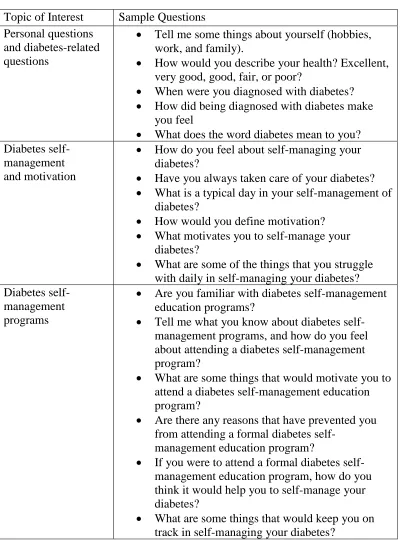
Table 3.2 Sample Interview Questions for African American Men ...36
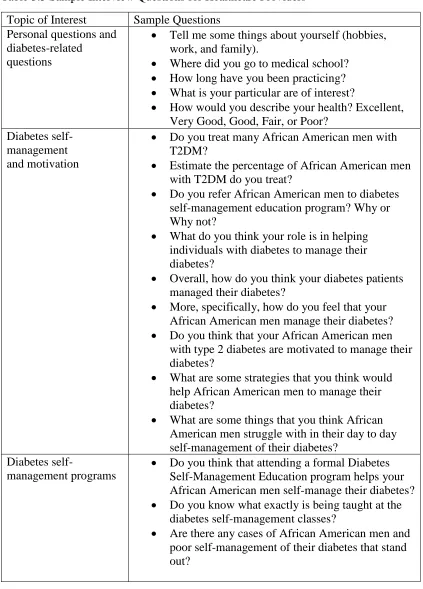
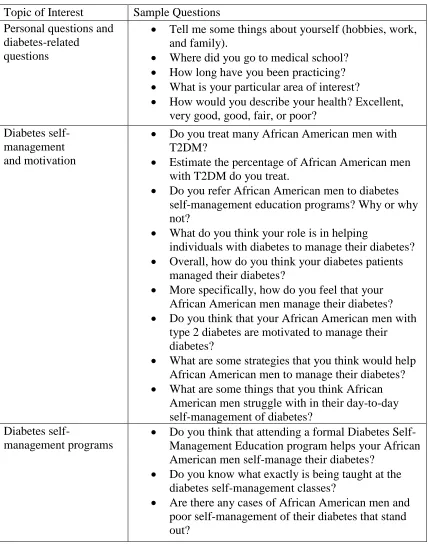
Table 3.3 Sample Interview Questions for Healthcare Providers ...38
Table 4.1 Research Study Demographics for African American Men ...57
Table 4.2 Sample Interview Questions for African American Men ...118
Table 4.3 Sample Interview Questions for Healthcare Providers ...120
Table 4.4 Research Study Demographics for African American Men ...123
LIST OF FIGURES
Figure 3.1 Research Study Pathways ...19
LIST OF DEFINITIONS
A1C- a test that measures a person’s average blood glucose level over the previous 2-3
months. Hemoglobin is the part of a red blood cell that carries oxygen to the cells and
sometimes joins with glucose in the bloodstream. Also, called hemoglobin A1C, the test
shows the amount of glucose that sticks to the red blood cells, which is proportional to
the amount of glucose in the blood (American Diabetes Association, 2016).
Amotivation- the state of lacking the intention to act. When amotivated, people either do
not act at all or act without intent. (Ryan & Deci, 2000).
Diabetes Self-Management Education Programs - is the ongoing process of facilitating
the knowledge, skill, and ability for diabetes self-care. This process incorporates the
needs, goals, and life experiences of the person with diabetes and is guided by
evidence-based standards. The overall objectives of DSME program are to support informed
decision-making, improve self-care behaviors, problem-solving and to collaborate with
the health care team to improve clinical outcomes, health status, and quality of life.
(Funnell, et al., 2011).
Extrinsic Motivation - doing something because it leads to a separable outcome
Intrinsic Motivation - doing of an activity for its inherent satisfactions rather than for
some separable consequence. Doing something because it is inherently interesting or
enjoyable (Ryan and Deci 2000).
Motivation - to be motivated means “to be moved” to do something.
(Deci & Ryan, 2000).
Self-Determination Theory – developed by Edward L. Deci and Richard M. Ryan, it
represents a broad framework for the study of motivation and personality. It is a theory of
motivation that is concerned with supporting our natural or intrinsic tendencies to behave
in effective and healthy ways. The Self-Determination Theory postulates that extrinsic
motivation can vary greatly in the degree to which it is autonomous (Deci & Ryan, 2011;
Deci & Ryan, 2000).
Thematic Analysis – thematic analysis is a widely-used qualitative data analysis method
that can be used to identify patterns of meaning across a dataset. It has been widely used
across the social, behavioral and applied sciences. Patterns are identified through a
rigorous process of data familiarization, data coding, and theme development and
revision. It can be used within different frameworks to answer different typed or research
questions (The University of Auckland, 2017)
Type 2 Diabetes (T2DM) - diabetes mellitus (DM) is a condition characterized by
T2DM, either the pancreas does not make enough insulin or the body is unable to use
insulin correctly. T2DM accounts for 90-95% of those with diabetes. It was previously
referred to as non-insulin-dependent diabetes, type 2 diabetes, or adult-onset diabetes,
and includes individuals who have insulin resistance and usually have relative insulin
deficiency (American Diabetes Association, 2016).
.
LIST OF ABBREVIATIONS
AA ...African American
AMEZ ... African Methodist Episcopal Zion
DSME ... Diabetes Self-Management Education
IMI ... Intrinsic Motivation Inventory
MNT ... Medical Nutrition Therapy
SAED ...South Atlantic Episcopal District
SDT ... Self-Determination Theory
CHAPTER 1
INTRODUCTION
Diabetes mellitus (DM) is a chronic debilitating disease that places an enormous
burden on healthcare on global, national, and state levels (American Diabetes
Association, 2015; South Carolina Department of Healh and Environmental Control,
2015; WHO, 2016). In efforts to address the escalating crisis of diabetes, diabetes
self-management education programs (DSME) continue to be improved and implemented
(Centers for Disease Control and Prevention, 2011; Funnell, et al., National standards for
diabetes self-management education, 2011; American Diabetes Association, 2017).
Significant research suggests that participants benefit from Diabetes Self-Management
Education programs by improving self-management strategies, improving diabetes
knowledge, decreasing A1C, and improving nutritional strategies (Diabetes Educator
Competencies Work Group , 2016; Funnell, et al., National standards for diabetes
self-management education, 2011). However, there has been very little research regarding the
motivations for self-managing diabetes in African American men. Understanding
experiences living with diabetes and motivations to self-manage diabetes, may lead to
improved diabetes self-management strategies and outcomes in this underserved
population.
DM is the seventh leading cause of death in the U.S based on death certificate
billion dollars being in direct medical cost and 69 billion dollars in reduced productivity
(American Diabetes Association, 2016). From 2007 to 2012, the associated cost of
diabetes rose 41%, and the economic burden associated with diagnosed and undiagnosed
diabetes of all ages, gestational diabetes, and pre-diabetes for adults was more than 322
billion dollars with that amount consisting of 244 billion dollars in excess medical cost
and 78 billion in reduced productivity (Dall, et al., 2014). Every 21 seconds someone is
diagnosed with diabetes (American Diabetes Association, 2017).
Nearly 30 million Americans have diabetes, and 84 million Americans have
pre-diabetes and are at risk for developing pre-diabetes. African Americans and Hispanics are
over 50% more likely to have diabetes than non-Hispanic whites. Type 2 diabetes
(T2DM) disproportionately affects African Americans and other ethnic minorities
(American Diabetes Association, 2011; U.S. Department of Health and Human Services,
2016). When compared to non-Hispanic whites, the risk of diagnosed diabetes is 1.2
times higher among Asian Americans, 1.7 times higher among Hispanics, and 1.7 times
higher among non-Hispanic blacks (American Diabetes Association, 2015).
Furthermore, 12.8% of Hispanic/Latino adults in the United States have diagnosed
diabetes and 13.2% of non-Hispanic black adults in the United States have diagnosed
diabetes (American Diabetes Association, 2015).
Living with diabetes can be demanding and can affect an individual’s life in
various ways. Complications from diabetes include diabetic retinopathy, heart disease,
stroke, diabetic neuropathy, foot ulcers, kidney failure, erectile dysfunction, depression,
Prevention, 2011; American Diabetes Association, 2016; American Diabetes Association,
2015).
There is a tremendous cost associated with diabetes. This is in part reflected in the
average cost of insulin nearly tripling between 2002 and 2013 and a health care cost that
is 2.3 times greater for individuals with diabetes than those without diabetes (American
Diabetes Association, 2017). Additionally, 1 in 3 Medicare dollars is spent on care for
people with diabetes, and 1 in 5 healthcare dollars is spent caring for people with diabetes
(American Diabetes Association, 2017; American Diabetes Association, 2015). The
International Federation of Diabetes (2012) reports that the expected cost of
diabetes-related complications will reach 490 billion dollars by the year 2030.
Patient characterizations of diabetes have emerged from qualitative research that
describes diabetes as: “Your body will let you know”; “I thought I was fine, but wasn’t”;
“The only way out is to die”; and “You just go on” (George & Thomas, 2010).
Sentiments such as these support the need for continued diabetes education and suggest
that confusion remains regarding what diabetes is, how to cope with diabetes, and how to
manage diabetes. Organized diabetes self-management education programs can address
these issues (Funnell, et al., National standards for diabetes self-management education,
2011). Lifestyle changes and pharmacological interventions, along with incorporating
physical activity and proper dieting can help reduce the rate of progression to T2DM in
people with impaired glucose tolerance (Gillies, et al., 2007; Bassuk & Manson, 2005;
Lindstrom, et al., 2003; Diabetes Prevention Program Research Group, 2002).
Millions of people have undiagnosed diabetes, and many additional individuals
physician’s orders to seek DSME and training (American Diabetes Association, 2015;
CDC, 2009). This research project focuses on exploring the definition of diabetes and
motivation, the experience of living with diabetes, diabetes self-management behaviors,
motivations for managing diabetes, what healthcare providers who treated African
American men with T2DM felt about their motivations for managing diabetes, the role of
the healthcare provider in assisting African American men with T2DM, and what would
motivate African American men with diabetes to attend a diabetes self-management
education program using a Self-Determination Theory as a framework.
Specific Aim 1: To explore the definitions of diabetes, experiences living with
diabetes, and diabetes self-management behaviors of African American men between the
ages of 40-85 with T2DM.
Research questions:
1) How do African American men between the ages 40-85 with T2DM define
diabetes?
2) How do African American men between the ages of 40-85 with T2DM
describe their experiences living with diabetes?
3) How do African American men between the ages of 40-85 describe their
diabetes self-management behaviors?
Although DSME programs are available to individuals with diabetes, programs
often fail to benefit older African Americans because of barriers such as limited financial
resources, limited access to healthcare, inadequate physician-patient communication, lack
of family support, and decreased knowledge of diabetes (Eakin, Bull, Glasgow, &
Heisler, Harand, & Juip, 2010). Since there is limited data on African American men’
experience and motivations for self-managing diabetes and attending DSME programs
with regard to Self-Determination Theory and motivation (Deci E. L., 2012), this study
sought to explore and further understand the underlying themes of their experiences
living with diabetes and their diabetes self-management behaviors. Additionally, this
research project will explore the feelings and attitudes of African American between the
ages of 40-85 with T2DM on their definition of motivation, their motivations for
managing diabetes, the types of motivation they exhibit in managing their diabetes, what
healthcare providers think motivates them to manage their diabetes, and what would
motivate them to attend diabetes self-management education classes.
Motivational theories have been evolving since the 1930’s. White (1959)
conducted early studies in motivation and identified competence motivation and
biological motivation. White proposed that biological motivation regulates biological
processes while competence motivation enhances the abilities of the individual. Harter
(1978) developed the Competence Motivation Theory and proposed competence
motivation as a basic construct that was related to the amount of approval or disproval
corresponding to a child’s mastery of an activity. Edward Deci and Richard Ryan added
to the field of motivational theories in the 1980’s by developing the Self-Determination
Theory. This study used concepts of the Self-Determination Theory (SDT) as a
theoretical framework.
Specific Aim 2: To explore motivations of African American men between the ages of
40-85 with T2DM to engage in diabetes self-management behaviors, using a
Research Questions:
1) How do African American men between the ages of 40-85 with T2DM
describe self-management of their diabetes?
2) How do African American men between the ages of 40-85 with T2DM define
motivation?
3) What type of motivation do African American men between the ages of 40-85
with T2DM exhibit in managing their diabetes as related to the
Self-Determination Theory?
4) What do African American men think about the healthcare providers involved
in managing their diabetes?
5) What do healthcare providers think influences motivations to manage diabetes
in African American men between the ages of 40-85 with T2DM?
6) What motivates African American men between the ages of 40-85 with
T2DM to attend diabetes self-management classes?
As with other health care areas that exhibit disparities, it is important that the
disparities in diabetes in African Americans be addressed. Furthermore, ensuring that
there is easy access to diabetes self-management education programs is equally as
CHAPTER 2
LITERATURE REVIEW
The American Diabetes Associations states that “Diabetes is a group of metabolic
diseases characterized by hyperglycemia resulting from defects in insulin secretion,
insulin action, or both” (American Diabetes Association, 2011, p. S62). Diabetes
influences the way that the body uses digested food for growth and energy. The body
breaks down all sugars and starches into glucose (American Diabetes Association, 2018),
and insulin is necessary for the body to be able to use glucose for energy (American
Diabetes Association, 2018).
There are three main types of diabetes: Type 1 diabetes (T1DM), T2DM, and
gestational diabetes. T1DM is an autoimmune disease in which the immune system
attacks and destroys the insulin-producing beta cells in the pancreas (American Diabetes
Association, 2018). Consequently, the pancreas produces little or no insulin to be used by
the body. T2DM is the most common form of diabetes, accounting for approximately
90-95% of all cases of diabetes, and is more common in African Americans, Latinos, Native
Americans, and Asian Americans (American Diabetes Association, 2018), but the
specific causes of T2DM are unknown. T2DM includes individuals who have insulin
resistance and usually have relative insulin deficiency (American Diabetes Association,
2018). Over 85% of people diagnosed with T2DM are overweight (Centers for Disease
Control and Prevention, 2017). Gestational diabetes occurs late in pregnancy and
levels are not maintained, women with gestational diabetes have a greater chance of
developing T2DM within five to ten years (U.S. Department of Health and Human
Services, 2012; U.S. Department of Health and Human Services, 2016).
It is important to understand diabetes self-management from the individual’s
perspective in order to implement programs that appropriately address their needs. Over a
decade ago, Jack (2004) postulated that diabetes-related health issues from a male
perspective have been inadequately investigated, and there is a need for more
epidemiological, anthropological, behavioral, and clinical studies. Sherman and McKyer
(2015) reported that, while there is an increasing amount of literature on managing
T2DM, there is still a lack of information on high-risk groups such as African American
men. In addition to suffering disproportionately from chronic diseases, racial and ethnic
minorities in the United States do not receive the same standard of healthcare service
delivery or routine medical services as other groups (Pleis, Lucas, & Ward, 2009;
American Diabetes Association, 2007; American Heart Association, 2004; Agency for
Healthcare and Research Quality, 2016). African Americans have higher rates of
mortality than any other racial or ethnic group for 8 of the top 10 causes of death
(Agency for Healthcare and Research Quality, 2016).
In a study to assess the receptiveness of African American men’s receptiveness
and awareness of diabetes Balls-Berry, et al (2015), used a barbershop-based program
that focused on diabetes prevention and awareness in a church affiliated barbershop. The
authors used focus groups, emailed flyers, audio recordings, transcripts and field notes to
study African American men’s perception of diabetes. Themes and subthemes were
African American men had a general awareness of diabetes, 2) the barbershop was a
good non-traditional research setting to reach the African American population in their
environment, 3) a family history of diabetes increased the risk of acquiring diabetes, 4)
unhealthy diet and lack of exercise contribute to the higher incidence of diabetes, and 5)
there was confusion from inconsistent or frequently changing messages from family
members and healthcare providers.
McAndrew, Horowitz, Lancaster, and Lenventhal (2010), noted that many
minority individuals with diabetes rely on subjective cues such as depression, perceived
impact of diabetes, and perceived adherence to diet when assessing their control of
diabetes. This reliance can be detrimental to the management of diabetes because actual
glucose control is related to objective factors, such as insulin use, BMI, and age.
However, DSME programs can educate individuals with diabetes about these issues, and
DSME programs should be a primary component for all individuals with diabetes
attempting to achieve positive health-related outcomes (Mensing, et al., 2002;
International Diabetes Federation, 2011).
In a qualitative study to explore self-management experiences among men and
women with T2DM, Mathew, Gucciardi, De Melo, & Paula (2012) recruited participants
from a diabetes education center in Canada and used focus groups and individual
interviews to explore the experiences of women and men with T2DM. The authors
concluded that women and men presented with different needs and challenges with
self-managing their diabetes. For example, they found that men focused more on practical
strategies to reduce their dependence on medication and manage diabetes via interest in
affective strategies that are more related to fears and anxieties such as modifying their
diets and misconceptions about nutrition as related to diabetes. The study noted that both
men and women reported wanting physician support to assist in diabetes
self-management. Additionally, men tended to be more private in their disclosure of their
diabetic condition and less observant of maintaining nutritional recommendations in a
social setting where their dietary habits could reveal that they have diabetes, but
conversely, women tend to disclose their diabetic condition more openly and are seem to
practice appropriate nutrition and self-care behaviors regardless of social settings.
Literature acknowledges the benefits of DSME programs, and although advances
have been made, it is difficult to determine what factors actually contribute to improved
outcomes in DSME programs. In a review of diabetes self-management education
research, Jack, Liburd, Spencer, and Airhihenbuwa (2004), re-examined eight studies to
assess theoretical frameworks, cultural appropriateness of interventions, instrument
quality, and results. The authors suggested that future research should incorporate
theoretical frameworks to more efficiently correlate the success of interventions to
principles of the underlying theoretical framework. They also suggested that future
studies should emphasize a multi-level approach of interventions focused not only on an
individual level, but on a community and organizational level as well.
In a study that used the Self-Determination Theory to predict medication
adherence, quality of life, and physiological outcomes among patients with diabetes
(Williams, et al., 2009), 3063 patients with diabetes in a nonprofit, mixed-model health
maintenance organization in southeastern Michigan were identified. Using a telephone
authors concluded that healthcare providers’ support for patients’ autonomy and
competence around medication use and diabetes self-management related positively to
medication adherence, quality of life, and physiological outcomes among patients with
diabetes.
In a randomized trial to test an intervention based on the Self-Determination
Theory and process the model of health behavior change for tobacco cessation, Williams
et al., (2006), studied 1006 adult smokers. Participants were in either a community care
program or an intensive intervention program. The community care program consisted of
a Public Health Service booklet for smoking cessation and a visit with their physician.
The intensive intervention program consisted of the Public Health services booklet and 4
meetings with counselors trained in autonomy support for smoking cessation in 6 months.
According to the authors, this clinical trial was the first to demonstrate that an
intervention based on Self-Determination Theory facilitated the internalization of
autonomous motivation and perceived competence and that the internalization of these
motivations, in turn, resulted in increased use of cessation medications and 6 months
prolonged abstinence from tobacco.
Diabetes in South Carolina
Diabetes is a major health problem among African Americans in South Carolina
(South Carolina Department of Health and Environmental Control, 2016; South Carolina
Department of Healh and Environmental Control, 2015). In an extensive undertaking to
address the issues of T2DM in South Carolina, the South Carolina Diabetes Initiative
(Myers, et al., 2011) was established. Some initial goals and aims of the South Carolina
access of high-risk populations: Goal I- To improve knowledge of diabetes, quality of
life, and access to prevention and intervention services for people at risk and those
affected by diabetes, and Aim 1.7 - To improve quality of life for persons with diabetes
through learning and self-management.
Diabetes places a tremendous burden on the South Carolina healthcare system as
is evident by a 37 percent increase in hospital costs in South Carolina for diabetes-related
complications from 2005 to 2010 (South Carolina Department of Health and
Environmental Control, 2016). South Carolina ranks 7th highest in the nation with in the
nation in the percent of adult population with diabetes, and diabetes is the
seventh-leading cause of death in South Carolina. It is estimated that 300,000-350,000 people
may be living with diabetes with many not aware that they have the disease (South
Carolina Department of Healh and Environmental Control, 2015; South Carolina
Department of Health and Environmental Control, 2016). Additionally, from the 1990’s
through 2008, the rate of diabetes in adults aged 45-65 years increased (Centers of
Disease Control and Prevention, 2010; South Carolina Department of Health and
Environmental Control, 2016), which indicates a need to study older adults with T2DM.
In 2012, the number of new diabetes cases was highest in the age range of 45-64 and 65
years or older with 892,000 and 400,000 respectively and with rate of new diabetes cases
per 1,000 unadjusted at 12.0 % and 11.5% respectively (Center for Disease Control and
Prevention, 2014)
There are several factors involved with self- management of diabetes. Because
individuals with diabetes perform about 95% of their own care (Funnell, et al., 2011), it is
efficiently (American Diabetes Association, 2011). There is evidence that interventions
that promote the incorporation of healthy behaviors have been shown to significantly
prevent or delay the onset of T2DM (Diabetes Prevention Research Group, 2002).
African Americans and Healthcare Disparities
For decades, eliminating healthcare disparities has been a central goal of all major
public health initiatives (U.S. Department of Health and Human Services, 2006; U.S.
Department of Health and Human Services, 1996; U.S. Department of Health and Human
Services, 2010; U.S. Department of Health and Human Services, 2000). Eliminating
ethnic and racial disparities in disease morbidity and mortality is a national public health
goal outlined in Healthy People 2020 (U.S. Department of Health and Human Services,
2010; U.S. Department of Health and Human Services, 2000). According to the Office of
Minority Health (2018), African Americans are twice as likely to be diagnosed with
diabetes, more likely to suffer complications from diabetes such as end-stage renal
disease and lower extremity amputation, more likely to be hospitalized, and more likely
to die from diabetes than non-Hispanic whites. Thus, there continues to be a need to
address these issues and complications caused by diabetes.
Despite these public health initiatives that aim to address healthcare disparities,
African Americans and ethnic minorities continue to die disproportionately from chronic
diseases such as diabetes, hypertension, and heart diseases (Lewis-Moss, Paschal,
Redmond, Green, & Carmack, 2008; Centers for Disease Control and Prevention, 2011;
American Diabetes Association, 2011). Literature suggests that racial and ethnic
minorities are less likely than whites to receive needed services and clinically necessary
cardiovascular disease, HIV/AIDS, and mental illness (Nelson, 2002; Williams &
Jackson, 2005; CDC, 2009).
Lack of African American Men in Research
There is a significant amount of evidence that indicates that African American
men are not being adequately represented in research. Recruitment of African American
men in diabetes research has been challenging (Loftin, Barnett, Bunn, & Sullivan, 2005;
International Diabetes Federation, 2009; Ledric & McKyer, 2015). Nearly 2 decades ago,
Corbie-Smith, Thomas, Williams, and Moody-Ayers (1999) reported that African
American participants consistently indicated levels of mistrust in doctors, the medical
community, scientists, and the government. Unfortunately, these same problems still exist
today and the concepts of trust and distrust are critical factors in African Americans
seeking care. According to Jacobs, Rolle, Ferrans and Whitaker (2006), trust tends to
facilitate care-seeking behavior and fosters patient honesty and compliance, while on the
other hand, distrust decreases care-seeking and may lead to nonadherence.
There are disproportionately high rates of diabetes in ethnic and racial minority
communities, and there is a need to develop diabetes self-management programs to help
curtail the effects of diabetes on the African American community (Osborn & Fisher,
2008). Much of the research about diabetes self-management programs has been largely
based on patients who are widely accessible and in academic medical settings, but efforts
are needed to improve the accessibility of diabetes education programs and to culturally
tailor the content of these programs to appeal to their preferred target population (Osborn
& Fisher, 2008). Although physicians may refer patients to diabetes self-management
attend. Thus, the mere act of getting African American men to attend diabetes
self-management classes is important.
Recruitment of African Americans Men
There is substantial literature that report the difficulty in recruiting African
American men for research (Sherman & J.McKyer, 2015; Corbie-Smith, Thomas,
Williams, & Moody-Ayers, 1999). According to Woods, et al (2004) many black men
prefer one-on-one settings versus community settings with strangers regarding healthcare
sites. While current literature supports the benefits of DSME programs, there continues to
be a lack of information on the high-risk group such as African American men (Sherman
& J.McKyer, 2015). Sherman and McKyer (2015) state that African American men must
be included in research to help understand the factors that affect research recruitment and
elements that influence their self-management of diabetes. Heisler (Heisler, et al., 2009),
found that individuals participating in diabetes self-management classes conducted by
community health workers that provided sustained and nonjudgmental assistance
increased their motivation and confidence.
Connecting with the African American male community is critical in the
recruitment process. According to Woods, Montgomery, and Herring (2004) a culturally
sensitive approach to recruit African American men using positive materials that portray
African American men in a positive manner plays a significant role in recruiting African
American men. The authors further contend that conscious efforts must be made to attract
the men, engage their interest, and sustain their attention to improve recruiting African
In earlier research, Hendricks (1999) suggested that patience is a critical factor for
healthcare providers working with African American men because it allows time for them
to work through defense mechanisms such as denial, anger, fear, and helplessness.
Additionally, Hendricks noted that having decreased availability and accessibility to their
healthcare providers were major concerns. Unfortunately, availability and accessibility
continue to be a major problem in South Carolina as well (Myers, et al., 2011).
Recruiting older African American men for research can be difficult. Spence and
Oltmanns (2011), reported that their team increased participation by African American
men by tailoring and targeting recruitment letters and materials, meeting participants in
the parking lot, walking them into the location in which the research was being
conducted, encouraging participants to ask questions, providing refreshments, and
referencing African American men by their las names. The authors noted that changes in
recruitment strategies increased from 71 during the first two years of the study to 147
during the final year and a half.
In a pilot study to examine depression in African American men, the study had to
be halted after 9 months because of no participants for the study (Bryant, Wicks, &
Willis, 2014). While the authors noted that part of their difficulties may have been
attributed to the stigma of depression, they also noted that culturally insensitive
recruitment materials and a failure to develop trust in the community before the research
project began could have curtailed recruitment and enrollment in the study.
Diabetes Self-Management Education
Diabetes Self-Management Education (DSME) is a skill-based approach to
self-management decisions (American Diabetes Association, 2011). The purpose of
DSME is to promote self-care behaviors and active engagement with the healthcare team
to improve quality of life, health status, and clinical outcomes (Funnell, et al., National
standards for diabetes self-management education, 2011). Multiple studies have found
that DSME is associated with improved diabetes knowledge and improved self-care
behaviors (Norris, Engelgau, & Narayan, 2001; Centers of Disease Control and
Prevention, 2010; Diabetes Prevention Research Group, 2002; Diabetes Educator
Competencies Work Group , 2016) improved clinical outcomes such as lower A1C
(Norris, Lau, Smith, Schmid, & Engelgau, 2002), weight loss (Norris, Engelgau, &
Narayan, 2001), improved quality of life, and lower costs. Effective DSME programs
have a significant impact on healthcare systems, and the data shows that diabetes
education saves money and decreases healthcare utilization, with hospitalization rates
34% lower for those patients having at least one educational visit (Robbins, Thatcher,
Webb, & Valdmanis, 2008).
Diabetes education is most often provided by certified diabetes educators, and
licensed healthcare professionals that include registered nurses, registered dietitians,
pharmacists, physicians, or others working in various specialty areas. Diabetes educators
come from various backgrounds such as biological and social sciences, communication,
counseling, and education (Diabetes Educator Competencies Work Group , 2016). DSME
can be provided in a variety of community settings, including community gathering
places, the home, recreational camps, worksites, and schools, but in-home and worksite
outcomes have not been as successful as community settings (Centers for Disease Control
gathering places for adults with T2DM (Centers for Disease Control and Prevention,
2011). The best DSME programs are culturally sensitive and incorporate behavioral and
psychological components (Funnell, et al., National standards for diabetes
self-management education, 2011; Loftin, Barnett, Bunn, & Sullivan, 2005).
DSME programs play a vital role in education and prevention of diabetes and
should be readily available and accessible to everyone (International Diabetes Federation,
2011). While it is critical for DSME programs to be available and assessable, it is equally
as important to understand the contributing reasons and factors of why African American
men choose to enroll or not to enroll in in DSME programs. Low literacy, poverty, and
cultural differences are some of the issues faced when implementing DSME programs
with underserved populations and must be overcome to meet the needs of this population
(Anderson & Christison-Lagay, 2008).
It is important for individuals with diabetes to understand the critical factors in
managing their condition, and this definitely needs to be addressed in underserved and
understudied populations (U.S. Department of Health and Human Services, 2018; Liburd,
Namageyo-Funa, Jack, & Gregg, 2004; U.S. Department of Health and Human Services,
2010). Additional research is needed to determine effective recruitment strategies, ideal
types of providers for community settings, most effective intensity and durations of
interventions, reducing barriers, cost effectiveness, and long-term maintenance
Theoretical Framework: The Self-Determination Theory
This study used the Self-Determination Theory (SDT) as a theoretical framework.
Initial research on SDT began in the 1970’s, comparing intrinsic and extrinsic motives
and the role that motivation played in an individual’s behavior, but SDT was not
officially introduced and accepted as sound theory until the mid-1980’s (Deci & Ryan,
1985). SDT has been tested across many domains such as tobacco cessation (Williams, et
al., 2006), diabetes self-management (Williams, McGregor, Zeldman, Freedman, & Deci,
2004), medication adherence (Williams, et al., 2009), and physical activity (McAuley,
Duncan , & Tammy, 1987; McAuley, Jerome, Elavsky, Marques, & Ramsey, 2003).
According to Deci and Ryan (2008), since the mid-80’s there has been a
significant amount of literature and research on SDT applied to a wide range of subjects,
and SDT has continued to expand over the last decade with most of its growth being in
areas such as physical activity, education, and healthcare. SDT is based on the concept
that humans have innate psychological needs for autonomy, competence, and relatedness
and contend that behavioral regulation towards an activity can be amotivated,
extrinsically motivated, or intrinsically motivated SDT (Deci & Ryan, 1985).
In SDT (Deci & Ryan, 2000), the need for autonomy is fulfilled when people
perceive that they are the origin of their choices and decisions and competence involves
an individual’s need to feel mastery through effective interaction within their
environment; and relatedness involves feeling securely attached to and being respected
by others. While SDT has covered many domains, it has not been applied to older
African American men with diabetes (E.L. Deci, personal communication, February 24,
for this research project because it specifically addresses distinct types of motivation such
as intrinsic motivation versus extrinsic motivation, and underlying constructs that might
influence each type of motivation.
The goal of this study is to gain an understanding of the experiences of African
American men living with T2DM and the factors to influence motivation to self-manage
T2DM. This goal will be achieved by addressing the following specific aims.
Specific Aim 1: To explore the definitions of diabetes, experiences living with
diabetes, and diabetes self-management behaviors of African American men between the
ages of 40-85 with T2DM.
Research questions:
1) How do African American men between the ages 40-85 with T2DM define
diabetes?
2) How do African American men between the ages of 40-85 with T2DM
describe their experiences living with diabetes?
3) How do African American men between the ages of 40-85 describe their
diabetes self-management behaviors?
Specific aim 1explores how older African American men define diabetes, their
experiences living with diabetes, their general perception of living with diabetes, and
their motivations for managing their diabetes.
Specific Aim 2: To explore motivations of African American men between the ages of
40-85 with T2DM to engage in diabetes self-management behaviors, using the
Self-Determination Theory as a framework.
1) How do African American men between the ages of 40-85 with T2DM
self-management of their diabetes?
2) How do African American men between the ages of 40-85 with T2DM define
motivation?
3) What type of motivation do African American men between the ages of 40-85
with T2DM exhibit in managing their diabetes as related to the
Self-Determination Theory?
4) What do African American men think about the healthcare providers involved
in managing their diabetes?
5) What do healthcare providers think influences motivations to manage their
diabetes in African American men between the ages of 40-85 with T2DM?
6) What motivates African American men between the ages of 40-85 with
T2DM to attend diabetes management classes?
As with other health issues, it is important that the disparities in diabetes in
African Americans be addressed. Furthermore, ensuring that there is easy access to
diabetes self-management education programs is equally as important in eliminating
CHAPTER 3
METHODS
This chapter details how this study was developed, depicts the research process,
how the data was collected and analyzed, and outlines the processes used to interpret the
data. This study used an interdisciplinary approach gained from the primary
investigator’s interdisciplinary training in physical therapy and rehabilitation science and
continuous work with different healthcare and public health professionals. In-depth
interviews were used to explore the definition of diabetes and motivation, living with
diabetes, the self-management behaviors of African American men between 40-85 years
of age with T2DM, what they and healthcare providers that treat African American men
with T2DM believed motivates them to manage their diabetes and to attend diabetes
self-management programs, and also explores what African American men and healthcare
providers that treat African American men with diabetes feel about their respective roles
in managing diabetes. Two interview guides were developed, one for African American
men with T2DM and one for the healthcare providers, to direct the in-depth interviews. In
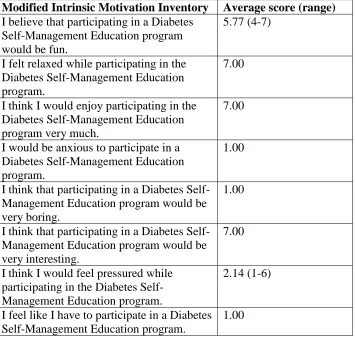
addition, a modified Intrinsic Motivation Inventory (IMI) (Appendix A) adapted from
principles of the Self-Determination Theory was used to provide descriptive data on
Specific Aim 1: To explore the definitions of diabetes, experiences living with diabetes,
and diabetes self-management behaviors of African American men between the ages of
40 and 85 with T2DM.
Research questions:
1) How do African American men between the ages 40-85 with T2DM define
diabetes?
2) How do African American men between the ages of 40-85 with T2DM describe
their experiences living with diabetes?
3) How do African American men between the ages of 40-85 describe their diabetes
self-management behaviors?
Specific Aim 2: To explore motivations of African American men between the ages of
40-85 with T2DM to engage in diabetes self-management behaviors, using the
Self-Determination Theory as a framework.
Research Questions:
1) How do African American men between the ages of 40-85 with T2DM
self-management of their diabetes?
2) How do African American men between the ages of 40-85 with T2DM define
motivation?
3) What type of motivation do African American men between the ages of 40-85
with T2DM exhibit in managing their diabetes as related to the
Self-Determination Theory?
4) What do African American men think about the healthcare providers involved
5) What do healthcare providers think influences motivations to manage their
diabetes in African American men between the ages of 40-85 with T2DM?
6) What motivates African American men between the ages of 40-85 with
T2DM to attend diabetes management classes?
Study Setting
For this study, a total of 28 participants were interviewed. Twenty-two African
American men with T2DM between the ages of 40 and 85 were recruited to address
research questions for specific aim 1, and the same twenty-two African American men
along with six healthcare professionals were recruited to address the research questions
for specific aim 2. Demographic information for this study was attained from a
demographic questionnaire (Appendix B) filled out by the participants prior to the
in-depth interviews at the interview location. African American men with T2DM were
recruited from local churches in the Piedmont area of South Carolina and included
participants from Spartanburg, York, Lancaster, and Chester counties in the South
Carolina Conference of the South Atlantic Episcopal District (SAED) of the African
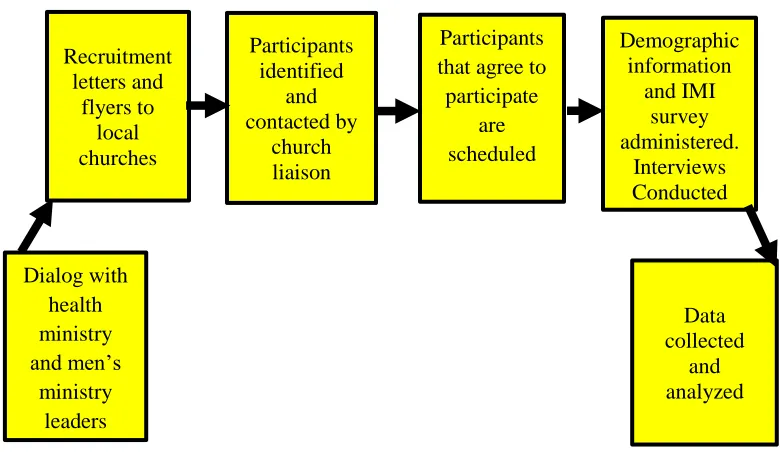
Methodist Episcopal Zion (AMEZ) church. Figure 3.1 illustrates the research study’s
pathways.
Rationale for Qualitative Design
This study is a qualitative study design using in-depth interviews, with open-ended
questions, and the Self-Determination Theory as a framework. Qualitative studies have
long been used and have a valuable role in healthcare fields, social sciences, and nursing
to study behavior (Miller W. R., 2010). While qualitative studies may not be
and influence behavior change for specific populations (Sandelowski, 1997). Using
open-ended questions and probing strategies allows participants to respond in their own words
rather than choosing from fixed responses, and it provides the researcher an avenue to
direct the interview in a manner that via how may create responses that are meaningful
and culturally relevant to participants and unanticipated by the researcher (Stuckey H. L.,
2013). In-depth interviews have been used to find out more in-depth feelings of
individuals with diabetes (Stuckey H. L., 2013), and DSME programs often incorporate
open ended and close-ended data gathering strategies such as interviews, focus groups,
and surveys to attain behavior specific data on the factors that influence poor
self-management from members of the target population (Sarkisian, Brown, Norris, &
Mangione, 2003).
Figure 3.1 Research Study Pathways
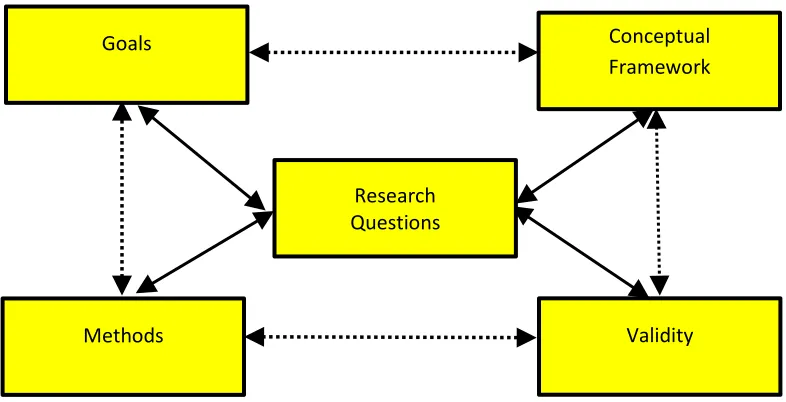
Maxwell (2005) proposes an interactive model of a qualitative research design
that is depicted below in Figure 3.2. Maxwell states that there are five interactive
Recruitment letters and flyers to local churches Participants identified and contacted by church liaison Demographic information and IMI survey administered. Interviews Conducted Data collected and analyzed Dialog with health ministry and men’s ministry leaders ersof Participants that agree participate are scheduled Participants that agree to participate
components of a qualitative study: 1) Goals, 2) Conceptual Framework, 3) Research
Questions, 4) Methods, and 5) Validity.
Figure 3.2 An Interactive Model of Research Design
In Maxwell’s model, the upper triangle of this model (Goals, Conceptual Framework, and
Research Questions) should be closely integrated and related in that the research
questions should be directly related to the goals of the research study, and the conceptual
framework should be applicable to the phenomena being studied in the research study.
The bottom triangle of this model (Methods, Validity, and Research Questions) should
also be closely integrated, and the methods should allow the research questions to be
answered, and the research questions are the center of the model and should be framed to
allow the methods of the research study to address threats on validity.
Theoretical Framework: Self-Determination Theory
This study focused on motivation with a theoretical framework from the
Self-Determination Theory (SDT). The constructs from the SDT are autonomy, related, and
Research Questions
Validity Conceptual Framework Goals
competence. SDT posits that when three innate psychological needs (competence,
autonomy, and relatedness) are satisfied, autonomous motivation will be increased (Ryan
& Deci, 2000). The need for autonomy is fulfilled when individuals perceive that they are
the source of their choices and decisions (Adie, Duda, & Ntoumanis, 2008). SDT (Deci &
Ryan, 2008) is based on human motivation, development, and wellness, and postulates
that motivation can be multifaceted and vary in amounts and types of motivation (Deci &
Ryan, 2000). As defined by Deci and Ryan (2000), “Intrinsic motivation is doing
something because it is inherently interesting or enjoyable, and conversely, extrinsic
motivation that entails doing something because it leads to a separable outcome.” (p.56).
According to Deci and Ryan (2008), autonomous motivation is achieved when an
individual volitionally integrates an activity into their sense of self, and conversely,
controlled motivation entails behavior that is predicated on external factors such as
rewards and punishment.
Creating environments that provide an opportunity for individuals to make
choices allows the individual to experience autonomy and can enhance the intrinsic
motivation to engage in a particular behavior such as increased learning in a DSME
program (Ryan, Williams, Patrick, & Deci, 2009; Deci & Ryan, 1985). Ryan and Deci
(2000) contend that conditions supportive of autonomy and competence reliability
facilitated intrinsic motivation. Thus, if autonomy and perceived competence increases
intrinsic motivation to engage in a DSME program, individuals in a DSME program with
a choice of options to learn or enhance their self-management skills may increase their
Participants
This study was approved by the Institutional Review Board of the University of
South Carolina. Permission to officially recruit members from the South Carolina
Conference of the South Atlantic Episcopal District of the African Methodist Episcopal
Zion (AMEZ) Church was granted by the presiding bishop during the 2008-2016 term.
The selection of participants was purposeful, which is a form of nonprobability sampling
that involves the deliberate selection of individuals by the research based on predefined
criteria (DePoy & Gitlin, 1998; Creswell & Plano Clark, 2011; Patton, 2002). Participants
fit the following inclusive criteria for aim 1: 1) African American men between 40 and 85
years of age, 2) a diagnosis of T2DM, and 3) or was affiliated with an African Methodist
Episcopal Zion (AMEZ) church in the South Carolina Conference of the South Atlantic
Episcopal District (SAED) in the Piedmont or Sandhill area of South Carolina.
For aim 1 there were (n=22) African American men with T2DM. For aim 2, there
were a total of (n=28) participants consisting of African American men (n=22) between
the ages of 40-85 years who were diagnosed with T2DM, and (n=6) healthcare providers
who treated African American men with T2DM. The disciplines and ethnicities of the 6
healthcare providers were as follows: The disciplines and ethnicities of the 6 healthcare
providers were: 2 African American male Family Practice Physicians, 2 European
American male Family Practice Physicians, 1 European American female Nurse
Practitioner, and 1 African American female Doctor of Pharmacy. Healthcare providers
that practiced in or near the Piedmont area of South Carolina were selected via
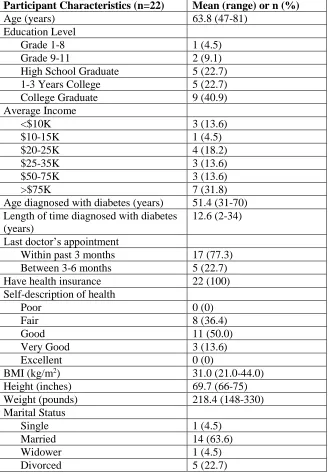
Carolina. Table 3.1 illustrates the demographics data for the 22 African American men
with T2DM who participated in this study.
Recruitment
Over a 2-year period from 2014-2016, dialog was initiated in several settings to
recruit African American male participants. Recruitment venues included diabetic
self-management education programs in hospitals, community clinics, endocrinology offices,
and primary care offices. Extensive efforts were made and hours of time invested
consulting with diabetes educators, primary care physicians, and directors of diabetes
self-management education programs. Initial recruitment of participants included
contacting 11 primary care medical offices with 3 in Columbia, SC, 4 in Lancaster, SC, 2
in Rock Hill, SC, 1 in Orangeburg, SC, and 1 Heath Springs, SC. Five DSME programs
were also contacted with 3 being in Columbia, SC, 1 in Rock Hill, SC, and 1 in
Orangeburg, SC. Gaining access to the target population of African American men
between 40-85 years of age was much more difficult than anticipated and expanding the
target population to all ethnicities and genders was seriously considered to increase the
participant pool, but the desire to have this study address African American men
prevailed and other recruitment efforts where expanded to the SAED of the AMEZ
church.
Although, the initial recruitment process with primary care medical facilities and
diabetes self-management education programs did not yield any participants for the
study, valuable experience was gained about the recruitment process and some of the
clinics had front office staff, who were informative and cooperative on the initial
conversation that introduced the study and the purpose of the study. However, the
problem appeared to be that communication and importance of the study was not a
priority as it moved up the administrative chain.
Table 3.1 Research Study Demographics for African American Men
Participant Characteristics (n=22) Mean (range) or n (%)
Age (years) 63.8 (47-81)
Education Level
Grade 1-8 1 (4.5)
Grade 9-11 2 (9.1)
High School Graduate 5 (22.7)
1-3 Years College 5 (22.7)
College Graduate 9 (40.9)
Average Income
<$10K 3 (13.6)
$10-15K 1 (4.5)
$20-25K 4 (18.2)
$25-35K 3 (13.6)
$50-75K 3 (13.6)
>$75K 7 (31.8)
Age diagnosed with diabetes (years) 51.4 (31-70)
Length of time diagnosed with diabetes (years)
12.6 (2-34) Last doctor’s appointment
Within past 3 months 17 (77.3)
Between 3-6 months 5 (22.7)
Have health insurance 22 (100)
Self-description of health
Poor 0 (0)
Fair 8 (36.4)
Good 11 (50.0)
Very Good 3 (13.6)
Excellent 0 (0)
BMI (kg/m2) 31.0 (21.0-44.0)
Height (inches) 69.7 (66-75)
Weight (pounds) 218.4 (148-330)
Marital Status
Single 1 (4.5)
Married 14 (63.6)
Widower 1 (4.5)
Additional barriers that prevented initiation of research at primary care medical
facilities and diabetes education programs included: 1) some facilities were not
accustomed to having research conducted at their facility and did not feel comfortable, 2)
some facilities had concerns about their patients involved in research, 3) some facilities
thought that it would be additional work for their staff, and 4) some facilities failed to
continue communication with the primary investigator.
The recruitment team was comprised of the primary investigator, local health
ministry coordinators and men’s ministry leaders of local AMEZ churches in Rock Hill,
SC. As recommended in previous studies dealing with African American men
(Corbie-Smith, Thomas, Williams, & Moody-Ayers, 1999; Woods, Montgomery, & Herring ,
2004), a culturally sensitive and respectful recruitment letter and flyer was developed. A
recruitment letter (Appendix C) and a recruitment flyer (Appendix D) was mailed to local
AMEZ churches and their health ministry coordinators and men’s ministry leaders in the
Rock Hill, SC district of the SAED. The recruitment letter described the purpose of the
study, inclusion criteria, and the role of the recruitment team. The recruitment flyer
outlined the purpose of the study, the contact information for the principle investigator
and research study coordinator. After the recruitment information was mailed to the
health ministry coordinators of the local churches, periodic follow-up calls were made by
the primary investigator to the health ministry coordinators to identify potential
participants that may have given contact information. Recruitment information was also
mailed and presented to men’s ministries and at men’s ministry workshops of the local
Local health ministry coordinators identified potential participants from their
congregation and community by making announcements pertaining to the study during
church service and men’s ministry programs at church services and church-related events.
The primary investigator contacted the potential participants to schedule their time and
location to participate in the study. An important recruitment strategy emerged as once
the announcements about the study were made by the health ministry coordinators and
the men’s ministry at church and church-related events, church members and members of
the men’s ministry started to disseminate information about the research project via word
of mouth. This led to more individuals being made aware of the study. Word of mouth
and using to community-based organizations and community partnered participatory
research has been proven to be effective with recruiting minorities for research (Sankare',
et al., 2015; Mendez-Luck, et al., 2011).
Data Sources
Data sources for this study included information gained from initial dialog with
AMEZ clergy, health ministry and men’s ministry leaders, DSME program
administrators, and diabetes educators. Rich, detailed data came from the in-depth
interviews, and demographic information came from a Demographic Information Sheet
(Appendix B), and the Modified Intrinsic Motivation Inventory (IMI) in (Appendix A)
was to gather descriptive data on intrinsic motivation. Memos, field notes, and reflections
were also valuable sources of data that were critical in formulating the evolving themes
Memos
Memos were used to assist in deriving information from the data. Writing memos
can occur during any phase of the research process to clarify, clarify research topic, and
to facilitate the development of study design (Birks , Chapman, & Francis, 2008). Memos
consisted of recordings of reflective notes, or summaries during data collection
(Groenewalkd, 2008). For this study, memos were written after interviews, and during,
during the transcription verification process. Writing memos does not have to be
correlated to a rigid schedule or systematic implementation (Glaser, 1978), and it adds to
the credibility and trustworthiness of qualitative research and allows meaning to be
extracted from the data (Groenewalkd, 2008).
Field Notes
Field notes are recordings of events, occurrences, observations that written by the
investigator and can include the investigator’s impression of the situation (DePoy &
Gitlin, 1998). Field notes were handwritten on the interview guide of every participant
before, during, and after the interview, and included information on various factors such
as interesting revelations mentioned by participants or, body language, and statements
that the participant mentioned after the recordings. Many times, after the interview was
completed, participants wanted to add other information about diabetes or family
members having diabetes.
Reflections
Reflections were in the form of brief audio recordings made by the primary
reflections was to provide a brief and fresh summary of the in-depth interview. Each
reflection was listened to immediately after it was recorded, and on several occasions
afterwards with any new revelations incorporated in to memos. Reflections capture the
highlights, interesting dialog, and points that may have been expressed after the interview
was completed. Each reflection was no longer than 5 minutes.
In-depth Interviews
The primary investigator conducted and dually recorded all 28 interviews using a
smartphone recorder and a mini-digital recorder. For specific aim 1, and per each
participant’s preference, 5 interviews were conducted at the conference rooms of the
participant’s church and 16 were conducted in their homes, and one at a restaurant.
Specific aim 2 used the same interviews from the 22 African American men used in
specific aim 1 along with 6 in-depth interviews with healthcare providers. Five of the 6
interviews of the healthcare providers were conducted in the offices of the healthcare
providers, and one held at a café.
The in-depth interviews were directed by the interview guide for the 22 African
American men (Appendix E) and the interview guide for the 6 healthcare providers
(Appendix F). The average time for the interviews for participants was 26 minutes for
African American men and 24 for healthcare providers.
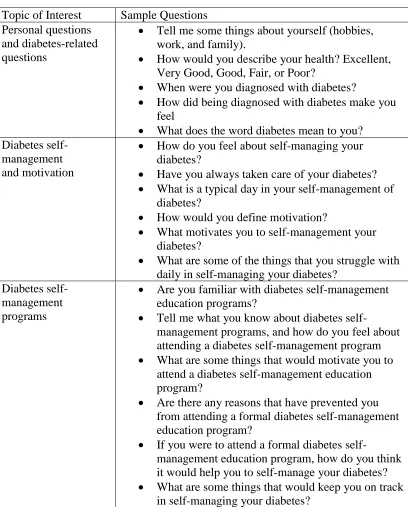
Interview guide
The interview guides for specific aims 1 and 2 were developed with some questions
adapted from Stuckey (2013) and organized in 3 topic areas with the first group of
questions addressing personal topics, the second group of questions addressing practices