DETERMINANTS OF IMPLEMENTATION OF CONSTITUENCY DEVELOPMENT FUND PROJECTS IN NJORO SUB-COUNTY, NAKURU
COUNTY, KENYA.
BY
BONIFACE GIKOMBI GICHARU
C153/NKU/PT/32444/2015
A RESEARCH PROJECT SUBMITTED IN PARTIAL FULFILLMENT OF REQUIREMENT FOR THE AWARD OF DEGREE OF MASTERS OF
PUBLIC POLICY AND ADMINISTRATION TO THE SCHOOL OF HUMANITIES AND SOCIAL SCIENCES OF KENYATTA UNIVERSITY
ii DECLARATION
I hereby declare that the work in this research is my original work and has not been submitted to any other institution, partially or entirely for the award of a degree.
Signed ……….. Date ……….
Boniface Gikombi Gicharu
C153/NKU/PT/32444/2015
This project proposal has been presented with my approval as the Supervisor
Signed ……….. Date ……….
Dr. Jane Gakenia Njoroge
School of Humanities and Social Sciences
iii DEDICATION
iv
ACKNOWLEDGEMENT
v ABSTRACT
vi
ABBREVIATIONS AND ACRONYMS ANOVA : Analysis of Variance
CDF : Constituency Development Fund
viii
DEFINITION OF TERMS
Adequate Funds : The allocation of enough funds that will allow the identified projects to be completed successfully and in the required time
Constituency : The unit of political representation represented by an elected member of parliament.
National Government Constituency Development Fund (NG-CDF)
: Financial allocations allocated to Constituencies by the National Government to facilitate the implementation of public and community-based socioeconomic projects in education and security.
NG-CDF project : A project that is intended to provide or improve the required socioeconomic welfare of the community that is funded by the NG-CDF, That is, projects in Education and Security. Project : A set of interrelated activities that have a specific starting
and end points intended to achieve certain outcomes. Project
Implementation
: The actualization and execution of planned projects with the objective to fulfill the intended purpose of the project. Stakeholder : Any person that is considered as either an interested person
ix Stakeholder
Involvement
: The engagement or involvement of all stakeholders in the activities of the project.
x
TABLE OF CONTENTS
DECLARATION ... ii
DEDICATION ... iii
ACKNOWLEDGEMENT ... iv
ABSTRACT ...v
ABBREVIATIONS AND ACRONYMS ... vi
DEFINITION OF TERMS ... viii
TABLE OF CONTENTS ...x
LIST OF TABLES ... xv
LIST OF FIGURES ...xvi
CHAPTER ONE ...1
INTRODUCTION ...1
1.1 Background of the study ...1
1.2 Statement of the problem ...7
1.3 Research questions ...8
1.4 Justification and significance of the study ...9
1.4.1 Justification of the study ...9
1.4.2 Significance of the study ... 10
1.5 Scope of the study ... 10
1.6 Limitations of the study ... 11
CHAPTER TWO: LITERATURE REVIEW ... 12
2.1 Introduction ... 12
xi
2.2.1 Implementation of NG-CDF projects ... 12
2.2.2 Training and implementation of NG-CDF projects ... 13
2.2.3 Stakeholder involvement and implementation of NG-CDF projects ... 15
2.2.4 Availability of funds and the implementation of NG-CDF projects ... 18
2.2.5 Government laws and the implementation of NG-CDF projects ... 20
2.3 Research Gaps ... 21
2.4 Theoretical review ... 23
2.4.1 Resource Based View Theory ... 23
2.4.2 Stakeholder theory ... 24
2.5 Conceptual framework ... 25
CHAPTER THREE: RESEARCH METHODOLOGY ... 27
3.1 Introduction ... 27
3.2. Research Design ... 27
3.3 Target Population ... 27
3.4. Sample Size and Sampling Technique ... 28
3.4.1 Sample size ... 28
3.4.2 Sampling Procedure ... 29
3.5 Data Collection Instruments ... 30
3.6 Pilot-Study ... 30
3.5 Validity and Reliability of the Instruments ... 31
3.5.1. Validity of the Instruments ... 31
3.5.2. Reliability of the Instruments ... 31
xii
3.7 Data Analysis ... 33
3.8 Ethical Considerations ... 34
CHAPTER FOUR: DATA ANALYSIS, PRESENTATION AND INTERPRETATION ... 35
4.1 Introduction ... 35
4.2 Response Rate ... 35
4.3 Demographic data on respondents ... 36
4.3.1 Gender of respondents ... 36
4.2.2 Age of the respondents ... 36
4.3.3 Role of the respondent ... 37
4.3.4 Level of education of the respondents ... 38
4.3.5 Work experience ... 39
4.4 Training ... 40
4.4.1 Effectiveness of trainings ... 40
4.5 Stakeholder involvement ... 41
4.6 Availability of funds... 43
4.6.1 Accessibility of funds ... 43
4.8 Government Regulations ... 44
4.8.1 Effectiveness of the government regulations ... 44
4.10 Inferential statistics ... 46
4.10.1 Correlation analysis ... 46
xiii
CHAPTER FIVE: SUMMARY OF FINDINGS, DISCUSSION, CONCLUSION,
AND RECOMMENDATIONS ... 52
5.1 Introduction ... 52
5.2 Summary of major findings ... 52
5.2.1 Training ... 52
5.2.2 Stakeholder involvement ... 53
5.2.3 Availability of Funds ... 55
5.3.4 Government regulation ... 56
5.3 Conclusions ... 57
5.4 Recommendations ... 58
5.5 Areas for Further Research ... 59
REFERENCES ... 60
Appendix I: Letter Of Consent ... 68
Appendix II: Questionnaire ... 69
Appendix III: Interview Schedule ... 75
Appendix IV: Map Of Study Area ... 76
Appendix V: Research Timeline ... 77
Appendix VI: CDF Projects in Njoro Sub-County ... 78
Appendix VII: Research Budget ... 82
Appendix VIII: Nacosti Authorization Letter ... 83
Appendix IX: Authorization Letter from Deputy County Commisione ... 85
Appendix X: Authorization Letter from County Director of Education ... 86
xiv
xv
LIST OF TABLES
Table 3. 1 Population frame ... 28
Table 3. 2 Sampling frame ... 30
Table 3. 3 Cronbach’s Reliability Analysis ... 32
Table 4. 1 Response Rate ... 35
Table 4. 2 Gender of the respondents ... 36
Table 4. 3 Age of the respondents ... 37
Table 4. 4 Role of the respondents ... 38
Table 4. 5 Highest level of education ... 38
Table 4. 6 Work Experience ... 39
Table 4.7 Effectiveness of Training processes ... 40
Table 4.8 Effectiveness of the stakeholder involvement ... 42
Table 4.9 Accessibility of funds ... 43
Table 4.10 Effectiveness of the regulations ... 45
Table 4.11 Correlation Analysis ... 47
Table 4. 12 Model summary ... 48
Table 4.13 ANOVA ... 49
xvi
LIST OF FIGURES
1
CHAPTER ONE INTRODUCTION 1.1 Background of the study
Project implementation defines the actualization of all the proposed project activities with the aim of achieving the project activities and delivering the projected results and outcomes. In other words, this is the phase of project management in which the outlined plans and vision becomes reality. The success of a project depends on the effectiveness of the entire process from the identification, planning, allocation of resources and eventual implementation (Lester, 2007).
The implementation of community based projects enables the community to set and accomplish sustainable goals for their intended development activities (Gitonga, 2012). The implementation phase is purposeful and is described in sufficient details such that independent observers can identify or detect the presence and the strength of the identified sets of activities related to the implementation. The results of the project implementation are measured based on how the objectives defined at the project identification stage are accomplished. Fundamentally, the implementation of any given project depends on a variety of factors. These include; proper planning, effective communication between the stakeholders, adequate financing and resource allocation, and organizational factors (Lester, 2007).
2
considerably complex and intensive process. The need for effective implementation rarely gets the highly required attention and therefore, most of the projects face the risk of stalling at this stage. Sterling (2013) also notes that it is important to note that even the most well-designed and creative project activities and strategies are quite useless if they cannot be implemented effectively.
The success of a project is significantly determined by the availability of adequate finances and resources. Financing is described as one of the factors that determine the implementation of projects. According to Magano (2008), project funding is an element that contributes directly to the success of a project. For positive outcomes to be achieved, the financial needs of the entire project should be included in the planning and implementation proposals. This is because adequate financing fast speeds up the rate at which the project activities are executed, by ensuring that the project teams and managers are well-resources to undertake the project activities. Since each project activity costs money in terms of material costs, human resource and other forms of costs, inadequate finances causes project activities to stop.
3
community-based projects through annual budgetary allocations by the national government to each of the constituencies. The devolution of national resources at the community level is intended to spur socioeconomic development which would translate to overall economic development and poverty eradication. Despite this national allocation, some of the identified CDF projects still fail as a result of insufficient funding.
Stakeholder involvement and participation throughout the project cycle is essential in ensuring maximum project output and returns. Community and stakeholder involvement is significant in ensuring efficient project implementation as it allows maximum contribution by all participants and creates a sense of ownership. According to Zena (2012), some of the public projects started without the involvement of the projected beneficiaries in the identification based on their needs therefore failing to get their approval and support. This observation is affirmed by Nekesa (2012) in her report on the CDF funded projects in Nambale Constituency where she observed that most of the CDF projects stalled as stakeholders ended up blaming each other with allegations of misappropriation. Best project management practices are those that respect the choices and interests of the project teams and stakeholders and engaged them in all the important aspects of the project and promised effective and efficient project closure with desirable outcomes. This is only achievable when the project meets the needs and objectives of the community.
4
based on the comprehension that the process through which a project is implemented has numerous effects on its use, operation, and maintenance (Mulwa, 2007).
Training is essential in the enhancement of human capital and in ensuring that all the project stakeholders are fully aware of the objectives of the project and that they possess the relevant skills and competencies. Training is a critical aspect of the project team management. Burke (2013) postulates that the main purpose of training is to improve skills and knowledge and to drive a change in behavior or attitudes, to enhance the transformation of theoretical concepts into concrete concepts. Training is considered as one of the potential factors of motivation for the entire project management and implementation teams. Additionally, Burke (2013) further explains that education and training are vital useful in imparting skills necessary for the resolution of emergent problems and to provide opportunities for creativity and innovation required to address future problems. The level of skills and overall competence is essential in ensuring that all the players in the project get a clear understanding of their designated roles, depending on the scope of their responsibility.
5
development of their abilities and skills so that they can contribute effectively towards the accomplishment of the project goals and objectives (Gikonyo, 2008). Where project teams are recruited on the basis of political affiliations rather than based on their competence, the public projects are highly likely to be poorly managed and implemented.
Bagaka (2008), in an analysis of the implementation of CDF-funded projects reveals a significant disconnect between the local nature of the capital expenditure decisions, financing of operations and the maintenance of these projects with local benefits. Since the government holds the policy monopoly, when it steps in to facilitate the operation of those projects, the beneficiaries from those operational projects do not incur the recurrent costs of operating and maintain their capital projects. Given the intrinsic and discretionary nature of capital spending attached to political symbolism in launching CDF projects, multiple new projects are undertaken while the existing ones are inadequately funded and left to stall and deteriorate. This according to Zablon (2008) leaves a major gap in the implementation of CDF projects. Zablon also observed that upon reaching the constituency level, the allocated funds are not often used for the initially identified purpose and as a result, they do not benefit the citizens. Public projects have constantly failed to materialize due to multiple challenges that stem from the misappropriation of funds, poor planning, incomplete projects, lack of technical capacity, patronage due to excessive powers of the members of parliament, and a set of other weaknesses which undermine the usefulness and success of the fund.
6
Jamaica, Malawi, Bhutan, India, Uganda Papua New Guinea and Kenya (Tsubura, 2013). This involvement is mainly through specialized policy and financial allocations such as the Constituency Development Funds, which decentralize national resources to benefit communities through development initiatives determined by their political representatives. Upon the allocation, community projects are identified based on the need and are slotted for implementation.
Constituency Development Fund
7
This study explored the determinants of the effective implementation of NG-CDF-projects in Njoro Sub-county. Njoro Sub-County, constituency number 167, is located in Nakuru County, and comprises of 6 wards (“Njoro Constituency,” 2017). The Sub-County covers a geographical area of 713.30 KM2, and has a population of 184,859 people, according to the 2009 census statistics (Kenya National Bureau of Statistics, 2009).
1.2 Statement of the problem
The principle objective of NG-CDF is facilitating economic transformation for the local communities through poverty eradication and social empowerment. Besides, it was hoped that fiscal decentralization would enhance the participation of the local communities in promoting decision making in community development, enhancing accountability and transparency and promote good governance (Bagaka, 2008). Unfortunately, a significant majority of the NG-CDF projects have continuously stalled thereby failing to assist the community in improving their welfare. Audit reports, Project Implementation Status reports, as well as civil society groups’ reports have continuously indicated a rise in the number of stalled projects funded by the NG-CDF across the country. According to Lumiti (2008), some constituencies are unable to successfully implement their projects due to lack of clear implementation plans. This leaves many stalled projects despite the huge amounts of resources allocated. Lumiti also observes that some constituencies lack adequate capacity to utilize the CDF funds hence the gross misappropriation of public resources.
8
most of the studies conducted on CDF focused on the project identification and planning while in Kenya, most of the studies concentrated on the monitoring structures and means of the improving their capacity.
According to the Project Implementation Status (PIS) report, 42% of the CDF projects earmarked in the 2013/2014, 2014/2015, and 2015/2016 financial years were not completed raising questions as to why the implementation was ineffective (The NG-CDF Board, 2016).The study sought to examine the roles of training, stakeholder involvement, the availability of adequate funds and resources, and government laws and legislations and how they influence the effective implementation of CDF projects in Njoro Sub-County.
Objectives of the study
The study was guided by the following objectives.
i. To determine how the training of stakeholders influences the implementation of NG-CDF projects in Njoro Sub-county.
ii. To determine how stakeholder involvement influence the implementation of NG-CDF projects in Njoro Sub-county.
iii. To determine how availability of funds influences the implementation of NG-CDF projects in Njoro Sub-county
iv. To determine how government laws moderate the implementation of NG-CDF projects in Njoro Sub-county
1.3 Research questions
9
i. How does training of stakeholders influence the implementation of NG-CDF projects in Njoro Sub-county?
ii. How does stakeholder involvement influence the implementation of CDF projects in Njoro Sub-county?
iii. How does availability of funds influence the implementation of NG-CDF projects in Njoro Sub-county?
iv. How do government laws moderate the implementation of NG-CDF projects in Njoro Sub-county?
1.4 Justification and significance of the study 1.4.1 Justification of the study
10
government laws and legislations and how they influence the effective implementation of CDF projects in Njoro Sub-county.
1.4.2 Significance of the study
The findings of the study were used in explaining the determinants of implementation of NG-CDF funded projects in Njoro Sub-county. The findings of the study were also useful in making general inferences which will create awareness that can be employed to in making improvements in the established policies to facilitate capacity building and formulate appropriate programs to empower stakeholders at the national and Sub-county levels. The study also give insights into the success determinants in the implementation of public projects through NG-CDF funds. Besides, the findings opened an opportunity for future research into policy development for purposes of improving public socioeconomic welfare in the country.
1.5 Scope of the study
11 1.6 Limitations of the study
12
CHAPTER TWO LITERATURE REVIEW 2.1 Introduction
This chapter examined the empirical literature, theoretical framework, summary of reviewed literature, and conceptual framework. The literature related to the identified variables and how they influence the effective implementation of NG-CDF projects were reviewed. The theoretical framework evaluates the theories that support the study. Finally, the conceptual framework presented an illustration of the relationship between the dependent and the independent variables.
2.2 Empirical Literature
The empirical literature examined the specific research objectives in detail. To give a detailed analysis of the study, the section evaluated the key issues influencing the effectiveness of the implementation of the NG-CDF projects as determined in previous studies, as well as the theoretical constructs of the study. Also, the section examined the critical gaps in the previous studies in order to formulate new ideas in relation to the research topic and objectives.
2.2.1 Implementation of NG-CDF projects
13
periods. The effectiveness of the implementation phase is determined by many factors, key among which, is the common understanding of the project mission. According to the Project Management Institute (2008), the project mission entails the identification of the general objectives of the project. The research also observed that the project mission is a critical factor of success as it guides the documentation of the project activities in line with the overall goal and intentions.
A study by Auya (2005) on the challenges undermining the CDF development programs in North Mugirango established that the implementation of these projects was faced by numerous factors. These include low community participation in the selection of CDF committee members as well as in the identification of the projects. Additionally, Katamei et.al, 2015 observed that the implementation of CDF projects in Marakwet West Constituency was undermined by the poor or no community receptivity, which includes the little understanding of the process of implementation, poor leadership skills by the project managers, poorly implemented values and belief systems and lack of commitment to the implementation of the projects. The performance and effectiveness of the implementation process is evaluated on the basis of the cost, time and the overall quality of the project (Williamson et.al, 2014).
2.2.2 Training and implementation of NG-CDF projects
14
projects have usually failed to materialize due to lack of training, as observed by Zainabu (2008), in her study on the self-help projects in Kwale Constituency. Zainabu insists that a well-trained team member is able to assess the course of the project in line with the internal and external circumstances and is therefore able to identify and fix and deviations.
15
In a study on the development projects, Auya (2015) found that one of the main challenges facing the CDF fund in North Mugirango Constituency was that members of the CDF committees were selected on the basis of whether they supported the MP during their campaign. The selection did not involve any interviews and the community members were not involved in the selection. Auya established that the committee members did not possess the required skills and some had very low academic qualification, with a majority of the members being trained teachers, with or with no experience of know-how in project management. This finding cuts across all other constituencies and therefore the need for the placement of training to impart the relevant skills and knowledge to facilitate better outcomes.
The strategic goal of training project stakeholders is building competence. The focus on competence in project management is rooted in the conventional assumption that people who manage or work in a project tend to perform more effectively if they are competent and this leads to successful outcomes (Smith, 2010). Training is necessary as it allows PMCs to adopt a wider variety of options in their project enterprises, a strategy that appeals to the targeted beneficiaries. Additionally, the human resource capacity of the project teams facilitates the allocation of tasks that befits each of the members. Where project stakeholders lack the necessary skills, it is important to organize for the training of requisite skills and especially in projects where the staff are sent out to undertake or oversee the project activities on their own (Meredith, 2011).
2.2.3 Stakeholder involvement and implementation of NG-CDF projects
16
However, it is evident that most of the allocations lack transparency whereby the supposed beneficiaries are not adequately involved in the determination of the most required projects and in the management of the funds thereby leaving major gaps for the loss of funds (Davidson, 2009). The engagement of the stakeholder is defined as a critical factor in ensuring the project success, as it helps the project members and all the participants to access and manage the project environment effectively (Llewellyn, 2009). It is also useful in bringing out the interests and roles of all the stakeholders clearly whilst identifying the probable causes of conflicts which may undermine the outcomes of the project. Llewellyn also points out that the engagement of the stakeholders allows the identification of the prevailing relationships between the participants and which can be leveraged to create useful partnerships and coalitions needed in building collaborations on the basis of mutual respect and trust.
17
communication process is in determining the effectiveness of stakeholders’ participation as it is essential in adjusting expectations and changing perceptions, making them more realistic, as well as in helping the acquisition of necessary support for the effective delivery of each role (Bourne, 2009).
18
Hassan (2012) in the study on the Influence of Stakeholders role on performance of constituency development fund projects; a case of Isiolo North Constituency, Kenya, observed that stakeholders play an important role in the project planning and performance, and that there is a positive collaboration between the participation of stakeholders and the performance of a project. Similarly, Askari (2011), in the study on the Factors influencing effective implementation of Monitoring and Evaluation practices in donor funded projects in Kenya, A case of Turkana district. Established that the involvement of stakeholders in the monitoring and evaluation process and that the participation of stakeholders in the projects illuminates the community needs and incorporates the interest and acceptability of projects.
2.2.4 Availability of funds and the implementation of NG-CDF projects
The availability of funds and resources is postulated to have a direct connection with the effective implementation of projects (Chandra, 2008). Although the amount of resources available may theoretically be sufficient in the completion of a project, certain difficulties may arise as a result of how the project activities are scheduled. Usually, there may be several activities scheduled to occur at the same time but it may be impossible given the amount of resources available. The composition and allocation of project resources is a significant factor that influences the implementation of public projects. Multiple studies have established that the availability of resources has a positive influence on the outcomes of projects. Kasoo (2010) postulated that the sources and compositions of the project resources and funds play a vital role in influencing the project success.
19
allocation of 2.5% of the total national revenues to the CDF kitty is significantly low and many feel that there is the need to increase this allocation. A survey by Ochanda (2010), observed that it is still evident that the amount of cumulated funds that flow through the treasury at the district level is significantly higher than the entire CDF allocation. The entire allocated amounts at the Sub-county level are to be spent on the basis of the functional criteria stipulated in the law. One such criterion dictates that not less than 73% of the total allocation of the total allocation should be utilized in development initiatives. For projects to be funded by the NG-CDF allocation they must first be development-based and not recurrent, for example, funds may be used in construction of classrooms but not for the payment of teacher salaries. Also, the development must be community-based such that the benefits of the project spread to the members of the community.
20
indicated that there lacked specific allocation for various project activities and which undermined the outcomes of the CDF projects. Besides, by putting some money as CDF running costs, it allows the drawing of the money intended for development to offset office running costs at the expense of other projects. This also implies that the Act treats the CDF office as a development project itself.
2.2.5 Government laws and the implementation of NG-CDF projects
The policy and legal framework stipulates the programs and the activities involved in the implementation of the NG-CDF projects. The CDF Act was initially implemented through the CDF Act of 2003, which has since been reviewed and amended to become the NG-CDF Act in 2016. The act provides that at least 2.5% of the total national revenue be allotted to constituencies for purposes of development initiatives at the constituency level. The disbursement of the funds is to be done under the guidance and direction of the National Management Committee in accordance with section 5 of the Act. Additionally, 75% of the total disbursement is allocated equally to all the constituencies, with the remaining 25% allocated on the basis of the poverty index (section 19 of the CDF Act).
21
stakeholders as well as the areas to be given priorities in the consideration of the NG-CDF projects (Kenya Human Rights Commission, 2010). Due to this influence, NG-CDF projects may then be based and ranked on the grounds of political benefits instead of the ultimate benefits to the entire community, as is the primary objective.
The regulatory environment should allow for procedures and policies that ensure order in the management of NG-CDF projects to meet the intended benefits. Politicians are required to interact with all project stakeholders to allow for a unified agreement and to avoid the misrepresentation of community interests (Pasape et.al, 2013).
2.3 Research Gaps
The literature review examined underlined the importance of training stakeholders, stakeholder involvement, availability of funds and government laws in the implementation of NG-CDF projects.
22
implementation as well as the methods and the forms of training that should be made to enhance the implementation of the projects. A study on the role of training in implementation of NG-CDF projects had not been conducted in Njoro Sub-county.
Moreover, previous studies regarded stakeholder involvement as a positive input in the implementation of NG-CDF projects. Hassan (2012) observed that stakeholders play a significant role in project planning and performance, and that there exists a positive association between the participation of stakeholders and the performance of the project. Despite the finding, the study did not identify the role of the community in ensuring the project performance, or the extent of participation of stakeholders in the implementation process. Aside, it did not identify how the information is harmonized and used in making decisions regarding the project implementation. Askari (2011) observed that stakeholders are mainly observed in monitoring and evaluation process and that the Involvement of stakeholders illuminates the community needs and arouses interest in the project. However, it did not examine the level of participation, as it did not identify if participation was required throughout the project stages or in the high or low levels.
23
specific allocation for various project activities, such as Monitoring and Evaluation in most projects. This study did not examine whether the allocation decisions for the funds are independent. Besides, it did not determine whether the funds allocated for specific project activities were used for those activities. The current study sought to examine the identified gaps, with a specific focus on Njoro Sub-county.
2.4 Theoretical review
The subsection evaluates the theories concerning the project management, and their relevance to the current study.
2.4.1 Resource Based View Theory
The Resource Based View Theory is associated with the resource mobilization variable. Resource mobilization entails the maximization of the uses and utilization of the available funds and resources. The theory was formulated by Werner and Rumelt in 1984, and it explains that organizations have unique capabilities and resources that differentiate them from other organizations hence their competitive advantage (Muthuuri, 2014). The theory is constantly used in the modern times in analyzing competitive advantage (Tan & Meyer, 2010).
24
evaluation of the sustainability of the NG-CDF funds and projects is essential in preventing the failure of projects.
The theory postulates that firms obtain better outcomes depending on how they combine the various resources used within their processes. Resources are classified as either tangible or intangible (Chege, 2015). Tangible resources are characterized as fixed and current and can be used for longer period of time, for instance, machinery and equipment. Intangible resources on the other hand are those resources that do not have a physical existence, such as skills and expertise and are required in the utilization of the tangible resources. The resource based theory was useful in the study as the study entailed the examination of the role of financial and other resources, such as human resource in the implementation of NG-CDF projects.
2.4.2 Stakeholder theory
The stakeholder theory is associated with the stakeholder participation variable in the study. The engagement of people in all the project activities contributes directly to the attainment of the project objectives and especially when the objectives match the community needs, in the instance that the project at hand is community-oriented. The stakeholder theory was instituted by Richard Edward Freeman in 1980. The theory is drawn from the extensive study and analysis of management practices (Wagner et.al, 2011). The approach was integrated into the management theory as a solution to the discontentment with the unilateral financial criteria of efficiency.
25
roles and interests is imperative. Systematically, a stakeholder map is utilized as a starting point and which is then used in classifying the various stakeholders on the basis of their stake or interest, and by their authority or power. Harrison et.al, (2015) defines stakeholders as the community, special groups, environmentalists, the media and the society in general. The approach roots a bilateral interaction between all the relevant stakeholders and the organization with one approach focused on how the organization relates with its shareholders and the other approach focused on how the shareholders hold the organization accountable. Furthermore, it insists on the need for investing in the relationships with all those who play a role in the project or firm, with the stability of the engagements depending on the sharing in various values. As a result, this theory makes it possible for governments to integrate principles and values of good leadership in the formulation and actualization of the outlined plans.
In light of the NG-CDF projects, project managers should pay attention on those likely to be affected by a given policy or decision to ensure balanced interests and to enhance the quality of the implementation process through minimized conflicts and differences during implementation. When local communities are involved throughout the project activities, NG-CDF projects perform better. The involvement of the community ensures the full representation of community needs and thus the full acceptability of the projects.
2.5 Conceptual framework
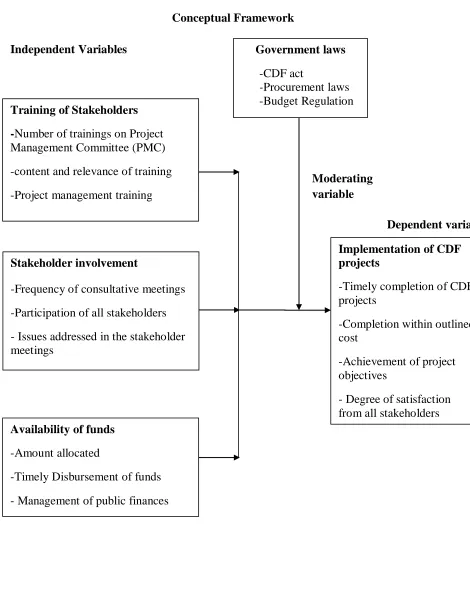
26 Figure 2.1 Conceptual Framework
Conceptual Framework
Training of Stakeholders -Number of trainings on Project Management Committee (PMC) -content and relevance of training -Project management training
Availability of funds -Amount allocated
-Timely Disbursement of funds - Management of public finances Stakeholder involvement
-Frequency of consultative meetings -Participation of all stakeholders - Issues addressed in the stakeholder meetings
Implementation of CDF projects
-Timely completion of CDF projects
-Completion within outlined cost
-Achievement of project objectives
- Degree of satisfaction from all stakeholders
27
CHAPTER THREE RESEARCH METHODOLOGY 3.1 Introduction
This chapter details the methods and procedures used in conducting the study. The chapter covers the research design, the target population, sampling method and sample size, sampling techniques, research instruments, data collection, data analysis and the ethical consideration in the data collection and analysis.
3.2. Research Design
The research design provides the framework used in the collection and analysis of the data in the study (Coopers & Schindler, 2011). The research designs provides a distinct template that is utilized in the processes of collecting, managing and interpreting the data so that the results gathered match and back up the objectives and aims identified in the study. The study used a descriptive research design. A descriptive study seeks to describe the specific characteristics that are associated with the target population or group (Kothari, 2008). A descriptive study measures and summarizes the fundamental aspects of the data in the study. The study sought to collect and identify data on the determinants of the effective implementation of NG-CDF projects in Njoro Sub-county and examined the probable recommendations. It evaluated and discussed factors concerning the allocation of funds, training, and stakeholder participation and their role in the effective implementation of NG-CDF projects in the Sub-county.
3.3 Target Population
28
the study. Thereby, the target population must be identified in a study. The target population for the study was the project cordinators, PMC members, and community representatives who are involved in the NG-CDF projects in Njoro Sub-county. In total, there are 35 ongoing projects. The management and oversight of these projects includes project coordinators, members of the PMC, community representatives who form the project committee. The project coordinators provided information regarding the project funding, resource allocation, training, as well as the role of government legislations, while the community representatives provided information on their satisfaction on their involvement in project activties as well as their contentment on the outcomes of the projects and on the work done by the project facilitators. The main assumption was that the target population composed of people from diverse socio-economic classes.
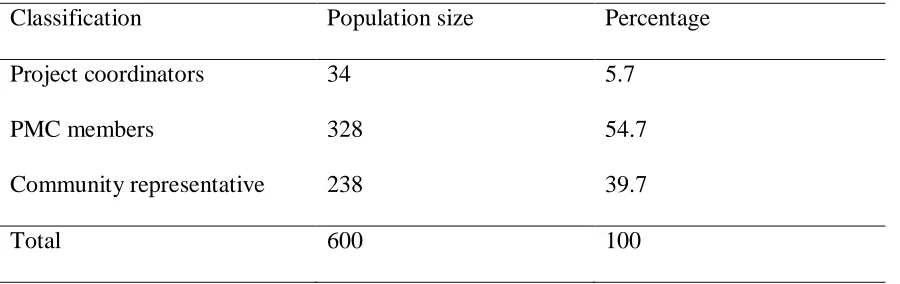
Table 3. 1 Population frame
Classification Population size Percentage
Project coordinators 34 5.7
PMC members 328 54.7
Community representative 238 39.7
Total 600 100
3.4. Sample Size and Sampling Technique 3.4.1 Sample size
29
that will be used. The sample size was calculated using the Yamane (1967) formula as follows;
n = N/ (1 + Ne2)
Where; n is the sample size
N is the population
e is the margin of error
Using the formula, at 95% confidence interval and a 10% margin of error, the approximate sample size was calculated as follows;
n = 600/ (1 + 600(0.1)2)
n= 86
3.4.2 Sampling Procedure
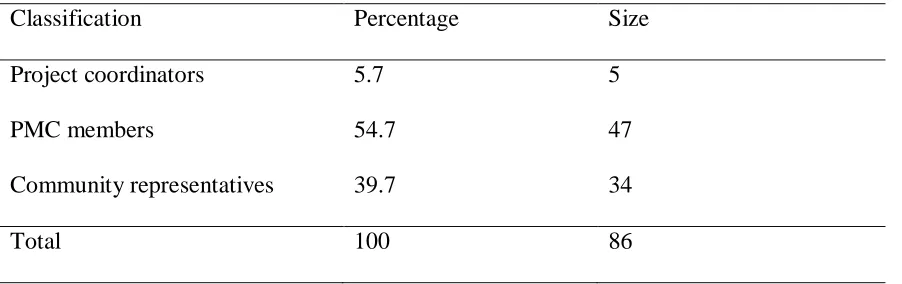
30 Table 3. 2 Sampling frame
Classification Percentage Size
Project coordinators 5.7 5
PMC members 54.7 47
Community representatives 39.7 34
Total 100 86
3.5 Data Collection Instruments
A structured questionnaire and interviews were used to collect primary data. The questionnaires were self-administered to the respondents. The questionnaire had two parts and composed of open and close ended questions on the research variables. Questionnaires are useful in the collection of information that cannot be observed directly since they inquire on the experiences, attitudes and feelings of the targeted individuals on the particular subject (Mellenbergh, 2008).
3.6 Pilot-Study
31 3.5 Validity and Reliability of the Instruments 3.5.1. Validity of the Instruments
The validity of a research instrument is defined as the quality of the instrument that ensures that it measures what it is expected to measure. Validity allows the researcher to draw meaningful conclusions from the results gathered using the instrument. To ensure the validity of the research instrument, the content was evaluated by the researcher and the research supervisor. Validity of content provides a logical assessment of whether the instrument covers what it is supposed to cover. In addition, the ease of understanding of the questions provided was evaluated during the pilot test. This helped in making the necessary adjustments to ensure that the content was valid.
3.5.2. Reliability of the Instruments
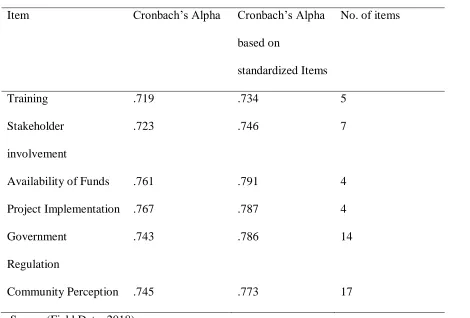
32 Table 3. 3 Cronbach’s Reliability Analysis
Item Cronbach’s Alpha Cronbach’s Alpha based on
standardized Items
No. of items
Training .719 .734 5
Stakeholder involvement
.723 .746 7
Availability of Funds .761 .791 4
Project Implementation .767 .787 4 Government
Regulation
.743 .786 14
Community Perception .745 .773 17
Source (Field Data, 2018)
From the table, all the alpha coefficients of all items in each category were reliable. Training had a reliability coefficient of 0.734, stakeholder involvement had a reliability coefficient of 0.746, availability of funds, 0.791, project implementation, 0.787, government regulation, 0.786 and community perception 0.773.
3.6 Data Collection Procedures
33
the study before filling in the questionnaires. Questionnaires were self-administered. The main advantage of self-administered questionnaire is that both the researcher and the respondent can seek clarification on the responses and on the questions respectively during the interview. This way, the researcher gets the right information in relation to the study.
3.7 Data Analysis
34 Y = α+ β1X1+ β2X2 + β3X3 + ε
Where; Y is the implementation of NG-CDF projects
α is the intercept of the model
β is the coefficient of the independent variables
X1 is Training
X2 is Stakeholder Involvement
X3 is Availability of funds
ε is estimated error of the regression model
3.8 Ethical Considerations
35 CHAPTER 4
DATA ANALYSIS, PRESENTATION AND INTERPRETATION 4.1 Introduction
This section covers the data analysis, results and the discussions on the findings of the study. The primary objective of the study was to examine the determinants of the implementation of NG-CDF projects in Njoro Sub-County. The study collected data on various factors and data was analysed and the findings were presented based on the questions identified in the questionnaire.
4.2 Response Rate
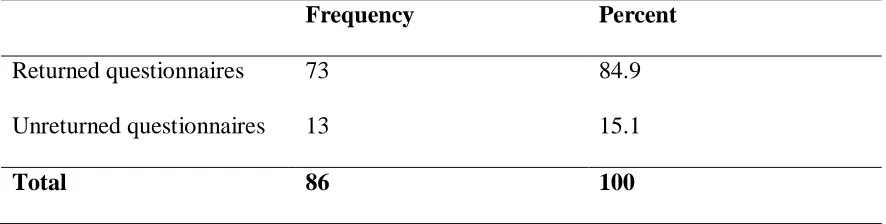
The study targeted project coordinators, PMC members, and community representatives in 35 projects. A sample of the 86 respondents was targeted as the representative sample in the study. Out of the 86 questionnaires administered, 73 responses were collected which represented 84.9% a response rate which was sufficient for the analysis. Mugenda and Mugenda (2012) highlights that a sample more than 50% is appropriate for a study. The results are shown in table 4.1 below.
Table 4. 1Response Rate
Frequency Percent
Returned questionnaires 73 84.9 Unreturned questionnaires 13 15.1
Total 86 100
36 4.3 Demographic data on respondents
In this section, the demographic data on the respondents is presented.
4.3.1 Gender of respondents
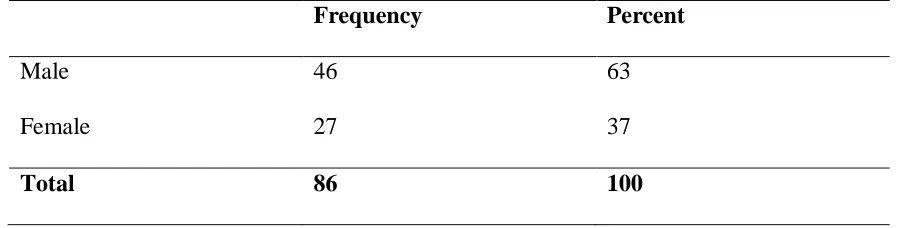
The results on the gender of the respondents are presented in table 4.2 below
Table 4. 2Gender of the respondents
Frequency Percent
Male 46 63
Female 27 37
Total 86 100
Source (Field Data, 2018)
From the results, 63% of the respondents were male while 37% were female. This indicates that the NG-CDF project are dominated by male.
4.2.2 Age of the respondents
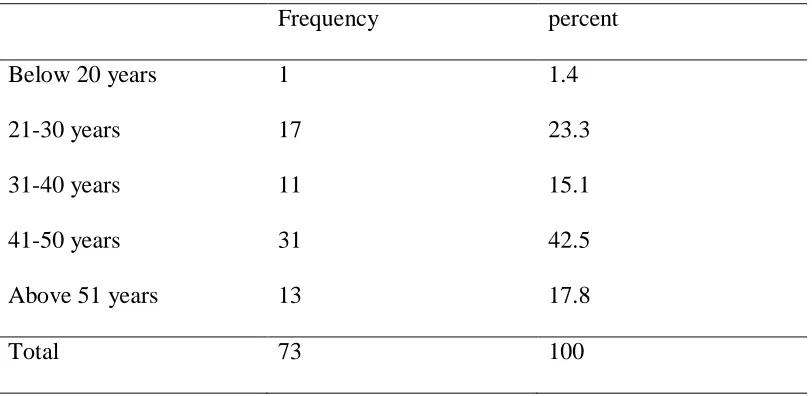
37 Table 4. 3Age of the respondents
Frequency percent
Below 20 years 1 1.4
21-30 years 17 23.3
31-40 years 11 15.1
41-50 years 31 42.5
Above 51 years 13 17.8
Total 73 100
Source (Field Data, 2018)
From the results, 1.4% of the respondents were aged below 20 years. 23.3% of the respondents were aged between 21-30 years, 15.1% were aged between 31-40 years, 42.5% were aged between 41-50 years while 17.8% were aged above 51 years. From the results, a majority of the respondents were aged between 41-50 years.
4.3.3 Role of the respondent
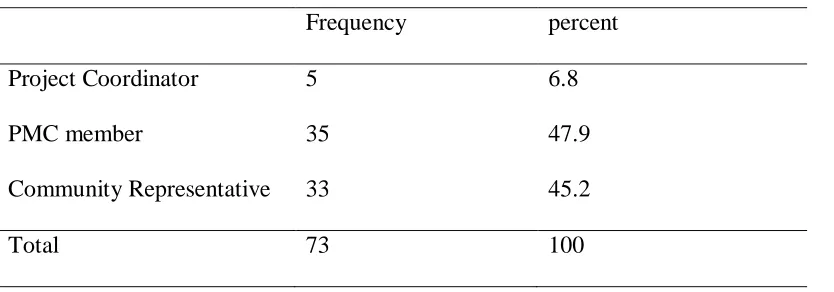
38 Table 4. 4Role of the respondents
Frequency percent
Project Coordinator 5 6.8
PMC member 35 47.9
Community Representative 33 45.2
Total 73 100
Source (Field Data, 2018)
From the table, 12.3% of the respondents were project coordinators, 42.5% were PMC members while 45.2% were community representatives. In general, a majority of the respondents in the study were community representatives which highlights the inclusion of the community members in the implementation of NG-CDF projects.
4.3.4 Level of education of the respondents
The study sought to establish the highest level of education of the respondents. The findings are presented in table 4.5 below.
Table 4. 5Highest level of education
Frequency percent
Secondary 7 9.6
College 38 52.1
University 18 24.7
Postgraduate 10 13.7
Total 73 100
39
From the table, 9.6% of the respondents had attained a secondary school certification as their highest level of education. 52.1% had attained a college certification, 24.7% had attained a university degree while 13.7% had attained a postgraduate degree as their highest level of education. The results imply that majority of the respondents had attained a satisfactory level of education in relation to their roles in the implementation of NG-CDF projects.
4.3.5 Work experience
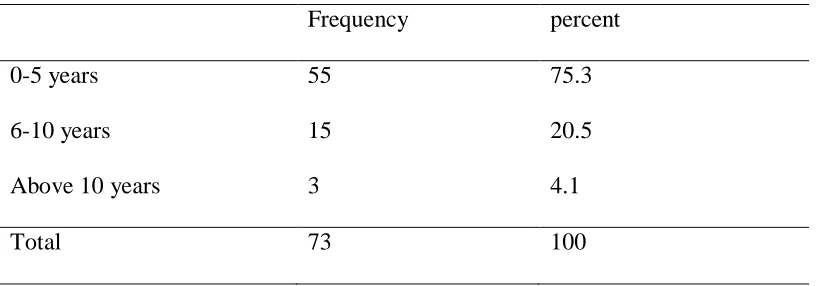
The results on the working experience of the respondents are presented in table 4.6 below.
Table 4. 6Work Experience
Frequency percent
0-5 years 55 75.3
6-10 years 15 20.5
Above 10 years 3 4.1
Total 73 100
Source (Field Data, 2018)
40 4.4 Training
In this section, the study sought to establish various aspects on training on the implementation of NG-CDF projects.
4.4.1 Effectiveness of trainings
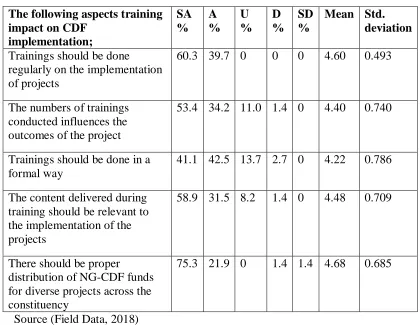
In this section, the study sought to examine the effectiveness of the training process on the respondents. The results are tabulated in table 4.10 below.
Table 4.7 Effectiveness of Training processes The following aspects training
impact on CDF implementation; SA % A % U % D % SD %
Mean Std. deviation Trainings should be done
regularly on the implementation of projects
60.3 39.7 0 0 0 4.60 0.493
The numbers of trainings conducted influences the outcomes of the project
53.4 34.2 11.0 1.4 0 4.40 0.740
Trainings should be done in a formal way
41.1 42.5 13.7 2.7 0 4.22 0.786
The content delivered during training should be relevant to the implementation of the projects
58.9 31.5 8.2 1.4 0 4.48 0.709
There should be proper
distribution of NG-CDF funds for diverse projects across the constituency
75.3 21.9 0 1.4 1.4 4.68 0.685
Source (Field Data, 2018)
41
projects. The mean on the second, third and fourth statements are 4.40, 4.22, and 4.48 respectively which imply that the respondents agreed with the statement. The mean of the fifth statement is 4.68 which corresponds to strong agreement on the statement. The findings imply that the respondents recognized the importance of regular training on implementation of projects and they acknowledged that the number of trainings, mode of training and the content of the training influence the outcomes of the implementation process. Aside, they appreciated that there should be proper distribution of the funds for diverse projects to meet the community requirements. The findings correspond to Gacheru (2017) conclusion that the level of skills, qualification and competence of the project teams is directly related to the effective implementation of a project.
4.5 Stakeholder involvement
In this section, the study sought to examine the level of stakeholder involvement in the implementation of NG-CDF projects in the sub county.4.5.3 Effectiveness of the stakeholder involvement in project work
42
Table 4.8 Effectiveness of the stakeholder involvement
The following stakeholder involvement aspects impact on CDF implementation;
SA % A % U % D % SD %
Mean Std. deviation Stakeholder should be involved in the
identification of NG-CDF projects
65.8 30.1 1.4 0 2.7 4.56 0.781 Stakeholders’ understanding of their roles
in facilitating the implementation of NG-CDF projects
43.8 42.5 9.6 0 4.1 4.22 0.932
Stakeholders’ access to adequate information on the project aspects
32.9 52.1 11.0 4.1 0 4.14 0.769 Adequate consultation throughout the
project activities
46.6 38.4 11.0 0 4.1 4.23 0.950 Input given in the consultation should be
used in the implementation process
54.8 43.8 0 0 1.4 4.51 0.648 Issues addressed in consultative meetings
should be relevant to the project implementation
64.4 30.1 5.5 0 0 4.59 0.597
Stakeholder involvement influences satisfaction on the outcomes of the project
53.4 31.5 11.0 4.2 0 4.42 0.841
Source (Field Data, 2018)
43
process and that their input should be considered in the implementation as it influences their satisfaction in the projects. The results confirm the conclusion that the engagement of the stakeholders is a critical factor in ensuring the project success, as it helps the project members and all the participants to access and manage the project environment effectively (Llewellyn, 2009)
4.6 Availability of funds
In this section, the study sought to establish the outcomes of various aspects on the availability of funds and their role in the NG-CDF Projects.
4.6.1 Accessibility of funds
The results on the different aspects on the availability of funds are summarized in table 4.14 below.
Table 4.9 Accessibility of funds The following aspects of funds availability impact on CDF implementation; SA % A % U % D % SD %
Mean Std deviation The funds allocated to the
NG-CDF projects are sufficient in meeting the project requirements
11.0 27.4 13.7 35.6 12.3 2.89 1.253
The allocated funds used for the required project activities
16.4 54.8 26.0 2.7 0 3.85 0.720 There is adequate compensation
to the stakeholders and
committees during the projects
5.5 21.9 34.2 20.5 17.8 2.77 1.149
There is proper distribution of NG-CDF funds for diverse projects across the constituency
12.3 27.4 31.5 20.5 8.2 3.15 1.139
Source (Field Data, 2018)
44
sufficient in meeting project requirements. The mean for the second statement is 3.85 which implies that the respondents agreed that the allocated funds are used for the required project activities. The means for the third and fourth statements are 2.77 and 3.15 which also implies uncertainty in the statements. The level of uncertainty on whether the funds are sufficient, the compensation of the stakeholders and in the distribution of funds means that there may be some critical gaps in the financial openness of the financial management processes during the implementation of the NG-CDF projects in the constituency. The findings on the inadequate funds matches the conclusions made by Oyalo & Bwisa (2015) that the budgetary allocations are not sufficient to finance all the socioeconomic needs of the communities
4.8 Government Regulations
This subsection sought to examine the role of government regulations in the implementation of NG-CDF projects. The outcomes are discussed below.
4.8.1 Effectiveness of the government regulations
45 Table 4.10 Effectiveness of the regulations
SA % A % U % D % SD %
Mean Std. deviation The NG-CDF policies are
properly designed to facilitate economic development locally
27.4 41.1 23.3 5.5 2.7 3.99 1.007
The NG-CDF policies are
properly designed to facilitate the coordination of public projects
24.4 42.1 24.3 7.5 1.7 3.85 0.981
CDF committees are committed towards ensuring that the established policies regulate the implementation and management of projects
21.9 39.7 28.8 8.2 1.4 3.73 0.947
The policies provide proper evaluation and monitoring of projects
24.7 46.6 17.8 8.2 2.7 3.82 0.991
The policies provide a good regulatory framework against project duplication and misappropriation
28.8 42.5 18.2 9.2 1.3 3.89 0.966
The policies maintain
accountability and transparency in the use and management of funds
35.6 27.8 27.0 5.5 4.1 3.86 1.097
The policies ensure autonomy in facilitating the local growth and community development
29.8 38.7 19.2 8.2 4.1 3.81 1.076
Source (Field Data, 2018)
46
project duplication and misappropriation. The respondents also acknowledged that the policies maintain accountability and transparency in the management of NG-CDF funds and that they ensure autonomy in facilitating the local growth and community development.
4.10 Inferential statistics
Inferential statistics are used in drawing conclusions on the general population by using the statistical estimates obtained from the sample analyzed. Various statistical estimates were used. These were; the reliability analysis which was done using the Cronbach’s alpha, a correlation analysis, regression analysis model, and Analysis of Variance (ANOVA).
4.10.1 Correlation analysis
47 Table 4.11 Correlation Analysis
Correlations
Project
Implementation Training
Stakeholder Involvement Availability of funds Project Implementation Pearson Correlation 1 Sig. (2-tailed)
N 73
Training
Pearson Correlation
.567** 1 Sig. (2-tailed) .008
N 73 73
Stakeholder Involvement
Pearson Correlation
.656** .254* 1
Sig. (2-tailed) .005 .058
N 73 73 73
Availability of funds
Pearson Correlation
.775** .603** .345* 1
Sig. (2-tailed) .007 .004 .025
N 73 73 73 73
**. Correlation is significant at the 0.01 level (2-tailed). *. Correlation is significant at the 0.05 level (2-tailed). Source (Field Data, 2018)
48
positive correlation between the variable and the dependent variable. The p-value, 0.07 was less than 0.05 which implied that the variable was statistically significant.
4.10.2 Regression Analysis
Regression analysis was used to estimate the relationship of the dependent and the independent variables. The model summary table, Analysis of Variance (ANOVA) table, and the model coefficients table are presented below. Table 4.28 below presents the model summary
Table 4. 12Model summary
Model Summary
Model R R Square
Adjusted R
Square
Std. Error of the Estimate
1 .767b .775 .735 .972
a. Dependent Variable: Project Implementation
b. Predictors: (Constant), Training, Stakeholder involvement, Availability of funds Source (Field Data, 2018)
From the table, the R Squared is 0.775. The value implies that 77.5% of the variation in the dependent variable, project implementation, can be explained by the independent variables; training, stakeholder involvement and availability of funds.
49 Table 4.13ANOVA
ANOVAa
Model
Sum of
Squares Df
Mean
Square F Sig.
1 Regression 5.728 3 1.875 7.943 .033b Residual 66.417 70 .967
Total 72.145 73 a. Dependent Variable: Project Implementation
Predictors: (Constant), Training, Stakeholder Involvement, Availability of Funds Source (Field Data, 2018)
The Analysis of Variance was conducted to examine the significance of the model. A model is said to be significant when the p-value is less than or equal to 0.05 (P ≤ 0.05). From the table, the model had an F-statistic value of 7.943 and a p-value of 0.033. Therefore, the model was statistically significant.
50 Table 4.14Coefficients Table
Coefficientsa
Model
Unstandardized Coefficients
Standardized Coefficients
T Sig.
B Std. Error Beta
1 (Constant 3.740 .248 3.255 .001
Training .265 .103 .175 2.549 .016
Stakeholder Involvement
.396 .088 .313 1.002 .031
Availability of funds
.428 .096 .342 0.237 .024
a. Dependent Variable: Project Implementation Source (Field Data, 2018)
Interpretation
From the table, the significance values of all the independent variables are less than 0.05. As such, they were considered to be statistically significant. The regression model was derived as;
Y = 3.740 + 0.265X1+ 0.396X2 + 0.428X3 + ε
Where 3.740 is the intercept of the model
X1 is Training
51 X3 is Availability of funds
ε is estimated error
From the model, it was evident that there exists a positive relationship between the dependent variable and the independent variables. The intercept, 3.740 implies the constant level of the dependnet variable. The coefficient 0.265 indicates that a unit change in the training would result in a 0.265 increase in the implementation of NG-CDF projects. The coefficient 0.396 implies that a unit change in the stakeholder involvement would result in a 0.396 increase in the implementation of NG-CDF projects. The cofficient 0.428 implies that a unit change in the availability of funds would lead to a 0.428 increase in the implementation of NG-CDF projects. The positive nature of the coefficients implies there exists a positive relationship between the independent and the dependent variables and that a positive change in the independent variables would lead to an increase in the dependent variable.
52
CHAPTER FIVE
SUMMARY OF FINDINGS, DISCUSSION, CONCLUSION, AND RECOMMENDATIONS
5.1 Introduction
This chapter presents a detailed discussion of the results and findings obtained in the data analysis and a conclusion on the study in relation to the study objectives and research questions. The primary objective of the study was to explore the determinants of the implementation of NG-CDF in Njoro Sub-county. The study sought to examine the roles of training, stakeholder involvement, and adequate funding with the government regulation as a moderating factor in the implementation of public projects.
5.2 Summary of major findings
To achieve the primary objective of the study, there were three main variables that were categorized as the independent variables namely; training, stakeholder involvement, and availability of funds. Government regulation was classified as the moderating variable with the implementation of NG-CDF projects classified as the dependent variable. Pearson’s correlation analysis and regression analysis were used to test the strength and the direction of the relationship between the dependent and the independent variables. The Analysis of Variance (ANOVA) test indicated that all the test variables were statistically significant since the p-values were less than 0.05.
5.2.1 Training
53
trained continuously and the training is not often offered on all project activities. There exists some major gaps in the training processes and there is need to address them to enhance the output of the stakeholders and the efficiency of the implementation process. The analysis revealed that there exists a strong positive correlation between training and project implementation as indicated by the correlation coefficient r equal to 0.567. The positive relationship was also confirmed by the outcomes of the regression analysis whereby the variable had a regression coefficient equal to 0.265. The variable was statistically significant as the p-value was less than 0.05. Training was available for the stakeholders even though it was apparent that there lacked a uniform and a comprehensive training program since stakeholders were trained at different project stages. Aside, information on the project work was disseminated through different methods with public participation forums being the main method in use. The importance of training in enhancing the outcomes of the project implementation process was evident and therefore, there is need to create a rationalized training program to enhance the capacity of the stakeholders and optimize their participation in the project activities. Aside, the results highlighted the preference for formalized training whereby the content delivered should be relevant to the projects at hand. As such, it can be deduced that training is a core factor in facilitating the success of the project implementation process.
5.2.2 Stakeholder involvement
54
55
there is need to ensure the comprehensive involvement of all stakeholders throughout the project activities to enhance the outcomes of the public projects.
5.2.3 Availability of Funds
56 5.3.4 Government regulation
Government regulations were considered as the moderating variable. From the findings, it was evident that there is adequate awareness of the established regulations that guide the management and implementation of the NG-CDF projects. The findings implied that the regulations were useful in guiding the project process at each of the stages, as well as in guiding the financing and budgeting requirements. The CDF Act was outlined as the primary source of the information on the legal constructs of the NG-CDF. There is need to promote the access to information on the CDF Act as it is an important source of information on the fund, its objectives, management and operational parameters.
The results also implied that the regulations are properly structured to promote local economic development and in facilitating the coordination and management of the public projects. The policies are well structured to guide the evaluation and the monitoring of the projects and at the same time provide functional regulatory frameworks against project mismanagement and the misappropriation of the funds. In essence, the policies are designed to enhance stakeholder accountability and ensure transparency in the use of public resources and in the management of public projects. Most importantly, the distinction of roles is critical in promoting autonomy in the development process as derived from the findings.
57
on the complaints channels implies that there is uncertainty on the actions taken against those who engage in the misappropriation of funds or the mismanagement of the projects.
The results indicated that there is a commendable level of equalized development across the constituency as the implementers ensure equal development through balanced allocation. The tendering and the allocation processes in the constituency were also found to be fair and balanced which is equally commendable. The implementers also prioritize the community proposals in planning and implementing the projects which therefore means that the projects are highly likely to meet the community requirements.
5.3 Conclusions
The study established that training, stakeholder involvement and availability of funds positively affect the implementation of NG-CDF projects. Therefore, the study concludes that there is need to create formalized, rationalized, and comprehensive training programs for all those involved in the implementation of public projects. The training should be done at all the project stages to ensure that there is complete awareness of the project objectives for all the participants and to minimise the resistance and opposition to the projects.