Article
1
Interfacial Characterization by Pull-Out Test of
2
Bamboo Fibers Embedded in Poly(lactic acid)
3
Quentin Viel 1, Antonella Esposito 1, Jean-Marc Saiter 2, Carlo Santulli 3*, Joseph A. Turner 4
4
1 UNIROUEN Normandie, INSA Rouen, CNRS,
5
Groupe de Physique des Matériaux,
6
76100 Rouen, France
7
[email protected], [email protected]
8
9
2 AMME-LECAP EA 4528 International Laboratory
10
Institute for Materials Research
11
Université de Rouen BP 12, 76801 Saint-Etienne du Rouvray Cedex, France
12
13
14
3 Università degli Studi di Camerino
15
School of Architecture and Design (SAAD)
16
Viale della Rimembranza, 63100 Ascoli Piceno, Italy
17
18
19
4 AMME-ATEAM International Laboratory
20
Dept. of Mechanical and Materials Engineering
21
University of Nebraska-Lincoln, Lincoln, NE 68588-0526, USA
22
23
24
* Correspondence: [email protected] Tel.: +39-334-1737527
25
Abstract: In this work, the apparent shear strength at the interface between a bamboo fiber and the
26
surrounding poly(lactic acid) (PLA) matrix is quantified. A method for processing pull-out test
27
samples within a controlled embedded length is proposed and the details of the test procedure are
28
presented, along with a critical discussion of the results. Two series of samples are considered:
29
untreated and mercerized bamboo fibers from the same batch, embedded in the same polyester
30
matrix. Electron and optical microscopy are used to observe the fiber-matrix interface before and
31
after the test, and to identify the failure mode of each sample, especially as regards the occurrence
32
of fibrillation in the fiber bundles. The values of apparent interfacial shear strength are calculated
33
only for regular fibers successfully pulled out from the matrix, and reported with their statistical
34
variations. Mercerization, whose efficiency was proven by Fourier Transform InfraRed (FTIR)
35
spectroscopy, did not appear though to improve the quality of the interface (τapp = 7.0 ± 3.1 MPa
36
for untreated fibers and τapp = 5.3 ± 2.4 MPa for treated fibers).
37
Keywords: bamboo biomass; biodegradable composites; pull-out; surface treatments; mercerization
38
39
1. Introduction
40
Processing 100% green composites implies that biosourced (biodegradable) polymeric resins
41
can be conveniently reinforced by natural materials, such as plant bast fibers, for example jute,
42
hemp, flax and bamboo fibers [1-5]. Bamboos are one of the most abundant ligno-cellulosic plants
43
produced in the world [6]. There are so many different species of bamboos, and some of them grow
44
so fast (up to 120 cm per day), that no other source of vegetable fibers could be considered more
45
renewable. On the other side, it appears not obvious to control from a botanical point of view the
46
supply of bamboo from tropical forests, due to their degradation, especially when classified as
47
“ambiguous lands”, hence in principle State-owned yet used by low income people for harvesting
48
e.g., bamboo shoots [7]. For this reason, a possibility which has been explored is for example the
49
extraction of lignin from steam exploded bamboo for the production of epoxy resins [8].
50
A more valuable yet sustainable perspective is nonetheless the possibility to produce
51
composites by using bamboo fibers as the reinforcement for biodegradable matrices [9]. In this
52
regard, the use of bamboo fibers, also due to the variable quality of supply, cannot always be
53
recommended, because the difficult predictability of their properties has an effect also on those of
54
composites produced with them. For example, due to the variable presence of defects in the fibers,
55
introducing longer fibers in the load direction does not always result in substantial and repeatable
56
improvement of composites performance, as e.g. a study on bamboo fiber/starch-based composites
57
reported [10]. A further issue, which heavily contributes to the variability of bamboo fibers
58
properties, is that, as it is the case for all ligno-cellulosic fibers, their morphology can be very
59
variable in terms of diameter, hollow size and geometry, elliptical shape of the section, etc. [11-13].
60
Polymers synthesized from naturally sourced monomers, such as poly (lactic acid) (PLA), have
61
in contrast quite controllable properties and are therefore very suitable for the production of fully
62
sustainable composites with vegetable fibers: a significant amount of literature does exist on these
63
materials [14]. A major aspect to be controlled is therefore the quality of the fiber-matrix interface,
64
that can be measured on fiber composites by a number of possible methods, among which is
65
pull-out testing [15].
66
An early study on flax fiber pull-out from polyethylene matrix proposed that the same
67
methods used in the case of traditional fibers, such as glass or carbon fibers, could work as well,
68
despite the peculiar structural characteristics of lignocellulosic fibers [16]. Following this, pull-out
69
testing proved suitable to offer sufficiently reliable values of the apparent interface shear strength
70
on a number of different lignocellulosic fibers [17]. Pull-out tests of sisal fibers embedded at 3 mm
71
depth in polyester blocks 10 mm side and then stretched to failure confirmed, regardless a very
72
large standard deviation, the effectiveness of mercerization in improving fiber-matrix interface
73
strength [18].
74
As for bamboo fibers, the significant influence of environmental factors on the adhesion
75
strength between fiber and matrix has already been highlighted [19]. However, in general, the
76
measurement of interface strength has found so far only quite limited coverage in literature, despite
77
the fact that substantial issues are still perceived in the achievement of sufficient properties for
78
PLA/bamboo fiber composites [2, 6, 11, 20]. Recent work pointed out that information about
79
practical adhesion of bamboo fibers with thermoplastic polymer matrices could be obtained from
80
different parameters from pull-out tests, such as interfacial shear stress, radial tensile stress and
81
theoretical work of adhesion: the study indicated a better interface for bamboo fibers with
82
polyvinylidene fluoride (PVDF) rather than with polypropylene (PP), although much weaker than
83
for glass fibers [21].
84
The measurement of apparent shear strength can be not completely accurate, since the pull-out
85
process may be friction-dominated in bamboo fiber systems, and friction is not considered by this
86
parameter [22]. Accurate measurements of interfacial adhesion in bamboo fibers are also
87
cumbersome for other reasons, such as the variable adhesion of filaments to form bundles (which
88
makes them easily prone to fibrillation) and the need to account also for cross-sectional complex
89
shapes and variable sizes (which requires multiple measurements of the diameter across the same
90
section). Notwithstanding these limitations, it is worth considering whether the application of a
91
simple method for measuring the apparent interfacial shear strength with values of diameter
92
obtained under reasonable assumptions would supply any suitable indication for the improvement
93
of composite properties. This approach may be simplistic in comparison with other approaches,
94
such as local analysis and computational predictions [23], well adapted when both the matrix and
95
the fibers have quite regular and predictable properties. However, when it comes to natural
96
materials, whose supply is not subjected to a rigorous quality control from the producer as for
97
synthetic ones, but only possibly to some selection of the most suitable samples, predictability is a
98
real issue: for this reason, experimental approaches, which give access to the average properties of
the entire population under sensible assumptions, can provide reasonably good estimates of the
100
properties. In spite of this, in general terms the positive influence of maleinisation and silane
101
treatment on polypropylene/bamboo composites interfacial shear strength was highlighted [24].
102
In this work, measurements of the apparent interfacial shear strength were carried out by
103
performing pull-out tests on bamboo technical fibers embedded in thin PLA matrices. Fibers
104
belonging to the same batch were used either as received or after mercerization, embedded in the
105
same polymeric matrix. A procedure was used to obtain samples with an improved control over the
106
embedded length, and a critical approach to the experimental results was used to select and
107
interpret them.
108
2. Materials and Methods
109
2.1. Materials
110
111
A commercial grade of poly (lactic acid) (PLA) denoted PLI 003, with density ρ = 1.25 ± 0.05 g/cm3
112
and melting temperature around 145-155°C, was purchased from NaturePlast (Caen, France). Bamboo Fibers
113
Technology (Lahontan, France) imports bamboo fibers and fillers from Thailand, and proposes
114
different grades (G1 to G6, from short fibers to extremely fine particles). Only short fibers belonging
115
to grades G1 and G2 were considered in this work (fibers 5 to 150 mm long). Their tapped density is
116
90 kg/m3 and their humidity is comprised between 8 and 15% in normal ambient conditions. The
117
batch of fibers used in this work was extracted from plants grown in the wild forests of northern
118
Thailand, Province of Lamphun. Several genera and species of bamboos are recorded in Thailand
119
[25], but the major type of bamboos found throughout the country is tropical bamboo, also referred
120
to as sympodial bamboo [26]. Unfortunately, there has been no systematic survey of the vegetation
121
in Thailand so far, so that in particular, no assessment of the bamboo resources from Thailand has
122
been made [27]. Thailand lacks a proper vegetational system because the myriad of nomenclature
123
have never been sorted and even ecologists are often unable to get reliable names for their studies
124
[28]. In Thailand, wild bamboos can be found in three of the four subtypes of forest, i.e. Dry
125
Evergreen Forests (DEF), Mixed Deciduous Forests (MDF) and Dry Dipterocarp Forests (DDF). The
126
fibers used in this work were extracted from plants grown in MDF where, according to Prachayo
127
[29], only one species is found (Dendrocalamus strictus). It is worth mentioning, however, that
128
Thailand’s MDF are a form of degraded forest comprising a mixture of evergreen and deciduous
129
trees organized in three layers, with the middle layer typically dominated by bamboos, and that it
130
has been recently found that all bamboos in MDF are sympodial, but not necessarily belonging to
131
the same species [30]; one may occasionally encounter clustered Gigantochloa albociliata, Bambusa
132
tulda and Cephalostachyum pergracile [31]. The fibers were mechanically extracted from the bamboo
133
stem by hatching, and then their size was gradually reduced from G1 to G6 by mechanical
134
grinding. Several fibers belonging to the same batch were used either as received or after
135
mercerization. Mercerization was performed with sodium hydroxide (NaOH) (Sigma-Aldrich, ACS
136
reagent ≥ 97.0%).
137
138
2.2. Methods
139
140
2.2.1. Preparation of the samples
141
142
A preliminary naked-eye inspection allowed separating regularly-sized from clearly distorted
143
and/or defective fibers. A typical cross-section of bamboo fiber bundles inside the culm presents an
144
irregular form (bean shape) with a size variation depending on their position across the bamboo
145
wall. Once extracted, each technical fiber, irrespective of its initial position, contains many
146
elementary fibers (whose cross-section is either pentagonal or hexagonal) arranged in honeycomb
147
patterns [32]. Whatever the process of extraction, natural fibers have variable cross-sectional shape,
148
even throughout the same batch. Indeed, when the fibers are extracted, they are partially broken
149
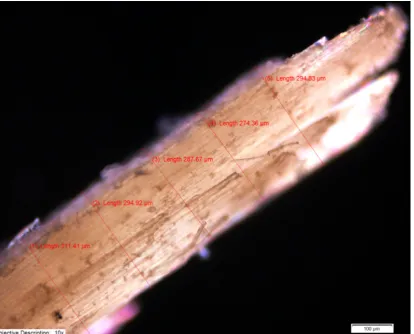
resulting in different cross-sectional shapes and sizes. Optical microscopy revealed that the fibers
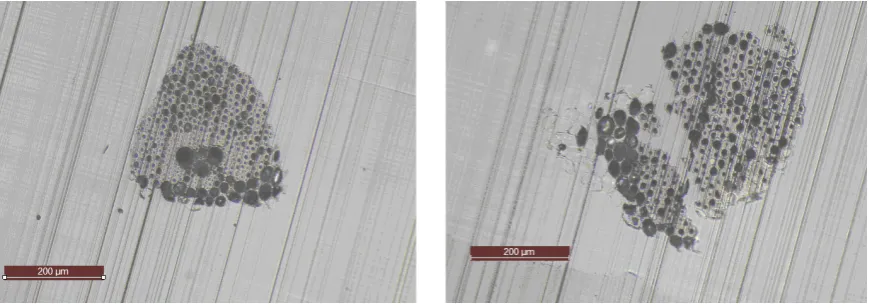
selected from the batch used in this work were statistically dispersed, both in shape and size, with a
151
cross-sectional shape mostly intermediate between circular and elliptical (Fig.1). Initially, the
152
apparent diameters of the technical fibers used in this work (estimated from a side view by optical
153
microscopy) were found to range from 200 μm to 1 mm. Some of the fibers out of the batch were
154
also mercerized; mercerization is likely to help loosening the bundles and separating them into
155
elementary filaments without inducing any significant modification of their structural components
156
(crystallinity index and amount of native cellulose) [33]. For mercerization, the fibers were
157
immersed in a water solution containing 5 wt.% sodium hydroxide (NaOH) for 24 hours at room
158
temperature: the long period of exposure to sodium hydroxide at a not very high concentration is
159
expected to allow obtaining fibers with modified surfaces but equivalent structural properties (this
160
will be dealt with in Section 3). After the treatment, the fibers were recovered by a plastic tray with
161
filter paper and washed with filtered water in a Büchner flask. Finally, the fibers were placed on a
162
plate coated with an aluminum foil and oven dried at 80 °C for 24 hours.
163
164
165
Figure 1. Cross-section of two bamboo fibers randomly extracted from the batch used in the study
166
and imaged by optical microscopy.
167
Thin PLA disks were created by melting a given amount of dried pellets and then compressing
168
them with a hydraulic manual press (Specac 25T). The thickness of the PLA disks was carefully
169
controlled, as it represents a key parameter for pull-out tests (length of fiber embedded in the
170
polymer matrix). The control over the thickness was ensured by (1) using round washers with
171
known thicknesses (h) and internal diameters (Di), and (2) determining the mass of PLA required to
172
fill the volume inside each washer (Eq. (1)).
173
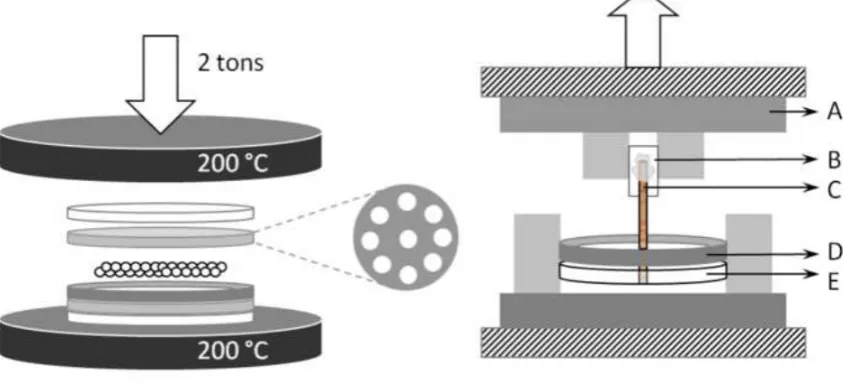
174
The procedure to obtain the PLA disks is the following: (1) two Teflon films and two
175
aluminum foils are cut to the internal diameter of the washer; (2) both the Teflon films and the first
176
aluminum foil are used in their pristine form, whereas the second aluminum foil is hole-punched as
177
many times as the number of samples to be prepared; (3) a sandwich is obtained by stacking (in
178
order) one Teflon film, the first aluminum foil, the washer filled with the PLA pellets, the second
179
aluminum foil and another Teflon film (Fig. 2 left). The first aluminum foil acts as a support for the
180
polymer sample along with the second aluminum foil, which is hole-punched to expose the PLA
181
matrix in the areas where the bamboo fibers will be inserted. The sandwich is inserted between the
182
hot plates of the hydraulic press (temperature controller set to 200°C, with the polymer not
183
exceeding 170-175°C) and a force of 2 tons (10 to 30 MPa depending on the external diameter of the
184
washer) is applied for 2 minutes. After cooling down to room temperature, the thickness of the
185
disks is checked using a caliper. Four washers with different thicknesses (0.84, 0.15, 0.65 and 0.55
186
mm) and internal diameters (34.0, 38.2, 44.6 and 44.0 respectively) were used. The PLA disks were
187
cut to produce as many samples as the number of holes punched in the second aluminum foil. In
188
the meantime, the fibers were held in the oven at 80°C to avoid any water uptake, as the presence of
water is known to weaken their interface with polymers [20]. The fibers were embedded, one by
190
one, in every PLA precut disk heated between the hot plates of the press. Attention was paid to
191
keep them as perpendicular as possible with respect to their surface and to force them to the bottom
192
of the layer.
193
194
Figure 2. Procedure to obtain and test pull-out-samples. On the left: creating PLA thin disks.
195
Between the hot plates of the hydraulic press (stacked from the bottom to the top): a Teflon film, an
196
aluminum foil, a washer filled with PLA pellets, a hole-punched aluminum foil and another Teflon
197
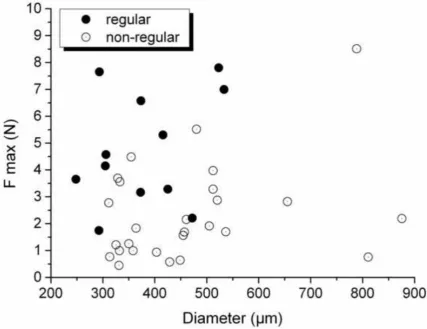
film. On the right: placing samples on the Bose device: (A) clamp, (B) cardboard, (C) free tip of the
198
bamboo fiber, (D) washer, (E) PLA thin disk.
199
200
2.2.2. Characterization of the fibers and pull-out tests
201
202
The bamboo fibers were characterized by Fourier Transform Infra Red (FTIR) spectroscopy
203
before the alkali treatment, right after the alkali treatment (without washing) and after washing in
204
filtered water. Prior to measurement, the fibers were dried and compacted into pellets (16 mm Ø)
205
by the hydraulic manual press (Specac 25T). Several spectra were recorded on different areas of
206
each pellet by a Varian 4100 FTIR device (Excalibur Series) in Attenuated Total Reflection (ATR)
207
mode with a mono-reflection diamond crystal (Pike MIRacle). Qualitative comparisons were made
208
to evaluate the consequences of the alkali treatment on the chemical composition of the fibers. As
209
the cross-sectional dimensions of a given bamboo fiber can vary along its length, each fiber
210
candidate for pull-out testing was placed between two glass slides and observed by optical
211
microscopy (Olympus BX51/BX52). Several measurements (at least 5) were performed to determine
212
the variation of the apparent diameter along the length of interest at distances of around 200 μm
213
from each other. The average of the apparent diameters measured for each bamboo fiber was
214
considered as its equivalent diameter, i.e., the diameter of a virtual fiber having a circular
215
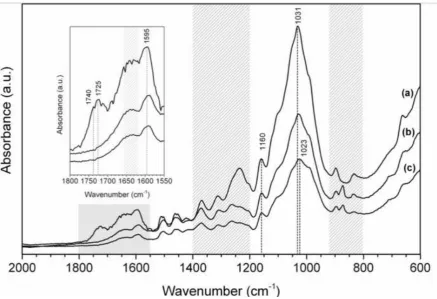
cross-section and the same mechanical behavior (in terms of pull-out response).
216
The pull-out tests were performed using a Bose ElectroForce 3200 device with titanium T/C
217
grips (maximum applied force 22.5 N). The locking system was ensured by hex drive nuts, which
218
facilitated the placement of the samples in the clamps. For each sample, the free tip of the fiber was
219
fixed with MultiTemp ® glue on a cardboard tab, which was clamped more easily than the fiber
220
itself. As for the PLA thin disk, a washer was placed between the clamps to prevent sliding. The
221
load vs. displacement curves were recorded by the software WinTest. All the tests were performed
222
with a loading rate of 0.005 mm/s. The sample placement on the Bose device is sketched in Fig. 2
223
(right).
A preliminary evaluation of the possibility to perform successful pull-out tests led to the
225
observation of two ineffective outcomes of the test: either the fibers broke before the interface failed
226
or, less frequently, the fiber tip and/or the matrix thin disk slid between the grips. The experimental
227
results were classed as regular or non-regular depending not only on the global shape of the curve
228
recorded during the pull-out test, but also on the aspect of the fiber tip after extraction from the
229
matrix and the aspect of the hole left behind. Systematic observations of the fiber tip and the holes
230
by Scanning Electron Microscopy (SEM) were carried out after each pull-out test to decide whether
231
the test was successful or not, therefore helping with selection and interpretation of the curves.
232
The inspection of the fractured samples was carried out using a FEI Quanta 200 FEG high
233
resolution field emission scanning electron microscope. The results classed as regular, where no
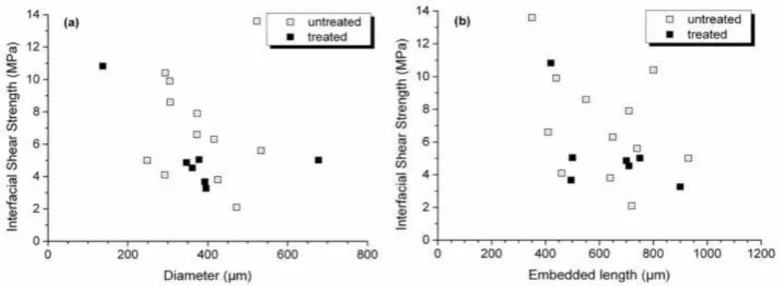
234
obvious fibrillation occurred, were used to estimate the apparent interfacial shear strength, as
235
described and discussed in Section 3.
236
3. Results and discussion
237
Pull-out tests consist of embedding a fiber in a matrix and then performing a tensile test by
238
gripping the free tip of the fiber (top) and the matrix (bottom) to pull them apart (Fig.2 right). The
239
result typically expected for this kind of test is the fiber being pulled out of the matrix without
240
breaking, meaning that adhesive failure (debonding at the fiber/polymer interface) rather than
241
cohesive failure (either in the fiber or in the matrix) occurs. The force vs. displacement curves are
242
used to determine the shear strength at the interface between the fiber and the matrix using the
243
Kelly-Tyson equation, as suggested by Greszczuk (Eq. (2)) [34].This section may be divided by
244
subheadings. It should provide a concise and precise description of the experimental results, their
245
interpretation as well as the experimental conclusions that can be drawn.
246
247
where τapp (MPa) is the apparent interfacial shear strength, Fdeb (N) is the force required to
248
debond the fiber from the matrix, π•Df (mm) is the perimeter of the fiber as Df (mm) is the
249
diameter, and Lemb (mm) is the length of fiber embedded into the matrix.
250
Eq. (2) provides a value of interfacial shear strength that is apparent because it depends on
251
both the embedded length and the diameter of the fiber, which are usually assumed constant. A
252
number of issues can be seen in the application of Eq. (2) to pull-out tests on vegetable fibers. Major
253
ones would concern the fact that the section of vegetable fibers is typically non-circular, presenting
254
at least some ellipticity if not a more complex shape, which may be not accounted for by the
255
method of diameter measurement. In practice, considering the diameter at five different locations
256
along the length of the fiber, as described in Section 2.2.2, led to measuring values with a standard
257
deviation between 0.7 and 7.5% and an average standard deviation of 3.1%. As a whole, the main
258
concentration of diameter values measured in this work reflected what reported by Rao and Rao
259
[35], who found that most mechanically extracted bamboo fibers have a diameter between 200 and
260
350 microns.
261
The experimental approach suggested in this work gives a reliable value for Lemb and the
262
debonding force Fdeb is measured directly: the consequence of this fact is that the fiber perimeter
263
πDf estimated with the assumption of a constant diameter is the parameter in Eq. (2) with the
264
highest uncertainty. Each fiber is unique and has a shape that varies over its entire embedded
265
length; thus, estimates of fiber perimeter can be made only indirectly at best, unless the fiber is
266
imaged while embedded in the matrix for example using X-ray microtomography (μ-CT) [36].
267
At least five possibilities exist for estimating the contact perimeter, and each one of these has
268
its own advantages and disadvantages. For example, the perimeter of the hole left in the PLA
269
matrix by the pulled-out bamboo fiber could be estimated by SEM, but this approach lacks
270
precision and does not account for the fact that the perimeter is not uniform over the entire
271
embedded length. Another approach would be to cut the fiber before embedding and taking an
272
image of the cross-section, but cutting obviously introduces damage, which may reduce the fiber
strength. Some authors assume a density and estimate the total fiber length to evaluate the
274
perimeter by weighing a group of fibers [37], whereas others estimate the perimeter by the
275
Wilhelmy method, which was used in [34]. Finally, assumptions about the fiber cross-sectional
276
shape can be made, such as the projection of a virtual cross-section whose diameter could be
277
estimated from optical microscope images at several positions along the fiber length and that would
278
behave equivalently to the real cross-section. In this work the final choice was made, with an
279
assumption of a circular equivalent fiber such that the perimeter is πDf with Df the equivalent
280
diameter, obtained as the average of 5 values of apparent diameter measured at different places
281
along each fiber from a side view by optical microscopy. This approach is expected to give
282
estimates for the perimeter that are larger than reality, in a way that the final estimates for the
283
apparent interfacial shear strength are lower than reality (conservative estimate).
284
In Eq. (2), τapp was interpreted as if the fiber was loaded until debonding and then completely
285
extracted from the matrix. Fdeb was estimated as the maximum value of the experimental force vs.
286
displacement curves, whereas Lemb was evaluated by measuring the thickness of the PLA thin disk.
287
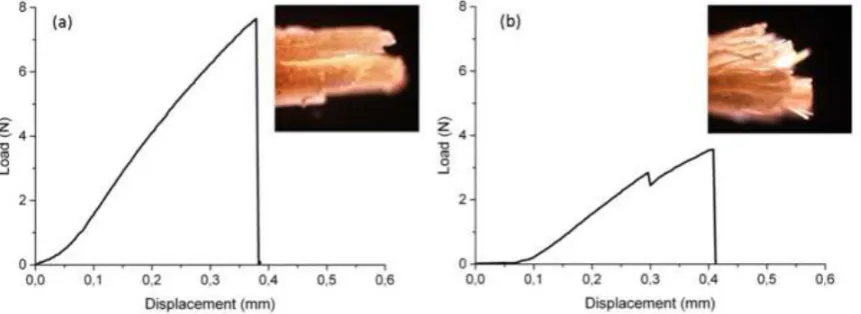
Fig. 3 reports some examples of the typical load vs. displacement curves obtained in this work. In
288
all cases the fiber was completely extracted from the polymer without clearly breaking. Fig. 3 (left
289
column) shows the ideal outcome for the pull-out tests performed in this work (smooth load vs.
290
displacement curve until interface failure by fiber/polymer debonding). Results like these are the
291
most appropriate to calculate Fdeb and τapp because none of the elementary fibers break during the
292
test. On the other hand, the curves in Fig. 3 (right column) reveal that some intermediate failure
293
occurred during the tensile part of the pull-out test. In fact, whenever the test is run on a technical
294
fiber, the internal interfaces between the elementary fibers may debond at lower loads with respect
295
to the outer interface, and break the bundle before debonding it from the matrix. Curves like these
296
cannot be assuredly discarded, but on the other side cannot be used either to determine τapp
297
according to Eq. (2). In this case the stressed interface is not only the one connecting the outer
298
surface of the technical fiber to the matrix, but also the one connecting the elementary fibers to each
299
other within the same bundle. For this reason, even when the experimental curves seemed correct,
300
the tip of each bamboo fiber extracted from the PLA matrix was observed by optical microscopy
301
(example pictures on top of left and right columns in Fig. 3) to identify the failure mechanism
302
associated with the pull-out test and to get a deeper insight in the nature of the constraints
303
experienced by the fiber.
304
305
Figure 3. Examples of typical load vs. displacement curves obtained by pull-out tests performed on
306
bamboo fibers embedded in a PLA matrix: (left column) adhesive failure at the bamboo/PLA
307
interface and (right column) adhesive failure combined with cohesive failure within the bamboo
308
fiber. The pictures on top of the columns show the typical aspect of the fiber tips after the pull-out
309
test: (on the left) regular and (on the right) non-regular fiber.
310
Regular fibers were defined as those that did not show an obvious fibrillation, i.e., separation of
312
filaments, when being extracted from the polymer matrix (Fig. 3 on top of left column). Whenever
313
fibrillation was clearly shown during fiber failure so that the tensile load could not be regarded as
314
exclusively applied orthogonally to the fiber section, the fibers were defined as non-regular (Fig. 3
315
on top of right column). SEM images confirmed that successful pull-out tests were most frequently
316
obtained from regular fibers, where the fiber tip remained aligned with the bulk of it during the
317
whole loading event. Moreover, when the fiber behavior was non-regular, a load drop was
318
frequently observed during loading, which can be attributed to the moment when the filaments
319
started splitting from each other, leading to fibrillation. In general, fibrillation might be considered
320
to improve fiber-matrix adhesion; as a matter of fact, mechanically induced fibrillation has been
321
already used on bamboo-PLA composites to make them more suitable to processing techniques,
322
such as extrusion, pelletizing and subsequent injection molding [38]. However, when fibrillation
323
occurs, pull-out tests usually overestimate the value obtained for the interfacial shear strength
324
because mechanical interlocking could contribute to a stronger connection of the technical fiber
325
(through its elementary fibers) to the polymeric matrix.
326
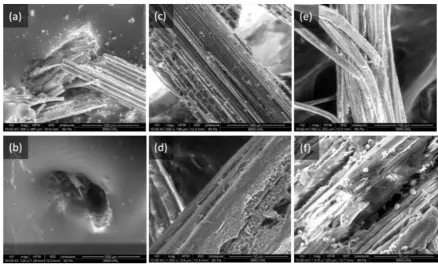
Fig. 4(a) shows the failure mode associated with non-regular pull-out-test curves; in this case, the
327
technical fiber partially broke instead of getting pulled out of the matrix, meaning that the
328
bamboo/PLA interface was not necessarily stressed to failure. In contrast, Fig. 4(b) shows the hole
329
left in the matrix by a fiber pulled out during a regular pull-out test; here, only a few elementary
330
fibers broke, proving that the interface actually stressed by the pulling action was essentially the
331
one connecting the outer surface of the technical fiber to the polymer. It is worth noticing that the
332
bamboo fiber shown in Fig. 4(a) has an apparent diameter of about 200 μm, whereas the one shown
333
in Fig. 4(b) is much thicker (about 500 μm). This is quite typical and indicates that, to avoid
334
fibrillation, fibers should not only be regularly-sized and possibly defect-free, but also rather thick.
335
In fact, a balance should be found between the cross-section resisting the uniaxial tensile stress
336
(which depends exactly on the cross-sectional shape and size of the technical fiber) and the extent of
337
the outer surface in connection with the matrix (which depends essentially on the equivalent
338
diameter of the fiber and on the length of it actually embedded in the polymeric matrix, Lemb).
339
Considering only regular samples (12 values out of the 39 tests reported in this work), a value τapp =
340
7.0 ± 3.1 MPa was obtained.
341
Figure 4. SEM images of (a) a technical bamboo fiber that broke (instead of debonding) during the
343
pull-out test (apparent diameter of the fiber ca. 200 μm); (b) the hole left in the PLA matrix by a
344
bamboo fiber successfully pulled-out during the test (diameter of the hole ca. 500 μm); (c) the
345
surface of an untreated bamboo fiber (scale bar 300 μm); (d) the surface of a mercerized bamboo
346
fiber (scale bar 50 μm); (e) the loosening of a technical bamboo fiber (bundle of elementary fibers) as
347
a consequence of mercerization (scale bar 100 μm); (f) residual salts (NaOH) left behind by
348
mercerization in the absence of a proper washing procedure (scale bar 50 μm).
349
Tokoro et al. [20] used short bamboo fiber bundles (diameter 39.2 μm and length 215 μm before
350
fabrication) to obtain PLA composites by injection molding. They performed micro-droplet tests to
351
evaluate τapp according to Eq. (2) and found an average value of about 4.3 MPa (estimating that
352
processing reduced both the diameter and the length to 21.3 μm and 86.3 μm respectively), but no
353
statistical variations were given about these values. A clear comparison is difficult to make, because
354
the samples used for this study have larger Df (200-480 μm) and Lemb (423-790 μm) and the results
355
obtained for regular samples spread over a range going from 2.1 to 13.6 MPa. Fuentes et al. [39]
356
performed fiber pull-out tests on technical bamboo fibers embedded in poly (vinylidene fluoride)
357
(PVDF) and polypropylene (PP). The diameter of the fibers was not given, but their perimeter was
358
estimated by the Wilhelmy equation applied to dynamic contact-angle measurements. They
359
considered different Lemb (0.6 to 5 mm) and fit the experimental data with Greszczuk’s model [35],
360
finding a value of ultimate interfacial shear strength of about 7.5 MPa for PVDF (polar) and 3.4 MPa
361
for PP (non polar). As a comparison, the value obtained here is quite close to the value obtained for
362
PVDF, which is consistent considering that PLA is a fairly polar polymer. Le Duigou et al. [40]
363
performed microbond tests on flax fibers and PLLA, and reported a value of interfacial shear
364
strength of 15.3 ± 3.3 MPa calculated according to Eq. (2) for fibers having an aspect ratio (Lemb/Df)
365
of 1.3 ± 0.1. Wong et al. [41] also used Eq. (2) to evaluate the interfacial strength between flax fibers
366
and PLLA. They obtained values in the range 8-17 MPa by pulling out fibers having Df in the range
367
100-160 μm and Lemb in the range 200-500 μm. The comparison of all these values, especially when it
368
comes to Df, would be even more difficult if the ellipticity (or even higher geometrical complexity)
369
of bamboo fiber sections were, as it should be, taken into account. In fact, this would require the
370
measurement of the exact diameter of the fractured section, an example of which is reported in
371
Figure 5. Such a procedure was not systematically pursued due to the difficulty of getting a section
372
with obvious edges and as flat as possible, and may be the object of dedicated work in the future.
374
Figure 5. SEM image of fractured section of a bamboo fiber with tentative measurement of diameter.
375
The values of maximum load (Fmax) recorded during the pull-out tests of untreated bamboo fibers
376
are shown in Fig. 6 as a function of Df (39 values, 12 regular plus 27 non-regular). Fig. 6 provides an
377
additional criterion for the initial selection of the fibers: they should not only be regularly-sized,
378
defect-free and thick enough to resist the tensile stress applied to pull them out, but on the other
379
side also thin enough to minimize the proportion of internal interfaces (connecting the elementary
380
fibers and the fibrils to each other) with respect to the outer interface (connecting the fiber to the
381
polymer). Thicker technical fibers have more extended outer surfaces, but also many more internal
382
interfaces, which increases the probability of extraction by structural telescoping. The Fmax values in
383
Fig. 6 are spread over a range of equivalent diameters from about 250 μm to almost 1 mm, but
384
regular tests were obtained only for samples processed with fibers having a diameter less than 500
385
μm, whatever the value of Lemb. As a matter of fact, Da Costa et al. [42] already observed that, when
386
performing tensile tests on bamboo fibers with the aim of Weibull analysis, thinner fibers showed a
387
more uniform fracture associated with lesser fibrils, while fibers with larger diameters would
388
display a relatively non-uniform fracture with participation of more fibrils. Statistically, the
389
probability that one of the many fibrils of the thicker bamboo fiber would prematurely break and
390
then act as a flaw to cause the fiber rupture at a lower stress is higher, when compared to the
391
thinner fiber. As a consequence, it is more likely that larger diameter fibers have lower interfacial
392
shear strength than the opposite.
394
Figure 6. Values of F max (N) recorded by pull-out test on samples made of untreated bamboo
395
fibers embedded in a PLA matrix. The values are plotted as a function of the fiber equivalent
396
diameter (μm) for both regular and non-regular samples.
397
Pull-out tests were also performed on mercerized bamboo fibers from the same batch. Fig. 4(c)
398
shows the surface of an untreated bamboo fiber. Mercerization modified the surface of the fibers
399
both topographically and chemically. Fig. 4(d) shows that roughness changed and Fig. 4(e) proves
400
that the removal of the lignin loosened the bundles. The literature reports that NaOH solutions
401
make the fibers swell by attacking and destroying their non-cellulosic structure [43]. Having the
402
elementary fibers loosened is good when the objective is dispersing the bamboo fibers within a
403
matrix to obtain the final green composite; however, in terms of pull-out tests, this condition is
404
probably the most complicated to interpret. Unless the elementary fibers are completely isolated
405
from each other, it is hard to quantify the extent of fiber surface actually interacting with the
406
polymer and efficiently stressed during the pull-out test. In addition, Fig. 4(f) shows that
407
mercerization, if not followed by a thorough washing procedure, leaves residual salts on the surface
408
of the fibers, which is a drawback of the treatment.
409
The chemical effects of mercerization were investigated by FTIR spectroscopy. Fig. 7 shows the
410
FTIR spectra of bamboo fibers: (a) before the treatment, (b) right after the treatment (without
411
washing) and (c), when the treatment was followed by careful washing and filtering. The
412
absorption bands were assigned on the basis of the data reported in the literature about different
413
ligno-cellulosic materials (hemp hurds [44] and fibers [45], wheat straw nanofibers [46], oil palm
414
fibers [47], bamboo fibers [48], wood [49-50]). In the range between 1800 and 800 cm-1 it is possible
415
to find evidence of the chemical modification of the fibers, mostly consisting of the removal of
416
lignin and hemicellulose and the purification of crystalline cellulose. The inset zooms in a range
417
showing a reduction of the bands typically assigned to hemicellulose (1740 cm-1) and lignin (1725
418
and 1595 cm-1, vibrations of the carbonyl groups and of the aromatic rings of phenyl propane,
respectively). The hatched area on the inset identifies the absorption bands assigned to the bending
420
vibration of the hydroxyl groups of water absorbed by holocellulose. The first hatched area on the
421
main graph includes the stretching vibrations of the hydroxyl groups of water absorbed by
422
holocellulose, but also the bending and stretching vibrations of CH and CO bonds in the aromatic
423
rings of crystalline cellulose. The second hatched area contains the out-of-plane stretching
424
vibrations of CH bonds in the aromatic rings of crystalline cellulose, as well as the stretching
425
vibrations of CH and COC bonds in the β-(1,4)-glycosidic linkages between the anhydroglucose
426
units. Polymorphism has already been documented for NaOH-treated cellulose [51]. The absorption
427
band at 1160 cm-1 is due to crystalline cellulose (COC asymmetrical stretching). The peak between
428
1150 and 950 cm-1 contains many contributions: it is particularly noteworthy the slight shift of the
429
main peak from 1031 cm-1 (in-plane deformation of CH bonds from lignin) to 1023 cm-1 (stretching
430
vibration of CO bonds in crystalline cellulose), which could be a further sign of successful
431
mercerization. Additionally, the smoothest FTIR spectra were recorded on the fibers that were
432
carefully washed and filtered (Fig. 7(c)), which is in agreement with the comment about Fig. 4(f).
433
434
Figure 7. FTIR spectra obtained for (a) bamboo fibers in their pristine state (untreated), (b)
435
mercerized bamboo fibers (treated unwashed) and (c) mercerized bamboo fibers after washing plus
436
filtering (treated washed filtered). The inset shows a zoom of the absorption bands from 1800 to
437
1550 cm-1.
438
A total of 17 pull-out tests were performed on mercerized bamboo fibers; 7 of them were
439
considered as regular and interpreted, resulting in a value of τapp = 5.3 ± 3.3 MPa (lower than
440
the value obtained for the untreated fibers). It appears that mercerization does not necessarily
441
improve the interface between ligno-cellulosic fibers and polymers, even though previous
442
literature suggests the opposite. An attempt to evaluate the influence of mercerization on the
443
quality of the interface was made by interpreting the statistics of the two populations of data
444
via the student’s t-test. The test gave a value of p = 0.22, meaning that in this case mercerization
445
has no significant impact on the results (the limit being at 0.05). Scatter plots of the values of
446
the apparent interfacial shear strength τapp as a function of the equivalent diameter Df and the
447
embedded length Lemb are provided in Fig. 8 for both untreated and treated bamboo fibers.
No obvious mathematical relationships can be pointed out. Fig. 8(a) shows that, except for two
449
points, the alkali treatment limits data dispersion by restraining the values of both the
450
apparent diameters (350 to 400 μm) and the obtained apparent interfacial shear strength (3 to 5
451
MPa) to narrower ranges. As for the embedded length (Fig. 8(b)), the alkali treatment had no
452
statistical effect because Lemb depends only on sample processing, and the experimental
453
procedure used in this work was designed with the purpose of controlling it. In conclusion,
454
definite indications that mercerization is actually improving the interface between bamboo
455
fibers and PLA matrix were not obtained in this work. The opposite result had been obtained
456
on traditional oil-based polyester matrices despite the fact that the alkali treatment reduces the
457
ductility of bamboo fibers [52]. It is proposed that the decreased ductility, together with the
458
inherent brittleness of PLA, could have led to an early pull-out of the fibers, resulting in a
459
weaker interface; but this would need to be confirmed in further studies.
460
461
Figure 8.Apparent interfacial shear strength (MPa) between PLA and bamboo fibers (both untreated
462
and mercerized) as a function of (a) equivalent diameter (μm) and (b) embedded length (μm). Only
463
regular samples are represented.
464
4. Conclusions
465
In this work, a procedure was described to measure the apparent interfacial shear strength
466
from pull-out tests on both untreated and mercerized bamboo technical fibers from the same batch,
467
embedded in the same poly(lactic acid) (PLA) matrix. It was found out that to acquire sufficiently
468
reliable measurements of interfacial shear strength on common batches of natural fibers in use in
469
composites, an improved control on the length of fiber embedded in the polymer matrix is needed.
470
The results of the pull-out tests were sorted and classified on the basis of several criteria: the shape
471
of the load vs. displacement curves; the aspect of the fiber tips before and after the pull-out tests; the
472
hole left in the matrix by the pulled-out fiber. Data selection, treatment and interpretation were
473
discussed by comparing the results obtained with reference to the occurrence or not of fibrillation
474
during pull-out. The results showed that ideal bamboo fibers for pull-out tests not only should be
475
regularly-sized (little or no variation of their cross-sectional shape and size as a function of the fiber
476
length), defect-free on the outer surface and thick enough to resist the tensile stress without
477
breaking, but also thin enough to minimize the risk of extraction by structural telescoping and the
478
occurrence of volume defects (fiber diameter should be in the range 250-500 μm). Mercerization
479
modified both the surface topography and chemical composition of the fibers, and eventually led to
480
a finer control over the apparent fiber diameter, but did not improve the stress transfer at the
481
interface with the polymer (τapp= 7.0 ± 3.1 MPa and 5.3 ± 2.4 MPa for untreated and treated bamboo
482
fibers respectively).
483
484
Acknowledgments: The authors would like to thank Benoît Lefez for acquiring FTIR spectra and Brahim
485
Mazian for taking images of fiber cross-sections.
Author Contributions: For research articles with several authors, a short paragraph specifying their individual
487
contributions must be provided. The following statements should be used “X.X. and Y.Y. conceived and
488
designed the experiments; X.X. performed the experiments; X.X. and Y.Y. analyzed the data; W.W. contributed
489
reagents/materials/analysis tools; Y.Y. wrote the paper.” Authorship must be limited to those who have
490
contributed substantially to the work reported.
491
Conflicts of Interest: The authors declare no conflict of interest.
References
494
1. Ji SG, Cho D, Park WH, Lee BC, Electron beam effect on the tensile properties and topology of jute fibers
495
and the interfacial strength of jute-PLA green composites, Macromol Res 2010; 18: 919-922.
496
2. Faruk O, Bledzki A, Fink H, Sain M. Biocomposites reinforced with natural fibers. Prog Polym Sci 2012;
497
37: 1552-1596.
498
3. Andersons J, Sparnins E, Joffe R. Stiffness and strength of flax fiber/polymer matrix composites. Polym
499
Composites 2006; 27: 221-229.
500
4. Saiter JM, Esposito A, Dobircau L, Turner JA, Adhikari R. Synthetic polymer composites reinforced by
501
bamboo fibers. Macromol Symp 2013; 327:114-120.
502
5. Hiziroglu S, Jarusombuti S, Bauchongkol P, Fueangvivat V, Overlaying properties of fiberboard
503
manufactured from bamboo and rice straw, Ind Crop Prod 2008; 28:107–111.
504
6. Abdul Khalil HPS, Bhat I, Jawaid M, Zaidon A, Hermawan D, Hadi Y. Bamboo fibre reinforced
505
biocomposites: A review. Mater Design 2012; 42:353-368.
506
7. Sato J, People in between: conversion and conservation of forest lands in Thailand, Dev Change 2000;
507
31:155–177.
508
8. Sasaki C, Wanaka M, Takagi H, Tamura S, Asada C, Nakamura Y, Evaluation of epoxy resins synthesized
509
from steam-exploded bamboo lignin, Ind Crops Prod 2013; 43:757-761.
510
9. Lee S-H, Wang S, Biodegradable polymers/bamboo fiber biocomposite with bio-based coupling agent.
511
Compos Part A 2006; 37:80-91.
512
10. Takagi H, Ichihara Y. Effect of fiber length on mechanical properties of “green” composites using a
513
starch-based resin and short bamboo fibers. JSME Int J A-Mech M 2004; 47:551-555.
514
11. Tung NH, Yamamoto H, Matsuoka T, Fujii T. Effect of surface treatment on interfacial strength between
515
bamboo fiber and PP resin. JSME Int J A-Mech M 2004; 47:561-565.
516
12. Trujillo E, Moesen M, Osorio L, Van Vuure AW, Ivens J, Verpoest I. Bamboo fibres for reinforcement in
517
composite materials: Strength Weibull analysis. Compos Part A 2014; 61:115-125.
518
13. Huang Y, Fei B, Wei P, Zhao C, Mechanical properties of bamboo fiber cell walls during the culm
519
development by nanoindentation, Ind Crop Prod 2016; 92:102-108.
520
14. Garlotta D. A literature review of poly(lactic acid). J Polym Envir 2001; 9:63-84.
521
15. Di Francia C, Ward T, Claus R. The single-fibre pull-out test. Review and interpretation. Compos Part A
522
1996; 27:597-612.
523
16. Stamboulis A, Baillie C, Schulz E. Interfacial characterisation of flax fibre-thermoplastic polymer
524
composites by the pull-out test. Angew Makromol Chem 1999; 272:117-120.
525
17. Graupner N, Rößler J, Ziegmann G, Müssig J. Fibre/matrix adhesion of cellulose fibres in PLA, PP and
526
MAPP: a critical review of pull-out test, microbond test and single fibre fragmentation test results.
527
Compos Part A 2014; 63:133-148.
528
18. Sydenstricker THD, Mochnaz S, Amico SC. Pull-out and other evaluations in sisal-reinforced polyester
529
biocomposites. Polym Test 2003; 22:375-380.
530
19. Chen H, Miao M, Ding X. Influence of moisture absorption on the interfacial strength of bamboo/vinyl.
531
Compos Part A 2009; 40:2013-2019.
532
20. Tokoro R, Vu D, Okubo K, Tanaka T, Fujii T, Fujiura T. How to improve mechanical properties of
533
polylactic acid with bamboo fibers. J Mater Sci 2008; 43:775-787.
534
21. Fuentes CA, Brughmans G, Tran LQN, Dupont-Gillain C, Verpoest I, Van Vuure AW, Mechanical
535
behaviour and practical adhesion at a bamboo composite interface: Physical adhesion and mechanical
536
interlocking Compos Sci Technol 2015; 109:40-47.
537
22. Pisanova E, Zhandarov S, Mäder E. How can adhesion be determined from micromechanical tests?
538
Compos Part A 2001; 32:425-434.
539
23. Zhandarov S, Pisanova E, Mäder E, Nairn JA. Investigation of load transfer between the fiber and the
540
matrix in pull-out tests with fibers having different diameters. J Adhes Sci Technology 2001; 15:205-222.
541
24. Zixuan DR, Xuexi Y, Hankun Z, Hao W, Yu WY, Quantitative characterization of the interface between
542
bamboo fiber and polypropylene with pull-out test and nanomechanical imaging, J Mater Sci 2017;
543
52:1296–1307.
25. Ramyarangsi S. Bamboo research in Thailand. In: Recent Research on Bamboos. Proceedings of the
545
International Bamboo Workshop. October 6-14, 1985. Hangzhou, People’s Republic of China. (Editors Rao
546
AN, Dhanarajan G, Sastry CB).
547
26. Sharma YML. Inventory and Resources of Bamboos. In: Recent Research on Bamboos. Proceedings of the
548
International Bamboo Workshop. October 6-14, 1985. Hangzhou, People’s Republic of China. (Editors:
549
Rao AN, Dhanarajan G, Sastry CB).
550
27. Maxwell JF, Elliott S, Palee P, Anysarnsunthorn V. The vegetation of Doi Khuntan National Park,
551
Lamphun-Lampang Provinces, Thailand. Nat Hist Bull Siam Soc 1995; 43:185-205.
552
28. Maxwell JF. A Synopsis of the Vegetation of Thailand. Nat Hist J Chulalongkorn Univ 2004; 4:19-29.
553
29. Prachayo B. Farmers and Forests: A Changing Phase in Northeast Thailand. Southeast Asian Studies
554
2000; 138:271-446.
555
30. Marod D, Kutintara U, Yarwudhi C, Tanaka H, Nakashisuka T. Structural dynamics of a natural mixed
556
deciduous forest in western Thailand. J Veg Sci 1999; 10:777-786.
557
31. Larpkern P, Moe SR, Totland Ø. The effects of environmental variables and human disturbance on
558
woody species richness and diversity in a bamboo–deciduous forest in northeastern Thailand. Ecol Res
559
2009; 24: 147–156.
560
32. Osorio L, Trujillo E, Van Vuure AW, Verpoest I. Morphological aspects and mechanical properties of
561
single bamboo fibers and flexural characterization of bamboo/epoxy composites. J Reinf Plast Compos
562
2011; 30:396-408.
563
33. Liu Y, Hu H. X-ray Diffraction Study of Bamboo Fibers Treated with NaOH. Fibers and Polymers 2008;
564
9:735-739.
565
34. Greszczuk L. Theoretical studies of the mechanics of the fiber-matrix interface in composites. In:
566
Interfaces in Composites (1969), p.42, DOI: 10.1520/STP44699S.
567
35. Rao KMM, Rao KM. Extraction and tensile properties of natural fibers: Vakka, date and bamboo. Compos
568
Struct 2007; 77:288-295.
569
36. Martin N, Mouret N, Davies P, Baley C, Influence of the degree of retting of flax fibers on the tensile
570
properties of single fibers and short fiber/polypropylene composites, Ind Crop Prod 2013; 49: 755-767.
571
37. Osorio L, Trujillo E, Van Vuure AW, Verpoest I. Morphological aspects and mechanical properties of
572
single bamboo fibers and flexural characterization of bamboo/epoxy composites. J Reinf Plast Compos
573
2010; 95(1):97-100.
574
38. Fuentes C, Tran L, Van Hellemont M, Janssens V, Dupont-Gillain C. Effect of physical adhesion on
575
mechanical behaviour of bamboo fibre reinforced thermoplastic composites. Colloid Surface A 2013;
576
418:7-15.
577
39. Tanaka C, Okubo K, Fujii T. Effective Degree of Fibrillation of Micro-Fibrillated Bamboo Fiber Processed
578
by Stone Mill for Improving Mechanical Properties of PLA Composite. JSMS Journal of the Society of
579
Materials Science, Japan, 2009; 58(5):368-373.
580
40. Le Duigou A, Davies P, Baley C. Interfacial bonding of flax fibre/poly(L-lactide) bio-composites. Compos
581
Sci Technol 2010; 70:231-239.
582
41. Wong S, Shanks R, Hodzic A. Effect of additives on the interfacial stregth of poly(L-lactic acid) and
583
poly(3-hydroxy butyric acid)-flax fibre composites. Compos Sci Technol 2007; 67:2478-2484.
584
42. Da Costa LL, Loiola RL, Monteiro SN. Diameter dependence of tensile strength by Weibull analysis: Part I
585
bamboo fiber. Matéria (Rio J.) 2010; 15:110-116.
586
43. Das M, Chakraborty D. Influence of alkali treatment on the fine structure and morphology of bamboo
587
fibers. J Appl Polym Sci 2006; 102:5050-5056.
588
44. Gandolfi S, Ottolina G, Riva S, Pedrocchi Fantoni G, Patel I. Complete chemical analysis of Carmagnola
589
hemp hurds and structural features of its components. Bioresources 2013; 8:2641-2656.
590
45. Kabir MM, Wang H, Lau KT, Cardona F. Effects of chemical treatments on hemp fibre structure. Appl
591
Surf Sci 2013; 276:13-23.
592
46. Alemdar A, Sain M. Biocomposites from wheat straw nanofibres: morphology, thermal and mechanical
593
properties. Compos Sci Technol 2008; 68:557-565.
594
47. Sreekala M, Kumaran M, Joseph S, Jacob M. Oil palm fibre reinforced phenol formaldehyde. Appl
595
Compos Mater 2000; 7:235-329.
596
48. Wen J, Xue B, Suna R, Pinkert A. Unmasking the structural features and property of lignin from bamboo.
597
Ind Crop Prod 2012; 42:332-343.
49. Chen H, Ferrari C, Angiuli M, Yao J, Raspi C, Bramanti E. Qualitative and quantitative analysis of wood
599
samples by Fourier transform infrared spectroscopy and multivariate analysis. Carbohydr. Polym. 2010;
600
82:772-778.
601
50. Corgié SC, Smith HM, Walker LP. Enzymatic transformations of cellulose assessed by quantitative
602
high-throughput Fourier transform infrared spectroscopy (QHT-FTIR). Biotechnol Bioeng 2011;
603
108:1509-1520.
604
51. Gupta PK, Uniyal V, Naithani S. Polymorphic transformation of cellulose I to cellulose II by alkali
605
pretreatment and urea as an additive. Carbohydr Polym 2013; 94:843-849.
606
52. Wong KJ, Yousif BF, Low KO. The effects of alkali treatment on the interfacial adhesion of bamboo fibres.
607
J Mater Des Appl 2010; 224:139-148.