Two Factor Authentications of Automatic
Teller Machine (ATM) Users via RFID and
Face Identification
Radha.S
1, Imaya.S
2P.G. student, Communication Systems (ECE), Idhaya Engineering College for women, Chinnasalem, Tamilnadu, India1
Assistant Professor, Department of Electronics and Communication Engineering, Idhaya Engineering College for women, Chinnasalem, Tamilnadu, India2
ABSTRACT: This paper describes a novel biometric scenario, where a person is authenticated at an ATM, and has to be re-identified from a camera within a very short time period, under very challenging illumination and pose conditions I using Single Identifying System. We propose a multimodal authentication system that operates under the constraints imposed by this applications scenario, and implement face recognition and RFID Card appearance recognition to create a system that improves ATM behavior in case of forgotten card or cash by re-identifying the user from an embedded ATM camera. We focus on the scenario and the platform, and report tests with the proposed system under challenging conditions, obtained from ATMs placed in the field.
KEYWORDS: ATM,RFID.
I. INTRODUCTION
Banks seek to reduce their infrastructure costs by shifting transactions of their customers to Automatic Teller Machines (ATMs) and Internet websites. Financial users especially prefer ATMs for physical transactions, like cash withdrawal or cash deposit. For these reasons, user experience at the ATM is a very important concern for the banks. One of the issues that ATMs suffer from is card and/or cash forgetting (CCF), which is a surprisingly common situation. In CCF, the user forgets the card or cash after the transaction, and leaves the system. After a certain waiting period, these items will be swallowed by the ATM, and the user has to go through a tedious and costly process to retrieve the card/cash or have the card reissued. Moreover, the cash is stored in a separate container after CCF, and needs to be manually checked before it is returned to circulation. This means a lot of time and money is being wasted to cope with the consequences of CCF. The cost caused by the CCF issues can be reduced by allowing ATMs to re-identify customers which are returning back to the ATM to collect their forgotten item.
In the proposed system, as soon as a customer inserts the card into the ATM and a session is initiated, the system starts face and RFID Card detection using the camera located near the ATM and builds a temporary identity database for the customer.
EXISTING SYSTEM:
The objective of this project is to improve the security performance in the bank by using RFID card. This project is very much used to improve the security and performance in the bank. In this project RFID card is used as bank pass book or ATM card. Now day’s some person makes the duplicate ATM card. But in this project RFID card is used for accessing the banking applications. So this project improves the security and performance because we cannot make the duplicate RFID card.
Draw Back:
II. RELATED WORK
A. Face Recognition Application for Automatic Teller Machines (ATM)
Biometrics has been extensively utilized to lessen the ATM-related crimes. One of the most widely used methods is to capture the facial images of the users for follow-up criminal investigations. However, this method is vulnerable to attacks made by the criminals with heavy facial occlusions. To overcome this drawback, this paper proposes a novel method for face recognizability evaluation with exceptional occlusion handling (EOH). The proposed method conducts a recognizability evaluation based on local regions of the facial components. Subsequently, the resulting decisions are reaffirmed by the EOH exploiting the global aspect of the frequently occurring facial occlusions. The EOH can be divided into two separate approaches: 1) accepting the falsely rejected cases, 2) rejecting the falsely accepted cases. In this paper, two typical facial occlusions, eyeglasses and sunglasses, are chosen to prove the validity of the EOH. To evaluate the proposed method in the most realistic environment, an ATM database was constructed by using an off-the-shelf ATM while the users were asked to make withdrawals as they would in real situations. The proposed method was evaluated by the ATM database which includes 480 video sequences with 20 subjects. The results showed the feasibility of the face recognizability evaluation with the EOH in practical ATM environments.
B. Verification Technology for Use in ATM Transactions.
There is an urgent need for improving security in banking region. With the birth of the Automatic Teller Machines, banking became a lot easier though with its own troubles of insecurity. Due to tremendous increase in the number of criminals and their activities, the ATM has become insecure. ATM systems today use no more than an access card and PIN for identity verification. The recent progress in biometric identification techniques, including finger printing, retina scanning, and facial recognition has made a great efforts to rescue the unsafe situation at the ATM. This research looked into the development of a system that integrates facial recognition technology into the identity verification process used in ATMs. An ATM model that is more reliable in providing security by using facial recognition software is proposed .The development of such a system would serve to protect consumers and financial institutions alike from intruders and identity thieves. This paper proposes an automatic teller machine security model that would combine a physical access card, a PIN, and electronic facial recognition that will go as far as withholding the fraudster‟s card. If this technology becomes widely used, faces would be protected as well as PINs. However, it obvious that man‟s biometric features cannot be replicated, this proposal will go a long way to solve the problem of Account safety making it possible for the actual account owner alone have access to his accounts. The combined biometric features approach is to serve the purpose both the identification and authentication that card and PIN do.
C. Improving ATM Security via Face Recognition, in ICECT
A facial recognition system is a computer application for automatically identifying or verifying a person from a digital image or a video frame from a video source. Proposed paper uses face recognition technique for verification in ATM system. For face recognition, there are two types of comparisons. The first is verification, this is where the system compares the given individual with who that individual says they are and gives a yes or no decision. The next one is identification this is where the system compares the given individual to all the other individuals in the database and gives a ranked list of matches. Face recognition technology analyzes the unique shape, pattern and positioning of the facial features. Face recognition is very complex technology and is largely software based. This Biometric Methodology establishes the analysis framework with PCA algorithms for each type of biometric device. Face recognition starts with a picture, attempting to find a person in the image. This can be accomplished using several methods including movement, skin tones, or blurred human shapes.
D. Short Term Face Recognition for Automatic Teller Machine
`
built-in camera. The short time frame of ATM usage and severe motion artifacts make this problem very different from an ordinary face authentication or face recognition problem. We evaluate the proposed system under challenging conditions of real ATM usage. The experimental results on multiple databases reveal that our proposed system is promising for mitigating card/cash forgetting issue and improving ATM user experience.
E. Information Fusion in Biometrics, in Pattern Recognition Letters
User verification systems that use a single biometric indicator often have to contend with noisy sensor data, restricted degrees of freedom, non-universality of the biometric trait and unacceptable error rates. Attempting to improve the performance of individual matchers in such situations may not prove to be effective because of these inherent problems. Multibiometric systems seek to alleviate some of these drawbacks by providing multiple evidences of the same identity. These systems help achieve an increase in performance that may not be possible using a single biometric indicator. Further, multi biometric systems provide anti-spoofing measures by making it difficult for an intruder to spoof multiple biometric traits simultaneously. However, an effective fusion scheme is necessary to combine the information presented by multiple domain experts. This paper addresses the problem of information fusion in biometric verification systems by combining information at the matching score level. Experimental results on combining three biometric modalities (face, fingerprint and hand geometry) are presented.
III. PROPOSED METHODOLOGY
The multimodal authentication system that operates under the constraints imposed by this applications scenario, and implement face recognition and RFID Card appearance recognition to create a system that improves ATM behavior in case of forgotten card or cash by re-identifying the user from an embedded ATM camera.
We focus on the scenario and the platform, and report tests with the proposed system under challenging conditions, obtained from ATMs placed in the field.
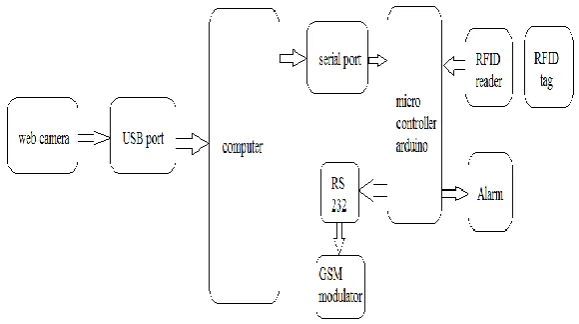
FIGURE 3.1 Block diagram of Proposed System
Parts:
Matlab Using PC(Personal Computer),
RS232 Cable (Serial Com Port),
RFID Card,
GSM Modem,
LCD Display,
Keypad.
Figure 3.1 shows the block diagram of proposed system. Here we set the monitoring area as a reference background for image subtraction. We shall be using web camera for real time video capturing frame Image monitoring area. These videos are splits in the form of frames to compared it with reference setted background. Computer or pc is the major part of the system. It is used here to collect the video captured by the web camera. After collecting the images from video, processing of that video in real time is done by the pc using the algorithm in MATLAB software.
An image is an array or a matrix of square pixels (picture elements) arranged in columns and rows. Image processing is a method to convert an image into digital form and perform some operations on it, in order to get an enhanced image or to extract some useful information from the image. It is a type of signal dispensation in which input is image, like video frame or photograph and output may be image or characteristics associated with that image.
Then Detected Face image signal to the RS232 cable using Serial to signal PIC Controller based compare with RFID Card Mismatched sent to the Not Authentication message to GSM Modem Alert System.
IV. RESULT AND DISCUSSION
Thus we proposed a computer vision based ATM user identification framework using face and RFID verification to reduce cash retraction. We evaluated the proposed system under various conditions, and with our own database, based on a real scenario,The experimental results reveal that our proposed system is promising for mitigating the card/cash forgetting issue.
Input RGB Image
12X12 nonoverlapping block
Fake Person:
SURF feature result on pre surgery image
Input RGB Image
12X12 nonoverlapping block
DCT IDCT
Local Binary Patterns per image
V. CONCLUSION
In this work, we proposed a computer vision based ATM user identification framework using face and RFID verification to reduce cash retraction. We evaluated the proposed system under various conditions, and with our own database, based on a real scenario,The experimental results reveal that our proposed system is promising for mitigating the card/cash forgetting issue.
Our “Out-of-Session” test condition is the one that is closest to the expected real world application. It is more important in this application to keep a high true positive rate (convenience) as the impostors cannot be expected to mimic the actual users in CCF. Any improvement in the true positive rate directly translates to money saved for the banking institution, and the worst case (zero true positive rate) corresponds to what the current ATM systems.
REFERENCES
[1] H. R. Babaei, O. Molalapata and A. A. Pandor, Face Recognition Application for Automatic Teller Machines (ATM), in ICIKM, 3rd ed. vol.45, pp.211-216, 2012.
[2] Aru, O. Eze and I. Gozie, Facial Verification Technology for Use in ATM Transactions, in American Journal of Engineering Research (AJER), [Online] 2013, pp. 188-193, Available:http://www.ajer.org/papers/v2(5)/Y02501880193.pdf
[3] K. J. Peter, G. Nagarajan, G. G. S. Glory, V. V. S. Devi, S. Arguman and K. S. Kannan, Improving ATM Security via Face Recognition, in ICECT, Kanyakumari, 2011, vol.6, pp.373-376.
[4] E. Derman, Y. K. Gec¸ici and A. A. Salah, Short Term Face Recognition for Automatic Teller Machine (ATM)Users, in ICECCO 2013, Istanbul, Turkey, pp.111-114