International Journal of Research (IJR)
e-ISSN: 2348-6848, p- ISSN: 2348-795X Volume 2, Issue 2, Feb. 2015 Available at http://internationaljournalofresearch.org
Problems & Constraints in the Bank Frauds cases: A Study
Ms. Megha Chauhan
Research Scholar IIT Delhi, Assistant Professor Symbiosis Law School NOIDA. Communication Address: E-239, Saraswati Kunj, Plot No. 25, IPEX, Delhi-110092
Comtact No. 09999474977
E-mail- [email protected]/[email protected]
Abstract
Crime is as old as the existence of human being themselves, the only thing which is constantly changing is its form, modus operandi, its magnitude etc. Gone are the days when crimes like robbery, dacoity, and theftetc. were done by the offenders to satisfy their financial urge. These days crimes like money laundering, bank frauds and many financial organized crime are being committed on a larger scale to satisfy the financial need and greed of the offenders. One such kind of crime is bank fraud, as a leman one can define bank fraud as any fraud committed within the purview of banking functions. The impact of these frauds might vary from an individual to the society at large. This paper is an empirical attempt to get insights about the investigation problems of such kinds of frauds. Primary data was collected with the help of interview schedule from investigating officers of such crimes and then was analyzed and final conclusion was drawn based upon the findings.
Key words:
Crime; Bank Frauds; Investigation; Problem
Introduction
Crimes initiated with the help of technology beset the huge variety of offenders who plays different level of fear to the society at large. These days crimes can be classified into two categories one is convectional crimes committed with the help of new technology
and other is the high technology crime which is born out the technology.
According to Maharashtra Control of Organized Crime Act, 1999 “Organized Crime means any continuing unlawful activity by an individual singly or jointly, either as a member of an organized crime syndicate, by use of violence or threat of violence or intimidation or coercion, or other unlawful means, with the objective of gaining pecuniary benefits or gaining undue economic or other advantage for himself or any other any other person or promoting insurgency”.
INTERPOL has given the definition of organized crime as “any enterprise or group of persons engaged in continuing illegal activity which has its primary purpose the generation of profits irrespective of national boundaries”. White collar crime when committed by a gang or groups of people, in an organized manner without respect to international boundaries can be one of the most dangerous economic crimes with far reaching consequences. Some of the organized economic crimes, common to all the countries in the world are Counterfeiting of currency, money laundering, smuggling, Bank frauds, cyber-crimes etc
.
Bank Frauds
The name bank is derived from the Italian word
International Journal of Research (IJR)
e-ISSN: 2348-6848, p- ISSN: 2348-795X Volume 2, Issue 2, Feb. 2015 Available at http://internationaljournalofresearch.org
Any dishonest act by which one person tries to gain an advantage over another person can be called as fraud. The losses caused to the victim by fraud can be direct or indirect. In earthy terms bank frauds includes all sort of misappropriations, embezzlements, manipulation of negotiable instruments and also misrepresentation of the facts, cheating, theft, undue favor and irregularities.
Bank frauds are on increase, the estimated loss for 2013-2014 in India was Rs. 22743 crores ( Pai & Venkatesh). Bank frauds concern all citizens. However, the key player in the drama is the banker. He is often plays the role of the target as well as the tool. At times, he is the victim of the temptations. Other contributory factors might include ineptitude, lassitude, disregard, involvement and the unawareness. They are motivated by situational pressures and permissive attitudes of the society and also high gains and low stake encourage the incidence.
Reasons for committing Bank Frauds (Sharma, B.R, 2000):-
People are becoming more aware of the possibilities which they might gain out of bank frauds.
There is no as such one to one relationship between the banker and the customer, most of the time the customer is identified with the help of his signatures only.
The sudden boom in the banking industry has created a vacuum of properly trained and experienced persons and often due to inadequate training the person can directly or indirectly enter the world of frauds.
Any person can easily loose his identity in the milling crowds of millions on the cities. The culprit can easily adopt a new personality and loose his previous connections with the particular fraud.
Increasing population and unemployment have made people desperate.
Bank frauds are a safe crime. It involves no danger to life of the culprit.
There are always some difficulties in detecting bank frauds cases, by the time it is realized that the fraud has been taken place, the offender is out of the scene. It becomes quite difficult for the investigators to locate the perpetrator and with the due course of time, the documents often become difficult to trace and other evidences is scarce. The culprit often escapes because of proper linkage. Benefit of doubt given to the accused is another escape route for the culprit.
Bankers get undue protection. The losses are made good through insurance. In the name of Bank’s reputation allegedly at the stake frauds are not brought to light. Consequently, the culprits do not get due punishment.
Classification of Bank Frauds Computer frauds
Computer Frauds are those involving embezzlements or liquidation achieved by hampering with computer data, record or programme, etc. Computer Crimes are those committed with the help of the computer: theft, forgery, counterfeiting, etc. Now a days crime like Phishing, salami attacks are very much prevalent in the field of Banks which are committed with the help of computers. (Sharma, B.R)
Credit Card Frauds
International Journal of Research (IJR)
e-ISSN: 2348-6848, p- ISSN: 2348-795X Volume 2, Issue 2, Feb. 2015 Available at http://internationaljournalofresearch.org
identity proofs, and also lot of chances of nonpayment of dues are associated with the use of credit cards.
It is a huge terror these days because of the boom in e-commerce, internet facility etc the fraudulent activity will be on huge rise in the near future.. The shape it takes will be limited only by the ingenuity of the freakier.
Loan Frauds
The government usually encourages loan facilities to the general public who can fulfill their dreams and can return the borrowed money in installments, but whenever there is the involvement of the money the fraud is bound to happen.
The following types of frauds were perpetrated:
Loans were taken by different persons on the same item.
Nomadic artisans obtained loans and vanished from the scene.
Bogus firms appeared everywhere and obtained loans.
Cheque Frauds
It is the most fraud prone area in the banking sector. Crimes like counterfeiting of cheques, signature forgery, impersonation, and issuing of cheques against insufficient funds or non-existent accounts often happens.
Counterfeits
Forging cheques, unauthorized printing of traveler cheques and banker's drafts has been increasing in recent times. It is becoming a serious source of trouble to the banking business as in many cases forged cheques, counterfeit cheques and drafts have been encashed. Spurious printing of fiduciary instruments is a serious crime like the production of counterfeit currency notes. It can cause extensive losses to a bank.
Classification of Bank Frauds (Reserve bank of India, 2012):-
In order to have uniformity in reporting, frauds have been classified as under base mainly on the provisions of the Indian Penal Code:
Misappropriation and criminal breach of trust.
Fraudulent encashment through forged instruments, manipulation of books of account or through fictitious accounts and conversion of property.
Unauthorized credit facilities extended for reward or for illegal gratification.
Negligence and cash shortages.
Cheating and forgery.
Irregularities in foreign exchange transactions.
There are some other types of bank frauds also, which includes, Demand Draft Frauds, Deposit Account Frauds, Purchased Bill Frauds, Hypothecation Frauds, Forged Signature, Material Alterations, Forged Currency notes, Seals and Stamp Frauds etc
Literature Review
International Journal of Research (IJR)
e-ISSN: 2348-6848, p- ISSN: 2348-795X Volume 2, Issue 2, Feb. 2015 Available at http://internationaljournalofresearch.org
these groups have founded the new means to make money and to be faceless.
Chang & Ma (2009), in their study on bank frauds and corruption tries to find the major problem associated with the two. They say that the major problematic area is the gigantic web of government officials, bank insiders and criminal businesses in committing fraud. They suggest that the preventive effects are of more importance than any harsh penalty and therefore basic ethics, in compliance with law should be reconstructed.
Rajendran (2008) in his study on fraud prone areas in Internet banking says that, as card business transactions increases, so do Frauds. Clearly, global networking presents as many new opportunities for criminals as it does for businesses. While offering numerous advantages and opening up new channels for transactions business, the internet has also brought in increased probability of frauds in credit and card transactions. This is high time for proactive measures by all agencies concerned to make Credit Cards as more Credible card.Lamba (2006)in his study on credit card frauds says the security features of the Credit cards include Embossing, BIN (bank identification number), and hologram and signature panel. When a card is presented to the ATM the EDC (electronic data capturing) machine of ATM (automatic teller machine), which is connected to the bank’s server (whose EDC machine or ATM is being used), sends the read data or magnetic strips of the card to the bank’s server through the server provider like VISA or Master Card. Major Card frauds includes Fraudulent application, Lost/Stolen cards, Never received cards, Merchant Frauds, mail order, Telephone Order or loan or phone fraud, change or address cases and counterfeited card cases. These types of frauds attract panel sections like Cheating, Forgery, Impersonation, Criminal Breach of Trust (by merchant) and Criminal conspiracy.
According to Chan (2004), sampling of frauds experienced in Asia shows that many "new" frauds are actually old schemes with a new twist. Thus, good old-fashioned due diligence, combined with new technology-based solutions, is called for. Three caveats discussed here are management left unchecked, outdated audit techniques, and packaged deals. It is estimated that only around 20% of the total frauds are reported are exposed to the public (Joshi, 2010) and the remaining frauds remains undetected, unreported or undiscovered.
Mativat & Trembly (1997) analyzed a particular crime wave (1992-1994) in counterfeit credit card frauds, and also set of offences which are related to it like stolen based credit card frauds. Researcher find that displacement effect is triggered by the high end technology available like printing devices, sophisticated photocopying, encoding and embossing system etc.
International Journal of Research (IJR)
e-ISSN: 2348-6848, p- ISSN: 2348-795X Volume 2, Issue 2, Feb. 2015 Available at http://internationaljournalofresearch.org
There may be a general opinion or apprehension that the policies are only issued but the claims are not settled or settled only for a paltry sum. While there could be a difference between the actual loss incurred and the actual indemnity obtained such an opinion or apprehension can be cleared if we understand the general principles of insurance and the practice as adopted by the insurers and the reasons there of. As the design of the control system and procedure as also implementation of the control systems will alone bring down the crimes in Banks, the policy rightly imposes certain conditions and excesses so that a portion of the loss is borne by the Bank and the banks is placed in the position of a co-insurer in the given circumstances of the case. However, the policy will found to be of immense use when the frauds are on larger scale as only a small portion is deducted as excess etc. Narayan (1988)
Investigation is the backbone of vigilance function. It is the exact operation which brings to light the various links in the chain of events that has led to the committal of crime which later on forms a substantial evidence to establish a case against the accused. Similarly, it is the investigation which reveals the lacunae in the systems that invites the banks to plug the loopholes and make the systems perfect. Namasalvayam (1987)
Padmanabham (1987)in his study on crime and securities in Bank, says that the present day impression, that the bank managers have their losses by external attack or internal fraud are all covered by insurance is not a correct one when viewed in the national context. The government is itself the insurer and the view taken by a bank manager that his loss will be made good by defeats the Government in two ways:
In the first instance, a wrong-doer or political terrorist gets a large amount of money for his nefarious plans aimed at
the destruction of society and Government
When an insurance claim is made, the Government as insurer has to pay the amount of the public exchequer to which the citizens of the country have to contribute by way of tax and other dues.
According to FBI (1972), a large increase in investigations of alleged fraud violations in
insured commercial banks during 1968-71. At the same time, however, assets increased over 28.2 percent and personnel increased over 22.8 percent. The survey collected fraud data for 1968-70 to determine where internal bank frauds occurred and whether any department or account was vulnerable. Data were requested for 12 general ledger accounts or departments on amounts, concealment period, method used, persons involved, and the incidence of collusion. Information was gathered from 267 banks with a total of 1,932 internal frauds. The banks reported increases in the number of frauds, substantiating FBI statistics. The larger the bank, the larger the increase in frauds. Most (91 %) internal frauds involved less than $10,000. The four major areas of frauds were in cash and cash items (46.8%), demand deposits (18.6%), time deposits (8.2%), and consumer credit loans (5.3%). All these areas required audit attention because of their vulnerability to fraud. Internal control systems were effective in keeping the frauds in these areas to small amounts. Frauds over $10,000 made up only 9 % of the total fraud occurrences and were found mainly in the trust and loan areas. Tellers were involved in the vast majority of frauds in the cash and cash items area. Bank clerks were involved in almost 3 out of 10 frauds. The number of frauds involving collusion was only 6%, but increased during each year of the study.
International Journal of Research (IJR)
e-ISSN: 2348-6848, p- ISSN: 2348-795X Volume 2, Issue 2, Feb. 2015 Available at http://internationaljournalofresearch.org
Embezzlement of cash by fake account. Unaccredited withdrawals of funds from
dormant account.
Opening of fake account for the purpose of illegal activities like money laundering.
Withdrawal of money with the help of fake documents.
Cheating in foreign exchange transactions
Frauds take place when there is loophole in the banking system, when there safeguards and systematic checks are not up to the mark. But it has been observed that there is always proper planning done by the offender hitting upon the venerable area of the bank.
According to Joshi, the most effective way to control bank frauds is to strengthen their operational activities and review system so that most fraud prone areas are immune against all internal and external breaches, but because of the computerization has pushed the perpetrator of the frauds and therefore mere internal control is of no use unless and until cyber activities ate under strong checks.
Despite much talks and many committee report on preventing frauds, high value of frauds in bank have increased to Rs. 5.06 billion in 2000-2001 from Rs. 4.32 billion in the previous year, according to RBI.
The RBI’s report on trend and progress of banking in India 200-01 says banks and financial institutions reported 50 cases of large values frauds (Rs. 10 million and above) in 200-2001 as against 49 cases during the previous year. Out of 50 cases of large value frauds reported during the year, in 5 cases bank officials themselves perpetrated the frauds. Latest RBI report in respect of scheduled commercial bank pertaining to frauds relating
to ATM, Debit/Credit cards, internet banking says that in year 2010, 15018 cases were reported in which amount involved was 4048.94 cr, and in the year 2011 the statistics declined to 9588 cases involving 3672.19 cr of rupees. In 2012 although the number of cases reported decreased to 8322 but the amount involved increased to 5266.95.
Objectives:
1. To study the different types of Bank Frauds prevalent in India according to their occurrence in past 5 years.
2. To identify different factors associated with bank frauds.
3. To identify, what kind of people are involved in such crimes.
4. To study the problems and constraints faced by the law enforcement agencies in investigating bank frauds cases. 5. To suggest possible measures for the
prevention of Bank frauds.
Methodology Adopted
The research design that has been followed for this study is Exploratory in nature as the problem taken up has not been that much investigated so far. Data has been collected from primary as well as secondary sources. Interview schedule was administered on the sample which was purposively selected comprising total of 50 persons (15 police officials were taken from Economic Offences Wing, Delhi, 20 private bankers working in Fraud control unit, and 15 RBI personals from the DBS department were taken
Analysis of Data
The analysis of the data has been done by simply calculating the responses in terms of percentage. The number of respondents in each
International Journal of Research (IJR)
e-ISSN: 2348-6848, p- ISSN: 2348-795X Volume 2, Issue 2, Feb. 2015 Available at http://internationaljournalofresearch.org
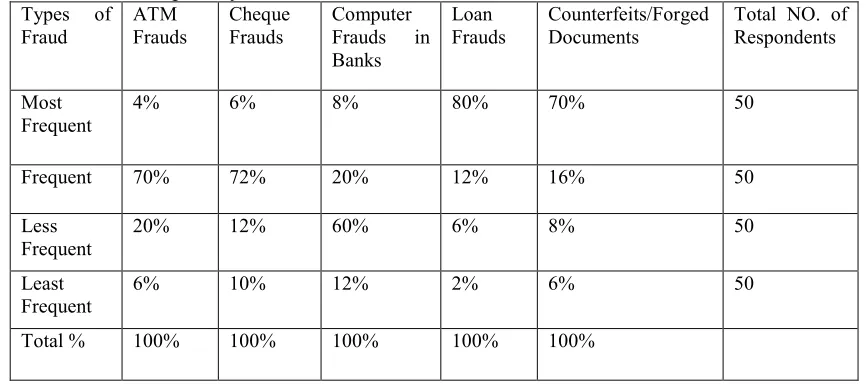
Table 1-Most Prevalent forms of Bank Frauds in India, according to the frequency of there occurrence in the past 5 years.
Types of
Fraud ATM Frauds Cheque Frauds Computer Frauds in Banks
Loan
Frauds Counterfeits/Forged Documents Total NO. of Respondents Most
Frequent 4% 6% 8% 80% 70% 50
Frequent 70% 72% 20% 12% 16% 50
Less
Frequent 20% 12% 60% 6% 8% 50
Least
Frequent 6% 10% 12% 2% 6% 50
Total % 100% 100% 100% 100% 100%
According to the 80% respondents (40 out of 50) Loan frauds are the most frequent type of Fraud in the Banking Sector. And also the respondents told that the ATM frauds and the Counterfeits that is use of
forged documents are also the frequent types of frauds in this sector. And Computer frauds in banks are the least frequent frauds occurring in this sector as per the respondents.
Table 2- Reason for increase in Bank Frauds cases
Reasons Hard to Detect Crime
Difficult to Investigate in the present scenario
Easy to multiply Money
Difficult to Trace offender
Total No. of Respondents
Very Important 6% 4% 80% 14% 50
Important 20% 30% 16% 50% 50
Less Important 52% 36% 4% 26% 50
Least
Important 22% 30% 0% 10% 50
Total % 100% 100% 100% 100%
80% (40 out of 50) of the respondents, easy to Multiply Money is the most important reason for the commencement of such crimes.50% (25 out of 50) of the respondents thinks that Difficult to trace the
offender is an important factor, followed by the less important reasons like Hard to detect crime and difficult to investigate in the present scenario.
International Journal of Research (IJR)
e-ISSN: 2348-6848, p- ISSN: 2348-795X Volume 2, Issue 2, Feb. 2015 Available at http://internationaljournalofresearch.org
Difficult to control such crimes across the boundaries (60%) and unemployment of youth (50%) are the two most important which are responsible for the increase in crime in this sector. And on the other side, according to the respondents Non-reporting of the Cases is the least important factor responsible for increase in such crimes.
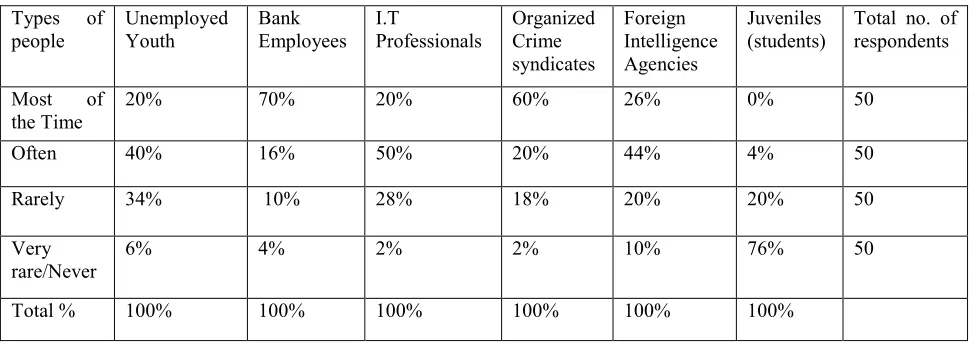
Table 4- Type of People involved. Types of
people
Unemployed Youth
Bank Employees
I.T
Professionals
Organized Crime syndicates
Foreign Intelligence Agencies
Juveniles (students)
Total no. of respondents Most of
the Time 20% 70% 20% 60% 26% 0% 50
Often 40% 16% 50% 20% 44% 4% 50
Rarely 34% 10% 28% 18% 20% 20% 50
Very
rare/Never 6% 4% 2% 2% 10% 76% 50
Total % 100% 100% 100% 100% 100% 100%
Usually the bank employees and organized crime syndicates are involved in such case and the juveniles or the students ate the rarely or are never involved in such fraud cases. Table 5- Reporting cases to the Police.
Factors Knowledge Regarding Information Technology
Greed or Sensation seeking behavior of Youth
Weak Law Enforcement agencies
Poor Knowledge of
Investigating officers regarding Law
Inadequate banking Law
Unemployment
of Youth Difficult to control crime across the boundaries
Non-reporting of Cases
Very Important
24% 36% 30% 20% 10% 50% 60% 10%
Important 56% 46% 36% 20% 40% 30% 20% 10%
Less Important
26% 10% 30% 40% 30% 10% 10% 20%
Least
Important 4% 8% 4% 20% 20% 10% 10% 60%
International Journal of Research (IJR)
e-ISSN: 2348-6848, p- ISSN: 2348-795X Volume 2, Issue 2, Feb. 2015 Available at http://internationaljournalofresearch.org
According to the responses given, 14% of people say that it is not mandatory on the part of the bank to report the cases to the
police, whereas on the other hand 86% of respondents says that it is mandatory to report the cases to the police.
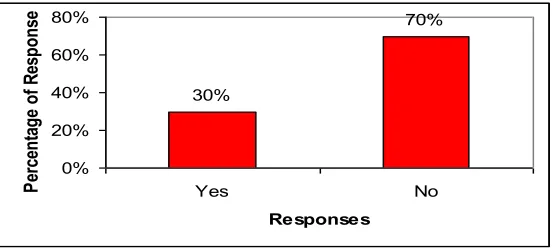
Table 6- Forensic Assistance.
30% of the respondents say that forensic experts do provide assistance in the bank frauds cases, on the other hand 70% of the
respondents told that forensic experts do not provide any assistance.
Table 7- Does your department have enough provisions to solve such cases?
70% of the respondents told that there departments have enough provisions to solve these cases, whereas 30% of the respondents told that there departments don’t have much provisions to solve such cases.
86%
14%
0% 20% 40% 60% 80% 100%
Yes No
Responses
P
er
ce
nt
ag
e
of
R
es
po
ns
es
30%
70%
0% 20% 40% 60% 80%
Yes No
Responses
P
er
ce
nt
ag
e
of
R
es
po
ns
e
70%
30%
0% 20% 40% 60% 80%
Yes No
Responses
Pe
rc
en
ta
ge
o
f
Re
sp
on
se
International Journal of Research (IJR)
e-ISSN: 2348-6848, p- ISSN: 2348-795X Volume 2, Issue 2, Feb. 2015 Available at http://internationaljournalofresearch.org
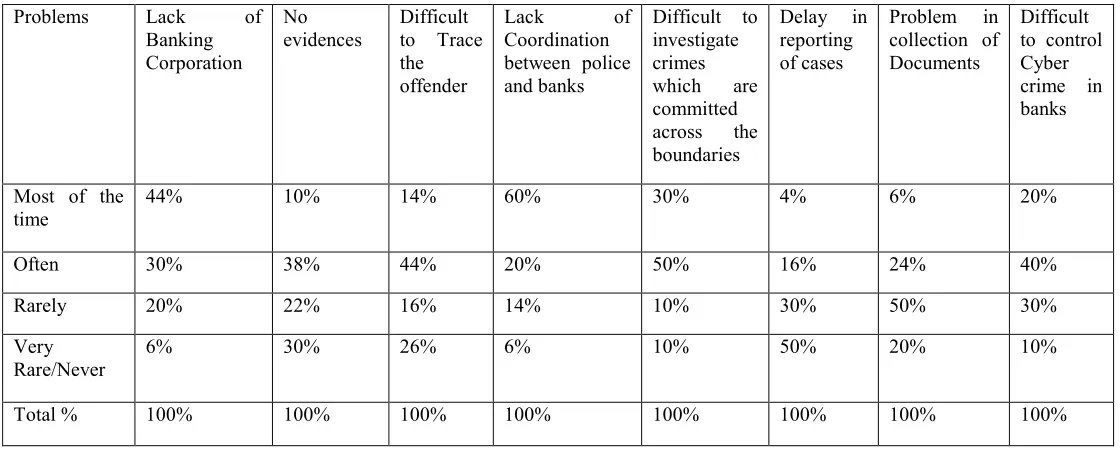
Table 8- Major problems that come across while investigating the Bank Frauds cases.
The biggest problem, as told by 60% of the respondents is the lack of coordination between banks and police and also the lack of corporation amongst the banks itself is a problem that come across most of the time. The problems like Difficult to investigate the crimes which are committed across the
boundaries and Difficult to trace the offender are also the problems which come across often while investigating the cases. And the problem which is least faced is Delay in reporting of cases as most of the cases are reported on time.
Table 9- Effectiveness of Police
According to the 70% of the respondents, police is effective enough to solve this type of cases, whereas 30% of the people think
that our police is not that effective enough to deal with such cases.
Table 10- Legal Framework regarding Bank Frauds Cases.
70%
30%
0% 20% 40% 60% 80%
Yes No
Responses
Pe
rc
en
ta
ge
o
f
Re
sp
on
de
nt
s
Problems Lack of Banking Corporation
No
evidences Difficult to Trace the offender
Lack of Coordination between police and banks
Difficult to investigate crimes which are committed across the boundaries
Delay in reporting of cases
Problem in collection of Documents
Difficult to control Cyber crime in banks
Most of the
time 44% 10% 14% 60% 30% 4% 6% 20%
Often 30% 38% 44% 20% 50% 16% 24% 40%
Rarely 20% 22% 16% 14% 10% 30% 50% 30%
Very Rare/Never
6% 30% 26% 6% 10% 50% 20% 10%
International Journal of Research (IJR)
e-ISSN: 2348-6848, p- ISSN: 2348-795X Volume 2, Issue 2, Feb. 2015 Available at http://internationaljournalofresearch.org
80% of the respondents were satisfied with the present legal framework in India, and
20% of the respondents were not satisfied with the present legal framework.
Table 11- Training of police in dealing with Bank Frauds Cases.
According to the respondents 50% of them think that our police is sufficiently trained to handle such cases, and on the other hand
50% of the respondents says that our police are required to be more trained.
Table 12- Police stations should have special police officers, for handling the cases of bank frauds 80%
20%
0% 20% 40% 60% 80% 100%
Yes No
Responses
Pe
rc
en
ta
ge
o
f
Re
sp
on
de
nt
s
50% 50%
0% 10% 20% 30% 40% 50% 60%
Yes No
Responses
P
er
ce
nt
ag
e
of
R
es
po
nd
en
ts
80%
20%
0% 20% 40% 60% 80% 100%
Yes No
Responses
P
er
ce
nt
ag
e
of
R
es
po
nd
en
International Journal of Research (IJR)
e-ISSN: 2348-6848, p- ISSN: 2348-795X Volume 2, Issue 2, Feb. 2015 Available at http://internationaljournalofresearch.org
80% of the respondents said that there should be an special police officer to handle such cases, whereas 20% said that there is no need to have an special police officer for handling of such cases.
Table 13- Police requires specialized training to handle such cases
90% of the respondents said that our police should get a specialized training for handling these non-traditional crimes, and 10% of the respondents say that there is no need to have any specialized training.
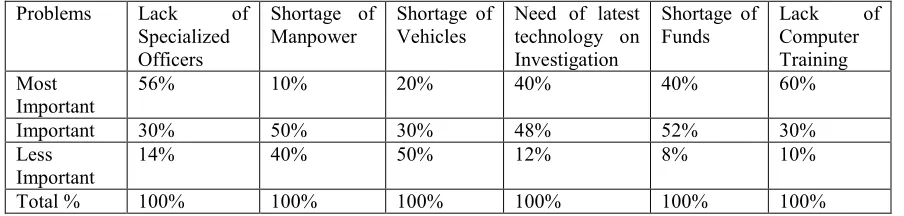
Table 14- Resources that police are short of in investigating the bank frauds cases. Problems Lack of
Specialized Officers
Shortage of
Manpower Shortage of Vehicles Need of latest technology on Investigation
Shortage of
Funds Lack Computer of Training Most
Important 56% 10% 20% 40% 40% 60%
Important 30% 50% 30% 48% 52% 30%
Less
Important 14% 40% 50% 12% 8% 10%
Total % 100% 100% 100% 100% 100% 100%
The above table indicates the resources police are short if in investigating bank frauds currently, to unearth organized crime syndicates. In this the most important problem according to the respondents is Lack of computer training and lack of specialized officers in this field. The other important problems are Lack of latest technology in investigation, and shortage of manpower.
Result and Discussion
In banks the Loan department is the most fraud prone area. As in this sector only the maximum number of frauds can be committed, by the use of false documents, or by showing the false property the loan fraud can be committed very easily. It can be said that along with the common Bank Frauds, like ATM frauds, Cheque frauds and use of Forged documents, the cyber crimes in banks like phishing, salami attacks, hacking etc. are the future of the bank frauds.
90%
10%
0% 20% 40% 60% 80% 100%
Yes No
Responses
P
er
ce
n
ta
g
e
o
f
R
es
p
o
n
d
en
International Journal of Research (IJR)
e-ISSN: 2348-6848, p- ISSN: 2348-795X Volume 2, Issue 2, Feb. 2015 Available at http://internationaljournalofresearch.org
The main reason for the increase in such Frauds is that they are easy to multiply money, there is huge and immediate benefit involved and it’s only the game of mind, no physical work is required in these frauds, and moreover it is sometimes difficult to trace the offenders of such cases and sometimes it is even difficult to detect the crime, if the crime is not reported in such cases, it is not detected. That’s why these types of frauds are increasing in the present scenario.
The factors which are responsible in such cases that is the influencing factors, the factors which attract the people towards these frauds are that they are quite difficult to control such crimes across the boundaries, that is the crimes which are committed with the help of computers, frauds like internet transactions, are very difficult to control, as no solid evidences are there to trace the offender. And also the unemployment of the youth is also the important factor, because of the increasing unemployment and race behind money young generation finds these types of ways quite easy to have immediate benefits, and to live their lives lavishly. Knowledge regarding Information Technology is another influencing factor towards this crime. As cyber world is the world without boundaries and the offender in this world always remains faceless, and moreover even the person having basic knowledge of computer can go away with it, that’s why the persons having knowledge of I.T finds it quite east to commit crimes like internet transactions, phishing etc. The other influencing factor is Greed sensation seeking behavior of youth, today these types of frauds are committed out of the greed of the people not out of the need. Other influencing factors include Weak law enforcement agencies, inadequate banking
law, and non-reporting of such cases which attracts the offender towards these sorts of crimes.
The type of people involved in such cases is also a big question, as crimes like murder, robbery, theft can be committed by any type of person but fraud like bank frauds cannot be committed by ay person, it needs some technical mind and the person who commits these crimes is literate one. In most of the cases, the insider that is the bank employees are involved, for bank employees frauds are more easy to commit because they know about each and every minute thing inside the banks that’s why they are more prone to commit these types of crimes. Organized crime syndicates are also involved in such cases on a large scale because almost all these crimes are committed in a planned way and a whole group is involved in these sorts of frauds. Other people who are involved in such cases include I.T. Professionals as keeping in mind the growing numbers of cyber crimes like phishing, salami attacks, internet transactions there is a huge chance of involvement of these people. Foreign Intelligence Agencies, and Unemployed youth and in some rare cases, the minimal chances of juveniles (students) involvement is also there.
International Journal of Research (IJR)
e-ISSN: 2348-6848, p- ISSN: 2348-795X Volume 2, Issue 2, Feb. 2015 Available at http://internationaljournalofresearch.org
taken by them. Most of the departments have enough provisions to tackle such cases, like they have expertise, and software to handle such cases.
Despite of having enough provisions our investigating agencies is facing lots of problems in investigating the bank frauds cases. The major problems that come across while investigating these cases is lack of coordination between police and banks, and also lack of corporation among the banks itself. In every bank fraud case, proper coordination is required between the bank and the police, because bank is the body which has all the relevant information regarding the fraud, and police is the investigating unit. The problems in collection of documents relating to fraud from bank is a very common problem faced by police, and lethargies of the police in dealing with the cases is the general problem that is faced by all the banks, and also there is not much corporation amongst the banks themselves, that is, the banks can share the modus operandi with each other whenever a fraud occur, to prevent it from the occurring in the future with some other bank. When it comes to problem in investigation, the crimes which are committed across the borders are very difficult to investigate, and it is even more difficult to trace the offender of such cases, because there are not many evidences available in these cases. With the emerging technologies, the crime is also changing its face, the cyber crimes like phishing, hacking, internet transaction, salami attacks are the future of Bank Frauds, as they are very difficult to control, and also difficult to investigate. And there are some minor problems like delay in reporting of cases (especially in those in which the insider is involved) and sometimes even the case is not reported, for the sake of
reputation of the banks, in this the fraud always remains covered and is never investigated because it is not reported. Our police are effective to deal with the cases of bank frauds in India, and we have the satisfying legal framework to deal with such cases and there are RBI guidelines available for the banks to deal with the fraud cases. But on the same hand our police are not sufficiently trained and there is an utmost requirement of having special police officers to deal more effectively with such cases.
And there are resources which police requires to stop this menace of Bank Frauds, resources like manpower, Computer training, funds for the purpose of investigation, latest technologies/software for investigation purpose, vehicles and also the specialized officers to deal with these crimes only.
Conclusion
A Haitian proverb says “the fish trust the water and it is in the water the fish is cooked” the efforts then must be sensitive to the environment, analyze logically and bring to bear creative imagination so that we are ahead of the criminals. Bank Frauds are the creations of professional criminals, desperate customers, and dishonest bankers. Most of the time they are committed through forged documents, computers etc. Today’s bank frauds are most serious in dimensions and more sophisticated in their method. Usually, it is less expensive to prevent fraud than to detect it. Fraud prevention should take precedence over detection. Internal controls alone don’t prevent frauds, fraud prevention measures include adequate tools, proper training, and work environment that values honesty.
International Journal of Research (IJR)
e-ISSN: 2348-6848, p- ISSN: 2348-795X Volume 2, Issue 2, Feb. 2015 Available at http://internationaljournalofresearch.org
committed in the past, being committed in the present and will be committed in the future. It is difficult to foresee a situation in which there are no frauds, as long as human greed persists, frauds will continue to haunt banks. As long as opportunities are available to make easy money, the creative brains would make attempts to cash on it. Crimes on the net need readily different enforcement solution, effective law for tackling them. What is needed is a constant evaluation of systems/procedures for their adequacy and ruthless adherence to it, supported by deterrent punishment for lapses/negligence.
References
[1.]Abadinsky, H. (1981). Organized crime. Boston, Mass.: Allyn and Bacon.
[2.]Anderson, R. E. (1981). Bank security. Boston: Butterworth.
[3.]Ashu, K., & Arora, B. (2009). A study to investigate the reasons for bank frauds and the implementation of preventive security controls in Indian banking industry.
International Journal of Business Science and Applied Management, 4(3), 1-21.
[4.]Cao, L., & Sun, I. Y. (2013).
Handbook of Chinese Criminology. Hoboken: Taylor and Francis.
[5.]da Rocha, B. C., & de Sousa Junior, R. T. (2010). Identifying Bank Frauds Using CRISP-DM And Decision Trees. International Journal of Computer Science and Information Technology, 2(5),
162-169.
[6.]Cheng, H., & Ma, L. (2009). White collar crime and the criminal justice system: Government response to bank fraud and corruption in China.
Journal of Financial Crime, 16(2), 166-179.
[7.]F, M., & P, T. (1997). counterfeiting credit cards. The British Journal of Criminology, 37(2), 165-183.
[8.]Marshall, K. D. (1985). Bank security (2nd ed.). Rolling Meadows, Ill.: Bank Administration Institute.
[9.]Mativat, F., & Tremblay, P. (1997).
COUNTERFEITING CREDIT
CARDS: Displacement Effects, Suitable Offenders and Crime Wave Patterns. British Journal of Criminology, 37(2), 165-183.
[10.] Nair, P. M. (2002).
Combating organised crime. Delhi: Konark Publishers.
[11.] Obokata, T. (2010).
Transnational organised crime in international law. Oxford: Hart Pub..
[12.] Pai, S., & Venkatesh, M. (2014, January 30). Frauds ripped public sector banks of Rs. 23,000 crore. Hindustan Times, p. 2.
[13.] Parker, J. (2003). Bank frauds — beating the system.
Computer Fraud & Security,
2003(11), 4-5.
International Journal of Research (IJR)
e-ISSN: 2348-6848, p- ISSN: 2348-795X Volume 2, Issue 2, Feb. 2015 Available at http://internationaljournalofresearch.org
(2010). Annual Report
[15.] Reserve Bank of India (2011). Annual Report
[16.] Reserve Bank of India (2012). Annual Report
[17.] Rezaee, Z., & Burton, E. J. (1997). Forensic accounting education: insights from academicians and certified fraud examiner practitioners. Managerial Auditing Journal, 12(9), 479-489.
[18.] Sakoda, C. (2008). Visualization and GUI for discovery of patterns from test log data of credit card frauds. Journal of the Visualization Society of Japan, 28-1(1), 57-57.
[19.] Sharma, B. R. (2009). Bank frauds: prevention & detection, including computer & credit cards crimes (3rd ed.). Delhi: Universal Law Pub. Co.
[20.] Tr.V, R. (2008). Fraud prone areas in internet banking. criminal investigation department review,
VI(1), 45-52.
[21.] Wilson, R. (2006).
Understanding the