Classroom Performance of Students with
an Acquired Brain Injury: The Impact of Aide Programs
Ruth Tesselaar
BAppSci(DisStuds), Grad.Dip.Psych
Submitted in partial fulfilment of the requirements of the degree of
Doctor of Psychology (Clinical Neuropsychology)
School of Social Sciences and Psychology
Victoria University, Melbourne, Australia
ABSTRACT
A number of studies have examined the behavioural and academic difficulties that follow paediatric Acquired Brain Injury (ABI) and made recommendations that
students with an ABI be provided with an aide program. However, there is a lack of studies that have been carried out to examine the outcomes of the implementation of
aide programs in the paediatric ABI population. The current study investigated the impact of aide programs on eight students (aged nine to fifteen years) with an ABI.
In addition, the current study also investigated factors that were found to promote positive outcomes of aide programs. Measures used included: direct observation;
interviews with the students, parents, teachers and aides; and neuropsychological tests including the BRIEF, CAFT, TEA-Ch, and WISC-IV Digit Span subtest. The
data were analysed descriptively using both qualitative and quantitative techniques. Results demonstrated that the provision of an aide program resulted in a decrease in negative behaviours in the classroom and an increase in students‟ access to the
curriculum. In addition to three frequently discussed factors (including individual assessments of students‟ cognitive profile, the provision of education and support to
teaching staff on the impact of ABI), additional factors important to the outcome of aide programs were raised. These factors included aides having an adequate
knowledge of the curriculum, aides being able to provide support through a positive helping style, and awareness of the students‟ need to fit-in. A model to promote
positive outcomes of aide programs for students with an ABI was then proposed based on these six factors. This model suggested that these six factors fall into one
of two stages required for the provision of aide programs with positive outcomes. The factors in stage one are those that require consideration during preparation for the implementation of an aide program. The factors in stage two require
consideration during service delivery of an aide program (i.e. in the classroom).
Consideration of both stages was found to lead to positive outcomes of aide programs, with an absence of either stage found to lead to negative outcomes of aide programs for students with an ABI.
DECLARATION
I, Ruth Tesselaar, declare that the Doctor of Psychology (Clinical Neuropsychology) thesis entitled “Classroom Performance of Students with an Acquired Brain Injury: The Impact of Aide Programs” is no more than 40,000 words in length including
quotes and exclusive of tables, figures, appendices, bibliography, references and footnotes. This thesis contains no material that has been submitted previously, in
whole or in part, for the award of any other academic degree or diploma. Except where otherwise indicated, this thesis is my own work.
ACKNOWLEDGEMENTS
I would like to acknowledge the contributions of the following people without whose help and guidance this thesis may never have reached completion:
My participants: the students, parents, aides, and teachers. Thankyou for letting me
into your homes, schools, and workplaces. Without your willingness to contribute none of this would have been possible.
My dear friend Cathy Bucolo for being the one to nurture and encourage my interest
in paediatric ABI in the early days of my career.
A fellow researcher, Margaret Mealings, for willingly sharing her time for a
brainstorming session back in 2006 that helped shape this thesis.
Genevieve McMahon for her patience and interest in reading every word of my literature review numerous times over, and for her feedback and assistance with
redirecting me when I felt lost in the middle of thousands of words
My supervisor, Dr. Gerard Kennedy, for somehow always having faith that I would complete my thesis. Especially when I had none.
My family and friends for supporting me in numerous ways, and for allowing me the
time to complete my thesis. I am now available to spend as much time with you all as I want!
TABLE OF CONTENTS
LIST OF FIGURES ... viii
LIST OF TABLES ... ix
LIST OF APPENDICES ... x
CHAPTER ONE: INTRODUCTION ... 11
1.1. Paediatric Acquired Brain Injury ... 12
1.1.1. Incidence of paediatric ABI ... 12
1.1.2. Paediatric ABI in the education system ... 13
1.2. Sequelae of Paediatric ABI ... 15
1.2.1. Physical, sensory, and psychosocial sequelae ... 15
1.2.2. Cognitive sequelae ... 16
1.2.2.1. Attention ... 18
1.2.2.2. Memory ... 20
1.2.2.3. Speed of information processing ... 22
1.2.2.4. Executive Functions ... 24
1.3. Return to School Following Paediatric ABI ... 26
1.3.1. Academic outcomes ... 27
1.3.2. Classroom performance ... 30
1.4. Educational Interventions ... 32
1.4.1. Assessment of need ... 33
1.4.2. Communication and knowledge ... 35
1.4.3. Teaching strategies ... 38
1.4.4. Implications for future research ... 41
1.5. Aides ... 42
1.6. Summary and Rationale for Current Study ... 46
1.6.1. Aims and hypotheses ... 47
CHAPTER TWO: METHOD ... 48
2.1. Participants ... 48
2.2. Materials ... 48
2.2.1. Cognitive test battery... 48
2.2.2. Semi-structured interviews ... 53
2.2.3. Observational measures ... 54
2.3. Procedure ... 54
2.3.2. Procedure ... 55
2.4. Preparation of Data for Analysis ... 57
2.5. Data Analysis ... 58
2.5.1. Quantitative data ... 58
2.5.2. Qualitative data ... 59
CHAPTER THREE: RESULTS ... 60
3.1. Demographic characteristics of the participants ... 60
3.2. Correlation between neuropsychological measures and observed negative behaviours ... 61
3.2.1. Measures of attention ... 61
3.2.2. Measures of memory... 62
3.2.3. Measures of speed of information processing ... 63
3.2.4. Measures of executive functioning ... 63
3.3. Behaviours and Interventions ... 65
3.3.1. Observed behaviours and associated interventions ... 65
3.3.2. Impact of aide presence on the continuation of observed behaviours 67 3.4. Knowledge and Support of Teaching Staff ... 68
3.4.1. Knowledge of Teaching Staff... 68
3.4.2. Support for Teaching Staff ... 70
3.5. The Impact of Aide Programs ... 72
3.5.1. Quantitative data on the impact of the aide program ... 72
3.5.2. Impact of knowledge and support on student outcomes ... 72
3.5.3. Qualitative data from parents on the impact of the aide program ... 73
3.5.4. Qualitative data from students on the impact of the aide program ... 74
CHAPTER FOUR: DISCUSSION ... 77
4.1. Cognitive Performance and Classroom Behaviours ... 77
4.1.1. Attention ... 78
4.1.2. Memory ... 79
4.1.3. Speed of Information Processing ... 81
4.1.4. Executive Functions ... 82
4.1.5. Implications for future research ... 84
4.2. Impact of Aide Programs on Classroom Performance ... 85
4.2.1. Targeted interventions ... 85
4.2.2. Decrease in negative behaviours ... 88
4.2.4. Perceptions of students and parents ... 90
4.2.5. Implications for practice ... 91
4.3. Factors Leading to Positive Outcomes ... 91
4.3.1. Knowledge ... 92
4.3.1.1. Knowledge of the curriculum... 95
4.3.2. Support ... 96
4.3.3. Helping style ... 98
4.3.4. Implications for practice ... 100
4.4. Conclusions and Future Directions ... 101
REFERENCES ... 104
LIST OF FIGURES
Figure 3.1: Mean number of occurrences of observed behaviours and interventions provided across all four cognitive domains (n=6). ... 66
Figure 3.2: Mean numbers of teaching strategies provided by the teacher and aide (n=8). ... 67
Figure 3.3: Mean number of observed behaviours which initially occurred and mean number of behaviours which continued for more than one five-minute
segment of the observation period when an aide was present and not (n=6). ... 67
Figure 3.4: Count of teacher and aide self ratings of level of knowledge around students with an ABI. ... 68
Figure 3.5: Count of teacher and aide self ratings of support received to work with the student with an ABI. ... 70
Figure 3.6: Mean ratings of teachers and aide‟s in regards to the current level of support provided to them, and if they require extra supports. ... 71
Figure 3.7: Parent, teacher, and aide ratings of how well they think the aide program is meeting the needs of the student. ... 72
LIST OF TABLES
Table 1.1: Examples of how cognitive impairments commonly manifest as negative
behaviours in the classroom ... 31
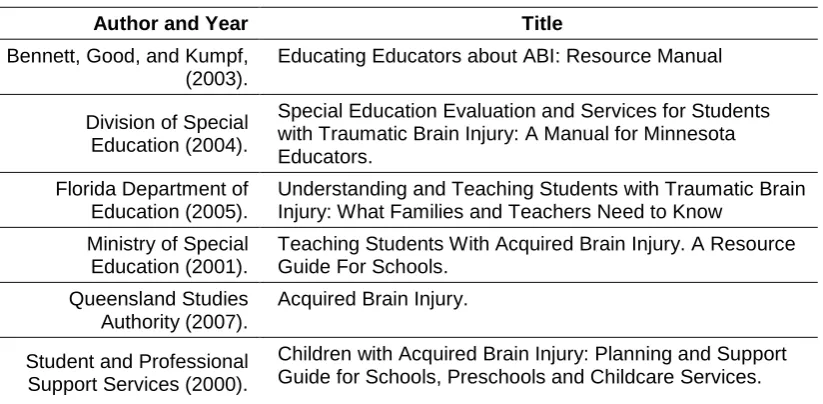
Table 1.2: Examples of freely available resources on supporting students with an ABI... 36
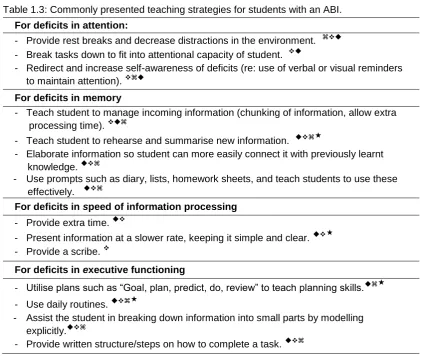
Table 1.3: Commonly presented teaching strategies for students with an ABI. ... 39
Table 2.1: Score conversion table ... 57
Table 2.2: Pre-determined categories for data analysis ... 59
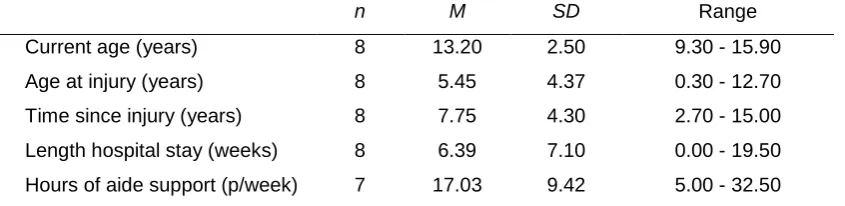
Table 3.1: Demographic and educational characteristics of participants. ... 60
Table 3.2: Number of data sets collected for each procedure. ... 61
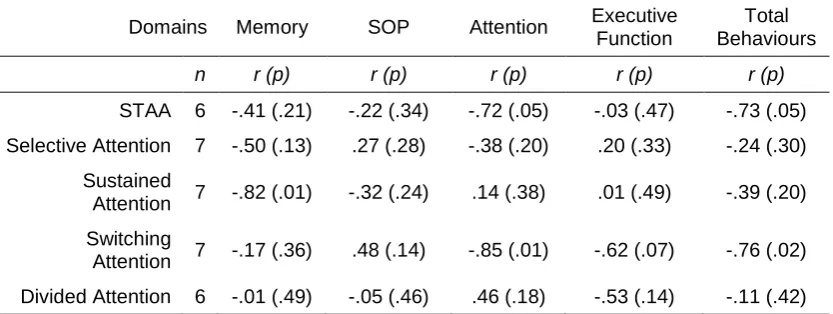
Table 3.3: Correlations between formal measures of attention performance and number of observed behaviours (one-tailed). ... 62
Table 3.4: Correlations between formal measures of memory performance and number of observed behaviours (one-tailed). ... 62
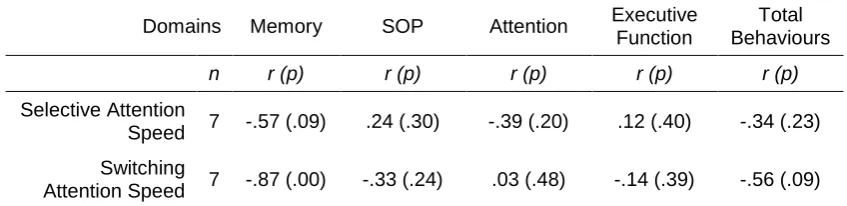
Table 3.5: Correlations between formal measures of SOP performance and number of observed behaviours (one-tailed). ... 63
Table 3.6: Correlations between formal measures of EF performance and number of observed behaviours (one-tailed). ... 64
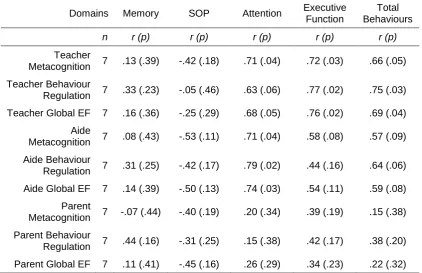
Table 3.7: Correlations between the BRIEF Teacher and Parents forms and number of observed behaviours (one-tailed). ... 64
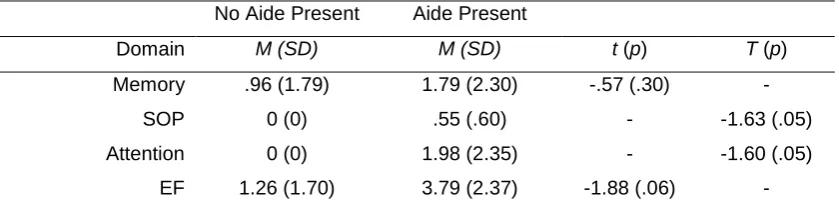
Table 3.8: Paired samples t-test and Wilcoxon signed ranks test results for difference between the number of targeted interventions provided (one-tailed) (n=6). . 66
LIST OF APPENDICES
Appendix 1: Recruitment advertisement ...118
Appendix 2: CAFT administration instructions ...121
Appendix 3: Semi-structured interviews ...123
Appendix 4: Observational reference table ...133
Appendix 5: Observational chart...135
Appendix 6: Ethics approval ...137
Appendix 7: Participant information sheets and informed consent ...139
CHAPTER ONE: INTRODUCTION
Paediatric acquired brain injury (ABI) from either traumatic or non-traumatic causes
are thought to affect over 20,000 children in Australia (Australian Institute of Health and Welfare [AIHW], 2006a). The sequelae following paediatric ABI can include
deficits in physical, sensory, and cognitive abilities. The most common of these cognitive deficits include difficulties with attention, speed of information processing,
memory, and executive functioning (V. Anderson, Catroppa, Morse, Haritou, & Rosenfeld, 2005; V. Anderson, Smibert, Ekert, & Godber, 1994; Butler et al., 2008;
Fay et al., 2009; Levin & Hanten, 2005; Prigatano, Gray, & Gale, 2008; Yeates et al., 2005). Given these cognitive deficits children with an ABI have been found to
experience academic difficulties and difficulties with their classroom performance (D'Amato & Rothlisberg, 1996; Silver, 2000; Stavinoha, 2005). Numerous
educational strategies have been proposed to assist teaching staff who work with students with an ABI. To support teachers in the implementation of these educational strategies many schools utilise an aide to work directly with the student
with an ABI (Sohlberg, Todis, & Glang, 1998; Walker & Wicks, 2005). Ideally, the role of the aide is to help the student with an ABI access the curriculum by providing
them with assistance on the cognitive aspects of tasks (Walker & Wicks, 2005).
While the provision of aide programs are generally regarded as being beneficial (Semrud-Clikeman, 2001; Sterling, 1994; Stewart-Scott & Douglas, 1998), there has
been a paucity of research specifically examining the impact of aide programs on students with an ABI (Glang, Singer, Cooley, & Tish, 1991; Hall, McClannahan, &
Krantz, 1995; Stewart-Scott & Douglas, 1998). Given this gap in the literature, the current study will explore the outcomes of the provision of an aide program for students with an ABI. This research into aide programs will allow examination of the
numerous variables which are likely to impact on outcomes for students with an ABI. This information can then be used to assist education departments and rehabilitation
providers with policy development and service provision for students with an ABI.
The following chapter will begin with an in-depth discussion on the cognitive sequelae following paediatric ABI. The impact of these cognitive sequelae on the
school performance of students with an ABI will then be reviewed. Subsequently, the current literature on educational interventions for students with an ABI will be
highlighted. Finally, there will be a thorough examination of the limited literature on
the provision of aide programs for students with an ABI.
1.1. Paediatric Acquired Brain Injury
In Australia the term ABI has been defined as an injury to the brain which is acquired after birth and “results in deterioration in cognitive, physical, emotional or independent functioning” (Department of Human Services and Health, 1994, as cited
in Fortune & Wen, 1999, p. xii). The term ABI can refer to traumatic injuries such as those sustained by physical trauma to the head (e.g., fall, motor vehicle accident,
assault, etc.), or non-traumatic injuries (e.g., stroke, brain tumours, infection, hypoxia, etc.) (AIHW, 2006b; Fortune & Wen, 1999). In keeping with this Australian definition
of ABI, this literature review includes information on both traumatic brain injuries (TBI) and non-traumatic brain injuries.
1.1.1. Incidence of paediatric ABI
Despite there being a substantial body of research investigating the incidence and
prevalence of paediatric ABI, inconsistencies in the categorisation of ABI make it difficult to obtain accurate figures (Fortune & Wen, 1999). For example, a mild ABI
may be classified as a concussion, while a severe ABI may be labelled as a skull fracture (Fortune & Wen, 1999). Given this lack of consistency and other limitations
in obtaining accurate figures (see Fortune and Wen (1999) for a detailed discussion), it is not surprising that rates of ABI show a high level of variability. In Australia alone,
the incidence rates of ABI have been reported to range from 134 to 1,920 per 100,000 (Fortune & Wen, 1999). Fortune and Wen (1999) also noted that the actual
rates of ABI are generally considered to be substantially higher than those estimated.
In light of the above mentioned difficulties, the Australian Bureau of Statistics
cautiously estimated that there were 28,000 children with an ABI related disability in Australia in 2003 (AIHW, 2006a). The most common cause of ABI in children and
young people was reported to be from traumatic injuries followed by brain tumour, then stroke (AIHW, 2007; Australian Paediatric Cancer Registry, 2009; National
Stroke Foundation, Royal Children's Hospital, & Strokidz, 2009). The incidence of TBI has been found to vary according to gender and age, with males being twice as
likely as females to sustain a TBI (AIHW, 2007; Fortune & Wen, 1999). In Australia in 1996-1997, the reported incidence rate of TBI in children ranged from 199 to 285
19 year olds (285 per 100,000), followed by those aged up to four years (244 per
100,000), and lowest for five to 14 years olds (199 per 100,000) (Fortune & Wen, 1999).
The second most common cause of paediatric ABI was brain tumours. The
Australian Paediatric Cancer registry stated that in 2006 the incidence of discrete central nervous system tumours in children aged zero to 14 years was 3.37 per
100,000 (Australian Paediatric Cancer Registry, 2009). This incidence rate included both benign and malignant tumours and excluded spinal cord tumours and tumours
from Acute Lymphoblastic Leukaemia (Australian Paediatric Cancer Registry, 2009). Stroke was the third most common cause of paediatric ABI. While stroke is
acknowledged as a major cause of disability in children (Mackey & Gordon, 2007), the incidence rate of stroke is much lower when compared to the incidence of traumatic injuries. A recent information booklet stated that the incidence of paediatric
stroke was two per 100,000, (National Stroke Foundation, Royal Children's Hospital, & Strokidz, 2009).
In addition to traumatic events, brain tumour, and stroke, there are other less
frequent causes of paediatric ABI. These include hypoxia (such as from near drowning), viral meningitis, encephalitis, and substance abuse (Fortune & Wen,
1999). Unfortunately, there is no published data on the incidence or prevalence of paediatric ABI from these causes.
1.1.2. Paediatric ABI in the education system
Another large gap in the literature on the incidence and prevalence of paediatric ABI is found in the lack of published statistics on students with an ABI within the Australian education system. While the AIHW reported that 97% of children with a
disability aged between five years and 14 years were attending school, no breakdown of numbers by disability type was provided (AIHW, 2006b). However,
based on this information, as well as data on the ABI prevalence for children under the age of 15 (AIHW, 2006a), we could assume that there are approximately 22,116
children with an ABI currently in the Australian education system.
The only published report that has collected data on the number of students with an ABI in Australian schools is by Sterling (1994). Sterling conducted a survey in four
a total of 90 students with an ABI who were known to the educational system. After comparing these numbers with hospital records of admissions for paediatric ABI in
the two states, Sterling (1994) noted that children with an ABI were under-recognised within the educational system. This finding is consistent with literature from Canada,
the United Kingdom (UK), and the United States of America (USA) which have all reported that students are under-recognised in the education system (Agency for
Health Care Policy and Research, 1999; Hawley, Ward, Magnay, & Mychalkiw, 2004; Zinga, Bennett, Good, & Kumpf, 2005).
Two of the main reasons cited for this under-recognition of ABI within educational systems include ABI being a “hidden disability” and mislabelling of students. ABI is frequently described as being a “hidden disability” as people with an ABI often lack
physical signs and deficits by which their ABI could be overtly identified (AIHW,
2007). Without any overt physical markers of an ABI, there is often a lack of connection between an ABI that occurred earlier in life and current difficulties with
school performance and behaviour (Bennett, Good, Zinga, & Kumpf, 2004; Petit-Zeman, 2002). Indeed, a recent UK study of 67 students with an ABI found that one-
third had teachers who were unaware of their ABI (Hawley et al., 2004). This lack of awareness of an ABI may result in students being seen as difficult when they display
disruptive classroom behaviours, rather than being provided with the required cognitive supports (Hawley, 2005).
In addition to ABI being a hidden disability, mislabelling of students with an ABI can
also contribute to the under-representation of students with an ABI in educational systems. Within the Australian state of Victoria, and in many Canadian provinces and territories, ABI is not a category under which education support services can be
applied for (Department of Education and Early Childhood Development, 2009; Zinga et al., 2005). Without an identified category, students with an ABI may be
mislabelled (unintentionally or out of necessity) to fit into one of the recognised categories (i.e., Severe Behaviour Disorder) so as to access required education
supports (Zinga et al., 2005). Thus, given the difficulty in identifing ABI in schools combined with mislabelling of students with an ABI to access educational supports it
1.2. Sequelae of Paediatric ABI
The sequelae following a paediatric ABI, from either traumatic or non-traumatic
causes, can lead to a wide array of persisting difficulties in numerous areas including sensory, physical, psychosocial, and cognitive changes (V. Anderson, Catroppa,
Haritou, Morse, & Rosenfeld, 2005b; Blom et al., 2003; Dickman, MacPhail, & Popp, 2001; Ness et al., 2005).
A dose-response relationship is often reported between severity of injury and
physical and cognitive outcomes (V. Anderson, Catroppa, Morse, Haritou, & Rosenfeld, 2000; Fay et al., 2009). The British Society of Rehabilitation Medicine
(1998) defines a TBI as being severe when there has been a loss of consciousness (LOC) for more than six hours, and an initial Glasgow Coma Scale (GCS) between three and eight. An injury is seen as moderate when the LOC was longer than fifteen
minutes, and the GCS was between nine and twelve. Lastly, an injury is defined as
mild when the LOC was for less than fifteen minutes, with an initial GCS of between thirteen and fifteen (British Society of Rehabilitation Medicine; 1998).
While severity of injury categorisation does not apply to non-traumatic brain injuries, a dose-response relationship has similarly been noted between some of the medical
treatment options for brain tumours and cognitive outcomes (Palmer, Reddick, & Gajjar, 2007). Medical treatment options for paediatric brain tumour can include a
combination of surgical resection of tumours, chemotherapy (e.g., methotrexate), and/or cranial irradiation therapy (CRT) (Mulhern & Butler, 2004). Persistent
cognitive deficits are frequently found in children treated with CRT when compared to treatment with chemotherapy (Butler, & Copeland, 2002; Copeland, deMoor, Moore,
& Ater, 1999; Mabbott et al., 2005).
1.2.1. Physical, sensory, and psychosocial sequelae
Sensory difficulties following paediatric ABI are commonly reported and can include changes in sight, hearing, touch, smell, and taste (Dickman et al., 2001; Walker &
Wicks, 2005). The extent of physical limitations following paediatric ABI has been found to range widely. Physical limitation can include fatigue, minor weakness and
clumsiness in a limb, tremor, paralysis, ataxia, aphasia, and seizures (Blom et al., 2003; De Schryver, Kappelle, Jennekens-Schinkel, & Peters, 2000; Dickman et al.,
Psychosocial outcomes, such as increased behavioural problems, poorer social
interactions, and poorer quality of life, are also found to occur following paediatric ABI (Hooper et al., 2004; Limond, Dorris, & McMillan, 2009; Upton & Eiser, 2006). In
particular, behavioural problems such as hyperactivity and conduct problems are commonly reported (Hooper et al., 2004; Fay et al., 2009). Longitudinal studies of up
to five years post-injury have shown that behavioural problems in children with an ABI may increase over time (Catroppa, Anderson, Morse, Haritou, & Rosenfeld,
2008; Gerber et al., 2008; Yeates & Taylor, 2006). Variables which have been found to impact on the psychosocial outcomes following paediatric ABI include cognitive
deficits in the areas of executive functioning and attention, severity of injury, family functioning, and the child‟s pre-injury level of behavioural problems (Catroppa et al.,
2008; Kinsella, Ong, & Murtagh, 1999; Levin & Hanten, 2005; Limond et al., 2009; Nadebaum, Anderson, & Catroppa, 2007; Yeates et al., 2005).
1.2.2. Cognitive sequelae
The cognitive sequelae following paediatric ABI has been extensively researched
and documented over many decades. Recent literature suggests that while the cognitive sequelae following paediatric ABI are highly variable, there are also
common tendencies in the cognitive outcomes (Butler et al., 2008; Hurvitz, Warschausky, Berg, & Tsai, 2004; Ylvisaker et al., 2001). These common
tendencies include deficits in the domains of attention, concentration, speed of information processing, memory, and executive functions (V. Anderson, Catroppa,
Morse et al., 2005; V. Anderson et al., 1994; Butler et al., 2008; Fay et al., 2009; Levin & Hanten, 2005; Prigatano et al., 2008; Yeates et al., 2005; Ylvisaker et al.,
2005). Given that brain injuries in children generally occur before or during their schooling, the cognitive sequelae are likely to impact on their school performance (V. Anderson, Catroppa, Morse, & Haritou, 1999; Bennett et al., 2004; Block, Nanson, &
Lowry, 1999; Catroppa & Anderson, 2002; DePompei, 2005; Palmer et al., 2007)
Discussions of the variables that impact on the cognitive sequelae following paediatric ABI initially began with investigations and debate into the principles of
brain plasticity versus an early vulnerability (Hebb 1942; Kennard 1938). The principle of brain plasticity proposed that the developing brain of infants and children
has elements of plasticity (Kennard, 1938). This then allows for intact cortical areas to assume the function of damaged cortical areas in the event of an insult to the brain
demonstrate better recovery following brain injury in comparison with adults. In
contrast, the early vulnerability hypothesis proposed that brain development occurs in an important hierarchical sequence (Hebb, 1949). Therefore, it was assumed that
any early insult to the brain would disrupt sequential development and result in difficulties with the acquisition of later developing skills (Hebb, 1949). Thus, the early
vulnerability hypothesis proposed that the developing brain was more vulnerable to injury than the adult brain (Hebb, 1942).
In accordance with the early vulnerability hypothesis, recent research has found that
those aspects of cognitive functions which are currently emerging at the time of injury, or are yet to emerge, are the most vulnerable to impairment following
paediatric ABI (V. Anderson, Catroppa, Morse et al., 2005; Taylor & Alden, 1997). Longitudinal studies also report poorer long-term outcomes for children who sustained an ABI at a younger age in comparison to children who were older at the
time of injury (V. Anderson et al., 2000; Ganesan et al., 2000; Levine, Kraus, Alexander, Suriyakham, & Huttenlocher, 2005). The reason suggested poorer
long-term outcomes in children who were younger at the time if injury is two-fold. Firstly, early injury and disruption of the sequential development of cognitive skills is likely to
disrupt later developing skills (V. Anderson, Catroppa, Haritou, Morse, & Rosenfeld, 2005a). Given the lengthy developmental trajectory of cognitive skills,deficits in later
developing cognitive areas may only become apparent in the longer term as the child fails to meet age appropriate developmental milestones (Chapman, 2006).
Secondly, disruption of cognitive development is likely to lead to difficulties in acquiring skills and knowledge at the same pace as non-injured peers (V. Anderson,
Catroppa, Haritou et al., 2005a; Johnson, Thomas-Stonell, Rumney, & Oddson, 2006). Thus, over the longer term there is likely to be an ever increasing gap between children with an ABI and their peers. This concept of deficits emerging over
time as children fail to develop at an age appropriate rate has been described as „growing into the disability‟ (Ylvisaker, & DeBonis, 2000).
In addition to the variable of age at injury, other factors have also been identified as
influencing the nature and extent of cognitive sequelae following paediatric ABI. These factors include injury related factors (e.g., severity of injury, focal or diffuse
brain injuries, and location of injury), treatment related factors (e.g., duration and type of treatment), and patient related factors (e.g., time since injury, pre-injury levels of
In the following sections the impact of these factors on the cognitive outcomes following paediatric ABI will be discussed. This review will focus on the cognitive
sequelae in the domains of attention, speed of information processing, memory, and executive functioning, as deficits in these areas are often implicated in school
performance following paediatric ABI (V. Anderson, Catroppa, Morse et al., 2005; Blosser & DePompei, 2003; Cohen, 1991; DePompei, 2005).
1.2.2.1. Attention
Deficits in attention are commonly seen following paediatric ABI (Penkman, 2004).
Attention is a multifaceted construct which can be subdivided into at least four aspects including; sustained attention (the ability to maintain attention over time), selective attention (the ability to filter out irrelevant stimuli while focusing on more
salient information), divided attention (the ability to multi-task or to focus on
information presented simultaneously), and Switching Attention (the ability to shift attentional focus) (V. Anderson, Catroppa, Morse et al., 2005; Heaton et al., 2001; Yeates et al., 2005). The variables of age at injury, severity of injury, treatment
factors, and pre-existing attention problems have all been noted as impacting on the outcome of attention abilities following paediatric ABI (V. Anderson, Catroppa, Morse
et al., 2005; Butler & Copeland, 2002; Nadebaum et al., 2007; Yeates et al., 2005).
With regard to the variable of age at injury, research has demonstrated that children who acquire injuries at a younger age are more likely to have poorer outcomes in the
domain of attention (V. Anderson, Catroppa, Morse et al., 2005; Max et al., 2004). The aspects of attention which are developing at the time of injury, or are yet to
develop, are seen as most vulnerable to injury (Nadebaum et al., 2007). For example, selective attention is thought to develop fully by the age of six years (V. Anderson, Catroppa, Morse et al., 2005), while sustained attention abilities are
thought to be constant throughout early childhood with significant development occurring from the age of 11 years (McKay, Halperin, Schwartz, & Sharma, 1994).
Given these developmental trajectories it follows that children who have an ABI at or before the age of five years are more likely to have deficits in selective attention in
comparison to children who are older at the time of injury (V. Anderson, Catroppa, Morse et al., 2005; Nadebaum et al., 2007). As sustained attention has a later
a child „growing into their disability‟) (V. Anderson, Catroppa, Morse et al., 2005; V.
Anderson, Fenwick, Manly, & Robertson, 1998; Catroppa & Anderson, 2003).
Not all findings are explained by the age at injury and the developmental trajectory of attention. Another variable which has also been found to strongly influence
outcomes in traumatic head injuries is the severity of the brain injury. A dose-response relationship between injury severity and attention outcomes has been
noted, with larger deficits in attention found in children who sustained a more severe TBI (V. Anderson, Catroppa, Morse et al., 2005; V. Anderson et al., 1998; Nadebaum
et al., 2007; Yeates et al., 2005). For example, Yeates et al. (2005) followed 82 children who sustained a severe or moderate TBI when they were between the ages
of six and twelve years. Despite these injuries occurring after the age at which selective attention is thought to be fully developed, significant deficits in selective attention abilities were found at four years post-injury (Yeates et al., 2005). Children
with severe injuries were found to perform more poorly than those with moderate injuries (Yeates et al., 2005).
Similar to the severity of injury, treatment of children with brain tumours with CRT has
also been commonly associated with persisting attention problems, in particular sustained attention deficits, regardless of age at injury (Butler & Copeland, 2002;
Mabbott et al., 2005; Mulhern & Butler, 2004). A study by Copeland, deMoor, Moore, and Ater (1999), found that children with brain tumours who were treated with a
combination of surgery and CRT displayed persistent deficits in attention. In contrast, children treated with surgery and methotrexate (chemotherapy) displayed
mean attention performances within the average range for their age (Copeland et al., 1999).
In addition to the above mentioned variables, pre-injury attention problems have also been found to predict attention outcomes post paediatric ABI (V. Anderson,
Catroppa, Morse et al., 2005; Yeates et al., 2005). However, higher reports of pre-injury attention problems have only been found to predict a greater number of parent
reported post-injury attention problems (V. Anderson, Catroppa, Morse et al., 2005; Yeates et al., 2005). In comparison, the factors of age at injury, severity of injury,
Thus, it can be concluded that there are numerous variables which are likely to
impact on attention outcomes following paediatric ABI. While the above variables have all been discussed separately, interactions between these variables are likely
(e.g., a child may be younger than the age of six at the time of injury, sustain a severe injury, and have pre-existing behavioural difficulties). Consequently,
individual combinations of factors can result in highly individualised outcomes following a paediatric ABI.
These attention difficulties following paediatric ABI have been suggested to underlie
some of the academic and behavioural difficulties observed at school (V. Anderson, Catroppa, Morse et al., 2005). Commonly reported negative behaviours in the
classroom following deficits in attention include: difficulties with persisting on tasks, problems completing activities, difficulty maintaining concentration, poor listening, and inattentive behaviour (V. Anderson, Catroppa, Morse et al., 2005; V. Anderson et
al., 1998; Block et al, 1999). Thus, when investigating the impact of an educational intervention for students with an ABI, the number of negative behaviours in the
classroom due to deficits in attention should be included in the outcome measures.
1.2.2.2. Memory
Memory is commonly discussed as two separate domains; visual memory and verbal memory. While the development of visual memory occurs early in life, verbal
memory continues to develop throughout adolescence (Catroppa & Anderson, 2002). It is thought that the developmental gains seen in verbal memory are due to
age-related improvements in executive functions (i.e., enhanced organisation and use of strategies in the encoding, storage, and retrieval of information), rather than an
increase in memory capacity per se (Arroyos-Jurado et al., 2006; Wright & Limond, 2004). In addition to the interaction seen between executive functions and memory performance, attention abilities have also been shown to be strongly related to
memory (Cowan, 1995). In particular, selective attention is seen to play a large role in the processes of encoding and retrieving verbal information (Cowan, 1995).
Research into memory difficulties following paediatric ABI has typically focused on
the domain of verbal memory (Catroppa & Anderson, 2002; Reeves et al., 2006). This focus on verbal memory abilities may reflect our cultural emphasis on language
visual memory are commonly reported (Arroyos-Jurado, Paulsen, Ehly, & Max, 2006;
Block et al., 1999; Mulhern et al., 2004; Reeves et al., 2006). Deficits in verbal memory following paediatric ABI are consistently noted across studies of children
with either traumatic or non-traumatic injuries (Arroyos-Jurado et al., 2006; Block et al., 1999; Mulhern et al., 2004). These deficits have been found in the acute stages
of injury (Catroppa & Anderson, 2002) and also in the longer term (up to at least eight years post-injury) (Arroyos-Jurado et al., 2006). Interestingly, despite the
hypothesised lateralisation of language abilities, deficits in verbal memory have been found in children and young people following unilateral stroke, regardless of which
hemisphere the stroke occurred in (Block et al., 1999).
The strongest predictors of verbal memory outcomes following paediatric ABI include severity of injury and the type and strength of treatments (Arroyos-Jurado et al., 2006; Catroppa & Anderson, 2002; Mulhern et al., 2004). For children who have
sustained a TBI, there is commonly a dose-response relationship between injury severity and verbal memory outcomes (Catroppa & Anderson, 2002). Findings from
a longitudinal study also reported that at six to eight years post paediatric ABI, severity of injury remained the best predictor of verbal memory outcomes
(Arroyos-Jurado et al., 2006). For children who have sustained a brain tumour, poorer verbal memory outcomes are most highly correlated with larger doses of CRT (Mulhern et
al., 2004). Thus, severity of injury and strength of CRT dose appear to be the best predictors of verbal memory outcomes following paediatric ABI.
The interaction between age at injury and the developmental trajectory of memory is
also observed to influence outcomes following paediatric ABI, with the early development of visual memory thought to be the reason behind its apparent resilience to the impact of paediatric ABI (Catroppa & Anderson, 2002). In contrast,
the later establishment of the verbal memory system makes it more vulnerable to disruption following an early brain insult, with evidence of the late emergence of
verbal memory deficits highlighted throughout the literature (V. Anderson et al., 1999; Block et al., 1999; Catroppa & Anderson, 2002; Mulhern et al., 2004).
Thus, persistent verbal memory deficits are commonly found following a childhood
ABI regardless of type of injury (traumatic or non-traumatic) or time since injury (Arroyos-Jurado et al., 2006; Mulhern et al., 2004). A large proportion of school
et al., 1999; Catroppa & Anderson, 2002). Consistent with this notion, Kinsella et al.
(1995) found that poorer verbal learning performance predicted an increase in the level of educational supports received by children following an ABI. Some of the
negative behaviours in the classroom noted to arise from deficits in the memory domain include students being unable to follow task directions, and difficulties with
the learning and retaining of new information (Blosser & DePompei, 2003; Dickman et al., 2001; Keyser-Marcus et al., 2002). Given the strong relationship between
memory and attention it may be difficult to accurately separate out the underlying cause of specific negative classroom behaviours.
1.2.2.3. Speed of information processing
Deficits in speed of information processing (SOP) are commonly noted following paediatric TBI, stroke, and brain tumour (Block et al., 1999; Nadebaum et al., 2007;
Pavlovic et al., 2006; Stargatt, Rosenfeld, Maixner, & Ashley, 2007). The
developmental process of SOP is postulated to continue throughout childhood and adolescence until the age of at least 15 years (Hale, 1990). As a result of this ongoing development throughout childhood, a younger age at injury has been found
to be a strong predictor of poorer SOP outcomes following paediatric ABI (V. Anderson, Catroppa, Haritou et al., 2005a; Palmer et al., 2009). Specifically, poorer
outcomes in the recovery and development of SOP have been observed in children whose ABI occurred or was diagnosed before the age of seven (V. Anderson,
Catroppa, Haritou et al., 2005a; Palmer et al., 2009).
Along with age at injury, severity of injury has also been correlated to poorer SOP outcomes in children who sustained a TBI (V. Anderson, Catroppa, Haritou et al.,
2005a; Nadebaum et al., 2007; Prigatano et al., 2008). Most commonly, it is only those children who have sustained a severe head injury who have been found to perform below age expected levels on SOP tasks, while the performance of those
with mild and moderate injuries tends to remain comparable to controls (V. Anderson, Catroppa, Haritou et al., 2005a; V. Anderson, Catroppa, Morse et al., 2005).
However, more recent research has begun to demonstrate decreases in the SOP of children who have sustained mild or moderate injuries (Prigatano et al., 2008). The
study by Prigatano et al. (2008) differed from previous studies as, in addition to group means, they also examined individual SOP scores. Consistent with previous
range. However, when they examined scores on an individual basis, they found that
22% of children with mild injuries and 40% of children with moderate injuries demonstrated relative SOP difficulties. This finding by Prigatano et al. (2008)
provides clear support to a dose-response relationship between injury severity and SOP performance.
For children with brain tumours greater SOP deficits have been correlated with
increased doses of CRT (Stargatt et al., 2007). Indeed SOP is thought to be one of the first deficits to appear following CRT treatment for brain tumours (Palmer et al.,
2009). Despite this initial strong reaction following CRT treatment Palmer et al. (2009) also found that over a four year period it was the factor of being diagnosed
with a brain tumour before the age of seven and not strength of CRT treatment which predicted poorer SOP outcomes. Given that the majority of studies which investigate the impact of CRT and cognitive functioning have not separated out age at diagnosis
as a variable (e.g., Stargatt et al., 2007) limitations with these results are noted.
Similar to the relationship between memory and attention, SOP abilities are seen to have important implications for other cognitive processes including language
processing, attention, and memory (Block et al., 1999; Mandalis, Kinsella, Ong, & Anderson, 2007; Rose, Feldman, & Jankowski, 2002). For example, in a recent
article on working memory following TBI, Mandalis et al. (2007) noted that a reduction in information processing speed may subsequently impact on an individual‟s memory span capacity. Mandalis et al. (2007) also acknowledged the
difficulty in separating out these two cognitive functions. Given this, SOP has been
put forward as one of the core cognitive functions which underlie the process of learning and retention of new information (Mulhern & Butler, 2004; Wright & Limond, 2004).
As a consequence of reduced SOP, students with an ABI may exhibit secondary
deficits, such as being unable to keep pace with the presentation of information in a classroom, poor recall of verbally presented information, and difficulties with
formulating responses in the allocated time (DePompei, 2005; Mandalis et al., 2007; Palmer et al., 2007). Therefore, SOP deficits following paediatric ABI are likely to
1.2.2.4. Executive Functions
The term Executive Functions (EF) incorporates numerous higher order cognitive
skills including problem solving, planning, goal setting, initiation, organisation, flexibility, self-monitoring, inhibition, self-regulation, and working memory (Levin &
Hanten, 2005; Ylvisaker & Feeney, 2002). The development of EF begins from a young age and continues into early adulthood, with differing periods of gradual
development and rapid age-related improvements noted for the various aspects of EF (Levin & Hanten, 2005). Working memory is one of the first EF abilities to
emerge, and shows a period of large developmental gains between the ages of four and eight years, followed by continued development until 11 years of age (Levin &
Hanten, 2005). In comparison, inhibition is proposed to show improvements between the ages of three and seven years, while skills in planning and self-monitoring are evident by age four and continue to demonstrate improvements throughout
adolescence (Levin & Hanten, 2005). The process of development of some
executive functions has been reported to continue into early adulthood (Ewing-Cobbs, Prasad, Landry, Kramer, & DeLeon, 2004).
Given that EF continue to develop up to the third decade of life these functions are particularly vulnerable to insults during childhood and adolescence (Muscara,
Catroppa, & Anderson, 2008; Slomine et al., 2002). However, unlike other cognitive functions, the variable of younger age at injury has not been found to consistently
predict poorer overall EF outcomes (Taylor & Alden, 1997). This is likely to be due to the many varied developmental trajectories of EF, resulting in specific EF
components being more vulnerable to injury at different ages (Muscara et al., 2008; Taylor & Alden, 1997). For example, Slomine and colleagues (2002) found that on
measures of set shifting and idea generation, children aged around seven years old at the time of injury performed more poorly than children aged 13 to 15 years at the time of injury. In contrast, Conklin, Salorio, and Slomine (2008) found that on a
working memory task, the children who were older at the time of injury performed more poorly on age scaled scores than younger children.
A variable that has been found to strongly predict EF outcomes following a paediatric
TBI is the severity of injury (Babikian & Asarnow, 2009; Nademaum et al., 2007). In a recent study, Nadebaum and colleagues (2007) examined EF outcomes in 54
more poorly compared with controls on tasks of cognitive flexibility and on parent
ratings of executive functioning. On a goal setting task, the severe group performed significantly more poorly than the controls as well as children with mild or moderate
injuries. From their analysis, Nadebaum et al. (2007) concluded that while a number of variables were found to predict EF outcomes following paediatric ABI, severity of
injury was the most consistent predictive factor. This finding was supported by a recent meta-analysis conducted by Babikian and Asarnow (2009) who concluded
there was a dose-response relationship between severity of injury and EF outcomes following a paediatric ABI.
In studies which have examined the combination of both age at injury and severity of
injury on EF, a strong interaction between these two variables has been noted (V. Anderson, Catroppa, Haritou et al., 2005a; Nadebaum et al., 2007; Slomine et al., 2002). Those children who sustain severe injuries at a younger age are consistently
reported to have the poorest EF outcomes in the paediatric ABI population (V. Anderson, Catroppa, Haritou et al., 2005a; Nadebaum et al., 2007; Slomine et al., 2002). The term “double-hazard” has been used to describe the poor outcomes
associated with both low age and severe injuries (V. Anderson, Catroppa, Haritou et
al., 2005a).
For children diagnosed with a brain tumour, EF outcomes are often related to the type of treatments provided, with treatment with CRT often associated with increased
risk of deficits (Copeland et al., 1999). Copeland et al. (1999) examined the EF outcomes in children diagnosed with a posterior fossa tumour before the age of three
years. All of the 21 children in the sample had received surgery to remove the tumour and were tested at more than one year post diagnosis. Seven participants had received whole brain CRT at least six months before their cognitive assessment,
while the remaining 14 had not. When EF performance between these two groups were compared Copeland and her colleagues found that the group who had received
CRT performed at the below average range while the no-CRT group remained within the average range. While there was no statistical significance between these two
results, the authors noted that this was likely to be due to the small sample size.
Following their above results, Copeland et al. (1999) then conducted a growth-curve analysis based on the 15 children in their study who had received at least two
would remain within the average range over the longer term, while the age scaled EF
scores of those treated with CRT would decline into the impaired range over time. The difference between these two groups on the growth-curve model was statistically
significant (Copeland et al., 1999).
These results of a predicted decline in age scaled EF scores over time for children treated with CRT are consistent with a more recent growth-curve analysis by
Spiegler, Bouffet, Greenberg, Rutka, and Mabbott (2004). These authors followed 34 children with a posterior fossa tumour who had been treated with CRT. The average
age at diagnosis was 6.08 years (SD = 2.73 years), and the average follow-up time was approximately five years post-diagnosis (range = 1.33 to 15.25 years). Based
on repeat assessments, Spiegler et al. (2004) estimated a one standard deviation decline in age scaled scores every five years post-diagnosis in the EF areas of problem solving and verbal fluency. Given the young age of the children at
diagnosis, the observed declines in age scaled EF scores over time are likely to be a function of children failing to keep up with their peers in the continued development of
EF rather than an actual decline in abilities.
From the consistent reports of deficits in EF in children with an ABI, it follows that EF deficits are commonly reported in the school performance of these children. An
ecological assessment tool of EF, the BRIEF (Behaviour Rating Inventory of Executive Function) is based on teacher and parent reports. The BRIEF provides
numerous examples of how EF deficits may manifest as negative behaviours in the classroom. Some examples from the BRIEF include “Resists accepting a different way to solve a problem with schoolwork” and “Does not bring home homework, assignment sheets, materials, and so on” (Gioia, Isquith, Guy, & Kenworthy, 2000).
Other frequently noted manifestations of EF deficits for students with an ABI include
difficulty beginning tasks, poor monitoring of behaviour, and a disorganised approach to tasks (Bennett et al., 2004; Blosser & DePompei, 2003; Tyler & Grandinette,
2003). Given the impact of EF deficits in the classroom, it will be important to include EF as an outcome measure when examining the impact of educational supports for
students with an ABI.
1.3. Return to School Following Paediatric ABI
school at some stage following injury (Deidrick & Farmer, 2005), no quantitative
information is provided. There are many factors which have also been found to influence the school performance of students with an ABI. These factors include the
variability in outcome due to cognitive sequelae, severity of injury (Catroppa & Anderson, 1999; Ewing-Cobbs et al., 2006; Fay et al., 2009), dose of treatment
received (Barrera, Shaw, Speechley, Maunsell, & Pogany, 2005; Lorenzi et al., 2009; Mitby et al., 2003), age at injury (D'Amato & Rothlisberg, 1996; Ewing-Cobbs, Barnes
et al., 2004), pre-existing school difficulties (Arroyos-Jurado et al., 2006; Miller & Donders, 2003; Yeates et al., 2005), and family functioning (Taylor et al., 2002;
Yeates et al., 2002).
Success in returning to school is often measured by academic outcomes and classroom performance. Academic outcomes are defined as the results of learning and retaining new information (Walker & Wicks, 2005). Common measures of
academic outcomes include single word reading, spelling, and arithmetic abilities (Walker & Wicks, 2005). In comparison, classroom performance is measured
through observed behaviours such as paying attention, planning and organisation of tasks, and being able to work independently (Bennett, Good, & Kumpf, 2003).
As discussed above, in addition to IQ, the cognitive skills of attention, memory, SOP,
and EF have all been found to underlie the performance of academic outcomes and classroom performance. Thus, as deficits these areas are commonly associated with
paediatric ABI, it is not surprising that difficulties in the academic outcomes and classroom performance of students with an ABI are often reported (Arroyos-Jurado &
Savage, 2008; Catroppa & Anderson, 2006; De Schryver et al., 2000; Hurvitz et al., 2004; Upton & Eiser, 2006).
1.3.1. Academic outcomes
When the academic performance of students with an ABI is compared with their
non-injured peers, deficits are commonly found in outcome measures such as single word reading, spelling, and arithmetic (Catroppa et al., 2008; Ewing-Cobbs, Barnes et al.,
2004; Palmer et al., 2007; Upton & Eiser, 2006). The recovery trajectory of these academic abilities indicates initial improvement in the first six months following injury,
followed by stabilisation over the next 18 months (Catroppa & Anderson, 1999; Ewing-Cobbs et al., 1998; Taylor et al., 2002). Investigations of academic outcome
longer term, with evidence of increasing deficits also noted over time in some studies
(Ewing-Cobbs, Barnes et al., 2004; Ewing-Cobbs et al., 2006; Hawley, 2003; Palmer et al., 2007; Taylor et al., 2002).
This pattern of persistent and increasing deficits was clearly highlighted in a recent
longitudinal study by von Hoff et al. (2008). von Hoff and colleagues (2008) examined the reading performance of 12 children with brain tumours who were
treated with both surgery and local irradiation. They found that all 12 children had a reading age which lagged behind their chronological age by one to five years. Of the
eight children whose reading performance were then re-examined over time this lag continued to increase over time with students falling further behind age-expected
levels (von Hoff et al., 2008). In another longitudinal study, Fay et al. (2009) followed the academic abilities of 109 children with moderate and severe traumatic brain injuries for up to five years post-injury. They found that between 16% and 27% of
participants in their study exhibited persistent academic deficits in the areas of reading, writing, and arithmetic. Consistent with von Hoff et al. (2008), Fay et al.
(2009) also noted an increasing deterioration in age-normed academic scores over time.
This phenomenon of increasing deficits in academic outcomes is consistent with the
proposal that children with an ABI are likely to grow into their disability over time. That is, while some academic deficits may be apparent from the time of school
re-entry, others may only appear or increase over the long-term as students with an ABI fail to keep up with the expected rate of skill acquisition (Catroppa & Anderson, 1999;
Ewing-Cobbs et al., 1998; von Hoff et al., 2008). Increases in deficits may also appear over time as information established prior to injury becomes less relevant for the student, and assessments begin to measure more sophisticated levels of
knowledge (Kinsella et al., 1995).
Unlike the plentiful research on academic outcomes following TBI and brain tumours, there is a distinct lack of research which examines academic outcomes following
paediatric stroke. This lack of research perhaps reflects the lower incidence of paediatric stroke when compared with traumatic brain injuries and brain tumours.
One study which did briefly examine academic outcomes was by De Schryver et al. (2000). While not specifically measuring performance on academic tasks, they noted
some point following stroke. Thus, indicating that following a paediatric stroke, these
children are also likely to experience some level of academic difficulties.
Despite consistent findings of deficits in the academic abilities of children with paediatric ABI, in comparison to their non-injured peers many authors noted that test
scores on academic assessments remained within the average range (Catroppa et al., 2008; Deidrick & Farmer, 2005; Cobbs et al., 2006). For example,
Ewing-Cobbs et al. (2006) examined the academic outcomes of 23 children with moderate and severe brain injuries for an average of 5.7 years post-injury. Statistically
significant group differences were noted when the mean academic scores of students with an ABI were compared with their non-injured peers. Despite this statistically
significant difference between groups the average academic scores for children with an ABI remained within the average range. In contrast with their finding of academic scores within the average range, Ewing-Cobbs et al. (2006) noted that nearly 50% of
the students with an ABI had either failed a school grade and/or had received special educational interventions.
This discrepancy between academic outcomes and overall performance was also
found in a larger longitudinal study by Ewing-Cobbs, Barnes et al. (2004). In their study, Ewing-Cobbs and colleagues (2004) examined the school outcomes of 77
children with a mild to moderate or severe ABI. Along with academic measures of reading, spelling, and arithmetic, Ewing-Cobbs, Barnes et al. (2004) also examined
classroom performance through the use of parent ratings on the Child Behaviour Checklist (CBC) academic competence score. The CBC academic competence
score includes questions on special education services received, failings of any grade, and the presence of any other school problems. The results of their study demonstrated that while the majority of the academic scores remained within the
average range, parent ratings of classroom performance were low. The classroom performance scores for the severe group were reported to be more than one
standard deviation below the mean (Ewing-Cobbs, Barnes et al., 2004). The authors concluded that academic outcome scores within the average range did not predict
average outcomes in classroom performance.
Given these findings of academic abilities within the average range in combination with poor ratings of classroom performance, the ecological validity of using academic
Feeney, 1998). The reason for this discrepancy may be that these measures of
academic ability do not tap the underlying cognitive skills required for competency in school performance (Ewing-Cobbs, Barnes et al., 2004). Given this discrepancy
between testing and real-world performance, many authors state that assessments of academic abilities alone will not provide an ecological assessment of the school
performance of students with an ABI (Deidrick & Farmer, 2005; Gioia & Isquith, 2004; Perrott et al., 1991; Silver, 2000; Taylor, 2004; Ylvisaker & Feeney, 1998). Thus,
examination of the classroom performance of students with an ABI also merits examination.
1.3.2. Classroom performance
Low ratings of classroom performance are consistently reported in children who have
sustained a TBI, brain tumour, or stroke (D. Anderson et al., 2001; Armstrong, Blumberg, & Toledano, 1999; Catroppa et al., 2008; Deidrick & Farmer, 2005; Ewing-Cobbs, Barnes et al., 2004; Hogan, Kirkham, & Isaacs, 2000; Lahteenmaki et al.,
2007; Upton & Eiser, 2006). This poor classroom performance is often operationalised as a large number of behaviour problems, and/or a decrease in
adaptive behaviour within the classroom setting. The most commonly noted negative behaviours in the classroom setting following an ABI include: running out of time to
complete work, inability to follow directions, difficulties remembering information from week to week, difficulties in organising self and resources required for each class,
speaking out and interrupting the class, asking for repetitions of instructions, and poor interactions with peers (Deidrick & Farmer, 2005; DePompei, 2005; Taylor et al.,
2003).
These negative behaviours are often seen as manifestations of the cognitive sequelae following ABI, which include deficits in areas of attention, speed of processing, memory, and executive functioning. Examples of how these cognitive
impairments commonly manifest as poor classroom performance are provided in numerous reference guides and education manuals on paediatric ABI (e.g., Bennett
et al., 2003; Blosser & DePompei, 2003; Cohen, 1991; Conklin et al., 2008; DePompei, 2005; Dickman et al., 2001; Hawley, 2005; Keyser-Marcus et al., 2002;
Kinsella et al., 1997; Levin & Hanten, 2005; Miller & Donders, 2003; Palmer et al., 2007; Reeves et al., 2006; Roncadin, Guger, Archibald, Barnes, & Dennis, 2004;
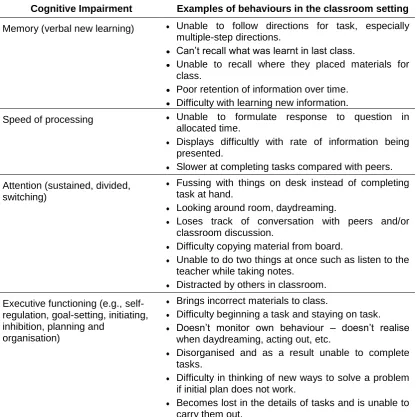
While the examples listed in Table 1.1 are succinct examples of how deficits in each
cognitive domain may manifest, it is important to note that the performance of each cognitive domain does not occur in isolation, and that strong relationships and/or
interactions exist between cognitive domains (Bennett et al., 2003). For example, given that attention plays a large role in memory functions (Cowan, 1995), a deficit in
attention abilities may manifest as negative behaviours due to memory deficits. Similarly, deficits in memory may manifest as poor planning and organisation if the
student displays difficulties remembering the required materials for each class.
Table 1.1: Examples of how cognitive impairments commonly manifest as negative behaviours in the classroom
Cognitive Impairment Examples of behaviours in the classroom setting
Memory (verbal new learning) Unable to follow directions for task, especially multiple-step directions.
Can‟t recall what was learnt in last class.
Unable to recall where they placed materials for class.
Poor retention of information over time. Difficulty with learning new information.
Speed of processing Unable to formulate response to question in allocated time.
Displays difficultly with rate of information being presented.
Slower at completing tasks compared with peers. Attention (sustained, divided,
switching)
Fussing with things on desk instead of completing task at hand.
Looking around room, daydreaming.
Loses track of conversation with peers and/or classroom discussion.
Difficulty copying material from board.
Unable to do two things at once such as listen to the teacher while taking notes.
Distracted by others in classroom. Executive functioning (e.g.,
self-regulation, goal-setting, initiating, inhibition, planning and
organisation)
Brings incorrect materials to class.
Difficulty beginning a task and staying on task. Doesn‟t monitor own behaviour – doesn‟t realise when daydreaming, acting out, etc.
Disorganised and as a result unable to complete tasks.
Difficulty in thinking of new ways to solve a problem if initial plan does not work.
Becomes lost in the details of tasks and is unable to carry them out.
More frequent instances of poor classroom performance following an ABI have often
been found to predict higher levels of educational assistance received by students with an ABI (Ewing-Cobbs, Barnes et al., 2004; Kinsella et al., 1995; Taylor et al.,
2003). In an Australian study, Kinsella et al. (1995) found that of the 51 students with an ABI included in the sample eight students received either part-time or full-time
educational assistance at one year post-injury. Kinsella et al. (1995) found that it was poorer scores on the teacher report form of the Child Behaviour Checklist (which
provided measures of school performance, adaptive functioning, and negative behaviours) and not formal academic measures, which predicted this change in
educational supports at one year post-injury.
A more recent study by Taylor et al. (2003) also found that it was a higher number of negative behaviours which was positively correlated with the provision of educational assistance. Ylvisaker, Hartwick, Ross, and Nussbaum (1994) postulated that
behavioural problems often prove more difficult for schools than academic difficulties. If schools do indeed find behaviour problems difficult to manage, this may explain
why a higher number of supports are often found in conjunction with a higher number of negative behaviours. Thus, as negative behaviours are seen to be an area of
concern for schools, it will be important to examine what impact any educational intervention has on these behaviours.
1.4. Educational Interventions
For the return to school to be successful for students with an ABI, they are likely to
require educational interventions. These interventions have been found to be required during the initial transition back to school as well as in the longer term to
assist students with an ABI to access the curriculum and to address their cognitive skill deficits (V. Anderson & Moore, 1995; Deidrick & Farmer, 2005; Ewing-Cobbs, Barnes et al., 2004; Ylvisaker & Feeney, 1998).
As many students return to school within a year post-injury, the return to school is
often seen as a continuation of the rehabilitation process, similar to the process of return to work for adults following ABI (Bowen, 2005; Dise-Lewis, Lewis, & Reichardt,
2009; Leigh & Miles, 2006; Petit-Zeman, 2002; Rey-Casserly & Meadows, 2008; Savage, DePompei, Tyler, & Lash, 2005). Congruent with this expectation of