Mechatronics based Video Surveillance System
J. Pavan Kumar Dr. R. Uday Kumar
Assistant Professor Associate Professor
Department of Mechanical Engineering Department of Mechanical Engineering Mahatma Gandhi Institute of Technology, Gandipet, Mahatma Gandhi Institute of Technology, Gandipet,
Hyderabad. 500075. Telangana. India Hyderabad. 500075. Telangana. India
Abstract
Surveillance is the monitoring of the behaviour, activities, or other changing information, usually of people for the purpose of influencing, managing, directing, or protecting them. This can include observation from a distance by means of electronic equipment such as CCTV, cameras, or interception of electronically transmitted information such as Internet traffic or phone calls and it can include simple, relatively no- or low-technology methods such as human intelligence agents and postal interception. In the Mechatronics based surveillance system, the Robot-video is aim to use in the situation like natural calamities, to inspect and navigate from remote location and collect the video without wires. It Just by throwing from window the ball can send the images inside the room and also can navigate the video ball from one room to another room to look for people. This is perfect for changeable lighting conditions. High-resolution security cameras have additional light sensors on their digital chips. This includes augment the effective image quality. These cameras are effectual only with high-resolution monitors. Small in size and Simpler to setup. The Wireless digital cameras give sharper effects. In video ball the encoders are given as an input and the decoders are the output. The images are transferred to the monitor by the surveillance system. The system is always controlled by the remote operated by human. The program is given to the system it transmits by the transmitter and the monitor receive the images by receiver.
Keywords: Mechatronics, Video surveillance system, Video ball, Microcontroller
________________________________________________________________________________________________________
I. INTRODUCTION
Video surveillance has received a great attention as extremely active application-oriented research areas in computer vision, artificial intelligence, and image processing. The early use of monitoring system was the tube camera that deployed to broadcast and monitor the industrial processing in the 1930s and 1940s [1-2].In recent decades, expansion in video surveillance systems lead to inspire evolution in various prominent domains of technology and science such as homeland security [3, 4]. Crime prevention through indoor and outdoor monitoring [5], accident detection, traffic monitoring, controlling and traffic flow analysis, airborne traffic management, maritime traffic control [6-8]. Video ball can added to counting moving object pedestrians, vehicles, human behavior understanding Motion detection, activity analysis, identification, tracking, and classification of vehicles, peoples, and any object of interest. There is also a growing demand for applications to support monitoring indoor and outdoor environments like parking lots, shopping mall, airport, train station and so on due to the development, availability, and low price of processors and sensors [9-12]. Thus, research in video surveillance systems are multidisciplinary field associated to image analyzing and processing, pattern recognition, signal processing, embedded computing, and communication. A video security surveillance technology has been developed from the existing passive technology which simply recoding facilities and passers to intelligent technology to recognize situations in real time and respond by itself. Currently, the intelligent video security surveillance systems are largely divided into system through image analysis and system based on location recognition applied to ubiquitous sensor network technology [13-18]. The location recognition technology has been so far studied and developed mainly with single interesting object for tracking human and things, mobile asset management, security and etc. Such location recognition technology provides accuracy in interior space within two to three meters without obstacles, but with obstacles, larger range of error is appeared, thus research for recognition of more accurate interior location has conducted. Not only that, interest in location recognition of multiple objects in environment is increased, not in environment with single object location recognition. The requirement to get valid images is very important at the video security surveillance system. Thus, research in video surveillance systems are multidisciplinary field associated to image analyzing and processing, pattern recognition, signal processing, embedded computing, and communication [19-20]. The abstract architecture of video surveillance systems are used to develop the classification framework with the purpose of classifying extracted articles in this review. The proposed classification consists of these six layers: user interaction layer, application layer, communication layer, processing layer and network infrastructure layer.
II. METHODOLOGY
(IJSTE/ Volume 2 / Issue 10 / 164)
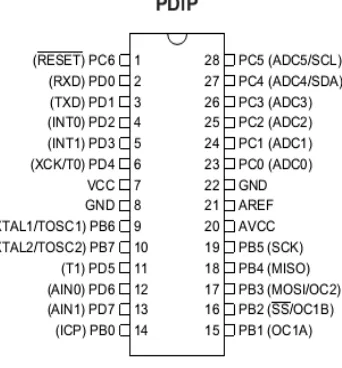
activity. Mechatronics, Micro controller, Power Electronics, Digital Transmission and reception, Video transmission technologies are used. In this present system consist of Atmega 8 microcontroller, 4MHz crystal, HT12E (Encoder), HT12D (Decoder), L293D motor driver, IRFZ44N, RF Modules (receiver and transmitter), 12V DC motors, Video Camera. The ATmega8 micro controller is the main part of entire system. The ATmega8 is a low-power CMOS 8-bit microcontroller based on the AVR RISC architecture. By executing powerful instructions in a single clock cycle, the ATmega8achieves throughputs approaching 1 MIPS per MHz, allowing the system designed to optimize power consumption versus processing speed. The AVR core combines a rich instruction set with 32 general purpose working registers. All the 32 registers are directly connected to the Arithmetic Logic Unit (ALU), allowing two independent registers to be accessed in one single instruction executed in one clock cycle. The resulting architecture is more code efficient while achieving throughputs up to ten times faster than conventional CISC microcontrollers. The ATmega8 provides the following features: 8K bytes of In-System Programmable Flash with Read-While-Write capabilities, 512 bytes of EEPROM, 1K byte of SRAM, 23 general purpose I/O lines, 32 general purpose working registers, three flexible Timer/Counters with compare modes, internal and external interrupts, a serial programmable USART, a byte oriented Two-wire Serial Interface, a 6-channel ADC (eight channels in TQFP and MLF packages) where four (six) channels have 10-bit accuracy and two channels are in idle position. The ADC Noise Reduction mode stops the CPU and all I/O modules except asynchronous timer and ADC, to minimize switching noise during ADC conversions. In Standby mode, the crystal/resonator Oscillator is running while the rest of the device is sleeping. This allows Very fast start-up combined with low-power consumption. The device is manufactured using Atmel’s high density non-volatile memory technology. The Flash Program memory can be reprogrammed In-System through an SPI serial interface, by a conventional non-volatile memory programmer, or by an On-chip boot program running on the AVR core. The boot program can use any interface to download the application program in the Application Flash Memory. Software in the Boot Flash Section will continue to run while the Application Flash Section is updated, providing true Read-While-Write operation. By combining an 8-bit RISC CPU with In-System Self-Programmable Flash on a monolithic chip, the Atmel ATmega8 is a powerful microcontroller that provides a highly-flexible and cost-effective solution to many embedded control applications. The ATmega-8 Microcontroller as shown in fig 1.
Fig. 1: ATmega - 8 Microcontrollers pin diagram
Fig. 2: Mechatronics based video ball system III. RESULTS & DISCUSSION
In video ball the encoders are given as an input and the decoders are the output. The images are transferred to the monitor by the surveillance system. The system is always controlled by the remote operated by human. The program is given to the system it transmit by the transmitter and the monitor receive the images by receiver. The HT12 encoders are a series of remote control system applications. They are capable of encoding information which consists of N address bits and 12N data bits. Each address/data input can be set to one of the two logic states.
The programmed addresses/data are transmitted together with the header bits via an RF or an infrared transmission medium upon receipt of a trigger signal. The capability to select a TE trigger on the HT12E or a DATA trigger on the HT12A further enhances the application flexibility of the 212 series of encoders. The HT12A additionally provides a 38kHz carrier for infrared systems. The input of microcontroller HT12E encoder as shown in fig 3.
Fig. 3: Input of Microcontroller (HT12E Encoder)
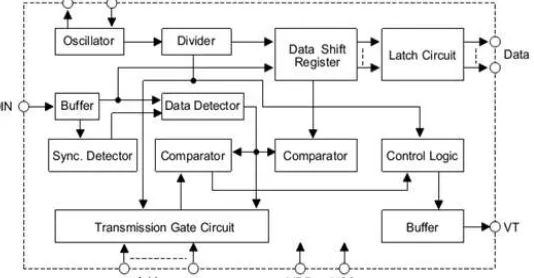
The decoders are a series of remote control system applications. They are paired with Holtech212 series of encoders (refer to the encoder/de-coder cross reference table). For proper operation, a pair of encoder/decoder with the same number of ad-dresses and data format should be chosen. The decoders receive serial addresses and data from a programmed 212 series of encoders that are transmitted by a carrier using an RF or an IR transmission medium. They compare the serial input data three times continuously with their local addresses. If no error or un-matched codes are found, the input data codes are decoded and then transferred to the output pins. The VT pin also goes high to indicate a valid transmission. The 212 series of decoders are capable of decoding information that consists of N bits of address and 12N bits of data. Of this series, the HT12D is arranged to pro-vide 8 address bits and 4 data bits, and HT12F is used to decode 12 bits of address information. The HT12D decoder as shown in fig 4.
(IJSTE/ Volume 2 / Issue 10 / 164)
The wireless 433MHz encoder and decoder signals from the remote unit to navigate the video ball. The wireless video transmit the signal and at remote location the live video issued to inspect the areas where are critical & non-accessible and dangerous.To control the ball robotic moment’s forward/reverse & left/right buttons are held on the remote controller. It is shown in fig 5.
F B
L R
Fig. 5: Remote controller (keys)
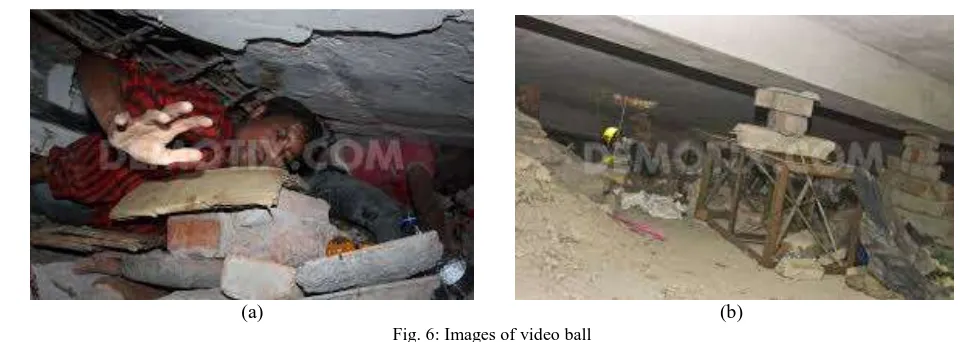
Portable display unit with battery and controller to move forward, reverse, left & right. The images of video ball is shown in fig 6.
(a) (b) Fig. 6: Images of video ball
IV. CONCLUSIONS
Mechatronics based Video surveillance system is a substantial threat to the privacy of individuals in the workplace. While it may initially be installed for limited purposes, it has the potential to intrude into virtually every aspect of an employee's conduct within the workplace. As with other methods of information collection and surveillance, video cameras should only be operated in accord with privacy principles. Recent complaints to the Privacy Committee suggest that many of these principles are not being observed by employers, and that privacy invasions are becoming more widespread as cameras are installed secretly or without consultation, or because there are large standards over their operation and the use of tapes. As many submissions to the Privacy Committee's Inquiry remarked, there is a need to undertake measures to ensure that methods of workplace surveillance do not intrude unreasonably upon the privacy of employees. It should be noted that applications of video surveillance vary widely in many aspects. This makes it difficult to make comparisons across studies and to draw general conclusions from the evaluations. Moreover, as mentioned, the likelihood of a video with multiple activities gets split among classes describing the activities contained in it. This may pose a problem in flagging an un usual activity, because we rely on a confused match of the unusual word sequence with the already learned classes. Hence, we need to investigate how to differentiate between video switch multiple activities and videos with unusual activities.Security and surveillance are important issues in today’s world. The recent acts of escalation have highlighted the urgent need for efficient surveillance.
ACKNOWLEDGMENT
The authors (J.Pavan Kumar , Dr.R.Uday Kumar, Dept.of Mechanical Engineering, Mahatma Gandhi Institute of Technology, Hyderabad ) thanks the Management and Principal of Mahatma Gandhi Institute of Technology , Hyderabad for encouraging and granting permission to carry out this work.
REFERENCES
[1] Webster, W.R., Töpfer, E., Klauser, F.R., Raab, C.D. Revisiting the surveillance camera revolution: Issues of governance and public policy. Introduction to part one of the Special issue. Information Polity. 2011, 16, 297–301.
[2] Agustina, J.R., Clavell, G.G. The impact of CCTV on fundamental rights and crime prevention strategies: The case of the Catalan Control Commission of Video surveillance Devices. computer law & security review. 2011, 27, 168-74
[3] Bai, Y.-W., Xie, Z.-L., Li, Z.-H. Design and Implementation of a Home Embedded Surveillance System with Ultra-Low Alert Power. IEEE Transactions on Consumer Electronics. 2011, 75, 153-9.
[4] Loomans, M.J.H., J.Koeleman, C., With, P.H.N.d. Low-Complexity Wavelet-Based Scalable Image & Video Coding for Home-Use Surveillance. IEEE Transactions on Consumer Electronics. 2011, 57, 507-15.
[6] Jeong, J., Gu, Y., He, T., Du, D.H.C. Virtual Scanning Algorithm for Road Network Surveillance. IEEE Transactions On Parallel And Distributed Systems. 2010, 21, 1734-49.
[7] Leotta, M.J., Mundy, J.L. Vehicle Surveillance with a Generic, Adaptive, 3D Vehicle M odel. IEEE Transactions on Pattern Analysis and Machine Intelligence. 2011, 33, 1457-69.
[8] Su, P.-C., Wu, C.-Y. A Joint Watermarking and ROI Coding Scheme for Annotating Traffic Surveillance Videos. EURASIP Journal on Advances in Signal Processing. 2010, 2010, 1-14.
[9] Sumalee, A., Zhong, R.X., Pan, T.L., Szeto, W.Y. Stochastic cell transmission model (SCTM): A stochastic dynamic traffic model for traffic state surveillance and assignment. Transportation Research Part B. 2011, 45, 507-5033.
[10] Yuan, G., Zhang, X., Yao, Q., Wang, K. Hierarchical and Modular Surveillance Systems in ITS IEEE Intelligent Systems. 2011, 26, 10-5.
[11] Luo, X., Wu, Y., Huang, Y., Zhang, J. Vehicle flow detection in real-time airborne traffic surveillance system. Transactions of the Institute of Measurement and Control. 2011, 33, 880–97.
[12] Monperrus, M., Long, B., Champeau, J., Hoeltzener, B., Marchalot, G., Jézéquel, J.M. Model-Driven Architecture of a Maritime Surveillance System Simulator.Systems Engineering. 2010, 13, 290-7.
[13] Szpak, Z.L., Tapamo, J.R. Maritime surveillance: Tracking ships inside a dynamic background using a fast level-set. Expert Systems with Applications. 2011, 38, 6669–80.
[14] Conte, D., Foggia, P., Percannella, G., Tufano, F., Vento, M. A Method for Counting Moving People in Video Surveillance Videos. EURASIP Journal on Advances in Signal Processing. 2010, 2010, 1-10.
[15] Takahashi, M., Fujii, M., Shibata, M., Satoh, S.i. Robust Recognition of Specific Human Behaviors in Crowded Surveillance Video Sequences. EURASIP Journal on Advances in Signal Processing. 2010, 2010, 1-14.
[16] Amato, A., Lecce, V.D. Semantic Classification of Human Behaviors in Video Surveillance Systems. Journal WSEAS Transactions on Computers archive. 2011, 10, 343-52
[17] Heilmann, E. Video surveillance and security policy in France: From regulation to widespread acceptance. Information Polity. 2011, 16, 369-77.
[18] Räty, T.D. Survey on Contemporary Remote Surveillance Systems for Public Safety. IEEE Transactions on Systems, Man, and Cybernetics— Part C: Applications and Reviews. 2010, 40, 493-515.
[19] Paola, D.D., Milella, A., Cicirelli, G., Distante, A. An Autonomous Mobile Robotic System for Surveillance of Indoor Environments. International Journal of Advanced Robotic Systems. 2010, 7, 19-26.