Volume 18 Number 2 pp. 142–150 C The Author(s) 2015 doi:10.1017/thg.2015.11
Asthma and Height in Twins: A Cohort and
Within-Pair Analyses Study
Jennifer L. P. Protudjer,1,2,3Cecilia Lundholm,1and Catarina Almqvist1,2,4
1Department of Medical Epidemiology and Biostatistics, Karolinska Institutet, Stockholm, Sweden 2Centre for Allergy Research, Karolinska Institutet, Stockholm, Sweden
3Institute of Environmental Medicine, Karolinska Institutet, Stockholm, Sweden
4Astrid Lindgren Children’s Hospital, Lung and Allergy Unit, Karolinska University Hospital, Stockholm, Sweden
In singletons, asthma may be associated with shorter height and delayed growth during adolescence. Yet, these studies do not account for heritability of asthma, puberty/menarche, and height. We aimed to study the association between asthma and puberty in boys and menarche in girls, and height, in a cohort of twins and subsequently in same-sex twin pairs discordant for asthma. From a Swedish twin cohort, parent-and self-reported data on asthma, puberty/menarche, parent-and height were collected. Pubertal staging was established via the Petersen index. Logistic and linear regression was used to estimate associations be-tween asthma and puberty/menarche and height, respectively. For within-pair analyses in twins discordant for asthma, conditional logistic and linear regression were used. Data on 2,658 (49.1% boys) twins were included. Among boys, asthma prevalence was 8.2% at 8–9 years and 10.2% at 13–14 years. Correspond-ing numbers for girls were 4.2% and 4.9%, respectively. In the entire cohort, no statistically significant associations were found between current asthma and puberty/menarche. Boys with asthma were shorter than boys without asthma at 8–9 years (on average, 1.86 [0.17–3.56] cm,p=.03) and at 13–14 years (on average, 2.94 [0.98–4.91] cm,p =.003) but not at 19–20 years. No such associations were found for girls. Within same-sex twin pairs discordant for asthma, no statistically significant associations were found for either sex. Twin boys, but not girls, with asthma were shorter than those without asthma. Non-statistically significant estimates from within-pair analyses suggest the association is partly confounded by genetic or familial environmental factors.
Keywords:adolescent, asthma, height, puberty, twins
Asthma is a prevalent disease among children that has been shown to switch from male to female predominance during adolescence by some (Almqvist et al.,2008; Asher et al., 2006; Nicolai et al.,2003), but not others (Protudjer et al., 2014). This suggests that events associated with puberty may play a role in the gender switch of asthma (Almqvist et al.,2008). An association between asthma and height has also been proposed, but is collectively inconclusive (Haus-pie et al.,1977; Strunk et al.,2009; The Childhood Asthma Management Program Research Group,2000). Asthma ap-pears to be associated with shorter height (El-Sayed et al., 2010; Hauspie et al.,1976;1979; Moudiou et al.,2003; Um-lawska et al.,2013) and delayed growth (Hauspie et al., 1977) during adolescence, although the impact of child-hood asthma on final adult height remains less understood (Kelly et al.,2012; Norjavaara et al.,2001). To date, this work has been done exclusively in singletons. For exam-ple, Polish children 5–18 years old with asthma of varying severities and duration of disease were shorter than healthy
controls, and nearly 5% of those with asthma were very short in stature (Umlawska et al.,2013). In a retrospective study of Swedish women, childhood asthma was associated with significantly shorter adult height compared to women without a report of childhood asthma (Norjavaara et al., 2001). However, asthma (Fagnani et al.,2008; Lichtenstein & Svartengren,1997; Thomsen et al.,2008;2010), pubertal staging (Koenis et al.,2013), menarche (van den Berg et al., 2006), and height (Hemani et al.,2013) are highly heritable. For example, a dizygous twin has three-fold greater risk of asthma compared to the general population if the co-twin
RECEIVED15 November 2014;ACCEPTED10 February 2015. First published online 12 March 2015.
has asthma, compared to the general population (Thomsen et al.,2010). Among monozygous twins, this risk increases to six-fold (Thomsen et al.,2010).
Twin studies provide an ideal way to gain greater un-derstanding of diseases (Mayo,2009), such as asthma, that are of genetic and environmental etiology. To this end, and in a cohort of Swedish twins followed prospectively from 8–9 years through 19–20 years, we sought to study the as-sociation between asthma and pubertal staging in boys and menarche in girls, and height. We first considered these as-sociations in the entire cohort, and subsequently in same-sex twin pairs discordant for asthma. This approach pro-vided the opportunity to take heritability into account.
Methods
Study Design and Subjects
This analysis is based on the overarching Twin Study of Child and Adolescent Development (TCHAD), described elsewhere (Lichtenstein et al.,2007). Twin pairs were eligible if they were born in Sweden between May 1985 and Decem-ber 1986 and their parents could communicate in Swedish. Starting at 8–9 years of age, twins have been prospectively followed at 13–14 years, 16–17 years, and 19–20 years. At 8–9 years, data were collected solely from the parents (n= 1,339), while data were collected from the twins and their parents at 13–14 years (n=2,263 andn=1,063, respec-tively), 16–17 years (n=2,369 andn=1,067, respectively), and from twins at 19–20 years (n=1,569). The population for this study was 2,658 (49.1% boys) twins (1,329 twin pairs).
Variables
Zygosity for same-sex twin pairs was determined using an algorithm with a 95% probability of correctly classifying same-sex twin as either monozygotic or same-sex dizygotic (Lichtenstein et al.,2007).
Asthma status (presence vs. absence), based on vali-dated questions from the International Study of Allergy and Asthma in Childhood (Asher et al.,1995) and described elsewhere (Mogensen et al., 2011), was ascertained based on parent-report at 8–9 years and 13–14 years, as well as retrospective parent-report from birth to 8–9 years at 8–9 year assessment. Current asthma prevalence was defined as asthma in the 12 months prior to 8–9 years and 13–14 years. Asthma persistence was also considered. Persistent early childhood asthma was defined as a retrospective parent-report of asthma prior to 8–9 years, and parent-parent-report of asthma at 8–9 years. Persistent late childhood asthma from 8–9 years to 13–14 years was defined as asthma presence at both of these time points. Asthma discordance, based on parent-report of current asthma at 8–9 years, as well as at 13–14 years was considered in same-sex twins only.
Self-reported puberty data, including menarche in girls, were collected at 13–14 years. Boys were queried about
skin changes, linear growth spurt, pubic hair growth, voice change, and beard growth. Possible responses for each char-acteristic above included: not yet started; just started; def-initely started; complete/fully developed, with 1–4 points allocated respectively. In keeping with the recommenda-tions from the Petersen index (Petersen et al.,1988) and described elsewhere (Protudjer et al.,2014), points associ-ated with the latter three characteristics were summed for each boy. Each boy was then classified into mutually exclu-sive stages: pre-, early, mid-, late or post-puberty. Due to small sample sizes and a narrow age range at 13–14 years, which yielded little variation in pubertal staging, trichoto-mous categorization of pubertal staging, as previously used by our group (Protudjer et al.,2014), was not possible in the present study. Thus, a binary outcome of pubertal staging for boys was created from the above-described categories: early (pre- or early puberty) versus late (mid-, late-, or post-puberty). Rather than pubertal staging, girls were classified by self-reported menarche status at 13–14 years. As with boys, sample sizes and a narrow age range at 13–14 years mandated the creation of a binary outcome for pubertal staging. Upon further examination of the data, it became clear that the difference in pubertal staging was driven by menarche (no vs. yes). Further, 21 girls had responded to the menarche question but did not respond to all the questions required for ascertainment of pubertal staging. At 16–17 years, two girls (including one with asthma at 8–9 years) reported being unclear if they had reached menarche; these girls were excluded from further analyses. Parent-report of asthma status at 8–9 years was missing for 20 boys and 13 girls.
Data on height were collected via parent-report (8–9 years, 13–14 years) and twin-report (16–17 years, 19–20 years). Measured and reported heights have been shown elsewhere to be well correlated in similar-aged study pop-ulations (Brettschneider et al.,2012; Legleye et al.,2014; Yoshitake et al.,2012). Height data from all waves were reviewed for implausible values. This led to the exclusion of height data at 8–9 years for two twins who had parent-reported heights of<50 cm (range 26–34 cm), and at 16– 17 years for 22 twins, who self-reported heights<100 cm (range 0.5–84 cm).
Confounding Variables
Statistical Analyses
Descriptive statistics includedn, percentage, and mean± standard deviation, and tests for normal distribution of height. For the entire cohort, logistic regression was used to analyze associations between exposure variables (cur-rent asthma, persistent early- or late-childhood asthma) and dichotomous outcomes. Also, for the entire cohort, linear regression was used for the continuous outcome of height. Standard errors were in both cases estimated us-ing the sandwich estimator for clustered observations, to account for within-pair correlations. For within-pair anal-yses, that is, analyses with adjustment for everything twins share within pairs, conditional linear regression was used. For within-pair analyses, only birth weight was considered as a confounder, as each twin pair had the same age. Un-determinable zygosity was classified as unknown (n=17); these participants were subsequently excluded from within-pair analyses.
If the effect of the exposure variable does not differ be-tween the within-pair analyses and those of the entire co-hort, then genetic and shared environmental factors con-tribute little to the association. As the within-pair analysis was not stratified on zygosity, this analysis cannot com-pletely (100%) account for the heritability of asthma, pu-berty, and height.
For logistic regression analyses, odds ratios (OR) with corresponding 95% confidence intervals (95% CI) are pre-sented. For linear regression and conditional linear regres-sion analyses, means and standard errors, estimated from the regression models at the mean of the covariates, are pre-sented graphically, with estimated coefficients, 95%CI and p-values presented in text. All analyses were stratified by sex. Statistical significance was set atp<.05. Analyses were performed with STATA 11.0 (StatCorp LP, College Station, TX, USA).
Ethical permission was received from Regional Ethical Review Board of the Karolinska Institutet, Stockholm, Swe-den.
Results
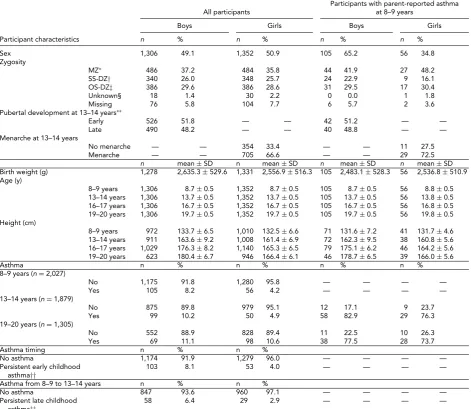
Characteristics of the 2,658 (1,306 [49.1%] boys) twins in-cluded in this study are presented inTable 1. Participants responded to questionnaires at mean ages of 8.7±0.5 years, 13.7±0.5 years, 16.7±0.5 years, and 19.7±0.5 years. At 8–9 years and 13–14 years, asthma prevalence amongst boys was 8.2% and 10.2%, respectively. The corresponding num-bers for girls were 4.2% and 4.9%. At 19–20 years, 11.1% of boys and 10.6% of girls had self-reports of asthma. At age 13–14, an approximately equal number of boys were in early versus late puberty and most girls (705/1,046 [66.6%]) had reached menarche.
In the entire cohort, no statistically significant associ-ations were found between current asthma at either 8–9 years, or 13–14 years, or persistent early- or late-childhood
asthma, and self-reported pubertal staging at 13–14 years for boys or menarche in girls (Table 2).
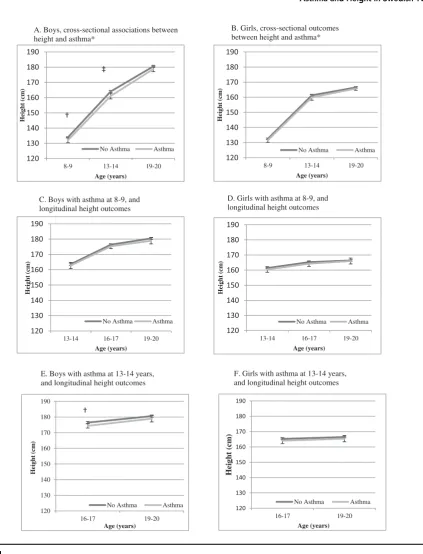
Figure 1is a presentation of the adjusted estimates of mean height from linear regression for the entire cohort by asthma presence versus absence. Cross-sectionally, boys with asthma were shorter than boys without asthma at 8– 9 years (on average, 1.86 [0.17–3.56] cm,p=.03) and at 13–14 years (on average, 2.94 [0.98–4.91] cm,p =.003) but did not reach statistical significance at 19–20 years (on average, 1.74 (-0.08–3.56) cm,p=.06). The corresponding cross-sectional findings for girls did not reach statistical significance at any of these time points (e.g., 8–9 years (0.95 (-0.55–2.46) cm,p=.215). In longitudinal analyses, asthma at 8–9 years was not statistically significantly associated with height differences through 19–20 years. Asthma at 13–14 years was associated with shorter height in boys at 16–17 years (on average 2.12 (0.62–3.62) cm,p=.006), but not with height at 19–20 years. Corresponding numbers for girls did not reach statistical significance (for example: the result for girls with asthma at 13–14 years and height at 16–17 years was 1.15 (-0.82–3.11) cm,p=.254).
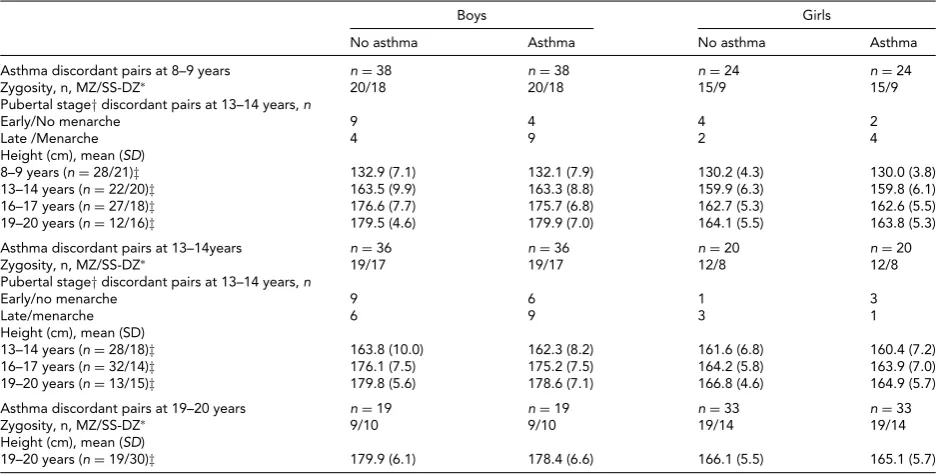
Table 3is a summary of the descriptive characteristics for sex twin pairs by asthma discordance. Among same-sex twins, there were 38 and 36 twin pairs of boys who were discordant for asthma at 8–9 years and 13–14 years, respectively. The corresponding numbers for girls were 24 and 20. The numbers for within-pair analyses on pubertal stage were too small for analyses as there were no more 4–6 female pairs and 13–15 male pairs who were discordant for both asthma and puberty stage (Table 3).
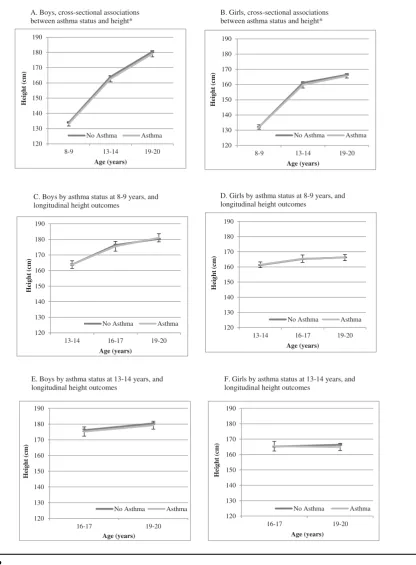
Figure 2is a presentation of the estimated mean heights for same-sex asthma discordant twin pairs, when adjusted for everything the twins have in common within the pair (conditional analyses). In both cross-sectional and longi-tudinal analyses within pairs, associations between asthma and height were attenuated and not statistically significant for either sex.
Discussion
TABLE 1
Study Population of a Cohort of Twins
Participants with parent-reported asthma All participants at 8–9 years
Boys Girls Boys Girls
Participant characteristics n % n % n % n %
Sex 1,306 49.1 1,352 50.9 105 65.2 56 34.8
Zygosity
MZ∗ 486 37.2 484 35.8 44 41.9 27 48.2 SS-DZ† 340 26.0 348 25.7 24 22.9 9 16.1 OS-DZ‡ 386 29.6 386 28.6 31 29.5 17 30.4
Unknown§ 18 1.4 30 2.2 0 0.0 1 1.8
Missing 76 5.8 104 7.7 6 5.7 2 3.6
Pubertal development at 13–14 years∗∗
Early 526 51.8 –– –– 42 51.2 –– ––
Late 490 48.2 –– –– 40 48.8 –– ––
Menarche at 13–14 years
No menarche –– –– 354 33.4 –– –– 11 27.5 Menarche –– –– 705 66.6 –– –– 29 72.5
n mean±SD n mean±SD n mean±SD n mean±SD Birth weight (g) 1,278 2,635.3±529.6 1,331 2,556.9±516.3 105 2,483.1±528.3 56 2,536.8±510.9 Age (y)
8–9 years 1,306 8.7±0.5 1,352 8.7±0.5 105 8.7±0.5 56 8.8±0.5 13–14 years 1,306 13.7±0.5 1,352 13.7±0.5 105 13.7±0.5 56 13.8±0.5 16–17 years 1,306 16.7±0.5 1,352 16.7±0.5 105 16.7±0.5 56 16.8±0.5 19–20 years 1,306 19.7±0.5 1,352 19.7±0.5 105 19.7±0.5 56 19.8±0.5 Height (cm)
8–9 years 972 133.7±6.5 1,010 132.5±6.6 71 131.6±7.2 41 131.7±4.6 13–14 years 911 163.6±9.2 1,008 161.4±6.9 72 162.3±9.5 38 160.8±5.6 16–17 years 1,029 176.3±8.2 1,140 165.3±6.5 79 175.1±6.2 46 164.2±5.6 19–20 years 623 180.4±6.7 946 166.4±6.1 46 178.7±6.5 39 166.0±5.6
Asthma n % n % n % n %
8–9 years (n=2,027)
No 1,175 91.8 1,280 95.8 –– –– –– ––
Yes 105 8.2 56 4.2 –– –– –– ––
13–14 years (n=1,879)
No 875 89.8 979 95.1 12 17.1 9 23.7
Yes 99 10.2 50 4.9 58 82.9 29 76.3
19–20 years (n=1,305)
No 552 88.9 828 89.4 11 22.5 10 26.3 Yes 69 11.1 98 10.6 38 77.5 28 73.7
Asthma timing n % n %
No asthma 1,174 91.9 1,279 96.0 –– –– –– ––
Persistent early childhood asthma††
103 8.1 53 4.0 –– –– –– ––
Asthma from 8–9 to 13–14 years n % n %
No asthma 847 93.6 960 97.1 –– –– –– ––
Persistent late childhood asthma‡‡
58 6.4 29 2.9 –– –– –– ––
Note:∗Monozygotic twins;†Same sex dizygotic twins;‡Opposite sex dizygotic twins; §Unknown zygosity;∗∗Pre/early versus mid/late/post as per Peterson et al. (1988);††Retrospective parental report of asthma prior to 8–9 years and parental report of asthma at 8–9 years;‡‡Parental report of asthma at 8–9 years. and 13–14 years.
suggesting partial confounding by genes or shared familial environment. In other words, our findings provide modest evidence that differences in height among boys by asthma status may be partly attributable to genes or shared famil-ial environment, rather than asthma. This is interesting, as there has been a concern about the impact of asthma on height for many years (El-Sayed et al.,2010; Hauspie et al., 1976; 1977; 1979; Moudiou et al.,2003; The Childhood Asthma Management Program Research Group,2000; Um-lawska et al.,2013). However, caution is warranted when interpreting the collective results in relation to familial con-founding as the confidence intervals from the within-pair analyses are wide enough to cover the estimates from the cohort analysis.
TABLE 2
Unadjusted and Adjusted Odds Ratios for Asthma in Association with Pubertal Staging/Menarche in a Cohort of Twins
Boys∗ Girls∗
Late puberty Menarche
n OR 95% CI n OR 95% CI
Asthma at 8–9 years
Unadjusted 996 1.02 0.62; 1.67 1,051 1.38 0.68; 2.79 Adjusted† 977 1.10 0.65; 1.84 1,037 1.37 0.65; 2.89 Asthma at 13–14 years
Unadjusted 923 0.77 0.48; 1.23 974 1.53 0.81; 2.89 Adjusted† 905 0.82 0.52; 1.32 960 1.43 0.73; 2.80 Persistent childhood asthma‡
Unadjusted 993 1.08 0.65; 1.77 1,049 1.29 0.63; 2.62 Adjusted† 974 1.18 0.71; 1.98 1,035 1.29 0.60; 2.76 Persistent asthma from 8–9 to 13–14 years
Unadjusted 872 0.98 0.74; 1.30 953 1.21 0.81; 1.80 Adjusted† 872 1.00 0.74; 1.33 940 1.17 0.77; 1.79 Note:∗Reference groups are early puberty (boys) and no menarche (girls);†Adjusted for age at respective visit(s) and birth weight;‡Based on retrospective
and current parent-report of asthma at 8–9 years.
TABLE 3
Zygosity, Puberty, and Height in Asthma Discordant Same-Sex Twin Pairs
Boys Girls
No asthma Asthma No asthma Asthma
Asthma discordant pairs at 8–9 years n=38 n=38 n=24 n=24 Zygosity, n, MZ/SS-DZ∗ 20/18 20/18 15/9 15/9 Pubertal stage†discordant pairs at 13–14 years,n
Early/No menarche 9 4 4 2
Late /Menarche 4 9 2 4
Height (cm), mean (SD)
8–9 years (n=28/21)‡ 132.9 (7.1) 132.1 (7.9) 130.2 (4.3) 130.0 (3.8) 13–14 years (n=22/20)‡ 163.5 (9.9) 163.3 (8.8) 159.9 (6.3) 159.8 (6.1) 16–17 years (n=27/18)‡ 176.6 (7.7) 175.7 (6.8) 162.7 (5.3) 162.6 (5.5) 19–20 years (n=12/16)‡ 179.5 (4.6) 179.9 (7.0) 164.1 (5.5) 163.8 (5.3) Asthma discordant pairs at 13–14years n=36 n=36 n=20 n=20 Zygosity, n, MZ/SS-DZ∗ 19/17 19/17 12/8 12/8 Pubertal stage†discordant pairs at 13–14 years,n
Early/no menarche 9 6 1 3
Late/menarche 6 9 3 1
Height (cm), mean (SD)
13–14 years (n=28/18)‡ 163.8 (10.0) 162.3 (8.2) 161.6 (6.8) 160.4 (7.2) 16–17 years (n=32/14)‡ 176.1 (7.5) 175.2 (7.5) 164.2 (5.8) 163.9 (7.0) 19–20 years (n=13/15)‡ 179.8 (5.6) 178.6 (7.1) 166.8 (4.6) 164.9 (5.7) Asthma discordant pairs at 19–20 years n=19 n=19 n=33 n=33
Zygosity, n, MZ/SS-DZ∗ 9/10 9/10 19/14 19/14
Height (cm), mean (SD)
19–20 years (n=19/30)‡ 179.9 (6.1) 178.4 (6.6) 166.1 (5.5) 165.1 (5.7) Note:∗Monozygotic twins (MZ); Same sex dizygotic twins (SS-DZ);†Pre/early versus mid/late/post as per Peterson et al. (1988) for boys and menarche for
girls;‡(number of boy pairs/number of girl pairs, with information available for both twins).
The adolescent growth spurt is a marker of sexual matu-ration (WHO Expert Committee on Physical Status,1995). Boys reach their pubertal debut at approximately 11.5 years, approximately a year later than girls. Boys’ progression through puberty lasts for3.5 years, and is shorter than that for girls (4.2 years). For both boys and girls, the growth spurt begins in puberty and is completed by late puberty. On average, girls reach their growth spurt by12 years and boys reach their growth spurt 2 years later (WHO Expert Com-mittee on Physical Status,1995). In our study, self-reported pubertal staging was during the 13–14 year assessment, the age at which boys begin to reach their growth spurt, but 1–2
A. Boys, cross-sectional associations between height and asthma*
120 130 140 150 160 170 180 190
8-9 13-14 19-20
Height (
cm
)
Age (years)
No Asthma Asthma
120 130 140 150 160 170 180 190
8-9 13-14 19-20
Height (
cm
)
Age (years)
No Asthma Asthma
120 130 140 150 160 170 180 190
13-14 16-17 19-20
Height (
cm
)
Age (years)
No Asthma Asthma
120 130 140 150 160 170 180 190
13-14 16-17 19-20
Height (
cm
)
Age (years)
No Asthma Asthma
120 130 140 150 160 170 180 190
16-17 19-20
Height (
cm
)
Age (years)
No Asthma Asthma 120
130 140 150 160 170 180 190
16-17 19-20
Height (c
m
)
Age (years)
No Asthma Asthma
†
‡
†
B. Girls, cross-sectional outcomes between height and asthma*
C. Boys with asthma at 8-9, and longitudinal height outcomes
D. Girls with asthma at 8-9, and longitudinal height outcomes
E. Boys with asthma at 13-14 years, and longitudinal height outcomes
F. Girls with asthma at 13-14 years, and longitudinal height outcomes
FIGURE 1
Mean height with 95% confidence intervals, estimated from linear regression models with asthma as a predictor of height (cm) from 8–9 years through 19–20 years, adjusted for birth weight and age in a cohort of Swedish twins
Note:∗Asthma not assessed at 16–17 years;†p<.05;‡p<.005.
longitudinal analyses in the entire cohort or within-pair analyses. One may speculate that the null findings at 8–9 years and 13–14 years may, in part, be attributable to a low prevalence of asthma among girls at these ages, thereby potentially limiting our ability to identify statistically signif-icant observations. By 19–20 years, more than twice as many girls reported asthma than at the previous time points. As
A. Boys, cross-sectional associations between asthma status and height*
B. Girls, cross-sectional associations between asthma status and height*
C. Boys by asthma status at 8-9 years, and longitudinal height outcomes
D. Girls by asthma status at 8-9 years, and longitudinal height outcomes
E. Boys by asthma status at 13-14 years, and longitudinal height outcomes
F. Girls by asthma status at 13-14 years, and longitudinal height outcomes
120 130 140 150 160 170 180 190
8-9 13-14 19-20
Height (
cm
)
Age (years) No Asthma Asthma
120 130 140 150 160 170 180 190
8-9 13-14 19-20
Height (
cm
)
Age (years)
No Asthma Asthma
120 130 140 150 160 170 180 190
13-14 16-17 19-20
Height (
cm
)
Age (years)
No Asthma Asthma
120 130 140 150 160 170 180 190
13-14 16-17 19-20
Height (
cm
)
Age (years)
No Asthma Asthma
120 130 140 150 160 170 180 190
16-17 19-20
Height (
cm
)
Age (years)
No Asthma Asthma
120 130 140 150 160 170 180 190
16-17 19-20
Height (
cm
)
Age (years)
No Asthma Asthma
FIGURE 2
Mean height with 95% confidence intervals, estimated from conditional linear regression models with asthma as a predictor of height (cm) from 8–9 years through 19–20 years, adjusted for birth weight, using twin pairs that are discordant for asthma in a sample of same-sex twins.
evidenced by higher emergency room visits and hospital-ization rates (Akinbami et al.,2011). Although our data precluded consideration to disease severity, disease severity is associated with a greater odds of asthma persistence (Tai et al.,2014) and oral steroid use (Schofield, 2014), both
of which have been associated with delayed attainment of adult height (Martin et al.,1981).
results of analyses of the entire cohort and within-pair anal-yses suggests that the association between asthma and height is confounded by genetic and/or shared environmental fac-tors.
We acknowledge the weaknesses of our study. First, height was ascertained by parent-reports at 8–9 years and 13–14 years, and by twin-report at 16–17 years and 19– 20 years. Although measured height is the gold standard, this was impractical in a large cohort such as TCHAD. Im-portantly, others have shown a strong correlation between reported and measured heights (Brettschneider et al.,2012; Legleye et al.,2014; Yoshitake et al.,2012) in studies of chil-dren of similar ages to the twins in the present study. Sec-ond, small sample sizes precluded consideration of asthma medication or stratification by zygosity. Nonetheless, our approach permitted adjustment for at least 50% of segre-gating genes, which all dizygotic twins, and indeed all sib-lings share. Moreover, twins share a common environment from conception and through childhood. Third, although pubertal development exists along a continuum, we were only able to establish a dichotomous variable for puber-tal staging, thereby limiting the sensitivity of our puberpuber-tal staging classification.
To our knowledge, this is one of the first reports on asthma and height using a twin design. Our findings in the entire cohort correspond well with the associations of asthma and height in singletons (El-Sayed et al.,2010; Haus-pie et al.,1976;1979; Moudiou et al.,2003; Umlawska et al., 2013). Thus, our results both are generalizable to singletons and extend the understanding of asthma and height.
Conclusion
In a cohort of Swedish twins, we identified that twin boys, but not girls with asthma were of shorter height than those without asthma. Estimates from within-pair analyses were attenuated and non-significant, suggesting the association is partly confounded by genetic or familial environmental factors.
Acknowledgments
We acknowledge financial support from the Swedish Re-search Council (Grant no. 2011-3060) and through the Swedish Initiative for Research on Microdata in the So-cial And Medical Sciences (SIMSAM) framework Grant no. 340-2013-5867, the Strategic Research Program in Epi-demiology at Karolinska Institutet, the Swedish Heart Lung Foundation (Contract no. 20120480), the Swedish Asthma and Allergy Association (Grants no. 2010048-K, 2011051-K, 2012056-K, and 2013049-K) and the regional agreement on medical training and clinical research between Stockholm County Council and Karolinska Institutet (ALF; Contract no. 20130422 and 20140322). The Swedish Twin Registry was financially supported by the Swedish Ministry of Edu-cation and Research. Jennifer Protudjer was first supported
by European Respiratory Society Long Term Research Fel-lowship no. 117-2011, then a Canadian Institutes of Health Research Post-Doctoral Fellowship during this project.
References
Akinbami, L. J., Moorman, J. E., & Liu, X. (2011). Asthma prevalence, health care use, and mortality: United States, 2005–2009.National Health Statistics Reports,12, 1–14. Almqvist, C. A., Worm, M., & Leynaert, B. (2008). Impact
of gender on asthma in childhood and adolescence: A GA2LEN review.Allergy,63, 47–57.
Asher, M. I., Keil, U., Anderson, H. R., Beasley, R., Crane, J., Martinez, F., . . . Williams, H. C. (1995). International study of asthma and allergies in childhood (ISAAC): Ra-tionale and methods.European Respiratory Journal,8, 483– 491.
Asher, M. I., Montefort, S., Bj¨orkst´en, B., Lai, C. K., Strachan, D. P., Weiland, S. K., . . . ISAAC Phase Three Study Group. (2006). Worldwide time trends in the prevalence of asthma symptoms of asthma, allergic rhinoconjunctivitis, and eczema in childhood: ISAAC Phases one and three repeat multicountry cross-sectional surveys.Lancet,368, 733–743. Brettschneider, A.-K., Ellert, U., & Schaffrath Rosario, A. (2012). Comparison of BMI derived from parent-reported height and weight with measured values: Results from the German KiGGS study.International Journal of Environmen-tal Research and Public Health,9, 632–647.
Drosdzol, A., Wilk, K., & Nowosielski, K. (2007). The influence of bronchial asthma on sexual maturation of girls.Journal of Physiology and Pharmacology,1, 155–163.
El-Sayed, Z. A., Hamza, R. T., Sayed, N.-D., & Mahmoud, N. H. (2010). Effect of inhaled corticosteroids on growth and puberty in Egyptian asthmatic children and adoles-cents.Pakistan Journal of Biological Sciences,13, 977–984. Fagnani, C., Annesi-Maesano, I., Brescianini, S., D’Ippolito, C.,
Medda, E., Nistico, L., . . . Stazi, M. A. (2008). Heritability and shared genetic effects of asthma and hay fever: An Italian study of young twins.Twin Reseach and Human Genetics,11, 121–131.
Gasser, T., Molinari, L., & Largo, R. (2013). A comparison of pubertal maturity and growth.Annals of Human Biology,
40, 341–347.
Hauspie, R. C., Gyenis, G., Alexander, F., Simon, G., Susanne, C., & Mad´ach, A. (1979). Heights and weights of Hungarian and Belgian asthmatic boys.Human Biology,51, 507–521. Hauspie, R., Susanne, C., & Alexander, F. (1976). A mixed
longitudinal study of the growth in height and weight in asthmatic children.Human Biology,48, 271–283.
Hauspie, R., Susanne, C., & Alexander, F. (1977). Maturational delay and temporal growth retardation in asthmatic boys.
Journal of Allergy and Clinical Immunology,59, 200–206. Hemani, G., Yang, J., Vinkhuyzen, A., Powell, J. E., Willemsen,
Kaplan, B. A., Brush, G., & Mascie-Taylor, C. G. (1987). The relationship of childhood asthma and wheezy bronchitis with height, weight and body mass index.Human Biology,
59, 921–931.
Kelly, H. W., Sternberg, A. L., Lescher, R., Fuhlbrigge, A. L., Williams, P., Zeiger, R. S., . . . CAMP Research Group. (2012). Effect of inhaled corticosteroids in childhood on adult height.New England Journal of Medicine,367, 904– 912.
Koenis, M. M., Brouwer, R. M., van Baal, G. C., van Soelen, I. L., Peper, J. S., van Leeuwen, M, . . . Hulshoff Pol, H. E. (2013). Longitudinal study of hormonal and physical de-velopment in young twins.Journal of Clinical Endocrinology and Metabolism,98, E518–527.
Legleye, S., Beck, F., Spilka, S., & Chau, N. (2014). Correction of body-mass index using body-shape perception and so-cioeconomic status in adolescent self-report surveys.PLoS One,9, e976768.
Lichtenstein, P., & Svartengren, M. (1997). Genes, environ-ment, and sex: Factors of importance in atopic diseases in 7–9-year-old Swedish twins.Allergy,52, 1079–1086. Lichtenstein, P., Tuvblad, C., Larsson, H., & Carlstr¨om, E.
(2007). The Swedish twin study of CHild and adolescent development: The TCHAD-Study.Twin Research and Hu-man Genetics,10, 67–73.
Martin, A. J., Landau, L. I., & Phelan, P. D. (1981). The effect of growth on childhood asthma.Acta Paediatrica Scand,70, 683–688.
Mayo, O. (2009). Early research on human genetics using the twin method: Who really invented the method?Twin Re-search and Human Genetics,12, 237–245.
Mogensen, N., Larsson, H., Lundholm, C., & Almqvist, C. (2011). Association between childhood asthma and ADHA symptoms in adolescence — A prospective population-based twin study.Allergy,66, 1224–1230.
Moodie, E. M. M., & Stephens, D. A. (2010). Use of directed acyclic graphs to detect limitations of traditional regres-sion in longitudinal studies.International Journal of Public Health,55, 701–703.
Moudiou, T., Theophilatou, D., Prifits, K., & Papadimitriou, A. (2003). Growth of asthmatic children before long-term treatment with inhaled corticosteroids.Journal of Asthma,
40, 667–671.
Neville, R. G., McCowan, C., Thomas, G., & Crombie, I. K. (1996). Asthma and growth —- cause for concern? Asthma and growth in Tayside children.Annals of Human Biology,
23, 323–331.
Nicolai, T., Pereszlenyiova-Bliznakova, L., Illi, S., Reinhardt, D., & von Mutius, E. (2003). Longitudinal follow-up of the changing gender ratio in asthma from childhood to adulthood: Role of delayed manifestation in girls.Pediatric Allergy and Immunology,14, 280–283.
Norjavaara, E., Gerhardsson de Verdier, M., & Lindmark, B. (2001). Adult height in women with childhood asthma — A population-based study.Pharmacoepidemiology and Drug Safety,10, 121–125.
¨
Ortqvist, A. K., Lundholm, C., Carlstr¨om, E., Lichtenstein, P., Cnattingius, S., & Almqvist, C. (2009). Familial factors do
not confound the association between birth weight and childhood asthma.Pediatrics,124, e737–743.
Petersen, A. C., Crockett, L., Richards, M., & Boxer, A. (1988). A self-report measure of pubertal status: Reliability, validity, and initial norms.Journal of Youth and Adolescence,17, 117– 133.
Protudjer, J. L. P., Lundholm, C., Bergstrom, A., Kull, I., & Almqvist, C. (2014). Puberty and asthma in a cohort of Swedish children.Annals of Allergy, Asthma & Immunology,
112, 78–79.
Schofield, M. L. (2014). Asthma pharmacotherapy. Otolaryn-golic Clinics of North America,47, 55–64.
Skrzypuklec, V., Doniec, Z., Drosdzol, A., Nowosielski, K., & Pawlinska-Chmara, R. (2007). The influence of bronchial asthma on premenstrual syndrome prevalence amongst girls.Journal of Physiology and Pharmacology,58, 639–646. Strunk, R. C., Sternberg, A. L., Szefler, S. J., Zeiger, R. S., Bender, B., Tonascia, J., . . . CAMP Research Group. (2009). Long-term budesonide or nedocromil treatment, once dis-continued, does not alter the course of mild to moderate asthma in children.Journal of Pediatrics,154, 682–687. Tai, A., Tran, H., Roberts, M., Clark, N., Gibson, A M., Vidmar,
S., . . . Robertson, C. F. (2014). Outcomes of childhood asthma to the age of 50 years.Journal of Allergy and Clinical Immunology,133, 1572–1578.
The Childhood Asthma Management Program Research Group. (2000). Long term effects of budesonide or ne-docromil in children with asthma.New England Journal of Medicine,343, 1054–1063.
Thomsen, S. F., Kyvik, K. O., & Backer, V. (2008). Etiologi-cal relationships in atopy: A review of twin studies.Twin Research and Human Genetics,11, 112–120.
Thomsen, S. F., van der Sluis, S., Kyvik, K. O., Skytthe, A., & Backer, A. (2010). Estimates of asthma heritability in a large twin sample.Clinical and Experimental Allergy,40, 1054–1064.
Umlawska, W., Gaszczyk, G., & Sands, D. (2013). Physical development in children and adolescents with bronchial asthma.Respiratry Physiology and Neurobiology,187, 108– 113.
van den Berg, S. M., Setiawan, A., Bartels, M., Polderman, T. J., van der Vaart, A. W., & Boomsma, D. I. (2006). Individual differences in puberty onset in girls: Bayesian estimation of heritabilities and genetic correlations.Behavior Genetics,
36, 261–270.
Wang, Y., Dinse, G. E., & Rogan, W. J. (2012). Birth weight, early weight gain and pubertal maturation: A longitudinal study.Pediatric Obesity,7, 101–109.
WHO Expert Committee on Physical Status. (1995).
Physical status: The use and interpretation of anthro-pometry. Retrieved from http://whqlibdoc.who.int/trs/ WHO˙TRS˙854.pdf.
Yoshitake, N., Okusa, M., Sasaki, S., Kunitsugu, I., & Hobara, T. (2012). Validity of self-reported body mass index of Japanese children and adolescents.Pediatrics International,