Page 207
SELF-LEARNING - THE WAY TO THE QUALITY OF STUDIES Zita Baužienė, Janina Morkūnienė
Kauno kolegija / University of Applied Sciences, Pramonės pr. 20, Kaunas, Lithuania
Abstract
The article analyzes the link between self-learning and study quality. After analyzing scientific references, the criteria, based on which the peculiarities of students' independent learning were assessed, were identified. The results of qualitative research revealed that the success of studies is determined by students' ability to plan time, preparation for studies as well as targeted studies, sufficient, properly prepared self-learning tasks. The research findings were analyzed focusing on the fact that students are the representatives of the generation Z and the teachers are the generation X or Y. This has highlighted the problem of the difference between generations, what has a significant impact on the quality of studies.
Key words: self-learning, generations x, y and z, self-study time
1. INTRODUCTION
While discussing the students' self-learning it is important to pay attention to the essential features of current generation, I. e. the generation that was born after 1995 and is called the generation Z. These features are likely to influence the selection of learning strategies and methods as well as the preparation of tasks. It should be noted that most teachers belong to the generation X or Y, therefore, the analysis of student self-study was aimed at answering the questions such as what the essential expectations of the generation Z students are, what requirements students raise for themselves during their studies and how teachers manage to organize the study process. The aim of the research was to identify the peculiarities of organizing self- learning of generation Z students that lead to a successful individual learning. Objectives:
1. To perform the analysis of scientific literature and name the fundamental differences between the generations X, Y and Z.
2. To disclose the peculiarities of self-learning in case of intergenerational differences after interviewing teachers and students
Pragmatism is a philosophy that allows you to experience the reality as a non-fixed phenomenon since the latter is constantly changing, it is multifaceted and plural because each person's experience is different. This perception of the surrounding world enables you to have and to provide the individual definition of each phenomenon. This provides space for creativity. In the field of science, the researcher is enabled to choose research methods, techniques and procedures freely (Žydžiūnaitė, 2007, 2017). The holistic approach allows the identification of the individual behavior of each individual, in this case a student, while learning independently. From a methodological point of view, it is important to understand each subject as a whole, i. e. as a functioning, adaptable individual and only then to find out the subject's attitudes and self-assessment (Maslow, 2006). Following S. Kanišauskas (2008), the whole world is perceived as a universe where all of the elements affect each other and at the same time are affected.
Page 208
of Applied Sciences. The interview-based study included open questions and unique informants' answers were received. They were summarized using content analysis tools: transcribing text, distinguishing lexical units and creating categories, while at the same time providing illustrative examples (Tidikis, 2003). The following questions were given to the informants during the interviews: describe modern student; how successful students are in achieving learning outcomes in the study programs; what problems students and teachers face in the study process, justify why you think so; how the teacher's role in the study process has changed.
2. ESSENTIAL CHARACTERISTICS OF GENERATION X
In the scientific literature (Stanišauskienė, 2015), the generation X, which includes people that were born between 1965–1982, is called the generation of “locked-up children” or „children with a key on the neck “. At that time when the representatives of this generation were developing their parents focused on work, because their main goal was seen as the creation of family welfare as well as securing material values. Therefore, the representatives of the generation X lacked some parental attention. Generation X pays special attention to their children, the communication between them is liberal. Following M. McCrindle (2014) this generation is characterized by the ability to choose; priority is given to freedom performance-based reward. According to G. Cordingt (2008), they are spiritual seekers who believe in supernatural things. Music is very important for this generation, as a "window to their soul" and means of self-expression.
In summary, the generation X is characterized by liberalism, spirituality, their preference to make a choice and unwillingness to accept stringency. In their families, they pay special attention to children.
3. ESSENTIAL CHARACTERISTICS OF GENERATION Y
According to the analyzed authors (Chester 2002; Cordington, 2008; Stanišauskienė, 2015) generation Y includes people who were born between1982 and 2003. It is also called Millennial generation. This generation has evolved in the context of globalization, in the era of communication technology and wireless communication (Stanišauskienė, 2014). The representatives of this generation live in a period of unprecedented diversity and the influence from different cultures. They are humane, interested in ecology, their behavior is based on ethical, responsible approach to consumption. It should be noted that the representatives of the generation Y are self-confident, sometimes even arrogant, they require justification and reasons (Chester, 2002). This generation has ambitious aspirations; however, they are satisfied with the low result because they do not want to put much effort. Generation Y is described as the generation of a quick result, sudden recognition, generation that seeks for evaluation and reward. Being used to getting attention from childhood the representatives of the generation Y need to receive a lot of constant attention. At work, the generation Y feel bad if managers do not respond to their achievements in any way (Cordington, 2008).
In summary, the representatives of Generation Y are characterized by an ethical, ecological approach to consumption, their interest in the ideas of humanism. Personal development is important to them; however, it is difficult to accept the tasks that require routine work, long-term commitment and effort. The individuals of the generation Y desire recognition, seek attention, and constant support.
4. ESSENTIAL CHARACTERISTICS OF GENERATION Z
Page 209
usually characterized by high activity. Virtual space and the opportunities it offers, are of particular importance to the representatives of this generation in the educational process. This is why the generation Z is sometimes referred to as the "digital generation". They „<...> can be creators and be aggressive <...>“ (p. 25). It should be noted that other authors (Flaager, Thompson, 2014; McCrindle, 2014; Stanišauskienė, 2015) consider individuals born in 2004–2023 as part of the generation Z. They describe the generation Z as emerging one. It is said that this generation was born during the surplus of material goods when all areas can be said to be simply overtaken by technology, and global environmental uniqueness is diminishing due to global communication networks. It should be noted that the generation Z is no longer learning to use technology, which is self-evident to them, they have been using them since birth in various areas of life: at home, one or another kind of communication, entertainment. It is noteworthy that representatives of the generation Z do not have to read literature to learn, but to watch the video material because images and symbols, logos, color pictures and trademarks affect them more and convey information more effectively than verbal language tools (McCrindle, 2014). V. Targamadzė et al (2015) note that „The new generation has more difficulties in learning <...>, they lose the ability to concentrate, contemplate and critically evaluate because online habits, especially rapid change of attention, are reflected in thinking activity even when not online“ (p. 11). It is important for teachers to know that when organizing the study process „<...> the motives of boys and girls are different – only girls are motivated to learn Lithuanian by competition, and boys are motivated to learn math by the anticipation of future knowledge.“ (Targamadzė et al., 2015, p. 112)
The most important characteristics of the representatives of the generation Z are the following: individualism, activity, use of technology, perception of visual information as well as the need to learn, receive and absorb information. Therefore, the generation Z is also called "digital generation". These features are of particular importance in organizing the study process as well as developing self-study methodologies, tasks and tools to build quality and effective studies.
5. PECULIARITIES OF SELF-LEARNING
Independence is defined as an essential characteristic of a person which enables you to choose learning methods, communication goals, tools and techniques to work actively and effectively, but at the same time it is a process during which students are able to gain knowledge independently, develop their skills to analyze and perform critical evaluation (Warring,2010; Rutkienė, Tanzegolskienė, 2014).
Student workload is measured in hours. Individual work does not take place during the lectures, but when the student works individually, performs assigned tasks, also collaborates with peers in groups etc. The latter method of learning, as the authors emphasize, enables the student to work actively, i. e. to choose methods to achieve the desired results independently. However, it is important that students are given enough time to learn. It should be noted that it is easy to establish contact hours and it is difficult to record time for self-learning of students. Therefore, it is important to emphasize its importance for the implementation of learning outcomes and the necessity for responsible monitoring. The authors say that while managing the learning of students, teachers should help students acquire self-learning skills and be able to plan self-study time effectively (Barbosa et al., 2017)
To sum up, it should be noted that the time allocated for the performance of different student self-learning tasks, is one of the most significant elements to achieve self-learning outcomes and to prepare properly for professional activities. The following factors are important for successful student self-learning: the level of the person's preparation to study, motivation and teacher qualification, competence and quality of the organization and implementation of the study process.
6. RESEARCH RESULTS
Page 210
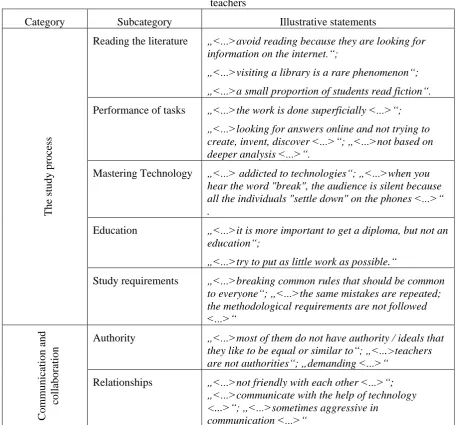
Table 6.1. The key features of students that belong to the Generation Z identified by the Generation X teachers
Category Subcategory Illustrative statements
Th
e stud
y
pro
ces
s
Reading the literature „<...>avoid reading because they are looking for information on the internet.“;
„<...>visiting a library is a rare phenomenon“; „<...>a small proportion of students read fiction“.
Performance of tasks „<...>the work is done superficially <...>“; „<...>looking for answers online and not trying to create, invent, discover <...>“; „<...>not based on deeper analysis <...>“.
Mastering Technology „<...> addicted to technologies“; „<...>when you hear the word "break", the audience is silent because all the individuals "settle down" on the phones <...>“ .
Education „<...>it is more important to get a diploma, but not an education“;
„<...>try to put as little work as possible.“
Study requirements „<...>breaking common rules that should be common to everyone“; „<...>the same mistakes are repeated; the methodological requirements are not followed <...>“
Commun
icati
on
and
collab
or
ation
Authority „<...>most of them do not have authority / ideals that they like to be equal or similar to“; „<...>teachers are not authorities“; „demanding <...>“
Relationships „<...>not friendly with each other <...>“; „<...>communicate with the help of technology <...>“; „<...>sometimes aggressive in
communication <...>“
Page 211
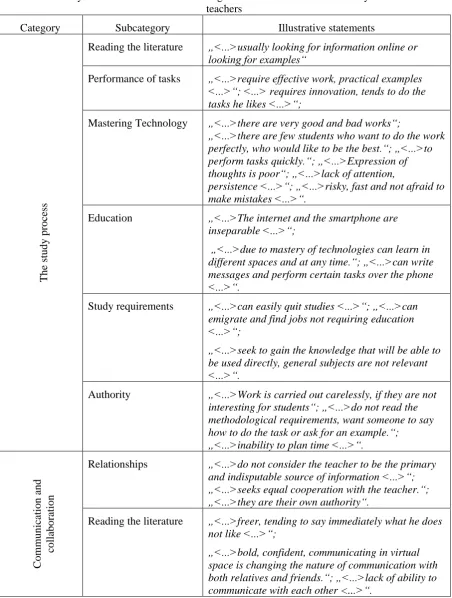
Table 6.2. The key features of students that belong to the Generation Z identified by the Generation Y teachers
Category Subcategory Illustrative statements
Th
e stud
y
pro
ces
s
Reading the literature „<...>usually looking for information online or looking for examples“
Performance of tasks „<...>require effective work, practical examples <...>“; <...> requires innovation, tends to do the tasks he likes <...>“;
Mastering Technology „<...>there are very good and bad works“;
„<...>there are few students who want to do the work perfectly, who would like to be the best.“; „<...>to perform tasks quickly.“; „<...>Expression of thoughts is poor“; „<...>lack of attention,
persistence <...>“; „<...>risky, fast and not afraid to make mistakes <...>“.
Education „<...>The internet and the smartphone are inseparable <...>“;
„<...>due to mastery of technologies can learn in different spaces and at any time.“; „<...>can write messages and perform certain tasks over the phone <...>“.
Study requirements „<...>can easily quit studies <...>“; „<...>can emigrate and find jobs not requiring education <...>“;
„<...>seek to gain the knowledge that will be able to be used directly, general subjects are not relevant <...>“.
Authority „<...>Work is carried out carelessly, if they are not interesting for students“; „<...>do not read the methodological requirements, want someone to say how to do the task or ask for an example.“;
„<...>inability to plan time <...>“.
Commun
icati
on
and
collab
or
ation
Relationships „<...>do not consider the teacher to be the primary and indisputable source of information <...>“; „<...>seeks equal cooperation with the teacher.“; „<...>they are their own authority“.
Reading the literature „<...>freer, tending to say immediately what he does not like <...>“;
„<...>bold, confident, communicating in virtual space is changing the nature of communication with both relatives and friends.“; „<...>lack of ability to communicate with each other <...>“.
Page 212
Summarizing the insights of X and Y generation teachers about generation Z students it should be noted that the teachers of both generations distinguish similar features characterizing the students of the aforementioned generation. The features are as follows: knowledgeable technology users; brave, active; aiming for a quick result and not focusing on quality; do not attach to the place and can learn in any space; practical benefits are significant in all activities.
The following findings of the naming of the features of the generation Z such as „demand“; „aggressive“; unacceptable for generation X teachers because the representatives of this generation prefer to choose, they are liberal. It is not acceptable for generation X teachers that personal development is not significant for the generation Z students and that they do not go deep into the chosen topic when preparing their independent work, that instead of relying on personal effort on the basis of which they would be able to develop a uniquely distinctive work based on the arguments of search, research and personal insights, they look for examples of similar performed tasks online. The highest qualitative value of the work preparation process and the result is not the aspiration or the indicative target of the generation Z students.
Personal development is important for teachers belonging to the generation Y, while the generation Z seeks for a quick result. The findings prove that: „<...> works are superficial <...>“, – therefore conflicting situations can arise at the junction of these traits.
It has been noticed that the respondents in their answers mostly highlighted those features of generation Z that cause problems in the study process. However, some positive features have been identified as well: activity, technology knowledge, fast orientation, striving for innovation, a tendency to risk, ability to perform multiple activities simultaneously.
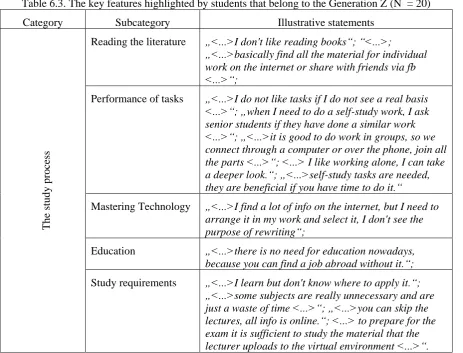
Table 6.3. The key features highlighted by students that belong to the Generation Z (N = 20)
Category Subcategory Illustrative statements
Th
e stud
y
pro
ces
s
Reading the literature „<...>I don't like reading books“; “<...>;
„<...>basically find all the material for individual work on the internet or share with friends via fb <...>“;
Performance of tasks „<...>I do not like tasks if I do not see a real basis <...>“; „when I need to do a self-study work, I ask senior students if they have done a similar work <...>“; „<...>it is good to do work in groups, so we connect through a computer or over the phone, join all the parts <...>“; <...> I like working alone, I can take a deeper look.“; „<...>self-study tasks are needed, they are beneficial if you have time to do it.“
Mastering Technology „<...>I find a lot of info on the internet, but I need to arrange it in my work and select it, I don't see the purpose of rewriting“;
Education „<...>there is no need for education nowadays, because you can find a job abroad without it.“;
Page 213
Commun
icati
on
and
collab
or
ation
Authority „<...>I like the teachers who interact as equals <....>“; „<...>sometimes talk about old things.“; <...> sometimes I look for info on the internet and compare what was said during the lecture.“
Relationships „<...>I have many friends, but I don't know them personally, we communicate through fc <...>“; „We have group mail and we share info <...>“.
The analysis of the students' open answers (see Table 6.3) revealed that when preparing their self-study work students look for information on a variety of web sites and library resources are not popular. The answers of the survey participants, the generation Z students, reveal that reading fiction is not a frequent choice during their free time. Students of this generation give priority to practical content assignments when performing their self-study tasks. If the tasks are time- or work-consuming, they should be evaded. Respondents are critical to the attendance of lectures, because they believe that it is sufficient to find the information available on the Internet, or they think that the study material provided by the faculty is sufficient: „<...> let the teachers upload the material, we read it and that's enough.“ Generation Z students not only study but also work because they need to be financially independent from their parents, this is confirmed by: „<...> I have already worked in gymnasium, and now I want to, but I can't combine the work and lectures.“; „<...> I want to be independent from my parents <...>“; Sometimes, for various reasons, students need to find a job because „<...> my parents do not support me, I need to earn money.“ In this case, they may experience difficulties in the study process, for example: „<...> I managed to combine work and studies but my salary suffered<...>“; <...> used to take a leave <...>“; „<...> I used to skip a few lectures <...>“; „<...> failed to combine, because I was not given unpaid vacation, which financially empties your pockets, but there was no other way out.“
Summarizing the findings, it can be noticed that the students participating in the study are not indifferent to the studies, they try to combine studies with work. The findings of the study revealed that students appreciate independent learning, however, they have many activities and are not always able to implement them in an equivalent quality. Therefore, it can be said that it is useful to evaluate the needs of students when organizing the study process and to find the ways to make your studies as flexible and efficient as possible.
Page 214
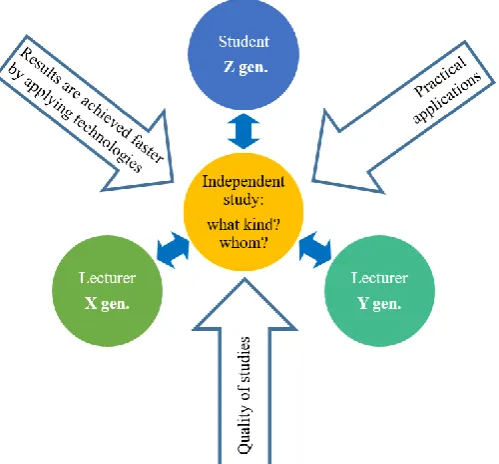
Figure 6.1. Generations X, Y, Z in the study process (prepared by authors)
When preparing tasks for self-study works, it is useful to evaluate the distinctive features of the Z generation. This would create mutual trust, which is significant for successful cooperation, and would prevent a conflict as well as power controversy conflict, which is highly unacceptable and negatively perceived by the Z generation. This generation is characterized by individualism, it is therefore advisable for the performance of tasks to be carried out using the benefit of technologies. As practical validity is significant for students, the practical considerations of the work based on the facts of interest must be considered when preparing the tasks. It is also essential to ensure constant updating of content and requirements (i. e. every year and for every student group) as it is typical for this generation to look for and follow the example of other works. Generation Z students are looking for quick results. Regarding this it may be useful to break the tasks down into certain parts or to develop some smaller tasks. This would allow to get a faster result and the requirements of the study program would also be met.
CONCLUSIONS
Essential features of teachers belonging to the generation X are liberalism, spirituality and unacceptability of strict requirements.
Teachers belonging to generation Y are orientated towards a fast result, however, personal development is important to them as well as recognition and evaluation; they value humanistic ideas.
Having assessed the characteristics of the generations of teachers, it is possible to identify their requirements that can cause misunderstandings, opposition and contradictions. It is unacceptable for the teachers of X and Y generations that Z generation students do not seek personal development, are demanding and sometimes even arrogantly aggressive in their communication.
Generation Z members are striving for a quick result, therefore, often, when doing independent work, they use the examples of previously performed tasks that they find online, rather than relying on their own efforts and personal creativity. It is important to give generation Z students practical self-study tasks that would be broken down into smaller tasks the performance of which would involve the use of technologies.
Page 215 REFERENCES
1. Barbosa J., Silva A., Ferreira MA, Severo M. (2017). The impact of students and curriculum on self-study during clinical training in medical school: a multilevel approach. BMC Med Educ. 17: 9. Available at: https://www.ncbi.nlm.nih.gov/pmc/articles/PMC5237242/ (visited 2019-01-15). 2. Chester, E. (2002). Employing Generation Why? Tucker House Books. Available at:
https://ericchester.com/wp-content/uploads/2016/09/GenWhy-eBook.pdf (visited 2019-02-20). 3. Cordington, G. (2008). Detailed Introduction to Generational Theory. Available at:
http://tomorrowtoday.uk.com/articles/article001_intro_gens.htm (visited 2019-01-29).
4. Kanišauskas S., 2008, Sinergetinio pasaulėvaizdžio kontūrai. Vilnius: Mykolo Riomerio universiteto Leidybos centras.
5. Flagler, W., Thompson, T. (2014). 21st Century Skills: Bridging the Four Generations in Today’s Workforce. Available at: http://cannexus.ca/wp-content/uploads/2014/04/21st-Century-Skills-Bridhing-the-Four-Generations-in-Todays-Workforce-Flager-Thompson.pdf (visited 2018-12-21). 6. Maslow A. H. (2006). Motyvacija ir asmenybė. Vilnius: APOSTROFA.
7. McCrindle, M. (2014). The ABC of XYZ. Understanding the Global Generations. McCrindle
Researche Pty Ltd, Australia. Available at:
https://www.academia.edu/35646276/The_ABC_of_XYZ_-_Mark_McCrindle_PDF.pdf (visited: 2019-02-12).
8. Rutkienė A., Tanzegolskienė I. (2014). Studentų savarankiškumo skatinimas studijuojant universitete. Mokslo studija. Kaunas: Versus.
9. Stanišauskienė V. (2015). Karjeros sprendimus lemiančių veiksnių dinamika kartų kaitos kontekste. //TILTAI, 2015, 2, 1–20. Available at: https://etalpykla.lituanistikadb.lt/object/LT-LDB-0001:J.04~2015~1491484071387/J.04~2015~1491484071387.pdf (visited: 2019-02-10)
10. Targamadzė V., Girdzijauskienė S., Šimelionienė A., Pečiuliauskienė, Nauckūnaitė Z. (2015) Naujoji (Z) karta – prarastoji ar neatrastoji? Naujosios (Z) kartos vaiko mokymosi procesų esminių aspektų indentifikavimas. Mokslo studija. Available at: http://www.esparama.lt/documents/10157/490675/2015+Naujoji+Z+karta.pdf (visited: 2019-02-15)
11. Tidikis, R. (2003). Socialinių mokslų tyrimų metodologija. Vadovėlis. Vilnius: Lietuvos teisės universiteto Leidyklos centras.
12. Žydžūnaitė V., Sabaliauskas S. (2017). Kokybiniai tyrimai. Principai ir metodai., Vilnius: Leidykla Vaga.
13. Warring, S. (2010). Facilitating independence amongst Chinese international students completing a Bachelor of Applied Business Studies Degree. Journal of Further and Higher Education. Available
at: Available at: