STUDY OF FUNCTIONING OF OPD SERVICES IN AYURVEDIC HEALTH
CENTRE, BAGGI, DISTT MANDI, HIMACHAL PRADESH
District Mandi, Himachal
INTRODUCTION
OPD should be user friendly. Patients want prompt service, to see the doctor and comfortable surroundings. They should receive appropriate care. This implies clarity of purpose of referral, provision of appropriate facilities, and a monitored 'plan of care'. They should know why they are attending OPD and should only be reviewed if there is a cogent clinical reason for this. Government of Himachal Pradesh has planned deep rooted health care services in the state. Health care institutions are functioning at village level. For basic and holistic treatment at this level Ayurvedic Health Centres (AHC) are running the OPD. Objective of project was to measure and identify the aspects of outpatient
Research Article International Ayurvedic Medical Journal ISSN:2320 5091
As a result of technological developments, demand for highly specialised staff, changing facility requirements and increased consumer demands, the health care world over is becoming progressively complex and expensive. This phenomenon has put great emphas on looking more carefully at the community needs for services and setting priorities based on those needs, managing them more carefully and continually evaluating how
Researchers have found it useful to differentiate between
patient perceptions of quality. Patient satisfaction reflects the extent to which service standards have been met and is typically
general satisfaction with care received. Pe specific aspects of service quality. Satisfaction
ratings of specific aspects of quality. Furthermore, ratings of specific much more actionable information for
services. This project described the 16
quality at a range of facility types for outpatients in an Ayurvedic Health Centre.
STUDY OF FUNCTIONING OF OPD SERVICES IN AYURVEDIC HEALTH
CENTRE, BAGGI, DISTT MANDI, HIMACHAL PRADESH
Monika Sharma
AMO, AHC Baggi
District Mandi, Himachal Pradesh, India
OPD should be user friendly. Patients want prompt service, to see the doctor and comfortable surroundings. They should receive appropriate care. This of referral, provision of appropriate facilities, and a monitored 'plan of care'. They should know why they are attending OPD and should only be reviewed if there is a Government of Himachal Pradesh has planned deep health care services in the state. Health care institutions are functioning at village level. For basic and holistic treatment at this level Ayurvedic Health Centres (AHC) are running the OPD. o measure and of outpatient’s
perception of quality which have large effects on patients satisfaction
recommend methods to improve performance of OPD Services at AHC Baggi, Distt. Mandi.
MATERIAL AND METHODS
This study was conducted in Ayurvedic Health Centre located at Baggi, Distt Mandi in Himachal Pradesh.
is serving people of village Baggi under Shegli Panchyat, Distt. Mandi, HP. is a Village in Mandi Sadar Tehsil in Mandi District of Himachal Pradesh State. Area of Shegli Panchyat
hectares. The population of village Bag under Shegli Panchyat is 3000
has staff of four people, 1 Doctor, 1 Pharmacist, 1 Midwife, and 1 Class four. International Ayurvedic Medical Journal ISSN:2320 5091
ABSTRACT
As a result of technological developments, demand for highly specialised staff, changing facility requirements and increased consumer demands, the health care world over is becoming progressively complex and expensive. This phenomenon has put great emphas on looking more carefully at the community needs for services and setting priorities based on those needs, managing them more carefully and continually evaluating how are
Researchers have found it useful to differentiate between general patient satisfaction and patient perceptions of quality. Patient satisfaction reflects the extent to which expectations of service standards have been met and is typically operationalized by asking patients about
with care received. Perceptions of quality record patient
specific aspects of service quality. Satisfaction reflects personal preferences much more than of specific aspects of quality. Furthermore, ratings of specific aspects of quality offer ionable information for quality improvement than general satisfaction with This project described the 16 - item scale that can be used to measure perceived quality at a range of facility types for outpatients in an Ayurvedic Health Centre.
STUDY OF FUNCTIONING OF OPD SERVICES IN AYURVEDIC HEALTH
CENTRE, BAGGI, DISTT MANDI, HIMACHAL PRADESH
perception of quality which have large effects on patients satisfaction and to recommend methods to improve performance of OPD Services at AHC
MATERIAL AND METHODS
This study was conducted in Ayurvedic ocated at Baggi, Distt.
. AHC Baggi is serving people of village Baggi under Mandi, HP. Baggi is a Village in Mandi Sadar Tehsil in of Himachal Pradesh State. is 3641.67 e population of village Baggi under Shegli Panchyat is 3000 people. It people, 1 Doctor, 1 Pharmacist, 1 Midwife, and 1 Class four. International Ayurvedic Medical Journal ISSN:2320 5091
AHC administration is in the hand of in charge Ayurvedic Medical Officer who in turn report to Distt. Ayurvedic Officer, distt Mandi. A convenient sample of outpatients was drawn from all the area concerned in the month of April 2014. Outpatients were sampled as they exited from the health facility. Verbal consent was taken from patients before interviewing, but no record of refusals were kept. Total 100 outpatients were interviewed. Patient from the age group of
18-60 yrs were taken and those were rated as defaulter case that were unable to answer most of the questions. Data was collected by the staff of AHC Baggi, who helped them to understand the questions in their local parlance.
RESULTS AND OBSERVATIONS I. Data collected from Questionnaire
is summarized
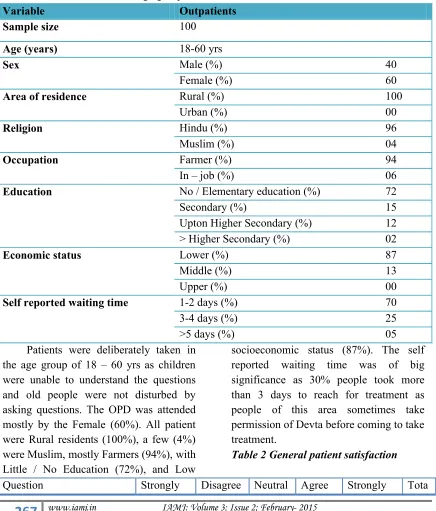
Table 1 Background characteristics of sampled outpatients
Variable Outpatients
Sample size 100
Age (years) 18-60 yrs
Sex Male (%) 40
Female (%) 60
Area of residence Rural (%) 100
Urban (%) 00
Religion Hindu (%) 96
Muslim (%) 04
Occupation Farmer (%) 94
In – job (%) 06
Education No / Elementary education (%) 72
Secondary (%) 15
Upton Higher Secondary (%) 12 > Higher Secondary (%) 02
Economic status Lower (%) 87
Middle (%) 13
Upper (%) 00
Self reported waiting time 1-2 days (%) 70
3-4 days (%) 25
>5 days (%) 05
Patients were deliberately taken in the age group of 18 – 60 yrs as children were unable to understand the questions and old people were not disturbed by asking questions. The OPD was attended mostly by the Female (60%). All patient were Rural residents (100%), a few (4%) were Muslim, mostly Farmers (94%), with Little / No Education (72%), and Low
socioeconomic status (87%). The self reported waiting time was of big significance as 30% people took more than 3 days to reach for treatment as people of this area sometimes take permission of Devta before coming to take treatment.
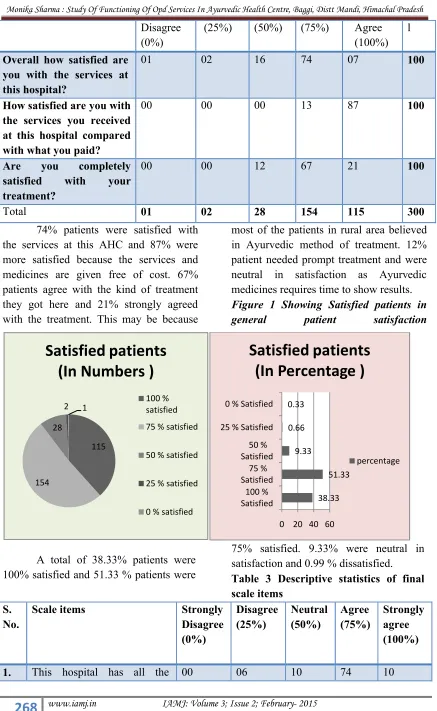
Table 2 General patient satisfaction
Disagree (0%)
(25%) (50%) (75%) Agree (100%)
l
Overall how satisfied are you with the services at this hospital?
01 02 16 74 07 100
How satisfied are you with the services you received at this hospital compared with what you paid?
00 00 00 13 87 100
Are you completely satisfied with your treatment?
00 00 12 67 21 100
Total 01 02 28 154 115 300
74% patients were satisfied with the services at this AHC and 87% were more satisfied because the services and medicines are given free of cost. 67% patients agree with the kind of treatment they got here and 21% strongly agreed with the treatment. This may be because
most of the patients in rural area believed in Ayurvedic method of treatment. 12% patient needed prompt treatment and were neutral in satisfaction as Ayurvedic medicines requires time to show results. Figure 1 Showing Satisfied patients in general patient satisfaction
A total of 38.33% patients were 100% satisfied and 51.33 % patients were
75% satisfied. 9.33% were neutral in satisfaction and 0.99 % dissatisfied.
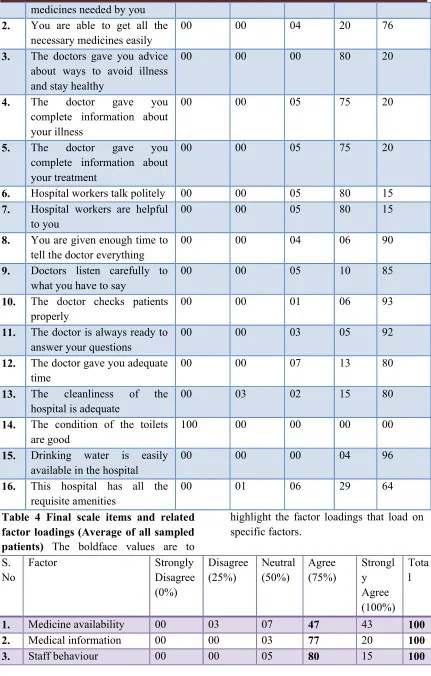
Table 3 Descriptive statistics of final scale items
S. No.
Scale items Strongly Disagree (0%)
Disagree (25%)
Neutral (50%)
Agree (75%)
Strongly agree (100%)
1. This hospital has all the 00 06 10 74 10
115
154 28
2 1
Satisfied patients
(In Numbers )
100 % satisfied 75 % satisfied
50 % satisfied
25 % satisfied
0 % satisfied
38.33 51.33 9.33
0.66 0.33
0 20 40 60 100 %
Satisfied 75 % Satisfied
50 % Satisfied 25 % Satisfied 0 % Satisfied
Satisfied patients
(In Percentage )
medicines needed by you
2. You are able to get all the necessary medicines easily
00 00 04 20 76
3. The doctors gave you advice about ways to avoid illness and stay healthy
00 00 00 80 20
4. The doctor gave you complete information about your illness
00 00 05 75 20
5. The doctor gave you complete information about your treatment
00 00 05 75 20
6. Hospital workers talk politely 00 00 05 80 15
7. Hospital workers are helpful to you
00 00 05 80 15
8. You are given enough time to tell the doctor everything
00 00 04 06 90
9. Doctors listen carefully to what you have to say
00 00 05 10 85
10. The doctor checks patients properly
00 00 01 06 93
11. The doctor is always ready to answer your questions
00 00 03 05 92
12. The doctor gave you adequate time
00 00 07 13 80
13. The cleanliness of the hospital is adequate
00 03 02 15 80
14. The condition of the toilets are good
100 00 00 00 00
15. Drinking water is easily available in the hospital
00 00 00 04 96
16. This hospital has all the requisite amenities
00 01 06 29 64
Table 4 Final scale items and related factor loadings (Average of all sampled patients) The boldface values are to
highlight the factor loadings that load on specific factors.
S. No
Factor Strongly
Disagree (0%)
Disagree (25%)
Neutral (50%)
Agree (75%)
Strongl y Agree (100%)
Tota l
1. Medicine availability 00 03 07 47 43 100
2. Medical information 00 00 03 77 20 100
4. Doctor behaviour 00 00 04 08 88 100
5. Hospital infrastructure 25 1 02 12 60 100
Total 25 04 21 224 226 500
Results of final scale items and related factor Hospital Infrastructure was found unsatisfactory (25.75%) as there was no toilet facility for patients. Doctor’s and staff behaviour was satisfactory. The higher scores (88.2%) on the doctor behaviour subscale was likely due to acquiescence bias and gratitude bias. Staff behaviour was satisfactory (80%) may be due to prevalent caste disparity. The medical information (77%) was helpful to
patients as village people usually follow the instructions given by the doctor. About medicines availability patients were confused (43% - 47%) because medicines are available free, they get some of them but for the rest they have to travel 8KM to nearest town because there is no chemist
shop in the village and surrounding area.
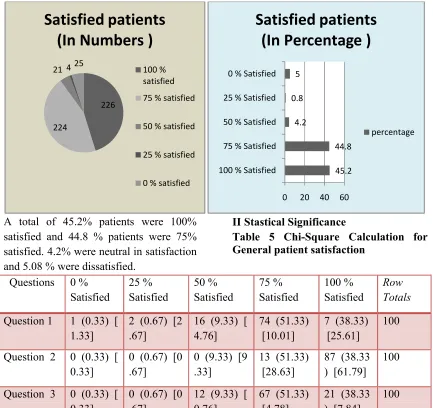
Figure 2 Showing Satisfied patients in descriptive patient satisfaction
A total of 45.2% patients were 100% satisfied and 44.8 % patients were 75% satisfied. 4.2% were neutral in satisfaction and 5.08 % were dissatisfied.
II Stastical Significance
Table 5 Chi-Square Calculation for General patient satisfaction
Questions 0 % Satisfied
25 % Satisfied
50 % Satisfied
75 % Satisfied
100 % Satisfied
Row Totals
Question 1 1 (0.33) [ 1.33]
2 (0.67) [2 .67]
16 (9.33) [ 4.76]
74 (51.33) [10.01]
7 (38.33) [25.61]
100
Question 2 0 (0.33) [ 0.33]
0 (0.67) [0 .67]
0 (9.33) [9 .33]
13 (51.33) [28.63]
87 (38.33 ) [61.79]
100
Question 3 0 (0.33) [ 0.33]
0 (0.67) [0 .67]
12 (9.33) [ 0.76]
67 (51.33) [4.78]
21 (38.33 ) [7.84]
100 226
224 21 425
Satisfied patients
(In Numbers )
100 % satisfied 75 % satisfied
50 % satisfied
25 % satisfied
0 % satisfied
45.2 44.8 4.2
0.8 5
0 20 40 60 100 % Satisfied
75 % Satisfied 50 % Satisfied 25 % Satisfied 0 % Satisfied
Satisfied patients
(In Percentage )
Column Totals
1 2 28 154 115 300 (Gr
and Total) P Value Results
Chi2=159.5075 DF=4
The two-tailed P value is less than 0.0001 The result is significant at p < 0.05.
By conventional criteria, this difference is considered to be statistically significant.
Table 6 Chi-Square Calculation for Final scale items and related factors
0 % Satisfied 25 % Satisfie d
50 % Satisfie d
75 % Satisfied
100 % Satisfied Row Totals
Medicine
availability 0 (5.00) [5.00] 3 (0.80) [6.05]
7 (4.20) [1.87]
47 (44.80 )
[0.11]
43 (45.20) [0.1
1] 100
Medical informatio n
0 (5.00) [5.00] 0 (0.80) [0.80]
3 (4.20) [0.34]
77 (44.80 )
[23.14]
20 (45.20) [14.
05] 100
Staff behaviour
0 (5.00) [5.00] 0 (0.80) [0.80]
5 (4.20) [0.15]
80 (44.80 )
[27.66]
15 (45.20) [20.
18] 100
Doctor behaviour
0 (5.00) [5.00] 0 (0.80) [0.80]
4 (4.20) [0.01]
8 (44.80)
[30.23]
88 (45.20) [40.
53] 100
Hospital infrastructu re
25 (5.00) [80.
00] 1 (0.80) [0.05]
2 (4.20) [1.15]
12 (44.80 )
[24.01]
60 (45.20) [4.8
5] 100
Column
Totals 25 4 21 224 226 500(Gran
d Total) P Value Results
Chi2=296.8836 DF=4
The two-tailed P value is less than 0.0001 The result is significant at p < 0.05.
By conventional criteria, this difference is considered to be statistically significant.
Results from analyzing general patient satisfaction scores and the different perceived quality subscale scores and other variables are summarized above. Analysis of residuals indicated that model fit was generally good. All the perceived quality dimensions have a positive and statistically significant effect on overall
outpatient satisfaction. Patients were satisfied irrespective of various problems. Although this data is confined to only 100 patients out of the whole population, so possibility of various biases can’t be ruled out.
III. Problems of AHC
Given below are the major problems AHC Baggi is facing in general, its impact on the functioning and possible actions that are required to be taken by the authorities.
Table no. 7: Problems of the AHC Baggi
S. No.
Problem Severity of
problem
It’s impact on functioning
Action required, if any
1. Low OPD turnout Low Low More service and more
2. Low motivation of staff
Moderate Moderate Motivational
leadership and benefits
3. Hospital infrastructure High Low Construction of
departmental building
4. Medicine availability Moderate High More supply on need and demand
5. Medical information Low Moderate Educating the primary stakeholders
6. More self reported waiting time
Moderate Moderate Ensuring better
connectivity and transport facilities
7. Handling difference Low Low Making SOP for all procedures
8. Natural disaster ( flood )
Low Very High Administrative and
functional disaster management
IV. Factors responsible for ill health of Government Health services in HP
1. Absence of forward planning 2. Grouping of unrelated activities 3. Lack of clarity in duties and
responsibilities
4. Lack of delegation and decentralization of authority
5. Faulty staffing procedure
Political interference
Employee exodus
Absence or forced transfer
Lack of training and CMEs
Unutilised specialised physicians
Delayed promotion of staff
Biased rules for regular and contract employees
6. Ineffective leadership
Lack of coordination amongst staff members
Unsatisfactory supply of drugs
Favouritism in the allotment of funds
Less emphasis on humane side of medicine
Old techniques of drug dispensing
Occupational limitations
7. Lack of motivation
Poorly paid staff members
Low morale of nursing personnel
Idle equipments due to neglect
Non courteous attitude of employees in the confrontations
In effective communication
Absence of public relation duties
Lack of basic facilities for working
Lack of recreational activities
No housing / travelling facilities
No facilities for the families of staff members
8. Lack of formal control mechanism
Records management in bad shape
Defective infrastructure
Corruption amongst staff
Negligence
Professional misconduct
Less interest in proper biomedical waste disposal 9. Imprudent financial benefits and
management
The critical success factors for successful OPDs include:
• Good organisation
• Medical Information systems to facilitate audit
• Good communication within staff members
• Meeting patient needs
• Appropriate numbers and mix of personnel in OPD.
RECOMMENDATIONS:
Enhancing quality of OPD services by utilisation of services.
OPD should have a clear written objective understood by all personnel.
Easy access to OPD with better connectivity through roads and transport.
Enforce rule that health card must be presented before delivery of care.
Supply of drug must be OPD dependent with the approval of incharge AMO of AHC.
Drugs must be from GMP certified pharmacy and AFI / API / IP referred formulation.
Organising monthly Ayurvedic Health Camps for publicity of the AHC.
Improve health information systems.
Delegation and decentralization of authority.
Better coordination between Health and AYUSH department for better referral services.
Clear-cut transfer policy of staff without political interference.
Regular updates and periodic orientation and training of the members of staff should be organised.
Staffs lack motivation and commitment to the cause of improving OPD services. Incentives and facilities may be provided to the
members of staff to increase their motivational levels.
Regular minimal funds for up gradation and maintenance of the AHC.
Generating additional funds through minimal user charges at the AHC level.
Utilisation of funds generated through various schemes.
Guidelines for expenditure of funds should be framed, and audit mechanism must be defined.
Barriers to effective functioning of OPD should be identified at the earliest and effective measures should be taken to eliminate these barriers.
It is critical that organisation meets regularly, recommend necessary changes and ensure their implementation.
Contact details of staff must be displayed in the hospital to promote transparency and ensure grievances redressed.
Efforts should be made to increase community participation in the management of the hospital.
Awareness generation activities should be organised to improve the awareness level of the beneficiaries.
There should be proper feedback mechanism to effectively implement the decisions.
By increasing access to services to all types of health institutions, providing quick services, and increasing timing of OPD hours can help to increase the level of patient satisfaction which is the essential message provided by this study. Further qualitative and follow-up studies to further improve the quality of care are also recommended.
I am very much thankful to Dr. Khem Singh, Distt Ayurvedic Officer, Distt. Mandi and the staff of Ayurvedic Health Centre, Baggi, Distt. Mandi, Himachal Pradesh, for their co-operation, which was very much needed for the successful completion of this work.
REFERENCES
1. World Health Organization (WHO). Traditional Medicine in Asia.: World Health Organization.; 2001, (Accessed in May 2014).
2. Krishna dipankar rao, david h. Peters and karen bandeen-roche - Towards patient-centered health services in India—a scale to measure patient perceptions of quality International Journal for Quality in Health Care 2006; Volume 18, Number 6, Advance Access Publication: 29 September 2006. pp. 414–42
3. Colledge Nicki R. ,Walker R. brian, Ralson H. Stuart - Davidson’s Principle and Practices of medicine-Churchill livingstone publication, 21st edition2010, pp 2
4. Assignment ,Theme 1 , block 1 -Introduction to management principles and Practices in Hospitals, NIHFW, New Delhi, March 2012, pp 48-49 5. Joshi DC, Joshi Mamta – Hospital
Administration, Jaypee brothers
medical publishers(P) Ltd, 2009, pp 25-27,pp84-90,pp362-367.
6. Bodeker G., Grundy C., Burford G., Shein K. WHO Global Atlas of Traditional, complementary and alternative medicine. Vol. 1.World Health Organization; 2005, (Accessed in May 2014).
7. National policy & programmes on Ayurveda, Yoga & Naturopathy, Unani, Siddha And Homoeopathy (Ayush) 2002 , Department of Ayurveda, Yoga & Naturopathy, Unani, Siddha and Homoeopathy. (AYUSH) Ministry of Health & Family Welfare Government of India Red Cross Society Building New Delhi-110 011(Accessed in May 2014).
8. HP development Report, Academic Foundation, 1 Jan 2005(Accessed in May 2014).
CORRESPONDING AUTHOR
Dr. Monika Sharma
AMO, AHC Baggi
District Mandi, Himachal Pradesh, India
Email:
drmonika.herbalcosmetics@gmail.com
.
Source of support: Nil