Publicly Accessible Penn Dissertations
Summer 8-13-2010
Know How, Know Whom, Know Where: A Global
Analysis of Investor Experience and Startup
Performance
Elisa Álvarez-GarridoUniversity of Pennsylvania, [email protected]
Follow this and additional works at:http://repository.upenn.edu/edissertations
Part of theBusiness Administration, Management, and Operations Commons,Entrepreneurial and Small Business Operations Commons, and theInternational Business Commons
This paper is posted at ScholarlyCommons.http://repository.upenn.edu/edissertations/226 For more information, please [email protected].
Recommended Citation
Álvarez-Garrido, Elisa, "Know How, Know Whom, Know Where: A Global Analysis of Investor Experience and Startup Performance" (2010).Publicly Accessible Penn Dissertations. 226.
Experience and Startup Performance
Abstract
This dissertation analyzes where and when experienced investors add value to startups. Building on the resource-dependence theory and the relational view of the firm, I argue that the positive effect of investor experience on startup performance is stronger when the startup faces a more uncertain environment. The first essay predicts a greater effect of investor experience early in the life cycle of the startup and when financial markets are less developed; when the expropriation hazard is high, investors have fewer incentives to make a contribution. The second essay examines the effect of investor experience on different innovative outcomes, and how these effects vary with the hazard of expropriation. The final essay studies whether these effects derive from the social status or the knowledge of investors. I collected a sample of 688 biotechnology startups, founded between 1990 and 2004, from 30 different countries, and followed them until they went public, were acquired, or until 2005. I gathered the patents and publications, the investment history, and for each investor, the experience and network position in the global syndication network. Empirical analyses address the endogeneity problem derived from the matching of investors and startups using selection models and firm fixed effects. The main finding is that the positive effect of investor experience on firm performance and innovative outcomes is moderated by the institutional environment. The effect of investor experience on the likelihood of an IPO or acquisition is accentuated when financial markets are less developed; however, when faced with a hazard of expropriation, the effect is attenuated. Interestingly, experienced investors enhance innovative outcomes even more when the hazard of expropriation is high; this suggests that the experience of investors does not have the same value for financial or innovative performance in regulatory unstable
environments. Finally, the effect of investor experience is driven both by the social status and the knowledge resources of investors. Moreover, both effects vary across institutional environment, but in different ways. Therefore, it is necessary to consider the institutional environment to analyze which investors add value to a startup, and the processes by which they do so.
Degree Type
Dissertation
Degree Name
Doctor of Philosophy (PhD)
Graduate Group
Management
First Advisor
Mauro Guillén
Keywords
firm performance, entrepreneurial ventures, international business, experience, institutions, biotechnology
International Business
KNOW HOW, KNOW WHOM, KNOW WHERE: A GLOBAL ANALYSIS OF
INVESTOR EXPERIENCE AND STARTUP PERFORMANCE
Elisa Álvarez-Garrido
A DISSERTATION
in
Management
For the Graduate Group in Managerial Science and Applied Economics
Presented to the Faculties of the University of Pennsylvania
in
Partial Fulfillment of the Requirements for the
Degree of Doctor of Philosophy
2010
Supervisor of Dissertation
Signature_________________
Mauro Guillén, Professor of International Management
Graduate Group Chairperson
Signature_________________
Eric Bradlow, Professor of Marketing, Statistics, and Education
Dissertation Committee
Know How, Know Whom, Know Where: A Global Analysis of Investor Experience and
Startup Performance
COPYRIGHT
2010
A mis padres, por enseñarme a perseguir mis sueños.
A mi marido, Kike, por ayudarme a alcanzarlos incluso si supone cruzar un océano.
ACKNOWLEDGEMENT
If writing a dissertation in a hundred and some pages is difficult, condensing six
years of relationships and friendship in a few lines is even more so.
First and foremost, I want to thank my advisor, Mauro Guillén, for his
encouragement and support ever since I started at Wharton. He was the best mentor I
could have had, always there when I needed him but at the same time knowing when to
let me fly solo. I can only aspire to follow his model as a scholar and person in the years
to come. I am grateful as well for having had the chance to work with my committee
members, David Hsu, Lori Rosenkopf and Harbir Singh. They have helped me shape my
work in countless ways, and have made my time at Wharton a great experience.
I would have never dreamt of coming to Wharton if it were not for the faculty and
friends at Universidad Carlos III that made it possible. In particular, I wanted to thank
Zulima Fernández, whose support and encouragement helped me cross an ocean. I
wanted to thank Belén Usero and María Jesús Nieto for being my raw models in my early
years, and to Antonio Revilla, my colleague and office mate. And I will never forget all
my colleagues in the PhD at Carlos III, and especially Pascual Berrone, Liliana Gelabert,
Rebeca Méndez and María José Rodríguez.
While I left many friends behind, I also got to meet great friends in Philadelphia. I
am indebted to Elizabeth Vaquera, one of my greatest friends, who has always been there
for me, through the good and tough times, and continues to be my “most called number.”
I am grateful to my friends and colleagues in the PhD, and in particular Noah Eisenkraft,
and Jihae Shin. Your feedback, friendship and lunches made Wharton a better place. I
was also lucky to meet Cristina Quintana, Andrea Martínez Noya, and Margarita Torre
Fernández, with whom I shared long coffees and lunches that made me feel at home. I
wanted to thank Patricia Zapater for her friendship and support, and for teaching me to
combine colors! And I also wanted to thank Susan Fisher, Victoria Reinhardt and Robin
Woods for their support and help.
To all my friends back in Spain: María Gómez, Vanessa Sánchez Cáceres, and
Marta Sanz Chinchilla; Carolina Encabo; Carmen Gómez, Laura García, Sara González,
and David Canal; Ángel Deacal Agudo and Aurora Pérez Berzal. Thank you! I am
fortunate to be able to count on you despite the distance, and I wish I could have been
there more for you. And, of course, I want to thank my family for their support and
patience. Gracias por vuestro apoyo y ánimos, y por sobrellevar la distancia; sé lo mucho
que os habría gustado que Filadelfia estuviera a la vuelta de la esquina para poder ver a
Patricia más a menudo. It is all of you, and not the Serrano ham, that I really miss.
Last but not least, I am indebted to my friend and husband, Armando Lopez
(Kike). Always by my side, he encouraged me to come to the U.S. to study, leaving many
things and friends behind. And while here, he learned about publications, reviewers and,
above all, endogeneity, more than he would have liked. You truly have earned your “PhD
ABSTRACT
KNOW HOW, KNOW WHOM, KNOW WHERE: A GLOBAL ANALYSIS OF
INVESTOR EXPERIENCE AND STARTUP PERFORMANCE
Elisa Álvarez-Garrido
Mauro Guillén
This dissertation analyzes where and when experienced investors add value to
startups. Building on the resource-dependence theory and the relational view of the firm,
I argue that the positive effect of investor experience on startup performance is stronger
when the startup faces a more uncertain environment. The first essay predicts a greater
effect of investor experience early in the life cycle of the startup and when financial
markets are less developed; when the expropriation hazard is high, investors have fewer
incentives to make a contribution. The second essay examines the effect of investor
experience on different innovative outcomes, and how these effects vary with the hazard
of expropriation. The final essay studies whether these effects derive from the social
status or the knowledge of investors. I collected a sample of 688 biotechnology startups,
they went public, were acquired, or until 2005. I gathered the patents and publications,
the investment history, and for each investor, the experience and network position in the
global syndication network. Empirical analyses address the endogeneity problem derived
from the matching of investors and startups using selection models and firm fixed effects.
The main finding is that the positive effect of investor experience on firm performance
and innovative outcomes is moderated by the institutional environment. The effect of
investor experience on the likelihood of an IPO or acquisition is accentuated when
financial markets are less developed; however, when faced with a hazard of
expropriation, the effect is attenuated. Interestingly, experienced investors enhance
innovative outcomes even more when the hazard of expropriation is high; this suggests
that the experience of investors does not have the same value for financial or innovative
performance in regulatory unstable environments. Finally, the effect of investor
experience is driven both by the social status and the knowledge resources of investors.
Moreover, both effects vary across institutional environment, but in different ways.
Therefore, it is necessary to consider the institutional environment to analyze which
CONTENTS
1. The Resource Provision Role of Investors ... 1
Introduction ... 1
Literature Review ... 2
Dissertation Outline ... 9
Data and Method ... 15
2. Investors’ Experience and Firm Performance ... 18
Introduction ... 18
Investors’ Resources ... 20
Hypotheses Development ... 23
Methodology ... 32
Results... 41
Discussion and Conclusion ... 51
3. Investors’ Experience and Innovative Outcomes ... 56
Introduction ... 56
Theory and Hypotheses Development ... 58
Methodology ... 63
Results... 70
Discussion and Conclusion ... 81
4. Investors’ Know-How or Investors’ “Know-Whom”? ... 83
Introduction ... 83
Methodology ... 92
Results... 95
Discussion and Conclusions ... 111
5. Conclusions ... 113
LIST OF TABLES
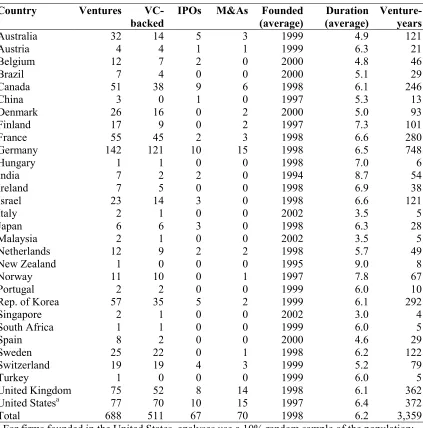
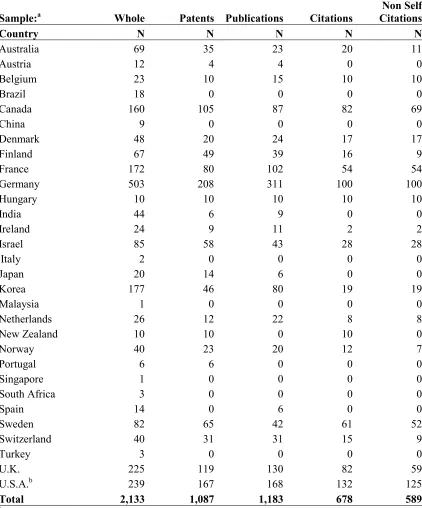
Table 2-1. Sample Description by Country of Origin... 34
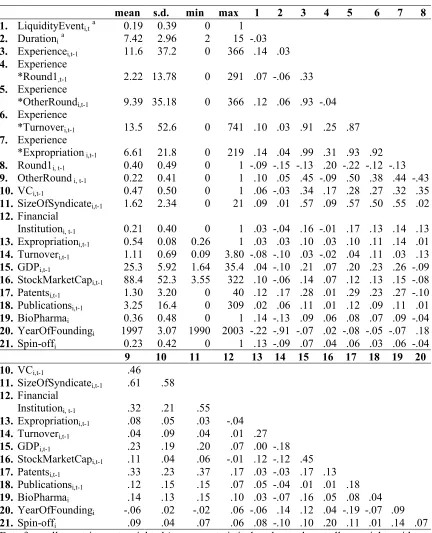
Table 2-2. Descriptive Statistics and Correlations ... 42
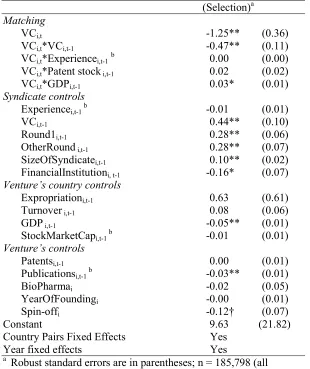
Table 2-3. Results of Probit Analysis on the Probability of Matching ... 44
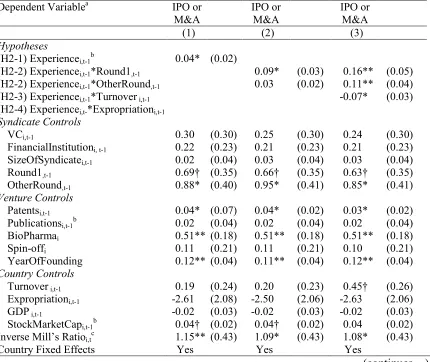
Table 2-4. Results of Cox Regression on the Hazard of an IPO or an Acquisition ... 45
Table 3-1. Dependent Variables, Distribution by Country ... 72
Table 3-2. Descriptive Statistics ... 74
Table 3-3. Correlations ... 75
Table 3-4. Results of the QMLE Poisson on Patents and Publications ... 79
Table 4-1. Syndication Networks, Nodes and Ties... 93
Table 4-2. Descriptive Statistics ... 96
Table 4-3. Correlations ... 98
Table 4-4. Results of the Probit Analysis on the Probability of Matching ... 100
Table 4-5. Results of Cox Regression on the Hazard of an IPO or an Acquisition ... 103
Table 4-6. Results, Comparison to Hochberg et al (2007) ... 106
Table 4-7. Results of QMLE Poisson on Innovative Outcomes ... 110
LIST OF FIGURES
Figure 2-1. Effect of Experience by Level of Turnover ... 48
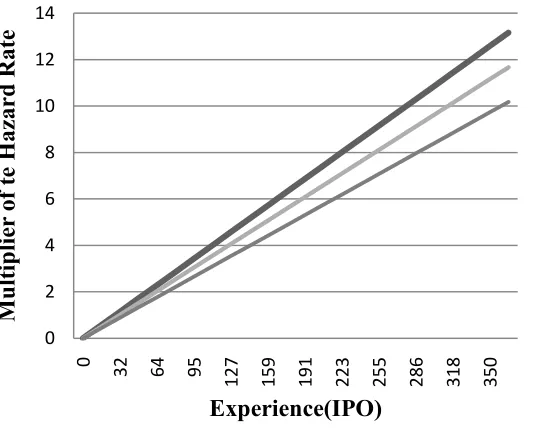
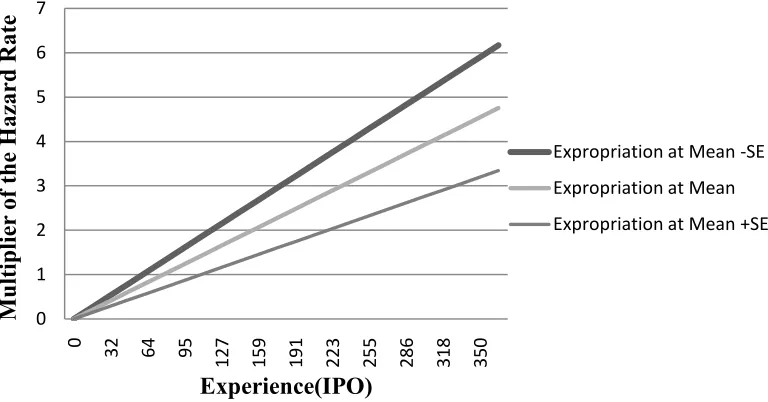
Figure 2-2. Effect of Experience by Level of Expropriation Hazard ... 49
Figure 4-1. Effect of Experience by Level of Expropriation Hazard ... 107
1.
The Resource Provision Role of Investors
Introduction
Decades of research have examined the performance consequences of the
governance and ownership of the organizations, starting with the seminal work of Berle
and Means (1932) and continued by the work of agency theorists. More recently scholars
from different traditions have studied investors in their role of resource providers.
Resource-dependence theorists investigate the role of the board of directors in managing
environmental uncertainty and providing external resources (Daily & Dalton, 1994a,
1994b). Research on entrepreneurship has analyzed the performance consequences of
having different types of investors, and some of the mechanisms by which this may
happen (Gompers & Lerner, 2004; Gorman & Sahlman, 1989; Sapienza, 1992). Besides,
the international business literature has studied how the investor mix changes across
countries, and their impact on performance (Berglof, 1988; La Porta, Lopez-de-Silanes,
& Shleifer, 1999).
Because investors provide resources to the organizations, it is important to
understand which investors have the more valuable resources and under what
circumstances investors may have a greater impact. This question is economically
important, especially for entrepreneurial firms, since they have to accept a lower
valuation of their business to attract investors with higher reputation, with the hope that
they will attain higher performance (Hsu, 2004). Past research has focused on answering
networks have a greater effect on performance (Hochberg, Ljungqvist, & Lu, 2007;
Stuart, Hoang, & Hybels, 1999). Yet, there is still much to be learned about under what
conditions investors may have a greater impact on the performance of entrepreneurial
firms.
This dissertation seeks to fill this gap by analyzing where the effect of investors’
experience and networks impact the performance of entrepreneurial firms more, across
different institutional environments. In particular, I seek to understand (1) how the value
added by investors varies with the financial and regulatory environment; (2) how
investors contribute differently to different outcomes, such as financial performance and
innovative outcomes; (3) and the relevance of networks and knowledge of this effect
across different environments.
Literature Review
The Impact of Investor Mix on Performance
The link between investor mix and performance is one of the most important
topics in strategy research. It is well documented that investor mix varies widely across
firms, industries and countries (Berglof, 1988; La Porta et al., 1999). A subset of studies
has analyzed the impact of investors on performance, among which agency theory studies
are salient (e.g. Jensen & Ruback, 1983). This dissertation contributes to the strategy
literature by studying the impact of investor mix characteristics on the performance of
Investors such as venture capital firms make their resources and abilities available
to their portfolio ventures, for instance by providing access to their network of contacts
(Hsu, 2006; Lindsey, 2002). As a venture capitalist explains,“we provide our portfolio
companies with access to our contacts in other countries. This is very useful, for example,
to help them internationalize. (…) [The portfolio firms] can use our contacts and offices
for the first contacts with the seller. They have support there: people who know the
country, the legal system… It is really useful for them.”1
Consistent with the relational view of the firm (Dyer & Singh, 1998), the
resources and abilities that venture capital firms bring to the partnership relationship have
the potential to generate relational rents to the extent that they are complementary with
the venture’s resources. To effectively generate relational rents, firms within the alliance
need to develop an organizational complementarity such that the complementary
resources effectively generate rents (Dyer & Singh, 1998). De Clercq and Sapienza
(2001) theorize that it is through knowledge sharing routines and relation specific
investments that venture capital firms and entrepreneurs generate relational rents.
Anecdotal evidence also suggests that successful venture capital firms learn how to
exploit this complementarity: “the type of consulting offered really depends upon the
skill sets that the individual VC brings to the table with respect to that specific deal”; “we
find ourselves spending a lot of time coaching in the areas they [the entrepreneurs] are
not strong in” (eBrandedBooks.com, 2000:153 & 211, respectively).
1 Interview with the Director of the Madrid’s office of a U.S. venture capital firm, Dec-20-2005, Madrid,
The mechanism by which investors’ resources impact the venture’s performance
is also consistent with the resource-dependence theory (Pfeffer & Salancik, 1978). This
posits that when critical resources are controlled by a few organizations, firms that secure
the provision of such resources will be more effective and legitimate. To the extent that
there are critical resources in the hands of the best venture capital firms, ventures that
partner with them will attain a competitive advantage. This is precisely the rationale
behind the search for reputed and experienced investors: “the VCs provide capital and the
really good ones provide great strategic insight and a roll up their sleeves of attitude,” as
described by a venture capitalist (eBrandedBooks.com, 2000:232).
In sum, the relational view of the firm (Dyer & Singh, 1998) and the
resource-dependence theory (Pfeffer & Salancik, 1978) offer mutually consistent explanations as
to why investors’ resources impact the performance of new ventures. Hence, I propose:
Proposition 1.1: Investors’ complementary resources and capabilities are a
source of relational rents. Hence, ventures that partner with such investors enjoy
a competitive advantage.
The Heterogeneity of Venture Capital Firms
The link between investor mix and venture’s performance is an important topic in
the entrepreneurship literature. A subset of studies has analyzed the relevance of having a
venture capital firm in the syndicate for a venture’s performance, finding that venture
capital firms facilitate the formation of strategic alliances (Hsu, 2006; Lindsey, 2002),
and that they endorse ventures with their reputation (Hursti & Maula, 2007; Megginson
However, venture capital firms are not homogenous. On the contrary, they show
persistent differences in returns (Kaplan & Schoar, 2005). A growing stream of literature
has studied the consequences for performance of some of these differences. Stuart et al
(1999) analyzed how the prominence of the different partners influenced the survival of
the firms, finding that ventures with prominent investment bankers were more likely to
go public. This effect of the reputation of venture capital firms is consistent with Hsu’s
(2006) findings that reputed venture capital firms facilitate the formation of
commercialization alliances more so than their less reputed counterparts. In a study of
U.S. venture capital investments, Hochberg et al (2007) found that venture capital firms
with a more central position in the syndication network increased the chances of survival
of their startup, even after controlling for the experience of the venture capital firm.
Besides the network position and connections of the investors, knowledge
resources are also invaluable. As a venture capitalist explains, “we want to be there for
the hiring process, because we’ve interviewed thousands of people, know good interview
techniques, and know how to get the right people” (eBrandedBooks.com, 2000:189).
Empirically, however, it is more difficult to separate the networks and knowhow effect,
since as the investor acquires experience and know-how, so she builds her network of
contacts. Yet, evidence supports the coexistence of both effects for U.S. investments
(Hochberg et al., 2007). In this dissertation I complement this earlier literature by testing
the coexistence of both effects in an international sample.
Besides, I will consider different measures of the experience of the investor.
investors in the top percentile compared to the average investor (Kaplan & Schoar, 2005).
This finding suggests that tenure and experience alone are not enough to achieve a
sustainable competitive advantage; on the contrary, only a few investors seem to build the
capabilities and resources that can grant above normal returns. This has implications on
how investors’ experience should be measured. In this dissertation I will propose that to
understand the value added it is necessary to consider the successful experience, and not
the bulk of experience, since this successes evidence learning. This is not to say there
cannot be learning from failure; rather, if there is learning, success should follow.
Proposition 2.1: Investors’ successful experience evidences valuable relational
resources, and as such, a source of competitive advantage for new ventures.
Proposition 2.2: The centrality and the brokerage position of the investor within
the syndication network are valuable relational resources and a source of
competitive advantage for new ventures.
This heterogeneity among venture capital firms poses an additional empirical
challenge: not only do venture capital firms differentially impact performance depending
on their characteristics, but the best venture capital firms are typically matched to the best
ventures. The literature has documented two simultaneous selection processes: venture
capital firms select ventures based on their quality (e.g. Baum & Silverman, 2004),
location (Sorenson & Stuart, 2001) or institutional environment (Guler & Guillen,
2010b); and ventures select venture capital firms based on their reputation (Hsu, 2004).
In my dissertation, I sought to separate the effects of selection from the value-added
The Role of Investors in the Innovation Process
The ability of firms to innovate is one of the central topics in strategy, because it
impacts firm performance under certain appropriability conditions (Teece, 1986; Winter,
2000). Much research has analyzed the determinants of a firm’s innovative performance.
It has been suggested, for instance, that the locus of innovation resides in the
relationships of the firm, including investment partnerships (Powell, Koput, &
Smith-Doerr, 1996). I seek to contribute to this stream of research by analyzing how investor
mix impacts the innovative activities of young entrepreneurial ventures.
There is a common belief that venture capital investing is one of the main reasons
for the fruitful innovation in the last decades. In fact, the evidence seems to indicate so:
increases in venture capital activity in the U.S. during the 80s were associated with
significantly higher patenting rates, even after addressing causality concerns (Kortum &
Lerner, 2000). A plausible explanation could be the matching of the venture capitalists
with the most innovative ventures. In effect, innovator firms attract more venture capital
funding than imitator firms (Hellmann & Puri, 1998), maybe because patents signal
quality (Hsu & Ziedonis, 2008).
An alternative, but complementary, explanation is that venture capital firms add
value to the innovative process of the firm. Indeed, venture capital backed firms market
their innovations faster than non venture capital backed firms (Hellmann & Puri, 1998).
The experience of venture capital firms may be valuable in managing the R&D process in
the specific firm, as suggested by the CEO of a biotech venture in an interview: “They
and they helped us focus.”2
Proposition 3.1: The knowledge of the technological landscape and the network
advantages of the investor are valuable resources in the venture’s R&D process.
Proposition 3.2: The more industry experience of the investment syndicate, the
greater the innovation output of the venture.
In sum, certain resources and abilities of venture capital firms
can foster the venture’s innovative process. Consistent with the relational view of the
firm and resource-dependence theory, ventures that partner with such venture capital
firms will be more successful in their innovation process. Hence, I propose:
Venture Capital Investing Across Institutional Environments
Venture capital investing is today a global phenomenon (for details see: Deloitte,
2009). Recent research has studied the decision of the venture capitalists to enter a
particular country, as explained by the host country institutional environment and by the
investor’s network position (Guler & Guillen, 2010a, 2010b). Interestingly, once the
decision to enter is made, they invest in ventures with a similar risk profile (Guler &
McGahan, 2006). The globalization of this industry brings up new opportunities for
investors, but also for research, since it allows us to study how firms add value differently
in different institutional environments.
Previous research has explored the contingencies of the value added by investors
depending on the cycles of financial markets. Gulati and Higgins (2003) found that while
reputed investors generally reduce the information asymmetries to third parties by
endorsing a venture, this effect is greater when IPO markets are cold, since third parties
assume the investor has put more effort in the due diligence process. More generally one
would expect that in those situations with greater uncertainty, the effect of being
endorsed by a highly reputed investor are greater than in environments that are more
predictable. Similarly, the know-how that an investor may provide to a venture may be
more valuable when there is more uncertainty, since there is a greater performance gap to
be covered.
Proposition 4.1: The positive effect of investors’ networks and resources on the
performance of entrepreneurial ventures will be greater when the environment of
the venture is more uncertain.
Dissertation Outline
This dissertation consists of three essays which study how investors experience
and network position influence the performance and innovative outcomes of firms
differently across different institutional environments. Using an international sample of
biotechnology firms, I examine the variation across different environments of different
relationships: chapter 2 examines the effect of investor experience on entrepreneurial
firm performance; chapter 3 examines the effect of investor experience on the innovative
outcomes of entrepreneurial firms; finally, chapter 4 analyzes the extent to which the
effect of investor experience on both outcomes derives from the know-how or the
Investors’ Experience and Venture’s Performance (Chapter 2)
Strategy scholars have shown the relevance of firm experience for performance,
not just as a learning mechanism (Argote, 1999) but also as the necessary path to
accumulate resources that may bring a competitive advantage to the firm (Dierickx &
Cool, 1989). Hence, it should not be surprising that firms benefit from the experience of
their investors. That said, attracting experienced partners comes at a price (Hsu, 2004),
and so it becomes relevant to understand when this experience of the investors more
impact on the performance of the entrepreneur.
Past research has focused on answering the question of how investors may add
value to the firm, or in other words, what they may bring to the venture in different
situations. Resource-dependence scholars have analyzed the impact of the board
composition on firm performance when firms are on the verge of bankruptcy, finding that
external directors and director interlocks allow the firm to access more external resources
and manage the environmental uncertainty better (Daily & Dalton, 1994a, 1994b).
Entrepreneurship scholars have found that entrepreneurial firms benefit from having
prominent affiliates (Stuart et al., 1999), that investors use their human resource
management know-how to professionalize the top management teams and human
resource policies of startups (Hellmann & Puri, 2002), or that investors foster the
formation of commercialization alliances of startups (Hsu, 2006). Scant research has
focused, however, on the contingencies of these effects. Gulati and Higgins’ (2003)
study, which finds that the signaling effect of having a very reputed investors is
contingencies of when investors add more value, including some contextual variables
such as the stage of the venture and environmental uncertainty.
Chapter 2 analyzes how the effect of investors’ experience on firm performance
changes over the life cycle of the venture, and across institutional environments. I will
argue that when the entrepreneurial firm faces greater uncertainty from the environment,
the effect of investor experience is accentuated. Thus, I predict that the effect should be
greater earlier in the life cycle of the venture. I also expect a greater effect of investors’
experience when financial markets are less developed, because it is more difficult for the
venture to access external resources that may be critical for growth. Nonetheless, when
the environment uncertainty is such that the investors may not appropriate the returns to
their investment, they may have incentives to focus their attention and their human
resources on other firms in the portfolio; hence, I predict the effect of investors’
experience to be attenuated.
Empirically, the challenge lies in separating the effect of investors’ experience on
performance from the matching of investors and firms. It is well known that investors
select which firms they invest in, and that firms also choose their investors (Amit,
Brander, & Zott, 1998; Baum & Silverman, 2004; Hsu, 2004; Sørensen, 2007). The
empirical strategy will address these concerns by using a two-stage selection model.
While the interest of this dissertation is on entrepreneurial firm performance, it is
challenging to find comparable financial information for entrepreneurial firms. Instead, I
examine the occurrence of an initial public offering or an acquisition, both of which are
entrepreneurship literature (e.g. Amit et al., 1998; Jeng & Wells, 2000; Stuart &
Sorenson, 2003). While most research studies have focused on the occurrence of an IPO
as the first best, previous research has shown that the occurrence of an acquisition is also
an important milestone, sometimes preferred (Ragozzino & Reuer, 2007). In this chapter
I will consider both effects.
Investors’ Experience and Innovative Outcomes (Chapter 3)
There is a widespread belief that venture capital investments have spurred the
growth and innovative outcomes of the firms they invest in; and this belief has fostered
the growth of the venture capital industry across different countries. It is well known that
part of this association comes from a selection effect; unlike other investors, venture
capital firms have developed a distinctive ability to identify promising ventures in
dynamic environments (Amit et al., 1998). However, it is economically important to
know if there is an effect beyond selection. Kortum and Lerner (2000) found that even
after controlling for the selection effects, venture capital firms spurred innovative
outcomes in the United States.
There is still much to be learned about the mechanisms by which this may
happen. Chapter 3 seeks to fill this gap by analyzing whether there is an effect and by
proposing some mechanisms by which it may happen. I argue that in addition to selection
and providing access to capital, investors may spur the innovation processes by (1) by
increasing the general efficiency of the firm, freeing resources and attention that can be
focused on the innovative outcomes, and (2) by influencing the technological trajectory
application potential. In other words, the investors’ knowledge about how to manage
innovative ventures and about the landscape of innovations may have a positive effect on
the innovative outcomes of firms.
Just as the effect of experience on firm performance may vary across institutional
environments, the effect on innovation may vary as well. Zhao (2006) coins the term
“institutional arbitrage” to explain why some firms enter environments which are less
desirable when they provide a competitive advantage. In this chapter I will argue that
when the regulatory environment is less stable, and so the regulations applying to the
R&D processes may change, knowledge about the innovation landscape may be more
useful. Hence, I expect the effect of investor experience to be greater in these situations.
Empirically, I test the effect of the experience of investors on three different
innovative outcomes: patents, publications, and patent forward citations. While these are
measures of the output, and not about the process itself, they generally refer to an earlier
part of the innovation process. That is, they are better measures of inventions than they
are of innovations. As a result, these measures allow me to understand better the earlier
steps of the innovation process than that of the commercialization strategy, and provide a
stronger test of the effect of investors on the R&D process.
Jointly, these two essays allow us to understand how investors affect the
performance of entrepreneurial ventures, by analyzing differently the impact on a more
financial outcome (the occurrence of an IPO or an acquisition) and the impact on a
outcomes of firms provides a process explanation for the impact on the more general
performance.
Investors’ Know-How or Investors’ “Know-Whom”? (Chapter 4)
The two first essays of the dissertation seek to answer the question of when
investor experience adds more value to entrepreneurial firms. The third essay
complements the previous two by analyzing two potential mechanisms by which the
experience of investors may add value, namely the knowhow and the “know whom” or
network resources, and how these two mechanisms vary across different institutional
environments.
There are two main explanations in past research of how investors may add value
to their portfolio firms. First, by endorsing entrepreneurial firms, investors reduce the
information asymmetries to third parties (Amit et al., 1998; Megginson & Weiss, 1991;
Stuart et al., 1999). There is, then, a certification effect, or a reputation transfer, which
changes the perception about the firm. Besides a reputation endorsement, the literature
has identified other effects that have a real impact on the processes of the entrepreneurial
firm, such as professionalizing the top management team (Hellmann & Puri, 2002) or
fostering commercial alliances (Hsu, 2006). I will call this second group the “value
added” explanations, which is not to say that a reputation transfer is not valuable. In fact,
it is difficult to separate the two processes empirically, because they are correlated by
definition (experienced investors are likely to have both the knowhow and the networks
of contacts). Nevertheless, there is a theoretical interest in understanding these processes
Using a sample of US investments, Hochberg et al (2007) found that both effects
coexist and are correlated. Even though more may be better, the prevalence of these
effects may change across different institutional environments. Chapter 4 contributes to
this stream of literature by analyzing the different effects of the investors’ network
position and experience across different institutional environments. This chapter builds
both theoretically and empirically on the previous two chapters to provide a better answer
to the overarching question of this dissertation: how and when investors add value to
entrepreneurial ventures.
Data and Method
The empirical setting for this dissertation is a sample of biotechnology
entrepreneurs that have obtained funding from venture capital firms, strategic partners,
government-sponsored institutions, or financial institutions. Focusing on the
biotechnology industry allows me to define a rather homogeneous measure of quality for
the entrepreneurs, based on patents and publications (Darby & Zucker, 2002; Graham,
Hall, Harhoff, & Mowery, 2002; Stuart et al., 1999), and to control for the standard
timing of funding, IPO, and/or acquisition. Although it would be appealing to study the
variation across different types of investors, they differ greatly in their degree of
involvement, the type of resources shared, and the time allocated to each investment. To
avoid this noise, I choose to focus on venture capital firms, building on a vast literature
that documents how they tend to share their expertise, resources, and networks with their
understanding of the processes underlying the motivations of venture capitalists, I
conducted informal interviews with venture capital firms and biotechnology firms.
Using VentureXpert (Thompson Financial) I collected all biotechnology firms
that received funding from any investor, including angels, venture capital firms, and
government-sponsored programs, and that were founded between 1990 and 2004.
Overall, the sample consists of 688 firms from as many as 30 different countries.
VentureXpert, the most comprehensive cross-national database of investments, collects
the full investment history for each firm, including funding by government-affiliated
institutions, financial institutions, strategic investors, or venture capital firms. The
database has been widely used in both the entrepreneurship (Megginson & Weiss, 1991;
Sahlman, 1990; Shane & Stuart, 2002) and the multinational literatures (Guler & Guillen,
2010a, 2010b; Guler & McGahan, 2006, 2007).
To measure the network position of the investments I need more information
about the whole set of investments, and not just investments in the firms in the sample.
Therefore, I gathered all the investment information from VentureXpert between 1987
and 2004, for investments in any industry and located in any country. With the help of
several research assistants, I cleaned the database to match investment and investor
information, and identified the venture capital firms in the network. Following previous
literature on dynamic networks, I defined an investment relationship (or tie) between two
firms if they had co-invested in the same round of investment in the past 3 years. Overall,
Endogeneity is the more challenging empirical concern with this dissertation.
Investors select the firms they invest in, and firms also select their investors. Hence,
before concluding investors have an effect on the performance of entrepreneurial firms it
is necessary to understand the extent to which “good” investors are matched with well
performing firms. Chapters 2 and 3 follow two different empirical strategies, the details
of which are explained at length in the respective methodology sections. The advantage
of using different methodologies across the dissertation is that it provides some sort of
triangulation. Finding consistent results considering different dependent variables and
methodologies should increase the confidence in the presence of a value added effect of
2.
Investors’ Experience and Firm Performance
Introduction
Ever since the separation of ownership from control of the modern corporation,
the link between investors and firm performance has been a central topic in the business
literature, which has suggested that investors add value to the firm by providing access to
their resources and networks of contacts. The resource provision role of investors is
particularly relevant for entrepreneurial ventures. Fraught with change within the
organization and its external environment, ventures can obtain a competitive advantage
from having access to a broader array of resources that complements their growing asset
base. Both business scholars and practitioners have asked the questions of whether
investors can add value to startups, and which investors or which resources can create
more value. However, to add value investors not only should have valuable resources but
they have to make their resources available to the venture. Therefore, to unveil the
process by which investors may impact the performance of startups it is important to
understand the incentives to contribute their resources to the partnership.
From a resource-dependence perspective, investors may increase the performance
of the firms they invest in by providing access to their resources, hence increasing the
firms’ effective resource bases for adapting to the environment (Pfeffer & Salancik,
1978). Much of the empirical work in this tradition has analyzed the performance
consequences of outside directors and interlocks, arguing that these provide access to a
situations of higher uncertainty (Boyd, 1990; Daily & Dalton, 1994a; Pfeffer, 1972).
Entrepreneurial ventures, in particular, can leverage the expertise of the investors on the
board to compensate for their own management’s lack of expertise of, thus improving
performance (Kor & Misangyi, 2008; Kroll, Walters, & Le, 2007). Entrepreneurship
scholars have also addressed the question of how investors in general, and venture capital
firms in particular, may add value to startup performance and the processes by which this
happens, including reputation endorsements (Megginson & Weiss, 1991; Stuart et al.,
1999) and the leverage of network resources (Hochberg et al., 2007; Hsu, 2006).
However, just as firms collaborate to generate synergies from their strategic
alliances (Dyer & Singh, 1998; Lavie, 2006), investors have to make their resources
available to add value to the startup; and to do this, investors should have the right
incentives. This chapter seeks to explore how investors’ incentives to share resources
with their ventures moderate the performance consequences of investors’ expertise. I
argue that experienced investors have accumulated the resources that may enhance the
performance of entrepreneurial ventures. However, the effect of these valuable resources
on venture performance is moderated by the extent to which investors have incentives to
share those resources. I hypothesize that the performance effect of investors’ expertise
should be greater in the early stages of a firm’s development, when the financial
environment is less developed, and when the hazard of appropriation of the return is
greater.
I test these arguments with a global sample of 688 biotechnology ventures
management literature (Arthurs, Hoskisson, Busenitz, & Johnson, 2008; Fischer &
Pollock, 2004; Fitza, Matusik, & Mosakowski, 2009; Guler & Guillen, 2010a); these
firms are one of the major investors in entrepreneurial ventures, and they collaborate with
the top management in shaping the strategic decision making to increase a startup’s
chances of success. However, the extent to which they do so varies across firms and
institutional environment (Bottazzi, Da Rin, & Hellmann, 2008; Guler & McGahan,
2006), and so it is appropriate to use a global study.
Measuring the performance of startups presents many problems. Most research
focuses on the occurrence of an initial public offering (IPO) (Darby & Zucker, 2002;
Kroll et al., 2007; Stuart et al., 1999), since it is generally accepted that only
good-performing firms are taken public and that investors generally prefer this option (Jeng &
Wells, 2000). Though less commonly examined in the literature, acquisitions are also
related to a venture’s performance and are used as an alternative to an IPO under certain
macroeconomic conditions, or even as the final objective for investors (Ragozzino &
Reuer, 2007). Hence, while the main interest of the chapter is on entrepreneurial firm
performance, I develop hypotheses in terms of the likelihood of occurrence of either an
IPO or an acquisition.
Investors’ Resources
Resource-dependence theory has long studied the link between the resource
provision role of investors and firm performance. This theory posits that when
organizations lack the necessary resources to adapt to changes in the environment, they
1978). Empirical tests have focused on how firms manage environmental uncertainty by
adapting the composition of the board of directors. Firms that face more uncertainty tend
to have boards with a higher number of interlocks, which suggests that directors with
more connections to other firms have access to a greater pool of external resources that
are valuable for the firm on the verge of change (Boyd, 1990; Pfeffer, 1972). A subset of
this literature is concerned with how low-performing firms use the board of directors to
avoid bankruptcy. In a matched sample design, Daily and Dalton (1994a, 1994b) found
that bankrupt firms tend to have a lower proportion and a lower number of independent
directors.
More recent empirical work on resource-dependence theory has shifted the
attention to how entrepreneurial ventures depend on the external environment to obtain
the resources they lack internally in order to overcome their liability of newness. For
instance, young ventures supplement their top management’s industry experience by
appointing experienced outside directors (Kor & Misangyi, 2008); furthermore, when
these outside directors provide advice and counsel to top management, rather than simply
monitoring their actions, young public firms experience higher performance (Kroll et al.,
2007).
The problem of how investors contribute to a venture’s performance, however, is
not new. The entrepreneurial finance literature has long studied how startups benefit from
the partnership with investors such as venture capital firms, which have a high stake in
the firm and whose business model involves collaborating with the firm to improve
general agreement that firms backed by a venture capital firm perform better. Reputation
endorsements are one of the mechanisms by which investors add value to the firm, since
the venture needs time to build a reputation by itself (Megginson & Weiss, 1991; Stuart
et al., 1999). Investors also add value by professionalizing the firm’s management team
and human resource policies (Hellmann & Puri, 2002), leveraging their contacts to
facilitate access to funding (Hochberg et al., 2007), and fostering critical strategic
alliances (Hsu, 2006). In other words, startups often lack a reputation, networks of
contacts, managerial capabilities, and industry know-how, and rely on their investors to
gain immediate access to these resources while gradually building these resources
internally.
Finally, to understand how investors add value to the startups it is necessary to
acknowledge that the matching between investors and startups is not random. On the
contrary, investors that perform well have developed the ability to identify which
ventures are more promising (Amit et al., 1998), and simultaneously the most promising
ventures choose investors with a reputation that may be valuable to the firm (Hsu, 2004).
In a world without frictions, we would expect to see the most reputed and experienced
investors pair up with the most promising startups, not just building winners but picking
them (Baum & Silverman, 2004). Previous research, however, suggests that the dynamics
of this matching process are far from ideal. For instance, the best startups may choose not
to invest in signaling their quality because it is costly (Amit, Glosten, & Muller, 1991);
besides, the resources of investors are less valuable if the firm already has some of those
chapter to identify the matching and posterior influence processes, I will address the
underlying mechanisms both in the theory and the empirics.
Hypotheses Development
Investors’ Expertise and Firm Performance
Previous research has shown that investors’ resources may impact the venture’s
performance. Investors build a reputation, develop their network of contacts, and learn
their managerial capabilities over time, as they accumulate industry and investment
experience. Then, investors’ experience is a common antecedent to these resources and, a
priori, one would expect that the most seasoned investors are those capable of enhancing
firm performance. However, we know that the process of resource accumulation is filled
with complexities and causal ambiguity (Dierickx & Cool, 1989), and cumulative
experience may be necessary but not sufficient to accumulate these resources. On the
contrary, investors — even the experienced ones — differ substantially in their returns.
Some are persistently better than others (Kaplan & Schoar, 2005), which suggests that
some may have resources that confer them with a competitive advantage.
In the process of building a reputation, a network of co-investors, or a network of
portfolio companies, investors’ past successful experience may be especially important.
This is particularly true for venture capital firms, which as financial intermediaries need
to show good performance to future and current investors in order to maintain a
reputation and secure a future flow of investments. Although both taking a company
a greater potential return — though also a greater risk — and it is used as a way to build a
reputation (Gompers, 1996). Likewise, investors that have taken many companies public
can reach to a portfolio of firms and contacts for resources or to foster strategic alliances
(Hsu, 2006). In addition, as an attractive partner for syndication agreements they may
receive more invitations to new syndicates that help consolidate a network of contacts
(Lerner, 1994a). In short, success tends to feed success, and as investors accumulate
resources that foster performance, they build a competitive advantage that is the basis for
persistent returns.
The idea that investors’ IPO expertise impacts new venture performance is not
new to the literature. It is generally accepted that resources are built and accumulated
through experience and that, in turn, these resources may impact firm performance; in
fact, the reputation of venture capital firms has often been measured by experience (Hsu,
2004; Lerner, 1994a) or IPO experience (Hsu, 2006; Nahata, 2008). Because it has been
shown that IPOs are not as prevalent globally as they are in the United States (Jelic,
Saadouni, & Wright, 2005),3
In sum, those investors that have taken companies public in the past have built a
reputation for being successful and had the opportunity to build a network of portfolio it is necessary to establish a baseline effect that will then be
used to measure the moderating role of incentives in the remainder of this chapter.
3 Because M&As are not as prevalent in some countries, investors’ M&A experience may also be
companies, co-investments, and contacts, resources that are valuable for entrepreneurial
ventures and that can impact their performance positively.4
Hypothesis 2-1: Investors’ past IPO experience increases the chances of the
venture going public or being acquired.
Incentives and the Round of Investment
Investors’ expertise, as an antecedent to accumulating valuable resources, may
enhance the venture’s performance. However, for a venture to benefit from the resources
of investors it is necessary that investors share these resources; in other words, the two
organizations must collaborate. The alliance literature has emphasized this need for
collaboration, positing that some organizational complementarities — “the organizational
mechanisms necessary to access the benefits from complementary strategic resources”
(Dyer & Singh, 1998:668) — must be developed in order for firms to create value from
the alliance. Moreover, Lavie (2006) suggests that the creation of value within the
alliance depends not just on the value of the resources of both parties, but on the extent to
which these resources are shared. The remainder of this chapter analyzes three conditions
that moderate investors’ incentives to share their resources with the ventures they fund.
One of the circumstances that change this incentive structure is the round of
investment. As an entrepreneurial venture develops and meets milestones, such as having
a product, starting commercialization, or making profits, investors provide additional
4Unobserved heterogeneity is a potential concern, since the investors’ expertise at exiting investments
stages or rounds of funding for the subsequent phase of development. Staging the
investment in this way is one of the mechanisms investors use to control the risk of their
investment (Gompers, 1995). Then, as the venture goes through more rounds of
investment, there is less uncertainty about the probability of an IPO or an acquisition in
the near future, more investors involved in the firm, and also an asset base capable of
conferring a competitive advantage.
The changes that come with an additional round of investment, however, may also
change the incentives of investors to share their resources and know-how with the firm.
First, as the venture develops, it accumulates resources of its own, partly by taking
advantage of the resources investors may have brought in earlier rounds, such as a
defined set of human resources policies, a capable management team, or promising
commercialization alliances (Hellmann & Puri, 2002; Hsu, 2006). With more in-house
resources, the return to external resources of investors is smaller. In addition, as rounds of
investment unfold the investors’ strategy changes. Early-stage investors tend to have
narrower portfolios to which they devote much time, while later-stage investors tend to
be more diversified and as result devote less attention to each firm. In sum, with more
later-stage investors in the syndicate there is likely to be a smaller effect of investors’
resources on firm performance because of a lesser degree of involvement.
Empirical evidence suggests that investors are more committed to increasing the
value of the startup in the early stages than in the last stages. In a study of the patterns of
syndication (i.e., co-investment) of venture capital firms, Lerner (1994a) found that they
later rounds. Although this pattern is consistent with seeking a second opinion, further
research has shown that this syndication also adds value to the venture (Brander, Amit, &
Antweiler, 2002). In addition, qualitative evidence supports the idea that investors in
early rounds contribute to shaping the strategy of entrepreneurial ventures. Gorman and
Sahlman (1989) found that allocation of time is strongly related to the stage at which the
investor enters the firm. Lead investors and investors on the first round tend to attend
monthly meetings, though investors in later rounds tend to go only to quarterly board
meetings. One of the reasons first round investors maintain their presence in further
rounds is explained by the impact of the due diligence process conducted in the first
round of investment. “The relevance of the due diligence process is usually
underestimated,” explained a venture capitalist in an interview. “Due diligence is a
value-added process. When we write the term sheet, we establish the terms for the whole deal,
such as the composition of the management team. At board meetings we just stick to
what we decided then, of course, making changes when necessary.” 5
In sum, even though experienced investors may have accumulated valuable
resources that are capable of enhancing the performance of the venture, this process
requires a transfer of resources. As the venture experiences additional rounds of
investment, the incentives of investors to share their resources diminish.
Hypothesis 2-2: The effect of investors’ past IPO experience on the chances of the
venture going public or being acquired is greater during the first round of
investment than in subsequent rounds.
Incentives and the Financial Environment
The incentives of investors to share their resources and expertise with the ventures
are moderated not only by the stage of development of the venture, but also by the stage
of development of the financial environment. Even though investors generally prefer
countries with strong financial environments, sometimes they can exploit arbitrage
opportunities in less favorable environments, especially if they have a superior ability to
identify the best deals. Once they make the investment, however, investors are locked in,
because divesting is more difficult than investing. Therefore, they have the right
incentives to share their expertise and their networks of contacts with the venture to
increase its chances of success.
The development of stock markets in general and their liquidity in particular
varies widely across countries and time. According to the World Bank, in 2004 the
turnover of stocks was 126% in the United States and 124% in Germany, but only 35% in
Brazil and 48% in South Africa. Across time, stock market turnover in the United States
increased from 54% in 1990 to 200% in 2001, with a decrease afterwards. Countries that
have experienced rapid economic development have also seen increases in turnover; but
although some countries such as India or Korea have more than doubled their turnover in
the 1990-2004 period, countries such as Brazil have experienced a moderate increase
(from 23% to 35%).
International business researchers have studied the consequences of the variation
of institutions across time, industries, and countries on the functioning of markets
2000; Khanna & Palepu, 1997). A subset of this literature has documented the preference
of investors for countries with well-developed financial institutions (Guler & Guillen,
2010b), especially when they have an active IPO market (Jeng & Wells, 2000). Investors
prefer to invest in countries with a very liquid stock exchange, since this facilitates
divestment. This preference for more stable environments creates opportunities for
arbitrage that investors with superior selection abilities may decide to pursue. The
empirical evidence suggests, however, that in these cases investors may need to adapt
their strategies, for instance by reducing the risk profile of their investments (Guler &
McGahan, 2006) or reducing the number of investors in the syndicate (Guler &
McGahan, 2007).
Nevertheless, investors that pursue opportunities in less liquid financial
environments face more difficulties in divesting or in attracting additional investors to the
firm. As a result, not only they are locked into the investment, but they are the major
source of funds for the venture in the years to come, hence having an incentive to share
their expertise, resources, and networks with the firm in order to increase its chances of
success. This is the case for institutional investors, whose large equity position precludes
a quick divestment and favors a greater activism in corporate governance and operational
decisions (Johnson & Greening, 1999; Pound, 1992). Besides being more active,
investors may introduce the venture to their network of contacts in other countries, which
may facilitate taking the company public in a foreign stock exchange that has better
liquidity conditions than the local one (Hursti & Maula, 2007). Anecdotal evidence from
international network of contacts may facilitate a firm’s international operations, in turn
facilitating a foreign IPO.6
Therefore, experienced investors may add value to their portfolio ventures if they
have incentives to share their resources and expertise. When the local stock markets are
not liquid, investors cannot easily divest and in turn they have incentives to collaborate
with the venture to increase the chances of success.
Hypothesis 2-3: The effect of investors’ past IPO experience on the chances of the
venture going public or being acquired decreases as the liquidity of the local
stock market increases.
Incentives and the Hazard of Expropriation
The incentives of investors to share their resources and expertise with the ventures
also depend on the appropriability of the returns. When the institutional environment is
such that there is a lower likelihood of appropriating the returns, the investors have fewer
incentives to provide the venture with access to their know-how or their networks of
contacts. For investors, the degree of appropriability of returns depends to a great extent
on the political institutions, and in particular on the level of political risk, defined as “the
feasibility of a policy change by the host-country government which either directly —
seizure of assets — or indirectly — adverse change in taxes, regulations or other
agreements — diminishes the multinational’s expected return on assets” (Henisz,
2000:334). Political actors can change the taxation benefits to equity gains, the voting
privileges of investors on the board, the regulation of mergers and acquisitions, or the
6 Interview with the director of the Madrid office of a U.S. venture capital firm, Madrid (Spain), December
disclosure requirements in an IPO, all of which affect the extent to which investors
appropriate the value of their investment. Since the investment in startups is long term, an
unstable regulatory environment greatly increases the hazard of expropriation of their
investments, lowering the incentives to share their resources in the first place.
Previous research has shown that investors are less attracted to countries with a
higher hazard of expropriation (Henisz, 2002). However, some firms are able to mitigate
the risks of public expropriation; for instance, although multinational firms take smaller
equity positions in countries with high risk of expropriation, firms with more
international experience take more equity, which seems to indicate some experiential
learning in dealing with these risks (Delios & Henisz, 2000). This experiential learning is
also observed in foreign direct investment, since investors with experience in politically
hazardous countries are more prone to enter countries with high political risks (Delios &
Henisz, 2003). Thus, under some circumstances investors choose countries with higher
political hazards, but adapt their strategies to mitigate those hazards.
In particular, investors that choose to invest in startups located in countries with a
greater hazard of expropriation have fewer incentives to share their resources and
expertise with the startups. Sharing intangible resources, such as their industry or human
resource management know-how, or their networks of contacts, is costly, because it
requires the involvement of the investor’s specialized human resources, which is their
most constrained asset. Investors allocate time and attention across different investments,
and they have an incentive to allot more time to those investments that have a higher
imitation, because co-investors may learn from watching their routines, and are
introduced to their network of contacts, improving their own position in the network.
This also creates incentives not to share if there is a higher risk of expropriation.
Therefore, experienced investors may add value to a venture by sharing their
resources with it. However, when the hazard of expropriation is higher, investors have
fewer incentives to make their resources fully available to the ventures, and then I expect
a lower effect of investors’ experience on the startup’s performance.
Hypothesis 2-4: The effect of investors’ past IPO experience on the chances of the
venture going public or being acquired decreases as the hazard of expropriation
increases.
Methodology
Research Setting
I empirically test the hypotheses in the setting of biotechnology entrepreneurs that
have obtained funding from venture capital firms, strategic partners,
government-sponsored institutions, or financial institutions. Focusing on the biotechnology industry
allows me to define a rather homogeneous measure of quality for the entrepreneurs, based
on patents and publications (Darby & Zucker, 2002; Graham et al., 2002; Stuart et al.,
1999), and to control for the standard timing of funding, IPO, and/or acquisition.
Although it would be appealing to study the variation across different types of investors,
they differ greatly in their degree of involvement, the type of resources shared, and the
capital firms, building on a vast literature that documents how they tend to share their
expertise, resources, and networks with their portfolio firms (Gompers & Lerner, 2004;
Gorman & Sahlman, 1989). To gain a better understanding of the processes underlying
the motivations of venture capitalists, I conducted informal interviews with venture
capital firms and biotechnology firms.
Sample
Using VentureXpert I collected all biotechnology firms that received funding
from any investor, including angels, venture capital firms, and government-sponsored
programs, and that were founded between 1990 and 2004. VentureXpert, the most
comprehensive cross-national database of investments, collects the full investment
history for each firm, including funding by government-affiliated institutions, financial
institutions, strategic investors, or venture capital firms. The database has been widely
used in both the entrepreneurship (Megginson & Weiss, 1991; Sahlman, 1990; Shane &
Stuart, 2002) and the multinational literatures (Guler & Guillen, 2010a, 2010b; Guler &
McGahan, 2006, 2007).
Since the window of observation is 2005 and all the independent variables are
lagged, I include in the analyses only firms that are in the sample at least 2 years. The
final sample comprises 688 firms from as many as 30 different countries (see Table 1).
To maximize the variation in the external environment, the sample includes all firms
founded outside the United States and a 10% random sample of the firms founded within
the United States; sensitivity analyses were conducted excluding the U.S. firms to address