Enhancing Energy Efficiency using Massive
MIMO Technique Applicable for Next
Generation Networks
Ms. J.Sivasankari1, Dr. B.Sridevi2
1
-Faculty, Department of ECE, Ultra College of Engineering and Technology for Women, Madurai, India
2
Professor, Department of ECE, Velammal College of Engineering and Technology, Madurai, India
Abstract - The Internet of the future will rely, to a large extent, on mobile networks. Mobile data grew by 70% in 2012 and is predicted to grow 13-fold in the next 5 years. This puts a very high demand on the development of mobile access technology and also another issue is that due to macroscopic mobility of users. It is important to determine the performance and energy efficiency of a wireless network because of the temporal correlations that introduced in the consumed power and throughput. Massive MIMO will be the advance development of MIMO technology and it is a new and most promising technology in the direction of mobile access. Massive MIMO takes a clean break with current technology by using several hundreds of base station antenna that phase coherently together simultaneously serving with low power consumption, less delay with high throughput because the base station is the primary energy consumer in the network. Some of the efforts have been made to study base station energy consumption and to find ways to improve energy efficiency. So we proposed a new idea to consume energy at the base station by introducing cluster heads. The potential benefit of this approach is the best for future generation 5G cellular communication.
Keywords— Massive MIMO, Energy Efficiency,
Clustering heads.
I.INTRODUCTION
The data traffic in cellular networks has increased exponentially for decades and this trend is expected to continue in the foreseeable future, spurred by new smart devices and innovative applications. The immense traffic growth has traditionally been handled by deploying more base stations (BSs) and
allocating more frequencies for cellular
communications. These approaches are less
attractive in the future, since it is expensive to put a BS at every rooftop and because the spectral resources are scarce in the bands suitable for wide-area coverage (below 6 GHz). It is therefore important to develop techniques that improve the
spectral efficiency (bit/s/Hz/cell) in cellular
networks, without requiring more BSs or additional frequency spectrum.
Recently the concern on energy efficiency in wireless communications has been growing rapidly as energy consumption increasingly becomes a global environment problem. Lots of research and development efforts have been spent in wireless industry, aiming for energy efficient solutions which
lead to green wireless communications [14].
Green communications has received much attention recently. For cellular networks, the base stations (BSs) account for more than 50 percent of the energy consumption of the networks. Therefore, reducing the power consumption of BSs is crucial to greening cellular networks. With the development of green energy technologies, BSs can be powered by green energy in order to reduce the on-grid power consumption, and subsequently reduce the carbon footprints [17].
In this paper, we first model the energy consumption by simple MIMO systems and compare the value with that of the Massive MIMO systems. The energy efficiency is compared over different number of users. For the same condition the throughput, delay and packet delivery ratio is also analysed.
The massive MIMO (input, multiple-output) concept was proposed in the seminal paper as an attractive way to improve the spectral efficiencies of future networks by orders of magnitude. The last ten years have seen a massive growth in the number of connected wireless devices. Billions of devices are connected and managed by wireless networks.
antennas (collocated or distributed) serves many users in the same time-frequency resource, can meet the above requirements, and hence, it is a promising candidate technology for next generations of wireless systems.
.
CH1-CH6 Cluster Heads
U1-U12 Users
Fig.1 Cluster head Hierarchy
It has been observed that massive MIMO networks can provide higher performance than partial Multi - user MIMO since the multiple antennas used are much smarter. Massive-MIMO systems can be termed as the scenario of multi-user MIMO in which the number of transmitter terminals is very less than the number of BS (base station) antennas. For scattered environment, merits of massive MIMO technology could be further developed by using simple ZF (zero forcing) or MRT (maximum ratio transmission).
II. IMPLEMENTATION CONSIDERATION
A. MIMO
To other wireless technologies, WLANs have evolved by integrating the latest technological advances in the field as soon as they have become
sufficiently mature, aiming to continuously
improving the spectrum utilization and the raw WLAN performance. IEEE 802.11n-2009 adopted Single-user Multiple Input Multiple Output (SU-MIMO), channel bonding and packet aggregation. Those mechanisms were further extended in IEEE 802.11ac-2013, which also introduced Downlink Multi-user MIMO transmissions. In recent years, multi-input-multi-output (MIMO) systems have been extensively researched due to their ability to break through the channel capacity limitation which
traditional single-input-single-output (SISO)
wireless communication system fails to do that.
However, as technique of MIMO requires complexity transmitter circuit and powerful signal processing capability, the realization of multi-antenna technique is impractical to sensor nodes whose physical size and energy are limited Multiple-input multiple-output (MIMO) technology has been attracting researcher’s attention for its capability of providing improved link reliability and system capacity without extra spectral resources. MIMO has been deployed in a number of advanced wireless
communication systems such as Worldwide
Interoperability for the Microwave Access (WiMAX) and the Long Term Evolution (LTE). The latest LTE standard for instance, can support up to 8-layer transmission which is equivalent to at least 8 antennas at the base station (BS) and 8 antennas at the mobile station (MS).
Omni directional antenna is a class of antenna which radiates radio wave power uniformly in all directions in one plane, with the radiated power decreasing with elevation angle above or below the plane, dropping to zero on the antenna’s axis.
Fig.2 Example of Multi User MIMO
B. Massive MIMO
possessed by one device or distributed to many
devices. Massive MIMO system can also
significantly enhance both spectral efficiency and energy efficiency. Massive MIMO can increase the capacity 10 times or more and simultaneously, improve the radiated energy-efficiency in the order of 100 times. The demand for wireless throughput and communication reliability as well as the user density will always increase. Future wireless communication requires new technologies in which many users can be simultaneously served with very high throughput. Massive MIMO can meet these demands. In Massive MIMO, when the number of BS antennas is large, due to the law of large numbers, the channels become favourable. As a result, linear processing is nearly optimal. The multiplexing gain and array gain can be obtained with simple linear processing. Also, by increasing the number of BS antennas and the number of users, we can always increase the throughput.
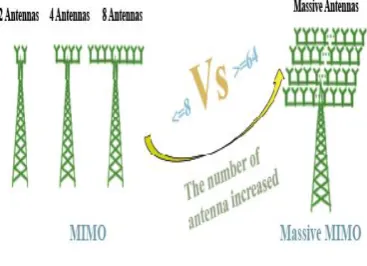
Fig. 3 MIMO vs. Massive MIMO
A massive MIMO system is equipped with much more antennas, typically tens or hundreds, than conventional MIMO systems. With such a massive number of antennas, it has been demonstrated that a massive MIMO system is able to provide many benefits, such as greatly increasing the capacity, simplifying scheduling design in the frequency domain, and averaging interference according to the large number theorem. Generally speaking, a massive MIMO system can be considered as an enhanced version of conventional MIMO by utilizing an enormous number of antennas. As a result, its system performance, in terms of capacity, efficiency, and reliability, is significantly better than conventional MIMO systems.
It is important to realize that due to not too rapid mobility there are temporal correlations in the necessary power for any given user. For example, an untypically high density of users at the cell edge will result to increased energy consumption over an extended period of time, which may drain the available energy resources of a base station (BS). This, in turn, becomes important especially for off-grid deployments, with finite energy resources.
Therefore, it is of paramount importance to quantify not only how often such unlikely events happen, but also how long they last, which depends on the user mobility. To analyse the effects of mobility, simple yet effective models that describe the statistics of humans moving around are necessary.
Table.1 MIMO vs Massive MIMO Range
Parameters MIMO Massive MIMO No. of
Antenna
2*2 – 8*8 10’s or 100’s
No. of Users Limited More
Spectral Efficiency
Low Can be
Increased
Throughput Minimum Maximum
Delay High Low
Energy Consumption
More Can be reduced
with low power antennas
Application WiMAX,
LTE
Future Generation
C. Clustering
Clustering provides a method to build and maintain hierarchical addresses in. In adhoc networks. A technology can be sustainably viable only if it can find widespread use order to allow ad hoc networks to achieve commercial success, we must solve the scalability problem. One promising approach is to build hierarchies among the nodes, such that the network topology can be abstracted. This process is commonly referred to as clustering and the substructures that are collapsed in higher levels are called clusters.
Clustering is a process of defining such an abstracted structure of a network. It can be applied recursively to obtain a multi-level hierarchy. After clustering, each node in the hierarchy can be assigned a hierarchical address that indicates its position in each level of the hierarchy. Routing can easily be carried out using such addresses Clustering with independent dominating sets : One can produce a relatively small number of clusters of a given graph by insisting that the dominating set is also an independent set.
Fig. 3 Clustering based cell splitting
Low Energy Adaptive Clustering Hierarchy (LEACH) is an energy-efficient hierarchical-based routing protocol. Broadly the routing protocols can be classified as at-based routing, hierarchical-based routing, and location-based routing. LEACH (Low Energy Adaptive Clustering Hierarchy) is a hierarchical-based routing protocol which uses random rotation of the nodes required to be the
cluster-heads to evenly distribute energy
consumption in the network [10].
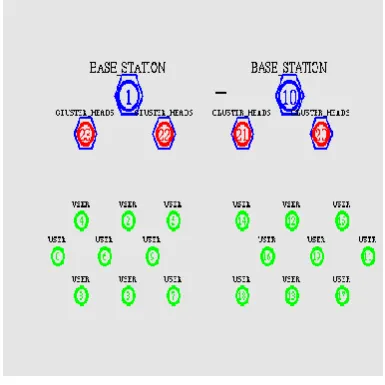
Fig. 4 Implementation setup of the Proposed Work
LEACH arranges the nodes in the network into small clusters and chooses one of them as the cluster-head. Node first senses its target and then sends the relevant information to its cluster-head. Then the cluster head aggregates and compresses the information received from all the nodes and sends it to the base station.
D. Algorithm
Step 1:Start the process
Step 2: Formation of Networks (i.e.) for each area the Base station is assigned for the call or data transfer.
Step 3: After Network formation the corresponding cluster heads are assigned to each
BS and simultaneously the users are assigned.
Step 4: Division of MIMO or Massive MIMO is based on the number of BS antenna’s and users
Step 5: If the number of users are high it leads to Massive MIMO
Step 6: Stop the process.
III. SIMULATIONRESULTS Now we summarize over all solution by comparing the existing system and our proposed technology on the relative performance such as delay, average delay, packet deliver ratio, and throughput and energy efficiency. A dual uplink transmission strategy to the above for a mobile user in a network corresponds to transmit continuously at a constant power and take advantage of the instances when the channel is good due to proximity to a BS. In this case the power transmitted is fixed, but it is the communication rate that is fluctuating with distance.
Fig. 5 Spectral Efficiency with N=30 nodes
As Shown in the Fig. 5 the spectral efficiency is getting improved by moving towards the massive MIMO technologies with same no. of nodes. As such energy consumption can also be considered to be getting reduced as the massive MIMO get
implemented with low power antennas [6].
Fig. 6 Throughput describing the successful transmission of packets w.r.t various techniques
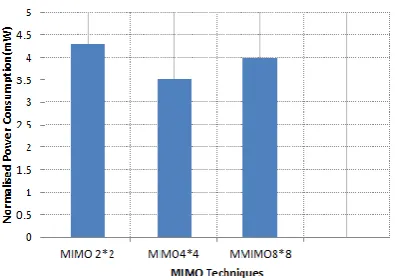
Fig. 7 Power Consumption of various orders of MIMO Techniques
Power consumption remains the everlasting research issue, hence massive MIMO remains the greatest advantages of implementation with low power antennas [3][6]. Since power consumption of base station implemented with MMIMO is comparatively acceptable with other techniques as shown in the fig. 7.
IV.CONCLUSIONS AND FUTURE SCOPE
We have reviewed several important problems in MIMO antenna such as less number of antennas (2×2, 4×4), suitable for limited users, high delay etc. we demonstrated how the above problems can be overcome by using Massive MIMO and clustering technology can be efficiently applied. Massive MIMO technology can achieve great balance between energy efficiency, throughput and delay, and it is very promising for next generation cellular communication. Even though there are numerous advantages some more disadvantages is also present. While using more number of antennas at base station the CO2 emissions and carbon foot prints releases at
peak. It is very harmful for our environment which leads to green communication. But this problem can also be overcome by using solar panels or bio fuels at the base stations to generate the power. Currently,
the percentage of the global world CO2 emissions
due to the information and communications technology (ICT) is estimated to be 5%. While this may seem a small percentage, it is rapidly increasing, and the situation will escalate in the near future with the advent of 5G networks [6][14].
The next generation of wireless communication technologies, that is, 5G is best known for its prediction and promise of supporting 1000 times data traffic as today beyond the year 2020. The energy consumption of wireless systems and networks, from an operation point of view, cannot and should not increase with the same pace. Therefore, improving the energy efficiency of wireless systems and networks has also become a key target of 5G
.
REFERENCES
[1] Zhe Luo, Ying Cui, Member, IEEE, Xinbing Wang, Senior
Member, IEEE, and Hanwen Luo: On the Throughput
and Delay in Ad Hoc Networks With Human Mobility, IEEE TRANSACTIONS ON COMMUNICATIONS, VOL. 63, NO. 6, JUNE 2015
[2] Rami Mochaourab, Member, IEEE, Emil Bj¨ornson, Member, IEEE,and Mats Bengtsson, Senior Member, IEEE: Adaptive Pilot Clustering in Heterogeneous Massive MIMO Networks, arXiv:1507.04869v2 [cs.IT] 2 Nov 2015 [3] Hien Quoc Ngo: Massive MIMO: Fundamentals and System
Designs, Linköping Studies in Science and Technology Dissertations, No. 1642
[4] Boris BellaltaUniversitat Pompeu Fabra, Barcelona [email protected]: IEEE 802.11ax: High-Efficiency WLANs, [cs .NI May 2105]
[5] Shangbin Wu, Cheng-Xiang Wang, Senior Member, IEEE, Harald Haas, Member, IEEE,el-Hadi M. Aggoune, Senior
Member, IEEE, Mohammed M. Alwakeel, Senior Member,
IEEE, A Non-Stationary Wideband Channel Model for Massive MIMO Communication Systems: IEEE Transactions on wireless communications, Vol. 14, NO. 3, March 2015
[6] Erik G. Larsson, ISY, Linköping University, Sweden, Massive MIMO for Next Generation Wireless Systems: IEEE Communications Magazine February 2014
[7] Aris L. Moustakas, Luca Sanguinetti, and M´erouane Debbah Department of Physics, National & Capodistrian University of Athens, Athens, Greece Dipartimento di Ingegneria dell’Informazione, University of Pisa, Pisa, ItalyAlcatel-Lucent Chair, Ecole sup´erieure d’´electricit´e (Sup´elec), Gif-sur-Yvette, France, Effects of Mobility on User Energy Consumption and Total Throughput in a Massive MIMO System: Operational Program Education and Lifelong Learning 2007-2013 of NSRF
[8] Yuanzhu peter chen, Arthur L. Liestman, Jiangchuan liu, Clustring Algorithms for Adhoc wireless Networks: School of Computing Science, Simon Fraser University, Canada. Department of Computer Science and Engineering, The Chinese University of Hong Kong,China.
[9] Unnati A. Dabre, Juned A. Khan Student, CSE Department (ME 2nd Yr), Guide CSE Department, A Performance Analysis of Delay and Throughput using OLSR for Security of MANET: International Journal of Research in Advent Technology, Vol.3, No.12, December 2015
[10] Mohammad Z. Siam and Marwan Krunz Ossama Younis Department of Electrical and Computer Engineering, Energy-Efficient Clustering/Routing for Cooperative MIMO Operation in Sensor Networks: Technical Report TR-UA-ECE-2008-2 August 2008
Fair User Association in Massive MIMO Enabled HetNets:
DOI10.1109/LCOMM.2015.2454504, IEEE
Communications Letters
[12] Farhan Khalid, Member, IEEE, and Joachim Speidel, Robust Hybrid Precoding for Multiuser MIMO Wireless Communication Systems: IEEE Transactions on Wireless Communication, Vol. 13, NO. 6, June 2014.
[13] Erik Luther, Senior Product Marketing Manager, RF and SDR, 5G Massive MIMO Testbed: From Theory to Reality: Jul 20, 2015
[14] Congshi Hu, Jie Gong, Member, IEEE, Xiaolei Wang, Student Member, IEEE,Sheng Zhou, Member, IEEE and
Zhisheng Niu, Fellow, IEEE, Optimal Green Energy Utilization in MIMO Systems with Hybrid Energy Supplies: DOI 10.1109/TVT.2014.2354677, IEEE Transactions on Vehicular Technology
[15] Vincenzo Mancuso and Sara Alouf, INRIA Sophia Antipolis Méditerranee, Reducing Costs and Pollution in Cellular Networks: IEEE Communications Magazine August [16] L. R. Arnaut and C. S. Obiekezie,Energy efficiency metrics
for green wireless communications: Wireless Communications and Signal Processing (WCSP), 2010 International Conference on: 21-23 Oct. 2010
[17] M. A. Elsherif, A. Malekmohammadi; Green-energy Aware and Latency Aware user associations in heterogeneous cellular networks: Global Communications Conference (GLOBECOM), 2013 IEEE