3330
Offline Ai Bot Technique To Fetch Retrieve And
Update Data In Online Real Time Environment
V.Karthikeyan, Ruchi Jain
Abstract: The rapid increase in development in world has caused more users to go in an online trends. The data used now are stored with use of internet in real time databases one among them is firebase[1]. In this paper we devised a way so the user can access his data without the use of internet and can do his payment transaction offline through an application called PhoneBud. PhoneBud is an offline Artificial Intelligence (AI) bot capable of doing almost all tasks as an online bot with the help of Short Message Service/Multimedia Messaging Service (SMS[2]/MMS[3]). This allows the application user to travel hassle free without worrying much about their data packets as this system ensures the sending and receiving of data in offline manner The software as a whole is a mobile application (Android) which uses SMS/MMS to reach our server application which is all time online and maintains data in real time database called firebase. Once the user have downloaded the application they will be guided to set their own passkeys these passkeys will help them to perform various task regarding their remote device for example #453 send Ticket will get the data of ticket stored in the database .The passkeys will be known only to actual user so we maintain a security through an SMS with help of any device which supports a Subscriber Identification Module (SIM) card. However the real user needs to allow us to use their whole device while using this application. This system is efficient to operate in any android device offline (at user level)however the real user needs to allow us to use their whole device while using this application. This system is efficient to operate any android device offline (at user level). PhoneBud also has an offline payment as an additional feature using Quick Response Code (QR Code) and QR Scanner in offline mode. The data are send through SMS (encrypted) to a semi offline server, which decrypts the data and updates the data in an online real time environment
Keywords: Networking, Cryptology, Artificial Intelligence, QR code, SMS/MMS.
————————————————————
1.
INTRODUCTION
In the recent years, the world has seen many developments with online products like Google Drive or Tez application which uses internet to maintain users’ data or do payments. However the offline users can’t accesses these products or don’t have the full accessibility to these products. Therefore in this paper we discussed about our system named PhoneBud which bridges the gap between the offline users in comparison to online user in terms of data accessibility PhoneBud is a software tool developed to solve the contradiction of products like Google drive, online Firebase[4]etc. which uses an online medium to maintain its productivity. The main reasons to develop PhoneBud application is to work efficiently in an offline manner through the medium of messaging via SMS/MMS. The main benefits of PhoneBud system are: Track your device without using actual data and by sending an SMS to the lost device where the lost device sends back an SMS telling the location or we can send command to ring the lost mobile through an SMS This system is compatible to almost all device being it a SMS it doesn’t need a necessity for being the former device to be android to send SMS however the actual device needs to be androidThis system apart from sending location sends also the contacts and other necessary file if the actual mobile is lost through an MMS Messaging costs are less as comparable to data costs Upto 10GB data can be stored in firebase in one instance Our project is overriding all the disadvantages of online bot and works efficiently in an offline environment making it to use for travellers travelling out of town or abroad. This System also has an offline payment mode which uses a QR code and QR scanner to make a mode of transaction. To maintain the data in database (Firebase in our case) the transaction ID and the amount is sent to database through an offline way SMS. To protect the data from modification by any user or the data admin himself this data is encrypted and decrypted in server using Base-64 encryption.
For retrieving the pictures from the database to avoid any leakage of data the picture is encrypted using AES encryption and decrypted using the PhoneBud application. For retrieving data one should have the application for data security. The end user is provided with encrypted link of actual data which can be converted later using application or any source. This Application maintains particular keys / key code for every application users that exists. The authentication is not done by using any exterior mode but the PhoneBud system has an inbuilt authentication mode, which authenticates the data received and maintains the data.
2.
LITERATURE
SURVEY
An internet bot which has AI capability is the new emergence in the living world however none thought about the offline access of data traversal to outcome this PhoneBud was initiative. An internet bot is a bot which performs all the autonomous and AI capable task through various scripts using the medium of data packets. Some of the major internet bot include the bots like Siri, Alexa, Google Assistant and many more However for a person travelling abroad is it possible to access these internet bot if he has poor web connections or no web connections? The answer is NO, to provide a solution to this situation he can use a SMS feature but no bots are there to process this SMS requests unless a human sits in to process our requests. PhoneBud provides an assistant just like another ordinary internet bots but without the use of web (Data Packet) . From 2016, when Facebook Messenger allowed developers to place chatbots[5]real on their platform there has been an exponential growth of their use on that forum alone. Facebook created 30000 bots for the first six months rising to 100000 by the end of September 2017.Before this period on May 18 2016; Google launched its first version of AI bot the “Google Assistant” which is the most used AI bot apart from Alexa in the modern world. Google Assistant was built to provide a two way conversation between the user and the AI bot however the PhoneBud is built to provide three-way assistant suppose your device is lost or
______________________
temporarily unavailable with the user, the user can direct the AI commands using a third party device. Simple functions are tiny thing to bots as it’s capable to do complex and autonomous thing using their script. Google Assistant tells us about the files like if we say “Ok Google play me xyz song” it plays that file. PhoneBud uses similar mechanism but in an offline mode, a user sends a SMS to a semi offline server, which verifies the key and on successful authentication sends the data to the host device about the command and then the AI bot performs the respective command .Other functions sent to Google Assistant like news feature can be done by PhoneBud in an offline way by upgrading the host device memory and updating each and every news daily in the future scope. However the next step the PhoneBud application is prone to have is an voice activation and search mode.
3.
PROPOSEDWORK
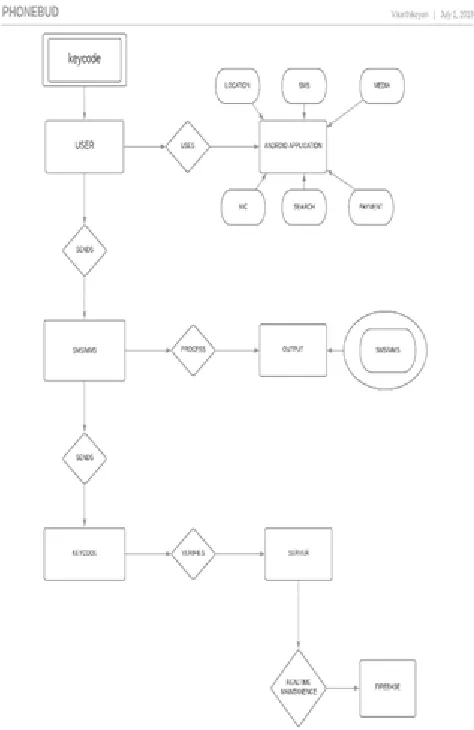
Before you PhoneBudis an android application. User needs to install this application which will be the user’s personal assistant. PhoneBud is an offline assistant bot. Users need to give all the permission required to utilize the complete utility of the bot (This is given in the Dependency Diagram). Once the user has given the application complete permission, the user has to provide a unique keycode which only the user knows. This keycode is sent to mobile server which in turn saves it to the online database called firebase. This application is used for storing of data and doing payment in realtime[6]. Once the user has set the keycode he can use this application from remote locations*. Just the user needs to pass a message in form of SMS to the local device with keycode like #456 Ring, here 456 refers to the keycode user has set and Ring is the command user is passing. keycode are set in an exact length of 3 digits The various commands possible are listed below:
1. Location:
The user may/shall have lost his local device or the device may have been stolen but the user can retrieve his device by passing the command #keycode Location and the location of his device will be available in remote device in form of SMS.
2. File Transfer:
The user can get access to any files stored in his local device from remote location by passing the command #keycode (Name of file). The output of the following command will be in form of SMS/MMS (encrypted), once it reaches the PhoneBud application, it get decrypted.MMS can transfer long conversations up to 160 characters or one ,portable document formats (pdf), one power points (ppt),one slideshow, one videos(upto 40 seconds in one frame) etc.[7].
3. Contacts:
The user can access his local device’s contacts details from remote location by passing the command #keycode(Name of contact in local device Phonebook). The output will be the contacts number in form of SMS from Local device to Remote Device.
4. Payments:
The user can access payment through Unified Payments Interface (UPI) mode using BHIM or Paytm applications. The PhoneBud UPI would for making the payments would use the users Bank account and
transfer the payments to PhoneBud Wallet. Once the user has enough amounts in his wallet, he can send or receive amount using QR code/ QR scanner provided by the PhoneBud application. This data is then encrypted to Base 64 encryption and sent to server using SMS which uploads it to online real time database (Firebase in our case) to maintain data.
Apart from above commands the below commands can be introduced in future for this project:
i. Daily news/ Searches:
The user could perform the normal task for knowing daily news or searching anything like any other online assistant bot with a dedicated offline thesaurus/dictionary, which would be created in the database, for limited searches for news, weather, definition, etcetera, where the user can use the keycode with respective command for example#456 get news.
ii. Alarm/Calendar Booking:
The user could set an alarm or calendar notification sitting from remote location. This would help user to sync with the daily tasks. The user could pass the keycode and respective command. For example #456 set memo 1234, #456 set alarm 0000 hrs. Making the system voice activated: Unlike other assistant bots, this bot do not have voice activation. A voice activation algorithm requires at least 20.3MB of device storage [8]. In future with the up gradation of devices, a new device with high Storage capacity, the voice activation algorithm can be introduced in the PhoneBud application.
4.
ALGORITHM
Start
Let S be a server application used to maintain data in realtime (online). Let X be a user installing
PhoneBud application on his device A.
Let Y be (can be X or any other device without PhoneBud(application) a user trying to communicate with A through a server S using SMS/MMS through his/her device B (remote)
X sets a keycode in his device A
Y sends a message to A through B using S with the keycode X had set on A
Case based on SMS/MMS:
Case Location:
When the application finds the keyword Location it will send the location stored in firebase database to device B through SMS
Case File Transfer:
When application finds the name of file in device A along with keycode it will send the file in form of MMS (encrypted) to device B where it will get decrypted.
Case Contacts:
3332 Case Alarm/Calendar:
User Y can set a date or reminder in calendar from device B from remote location in his device A which could later act as an alarm or calendar memo.
Case Payments:
The user can access payment through Unified Payments Interface (UPI) mode using BHIM or Paytm applications. The PhoneBud UPI would for making the payments would use the users Bank account and transfer the payments to PhoneBud Wallet. Once the user has enough amounts in his wallet, he can send or receive amount using QR code/ QR scanner provided by the PhoneBud application. This data is then encrypted to Base 64 encryption and sent to server using SMS which uploads it to online real time database (Firebase in our case) to maintain data.
End Case
Device B receives SMS/MMS from Server S as output End
5.
DETAILEDDESIGN
Fig 1: Dependency Diagram
Fig 2:Used Case Diagram
Fig 3: Entity Relationship Diagram
Fig 5: Data Flow Diagram (LVL 2)
6.
RESULTS
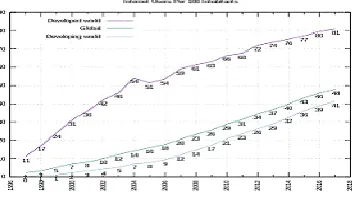
With the prior system the real-time database was based on online mediums and hence users had to use their data packets. The old realtime database was full online the data used to parse data into the database which was transferred online.The user hence had to use an legit IP connection for it. The internet culture is growing in world rapidly, however the offline users were falling back because of high cost data packets. This project was conceptualization for the offline users and boosts these users for using the same online activity in offline mode. By the pie chart (Fig. 6) it is clear that the world is dominated by online users and thus to maintain their database, realtime databases exist in online among which one of them is called firebase. Now, to elaborate let’s see the internet users per 100 inhabitants (Fig.10)and also compare the total internet usage all around the world(Fig.7). Let us now view the tables among separate nations using the internet all around the world. As it is clear from various charts and table that as the year expands more population be influenced towards internet and the use of online mode is necessary .Hence to reduce this and give a boost to the offline users, the project PhoneBud is made, where users can almost do everything, a normal online user can do, through offline mode. To support our statement PhoneBud had a trial among 5 users (fig 9) and it was observed that the users could use the realtime database without internet connection. Out of 5 users, who tried this PhoneBud application, most users used this application to store and
retrieve their information using SMS/MMS,while some users also tried this application to do their payments. Below arethe chart of various users and the count of their messages received by PhoneBud server (Including MMS).It was recorded that all the 5 users could store and retrieve their data and/or do their payment transaction in an offline and effective manner. As seen fromFig. the PhoneBud system is reliable and dependable that the users with minimum amount of commands through messages (SMS/MMS), the user can perform the realtime database task and also have their payments work done. This PhoneBud is thus made for offline users who cannot afford to have internet packets/access and/or where the internet is not accessible because of network issues. To make the users to send urgent messages and/or make urgent payments, this PhoneBud application is a boon for these users. This PhoneBud system uses only few servers which communicate with database letting the user maintain his data in realtime through offline mode. Developing this system with search capability in future can make the users less dependable on online mode/internet. This PhoneBud system generates less radiation than internet,as the system works through SMS/MMS messaging services. ThusPhoneBud system is an environment friendly.
Figure 7: internet users in 2016 as apercentage of a
3334 TABLE1: INTERNETUSERSBYREGION
Fig.8: Bar Graph Of 5 Test Users Vs. Their Message Count
Fig. 10: Internet users per 100 inhabitants
7.
CONCLUSION
In this paper, we proposed about PhoneBud which is a messaging (SMS/MMS) system which works on an keycode where certain keycode are verified before processing. For example a command in SMS to actual mobile would look like #keycode command. The users have to download the PhoneBud application and set their keycode, which later they can use to access various functionality. This application will be as light in memory as possible and try to reduce the data(internet packet) as
much as possible. There is a server which acts as a medium for users to maintain their data offline in realtime database called firebase. This server works online to maintain data in realtime database. This data could be retrieved by server which is always online and can send this data in form of SMS/MMS to user acting on a complete offline mode for the user. For payment user can have credits into their account through UPI which is an offline mode for payment. Once the user has enough credits in his account he can send or receive the credit using QR code / QR scanner. This payment data is encrypted using Advanced Encryption Standard (AES) encryption and sent to server so the user himself cannot alter or modify his transaction. Also this is to maintain a safety for the user data. Hence to conclude user can store and retrieve their data and do their payment in offline mode through SMS/MMS.
8.
FUTURESCOPE
The application could use offline searches to increase its productivity Progress are being made to achieve the goals of voice control in offline mode
9.
REFERENCES
[1] Documentation on Google Firebase, [online] Available: https://firebase.google.com/docs/ [2] Documentation on SMS, [online] Available:
https://en.wikipedia.org/wiki/SMS
[3] Documentation on Multimedia Messaging Service, [online] Available: https://en.wikipedia.org/wiki/Multimedia_Messagin g_Service
[4] Navdeep Singh, "Study of Google Firebase API for Android", International Journal of Innovative Research in Computer and Communication Engineering (IJIRCCE), vol. 4, no. 9, September 2016, ISSN 2320-9801 on Chatbot, [online] Available: https://en.m.wikipedia.org/wiki/Chatbot [5] Documentation on Real-time Database, [online]
Available: https://en.wikipedia.org/wiki/Real-time_database
[6] Ian McGraw, RohitPrabhavalkar, Raziel Alvarez, Montse Gonzalez Arenas, KanishkaRao, David Rybach, OuaisAlsharif, Has¸imSak, Alexander Gruenstein,
[7] “Multimedia Messaging Service.” Wikipedia, September 25, 2018. Franc¸oiseBeaufays,
Carolina Parada “PERSONALIZED
https://en.wikipedia.org/w/index.php?title=Multime
dia_SPEECH RECOGNITION ON MOBILE
DEVICES” in
Messaging_Service&oldid=861201265. 11 March 2016
country
2005 2010 2017/8
Africa 2% 10% 21.8%
Americas 36% 49% 65.9%
Arab 8% 26% 43.7%
Asia and Pacific 9% 23% 43.9%
Commonwealth nations 10% 34% 67.7%