Copyright © The Author(s). All Rights Reserved. Published by American Research Institute for Policy Development DOI: 10.15640/jeds.v7n2a8 URL: https://doi.org/10.15640/jeds.v7n2a8
Existential Dynamics of Local Economic Development Partnerships in Namibia: The Case
of Khomas Region
Ralph Marenga
1& Faye Kandjeo
2Abstract
Local Economic Development (LED) in Namibia is an integral part of the broader national development agenda as encapsulated in numerous national policies and legislation. LED has been confronted with various partnership dynamics that have posed challenges among its stakeholders and actors. While remaining under-researched, this developmental challenge has generally remained prominent due to the complexities involved in the numerous interrelated processes, institutions and stakeholders that are expected to work together and achieve accelerated LED. In an effort to lend scope and understand of these dynamics, insights were drawn from existential elements of communication, cooperation and collaboration, social issues, creation of ownership and pride as well as welcoming attitudes from a single case study unit. Using the quantitative research design, this paper sought to delve into the partnership dynamics of LED in Namibia, by using the Khomas region as a case study. Stratified random sampling was used to identify the sample, which included beneficiaries of LED projects, the Khomas Regional Council and the City of Windhoek. Empirical results found that the social issues and welcoming attitudes in the Khomas Region were generally conducive for the advancement of LED, while communication, cooperation and collaboration; creation of ownership and pride served as deterring factors for LED. The study recommends that the Khomas Regional Council fosters communication, cooperation and collaboration among actors on challenges, opportunities and plans regarding LED. Additionally, it is expected of the regional council and municipality to organise prestigious awards and recognise outstanding volunteers, the best community betterment projects and/or businesses that are socially involved in the community, in order to create ownership and pride amongst actors.
Keywords: Local, Economic, Development, Partnerships, Namibia.
JEL Classification: O1, H11, H7
1.Introduction
In the field of developmental economics and public administration and more specifically in its sub-field of public economics, Local Economic Development (LED) has been a major area of interest and has received considerable scholarly attention in recent years with the aim to foster the institutionalisation of this LED approach in particularly developing countries. LED has been described by Selaelo (2012) as a new approach that has the potential to accelerate the developmental process at subnational levels of government with a focus on the economy. In its traditional sense, LED aims at building up the local economic capacity of a local area. The above is realised when the public, businesses and non-governmental organisations work together to create employment opportunities to allow for improved economic growth, sustainable development and less poverty in communities. Most of the proponents of LED have praised it for being successful due to the fact that it incorporates the needs of the locals (Cobert, 2013).
Indeed, as noble as LED is, with its potential to driving bottom up economic development, there is a need to understand the origins of LED. As Linake (2016) succinctly puts it, LED originated in Europe and has been successfully practiced for many decades around the world. LED is not a new or innovative concept.
1Lecturer, Department of Political and Administrative Studies, Faculty of Economic and Management Sciences, University of Namibia, [email protected]
Since 1960, LED passed through several developmental stages. The period in history records three stages, namely, 1960-1980(agricultural investments, local and international), 1980-1990 (multi-sectorial investment attraction), and 1990-to date (shift from individual to collective conducive business) (Linake, 2016). The phases show that LED is now in the third phase wherein partnerships in service delivery are imperative for socio-economic development. These partnerships, are of specific interest to this paper due to the dynamics it is often characterized by.
In the history of LED, partnerships between stakeholders (such as: government, private sector, none profit organizations and local communities) has been the edifice upon which the success of LED rests (Meyer, 2013). Furthermore, there is extensive evidence that suggests that countries such as South Africa have succeeded in the bottom-up approach of economic development using LED strategies to establish a favourable environment for stakeholders to partner up on various LED projects and programmes (Selaelo, 2012). These partnerships are characterized by sound communication, cooperation and collaboration, social issues, creation of ownership and pride as well as welcoming attitudes among the stakeholders. From the above, it has now been established that the lack of sound partnerships can significantly impair the implementation and progress of LED programmes and projects. The consequence of this is diverse and would be witnessed at all levels of government (Alford & Greve, 2017). This comes as the attainment of broader national developmental goals and objectives would not be fed and supplemented by the achievement of regional and local goals. The above phenomenon is serious, and due to the interrelatedness of different country‟s economies in the world, it has the potential of threatening regional and/or continental economic stability. Results from earlier studies demonstrate a strong and consistent association between partnerships and the success or lack thereof of the LED approach (Selaelo, 2012; Heideman, 2011). Similarly, there are a large number of published studies (Rodríguez-Pose & Tijmstra, 2005; Meyer, 2016) that describe the prospective role of LED in driving the developmental agenda of any state. The debate about LED has gained fresh prominence with many scholars reinforcing the relevance of adopting a bottom-up approach of economic development(Rogerson & Nel, 2005).However, literature further reveals that there is a critical deficit in the focus on partnerships and the challenges thereof as derived from an existential perspective(Cobert, 2013).
In the specific context of Namibia, LED stakeholder partnerships and the resultant challenges remain poorly understood due to the theoretical nature previous studies have taken, and by attributing those of other countries of similar socio-economic demographics. This has prompted the present study in an effort to lend scope and understanding of LED partnerships among stakeholders by using critical discourse analysis and empirical data. This paper has three aims. Firstly, it intends to critically analyse discourse in the area of LED and establish the parameters within which LED operates. Secondly, this paper presents existential empirical data on the dynamics of LED partnerships as obtained from the case study of Khomas Region in Namibia. Finally, this paper will conclude by providing recommendations to remedy the partnership challenges of LED.In an effort to address the identified deficiencies in literature, and with specific reference to the Khomas Region, the study was guided by the following research objectives: Identify the partnership dynamics of LED; Examine the LED challenges facing the partnership of stakeholders; Recommend strategies and techniques to address the challenges inhibiting LED partnerships among stakeholders.
2.Theoretical Framework
In an effort to lend scope and legitimise the mandate of sub-national government units in promoting LED in the selected case study, the theoretical framework that is applied in this study combines the multi-level governance theory and the location theory. The importance of having a theory for a study has been prioritised by Creswell (2007) who posits that a theory aids the case study research method to survey how an issue is discovered through one or more cases within a bound. The combination of the multi-level governance theory with the location theory is best suited to inform and guide this study due to their primary assumptions as demonstrated here-below.
Once an investment location attracts more and more businesses, it becomes an agglomeration location. The attraction of businesses to a particular location rests primarily on the attractiveness of such a local area. The concentration of production and urbanisation facilitate quick spill-overs of knowledge and the use of joint networks of suppliers and distributors (Krugman, 1991). Such business ventures can be undertaken through partnerships among local communities, non-governmental organisations (NGO), the private sector and government (national, regional or local). Recognising that this theory advocates for positive spill-overs that come with establishing an agglomeration location of local businesses, the theory does not state ways on how these benefits can be sustainable in the long run for both the investor and the host community/regional and local government. The above theoretical assumptions will be compared with the case study results to delineate important differences and similarities.
3.Local Economic Development
The prospects and challenges that globalisation has brought with has greatly changed the operational space in which governments all over the world realise their developmental goals and objectives(OECD, 2014). There has been a greater paradigm shift in the traditional role of government in development towards an inclusive one that accords other role players a prominence. The often excluded players were the private sector and the NGO sector (also known as the third sector). The United Nations (UN) Habitat (2009: 1) has summarised the concept and relevance of LED and provides the following:
“LED is a shared process in which local citizens from all sectors work together to stimulate local business, producing a resilient and sustainable economy. It is a way to help create decent jobs and improve the quality of life for everyone, including the poor and the marginalised.
LED encourages public, private, academic, and civil-society to establish partnerships and together find local solutions to common economic problems. The LED process tries to empower local people to effectively use business enterprise, labour, capital, and other local resources to achieve things that are important locally (e.g. to encourage quality jobs, reduce poverty, steady the local economy, and use municipal taxes to provide better services).
LED is about sustainable development in the long term. It takes time to change local conditions, build ability, organise shared processes, and empower stakeholders, especially the marginalised and the poor.
Creating a LED strategy is a joint process, and an effort that does not lay down laws. It uses local values (poverty reduction, increased self-reliance, satisfying basic human needs, mutual commitment, integrated social and environmental goals), uses economic drivers (growth in jobs, income, business activity) and considers development (the role of structural change, quality of development). This suggests that LED is not about quick fixes or creating a wish list”.
Achieving the above ideal of LED has led to the proliferation (through legislation) of bottom-up approach developmental initiatives that are community driven, with the aid of local governments. Increasingly, Heideman (2011) states that more and more focus has been drawn on the ability of local governments to generate revenue (for local development) by fostering partnerships within the local economy. Accelerated economic activity would advertently increase local government revenue, especially through rates and taxes (Heideman, 2011). Stemming from the above, governments, especially in Africa, have moved to create legislation that allows for the private and NGO sector to directly participate and aid governments (national, regional and local) to drive the development agenda. As the UN (2018) indicates, contemporary donor initiatives and developing states have increasingly placed greater emphasis on poverty eradication. Decentralisation has often been the prerequisite to achieving this, hence more responsibility being levied against local governments to develop policies that foster local development and revive local economies.
As literature suggests, hitherto, there is no apparent uniform approach to implementing LED, nor does uniform specific strategies and actions exist in “all” local communities (Rodríguez-Pose & Tijmstra , 2005). Evidently, the sustainability of local development relies greatly on an array of institutional bodies and interrelated processes. Notwithstanding the above, the relevance of local ownership of the local development process remains essential to a majority of local economic development approaches. Ultimately, the implication here-of is that the conceptualisation and practice of development remains within the realm of governance (including civil society at all levels).
Realising the above prompts an operative environment that allows for the spur of opportunities, in especially rural and urban areas where opportunities for economic growth/development may currently be limited (Van Rooyen, 2013). Henceforth, the close relationship and interrelatedness of LED with good corporate governance should be reinforced in the process of isolating prospective opportunities for income generation within local communities, by targeting the poor as primary beneficiaries. However, as ideal as the above narrative propounds to be, the process of advancing the LED agenda in communities through partnerships has greatly been confronted with an array of challenges pertaining to communication, cooperation and collaboration, social issues, creation of ownership and pride as well as welcoming attitudes among the stakeholders(Van Rooyen, 2013). The subsection here-below will discuss these challenges in more detail.
3.1.Dynamics and Challenges - LED
Challenges within existing/prospective partnerships of LED are imminent. This particularly arises as a result of the complexities involved in managing a relationship comprising of numerous actors. As alluded to by Nel and Rogerson (2005), the concept of LED varies between economic boosterish and community based approaches. From the onset, it is public knowledge that most governments in developing countries (especially in Africa) remain incapacitated to solely drive the LED agenda within their communities. Despite this, Heideman (2011) adds that the involvement of other parties/stakeholders such as the private sector remains rather limited. Increased private sector involvement through LED partnerships would naturally allow local entrepreneurs access regional and international markets.
Mbeba (2014) deeply explores the nature of partnerships between big and small enterprises by showing how partnerships could assist in highlighting and promoting pro-poor economic growth through poverty eradication. The role of partnerships and challenges faced by it should also not be viewed differently from what is experienced in South Africa. Nel & Rogerson (2005)refer to problems faced by LED partnerships which range from communication, cooperation and collaboration, social issues, creation of ownership and pride as well as welcoming attitudes among the stakeholders.
Rodríguez-Pose and Tijmstra (2005)submits that existing communication strategies among LED stakeholders may deter ongoing/prospective partnerships for LED if it is not handled with care. Clear communication channels and modes need to be established from the onset. This relates to what Pike(2016) states that local participation in LED may only be enhanced through an approach that is characterised by consistent information sharing, consultation and collaboration among stakeholders. The implication hereof is that information should be assembled and processed in manner that ensure its factuality and relevance. Pike (2016) agrees with this and states information should also be communicated in a consumer friendly way. Of note, is the notion that effective and perpetual communication with stakeholders serves as an important cornerstone in building and sustaining partnerships.
A critical element that has often been overlooked by various studies (Rodríguez-Pose & Tijmstra, 2005; Nel & Rogerson, 2005) is the literacy rates within local communities. Some level of literacy/education is required to understand the need and relevance for LED, and how this may eradicate poverty and accelerate local economic growth.
Cobert (2013) narrates and agrees with the above sentiments and states that education makes it easier to solicit the support and understanding of the local people, as they comprise of the biggest stakeholder in this regard. Literature on this suggests a close relationship between high literacy rates and good prospects for LED success (Cobert, 2013). Evidently, the above narration requires investment in education for the locals, as this would go a long way in benefiting other sectors, such as that of the local economy. Furthermore, improved literacy rates will aid in avoiding the communication challenge that may come with the need to hire interpreters for all languages that exist in often culturally diversified communities. This may prove to be a costly exercise. However, this remains particularly a challenge in developing countries such as Niger, Burkina Faso and South Sudan. These states have recorded the lowest literacy rates in the world ranging between 27 and 28.7% (Cago, 2017).
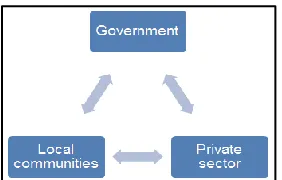
Introducing the concept of LED to a local community, and their acceptance there-of greatly determines whether LED initiatives will succeed (Cobert, 2013). Importantly, a welcoming attitude towards LED needs to be prevalent in a community. This may also be influenced by literacy rates, as we often tend to be reluctant in participating in issues we lack understanding of. Essentially, all stakeholders need to fully embrace the idea of LED. Partnership formation by all stakeholders may serve as a critical driving force behind LED initiatives. Literature posits that businesses(private sector) have traditionally not been included in the planning and implementation of development strategies in the past(Alford & Greve, 2017).Experience in developing countries suggests that economic development projects steered by local communities and businesses have better prospects at succeeding than those by government only (Alford & Greve, 2017; Meyer, 2016).LED projects will only be relevant to communities of the locals constitute a leading role in such partnerships as local development takes place through local coordination. Ultimately, the formation of local partnerships fosters good self-governance by communities. The service delivery triangle relating to LED consists of three partners namely government, private sector and local communities (Meyer, 2013). Figure 1 provides an illustration of the service delivery triangle for LED.
Figure 1: Service Delivery Triangle for LED
Source: Meyer (2013)
4.LED in Namibia
The evolution of LED in Namibia is not a precarious one in comparison with other developing states around the world. At independence, the Namibian government accorded priority to various developmental sectors, were economic development constituted the greater part. This is evident in the key pieces of legislation. On the principles of economic order, section 1 of Article 98 of the Constitution of the Republic of Namibia states that the mixed economy model shall be adopted with the intention of economic growth, prosperity and a dignified life for all inhabitants of Namibia. In pursuit of this, section 2 states that the economy of Namibia shall be characterized by the foregoing types of ownership: public, private, joint public-private, co-operative, co-ownership, and small-scale family. Section 2 above gave birth to the proliferation and passing of the Public Private Partnership Act, 2017 (Act No. 4 of 2017).
In lieu of this legal framework, various laws and policies have indeed been passed by parliament to provide support to LED. Henceforth LED is not a stand-alone strategy but it is supported by a national framework in line with Vision 2030 (___). To complement the LED initiatives, national development initiatives were introduced and these have to occur evenly in all regions in order to sustain growth and bring about equity.
It is evident that the Namibian government has accorded great importance to forming partnerships with the second and third sector in pursuit of localised economic development, with the idea of providing equal economic opportunities to all(Republic of Namibia, 2016). However, the phased out National Development Plan (NDP) 4, its Terminal Report (2017) suggests that poverty rates were reduced from 28.7% to 18% during its tenure (Republic of Namibia, 2017). Despite this, economic growth (though minimal) did not result in the reduction of unemployment rate, and remains at a stagnant 34 %. Similarly, the gap between the rich and the poor in terms of socio-economics has not narrowed (Republic of Namibia, 2017). Van Rooyen (2013) states that having an enabling legislative framework is not enough, as challenges pertaining to partnership formations are imminent.
It is for these reasons that LED should be vigorously sought as it has the potential to stimulate local economic growth and provide employment opportunities that will aid in alleviating poverty (Mbeba , 2014). However, this could also be made easier if the manufacturing sector is greatly empowered to particularly reduce on the importation of goods and services (Stettner, Yudken, & McCorm, 2017). According to Stettner, Yudken and McCorm (2017), manufacturing industries have the single biggest prospect of providing thousands of jobs to local communities. The Namibian government has decentralised most of its resources, facilities and services to enhance sufficient opportunities that will improve the attractiveness of local economies to especially the private sector and foreign investors (Republic of Namibia, 2000). It is for these prospects that LED strategies have been accorded great importance as the gateway to achieving economic growth at sub-national government levels. Furthermore, strategies promise to enhance cross border economic development through the linkage of markets (Linake, 2016).
The Ministry of Urban and Rural Development (MURD) provides support to regional and local governments in the development of LED strategies (Republic of Namibia, 2008). This is achieved through the development of local capacity (human and financial resources), as this is most essential for effective coordination of partnerships by local and regional governments, as well as for the involvement of local businesses in LED partnerships. Coupled with the above, LED in Namibia is supported by the LED White Paper which is in pursuit of the following imperatives: Healthy market competition; increased individual self-reliance; and Making the creation of an enabling environment for people to achieve prosperity (Republic of Namibia, 2008).
Additionally, the LED White Paper (Republic of Namibia, 2008: 5) adopted the following definition for LED: “Local economic development is a process by which actors within urban and rural areas work collectively with public, business and non-governmental sectors to create better conditions for economic growth, employment generation and community wealth in order to enhance the quality of life for all in the community”.
Similarly, the Rodríguez-Pose and Tijmstra (2005: 5)have defined LED as:
“A process by which the public sector, business and non-governmental sectors partner and work collectively to create better conditions for economic growth and employment generation to ultimately improve the quality of life of the citizens”.
The above definitions on LED speak to the fundamental process of nurturing partnerships among stakeholders such as governments, private sector, NGOs, donors and the community at large. This is most relevant, as there is a need to achieve and encourage LED of specific localities. These conjecture perceptions search for an explanation using a normative approach on how local development and local business ventures occur, with the intention of mounting mechanisms that will allow for LED to flourish (Meyer, 2016). Nevertheless, the foremost trial that numerous states are confronted with pertains to attaining hands-on lucidity on what encompasses LED within communities.
LED methodologies have been chiefly characterised by the direct and indirect participation of local communities alongside NGOs. Among these, there are diverse public and social actors participation, such as, local and regional authorities, offices of central government, traditional authorities and state owned enterprises (public actors) (Meyer, 2016).
While, the social actors comprise of employers, business representative organisations, non-governmental, community and voluntary organisations, faith based organisations, trade unions, co-operatives, development agencies and educational institutions.
As per existing legislation, the role of the Namibian government (public actor) in LED can be summarised as follows:
Allocation of development budgets (provision of resources for the implementation of projects in line with integrated development planning). This requires the identification of priorities and aligning local and regional priorities with national ones;
Drafting of proposals for implementation;
Initiating employment and income generation opportunities to address challenges emanating from declining economies, retrenchments, and unemployment through economic restructuring and focusing on the creation of business diversity and the identification of top competitive sectors in the economy (focusing on identified products);
Identifying opportunities for capacity building with the training of artisans as a priority;
Continuous improvement of communication among stakeholders;
Harnessing comparative and competitive advantages and marketing the locality in cooperation with national investment attraction initiatives; and
Improving the standing of the sub-national government with funding and lending agencies to access resources for development (bankability)
LED initiatives in sub-Saharan Africa have been increasingly accorded greater importance by various states. What is particularly interesting is the contestation of the concept in Southern Africa. Heideman (2011) contends that LED in Southern Africa has come to resonate with job creation initiatives that are often grant dependent and unsustainable. Heideman (2011) further notes global competitiveness requires a robust LED approach, and that forms part of the reasons why the Namibian government accorded greater priority to enhancing LED. Considering this role of government towards LED, the MURD is similarly mandated with the responsibility of providing support to local authorities and regional councils with LED planning, network development, best-practice sharing, the preparation and dissemination of LED models and tolls, capacity building and monitoring and evaluation of LED outcomes (Heideman, 2011).
5.Methodology
Due to the distinctiveness of this study, a quantitative approach of inquiry was best suited for this study to allow for the collection of descriptive data that allows for the understanding of the existential dynamics of LED partnerships in Namibia, with a focus on the Khomas Region as a unit of analysis. The population comprised of key stakeholder organisations such as the City of Windhoek and the Khomas Regional Council, as well as individual beneficiaries who have benefited from the LED projects. The purposive/judgmental sampling technique was used to obtain a sample of respondents that have experience and/or exposure and are knowledgeable in the subject area. Questionnaires were completed by 4 respondents from the City of Windhoek, 4 respondents from the Khomas Regional Council and 6 beneficiaries of LED projects within the region, thus totalling a sample size of 14 respondents. A quantitative questionnaire was used, where-in respondents were required to rate on a scale ranging from: 1 to 5 (1: very poor; 2: poor; 3: average; 4: good; 5: very good) on the occurrence of various elements pertaining to communication, cooperation and collaboration; social issues; creation of ownership and pride; and welcoming attitudes, as problematised earlier.
6. Findings and discussion
The questionnaire aimed at providing an understanding of the LED partnership dynamics that are prevalent from an existential perspective in the Khomas Region. The questionnaire covered issues pertaining to communication, cooperation and collaboration, social issues, creation of ownership and pride as well as welcoming attitudes among the stakeholders.
Gauging the views of the respondents on the above issues allowed for the collection of data that resonates with the research objectives. The research objectives are: Identify the partnership dynamics of LED; Examine the LED challenges facing the partnership of stakeholders; Recommend strategies and techniques to address the challenges inhibiting LED partnerships among stakeholders.
6.1. Communication
Figure 1: Communication
Figure 1illustrates the various means through which communication between stakeholders took place. Respondents were required to rate which mode had been more often used to communicate on issues of LED. In terms of regular community meetings held, a rating of 3 was given, followed by consultations which was rated 2, while newsletter and radio programmes were rated 1. Communication serves as the most single pre-requisite element that should be satisfied before any LED cooperation and collaborations can take place. As stated elsewhere, the requirement pertaining to communication is that information collected and analysed should be correct and applicable to the realities within communities. Furthermore, distribution of such information to stakeholders should be achieved in the most consumer friendly mode (Pike, 2016). Pike (2016) further submits that communication with stakeholders should be effective and constant, as this is the corner stone upon which LED partnerships are built. Central to the achievements of partnerships, is participation through consultations from actors in the third sector. As indicated elsewhere, consultations are central to achieving participation from various stakeholders, and could thus be attributed to the low rating on ownership and pride as illustrated in figure 5 below.
5.2 Cooperation and collaboration
Figure 2: Cooperation and Collaboration
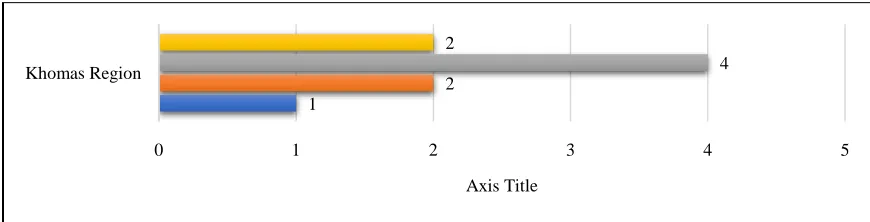
Figure 2 shows that a high rating of 4 was received on the ease of registering a business, while the involvement of local organisations in LED and the availability of sufficient market stalls scored 2. When it came to the availability of credit schemes/finance, this was rated the lowest and scored a 1.
3
1 1
2
-1 1 3 5
Khomas Region
Regular Community Meetings Newsletter Radio Programme Consultations
1
2
4 2
0 1 2 3 4 5
Khomas Region
Axis Title
The low rating on the access to sufficient credit schemes could be attributed to the fact that commercial banks require collateral for the financing of a business with a loan, which most inhabitants of the Khomas Region do have. A rating of poor (2) was received on the involvement and encouragement of local organisations in LED by the regional council and local authority. This suggests that the provisions of the PPP Act (Act No. 4 of 2017) are not being followed diligently. The ease of registering a business was scored a 4, and suggests it is relatively easy to register a business in the Khomas Region. This provides a great advantage for LED as regional and local authorities may only partner with registered business entities on projects ( Alford & Greve, 2017).
What greatly resonates with this is the Multi-level governance theory that political authority and consensus is best achieved from a decentralised level of government (Savigny & Marsden, 2011). Stemming from this, it is worth noting that partnerships between stakeholders remains central for LED implementation and facilitates the synchronisation of efforts among public and social actors. Positive community discourse provide greater prospects for the resolution of pertinent economic and social issues, encourage good governance, advance social and industrial peace and stability and boost local economic progress (International Labour Organisation, 2007).
5.3. Social Issues
Figure 3: Social issues
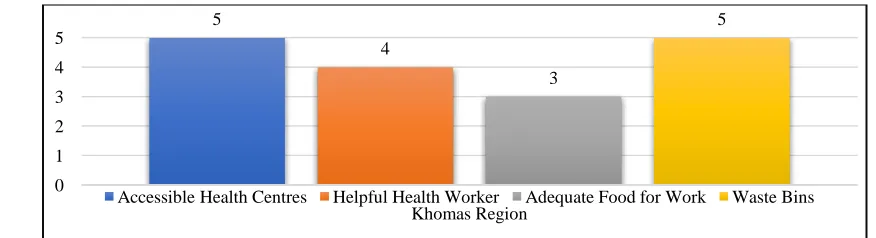
Figure 3 shows the ratings on social issues. The accessibility of health centres and provision of waste bins received a high rating of 5 each, while helpfulness of health workers and adequate food for work through food programmes was rated 4 and 3 respectively. Generally, LED projects should aim to combat social exclusion and contribute to the incorporation of the unemployed and marginalised sections/groups of people in the labour market of a specific locality or region in order to ensure that livelihoods are bettered through the provision of basic social services and amenities (Pike, 2016).Central to the achievement of these positive spill-overs of LED is the need to for sustainable partnerships among stakeholders. This resonates with the multi-level governance theory aims to maximise benefits for local communities through decentralised structures of government with the aid of local businesses (Savigny & Marsden, 2011). Furthermore, improved access to these social needs may be best achieved through the partnering of government, local communities and the private sector as advocated for by (Meyer (2013). In terms of the location theory, inadequate access to these social goods and services may serve as a deterring factor in attracting businesses to the Khomas Region, especially those that have good prospects of forming partnerships (Krugman, 1991).
5.4. Creation of Ownership and Pride
Figure 5: Creation of Ownership and Pride
5
4
3
5
0 1 2 3 4 5
Khomas Region
Accessible Health Centres Helpful Health Worker Adequate Food for Work Waste Bins
2 2 2 1
1
0 1 2 3 4 5
Khomas Region
Outstanding Volunteer Best Community Project Recognition of Social Involvement
From figure 5 above, the results show all elements of creation of ownership and pride within the case study unit received low ratings. In terms of prestigious events to recognise and reward role models and voluntary action on LED, a rating of 2 was received. Similarly, support to businesses from regional and local authority was rated 2. The offering of recognition towards social involvement from the community and businesses was rated 2. The outstanding volunteer category was rated 1, while the best community project was rated 1. The above results suggests that there is less ownership and pride of LED among the surveyed respondents.
In dealing with this reality, it remains central to understand that lobbying for the upkeep and the general understanding of the actors such as local people, communities and their organisations from planning to the execution of LED initiatives helps create ownership and pride and ultimately speaks of inclusivity (Pike, 2016). The multi-level governance theory best aims to especially create ownership and pride of LED projects and initiatives through their local government institutions that comprises of council members that have been voted for by the local communities (Savigny & Marsden, 2011). The poor rating on ownership and pride could be attributed to the insufficient/inadequate modes of communication among stakeholders as illustrated in figure 1 above.
5.5.Welcoming Attitudes
Figure 6: Welcoming Attitudes
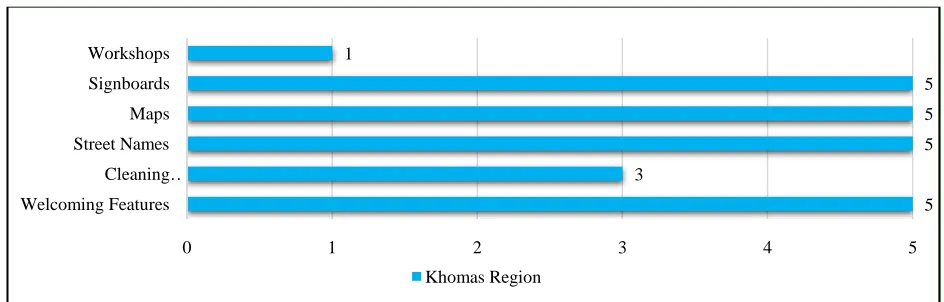
Results from figure 6 show that a low rating of insufficient cleaning campaigns, with an average rate of 2.5. Regarding the provision of directional signage, specifically street names, a high rating of 5 was scored. On the availability of maps indicating major attractions, a score of 4.5 was rated. With regards to the provision of signboards to provide directions to visitors and tourists, a rating of 4.5 was scored. Regarding information and training workshops for „front-line staff‟ of LED, a rating of 1 was scored for the Khomas Region. It is imperious that a durable positive impression on LED is formed at regional and local level across the country (Pike, 2016). This is predominantly with regard to placement of destination marketing and destination images in local areas. Hence the moment of truth should encompass the physical environment of the locality and the attitude of residents, businesses and public servants.
6. Conclusion and recommendations
The study aimed at providing scope and understanding of LED partnerships among stakeholders by using critical discourse analysis and empirical data from an existential perspective. By the doing this, the study aimed at addressing the following specific research objectives: Identify the partnership dynamics of LED; Examine the LED challenges facing the partnership of stakeholders; Recommend strategies and techniques to address the challenges inhibiting LED partnerships among stakeholders.
The study found that LED partnerships among stakeholders are very fluid as different stakeholders are expected to work together. What particularly stood out was the ambiguity surrounding the roles of various stakeholders and the expectations emanating from that. Institutional capacity issues from both the regional and local authority could be attributed to this. Most of the challenges pertaining to LED partnerships in the Khomas region surrounded around the issues of communication, cooperation and collaboration, social issues, creation of ownership and pride as well as welcoming attitudes among stakeholders.
5 3
5 5 5 1
Welcoming Features Cleaning … Street Names
Maps Signboards Workshops
0 1 2 3 4 5
These form a critical edifice upon which LED partnerships should be grounded for improved prospects of success. While this remains, the study suggests that most of these elements had not been adequately satisfied by stakeholders as an average of poor rating was scored.
Challenges that greatly inhibited the successful LED partnerships among identified stakeholders is that there is insufficient communication among stakeholders on issues of LED. Among the 4 surveyed modes of communication: newsletters, radio programmes and consultations, significant improvements are required. Pike (2016) in this regard indicates that participation in LED can only be enhanced through consistent and constant communication among stakeholders. More communication on the relevance and importance of LED needs to flow among stakeholders, using the most effective modes of communication, such as community meetings. The study found this mode to be the most effective. Furthermore, there is a huge bottleneck in the accessibility of credit schemes. The study found that access to business loans is limited to those with adequate collateral, and most prospective business owners in the Khomas Region do not have this collateral.
More challenges speak to insufficient market stalls and disengagement of civil organisations. There is a greater need for more stalls markets for SME‟s as this would allow for the adequate establishment of local businesses that may have the ability to propel LED and partner with other stakeholders in the delivery of goods and services. The general disengagement of local civic organisations is detrimental to LED. These organisations have the prospects of bringing expertise and funding that public and private sector organisations do not possess. It is evident that these issues could be addressed through a robust cooperation and collaboration approach among stakeholders.
The study found that LED partnerships in the Khomas Region have no sense of ownership and pride among the stakeholders. Initiatives aimed at fostering this were rather lacking support and has not encouraged increased support from the stakeholders. This would have been achieved through initiatives such as creation of ownership and pride, prestigious events to recognise and reward role models and voluntarism, support to businesses from regional and local authority and recognitions for best community project. While this remains, welcoming attitudes on workshops and cleaning campaigns were quite poor as initiatives of this nature from stakeholders were poorly supported, and in some cases none existent. Be as it may be, welcoming attitudes with signboards, maps, street names and welcoming features were very good and need to be capitalised on for accelerated LED.
From the above, it becomes quite obvious that the support and engagement of stakeholders in LED is dependent on the relationship that may exist between such parties. Similarly, such a relationship and its positive impact on LED is often confronted by numerous challenges and dynamics that have been surveyed here-above. The results greatly aided this study in differentiating between positive and negative factors influencing LED partnerships. The results indicate that the positive factors are: social issues, welcoming attitudes. The results further highlighted the following negative factors and sub-factors: communication, cooperation and collaboration; creation of ownership and pride; supporting the SME and informal sector; and attraction of visitors.
It is from the above that the study found the undergoing recommendations as most pertinent in dealing with the above-lamented challenges and dynamics. Collective action from all stakeholders such as government, localities, NGOs and community based groups is required as follows:
i. It is expected of the government to foster communication, cooperation and collaboration among actors on challenges, opportunities and plans regarding businesses;
ii. The Khomas Regional Council and the City of Windhoek should host prestigious awards and recognise outstanding volunteers, the best community betterment project and/or businesses that are socially involved in the community, in order to create ownership and pride amongst actors;
iii. Necessary support to the SMEs and informal sector is pivotal to pave way for growth and provide access to markets and to foster linkages between small and larger businesses; and
iv. Localities are urged to embark upon tourism strategies which are aimed at attracting visitors and tourists to their tourist destinations and localities in general, as this would aid in growing the local economy for development.
References
Cago, L. (2017, April 25). 25 Most Illiterate Countries. Retrieved October 2, 2018, from World Atlas: https://www.worldatlas.com/articles/the-lowest-literacy-rates-in-the-world.html
Cobert, C. (2013). The Impact of Local Public Education on Economic Development. Virginia: Virginia Commonwealth University.
Creswell, J. W. (2007). Qualitative Inquiry research Design: Choosing Among Five Approaches (2nd ed.). Carlifonia: Sage Publications.
Heideman, L. (2011). Municipal Local Economic Development and the Multiplier effect: Piloting a Community Enterprise Identification Method in South Africa and Namibia. Commonwealth Journal of Local Governance(8), 85-111.
International Labour Organisation. (2007). The Promotion of Sustainable Enterprises. Geneva: International Labour Organisation.
Krugman, P. R. (1991). Geography and Trade. Cambridge: MIT Press.
Linake, N. (2016). An Assessment of Local Economic Development (LED) for Sustainable Development and Poverty Alleviation in Buffalo City Metropolitan Municipality. Africa‟s Public Service Delivery & Performance Review, 151-168.
Mbeba , R. D. (2014). Local Economic Development and Urban Poverty Alleviation: The Case of Buffalo City Metropolitan Municipality. Mediterranean Journal of Social Sciences, 5(20), 347-358.
Meyer , D. F. (2016). Local Economic Development (LED), Challenges and Solutions: The Case of the Northern. Mediterranean Journal of Social Sciences, 5(16), 624-634.
Meyer, D. F. (2013). An Exploration of Solutions for Rural Development: The case of the Northern Free State. Vanderbijlpark: North-West University.
Nel, E., & Rogerson, C. M. (Eds.). (2005). Local Economic Development in the Developing World: The Experience of Southern Africa. New Brunswick NJ and London: Transaction Press.
O‟Donnell, O., & Boyle, R. (2008). Understanding and Managing Organisational Culture. Ireland: Institute of Public Administration.
OECD. (2014). Measuring Globalisation: Better Data for Better Policy. Paris: OECD. Pike, S. (2016). Destination Marketing Essentials (2nd ed.). Abingdon: Routledge Publishers.
Republic of Namibia. (2000). Decentralisation Enabling Act (Act No. 33 of 2000). Windhoek: Government Printers. Republic of Namibia. (2008). LED White Paper. Windhoek: Government Printers.
Republic of Namibia. (2012). National Development Plan 4. Windhoek: Government Printers.
Republic of Namibia. (2016). Harambee Prosperity Plan (2016/17 to 2019/20). Windhoek: Office of the President. Republic of Namibia. (2017). NDP 4 Terminal Report 2012/13 - 2016/17. Windhoek: National Planning
Commission.
Republic of Namibia. (2017). Public Private Partnership Act, 2017 (Act No. 4 of 2017). Windhoek: Government Printers.
Rodríguez-Pose , A., & Tijmstra , S. (2005). Local Economic Development as an alternative approach to economic development in Sub-Saharan Africa. Netherlands: World Bank-Netherlands Partnership Program.
Rogerson, C. M., & Nel, E. (Eds.). (2005). Local Economic Development in the Development World: The experience of Southern Africa. New Brunswick NJ and London: Transaction Press.
Savigny, H., & Marsden, L. (2011). Doing Political Science and International Relations: Theories in Action. Basingstoke: Palgrave Macmillan.
Selaelo, E. M. (2012). Local Economic Development Challenges facing the Local Government in the Limpopo Province: The Case of Motumo Trading Post in the Molemole Local Municipality in the Capricon District Municipality. Limpopo: University of Limpopo.
Stettner, A., Yudken, J. S., & McCorm, M. (2017, June 13). Why Manufacturing Jobs Are Worth Saving. Retrieved 10 2, 2018, from The Century Foundation: https://tcf.org/content/report/manufacturing-jobs-worth-saving/?agreed=1
United Nations. (2018, July 13). The Sustainable Development Agenda. Retrieved October 2, 2018, from Sustainable Development Goals: https://www.un.org/sustainabledevelopment/development-agenda/
United Nations Habitat. (2009). Promoting Local Economic Development through Strategic Planning: Trainer‟s Guide (Vol. 5). Nairobi: UNHABITAT.