A Novel Method of Interpreting the Relationship between Workload
and Injury Occurrence: A Case Study
Case Study
Diarmuid O’Dowd Hill, BSc
[email protected]
ORCID: 0000-0001-6050-2916
Institute of Technology Carlow
This Work Was Funded by the Irish Research Council Employment
Based Masters Scheme: EBPPG / 2019 /40
A Novel Method of Interpreting Workload
Key Words: Youth; Rugby; Workload; ACWR; EWMA; Injuries; Load
The authors report no conflicts of interest
Abstract word count: 183
Total Word count: 1481
Number of figures: 3
A Novel Method of Interpreting the Relationship between Workload
and Injury Occurrence: A Case Study
Abstract
Workloads may be classified as either internal or external. Internal workloads (heart rate, blood
lactate, session rate of perceived exertion (sRPE) are categorised as the individual’s response to
an external workload (volume, intensity). sRPE is an easily monitored variable which has been
shown to have possible associations with other internal (1) and injury rates (2, 3)in contact
sports. This case study describes the internal workload monitoring of a schoolboy rugby player
during the entirety of his season (September to March) with the subsequent relationships
between workload and time loss injuries being explored. Time loss injuries are defined as injuries
which caused the individual to miss training or match play time (4). Acute to chronic workload
ratio (ACWR) and exponentially weighted moving average (EWMA) were monitored, a novel
ACWR:EWMA ratio was also calculated. High ACWR and low EWMA values were associated with
injury occurrence, the ACWR:EWMA ratio may account for this. EWMA may be a better predictor
of “time loss” injuries than ACWR. The ACWR:EWMA ratio may merit further scientific
exploration in the future.
Intro
Rugby is an intermittent collision sport, in which evidence suggests that workload monitoring is
(session rate of perceived exertion (sRPE), heart rate) or external (volume, intensity). Internal
workloads may vary widely between two individuals completing the same external workload due
to moderating factors such as fitness (1). Therefore, Internal workloads may give a better
indication of individual fitness & fatigue measures.
Internal workload is often calculated through the use of sRPE using Foster’s borg scale (6), in which the participants rate their own exertion on a borg scale of 1 – 10. This is then multiplied by the duration (minutes) of the session. Results are given in arbitrary units (AU). sRPE may have
an association with physiological internal variables such as heart rate and blood lactate (1),
making it a useful tool for monitoring an athletes’ physiological response to a training stimulus.
This case study will focus on ACWR and EWMA; secondary to referenced strong associations with
injuries in rugby union cohorts (2, 3). From this, a novel ACWR:EWMA ratio will be used to exhibit
any possible interactions between ACWR and EWMA. Injuries will be defined as “time loss”
injuries, as standardised within rugby by Fuller et al, (2007). Time loss injuries are injuries which
result in the individual missing training or match play time.
The overall aim of this case study is to explore the relationship between EWMA, ACWR and the
possible interaction of both with regards to “time loss” injuries over the course of a schoolboy rugby players season.
Participant
The participant was an Irish schoolboy rugby player (age; 18.2yrs, weight; 79.5kg, height
172.5cm). The participant was in his final eligible year of playing schoolboy rugby.
Data Collection
Internal load was monitored by the participant through the use of an online form (Figure 1.1),
which was shared at 8pm daily to the communication application which was used by the team.
Data was collected throughout the entirety of the Connacht schoolboy rugby season (September
to March).
ACWR
ACWR was calculated as the following workload ratio; acute:chronic. Acute workload was the
sum of the previous seven days’ workload. Chronic workload was the sum of the previous 28 days/7.
EWMA
EWMA was calculated using the following equation =(F*previous day workload +(1-F)*Sum
(cumulative during period)/(1/0.1). Where F= the decay factor 0.1 and the cumulative load period
= the previous 10 days (2).
ACWR: Ratio
Injury recording
Injuries were recorded using the protocol put forward by Fuller et al, (2007) Recorded injuries
recorded were defined as “time loss” injuries. “Time loss” injuries are injuries which occur during rugby training or match play and cause a loss of training or playing time (Fuller et al., 2007). Time
loss injuries were recorded by the strength and conditioning coach in conjunction with guidance
from the school’s physiotherapist.
Results
Results were subcategorised by injury stage.
Injury stage was categorised as;
o Not injured; any injury free period excluding the week preceding injury.
o Week preceding injury; the seven-day period preceding injury occurrence. If less
than 7 days between injury periods, total days between injury periods was used.
o Occurrence of injury; the day in which injury occurred.
o Injured; the period in which the athlete was excluded from training and match
play due to the injury.
ACWR
No significance was found between injury occurrence (1.3±0.5) and all other injury periods; not
positive effect size (d=0.5) between ACWR when the athlete was not injured and at injury
occurrence. ACWR had a weak negative relationship to injury status (r=-0.19)
EWMA
EWMA was significantly lower at injury occurrence (123AU±71AU) than when not injured
(272AU±90AU, p<0.01, CI; -259AU, -38AU). EWMA was significantly lower at the week preceding
injury (155AU±87AU) than when not injured (p<0.001, CI; -170AU, -63AU). EWMA had a
moderate negative relationship to injury status (r=-0.53).
ACWR:EWMA Ratio
ACWR:EWMA ratio was significantly higher at injury occurrence (12AU±7AU) than all other
periods; not injured (4AU±2AU, p<0.001 CI; 4AU, 12AU), week preceding injury (7AU±5AU,
p<0.05, CI; 1AU, 9AU) & injured (7AU±4AU, p<0.05, CI; 1AU, 10AU). ACWR:EWMA ratio was
significantly higher at the week preceding injury than when not injured (p<0.001). ACWR:EWMA
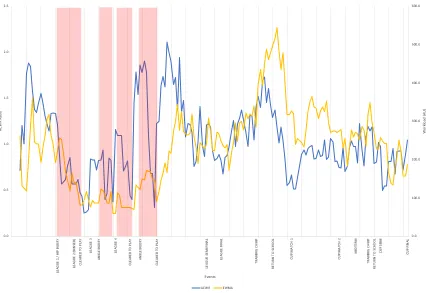
Figure 1.1: Exponentially Weighted Moving Average (EWMA) and Acute to Chronic Workload Ratio (ACWR) across
the schoolboy rugby season from September to March, with key events. Weeks are indicated by vertical grid lines.
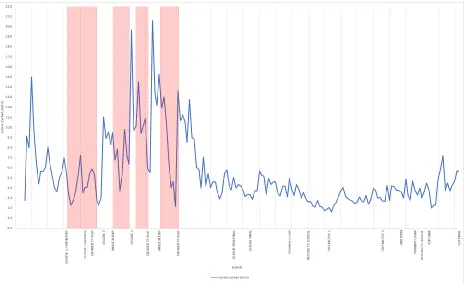
Figure 2.1: Acute to Chronic Workload Ratio (ACWR): Exponentially Weighted Moving Average (EWMA) as a ratio
across the schoolboy rugby season from September to March, with key events. Weeks are indicated by vertical grid
lines. Red blocks indicate periods of time loss injuries.
Discussion
Although there was no significance between ACWR when not injured and at the time of injury
occurrence, the small effect size may indicate that higher ACWR values play a role in injury
occurrence. This may be compounded when in conjunction with low EWMA values (Figure 2.1).
This is highlighted by significantly lower EWMA value during both the week preceding injury and
at time of injury occurrence. This may be due to a possible U-shaped relationship with cumulative
The ACWR:EWMA ratio allowed for direct comparisons across both metrics, thus accounting for
both possible injury risk due to increased ACWR values and decreased EWMA values (Figure 2.1).
The merit of this ratio in predicting injuries may be apparent when considering the significantly
higher value at the time of injury occurrence to all other injury periods. As with EWMA, the
ACWR:EWMA ratio also showed possible promise in detecting injuries in the week prior to injury
occurrence.
Although these findings are in line with previous research, some limitations exist; The workload
prior to the study was not accounted for and differentiation in training type is not made.
Conclusions
EWMA may be a better predictor of “time loss” injury occurrence than ACWR. The ACWR:EWMA ratio may be of use with regards to injury prevention. It is recommended that further studies be
done.
References
1. Gabbett TJ. The Development and Application of an Injury Prediction Model for Noncontact, Soft-Tissue Injuries in Elite Collision Sport Athletes. Journal of Strength and Conditioning Research. 2010;24(10):2593-603.
2. Kara. Injuries in Professional Rugby Union : a Study of Five Years of Injury Data With
Training Loads and Travel As Co-Variates. PhD. 2013.
4. Fuller CW, Molloy MG, Bagate C, Bahr R, Brooks JHM, Donson H, et al. Consensus statement on injury definitions and data collection procedures for studies of injuries in rugby union. British Journal of Sports Medicine. 2007;41(5):328-31.
5. Jones CM, Griffiths PC, Mellalieu SD. Training Load and Fatigue Marker Associations with Injury and Illness: A Systematic Review of Longitudinal Studies. Sports Medicine.
2017;47(5):943-74.