Original Research Article
A study on anxiety disorder among college students
with internet addiction
Sunitha Kandasamy
1, Abdulrahuman Mohamed Buhari
2*, Shyamala Janaki
3INTRODUCTION
The Internet has become one of the most important information resources for students. However, addiction to the Internet can also have a negative impact on academic performance, family relationships, and emotional state among them. There has been an enormous growth in the internet usage worldwide particularly in the last decade. Around 46.1% of the world population has internet connection today.1 In 1995, it was less than 1%. The
number of internet users has increased tenfold from 1999 to 2013. The first billion was reached in 2005. The second billion in 2010. The third billion in 2014 with a 7.5% one year user change in 2016 globally
The internet is the global system of interconnected computer networks that use the internet protocol suite (TCP / IP) to link devices worldwide. It is a network of networks that consists of private, public, academic, business and government networks of local to global
ABSTRACT
Background: The last decade has seen a tremendous growth in internet usage with 3,486,642,862 present users worldwide with India contributing 462,124,989 users. Out of this 70% are young. In this scenario there is also drastic increase in the prevalence of psychiatric illness among the same vulnerable group. A lot of studies have been conducted to bring out the association of the psychiatric disorders with internet addiction. This study aims to estimate the prevalence of internet addiction among college students and bring to light the degree of association of anxiety disorder with internet addiction.
Methods: A cross sectional study is carried out in 2 arts colleges in Tirunelveli city among 200 students (aged 19-21 years) using internet addiction test by Dr. Kimberly young and anxiety rating by Hamilton anxiety scale.
Results: Among the 200 students, only 22% did not have internet addiction. 52% are average on-line users, 20% are possible addicts and 6% are addicts. Among these 59.6% had mild anxiety, 22.4% moderate anxiety and 17.9% suffered severe anxiety. 56.4% had anxious mood and fear and 38.5% suffer intellectual deterioration, 30.8% had depressed mood. 33.3% had experienced muscular somatic symptoms, 23% autonomic, 14.1% gastrointestinal symptoms and 7.7% cardiovascular symptoms and 24% respiratory symptoms.
Conclusions: Internet addiction is an emerging health issue among youth, if left unattended will compromise the mental and physical well being of the youth. It is also mandate that a holistic education program that is based on positive youth constructs is the need of the hour.
Keywords: Internet, Addiction, Anxiety, Students
1
Department of Community Medicine, 2Department of Psychiatry, Tirunelveli Medical College, Tirunelveli, Tamil Nadu, India
3
Tirunelveli Medical College, Tamil Nadu, India
Received: 31 January 2019
Revised: 19 March 2019
Accepted: 22 March 2019
*Correspondence:
Dr. Abdulrahuman Mohamed Buhari, E-mail: [email protected]
Copyright: © the author(s), publisher and licensee Medip Academy. This is an open-access article distributed under the terms of the Creative Commons Attribution Non-Commercial License, which permits unrestricted non-commercial use, distribution, and reproduction in any medium, provided the original work is properly cited.
scope, linked by a broad array of electronic, wireless and optical networking technologies. The internet carries an extensive range of information resources.
Internet addiction (IA) has been defined as “excessive or poorly controlled preoccupations, urges or behaviors regarding computer use and internet access that lead to impairment or distress. Internet addiction disorder (IAD) is defined as any online –related compulsive behaviour which interferes with normal living and causes severe stress on family, friends, loved ones and one’s work environment. This could involve any of the following, cybersex addiction, cyber-relationship addiction, information overload, compulsions (online gaming, online gambling, online shopping), online social networking, blogging. Internet addiction disorder, more commonly called problematic internet use (PIU), refers to excessive computer use which interferes with daily life.2,3 PIU is also called compulsive internet use (CIU), Internet overuse, problematic computer use or pathological computer use or internet addiction disorder (IAD).4 In the most recent version of the DSM-5, internet gaming disorder is the latest term to describe this problem.5
IAD was originally proposed as a disorder in a satirical hoax by Goldberg.6 He took pathological gambling, as diagnosed by the diagnostic and statistical manual of mental disorders (DSM-4), as his model for the description of IAD.7 IAD receives coverage in the press and the possible future classification of it as a psychological disorder continues to be debated and researched in the psychiatric community.8 A systematic review of PIU literature identified the lack of standardization in the concept as a major impediment to advancing this area of study.9
A conceptual model of PIU has been developed based on primary data collected from addiction researchers, psychologists and health providers as well as old adolescents themselves.10 That study identified seven concepts that make up PIU using a concept mapping approach.11 These seven clusters are psychological risk factors, physical impairment, risky internet use impulsive internet use and Internet use dependence.
Internet addiction per se can lead to various conditions like Anxiety, Depression, dishonesty, euphoric feelings, unable to keep schedules, no sense of time, feeling of guilt, isolation, defensiveness, agitation.12 In addition many physical symptoms like backache, headache, weight gain/loss, sleep disturbances, blurred/strained vision, carpal tunnel syndrome are also reported.13
Measuring internet addiction is a challenge. Goldberg developed the internet addictive disorder (IAD) scale.14 Brenner developed the Internet related addictive behavior inventory (IRABI). Young initially developed 8-question internet addiction diagnostic questionnaire (DQ). Later, she included 12 new items in addition to those to formulate an internet addiction test (IAT). Young’s IAT
is the only available test whose psychometric properties have been tested by Widyanto and McMurran.15
Since young populations are more vulnerable to internet, this study aims to bring out the prevalence of internet addiction and associated anxiety disorder among college students.
Aim
To estimate the prevalence of internet addiction among college students in Tirunelveli City.
To determine the psycho somatic anxiety levels associated with internet use among these students.
METHODS
A cross sectional study was carried out after obtaining approval from the institutional ethical committee among arts and science college students undergoing undergraduate education in Tirunelveli city during July 2018. Two colleges in the city were randomly selected and the college administration was approached for permitting to conduct the study. Then the students were explained about the study and encouraged to participate. Students who offered consent were included and those unwilling to participate and absent on the day of data collection were excluded from the study.
Internet addiction assessment was done using internet addiction test (IAT) by Young.15 Hamilton anxiety rating scale was used to assess the severity of anxiety among these students.16
Young’s IAT is a 20 item 5–point Likert scale that measures the severity of the self-reported compulsive use of the internet. The IAT total score is the sum of the ratings given by the examinee for the 20 item responses. Each item is rated on a 5-point scale ranging from 0 to 5. The maximum score is 100 points. The IAT total score ranges, with the higher the score representing the higher level of severity of Internet compulsivity and addiction. Total scores that range from 0 to 30 points are considered to reflect a normal level of Internet usage; scores of 31 to 49 indicate the presence of a mild level of Internet addiction; 50 to 79 reflect the presence of a moderate level; and scores of 80 to 100 indicate a severe dependence upon the Internet,
The data was collected from 206 students and 6 students’ provided incomplete data and thence excluded. The information was tabulated and analyzed using Microsoft Excel and SPSS software. Statistical association was analyzed using chi-square test and z score.
RESULTS
The study population comprises of totally 200 students with 50% representing each of the two chosen colleges. Out of the study population 61% were males and 39% were females. The mean age of the students was 18.5 years. 40% of the students belonged to the Computer Science Department, and 50% from Commerce Department and 20% from English Department.
Internet addiction
Based on the IAT test score, Among the 200 students, only 22% did not have internet addiction. 52% are average on-line users (33.5% males and 18.5% females). They surf the web too long at times, but they have control over their usage. 20% (16.5% males and 3.5% females) are possible addicts, experiencing occasional or frequent problems because of the internet And 6% (5.5% males and 0.5% female) are addicts (Table 1). The difference in the usage pattern with a higher prevalence among males over females was statistically significant (p<0.05).
Table 1: Internet usage and addiction pattern among students.
S. no Sex No addiction Moderate users Possible addicts Addicts Total
N (%) N (%) N (%) N (%)
1 Male 11 (5.5) 67 (33.5) 33 (16.5) 11 (5.5) 122
2 Female 33 (16.5) 37 (18.5) 7 (3.5) 1 (0.5) 78
Total 44 (22 ) 104 (52) 40 (20) 12 (6) 200
(p<0.05).
Table 2: Internet usage vs anxiety levels.
S. no Internet usage pattern Anxiety levels Total
Mild Moderate Severe
1 Moderate users 74 21 9 104
2 Possible addicts 17 10 13 40
3 Addicts 2 4 6 12
Total 93 (59.6%) 35 (22.4%) 28 (17.9%) 156
The p value is.000038. The result is significant at p<0.05.
Figure 1: Department wise distribution of internet usage pattern of students in %.
Among the three different departments studied, Computer Science students rank first with the highest prevalence of internet addiction (53% moderate users, 10% possible addicts, 10% addicts). This is closely followed by the Commerce department students with 30% of moderate users, 26% possible addicts and 9% addicts. Among the students in English department, 50% are moderate users, 25% are possible addicts and there are no internet addicts.
This difference between departments was analyzed statistically and found to be significant with p<0.05 (Figure 1).
Figure 2: Levels of anxiety among internet addicts. Psychosomatic effects of internet addiction
Anxiety: Among the 156 students based on the HAM-A score values it was found that, 59.6% had mild anxiety, 22.4% moderate anxiety and 17.9% suffered severe 55
30
50
10
26 25
10 9
0 0
10 20 30 40 50 60
Computer science
Commerce Eng Literature
Moderate users Possible addicts Addicts
16.70%
33.30% 50%
anxiety (Table 2). However among the addicts, 16.7% had mild anxiety, 33.3% moderate and 50% suffered severe anxiety (Figure 2). This difference in the anxiety levels between the moderate users, possible addicts and addicts were analysed statistically and found to be significant (p<0.05)
Psychic anxiety (mental agitation and psychological distress)
Out of the 156 students- 56.4% were found to have anxious mood and fear.41% had experienced tension and insomnia, 38.5% intellectual deterioration, 30.8% had depressed mood (Table 3).
Table 3: Distribution of psychic anxiety symptoms experienced by the users.
S. no Symptoms Male
(n=111)
Female (n=45)
Total (n=156)
N (%)
1 Anxiety mood 50 38 88 (56.4)
2 Tension 34 30 64 (41)
3 Fear 50 38 88 (56.4)
4 Insomnia 38 26 64 (41)
5 Intellectual deterioration 46 14 60 (38.5)
6 Depressed mood 26 22 48 (30.8)
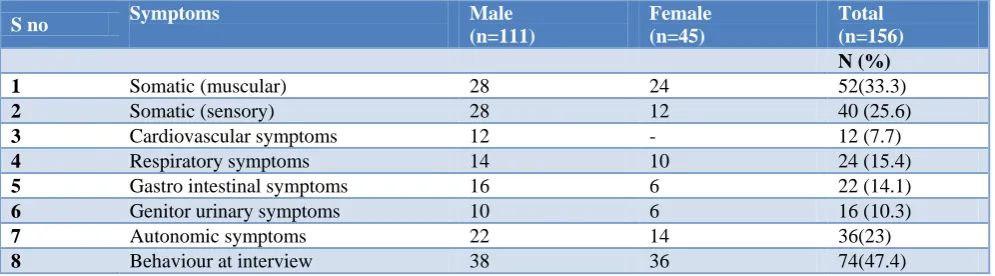
Table 4: Distribution of somatic anxiety symptoms experienced by the users
S no Symptoms
Male (n=111)
Female (n=45)
Total (n=156)
N (%)
1 Somatic (muscular) 28 24 52(33.3)
2 Somatic (sensory) 28 12 40 (25.6)
3 Cardiovascular symptoms 12 - 12 (7.7)
4 Respiratory symptoms 14 10 24 (15.4)
5 Gastro intestinal symptoms 16 6 22 (14.1)
6 Genitor urinary symptoms 10 6 16 (10.3)
7 Autonomic symptoms 22 14 36(23)
8 Behaviour at interview 38 36 74(47.4)
Somatic anxiety (physical complaints related to anxiety)
33.3% of the students were experiencing muscular somatic symptoms like pains and aches, twitching, myoclonic jerks, unsteady voice, grinding of teeth etc. 23% of the students had autonomic symptoms have increased sweating, tremors, dry mouth, tension headache, rising of hair and flushing. 25.6% of students had experienced somatic sensory symptoms like blurring of vision, tinnitus, hot and cold flushes, pricking sensation. 14.1% of the students had gastrointestinal symptoms like dysphagia, nausea, vomiting, abdominal pain, abdominal fullness, looseness of bowel, constipation. 10.3% of students had experienced genitourinary symptoms like increased frequency, urgency of micturition, amenorrhoea, menorrhagia.7.7% of the students had suffered cardiovascular symptoms like palpitations, pain in the chest, throbbing of vessels, fainting fee1ings,missing beat etc. 24% of the students had experienced respiratory symptoms like pressure in the chest, breathlessness, choking feelings, sighing. 47.4% had one of the following behavior tremor of hands, fidgeting, furrowed brow, rapid respiration,
swallowing etc. at the time of interview reflecting the anxiety status (Table 4).
DISCUSSION
Studies have been conducted worldwide especially among young with respect to internet addiction. This study aimed at assessing the prevalence of internet addiction and associated psychosomatic effects (anxiety in particular) among college students.
In this study, 52% were moderate users, 20% possible addicts and 6% addicts. The study done by Goel et al in Mumbai among adolescents found 74.5% as moderate users, 24.8% possible addicts and 0.7% addicts.17 In the study conducted by Gupta, the prevalence of IA was 25.3%.18
In this study, the level of internet addiction varied between the course type of the students with more number of addicts among students of computer science department. Because of the differences in the content and density of education and in the field of application, the level of internet addiction is expected to differ among students in various faculties. In the study by Orsal, a high level of internet addiction was found in students at the Faculty of Economics and Administrative Sciences.20
In this study it was found that the addicts had high anxiety mood and fear (56.4%), and tension (41%). This value correlates well with the study by Kratzer where in the group with PIU, a psychiatric diagnosis of anxiety disorders was found to be 50.0%. Males are predominantly affected by anxious mood, tension and Intellectual deterioration. However, these symptoms were considerably less among females.21
In the study conducted by Cheung, Wong, there was significant association (p<0.001%) of insomnia with internet addiction among Hong Kong Chinese adolescents.22 This is similar to this study which confirms a significant association of Insomnia with internet addiction (p<0.05).
CONCLUSION
Internet addiction is an emerging health issue among youth. The psychosomatic effects associated with internet addiction if left unattended shall definitely compromise the mental and physical well being of the youth adding to the burden of non communicable disease in the society. Early intervention by teaching the young on time management, self-discipline and self-control is more essential in cultivating a positive attitude towards internet use. It is also mandate that a holistic education program that is based on positive youth constructs is the need of the hour.
ACKNOWLEDGEMENTS
We sincerely acknowledge the college administration and the students for their cooperation and participation in this study.
Funding: No funding sources Conflict of interest: None declared
Ethical approval: The study was approved by the Institutional Ethics Committee
REFERENCES
1. Internet live stats, delivered by Worldometers' RTS algorithm, 2018.
2. Moreno MA, Jelenchick LA, Christakis DA. Problematic internet use among older adolescents: A conceptual framework. Computers in Human Behavior. 2013;29(4):1879-87.
3. Byun S, Ruffini C, Mills JE, Douglas AC, Niang M, Stepchenkova S, et al. Internet addiction:
Metasynthesis of 1996–2006 quantitative research. CyberPsychology and Behavior. 2009;12(2):203-7. 4. Meerkerk GJ, van Den Eijnden RJ, Vermulst AA,
Garretsen HF. The compulsive internet use scale (CIUS): some psychometric properties. Cyberpsychology and behavior. 2009;12(1):1-6. 5. Block JJ. Issues for DSM-V: Internet addiction. Am
J Psychiatry. 2008;165(3):306-7
6. Pontes HM, Griffiths MD. Internet addiction disorder and internet gaming disorder are not the same. J Addiction Res Therapy. 2014;5(4):1. 7. Moreno MA, Jelenchick L, Cox E, Young H,
Christakis DA. Problematic internet use among US youth: a systematic review. Archives of pediatrics and adolescent medicine. 2011;165(9):797-805. 8. Masters K. Social networking addiction among
health sciences students in Oman. Sultan Qaboos University Med J. 2015;15(3):e357.
9. Thompson S. Internet connectivity: addiction and dependency study (Doctoral dissertation, Pennsylvania State University).
10. Goel D, Subramanyam A, Kamath R. A study on the prevalence of internet addiction and its association with psychopathology in Indian adolescents. Indian J Psychiatry. 2013;55(2):140.
11. Yellowlees PM, Marks S. Problematic Internet use or Internet addiction?. Computers in human behavior. 2007;23(3):1447-53.
12. Kershaw S. Hooked on the Web: Help is on the way. New York Times. 2005;1:12.
13. Griffiths M. Does Internet and computer" addiction" exist? Some case study evidence. CyberPsychology and Behavior. 2000;3(2):211-8.
14. Goldberg I. Internet Addiction 1996. Available at: http://www.psycom.net/iasg.html. Accessed on 3 January 2019.
15. Young KS. Internet Addiction Test (IAT) by Dr. Kimberly Young. 1998.
16. Hamilton MA. The assessment of anxiety states by rating. Br J Med Psychol. 1959;32(1):50-5.
17. Goel D, Subramanyam A, Kamath R. A study on the prevalence of internet addiction and its association with psychopathology in Indian adolescents. Indian J Psychiatr. 2013;55(2):140.
18. Gupta A, Khan AM, Rajoura OP, Srivastava S. Internet addiction and its mental health correlates among undergraduate college students of a university in North India. Journal of family medicine and primary care. 2018;7(4):721.
19. Teo TS, Lim VK. Gender differences in internet usage and task preferences. Behaviour and Information Technology. 2000;19(4):283-95. 20. Orsal O, Orsal O, Unsal A, Ozalp SS. Evaluation of
internet addiction and depression among university students. Procedia-Social Behavioral Sci. 2013;82:445-54.
22. Cheung LM, Wong WS. The effects of insomnia and internet addiction on depression in Hong Kong Chinese adolescents: an exploratory cross‐sectional analysis. J Sleep Res. 2011;20(2):311-7.