Vol.8 (2018) No. 1
ISSN: 2088-5334
Design of e-Teaching Portfolio System Framework for e-Tutor
Competency Management
Hye Jin Kim
#, Yong Kim
* #Department of e-Learning, Graduate School, Korea National Open University, Seoul, 03087, Korea E-mail: [email protected]
*
Department of e-Learning, Graduate School, Korea National Open University, Seoul, 03087, Korea E-mail: [email protected]
Abstract— In e-learning, tutors support learners through their understanding of e-learning environments as well as their knowledge
of the subjects under their charge, and also play the role of preventing the dropout of learners. Therefore, measures to manage efficient competency of tutors are necessary. Whereas e-portfolios are made from the viewpoint of learner's learning, e-teaching portfolios are made from the viewpoint of the activities of teachers including tutors. Although there have been discussions about the roles and competency of tutors, thus far, the presentation of concrete items to be managed in the system is insufficient, and discussions about e-teaching portfolio systems are insufficient. In this study, attempts were made to define the items of tutor competency necessary for systematic management of tutors’ competency in e-teaching portfolio systems. In results, tutor information, tutors’ personal history, and tutor competency were presented as areas that constitute e-teaching portfolios. The competencies that must be possessed by tutors in e-learning were also presented from the viewpoints of knowledge (e.g., e-learning, teaching-learning, etc.), skills (e.g., ICT literacy, LMS, etc.), and attitudes (e.g., responsibility, positive attitudes, etc.). The results of the present study will provide implications when e-teaching portfolio systems are designed for tutor competency management in e-learning.
Keywords— e-learning; e-tutor; e-portfolio; e-teaching portfolio
I. INTRODUCTION
As e-learning has been spreading thanks to the development of information communication technology, getting out of the restriction of defined time and place to conduct self-directed learning has become possible. Thus far, e-learning education environments have been in the form where learners received education contents provided by teachers through the computer and the Internet. Although learners got out of the restriction in time and places, they were placed in environments where they should learn by themselves. e-Learning requires substantial will and shows a high incidence of dropouts due to factors such as the lack of teaching presence, difficulties in using distant media, and under-achievement as well as other diverse reasons. Therefore, for successful e-learning, interactions between teachers and learners are necessary so that learners would not feel a sense of isolation but continue learning in e-learning environments [1].
For these interactions, teachers should spend a lot of time for diverse interactions with learners. In addition, since the numbers of students per teacher are larger compared to traditional education, difficulties occur in student guidance
and evaluation in terms of time and quality. Tutors are a learning support system that assists teachers in such situations. Tutor play not only a role to solve problems arising in the process of learners’ learning, but also a role to support learner's learning by helping teachers. The success rate of learners’ learning in e-learning sometimes varies with tutors’ competency. Therefore, many efforts to define the competency of tutors have been made. However, measures to systematically manage the competency of tutors are necessary.
Portfolios collect learners’ learning processes, goals, efforts, attitudes, educational activities, and achievements over time. Portfolios have been used as a function to show individual competency by identifying the degree of achievement of educational goals and managing the learning processes and results, such as advising necessary for the improvement of learning. e-Portfolios were introduced to pursue the efficiency of management and the permanence of material storage by converting the materials managed by portfolios into digital materials.
viewpoint of learners, e-teaching portfolios can be said to be made from the viewpoint of teachers. Measures to utilize teaching portfolios for qualitative improvement of instructions of teachers including tutors or the enhancement of the competency have been presented [7]-[9]. In addition, studies to apply teaching portfolios as a performance-based evaluation tool has been conducted recently [10]. Therefore, the utilization of teaching portfolio is considered to be appropriate for effective management of the competency of tutors. Measures to not only efficiently manage competency but also improve the availability by composing teaching portfolios based on the competency of tutors discussed thus far are necessary. To this end, e-teaching portfolio systems for e-tutor competency management are necessary, and interoperability between information systems for e-learning such as learning management systems operated by educational institutions should be considered. In addition, what kind of tutor data should be managed in teaching portfolios should be discussed.
The present study was intended to propose the e-teaching portfolio system framework and suggests competency items of tutors for e-teaching portfolios.
II. MATERIAL AND METHOD
A. e-Portfolio and e-Teaching Portfolio
By the mid-1990s, portfolios were mainly produced by printing the contents on paper and stored in binders, clear files, and scrapbooks. Since the late 1990s, however, based on developed technologies such as computers, electronic media, and the web, portfolios have been produced in the forms on CD-ROM, DVD and websites, etc., and it has become possible to produce, store, search, and submit more dynamic portfolios by utilizing diverse multimedia elements such as audio and video.
e-Portfolios in the labor market are evidence that shows individuals’ tendencies in performing certain tasks, the qualitative representation of their ability, and their competency. In the personal dimension, e-portfolios have the advantage of enabling systematic management of lifelong history. On the other hand, employers can use e-portfolios to gauge employees’ executive ability and can reduce unnecessary education by checking e-portfolios to reduce costs.
In terms of teaching-learning, portfolios mean intentionally organized learner's learning processes, goals, efforts, attitudes, educational activities, achievements, talents, and hobbies that have been gathered over time [11]. The traditional portfolios that have been utilized in education cannot be kept for a long time, and have problems of high costs and low efficiency because large amounts of time and efforts are consumed to produce them. Therefore, e-portfolios are presented that are made by grafting ICT on portfolios so that they can be evaluated and managed online. These e-portfolios enable not only education management but also the management of human resources with diverse competencies, recruitment of employees, job-seeking, and easy searches and utilization of human resources.
e-Portfolios can be utilized for competency-based learning process-based evaluation so that the result-based evaluation in traditional education can be complemented [12]. In
addition, e-portfolios can be used as a tool to support cooperative learning and evaluation in university education, etc. [13]. e-Portfolios can be efficiently utilized for feedback between teachers and other learners or support for interactions in higher education [14]. As such, e-portfolios have been established as a tool that can be diversely utilized in education. The purpose of utilization of e-portfolios can be considered from two viewpoints. First, e-portfolios can support learning, evaluation activities to promote individual learners’ reflective thinking, critical thinking, and higher-level problem-solving ability in teaching-learning processes. Second, e-portfolios can be utilized as a tool to prove and obtain the certification of individuals’ expertise and competency by demonstrating learning processes and the outputs.
There are not only cases where such e-portfolios used by learners but also cases where teachers utilize e-portfolios for reflection by themselves [15]. Those e-portfolios that are utilized to improve teachers’ classes and to teach competency through continuous reflection are also referred to as e-teaching portfolios.
As components of teaching portfolios are suggested such as “material collected from oneself”, “materials collected from others”, and “outputs from good teaching” [16]. A study that applied the components in the foregoing study presented education philosophy, lesson goal, lesson plan, teaching method, and lesson materials as “materials collected from oneself”. This study presented learning achievement data, teaching evaluation data, learning feedback, and class observation data as “materials collected from others”, and presented instruction performance analysis and class evaluation analysis as “reflection data” among the components of teaching portfolio [17].
Another study presents teaching philosophy, basic information on the curriculum, the purpose and goal of the curriculum, major lecture materials, lecture progression plans, evaluation methods, learner analyses, lesson analyses, and reflection as components of teaching portfolios [18].
However, in the case of these studies, the fact that concrete collected data to be managed in the system are not specified seems to be a limitation. The data to be managed in e-teaching portfolio systems must be in a form acceptable to the system, and the user(tutor) must clearly know the type of data to be managed and data format.
B. Tutor Competency
Tutors have existed in traditional education too. A tutor means a personal teacher or private teacher. Tutors in e-learning are in the same context as traditional tutors. However, as ICT such as the Internet and computers have been integrated with education, the roles and competency of traditional tutors have been changing.
Studies on the competency and the roles of tutors in e-learning have been continuously conducted. Some researchers suggest that in tutors’ roles in distance education are reviewing learner's homework and giving feedback on the homework or playing teachers’ roles on behalf of teachers in terms of interactions with learners [19].
addition, another study subdivided tutors’ roles further into the roles of a firefighter, facilitator, administrator, editor, promoter, expert, helper, participant, and marketer [21]. Still another study suggested the roles of tutors according to the learning development stages in the cyberlearning spaces. In this study, the roles of tutors were suggested according to five stages of learning development, which is “access and motivation”, “online socialization”, “information giving and receiving”, “knowledge construction”, and “development”.
A study that suggested the roles of tutors and the competency necessary for the roles identified the roles of tutors for support of education-learning in e-learning as the roles of teaching-learning activity assistants, learning managers, semi-experts in contents, interaction facilitators, and the social relations organizer and a study based on the foregoing presents 17 competencies by role as follows [22].
• Teaching-learning activity assistant: learner needs analysis skills, semi-expertise in contents, communication skills, online learning evaluation skills, expertise in cognitive and affective strategies, social relationship forming ability, understanding of e-learning, and sense of responsibility
• Learning manager: communication skills, understanding of e-learning, ability to manage processes, ability to use and manage learning management systems, ability to manage time, and problem-solving ability
• Semi-expert in contents: semi-expert in contents, problem-solving ability, and information literacy • Interaction facilitator: communication ability,
interaction facilitation ability, ability to utilize CMC (Computer-Mediated Communication)
• Social relations organizer: learner needs analysis ability, communication ability, interpersonal ability, planning ability
As such, the roles of tutors are different depending on the viewpoints of researchers. However, they are generally considered to be generally focused on supporting learners and teachers for effective teaching-learning activities.
Although existing studies continuously revealed the roles of tutors, no existing study presented concrete competencies. That is, no existing study presented what are concrete competencies of tutors or what training tutors should undergo for effective tutoring in e-learning environments.
Some recent studies have been conducted to identify the concrete competencies of tutors in e-learning environments. As the competency of the e-tutors from the viewpoint of information communication technology, essential ICT literacy (E.g., Electronic mailing and mail groups, discussion platforms like a bulletin / discussion board, sharing and web page authoring and file sharing, online assessment ways, questioning, and answering) have been presented. In addition, competencies for e-tutoring are presented as follows [23].
• Should possess an overall knowledge of the course to tutored
• Should know the pedagogy prevailing the course
• Should have the information and communications technology knowledge
• Should be aware of learners working and to share relationship
• Should positively encourage and support the learners
• Should play the role of mentor/counselor as well as academic advisor
A study on the abilities expected from tutors in learning environments presents basic knowledge of e-learning and online e-learning, understanding of virtual classrooms, LMS, and LCMS, and online teaching designs and theories(methods), management of copyright, intellectual rights, and digital rights, and learning of diverse forms of evaluation as the abilities [24]. In cases where OER (Open Educational Resources) modules were developed for the development of e-tutor competency, the subjects of the modules were “Fundamentals of e-Learning”, “Online Learning Theories”, “LMS (LCMS) and Virtual classrooms”, “Online Instructional Design and methods”, “e-Assessment”’, “Social Media and Emerging Technologies”, “Quality Control”, “Graphical Design”, “Copyright”, “Digital Rights Management (DRM)”, “Plagiarism”, “MOOC”, and “OER” [25]. A study on the moral reasoning of tutors presented moral characters, interpersonal relationships, problem-solving, empathy, and caring as the competencies for moral reasoning [26].
When the contents presented above are put together, it can be seen that tutors’ competency should be considered from all the viewpoints of knowledge, skills, and attitudes.
III.RESULTS AND DISCUSSION
A. Concept of e-Teaching Portfolio System
In the present study, an e-teaching portfolio framework was designed through the following stages.
In the first stage, an expert group consisting of five experts in e-learning was operated to derive a conceptual diagram of e-teaching portfolio systems and the components of e-teaching portfolios. In the second stage, detailed items of the components that constitute e-teaching portfolios were derived. In the third stage, interviews were conducted with 10 other experts in e-learning who did not participate in the expert group to validate the results of the study.
A standard model is necessary to utilize e-teaching portfolios in e-learning because the standard model is the most important element for system interoperability and data management efficiency.
For example, if a tutor in an educational institution moves to another educational institution, the relevant data can be shared and managed by the information system (LMS, etc.) operated in education institutions through standardized e-teaching portfolios.
Through e-teaching portfolios, educational institutions can easily grasp the competency of the tutor, and the tutor can apply for desired educational institutions through the easy and systematic management of his/her information.
In addition, learners can interact with tutors because they can see basic competencies of their tutors through learning management systems. These conditions are considered to ultimately enhance the effectiveness of e-learning.
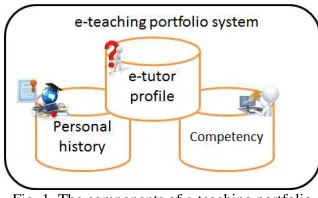
Fig. 1 The components of e-teaching portfolio
1) e-Tutor Profile: It includes basic information about
the owner of the e-teaching portfolio. It includes the minimum information necessary for teaching-learning activities rather than the detailed personal information of the tutor.
2) Personal History: It includes the history of a tutor.
Historical information includes both officially certified information and unofficial histories. For instance, officially certified information includes certificates, authentication certificates, and licenses received from teaching-learning activities related educational institutions and unofficial teaching-learning activity related histories include the activities the tutor has conducted thus far. It also includes reflection. The reflection function is a place to manage data about feedback from other people as well as self-feedback about tutor activities.
3) Competency: It means the competency required for
tutor activities in e-learning education environments.
Based on the three items presented above, an e-teaching portfolio framework is presented as follows.
Fig. 2 e-teaching portfolio framework
The e-teaching portfolio system is a system that can manage and store the components of e-teaching portfolios. The information is managed by the tutors that use it. Educational institutions that wish to employ tutors request tutors’ e-teaching portfolios to the e-teaching portfolio system and the system provides the e-teaching portfolios to the educational institutions after getting the approval of the users(tutors). When tutors provide e-teaching portfolios to educational institutions, they can select and provide only the information requested by education institutions from their e-teaching portfolio. In addition, tutors can access the system anytime, anywhere to modify and manage their portfolio.
The e-teaching portfolio system provides security systems so that tutors’ information can be safely stored and provides UI and system support so that tutors and educational institutions can easily use the system.
B. e-Tutor Profiles and Personal History
Detailed items by a component of e-teaching portfolios managed in the e-teaching portfolio system were derived. First, e-tutor profiles and personal histories are regarding tutors’ information and personal histories including the following items.
TABLEI
PROFILE AND PERSONAL HISTORY OF TUTORS
Division Item Example of Detailed Items
Tutor profile
Personal information
name, business e-mail, phone number, etc.
Personal history
Education (training) history
names of educational
institutions, periods, records, etc.
Tutor activities
names of educational
institutions, subjects under charge, periods, evaluation, etc.
Qualification
information license, certificates, etc.
Material room syllabus, evaluation data, teaching materials
Reflection
Feedback title, date, content, etc. Daily log of
counseling
title, date, counselor, result content, etc.
Self-reflection title, date, content, etc.
The “tutor profile” includes “personal information”. The “personal information” indicates the ownership of teaching portfolios and is composed based on the minimum information necessary for communication between teachers and learners such as tutors’ names, business e-mails, and phone numbers.
The “personal history” includes “education (training) history”, “tutor activities”, “qualification information”, and “material room.” The education (training) history is a field to present histories of tutors’ education and training including not only activities at regular educational institutions such as K-12 school education but also activities at non-regular educational institutions. As detailed items, institution names, periods, training contents, and education or training results may be presented. The “tutor activities” is a field to present activities conducted by tutors as tutors at educational institutions where subject names, periods, and tutor evaluation results, etc. can be recorded. The “qualification information” is a field where tutors can officially prove the results of diverse learning activities with licenses, certificates, certified report cards, etc. The “material room” is a field where reference materials, project results, etc. utilized during tutor activities can be stored and managed. Efficient tutor activities can be conducted utilizing this field through reuse of materials, etc.
C. Detailed Competency of e-Tutor
With regard to the competency of tutors to be managed in e-teaching portfolios, detailed items were derived through experts’ opinions based on related literature analysis. The competencies that must be possessed by tutors in e-learning were presented from the viewpoints of knowledge, skills, and attitudes.
First, detailed items in the knowledge field are presented as follows.
TABLE Ⅱ
DETAILED ITEMS IN THE KNOWLEDGE FIELD
Domain Detailed Content Basic Competency
Advanced Competency
e-learning
Understanding of
e-learning *
Understanding of
e-learning contents *
Understanding of learning management system
* *
e-learning operation *
teaching-learning
Teaching-learning
theory * *
Correction instruction
method *
Understanding of
education evaluation *
Syllabus design *
Learner support
method *
major knowledge
Sufficient knowledge
of subjects in
operation
*
Expertise at the level
of experts *
other Copyright *
Information ethics *
Tutors acting in e-learning have different environments from those of tutors acting in traditional classes. Since the environments are computer and Internet-based education environments, overall understanding of the education implemented in these environments are necessary. Therefore, the basic competencies in the "e-learning" area include detailed contents such as e-learning trends, pros and cons of e-learning, and operation cases.
The learning management system plays an important role in supporting teaching-learning activities between teachers and learners in e-learning such as management of learner's learning as well as delivering learning materials such as e-learning contents [27]. Tutors become to know overall methods of utilizing the learning management system in e-learning by e-learning the roles of the e-learning management system and major operation cases. They become to have advanced competencies for the learning management system by actually installing the learning management system utilizing open source software such as Moodle based on their basic competency of the learning management system.
In the “e-learning operation”, tutors become to know about how the representative e-learning services are operated and the roles of tutors. The advanced competency is the understanding of e-learning contents. Through the
understanding of diverse forms of e-learning contents and how they are developed, tutors become to have the competency for e-learning contents.
Furthermore, by presenting the design methodology for content development, the e-learning operation field enables tutors to know how to operate contents based on diverse teaching methods and how to support learners.
The “teaching-learning” contains detailed content related to the basic pedagogy necessary for tutor activities. The reason for this is that tutors who act in e-learning are often majors not related to education. Therefore, tutors who support learners and should sometimes conduct teaching (instruction) activities should have basic knowledge related to pedagogy as a competency. The basic competencies include understanding of teaching-learning theories, correction instruction methods, and learner support methods. The advanced competencies include concrete teaching-learning methods in e-teaching-learning and a basic understanding of learner evaluation. Evaluation methods include evaluation methods available in e-learning, excluding those forms of tests that can be automatically scored through a learning management system, etc.
The "major knowledge" refers to the major knowledge of the subject for which the tutor is responsible. The major knowledge necessary to operate a subject may be basic knowledge, but in some cases, major knowledge at the level of teachers may be necessary. Therefore, the subjects that can be under tutors’ charge may vary according to the level of major knowledge of tutors.
The “other” contains basic knowledge related to the management of learners’ personal information and the protection of the copyrights of teaching-learning materials.
Detailed contents of the ‘skills’ field are as follows.
TABLEⅢ
DETAILED CONTENTS OF THE ‘SKILLS’FIELD
Domain Detailed Content Basic Competency
Advanced Competency
ICT Literacy
Computer
utilization *
Computer and network problem solving
*
Internet utilization *
Business SW
utilization *
Teaching-learning related S/W utilization
*
learning manageme
nt system
Understanding of
LMS functions *
Academic
adminis-tration
Academic administration processing procedures and methods
*
Communi-cation
skills
Education communication skill
*
Online counseling
The "ICT literacy" includes ICT literacy such as basic computer and Internet utilization ability for e-learning operations and the ability to utilize business S/W such as MS-Offices. The advanced competencies include how to deal with hardware errors that may occur in teaching-learning activities, and the ability to use the software for teaching-learning activities for specific subjects. The “learning management system” is related to the use of learning management system of the educational institutions where tutors conduct tutor activities, unlike those presented in the "knowledge" field.
The “academic administration” include contains the administrative procedures and methods of the educational institution to which the tutor belongs.
The "communication skills" is related to how to communicate with learners and online counseling. Tutors frequently interact with learners in teaching-learning activity processes. In some cases, interactions cannot be made due to the lack of communication skills or problems occur in communication with learners due to wrong misunderstanding. Therefore, tutors should have knowledge of communication methods including systematic online counseling methods as competency.
The attitude field includes a sense of responsibility and responsiveness and positive attitudes.
D. Feasibility Verification
Opinions on the e-teaching portfolio framework derived as a result of this study were collected from 10 e-learning experts through interviews for feasibility verification. The interviews were conducted from largely two viewpoints.
The first one is the suitability of the components of e-teaching portfolios. Most agreed with the e-e-teaching portfolio components presented in this study. As matters that must be considered later, a standardization competency model for tutor competency in e-learning should be presented, and tutor training should be induced to progress based on the model. In addition, since the activities of tutors and necessary competencies may vary depending on target learners (e.g., primary school students, adult learners, etc.), consideration should be given to this. Since cases of damage in relation to the protection of users’ personal information and copyrights for digital contents are increasing as e-learning spreads, education on the foregoing should be reinforced. In addition, computer security, etc. should be reinforced so that tutors’ personal information managed in e-teaching portfolios would not be leaked.
The second one is the viewpoint of e-teaching portfolio system operation. Most experts indicated opinions that e-teaching portfolios should be developed and operated as cloud-based systems. Given a recent study that utilized cloud computing for efficient operation of information systems, the cloud computing-based system operation should be considered [28].
In addition, when tutors’ e-teaching portfolios are shared among educational institutions, a standardized data model for information storage and management should be applied, and matters related to personal information should be managed and provided to other institutions by tutors’ authority. Finally, based on evaluation criteria for tutor competency, procedures and methods necessary for tutor
evaluation should be prepared. The evaluation of tutor should be conducted centering on the evaluation of tutor activities by learners and teachers.
The third one is the viewpoint of teaching-learning activities. The experts’ opinions were that before the operation of the e-learning process, tutors’ roles and teachers’ role should be clearly divided. Depending on the e-learning processes, tutors may be assigned to perform the role of teachers on behalf of teachers. A typical example is learner evaluation. When tutors receive and evaluate task performance results from learners, sufficient discussion with the teacher is required for accurate evaluation. Since learners’ trust in e-learning process may be lost in some cases, informing the roles of tutors and teacher to learners before e-learning process operation is a way.
IV.CONCLUSION
The competency of tutors in e-learning can be a success factor for e-learning. Therefore, a system that can systematically manage the competency of tutors is necessary. Tutor competency management includes not only the management from the viewpoint of the employer who utilizes the tutor but also the utilization of the teaching portfolios by tutors. The construction and operation of efficient e-teaching portfolio systems have the advantage of being able to utilize tutors suitable for the e-learning operation courses based on the competency of the tutor. The foregoing has advantages from the viewpoint of tutors such as improved reusability of portfolios and convenient management because they can efficiently manage their competencies related to their tutor activities and related information.
To this end, in this study, an e-teaching portfolio system framework for tutors was presented. As components of the e-teaching portfolio system framework for tutors, tutor information (e-tutor profile), tutors’ personal history, and tutor competency were presented. In addition to tutor information, the personal history includes tutors’ personal information, education(training) history, details of tutor activities, qualification information, material room, and reflection. In the reflection field, not only the feedback on tutor activities created by tutors but also feedback from teachers and learners are stored so that tutor activity improvement points can be identified.
In addition, concrete items of tutor competency that will enable tutor competency management are necessary. In this study, the tutor competency for management was defined as knowledge, skills, and attitudes.
The “knowledge” includes e-learning and teaching-learning related knowledge and the major knowledge of the subjects that will be under the tutors’ charge. The “skills” includes ICT Literacy necessary for tutor activities in e-learning, business S/W, the ability to utilize the S/W and learning management system necessary for teaching-learning activities, academic administration procedures, and communication skills. In the “attitude”, a sense of responsibility, etc. was presented.
Based on this study, the following studies are suggested as future studies.
data between systems should be developed, and data should be managed in the system based on the model.
Second, a tutor competency evaluation model is necessary. Self-evaluation of tutor competency and evaluation by the educational institutions as employers should be considered. The purpose of the evaluation includes the quantitative measurement of the results of activities for re-employment the evaluation should focus on matters to be improved in the tutor activities.
Third, training programs that can reinforce tutor competency should be developed. Training programs should be developed through the definition of standardized competency and tutors should be enabled to improve tutor competency continuously. The training programs can be provided through offline education, but online education should also be considered so that training can be undergone through e-learning. In addition, various training system and methods should be considered for improvement competency of e-tutor. Studies related to intelligent tutoring system suggest presented effective learning [29], [30].
When designing and developing e-teaching portfolio systems based on the present study, systematic e-teaching portfolio systems for tutors should be developed through the analyses of stakeholders’ demands and similar systems already developed.
Since the e-teaching portfolios for tutors are reconstructed to fit tutors’ competency and roles to provide opportunities for tutor evaluation and tutors’ self-reflection, they are considered to be utilized in the development of tutors’ specialized abilities because they enhance tutors’ pride and sense of responsibility and improve their reflective thinking and teaching efficiency.
REFERENCES
[1] J. J. Young, S. N. Kim, and N. Y. Kim, "Development and Validation of a Dropout Scale for the Cause Examination in Corporate E-learning," Korean society for learning and performance, vol.10 no.2, pp.79-97, 2008.
[2] Y. H. Woo, H. R. Jung, Y. Kim, and C. W. Nam, "Establishment and Utilization of e-Portfolio to Support Learning & Career Management based on Lifelong Learning," Journal of Lifelong Learning Society, vol.10 no.4, pp.217-239, 2014.
[3] J. G. Shon, “A Study on e-Portfolio Standardization,” Journal of
Lifelong Learning Society, vol.7 no.2, pp.137-156, 2011.
[4] Y. G. Cho, "A Study on the Development and the Plan for Revitalization of e-Student Portfolio System," Journal of
Learner-Centered Curriculum and Instruction, vol.16 no.11, pp. 79-109, 2016.
[5] N. Haave, "E-Portfolios Rescue Biology Students from a Poorer Final Exam Result: Promoting Student Metacognition," Journal of
College Biology Teaching, vol.42 no.1, pp.8-15, 2016.
[6] S. Ada, H. T. Suna, F. Elkonca, and I. Karakaya, "Views of Academicians, School Administrators, and Teachers Regarding the Use of E-Portfolios in Transition from Elementary Education to Secondary Education," Theory and Practice, vol.16 no.2 pp.375-397, 2016.
[7] Y. G. Cho, "Searching Components of the Teaching Portfolio for Qualitative Improvement and Evaluation of Instruction in Higher Education," Journal of Educational Technology, vol.25 no.1, pp.1-27, 2009.
[8] M. J. Kim, "The Effects of Open Teaching Portfolio and Participation Activity on Pre-service Teachers’ Portfolio Composition and Instructional Design ," Journal of Learner-Centered Curriculum and
Instruction, vol.15 no.11, pp.267-288, 2015.
[9] M. J. Koehler, S. P. Greenhalgh, J. M. Rosenberg, and S. F. Keenan, "What the Tech is Going on with Teachers' Digital Teaching Portfolios? Using the TPACK Framework to Analyze Teachers' Technological Understanding," Journal of Technology & Teacher
Education, vol. 25 issue 1, pp.31-59, 2017.
[10] E. H. Lee, "Application of Teaching Portfolio as an Evaluation Tool for Implementation of the Outcome-Based Curriculum," Journal of
Learner-Centered Curriculum and Instruction, vo.17 no.4, pp.
459-478, 2017.
[11] J. T. Winsor and B.A. Ellefson, "Professional portfolios in teacher education: An exploration of their value and potential," The Teacher
Educator, vol.31, pp.68-74, 1995.
[12] L. Tara, Crowell, and E. Calamidas, "Assessing Public Health Majors through the Use of e-Portfolios," Journal of the Scholarship of
Teaching and Learning, vol.16 no.4, pp.62-74, 2016.
[13] A. Venville, H. Cleak, and E. Bould, "Exploring the Potential of a Collaborative Web based E-portfolio in Social Work Field Education," Australian Social Work, vol.70 no.2, pp.185-196, 2017. [14] H. Stavroula, "E-portfolios as professional identities for university
learners in an English for communication and media program,"
International Journal of Language Studies, vol.11 no.3, pp.151-166,
2017.
[15] A. Carl and S. Strydom, "e-Portfolio as reflection tool during teaching practice: The interplay between contextual and dispositional variables," South African Journal of Education, vol. 11, pp.1-10, 2017.
[16] P. Seldin, J. E. Miller, C. A. Seldin, and W. McKeachie, The
Teaching Portfolio: A Practical Guide to Improved Performance and Promotion/Tenure Decisions, 4th Edition, CA: Jossey-Bass, 2010.
[17] Y. G. Cho, "A Study on a Tentative Plan of the Teaching Portfolio Development Model and Rubric for Qualitative Improvement of Instruction in Instructors," The Journal of Korean Teacher Education, vol.26 no.2, pp. 47-73, 2009.
[18] M. Choi, "The Case Study of Teaching Portfolio to Reinforce Teaching Competency of University," The Journal of Sciences and
Arts, Vol.14 No.5, pp.79-101, 2010.
[19] M. Moore and G. Kearsley, Distance education: A systems view. Boston, MA:Wadsworth Publishing. 1996.
[20] Z. L. Berge, "The Role of the Online Instructor/Facilitator,"
Educational Technology. vol.35 no.1, pp.22-30, 1995.
[21] M. P. Collins and Z. L. Berge, "Moderating Online Electronic Discussion Groups," in Proc. the American Educational Research Association Conference. Chicago. pp.24-28, 1997.
[22] J. J. Young and J. Y. Kim, "An Inquiry into Tutors Roles and Competencies in e-Learning Environment," The journal of
Educational Studies, vol.34 no.1, pp.19-39, 2003.
[23] S. D. Bhoite, "e-Tutoring: a Learning Facilitator with New Competencies," International Journal of Scientific Research, vol.2 issue.10, 2013.
[24] A. Muge, K. Filz, and G. Yasemin, "Assessment of a Multinational Online Faculty Development Program on Online Teaching: Reflections of Candidate e-Tutors," Turkish Online Journal of
Distance Education, vol.18 no.1, pp.22-38, 2017.
[25] C. Rapp, Y. Gülbahar, and M. Adnan, "e-Tutor: A Multilingual Open Educational Resource for Faculty Development to Teach Online,"
The International Review of Research in Open and Distributed Learning, vol.17 no.5, pp.284-289, 2016.
[26] C. F. Chien, C. J. Liao, B. G. Walters, and C. Y. Lee, "Measuring the Moral Reasoning Competencies of Service-Learning e-Tutors,"
Educational Technology & Society, vol.19 no.3, pp.269–281, 2016.
[27] D. H. Lee and Y. Kim, "Design and Implementation of LMS for Sharing Learning Resources in e-Learning," Advances in Computer
Science and Ubiquitous Computing, vol. 373 of the series LNEE, pp
367-373, 2015.
[28] A. M. Kadhum and M. K. Hasan, "Assessing the Determinants of Cloud Computing Services for Utilizing Health Information Systems: A Case Study", International Journal on Advanced Science,
Engineering and Information Technology, vol. 7 no. 2, pp. 503-510,
2017.
[29] D. Hooshyar, R. B. Ahmad, M. Yousefi, M. Fathia, S. J. Horng, and H. S. Lim, "Applying an online game-based formative assessment in a flowchart-based Intelligent tutoring system for improving problem-solving skills," Computers & Education, vol.94, pp.18-36. 2016. [30] D. Hooshyar, R. B. Ahmad, M. Yousefi, M. Fathia, A. Abdollahi, S.
J. Horng, and H. S. Lim, "A solution-based intelligent tutoring system integrated with an online game-based formative assessment: development and evaluation," Educational Technology Research and