The Methods of Selecting and Assessing Potential Consumers Used of by
Competitive Intelligence
Vaidas Gaidelys, Gitana Valodkiene
Kaunas University of Technology
Laisves av.55, LT-44309 Kaunas, Lithuania
e-mail:[email protected], [email protected]
Competitive intelligence has not been known recently. Such processes as industrial or commercial espionage are known much more. The actions, which are used in order to be protected from the mentioned influence, are as follows: making the lists of commercial secrets, official regulations, protection of corporal and informative data and other currently used tools. The competitive intelligence, which plays an especially important part in the context of globalization, is considered to be more significant with developing technologies (Blenkhorn, 2005). In any institution strategic decisions are made by executives at the highest level. According to the Doctor of Science at Pittsburgh University John E. Prescott, the executives of the highest level with no reaction to rivals actions are not forgiven (Prescott, 2004).
So it is possible to characterize the first potential clients who might buy the services provided by competitive intelligence. Large international corporations could become such customers. On one side, such corporations have two alternatives of their choice, they are: buying competitive intelligence service from independent companies providing professional services or establish an internal detachment of competitive intelligence as a separate element or as an element working inside the detachment which has already been acting. Anyway it is clear that a lot of preparations are necessary working with large corporations to prove the advantages of the services provided by competitive intelligence (Fleisher, 2001). The available experience is one of the main arguments which could be presented by specialists of competitive intelligence. There are not many institutions preparing trained specialists in the field of competitive intelligence which would currently work. So mostly such specialists having got university degrees in economics, law, management, administration or other fields also having attended special training courses are experienced at working in special operational or secret services. Miller names the experience which specialists of competitive intelligence had got in military and governmental intelligence also working in detachments of analysis of information as an evidence of their available qualification (Miller. 2004). Later on due to the efforts made by the Association of Competitive Intelligence Professionals (ACIP) and some scientists the new professional direction also such profession as a specialist off competitive intelligence appeared. The experience of national intelligence services proves the importance of collecting and analysis of systemic information provided by intelligence for business (ACIP, 2011). Nevertheless it is necessary to remark that the main aim of business is getting profit so it is
necessary to adapt the methods used by intelligence services for business goals. Providing security does not play the main part in this case. (SCIP, 2011).
Keywords: competitive intelligence, secret services, competitive, International Corporations, ACIP.
Introduction
The demand for
competitive intelligence
Essential subjects/issues of competitive
intelligence
Initiative issues
Events in the market Relations with clients:
how deeply the clients are involved into the
processes of competitive intelligence
Regular communication with clients Work of competitive
intelligence
1
3 experience. This fact means that business had got wider
possibilities to use the experience of the both sides as well as their obligations (Miller, 2001).
The object of the article is the methods of assessing consumers used by competitive intelligence.
The article aims to analyze and assess the methods of selecting consumers and assessing their demands used by competitive intelligence.
The research methods used were as follows: a systematic comparative and structural analysis of scientific literature on economics, logical analysis, qualitative and quantitative analysis.
The working environment of competitive
intelligence
It is very important for customers buying the competitive intelligence service to understand that the results of competitive intelligence program must be generalized timely and become the basis of the corporation’s policy without any doubt. One of the goals of competitive intelligence is to save time which would be spent to deal with the problems connected with different situations (Prescott, 2004). It is also very important for specialists of competitive intelligence to unite the tasks set by different detachments of the corporation to achieve the general goal. J. Prescott named the methods, which could help specialists of competitive intelligence to offer large corporations such information or service which would assure the potential consumers that the offered service is reliable, as the main problem while searching the potential consumers of the service provided by specialists of competitive intelligence (Wright, 2006). Here three main directions can be accentuated:
1. The information to examine the problem must be shaped into an analysis.
2. Effective communication is necessary in order to adapt the results of the analysis for consumers demands.
3. Unethical behaviour destroys reliance. This point should be emphasized considering a proprietary right to intellectual property and its importance for business.
While providing competitive intelligence services in different countries, it is very important whether the methods used by competitive intelligence could break available in those countries juridical instruments or ethical standards. According to Robert Seal, former specialist of intelligence in the USA, who later founded a non-commercial organization called Open Source Solution (OSS), a large amount of valuable reconnaissance information can be obtained using directly and purposively the sources of information opened for the public. But other authors maintain that although above mentioned remarks are important they can not give complete information how specialists of competitive intelligence assure reliance of potential consumers of the services provided by specialists of competitive intelligence (Negash, 2004). No doubt that consumers’ reliance depends on the sort of informative product which specialists of competitive intelligence are capable to offer (Leana & Rousseau, 2000).
It is necessary to remark that the work which is done by specialists of competitive intelligence, very often former
officers of secret services, is strongly restricted by available in secret services rulebooks which regulate using by civilians information and knowledge obtained when in service.
The patterning of the processes of competitive
intelligence
This patterning will be done on the purpose to strengthen the reliance of potential consumers of competitive intelligence on the services provided by specialists of competitive intelligence.
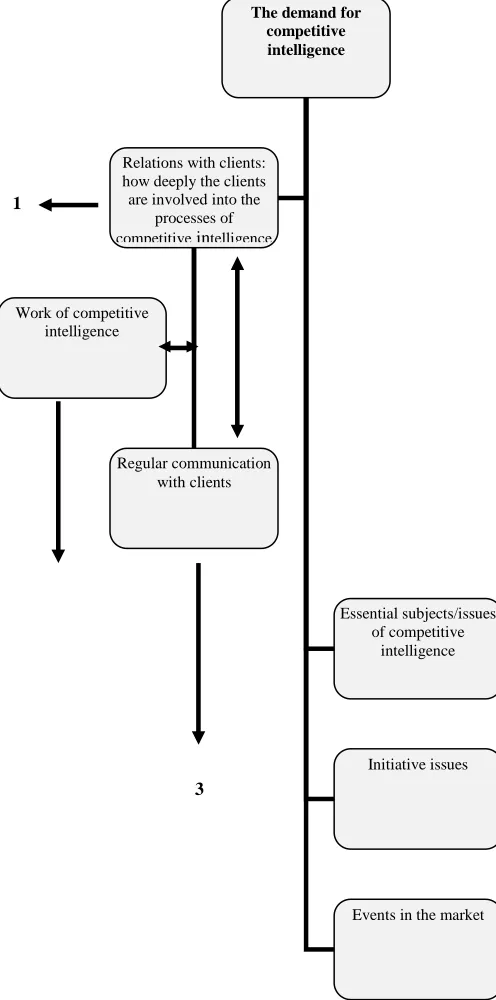
Figure 1. Part 1. The scheme of strengthening the reliance
on competitive intelligence
reliance on the services provided by specialists of competitive intelligence. It is necessary to note that the given scheme was successfully used by several large corporations.
The scheme given above is an introduction to more thoughtful elements of the scheme of competitive intelligence. So the consumers of the information collected, analyzed and presented by competitive intelligence remain the main motive power for the services provided by competitive intelligence. For example, the appearance of new rivals in the market and profiling of available rivals were the issue for the corporation Caterpillar. The specialists of competitive intelligence worked during the period of the crisis in Asia, what was directly connected with the corporation Caterpillar as the main and the most dangerous rivals of the corporation were from Asia. The specialists of competitive intelligence gave their available information to industrial and marketing detachments. The information was transmitted differently including presentations, reports also setting the information into internal web page of the corporation (Intranet).
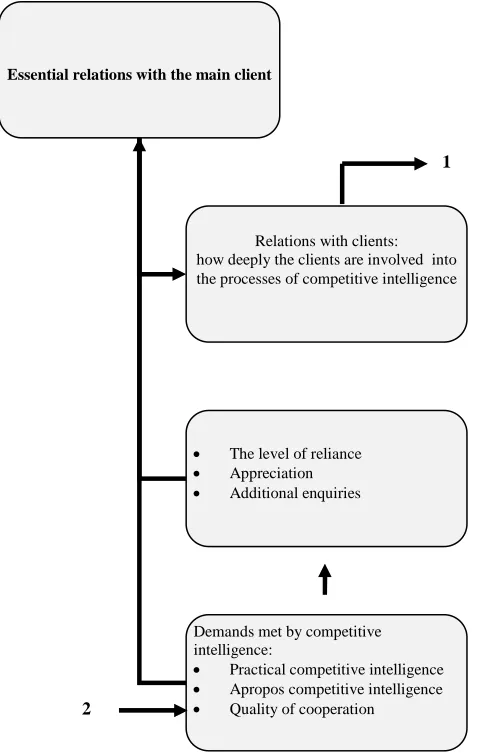
Figure 1. Part 2. The scheme of strengthening the reliance on
competitive intelligence
Figure 1. Part 3. The scheme of strengthening the
reliance on competitive intelligence
Figure 1. Part 4. The scheme of strengthening the reliance on competitive intelligence.
In our opinion, an available scheme of attraction of the potential consumers of the services provided by competitive intelligence should be appended by recommendations from available clients connected with realized projects, also it is purposive to make an additional scheme of the model of simulation. This model could help to prove the potential clients advantages of the services provided by competitive intelligence.
To overcome in the fight of rivals a lot of rules are available and one of them reports that in the course of processes of globalization large corporations might fail to defeat the smaller ones but the companies which quickly adapt to business environment have assured advantages comparing with those companies which
Regular cooperation with
clients
The skills specialists of competitive intelligence have
• Interpersonal
• Communicative
• Analytic
• Strategic intellection
• Quality of cooperation
Special knowledge of the branch of the
business
Skills of informative technologies
3
Essential relations with the main client
Relations with clients: how deeply the clients are involved into the processes of competitive intelligence
• The level of reliance
• Appreciation
• Additional enquiries
Demands met by competitive intelligence:
• Practical competitive intelligence
• Apropos competitive intelligence
• Quality of cooperation
1
2
Regular cooperation with clients
Products released
Quality of the chain
avoid alterations. Rephrasing “the large one might fail to outrival the smaller but the fast-moving one will surely outrival the sluggish” (Pepper, 2004).
Business being in the process of reorganization frequently experiences a lack of analytic data and managerial intuition. Working out and implementing business process capable of satisfying the needs of the market most completely presupposes a close cooperation and an active support provided by the top management of the business organization. Basic changes in the attitude of management to the structure of business organization and information data basis is a prerequisite for achieving positive results (Gaidelys, 2010).
It is necessary to remark that those specialists of competitive intelligence, who are capable to use in their work methods of traditional competition as well as innovative ones, have assured advantages.
The use and development of workforce’s intellectual powers, dissemination of a product and its usage obligates organizations to refuse traditional ways of management, moreover, to turn back to possibilities and knowledge of an individual as well as to develop the philosophy of management based humanistic values. A role of a leader within an organization is universally accepted as the impellent in the innovative process by stating that, in order to assure success and innovativeness of an organization, the application of not only experience and possessed organizational knowledge is important; however, organizations that follow the knowledge philosophy in the creating new knowledge cooperation of employees presuppose value. Interception of new ideas, creativity is based not on competition but on cooperation philosophy that is transfused with the culture that creates a premise for employees to share knowledge, to complement one another by transferring this to operations in seeking for a company to become open for innovations (Sedziuviene, 2009).
The other important step of competitive intelligence is to decide at what stage and how deeply the clients of competitive intelligence will be involved into the work done by competitive intelligence. The suitable way of performing the task is involving the consumers into the work during the period of collecting of information. This way allows to find the customers demand for information about competitive situation in the market. It also seems to be purposive to inform the consumers about the collection of information, the information used to make conclusions, spread of information and feedback. It is important to emphasize that in the process of competitive intelligence as well as in the work of operative services feedback to the tasks performed, certificates prepared, conclusions drawn is necessary. Otherwise specialists of competitive intelligence as well as officers of secret services might loose motivation and find no sense of their work done. So the feedback shows that the tasks performed by them are required and useful for the consumers of the service.
One of the first steps in the process of competitive intelligence is to deal out the roles which will be played by specialists of competitive intelligence, top management and managers of separate detachments.
Permanent cooperation with the clients of competitive intelligence enables during the process of competitive intelligence to correct the character of information being collected and analyzed and procedures done.
The level of satisfaction of works performed by specialists of competitive intelligence is influenced by two important factors:
1. quality of the services provided by competitive intelligence;
2. mastership of professionals of competitive intelligence.
Most specialists of competitive intelligence say to achieve the goal set that is not an unimportant or insignificant tasks. The clients of competitive intelligence must not be allowed to select information with regard to its contents even if this information does not seem to be pleasant for the top management of the corporation. Sometimes it happens that specialists of competitive intelligence give information of critical character towards the work performed by the client. In this case the client should be interested to accept the critical remarks of specialists of the competitive intelligence and improve his work (Prescott, 2001).
Specialists of competitive intelligence said that top management of corporations appreciated the work performed by specialists of competitive intelligence only when they got the real benefit from the service provided by them (Prescott, 2004). Their information helped to react timely to rivals’ actions, their influence on prices, profit and the part of the market. Such sort of information with no doubt engages new clients and very often administration of corporations involves specialists of competitive intelligence into groups of strategic planning because of having no doubts about definite advantages of the service provided by competitive intelligence. Sometimes potential clients identify the service of competitive intelligence as a security system implementation in the company. And the service itself is treated as a part of security audit (Tint, 2010). So the top management of the corporation must understand that competitive intelligence should be treated as a separate and independent service. Effective corporative communication plays an important part in competition between corporations especially in the case of crisis. Specialists of competitive intelligence often use such communication as well (Yee Choo, 2001).
employee relations; government relations; marketing communication; management communication; corporate branding and image building; advertising. Generalizing and conceptually basing, it can be claimed that successful professional development of the next generation of Corporate Communication executives will focus on understanding of Corporate Communication functions and on strategic implementation capabilities (Valackiene, 2010).
Consolidation of the top management of the corporation, aiming at the achievement of the general goal can be named as an additional benefit provided by the service of competitive intelligence.
There are a lot of indications which prove successful performing of competitive intelligence. We will name the main ones:
Figure 2. The main indications proving successful competitive intelligence performing.
Every specialist of competitive intelligence should aim to find his place and employment in the corporation and so contribute to successful work of the corporation. So competitive intelligence should study the products used in
practice which not only would be timely but also help to determine qualitative and regular relations with other detachments of the corporation.
Selection and accentuation of clients
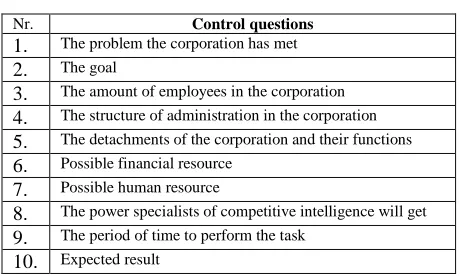
It is a mistake to think that any customer can buy a service of competitive intelligence. At first it is necessary to understand the need and benefit of the service provided by competitive intelligence. In this case specialists of competitive intelligence should organize a forward consultation. The following stages, which help specialists of competitive intelligence to select possibly potential clients, can be accentuated (Fleisher, 2003).
Table 1
The control questions for the selection of potential clients of competitive intelligence.
Nr. Control questions
1. The problem the corporation has met
2. The goal
3. The amount of employees in the corporation
4. The structure of administration in the corporation
5. The detachments of the corporation and their functions
6. Possible financial resource
7. Possible human resource
8. The power specialists of competitive intelligence will get
9. The period of time to perform the task
10. Expected result
After having asked the control questions and having collected all the necessary information, specialists of competitive intelligence select the potential clients and present the offers of cooperation. Besides, it is necessary to tell the conditions which are required for the work of the specialists of competitive intelligence. Only then the expected results will be achieved (Dutka, 1999).
The service of competitive intelligence can usually be bought only by large international corporations. Other authors maintain that they are usually large international companies which have a lot of subsidiary companies and a great extent of export (Saboniene, 2009).
Professor Boguslauskas wrote a lot about the problems which are faced not only by large international corporations but also smaller companies working only in one country meet. The author notes that the combination of several factors creates a real competitive advantage. They are knowledge, skills, technologies, methods of work and information which could be found in small “pockets” of the whole organization. Sometimes these factors are hidden and often understood incorrectly and as a result are not appreciated. In order to find and use these beneficial combination they need being studied carefully (Boguslauskas, 2009).Other authors in their scientific articles also note the importance of intensiveness of competition as one of the major features, factors of competition in the market. The author tries to assess what information is necessary in order to create a system of providing control of competitive ability with information (Snieska, 2008).
The main indications proved successful competitive intelligence
performing
The amount of enquiries
Volume and amount of given tasks
Involving of specialists of competitive intelligence into working groups
Increase of the budget of competitive intelligence
Variety of the tasks
Training for the staff of the corporation
Participating in strategic planning
That demonstrates the importance of supplying with information for business. Although the author neither emphasizes nor concretizes the importance of competitive intelligence for business competitive intelligence would play the main part providing business with information and products of analysis of it.
So summing up it is possible to state that large international corporations, which have great financial resources and are capable to invest money in the service provided by competitive intelligence without expecting a quick effect, are the main clients of competitive intelligence.
Conclusions
1. Large international corporations, which have great financial resources and are capable to invest money in the service provided by competitive intelligence, are the main clients of competitive intelligence. 2. Further work of specialists of competitive
intelligence in a business organization directly
depends on successful selection of the model of strengthening the reliance on competitive intelligence.
3. Successful presentation of the service provided by competitive intelligence directly influences searching of potential customers of the service provided by competitive intelligence.
4. The process of patterning of competitive intelligence aims to strengthen the reliance of potential consumers of competitive intelligence towards the services provided by specialists of competitive intelligence.
5. Business being in the process of reorganization frequently experiences a lack of analytic data and managerial intuition. Working out and implementing business process capable of satisfying the needs of the market most completely presupposes a close cooperation and an active support provided by the top management of the business organization.
References
Blenkhorn, D. L. (2005). Competitive intelligence and global business,
Boguslauskas, V., & Kvedaraviciene, G. (2009). Difficulties in identifying Company's Core Competencies and Core Processes. Inzinerine Ekonomika-Engineering Economics(2), 75-81.
Directorate of Intelligence. (1997). A Compendium of Analytic Tradecraft Notes. Dutka, A. (1999). Competitive Intelligence for the Competitive Edge.
Fleisher, C. S., & Blenkhorn D. L. (2001). Managing frontiers in competitive intelligence.
Fleisher, C. S., & Blenkhorn, D. L. (2003). Controversies in Competitive Intelligence– the Enduring Issues. Gaidelys, V. (2010). Konkurencines žvalgybos vaidmuo verslo proceso eigoje. Ekonomika ir vadyba. Griffith, A. Sun Czy, 1971.
Yee, C. W., & Thompson, S. H. (2001) Assessing the impact of using the Internet for competitive intelligence. Krizan, L. (1999). Intelligence Essentials for Everyone.
Leana, C. R., Rousseau, D. M. (2000). Relational Wealth: The Advantages of Stability in a Changing Economy. Oxford University.
Miller, J. (2001). Millennium intelligence– understanding and conducting competitive.
Negash, S. (2004). Business Intelligence," Communications of the Association for Information Systems, 13(15). Pepper, J., Steinhardt S. Face to face with: John Pepper and Susan Steinhardt, Competitive Intelligence Magazine, 1999. Prescott, J. E., & Miller S. H. (2001). Proven strategies in competitive intelligence– lessons from the trenches.
Prescott, J. E., & Miller, S. X. (2004). Konkurentnaya Razvedka. The Joseph M.Katz Graduate School of Business, University of Pitssburgh.
Saboniene, A. (2009). Lithuanian Export Competitiveness: Comparison with other Baltic States. Inzinerine Ekonomika-Engineering Economics(2), 49-57.
Sedziuviene, N., & Vveinhardt, J. (2009). The Paradigm of Knowledge Management in Higher Educational Institutions. Inzinerine Ekonomika-Engineering Economics(5), 79-89.
Snieska, V. (2008). Research into International Competitiveness in 2000-2008. Inzinerine Ekonomika-Engineering Economics(4), 29-41.
Strategic and Competitive Intelligence Professionals (2011). http://www.scip.org/Publications/?navItemNumber=498. Tint, P., Paas, O., & Reinhold, K. (2010). Cost-Effectiveness of Safety Measures in Enterprises. Inzinerine
Ekonomika-Engineering Economics(5), 485-492.
Valackiene, A. (2009). Theoretical Model of Employee Social Identification in Organization Managing Crisis Situations. Inzinerine Ekonomika-Engineering Economics(4), 95-102.
Vedder, R, G., Vanecek, M, T., Guynes, C. S., & Cappel, J. J. (1999). CEO and CIO Perspectives on Competitive Intelligence.
Vaidas Gaidelys, Gitana Valodkien÷
Konkurencin÷s žvalgybos, potencialių vartotojų atrankos ir vertinimo metodika
Santrauka
Dar visai nesenai konkurencin÷ žvalgyba kaip tokia nebuvo žinoma. Labiau pasaulyje žinomi tokie procesai, kaip „pramoninis ar komercinis šnipin÷jimas“. O veiksmai, kuriais bandoma apsiginti nuo min÷tų įtakų, komercinių paslapčių sąrašo sudarymas, pareiginiai nuostatai, fizin÷ bei informacin÷ duomenų apsauga ir kitos plačiai paplitusios priemon÷s. Tobul÷jant technologijoms, neatsiejamą vaidmenį atlieka ir konkurencin÷ žvalgyba, kuri ypač svarbi globalizacijos kontekste. Bet kurioje organizacijoje strateginius sprendimus priima aukščiausio lygmens vadovai. Anot Pitsburgo universiteto mokslų daktaro John E. Prescott, neatleistina, jei aukščiausio lygio vadovai nereaguoja į konkurentų veiksmus (Prescott, 2004).
Taigi galima išskirti pirmus potencialius konkurencin÷s žvalgybos paslaugos pirkimo klientus. Tokie vartotojai gal÷tų būti, stambios tarptautin÷s korporacijos. Viena vertus, tokios korporacijos turi dvi pasirinkimo galimybes: 1) ar pirkti konkurencin÷s žvalgybos paslaugą iš nepriklausomų
profesionalias paslaugas teikiančių bendrovių 2) ar steigti savo viduje konkurencin÷s žvalgybos padalinį kaip atskirą struktūrinį vienetą arba jau veikiančio padalinio sud÷tyje. Aišku, kad bet kuriuo atveju reikalingas didelis išankstinis įdirbis stambiose korporacijose, siekiant įrodyti konkurencin÷s žvalgybos kaip paslaugos teikiamus pranašumus. Vienas iš pagrindinių argumentų, kuriuos gali pateikti konkurencin÷s žvalgybos specialistai, - tai turima patirtis. Iki šiol n÷ra labai paplitusios mokymo įstaigos, kuriose rengiami konkurencin÷s žvalgybos specialistai. Tod÷l tokie specialistai dažniausiai turi universitetinį išsilavinimą, ekonomikos, teis÷s, vadybos, administravimo ar kitoje srityje yra baigę specialius apmokymus ir turi didelę patirtį specialiose operatyvin÷se ar slaptosiose tarnybose. Kaip kvalifikacijos įrodymą S. X. Miller įvardija konkurencijos žvalgybos darbuotojų turimą patirtį karin÷se bei vyriausybin÷se žvalgybose, taip pat informaciniuose-analitiniuose padaliniuose (Miller, 2004). V÷liau konkurencin÷s žvalgybos profesionalų
bendruomen÷s (SCIP) ir daugelio mokslininkų pastangomis atsirado nauja veiklos kryptis ir profesija – konkurencin÷s žvalgybos specialistas. Nacionalinių žvalgybos tarnybų patirtis įrodo sistemin÷s žvalgybin÷s informacijos rinkimo bei analiz÷s svarbą verslui. Vis d÷lto tenka pasteb÷ti, kad pagrindinis verslo motyvas – tai pelno siekimas, tod÷l yra reikalinga žvalgybos tarnybos taikomus metodus iš esm÷s pritaikyti verslo tikslams. Saugumo užtikrinimas šiuo atveju atlieka ne pagrindinį vaidmenį (SCIP, 2011).
Temos aktualumas. Konkurencin÷s žvalgybos veiklos sritis yra pakankamai nauja ir mažai išnagrin÷ta ne tik Lietuvių autorių, bet ir Vakarų
universitetų mokslininkų. Tod÷l tikslinga būtų apibr÷žti konkurencin÷s žvalgybos veiklos aplinką bei įvertinti vartotojų atrankos ir vertinimo metodikas. Straipsnyje apibr÷žiami metodai, kuriuos v÷liau versle pritaik÷įvairios žvalgybos tarnybos. Viena iš pirmųjų pritaikytų verslui konkurencin÷s žvalgybos knygų yra laikoma Sun Czy (Griffith, 1971) knyga. Vienomis pirmųjų ir labiausiai vertinamų konkurencin÷s žvalgybos naudojamų knygų laikomos JAV autorių knygos „Intelligence Essentials for Everyone“ (Krizan, 1999) ir „A Compendium of Analytic Tradecraft Notes“ (Directorate of Intelligence, 1997). Visi šie darbai pad÷jo potencialiems konkurencin÷s žvalgybos paslaugos vartotojams suvokti žvalgybinių duomenų vertę. Ne mažiau svarbu, kad šie darbai pad÷jo visuomenei suvokti, kad žvalgybos kaip veiklos neatskiriama charakteristikos dalis yra slaptumas, paslaptis, slaptieji agentai ir šnipin÷jimas. Būtent tokioje aplinkoje verslas prad÷jo pl÷toti analitinių ir organizacinių priemonių koncepciją, kuri atitiktų verslo keliamas užduotis ir būtų priimtina akcininkams. Reikia pasteb÷ti, kad, anot John E. Prescott, tokios korporacijos, kaip, „IBM“, „Xerox“, „Motorolla“, „Procter & Gamble“, „Intel“, „Microsoft“ ir kt., konkurencin÷ žvalgyba tapo vienu iš verslo pagrindų (Prescott, 2004). Nors konkurencin÷s žvalgybos kilimo vieta - Jungtin÷s Amerikos Valstijos, žlugus Sovietų Sąjungai atsirado kitokios pakraipos žvalgybos specialistų galinčių pasiūlyti savo paslaugas, kartu ir sukauptą patirtį
verslui. Be abejon÷s, buvusios Sovietų Sąjungos žvalgybos specialistų taikyta metodika iš esm÷s skyr÷si nuo JAV žvalgybos tarnybų metodikos, o tai sąlygojo skirtingų patirčių konkurenciją tarpusavyje. Tai reiškia, kad verslas įgijo platesnes galimybes pasinaudoti abiejų pusių sukaupta patirtimi, panaudojant jų teikiamus privalomumus.
Straipsnio tikslas – išnagrin÷ti ir įvertinti konkurencin÷s žvalgybos vartotojų atrankos ir jų poreikiųįvertinimo metodus.
Tyrimo metodai. Sistemin÷ mokslin÷s ekonomin÷s literatūros lyginamoji ir struktūrin÷ analiz÷, login÷ analiz÷, kokybin÷ ir kiekybin÷ analiz÷. Labai svarbus konkurencin÷s žvalgybos paslaugos užsakovų supratimas, kad konkurencin÷s žvalgybos programos rezultatai turi būti paskleisti laiku ir tapti korporacijos politikos pagrindu, nekeliančiu abejonių. Vienas iš pagrindinių konkurencin÷s žvalgybos tikslų – sutaupyti laiko, kuris yra leidžiamas
įvairių situacijų klausimams spręsti (Prescott, 2004). Ne mažiau svarbu kad konkurencin÷s žvalgybos specialistai sujungtų skirtingų korporacijos padalinių uždavinius bendram tikslui pasiekti. Kaip pagrindinę problemą ieškant potencialių konkurencin÷s žvalgybos specialistų teikiamų paslaugų
vartotojų, J. Prescott įvardija pasirinkimą metodų, kuriuos taikydami konkurencin÷s žvalgybos specialistai gal÷tų pasiūlyti stambioms korporacijoms informaciją ar paslaugą, pelnyti vartotojų pasitik÷jimą teikiama paslauga. Skiriamos pagrindin÷s kryptys:
1. Informacija nagrin÷jant problemą turi būti pateikta analize;
2. Būtina efektyvi komunikacija, siekiant analiz÷s rezultatus pritaikyti vartotojų poreikiams tenkinti;
3. Neetiški poelgiai griauna pasitik÷jimą. Šiai krypčiai reikia skirti ypatingą d÷mesį, turint omenyje teisę į intelektualiąją nuosavybę ir jos reikšmę verslui.
Teikiant konkurencin÷s žvalgybos paslaugą skirtingose šalyse labai svarbu, ar konkurencin÷s žvalgybos taikomi metodai nepažeidžia tose valstyb÷se galiojančių teis÷s aktų ar etikos normų. Anot buvusio JAV žvalgybos specialisto Robert Seal, v÷liau įkūrusio nekomercinę organizaciją „Open Source Solution“ (OSS), daug vertingos žvalgybinio pobūdžio informacijos galima gauti, teisingai ir kryptingai panaudojus viešai prieinamus informacijos šaltinius. Kitų autorių teigimu, pateikti pasteb÷jimai yra svarbūs, tačiau jie negali suteikti visos informacijos apie tai, kaip konkurencin÷s žvalgybos specialistai įgyja potencialių konkurencin÷s žvalgybos specialistų teikiamų paslaugų vartotojų pasitik÷jimą. Be abejo, vartotojų pasitik÷jimas betarpiškai priklauso nuo, kokius informacinius produktus sugeba pasiūlyti konkurencin÷s žvalgybos specialistai (Leana & Rousseau, 2000).
Būtina pasteb÷ti, kad konkurencin÷s žvalgybos specialistų, kuriais dažniausiai tampa buvę slaptųjų tarnybų darbuotojai, veiklą labai riboja slaptosiose tarnybose galiojančios vidaus tvarkos, reglamentuojančios tarnybos metu įgytų žinių panaudojimą civiliniame gyvenime.
Konkurencin÷s žvalgybos kūrimo procesas atliekamas norint, sustiprinti potencialių konkurencin÷s žvalgybos vartotojų pasitik÷jimą teikiamomis konkurencin÷s žvalgybos specialistų paslaugomis. Kompanijos Caterpillar konkurencin÷s žvalgybos specialistas Rick Chaibell, siūlo pasinaudoti jo sukurta vartotojų pasitik÷jimo konkurencin÷s žvalgybos specialistų teikiamomis paslaugomis stiprinimo schema. Reikia pasteb÷ti, kad pateikta schema buvo s÷kmingai panaudota keliose stambiose korporacijose.