Mentor-Mentee Dyads: Determinants of Successful Tacit Knowledge
Transfers
Olivene Thomas
1Stanford Moore
1Dunstan Newman
1Abstract
Purpose: This paper sought to describe a model for determining the propensity of
organizations to form succession plan relationships, and predict the outcome of these succession planning relationships between the mentor and mentee that is based upon the framework of the theory of planned behaviour.
Design/methodology/approach: The paper is a conceptual piece that describes a model
for the transfer of organisational knowledge through the dynamics of mentor-mentee dyads in the succession planning function of the organisation.
Findings: Through the literature and theoretical framework proposed, we indicate a way
of improving the likelihood of forming successful succession planning relationships between mentors and mentees and thereby retaining organisational knowledge on the one hand, and creating new knowledge and organisational commitment on the other.
Research limitations/implications: The paper is a conceptual piece and is yet to be
subject to empirical testing.
Practical implications: Although no empirical work has been conducted, we project that
the organisation will gain through reduced costs in non-transferrable training and in knowledge management strategies and increased organisational commitment in both the mentor and mentee.
Originality/value: The paper extends the use of Ajzen’s Theory of Planned Behaviour to
include the organisation as one actor that behaves with intention and the mentor-mentee dyad as another such behavioural unit. The model explores the nexus that exists when both of these units act to affect organisational life. In addition the authors also suggested a set of constructs that can be used to propose model of determinants of succession planning outcome.
Keywords:
Mentor-mentee dyads, protégé, succession planning relationship, succession planning outcomes, theory of planned behaviour, competencies.The need for local organisations to begin to provide their own training models to ensure survival has never been as important as it is today. Jamaica’s GDP for 2010/11 was $488,577.8 million compared with $490,594.0 million for 2009/10.This trend, one of several signalling the nation’s economic slide had continued for the three years prior (Planning Institute of Jamaica [PIOJ], 2011). .
1
In 2010/11, however, Jamaica’s GDP increased by 1.5% over the previous year and stood at $737, 817 million (PIOJ, 2012).
This modest gain was attributable to an increase in economic activity but also to the fact that there were no adverse weather conditions (PIOJ, 2012), something that is not solely within the nation’s ability to control and should not induce an undue sense of achievement.
The declining fortunes of the Jamaican economy over the decades and the rise of the neoliberal perspective on public spending among international lenders have forced a curtailment in the nation’s education budget and in the development of infrastructure for business activity. Between 1977 and 1987 the Government of Jamaica (GOJ) cut spending by 30% in real terms (Anderson and Witter, 1994) and tertiary education did not escape the knife. The GOJ has been forced to reduce the subsidy on tuition fees for students at the tertiary level as part of the terms of agreement arrived at with the International Monetary Fund (IMF). To counteract this GOJ has tried to increase the amount of money available through loans to potential students (PIOJ, 2012), but even so, the difficult economy has forced many persons to delay their entry into tertiary educational institutions. As a result, the number of persons who are making themselves ready for entry into the contemporary business sector at a competitive level internationally through tertiary training remains low. The Economic and Social Survey of Jamaica, 2012 has revealed that while Gross Enrolment Rates (GER) was 99.0% for pre-primary, 99.6% for primary and 97% for secondary education it was only 33.1% at the tertiary level.(PIOJ,2012).
Throughout the decades of the 1970s to the present, the University of the West Indies and other Caribbean institutions have provided education in management and business administration with a view to providing students at both the junior and senior managerial levels with knowledge about the various functions of the business organisation. Even more recently there has been an increase in the prevalence of international universities offering similar programmes in the Caribbean to fill the gap or the need described above(MSB, 2012; UWI, 2012; UTech, 2012; UCC, 2012, HBS, n.d.).Supplementing these efforts, several large private institutions offered to their staff members free, or heavily subsidized opportunities, for higher education, either locally or overseas. This trend still holds for some of the colleges and universities in the country and among the financial institutions which still offer such opportunities as a staff benefit. These functions covered by these opportunities include leadership, human resource management, operations management, industrial relations, business strategy, information technology, finance and marketing; and honing the managerial skills, entrepreneurial talent and ‘executive personalities’ necessary to harness the potential of these functions through studies in business and management principles(Anonymous, 2012; MSB, 2012; UWI, 2012; UTech, 2012; UCC, 2012, HBS, n.d.).
Traditionally, the training function in has suffered from budget cuts, demands for customised training and the complaints about the lack of transfer of knowledge(Lovell, 2012; Owens, 2006).Despite this, however, the emergence of the corporate university as a strategic tool among large local organisations has been seen in regional organisations like the Sandals Group; in local organisations like the National Commercial Bank group and in public and private sector management development like the Management Institute for National Development (MIND).Indeed, Thompson et al. (2001) has shown that there exists a trend toward the greater recognition of the importance of training and management development and the emergence of the corporate academy as a strategic tool among small organisations as well. This paper discusses formal succession planning and presents a model to evaluate the likely outcomes of the effort to implement a programme within local organisations, although we recognise the more informal relationships that exist in mentorship and that lead to a similar development of a younger professional.
The literature reveals that there are a number of models used in succession planning depending on the context.
Some of these are crafted by individual organisations for themselves, for example the Georgia Succession Planning Guidelines (Georgia Merit System, 2005) while others follow easily available templates sold on the Internet. Extant literature hasidentified business succession plan models (Ip and Jacobs, 2006), and several competency models (Beheshtifar & Nekoie-Moghadam, 2011). Within each class of models there are common steps (for example the identification of key processes, building job profiles for these, performing competency gap analyses, developing opportunities from within or recruiting from outside in response to the gaps identified, developing individual plans and then maintaining skills inventories) and features like a preoccupation with job-related or behaviour-related capabilities (Beheshtifar & Nekoie-Moghadam, 2011; Brenner, 2008),but it is recognised that there is no macro-succession plan model that could be applied in all situations (Beheshtifar & Nekoie-Moghadam, 2011) but we surmise that this plethora of models may be as a result of the competency trait that runs through these models which makes succession planning ideal for adaptation by various industries.
Some institutions may not have a formal succession plan programme; however they may consider their mentoring, staff development, coaching, strategic recruiting activities to form a part of their succession management process (Phillips &Gully, 2009), although distinctions among these concepts exist (Cultural Human Resources Council and Cultural Careers Council, Ontario, n.d.). Additionally, many informal plans seem disjointed because of a lack of clarity about the concepts or because they are a result of faulty human resource management practices like insufficient communication about the plan, and so may not be in line with the organisation’s goals and objectives (Cultural Human Resources Council and Cultural Careers Council, Ontario, n.d.).
To contain its scope, this paper deals with formal succession plans only. It will not examine informal mentor-mentee dyads or reactive succession planning in which the organisation begins to look for a substitute to fill a critical position only after realising an impending crisis with an imminent vacancy in a key organisational role. It does not seek to develop yet another succession planning template, but rather examines a way in which organisations can check to see if their succession plan is becoming derailed or has a likelihood of succeeding. However, to understand the process of succession planning and the factors identified in the literature as aiding in the success of various plans, key inputs are discussed below. To inform our thinking, we take the view that the succession management process is not just a “process” it is a management cycle that is on-going. Further, we will not assume that the succession management process is targeted only at the organisation’s senior management. We believe that organisations will develop plans and invest resources into ensuring organisational security at all levels of staff where these jobs are deemed critical to the maintenance of a competitive advantage, and where they have identified that the talent to replace these key members of staff exist. This means that we recognise succession planning as including lateral movements in the organisation as well as vertical transfers of implicit and explicit knowledge and skills. Finally, we limit ourselves to corporate organisations and not to family-owned businesses since the effects of kinship may often outweigh merit in determining successors, although we recognise the benefits outlined by Walsh (2008).
Succession Planning as Training and Development
In accepting that the organisation would act in such a purposive way in order to secure its future we endorse the definition of the corporate university advanced by Prince and Allison (2003) as being “the strategically orientated organisational processes for the centrally co-ordinated development of learning and knowledge throughout an organisation's value chain and amongst its stakeholders with the purpose of achieving the organisation's business goals.”
We follow them in regarding Meister’s (1998) view that the corporate university is not a physical entity, but rather as a process, through which the organisation secures, developsand manages the knowledge that it needs in order to attain its strategic goals. Similarly we wish to advance the notion that the succession plan is another such strategic tool aimed at similar ends.We endorse Rothwell (2002) in maintaining that succession planning goes beyond knowing who the future leaders of the organisation will be, but rather, is a more sophisticated effort to harness the organisation’s talent in order to secure its long-term future.For us, succession planning will be defined as being the transfer of implicit and tacit knowledge about a job function from a senior or more experienced employee in the organisation to a more junior and inexperienced person with a view to maintaining or improving the organisation’s competitive advantage. For the purposes of this paper we will call that more senior person the mentor and the more junior the mentee or protégé even though we recognise the distinction in terms when discussing formal and informal developmental and knowledge transfer arrangements within organisations.
Garman and Glawe (2004) report, and our search confirms, that there is much in the literature about how succession planning ought to be done, but little in the way of the processes or outcomes of these efforts. Ip and Jacobs (2006) endorse this view. This paper hopes to help to redress that imbalance although Groves (2007) has done important work in this regard.
Despite the obvious arguments in favour of succession planning it has been overlooked traditionally(Ip& Jacobs, 2006) because the urgency of current organisational contexts render leveraging actions for which benefits will be measured in the future less relevant to many organisations (Anonymous, 2005). Additionally, the investment in organisational resources renders the value of decisions to invest in future leadership training prohibitive (Anonymous, 2005). Finally, the difficulty in predicting the future needs of the organisation (Anonymous, 2005) renders the temptation to buy talent only when it is needed, irresistible.
Succession Planning as Career Development
Gaffney (2005) portrays the link between career development and succession planning as being a facilitating one.Karaevli and Hall (2003) review how protégés are selected and offer guidelines for improving the succession planning process for junior managers. Brenner (2008) advances the notion that in a learning organisation the relationship between senior and junior staff members would not be unidirectional, but rather it would have either party play the role of mentor or protégé at some point during the information exchange process. This shift away from the traditional models Brenner (2008) suggests would help to ensure that the needs of women and minorities are better served and that the process takes on a more strategic importance. Here, it is seen the questions about the effects of organisational and national cultures on succession planning arise since a shift such as this would entail a radical movement in the often paternalistic thinking of many Caribbean managers.
Workforce and succession planning have emerged as a strategic tool (Anderson, 2004).Here, workforce planning occurs where the organisation takes into consideration the “shape” of its workforce, a concept beyond a consideration of the numbers of persons needed in the future (Anderson, 2004).
By “shape” Anderson (2004) suggests that strategic planners consider gaps between future needs and current capabilities by considering the characteristics necessary to affect future strategy, the distribution of these in the available pool of labour both inside and outside the organisation and the policy changes required to balance these. For us, succession planning in a learning organisation serves as a proxy for the continuous improvement used by organisations in traditional strategic management models.
Factors Promoting Successful and Unsuccessful Succession Planning
Arguably, the factors promoting the outcome of the succession planning experience are to be found in the relationship between the mentor and mentee and the commitment of the organisation to facilitate this relationship. As for “career development”, the mentoring experience exists where a more experienced person gives career and personal guidance to a less experienced person with a view to increasing that person’s visibility within the organisation and providing superlative developmental opportunities (see Eby, Butts, Lockwood,& Simon, 2004). Predominantly, research in mentorship has focused upon the protégé’s perceptions of the mentor and the relationship with this person, his or her experiences and development. Extant literature about the determinants of the mentoring experience shows that a negative mentoring experience may be distinguished from a positive mentoring experience (Eby et al., 2004). Further, distancing behaviour and lack of mentor expertise were cited as the most negative factors in detracting from formally arranged mentoring relationships. Negative mentoring experiences were seen to be more predictive of protégé outcomes than were positive mentoring experiences.
O’Neill (2005) examined the influence of organisational position, organisational context, and organisational type on nine specific mentoring functions. O’Neill proposed as future research the need to distinguish the effects of factors on formal and informal mentoring relationships. Hays Rosser (2004) and deVries, Webb, and Eveline (2006) developed mentorship frameworks having studied the effects of the formal mentoring relationship on Chief Executive Officers and of the mentor respectively. DeVries et al. showed that benefits occurred for the mentor personally, for their workgroups, for the mentees and for the broader organisation. Both male and female mentors mentioned benefits to themselves for example their enjoyment of the opportunities for "colleague-making" and enhancing "networks"; the satisfaction of helping others and "seeing them achieve"; repaying assistance they have received in their own early careers; gaining new perspectives; “reflecting on own skills"; "clarifying through articulating“; "developing better listening and coaching skills“ and identifying tacit knowledge.
Heskett and Gibson (2005)have reported that there is a dearth of literature that focuses on mentoring from the lens of human resource development; but that given the responsibility of employees for developing their own careers, the recognition of the importance of individual learning and the increasing need for on-the-job training, interest in the mentor-mentee dyad would continue. Of the four core aspects of mentoring that they examine we will concentrate on the dynamics of the relationship between the mentor and mentee or protégé (Heskett & Gibson, 2005) and how this is affected by the organisational context.
Further, Eby et al (2004) identified mismatch within the dyad and distancing behaviour as also being predictive of negative experiences. Despite these considerations however, we contend that local and regional organisations need succession plans and note the need for increased worker participation locally (Carter, 1997).
The Theoretical Framework
This study seeks to develop a predictive model for the outcome of succession plan programmes within Jamaican organisations. As has been seen from the foregoing discussion, the consequences of an organisation’s effort to secure and transfer tacit and explicit knowledge among its staff-members with a view to developing its capabilities and securing its long-term strategic advantage, is a composite of several factors. These factors affect the propensity to act in altruistic ways by certain individuals toward others within the organisation, the organisation’s ability to influence this altruism and the actual actions taken by these individuals toward each other. A scan of the literature suggests that these factors are best related to each other by the Theory of Planned Behaviour developed by Ajzen.
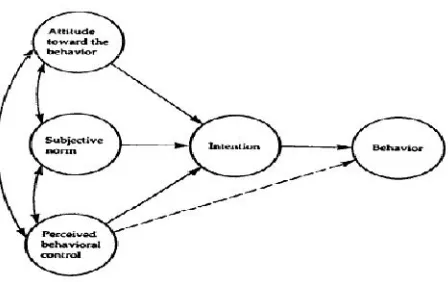
Ajzen (1991) described the theory of planned behaviour as the link between the intention to perform a behaviour (e.g. to enter into a mentor-mentee dyad); the attitude toward that behaviour, subjective norms operating within the organisation, perceived behavioural control and the actual actions taken. Attitudes toward a behaviour, subjective norms and perceived behavioural control were felt to be accurate predictors of intentions to perform those behaviours (Ajzen, 1991) and actual behaviour was felt to be explained by these intentions along with the perceptions of behavioural control (Ajzen, 1991).
The theory explains that individual behaviour is driven by an aggregation of beliefs about the probable outcomes of the actor’s behaviours (attitude toward the behaviour), an aggregate of the agent’s beliefs about the expectations of others and the actor’s motivation to comply with these expectations (subjective norms) and “perceived behavioural control” or the sum of the beliefs about the factors that may improve or retard performance of the behaviour and their power to do so (Ajzen, 1991). The combination of these factors is believed to result in an intention for the actor to perform an action.
Interestingly though general attitudes have been shown to be poor predictors of behaviour in specific situations, for example tourist behaviour (Hsu and Huang, 2012); although Obreil, Hodgldns, and Sheerah (1997) show that where goal intentions have been replaced by specific implementation intentions the behaviour is more certain to occur. In defense of Ajzen’s model though, he has shown where the actual performance of an action has antecedents outside the control of the actor and these are also shown to affect the chance of the occurrence of the behaviour (Ajzen, 1991).
Figure I: The Theory of Planned Behaviour
The Theory of Planned Behaviour has been used successfully to explain the behaviour of actors in several contexts, namely: health care (for example, Giles, McClenahan, Cairns, & Mallet, 2004; Godin & Kok,1996; Orbeil, Hodgldns, & Sheeran, 1997)and food choice (Shepherd, Sparks,& Guthrie, 1995).
We have found no case of it being used to explain the actions of a dyad of actors; though, arguably, this would mean only a larger role for the effect of perceived behavioural control in the model. Beyond this, we posit that where the organisation acts to underwrite the efforts of the succession planning effort that this would mitigate the effects of this factor.
Toward The Development of a Succession Planning Model
Based on the definition of succession planning given earlier and the existing literature it could be argued that a succession planning relationship is affected by a myriad influences that stem from factors affecting the mentor or Principal, those affecting the mentee and organisational factors or interests. These are illustrated in the construct diagram, Figure 2, shown below. Here, the factors affecting the mentor and mentee alike include his or her gender, experience, rarity of skill set, position within the organisation, and the size of their stake in the organisation. Additionally for the mentor there is the added influence of the perception of others, be they the mentee, a peer group or supervisors higher up in the organisational chart. Further, the succession planning relationship is affected by a number of organisational factors that include the organisation’s internal climate/politics and external environment within the industry and the wider economy.
Constructs used for explaining the Thomas-Moore-Newman (2012) model
In our model the subjective norms are a part of the mentor, protégé and the organisational ethos and help to determine the “propensity” dynamic. These are not separated out as a discrete factor, therefore.
We believe that further support for this arrangement is given by a close analysis of the structure and dynamics of Agency Theory where imbalances in the knowledge of agents (persons in junior positions who implement the organisations’ mandates) and principals (persons in more senior positions that prescribe the work that agents do) cause a dilemma. For agency theory, this is commonly regarded as inevitable since the desires of the principals and agents clash. This is not expected in our model since we would expect that the screening process for protégé selection and the acceptance of participation in the relationship would preclude this; although we acknowledge that the paper does not examine this in the Jamaican cultural context where anecdotal evidence would recommend caution.
The Thomas-Moore-Newman (2012) Model of Determinants of Succession Planning Outcome Likelihood
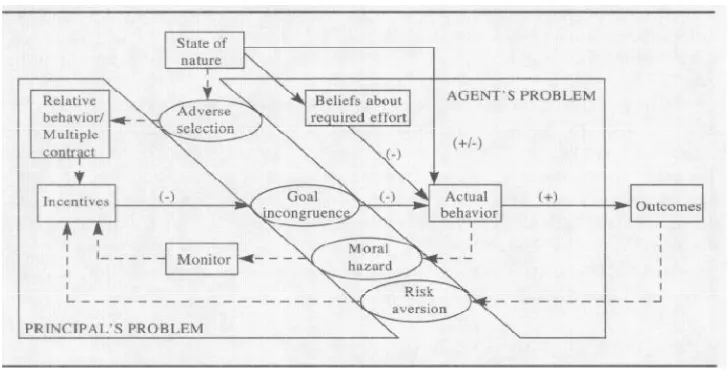
Figure 4 below, serves to show our recognition of the complexity of the agency relationship. Here factors such as goal incongruence, moral hazards, adverse selection and risk aversion influence the degree to which intention to act supports actual action (Battacharjee, 1998). We anticipate a similar complexity in the relationship in the dyad in our succession planning model. In our model, the perception of others, the gender dynamics of the participants, their experience, the rarity of the skill set being passed along, their relative positions to each other and within the organisation’s hierarchy, and their stakes in the organisation will give rise to the antecedents of complexity in decision-making.
Figure 4: Principal-Agent Theory
Source:Battacharjee (1998)
The stakeholder theory of the firm advances that all stakeholders supply organisations with resources. This would suggest that all stakeholders have a claim on the organisation. The question of whether this includes a claim by the supervisee to be developed arises. Finally, the contributions of Knowledge management theory where there is an implicit and explicit transfer of knowledge and where the appropriability and capacity for aggregation are examined is beyond the scope of this paper, though we believe that it would add something to the predictive capabilities of the model and should be examined further.
Discussion
The relationship between individuals is a complex one and we believe that this is compounded by the relationship existing within organisations where people do not choose their co-workers under normal circumstances. Of course, we recognise that in our model, we have simplified this dynamic by assuming that the protégé has been chosen for involvement in the relationship and that (s)he wants to participate. We believe that this will simplify the model although we recognise the complexities of the association that still exist as per the principal-agent relationship explained by Battacharjee (1998).
With this in mind, it could be argued that the success of the relationship between the two employees is determined by their propensities to share their knowledge and learn from each other, the supporting factors supplied by the organisation in terms of investing tangible resources and by fostering an atmosphere in which such altruistic behaviour is rewarded and by the recognition of all parties of the overall stake for the mentor, protégé and the organisation as a whole if the succession planning effort succeeds.
Limitations
While we recognised that succession planning takes many guises within organisations worldwide we chose to focus upon those that were formally sanctioned by the organisation as part of a strategic plan. Beyond this we focused upon corporate entities and academia where family considerations were not a significant factor in choosing a successor.
Future Research
This paper limited itself to an exploration of the situation surrounding formal succession planning and for the future we would recommend an exploration of informal succession planning and in particular the applicability of the model to mentoring. Further, we suspect that an analysis of the effects of culture on succession planning, especially where it impacts upon the various leadership styles practiced within Caribbean organisations, merits greater scrutiny since this may reveal some interesting insights into the degree to which local organisations are committed to developing rigorous and well-resourced succession management processes.
Finally, given the plethora of succession planning models being used it would be useful to know if our model could be applied successfully beyond the narrow confines that we have defined. Again, this has practical relevance since the local organisational landscape is anything but homogenous, and so the myriad of succession responses would provide fertile ground for testing the robustness of the model in family-owned businesses, Non-government organisations, public and private sector organisations. Other factors of interest would be the size and age of the organisation, experience levels of the employees involved and other factors indicative of strength of commitment.
Leaving the model behind other questions emerge from this study. These include the question of whether the employee stakeholders have a right to expect to be developed and led during their careers within any given organisation. The Jamaica Employers’ Federation Study 2009 suggest that they believe that they do and so the organisation may well be advised to take this view as well. Although variable demands of the stakeholders may occur depending on the size of their stakes in the organisations. It may seem a truism to suggest that it is in the best interest of the organisation to develop promising workers, but in the sense that this suggests that the organisation is working to increase their stakes and so perhaps work to increase organisational learning and set the stage for future rounds of succession planning, it would be of interest as further study.
Conclusion
References
Adler, P. &Kwon, S. (2002). Social capital: Prospects for a new concept. Academy of Management Review 27(1), 17-40.
Ajzen, I. (1991). The theory of planned behaviour.Organizational Behavior and Human Decision Processes, 50(2), 179–211.
Retrieved from http://www.sciencedirect.com/science/article/pii/074959789190020T
Anderson, M. (2004).The Metrics of Workforce Planning. Public Personnel Management, 33(4), 364-379. Retrieved from http://ppm.sagepub.com/content/33/4/364.abstract
Anderson, P., & Witter, M. (1994). Crisis, adjustment and social change: A case study of Jamaica. In Le E. Franc E. (Ed.), Consequences of structural adjustment: A review of the Jamaican experience(pp. 1-55). Canoe Press, Jamaica: Consortium Graduate School of the Social Sciences
Anonymous.(2005). Succession Planning Facts and Fantasies.The Journal for Quality and Participation. 28(3) 4-6. Retrieved from http://asq.org/qic/display-item/index.html?item=20241 Battacharjee, A. (1998). Managerial Influences on Intraorganizational Information technology use: A
principal-agent model. Decision Sciences, 29(1), 139-162. Retrieved from http://home.business.utah.edu/actme/7410/bhattacherjee.pdf
Beheshtifar, M.,&Nekoie-Moghadam, M. (2011).Studying the competency-Related models in succession planning.European Journal of Economics, Finance and Administrative Sciences, Issue 34, 113-121. Retrieved from
http://flexmanager.ir/downloads/Studying%20the%20CompetencyRelated%20Models%20in%2 0Succession%20Planning.pdf
Brenner, M. (2008). Mentoring’s role in succession planning. Talent Management Magazine 1-4.Retrieved from http://talentmgt.com/articles/view/mentorings_role_in_succession_planning Carter, K.L. (1997). Why workers won’t work: The worker in a developing economy;A case study of
Jamaica. London: Macmillan.
Cultural Human Resources Council and Cultural Careers Council, Ontario. (n.d.) Human Resources Management tools: Coaching, Mentoring and Succession Planning. Retrieved from
http://www.workinculture.ca/getmedia/a79d45c2-68cd-4614-be4e-983ef6eaf9ee/toolsCoachingMentoringSuccession.pdf.aspx
deVries, J., Webb, C., &Eveline, J. (2006). Mentoring for gender equality and organisational change.Employee Relations, 28(6), 573-587.
Difference between BBA and BBM. (2013). Retrieved from http://entrance-exam.net/difference-between-bba-and-bbm/#ixzz1s9JgWUZo
Eby, L., Butts, M., Lockwood, A., &Simon, S.A. (2005). Proteges’ negative mentoring experiences: Construct development and nomologicalvalidation. Personnel Psychology, 57(2), 1083-1106.Retrieved from
http://cel.webofknowledge.com/InboundService.do?SID=4AD632Jl7bFoGCjA3mM&product= CEL&UT=000222107100005&SrcApp=Highwire&Init=Yes&action=retrieve&Func=Frame&c ustomersID=Highwire&SrcAuth=Highwire&IsProductCode=Yes&mode=FullRecord
Eisenhardt, K. (1989). Agency theory: An assessment and review. Academy of Management Review,14
(1), 57 - 74.
Gaffney, S. (2005).Career development as a retention and succession planning tool.The Journal for Quality and Participation, 28(3), 7-10. Retrieved from http://asq.org/qic/display-item/index.html?item=20242
Georgia Merit System.(2005). Georgia’s flexible succession planning model guidelines.Georgia: Compensation and Planning Division, Workforce Planning Unit.Retrieved from http://www.spa.ga.gov/pdfs/sp/sp.ga_sp_model_manual.pdf.
Giles, M., McClenahan, C., Cairns, E., &Mallet, J. (2004). An application of the theory of planned behaviour to blood donation: The importance of self-efficacy. Health Education Research, 19
(4), 380-391.
Godin, G., &Kok, G. (1996). The theory of planned behavior: A review of its applications to health-related behaviors. American Journal of Health Promotion, 11(2), 87-98.
Grant, R.M (1996). Toward a knowledge-based theory of the firm.Strategic Management Journal,17( ), Issue 7, 109-122.
Groves, K.S. (2007). Integrating leadership development and succession planning best practices.Journal of Management Development, 26(3), 239-260.
Retrieved from http://jpkc.zju.edu.cn/k/439/download/ktsj/08.pdf
Hays Rosser, M. (2004).Chief executive officers: Their mentoring relationships(Unpublished doctoral dissertation). Texas A&M University.
Hezlett, S.A.,& Gibson, S.K. (2005). Mentoring and human resource development: Where we are and where we need to go. Advances in Developing Human Resources, 7 (4), 446-469.
Hill, C.W.L.,& Jones, T. (1992).Stakeholder-agency theory.Journal of Management Studies, 29(2), 131-154.Retrieved from http://www.ensp.unl.pt/saboga/incentivos/texto_02.pdf
Hsu, C.H.C., & Huang, S. (2012). An extension of the theory of planned behaviormodel for tourists.
Journal of Hospitality & Tourism Research, 36 (3), 390-417.
Ip, B.,& Jacobs, J. (2006). Business succession planning: A review of the evidence. Journal of Small Business and Enterprise Development, 13(3), 326-350.
Retrieved from http://nurimamah.lecture.ub.ac.id/files/2009/07/business-succession-planning-a-review-of-the-evidence.pdf
Karaevli, A.,& Hall, D.T. (2003). Growing leaders for turbulent times: Is succession planning up to the challenge? Organizational Dynamics, 32(1), 62-79.Retrievedfrom
http://www.emeraldinsight.com/bibliographic_databases.htm?id=1378227&show=abstract Lovell, K. (2012). Training budgets fall foul of cuts, according to survey. Knowledge Pool Retrieved
from http://www.knowledgepool.com/knowledge-centre/news/20120214-training-budgets.html. 14th February 2012.
Malmgren, R D., Ottino, J.M.,NunesAmaral, L.A. (2010). The role of mentorship in protégé performance.Nature, 465,7298.
Retrieved from http://www.ncbi.nlm.nih.gov/pubmed/20520715 Mona School of Business.(2012). The MSB advantage.
Retrieved from http://myspot.mona.uwi.edu/msb/the-msb-advantage
Motor Carrier Passenger Council of Canada.(n.d.).Succession planning model. http:// . Retrieved from www.busgurus.ca/media/pdf/Succession-Planning-Model-en.pdf
Nahapiet, J.,&Ghoshal, S. (1998).Social capital, intellectual capital and the organisational advantage.Academy of Management Review, 23 (2), 242-266.
O’Neill, R. (2005). An examination of organizational predictors of mentoring functions. Journal of Managerial Issues, 17(4), 439-460.
Retrieved from
http://www.jstor.org/discover/10.2307/40604514?uid=3738312&uid=2129&uid=2&uid=70&ui d=4&sid=21102385131437
Owens, P.L. (2006). One more reason not to cut your training budget: The relationship between training and organizational outcomes. Public Personnel Management, 35(2), 163-172.Retrieved from http://ppm.sagepub.com/content/35/2/163.short
Phillips, J.M.,& Gully, S.M. (2009).Strategic staffing. Upper Saddle, New Jersey: Pearson Education Inc.
Planning Institute of Jamaica (PIOJ). (2011). The economic and social survey of Jamaica 2010. Kingston, Jamaica: Planning Institute of Jamaica.
Planning Institute of Jamaica (PIOJ). (2012). The economic and social survey of Jamaica 2011. Kingston, Jamaica: Planning Institute of Jamaica.
Prince, C.,& Allison, S. (2003). Corporate university developments in the UK SME sector. Journal of Workplace Learning.15 (5), 229-239.
Retrieved from
http://www.ingentaconnect.com/content/mcb/086/2003/00000015/00000005/art00004
Rothwell, W.J. (2002). Putting success into your succession planning. Journal of Business Strategy, 23(3), 32-37.Retrieved from http://psycnet.apa.org/journals/cpb/56/2/119/
Shepherd, R., Sparks, P.,& Guthrie, C.A. (1995). The application of the theory of planned behaviour to consumer good choice. European Advances in Consumer Research, 2, 360-365.
The University College of the Caribbean.(2012). Tuition Fee Structure. . Retrieved from
http://www.ucc.edu.jm/wp-content/uploads/2011/07/2011-2012-Tuition-Structure-Undergraduate-Degree-Programmes.pdf
The University of Technology, Jamaica.(2012).School of Business Administration. Retrieved from http://www.utech.edu.jm/colleges_faculties/FOBM/SOBA/index.html
The University of the West Indies. (2012). Institutional accreditation: FAQs. http://www.open.uwi.edu/accreditation/faqs
Thomson, A., Mabey, C., Storey, J., Grey, C.,& Iles, P. (2001), Changing patterns of management development. London: Blackwell.