DEMOGRAPHIC RESEARCH
VOLUME 30, ARTICLE 24, PAGES 703
738
PUBLISHED 11 MARCH 2014
http://www.demographic-research.org/Volumes/Vol30/24/ DOI: 10.4054/DemRes.2014.30.24
Research Article
Fertility in the context of Mexican migration to the
United States: A case for incorporating the
pre-migration fertility of immigrants
Kate H. Choi
©2014 Kate H. Choi.
This open-access work is published under the terms of the Creative Commons Attribution NonCommercial License 2.0 Germany, which permits use, reproduction & distribution in any medium for non-commercial purposes, provided the original author(s) and source are given credit.
1 Introduction 704
2 Background 705
2.1 Theoretical models on immigrant fertility 705 2.2 Previous empirical findings 707 2.2.1 Fertility changes within a generation 707 2.2.2 Fertility changes across generations 709 2.3 Methodological limitations and fertility changes within and across
generations
710
2.4 Conflicting accounts of the relationship between education and immigrant fertility
711
3 Data and methods 712
3.1 Data 712
3.2 Sample 714
3.3 Measures 714
3.3.1 Dependent variable 714
3.3.2 Independent variables 714
3.4 Methods 717
4 Results 720
4.1 Fertility levels of Mexican immigrants 720 4.2 Fertility of Mexican immigrants changes within a generation 722 4.3 Fertility of Mexican immigrants changes across generations 724 4.4 Educational selectivity and the high Mexican immigrant fertility 725 4.5 Educational assimilation and fertility assimilation 728
5 Summary and conclusions 729
6 Acknowledgements 732
References 733
Fertility in the context of Mexican migration to the United States:
A case for incorporating the pre-migration fertility of immigrants
Kate H. Choi1
Abstract
BACKGROUND
Mexican-American fertility is poorly understood because data limitations prevent researchers from accurately estimating the fertility levels of members of this group and from determining how their fertility changes within and across generations.
OBJECTIVE
Using binational data and an innovative methodological addressing key methodological limitations, I (1) estimate the fertility of Mexican Americans, (2) describe how selective Mexican migration to the United States is in terms of fertility, (3) document how Mexican-American fertility changes within and across generations, and (4) assess how educational selectivity and assimilation contribute to levels of fertility and fertility changes within and across generations.
RESULTS
My findings show that migration from Mexico to the United States is positively selective with respect to fertility. Among the migrants studied, there was a disruption in fertility in anticipation of migration, but a resumption of pre-migration fertility patterns and partial compensation for the earlier fertility loss after migration. Fertility levels among Mexican-Americans appear to be decreasing within and across generations, as immigrants deviate from their pre-migration fertility patterns and increasingly adopt those of whites. Nonetheless, Mexican-American fertility has not yet fully converged with white fertility. Educational assimilation explains a considerable portion of this fertility decline within and across generations.
COMMENTS
These findings highlight the importance of empirically observing the pre-migration fertility of immigrants.
1. Introduction
The Mexican-American2 population in the United States rose sharply between 2000 and 2010, from 20.6 million to 31.8 million (Passel et al. 2011). This increase accounted for 40% of overall population growth in the country, despite the fact that Mexican Americans comprised only 10% of the US population in 2000 (Passel et al. 2011). As two-thirds of this increase came from births, it is clear that Mexican-American fertility plays an important role in US population growth (Passel et al. 2011). Because of its increasing relevance for population growth, Mexican-American fertility has garnered substantial attention (Carter 2000; Frank and Heuveline 2005; Parrado 2011).
Despite strong interests on this topic, Mexican-American fertility remains poorly understood. Scholars have disagreed about the levels of Mexican immigrant fertility, providing a wide range of estimates of their total fertility rates: from below 3.0 to 4.0 (Frank and Heuveline 2005; Martin et al. 2009; Parrado 2011). Recent studies provide mixed accounts about how the fertility of Mexican Americans changes over time and across generations. Some researchers have argued that the fertility levels of Mexican Americans are converging with those of whites (Ford 1990; Parrado and Morgan 2008), while others have found that there are persistent fertility differentials between whites and Mexican Americans(Bean et al. 2000; Frank and Heuveline 2005). Finally, some researchers have suggested that negative educational selectivity gives rise to high levels of fertility among Mexican immigrants, and that the immigrants’ limited degree of educational assimilation results in a limited degree of fertility assimilation (Frank and Heuveline 2005; Lichter et al. 2012; Parrado 2011). However, to date, the validity of these explanations have not been empirically examined (Frank and Heuveline 2005; Lichter et al. 2012; Parrado 2011).
This lack of consensus among researchers is largely attributable to data limitations. Disagreements about the levels of Mexican immigrant fertility have arisen due to the absence of reliable data on the counts of Mexican immigrant women, which is the denominator of period estimates of fertility; while disagreements about the fertility assimilation trajectories of Mexican Americans have arisen due to the absence of information on migration fertility. Since they had no information about pre-migration fertility, researchers estimated the degree of fertility assimilation by comparing observed post-migration fertility levels with assumed pre-migration levels. Thus, their conclusions were largely determined by the assumed levels of pre-migration fertility. In addition, disagreements about the role of educational selectivity and
2 The term “Mexican American” refers to US-born and foreign-born individuals living in the United States
assimilation in generating the high fertility and (limited) fertility assimilation of Mexican Americans have arisen due to the absence of bi-national data suitable for measuring the degree of educational selectivity or of educational assimilation.
To address this gap in the literature, I pooled birth histories from Mexico and the United States and then used these data to (1) estimate the fertility of Mexican immigrants, (2) document how selective migration is with respect to fertility, (3) describe how Mexican-American fertility changes within and across generations, and (4) assess the extent to which educational selectivity and educational assimilation account for the fertility changes within and across generation. In this paper, I was able to address two methodological problems that often arose in previous studies on fertility assimilation. Because I used birth histories, I had sufficient data to compute fertility rates from a single data source, and was thus able to eliminate the biases which can occur when rates are computed from multiple data sources (Parrado 2011). The birth histories also contained information about the relative timing of births and migration, which enabled me to empirically estimate pre-migration fertility rates and to draw conclusions about fertility assimilation by comparing observed pre- and post-migration fertility. The insights garnered from this study will help us better understand how migration influences childbearing.
2. Background
2.1 Theoretical models on immigrant fertility
Several theoretical models have been proposed to explain the fertility assimilation trajectories of immigrants. In the following, I review the four most commonly cited models, focusing on how each model applies to the Mexican-American case. The first three models, namely classical assimilation, segmented assimilation, and racial stratification, focus on the quantum effects of migration on fertility. While these models have been primarily used to describe intergenerational changes in fertility, they have sometimes also been invoked in descriptions of intra-generational changes in fertility (e.g., Carter 2000; Ford 1990). The last model, namely fertility disruption and catch-up, focuses on tempo effects (e.g., Carter 2000; Ford 1990; Lindstrom and Saucedo 2002).
communities (Alba and Nee 1997; Ford 1990; Carter 2000). According to this model, Mexican immigrants who enter the United States continue to adhere to the pronatalist norms and practices of Mexico (Carter 2000). However, over time and across generations, Mexican immigrants and their descendants experience socioeconomic integration, which gives them greater access to the host country’s school system and diverse work settings (Alba and Nee 1997; Carter 2000). As the host country’s institutions make competing time demands, the opportunity costs of childbearing for immigrant women may increase (Carter 2000). Furthermore, greater exposure in these settings to people born in the United States increases the likelihood that Mexican-American women will adopt US fertility norms, encouraging smaller families (Ford 1990; Carter 2000). As a result, their fertility rates will decrease and converge with those of whites.
Segmented Assimilation. This model assumes that the direction, speed, and extent of immigrant assimilation depend on (1) the resources immigrants bring with them from the country of origin, (2) the circumstances in the country of origin that motivated them to migrate, and (3) the context of reception they face in the destination country (Portes and Zhou 1993). According to this model, Mexican immigrants are destined for downward mobility because they enter the United States with low levels of human capital and encounter a negative context of reception offering few paths to upward mobility through blue-collar work (Portes and Zhou 1993). As non-whites, US-born Mexican Americans experience discrimination and face significant barriers to educational and occupational integration, and may therefore have few opportunities to advance (McDaniels 1996; Parrado and Morgan 2008). Finally, the prolonged nature of migration from Mexico to the United States has resulted in the formation of ethnic enclaves in which Mexican Americans are in continuous contact with co-ethnics who adhere to the norms of the country of origin (Parrado and Morgan 2008). The differences in fertility between Mexican Americans and whites will persist because of the immigrants’ dim prospects for upward mobility and their continued exposure to co-ethnics, which reinforces their preference for larger families.
Racial Stratification. This explanation focuses on one of the mechanisms described in segmented assimilation theory, namely the effects of discrimination on the fertility of US-born racial minorities. US-born Mexican Americans face significant barriers to educational and occupational integration as non-whites. Their poor prospects for upward mobility, in turn, suppress the opportunity costs associated with childbearing (McDaniels 1996; Frank and Heuveline 2005; Telles and Ortiz 2008). As a result, US-born Mexican Americans will have higher fertility levels than whites (McDaniels 1996: p. 143; Frank and Heuveline 2005: p. 100).
(Carter 2000); but that after settling in the United States, they resume their pre-migration fertility practices and even compensate for the fertility loss during the earlier disruption.
2.2 Previous empirical findings
Previous studies have offered mixed accounts of how Mexican-American fertility changes within and across generations. In this section, I review empirical work on this topic, distinguishing between studies that described fertility changes within and across generations.
2.2.1 Fertility changes within a generation
Ford (1990) was the first scholar to compare the fertility of immigrants with varying durations of stay in the United States. For Mexican immigrants, she found evidence of a post-migration rise in fertility, followed by a steady decline in fertility over prolonged durations of stay in the United States. Based on the assumption that all women in Mexico, including immigrants prior to migration, had higher fertility than US-born women; she interpreted the lower levels of immigrant fertility prior to the post-migration rise in fertility as a disruption in fertility, the post-post-migration rise as a process of catch-up, and the steady decline in fertility as a process of fertility assimilation. Yet since Ford lacked information about pre-migration fertility, it is unclear whether the post-migration rise in fertility she observed represented (1) a fertility catch-up process that compensated for the earlier disruption in fertility, or (2) actual increases in fertility levels.
selectivity by comparing pre- and post-migration fertility levels, despite the general view among researchers that selectivity should be assessed by comparing immigrant fertility prior to migration with that of non-migrants. Finally, because she defined the pre-migration period as a single category, she was unable to determine whether the low levels of pre-migration fertility represented (1) migrant selectivity or (2) fertility disruption.
Frank and Heuveline (2005) used six cross-sectional datasets from Mexico and the United States to describe fertility changes within and across generations. Their results showed that the fertility of Mexican immigrants was higher than the national fertility rates in Mexico. They attributed this pattern to (1) positive selectivity of migration with respect to fertility, (2) fertility catch-up, or (3) fertility increases in receiving communities. In line with the results of previous research, they found evidence of a post-migration increase in fertility rates followed by fertility decline, which is interpreted as being a temporary rise in post-migration fertility (Frank and Heuveline 2005). This study added to the literature by taking into account the fertility of the country of origin. A limitation of this study, which Frank and Heuveline acknowledged (2005, p. 97), was that they used the national fertility rate in Mexico as a proxy for pre-migration immigrant fertility. This approach biases their account of fertility assimilation inasmuch as Mexican migration to the United States is selective in terms of fertility.
fertility; although TFRs are the unweighted sum of the age-specific fertility rates, and are unaffected by the age distribution (Preston et al. 2001).
Finally, Lindstrom and Giorguli Saucedo (2002, 2007) used data from the Mexican Migration Project to describe how the fertility of married women changed during the migration process. They found that migration temporarily depressed fertility, but had little effect on completed fertility rates (Lindstrom and Giorguli Saucedo 2002, 2007). Similar findings were reported by Carlson (1985) for Australia.
In sum, these studies all found evidence of a post-migration rise in fertility followed by a steady decline in fertility, but they offered contrasting interpretations of these findings because they made different assumptions about pre-migration fertility. These mixed accounts demonstrate why empirical estimates of pre-migration fertility are important.
2.2.2 Fertility changes across generations
Previous studies of intergenerational changes in fertility also provided mixed accounts of how the fertility patterns of Mexican immigrants have changed across generations. The prevailing view has been that Mexican-American fertility decreases between the first and the second generations, but that there is a reversal of this trend between the second and the third generations (e.g., Bean et al. 2000; Frank and Heuveline 2005; Rindfuss and Sweet 1977; Swicegood and Morgan 2002). The higher fertility levels of third-generation Mexican Americans (especially teenagers) has been attributed to the significant barriers to upward mobility these immigrants face as non-whites, and the consequent decrease in the opportunity costs of childbearing (Frank and Heuveline 2005).
I should note that in the current study, data limitations prevented me from documenting changes in Mexican-American fertility across hypothetical biological generations; and that, like many other researchers, I relied on comparisons across synthetic generations.
2.3 Methodological limitations and fertility changes within and across generations
The lack of consensus on the levels of fertility and the fertility assimilation trajectories among Mexican Americans is largely attributable to two data limitations. First, existing data sources typically understate the number of Mexican immigrant women of reproductive ages (i.e., the denominator of the TFR) and overstate the TFR of Mexican immigrant women. The TFR is computed by adding the age-specific fertility rates [ASFR] throughout women’s reproductive years. The ASFR can be calculated by dividing the number of births occurring to women of a given age range by the number of person-years lived by women in that age range (Preston et al. 2001). Formally, it is represented by:
∑ ∑
(1)
where is the number of births to women between the ages x and x+n, and is the numbers of person-years provided by women between the ages of x and x+n. This estimate is computed using two data sources: birth counts from the vital statistics [numerator] and the counts of women3 from census data [denominator] (Parrado 2011). Although vital statistics data provide accurate counts, census data systematically undercount Mexican immigrant women because they are a subpopulation comprised of a disproportionately large share of highly mobile and largely undocumented subpopulations whose legal status gives them incentives to avoid government agencies, including the Census Bureau (Hummer et al. 2007; Parrado 2011; Passel 2011; Warren and Passel 1987). Accurate birth counts, coupled with underestimates of the number of immigrant women, lead to overestimates of the total fertility rates of Mexican immigrant women. The magnitude of the bias is likely to be greater among recent migrants because immigrants with longer durations of stay are more likely to have
3
opportunities to obtain legal status (e.g., amnesty or an employer-sponsored visa). Therefore, it is unclear whether the intra- or inter-generational changes in the total fertility rates of Mexican-American women are capturing (1) fertility assimilation or (2) biases in total fertility rates.
The other limitation is the absence of information about immigrant fertility prior to migration. To measure the extent of fertility assimilation, we must determine whether immigrant fertility behavior is diverging from the fertility practices of the sending communities and is converging with the practices of mainstream groups in the destination country. Without information about pre-migration fertility, researchers typically assume that pre-migration fertility is considerably higher among Mexican immigrants than among the US-born population. Therefore, researchers often interpret fertility decline within and across generations as evidence of fertility assimilation. The accuracy of this conclusion largely depends on the accuracy of assumptions about high levels of pre-migration fertility. This assumption has become increasingly untrue, given the rapid decline in Mexican fertility over the past three decades (Frank and Heuveline 2005). The same argument can also be made with respect to fertility disruption and catch-up processes. Previous studies have treated a temporary increase in fertility after migration as evidence of fertility catch-up following an (unobserved) disruption in fertility prior to migration. Yet this interpretation only holds if immigrants are disrupting their fertility prior to migration.
2.4 Conflicting accounts of the relationship between education and immigrant fertility
Negative educational selectivity among Mexican immigrants and a low degree of educational assimilation among Mexican Americans have been proposed as potential explanations for the high Mexican-American fertility levels (Frank and Heuveline: p. 100; Parrado 2011). However, due to data limitations, only a few studies have empirically tested these explanations, and scholars have often disagreed about the extent to which educational selectivity and educational assimilation explain the higher fertility levels of Mexican Americans (Frank and Heuveline 2005; Parrado 2011).
Researchers also have conflicting opinions about the extent to which educational assimilation explains fertility changes within and across generations. In this case as well, the primary reason for the failure to agree is the lack of consensus on the issue of educational assimilation. Researchers have generally asserted that Mexican immigrants have a persistent educational disadvantage relative to whites because they do not experience educational mobility beyond the second generation (Blau and Kahn 2007; Grogger and Trejo 2002). Smith (2003), however, argued that this view is an artifact of methodological limitations which arose because educational comparisons were being made across synthetic immigration generations (i.e., immigrants with a distinct generational status belonging to the same age group in a single year). Like Parrado and Morgan (2008) on the issue of fertility, Smith (2003) found that educational comparisons across hypothetical biological generations indicate that educational attainment increases steadily across generations.
The conflicting accounts regarding the magnitude of educational selectivity and educational assimilation make it difficult for us to ascertain the role that educational selectivity and assimilation play in generating the high levels of Mexican-American fertility and the fertility assimilation trajectories of Mexican Americans. The availability of bi-national data thus provided me with a unique opportunity to assess whether Mexican migration was negatively selective in terms of education by allowing me to compare the educational characteristics of non-migrants in Mexico with those of Mexican immigrants in the United States.
3. Data and methods
3.1 Data
I pooled three nationally representative datasets from Mexico and the United States: (1) the Mexican Family Life Survey (MxFLS), (2) the 2002 National Survey of Family Growth (NSFG), and (3) the 2006-2010 NSFG. The birth histories from the MxFLS were used to estimate the fertility rates of non-migrants in Mexico; and the birth histories from the NSFG were used to estimate the fertility rates of whites, US-born Mexican Americans, and Mexican immigrants.
2002, and the follow-up interviews were conducted in 2005. I relied solely on data from Wave 14.
The NSFG is a series of nationally representative5, cross-sectional surveys designed to provide estimates of fertility trends for US men and women between the ages of 15 and 44. Because a single year of the NSFG does not include sufficiently large numbers of Mexican immigrants to allow for the disaggregation of their fertility experiences by age and stages of migration, I pooled data from the 2002 NSFG (7,643 women) and the continuous 2006-2010 NSFG (12,279 women)6.
The MxFLS and the NSFGs7 are well-suited for this analysis for several reasons. First, both studies collected complete retrospective histories of birth. Second, they both asked women about their migration experiences. Specifically, the NSFG asked respondents to report the year they came to stay in the United States, and the MxFLS asked respondents to report if they had ever migrated to the United States. Finally, the studies collected information about key determinants of fertility, including each respondent’s year of birth, educational attainment, and marital history.
4 I have chosen to rely only on the Wave 1 data of the MxFLS because women who reported having fewer
children and higher levels of education dropped out of the study at higher rates between Waves 1 and 2 than the women who reported having higher fertility and lower levels of education (Velasquez et al. 2010: Table 3).
5 Using the 2000 and 2005 US Census, I ran consistency checks to determine how representative the NSFG
sample was with respect to the Mexican-American population. The two samples had similar age compositions, with the Mexican-American women in the NSFG having slightly higher concentrations of high school dropouts (32% vs. 29%) and lower concentrations of married individuals (48% vs. 51%) than those in the US Census. Education and marital status were therefore included as control variables.
6 The NSFG was designed with the goal of describing fertility trends in the United States; thus, the sampling
designs of the 2002 and 2006-2010 NSFGs are mostly comparable (see Groves et al. 2009). A sampling difference relevant to this study is related to the timing of data collection. Compared to the 2002 NSFG, the 20062010 NSFG included a higher proportion of immigrants who migrated post 9/11. Compared to earlier migrants, recent migrants are more likely to migrate permanently to the United States because circular migration and crossing the border has become a dangerous endeavor. Individuals who migrate permanently are more likely to engage in practices that are more conducive to their socioeconomic integration than temporary migrants. Thus, I ran sensitivity tests that controlled for year of migration to net out these differences. The general results stayed the same.
7
3.2 Sample
My analytical sample was restricted to whites, US-born Mexican Americans, Mexican immigrants, and rural and urban non-migrants in Mexico born between 1958 and 1987 (18,887 cases, or 49% of the sample, were deleted). I chose to focus on women because MxFLS only collected birth histories from women aged 15 to 49. My sample was restricted to the respondents born between 1958 and 1987 because they were the ones for whom birth histories were available in both the MxFLS and the pooled NSFG data.
Additionally, Mexican immigrants who did not report the year they came to stay in the United States were excluded from the sample because the relative timing of births and migration and their births could not be determined (24 cases, or 0.06% of the sample, were deleted). Return migrants in Mexico were also excluded because there were far too few return migrants to produce reliable fertility estimates specific to age and the stage of migration (61 cases, or 0.16% of the sample, were deleted). Respondents without valid birth and marriage histories and those who married or gave birth prior to age 158 were excluded from the sample (793 cases, or 2.06% of the sample, were deleted). Finally, I excluded women who did not report their schooling (22 cases, or 0.06% of the sample, were deleted). These restrictions yielded a sample of 18,650 women (8,680 whites, 1,082 US-born Mexican Americans, 1,086 Mexican immigrants, 4,904 migrants living in urban areas in Mexico, and 2,898 non-migrants living in rural areas in Mexico).
3.3 Measures
3.3.1 Dependent variable
Number of children born was a time-varying covariate measuring the number of children born during the person-age interval.
3.3.2 Independent variables
Race, ethnicity, and generational status was a time-fixed covariate classifying women’s reproductive histories into five categories, depending on women’s self-reports of race,
8 It is common practice in the family demography literature to assume that reproductive ages commence at
ethnicity, and generational status. These categories were: (1) non-migrants living in urban areas in Mexico, (2) non-migrants living in rural areas in Mexico, (3) Mexican immigrants, (4) US-born Mexican Americans9, and (5) whites. Non-migrants living in urban areas in Mexico were Mexican-born women who had never migrated to the US as of the date of the interview, and who were living in communities with 2,500 people or more. Non-migrants living in rural areas in Mexico were their counterparts living in communities with fewer than 2,500 individuals. I decided to disaggregate non- migrants into two groups depending on urban residence because of (1) the well-established urban/rural differences in fertility practices, and (2) the fact that Mexican immigrants traditionally come from rural areas in Mexico (Marcelli and Cornelius 2001). Mexican immigrants were foreign-born Mexican women who were residing in the United States at the date of the interview. Women who were born in Mexico were classified as Mexican immigrants or as non-migrants in Mexico depending on their place of residence at the date of the interview. This means that the population of non-migrants included future immigrants who migrated after 2002. This classification understated the differences between non-migrants in Mexico and Mexican immigrants. US-born Mexican Americans were US-born women who self-identified as Mexican. Whites were US-born non-Hispanic (NH) women who self-identified as white.
Race, ethnicity, generational status, and stage of migration was a time-varying covariate that further disaggregated the birth histories of Mexican immigrants (pre- and post-migration) into five distinct stages of migration. Literature on intra-generational changes in fertility has identified five stages of migration: (1) a baseline pre-migration stage when fertility is unaffected by migration, (2) a pre-migration stage immediately before migration when immigrants disrupt their fertility in anticipation of the difficulties of migration, (3) a post-migration stage immediately after migration when immigrants disrupt their fertility due to the insecurities and difficulties associated with a cross-national move, (4) a post-migration stage when immigrants compensate for the earlier disruption in fertility10, and (5) a post-migration stage when immigrants are better integrated socioeconomically in the destination country. To construct these stages, I computed the years since/after migration, which is the difference between the mean year in the person-age category of interest and the year of arrival in the United States. A negative (positive) value denoted the number of years before (after) migration.
9 Our analyses are limited to people who self-identified as Mexican. Duncan and Trejo (2011) showed that
ethnic identification typically weakens as descendants of Mexican immigrants assimilate into mainstream US society. This means that descendants of Mexican immigrants with higher levels of fertility are more likely to identify as “US-born Mexican Americans” than those with lower levels of fertility, which will understate intergenerational changes in fertility.
10 If fertility disruption occurs in the period immediately preceding migration, but not immediately after
I classified each person-age category file into the stages of migration described above. The birth histories of Mexican immigrants were divided into five stages that were roughly four years in length,11 because this ensured that the number of women at risk of giving birth in each age category was at least 15, which is the minimum number of cases needed to obtain reliable life table estimates (Andersson and Philipov 2002)12. The stages were: (1) ≥ 4 years before migration, (2) < 4 years before migration, (3) < 4 years after migration, (4) four to seven years after migration, and (5) ≥ 8 years after migration. Table A1 presents the number of person-age categories in each group.
Age interval was a time-varying covariate classifying each respondent into five age categories: ≤ 19, 20 to 24, 25 to 29, 30 to 34, and 35 to 4413.
Completed years of education was a time-fixed14 covariate distinguishing between respondents with ≤ 9, 10 to 11, 12, and ≥ 13 or more years of schooling.
The multivariate analysis also introduced some socio-demographic controls previously identified as important determinants of race, ethnic, and nativity status differences in fertility. Mexico has undergone a demographic transition, and there are large variations in fertility among Mexican women of different birth cohorts (Frank and Heuveline 2005). I therefore controlled for birth cohort (19581967, 19681977, 19781987). The high levels of fertility among the Mexican immigrants were attributable to their high marriage rates. These high rates were in turn attributable to the fact that many of the female Mexican immigrants would have entered the US to reunite with their migrant husbands, as US immigration policy favors married over single women under the family reunification principle (Raley and Sweeney 2009). I therefore introduced controls for marital status (married vs. unmarried throughout person-age category), which was a time-varying covariate15. Both the rural and the urban
11
I conducted several consistency checks using distinct cut-off points to define the various stages of migration: 5, 7, and 10 years. The results stayed the same, except for the fact that the catch-up effects were more pronounced in smaller intervals.
12 As a robustness check, I merged the 1995 NSFG to rule out the possibility that the observed patterns of
fertility were due to small sample sizes. The general results were unchanged.
13 I combine the age groups 35 to 39 and 40 to 44 to ensure a sufficiently large sample sizes.
14 The 2002 and 2006-2010 NSFG did not collect educational histories. Thus, I used completed years of
schooling, which refer to the years of schooling at date of interview. Less than 10 years was the lowest category.
15 Some researchers have attributed the fact that Mexican immigrants have higher fertility rates than US-born
migrants in Mexico in consensual unions were classified as being married because these unions are seen as surrogate legal marriages in Mexico (Castro Martin 2002).
My analyses did not include period controls. This is because age, period (i.e., year of childbirth), and cohort (i.e., year of mother’s birth) perfectly specify one another, and I ran into the classic age-period-cohort problem: year of childbirth = year of mother’s birth + mother’s age at childbirth. Because I was unable to include period controls, the coefficient for “cohort” captured both the cohort and the period effects. I ran robustness checks that excluded the year of the mother’s birth and included year of the child’s birth, but the results were virtually unchanged.
3.4 Methods
My analysis was conducted in two stages. In the first part, I investigated changes in Mexican-American fertility, focusing on (1) how selective migration was with respect to fertility, (2) whether the migrants disrupted their fertility prior to migration, (3) whether the migrants compensated for the earlier disruption in fertility after they migrated, and (4) whether immigrant fertility decreased over time and across generations. In the second part, I studied to what extent educational selectivity accounted for the high fertility of the Mexican immigrants, and to what extent educational assimilation explained intra- and inter-generational changes in fertility.
To conduct these analyses, I reorganized women’s birth histories into person-age category files, which started when each respondent was in the 1519 age category, and ended with the respondent’s age category at the time of the interview, or with the 3544 age category (whichever came earlier). This yielded 61,939 person-age category files. Once constructed, I used these files to compute descriptive life table estimates documenting fertility differences by race, ethnicity, generational status, and stage of migration. I also estimated standard errors in accordance with Chiang’s (1984) formula for the computation of standard errors for life table estimates. Formally, this can be represented as follows:
√ (2)
Next, I used poisson regression16 models to predict age-specific fertility rates. I did this by using STATA’s poisson regression command with the exposure option: the poisson command predicts the number ofchildren born in person-age category(i.e., the numerator in age-specific fertility rates), and the exposure option then takes the predicted number of children born in each category and divides it by the number of person-years in each person-age category(i.e., the denominator in age-specific fertility rates). I employed two additive poisson regression models to determine (1) how immigrant fertility changed within and across generations, net of demographic controls; and (2) to what extent educational selectivity accounted for the high fertility levels of immigrants, and educational assimilation explained the fertility changes within and across generations. Model 1 introduced controls for age, race, ethnicity, generational status, stage of migration (REGS), the interaction between age and REGS, birth cohort, and marital status. Model 2 added controls for education to Model 1. All of the analyses were weighted using final, post-stratified weights and were stratified by data source to net out potential biases arising due to the differences in sampling designs across the various data sources. I also accounted for the clustering of person-age categories within individuals. The results are presented in the form of predicted age-specific and cumulative fertility rates, which were computed using the coefficients and population means.17
The methodological approach employed in this paper is very similar to event history models with repeated events, which do not censor respondents after an event occurs to capture recurrence (Box-Steffensmeier and Zorn 2002). The only difference between event history models with repeated events and my methodological approach is that my method can predict counts of children born during the person-age interval, whereas repeated event history models can predict the instantaneous hazard that an event will occur during the person-year (or person-months).
My methodological approach combined several positive features of both event history analysis and period estimates of fertility. The main advantage of using event history models is that these models document variations in the timing and levels of fertility across racial, ethnic, and generational status groups (or across the stages of migration). The disadvantage of using these models is that their outcomes—i.e., the instantaneous hazard of giving birth to a child—cannot be easily translated into the
16 I tried to use negative binomial regressions because they are better able to account for the over-dispersion
in the counts of births. I could not do so because the models failed to converge with the addition of time-varying controls (i.e., marital status). There were virtually no differences in the results from analyses using the poisson and the negative binomial regression models.
17 I reported the predicted age-specific and cumulative fertility rates (instead of coefficients) for two reasons.
number of children born to women in a certain group, which is needed to estimate their contribution to future population size and composition. The advantage of using period estimates of fertility (e.g., TFR) is that these estimates provide us with the number of children likely to be born, which is needed for the projection of future population size and composition. The limitation of this approach is that it generates estimates of the number of children to be born to a hypothetical cohort of women whose fertility schedule follows the age-specific fertility rates of a cross-sectional period (Preston et al. 2001). It is, therefore, possible that (1) the fertility of the actual women will differ from that of the hypothetical women, and (2) fertility changes may represent tempo or quantum effects (Parrado 2011). The method I used in this paper allowed me to estimate total fertility rates (i.e., the number of children women contribute to future populations) using observations of women’s actual fertility behavior throughout their reproductive lives. Additionally, the birth histories, coupled with information about migration experiences, provided information about the relative timing of births and migration, which permitted me to estimate pre- and post-migration fertility across the various stages of migration. These empirical estimates could then be used to assess the tempo effects of migration. The quantum effects of migration could also be assessed through a comparison of observed fertility estimates. Finally, this approach could be used to compute life table estimates using multivariate analyses. These estimates could in turn be used to assess the role of educational selectivity in generating the high fertility rates of Mexican immigrants, and the role of educational assimilation in explaining the fertility assimilation trajectories of Mexican Americans.
In the results section, I describe variations in total fertility rates by race, ethnicity, and generational status. I then document variations in women’s cumulative fertility rates by age 34 depending on race, ethnicity, generational status, and stage of migration. The cumulative fertility rates at age 34 can be interpreted as the number of children women have by age 3418, holding constant the stage of the migration. In real life, the population of immigrant women contribute children to the five stages of migration that take place before, during, and after migration. Yet to establish how fertility practices change across stages of migration, I posed the following question: What would the cumulative fertility of immigrant women be if the stage of migration were held constant? The only difference between this approach and that of any multivariate analysis is that it makes ceteris paribus (i.e., holding everything constant) more explicit.
18 I reported cumulative fertility rates by age 34 instead of total fertility rates due to the age restriction in the
4. Results
4.1 Fertility levels of Mexican immigrants
Table 1 presents differences in age-specific and total fertility by race, ethnicity, and generational status. These fertility rates were estimated using birth history data. The advantages of using these data were that they allowed me to directly observe the births occurring to the sampled women, and to avoid the biases resulting from the use of different sources of data to compute the numerator and the denominator of fertility rates. For the non-migrant populations, this approach yielded fertility estimates that were in line with prior findings. My approach yielded TFRs of 1.7 for whites and 2.0 for non-migrants in rural and urban areas. Meanwhile, analyses of vital statistics data found TFRs of 1.8 for whites and 2.219 for all Mexicans in Mexico (Hamilton et al. 2012: Table 1: CONAPO 2013). For immigrant populations, the size of the gap between my fertility estimates and those based on official statistics was even larger, with my approach yielding total fertility rates of 2.8 for Mexican immigrants and prior analyses yielding estimates ranging from 3.0 to 4.0 (Frank and Heuveline 2005; Jonsson and Rendall 2004: Martin et al. 2009; Parrado 2011: pp. 10681069). These results are consistent with earlier findings by Parrado (2011), who argued that official statistics overstate the fertility rates of Mexican immigrant women.
19 I computed the fertility estimates for the non-migrant population in Mexico. The fertility differentials are
Table 1: Differences in age-specific and total fertility rates by race, ethnicity, and generational status
ASFR2 ∑ASFR3
S.E.4 Non-migrants, urban
1519 0.18 0.18 0.01
2024 0.60 0.78 0.01
2529 0.58 1.37 0.01
3034 0.35 1.72 0.01
3544 0.15 1.87 0.01
Non-migrants, rural
1519 0.25 0.25 0.01
2024 0.83 1.08 0.01
2529 0.75 1.83 0.01
3034 0.51 2.35 0.01
3544 0.28 2.62 0.01
Mexican immigrants
1519 0.27 0.27 0.01
2024 0.81 1.08 0.01
2529 0.81 1.89 0.01
3034 0.57 2.46 0.02
3544 0.31 2.77 0.02
US-born Mexican Americans
1519 0.27 0.27 0.01
2024 0.61 0.88 0.02
2529 0.57 1.45 0.02
3034 0.42 1.87 0.02
3544 0.27 2.14 0.03
Whites
1519 0.10 0.10 0.00
2024 0.37 0.48 0.01
2529 0.48 0.96 0.01
3034 0.48 1.43 0.01
3544 0.27 1.70 0.01
Sources: 2002 MxFLS for non-migrants in Mexico and 2002/2006-10 NSFG for all other groups
1
Age-specific fertility rates are weighted.
2
ASFR denotes age-specific fertility.
3
∑ASFR denotes “cumulative fertility rates up to that age.”
4
Mexican immigrants had higher fertility levels than the non-migrants residing in urban and rural areas in Mexico, with the fertility levels of the Mexican immigrants more closely resembling those of non-migrants living in rural areas. The TFR of Mexican immigrants was approximately 6% [100*(2.77-2.62)/2.62 =6] higher than that of non-migrants living in rural areas in Mexico, and it was 48% [100*(2.77-1.87)/1.87≈48] higher than that of non-migrants in Mexico. The greater degree of similarity found between the fertility levels of Mexican immigrants and rural non-migrants in Mexico was unsurprising since Mexican imnon-migrants tend to come from rural communities where women generally have more children (Marcelli and Cornelius 2001). Overall, these results suggest that we can no longer operate under the assumption that fertility rates in Mexico are considerably higher than those in the US, or that Mexican immigrants have more children than US-born groups because they adhere to pro-natalist norms and practices from Mexico. Finally, my findings confirm the results of the previous literature: i.e., that Mexican immigrants have higher fertility rates than US-born groups. For example, the analysis showed that the TFRs of the Mexican immigrants were 29% [100*(2.77-2.14)/2.14= 29] higher than those of the US-born Mexican Americans.
The TFRs of Mexican immigrants presented in this section continued to be biased due to distortions from the tempo effects of migration. In the next section, I disaggregate the birth histories of immigrant women by the various stages of migration in order to get a better handle on tempo and quantum effects.
4.2 Fertility of Mexican immigrants changes within a generation
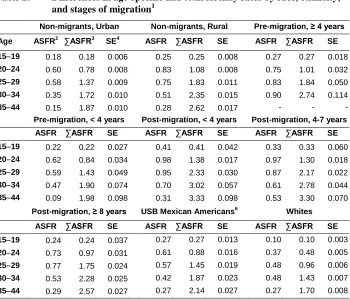
Table 2: Differences in age-specific and total fertility rates by race, ethnicity, and stages of migration1
Non-migrants, Urban Non-migrants, Rural Pre-migration, ≥ 4 years
Age ASFR2 ∑ASFR3 SE4 ASFR ∑ASFR SE ASFR ∑ASFR SE
1519 0.18 0.18 0.006 0.25 0.25 0.008 0.27 0.27 0.018 2024 0.60 0.78 0.008 0.83 1.08 0.008 0.75 1.01 0.032 2529 0.58 1.37 0.009 0.75 1.83 0.011 0.83 1.84 0.050 3034 0.35 1.72 0.010 0.51 2.35 0.015 0.90 2.74 0.114 3544 0.15 1.87 0.010 0.28 2.62 0.017 - - -
Pre-migration, < 4 years Post-migration, < 4 years Post-migration, 4-7 years
ASFR ∑ASFR SE ASFR ∑ASFR SE ASFR ∑ASFR SE
1519 0.22 0.22 0.027 0.41 0.41 0.042 0.33 0.33 0.060 2024 0.62 0.84 0.034 0.98 1.38 0.017 0.97 1.30 0.018 2529 0.59 1.43 0.049 0.95 2.33 0.030 0.87 2.17 0.022 3034 0.47 1.90 0.074 0.70 3.02 0.057 0.61 2.78 0.044 3544 0.09 1.98 0.098 0.31 3.33 0.098 0.53 3.30 0.070
Post-migration, ≥ 8 years USB Mexican Americans6 Whites
ASFR ∑ASFR SE ASFR ∑ASFR SE ASFR ∑ASFR SE
1519 0.24 0.24 0.037 0.27 0.27 0.013 0.10 0.10 0.003 2024 0.73 0.97 0.031 0.61 0.88 0.016 0.37 0.48 0.005 2529 0.77 1.75 0.024 0.57 1.45 0.019 0.48 0.96 0.006 3034 0.53 2.28 0.025 0.42 1.87 0.023 0.48 1.43 0.007 3544 0.29 2.57 0.027 0.27 2.14 0.027 0.27 1.70 0.008
Sources: 2002 MxFLS for non-migrants in Mexico and 2002/2006-10 NSFG for all other groups 1
Age-specific fertility rates are weighted.
2
ASFR denotes age-specific fertility.
3
∑ASFR denotes “cumulative fertility rates up to that age.”
4
S.E. denotes standard errors.
5
The fertility rates for women between the ages of 35 and 44, four or more years before migration, are not computed because of small sample sizes (fewer than 15 individuals).
6
USB Mexican American stands for US-born Mexican Americans.
migration because they did not wish to cross the border while pregnant or with infants, and in part to the fact that spouses were often separated because the husband migrated first (Carter 2000). After migration, immigrant women accelerate their fertility and compensated for about one-third [100*{(3.02-2.74)/(2.74-1.90)-1} ≈33] of the earlier fertility loss, which suggests that migration may reduce women’s completed levels of fertility. These results appear to conflict with past findings indicating that migration had no impact on women’s completed levels of fertility (Lindstrom and Giorguli-Saucedo 2002, 2007). These differences likely arose due to (1) differences in the sampling designs of the two studies (i.e., community-based versus nationally representative surveys) and (2) differences in the measures used to capture fertility levels (i.e., completed fertility levels versus TFR from birth histories).
Third, I investigated how the post-migration fertility of immigrant women changed over prolonged durations of stay in the United States. Immigrant fertility decreased steadily after the initial catch-up phase, falling below their pre-migration levels. By age 34, the cumulative fertility of immigrants who had resided in the US for eight or more years was 17% [100*(2.28-2.74)/2.74≈ -17], lower than their pre-migration fertility at baseline. A fertility decline was observed across all of the age groups, except among the teenagers, whose fertility rates remained largely constant over prolonged durations of stay in the United States outside of periods governed by the tempo effects of migration.
Taken together, these findings suggest that migration is positively selective with respect to fertility, and highlight the importance of empirically observing pre-migration fertility. Mexican immigrants disrupted their fertility prior to migration, but they resumed and partially compensated for the earlier disruption in fertility after migration. This pattern of change is consistent with the fertility disruption/catch-up hypothesis. The results indicated that over prolonged periods of stay in the United States, the fertility levels of Mexican immigrants decreased, falling below their pre-migration levels. This pattern is consistent with the classical assimilation hypothesis.
4.3 Fertility of Mexican immigrants changes across generations
Next, I describe how Mexican-American fertility changed across generations, paying close attention to the question of whether the fertility levels of Mexican Americans converged with those of whites. The fertility levels of Mexican Americans fertility were found to have decreased steadily across generations, diverging from their pre-migration fertility levels and converging with the levels of the whites. By age 34, the cumulative fertility of US-born Mexican Americans20 was 32% [100*(1.87-2.74)/2.74=32] lower
20
than that of the Mexican immigrants at the baseline stage (i.e., 4+ years prior to migration), and it was 18% [100*(1.87-2.28)/2.28 ≈ - 18] lower than that of Mexican immigrants who had been residing in the United States for eight or more years. Yet the fertility of US-born Mexican Americans continued to higher than that of whites. By age 34, the cumulative fertility of US-born Mexican Americans was still 31% [100*(1.87-1.43)/1.43≈31] higher than that of whites.
The fertility differentials between whites and US-born Mexican Americans were especially pronounced among the women under age 25. For example, the age-specific fertility rates of US-born Mexican Americans were 2.7 [0.27/0.10≈2.7] times those of whites between the ages 15 and 19; whereas their fertility rates were on par with the rates of the whites between the ages of 35 and 44. This finding is consistent with patterns identified in earlier studies by Darabi and Ortiz (1987) and Frank and Heuveline (2005). This pattern likely developed either because (1) births at younger ages are more likely to be unplanned than those at older ages (Musick 2002), or (2) there are barriers impeding the socioeconomic integration of young US-born Mexican Americans which suppress their opportunity costs of childbearing (Frank and Heuveline 2005).
4.4 Educational selectivity and the high Mexican immigrant fertility
I now empirically examine the extent to which the high levels of Mexican immigrant fertility arose because migration from Mexico to the United States was negatively selected with respect to education. Results from Table 3 reveal that the Mexican immigrants were not negatively selected in terms of education. In fact, in line with the findings of Chiquar and Hanson (2005) and Feliciano (2005), my results showed the opposite. For instance, just over half of Mexican immigrants had fewer than 10 years of education, compared with 63% of migrants living in urban areas and 86% of non-migrants living in rural areas in Mexico.21
immigrants tend to come from rural areas in Mexico (Marcelli and Cornelius 2001). The non-migrants in urban communities in Mexico had lower fertility than US-born Mexican Americans, partly because fertility rates in Mexico have declined precipitously over the past 30 years due to the first demographic transition, and partly because the degree of fertility assimilation may have been smaller than the fertility decline in Mexico (Zuniga and Molina 2008).
21 These levels are consistent with the literature and the national average. Santibanez et al. (2005) estimated
Table 3: Differences in educational composition by race, ethnicity, generational status, and duration of stay in the US1
Non-migrants in
Mexico Mexican immigrants US-born women
Urban Rural <4 years
4 to 7
years ≥ 8 years
Mexican
Americans Whites
≤ 9 63 86 57 58 49 8 4
10 to 11 11 6 10 7 13 16 8
12 11 5 13 24 18 26 20
≥ 13 16 4 20 11 20 50 67
Total 100 100 100 100 100 100 100
N 4,904 2,898 139 192 755 1,082 8,680
Sources: 2002 MxFLS for non-migrants in Mexico and 2002/2006-10 NSFG for all other groups.
1
Percentages are weighted.
2
Number of observations is not weighted.
3
We do not have any pre-migrants at the time of the survey.
Table 4: Predicted age-specific and total fertility rates by race, ethnicity, generational status, and stage of migration1,2
W/o education W/ education
1519 2024 2529 3034 3544 1519 2024 2529 3034 3544
Non-migrants
Urban
ASFR 0.20 0.48 0.40 0.24 0.10 0.16 0.37 0.32 0.19 0.08
ΣASFR 0.20 0.68 1.09 1.33 1.43 0.16 0.85 1.42 1.04 1.12
Rural
ASFR 0.27 0.64 0.51 0.33 0.18 0.19 0.46 0.37 0.24 0.13
ΣASFR 0.27 0.91 1.42 1.75 1.93 0.19 0.65 1.03 1.27 1.40
Pre-migration ≥4 years
ASFR 0.29 0.59 0.56 0.54 0.23 0.46 0.46 0.41
ΣASFR 0.29 0.88 1.44 1.98 0.23 0.68 1.15 1.56
<4 years
ASFR 0.20 0.48 0.40 0.27 0.05 0.16 0.37 0.32 0.23 0.03
ΣASFR 0.20 0.68 1.08 1.35 1.40 0.16 0.53 0.85 1.08 1.12
Post-migration <4 years
ASFR 0.50 0.71 0.59 0.44 0.16 0.40 0.57 0.46 0.35 0.13
ΣASFR 0.50 1.21 1.80 2.23 2.39 0.40 0.97 1.43 1.78 1.91
4 to 7
ASFR 0.27 0.70 0.57 0.37 0.29 0.23 0.56 0.46 0.28 0.25
ΣASFR 0.27 0.97 1.54 1.91 2.21 0.23 0.79 1.25 1.53 1.78
≥8
ASFR 0.27 0.59 0.49 0.31 0.16 0.26 0.55 0.43 0.26 0.14
ΣASFR 0.27 0.86 1.35 1.66 1.83 0.26 0.82 1.25 1.51 1.65
US-born Mex. Am
ASFR 0.33 0.52 0.42 0.28 0.17 0.33 0.53 0.43 0.29 0.19
ΣASFR 0.33 0.85 1.27 1.54 1.72 0.33 0.86 1.29 1.58 1.77
White
ASFR 0.13 0.30 0.31 0.29 0.16 0.14 0.34 0.35 0.33 0.18
ΣASFR 0.13 0.44 0.75 1.03 1.19 0.14 0.48 0.83 1.15 1.33
Sources: 2002 MxFLS for non-migrants in Mexico and 2002/2006-10 NSFG for all other groups.
Predicted age-specific and total fertility rates are computed using poisson regression models. The coefficients of the poisson regression models are available upon request. All of the models control for birth cohort and marital status. All of the analyses are weighted. Using svy commands, I accounted for clustering of person-age files among the women.
2
4.5 Educational assimilation and fertility assimilation
I now empirically test the claim that the degree of fertility assimilation among the Mexican Americans was limited because their levels of education improved very little within and across generations. Because the NSFG did not include educational histories, our educational measure captured the number of completed years of schooling at the date of the interview22. An implicit assumption in this analysis was, therefore, that group differences in levels of education at the date of the interview were representative of differences in the women’s educational levels in each of the age categories23.
Table 3 shows that Mexican Americans experienced educational improvements over prolonged durations of stay in the United States, with the main difference observed between those who had been residing in the United States for eight or more years and those who had been residing in the United States for shorter durations. About half of immigrants who had been living in the United States for eight or more years had less than 10 years of schooling, compared to about 60% of Mexican immigrants who had been residing in the United States for shorter durations. The educational levels of Mexican Americans also appear to have improved across generations: 8% of US-born Mexican Americans had completed less than 10 years of schooling, compared with about half of the Mexican immigrants. Even so, US-born Mexican Americans still had an educational disadvantage relative to whites: only 4 percent of whites had completed less than 10 years of schooling.
Next, I assess the extent to which educational improvements account for fertility changes within the immigrant generation by comparing the fertility differentials between the baseline stage (i.e., 4+ years prior to migration) and the last stage of migration (i.e., 8+ years after migration), with and without educational controls. The results are presented in Table 4. Net of controls for education, the cumulative fertility of immigrants at the last stage of migration was 3% [100*(1.51-1.56)/1.56≈-3] lower than that of the immigrants in the very beginning stage of migration. Without controls for education, the gap was 17% [100*(1.66-1.98)/1.98 ≈ - 17]. In other words, variations in educational composition accounted for over 80% [(17-3)/( 17) = 0.82] of the fertility changes observed within the immigrant generation.
22 I did not report how education affected the fertility changes that occurred during the migration process (i.e.,
fertility disruption and catch-up) because disruption/catch-up deals with changes that occur in a short period of time when educational characteristics of immigrants change little.
23 Educational attainment may be lower at younger ages than the levels of education at the date of interview,
Educational improvements across generations also accounted for a considerable portion of the fertility changes across the generations. By age 34, the cumulative fertility of Mexican immigrants who had been residing in the US for eight or more years was 4% [100*(1.51-1.58)/1.58≈-4] lower than that of US-born Mexican Americans, net of controls for education. In the absence of educational controls, the difference was 8% [100*(1.66-1.54)/1.54=8]. In other words, educational disparities explained all the fertility differentials between Mexican immigrants who had been residing in the US for 8+ years and US-born Mexican Americans.
Finally, I investigated the extent to which educational disparities accounted for the fertility differentials between whites and US-born Mexican Americans. Net of education, the cumulative fertility of US-born Mexican Americans at age 34 was 37% [100*(1.58-1.15)/1.15≈37] higher than that of whites. In the absence of controls for education, the gap was 50% [(1.54-1.03)/1.03 = 45]. In other words, the educational gap between US-born Mexican Americans and whites accounted for one-quarter [100*(50-37)/30 ≈ 26] of the fertility differentials between the two groups. These findings suggest that while differences in educational levels help to explain why Mexican Americans have higher fertility levels than whites, factors other than education also play important roles. This finding is consistent with previous findings by Lichter and colleagues (2012).
Taken together, my findings do not support claims that Mexican immigrants have higher fertility levels because of negative educational selectivity. My results also challenge the assumption that the limited degree of fertility assimilation among Mexican immigrants is attributable to their limited degree of educational assimilation.
5. Summary and conclusions
The goals of this study were to (1) describe how selective migration is with respect to fertility; (2) document how immigrant fertility changes within and across generations; and (3) determine the extent to which educational selectivity and educational assimilation are associated with the high fertility of Mexican immigrants and their degree of fertility assimilation, respectively. My analyses yielded several notable findings.
effect of Mexican immigrant fertility on future population size and composition will not be as large as was previously projected.
Second, my analysis revealed that Mexican migration to the United States is positively selected with respect to fertility. This selectivity—which is likely attributable to the fact that these immigrants generally come from rural areas in Mexico—indicates that national average fertility rates may inadequately reflect the fertility of immigrants prior to migration, and highlights the importance of observing pre-migration fertility patterns.
Third, I found partial support for the fertility disruption/catch-up hypotheses. The results showed that there were fertility disruptions among the Mexican immigrants studied prior to migration, and that these disruptions were only partially compensated for after migration. While the finding that migration temporarily disrupted immigrant fertility is consistent with results from previous research, the finding that migration had long-term effects on fertility is not in line with the results of previous studies (Carlson 1985; Lindstrom and Giorguli-Saucedo 2002, 2007). The differences in the results may be an artifact of the differences in the fertility measures and the sampling designs used in these studies.
Fourth, like previous studies, I found evidence of a post-migration rise in fertility followed by steady decline in immigrant fertility. I also found that there is a general tendency for Mexican-American fertility to decrease within and across generations, which offers support for the pattern predicted by the classical assimilation hypotheses. Yet my finding that the fertility levels of US-born Mexican Americans, and especially those of young people, fail to converge fully with the fertility levels of whites is consistent with the patterns predicted by segmented assimilation and racial stratification hypotheses. Data limitations prevented me from fully evaluating how fertility changes across generations. Future studies with information about synthetic biological generations should address this question.
Finally, I found little support for the view that the high fertility of Mexican immigrants is attributable to the negative educational selectivity of migration. I also found limited support for the claim that Mexican American fertility does not decrease within and across generations due to the limited degree of educational assimilation by Mexican Americans.
US, as it does not allow us to account for the time circular migrants may have spent in Mexico. Thus, the extent of the fertility assimilation experienced by circular migrants from Mexico is understated (Ford 1990). Third, because Mexican-born women were classified as non-migrants and immigrants depending on their country of residence at the time of survey, the population of non-migrants in Mexico may have included individuals who migrated after 2002. This implies that the fertility differentials between the non-migrants in Mexico and Mexican immigrants may have been underestimated. Fourth, because I lacked access to information about the migrant’s community of origin, I was unable to determine how the educational characteristics or fertility behaviors of the immigrants compared with those of their counterparts in their respective sending communities. Instead, I disaggregated the non-migrant population into residents of urban and rural communities and compared the fertility levels of the immigrant population with those of these both groups. Fifth, the NSFG distinguished between Mexican Americans of first and second or higher generations, but it did not distinguish between Mexican Americans of second and third generations, which limited my ability to ascertain how fertility changed across generations. Sixth, because the NSFG is a repeated cross-sectional dataset, I was forced to rely on synthetic immigrant generations. Although this practice is the modal approach in the literature, the use of synthetic immigrant generations may have resulted in an underestimation of fertility changes across the generations (Parrado and Morgan 2008). Finally, because the NSFG did not include educational histories, I may have underestimated the extent to which educational assimilation accounted for fertility changes within and across generations.