P R O C E E D I N G S
Open Access
Somatic mutations in cancer development
Lucio Luzzatto
From
First Lorenzo Tomatis Conference on Environment and Cancer
Turin, Italy. 4-5 June 2009
Abstract
The transformation of a normal cell into a cancer cell takes place through a sequence of a small number of discrete genetic events, somatic mutations: thus, cancer can be regarded properly as a genetic disease of somatic cells. The analogy between evolution of organisms and evolution of cell populations is compelling: in both cases what drives change is mutation, but it is Darwinian selection that enables clones that have a growth advantage to expand, thus providing a larger target size for the next mutation to hit. The search for molecular lesions in tumors has taken on a new dimension thanks to two powerful technologies: the micro-arrays for quantitative analysis of global gene expresssion (thetranscriptome); and‘deep’sequencing for the global analysis of the entire genome (or at least theexome). The former offers the most complete phenotypic characterization of a tumor we could ever hope for– we could call this theultimate phenotype; the latter can identify all the somatic mutations in an individual tumor– we could call this thesomatic genotype. However, there is definitely the risk that while we are ‘drowned by data, we remain thirsty for knowledge’. If we want to heed the teachings of Lorenzo Tomatis, I think the message is clear: we ought to take advantage of the new powerful technologies– not by becoming their slaves, but remaining their masters. Identifying somatic mutations in a tumor is important not because it qualifies for‘oncogenomics’, but because through a deeper understanding of the nature of that particular tumor it can help us to optimize therapy or to design new therapeutic approaches.
Introduction
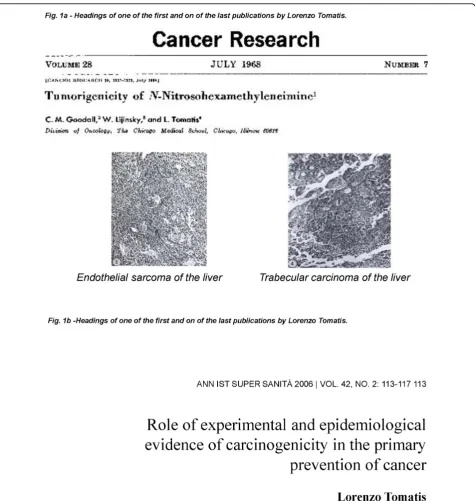
Lorenzo Tomatis was a towering figure in the study of cancer and cancer epidemiology: not just because from 1982 to 1993 he was the Director of the International Agency for Research against Cancer (IARC), but even more because he commanded immense international respect as a scientist ahead of his time in the under-standing of the environmental causes of cancer. Toma-tis’ major influence in this area spanned some four decades [1,2] (see Figs. 1a and 1b). I never worked with Renzo, but I have vivid memories of many encounters and discussions I had with him, both about science and about research policies: and I am forever grateful for what I learnt from him.
My job today is to discuss the role of somatic muta-tions in oncogenesis. In a nutshell, and using a time-honoured terminology of medicine, if heredity and environment are the aetiology of cancer, somatic
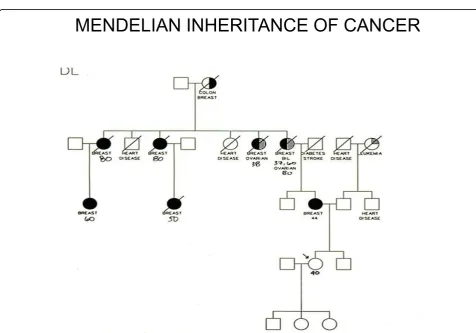
mutations are the essence of its pathogenesis. With respect to heredity, it is abundantly clear that one never does inherit cancer, but rather one may inherit an increased risk of cancer [3]. In first approximation, some mutant genes entail a very high risk of cancer, so much so that they behave as Mendelian dominants (see Fig. 2), and they are therefore called high penetrance (cancer susceptibility) genes. These include (i) tumor suppressors (e.g. p53, APC, GPC3, VHL, CDKN2A,
MEN1), (ii) oncogenes (e.g. PDGFRA, KIT, MET, RET), and (iii) genes required for genome stability (e.g. ATM,
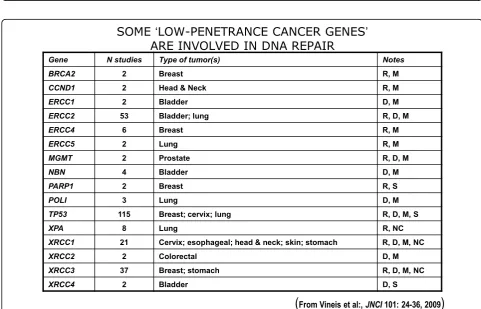
BLM, FANCA,BRCA2, MSH2,XPA). Known high pene-trance genes number by now several dozens [4]: they may have tumor (site) specificity (e.g. BRCA2) or they may not (e.g. p53). In addition, numerous clinical obser-vations (see for instance Fig. 3 [5]) indicate that cancer susceptibility may‘run in families’in a more subtle way, and this has led to the notion of low penetrance (cancer susceptibility) genes [6]. These are important because they may contribute significantly to the cancer burden in a population (see Figure 4). Until recently, candidate Correspondence: [email protected]
Scientific Director, Istituto Toscano Tumori, Florence, Italy
low penetrance genes have been chased through (i) tests on first degree relatives [7], (ii) kinship analysis [8], (iii) studies on twins [9], and (iv) linkage disequilibrium ana-lysis in appropriate populations [10-12] It must be admitted that until recently the yield has been limited, although individual examples have turned up, for instance among genes involved in signal transduction pathways (e.g. the TGFb receptor: see Fig. 5), and
ANN IST SUPER SANITÀ 2006 | VOL. 42, NO. 2: 113-117 113
Role of experimental and epidemiological
evidence of carcinogenicity in the primary
prevention of cancer
Lorenzo Tomatis
International Society of Doctors for the Environment (ISDE), Trieste, Italy
Figure 2Pedigree of a family with a high rate of breast cancer and ovarian cancer:the increased tendency to developing cancer shows a Mendelian autosomal dominant pattern of inheritance, suggesting that a single gene is largely responsible.
MENDELIAN INHERITANCE OF CANCER
Figure 3In this extended family there were 3 cases of hairy cell leukaemia (HCL): their co-existence can be hardly a coincidence, since HCL is one of the rarestforms of B cell leukaemia. Here the pattern is not Mendelian, suggesting that several genes and/or
Figure 4Three patients with hairy cell leukaemia in the same family.
Could be high Low
Overall contribution to cancer prevalence
MDM2, p53 Rb, BRCA1
Examples
Possible Difficult
Detectable by LD analysis
No Yes
Detectable by linkage analysis
May be high Low
Population frequency
Low High
Penetrance
“Weak”
“Strong”
TWO TYPES OF CANCER GENES
SOME
‘
LOW-PENETRANCE CANCER GENES
’
ARE INVOLVED IN DNA REPAIR
Gene N studies Type of tumor(s) Notes
BRCA2 2 Breast R, M
CCND1 2 Head & Neck R, M
ERCC1 2 Bladder D, M
ERCC2 53 Bladder; lung R, D, M
ERCC4 6 Breast R, M
ERCC5 2 Lung R, M
MGMT 2 Prostate R, D, M
NBN 4 Bladder D, M
PARP1 2 Breast R, S
POLI 3 Lung D, M
TP53 115 Breast; cervix; lung R, D, M, S
XPA 8 Lung R, NC
XRCC1 21 Cervix; esophageal; head & neck; skin; stomach R, D, M, NC
XRCC2 2 Colorectal D, M
XRCC3 37 Breast; stomach R, D, M, NC
XRCC4 2 Bladder D, S
(
From Vineis et al:, JNCI 101: 24-36, 2009)
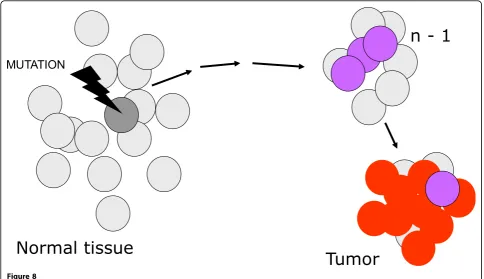
Figure 7A cartoon illustrating current views of the origin of cancer, which is consequent onnsuccessive somatic mutations. The final result is a clonal population of cells with highly disregulated growth. It can be presumed that in fact each one of the mutational steps entails a growth advantage, even if small: this increases the number of cells that can be targeted by the next mutation. The termn-1is used to indicate the penultimate step in the pathway, because the number n is not fixed: it is estimated that it may range, for the majority of tumors, from 3 to 6 or even more.Kaklamani, V. G. et al. J Clin Oncol; 21:3236-3243 2003
MUTATION
Normal tissue
Tumor
n - 1
Figure 8
POPULATION GENETICS IS APPLICABLE TO POPULATION OF CELLS
Events/processes
In populations of organisms In populations
of somatic cells
Mutation
Creates a mutant
individual/family
Creates a mutant cell/clone
Lethal mutation
No offspring
No clonal growth
Neutral mutation
No visible change
No visible change
Mutation with absolute
advantage
Mutant people will gradually
take over
Clone will grow faster than
other cells
Mutation with conditional
advantage
Mutant people will increase
in a certain environment
Clone will grow faster under
certain conditions
now identified, that affect the risk of individual types (or several types) of cancer–mostly by less than +/- 30%– in one or another population (see 40 references in webappendix of recent paper by Hartman et al. [13] .
With respect to the environment, I think the most last-ing monumental memorial to Lorenzo is the series of IARC publications on carcinogenic agents which, in the jargon of the cognoscentes, are known simply as The Monographs. Rarely has an international agency been able to generate publications (each one the product of a colle-gial effort) with so much scientific content; even more rarely has this taken place consistently in dozens of volumes over some thirty years, to the extent that the Monographs are universally regarded as the ultimate authority on their individual topics; and probably never has a single person–namely Tomatis himself–through his scientific rigor, his incredible dedication, and his unique ability to catalyze consensus whenever possible, contributed so much to a successful venture of this nature. The model of oncogenesis pioneered by John Cairns [14] contained already the key for reconciling aetiology and pathogenesis. The transformation of a normal cell into a cancer cell takes place through a sequence of a small number of discrete genetic events, somatic muta-tions (Figure 7): thus, cancer can be regarded properly
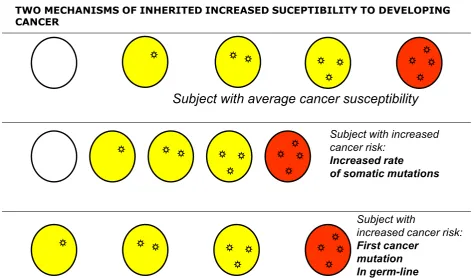
as a genetic disease of somatic cells [3,15]. The analogy between evolution of organisms and evolution of cell populations is compelling (Figure 8): in both cases what drives change is mutation, but it is Darwinian selection that enables clones that have a growth advantage to expand, thus providing a larger target size for the next mutation to hit [14,16,17] (Figure 7). This model offers a simple interpretation to the mechanism of action of the aetiological factors we have mentioned. An environ-mental agent can increase the rate of somatic mutation (i.e., it may be mutagenic, like ionizing radiation), or it can increase the rate of cell proliferation (as when Heli-cobacter pyloricauses gastritis), or it may do both things (this is probably the case with the hepatitis B virus caus-ing hepatoma). As for heredity, in the majority of cases it acts probably by increasing the mutation rate, and this may apply to both high penetrance genes and to low penetrance genes; on the other hand, sometimes an oncogene with a germ-line mutation appears to be in lieu of the first somatic mutation, for instance in the case of RET in Multiple Endocrine Neoplasia type 2, thus decreasing by one the number of mutations required for the development of cancer (see Figure 9).
In order to understand the pathogenesis of tumors we must consider their very extensive variety: not only can
Subject with average cancer susceptibility
Subject with increased
cancer risk:
Increased rate
of somatic mutations
Subject with
increased cancer risk:
First cancer
mutation
In germ-line
TWO MECHANISMS OF INHERITED INCREASED SUCEPTIBILITY TO DEVELOPING CANCER
they arise in virtually every possible cell type in the body, but even within the set of tumors arising from a specific type of cell there is marked heterogeneity, some of it well explored and some yet to be unravelled. The somatic mutation-Darwinian selection model of cancer is appropriately versatile: we can presume, and we know in specific cases that different genes are involved: some 400 have been already identified [18]. To this end, the methodology that has given the highest returns has been cytogenetic analysis, which has spotted (i) chromosomal translocations harbouring fusion genes or rearrange-ments that dysregulate gene expression, as well as (ii) loss of heterozigosity betraying deletions. In other cases somatic mutations have been discovered in genes already known to have germ-line mutations in cancer-prone families, or by deliberately testing for somatic mutations in candidate genes. Not surprisingly, many of the genes involved belong to sets that are relevant to
broad functions within the cell (the buzz-term today is
gene ontology): particularly the cell cycle, signalling, reg-ulation of transcription, apoptosis and, once again, gen-ome stability (DNA repair) [19,20].
The search for molecular lesions in tumors has taken on a new dimension thanks to two powerful technolo-gies: the micro-arrays for quantitative analysis of global gene expression [21-25] (the transcriptome); and‘deep’ sequencing for the global analysis of the entire genome (or at least theexome). The former offers the most com-plete phenotypic characterization of a tumor we could ever hope for– we could call this theultimate pheno-type; the latter can identify all the somatic mutations in an individual tumor –we could call this the somatic genotype (see Figure 10). The ground-breaking paper [26] on the latter was published in 2006; and already it has been followed by a flurry of similar work on differ-ent types of tumors [27-30]. The somatic genotype of
MR Stratton
et al. Nature
458
, 719-724 (2009) doi:10.1038/nature07943
somatic mutations present in a single cancer genome.
the tumor can be fully characterized by sequencing in parallel (from non-tumor DNA) also the inherited gen-ome of the patient: thus, the issue of inherited variation versus acquired somatic mutation can be rigorously cir-cumvented. A more difficult issue has to do with the fact that somatic mutations can occur (indeed are rela-tively common) in any normal cell: therefore a somatic mutation found in a tumor does non automatically qua-lify as being causative of that tumor; therefore we must improve algorithms aiming to disentangledriver muta-tions(i.e. pathogenic mutations) frompassenger muta-tions. At any rate, by this approach not only are new genes being identified; also, patterns of mutations are emerging (Figure 11) that may be signatures of exposure to individual environmental mutagens [26]: an unex-pected bonus of molecular studies that is highly relevant to the focus of this meeting.
Somatic mutations are central to the process of onco-genesis, because almost certainly no tumor can arise without them (although epigenetic phenomena are important [31-33], I think it is highly unlikely that gene silencing by promoter methylation alone can do the job). The rate of somatic mutations –and thus the risk of cancer– can be increased by inherited genes or by
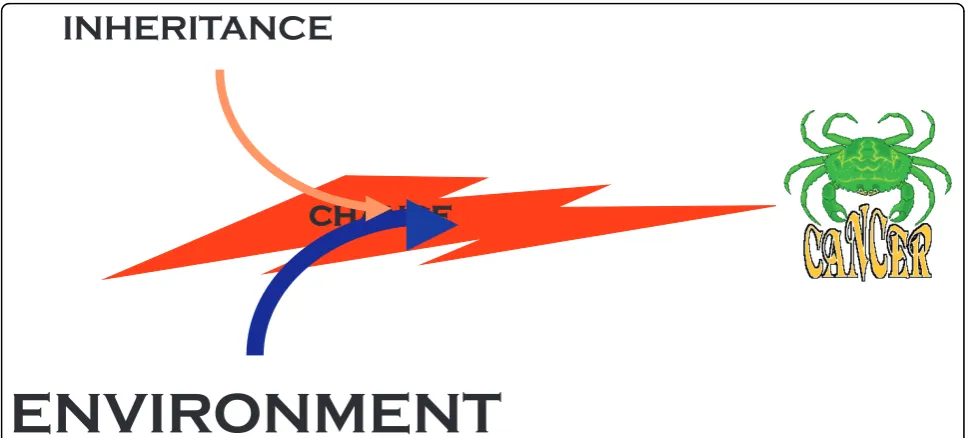
environmental agents, as we have outlined; however, somatic mutations occur all the time as spontaneous stochastic events, because the replication of DNA is extremely faithful but nor perfect: this means that there is always an element of chance in oncogenesis (Figure 12). In this respect, we know surprisingly little about the normal baseline somatic mutation rate (μ). Over the past several years, by using the X-linked genePIG-Aas a sentinel gene, we have developed a relatively simple methodology to measureμin any individual [34-36]: we have determined the normal range of μ, and we have shown that it is higher in severak groups of cancer-prone subjects. It will be important to determine whether μcorrelates with the risk of sporadic cancer, and whether we can measure changes in μin subjects who are exposed to environmental carcinogens. It is also not unconceivable that μ could be decresed by pharmacological agents.
The progress of contemporary biology has led us within thirty years from a multitude of theories about oncogenesis to the established fact that cancer is a genetic disorder of somatic cells. On the other hand, much recent literature gives the impression that there is a surplus of information, from gene expression profiles
COLON BREAST TOTAL
Substitutions at CG base pairs
CG to TA 413 (59.3) 289 (34.5) 702 (45.8)
CG to GC 48 (6.9) 239 (28.5) 287 (18.7)
CG to AT 93 (13.4) 148 (17.7) 241 (15.7)
Substitutions at TA base pairs
TA to CG 56 (8.0) 72 (8.6) 128 (8.3)
TA to GC 51 (7.3) 35 (4.2) 86 (5.6)
TA to AT 35 (5.0) 55 (6.6) 90 (5.9)
Substitutions at specific dinucleotides
5’-CpG-3’ 309 (44.4) 139 (16.6) 448 (29.2)
5’-TpC-3’ 79 (11.4) 257 (30.7) 336 (21.9)
TOTAL 696 838 1534
SOME SPECIFIC TYPES OF SOMATIC MUTATIONS
FOUND IN TUMORS
to proteomics to metabolomics, with the risk that while we are truly ‘drowned by data, we remain thirsty for knowledge’. If we want to heed the teachings of Lorenzo Tomatis, I think the message is clear: we ought to take advantage of the new powerful technologies– not by becoming their slaves, but remaining their masters. Identifying somatic mutations in a tumor is important not because it qualifies for‘oncogenomics’, but because through a deeper understanding of the nature of that particular tumor it can help us to optimize therapy or to design new therapeutic approaches. Figure 13.
Acknowledgements
This article has been published as part ofEnvironmental HealthVolume 10 Supplement 1, 2011: Proceedings of the First Lorenzo Tomatis Conference on Environment and Cancer. The full contents of the supplement are available online at http://www.ehjournal.net/supplements/10/S1.
Competing interests
The author declare that has no competing financial or non-financial interests.
Published: 5 April 2011
References
1. Lijinsky W, Lee KY, Tomatis L, Buutler WH:Nitrosoazetidine–a potent carcinogen of low toxicity.Die Naturwissenschaften1967,54(19):518. 2. Tomatis L:Identification of carcinogenic agents and primary prevention
of cancer.Annals of the New York Academy of Sciences2006,1076:1-14. 3. Vogelstein BaK, K W:The Genetic Basis of Human Cancer.New York:
McGraw-Hill, 2nd 2002.
4. Offit K:Clinical cancer genetics: risk counseling and management.New York: Wiley-Liss; 19981.
5. Gramatovici M, Bennett JM, Hiscock JG, Grewal KS:Three cases of familial hairy cell leukemia.American journal of hematology1993,42(4):337-339.
6. Fraumeni JF Jr.:Epidemiologic approaches to cancer etiology.Annual review of public health1982,3:85-100.
7. Narod SA, Stiller C, Lenoir GM:An estimate of the heritable fraction of childhood cancer.British Journal of Cancer1991,63:993-999. 8. Cannon-Albright LA, Thomas A, Goldgar DE, Gholami K, Rowe K,
Jacobsen M, McWhorter WP, Skolnick MH:Familiality of cancer in Utah.
Cancer Res1994,54(9):2378-2385.
9. Kadan-Lottick NS, Kawashima T, Tomlinson G, Friedman DL, Yasui Y, Mertens AC, Robison LL, Strong LC:The risk of cancer in twins: a report from the childhood cancer survivor study.Pediatr Blood Cancer2006, 46(4):476-481.
10. Stephens JC, Briscoe D, O’Brien SJ:Mapping by admixture linkage disequilibrium in human populations: limits and guidelines.American journal of human genetics1994,55(4):809-824.
11. Weber BL, Nathanson KL:Low penetrance genes associated with increased risk for breast cancer.European Journal of Cancer2000, 36(10):1193.
12. Nathanson KL, Wooster R, Weber BL:Breast cancer genetics: what we know and what we need.Nature medicine2001,7(5):552-556. 13. Hartman M, Loy EY, Ku CS, Chia KS:Molecular epidemiology and its
current clinical use in cancer management.The lancet oncology2010, 11(4):383-390.
14. Cairns J:Mutation selection and the natural history of cancer.Nature
1975,255(5505):197-200.
15. Luzzatto L, Pandolfi PP:Laukaemia: a genetic disorder of haemopoietic cells.British Medical Journal1993,307:579-580.
16. Cahill DP, Kinzler KW, Vogelstein B, Lengauer C:Genetic instability and darwinian selection in tumours.Trends in cell biology1999,9(12):M57-60. 17. Greaves M:Darwinian medicine: a case for cancer.Nature reviews2007,
7(3):213-221.
18. Futreal PA, Coin L, Marshall M, Down T, Hubbard T, Wooster R, Rahman N, Stratton MR:A census of human cancer genes.Nature reviews2004, 4(3):177-183.
19. Hanahan D, Weinberg RA:The hallmarks of cancer.Cell2000,100(1):57-70. 20. Vogelstein B, Kinzler KW:Cancer genes and the pathways they control.
Nature medicine2004,10(8):789-799.
21. van‘t Veer LJ, Dai H, van de Vijver MJ, He YD, Hart AA, Mao M, Peterse HL, van der Kooy K, Marton MJ, Witteveen AT,et al:Gene expression profiling predicts clinical outcome of breast cancer.Nature2002,
415(6871):530-536.
CHANCE
ENVIRONMENT
22. Ma XJ, Wang Z, Ryan PD, Isakoff SJ, Barmettler A, Fuller A, Muir B, Mohapatra G, Salunga R, Tuggle JT,et al:A two-gene expression ratio predicts clinical outcome in breast cancer patients treated with tamoxifen.Cancer cell2004,5(6):607-616.
23. Nelson PS:Predicting prostate cancer behavior using transcript profiles.
The Journal of urology2004,172(5 Pt 2):S28-32, discussion S33. 24. Sotiriou C, Pusztai L:Gene-expression signatures in breast cancer.The
New England journal of medicine2009,360(8):790-800.
25. Cavalieri D, Dolara P, Mini E, Luceri C, Castagnini C, Toti S, Maciag K, De Filippo C, Nobili S, Morganti M,et al:Analysis of gene expression profiles reveals novel correlations with the clinical course of colorectal cancer.
Oncology research2007,16(11):535-548.
26. Sjoblom T, Jones S, Wood LD, Parsons DW, Lin J, Barber TD, Mandelker D, Leary RJ, Ptak J, Silliman N,et al:The Consensus Coding Sequences of Human Breast and Colorectal Cancers.Science2006,314(5797):268-274. 27. Mardis ER, Ding L, Dooling DJ, Larson DE, McLellan MD, Chen K,
Koboldt DC, Fulton RS, Delehaunty KD, McGrath SD,et al:Recurring mutations found by sequencing an acute myeloid leukemia genome.
The New England journal of medicine2009,361(11):1058-1066. 28. Weir BA, Woo MS, Getz G, Perner S, Ding L, Beroukhim R, Lin WM,
Province MA, Kraja A, Johnson LA,et al:Characterizing the cancer genome in lung adenocarcinoma.Nature2007,450(7171):893-898. 29. Stratton MR, Campbell PJ, Futreal PA:The cancer genome.Nature2009,
458(7239):719-724.
30. Ley TJ, Mardis ER, Ding L, Fulton B, McLellan MD, Chen K, Dooling D, Dunford-Shore BH, McGrath S, Hickenbotham M,et al:DNA sequencing of a cytogenetically normal acute myeloid leukaemia genome.Nature2008, 456(7218):66-72.
31. Esteller M:Epigenetics provides a new generation of oncogenes and tumour-suppressor genes.British journal of cancer2006,94(2):179-183. 32. Fraga MF, Esteller M:Towards the human cancer epigenome: a first draft
of histone modifications.Cell cycle (Georgetown, Tex2005,4(10):1377-1381. 33. McKenna ES, Roberts CW:Epigenetics and cancer without genomic
instability.Cell cycle (Georgetown, Tex2009,8(1):23-26.
34. Araten DJ, Nafa K, Pakdeesuwan K, Luzzatto L:Clonal populations of hematopoietic cells with paroxysmal nocturnal hemoglobinuria genotype and phenotype are present in normal individuals.Proc Natl Acad Sci U S A1999,96(9):5209-5214.
35. Araten DJ, Golde DW, Zhang RH, Thaler HT, Gargiulo L, Notaro R, Luzzatto L:A Quantitative Measurement of the Human Somatic Mutation Rate.Cancer Res2005,65(18):8111-8117.
36. Peruzzi B, Araten DJ, Notaro R, Luzzatto L:The use of PIG-A as a sentinel gene for the study of the somatic mutation rate and of mutagenic agents in vivo.Mutation research2010,705(1):3-10.
doi:10.1186/1476-069X-10-S1-S12
Cite this article as:Luzzatto:Somatic mutations in cancer development. Environmental Health201110(Suppl 1):S12.
Submit your next manuscript to BioMed Central and take full advantage of:
• Convenient online submission
• Thorough peer review
• No space constraints or color figure charges
• Immediate publication on acceptance
• Inclusion in PubMed, CAS, Scopus and Google Scholar
• Research which is freely available for redistribution