ABSTRACT
Background and Objective: Nowadays, incidence of antibiotic-resistance among pathogenic bacteria has increased due to indiscriminate use of antimicrobial drugs for treatment of diseases, especially urinary tract infections. Medicinal plants are also of great importance as antibacterial agents. Therefore, the aim of this study was to determine the antibacterial effect of ethanolic extract of nettle (Urtica dioica L.) leaves using two methods of disk diffusion and well diffusion.
Methods: Ethanolic extract of nettle leaves was prepared by the percolation method. Effect of different concentrations of the extract on Escherichia coli (PTCC1399),
Staphylococcus aureus (PTCC 1431), Staphylococcus epidermidis (PTCC 1435) and
Staphylococcus saprophyticus (PTCC1440) was evaluated using the disk diffusion and well diffusion methods by measuring diameter of growth inhibition zone. Gentamicin and propylene glycol were used as positive and negative control, respectively.
Results: In both methods, especially in the well diffusion, the ethanolic extract of nettle leaves had favorable inhibitory effect on the growth of S. aureus, S. epidermidis and
S. saprophyticus. In the well diffusion method, the highest rate of susceptibility to the extract (89%) was related to S. saprophyticus and S. epidermidis.
Conclusion: The ethanolic extract of nettle leaf has good inhibitory effect on the growth of S. aureus (especially in the well diffusion method), which confirms the traditional use of this plant for the treatment of urinary tract infections.
Keywords: Antibacterial Effect, Staphylococcus, E. Coli, Ethanolic Extract, Nettle (Urtica dioica L.).
Seyedeh Masoumeh Mirtaghi (BSc)
Department of Laboratory Sciences, Golestan University of Medical Sciences, Gorgan, Iran Parisa Torbati Nejad (BSc) Department of Laboratory Sciences, Golestan University of Medical Sciences, Gorgan, Iran Masoumeh Mazandarani (PhD) Department of Biology, Islamic Azad University, Gorgan Branch, Gorgan, Iran
Fasiheh Livani (MSc) Department of Plant Sciences, Islamic Azad University, Gorgan Branch, Gorgan, Iran
Hanieh Bagheri (MSc) Department of Microbiology, Golestan University of Medical Sciences, Gorgan, Iran
Corresponding author: Hanieh Bagheri
Tel: +989113707655
E-mail:
[email protected] Address: Golestan University of Medical Sciences, Gorgan, Iran
Evaluation of Antibacterial Activity of Urtica dioica L. Leaf Ethanolic
Extract Using Agar Well Diffusion and Disc Diffusion Methods
This paper should be cited as: Mirtaghi SM, Torbati Nejad PT, Mazandarani M, Livani F, Bagheri H[Evaluation of Antibacterial Activity of Urtica dioica L. Leaf Ethanolic Extract Using Agar Well Diffusion and Disc Diffusion Methods] . mljgoums. 2016; 10(5): 15-21
Received : 12 Aug 2014
Revised: 10 Oct 2014
Accepted: 22 Oct 2014
extraction and preparation can have different results. For example, significant differences have been reported in the antibacterial effects when using two methods of disk diffusion and well diffusion (14-16). The aim of this study was to determine and compare the antimicrobial effect of U. dioica L. collected from Golestan (village of Ziarat) and Mazandaran (villages of Aqoozki and Surat) Provinces in vitro.
MATERIAL AND METHODS
This analytical study was performed on
U. dioica L. collected at flowering season and in late June 2011 from the mountainous areas of Ziarat, Surat and Aqoozki. The samples were identified and extracted at the herbarium of Medicinal Plants Research Center of Islamic Azad University of Gorgan. The young leaves of the plant were separated from the base and then dried in the suitable conditions (at dark with airflow). The samples were powdered with an electric mill. In order to produce the ethanolic extract, 70% ethanol and percolation method were used. First, 50g of the powder from each sample were transferred into a decanting device, followed by step-by-step addition of heated-70% ethanol. Addition of ethanol continued until the solvent covered all samples and the surface of the samples inside the device completely. After 72 hours of extraction, isolation of extracts from the solvent was performed using a rotary vane vacuum pump (17). At this stage, the ethanolic extract was diluted with 10% propylene glycol to obtain concentrations of 12.5, 25, 50, 100, 250 and 500 mg/ml of extract (18). Blank disks (Padtan Teb Co.) were used to prepare discs containing the extract. The blank disks were placed in tubes containing specific concentrations of the extracts. After 5-10 min of incubation at 37 oC, the disks were dried and prepared for use (19). The bacteria used in the study included standard strains of E. coli
(PTCC 1399), S. aureus (PTCC 1431), S. epidermidis (PTCC 1435) and S. saprophyticus (PTCC 1440) that were obtained in lyophilized form from the microbial collection of Iranian Research Organization for Science and Technology. The bacterial samples were recovered, identified and verified according to standard methods.
INTRODUCTION
Urinary tract infection (UTI) is one of the most important and common infections that can occur at any age (1). It is also the second most frequent infection after upper respiratory tract infection. Escherichia coli, Proteus vulgaris, Klebsiella pneumoniae, Staphylococci, Enterobacter, Citrobacter and
Pseudomonas aeruginosa are among the most common bacteria causing UTI (2). UTIs are usually treated with antibiotics, but there are reports of increasing antibiotic-resistance in pathogenic bacteria (2-4). Urtica dioica L., commonly known as nettle, is a member of the family Urticaceae (5) and popular for poisonous villi on its aerial parts (6). This plant usually grows wild in humid regions of Iran, especially in the north, northwest and center (7). It is globally known as a medicinal plant for its healing effects after long-term use. In Iranian traditional medicine, it is known as an anti-inflammatory agent (6). Several studies have demonstrated that that this herb has antioxidant, antibacterial, anti-diabetic, anti-rheumatic, anti-inflammatory, anti-allergic, antipyretic, anti-hypertensive, digestive stimulating and diuretic properties (5). The fresh and dried leaves of this plant are used to treat UTIs (6-8). A study showed the antimicrobial activity of U. dioica L. against E. coli and several staphylococci using the disk diffusion method. Also, this study showed that the plant extract completely inhibited the growth of gram-positive bacteria such as Staphylococcus epidermidis,
Staphylococcus aureus and Staphylococcus saprophyticus, while E. coli was resistant to the extract (2). Another study found that the alcoholic extract of the plant have favorable antibacterial activity against Streptococcus pyogenes, S. aureus and S. epidermidis (9). Different parts of this plant contains chlorophyll, vitamins (C, K, B1, B2), pantothenic acid, carotenoid, protein, tannin, essential oils, minerals (iron, manganese, copper and nickel), acetylcholine, histamine, flavonoids (10), phenolic acids and alkaloids (11). The most important biological functions of the phenolic and flavonoids constituents could be attributed to their antioxidant, anti-bacterial and anti-inflammatory properties (12, 13). Besides the inherent properties of biologically active compounds, methods of
Medical Laboratory Journal,Sep, Oct 2016; Vol 10: No 5
Methods
Concentration
(mgm1-)
Bacteria
12.5 25 50 100 250 500
Regions
S
o
o
ra
t
zi
a
ra
t
A gh oz ak i
S
o
o
ra
t
zi
a
ra
t
A g h o z a k
S
o
o
ra
t
zi
a
ra
t
A g h o z a k
S
o
o
ra
t
zi
a
ra
t
A g h o z a k
S
o
o
ra
t
zi
a
ra
t
Agh oza k
S
o
o
ra
t
zi
a
ra
t
A
g
h
o
za
k
Disk Diffusion E .coli - - - - - - - - - - - - - - - - - -
S. aureus - - - - - - - - 6 9 - 1
1
15 - 15 20 10 20
S. epidermidis - - - - - - - - 6 - 8 1
1
12 14 15 17 17 19
S. saprophyticus - - - - - - - - - 5 - 1
4
15 19 17 19 23 21
Well Diffusion E. coli - - - - - - - - - - - - - - - - - -
S. aureus - - - - - - - 21 17 20 25 2
1
15 29 24 11 31 25
S. epidermidis 10 13 - 13 16 1 4
18 17 17 24 25 2
0
27 30 24 30 34 27
S. saprophyticus - 16 1 5
15 18 1
5
20 25 20 23 27 2
5
30 30 30 32 32 38
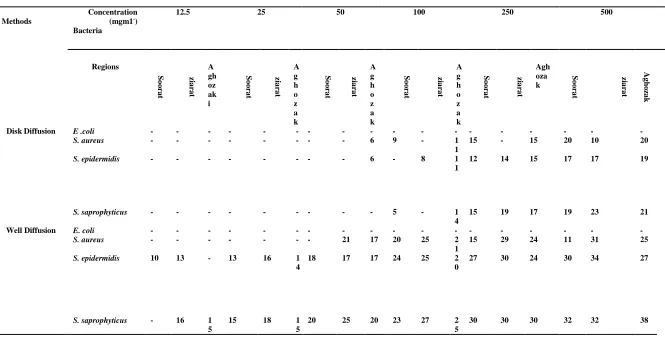
Table 1- Comparison of mean diameter of growth inhibition for different concentrations of nettle leaves extract in the disk diffusion and well diffusion methods
Medical Laboratory Journal,Sep, Oct 2016; Vol 10: No 5
strain. Mean diameter of inhibition zone ofthe three replicates was recorded. Data were analyzed by one-way analysis of variance (ANOVA) using SPSS software (version 21). P-value less than 0.01 was considered as statistically significant.
RESULTS
Comparison of the two methods showed that the susceptibility of bacteria to the extract was significantly higher (61%) in the well diffusion method than that of in the disc diffusion method. The results showed that location of growth had no significant effect on the antibacterial activity of the extract in both methods (at 1%). In the disk diffusion method, the ethanolic extract of nettle inhibited the growth of all tested bacteria other than E. coli. The highest inhibitory effect was related to disks containing 500mg/ml of extract. In this method, the highest susceptibility to the extract was related to S. saprophyticus (39%) (Tables 1). In the well diffusion method, the ethanolic extract had inhibitory effect on all bacteria other than E. coli. The highest inhibitory effect was associated with the concentration of 500 mg/ml of extract. However, the lower concentrations also showed good antibacterial effects compared to the disk diffusion method. In this method, S. epidermidis and S. saprophyticus were most susceptible (89% susceptibility) to the extract (Tables 1).
Diameter of growth inhibition zone was measured in two methods of disk diffusion and well diffusion to determine the antimicrobial activity of the ethanolic extract of nettle. The diameters of < 8 mm, between 8 to 12mm and >12mm were considered as resistant, moderately susceptible and susceptible, respectively (17). Moreover, 10% polyethylene glycol and gentamicin (MAST Co.) were used as the negative and positive controls, respectively. Bacterial suspension equivalent to 0.5 McFarland Standard (1.5 x 10⁸ CFU/ml.) was prepared from the four bacterial strains. Then, 100 μl of the prepared suspension was cultured uniformly across a culture plate containing Mueller Hinton agar medium (MERK Co.). The discs containing various concentrations of the extract were placed on the agar’s surface at a certain distance from edge of the plate and each other. Plates were incubated for 24h at 37 °C. The antibacterial effect of each disk was evaluated by measuring the diameter of inhibition zone around the discs (17). Later, 100 μl of the 24-hour bacterial culture was uniformly cultured on surface of Mueller Hinton agar. The wells with diameter of 6-7mm were created using a sterile Pasteur pipette. Then, 100 μl of prepared concentrations of the extract was poured into each well. The diameter of growth inhibition zone was measured after 24 hours of incubation at 37 oC (20). Each experiment was repeated three times for each bacterial
Medical Laboratory Journal,Sep, Oct 2016; Vol 10: No 5
positive bacteria (4), which is reported by several studies (2, 14, 27). In various studies, the bactericidal effect of nettle on Staphylococcus has been well demonstrated. Study of Kiaei et al. showed that in the disk diffusion method, 100 mg/ml of U. dioica L. completely inhibited the growth of gram-positive bacteria isolated from patients with UTI, but did not affect E. coli (2). In 1985, Janssen et al. stated that nettle’s extract inhibited the growth of S. aureus and S. epidermidis (9). Study of Kavalali in 2003 reported that the ethanolic extract of nettle inhibited the growth of S. aureus (28), consistent with the findings of the present study. The difference in the effects of plant extracts on bacteria depends on various factors including ecological, climatic and geographic factors, plant’s age, methods of drying and extraction of active components, type of solvent, concentration of the extract and type of culture medium (4). Based on Majd et al. ethanolic extract of nettle partially inhibited the growth of E. coli (29), and Shariat et al. (30), the minimum inhibitory concentration of the aqueous extract of nettle against E. coli
was 2.5mg/ml, while the minimum bactericidal concentration was reported as 20 mg/ml. Kavalali (28) reported that the ethanolic extract of nettle inhibited the growth of E. coli, in line with our findings. This could be due to differences in the methods of extraction, strains studied, solvents and methods used. Some studies also showed that nettle has little inhibitory effect on the growth of E. coli (25, 31-33). In this regard, Shahidi et al. (25, 31), Shale et al. (32) and Dulger and Gonuz (34) stated that nettle extract has no effect on the growth of E. coli. In accordance with the present study and other studies, it seems that nettle does not have a significant effect on the growth of E. coli. The confirmation of this hypothesis requires more detailed studies by analysis of extracts and evaluation of their effects. Nettle is rich in phytochemicals such as phenolic compounds and minerals that can be considered as source of drugs (35). Nettle’s constituents such as terpenes and phenols are considered as effective agents in inhibition of microbial infections and cancer (36). A study reported that the antimicrobial activity of hexane extract of nettle was due to the presence of terpene compounds such as neophytadiene, DISCUSSION
Natural compounds are considered as important sources of new antibacterial agents (21). This study evaluated the inhibitory activity of the ethanolic extract of nettle leaves isolated from three different regions against S. aureus and E. coli (as causative agents of UTI) using two methods of disk diffusion and well diffusion. The diameter of growth inhibition zone is influenced by the concentration of active compound in the plant. There is a linear relationship between size of the zone and logarithm of the concentration tested. The antimicrobial power of the compound tested is determined by measuring diameter of the zone and its comparison with the specific standard (14). The results showed that the well diffusion method showed more inhibitory effects on the growth of microorganisms compared to the disk diffusion method. This is consistent with the results of studies on the antibacterial properties of aqueous and ethanolic extracts of black cumin (14), flower and stem extracts of yarrow (15) and Polygonum bistorta (16). This difference may be because in the well diffusion method, the extract is poured directly into the well, while in the disk diffusion method the disks are first impregnated with the extract and then placed on the agar surface after complete evaporation of the solvent (14). In both methods, increasing the concentration of the extract increased the diameter of growth inhibition zone of gram-positive bacteria. Several studies have shown that concentration of the extract affects its antimicrobial effects (22-24). Consistent with our results, study of Shahidi in 2004 evaluated the antimicrobial effect of 45 Iranian native plants on three strains of S. aureus and found that increasing the concentration of the extracts increases the antimicrobial effect (25). According to the results, different bacteria responded differently to treatment with the extract. All gram-positive bacteria were susceptible, while the gram-negative bacterium (E. coli) was not susceptible, which may be associated with the power of extract to penetrate inside bacteria. The membrane of gram-negative bacteria is highly hydrophilic and acts as a barrier against external agents such as hydrophilic dyes, antibiotics and detergents (6,26). As a result, the permeability of the membrane of these bacteria is much less than that of gram-
Medical Laboratory Journal,Sep, Oct 2016; Vol 10: No 5
CONCLUSION
The results of this study confirm the suitability of this plant in traditional medicine as an antimicrobial agent effective against some bacteria.
ACKNOWLEDGMENT
This research project was approved by the Research Council of Golestan University of Medical Sciences (contract no. 2968). The authors acknowledge the respectful staff of the Azad University for their assistance in the extraction process.
CONFLICT OF INTEREST
The authors declare that they have no conflict of interests.
10. Kukrić ZZ, Topalić-Trivunović LN, Kukavica BM, Matoš SB, Pavičić SS, Boroja MM, et al.
Characterization of antioxidant and antimicrobial
activities of nettle leaves (Urtica dioica L.). Acta
Periodica Technologica, APTEFF, 2012; 43: 257-272. 11. Otles S, Yalcin B. Phenolic compounds analysis of
root, stalk, and leaves of nettle. ScientificWorldJournal.
2012; 2012: 564367.
12. Ram B, Bains NS. Antimicrobial activity of flavonoids from in vitro tissue culture and plant parts of
two plant species of Western Rajasthan. Indian Journal
of Pharmaceutical and Biological Research. 2014; 2(2): 18-21.
13. Al-Shahwany AW. Alkaloids and phenolic compound activity of Piper nigrum against some human
pathogenic bacteria. Biomedicine and Biotechnology.
2014; 2(1): 20-28.
14. Khosravinia S, Ziaratnia SM, Bagheri A, Marashi
SH. Investigation of antibacterial effects of cell
suspension culture and comparison by essential oils and
seed extract in Bunium persicum. Journal of Research
and Innovation in Food Science and Technology. 2013; 2(1): 79-92. [Persian]
15. Ahmadi Z, Sattari M, Tabaraee B, Bigdeli M. Identification of the constituents of Achillea santolina
essential oil and evaluation of the anti-microbial effects of its extract and essential oil. Arak Medical University Journal (AMUJ), 2011; 14(56): 1-10. [Persian]
16. Ghelich T, Hashemi Karouei M, Gholampor Azizi I.
Antibacterial effect of methanolic extraction of
Polygonum bistorta on some bacteria. Medical
Laboratory Journal Golestan University of Medical Sciences. 2014; 8(2): 41-47. [Persian]
17. Mazandarani M, Yassaghi S, Rezaei MB, Ghaemi
EA. Ethnobotany and anti bacterial activity from
essential oil of two endemic Hypericum species in North
of Iran. Asian Journal of Plant Sciences. 2007; 6(2):
354-358. butyl tetradecyl ester, dibutyl phthalate,
bis(2-ethylhexyl) maleate and 1, 2-benzene dicarboxylic acid (21). In another study, ethyl acetate extract of nettle showed higher antibacterial and antioxidant activity than dandelion flower, which could be due to high content of phenolic compounds and presence of active compounds such as alkaloids, tannins and terpenoids in the U. dioica L. ( 37). Considering the aforementioned issues, the intensity of the antimicrobial activity of U. dioica L. could be influenced by the amount of phenolic compounds and secondary metabolites. Thus, the antibacterial activity of the plant could be attributed to the mentioned compounds.
REFERENCES
1. Molaabaszadeh H, Hajisheikhzadeh B, Mollazadeh M, Eslami K, Mohammadzadeh Gheshlaghi N. Study of Sensibility and Antimicrobial Resistance in Escherichia
coli Isolated from Urinary Tract Infection in Tabriz City.
J Fasa Univ Med Sci. 2013; 3(2): 149-154.[Persian] 2. Kiaei E, Mazandarani M, Ghaemi E. 2010.
Antibacterial activity of 7 species of medicinal plants on bacteria isolated from UTI patients in Golestan
province. Journal of medicinal plants. 2010; 9(34):
74-83.[Persian]
3. Ebrahimi A, Khayami M, Nejati V. Comparison of antimicrobial effect of different parts of Quercus persica
against Escherichia coli O157:H7. Journal of Medicinal
Plants. 2012; 9(33): 26-34.
4. Ramtin M, Massiha A, Khoshkholgh-Pahlaviani MRM, Issazadeh K, Assmar M, Zarrabi S. In vitro antimicrobial activity of Iris pseudacorus and Urtica
dioica. Zahedan J Res Med Sci. 2014; 16(3): 35-39.
5. Bisht S, Bhandari S, Bisht NS. Urtica dioica (L): an
undervalued, economically important plant. Agricultural
Science Research Journals. 2012; 2(5): 250-252. 6. Modarresi Chahardehi A, Ibrahim D, Fariza Sulaiman S, Aboulhassani F. Determination of antimicrobial activity of various extracts of stinging nettle (Urtica
dioica). Journal of Medicinal Plants. 2012; 2(42):
98-104. Persian
7. Aqababa H, Hosseini N, Hosseini E. The effect of Urtica dioica hydro-alcoholic extract on the plasma level of pituitary thyroid axis hormones and some of the
liver enzymes in adult male wistar rat. Journal of
Animal Biology. 2011; 3(3): 1-8. [Persian]
8. Tarighat Esfanjani A, Namazi N, Bahrami A, Ehteshami M. Effect of hydroalcoholic extract of nettle (Urtica dioica) on glycemic index and insulin resistance
index in type2 diabetic patients. Iranian Journal of
Endocrinology and Metabolism. 2012; 13(6): 561-568. 9. Janssen AM1, Scheffer JJ. Acetoxychavicol acetate,
an antifungal component of alpinia galanga1. Planta
Medica. 1985; 51(6): 507-11.
Medical Laboratory Journal,Sep, Oct 2016; Vol 10: No 5
aspect of stinging nettles. Tylor and Francis Ltd, London & New York. 2003; 91.
29. Majd A, Mehrabian S, Jafary Z. The study of
antimicrobial effects of Urtica dioica extract. Medicinal
and Aromatic Plants Res. 2003; 19(3): 287-293. [Persian]
30. Shariat E, Hosseini H, PourAhmad R. Antibacterial activity of nettle (Urtica dioica L.) and oregano
(Origanum vulgare L.) water extract against Escherichia
coli, Salmonella typhi and Pseudomonas aeruginosa.
Journal of Food Science and Technology. 2014; 5(4): 9-15. [Persian]
31. Shahidi Bonjar GH, Aghighi S, Karimi Nik A. Antibacterial and Antifungal Survey in plants used in indigenous herbal-medicine of South East
regions of Iran. Journal of Biological Sciences.
2004; 4(3): 405-412.
32. Shale TL, Staden JV. Screening of medicinal plants used in Lestho for antibacterial and anti-inflammatory
activity. Journal of Ethnopharmacology. 1999; 67(1):
79-86.
33. Walter C, Shinwari ZK, Afzal I, Malik RN.
Antibacterial activity in herbal products used in
Pakistan. Pakistan Journal of Botany. 2011; 43:
155-162.
34. Dulger B, Gonuz A. Antibacterial activity of certain
plants used in Turkish traditional medicine. Asian
Journal of Plant Sciences, 2004; 3(1): 104-107.
35. Ahmed AA, Zain U, Abjuluziz MA, Rius U, Iubul H, Muhammad T. Evaluation of the chemical composition and element analysis of Urtica dioica.
African Journal of Pharmacy. 2012; 6(21): 1555-1558. 36. Dar SA, Yousuf AR, Ganai FA, Sharma P, Kumar N, Singh R. Bioassay guided isolation and identification of antiinflammatory and anti-microbial compounds from Urtica dioica L. (Uriticaceae) leaves.
African J Biotechnol. 2012; 11(65): 12410-12420. 37. Ghaima K, Hashim NM, Abdalrasool Ali S.
Antibacterial and antioxidant activities of ethyl acetate extract of nettle (Urtica dioica) and dandelion
(Taraxacum officinale). Journal of Applied
Pharmaceutical Science. 2013; 3(05): 096-099. Monsef-Esfahani HR, Jamalifar H, et al. Antimicrobial
and cytotoxicity potential of Peganum harmala smoke.
Pathlogy Magazine. 2008; 4(15): 236-40.
19. Mashhadian NV, Rakhshandeh H. Antibacterial and antifungal effects of Nigella sativa exteracts against S.
aureus, P. aeroginosa. Pakestan Medical Sciences
Journal. 2005; 21(1): 47-52.
20. Mazandarani M, Ghaemi EA, Ghaffari F.
Antibacterial survey of different extracts of Peganum harmala L. different parts in North East of Golestan
province (Inche Borun). Journal of Plant Science
Researches. 2009; 4(3): 27-38. [Persian]
21. Singh R, Dar SA, Sharma P. Antibacterial activity and toxicological evaluation of semipurified hexane
extract of Urtica dioica leaves. Res J Med Plants. 2012;
6(2): 123-135.
22. Shirazi MH, Amin GR, Akhondi Lavasani B, Eshraghi SS. Study of antibacterial properties of Adiantum capillus-veneris extract on eight species of
gram positive and negative bacteria. Journal of
Medicinal Plants. 2011; 10(40): 124-132. [Persian] 23. Khosravi A, Malecan M. Effects of Lavandula stoechas extracts on Staphylococcus aureus and other
gram negative bacteria. The Journal of Qazvin Univ of
Med. Sci. 2004; 29: 3-9. [Persian]
24. Mengiste B, Hagos Y, Moges F, Tassew H, Tadesse G, Teklu A. In vitro antibacterial screening of extracts
from selected Ethiopian medicinal plants. Momona
Ethiopian Journal of Science (MEJS). 2014; 6(1): 102-110.
25. Bonjar S. Evaluation of antibacterial properties of
some medicinal plants used in Iran. J Ethnopharmacol.
2004; 94: 301-305.
26. Khanam Z, Wen CS, Ul Haq Bhat I. Phytochemical screening and antimicrobial activity of root and stem extracts of wild Eurycoma longifolia Jack (Tongkat Ali).
Journal of King Saud University – Science. 2014; 1-8. 27. Oroujalian F, Kasra Kermanshahi R, Azizi M, Basami MR. Synergistic antibacterial activity of the essential oils from three medicinal plants against some important food-borne pathogens by microdilution
method. Iranian Journal of Medicinal and Aromatic
Plants, 2010; 2: 133-146. [Persian]
Medical Laboratory Journal,Sep, Oct 2016; Vol 10: No 5